

Introduction
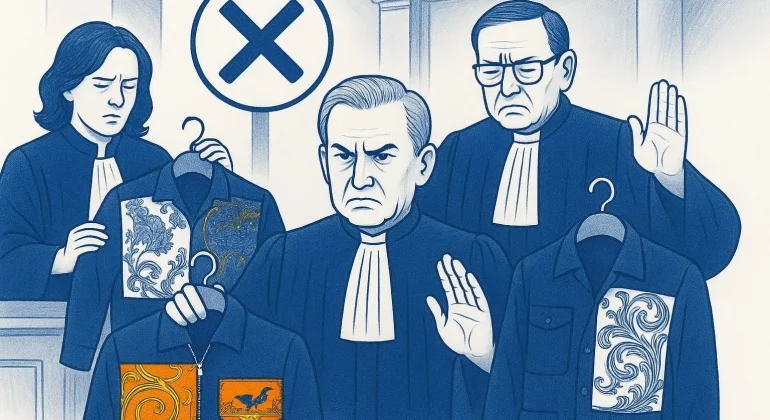
On April 10, 2025, the Paris Judicial Court (RG No. 22/10720) delivered a landmark ruling that marks a turning point for the fashion and luxury industries. The case opposed Hermès, a global icon of craftsmanship and haute couture, to an upcycling atelier that had transformed second-hand Hermès scarves into decorated denim jackets.
This case highlights the growing tension between sustainable fashion, which promotes reuse and transformation of existing products, and the strict protection of intellectual property rights. While upcycling is appealing for its ecological and creative dimensions, it cannot serve as an excuse to violate the exclusive rights attached to trademarks and original works. The ruling reaffirms that the ethical and aesthetic enhancement of a product must be carried out within a legal framework that respects intellectual property rights.
The Hermès case: facts and decision
1.1 Background of the case
An independent fashion house offered for sale jackets made from second-hand Hermès scarves through an online store and Instagram. Each item was promoted as unique, featuring the name “Hermès” in product descriptions and hashtags. The company held no authorization from the brand or its rights holders. Hermès filed a civil action for trademark infringement and copyright violation, claiming that its designs were being misappropriated for commercial purposes.
1.2 Sanctions imposed by the court
The Paris Judicial Court found both trademark and copyright infringement and ordered the immediate cessation of all sales. The company was ordered to pay substantial damages for both material and moral prejudice. The infringing jackets were seized and scheduled for destruction. The judges emphasized that the visibility of the brand and the unauthorized transformation of the scarves made the infringement manifest. This ruling now stands as a key precedent on upcycling in France.
Trademark and copyright: what protections apply
2.1 Protection of luxury brands
The Hermès trademark, first registered in 1936, benefits from enhanced protection under Articles L.711-1 and following of the French Intellectual Property Code. Any use of a name, logo or distinctive sign without authorization constitutes infringement, even if the sign is transformed in a creative way. The exhaustion of trademark rights does not apply to substantially modified goods. A scarf incorporated as a component into a jacket is considered a new product and does not fall under the exhaustion exception. Designers must therefore be highly cautious when using the Hermès name in upcycling projects.
2.2 Hermès scarves as original works
Each Hermès scarf is considered an original graphic work, protected by copyright from the moment of its creation. The choices of color, pattern, and composition demonstrate sufficient creative input to justify copyright protection. Altering a scarf to integrate it into a garment offered for sale constitutes an act of reproduction or public communication that requires the author’s or right holder’s prior authorization. In this case, the court rejected any claim of copyright exhaustion, considering that the transformation amounted to a new commercial exploitation.
The environmental argument is not enough
3.1 Upcycling as justification
The defendants argued that their creations aligned with sustainable fashion values and aimed to combat textile overconsumption. Their defense was based on the idea of giving second life to existing scarves and thereby reducing environmental impact. While this narrative may be persuasive to the public, it has no exculpatory effect under IP law. Courts primarily assess economic exploitation and damage to trademark and copyright owners. Good intentions are not sufficient to excuse infringement.
3.2 The court’s rejection of environmental claims
The Paris Judicial Court confirmed that environmental aims do not justify illegal commercial exploitation. The jackets were intended for sale, and their promotion relied on the Hermès name and reputation, without permission. French case law consistently holds that environmental objectives do not override intellectual property rights. For creators, this means that any upcycling initiative must be preceded by legal due diligence; otherwise, the risk of liability remains significant.
What case law says about the use of brand elements
4.1 Exhaustion of rights and its limitations
The exhaustion doctrine allows for the resale of genuine products once placed on the market by the trademark owner or with their consent. However, this principle does not apply when the product has been substantially altered. In this case, transforming scarves into jackets was deemed sufficient to disqualify the exhaustion exception. This interpretation protects brand owners from dilution and unauthorized repurposing of their image. Creators must understand and apply this principle to avoid infringement.
4.2 Permitted use under the French intellectual property code
Article L.713-6 paragraph 3 of the French Intellectual Property Code authorizes limited use of a trademark only when strictly necessary to describe the product. In this case, the company used “Hermès” in product titles, descriptions, and hashtags for marketing purposes. This use was found to be excessive and aimed at capitalizing on the brand’s reputation. Creators engaging in upcycling must ensure that any reference to a brand is neutral, descriptive, and proportionate, to avoid infringing trademark rights.
How to create legally with luxury textiles
5.1 Best practices for lawful upcycling
- Use neutral fabrics: without logos or recognizable elements.
- Obtain proper authorization: when using any protected element.
- Avoid visible references: remove the brand name from all creations.
- Limit communication: do not promote products using the brand’s reputation.
5.2 Consulting experts before commercialization
- Consult an IP attorney: to legally secure the project.
- Audit the creations: to identify risks in advance.
- Prevent legal disputes: by anticipating issues early.
- Pursue official partnerships: to combine creativity with legal compliance.

Conclusion
The Hermès case makes it clear that upcycling does not exempt creators from complying with intellectual property rights. Luxury trademarks and original works benefit from robust protection under French law, which prevails over ecological or creative justifications. Designers who wish to transform branded goods must seek prior authorization or adapt their practices accordingly. Legal foresight, supported by expert advice, is essential to combining innovation with legality.
Dreyfus & associés relies on a global network of lawyers specializing in intellectual property, enabling the firm to support its clients in cross-border creative ventures while ensuring compliance with IP rights worldwide.
Nathalie Dreyfus, with the support of the entire Dreyfus team
FAQ
1. Can I transform a Hermès scarf for personal use?
Yes, provided the use remains strictly private and non-commercial.
2. Is commercial upcycling a legal exception under IP law?
No, there is no exception for upcycling under the French Intellectual Property Code.
3. Can I mention Hermès on my website if I use its scarve?
Only in a neutral, purely descriptive way, without promotional intent.
4. How can I avoid infringement when upcycling?
By removing logos, using unprotected fabrics, or securing a proper license.
5. Is a partnership with the brand required for resale?
Yes, if your creations include identifiable elements of the brand, authorization is necessary.