

CJEU: Relief of the burden of proof on the territorial scope of use of a trademark
 Written by Dreyfus07/04/2020
  The CJEU rendered a crucial decision in its recent Intas caseon the maintenance of Intellectual Property rights. According to the Court, it is not imperative that a European Union (EU) trademark be used in a substantial part of the EU. On the contrary, its use in a single Member State could be enough to prove genuine use.
In the matter before the CJEU for the mentioned decision, the claimant filed a trademark application before the EUIPOconsisting of the sign “INTAS” and designating goods in classes 5 and 10.
The defendant subsequently filed an opposition to this application claiming that it was similar to two of its earlier trademark registrations which both consist of the sign “INDAS” and cover goods in the same classes.
The claimant requested proof of use of the earlier trademarks. The defendant duly submitted this evidence and its opposition was accepted by the EUIPO on this basis. The claimant proceeded to appeal the decision before the EUIPO, but its appeal was dismissed. Finally, the matter was brought before the CJEU.
- The territorial scope for genuine use
The CJEU examined the question of whether proof of use submitted for only one Member State for the use of an EU trademark was sufficient to support its genuine use pursuant to Article 47(2) of the EU TM Regulation.
Interestingly, the CJEU rejectedthe argument that the territorial scope of the use of an EU trademark cannot be limitedto the territory of a single Member State. The Court also rejected the argument that the genuine use of an EU trademark necessitates that the trademark be used in a substantial part of the EU.
Yet, the CJEU still admits that it is reasonable to expect that an EU trademark shall be put to use in a wider area than the territory of one Member State to show its genuine use. However, the Court underlines that it is not always imperativethat the trademark be put to use in an extensive geographic area because evaluation of genuine use is an overall assessment. It depends on all the characteristics of the related goods or service, and not only on the geographical scope of the use.
The CJEU accepts that, in certain cases, the market for the goods or services in the scope of an EU trademark can be restricted to the territory of only one Member State. In such a case, proving serious use of the EU trademark within that State may satisfy the conditions for genuine use.
- Assessment of genuine use
The CJEU holds that it is impossible to determine, a priori, a certain territorial scope when assessing if the use of an EU trademark is genuine or not. Rather, an EU trademark is deemed to be genuinely usedwhere it is used in accordance with :
– its essential function of designating origin for the related goods or services ;
– the objective of maintaining or creating market sharesin the EU.
When evaluating genuine use, the following factors should be taken into account: the characteristics of the relevant market; the nature of the goods or services within the scope of the trademark; and the scale, territorial extent, regularity and frequency of use.
Impact of the Decision
This is an important interpretation made by the CJEU affecting the burden of proof when it comes to showing the genuine use of an EU trademark. The CJEU clearly sets forth that the territorial scope is only one of several factors to consider when assessing whether the trademark is put to genuine use or not.
This does not mean that the territorial extension of the trademark’s use is not important at all. However, the CJEU affirms that the geographical extension of the trademark’s use is not the only factorto take into account. This assessment depends on all the facts and circumstances relevant in determining if the commercial use of the trademark creates or maintains market sharesfor the concerned goods or services.
Consequently, the CJEU held that the assessment of whether the use of a trademark is genuine or not is an overall assessment. The territorial scope of the use is only one factor in this assessment, amongst the other factors mentioned in this article. This interpretation will probably lead to changes in the strict perception that the genuine useof an EU trademark cannot be proven with showing its use in one single Member State. It will soften the burden of proof on the trademark owners.

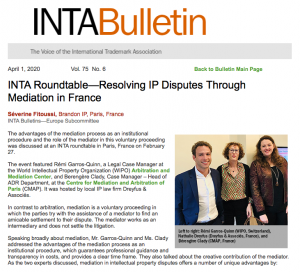 Dreyfus & associés, in association with INTA, had the pleasure of organizing a breakfast debate last February.
 While one generally refers to the “three criteria” of the UDRP (a trademark similar to the domain name; the absence of rights or legitimate interests of the defendant in the disputed domain name; and the bad faith of the registrant), it should be kept in mind that bad faith in UDRP matters has two aspects: the first is bad faith registration and the second is bad faith usage. Therefore, proving only one of these elements is insufficient even though it may be considered “fair” that a name used in bad faith should be transferred to the applicant.
 While certain geographical names may, by exception, benefit from protection within the meaning of the UDRP rules, it should be remembered that they must be perceived as a trademark or service mark over which the applicant has rights. However, the mere use of a geographical name to identify certain goods and services as a territorial entity is not sufficient to demonstrate rights in a trademark or service mark within the meaning of the Guidelines, as the pannelist rightly pointed out in the present Decision.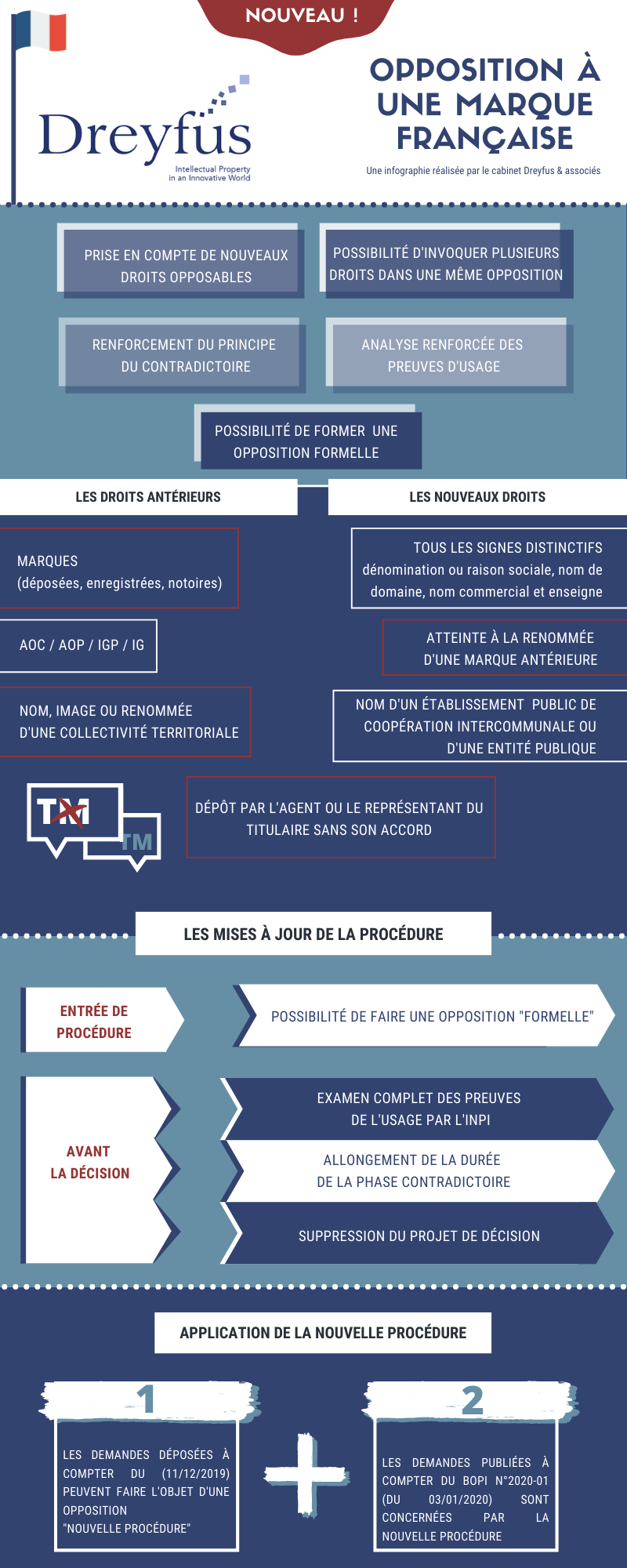
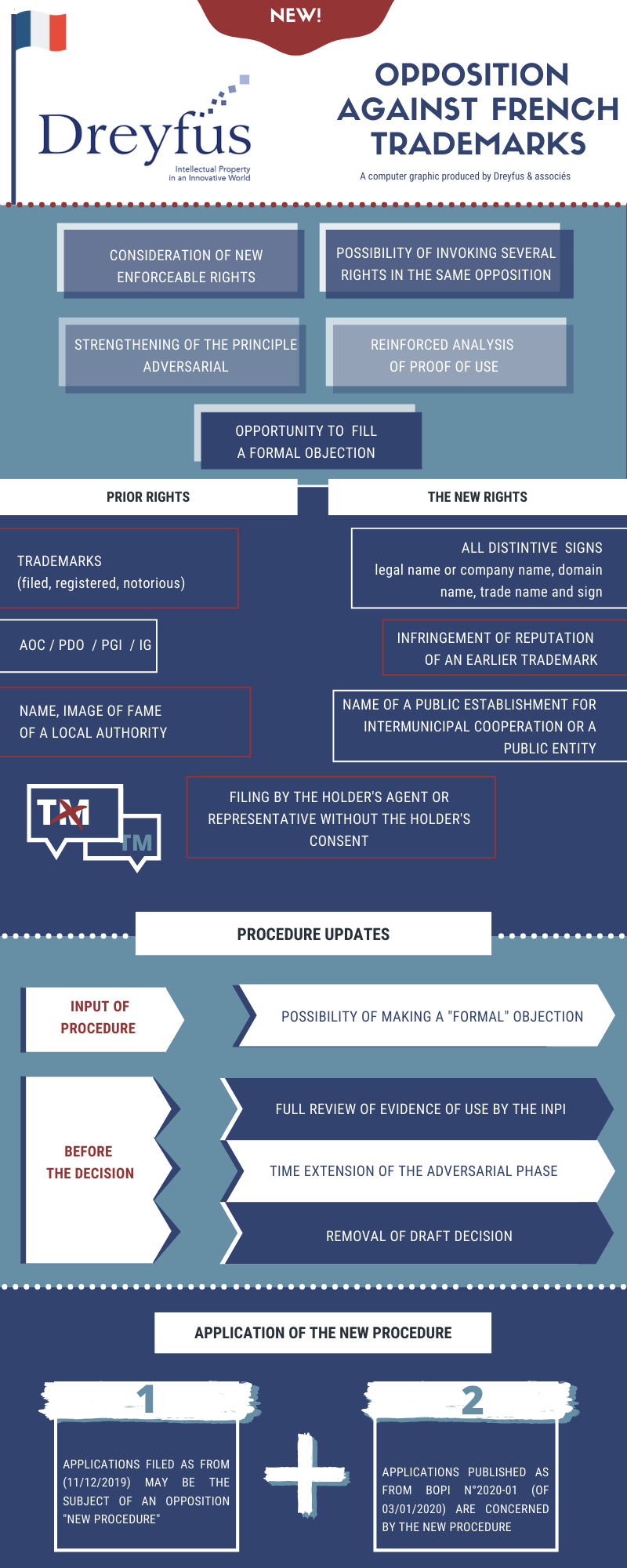




 The
The 
 WIPO, Arbitration and Mediation Centre, March 11, 2019, No. D2019-0035, Pharnext versus Wang Bo, Xiang Rong (Shanghai) Sheng Wu Ke Ji You Xian Gong Si
 The Asian giant – hitherto invisible – has become one of the countries where most patent and trademark applications are filed. It is not surprising that companies from all over the world want to have a presence in China. However, several factors must be taken into account when setting up these companies’ such as the features that must be contained in their corporate names.