


Introduction
When filing a trademark that includes a logo, a recurring question arises: should a description of the visual elements of the sign be included? Although this approach may seem relevant as a means of guiding the interpretation of the logo, it is, in the majority of cases, inadvisable. Indeed, trademark law rests on a fundamental principle: the graphic representation of the sign is, in itself, sufficient to delineate the scope of protection. The addition of a description may, on the contrary, introduce unnecessary complexity and, in certain cases, undermine the validity of the trademark.
The graphic representation as the sole basis of a trademark
Trademark law, both in France and at the European level, requires that the trademark be represented in a clear, precise and objective manner. This requirement is codified in the French Intellectual Property Code and is grounded in settled European case law (see CJEU, December 12, 2002, Sieckmann, C‑273/00). The logo, as a graphic representation, must enable the immediate identification of the distinctive elements of the sign: its shape, its typography, its colours where applicable, and its overall arrangement.
Adding a textual description to a logo that is already visually distinct and self-explanatory may appear superfluous. Indeed, superimposing a textual layer upon a visual perception gives rise to unnecessary ambiguity. The cardinal principle of trademark law is to assess the trademark as it is perceived by the relevant public, without being influenced by descriptions. This approach ensures greater legal certainty for the trademark and avoids divergent interpretations.
The legal risks associated with adding a description
The addition of a description, even where drafted with due care and precision, entails several legal risks which may materialise in practical terms in the course of litigation. These risks must be taken into account by any person seeking to maximise the protection afforded to their trade mark.
A source of ambiguity
One of the principal risks arising from the addition of a description is the ambiguity it may create. For example, describing a colour as ‘golden’ without defining it precisely may open the door to divergent interpretations. Similarly, terms such as ‘relief’ or ’embossed’ may give rise to confusion as to the true nature of the logo, particularly where the visual effect of the relief is not clearly perceptible in all reproductions of the logo.
A restrictive effect on the scope of protection
Another significant risk associated with the addition of a description is that it may narrow the scope of trademark protection. By specifying certain elements of the logo, the applicant may limit protection solely to the elements mentioned in the description. For example, a description detailing a logo with specific colours and a particular typography could be construed as restricting trademark protection to those elements alone. Accordingly, any variation not described in the application may fall outside the scope of protection, thereby weakening the proprietor’s position in the event of infringement.
A litigation tool for third parties
Finally, the description of a logo may become a fertile ground for challenge by competitors. A competitor may seize upon an inconsistency between the description and the image of the logo in an attempt to undermine the validity of the trademark. Discrepancies between the text and the graphic representation may thus be relied upon to call into question the protection afforded to the trademark and to introduce uncertainty as to the outcome of the litigation. These arguments, while often characterised as formal in nature, may have a real impact on the legal robustness of the trademark.
The key lesson from recent case law : Babek International Limited v Iceland Foods Limited
The case Babek International v. Iceland Foods handed down by the UK High Court of Justice on October 23, 2025, perfectly illustrates the risks associated with the addition of a description in a trademark application. In that case, the proprietor of the trademark had accompanied its logo with a description referring to colours and an ’embossed’ (relief) effect.
The defendant relied on this description to challenge the validity of the trademark, highlighting an inconsistency between the description and the graphic representation of the logo. Although the defendant’s arguments were not upheld at first instance, the case nevertheless raised fundamental questions regarding the legal impact of adding descriptions to trademark applications.
Analysis of the court of appeal’s judgment
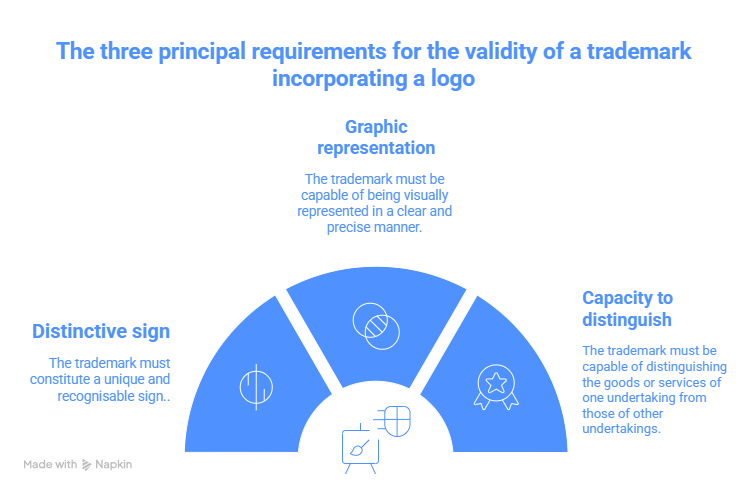
One of the legal errors identified by the Court of Appeal in this case concerned the application of a ‘capacity to distinguish test’ an erroneous criterion used by the court of first instance to assess the description of the trademark. The court had suggested that the colour of a logo should be specified in detail (for example, by reference to a Pantone code) where that colour was essential to the trademark’s capacity to distinguish itself from others. However, the Court of Appeal rejected this approach, holding that the validity of a trademark did not depend solely on the precise specification of colours, but rather on compliance with three principal conditions:
- (1) constituting a sign;
- (2) being capable of graphic representation; and
- (3) being capable of distinguishing goods or services.
This reinforces the view that the graphic representation is, in itself, sufficient to define the scope of protection, and that descriptions may create greater legal risks than they provide additional legal certainty.
Exceptional cases where a description may be useful
Notwithstanding the risks outlined above, there are situations in which a description may be justified. However, in such cases, it must be used with caution and must remain strictly functional, without seeking to introduce unnecessary detail.
Non-traditional trademarks
For non-traditional trademarks, such as sound, motion or multimedia trademarks, the graphic representation alone may be insufficient to fully describe the sign. In such cases, a supplementary description may be necessary to explain the distinctive character of the sign. For example, a sound trademark or a colour trademark may benefit from additional description to clarify its use or its distinctive effect.
Claims to specific colours
Where colour plays a crucial role in the identity of the trademark, it may be relevant to add a description specifying the shades used, particularly where they are codified or standardised. Even so, excessive detail should be avoided, and the description should be limited to what is clear and precise.
Particular configurations of complex trademarks
Finally, in the case of highly complex logos combining multiple distinctive elements (for example, geometric shapes, lighting effects, etc.), it may be useful to add a description clarifying certain technical aspects of the logo, so as to ensure comprehensive protection.
Our strategic recommendations for a secure filing
In the context of a trademark filing with a logo, it is essential to adopt a strategic approach that prioritises simplicity and clarity. Our principal recommendations are as follows:
- Assess the visual intelligibility of the logo: The logo must be immediately understood by anyone who sees it, without the need for a description. If this is not the case, a description may be considered, but it should be kept very concise and precise.
- Ensure consistency with the visual: Before adding a description, it is necessary to ensure that it does not risk impairing the coherence of the logo or introducing ambiguities.
- Anticipate legal risks: Adding a description may be turned against the applicant. It is therefore important to ask: ‘Could this description limit our protection?’ If the answer is yes, it is better to refrain from including one.
- Prioritise legal robustness: The application should seek to protect the trademark in its entirety, without reducing the scope of that protection to overly specific elements. Opposition or invalidity proceedings may indeed rely on any formal weakness in the initial application.
Conclusion
Ultimately, the answer to the question ‘Should you add a description when filing a trademark with a logo?’ is clear: no, except in exceptional circumstances. The graphic representation is, in principle, sufficient to ensure effective legal protection, whereas a description may introduce unnecessary limitations. Trademark law rests on a global visual assessment, and a textual interpretation may often be detrimental to the clarity and effectiveness of the protection.
The Babek case perfectly illustrates the legal dangers associated with adding a description: a description, however apparently straightforward, may give rise to costly proceedings and more rigorous scrutiny of the trademark, with risks of ambiguity that may undermine its validity. In cases of doubt, it is therefore recommended to limit the application to the graphic representation alone.
Dreyfus & Associés assists its clients in managing complex intellectual property cases, offering personalized advice and comprehensive operational support for the complete protection of intellectual property.
Nathalie Dreyfus with the support of the entire Dreyfus team
Q&A
1. In what circumstances may a trademark be refused on account of an incorrect description?
Where the description added is ambiguous or inconsistent with the graphic representation of the trademark, this may lead to a refusal. For example, a description suggesting three-dimensional characteristics where the logo is two-dimensional may constitute a ground for refusal. The competent authorities will examine the consistency between the text and the image to ensure that the trademark is properly defined and that it satisfies the criteria of clarity and precision required for registration.
2. Does the absence of a description reduce the protection afforded to a figurative trademark?
No. As a matter of principle, the protection afforded to a figurative trademark is based on the visual representation as filed. Intellectual property offices and courts primarily assess the overall impression produced by the sign, irrespective of any textual description.
3. Can a description added when filing a trademark be relied upon against the proprietor in infringement proceedings?
Yes. Where the description confines the trademark to very specific elements, such as precise colours or particular visual effects, a defendant may argue that the allegedly infringing sign does not faithfully reproduce the elements described and therefore falls outside the scope of protection. The description may thus become a double-edged sword: it can narrow the scope of protection in offensive proceedings just as much as it may weaken the mark in defence.
4. Does the description of a trademark affect the court’s assessment in opposition proceedings?
In opposition proceedings, the registration office compares the marks as they are perceived visually, phonetically and conceptually by the average consumer. A restrictive description may lead the examiner or board of appeal to limit the comparison to the elements expressly described, potentially reducing the prospects of success of the opposition.
5. Can a description strengthen the distinctive character of a trademark?
In practice, this is rarely the case. Distinctive character is assessed primarily by reference to the sign itself and the perception of the relevant public. A description does not automatically enhance the legal distinctiveness of a logo.
This publication is intended for general public guidance and to highlight issues. It is not intended to apply to specific circumstances or to constitute legal advice.