In 2018, the introduction of the General Data Protection Regulation in 2018 strengthened the protection of individuals’ personal data within the European Union and imposed strict restrictions on the processing and disclosure of such data without explicit consent. As WHOIS information often includes personal data of domain name holders, much information has been made inaccessible or has been anonymised to comply with the GDPR (name, contact details). In addition, this standardised protocol makes it possible to search for registration information associated with domain names, IP addresses or related entities on the Internet.
In response to these restrictions, the Registration Data Request Service (RDRS), introduced on 28 November by the ICANN Board, has been set up to provide controlled, RGPD-compliant access to certain data masked by WHOIS.
This system processes requests for access to non-public registration data relating to generic top-level domains (gTLDs), such as the contact name, postal and email address, and telephone number associated with a domain name, by linking requesters with ICANN-accredited registrars.
The conditions for accessing this data are as follows :
– Domain names must be registered in the generic top-level domains (.com, .net, .info, etc.);
– Only ICANN-accredited registrars who adhere to the system are concerned;
– The disclosure must relate to non-public data;
– The applicant must demonstrate his or her rights and prove a legitimate interest in accessing this public data;
– Finally, the applicant must have the power of representation to act on behalf of trademark holders or other legitimate stakeholders.
If this system is successful, ICANN will then consider adopting more permanent solutions such as the Standardized System for Access/Disclosure (SSAD) recommended by the Generic Names Supporting Organization’s (GNSO) Expedited Policy Development Process (EPDP).
RDRS user experience
The statistics provided by ICANN highlight the significant use of the RDRS system. Since its introduction, there have been approximately 219 requests via 72 registered registrars. In particular, 32% of requests have come from the intellectual property community, underlining the importance of RDRS in defending trademark rights.
However, according to a January 2024 ICANN report ‘RDRS Usage Metrics’, only 11% of applications have been approved since the RDRS was launched last November.
This low approval rate can be explained in particular by certain notable disparities observed between the various registrars. In addition, some registrars automatically refuse applications relating to trademarks and intellectual property, for example by referring them to their own complaints and disclosure procedures.
Other registrars request additional information to determine whether the domain name is being used in a way that infringes the customer’s intellectual property rights in order to re-evaluate the request. However, according to the applicable regulations, a registrar should only verify the existence of a legitimate claim for access to information, without judging the merits of the legal problem, which falls within the remit of the courts or UDRP panelists.
There are also a number of technical difficulties to overcome, such as the minimum character limits for justifying complaints, the insufficient number of participating registrars, the impossibility of entering grouped requests, or refusals received without explanation.
Although participation is currently voluntary, registrars who have not yet joined the new system are strongly advised to do so.
Conclusion
Potential changes to RDRS could significantly influence the way Internet domain data is managed, affecting registrars, registrants, and the Internet ecosystem as a whole.
EUIPO, R 275/2023-4, September 13, 2023, TVAR VIRTUÁLNÍ STŘELNÉ ZBRANĚ (fig.)
The fourth Board of Appeal of the European Union Intellectual Property Office (EUIPO) addressed an important issue for those interested in trademark protection in virtual worlds in a recent decision on September 13, 2023
The decision concerned an application for registration of a European Union trademark in classes 9, 35, and 41 filed by Colt CZ Group SE (Colt), a Czech holding company that acquired Colt’s Manufacturing Company LLC, a well-known American firearm manufacturer.
Colt filed a trademark application for a virtual firearm in February 2022 for virtual products and services related to online firearms. However, in December 2022, the EUIPO examiner rejected the application, arguing that the trademark lacked the required distinctiveness.
The reasons for the examiner’s rejection were as follows:
Without distinctiveness, the trademark resembled a common representation of a virtual firearm, and the target audience would perceive it as such.
The fact that some members of the public may be knowledgeable about firearms had no bearing on the assessment of distinctiveness.
As a result, the trademark lacked distinctiveness.
Colt appealed the decision, arguing that the trademark was unique and recognizable, notably thanks to the verbal element “CZ BREN 2” and the complexity of the virtual weapon’s shape represented.
The Board of Appeal began by emphasising that the distinctiveness of a trademark must be evaluated in light of the requested products and services, as well as public perception.
Concerning the relevant audience, the Board determined that it consisted primarily of the general public.
Regarding the distinctiveness of the trademark, the Board examined two particular elements: the verbal element “CZ BREN 2” and the visual representation of the virtual firearm.
Because of its size and lack of contrast with the background, the verbal element “CZ BREN 2” was deemed insignificant, making it difficult to identify for a significant proportion of the public.
The visual representation of the virtual firearm was deemed commonplace and conforming to industry standards, not deviating significantly from consumers’ expectations for virtual firearms.
In conclusion, the Board upheld the examiner’s decision that the trademark was not distinctive because it did not allow the public to identify the commercial source of the questioned products and services.
This decision emphasises the importance of distinctiveness in trademarks’ registration in the context of virtual worlds and clarifies how the target audience, as well as verbal and visual elements, are considered in this assessment.
It highlights an important point: even if a product or service in the real world is specialized or requires particular expertise (such as firearms), the targeted audience for the virtual equivalent of that product or service may be much broader and less specialized in terms of knowledge.
The International Trademark Association (“INTA”) provided a comprehensive and clear definition of “Domain Name Abuse” on May 16, 2023. Prior to this date, the definition of “Domain Name Abuse” was imprecise in the private sector, government, and universities. INTA defines it as “any activity that makes, or intends to make, use of domain names, the Domain Name System protocol, or any digital identifiers that are similar in form or function to domain names to carry out deceptive, malicious, or illegal activity.”
This new definition will therefore enable prior trademark owners to protect their rights when their trademarks are targeted by criminals.
Understanding Domain Name Abuse
Abuse occurs when bad actors commit fraud and steal from consumers, businesses, or even governmental bodies, all while infringing on the rights of prior trademark holders. It manifests through the malicious use of domain name systems, notably via phishing, spamming, distributing malicious software, or engaging in fraudulent activities like cybersquatting, typosquatting, dotsquatting, domain hijacking, shadowing, and domain name impersonation.
Implications for Trademark Holders and Consumers
Abuse is a hazardous practice for both victims (consumers, businesses, government agencies) and prior trademark holders. In fact, bad-faith actors maliciously register domain names by replicating pre-existing trademarks or domain names that have been legitimately registered and renewed. To lend credibility to these dubious websites, these malicious domain holders will replicate the products and services offered by the legitimate owner, as well as their email correspondence, mailing address, and even the brand image of companies.
Domain name abuse thereby infringes upon the rights of legitimate trademark holders and creates a significant risk of confusion for users.
Previous Definitions: Gaps and Limitations
In January 2022, the European Commission published the European Union study on the abuse of domain names, which was quickly followed in March 2023 by the United States, with an active commitment to securing critical infrastructures, particularly domain name systems, as part of its National Cybersecurity Strategy. The prevalence of domain name abuse compelled various nations to take necessary action; however, these were frequently limited and ambiguous.
Although many definitions existed prior to INTA’s report, many of them failed to adequately address important intellectual property concerns like counterfeiting and privacy.
One example is the definition given by the European Commission in January 2022. According to the European Commission, abuse would be “any activity using domain names or the DNS protocol to conduct harmful or illegal activities.”
In clause 11 of the registry agreement, ICANN, the Internet Corporation for Assigned Names and Numbers, asserts that domain name abuse includes “malware, phishing, trademark or copyright infringements, deceptive or fraudulent practises, counterfeiting, or any other activity contrary to prevailing legislation…”
Finally, the Voluntary Framework on Domain Name Abuse defines them as “malware, botnets, phishing, pharming, or SPAM disseminating malware, botnets, phishing, pharming, or SPAM disseminating malware, botnets, phishing, or pharming.”
These definitions largely represent what the technical community recognizes as abuse. Indeed, confining domain name abuse to “technical breaches” failed to anticipate the tangible legal challenges of these practices.
Similarly, mentioning “harmful or illegal activities” without defining their scope did not provide adequate legal guidance regarding intellectual property.
It was therefore critical to develop a comprehensive, concise, and understandable definition of domain name abuse in order to best protect victims of these infringements and trademark holders.
INTA’s Comprehensive Definition of Domain Name Abuse
Given the increasing instances of attacks on domain names and cyber risks, INTA felt the need to step in and provide a clear technical and legal definition that incorporates issues of intellectual property and emerging technologies.
Domain name abuse, is now defined as “any activity that makes, or intends to make, use of domain names, the Domain Name System protocol, or any digital identifiers that are similar in form or function to domain names to carry out deceptive, malicious, or illegal activity”
The inclusion of the term “similar in form or function to domain names” allows INTA to make the necessary connection with intellectual property. Indeed, the function of a trademark is to assure the origin of a product or service. However, domain name abuse misleads internet users about the origin of brands, creating a significant risk of confusion through techniques such as cybersquatting, typosquatting, and dotsquatting.
Conclusion on the new definition of Domain Name Abuse.
The new definition of domain name system abuse now helps trademark owners and the general public. It calls for ongoing vigilance and cooperation between organisations such as INTA and ICANN to ensure a clear understanding of the issues surrounding this concept.
A lot of work is currently being done to define domain name abuse or domain name Infringements. Domain abuse is the use or intent to use of domain names, the DNS domain name system protocol, or any digital identifier with a shape or function similar to domain names, for deceptive, malicious, or illegal purposes.
But where do we stand in the fight against domain name infringement?
Focus on the Attack Vector: a form of Domain Name Abuse
The form of damage corresponds to the attack vectors. Domain name abuse is becoming more common, manifesting itself on websites, via search engines, or in email inboxes via phishing attempts.
In 2023, holders of contentious domain names are increasingly using certain “modern” domain name infringements vectors. Among them are domain name infringements via SMS, QR codes, or even sponsored ads.
In the case of SMS, the infringement takes advantage of flaws in communication protocols. A URL link pointing to a malicious website is frequently attached to the SMS.
QR codes, on the other hand, function as URL shorteners and can direct users to potentially harmful websites. These QR codes are increasingly being printed in paper format on fake notices of passage or fines.
Finally, sponsored advertisements are extremely popular. Malicious sites often appear at the top of Google searches in the form of advertising inserts. The lack of a precise visual indicator often prompts internet users to click on these ads without being wary of the content they contain.
These new attack vectors highlight the creativity and determination of malicious actors. These novel forms are accompanied by substantive innovations. In actuality, the landscape of infringements is also expanding.
An overview of Domain Name Infringements
There are various types of infringements. Cybersquatting, phishing, and fake institutional websites are well-known practices. Others, more recent, require a thorough examination.
A New Form of Cybersquatting: Robot Cybersquatting
Cybersquatting, the act of registering brand-related domain names with the intent to profit from the brand’s reputation, disrupt its visibility, or sell it back to its rightful owner, isn’t new. However, its methods are becoming more sophisticated.
Bots, particularly in China, now constantly monitor domain names. They swiftly register domains once they become available, especially if they are related to legitimate brands. These “vacuum” bots snap up domains that lapse into the public domain for any reason. While this tactic existed in the past, it’s seeing a resurgence, especially in China.
The ‘Fake Shop’ Trend
The so-called “fake shop” is a new 2023 trend. Some fraudulent websites register domain names by linking a previous brand to a country name. These fake shops are counterfeit sites that deliver no product or service. They are near-perfect, semi-automated duplications of previously registered brand sites. The similarity of these contentious sites with legitimate ones creates almost inevitable confusion for consumers. In an effort to sidestep some alternative dispute resolution procedures, such as the UDRP (Uniform Domain Name Dispute Resolution Policy), by replacing trademarks within the domain name by a generic term, this new domain name infringement trend is more difficult to combat.
Click Fraud
Another trend for 2023 is “click fraud.” Click fraud is a type of fraud that occurs online within pay-per-click advertising. Website owners are paid based on the number of visitors who click on the ads in this advertising. Click fraud typically occurs on a large scale, with multiple links targeted and clicked multiple times, rather than just once. Malicious actors will obtain expired domain names or typosquat domain names that appear legitimate in order to entice users to click.
Identity Theft and Fake Merchant Sites
Identity theft and the creation of fake merchant sites are frequently seasonal, which means that fraudsters create contentious sites during tax or local fee collection periods, or during festive periods such as Christmas, Mother’s Day, or Valentine’s Day. This strategy targets both the B2B and B2C markets.
The fake merchant site is created in the name of a company whose official details are usurped. The credibility of these fake sites lies in the accuracy of the information concerning the merchant, such as the Siren, Siret, and VAT numbers, and in the usurpation of the company’s Whois data. This tactic is commonly used when legitimate businesses lack an online presence. Consumers who do not have access to the legitimate company’s official website believe the contentious site is authentic. To
Furthermore, fraudsters create fake Yellow Pages accounts, or official sites such as “Google My Business” or “societe.com,” and even fake reviews. The consequence of this practice is hefty as, beyond infringing on intellectual property rights and usurping companies’ identities, fraudsters scam consumers by never delivering the purchased products. This domain name abuse is severe since there’s both a monetary and personal data theft of the deceived consumers.
Identity Theft and Fake Orders
This practice consists in obtaining an undue merchandise delivery, in other words, diverting a product’s delivery. The perpetrators send an email that appears to be from a brand or company and requests large purchase quotes from sellers or distributors. Then they request payment for these purchases.
This method is especially dangerous since it can involve large amounts of money. Numerous elements give the appearance of an official site, lending credibility to identity theft. Fraudsters access official signatures and stamps from freely available online general assemblies, as well as recent financial statements, at least partially. Only the phone numbers and email are linked to the scammer.
Email Interception and Fake Bank Details
The most recent domain name infringement trend consists in redirecting a legitimate bank transfer to a third-party account. It is classified as a high-level attack because it primarily involves real estate and banking transactions.
The perpetrator begins by hacking the victim’s email. They monitor exchanges until they find an interesting transaction, identify related order discussions, and intercept a legitimate email during these exchanges. Then, they replace the legitimate email with a falsified one, modify the attached bank details, and send the email to the correspondent. Scammers use forged emails that look exactly like legitimate emails. Because of multiple exchanges in the victim’s email, the victim frequently misses the subtle email change, resulting in transactions that benefit the perpetrator.
Final thoughts
Consumers, companies, and owners of intellectual property are all affected by the recent rise in domain name infringement. Malicious actors can commit more difficult-to-detect domain name abuses thanks to increasingly sophisticated and cunning attack vectors combined with computer tool mastery. It is critical to exercise extreme caution when using the internet, emails, SMS, and even paper mail. The best way for businesses to protect themselves, their leaders, and their customers is to keep an eye on their domain names and put in place a policy and plan of action that takes this into account. Today, we talk about compliance strategy and domain names. If you have any questions, please do not be hesitant to get in touch with us.
Generative artificial intelligence (AI) is a type of artificial intelligence system that can generate text, images, and other media.
The process of creating content with generative AI can be roughly divided into two steps:
– The initial source of inspiration is termed as the “input”. The generic creation is based on this initial data, either retrieved from data labelled by the user/creator of the AI or from data autonomously found by the AI, to subsequently produce an “output” or result.
– From the initial data (input), the AI generates a model, infers rules, and then applies these rules. This is the output.
As a result, generative artificial intelligence raises concerns about the protection of both upstream content and downstream output.
Upstream protection for content processed by generative AI
In the upstream, intellectual property rights may be infringed upon if data is copied by AI and then used without permission. Indeed, there is a reproduction of copyrighted content (texts, images, sounds) to feed AI databases.
These contents, however, are protected by intellectual property rights. To legally feed AIs without prior authorization, the European legislator created an exception for “text and data mining,” which suspends the exploitation monopoly under copyright and related rights for data mining purposes. This relates to Articles 3 and 4 of Directive 2019/790 of the European Parliament and Council on copyright and related rights in the digital single market, which was adopted on April 17, 2019.
Data mining involves collecting data to transform them. There is a mining operation, which means algorithmic processing in order to interpret results. Nonetheless, these mining operations violate intellectual and artistic property rights.
Text and data mining can also lead to acts protected by copyright, sui generis rights on databases, or both, especially regarding the reproduction of works or other protected items, the extraction of content from a database, or both, which is the case when data is standardised during the text and data mining process.
The Directive 2019/790 establishes two mandatory exceptions for copying, i.e., two exceptions on reproducing content protected by literary and artistic property rights overall (texts, sounds, images, for all copyrights, related rights, and sui generis rights).
– Article 3 is a mandatory academic exception, benefiting research bodies and cultural heritage institutions performing mining for scientific research purposes, which right holders can’t oppose.
– Article 4, on the other hand, is an exception for all uses, regardless of the purpose (including commercial), provided that the copyright holder has not expressed opposition. In this case, the right holders can oppose even though the exception is mandatory. This may seem contradictory, but in reality, it’s the only possible balance between the rights of intellectual property right holders and the rights of those reproducing the data.
While data mining is currently allowed, the debate on the protection of content used upstream by generative AI to produce content is not over. Appeals are multiplying. For instance, in Europe, right holders are mobilising through “position papers” since the context between the drafting of Directive 2019/790 in 2018 and the time when generative AIs are booming in 2023 is very different. Compensation for intellectual property rights holders for the exception on data mining is now part of the considerations of intellectual property specialists working on the topic.
Protection of Content Generated by Generative AI
While robots were once considered passive tools, advances in artificial intelligence research have raised concerns about their role in the creative process. Indeed, these advancements sometimes attribute a significant role to them in content creation, raising questions about the protection of content generated by generative AI.
Under copyright law, the principle remains indifferent to merit (CJEU 1st March 2012, Football Dataco Ltd et al. vs. Yahoo! UK Ltd et al., Case C-604/10). Yet, it remains contentious to assert that generative AI can be the author of a work it produces.
This brings up the question: Is the appearance of a work tied to a regime? Should we accept protection for works generated by AI?
The European Parliament’s report from 27th January 2017 on recommendations for civil law rules on robotics suggested that copyright criteria should be adapted to accommodate these new AI-generated creations.
What’s crucial here is distinguishing between creations assisted by generative AI and those autonomously generated by AI.
If generative AI is used as a tool assisting creation, there’s no debate. The work is protected by copyright, with the affiliated rights belonging to the human creator. In this scenario, the work clearly reflects the personality of its human creator.
But what about the opposite scenario? Do we lean towards copyright or other paths (common law, special law)?
In 2018, the Superior Council of Literary and Artistic Property conducted an economic and legal analysis of the options.
The idea of AI as an author is ruled out today. To qualify as a work under the European Union law, it must meet specific conditions:
– There must be a human author.
– The work must be original.
Given these conditions, today’s perceived autonomy of AI is exaggerated as human involvement is essential. The idea of creating an “electronic personality” is rejected, as it might disrupt existing legal categories, leading to a legal chimaera. Without a human entity, the work can’t fulfil the originality criterion, which in France refers to the “imprint of the author’s personality” and similarly in the European Union, denotes an “intellectual creation unique to its author”, both necessitating a human presence.
The link to a human author in copyright law seems to be an international requirement
suggested by the Berne Convention.
If literary and artistic property rights are chosen, determining which specific rights apply (copyright, sui generis rights) becomes essential. Also, the definition of the author (indirect author, work without an author?) must be clarified.
Some argue no protection is required, and the “opt out” would fall under the “common by design” regime.
While awaiting legislation specific to works produced by generative AI, it’s worth noting emerging case law in this field. Notably, the US District Court for the District of Columbia’s decision in Thaler vs. Perlmutter on 18th August 2023, which ruled that copyright doesn’t apply to creations made by AI tools, even if they’re trained by human intelligence.
Such discussions on highly current topics raise genuine legal questions. The rise of new technologies requires the legislature’s keen attention and continuous updates to stay relevant. It’ll be fascinating to see future measures and laws adopted to further regulate these smart new inventions.
To find out more about generative AI, read our article Generative AI: Balancing Innovation and Intellectual Property Rights Protection or visit WIPO Magazine and Blog Modérateur.
New AFNIC Mediation Procedure: Fast and Free Dispute Resolution for Domain Name Holders
On July 3, 2023, AFNIC launched a mediation procedure to resolve disputes between right holders and domain name holders. The aim of this innovative measure is to offer parties a free, amicable means of resolving disputes, limited, however, to domain names managed by AFNIC (“.fr”).
The main role of AFNIC (Association Française pour le Nommage Internet en Coopération) is to manage the domain name registry in France (.fr).
What Is Afnic’s New Mediation Procedure?
The AFNIC mediation procedure is a free service set up to settle disputes relating to “.fr” domain names. It aims to provide a rapid and effective solution to disputes that may arise between domain name holders, registrars, and third parties. Mediation is based on an amicable process, which means that it takes place without recourse to the courts, enabling the parties involved to reach an agreement without incurring additional costs.
The procedure is simple and accessible to all parties concerned. To initiate mediation, one of the parties must submit a request to AFNIC, providing information on the dispute in question, the domain names involved, and the reasons for the dispute. Once the request has been received, AFNIC can appoint a mediator to deal with the dispute. The mediator must be neutral and impartial.
Once this has been done, the mediator will contact the parties to hear their arguments and help them find common ground. This is a confidential process, usually conducted online. The significant advantage of this approach is that the dispute can be resolved without the parties having to face each other physically.
What Are the Advantages of Mediation?
AFNIC mediation offers a number of advantages for parties involved in a domain name dispute:
Firstly, the mediation procedure enables the parties to reduce their costs considerably, especially when compared with other, much more costly procedures.
Secondly, unlike legal proceedings, which can take months or even years, AFNIC mediation offers a rapid resolution, usually within a few weeks. This is also a real advantage for the parties, especially in view of the long delays associated with the usual procedures.
The mediation process is also confidential, preserving the reputation and confidentiality of the parties involved. The remote procedure facilitates interaction between the parties, who are not obliged to be in the same room or in direct communication to resolve the dispute.
Mediation also enables the parties to find creative, customized solutions that meet their specific needs. In this respect, it is a flexible measure.
Finally, it is a method of resolution that encourages cooperation and communication between the parties, thus facilitating an amicable resolution of the dispute.
AFNIC’s free mediation procedure is a valuable resource for holders of <.fr> domain names faced with disputes. It offers a rapid, confidential alternative to legal proceedings, enabling parties to resolve their disputes amicably. If you’re involved in a .fr domain name dispute, don’t hesitate to consider AFNIC mediation as an effective solution for reaching a fair and rapid agreement. You can well imagine its value in cases where the parties are willing to find an amicable solution… that’s what mediation is all about!
For expert guidance on AFNIC’s mediation process, contact Dreyfus today for a free consultation to secure your online presence.
Legal Watch: Apple Corporation legal challenges to obtain full trademark rights on the generic “Granny Smith” Apple
In 2017, the Swiss Institute of Intellectual Property (IPI) rejected Apple Corporation’s first trademark application for a novel Apple image. Following the decision, Apple filed multiple appeals for the proposed mark for use in several technological areas. These tech areas include digital and electronic consumer goods, audiovisual, video, new technologies, media, and cinematographic recordings. Apple then appealed to the Federal Administrative Court, which upheld the decision of the IPI and denied Apple’s novel logo, once again. In an attempt to overturn the verdict, Apple went as far as to handle this legal matter internationally to global IP legal professionals and court officials, which yielded mixed results. The Federal Institute for Intellectual Protection (IPI) 2022 decision highlighted how the multinational corporation proposed mark lacked the distinctive character necessary to claim protection. In other words, the image would not sufficiently identify and distinguish the designated goods or services, thus leading to confusion between similar marks. Eventually, in recognition of Apple Corp.’s rigorous efforts, IPI changed its verdict and granted partial rights to limited categories. However, in opposition to the court verdict, Apple filed another appeal in the spring of 2022. Apple aims for complete ownership and legal rights over the Apple image.
Apple Corporation’s novel mark consists of a black-and-white image of an apple similar to the Granny Smith apple. In 1868, the Granny Smith apple was discovered and became the most infamous green and sour apple from the orchard of Ryde, New South Wales, Australia, by farmer Maria Ann Smith (also known as Granny Smith). The Granny Smith Apple is renowned as one of the top five commercially grown fruits in the U.S. and the first variety of apples exported globally for sale in supermarkets. Given the generic nature, the apple image has been identified as a non-specific product in the public domain with no brand name or registered trademark. Throughout history and modern times, the apple served as a versatile icon. The apple image versatility displays through commercial sectors like the arts, retail stores, technology businesses, and entertainment. Due to the apple image’s generic nature, Apple Corporation’s claim creates controversy regarding the permissibility of a generic fruit registered as a tech corporation’s official trademark. Concerning legal matters pertaining to similarities between marks, the risk of confusion for consumers, the negative impact on local farm-growing businesses, and cases of infringement.
Along with certain court officials, Fruit Union Suisse Director Jimmy Mariethoz also expresses concerns about Apple Corp’s degree of action to gain the new Apple mark. In such a case, the corporation and worldwide businesses could result in impending events like forced alteration of logos, re-establishing business identities, and loss in revenue due to legal proceedings and charges. All this global detriment could happen due to one’s corporation’s desire to obtain something that was once a public shared commodity. In an attempt to protect its own apple mark, Fruit Union Suisse continues to voice opposition to this multinational corporation’s unwavering legal pursuit. Fruit Union Suisse is Switzerland’s oldest and largest fruit farmer’s organization. For many years, the association promoted Swiss fruit growers’ commercial interests. In addition, the association maintained its red apple emblem, adorned with a white cross. The association symbol is a representation of the country’s state flag. For the organization, a change of its mark is a decline in commercial operations, stripped of culture and tradition, and an erase of rights and freedoms.
As Apple’s claim for full rights to the image is unsettled, Intellectual Property professionals will closely monitor the court’s decision. The IPI’s decision could result in global economic and legal changes. In light of this new development, changes in the IP global landscape have placed corporations in positions that detail transformative aims to maintain a competitive advantage. Companies’ plans like business expansion, modifying products, and altering logos come with unforeseen results. Occasionally, one must take risks or thorough analysis for decision-making. Thus, there is much to consider in trademark protection and ownership pertaining to common goods. In addition, other apple image brand companies are likely to be significantly impacted. Overall, the visual representation or any advertisements of an apple is potentially affected.
A well-known trademark does not defeat the use of a term in a descriptive manner
According to a decision rendered on December 8, 2022, a WIPO expert ruled on a RIPO complaint filed by B.S.A., a subsidiary of Lactalis Group. The complaint was regarding the famous “PRESIDENT” Camembert, which marketed several cheese types under this trademark. The trademark “PRESIDENT” has been registered in Australia since 1978 by B.SA., in class 29.
The Disputed Domain Name, <president.com.au>, was registered on June 22, 2006, by Internet Products Sales & Services Pty Ltd. This is a company specializing in domain registration and resale. By registering such a domain name, the company is taking advantage of the likelihood that people may use the domain name to search for information related to “President”. This gives the company the opportunity to generate revenue from pay-per-click links. The disputed name links to a page with pay-per-click links such as “Presidents of the Senate”, “Presidents of America” and “Presidents of a Company”. As a reminder, pay-per-click is a business model where the advertiser compensates the host of an ad based on the number of interactions it has generated. The page also indicates that the domain name “could be for sale”, proposing a form to submit an offer, without indicating a price. In support of its complaint, the Complainant invokes the reputation of its trademark “PRESIDENT” and argues that the Disputed Domain Name was registered with the sole purpose of being resold to it at a high price.
In the Complainant’s view, the domain name was registered to sell it to the Complainant. The commercial link page prejudices the Complainant. However, there is no evidence that the Respondent targeted the Complainant’s trademark. The fact that it offered a form to redeem the domain name is not sufficient to prove bad faith. The Complainant further argues that the Respondent, which holds a large portfolio of domain names (more than 7,000), had a duty to check registrations for infringement of third-party trademarks. The Panel notes that in the case of domain names consisting of generic terms and used for that purpose, it is difficult to blame the Respondent for not conducting a trademark search. In addition, there is no evidence in the record that the Respondent used the name in connection with the Complainant’s business. The Panelist notes that, despite a substantial domain name portfolio, the Respondent appears to have only registered names composed of dictionary terms between 2006 and 2022. The Respondent was the target of only one successful UDRP complaint. In this case, the Complainant must present even stronger arguments: “Generally speaking, the less unique the complainant’s trademark or name, the more likely it is that the respondent will have rights or a legitimate interest in a corresponding domain name“. It is, however, not enough to establish a respondent’s absence of legitimate interests, rights, or bad faith for a domain name that contains a dictionary word or expression. Thus, the expert considered that although the use of a domain name for a pay-per-click link page is generally not considered to generate rights or legitimate interests, this may be the case when the domain name consists of a dictionary word and is associated in connection with that word. This is because dictionary words often have multiple meanings and can be used to describe a variety of products or services. Thus, the use of a domain name that contains a dictionary word or expression can be legitimate if it is used in connection with the word and is not used solely for the purpose of driving traffic to a pay-per-click link page.
Nevertheless, the Panel decided not to rule on the issue of rights and legitimate interests in light of its observations of bad faith. The Panel notes that the Complainant has not provided any evidence of its reputation or activity in Australia when registering the domain name in 2006. As a result of this decision, it is worth recalling that the UDRP procedure provides that these criteria are cumulative, whereas the UDRP procedure stipulates that registration or use in bad faith is sufficient. The expert’s decision is logical: trademarks should not prevent the use of a term in its descriptive sense. The expert’s solution is thought-provoking and logic leads one to wonder whether his position might have been different if one of the pay-per-click tabs displayed links related to dairy products. Finally, in view of the elements of the file, B.S.A. should have known that its complaint had almost no chance of succeeding. This is especially since the name is old and there is no evidence that B.S.A received a sales proposal from the defendant.
The UDRP is not a suitable forum for resolving cases of possible defamation
This dispute reflects the conflict of thought in today’s societies regarding the support of minors on gender. This decision, released on December 12, 2022, reminds individuals to keep several key conditions in mind when filing UDRP complaints for children and adolescents, such as the UDRP complaint filed by the Little Mermaid Observatory of Ideological Discourses on Children and Adolescents.
The company “Little Mermaid Observatory of Ideological Discourses on Children and Adolescents” presents itself as an association aiming to “identify any element related to ideologies concerning children and adolescents” and “preserve children and adolescents from the dangers and consequences pertaining to discourses concerning them”. The association operates the website www.observatoirepetitesirene.org where it publishes articles related to gender dysphoria issues. The domain name <observatoirepetitesirene.org> has been registered on March 2, 2021. However, it is not specified for how long it has been used. In support of his complaint, he asserts, on the one hand, his prior domain name, <observatoirepetitesirene.org> and, on the other hand, his French trademark application “OBSERVATOIRE LA PETITE SIRENE” filed on September 12, 2022, and published on October 7, 2022. The trademark was not yet registered at the time the complaint was filed. The Disputed Domain Name, <petitesirene.org>, on the other hand, was registered on June 4, 2022, by the co-president of the association OUTrans, which aims to support transgender people. This domain name refers to a website dealing with the applicant and alerting the association’s objectives. The Complainant argues that the Disputed Domain Name “constitutes a flagrant and intentional error in the spelling of its prior domain name”. However, the name is clearly not typo squatting, as it uses the words “the little mermaid” explicitly and without error. Firstly, “in view of the dates of filing and publication of the trademark application asserted by the Petitioner, taking into account the minimum duration of the procedure before the INPI, even supposing that the trademark application succeeds in being registered, this registration cannot materially take place before the expiration of the deadline in which the Administrative Commission is required to give its decision“. Thus, the Expert also notes that the sign “OBSERVATOIRE LA PETITE SIRENE” cannot confer any rights under a possible trademark, because it is not used in business. The first condition of the UDRP principles cannot, therefore, be fulfilled. In addition, the expert agrees with the defendant’s argument that the expression “the little mermaid” is used allegorically in gender identity questioning. It could therefore not be excluded that the Respondent has a legitimate interest in the domain name.
Following, the Complainant considers itself defame by the Respondent’s comments. The Complainant also argues that the sole purpose of the Disputed Domain Name is to criticize the association, damage its reputation, and cause confusion among consumers. However, if the Respondent openly criticizes the Complainant via the domain name, confusion seems difficult. In addition, the complainant refers to filing a criminal complaint in the French courts against the Respondent for defamation. In response, the Respondent argues that the Complainant has not provided evidence of its ownership of the <observatoirepetitesirene.org> domain name, but more importantly raises a major argument that the disputed trademark is merely filed and not registered, so that the first condition of the UDRP, which requires the identity or similarity of the domain name to a trademark in which the Complainant has rights, cannot be met. In order to motivate the Respondent’s decision, the Panelist recalls that under paragraph 18 of the Rules of Procedure, it is up to the Respondent to decide, in a discretionary manner, to suspend or terminate the administrative proceeding when the Disputed Domain Name is already the subject of a legal proceeding. In this case, it is unclear whether a criminal complaint has been filed. However, the Panelist points out that it is not up to the Complainant to substitute as the criminal judge in assessing whether the disputed site is defamatory or not. The Panel’s opinion is based on the fact that the Respondent has used the domain name in good faith or in bad faith. The Panel is not able to decide unless the Respondent has used the domain name in good faith. Nevertheless, beyond the issue of defamation, the complaint may be dismissed for other reasons, that the expert raises.
Lastly, the Complainant’s position is that the term “petite sirene” is not a direct reference to the Observatory, but “a tribute to the Anglo-Saxon transgender movement that sees the character of the Little Mermaid in Andersen’s fairy tale as an allegory of trans-identity.” The Respondent claims a legitimate interest in the domain name. Moreover, the Respondent specifies that the disputed name is not commercially used. The Respondent argues that the site only has an informative vocation, falling within the freedom of expression. The Respondent indicates the use of the conditional tense on the site, by incorporating elements published in the press. Finally, the Respondent mentioned that the applicant had not proved criminal proceedings. Above all, the expert was not competent to rule on defamation.
In the end, in view of the considerations linked to the proper administration of justice and considering the general interest nature of the debate in question, the Panel declared itself incompetent in favor of the judicial judge and rejected the complaint lodged by the Complainant, without prejudice to the claims of the parties before the judge.
ICANN’s Proposed Options for Launching the Second Round of “New” gTLDs”
As a result of ICANN’s initiative, new gTLDs were created in 2011. These new generic Top-Level Domains (gTLDs) have become an integral part of the Internet landscape since then. gTLDs are internet domain extensions that form the last part of a web address, such as .com or .net. With ICANN’s initiative, new gTLDs have been created, such as .app,. blog, .shop, and more. As a result of the construction of the extensions, innovation is promoted, more competition between companies is encouraged, and market share is increased.
As an example, SNCF was one of the pioneers with the <.sncf>. The .sncf domain is used in email addresses, website URLs, and other digital marketing materials, making it easier for customers to identify SNCF’s digital presence. This round of newly created gTLDs marked the appearance of the following extension: <.marque>, which allows companies whose applications are filed successfully to have a domain name extension identical to their trademark. This cycle was also marked by the <.xyz>, which resulted in major success as it had over 6.7 million domain names in 2016. The <.xyz>, however, dropped to nearly 5 million domain names in July 2022. This drop in numbers is an example of the unpredictable nature of gTLDs, as the <.xyz> was one of the most successful of the 2014 gTLD round.
On December 12, 2022, ICANN published a comprehensive report proposing two scenarios for launching the second round of “additional gTLDs.” The report includes estimates of the financial and technical requirements for each alternative. The first is five-year development that results in a single application phase. The second option is an 18-month development period, followed by several application cycles every four years. The second proposal was the most promising to the community. This scenario is intended to reduce upfront costs and provide applicants with more time to prepare their applications. Additionally, the business cycle design includes trials and modifications to ensure positive results. While ICANN’s reporting scenarios involve much trial and error, continuously improving the program models will allow newly launched TLDs to benefit businesses and the economy even further.
The UDRP does not constitute an alternative to an unsuccessful buyout attempt
The UDRP stands for the Uniform Domain-Name Dispute-Resolution Policy and is a legal process that requires both parties to present evidence and argue their case in an unbiased setting. In the case of SpaceX v. StarGroup, the UDRP was used to decide if a domain name infringed on another’s trademark. The UDRP found that the domain name was not in violation of a trademark. Instead, it was a legitimate use of the name to describe the company’s products and services. This case highlights the fact that the UDRP is a process designed to fairly and effectively resolve domain name disputes. It is not intended to be used for anything else. The complainant “SpaceX” is an American company providing aerospace manufacturing, transportation, and communications services in many countries. Its oldest trademark right on “STARLINK” comes from a European Union trademark registered on May 15, 2018. Since 2020, it has used the trademark “STARLINK” for communication services, notably broadband internet services by satellite. The complainant also owns the domain name <starlink.com>. The complainant invokes several arguments. Namely that the domain name incorporates its “STARLINK” trademark and that the defendant’s goal is to usurp the complainant’s identity via the domain name, a major argument without proof. Between 2017 and 2018, the complainant offered to buy the “STARLINK” trademark from the defendant, which was refused. Furthermore, the complainant argues that they have tried for several years to stop the defendant’s infringement of its “STARLINK” trademark. Indeed, in view of the facts, the company StarGroup seems to be the first to have commercially exploited the term “STARLINK” or at least to have secured this sign as a trademark.
This “STARLINK” trademark is at the heart of the dispute since the contested domain name is <starlinkmx.com>, with the mark registered on June 8, 2018, by StarGroup. StarGroup, the defendant, operates in the entertainment and telecommunications sector. This company, located in Mexico, owns a family of trademarks around the term “star”: STAR TV, STAR GO, STAR LINE, and STAR GROUP. The company has also filed two “STARLINK” trademarks in Mexico. One of which, registered in November 2015, was canceled following an action brought by the complainant. The second, registered in January 2016 for online entertainment services in class 41, is still in force. The defendant’s arguments shed more light on the situation. He alleges that his “STARLINK” trademark continues with the numerous StarGroup trademarks: STAR GROUP, STAR LINE, and STAR GO. He specifies that his “STARLINK” trademarks are prior to those of the complainant and that the domain name in question is operated in connection with his activity. Finally, the defendant explains that during the action in Mexico, his “STARLINK” trademark was canceled, not because of the complainant’s prior rights, but because the list of services was not specific enough. Given the context, it seems that this was more of a “counter-attack” by the complainant against a competitor who refused to sell its trademark.
In a decision of September 21, 2022, the UDRP complaint filed by the company Space Exploration Technologies against the company StarGroup was logically rejected given the context of the case. On the one hand, the complainant’s trademarks are registered in the European Union. It does not invoke any Mexican trademarks in its favor. In addition, the complainant provides no evidence that the defendant would seek to deceive Internet users by passing itself off as the complainant. The decision does not mention the complainant’s actions to defend its rights against the defendant (apart from the Mexico circumstance). Finally, why buy the defendant’s trademark if the latter acted fraudulently on the complainant’s rights?
In support of their decision, they note that on the day of registration of the disputed domain name, the Respondent could not have known that the Complainant intended to register or use the trademark “STARLINK”, in Mexico or elsewhere. In our view, this is not entirely correct, since the Respondent had been approached by the Complainant – first anonymously in 2017 and then revealed in May 2018 – to propose, among other things, the purchase of the “STARLINK” trademark. However, this does not mean the Respondent targeted the Complainant by preserving the domain name in question, since this name merely reflects its trademark (which the experts note). Finally, experts note that StarGroup has registered a separate domain name for each of its “STAR” marks. The Respondent registered its “STARLINK” mark in November 2015, proving its intention to commercially exploit this mark, well before the Complainant. Consequently, it is impossible to conclude that the defendant acted in bad faith. Finally, as of 2019, the disputed domain name pointed to a website promoting the sale of satellite data packages, i.e. a year before the public launch of the Complainant’s business under its STARLINK trademark.
This decision seems consistent with the purpose of the UDRP procedure: its aim is to prevent cybersquatting, not to settle disputes between two players operating in the same market. In this case, the respondent, owner of several trademarks including the word “STAR” and the trademark “STARLINK”, was perfectly entitled to register the domain name <starlinkmx.com>.
Trademark applications are not sufficient to demonstrate prior rights
On November 10, 2022, a court decision reaffirmed some fundamental UDRP rules: the complainant must prove they own a trademark and that the disputed domain name violates it. This can be a registered trademark (a completed registered or filed trademark application) or an unregistered trademark (which acquired distinctiveness through use in a common law country). However, arguing such rights without backing them up with evidence will, of course, lead nowhere.
In the case at hand, the UDRP complaint was filed by Black Foodie Company. Since April 2015, the complainant has been operating a culinary platform offering recipes, events, and food guides, along with the sale of “goodies” (such as t-shirts, sweatshirts, etc.) at www.blackfoodie.co, in connection with gastronomy seen through Black people. The complainant maintains that its platform reaches millions of people, has won several awards, and enjoys media recognition. The proposed domain name, <blackfoodie.com>registered anonymously on June 17, 2009. The disputed website notably features recipes and information on restaurants owned by Black people (the site was not yet in place at the time of the complaint). The name was later acquired by Braxton Richmond in 2022, CEO of Black Foodie Finder, and registered in 2020. The defendant also operates the domain name <blackchef.com>. Indeed, the defendant alleges that they use the disputed domain name for a website and a mobile application. This is serving as a directory for businesses and culinary events. They also hold a 2020 trademark “BLACK FOODIE FINDER” registered on the Supplementary Register in the United States, demonstrating their legitimate interest in said name.
However, the complainant does not hold a registered trademark. Due to unclear wording, risk of confusion with prior rights, and the description of the sign, the company’s two US trademark applications have been suspended. The complainant should have known that their complaint had no chance of success, and this was for each of the conditions of the UDRP complaint. The Canadian trademark application also received a provisional refusal concerning its wording. Notably, these three applications are dated from 2021. The complainant boasts, in particular, of having over 220,000 social media followers. However, it is clear from reading the decision that the complainant did not document its arguments, which is both necessary and all the more significant when the invoked sign is descriptive, and the defendant operates under a very similar name for their own activity. They also note that the claimed trademark is inherently descriptive as the terms “black foodie” designate food and Black people. Furthermore, several other websites like www.theblackfoodies.com are used for the same products and services as those of the complainant.
As a result, the expert rejected the complaint because the complainant cannot assert trademark rights. The USPTO’s reasoning is also echoed, which concludes that a trademark “that describes a user or group of targeted users of a product or service is simply descriptive.” The purpose of a trademark is to indicate the origin of products and services. Nevertheless, even if Black Foodie had a registered trademark, it is highly likely that an expert would oppose the complaint. Common law rights remain possible. As the expert recalls, several factors demonstrate these rights: the nature and duration of use; the volume of sales made; the nature and extent of the brand’s promotion; the degree of public knowledge; consumer surveys.
Securities and Exchange Commission (SEC): Verisign Domain Name Brief : Increased Registration Filings despite pandemic outbreak
In 2022, Verisign, the global provider of domain name registry services, announced new statistical and analytical data on the level of domain name registrations. Despite the 2021-2022 COVID pandemic outbreak, data depicts that domain name registrations were considerably rising. For example, 349.9 million domain name registrations transpired during the closed third quarter of 2022. Specifically, the .com and .net TLDs had a combined total of 174.2 million domain name registrations compared to a decrease of 0.1% and 0.2 million domain name registrations in the second quarter of 2022. Given the surge of registrations, the average price of domain names and registry fees increased. The statistical data provided by Verisign reveals that despite the internal business damage done to small-business and corporations worldwide from the pandemic, such as closure and bankruptcy, due to the rise of remote and work-from-home options in demand, registrations on trademarks and domain names were relevantly rising.
In addition, new .com and.net domain name registrations totaled about 9.9 million by 2022 compared to 10.7 million domain name registrations at the end of the third quarter of 2021. The top ten ccTLDs, such as .cn, .de, .uk, .nl, .ru, .br, .au, .fr, .eu, and .it, toppled to about 132.4 million domain name registrations at the end of the third quarter of 2022, compared to decrease filings of 1.7 million domain name registrations or 1.3%. CCTLDs are estimated to increase by 5.7 million domain name registrations or 4.5% annually. In further analysis, regular filings such as these support companies by limiting common problems such as material misrepresentations, acts of deception, and limiting fraudulent practices. Following the SEC protocol, regular filing registrations allow small businesses and multinational corporations to enhance their knowledge of identity risk and provide sustaining evidence in defending interests in the face of a legal dispute.
On November 10, 2022, AFNIC addressed the announcement of ICANN’s official ten-year developed <.marque> program during the corporation’s 10th anniversary. The program allows successfully filed ICANN applicants and generally well-established industries or inventors to administer its domain name extension identical to its trademark. The proposed domain name’s beneficial development will strengthen trademark assets, increase Internet users and usage, and improve customer relationships. For example, the French corporation Banque Nationale de Paris et de Paribas (BNP) wanted to cluster its domain names like <.bnpparibas>, identical to its mark. Such actions allowed the corporation to make its trademark “stronger” and gain the trust of new Internet users to promote online banking. Domain name managers of large corporations believe such updates to <.trademark> extension stand out from the traditional <.com> extension. These new updates enhance the company’s legitimate identification and provide additional security for Internet users. Conversely, the <.marque> program lacks visibility and understanding to the general public in variety and top-level domain name extensions. As a result, there is a lack of capacity to support the system of introducing a variety of domain name extensions.
Given the current state of the internet ecosystem, taking such an expensive route will require the community to become informed and prepared for new developments and upcoming challenges.
Leading Development of Ethereum Name Service (ENS): Potential Behind Decentralized Domain Names
Although not widely known by the general public, decentralized domain names such as ENS and .eth domain have shown high levels of increased demand across the web3 ecosystem and decentralized web. The domain also serves as the top-level domain (TLD). In November of 2022, there were over 70,000 domain name registrations of .eth domains. The reason behind such results is speculated due to the benefits that these domain names have for investors and companies. By registering for an ENS domain, users can securely create, obtain ownership, and manage domain names and numerical IP addresses. The usefulness of decentralized domain names benefits overweigh the cons as it continues to grow and add value to the specific area of Metaverse.
By obtaining ownership of domain names, users can direct create subdomains to allow for multiple web pages to be enveloped within a whole domain name. In addition, no manual invention is involved so there is the option to customize freely on branding, web3 “wallets”, accessibility, and tracking. Trademark holders can manage the domain names by measuring security and developing identification procedures. Web 3.0 is a playground for infringements of intellectual property rights. The lack of governance and centralization has made cybersquatting all the easier. Thus, registering the decentralized domain name that corresponds to the trademark will be a way to protect it on Web 3.0, to avoid a third party can buy it to sell it at a high price, especially since the wording of trademarks is often not adapted to those of Web 3.0. This function makes more sense as there is no administrative procedure for recovering a Web 3 domain name registered in fraud of a trademark right.
Decentralized domain name technology powers blockchain networks and can potentially revolutionize how transactions are conducted in the future of 2024 and beyond for business networks. As the evolution continues in the blockchain technology industry, blockchain technology from applications such as blockchain applications, to supply chain management, digital identity verification, and comprehensive smart contracts, the world can expand a new way of conducting business.
Nathalie Dreyfus was appointed as an expert in industrial property and trademarks by the French Court of Cassation (French High Court) in December 2022 (specialty E.09.02). This prestigious title recognises her work and the highest level of expertise in this field. To fully understand the significance of this appointment, it is necessary to understand the roles and responsibilities of the Court of Cassation.
The Court of Cassation
The Court of Cassation is France’s highest court, responsible for ruling on appeals filed against decisions made by appeal courts and tribunals. Located in Paris, it consists of six specialised chambers that make decisions regarding disputes based on the underlying law. Its primary mission is to ensure the unity and consistency of case law by controlling the application of the law by lower courts. The Court rules on form rather than substance, which means that it only makes legal decisions and does not re-examine the facts of the case.
Positioned at the apex of the French judicial hierarchy, the Court of Cassation plays a critical role in safeguarding the overall integrity of the nation’s legal system. The decisions it makes are critical to ensuring consistency and legality within the legal system; they are binding on lower courts as precedents, and their weight in the law is substantial.
The Court of Cassation’s decision to appoint Nathalie as an expert in trademark law is a testament to her extensive knowledge and contributions to this area of industrial property law. In this role, she provides expert insight and knowledge on trademark law cases handled by courts, as well as at the request of lawyers or private parties seeking information on trademark law and intellectual property law more broadly. This can involve providing evidential expertise, brand evaluation, or design and model assessment. Nathalie also works as an expert to provide private opinions to trademark owners about potential infringements of their rights, as well as to compare brands, models, or websites. Additionally, she handles domain name and Web 3.0 issues and is frequently asked for her legal and technical opinion on a point of intellectual property law or a particular situation in the field.
The Court of Cassation has acknowledged Nathalie Dreyfus as an expert witness, attributing this recognition to her expansive knowledge and substantial experience in trademark law, design and model law, copyright law, and domain names. Impressively, she is presently the only female expert endorsed by the Court of Cassation under the specialty E.09.02 industrial property and, uniquely, the sole specialist in France focusing on brand-related matters.
Introducing Nathalie Dreyfus
Nathalie Dreyfus, the founder of Dreyfus Law Firm, is an intellectual property law specialist, Industrial Property Consultant, and European Brand Consultant who provides comprehensive advice on all facets of intellectual property law, encompassing the registration, defence, and evaluation of diverse intellectual assets such as trademarks, designs, models, copyrights, patents, appellations of origin, plant varieties, and domain names. Her expertise enables her to provide clients and the industry with comprehensive advice on all aspects of intellectual property law, including the registration, defence, and evaluation of various intellectual assets such as trademarks, designs, models, copyrights, patents, appellations of origin, plant varieties, and domain names. Dreyfus Law Firm has been recognised as a leading authority in its field by some of the most prestigious international law firm rankings.
Nathalie is also well-known for her expertise in the internet and new technologies, specifically phishing, cybersquatting, social networks, domain names, NFTs, Web 3.0, and online sales platforms. She counsels businesses on best practices in compliance and intellectual property, particularly with regard to domain names. She also actively participates as a speaker at numerous seminars and conferences in France and abroad, where she shares her insights and expertise on the aforementioned subjects as well as trademark law.
The Role and Mission of the Judicial Expert in Trademark Law
Judicial experts play a crucial role in providing specialised opinions and evaluations on technical, scientific, or professional matters related to their area of expertise, and may be requested by the judge during a proceeding or by one of the parties directly. Every year, a number of national lists of experts by specialty are compiled and updated, one of which is compiled by the Court of Cassation and the others by each Court of Appeal. The selection of judicial experts is the responsibility of the Court of Appeals judges, who evaluate applications based on a variety of competence and morality standards.
A judicial expert in trademark law is a qualified and experienced professional who is well-versed in the field’s laws, regulations, and practises. Their responsibilities include providing technical clarifications, interpreting evidence, and forming informed opinions on trademark-related issues such as trademark similarity, trademark validity, and trademark infringement.
To become a judicial expert in France, several requirements must be met. To begin, they must have a certain level of professional expertise and be recognised in a specific field. Second, a solid academic background and relevant professional experience are required. Finally, it is vitally important for them to stay informed about developments and new regulations in their field of expertise.
In conclusion, should you need assistance with trademark protection, intellectual property management, or have any related inquiries, we invite you to contact us at Dreyfus. Nathalie Dreyfus and her team of internationally renowned experts are ready to give you the advice and assistance you require. You can reach us at contact@dreyfus.fr or call (+33) 1 44 70 07 04.
Allow us, the professionals at Dreyfus, to guide you through the complexities of intellectual property law, ensuring your rights and assets are comprehensively protected.
On the 1st, 14th, and 15th of March, the third audit of the European Union Intellectual Property Office (EUIPO), known as the “SQAP audit,” took place concerning trademark cancellations. More recently, on the 14th and 15th of June, the SQAP audit on trademark opposition procedures was held. This serves as an opportunity to review this initiative from the European Union Office for Intellectual Property (EUIPO).
Trademark cancellation: a step towards better rights protection
Forfeiture is an action inherent in trademark law. Forfeiture can be obtained on several grounds, such as lack of serious use, becoming a generic term, or the deceptive nature of the trademark.
The trademark is subject to an obligation of use and exploitation. Naturally, it can subsequently be canceled if it is not subject to this serious use for an uninterrupted period of five years. This ground for forfeiture can be established both five years after registration and during the lifespan of the trademark.
A trademark that becomes the common name in trade for the product or service for which it is registered can be canceled. To avoid this, the holder must fight against any deviant use of their trademark. To do this, they must be able to initiate legal action. Examples of names that have become common are Sopalin, Thermos, Caddy, Perfecto, etc.
Deceptiveness is another reason that can lead to the cancellation of the trademark. This is the case for a trademark that is likely to mislead the consumer about the quality, origin, or nature of the designated product or service. Forfeiture is established upon the request of a third party following deceptive use of the said trademark.
Since April 1, 2020, a new action has been opened to economic actors: the nullity procedure against trademarks. The goal is to enhance and simplify the protection of rights, and this action is subject to no limitation period. A successful action makes it possible to render unexploited trademarks available immediately or to bring down a monopoly on a potentially invalid trademark or one contrary to public order. For its implementation, the action can be based on two distinct causes: relative grounds and absolute grounds.
Absolute grounds can be invoked by anyone who believes that at the time of filing, the applicant was acting in bad faith, that the trademark lacked distinctive character, was contrary to public order, was likely to mislead the public about the nature, quality, or origin of the designated products and services, or even if the trademark is composed of the necessary designation of a product or service.
Only the owner of an earlier right, such as a trade name, trademark, or unregistered right, may use relative grounds. The holder must prove a risk of confusion between the signs.
Trademark opposition: an option for prior rights holders
Whether it is before the INPI (National Institute of Industrial Property), the EUIPO, or even the WIPO (World Intellectual Property Organisation), opposition reiterates the relative grounds for refusing a trademark. A third party’s second trademark application may be subject to opposition from the owner of an earlier trademark. The existence of earlier rights is considered as a relative ground for refusing registration of a European Union trademark. These grounds for refusal are not systematically verified by the Offices. As a result, trademark oppositions are becoming increasingly popular.
The European procedure has served as a model for the French procedure. As a result, it is possible to oppose a European Union trademark and European Union designations in an international trademark. The publication of the trademark in the European Union Trademark Register initiates a three-month period during which it is possible to file an opposition with the opposition division. At the end of this period, the applicant for the subsequent trademark is notified, and a so-called cooling-off period (a period for reflection and amicable resolution of the dispute) is initiated.
The applicant for the trademark opposition action must be able to prove several elements.
On the one hand, they must demonstrate the use of their trademark, specifically indications concerning the location, duration, importance, and nature of the earlier trademark’s use for the products and services for which it is registered and upon which the opposition is based.
They must also be able to prove the identity or similarity of the designated signs, products, or services. The goal of these is to highlight a risk of confusion or association between the two trademarks in the public’s mind.
State of the SQAP audit programme of the EUIPO
The review of all the conditions and requirements of the various procedures carried out within the EUIPO requires a considerable amount of attention for the concerned examiners and specialized lawyers. European initiatives are constantly moving towards harmonization of the mechanisms used, the necessary costs, and the simplification of the procedures practiced. Despite the fact that the Office is keen to improve the transparency of the law at a community level, there is still a significant gap between the expectations of economic actors and the actual quality of the decisions rendered.
It was thus in 2017 that the European Office launched its project related to stakeholder quality assurance panels, also known as “Stakeholder Quality Assurance Panels” (SQAP). The aim was to bridge the gap between the users’ perception of the decisions made by the EUIPO and their quality, and the Office’s own perception of its decisions. To do this, it decided to invite associations to carry out external audits of its decisions.
These audits can include the review of internal processes, the accuracy of decisions, and compliance with applicable regulations and policies. During an SQAP audit, there could be an evaluation of how decisions are made, an analysis of documentation, interviews with staff, and recommendations for improving the quality of the service.
User panels represent user associations. During the 2023 audits, the following are represented: APRAM (Association of Practitioners of Trademark and Design Law), INTA (International Trademark Association), AIPPI (International Association for the Protection of Intellectual Property), ANIPA (Association of National Institutes of Intellectual Property Consultants), ASIPI (Inter-American Association of Industrial Property), ECTA (European Communities Trade Mark Association), BUSINESSEUROPE, FICPI (International Federation of Intellectual Property Counselors), GRUR (German Association for the Protection of Industrial Property and Copyright), the ICC (International Chamber of Commerce), and MARQUES. The panels verify decisions based on the quality criteria applied by the Office.
The audit unfolds in several stages. During the audit, each auditor first undertakes the individual inspection of the decisions assigned to them. After this, they submit their observations to the committee. As the committee members begin a debate, Office specialists are present to clarify any uncertainty concerning the Office’s procedures. At the end of these exchanges, an audit report containing all the conclusions is drafted and approved by the committee. Following the audit, the Office’s specialists scrutinize the conclusions in order to identify opportunities for improvement and to determine the actions to be taken. The auditors, as well as user groups, are kept informed of the improvements made thanks to SQAP on a regular basis.
Sample Size and Evaluation Criteria
The SQAP audit on cancellation decisions is based on a representative sample of cases selected at random from the EUIPO’s recent decisions. The sample size is large enough to ensure the reliability of the results and reflect the diversity of situations encountered in cancellation procedures. The evaluation criterias are based on the EUIPO’s quality standards, which aim to ensure consistent application of the rules and legal principles.
Audit Results
The results of the SQAP audit on cancellation decisions are classified into three main categories: “excellence,” “compliance,” and “actions needed.”
“Excellence” decisions are those that demonstrate a high level of quality and consistency in the application of legal criteria. These decisions are considered to be examples of good practice and serve as a reference for improving future decisions.
“Compliance” decisions meet the quality standards established by the EUIPO. They are considered satisfactory but may require certain improvements to reach the level of excellence.
“Actions needed” decisions are those that have more significant legal compliance gaps or errors. These decisions are subject to a more detailed analysis to identify the causes of the problems and implement appropriate corrective measures.
The results of the SQAP audit on cancellation and opposition decisions allow for feedback from the represented associations. Consequently, they enable the implementation of corrective actions or the adaptation of EUIPO’s decision-making mode since they allow it to discern the strengths and weaknesses of its processes by identifying the deficiencies within them. Corrective actions are taken to address the problems identified, and best practices are shared with intellectual property agents and users to improve the overall quality of cancellation decisions.EUIPO’s 2023 SQAP Audit
By improving decision-making mechanisms and establishing quality criteria, the establishment and development of this type of audit suggests the possibility of soon witnessing even more satisfying and high-quality decisions.
The digitization of businesses has been significantly propelled by the European “eIDAS” Regulation No. 910/2014, enacted on July 24, 2014. Riding this wave of digital advancement, Dreyfus is thrilled to present its latest eco-friendly initiative, Dreyfus IPWeb. This new platform is a secure, web-based solution, providing clients easy accessibility through any internet browser.
Our clients will be able to monitor the status of their cases online, communicate with our team, and participate in their legal follow-up without negatively impacting the environment thanks to this initiative, which is in line with our commitment to reducing our carbon footprint and our transition towards a “zero paper” approach.
Enhancing client experience
Dreyfus IPWeb is transforming the way clients interact with our firm by providing a dynamic and transparent platform for an enhanced user experience. Our clients can now easily manage their cases online, gaining an in-depth understanding akin to that of our attorneys. Furthermore, the platform provides simplified options for submitting instructions, editing documents, and uploading materials directly online, paving the way for efficient communication and effortless collaboration.
Fewer trips, better communication
The introduction of Dreyfus IPWeb significantly reduces the need for our clients to travel, as they no longer need to visit the firm to drop off or sign documents. Moreover, Dreyfus IPWeb has enhanced communication within our organisation, enabling seamless collaboration between teams. For instance, our team in Paris can work effortlessly with colleagues in Belgrade without anyone needing to hop on a plane.
A step towards becoming a ‘zero paper’ law firm
By adopting Dreyfus IPWeb, we proudly affirm our unwavering commitment to reducing our carbon footprint and actively supporting the “zero paper” initiative. Our firm commitment is to reduce our carbon footprint through the widespread adoption of digital processes and the significant reduction of paper usage.
Conclusion
In summary, we are proud to announce the launch of Dreyfus IPWeb, a secure client platform that not only enhances the client experience but seamlessly integrates with our end goal of achieving a “zero paper” workplace. We invite all our clients to discover the advantages of this innovative platform and to join us in this green initiative. Together, we can make a difference and help preserve our planet.
A patent gives its owner the exclusive right to prohibit others from manufacturing, using, selling, or offering for sale the invention in the country where the patent is granted, as well as, in some cases, importing the invention (1).
The European Unitary Patent entered into force on Thursday, June 1, 2023, after a decade of delays from the original schedule and a laborious alignment among the various European states. This article will provide an overview of the milestone’s history, implications, and practical implications.
History of a laborious adoption process
The concept of a European patent first appeared in the 1960s. The idea has re-emerged in 1999, and by 2003, a proposal for a unified Jurisdiction had been made. The Unified Patent Court (UPC) Agreement was established ten years later. However, it took another decade for this project to become a reality.
The political and legal context has not helped the situation, especially with Brexit and the UK’s withdrawal of ratification. The UK played a significant role in supporting this crucial project. Indeed, the Agreement originally included provided for several UPC divisions, including one in England, so its withdrawal caused a stalemate. As a result, it will not be possible to bring in Great Britain when the European Unitary Patent is granted, as the country is no longer part of the enhanced cooperation.
Furthermore, obstacles arose in Germany, which deemed the project unconstitutional because it exceeded the scope of the German Constitution. It included rules and articles that took precedence over national laws. This obstacle has now been overcome, and the UPC has established a specialised division in Germany with expertise in life sciences and chemistry.
Despite these challenges, 17 European Union member states had ratified the original Agreement signed in 2013 for the creation of the UPC through enhanced cooperation as of March 2023. The primary objective of this adoption is to make it possible to obtain protection for an innovation in all member countries participating in the enhanced cooperation, by filing a single application with the European Patent Office (EPO).
Countries included in the harmonisation of protection
Due to the aforementioned delays, it is important to note that the EPO has 39 members. Among these, 25 participate in the enhanced cooperation (2), and 17 are part of the Unitary Patent (3). These 17 countries are: Germany, Austria, Belgium, Bulgaria, Denmark, Estonia, Finland, France, Italy, Latvia, Lithuania, Luxembourg, Malta, Netherlands, Portugal, Slovenia, and Sweden.
Key Features of the European Unitary Patent
The Unitary Patent is based on the European Patent Convention (EPC), with no changes to the pre-grant phase. This refers to the acts performed prior to grant, such as filing, designation, and examination. These acts must still comply with the EPC’s requirements.
To obtain the unitary effect, the applicant checks the corresponding box during the grant and printing payment stage. In this sense, a unitary patent is a European patent granted by the European Patent Office (EPO) for which the holder has applied for registration on the basis of the unitary effect. Therefore, the EPO serves as a one-stop service.
The implementation of the Unitary Patent will do away with the need for time-consuming and expensive national validation processes. Validation and maintenance of European patents previously required separate procedures in each member state, a time-consuming and potentially costly process that scaled directly with the number of countries involved. In comparison to a traditional European patent, the EPO will not charge any additional procedural fees with the unitary patent. As a result, unitary patents are no longer subject to the fragmented system of annual fees. The need for appointing a representative has been removed and replaced by a streamlined process, a single currency, and a single deadline. In addition, expenses and paperwork are minimised because the EPO deals with everything after a grant has been issued.
The unitary patent regulation does not affect the right of member states to grant national patents. It is not intended to replace national or regional patent laws. Patent applicants continue to have the option to obtain either a national patent, a unitary European patent, or a European patent that has effects in one or more contracting states of the EPC.
To encourage innovation, the online register includes information on the legal status of unitary patents, such as licences and transfers. This promotes the transfer of technology and investment in innovation (4).
Unified Patent Court (UPC): Simplifying European Patent Disputes
The patent system is inextricably linked to the formation of the UPC (5). Without exception, the UPC has exclusive jurisdiction over Unitary Patents.
However, the UPC does not have exclusive jurisdiction over traditional European patents, and national courts retain their jurisdiction. Patent holders can opt out of the UPC’s jurisdiction by using an opt-out system. This is only possible during a 7-year transition period, which can be extended to 14 years, if no proceedings have been initiated before the UPC.
In terms of structure, the UPC consists of a Court of Appeal in Luxembourg and a Registry. Additionally, it has a first-instance court comprising a central division based in Paris, a division in Munich, and several local and regional divisions.
With the establishment of the UPC, there is no longer a need to initiate actions in different countries (6). Previously, national courts and authorities had jurisdiction over patent infringement and validity disputes (7). A patent dispute involving multiple member states necessitated the rights holder taking parallel action in all relevant national courts.
Another goal of the UPC’s creation is to simplify and improve the efficiency of the judicial procedures it handles. Its decisions, as well as the sanctions imposed, have an impact throughout Europe.
However, it will be necessary to wait a few months to assess the developments and consequences in practical community practise…
Dreyfus & Associates, a law firm specializing in industrial property, leverages its expertise to assist clients with any inquiries regarding the new procedure for filing a European Unitary Patent.
Unicorns, those private companies characterized by innovation and whose valuation reaches or exceeds one billion dollars, prefer short domain names (1). This was considered by researchers at the Stanford University Graduate School of Business and reported by one of the professors, Ilya Strebulaev, on LinkedIn.
On average, unicorns use domain names composed of 8.4 symbols, thus domain names with less than 7 characters have a 36% chance of belonging to unicorn companies. One reason for this result is that short domain names are more likely to attract consumers. Being more attractive, these names are also more expensive to resell. Therefore, once a company enters the unicorn category, it can afford to change its domain name to a shorter one.
Therefore, when creating a company, the search for priorities on the envisaged name is essential both on a legal and marketing level. The search for the domain names makes it possible to identify the names that are relevant to the foreseen activity. Occasionally, they will not be a problem from a legal perspective because they are not used or are used for very different activities. On the other hand, if the .COM or .FR corresponding to the sign is available, it allows the avoidance of a repurchase attempt which can be refused or sometimes accepted for an amount in 6 or 7 figures.
After being sued by the Securities and Exchange Commission (SEC), the Telegram platform has not given up its plans to enter Web 3.0. Indeed, through blockchain technology, Telegram will soon offer its 700 million users to buy usernames on The Open Network blockchain (1).
The TON blockchain originally meant Telegram Open Network, and the company behind it had managed to raise the sum of 1.7 billion euros. Recently, the domain name “casino.ton”, for example, had been sold for more than $200,000.
In fact, Pavel Durov, Telegram’s CEO, foresees many uses for the addition of web 3 technology on the application. Users could consider the possibility of a unique identifier that they could sell or trade on the app’s marketplace. This technology could also further secure the different channels that are present on the application. Telegram is considering the possibility of joining a chat channel. The implementation of technologies related to blockchain on the application would allow, among other things, to formalize these different channels.
If the release date of this marketplace is not yet determined it will be soon, given the announcement made by the founder of the platform. Indeed, the smart contract serving as a structure for this marketplace is still in free audit on GitHub, in order for developers to detect – if there are any – errors in the code.
October 21, 2022, Laboratoires Sterop S.A. v. Belaid Louahrani, Laboratoires Sterop LLC, Case No. D2022-2828 (1)
In a decision dated October 21, 2022, the UDRP complaint filed by the Belgian company Laboratoires Sterop S.A. (“Laboratoires Sterop”), targeting the domain name <sterop.net>, was rejected. A singularity of the dispute: it opposes Laboratoires Sterop to an Emirati company with a homograph name, Laboratoires Sterop LLC and its founder.
The complainant is a Belgian pharmaceutical group developing several ranges of pharmaceutical products worldwide: medical devices, dietary supplements, hygiene products, etc. It owns several “STEROP” trademarks, the oldest being registered in the Benelux since 1972 (renewed) and the most recent being registered in the United Arab Emirates since February 18, 2020, for products in class 5.
The disputed domain name has been registered since August 15, 2019, by the respondent company. The latter redirects to a website displaying a welcome message and indicating that the respondent’s activity concerns the sale of pharmaceutical products.
The respondent owns a semi-figurative “STEROP” trademark registered on March 1, 2020, in the United Arab Emirates for products in class 5, a registration date very close to that of the complainant’s prior trademark in this jurisdiction.
First recalling its seniority, the Belgian company then admits to having authorized a company called Laboratoires Sterop FZ-LLC to develop its scientific activities in the United Arab Emirates. However, it disputes having given any authorization to the respondent company, stating in particular that the two companies are distinct. The complainant insists that it has no relationship with the respondent and has already put it on notice, twice, to cease using the term “STEROP”.
To counter the complainant’s allegations, the respondent maintains that the disputed domain name was registered with the unequivocal consent of the Belgian company, resulting from a commercial agreement between the parties.
The respondent also claims that Laboratoires Sterop FZ-LLC partially owns Laboratoires Sterop LLC, and that these two companies operate in distinct territories of the United Arab Emirates. Similarly, the respondent states that one of the directors of the Belgian company is actually a shareholder holding 20% of the shares of Laboratoires Sterop FZ-LLC, and therefore indirectly of Laboratoires Sterop LLC.
Moreover, the respondent explains that it operates as a drug distributor whilst the complainant operates as a drug manufacturer. Thus, their activities being complementary, the respondent would have been one of the complainant’s distributors, and their two trademarks would have coexisted perfectly until the complainant decided to terminate the commercial relationship.
Further arguments are successively appealed by the parties. The complainant argues that, among other things, it did not authorize the filing of the respondent’s trademark beforehand, but noticed it once it was done. It also indicates that the respondent is now marketing products competing with its own and should no longer use the “STEROP” trademark. The complainant also provided several documents to try to substantiate its arguments, however in French while the procedure is in English. Therefore, are not acceptable.
In any case, it is evident that the expert cannot render a decision – on the basis of these elements giving either party truly right or wrong. Indeed, it seems more like a verbal joust between two former partners who are now competitors.
In a rather brief analysis, and without going into all the points raised by the parties, the expert considers that, even if the unequivocal consent of the complainant has not been proven, it is impossible to conclude that the respondent has no legitimate rights or interests in the disputed domain name, in light of the evidence provided. To resolve this point, a thorough analysis would be required, which does not fall within the scope of the UDRP procedure, which strictly covers cybersquatting cases.
It is still common, however, that former partners attempt to resolve their conflicts through this means.
Lastly, even if the complainant should have known that its complaint had no chance of succeeding, the expert does not consider this a case of Reverse Domain Name Hijacking (in French “détournement inversé de nom de domaine”), where the complainant would have filed its complaint solely to harass or harm the respondent.
Therefore, it is important to remember that disputes deserve to be treated with a global vision. If the dispute involves several aspects (conflict over a trademark, domain name, unfair competition, etc.), seeking the appropriate procedure is imperative. If two parties dispute a trademark, which is reflected in a domain name, it is advisable to act simultaneously on both, through a judicial procedure, or at least to obtain a decision on the trademark before turning to the UDRP administrative procedure to try to recover the domain name.
WIPO, D2022-3002, October 27, 2022, Fenix International Limited c/o Walters Law Group vs. private registry operator, Privacy Protect, LLC (PrivacyProtect.org), privacy service provided by Withheld for Privacy ehf, Global Domain Privacy Services Inc. (PrivacyGuardian.org), Andrew Rew, Okoth Nigel, Chaker Ben Smida, sofma, John Harbin, Keith Allan, Amar Bizwer, Najib Lakhdhar, Bouabdellah, Jamal McMillan, Atay Rabby Chisty, IVAN KOBETS, MINERAL, maddis jones, Philipp Muller (1).
When you own a highly fabricated brand, it is tempting, for economic reasons and dispute management, to target as many domain names as possible in a UDRP complaint, in order to get a response to the various infringements encountered with a single decision. However, it is important to remain vigilant about the strength of the link between the designated domain names and to demonstrate it precisely so that the consolidation is accepted.
Thus, in a decision of October 27, 2022, the UDRP complaint filed by Fenix International Limited (“Fenix”) seeking to be awarded 14 domain names that are believed to be imitating its ONLY FANS brand was rejected.
The complainant owns the domain name <onlyfans.com> and several “ONLYFANS” trademarks registered in 2019, including European Union and United Kingdom trademarks.
The www.onlyfans.com website has experienced rapid growth in recent years: with more than 180 million registered users, it now ranks 177th in the Alexa Top ranking the most popular websites in the world. It is a platform for posting and subscribing to audiovisual content. Erotic and pornographic content proves successful there.
The disputed domain names, registered after Fenix’s trademarks, have some apparent links to the platform, such as <onlyfans-leaked.com> or <celebrityonlyfans.com>, whilst others reproduce only parts of the brand: the initials “O” and “F”, the term “ONLY” or the term “FAN”.
These domain names point to websites offering services similar to those of the complainant, namely adult video content. The UDRP procedure states that when several disputed domain names appear to have a link, they can be studied through a single procedure.
In order for the acceptance of a complaint targeting multiple defendants, it must be proven that the domain names are subject to common control, whether it be a single person or a group of individuals acting together , and that consolidation serves the interests of each parties, leading to a fair and equitable decision. It is the complainant’s responsibility to provide proof on the issue of common control of the disputed domain names. Therefore, in order to demonstrate this link, the complainant has put forward numerous arguments.
The complainant bases its request for consolidation on several arguments: the disputed domain names direct to websites offering pirated content from its www.onlyfans.com website; the various sites have a general design strongly similar to its official site, whether in terms of header, font, or logos used; they offer the same services and prices; the names are registered through three registration offices; and they have a common structure: some are made up of a generic terms followed by the “ONLY” part of the earlier brand, whilst others interchange these elements.
In addition, the complainant alleges that, given the addresses indicated during the registration of some of the disputed domain names, located in Tunisia, the probability of common control was all the more conceivable. The complainant further states that lots of the contact information was incorrect during the registration of the domain names. However, the expert notes that the mere provision of incorrect information does not prove common control, particularly given the regularity of such occurrences.
Lastly, the complainant mentions that one of the defendants had already been the subject of a UDRP complaint, for which Fenix had been granted its consolidation request.
Two defendants responded to the complainant’s arguments. The holder of the domain name <baddiesonly.tv> explained that the websites have a similar appearance because they are based on a “KYS” script, which provides a typical layout that will be very similar from one site to another. They explained that their domain name was reserved through an agency, so they did not choose the registration office and that nothing connects them to the other domain names, such as the registrant information or the registration date.
A second defendant, holder of the name <hornyfanz.com>, also explains that they have no connection with the holders of the other names targeted by the complaint.
To ground its decision, the expert notes that the complainant has not proven the common control of the different domain names, even though it was their responsibility to substantiate their allegations.
Essentially, the presented annexes only showed websites with adult entertainment content. Therefore, according to the expert, they were not enough to prove that the disputed domain names were linked. In fact, looking at the sites in detail, the expert noticed that they all more or less differ from each other. The expert explains that even if some of the sites could be considered to be very close and therefore under common control, it does not prove that the other invoked names are linked to this group of names.
Moreover, the expert notes that the complainant contradicts themselves by stating at one point that three registration offices are involved when in the amended complaint, they mention five. In any case, this does not show common control between the names.
Furthermore, the combination of the term “ONLY” with another generic term cannot demonstrate common control of the domain names since “ONLY” is also a generic term. To this point, one could argue that the complainant could have argued the fame of their “ONLY FANS” brand in connection with erotic and pornographic content, to argue that the terms “ONLY,” “FANS,” and the initials “OF” can evoke their brand.
Finally, the expert notes that the names were registered over a two-year period and that the defendants all have different email addresses.
All these reasons led the expert to simply reject the complainant’s complaint, while reminding them that the admission of a complaint against multiple defendants is not automatic. The constitution of such a complaint significantly increases the burden of proof on the complainant, which must be taken seriously. In this case, Fenis’ analysis indeed seemed fanciful.
Artificial intelligence (AI) generally refers to a scientific discipline. According to the European Parliament, artificial intelligence (AI) is a tool that machines use to simulate human-like behaviours such as reasoning, planning, and creativity (1). One key feature of AI is machine learning, which allows it to learn from its own experiences, giving it autonomy.
The introduction and rapid development of generative AI in the legal industry have raised concerns among legal professionals. Currently, these generative AIs are capable of producing creative works based on user instructions and collected data. Given the widespread use of these technologies in professional settings, the legal implications, particularly those relating to copyright law, raise concerns.
The use of generative AI and copyright
The use of generative AIs such as ChatGPT (dialogue generator) or Midjourney (image generator) raises concerns about how copyright law applies to the generated content. It is necessary to establish who is entitled to ownership of the content produced in this manner and whether it qualifies for copyright protection. ChatGPT is an advanced language model developed by OpenAI. It uses a deep learning algorithm known as GPT (Generative Pre-trained Transformer) to generate human-like responses to text inputs.
Should we expect copyright protection for AI-generated works?
The framework for protecting works of mind is laid out in Article L.112-1 of the Intellectual Property Code, which specifies that an item must be a formalised and original intellectual creation in order to be protected.
The Court of Justice of the European Union (CJEU) has evolved the definition of originality over time to reflect advancements in technology and digital media. Taking a more objective approach in the Infopaq (2) case in 2009, the CJEU defined originality as “an intellectual creation that is an expression of the author’s own intellectual creation.” In addition, the CJEU does not rule out the possibility that a work can be considered original even if it was influenced by technical factors during its creation (3).
The CJEU has also confirmed that it is possible to create original works by involving a machine or device in the creative process (4). In this case, it did not involve AI but photography, a domain that was long considered by scholars to not be eligible for copyright protection due to the mechanical nature of the creation process.
Therefore, not all works involving the contribution of AI can be considered original under the current understanding of originality in positive law. To what extent the user has participated in the creative process is a balancing act that must be performed to determine whether or not the work can be considered original.
Several cases illustrate the international dimension of these questions, sometimes reaching different conclusions. For example, in a dispute between Tencent and Shanghai Yingxun Technology (5), the Chinese court ruled in favour of copyright protection for a work generated using an algorithmic programme. This decision supports the extension of copyright protection to works generated by AI. On the contrary, the United States Copyright Office confirmed on February 21, 2023 (6), the absence of copyright protection for images produced using the AI Midjourney, concerning the comic book “Zarya of the Dawn ” by New York artist Kris Kashtanova.
Ownership of AI-generated content
Copyright law protects the intellectual creations of individuals. It grants authors the right to express themselves through their works and recognises their awareness and intent during the creative process. It is clear at this time that AI does not currently have these specific qualities.
AI is not recognised as an author in the current legal framework, and according to existing copyright laws, the attribution of authorship is reserved for humans who can be identified as the creators of the work produced by AI. These individuals are acknowledged as authors based on their influence on the outcome and their active participation in the creative process.
The jurisprudence, both at the European and French levels, has not yet pronounced on the question of who, between the user and/or the AI developer, will hold the rights to an original work created using AI. However, the terms of service of OpenAI (the developer of ChatGPT) state that the rights to the content belong to the users. This contradiction highlights the urgent and definitive need to address these questions.
There are several hypotheses currently under consideration to ensure the adequate protection of AI and its development. These include exploring potential changes to copyright law, such as redefining the originality requirement or even establishing a framework dedicated specifically for AI.
The High Committee for Literary and Artistic Property (CSPLA) released a report (7) that examines various viewpoints on copyright ownership while delving into the fields of artificial intelligence and culture. The report explores copyright ownership in relation to artificial intelligence and culture and suggests adopting an English law-based model that establishes specific regulations for “computer-generated works.” The aim is to address the implications of these concepts and provide clarity within copyright frameworks.
Copyright infringements and generated AI content
Since works generated by AI often rely on existing content, there is a possibility that they could constitute infringements of copyright. The absence of mention of the sources used by ChatGPT to generate content illustrates the risk of infringement of third-party rights.
The ongoing legal conflict involving photographer Robert Kneschke and AI entity LAION has raised concerns regarding potential copyright infringements. Kneschke uncovered that some of his photographs were present in LAION’s database and promptly requested their removal. The case has been escalated to the District Court of Hamburg, making the progress of this case worth monitoring.
It is important to note that many AI systems do not provide guarantees regarding the absence of infringement of third-party rights in the generated outputs. As a result, users are advised to refer to the terms of use of the specific AI system to understand the responsibilities and liabilities related to copyright and potential infringement issues.
If the rights holders of the collected data find that their rights are violated, they have the option to pursue legal action based on infringement or unfair competition. This highlights the necessity for a distinct framework governing the use of AI, as demonstrated by OpenAI, which already outlines in its terms of service that users are responsible for their use of the tool and must ensure that it does not infringe upon the rights of third parties.
Risks Related to Result Reliability, Privacy, and Right to Image
The use of AI carries additional risks beyond copyright infringement. The reliability of the generated results can be a concern, as can the potential risks to privacy and the right to an individual’s image. In the case of AI-generated content, such as ChatGPT, the results may contain inaccurate, discriminatory, or unjust information. However, according to the European Parliament, AI-generated content cannot be classified as “Your Money Your Life” (YMYL) content, but verifications should still be performed.
At the same time, the European Union is currently considering legal initiatives to regulate AI systems, such as the European Commission’s proposed AI Act (8) regulation and two directive proposals published on April 21, 2021, and September 28, 2022. These legislative frameworks aim to address the issue of civil liability for AI systems.
AI’s use of personal and confidential information
The malfunction of ChatGPT that resulted in a data leak in March 2023 illustrates the challenges related to data confidentiality. Similarly, a study by security publisher Cyberhaven, as reported by “Le Monde Informatique (9),” raised concerns about the dangers connected with employees using ChatGPT. The study highlighted the risks of data leaks by employees, including sensitive project files, client data, source code, or confidential information.
In order to operate as intended, conversational agents like ChatGPT use and collect data, although they are not specifically designed for personal data collection. The nature of the collected data needs to be examined to determine whether it is protected or not. If the data is protected, the developer of the AI has an obligation to seek permission from the data rights holders.
Some countries adopt a cautious position regarding the processing of personal data by ChatGPT. In Canada, the Office of the Privacy Commissioner has initiated an investigation against OpenAI (10). In Italy, the President of the Italian Data Protection Authority, GPDP, temporarily banned access to ChatGPT on March 31, 2023 (11), accusing it, among other things, of not complying with European regulations and lacking a system to verify the user age. Since then, modifications have been made, and ChatGPT is available again in Italy.
Indeed, OpenAI’s privacy policy does not appear to comply with the requirements of the GDPR and the Data Protection Act, particularly regarding the absence of information about the retention period of processed data.
The National Commission for Informatics and Liberties (CNIL) published guidelines in 2021 to ensure that Chatbots respect individuals’ rights (12). It also issued guidelines and recommendations in 2021 (13) on the use of cookies and other trackers governed by Article 82 of the Data Protection Act (14) (transposition of Article 5.3 of Directive 2002/58/EC “ePrivacy” (15)).
The goal of these recommendations and guidelines is to ensure informed consent from users and provide transparency about trackers. The CNIL also has the power to impose sanctions in cases of non-compliance by relevant actors. It is crucial for the involved parties to ensure adherence to the requirements of the General Data Protection Regulation (GDPR) and the ePrivacy Directive.
These potential legal hurdles must be considered if we are to make ethical and responsible use of this technology, and concerns such as copyright infringement, data collection, and ownership must be carefully considered by all parties involved in the creation and use of AI.
The Current Legal Framework of AI and Future Perspectives
The European Union intends to establish an artificial intelligence regulatory framework. In 2020, the European Parliament passed resolutions on artificial intelligence and its applications (17), and new European proposals aim to ensure the smooth operation of the internal market. The goal is to make the Union a world leader in developing ethical and trustworthy AI that protects ethical principles, such as fundamental rights and Union values.
The European Regulation Proposal: “AI Act”
On April 21, 2021, the European Commission proposed new rules to set uniform rules (18) for the commercial release, deployment, and use of artificial intelligence. The legislative process is long, though, so the project has not yet been put into action.
The European Parliament, the Council of the European Union, and the European Commission will need to adopt the text in the same terms. For now, the European Parliament has just reached a provisional agreement on the aforementioned regulation on April 27, 2023, which was voted on May 11, 2023. Once adopted, it will take some time before it comes into effect.
The proposed regulation focuses on transparency, accountability, and safety to promote the ethical and responsible development of AI within the European Union. The goal is to ensure trustworthy AI. The proposal includes a risk-based approach:
Unacceptable risks : AI systems that are prohibited because they contradict the values of the Union (e.g., facial recognition AI).
High-risk AI : These AI systems present risks to the health, safety, or fundamental rights of individuals (e.g., biometric identification AI). These systems are subject to strict obligations for developers, providers, and users.
Limited risks : Specific transparency obligations are established for these AI systems towards users. Users must be aware that when using AI systems such as Chatbots, they are interacting with a machine and must make an informed decision to proceed or not. As conversational agents are not categorised as high-risk AI systems, they will not be subject to the strict requirements applicable to high-risk systems.
Negligible risks : The proposal does not require intervention for these AI systems due to their minimal or non-existent risks to the rights or safety of citizens.
As mentioned earlier, the negotiating team of the European Parliament has reached a provisional agreement on the regulation, which includes generative AI (19). In this regard, “general-purpose AI systems,” capable of performing multiple functions, are distinguished from “foundational models,” which are techniques based on a large amount of data and can be used for various tasks. Providers of such models, like OpenAI, would be subject to stricter obligations, including the adoption of risk management strategies and ensuring the quality of their data.
The European Parliament announced in a press release (20) that the Members of the European Parliament have adopted the negotiation mandate project. This project still needs to be approved by the entire Parliament in a vote scheduled for June 12th to 15th.
Furthermore, on September 28, 2022, the European Commission published two directive proposals aimed at establishing rules on liability adapted to AI systems. These directive proposals seek to evolve the law of civil liability for AI systems. However, neither of these proposals specifically addresses issues related to intellectual property infringement or the corresponding liability framework.
Proposal for a Directive on Liability for Defective Products
The European Commission proposes a revision of the directive on liability for defective products (21) to adapt it to technological developments in recent years. The aim is to overhaul Directive 85/374/EEC of July 25, 1985 (22).
This revision proposes several changes, including redefining the concept of a product, reevaluating the concept of damage, imposing requirements on companies to disclose certain information, and altering the burden of proof for victims, including the introduction of specific presumptions and apply to liability for defective products without restriction and cover products stemming from AI or any other product.
Proposal for a Directive on Liability in the Field of AI
The second proposal for an AI directive aims to align the rules of non-contractual civil liability with the field of AI (23). This proposal addresses legal uncertainties identified by the European Commission for businesses, users, and the internal market. Multiple factors present challenges, including the enactment of rules of civil liability, the identification of the party responsible for the damage, the establishment of evidence, and the risk of fragmentation concerning applicable legislation.
The Commission’s cautious approach is demonstrated by provisions that shift the burden of proof in favour of victims of AI-based products or services. As a result, victims will have the same level of protection and may be less discouraged from filing civil liability claims. Thus, civil actions based on fault for damages caused by AI systems can be facilitated.
The risks in terms of liability for the actors involved in these fields are high and require particular attention. The proposed regulation provides for the establishment of a deterrent sanction system. Indeed, any breach of the established rules may be subject to an administrative fine of up to 20 million euros, or 4% of the company’s total annual turnover.
Companies and AI system providers are advised to closely monitor legislative developments and comply with future regulatory requirements to avoid any litigation.
Conclusion
While many options are being considered to establish AI regulations, the contractual aspect should not be overlooked. Contracts can complement or compensate for deficiencies in the forthcoming legislative framework. By leveraging this tool, a comprehensive strategy can be devised to regulate the use of AI, its consequences, the dynamics among various stakeholders, individual responsibilities, and other relevant aspects.
As users of AI systems, it is important to take certain precautions. These include establishing an internal written policy, being well-informed about the terms of use of AI systems, avoiding the disclosure of confidential information during their use, and verifying the reliability of the information provided. The role of general terms and conditions is vital, as they offer valuable information, such as the applicable law and jurisdiction, the extent of the service provider’s liability, indemnification, and disclaimer clauses. As a result, AI providers must prioritise the careful drafting of these terms and conditions.
Dreyfus, N. [Chine] Le droit d’auteur à l’épreuve de l’intelligence artificielle. Village de la Justice. 1e décembre 2021.
United States Copyright Office, Zarya of the Daws (Registration #VAu001480196), 21 février 2023.
Rapport du CSPLA. Mission intelligence artificielle et culture. 27 février 2020.
Proposition de règlement du Parlement européen et du Conseil établissant des règles harmonisées concernant l’intelligence artificielle (législation sur l’intelligence artificielle) et modifiant certains actes législatifs de l’union, Commission européenne, 21 avril 2021, COM/2021/206 final.
Article 82 de la loi n° 78-17 du 6 janvier 1978 relative à l’informatique, aux fichiers et aux libertés, modifiée par Ordonnance n°2018-1125 du 12 décembre 2018 – art. 1
Directive 2002/58/CE du Parlement européen et du Conseil du 12 juillet 2002 concernant le traitement des données à caractère personnel et la protection de la vie privée dans le secteur des communications électroniques (directive vie privée et communications électroniques)
Règlement (UE) 2016/679 du Parlement européen et du Conseil du 27 avril 2016, relatif à la protection des personnes physiques à l’égard du traitement des données à caractère personnel et à la libre circulation de ces données, et abrogeant la directive 95/46/CE (règlement général sur la protection des données).
Résolution du Parlement européen du 20 oct. 2020 (2020/2012(INL)) ; (2020/2015(INI)) ; (2020/2014(INL)) ; Résolution du Parlement européen du 19 mai.2021 (2020/2017(INI)) ; Résolution du Parlement européen du 6 oct. 2021 (2020/2016((INI)) ; Résolution du Parlement européen du 3 mai. 2022 (2020/2266(INI))
Proposition de règlement du Parlement européen et du Conseil établissant des règles harmonisées concernant l’intelligence artificielle (législation sur l’intelligence artificielle) et modifiant certains actes législatifs de l’union, Commission européenne, 21 avril 2021, COM/2021/206 final.
Proposition de directive du Parlement européen et du Conseil relative à la responsabilité du fait des produits défectueux, COM (2022) 495 final, 28 sept. 2022
Directive 85/374/CEE du Conseil du 25 juillet 1985 relative au rapprochement des dispositions législatives, réglementaires et administratives des États membres en matière de responsabilité du fait des produits défectueux
Proposition de directive du Parlement européen et du Conseil, COM (2022) 496 final, 28 sept. 2022
Customs seizures of counterfeit goods increased significantly in 2022. While French customs intercepted 5.6 million counterfeit items in 2020, seizures increased to 11 million in 2022. On February 23, 2023, the Ministry of Public Accounts stated, “Counterfeiting no longer spares any sector of the economy1.”
Customs seizures are a crucial measure to protect industrial property rights against counterfeits. In addition to financial losses, counterfeit goods can damage a company’s brand image and reputation in the marketplace. Customs, therefore, play a crucial role in preventing the importation of counterfeit goods into their territory.
The customs detention procedure
A procedure with multiple implications
France is a pioneer in customs detention because it was the first EU Member State to classify imported counterfeit goods as illegal goods. Thus, the Longuet law2 codified this particular procedure into French law. According to the Regulation of 12 June 20133, the laws of the European Union also apply. However, items released for free circulation pursuant to the regime of the specific destination and items without commercial character contained in the personal luggage of travellers are not subject to detention.
This is a necessary procedure for strengthening the protection of one’s intellectual property right(s) by allowing customs officers to temporarily block goods suspected of infringing on them. During this detention, the rights holder can request that counterfeit goods be destroyed if certain conditions are met, or even file a legal action.
The prerequisite for filing an intervention request
This is a highly structured and regulated procedure. It begins with the rights holder (or licence beneficiaries under certain conditions) filing a request for customs intervention with the competent customs service in France or the European Union. This allows the market to be monitored and the applicant to be notified in the event of a counterfeit capture. This is a preventive and free (as of the July 29, 20224 decree) step that can be taken even if the applicant is unaware of any infringement of his or her right(s). The customs intervention request is valid for one year and can be renewed with a simple written request. It must include information on authentic goods and common counterfeits, as well as identification of rights and their holders.
On the one hand, the national intervention request allows customs officials to detain goods that have already crossed French borders and have been cleared throughout French territory. The European intervention request, on the other hand, allows customs authorities to detain third-party goods in customs prior to their introduction into European Union territory.
The effectiveness of the detention request stems from its submission to the appropriate customs services. This enables rights protection to be tailored to each vector of counterfeit introduction, such as targeting cells in ports and airports to control commercial freight, brigades to conduct roadside checks on people and vehicles, specialised services for postal checks and express freight, and even Cybercustoms, a service in charge of tracking fraud on the Internet.
The customs seizure procedure
Evaluation of the similarity between authenticity and suspected forgery
Customs officers do not have expertise, but it is their responsibility to identify products that appear to be counterfeit. The customs service that carried out the detention subsequently notifies the applicant. In order to confirm or refute the suspicion of counterfeiting and determine the subsequent course of action, this notification includes photos and the quantities detained. If this set matches, they then proceed to a customs seizure.
A procedure subject to defined deadlines
According to Article 3 of Regulation (EEC) of June 3, 19715, the customs seizure procedure allows goods suspected of counterfeiting to be detained for a maximum of 10 days (3 days for perishable goods), which can be extended by 10 days on a reasoned request. This time frame allows for the goods to be inspected.
Procedure for Simplified Extrajudicial Destruction
The allotted time also allows for the applicant to request a simplified destruction procedure. If applicable, three conditions must be met. First, the applicant must confirm in writing that he agrees to the destruction of the goods under his control. Second, he must be able to ensure the authenticity of the goods by providing detailed expertise. Finally, the presumed counterfeiter (also known as the “holder” of the counterfeit goods) must confirm in writing to customs services within 10 working days of being notified of the detention that he wishes to express himself regarding the destruction of the goods. If no action is taken, it will be assumed that he agrees to this destruction. If he objects, the holder is notified and given an additional 10 working days to take legal action or take probative measures for the same purpose.
The potential legal ramifications of the customs seizure
When a counterfeit is discovered but the simplified destruction procedure is not used, the rights holder has the following options:
Appeal to the territorially competent court to obtain authorization for conservatory measures,
Justify the filing of a complaint with the Public Prosecutor,
Take legal action in criminal or civil court.
For this purpose, the rights holder may request that the customs professional secrecy be partially lifted in order to obtain additional information (names and addresses of the recipient, sender, declarant, and holder of the goods, customs regime, origin of the goods, and destination), provided that this information is used for the purposes specified in Article 21 of the Regulation of June 12, 20136.
What happens in case of unjustified detention?
In the event of an unjustified or abusive detention, the rights holder may be responsible for paying all costs incurred by both customs and the owner of the goods. Furthermore, customs cannot order the rights holder to compensate the owner of the goods if the detention is unjustified. However, whether the detention is justified or not, they can always ask the rights holder to cover the storage costs. In most cases, they do not. Such compensation could only be made at the request of the owner of the goods, through a counterclaim, or through a separate legal procedure. In this case, the owner may seek compensation for his entire loss.
Transit policy
This regime is a World Customs Organisation measure that allows goods to cross customs borders without being subject to customs duties or other taxes. On the one hand, internal transit refers to the movement of goods within the community area that are intended to be marketed in the transit country. As a result, customs officers can seize the goods and hold them for a set period of time while waiting for the rights holder’s opinion. External transit, on the other hand, refers to the movement of goods originating in and destined for third countries to the European Union where they will be marketed from one point on the community territory to another.
This customs regime creates a legal fiction in which the goods in question do not exist in the community territory through which they transit. Despite this “non-existence” on the community territory, it seems necessary, as in the case of community transit, to allow customs authorities to use this detention measure to ensure that goods suspected of infringing intellectual property rights do not fraudulently use the customs regimes considered. However, the CJEU7 has applied the fiction of customs law.
This decision is devastating because it establishes the principle that a third-party good in transit, originating in and destined for a third country, can only be detained for suspicion of counterfeiting if it is intended for sale on the European Union market. Customs officers can thus clearly detain counterfeit goods only if the rights holder provides proof of concrete indications of future placement on the Union market.
Dreyfus & Associates Law Firm: intermediary between rights holders and customs
The landscape of industrial property rights is shifting as e-commerce expands and counterfeiting becomes more sophisticated. The owners of intellectual property must now incorporate customs monitoring into their already extensive brand monitoring efforts. In this sense, the request for customs intervention is a complex operation that establishes and conditions the effectiveness of the seizure measure, which is its logical and technical continuation.
The law firm Dreyfus & Associates offers its expertise to its clients, proposing assistance in exchanges with competent customs services.
We have a network of agents throughout the community area to monitor incoming and outgoing goods movements.
We also have a specialised department at the disposal of its clients for the surveillance of industrial property titles, which can make the request for intervention to customs on behalf of the rights holder.
Finally, Dreyfus & Associates allows its clients to participate in customs officer training to improve the identification of genuine articles and, by extension, counterfeit goods.
In response to the digital age’s demand for creativity and innovation, the European Union has recommended a new EU designs framework to address current issues and future challenges. Through this proposal, they seek to refine existing regulations by adding clarity, enhancing definitions of key terms, and aligning them with individual country laws. If passed, the legislation could foster better protection for designs while simultaneously creating balance between legitimate interests involving intellectual property rights – all in an effort to curb counterfeiting activity worldwide.
An overview of European Design Law: Protecting Creativity and Innovation
Models and designs are integral to product artistry and creativity and can be protected by European law. Article 3 of Regulation 6/2002 outlines all the characteristics that can be used to define a design – including lines, contours, colours, forms and textures. Currently, designs and models must be novel and exhibit some degree of individuality for them to be considered protectable.
The European law on designs and models is an essential tool for protecting creativity and innovation within the European Union. Not only does it help to encourage innovation and competition by providing adequate protection to creators and businesses, but it also encourages them to invest in the research and development of new products and designs, which ultimately stimulates economic growth and job creation.
Registration of a model or design with the European Union Intellectual Property Office (EUIPO) gives the holder exclusive rights over the ornamental or aesthetic aspects of an object for up to 25 years. The European design regime also provides protection for up to three years for unregistered community designs.
To benefit from this protection, the design or model must have an individual characteristic. This implies that the general impression that the design or model gives to the informed user must be different from the general impression that pre-existing designs or models give. When assessing this criterion, it is important to take into account the degree of freedom enjoyed by the creator at the time of the creation of the design or model, since this freedom will determine whether the latter achieved a real creative performance or not. Finally, the design or model must also be considered new.
This protection allows the holder to take action against the reproduction and sale of products with an identical appearance.
Furthermore, European design law provides broader and faster protection than national systems. Once registered, a design is protected throughout the EU, obviating the need for separate registration in each member state.
Considering its importance to European economic actors, it has become necessary to adapt this system to current and future trends arising from the digital era.
Context of the changes proposed by the Commission
In November 2022, the Commission presented a proposal that is currently under negotiation. This « EU designs framework » aims to revise the regulation and directive on community designs and models and is set to come into effect by the end of the year, or early 2024.
The objective of the designs framework is to modernise and improve current provisions by removing outdated rules, enhancing legal security, and clarifying design and model rights management. As technology advances and more businesses operate online, it becomes clear that current regulations are limited and must adapt to new forms of creation to protect designers and their digital creations. This directive aims to harmonise national laws and procedures to strengthen interoperability and complement the community design and model system.
Finally, the framework would help to complete the single market for replacement parts by including into the directive a repair clause, which is similar to the one already present in Regulation 6/2002.
Key changes proposed by the Commission
The « EU designs framework’s » primary aim is to provide clarity within protection regulations. This would result in terminological alterations that replace terms such as “Registered Community Designs” with “Registered EU Designs” (REUD) and “Unregistered Community Designs” with “Unregistered EU Designs“.
Another major change introduced by the directive is the removal of protection for unregistered community designs and models at a national level. In addition, it also stipulates that protection for community designs and models only starts when they are registered in the dedicated register.
It requires visibility by conditioning the protection of UDCs on the visible character of the appearance characteristics presented in the community design registration application. During the procedure of submitting a community design, the representations must clearly identify all the details of the design or model deposited.
The Commission also highlights the possibility of combining design protection with copyright protection, as established by European case law.
The proposed changes aim to broaden the definition of designs and models to include movement, transition, or any type of animation of product features as well as the definition of products by introducing a digital component and allowing for anything related to graphic interfaces, if necessary. Accordingly, the proposed framework defines “product” as “any object, including digital products, that can be manufactured or produced in limited quantities, or that can be sold, rented, or made available on the market.”
The Commission defines the boundaries of protection and grants an exception that allows for critical and parodic use of designs and models. Conversely, it deems 3D printing a form of use that requires authorization from the design or model rights holder. Importantly, this is a continually-advancing technology that facilitates the creation of 3D objects via digital files.
In addition, the proposal introduces new provisions. Firstly, it removes the unity-of-class principle, allowing for the submission of several REUD requests in the same application, even when designating multiple classes. Secondly, it makes the repair clause for spare parts permanent. This clause provides a transitional period of 10 years to safeguard the interests of existing design or model holders if the member state allows for design or model protection for spare parts at the time the new directive comes into force. However, it will only have an immediate legal effect on future registrations. The proposed framework also permits right holders to affix a specific symbol Ⓓ, informing the public that the product is registered.
Finally, on a procedural level, the Commission proposes to make optional provisions mandatory in order to increase predictability and coherence with the EU system. « The EU Designs Framework » also establishes a presumption of validity, which should be adopted by all EU Member States. This way, the validity conditions of the title would be presumed to be met in the event of an infringement. It also allows one to request a deferral period of 30 months from the date of filing the application. Ultimately, it stipulates that all member states must provide administrative actions for nullity with respect to registered designs and models in front of national intellectual property offices.
Conclusion
The Commission’s proposal for this directive is justified by a legal framework that has remained unchanged since the late 1990s and early 2000s, before the internet and the rapid growth of technology. As a result, it was necessary to address certain deficiencies and gaps in the protection regime to ensure its adaptation to the digital age and, more generally, its sustainability. This reform could encourage the protection of designs and models and, therefore, applications for registration within the European Union. It will also strengthen and limit protection, with the objective of striking a better balance between legitimate interests. Ultimately, it could potentially (and surely) improve the fight against counterfeiting.
About Dreyfus
We offer our clients a dedicated and unique experience of expertise that is necessary for the exploitation of intangible assets. We will also endeavor to keep you informed and up-to-date about intellectual property and digital economic issues through our articles and newsletters written by the Dreyfus Legal Team.
This article is current as of the date of its publication and does not necessarily reflect the present state of the law or relevant regulation.
In a world where the lines between different artistic disciplines are becoming increasingly blurred, fashion designers often draw inspiration from art to bring their collections to life or to promote their brands.
This issue echoes the recent dispute between the brand Zadig&Voltaire and artist Julian Charriere over a promotional video for the brand that features a flaming fountain, similar to the one captured by the artist in his “And Beneath it all Flows Liquid Fire” video in 2019.
Many fashion designers are inspired by works of art to create their collections and advertising campaigns. However, some of them cross the line and copy the work of established artists almost exactly, without giving them the credit they deserve. This practice is not only ethically questionable, but can can also be harmful to the original artists in terms of violating their intellectual property (“IP”) rights.
Legal issues of intellectual property in fashion and art
Copyrighting protects original works of the mind, whether they are literary, musical, graphic, plastic or photographic creations. Fashion designers may be tempted to take inspiration from a work of art to design a new piece or an advertising campaign, but it is essential to consider the legal issues related to IP.
Plagiarism, or mindless copying of a work, is a violation of copyright. In the case of fashion, it can mean using a work of art without permission to create prints, patterns or even the shape of a garment. If the copying is obvious, the original artist can sue for damages.
The fine line between fashion and art is even more blurred as many luxury brands have launched their own art foundations such as the Cartier Foundation or the Louis Vuitton Foundation.
However, it is important to note that copyright does not protect ideas, only their expression. Thus, taking inspiration from a work of art in order to create a fashion piece is not necessarily illegal, so long as the creation is suitably original and does not directly copy the work in question. Additionally, some artists occasionally can collaborate with fashion designers, such as Louis Vuitton, who recently worked with Japanese artist Yakoi Kusuma to produce a new collection as well as to transform the Louis Vuitton store in Paris, now decorated with a monumental silhouette of the artist.
Consequences of intellectual property infringement
IP infringement can have negative consequences for artists and the fashion industry.
Plagiarism robs original artists of recognition and fair compensation for their work. When a piece of work is copied without permission, the original artist is not credited or paid for their work. This can lead to a loss of income for artists, causing them to abandon their creative work or settle for less than their talent.
In addition, intellectual property infringement hinders innovation in the creative industry. When artists are not rewarded for their work, it can discourage innovation and the creation of new works. Companies that copy original works do not need to devote resources to research and development of new ideas, as they can simply copy those of others.
Finally, intellectual property infringement can have a negative impact on the brand image of companies that engage in this practice. Consumers are increasingly aware of the importance of ethics and corporate social responsibility. When a company is accused of plagiarism or intellectual property infringement, it can damage its brand image and consumer confidence in the company.
In summation, the phenomenon of plagiarism of art by fashion raises complex questions and considerable stakes, both artistically and legally. The line between inspiration and copying can sometimes be unclear, and the fashion industry seems to navigate these murky waters in search of creativity and innovation.
While some see this appropriation as a democratization of art and a way to enrich fashion, others see them as a threat to the value and integrity of original works. At a time when legislation is struggling to adapt to these issues, it is the responsibility of fashion designers and consumers to commit to ethical fashion that respects art and its creators.
It is critical to continue the dialogue between the different actors involved and to rethink the mechanisms of intellectual property protection to ensure a fair balance between creative freedom and respect for copyright. Creators, as well as artists, can call upon professionals such as Industrial Property Attorneys, with their networks of lawyers specialized in intellectual property, to ensure that no IP rights are infringed upon.
We offer our clients a dedicated and unique experience of expertise that is necessary for the exploitation of intangible assets. We will also endeavor to keep you informed and up-to-date about intellectual property and digital economic issues through our articles and newsletters written by the Dreyfus Legal Team.
This article is current as of the date of its publication and does not necessarily reflect the present state of the law or relevant regulation.
The French Public Investment Bank (BPI France) has set up a program to help SMEs (small and medium-sized enterprises) and ETIs (Ethical Trading Initiatives and mid-sized companies) who are seeking or looking for help in developing and structuring their intangible assets. These intangible assets include patents, designs, trademarks and software.
What are the terms of the “Intellectual Property Strategy Diagnosis”? How does Dreyfus & Associés intervene in this respect?
The BPI’s “Intellectual Property and Intangible Assets Strategy Diagnosis” is aimed at SMEs and ETIs registered in France with a workforce of less than 2 000 employees. It is important to note that a subsidiary of a group with more than 2 000 employees will not be eligible for this program.
What is the purpose of this program?
The purpose of this offer of support is to finance an analysis and consulting service provided by an Intellectual property Expert for the protection, structuring and development of Intellectual Property. The cost of such an analysis is generally estimated to be between 3 000 and 10 000 euros (excluding VAT), for a duration of three to ten days, and it can extend for up to 3 months depending on requirements to be completed. The BPI finances up to 80% of the experts’ services. This program will benefit Startups, SMEs and ETIs due to the low cost that is being offered to allow them to engage with an Intellectual Property Expert who is registered with the BPI.
More specifically, the BPI provides support that includes an inventory of existing intangible assets, the implemented valuation actions, and an analysis of the company’s maturity in conjunction with understanding the challenges of building these intangible assets.
In retrospect, the “Intellectual Property Strategy Diagnosis” allows the company to obtain a comprehensive strategy of recommendations to be adopted for the management and valorization of assets.
What is the role of Dreyfus & associés, Intellectual property experts?
Dreyfus & associés is registered as an Expert Consultant with BPI France. This registration allows firstly Dreyfus & associés to advise you on the relevance of such a diagnosis. If necessary, the firm establishes a commercial proposal that can position your company in its context and explains the issues to be addressed during the diagnosis.
In order for you to submit the application to the BPI, your company will have to create an account on the BPI website and then constitute and submit a complete file.
The file needs to include the online application form, the Expert’s proposal (unsigned), the company’s latest tax return, tax and social security certificates dating back to less than three months, the company’s up-to-date capitalization table and finally, the Declaration of Aid for the use of consulting and support services in the field of innovation.
When the file is accepted, BPI France will send you an IP Strategy and Intangible Assets Valuation Diagnosis contract to be signed electronically by the company’s legal representative.
At the end of the diagnosis, the Expert will provide the company and BPI France with a final report including a summary of the context, the issues, the development paths and the recommendations. This final report will be made available within 15 working days.
The « IP Strategy Diagnosis » program set up by the BPI is a real opportunity for small and medium-sized companies seeking to develop their intangible assets. It allows them to obtain a complete expertise from qualified and accredited intellectual property experts at a significantly lower cost.
Do not hesitate to contact us for more information.
We offer our clients a dedicated and unique experience of expertise that is necessary for the exploitation of intangible assets. We will also endeavor to keep you informed and up-to-date about intellectual property and digital economic issues through our articles and newsletters written by the Dreyfus Legal Team.
Intellectual property (IP) litigation is an important tool for protecting and enforcing rights in IP assets, such as patents, trademarks, and copyrights. When an IP owner’s rights are infringed or someone else is using their IP without permission, the owner may have the right to take legal action against the offender. IP litigation can help the owner to protect their valuable IP assets, as well as their reputation and market position.
The benefits of IP litigation include:
1. Protection of IP Rights IP litigation is an effective way to protect your IP assets from infringement. It allows you to enforce your IP rights and stop unauthorized use of your IP, while also deterring future infringers. By filing a lawsuit, you can also seek damages or other relief to make up for any losses caused by the infringement.
2. Strengthening of IP Rights Through the process of IP litigation, you can also strengthen your IP rights. This is because the court may issue an injunction that requires the infringing party to stop using your IP or to pay you for any profits they made from using your IP. This can help to bolster your IP rights and make it more difficult for others to infringe on them in the future.
3. Deterrence of Unlawful Use The threat of IP litigation can also act as a deterrent to others who may be considering using your IP without permission. By demonstrating that you are willing to take legal action to protect your IP rights, you can create a deterrent effect that can help to discourage others from infringing on your IP.
4. Valuable Legal Remedies IP litigation can also provide you with valuable legal remedies that can help you to recover the costs of defending your IP rights. In some cases, you may be able to recover damages or other relief to compensate you for any losses caused by the infringement.
In addition to these benefits, IP litigation can also provide you with a sense of satisfaction that you are protecting your IP rights and standing up for what is right. It can be a powerful way to make sure that your IP is respected and protected. So how can you make the most of IP litigation? Here are a few tips:
1. Understand Your IP Rights The first step to making the most of IP litigation is to understand your IP rights. You should be familiar with the different types of IP protection and what rights they provide, as well as any related laws or regulations. This will help you to identify potential infringements and determine whether or not you have the right to take legal action.
2. Seek Professional Advice It is also important to seek professional advice when it comes to IP litigation. An experienced IP lawyer can provide you with guidance on your legal rights and remedies, as well as help you to pursue a successful legal action.
3. Take Action Quickly Acting quickly is key when it comes to IP litigation. You should take action as soon as you become aware of a potential infringement, as the longer you wait, the more difficult it may be to prove your case.
4. Gather Evidence The more evidence you have to support your case, the stronger it will be. This means gathering evidence such as documents, emails, and other records that show the infringement occurred.
By following these tips, you can make the most of IP litigation and protect your valuable IP rights.
We offer our clients a dedicated and unique experience of expertise that is necessary for the exploitation of intangible assets. We will also endeavor to keep you informed and up-to-date about intellectual property and digital economic issues through our articles and newsletters written by the Dreyfus Legal Team.
The legal landscape of the tech industry is constantly changing, making it difficult to keep up with the latest developments in IT law. Companies must stay up to date with the latest laws and regulations to ensure that their businesses remain compliant. Understanding the latest trends in IT law can help companies ensure that they are taking advantage of the latest legal opportunities and protecting their intellectual property.
One of the most important trends in IT law is the increasing focus on data privacy. As technology has advanced, companies have begun collecting and storing more information about their customers than ever before. In response, governments around the world have implemented new regulations to protect consumer data and ensure that companies are held accountable for how they store and use customer information. Companies must understand these laws and make sure that their practices are compliant. Another important trend in IT law is the emergence of cloud computing.
Cloud computing allows companies to store and access data remotely, eliminating the need for physical storage devices. However, this also creates a new set of legal issues, as companies must consider the legal implications of storing and accessing data in a cloud environment. Companies must be aware of the applicable laws and regulations in order to ensure that their use of cloud computing is compliant. Finally, IT law is also increasingly focusing on cyber security. Companies must be aware of the legal requirements for protecting their networks and data against cyber attacks. Companies must also be aware of the legal implications of any cyber security breaches that may occur. Understanding the latest trends in cyber security law can help companies ensure that they are taking the necessary steps to protect their networks and data.
So, how can companies leverage these trends in IT law? Firstly, they should ensure that they are up to date with the latest laws and regulations. Companies should also consider the legal implications of any new technologies they are using, such as cloud computing or cyber security solutions. Companies must also make sure that they are taking the necessary steps to protect their networks and data against cyber attacks. Finally, companies should consult with an experienced IT lawyer to ensure that they are taking advantage of the latest legal opportunities and protecting their intellectual property.
We offer our clients a dedicated and unique experience of expertise that is necessary for the exploitation of intangible assets. We will also endeavor to keep you informed and up-to-date about intellectual property and digital economic issues through our articles and newsletters written by the Dreyfus Legal Team.
As the world becomes increasingly digital, it is important to understand how to protect your intellectual property rights. Intellectual property is an asset that can be protected and controlled, but it requires the right strategies to do so. In the digital age, there are various strategies you can use to protect your intellectual property rights.
The first, and most important, strategy to secure your intellectual property rights is to register your intellectual property with the appropriate government body. Depending on the country, this may be a copyright registration, patent registration, or trademark registration. By registering your intellectual property, you are ensuring that your rights are legally binding and can be enforced in the event of infringement. Another strategy to protect your intellectual property rights is to use effective contracts.
If you are working with someone else on a project, it is important to have a contract in place that outlines each party’s rights and responsibilities in regards to the intellectual property. This will help ensure that each party is aware of and respects the other’s rights. In addition, you can also use technological tools to protect your intellectual property rights. For example, you can use digital rights management (DRM) software to help prevent unauthorized use of your intellectual property. DRM software can help protect your intellectual property from unauthorized access and copying, as well as from piracy.
Finally, you should be aware of the laws that apply to intellectual property in your jurisdiction. There are various laws and regulations that apply to intellectual property, such as copyright laws and trademark laws. By understanding these laws, you can ensure that you are taking the necessary steps to protect your intellectual property rights.
By following these strategies, you can help ensure that your intellectual property rights are protected in the digital age. It is important to understand the laws that apply to intellectual property and to use effective contracts and technological tools to protect your rights. Additionally, registering your intellectual property is essential to legally enforce your rights. By taking the necessary steps to protect your intellectual property, you can help ensure that your rights are respected and protected in the digital age.
We offer our clients a dedicated and unique experience of expertise that is necessary for the exploitation of intangible assets. We will also endeavor to keep you informed and up-to-date about intellectual property and digital economic issues through our articles and newsletters written by the Dreyfus Legal Team.
Intellectual property (IP) is a valuable asset that can help businesses grow and protect their investments. Without adequate IP protection, businesses are vulnerable to having their ideas and inventions stolen or copied without any legal recourse. This article will discuss the pitfalls of not having IP protection in place and the importance of having it.
The first major pitfall of not having IP protection is that your ideas and inventions are open to theft or copying by someone else. Without a registered trademark or patent, anyone can use your ideas or inventions and claim them as their own. This could mean that someone else is profiting off of your hard work and creativity, while you receive nothing in return.
Additionally, if your ideas or inventions are widely stolen or copied, it can hurt your reputation as an innovator and make it difficult to differentiate yourself from the competition. Another pitfall of not having IP protection is that you may be unable to stop others from using your ideas or inventions. If you don’t have a registered trademark or patent, you can’t legally stop others from using your ideas or inventions without your permission.
This means that anyone can take your ideas and sell them, or use them as part of their own product or service, without your consent. Finally, not having IP protection can also lead to costly legal disputes. If someone does use your ideas or inventions without your permission, you may need to take legal action in order to stop them. This can be a costly and time-consuming process, and you may be unable to recoup any of the money or effort you lost due to the infringement.
In conclusion, it’s important to have IP protection in place in order to protect your ideas and inventions. Without IP protection, you may be vulnerable to theft or copying of your ideas or inventions, unable to legally stop others from using them, and may have to take legal action in order to protect your rights.
We offer our clients a dedicated and unique experience of expertise that is necessary for the exploitation of intangible assets. We will also endeavor to keep you informed and up-to-date about intellectual property and digital economic issues through our articles and newsletters written by the Dreyfus Legal Team.
The advent of Web 3.0 has ushered in a new era of digital law, and it has become important for businesses and individuals to understand the implications of this new legal landscape. Web 3.0 law, also referred to as “smart contract” law, is a type of technology-based law that governs the use of digital assets and transactions. It is an incredibly important development in the world of intellectual property law, as it presents both opportunities and risks for businesses and individuals.
The primary benefit of Web 3.0 law is that it allows for the secure and seamless transfer of digital assets. Smart contracts are self-executing contracts that use blockchain technology to securely and anonymously store and transfer data. This increases the security and reliability of digital transactions, and makes them more efficient and cost-effective.
Furthermore, Web 3.0 law can help to protect intellectual property rights, as it allows for the secure tracking and control of digital assets. However, there are some potential drawbacks to Web 3.0 law. For one, it can be difficult to enforce, as the technology is still relatively new and there is not yet a unified legal framework.
Additionally, smart contracts are not always legally enforceable, meaning that parties may have difficulty obtaining legal recourse should a dispute arise. Furthermore, Web 3.0 law can be quite complex, and it is essential that businesses and individuals have a clear understanding of how it works in order to ensure that their legal rights are protected.
Overall, Web 3.0 law presents both opportunities and risks for businesses and individuals. It is an important development in the world of intellectual property law, and it is essential that businesses and individuals have a clear understanding of its implications. With the right knowledge and guidance, businesses and individuals can take advantage of the opportunities offered by Web 3.0 law while mitigating the risks.
We offer our clients a dedicated and unique experience of expertise that is necessary for the exploitation of intangible assets. We will also endeavor to keep you informed and up-to-date about intellectual property and digital economic issues through our articles and newsletters written by the Dreyfus Legal Team.
As an intellectual property (IP) owner, it is essential to protect your rights and defend your IP against infringement. However, this can be difficult and complex, as there are a variety of challenges that can arise when attempting to protect your IP.
The first challenge is the cost of defending your rights. IP litigation can be expensive, especially when involving a large company or multiple parties. The cost of litigation includes legal fees, court costs, and expert witness fees. Additionally, you must consider the opportunity cost of taking time away from your business or research to pursue IP litigation.
The second challenge is the time and effort involved in defending your IP. IP litigation can be lengthy and complex, often taking years to resolve. You must be prepared to invest significant time and resources into the process, from researching the law to preparing legal documents and attending court proceedings.
The third challenge is the risk of not being able to successfully defend your IP. Even if you have a strong legal case and a good strategy, there is no guarantee that you will prevail in court. In addition, the court may order you to pay the other party’s legal fees if you lose the case.
The fourth challenge is the difficulty of enforcing a favorable judgment. Even if you win your case and the court orders the other party to stop infringing your IP, it can be difficult to actually enforce the judgment.
This is especially true if the other party is located in a different jurisdiction or is a large corporation with significant resources.
The fifth challenge is the risk of negative publicity. IP litigation can be very public, and the media may report on the case. This can put a negative light on your business or research, and may even affect your ability to attract investors or customers.
Finally, IP owners must be aware of the risk of counterclaims. The other party may file a counterclaim against you in an attempt to avoid liability or to shift the blame. These counterclaims can be difficult to defend against and may require additional resources and legal fees.
Overall, defending your IP rights can be a complicated and expensive process. As an IP owner, it is important to understand the risks and challenges associated with IP litigation and to be prepared to address them. While the process can be difficult, it is essential to protecting your valuable IP rights.
We offer our clients a dedicated and unique experience of expertise that is necessary for the exploitation of intangible assets. We will also endeavor to keep you informed and up-to-date about intellectual property and digital economic issues through our articles and newsletters written by the Dreyfus Legal Team.
Intellectual property (IP) litigation is a process used to resolve a dispute over the ownership or use of IP. It is a legal process that can be used to protect and enforce the rights of IP owners. IP litigation is an important tool for businesses, as it enables them to protect their valuable IP assets and to prevent infringement.
The most common form of IP litigation is patent litigation. Patent litigation is used to resolve disputes over the ownership of inventions and the rights associated with them. Patent litigation can help to protect businesses from infringement and can help to ensure that they have exclusive rights to their inventions. Copyright litigation is another form of IP litigation. Copyright litigation is used to resolve disputes over the ownership of creative works, such as artwork, literature, music, and software. Copyright litigation can help to protect businesses from infringement and can help to ensure that they have exclusive rights to their works. Trademark litigation is another form of IP litigation. Trademark litigation is used to resolve disputes over the ownership of trademarks and the rights associated with them. Trademark litigation can help to protect businesses from infringement and can help to ensure that they have exclusive rights to their trademarks. The benefits of IP litigation for businesses are numerous. IP litigation can help to protect a business from infringement and can help to ensure that they have exclusive rights to their IP assets. IP litigation can also protect a business from competitors by preventing them from misusing or copying a business’s IP assets. In addition, IP litigation can help to protect a business’s reputation and to ensure that their products are not associated with competitors. IP litigation can also help to protect a business’s investments. IP litigation can help to ensure that a business’s investments are not wasted by competitors who are infringing on their IP rights. IP litigation can also help to secure a business’s investments by preventing competitors from misusing or copying their IP assets. IP litigation can also help to protect a business’s revenues. IP litigation can help to ensure that a business’s revenues are not lost due to infringement or misappropriation of their IP assets. IP litigation can also help to protect a business’s revenues by preventing competitors from copying or misusing their IP assets. Finally, IP litigation can help to protect a business’s future. IP litigation can help to ensure that a business’s IP assets remain valuable and can help to prevent competitors from taking advantage of them. IP litigation can also help to protect a business’s future by preventing competitors from misusing or copying their IP assets.
In conclusion, IP litigation is a valuable tool for businesses. IP litigation can help to protect a business’s valuable IP assets, can help to protect a business’s investments, can help to protect a business’s revenues, and can help to protect a business’s future. IP litigation can help to ensure that a business’s IP assets remain valuable and can help to prevent competitors from taking advantage of them.
We offer our clients a dedicated and unique experience of expertise that is necessary for the exploitation of intangible assets. We will also endeavor to keep you informed and up-to-date about intellectual property and digital economic issues through our articles and newsletters written by the Dreyfus Legal Team.
The European Union (EU) is one of the most technologically advanced areas in the world, and as such, it is important that businesses remain compliant with all applicable IT laws. This article provides an overview of some of the key regulations that all companies should be aware of to ensure they remain compliant with the latest IT laws in the EU.
The EU General Data Protection Regulation (GDPR) is one of the most important pieces of legislation in the EU. It sets out the rules that companies must follow when processing and storing the personal data of EU citizens. Key elements of the GDPR include the right for people to access the data that companies hold on them, the right to be forgotten and the right to data portability. Companies must also ensure that they are transparent about how they are using personal data and must have appropriate measures in place to protect it. The EU Network and Information Security (NIS) Directive is another key piece of legislation. It sets out the requirements for organizations that operate “essential services” such as energy, transport, healthcare and banking. The Directive requires these organizations to take appropriate measures to protect their networks and information systems from cyber-attacks. This includes ensuring that they have appropriate security policies and procedures in place, as well as measures to detect, report and respond to cyber-attacks. The EU Digital Single Market Strategy is a set of rules designed to ensure that businesses can operate freely and fairly in the digital world. It includes measures to make sure that digital services are not subject to unreasonable restrictions, that businesses can compete on a level playing field, and that consumers have access to a wide range of digital content and services. This includes ensuring that copyright laws are respected and that online content is not blocked or filtered unnecessarily.
Finally, the EU e-Privacy Directive sets out rules for the use of cookies and other tracking technologies. Companies must inform users about how they are using cookies and must obtain the user’s consent before using them. Companies must also ensure that any information collected through cookies is kept secure and is only used for the purposes for which it was collected.
We offer our clients a dedicated and unique experience of expertise that is necessary for the exploitation of intangible assets. We will also endeavor to keep you informed and up-to-date about intellectual property and digital economic issues through our articles and newsletters written by the Dreyfus Legal Team.
Contract law is an area of law that governs the enforcement of contracts and the related legal implications. It is a complex and multifaceted field of law that is applicable in many different scenarios. The European Union (EU) has its own set of contract law regulations that are specifically tailored to the needs of the EU. It is important for businesses, lawyers, and individuals to understand the basics of contract law in the EU in order to effectively navigate the legal landscape.
At its core, contract law in the EU is based on the principle of freedom of contract. This means that parties are free to enter into contracts as long as they do not violate public policy or any other applicable laws. The terms and conditions of the contract must be clearly defined in order to be enforceable. This includes the rights and obligations of each party, the duration of the agreement, and any other relevant details.
The EU also has a number of specific laws and regulations that apply to contracts. These include the European Union Consumer Rights Directive, which provides a set of minimum standards for consumer rights in contracts, and the General Data Protection Regulation (GDPR), which regulates the processing and handling of personal data.
In addition to specific laws, the EU also has a number of general principles that apply to contracts. These include the principle of good faith, which requires that parties act in a fair and reasonable manner. The principle of reasonableness also applies, which states that the terms of the contract must be reasonable and not impose an undue burden on either party.
Finally, the EU also has a number of rules that regulate the formation and execution of contracts. These include the requirements for a valid offer and acceptance, the capacity of each party to enter into the contract, and the rules of consideration. Consideration is a term that refers to the exchange of something of value between the parties, such as money or goods.
Contract law in the EU is an important and complex area of law that requires an in-depth understanding of the laws and regulations. It is important for businesses, lawyers, and individuals to understand the basics of contract law in order to effectively navigate the legal landscape.
We offer our clients a dedicated and unique experience of expertise that is necessary for the exploitation of intangible assets. We will also endeavor to keep you informed and up-to-date about intellectual property and digital economic issues through our articles and newsletters written by the Dreyfus Legal Team.
In the digital age, there are a variety of ways in which businesses can be exposed to intellectual property (IP) litigation. As technology has become increasingly pervasive in our lives, the risk of litigation has increased along with it. The best way to protect your business from IP litigation is to take proactive steps to minimize the risk. Here are some tips for reducing the chances of being taken to court for an IP-related dispute.
1. Have a Clear IP Policy Having a clear and comprehensive IP policy in place is essential for protecting your business from IP litigation. A good IP policy should outline how your business handles intellectual property, including how it is used, shared and protected. It should also include specific instructions on how to handle disputes, such as what steps should be taken and who should handle the dispute. Having a clear policy in place sets expectations for employees and partners and makes it easier to take action if a dispute arises.
2. Use Copyright Notices Copyright notices are one of the best ways to protect your work from being copied or shared without permission. A copyright notice is simply a statement that notifies others that the work is protected by copyright law and that unauthorized use is prohibited. Copyright notices should be placed on all of your work, including website content, software, images, and other digital assets.
3. Monitor Your Content Monitoring your content is an important step to take in order to protect your business from IP litigation. This involves regularly checking online to see if your content is being used without permission. If you discover that someone is using your content without permission, you can take action to have it removed or to file a lawsuit.
4. Register Your Copyrights If you have created something that qualifies for copyright protection, it is important to register the copyright with the U.S. Copyright Office. Registering your copyright grants you additional legal protections and makes it easier to defend your work in court.
5. Consider Licensing If you want to protect your content from being used without permission, you may want to consider using a licensing agreement. A licensing agreement allows you to control how your work is used and shared by specifying what rights are granted to the licensee. This can help to protect your work and minimize the risk of litigation.
6. Use Non-Disclosure Agreements Non-disclosure agreements (NDAs) are effective in preventing confidential information from being shared without permission. An NDA is a legally binding agreement that prohibits the recipient from sharing confidential information or using it for any purpose other than what is specified in the agreement. By using NDAs, you can prevent confidential information from being shared without permission, which can help to minimize the risk of litigation.
7. Have a Dispute Resolution Process Having a dispute resolution process in place is an important step to take to minimize the risk of IP litigation. This process should involve an initial consultation with a qualified attorney to discuss the potential dispute and identify potential solutions. The process should also involve mediation, which is a form of alternative dispute resolution that can help to resolve disputes without going to court.
The digital age has brought about a new set of challenges for businesses when it comes to protecting their intellectual property. However, by taking proactive steps to minimize the risk, you can help to protect your business from IP litigation. By having a clear IP policy, using copyright notices, monitoring your content, registering your copyrights, using licensing agreements, using NDAs, and having a dispute resolution process in place, you can reduce your chances of being taken to court for an IP-related dispute.
We offer our clients a dedicated and unique experience of expertise that is necessary for the exploitation of intangible assets. We will also endeavor to keep you informed and up-to-date about intellectual property and digital economic issues through our articles and newsletters written by the Dreyfus Legal Team.
Industrial property law is the specialized legal field that governs the protection and use of intellectual property (IP). It covers the laws related to copyrights, patents, trademarks, designs, trade secrets, and other IP. Industrial property law is complex, but for businesses and individuals looking to protect their interests, the benefits of understanding it are clear.
First, industrial property law provides businesses with a way to protect their work and investments. By obtaining patents, copyrights, and trademarks, companies can ensure that their investments of time and money are protected. This has the added benefit of giving businesses an edge over competitors since their IP is protected and cannot be copied or used without permission. Second, industrial property law is a way for businesses to make money. By obtaining patents, businesses can license their IP to other companies, meaning they can make money by granting companies the right to use their IP. This is an important source of income for many companies and can be a great way to expand a business’s reach. Third, industrial property law can help companies avoid litigation. By understanding and adhering to the laws governing IP, companies can avoid costly legal battles with competitors. This is especially important for small companies who may not have the resources to defend themselves in court. Fourth, industrial property law helps companies protect their reputation. A company’s reputation is one of its most valuable assets, and by understanding the laws surrounding IP, companies can ensure that their reputation remains intact. This is especially important in industries where reputation is key, such as technology and healthcare, since IP can easily be stolen or misused. Finally, industrial property law can help companies stay compliant with local and international laws. Companies operating on an international scale must understand the laws governing IP in each jurisdiction they operate in. This is essential for companies looking to do business overseas and protect their IP from infringement.
Overall, industrial property law is an essential part of any business’s operations. It provides companies with a way to protect their investments, make money, avoid litigation, protect their reputation, and stay compliant with local and international laws. Understanding and adhering to industrial property law is key for any business looking to protect their IP.
We offer our clients a dedicated and unique experience of expertise that is necessary for the exploitation of intangible assets. We will also endeavor to keep you informed and up-to-date about intellectual property and digital economic issues through our articles and newsletters written by the Dreyfus Legal Team.
The world of technology is ever-evolving, and the same applies to the law that governs it. The latest development is Web 3.0 law, which is the legal framework created to govern the newest generation of technology and the internet. This article will explain what Web 3.0 law is and how it can affect businesses.
Web 3.0 law is a broad term that refers to the legal framework that has been created to govern the future of the internet. It is a legal framework that will provide protection for both companies and consumers in the digital age. It is designed to ensure that digital assets, such as data and content, are protected from unauthorized access or misuse. It also ensures that companies are held accountable for their actions and that consumers are given the tools to protect themselves from potential harm.
Web 3.0 law covers a number of different areas, including intellectual property (IP) rights, privacy, data protection, and cybersecurity. It also includes regulations on the use of artificial intelligence (AI) and other emerging technologies. It is important for businesses to understand these regulations, as they can have a significant impact on how they do business.
One of the key components of Web 3.0 law is the protection of IP rights. This includes copyright, trademark, and patent laws. These laws are designed to ensure that businesses are able to protect their intellectual property, such as inventions, designs, logos, and other creative works. This ensures that businesses are able to benefit from the products they create and that they are not unfairly taken advantage of by others.
Furthermore, Web 3.0 law also includes regulations on privacy and data protection. This is important for businesses, as they need to ensure that they are protecting their customers’ data and are not sharing it with third parties without their consent. Additionally, businesses need to comply with regulations on data retention and disposal, as well as data protection laws, such as the General Data Protection Regulation (GDPR).
Lastly, Web 3.0 law also covers cybersecurity. This is important for businesses, as it helps to protect them from cyberattacks, such as data breaches and ransomware. Additionally, it provides guidance on how to secure networks and how to respond to cyberattacks.
Overall, Web 3.0 law is an important development in the legal framework governing the future of the Internet. It is designed to ensure that companies can protect their digital assets and that consumers have the tools to protect themselves from potential harm. It is important for companies to understand these regulations, as they can have a significant impact on their operations.
We offer our clients a dedicated and unique experience of expertise that is necessary for the exploitation of intangible assets. We will also endeavor to keep you informed and up-to-date about intellectual property and digital economic issues through our articles and newsletters written by the Dreyfus Legal Team.
Intellectual property (IP) is a valuable asset for businesses, and it is important for companies to understand the legal implications of IP contracts in the EU. Companies that operate in the EU should be aware of the various legal requirements that need to be considered when drafting an IP contract. This article will discuss some of the important considerations to be taken into account when drafting an IP contract in the EU.
The first consideration is the type of IP contract being drafted. There are several different types of IP contracts in the EU, such as patent licenses, trademark licenses, copyright licenses, and trade secrets contracts. It is important to determine which type of contract best suits the needs of the company and to determine the scope of the agreement. The second consideration is the jurisdiction of the contract. The jurisdiction of the contract determines which laws will apply to the contract and the parties involved. It is important to select a jurisdiction that is most appropriate for the company and the type of IP being protected. The third consideration is the language of the contract. The language of the contract should be clear and concise and should be tailored to the needs of the company. It is important to include all relevant terms and conditions in the contract, and to ensure that they are clearly understood by all parties involved. The fourth consideration is the enforcement of the contract. It is important to consider how the contract will be enforced in the event of a dispute. It is important to include provisions for dispute resolution and to ensure that the contract is enforceable in the event of a breach of the agreement. The fifth consideration is the duration of the contract. It is important to determine the length of the contract and to include provisions for renewal or termination. Companies should also consider the possibility of amendment or termination of the contract in the event of unforeseen circumstances. Finally, it is important to consider any additional clauses or provisions that may be included in the contract. This could include confidentiality provisions, warranties, and indemnities. It is important to ensure that these provisions are in line with the company’s legal requirements and are clearly understood by all parties involved.
In conclusion, when drafting an IP contract in the EU, it is important to consider the various legal requirements and to ensure that the contract is tailored to the needs of the company. Companies should ensure that the contract is clear and concise and that all relevant terms and conditions are included.
We offer our clients a dedicated and unique experience of expertise that is necessary for the exploitation of intangible assets. We will also endeavor to keep you informed and up-to-date about intellectual property and digital economic issues through our articles and newsletters written by the Dreyfus Legal Team.
Technology is more integral to our lives and businesses than ever before. With this shift, the need for sound legal protection of technology-related assets has grown as well. This is where IT law comes into play. IT law, or information technology law, is a branch of law that covers the use, development, and implementation of technology. It’s a complex and ever-evolving area of law, and it can be the difference between success and failure for many businesses.
IT law covers a wide range of topics, including intellectual property, data protection and privacy, cyber security, and technology contracts. Each of these areas of law can play a key role in protecting a business’s assets, products, and services. The following is a brief overview of how IT law can help protect businesses in each of these areas. Intellectual Property Intellectual property (IP) law is the cornerstone of IT law. It deals with protecting intangible assets such as copyrights, trademarks, and patents. Copyrights protect an individual’s or business’s creative works, such as books, music, and software, from being copied or used without permission. Trademarks protect a business’s brand identity by ensuring that their logo, name, and other identifying marks can’t be used by another business. Patents protect inventions from being copied or used without permission. Data Protection and Privacy Data protection and privacy law is the set of laws that govern how businesses collect, use, store, and protect personal data. This includes data from customers, clients, and employees. Data protection and privacy laws are designed to ensure that businesses are transparent about how they are collecting and using data, and that they are taking steps to protect the data from unauthorized access. Cyber Security Cyber security law is the set of laws that govern how businesses protect their networks and data from cyberattacks. This includes everything from developing a secure network architecture to implementing effective cyber security measures, such as firewalls and encryption. Cyber security laws also require businesses to have a plan in place to respond to and recover from cyberattacks. Technology Contracts Technology contracts are the agreements that govern a business’s relationship with its vendors and other technology providers. These contracts cover everything from the services being provided to the terms of payment. It’s important that businesses have sound technology contracts in place to ensure they are getting the best value from their technology providers and that they are protected from potential legal issues.
Overall, IT law provides a number of important protections for businesses. It is a complex and ever-evolving area of law, which is why it’s important for businesses to have an experienced IT lawyer on their side. An experienced IT lawyer can help businesses stay up to date on the latest developments in IT law and ensure they have the legal protections in place that they need to succeed.
We offer our clients a dedicated and unique experience of expertise that is necessary for the exploitation of intangible assets. We will also endeavor to keep you informed and up-to-date about intellectual property and digital economic issues through our articles and newsletters written by the Dreyfus Legal Team.
Copyright is an important form of intellectual property protection that authors, artists, and other creators of works can register in the European Union (EU). The EU has a harmonised copyright system that applies to all of its member states, making it easier to protect your work across the entire EU. Here are the steps for registering a copyright in the EU.
First, you must determine whether your work is eligible for copyright protection. Copyright protection is available for both published and unpublished works, including literary, dramatic, musical, and artistic works. As long as your work is original and has not been copied from someone else, then it is eligible for copyright protection. Second, you must decide where you want to register your copyright. You can register your copyright in the EU through the European Intellectual Property Office (EUIPO). This is the main office where all EU copyright registrations are processed. Third, you must prepare the documents required for registration. These include a completed application form, a copy of the work itself, and a fee for registration. You may also need to include a power of attorney or a statement of legal representation if you are registering your copyright through an agent. Fourth, you must submit your application and documents to the EUIPO. The EUIPO will review your application and documents to make sure they meet the requirements for registration. If the EUIPO approves your application, you will be issued a certificate of registration and a registration number. Finally, you must keep your registration up to date. Copyright registrations are valid for the life of the author, plus an additional 70 years. You must renew your registration every 10 years in order to keep it valid.
These are the steps for registering a copyright in the EU. Copyright registration is an important form of intellectual property protection that can help you protect your work and your rights.
We offer our clients a dedicated and unique experience of expertise that is necessary for the exploitation of intangible assets. We will also endeavor to keep you informed and up-to-date about intellectual property and digital economic issues through our articles and newsletters written by the Dreyfus Legal Team.
Filing a patent application is the first step towards protecting your intellectual property. A patent grants its owner the right to exclude others from making, using, offering for sale, or selling the invention throughout the country in which the patent is granted and, in some cases, importing the invention. Patents are governed by the laws of each country, so it is important to understand the laws of the country or countries in which you wish to file a patent application.
Before you file a patent application, you must first determine whether the invention is eligible to be patented. Patents are typically granted for inventions that are new and useful. To be considered “new,” the invention must not have been previously known or used by others. To be considered “useful,” the invention must provide some kind of benefit or utility, such as a machine that can be used to perform a task. After determining that your invention is eligible for a patent, you must then decide what type of patent you would like to file for. There are three main types of patents: utility patents, design patents, and plant patents. Utility patents cover inventions that are functional, such as machines, processes, and chemical compositions. Design patents cover the ornamental design of a functional item. Plant patents cover newly developed varieties of plants. Once you have decided on the type of patent you would like to file for, you must then prepare the necessary documents. To apply for a patent, you must submit a written application, which includes a description of the invention, drawings of the invention, and any other relevant information. You must also include a claim, which is a statement that describes the scope of the invention. After you have gathered the necessary documents, you must then decide how you would like to file the application. You can file a patent application in person at a patent office, or you can file an application electronically. If you choose to file electronically, you must have a valid email address and a digital signature to complete the application. Once the patent application has been filed, the patent office will review it and determine if the invention qualifies as patentable. If the patent office approves the application, it will then issue a patent. The patent will give you exclusive rights to the invention, which can be used to prevent others from using or selling the invention without your permission.
Filing a patent application is a complex process, so it is important to understand the laws and procedures involved. If you are unsure of how to proceed, it is best to consult a lawyer or patent agent. A lawyer or patent agent can help you navigate the legal process and ensure that your application is complete and accurate.
We offer our clients a dedicated and unique experience of expertise that is necessary for the exploitation of intangible assets. We will also endeavor to keep you informed and up-to-date about intellectual property and digital economic issues through our articles and newsletters written by the Dreyfus Legal Team.
Intellectual property (IP) is an ever-evolving concept that is used to protect creations of the mind. It includes inventions, literary and artistic works, symbols, names, and images used in commerce. Protecting this intangible property is critical to ensuring that creators, inventors, and business owners get the recognition and financial reward that they deserve for their work. Intellectual property protection comes in several forms and can be used to protect different types of intellectual property.
Patents A patent is a form of intellectual property protection that allows the creator of an invention or process to be the exclusive owner of that invention or process. Patents are granted by a government agency and provide the inventor with the right to exclude others from making, using, or selling their invention. Patents also allow the inventor to receive a financial reward for their invention if it is used by others. Patents can be granted for inventions such as machines, processes, and chemical compounds. Trademarks Trademarks are a form of intellectual property protection that is used to protect names, symbols, and other identifying features of a product or service. Trademarks can be used to protect a business’s brand, allowing them to distinguish their products from those of other businesses. Trademarks can also be used to protect a business’s reputation. Trademarks can be registered with a government agency and can be renewed periodically. Copyrights Copyrights are a form of intellectual property protection that is used to protect literary and artistic works. These works can include books, music, photographs, and computer programs. The purpose of copyright is to protect the original expression of an idea, not the idea itself. Copyrights do not protect ideas, only the expression of those ideas. Copyrights can be registered with a government agency and can be renewed periodically. Trade Secrets Trade secrets are a form of intellectual property protection that is used to protect confidential information that is not generally known to the public. Trade secrets can include formulas, recipes, processes, and other business information. Trade secrets are usually kept confidential and are not registered with a government agency. Industrial Design Rights Industrial design rights are a form of intellectual property protection that is used to protect the unique visual design of a product. This includes the shape, configuration, pattern, and ornamentation of a product. Industrial design rights are registered with a government agency and can be renewed periodically. Geographical Indications Geographical indications are a form of intellectual property protection that is used to protect goods that originate from a certain geographical area. This includes wines, cheeses, and other food products that are associated with a particular region. Geographical indications are registered with a government agency and can be renewed periodically.
Intellectual property protection is essential for businesses and inventors who have created something new and unique. Different types of intellectual property protection are available and can be used to protect different types of intellectual property. It is important to understand the different types of intellectual property protection and how they can be used to protect your intellectual property.
We offer our clients a dedicated and unique experience of expertise that is necessary for the exploitation of intangible assets. We will also endeavor to keep you informed and up-to-date about intellectual property and digital economic issues through our articles and newsletters written by the Dreyfus Legal Team.
Intellectual property (IP) is a valuable asset that requires protection from others who may seek to use or exploit it without your permission. It is essential to understand the options available to you for enforcing your IP rights and the steps you can take to protect them.
The first option is to register your intellectual property with the relevant government or international authorities. This will give you a formal legal right to your IP, which can then be enforced in court if necessary. It is important to remember that registration is not a requirement for enforcing your IP rights, but it can provide additional legal protection. Another option is to use cease and desist letters. These are letters sent to someone who is infringing your IP rights, informing them of your ownership and asking them to stop their activities. This is often a quick and effective way of resolving issues without the need to go to court. If the infringer does not comply with the cease and desist letter, you can pursue legal action, such as filing a lawsuit. This can be a lengthy and expensive process but can be necessary if the infringement is serious and has caused significant damage to your IP rights. You can also pursue criminal charges against someone who has infringed your IP rights. This is a serious matter, as it can result in fines or even imprisonment for the infringer. It is important to note that this is only an option if the infringement is particularly serious and has caused significant harm to your IP rights. Finally, you can take steps to prevent infringement in the first place, such as using watermarking and digital rights management systems. These can be effective ways of protecting your IP and deterring people from attempting to use or exploit it without your permission.
Enforcing your intellectual property rights is an important part of protecting your valuable asset. Understanding the different options available to you is essential in ensuring that your IP is secure and protected from infringement.
We offer our clients a dedicated and unique experience of expertise that is necessary for the exploitation of intangible assets. We will also endeavor to keep you informed and up-to-date about intellectual property and digital economic issues through our articles and newsletters written by the Dreyfus Legal Team.
The protection of industrial property rights is essential to any business. Industrial property rights include inventions, trademarks, designs, and trade secrets, among others. They are essential for any business to protect their brand, products, and ideas. But how can you protect your rights to industrial property?
In this article, we will discuss how businesses can protect their rights to industrial property. We will cover the different types of industrial property rights, the importance of registering your rights, and other methods of protection. Types of Industrial Property Rights Before we discuss how to protect your rights to industrial property, it’s important to understand the types of industrial property rights. There are four main types of industrial property rights: 1. Patents: Patents are exclusive rights granted to inventors to prevent others from using, making, selling, or importing their inventions without their permission. 2. Trademarks: Trademarks are words, phrases, symbols, logos, or other devices used to distinguish goods or services from those of other businesses. 3. Designs: Design rights are exclusive rights granted to designs or models of products or their packaging. 4. Trade Secrets: Trade secrets are confidential information or processes that are used to protect a business’s competitive advantage. The Importance of Registering Your Rights It is important to register your rights to industrial property. Registering your rights can help ensure that your rights are protected, and that you are the only one who can exploit them. Patents and trademarks can be registered with national or regional patent and trademark offices. Designs can be registered with the Community Design Office of the European Union Intellectual Property Office (EUIPO). Trade secrets can be protected through various methods, including contracts, non-disclosure agreements, and encryption. Other Methods of Protection In addition to registering your rights to industrial property, there are other methods of protection. These include: 1. Licensing: Licensing is a way to allow others to use your industrial property rights on certain terms and conditions. 2. Litigation: Litigation is the process of taking legal action against someone who is infringing on your industrial property rights. 3. Monitoring: Monitoring is the process of keeping track of potential infringers and taking action if necessary.
Protecting your rights to industrial property is essential for any business. To protect your rights, it is important to understand the different types of industrial property rights, register your rights, and use other methods of protection, such as licensing and litigation. By taking these steps, you can ensure that your rights to industrial property are protected.
Whether you are an entrepreneur, author, artist or inventor, it is important that you understand the steps to maximize your intellectual property protection. Here are some strategies you can use to do so.
The first step is to register your intellectual property. This will give you legal title, which third parties will have to reject if they consider it invalid. For example, it is easier to defend a chair model on the basis of a registered design than on the basis of a copyright that will be more difficult to date and prove!
Depending on the type of intellectual property you are trying to protect, you should contact the appropriate office. For example: the INPI to register a French trademark, the EUIPO for a European Union trademark.
Another important step is to get the right contracts to protect your intellectual property. For example, you want to register a trademark with a logo and hire a graphic designer to create the logo. You cannot legally register the trademark once the logo has been created; you must first ensure that the copyright on the logo has been assigned, in compliance with the rules set out in the Intellectual Property Code.
Some contracts may also include a non-disclosure clause (NDA agreements), which will protect your ideas from being disclosed to others without your permission. Protecting your rights also deters potential transgressors, as they will know that you are serious about protecting your property.
Finally, you should familiarize yourself with the applicable laws: limitation periods, requirements to ensure that a trademark or design is valid, etc.
By following these strategies, you can maximize your protection against the unlawful use of your intellectual property. It is also important to consult with an intellectual property attorney or consultant who can advise you on what steps to take to protect your property.
For further information, do not hesitate to contact us:
contact@dreyfus.fr.
We offer our clients a dedicated and unique experience of expertise that is necessary for the exploitation of intangible assets. We will also endeavor to keep you informed and up-to-date about intellectual property and digital economic issues through our articles and newsletters written by the Dreyfus Legal Team.
Whether you are an inventor, an artist, or a company, it’s likely that you hold intellectual property rights that may be subject to a licensing agreement. Granting a license on an intellectual property (IP) asset offers a variety of benefits, ranging from generating additional income to safeguarding innovative ideas of your company. Understanding the advantages associated with leveraging your IP rights through a license will enable you to grasp the optimal strategy to pursue.
Granting a license for your intellectual property rights ensure a stable stream of additional income. By allowing another party to use your intellectual property asset (such as trademarks, patents, designs, or models) for a fee, you can earn supplementary revenue that can be reinvested, particularly in research and development. By signing a licensing contract, you also control the usage of your asset by the licensee. It is crucial to set out all the rules governing the use of the asset, such as the duration and scope of the license, with the utmost precision.
Licensing is also a good way to limit the risk of infringement. By authorizing third parties to market or use your intellectual property assets according to the rules you have established, subject to various provisions regarding competition law or consumer protection, you reduce the temptation to use your assets without permission. Similarly, licensing also helps to protect your brand reputation.
Moreover, utilizing licensing agreements can be an effective way to expand your business. By permitting a third party to use your industrial property, you can open up new markets and facilitate the development of new products directly relating to your intellectual property rights. This is an excellent way to grow your business and increase profits.
Finally, licensing your IP can help to ensure that your ideas are being used in a legal and ethical manner. By signing a licensing agreement, you can ensure that the conditions of use for your intellectual property rights align with your company’s values.
Utilizing an intellectual property licensing agreement can be a great way to generate extra income, safeguard your ideas, expand your business, or maintain control over how your intellectual property is used. Nevertheless, it is crucial to work with an experienced intellectual property lawyer or industrial property advisor to ensure that the licensing agreement is appropriately drafted and that your interests are protected.
For further information, do not hesitate to contact us:
contact@dreyfus.fr.
We offer our clients a dedicated and unique experience of expertise that is necessary for the exploitation of intangible assets. We will also endeavor to keep you informed and up-to-date about intellectual property and digital economic issues through our articles and newsletters written by the Dreyfus Legal Team.
As technology and innovation develop, intellectual property (IP) rights are becoming increasingly important in the European Union (EU). From the self-employed to large companies, everyone can benefit from a sound IP strategy.
The EU has four main categories of intellectual property rights: literary and artistic property law, which is further divided into copyright and related rights, trademark law, patent law and design law.
Copyright protection is the most well-known form of IP protection. It is the set of rights that an author has over their work. Copyright protection is acquired automatically, provided that the conditions of originality (understood as “the expression of the author’s personality”) and of form are met, with the work having to be tangible as an idea cannot be protected.
Copyrights apply not only to original works, such as literature, films, music and art, but also to more specific objects such as software, databases and other digital works. Copyright protection in the European Union is valid for the lifetime of the author and up to 70 years after his death. Additionally, trademarks are intellectual property rights that allow companies to distinguish their goods and services from those of their competitors. A trademark can be a word, a phrase, a logo, a sound or an image.
At the European Union level, trademarks must be registered with the European Union Intellectual Property Office (EUIPO). The protection is valid for a period of 10 years from the date of filing, indefinitely renewable.
Patents protect inventions, such as machines, processes or certain chemical compounds. For an invention to be patentable, it must be new, involve an inventive/innovative step and be susceptible to industrial application. A patent grants exclusive rights to the inventor to exploit or allow the exploitation of his invention. Patents are granted by the European Patent Office (EPO) and are valid throughout the EU for a maximum of 20 years.
Finally, designs protect the appearance of a product, such as its shape, decoration or pattern. A design can be registered with the EUIPO and is valid throughout the EU for 5 years, renewable every 5 years for a period of 25 years.
It is important for companies to understand the different types of IP protection in the EU and how best to use them to protect their assets. Having a solid IP strategy in place can help companies protect their work and maintain their competitive edge.
For further information, do not hesitate to contact us:
contact@dreyfus.fr.
We offer our clients a dedicated and unique experience of expertise that is necessary for the exploitation of intangible assets. We will also endeavor to keep you informed and up-to-date about intellectual property and digital economic issues through our articles and newsletters written by the Dreyfus Legal Team.
When it comes to intellectual property law, it is important to understand the differences between copyrights and patents. Both copyrights and patents protect creators and inventors from having their work stolen or copied, but they do so in different ways.
Copyrights are a type of intellectual property that protect the expression of an idea in a tangible form. This could include books, music, films, photographs, artwork, software, and other forms of creative expression. A copyright owner has the exclusive right to reproduce, distribute, display, and perform the work, as well as create derivative works based on the original. Copyright protection lasts for the life of the author, plus another seventy years.
Patents, on the other hand, are a type of intellectual property that protect inventions. This could include machines, industrial processes, chemical compositions, and other types of functional products. A patent owner has the exclusive right to make, use, and sell the invention, as well as to license others to do the same. Patent protection lasts for twenty years from the date the application for the patent was filed.
The most important difference between copyrights and patents is the type of protection they provide. Copyrights protect creative expression, while patents protect inventions. Copyrights protect the expression of an idea, while patents protect the physical idea itself. For example, a copyright would protect a book that describes how to build a new type of machine, while a patent would protect the machine itself.
Another key difference between copyrights and patents is the length of protection they provide. Copyrights last for the life of the author plus seventy years, while patents last for twenty years from the date the application for the patent was filed.
Finally, a major difference between copyrights and patents is the filing formality. While copyrights are automatically protected, an application must be filed with the appropriate Office in order to obtain patent protection.
For further information, do not hesitate to contact us:
contact@dreyfus.fr.
We offer our clients a dedicated and unique experience of expertise that is necessary for the exploitation of intangible assets. We will also endeavor to keep you informed and up-to-date about intellectual property and digital economic issues through our articles and newsletters written by the Dreyfus Legal Team.
When it comes to protecting your brand, registering a trademark is one of the most important steps you can take. A trademark can be anything from a word, a name, a logo, etc. or the combination of these elements that distinguishes the products or services of a company from competitors. Registering a trademark can provide the owner with certain legal rights and protections, and can be an important tool to help your business succeed.
The main advantage of registering a trademark is that it gives you exclusive rights to use the trademark in connection to designated goods and services. This means that you can prevent others from using the same or a confusingly similar mark in connection with the same goods and services. This can prevent competitors from taking advantage of the reputation of your mark.
It also prevents consumer confusion between your company and your competitors, which can lead to lost sales and decreased brand recognition. In addition to providing exclusive rights to exploit the mark, registration also proves the validity of the mark. Therefore, a third party cannot use the same or a similar mark as yours once you have successfully registered it.
However, it is important to note that registering a trademark only allows you to prevent the use of your trademark without consent in certain territories. For example, if you register your mark in the United States, Europe and other countries, this only prevents a third party from using your mark in those geographical areas.
Finally, trademark registration can be used as a way to monetize your brand. Once your trademark is registered, you can license the right to use your trademark to others, such as manufacturers or retailers. You can also use your trademark as a form of collateral to obtain loans or investments.
Registering a trademark can be a powerful tool to help you protect and grow your business. By registering your mark, you can prevent competitors from using the same or a similar mark, obtain a presumption of ownership and validity, and monetize your mark.
For further information, do not hesitate to contact us:
contact@dreyfus.fr.
We offer our clients a dedicated and unique experience of expertise that is necessary for the exploitation of intangible assets. We will also endeavor to keep you informed and up-to-date about intellectual property and digital economic issues through our articles and newsletters written by the Dreyfus Legal Team.
When it comes to protecting intellectual property rights, it is important to consult with a lawyer who is knowledgeable and experienced in the laws pertaining to intellectual property. But do you need to hire a licensed attorney? The answer is yes, you should always hire a licensed attorney when dealing with intellectual property matters.
In the United States, all attorneys must be licensed to practice law. This means that they must pass the bar exam and be admitted to practice in a particular state or jurisdiction. In the European Union, there are similar regulations for attorneys who specialize in intellectual property law. These attorneys must be licensed to practice in a specific EU member state, and they must have the knowledge and expertise to handle intellectual property matters in the EU. The primary reason why you should always hire a licensed attorney to help with your intellectual property matters is to ensure that you are receiving the best possible representation. Intellectual property is a complex area of law, and having a knowledgeable attorney at your side is essential. A licensed attorney will be able to advise you on the best ways to protect your intellectual property rights, as well as any potential risks that you may be facing. This knowledge and experience will help you make informed decisions about how to best protect your intellectual property. In addition, a licensed attorney will be able to provide legal advice and representation in any disputes that may arise. Intellectual property disputes can be complex, and having an experienced attorney by your side can help ensure that you are receiving the best possible outcome. This is especially important when it comes to matters of copyright infringement or other types of intellectual property theft. Finally, having a licensed attorney can help you navigate the legal system. A licensed attorney will be familiar with the laws and regulations that pertain to intellectual property, as well as the various courts and procedures that may be involved in any legal proceedings. This knowledge and experience can help ensure that you are well-prepared and informed when it comes time to defend your intellectual property rights.
In conclusion, it is important to always hire a licensed attorney when dealing with intellectual property matters. A licensed attorney will have the experience and knowledge to advise you on the best ways to protect your intellectual property rights, as well as any potential risks that you may face. Additionally, a licensed attorney can provide legal advice and representation in any disputes that may arise. Finally, a licensed attorney can help you navigate the legal system and ensure that you are well-prepared and informed when it comes time to defend your intellectual property rights.
We offer our clients a dedicated and unique experience of expertise that is necessary for the exploitation of intangible assets. We will also endeavor to keep you informed and up-to-date about intellectual property and digital economic issues through our articles and newsletters written by the Dreyfus Legal Team.
Intellectual property (IP) refers to any original creation of the mind, including inventions, literary and artistic works, designs, symbols, names and images. It is the owner’s exclusive right to his or her creation. Intellectual property protection is a legal framework that allows owners to benefit from their work and prevent others from using it without their consent. Without protection, businesses and individuals can be vulnerable to IP theft which can lead to costly consequences.
First of all, not protecting your IP can result in lost business opportunities. Competitors can easily copy your ideas and products and present them as their own. Without protection, you will not be able to take legal action even if you know that another company is infringing on your rights. You won’t be able to stop them from taking advantage of your hard work and then lose potential profits.
Second, failing to protect your IP can result in the loss of brand identity. The trademarks and logos associated with your IP are essential elements of your corporate identity. Without protection, your competitors can easily imitate your logos and brand identity or counterfeit your products. This can lead to confusion among consumers, who may not be able to distinguish between your original products and services and those reproduced by your competitor.
Third, failing to protect your IP can lead to costly legal disputes. If your IP is not formally registered with the appropriate Office, you will have difficulty proving in court that it is yours. This can lead to costly legal disputes that can take a long time to resolve. Even if you ultimately win the case, the process will be long and complicated.
Fourth, not protecting your IP can result in a loss of potential licensing revenue. Licensing allows the licensee to enjoy income by giving a third party the right to exploit an IP right. Companies may be willing to pay for the rights to exploit your IP, but without protection, you will not be able to enforce the terms of the agreement.
Finally, not protecting your IP can result in a loss of reputation. If your competitors are able to pass off your work as their own, it can damage your reputation. Customers may assume that you are not innovative or creative, which can lead to decreased sales.
It is clear that not protecting your IP can have costly consequences. To protect your IP and your business, it is important to consult a professional who can advise you on the best course of action. An IP lawyer can help you determine the best way to protect your work and ensure that you get the maximum benefit.
For further information, do not hesitate to contact us:
contact@dreyfus.fr.
We offer our clients a dedicated and unique experience of expertise that is necessary for the exploitation of intangible assets. We will also endeavor to keep you informed and up-to-date about intellectual property and digital economic issues through our articles and newsletters written by the Dreyfus Legal Team.
When it comes to protecting your intellectual property, it is important to hire a law firm that specializes in this area. An intellectual property law firm can provide you with legal advice and representation tailored to your specific needs. Here are some of the benefits of consulting with an intellectual property law firm.
Expertise and experience: When dealing with something as complex as intellectual property, it is important to have an experienced and knowledgeable legal team on your side. A law firm that specializes in this area of law will be familiar with the regulations surrounding intellectual property, as well as the best strategies for protecting it. They will have the expertise to help you understand the complexities of the process and ensure that your rights are protected.
Cost-effective solutions: An intellectual property law firm will be able to provide you with cost-effective solutions to protect your interests. They will understand the importance of keeping costs to a minimum and will be able to provide you with the most cost-effective ways to protect your intellectual property.
Comprehensive representation: When dealing with intellectual property, it is important to have a law firm that can provide you with comprehensive representation. A law firm that specializes in this area of law will be able to provide you with legal advice tailored to your specific needs. This means that they will be able to provide you with the most complete representation and help you efficiently protect your interests.
Strategic Planning: An intellectual property law firm will also be able to provide you with strategic planning advice. They will be able to help you develop a comprehensive plan to protect your interests and ensure that you take the necessary steps to protect your intellectual rights.
5. Dispute Resolution: Finally, an intellectual property law firm will also be able to provide you with dispute resolution services. If a dispute arises regarding your intellectual property rights, the law firm will be able to provide you with representation and advice to ensure that your rights are protected.
Consulting with an intellectual property law firm can offer you many benefits. From expertise and experience to cost-effective solutions and comprehensive representation, an intellectual property law firm can provide the protection you need to protect your interests.
For further information, do not hesitate to contact us:
contact@dreyfus.fr.
We offer our clients a dedicated and unique experience of expertise that is necessary for the exploitation of intangible assets. We will also endeavor to keep you informed and up-to-date about intellectual property and digital economic issues through our articles and newsletters written by the Dreyfus Legal Team.
Intellectual and industrial property law firms specialize in protecting the intangible assets of companies and individuals. They offer services ranging from registration to enforcement of industrial rights such as patents, trademarks or designs, and artistic rights such as copyrights. They also can help in drafting contracts related to intellectual rights. By hiring an intellectual property law firm, you can better protect your intangible assets and avoid costly litigation.
The activities of intellectual property firms are mainly focused on patents, trademarks.
Patents: Patents protect inventions from being copied or used without the owners permission. An intellectual property law firm can help you obtain a patent for your invention. filing a patent application with the appropriate office. In order to ensure the patentability of your invention, the firm can also assist you in conducting searches. In addition to this, the firm is able to meet other client needs such as: opposition, drafting of patent contracts, representation in court proceedings, etc.
Trademarks: A trademark can be a word, a name, a logo, etc. or the combination of these elements to distinguish the products or services of a company from those of its competitors. An intellectual property law firm can help you register a trademark with the appropriate office. The firm can also help you search the availability of a mark to ensure that it is registrable. In the event of disputes, the firm can act on your behalf to file opposition, negotiate licensing or assignment agreements, as well as before the Court for litigation proceedings.
Designs: They protect the appearance of a product or part of a product characterized by lines, contours, colors, etc. In order to protect your designs, the Intellectual Property Law Firm will provide you with services ranging from searching, filing the application with the competent Office to drafting the related contracts and representation in case of litigation.
Copyright: Copyright protects original works in tangible form, such as literary, artistic and musical works, etc. An intellectual property law firm can assist you in protecting your copyright from registration to defense in the event of litigation.
An intellectual property law firm can provide invaluable services to protect your assets. The firm can help you obtain patents, trademarks, designs, and copyrights, draft contracts, and enforce your intellectual rights. By hiring an intellectual and industrial property law firm, you can more effectively protect your intellectual property and avoid costly litigation.
For further information, do not hesitate to contact us:
contact@dreyfus.fr.
We offer our clients a dedicated and unique experience of expertise that is necessary for the exploitation of intangible assets. We will also endeavor to keep you informed and up-to-date about intellectual property and digital economic issues through our articles and newsletters written by the Dreyfus Legal Team.
If you’re in business, you’ll undoubtedly have heard of intellectual and industrial property rights. But do you know what these rights are and how they can help protect you and your business from legal issues and disputes?
Understanding the various types of intellectual property rights and how to protect them is critical to the longevity of your business. In this article, we will discuss the different types of intellectual property rights, the importance of protecting them, and which rights are best suited to your business.
Let’s begin by exploring what intellectual property is. Intellectual property rights are exclusive rights granted to the creators and owners of inventions, literary and artistic works, trademarks and trade secrets. These rights allow owners to control the use of their creations and to derive economic benefits from their use. Intellectual property rights are divided into two categories, literary and artistic property and industrial property.
The first category includes copyrights and related rights, which include literary works, musical works, works of visual art, films, photographs and software.
Secondly, industrial property is a form of intellectual property that concerns creations relating to industry, such as inventions, trademarks, industrial designs, geographical indications, trade secrets, and others. Industrial property aims to protect the property rights of the inventor or owner of creations and to encourage further innovation.
Once you understand the different types of intellectual property rights, you can begin to consider which ones are right for your business. It is important to note that different types of intellectual property rights offer different levels of protection. For example, trademark protection may include a name, logo, slogan or other visual or audio elements, while patents can protect a wide variety of inventions, such as machines, electronic devices, chemicals, industrial processes, drugs, tools and methods.
It is important to understand these different levels of protection and choose the ones that are appropriate for your business. It is also important to consider the duration of the protection. Some intellectual property rights are only valid for a certain period of time, whilst others may stand to last for decades. However, it is important to consider the long-term implications of the various types of protection and to choose those that are appropriate for your business.
Finally, it is crucial to understand the legal implications of these intellectual property rights. These rights can be complex and may require the assistance of a qualified legal professional such as an attorney or counsel.
In conclusion, understanding the different types of intellectual and industrial property rights is essential for the success of your business. It’s important to consider which rights are right for your business, how long the protection will last, and the legal implications of these rights. With the correct information and advice, you can ensure that your business is protected for years to come.
For further information, do not hesitate to contact us:
contact@dreyfus.fr.
We offer our clients a dedicated and unique experience of expertise that is necessary for the exploitation of intangible assets. We will also endeavor to keep you informed and up-to-date about intellectual property and digital economic issues through our articles and newsletters written by the Dreyfus Legal Team.
Trademark law covers a set of specific rules, with subtleties, that a specialist can help you to best understand your trademark issues.
The Industrial Property Attorney, a regulated profession, provides various services, the main ones of which are presented below:
Firstly, they can help you in registering your trademark by advising you on the registration of a word trademark (a name) or a stylized logo instead, which can help you to stand out from your competitors. They will analyzes your activity and the signs you use to indicate which trademark to register. Beforehand, he conducts a prior art search to make sure that the sign is available, i.e. that there is no prior trademark that could hinder your projects.
Secondly, when your trademark is already filed and registered, the Industrial Property Attorney can monitor future filings to detect those that infringe your rights, in which case he will attempt to resolve the situation by sending a detailed letter of formal notice. If necessary, an opposition to the litigious filing may be filed so that the Trademark Office (such as the INPI in France or the EUIPO in the European Union) rejects the trademark application.
Thirdly, the Industrial Property Attorney can also help you defend your brand on the Internet. Infringements are not uncommon and some companies, such as those specializing in fashion, are particularly affected during certain “peak” periods for counterfeiting: Black Friday, sales, Christmas, etc.
Finally, the Industrial Property Attorney negotiates your contracts for you: trademark transfer or license, coexistence agreement, memorandum of understanding following a conflict, etc. A trademark license is a good way to increase the value of your business by earning royalties.
These are the most common tasks entrusted to the Industrial Property Attorney, as far as trademarks are concerned. However, their activity is much broader!
For further information, do not hesitate to contact us:
contact@dreyfus.fr.
We offer our clients a dedicated and unique experience of expertise that is necessary for the exploitation of intangible assets. We will also endeavor to keep you informed and up-to-date about intellectual property and digital economic issues through our articles and newsletters written by the Dreyfus Legal Team.
If you are a victim of copyright infringement in the European Union (EU), hiring an intellectual property specialist can be an invaluable move. Intellectual property law is a complex and ever-changing field, and having the support of a skilled professional to help you navigate the complexities of the EU legal system is essential. Even if you have a basic understanding of copyright law, counsel can provide the expertise you need to protect your rights and interests.
Copyright infringement occurs when someone uses a protected creation (such as a writing or photograph) without the permission of the copyright owner. Copyright protection in the EU is provided by the European Copyright Directive. This directive establishes a minimum level of copyright protection that must be established in all member states.
Depending on the severity of the infringement, penalties can include heavy fines and even jail time. In addition, the copyright owner may be entitled to damages. If you believe that your copyright has been infringed, it is important to consult a specialist who can help you assess the situation and determine the best course of action.
They can also provide you with advice on how to best enforce your copyright. This may involve taking legal action against the infringer or seeking amicable solutions, usually recommended as a first step, by sending a letter of formal notice to open discussions and stop the infringement.
The specialist can also help you navigate the complexities of the EU legal system. The specialist can also provide you with advice on how to prevent copyright infringement in the future. This can be done by filing an Enveloppe Soleau in France, for example, which will help prove the integrity of your creation.
If you are a victim of copyright infringement in the European Union, it is imperative to consult an intellectual property specialist, who will provide you with the appropriate assistance to repair the damage. He or she can also help you obtain damages in a court of law.
For further information, do not hesitate to contact us:
contact@dreyfus.fr.
We offer our clients a dedicated and unique experience of expertise that is necessary for the exploitation of intangible assets. We will also endeavor to keep you informed and up-to-date about intellectual property and digital economic issues through our articles and newsletters written by the Dreyfus Legal Team.
If you are considering legal actions related to intellectual property, it is important to understand the difference between a patent specialist and a specialist in trademarks, designs, etc., otherwise known as a soft IP specialist. Both work with individuals, companies and other entities to ensure and optimize the protection of their intellectual property rights. However, they specialize in different areas of IP law.
Patent specialists assist clients in obtaining, protecting and enforcing their patent rights. They are familiar with the complex regulations surrounding patents and can advise clients on how to comply with the relevant laws. They also assist clients in drafting and filing patent applications, as well as conducting searches to determine the patentability of an invention. These are known as prior art searches, which are also found in other areas of intellectual property law.
Soft IP specialists focus on the broader spectrum of IP law. They provide advice on legal issues related to copyright, trademark, designs, domain names, etc.
They negotiate for their clients and can help them resolve various types of litigation: Internet infringement, subsequent trademark that imitates the one the client has protected. Additionally, they often provide advice on how to protect IP rights and enhance their value (via a trademark license, for example).
Therefore, it is necessary to turn to the right interlocutor; of course, firms may have several departments and be specialists in several fields: patents, software, Internet, trademarks, etc.!
By knowing the qualifications and specific areas of expertise of each specialist, you can be sure to choose the right person to handle a case. However, an IP attorney will of course refer you to one of his colleagues if your IP problem does not fall within his field of expertise.
For further information, do not hesitate to contact us:
contact@dreyfus.fr.
We offer our clients a dedicated and unique experience of expertise that is necessary for the exploitation of intangible assets. We will also endeavor to keep you informed and up-to-date about intellectual property and digital economic issues through our articles and newsletters written by the Dreyfus Legal Team.
Intellectual property (IP) is an important asset for any company. It is the creative expression of an idea, an invention or a brand. It is essential to protect your IP rights in order to ensure a monopoly of exploitation on your creations. Whether you are a business owner, an inventor or an artist, it is important to understand how to protect your IP rights. This article will provide an overview of the steps to follow to protect your rights.
The first step in protecting your IP rights is to understand what intellectual property is. This includes copyrights, trademarks, patents, designs and trade secrets. Copyright protects literary and artistic works, such as books, paintings, music and films. Trademark law protects a sign: it can be verbal but it can also be a logo or a sound sign such as a jingle. Patent rights protect inventions and trade secrets protect confidential business information.
Once you have identified the type of intellectual property you own, the next step is to register that asset. Apart from copyright, which arises with a work of the mind, intellectual property rights must be registered with the office in the country where you wish to be protected. For example, the INPI is the competent office for French trademarks, patents and designs.
Once this registration has been made, you will have an intellectual property right that will allow you to defend your creation in case of infringement. You will be able to exercise this right as you wish: for example, you will be able to conclude contracts on this right in order to be remunerated for each authorized use.
Concerning the business secret, it is usual to protect it by a confidentiality agreement. This contract will allow you to take legal action if your co-contractor violates its obligations.
Therefore, these IP rights will give you the means to defend your rights: first of all in a pre-litigation means by a letter of formal notice, then in a litigation manner, by taking legal action. It will be important to call upon a lawyer or counsel specialized in intellectual property and experienced.
For further information, do not hesitate to contact us:
contact@dreyfus.fr.
We offer our clients a dedicated and unique experience of expertise that is necessary for the exploitation of intangible assets. We will also endeavor to keep you informed and up-to-date about intellectual property and digital economic issues through our articles and newsletters written by the Dreyfus Legal Team.
Intellectual property law is an ever-evolving field that covers a wide range of legal matters related to copyrights, trademarks, patents, trade secrets, and other forms of creative works. In today’s digital age, understanding the nuances of intellectual property law has become increasingly important for businesses, entrepreneurs, and individuals.
What about trademark law?
Trademark law considers an exclusive right of use on a sign which can be verbal or figurative. The trademark has a function of identification of origin: it indicates to consumers the origin of the goods and services covered by the trademark.
A lawyer or attorney specializing in trademark law will be able to help you register a sign and provide you with advice and establish an effective strategy so that your trademark is protected against infringement. Thus, the trademark lawyer or attorney will be able to accompany you in the defense of your trademark against various infringements.
What about patent law?
Patent law was designed to protect inventors from unauthorized use and reproduction of their inventions. A patent gives its owner an exclusive right to use an invention. This invention can take different forms: it can be a product invention or a process invention.
A patent lawyer or attorney will be able to help you file a patent application and provide advice on how to best protect your invention from unauthorized use. This includes advice on how to properly use your invention and what to do if someone infringes on your right.
What about trade secrets?
Trade secrets are designed to protect businesses from unauthorized disclosure of confidential information. Trade secrets can include formulas, processes, recipes, customer lists and other confidential information.
An attorney or counsel who specializes in trade secret law can help you to protect your confidential information and provide advice on how to prevent unauthorized disclosure of those trade secrets. This includes advice on how to properly use your trade secrets and what to do if someone infringes on your rights.
In conclusion, intellectual property law covers a multitude of matters: copyright, trademark law, patent law, trade secrets and design law. Contacting a lawyer or attorney competent in the field is essential in order to best protect your intellectual property rights.
For further information, do not hesitate to contact us:
contact@dreyfus.fr.
We offer our clients a dedicated and unique experience of expertise that is necessary for the exploitation of intangible assets. We will also endeavor to keep you informed and up-to-date about intellectual property and digital economic issues through our articles and newsletters written by the Dreyfus Legal Team.
Protecting your copyrights, trademarks and other forms of intellectual property is essential to the success of your business. Therefore, it is important to understand the cost of effective protection. How much does an IP lawyer or attorney cost in the EU?
The cost of an IP lawyer or attorney in the European Union depends on several factors, including the expertise in question, the experience of the lawyer and the location of the lawyer. Some attorneys will charge for their services on a flat fee basis while others will charge on a time basis.
The cost of an IP lawyer or attorney in the European Union depends on several factors, including the expertise in question, the experience of the lawyer and the location of the lawyer. Some attorneys will charge for their services on a flat fee basis while others will charge on a time basis.
The complexity of the case and the amount of work required will also influence the cost of the service. When searching for an IP lawyer in the EU, it is important to consider the experience and reputation of the IP lawyer or attorney. A lawyer who has handled similar cases in the past will have a better understanding of the legal process and framework and will be more likely to provide effective representation.
Furthermore, it is important to choose an attorney who is familiar with the laws and regulations of the country where your business is located. Once you have chosen an intellectual property lawyer, it is important to determine the cost of their services.
Many attorneys will offer a free initial consultation, which can be a great way to get a sense of future fees. The attorney will be able to provide you with an estimate of their fees, or a detailed quote, as well as any additional costs associated with, for example, trademark filing fees or foreign agents that may be required.
In addition to legal fees, an IP attorney may also charge for any additional services they provide. This may include searching EU law, drafting documents or providing expertise. The cost of these services will vary depending on the lawyer and the services they provide.
When it comes to protecting your intellectual property rights, it is important to hire a qualified and experienced attorney or counsel. The cost of an IP lawyer or attorney in the EU can vary, but it is important to ensure that your lawyer is experienced, competent and able to provide effective representation.
For further information, do not hesitate to contact us:
contact@dreyfus.fr.
We offer our clients a dedicated and unique experience of expertise that is necessary for the exploitation of intangible assets. We will also endeavor to keep you informed and up-to-date about intellectual property and digital economic issues through our articles and newsletters written by the Dreyfus Legal Team.
In the European Union (EU), intellectual property rights are regulated by two offices: the European Intellectual Property Office (EUIPO) located in Alicante and the European Patent Office (EPO) located in Munich. Therefore, as an ordinary person or legal professional who owns an intellectual property right, you will probably need to hire a lawyer specialized in intellectual property in order to best protect. However, does this lawyer have to be licensed in the EU to practice? This means that if you are a company or an individual who owns intellectual property rights, you may need to hire an intellectual property lawyer to protect you and your business. Then it is important to consider, does that lawyer have to be licensed in the EU?
In short, the answer is no. An IP lawyer does not need to be licensed in the EU to practice. However, there are certain requirements that must be met to practice in the EU Primarily, an attorney must have a valid license in the jurisdiction where he or she practices. This license must be issued by the competent authority of the jurisdiction.
Secondly, the lawyer must have a valid professional qualification in intellectual property law. Furthermore, this qualification must be recognized by the EPO. The lawyer must also be a member of a professional body recognized by the EPO.
Finally, the lawyer must be registered with the EPO. This registration requires the provision of certain documents, including a valid license and a professional qualification in intellectual property law. Once the registration is complete, the lawyer will be added to the register of intellectual property lawyers authorized by the EPO. The lawyer will also be required to meet the ethical standards established by the EPO. These standards are set out in the European Patent Convention, which is the legal framework that governs intellectual property law in the EU and more specifically patent law.
Overall, an IP lawyer does not need to be licensed in the EU to practice. However, he must meet certain requirements to practice in the EU, including having a valid license, a valid professional qualification and being registered with the EPO.
For further information, do not hesitate to contact us:
contact@dreyfus.fr.
We offer our clients a dedicated and unique experience of expertise that is necessary for the exploitation of intangible assets. We will also endeavor to keep you informed and up-to-date about intellectual property and digital economic issues through our articles and newsletters written by the Dreyfus Legal Team.
An intellectual property lawyer or attorney specializes in the protection and enforcement of intellectual property rights. Intellectual property (IP) rights protect intangible objects, such as inventions, intellectual works or trademarks. Depending on the country, these rights are governed by federal, state and international laws.
An intellectual property lawyer is an expert in the various fields of intellectual property law: patent law, trademark law, copyright law and design law. Thus, they are able to help their clients protect their ideas and creations against potential infringements. For example, an intellectual property lawyer or attorney can help a person or a company to file a patent or a trademark. They can also assist a client in the management of their copyrights. Finally, the lawyer specialized in intellectual property can take the necessary measures and act if necessary to prevent infringements.
One of the main services provided by a lawyer or attorney specialized in intellectual property is the filing of a patent application. A patent gives its holder exclusive rights to exploit an invention for a period of 20 years. The lawyer specialized in intellectual property will then be able to help you to establish a general and global strategy of defense of your invention in order to ensure it is protected.
Another service that can be provided by a lawyer specialized in intellectual property is the registration of a trademark. Just like the patent right, the trademark right refers a control of possible exploitation of the sign. The trademark is a distinctive sign allowing to link products or services to the company from which they originate. The lawyer or intellectual property attorney can help a person or a legal entity register a sign as a trademark and then defend this trademark against infringements.
In addition to assisting in the creation of a trademark or patent right, an intellectual property lawyer can ensure that the right in question is respected. For example, an intellectual property lawyer will be able to negotiate a license agreement for an intellectual property right, to act in case of infringement and to help a person in the legal sector this copyright, etc.
Finally, an intellectual property lawyer can provide advice and guidance to clients on how best to protect their intellectual property assets. They can help clients to understand the various aspects of intellectual property law and provide advice on how to best protect their ideas, designs and inventions from theft or misuse.
Intellectual property (IP) lawyers and attorneys provide a variety of services to help protect a company’s or individual’s creations and inventions from being copied or misused. IP lawyers and attorneys specialize in the legal protection of copyrights, trademarks, patents, and trade secrets. These four areas of IP law are the main focus of IP attorneys, but they can also provide other services related to IP rights, such as drafting licensing agreements, infringement actions and litigation strategy.
When it comes to copyright protection, IP lawyers and attorneys assist their clients in drafting and negotiating copyright agreements, such as transfer and license agreements. In addition, they can help prevent and protect their clients from potential copyright infringement.
When it comes to trademarks, IP lawyers and attorneys can help their clients register their trademarks in France and in the European Union with the EUIPO. They can also assist their clients who would like to register their trademarks internationally and specifically, in the United States, thanks to their partnerships with other firms. Moreover, they can also advise their clients on how to protect their trademarks against infringement and how to enforce their rights against those who infringe their trademarks.
Furthermore, patents are another area in which IP lawyers and attorneys specialize. An IP attorney can assist a client in filing and prosecuting a patent application. They can also help with patent infringement and licensing disputes.
Finally, IP lawyers and attorneys can help clients protect their trade secrets. They can advise clients on how to protect their trade secrets, such as implementing confidentiality agreements, patents, and non-disclosure agreements. Additionally, they can help clients enforce their trade secrets against those who attempt to use or disclose them without authorization.
In addition to the above services, IP lawyers and attorneys also provide other services related to IP law. These services can include conducting IP audits to identify potential IP issues, providing IP licensing advice and assistance, filing IP litigation, and providing IP training.
In conclusion, IP lawyers and attorneys can be valuable assets to businesses and individuals who wish to protect their intellectual property. As mentioned above, an IP attorney can provide a multitude of services to help protect copyrights, trademarks, patents and trade secrets. Attorneys and lawyers can be involved at the outset of a client’s project, but also throughout the project’s life and in the event of litigation.
An intellectual property attorney is a lawyer specialized in intellectual property law, who has a mission to support the protection of intellectual creations. Intellectual property law includes industrial property such as patents, trademarks and designs, as well as literary and artistic property. Intellectual property lawyers have a unique set of skills and knowledge related to filing, drafting contracts, as well as litigation related to intellectual property rights.
The purpose of an intellectual property lawyer is to assist individuals and businesses in protecting their intellectual property rights. This includes providing legal advice and representation to clients involved in the development, protection and enforcement of their intellectual property rights, primarily in the areas of patent, trademark, design and copyright.
Patents: A patent is a government grant that gives the owner exclusive rights to make and sell his invention. To obtain a patent, you must file a patent application with the national or regional Intellectual Property Office and meet the criteria for patentability including novelty, inventive step and industrial application. An intellectual property lawyer can assist in the patent application process, as well as in the application of a patent.
Trademarks: A trademark is a sign that distinguishes the products or services of a company from those of its competitors. The trademark can be a word, a name, a logo, etc. or a combination of these elements. Being one of the industrial property rights, it is necessary for the owner to file the trademark application with the coorect office. In order to be registered, the trademark must also meet certain criteria, including availability, distinctiveness and lawfulness. Trademarks have a central place in the work of intellectual property attorneys because they are important assets and the capital of companies.
Designs: Intellectual property lawyers also assist clients with the protection of designs. They protect the appearance of a product or part of a product characterized by lines, contours, colors, etc.
Copyright: Copyright is the legal protection of an original work expressed in tangible form. Copyright protects not only literary works, but also musical, graphic, and sound creations, as well as software and applied art. Although copyright is automatically protected without procedures, it is recommended to file the application for registration. An intellectual property lawyer can assist in the registration and enforcement of a copyright.
An intellectual property lawyer is an important asset for individuals and companies seeking to protect their intellectual property. The role of intellectual property lawyers contributes significantly to the development of technology as well as the economy.
This article is current as of the date of its publication and does not necessarily reflect the present state of the law or relevant regulation.
The Legal Expert’s role is to give an opinion on precise technical points. He or she can be designated by the Judge or by parties to the proceeding. Legal experts are present in all fields where a technical opinion may be required, for example for medicine, architecture, law, which of course includes Intellectual Property law.
What is the “specific” role of the Legal Expert in Intellectual Property?
Technicality and technicity are at the heart of intellectual property. Innovation and creation are the essence of this subject. Therefore, resorting to Experts is often mandatory to analyze, explain or interpret an Inventor’s invention or a Creative’s creation from a technical point of view.
For example, the Legal Expert in Intellectual Property may be called upon to evaluate the prejudices caused by an infringement of an Intellectual Property Right, which are often difficult to estimate, particularly in the case of Trademarks. More generally, the expert may examine the technical evidence or question parties in order to provide an impartial opinion.
It is important to note, that the judge is not required to follow the Expert’s recommendations, however they may rely on the Expert’s report or testimony at the hearing as a basis for their decision.
How are Legal Experts in Intellectual Property appointed?
There are two distinct ways to designate a Legal Expert during a legal proceeding.
Firstly, a Judge will call upon the experts registered on the National lists. The Experts are specialized and there are several lists available that classify Experts by specialty and subspecialties. . One list is made by the French Cour de cassation (Supreme Court) and there is also one list via the Appeal Courts. Secondly, the parties to the proceeding may also directly contact a Legal Expert of their choice. This Expert may not be on the lists of the Cour de cassation or the Appeal Courts. In this case, the Expert will have to take an oath before a Judge at the time of the hearing.
What is the role of Dreyfus & associés ?
Dreyfus is an Industrial Property law firm based in Paris.
Nathalie Dreyfus, founder of Dreyfus & associés, is a registered Legal Expert before the Paris Court of Appeal for specialty E.09.02 Industrial Property – Trademarks. In December, 2022, she was named as a Legal Expert before the French Cour de cassation (Supreme Court) for the same specialty.
The Legal Expert in Intellectual Property is above all a technical and Legal Expert in one or more Intellectual Property specialties, having several years of experience practicing Intellectual Property Law.
The process involves the Legal Expert intervening in a legal proceeding to provide their expertise on a Trademark, a Patent or a design’s technical aspects and in so doing, they help the Judge to motivate towards a decision.
For further information, do not hesitate to contact us:
contact@dreyfus.fr.
We offer our clients a dedicated and unique experience of expertise that is necessary for the exploitation of intangible assets. We will also endeavor to keep you informed and up-to-date about intellectual property and digital economic issues through our articles and newsletters written by the Dreyfus Legal Team.
Paris Judicial Court, 3rd section, April 5, 2022, 20/12763
Sun Consulting SARL and M. Y W vs H&M Hennes & Mauritz LP et H&M Hennes & Mauritz SARL
In a judgment dated April 5, 2022, the Third Chamber of the Paris Court of Justice ruled on an infringement action between the European Union trademark “CREMIEUX” covering clothing, footwear and apparel products and the trademark “RUE CREMIEUX” under which perfumes are marketed.
In this case, despite the plaintiffs’ argument that stated that clothing and perfumes were similar goods regarding their complementarity and the close connection of their aesthetic function, the Court rejected the infringement action for lack of similarity between these products.
The owner of a trademark may prohibit the use, without their consent of a sign identical or similar to their trademark by a third party. This is to be noted in such circumstances, for example
• when such use occurs in the course of a trade,
• when relating to identical or similar goods and services to those for which the trademark has been registered and
• when there is the possibility for a likelihood of confusion, ie. undermining or initiating liability that could undermine the guarantee of the identity of origin, which is an essential function of the trademark.
Although French and European courts regularly encounter the issue of similarity between perfumes and clothing, uncertainties persist concerning the assessment of this similarity.
Which factors should be used to assess the degree of similarity between goods?
On several occasions, the Court of Justice of the European Union has stated different relevant factors to be used in assessing the degree of similarity between goods or services. The nature, purpose, use, distribution channels, or the competitive or complementary nature of the goods or services concerned, are taken into account.
Nevertheless, if such criteria is lacking, the European Court of Justice admits that a degree of similarity can remain if the goods present a certain aesthetic complementarity.
This complementarity will be retained when three cumulative conditions are fulfilled.
i) One product must be indispensable or important over the use of another.
ii) Consumers must consider the use of the goods together as usual and normal.
iii) Consumers must consider it common place for these goods to be marked under the same trademark.
The Court of Cassation (Supreme Court) adopts a different approach in comparison to that of the Court of Justice, whereby they look at whether the consumer is able to attribute to a common origin the goods and/or services at issue. However, if this interpretation is applied too widely, it could lead to qualifying goods as similar, thereby confirming that a risk of confusion is not altogether impossible or out of the question.
Even though the condition of trademark infringement must be interpreted in light of the risk of confusion, Article 9 of Regulation 2017/1001 states that the concept of similarity is both a necessary condition and an interdependent criteria of the risk of confusion. Therefore, the similarity of goods or services cannot depend on the possibility of a likelihood of confusion as it is the latter that depends in part on the similarity.
Can perfumes and clothing be considered similar goods under these factors?
In the present case, the Third Chamber of the Court of First Instance, considers that clothes and perfumes do not share the same nature or purpose and are not usually sold in the same stores.
Although they may have a similar function of enhancing the wearers appearance, this function is secondary and not convincing.
The primary function of clothing obeys and follows the rules of a purely functional purpose while perfume has for finality, the diffusion or intermingling of a pleasant smell. Therefore, the common use of both clothes and perfume during daily outdoor activities is not sufficient enough to characterize a relevant factor of similarity.
But what about aesthetic complementarity?
The Court found that perfumes were not important or even indispensable for the use of clothing, and that clothing was not important for the use of perfumes either.
This judgment may seem surprising regarding the jurisprudence issued by the Court of Appeal on the similarity between perfumes and clothing.
Indeed, in a decision dated September 23, 2021, the Court of Appeal of Aix-en-Provence had recognized as justified, the opposition to the registration of a trademark filed with the INPI for clothing. This was purely on the basis of an earlier trademark registered for perfumes and cosmetics.
The decision by the Court of Appeal was mainly based on the presence of identical distribution networks.
The Court of Appeal also attributed a significant role to the aesthetic function, which, according to the Court of Justice, cannot be considered as a sufficient factor.
This trend, which aims to make the principle of speciality more flexible, is mainly reflected in the luxury sector where well-known trademarks are very present.
In consideration of this fact, many decisions recognize the similarity between goods in class 3 (perfumes and cosmetics), goods in class 25 (clothing) or even classes 14 (jewellery) and 18 (leather goods).
Indeed, houses such as Louis Vuitton or Maison Margiela offer both clothes for sale and, to conquer a wider audience, perfumes. However, this diversity of products can also be found in non-luxury brands, with different ranges, such as Zara or Lacoste.
In this judgment, the Court of Justice goes against a French jurisprudential trend which qualifies perfumes and clothing as similar. Furthermore, according to the Third Chamber of the Court, the fact that fashion companies market perfumes under their own brand name, cannot be a sufficient factor to make these products similar.
Is it impossible to file an infringement action against a trademark offering perfumes for sale on the basis of an earlier trademark registered for clothing? And is this also the case vice versa?
In retrospect, it must be noted that even though it may not be necessarily so, the decision shows that the chances of success could very well be limited.
Nevertheless, French courts do not yet give a unified and homogeneous answer on this subject and decisions remain casuistic and sophistically cautious.
For example, the Paris Court of Appeal recently ruled in a decision dated September 14, 2022 that there was a risk of confusion between an earlier trademark filed for perfumery and cosmetics and a trademark intended to designate clothing. To determine this similarity, the Court based its decision on the fact that these products belong to the field of fashion, have the same aesthetic function, are targeted at the same clientele and can be marketed under the same trademarks by the same companies and distributed through the same distribution network.
Therefore, we will surely have to wait for the Court of Cassation‘s decision on this matter to obtain a standard and clearer answer in determining and ensuring a more specific and higher level of legal security and protection for trademark owners.
We offer our clients a dedicated and unique experience of expertise that is necessary for the exploitation of intangible assets. We will also endeavor to keep you informed and up-to-date about intellectual property and digital economic issues through our articles and newsletters written by the Dreyfus Legal Team.
As a new technology of the future digital world, the metaverse has become important to society and to such an extent and rapid pace, that many companies are entering this new world and making their goods available there.
There is no official definition of what metaverse is. The vision of the Metaverse is to allow us to build a digital representation of anything in the physical world. Furthermore, this technology can be defined as a virtual world where individuals interact through the use of Avatars.
Although full of opportunities and promises, the metaverse raises some legal questions, especially when it comes to trademark law. And because the metaverse is a combination of new digital technologies , few answers are given by National or European courts.
On September 13, 2022, in the webinar “Trademarks and Designs in the metaverse: legal aspects/EUIPO practice” trademarks and designs in the metaverse was discussed.
Lots of companies and individuals have decided to take a step forward by entering the metaverse. The metaverse can be considered an extension of the physical world. Consequently, some companies decide to put their products or services into this new world.
What about trademark protection in the metaverse?
Trademark protection in the metaverse begins with the filing of a trademark. To explain this simply, it is at the actual time of filing that protection of a trademark begins.
The choice of wording is therefore essential for the protection of one’s trademark in the metaverse. In fact, the protection goes hand in hand with the list of goods and/or services covered. In this regard, article L.713-1 of the French Intellectual Property Code states that the registration of the trademark confers to its owner a property right in the trademark for the goods and services designated.
However, it can be complicated to register a trademark for the metaverse. In practice, it is indeed difficult to classify goods or services in order to provide proper protection in this new world. The EUIPO, for example, only accepts the registration of goods or services in the metaverse under certain specific classes.
The EUIPO has set out the classes in which individuals/companies can register trademarks in the metaverse. In this respect, an individual wishing to register a trademark for the metaverse will only be able to do so if the registration covers certain classes. A few examples are outlined here:
For example: class 9 (downloadable virtual goods, i.e., computer programs presenting footwear and clothing for use online in online virtual worlds or collectibles in the form of non-fungible tokens), class 35 (providing an online environment for the exchange of virtual art and virtual tokens), class 36 (financial services including digital tokens) and class 41 (entertainment services, i.e., the provision of virtual environments in which users can interact for recreational, leisure, or entertainment purposes).
In the context of trademark licensing, it is important to ensure that use is authorized or adapted to the virtual world, or, failing that, to ensure future contracts can be adapted accordingly.
One may also wonder what territorial pAll Postsrotection is needed or required in order to protect a trademark in the metaverse. The Internet is by definition free of all borders.
Is a French trademark enough to obtain protection in the metaverse?
No answer has been given by the courts at the moment. However, it can be assumed that the criteria, for determining when a metaverse area/service is directed to a certain audience, would remain the same as for any Web 2 website, such as the proposed language (as an example).
Finally, in order to secure an optimal protection, registering the trademark among decentralized domain names, such as .ETH, has to be foreseen.
National, European and international jurisdictions have understood the importance of the metaverse. As a result, by extending classes, the jurisdictions are allowing the protection of trademarks in this new world.
♦ Afin d’offrir à nos clients une expertise unique, nécessaire à l’exploitation des actifs immatériels, nous vous tenons informés des enjeux actuels de la propriété intellectuelle et de l’économie numérique à travers les articles rédigés par l’équipe juridique du Cabinet Dreyfus & associés.
♦ This article is current as of the date of its publication and does not necessarily reflect the present state of the law or relevant regulation.
eSports viewers may reach 29.6 million per month by the end of 2022, beginning of 2023, according to Insider Intelligence.
The eSports ecosystem may surpass $1 billion in revenue this year. NewZoo the leading resource for analytics and market research, projects a potential revenue to hit $1.8 billion.
eSports is most certainly a new industry with projected high value and the intellectual property rights of eSports needs to be protected adequately.
So, what are eSports?
As defined by the website dictionary.com, eSports refers to competitive tournaments of videogames, especially among professional gamers. This covers all videogames, including virtual simulators of traditional sports and their tournaments.
Protecting the brand for eSport tournaments
The eSport tournament is a sports competition but it is also an entertainment as well. Therefore, it is recommended to secure trademark rights targeting both “sports activities” and “entertainment” in class 41 (although the links between sports and eSports are somewhat controversial, it is recommended to aim at a larger scope of services). Services, which are more specifically related to competitions, must also be designated such as “organisation of competitions” or “organisation of games and competitions, using the Internet”.
If the company organising the competition, where in some cases, may be the Game Publisher, also offers promotional products for sale, the trademark must be protected in the corresponding classes. For example: class 25 for clothing, class 9 for NFT collectibles, class 16 for posters.
This is essential, especially if licences are subsequently granted to certain partners. The “Advertising” in class 35 may be referred to if the organiser offers advertising services for the benefit of sponsors during tournaments.
Protection must be considered for the verbal element to be protected and for the logo that will be used. In respect to this point, it is necessary to ensure the transfer of the copyright in regard to the visual is obtained, especially if it is realised by a third party or an employee.
Exploitation of a tournament: What happens with the copyright licences?
A traditional sporting event, such as a football match, cannot be protected by copyright as an intellectual creation or work. (See Football Association Premier League v QC Leisure and Karen Murphy v Media Protection Services Limited C-403/08 and C-429/08).
In comparison, according to the Court of Justice of the European Union (CJEU), the “video games […] cannot be regarded simply as computer programs but complex multimedia works expressing conceptually autonomous narrative and graphic creations. Such games must therefore be regarded as intellectual works protected by copyright” (see Nintendo Co. Ltd, Nintendo of America Inc., Nintendo of Europe GmbH v. PC Box Srl, 9Net Srl Decision No. C-355/12).
In retrospect, there is no owner of a traditional sport. However, with videogames, the Game Publisher may have property rights to the game or its elements including source codes, characters, music, landscape, etc. These are all protected through copyright, providing that they are actually original.
In the decision of the French Court of Cassation dated 25 June 2009, the judge found that a video game is a complex work requiring the application of a distributive regime. It should include the regimes of software, audio-visual work, as well as the musical work, and other specific elements.
The Publisher acquires the different rights for distribution and commercial exploitation purposes. The exploitation may be done in the form of video game sales, tournaments, or sales of licenses to “players” for non-commercial use.
It is important to note that the organizers of eSports events will be required to obtain the necessary user rights to make the videogames publicly available at tournaments or through other distribution channels, such as online streaming services (eg. Twitch or Youtube).
In the ecosystem of eSports, competitions are filmed and broadcast on social networks and on video.
Earlier, in 2022, Goldman Sachs predicted that for eSports, revenue streams for media rights and sponsorship could amount to 40% and 35% respectively. To date, however, there has not been an applicable regime associated to eSports in respect of broadcasting rights, sponsorship and gamers’ Intellectual Property rights under French jurisdiction. Therefore, concerned Actors would be well advised to integrate these revenue numbers into their operating strategy.
Most recently, the French Ministry of Culture has proposed a new law No. 2021-1382 dated 25 October 2021 seeking to find a comprehensive solution for videogames whereby the legislator has given the Chairman of the National Gaming Authority the power to block injunctions after an accelerated judicial procedure on request, against circumvention websites.
It is crucial to have a legal plan to self-protect before organising an eSport competition, interms of trademarks, to be ready to come up against infringements, as well as in terms of copyright, to avoid infringing the publisher’s rights.
As a complex ecosystem, the intellectual property rights to eSports are governed by a web of contractual documents due to the lack of national and international regulations. They are usually drawn up by the Publisher in collaboration with their intellectual property counsels. While a complete specific legal framework is still pending, the rules today are mainly in the hands of the Publisher.
This article is current as of the date of its publication and does not necessarily reflect the present state of the law or relevant regulation.
We offer our clients a dedicated and unique experience of expertise that is necessary for the exploitation of intangible assets. We will also endeavor to keep you informed and up-to-date about intellectual property and digital economic issues through our articles and newsletters written by the Dreyfus Legal Team.
The domain name in dispute, <emmanuel-macron.com>, had been registered on the 3rd October 2015, during the time when Emmanuel Macron was still the Minister of Economy, Industry, and Digital Technology. Far from merely imitating the future president’s name, this litigious domain name would redirect to this website, which in fact, was the official website of the adverse polemist candidate during the 2022 presidential election. In this respect, we note that the domain name did not redirect to content related to Mr. Eric Zemmour before 2022 (according to an Archive.org search).
The complainant logically argues in their complaint that they must fulfill the requirements of paragraph 4(a) of the Policy, where it is specified that there are three cumulative elements necessary to claim the transfer of the disputed domain name. These are :
♦ The similarity of the domain with a right of the complainant.
♦ The lack of right or legitimate interest in the domain name on the respondent’s part.
♦ The proof of bad faith registration and use by the registrant.
The interest of this case stands within two main points : the assessment of the similarity between the disputed domain name and the complainant’s prior rights, and the characterization of the registrant’s legitimate interest.
The complainant presents his arguments based on the existence of non-registered rights to the trademark “EMMANUEL MACRON”, a concept no longer existing under French law (except for well-known trademarks). If, by the simple fact that a domain name contains a family name that is not sufficient enough to justify an interest in bringing an action, it is important to note that under the Policy, the Experts’ assessment varies depending on the use of the family name made by the complainant. Here, the domain name was reproducing both the first name and the family name of Mr. Macron.
The Expert considers that when a person’s name is used as a trademark-like identifier in commerce, a complainant may be able to establish unregistered rights from that name to succeed in the UDRP proceedings. In this case, the Expert explains and outlines that the complainant’s use of the name “Emmanuel Macron” is not limited to his political activities but also extends to a commercial use being in this case, the publication and sale of books. Therefore, from the commercial use of his name, the complainant satisfies the requirements of the Expert. The Expert in retrospect acknowledges him as holding a non-registered trademark right. Therefore, the identity of the signs in comparison is established.
As trademark specialists, we would have appreciated a more puristic demonstration. In France, trademark rights cannot be acquired through simple use without registration (except for well known trademarks). In this case, it was up to the complainant to demonstrate that he had acquired trademark rights under Common Law or that the name “EMMANUEL MACRON” was a well-known trademark for certain goods and/or services.
We assume that the case was urgent and that the Expert wanted to do the right thing in this unacceptable situation. The complainant was fortunate that the case was assigned to an Expert who wanted to achieve a fair decision at the expense of trademark laws.
The Expert then raises the question of legitimate non-commercial or fair use of the domain name, according to paragraph 4(c)(iii) of the Policy.
In this case, the disputed domain name, redirects to the website of another opposing political figure. Therefore, the use of this domain name does not seem commercial and therefore, could more likely fall into the scope being freedom of speech.
However, previous experts have ruled that the right to legitimate criticism does not necessarily extend to the registration or use of a domain name which is identical to a trademark or a right, when it could create a risk of confusion through impersonation. Therefore, the use of the name EMMANUEL MACRON to redirect to his opponent’s website, Eric Zemmour, would incur a risk of implicit affiliation with the complainant. This would also constitute, on the part of the respondent, an attempt to misleadingly divert Internet users, especially since the respondent cannot claim to be known or be recognized under the name “EMMANUEL MACRON”.
As a result, and according to paragraph 4 (c) (iii) of the Policy, the Expert has determined and decided that it cannot therefore, be considered as a legitimate non-commercial or fair use status. In conclusion, the registration and use in bad faith were also acknowledged for the same reasons. As the domain name was registered at the end of 2015, the panel observed that the complainant had already acquired significant notoriety as a public figure in France. Moreover, the redirection to the website of a political opponent was likely to mislead Internet users and disrupt the complainant’s activities.
In retrospect, this case could have been subject to much harsher and serious consequences, as the intent seemed to take the form of manipulating an electorate in the run up to the presidential election, rather than taking advantage for commercial purposes.
When changing Facebook to Meta, Mark Zuckerberg tried to justify Meta as the future. The metaverse is indeed a reality for millions of online players, a place to meet, interact, and create in this new world.
There is no sole definition of what metaverse is. However, it can generally be defined as a 3D immersive world, in which individuals can interact through the use of Avatars.
Metaverse is a promising technology with a possibly bright future. In fact, as an immersive world, users can do everything they do in the real world. Since this new technology is winning over millions of users, scores of industries, and companies are beginning to enter this world where they can extend and offer their products and services.
One of the industries that has benefited the most from this new technology is the luxury industry. During the Covid 19 pandemic businesses were severely disrupted.
The metaverse began to appear as a very attractive alternative for companies to continue to exist and have a presence in the marketplace. Many luxury houses have adopted a presence and entered the metaverse where they are able to offer a full immersion of styles, clothes, accessories and peripherals to Avatars. The industry has even started to conduct fashion shows with this new environment. A Metaverse Fashion Week was even created. Besides, the perk of digital fashion is that it allows to create designs which could not exist in the real world, due to technical constraints.
These digital clothes can be sold as NFTs and they can broaden the public of a luxury house, which until now could only touch the masses through more affordable goods such as perfumes and cosmetics. These houses are able – from now on – to attract them with virtual clothes.
With this change, and with the potential in this new world, there are legal issues arising. In fact, we can confirm that there is most definitely a grey area when it comes to this virtual world, especially due to the fact that rules and legal frameworks have not yet been fully developed and adapted to this world. One could even wonder whether specific legal rules should apply to the metaverse.
These questions are all the more relevant for companies to consider seriously considering that Offices have not yet brought clear and precise responses. The metaverse therefore, remains a grey legal world, where enforcing intellectual property rights is an uphill struggle.
Here, we will focus on the questions connected to protection of designs in the metaverse.
The European Intellectual Property Office (EUIPO) has been looking at the metaverse and the issues it raises. In its webinar of September 13, 2022 “Trademarks and Designs in the metaverse”, the EUIPO raises some legal issues that trademarks and designs are facing in the midst of the metaverse.
1. The use of designs in the metaverse
Registering the feature of a product is all the more important for some individuals or companies. When an individual or company is granted design protection, it obtains a monopoly on the exploitation of the design.
This is explained in Article 19 of the Council Regulation (EC) on Community designs which concludes “a registered Community design shall confer on its holder the exclusive right to use it and to prevent any third party not having his consent from using it. The aforementioned use shall cover, in particular, the making, offering, putting on the market, importing, exporting or using of a product in which the design is incorporated or to which it is applied, or stocking such a product for those purposes”.
The EUIPO noted that the term “use” is understood in a broad sense. Therefore, it can include the use of a product on the Internet and thus, in the metaverse. This makes sense since the metaverse is a new “market” for business.
2. The availability of unregistered designs in the metaverse
For a design to be protected, it is essential that it meets the condition of novelty.
Under both European and French law, a design is considered to be new if, at the date of filing of the application for registration or at the date of ownership claimed, no design has been disclosed. According to article 11 (2) of the Council Regulation (EC) on Community designs “a design shall be deemed to have been made available to the public within the Community if it has been published, exhibited, used in trade or otherwise disclosed in such a way that, in the normal course of business, these events could reasonably have become known to the circles specialized in the sector concerned, operating within the Community. The design shall not, however, be deemed to have been made available to the public for the sole reason that it has been disclosed to a third person under explicit or implicit conditions of confidentiality”.
When a luxury house suggests new designs on the metaverse, is it disclosure ?
From a certain perspective, metaverse is a world without any borders where individuals can have access to a bunch of different goods or services.
Consequently, when a company or an individual publishes or exposes a design in the metaverse, the notion of novelty is undermined. So far, there has been no clear answer concerning this question. This question also induces another one: does the uploading of new creations in the metaverse give rise to unregistered design rights in certain territories, such as the United Kingdom?
3. Protection of designs in the virtual world
The last issue raised by the EUIPO concerns the protection of designs in the virtual world.
In fact, one of issues that may be considered is whether products in the metaverse meet the same definition as a product in the real world.
Article 3 of the Council Regulation (EC) on Community designs enounces that a “product means any industrial or handicraft item, including inter alia parts intended to be assembled into a complex product, packaging, get-up, graphic symbols and typographic typefaces, but excluding computer programs”.
A handicraft item is a product made in one-off pieces or in a small series of pieces. It requires the knowledge and skill of one or more craftsmen.
Therefore, some will argue that a product in the metaverse cannot be considered as a handicraft or industrial product.
The EUIPO’s response on this issue does not provide any clear answer due to the lack of case law on the matter. As a matter of fact, it is difficult to say that digital designs are industrial or handicraft items. Nonetheless, the EUIPO accepts digital designs, which are generally classified in class 14-04 of the Locarno classification (such as “icons (for computers)”). Hence, we could completely envision the extension of this class or alternatively, the possibility to add the virtual version of goods in their traditional class (such as class 2 for clothing).
The metaverse is the technology of the moment. However, it raises numerous questions, particularly in relation to designs as to the use of products, their availability and protection within the metaverse. Although the EUIPO gave us some answers as to the use of a product within the metaverse, most of the answers will come with case law.
Over the past decade, the architecture, engineering, construction and Operations (AECO) industry has undergone several developments, particularly in the area of information technology. Building Information Modelling (BIM) is now globally considered a better solution to enormous building problems, which made a huge effect on the building and construction industry. The industry is facing a practical challenge in protecting design when conflict arises between owner’s and architect’s proprietary rights.
There was a time when pencil, paper and complex drawing were the base of construction planning, creating a tiring process with lots of loopholes. However, things have changed. It is now all about Building Information Modelling (BIM) which has been part of the construction industry for some time now. It connects the AECO professionals to design, build and operate infrastructure more efficiently. It is more than just 2D or 3D modelling. It is the process of designing a building collaboratively using one cohort system of computer models rather than as a separate set of drawings.
So, what does make BIM so exciting?
It provides insights into design constructability, reduces errors, and improves the efficiency and effectiveness of the construction phase. It can help owners in predictive maintenance, asset tracking and facilities management for future changes and renovation work. It does not solely refer to buildings, but to all sectors that have to do with construction, including roads, railways, utilities, bridges, tunnels, structures, architecture, topography, etc. BIM can be classified into different levels.
Where does intellectual property come into this conversation?
Let’s take a situation- an architect draws a design plan for the construction of a cafeteria. The contractor executes the work as per plan. However, the owner decides to reuse the design with some small changes for a second cafeteria. In such a case, apart from monetary consideration for services of design, does the architect have any other rights? Can he stop the owner from making changes to the design suggested by him? The answer to all such questions lies in Copyright and Design Law.
BIM models created in the tendering process before the award of the contract will not usually be registered. Therefore, BIM models cannot be protected by Design Law. Article 10 of Directive 98/71/EC, provides that the protection of designs is subject to their registration. However, unregistered designs can be covered by copyright under the concept of artistic work although EU Member States differ in how national copyright law protects unregistered designs. For instance, the French Intellectual Property Code (Code de la propriété intellectuelle) article L112-2.7, and the Danish Consolidated Act on Copyright 2014, Consolidated Act No 1144 of 23 October 2014 (Bekendtgørelse af lov om ophavsret (LBK nr 1144 of 23/10/2014)) in section 1.1, all list works of architecture under copyright law.
Determining the ownership of IP rights over the BIM model and its elements is necessary to determine the lawful exercise of ownership. Generally, an owner of a model is granted exclusive right regarding the use of Intellectual Property, and consequently to copy and disclose it as it wishes. In BIM Level 3, however, the authors of the model are regularly indistinguishable. However, if the contracting authorities are services of design, does the architect have any other rights ? Can he stop the owner from making changes to the design suggested by him ? The answer to all such questions lies in Copyright and Design Law.
BIM models created in the tendering process before the award of the contract will not usually be registered. Therefore, BIM models cannot be protected by Design Law. Article 10 of Directive 98/71/EC, provides that the protection of designs is subject to their registration. However, unregistered designs can be covered by copyright under the concept of artistic work although EU Member States differ in how national copyright law protects unregistered designs. For instance, the French Intellectual Property Code (Code de la propriété intellectuelle) article L112-2.7, and the Danish Consolidated Act on Copyright 2014, Consolidated Act No 1144 of 23 October 2014 (Bekendtgørelse af lov om ophavsret (LBK nr 1144 of 23/10/2014)) in section 1.1, all list works of architecture under copyright law.
Determining the ownership of IP rights over the BIM model and its elements is necessary to determine the lawful exercise of ownership. Generally, an owner of a model is granted exclusive right regarding the use of Intellectual Property, and consequently to copy and disclose it as it wishes. In BIM Level 3, however, the authors of the model are regularly indistinguishable. However, if the contracting authorities are to be granted ownership of a BIM model jointly with a tenderer or winner, exercising their right by disclosing it to a third party would be contrary to the interest of the other joint owner. Therefore, the French, German and Danish legislatures grant joint ownership of jointly developed BIM models and regulate in their copyright laws the right of the owners in exercising ownership rights.
In this regard, the French Intellectual Property Code Article L.113-3 provides:
‘The collaborative work is the common property of the co-authors. The co-authors must exercise their rights by an agreement. In the event of disagreement, it is for the civil jurisdiction to rule.’
The developers of a BIM model in a tendering process will be the joint owners of the model and the exercise of their rights is governed by the copyright law of the relevant EU Member State. Since the exercise of its ownership rights by each owner can potentially conflict with the interests of another owner, such exercise would generally only be permitted with the consent of the other owner(s). Therefore, the contracting authorities would not have the right to disclose the BIM model to third parties without the prior consent of the tenderer with whom they developed the BIM model.
The possibilities of BIM are endless, the trend in the construction industry is, and when there is something new, people immediately want to assign more risk to it. Thus, companies/individuals have Thus, companies/individuals have started getting the intellectual property right registered during the initial stage of a project.
Science and technology are developing faster than intellectual property legislation. As a result, previously unknown products of intellectual activity are regulated by general rules. While working and exchanging digital data on a collaborative platform can cause problems related to intellectual property such as if a copyright violation of models and intellectual property enters the court process, it poses a great financial risk and can cause project delays that will result in its loss. Before a project is implemented, there needs to be a clear understanding not only of who owns the model but also of who is responsible for the model. Then, we must consider which actors have the potential to retain the collaborative product for its sustainability. Therefore, it is necessary to conduct a review and synthesis of the related studies to identify the model ownership and intellectual property rights.
The concept of Metaverse is nothing new. This term was first introduced by Neal Stephenson, in his science-fiction novel “Snow Crash” as a “form of human life and communication in a virtual three-dimensional space through a digital avatar”. As of today, this new world is no more science-fiction but part of our world.
The metaverse is a 3D virtual world. Within this universe, users can live a complete immersive experience since they all can interact, buy, sell products, sell lands, etc.
The metaverse is a world full of opportunities as well as a world still in development. As a matter of facts, more and more individuals and companies have jumped into this new world where they both experience a unique experience. Because this is a virtual world, it is of legal interest and certain questions need to be raised.
What will be the applicable privacy laws in the metaverse?
When Facebook changed its name to Meta and introduced their vision of Metaverse, the trust people could have had toward the metaverse shifted. Thus, just as in the real world, the issue of personal data has an important place in the metaverse.
In a more general way, the virtual world is only a reflection of the real world. At the very least, it can be an improved version of reality. As this world is virtual , the use of data becomes a major issue. As the data collected is different than in real world that involves numerous amount of information concerning the user, especially through their avatars as users are accurately represent by their avatars. Through their avatars, facial expressions, gestures or types of reactions that a person might have during their interactions in the metaverse can be collected.
Because facial expressions, gestures, or interactions can be collected, the traceability of users will be even more advanced than in the real world.
The European Union has the user’s data protected from being collected without their consent with the applicability of the General Data Protection Regulation (GDPR). Now the question is does the GDPR apply in the metaverse? Can the GDPR protect European nationals?
As per the Article 4 (1) of GDPR gives a broad definition of “personal data”. According to article 4(1), personal data is any information which are related to an identified or identifiable natural person.
From this definition, the GDPR can indeed be applied in the metaverse. As the personal data is defined in a broad way, even indirect data can be considered as personal data. Therefore, as soon as a gesture or facial expression can be traced back to a person, it will be considered as personal data.
However, what about the territorial application of the GDPR? In fact, this Regulation only protects users when they are within the European Union. Yet, the metaverse, by definition, is a world without any borders.
Is Metaverse, facilitating counterfeiting?
The second issue raised by the metaverse is dealing with intellectual property law, and more specifically, about counterfeiting. There have been recent cases of counterfeiting in the metaverse, the most famous one being the MetaBirkin case.
On January 14, 2022, Hermès sued the artist Mason Rothschild for counterfeiting its Birkin bag. In fact, the latter had created a hundred or so NFTs in the shape of the Birkin bag, which he sold in the metaverse for cryptocurrency.
The French Intellectual Property Code defines counterfeiting as any violation of an intellectual property right, such as the reproduction, imitation, or total or partial use of a trademark, patent, model, copyright or software without the authorization of its owner (article L.335-2 French Intellectual Property Code). If a work or object belonging to a brand or artist is copied into the metaverse, there is a risk of infringement.
However, the question arises as to whether the products of small companies or the works of lesser known artists are counterfeit. While well-known brands or artists can effectively defend themselves against misuse of their brand or work in the metaverse, it is much more complicated for companies or artists who are unknown to the general public. Thus, there could be a disparity between the well-known people/companies and the “others”.
Hence, the best way to avoid such disparity but also to avoid any infringement, would be for companies or artists, whether they are known or not, to register trademarks covering virtual products or services. Similarly, one solution to avoid infringement of artists’ copyrights would be to use the blockchain. In fact, blockchain grants certificates ensuring a follow-up of the transactions and the originality of each world sold. As a result, a traceability of the work is in place, making it possible to avoid future counterfeiting.
Will consumer law apply to Metaverse?
As a mirror of the real world, users can buy and sell products. Because consumers find themselves buying products in this world, consumer law cannot be overlooked.
Generally speaking, consumer law can be defined as all the legal and regulatory provisions designed to protect the consumer. Thus, as in the real world, the virtual world must be regulated and governed by consumer law. The terms applicable in the real world will be applied in the virtual world and sanctioned in the same way.
The Commission National for Information Technology and Civil Liberties (CNIL) has looked into the issue of consumer law in the metaverse and has considered that consumers must receive enhanced information and be able to refuse without suffering the consequences. However, this seems complicated in the metaverse.
The metaverse offers infinite possibilities to its users, and to our society in general. However, the metaverse raises questions, particularly in terms of personal data protection and trademark law. Moreover, the metaverse, like the real world, offers its users the possibility of selling products. Consequently, consumer law must be applied there. In other words, the legal rules applicable in the real world must be respected in the virtual world, and some of them must be adapted to ensure the best protection of goods and users. As this technology is booming, it will be important to see how legislations adapt to this new world.
NFTs, or non-fungible token is one the biggest digital revolutions of our century. An NFT is a digital token operating on a blockchain.
Because it is non-fungible, an NFT guarantees someone’s property over a digital artwork. When it is combined with an artwork, an NFT can be considered as a certificate of authenticity.
Although an NFT is a revolution within the digital world, some issues may be raised. In fact, what about artists’ copyrights in this digital environment? How can artists’ copyrights be protected within NFT platforms? Can an NFT platform be held liable for copyright infringement? There are many proposals for reasonable responses called forth by intellectual property attorneys.
Everybody can sell or buy digital artworks on a blockchain. Therefore, what about platforms’ liability? If every one of us can sell or buy artworks, there is absolutely no guarantee that the artworks has been put on the platform by its author. As such, it is fairly common that an artwork put on a blockchain infringes the author’s copyrights. In such case, it is crucial that the author defends for their rights in collaboration with the intellectual property attorneys.
The answer to know whether an NFT platform can be held liable for copyright infringement has been raised in the case Shenzhen Qice Diechu Culture Creation Co. Ltd v. Hangzhou Yuanyuzhou Technology Co., Ltd a.k.a “Chubby tiger having its shot”.
In this case, Ma Qianli, the author of the cartoon at stake gave to Shenzhen Qice Diechu Culture Creation an exclusive license to use his copyright over the “Chubby tiger having its shot” artwork. Defendant, Hangzhou, owns an NFT platform. This latter authorized a third party to sell NFT derivative products of the “Chubby tiger having its shot” artwork. Shenzhen then brought a lawsuit for copyright infringement against the NFT platform.
This decision is important for two reasons. Firstly, it is the first decision where copyright infringement is involved on an NFT platform in China. Secondly, the action is brought against an NFT platform.
The first question raised by this case deals with NFT platforms liability. By definition, a blockchain is decentralized. That means that nobody nor any entity checks the identity of a person.
Therefore, NFT platforms do not check the paternity of an artwork linked to an NFT. A person can sell or buy NFT-artworks and it is not even the author nor a licensee. Hence, counterfeit artworks can freely circulate on NFT platforms, infringing artists/creators’ copyrights.
Because it is difficult to sanction platforms when a content is illicit or infringe someone’s copyright, it is rare for authors to assert their rights on the Web 3.0.
In this case, defendant raises some arguments to avoid liability. First of all, defendant mentions that his platform is a third-party platform. Artworks are downloaded by the platform’s users. This latter cannot be held liable for its users’ activities. Thus, the platform put the concerned NFT on its address form. Therefore, it fulfilled its notification/deletion obligation. At last, a platform cannot divulgate which blockchain has been used nor where the NFT is.
The Internet Tribunal refuses the arguments raised by defendant. In fact, it considers that the platform at stake is a professional platform. Consequently, the Tribunal highlighted a major distinction between NFT platforms. Here, the platform is considered as being a professional NFT platform. The underlying idea is that as soon as a platform is qualified as professional, its liability can be engaged for copyright infringement.
Even though the Tribunal does not when an NFT platform is a professional, it can still be deduced. In fact, the platform at sake is qualified as professional because it proposed transactional services. Consequently, it is a professional NFT platform when it invoices certain percentages fees for each transaction.
Because a transaction has been made and because the platform obtained a financial gain, the platform must fulfil higher obligations when it comes to copyright protection. For example, a professional platform must proceed with preliminary examination regarding the digital artworks’ property that are sold or bought on their platforms. This activity may be efficiently conducted in collaboration an intellectual property attorney.
The Tribunal here considers that the platform failed its duty of care. In this regard, when an NFT platform is professional, it must put in place reasonable measures to check the artworks’ property once they are put on a blockchain by askingto the seller/artist to prove the artworks’ copyright.
The first Chinese NFT copyright infringement was made against a platform since the appellant could not obtain the name of the seller. Claimant, during the proceeding, asked for the seller’s identity in order to sue him for copyright infringement. Consequently, this case is not over yet.
Nevertheless, this case set the pace as for NFT platforms. This decision can be seen as a warning for every NFT platforms which will have to be careful regarding each NFT digital artworks sold or bought on their platforms.
Non-Fungible Tokens (“NFTs”) are units of digital data (tokens) stored in the blockchain that are not inherently interchangeable with other digital (non-fungible) assets. They represent real objects such as images, videos, artworks that are bought and sold online, usually with crypto-currency.
NFTs operate as digital signatures attributable to a single owner. The underlying content represented by the NFT is given a unique identifier, making it a certified digital asset that unequivocally belongs to a specific person or entity.
An NFT is stored in the owner’s electronic wallet.
In most cases, these NFTs are backed by decentralized blockchains that are managed autonomously and automatically. The blockchain itself does not belong to anyone. Therefore, only the last owner of the NFT has the possibility to transfer it to another owner.
NFT domain names result from new web extensions linked to the blockchain via smart contracts. These extensions, such as <. eth> (“eth” referring to the Ethereum blockchain), are not recognized by ICANN at this time.
Hence, from a legal point of view, it is not easy to act against an unauthorized use of a trademark in an NFT domain name. For instance, the rules provided by the UDRP do not allow for the resolution of conflicts for this type of blockchain domain name. Thus, blockchain developers have created their own version of the Domain Name System (DNS), which fall outside of ICANN’s regulatory control.
To date, there is no international authority or court that could order the deletion or transfer of NFT domain names. This is a consequence of the decentralized nature of blockchain domain names and the anonymity of the registrants, key elements of the blockchain mechanism. The immutable nature of blockchain also forms an obstacle.
Even if these new extensions will undoubtedly bring many opportunities, the legal framework remains unsettled for the moment. New legislative evolutions on the subject of domain names and the defence of trademarks will certainly be expected in the coming years.
On the 16th of May 2022, the Council of State (Conseil d’Etat) handed down a decision in its 7th and 2nd chambers following the appeal lodged by the company ‘Culturespaces’ regarding the interim order issued on December 13th, 2021, by the Nîmes Administrative Court.
Culturespaces operated under a public service delegation, for the touristic and cultural exploitation of several sites in the city of Nîmes: the Nîmes arenas, the Maison Carrée and the Magne Tower. In order to do this, Culturespaces registered domain names for these sites belonging to the city of Nîmes.
At the end of the public service concession agreement, the company refused to return the intangible assets to the city of Nîmes. The city then referred the matter to the interim proceedings judge who ruled in favour of Culturespaces.
The Council of State ruled that the intangible assets, notably the domain names and social network content, were necessary for the operation of the public service and that they were assets likely to be qualified as assets returned from the concession.
The Council of State therefore ordered Culturespaces to return all the intangible assets necessary for the operation of the public service to the municipality of Nîmes.
This agreement will set out AFNIC‘s work priorities for the years to come. One of the main aims is the development of the <.fr>.
The growth of the <.fr> will be achieved through concrete actions such as helping companies in their digital transition. In fact, AFNIC has implemented a support system to enable SMEs and VSEs to develop their presence online.
In this Convention, AFNIC has committed to investing 2% of its turnover in order to apply tariff cuts as well as to simplify registration interfaces and to organise a faster and more efficient data management system.
AFNIC has also committed to investing 10% of its turnover in innovation to consolidate its social and environmental responsibility and is committed to achieve carbon neutrality for the <.fr>.
AFNIC and the French State wish to continue the work that has already been started with the aim of developing and strengthening the <.fr>.
The Palestinian territory is the subject of much controversy, however, trademark rights are not as insignificant as they might seem.
There are several reasons why the Palestinian market should be considered in a Middle East brand protection strategy. In fact, despite the separation of the Israeli and Palestinian legal systems, it is almost impossible to separate the two markets into two jurisdictions.
How to protect your trademark rights in Palestine?
There are a number of elements that illustrate the obvious geographical and commercial links that confirm that, in order to ensure full protection of trademark rights in the Middle East, it is essential to register trademarks not only in Israel, but also in Palestine. For Palestine, it is necessary to register trademarks in both the West Bank and Gaza, which have separate trademark jurisdictions. Naturally, Israeli and Palestinian jurisdictions require separate registration in each territory in order to fully protect and enforce trademark rights. However, obtaining protection in Israel is far from providing full protection if the mark has not been registered in Palestine. The opposite is also true.
So, what are the reasons for registering trademarks in both Israel and Palestine?
This is due to the geographical situation between Israel and Palestine. The economic reality is clear: 80% of Palestine’s foreign trade is with Israel.
This necessarily has an impact on the circulation of goods and services in the region. It is therefore advisable to register trademarks in both Israel and Palestine if you want to protect your trademark in the Middl East.
Thus, given the obvious geographical and commercial links between the two states, it seems crucial to have valid registrations in three different jurisdictions, namely Israel, the West Bank and the Gaza Strip, in order to obtain trademark rights in the region and ensure full protection.
Off-Chain NFTs are the most common NFTs, as they are cheaper, but the legal protection behind them is much weaker and the risks associated with ownership of the NFT much greater.
For some time now, companies have been launching NFT collections, a move that follows on from their social media presence, in order to establish a full online presence beyond the traditional website operation. However, establishing a Web3 presence is not as clear-cut as it sounds, and brands may take legal risks especially, not knowing what they are actually offering for sale on the blockchain. Thus, legal advice by trademark attorneys and lawyers specialised in NFTs should not be considered secondary, as it helps to avoid unpleasant surprises as to what is being offered for sale, once the NFT is presented on a platform.
What are NFTs ?
NFTs, or Non-Fungible Tokens, are tokens with a unique identifier and metadata operating on a blockchain. There are two types of NFT, the main difference being the nature of their smart contract.
On-chain NFTs are tokens written entirely on the blockchain: both the metadata and the accompanying smart contract exist on the blockchain. It is said that NFTs live and breathe on the blockchain.
On the other side, off-chain NFTs are not stored on the blockchain. Several options then exist to store the NFT off-chain, such as storage on a cloud (Google Cloud, iCloud, etc.), or storage on a centralized hardware server. Cloud storage is the simplest and cheapest, while physical servers are expensive to purchase, operate and maintain. The most common storage method, by far, is IPFS storage. IPFS is a more secure method of data storage, using a distributed and decentralised peer-to-peer storage network. The NFT thus includes, for an artwork for example, information about the title of the work, the original author, etc., as well as a URL link to a location on the IPFS system where the artwork is usually stored.
The hidden legal risks behind the use of Off-Chain NFTs?
There is an obvious reason behind the preferential use of Off-Chain NFTs over On-Chain NFTs. In fact, a file bigger than a few bytes cannot be kept on the blockchain itself since storing even a small image file would cost tens of thousands of dollars in gas. Thus, 95% of NFTs in circulation are Off-Chains NFTs, which are not integrated on the blockchain: only their Smart Contract is. In this contract, the location of the asset will refer to an address external to the blockchain, but this location of the asset in an external server is not without consequences.
There are truly legal risks attached to such use, which are not obvious to the general public. It is therefore necessary to seek the advice of a legal expert, trademark attorney or lawyers specialised in NFTs to understand the consequences of creating an Off-Chain NFT.
Firstly, the Cloud remains a fairly hackable object, and centralised off-chain servers can be subject to technical malfunction quite easily. Thus, if there is a disruption to the Off-Chain storage network, the link provided by the Smart Contract written into the blockchain is useless. Off-Chain NFTs therefore leave the door open for the asset to disappear temporarily. In the same sense, storage on a Cloud is also host-dependent, and it is not possible to have full control over what is stored. In the same way, the asset can die, if for example, a brand that hosts the asset outside the Blockchain on a hosting outside the chain, stops paying for that hosting.
We can see that the promise of NFTs of the object’s perennitý over time and its in principle unfalsifiable and non-fungible nature which make it rare, as it is part of a very secure technology is compromised. In fact, if the digital asset is not encrypted on the blockchain it can easily be replaced by another file or worse disappear, which is impossible if the digital object lives completely on the Blockchain.
Finally, from a legal point of view, as long as the NFT is physically hosted on IFPS or on a traditional cloud, the owner of the NFT in reality only owns the address where the asset is located and not the asset itself. More simply, since only the address is mined on the blockchain, it is the only object that really belongs to the NFT buyer. The buyer can then only claim ownership of the GPS coordinates of the asset’s location.
In conclusion, a brand wishing to extend its presence to Web 3 should seek legal advice from a trademark attorney or an attorney specialised in NFTs on the intrinsic quality of both the NFT and the Smart Contract they issue, and take all precautions to protect the assets they own, to avoid these objects disappearing or worse, being modified, due to a lack of precaution.
What are the legal issues involved in using Smart Contracts to issue NFTs?
Smart contracts are contracts stored in a blockchain that are automatically executed when predetermined terms and conditions are met. They are used to automatically execute an agreement so that all participants are certain of the outcome, without the intervention of an intermediary or loss of time. In particular, they are used to generate NFTs on the blockchain, or point to locations where NFTs are stored.
In the context of NFTs, these Smart Contracts contain the metadata of these assets, such as its unique characteristics, the location where the digital copy is stored (On-Chain or Off-Chain), the description of the NFT, and much more. But one point should be kept in mind. In fact, although this technology could represent a real progress in many areas, from a strictly legal point of view, smart contracts are not contracts. They are simply supports for the classic contract, and represent its terms of execution. So the programmer who drafts a smart contract will need legal know-how to support him in drafting certain clauses and inserting mandatory clauses, as well as clauses granting trademark rights in the event of future transfer of the trademark. Simply put, a smart contract will have no legal value if and only if it is not accompanied by a classic contract concluded in due form.
It will therefore be important for a brand to establish whether it is feasible to move towards On-Chain NFTs, which although more expensive, offer the owner full protection on the Blockchain with the certificate and the object itself permanently engraved on the chain and the guarantee of a much more substantial title. The right to claim ownership must cover the asset in question to the fullest extent possible, and a brand that establishes an Off-Chain NFT without seeking legal advice may find itself facing problems as to the actual ownership of the NFT held.
In any case, the advice of a trademark attorney or an attorney specialised in NFTs on the drafting of the smart contract and their valuable assistance even before launching an NFT collection should not be overlooked to avoid unpleasant surprises.
Just like the Internet at the end of the last century, NFT domain names have seemed to gain popularity among the general public as many people are considering investing in various blockchains. As a new tech tool, the fees that accompany the registration of a domain name on certain platforms can pose a major obstacle for any project to register a Web3.0 domain name. A sudden drop in Ethereum ‘Gas’ fees on the first weekend of July illustrated the public’s enthusiasm for Web 3.0.
What is the place of domain names in Web 3.0?
Transactions on blockchains are now seen as a potential solution to the middlemen of common real-world transactions, who take a commission for every money transfer. NFT marketplaces such as Opensea have recently become more popular for places to trade and sell NFT domain names.
Transactions on Web 3.0 still have a cost. In fact, miners are being paid for their role in validating transactions that circulate within the blockchain. This validation process requires solving complex mathematical problems, and the miner who solves it first is rewarded with a remuneration based on the transaction fees (called Gas fee) paid by the users responsible for the transaction. Thus, before an NFT domain name can be used, first it must be transferred to the blockchain and it is during this transfer that the transaction fee must be paid to the blockchain operator.
A long-standing problem with the Ethereum ecosystem, and its main obstacle to attracting the general public, is often attributed to extremely high transaction fees. Notably, in January 2021, Ethereum’s Gas fees jumped due to the enthusiasm around NFTs and decentralised finance. For example, between January 2021 and May 2022, the average Gas cost required by Ethereum was around $40 per transaction, with a peak of $196 recorded on May 1st, 2022. As a result, many users had chosen to abandon Ethereum in favour of blockchains with significantly lower fees such as Solana or Avalanche.
What about the latest notable events on the Ethereum blockchain?
In the first week of July, an unexpected phenomenon was observed on the Ethereum platform: the dashboard of the Ethereum Name Service, the decentralised autonomous organisation that runs the service, showed an increase of almost 200% in .eth domain name registrations between the 2nd and 3rd of July. The following week, the ENS platform recorded more than 100,000 registrations. This astonishing increase illustrates the growing interest of the general public in Web 3.0 registrations. The ENS platform had already been gaining popularity since April, when holders of certain categories of domain names started to form clubs. One example is the formation of the 10K club for owners of ENS domains consisting of numbers between 0 and 9999. As a result, in May, a record was reached with 365,652 new Ethereum domain name registrations, and the 122,000 new registrations in June brought in some $6.6 million.
Alongside this surge in domain name registrations, the second largest sale on the ENS platform was recorded on July 3rd, for the domain name “000.eth” which sold for ETH 300 (around $320,000 at the time of sale). These events had a strong impact as they rocketed Ethereum to the top of the seven-day NFT sales chart on news tracking site Dapp Radar. In addition, social media interactions related to ENS also spiked. According to the crypto-currency social tracking platform, Lunar Crush, engagements with the keyword increased by 108.4% in seven days.
So, what is the explanation for the surge in domain name registrations on the platform?
Just like on Web2.0, owners of “.eth” domain names have to pay a fee on a regular basis, and in addition to this fee, they also pay a Gas fee. So, naturally, when the latter fall, the number of new registrations increases. Experts have claimed that the explosion in demand for ENS domain names is mainly due to the drastic drop in Gas fees seen over the weekend of July 2nd and 3rd, whose value wavered between from $1.67 to $1.97,the lowest levels in over a year.
The question then arises as to the explanation behind this sudden drop in transaction fees on the Ethereum network. The answer is mainly related to the equally large drop in daily transactions. In fact, according to Cointelegraph, daily NFT sales also reached their lowest level in over a year on Saturday. Globally, the NFT ecosystem recorded its worst performance during the month of June 2022, with an overall number of daily sales around 20,000 for an estimated value of $13.8 million.
Any events to watch for regarding the Ethereum blockchain?
The Merge is the name given to a highly anticipated event on the Ethereum blockchain. In fact, on September 19th, the Proof of Work (PoW) model will be replaced by the Proof of Stake, (PoS) which will then become the only way to verify transactions on the Ethereum protocol. The Merge will be one of the most important steps in the history of blockchain technology, because once it is operational, this new process will reduce the energy consumption of node validation operations by 99%, going against one of the main criticisms it has received for being environmentally unfriendly.
In fact, these two main consensus protocols dominate blockchains and ensure synchronisation between all nodes in the network. With Proof-of-Work, miners have to solve a complex mathematical problem requiring significant computing power in order to confirm a transaction. In contrast, Proof-of-Stake is a much less expensive consensus, requiring no energy expenditure and no special hardware. Validating a block simply involves nodes pledging a large amount of cryptocurrency. The larger the amount, the more likely a node will be chosen to update a blockchain’s registry.
Ultimately, this change in the process of validating transactions on the platform could have a significant positive effect on Gas fees. If Gas fees continue to fall, it is likely that the general public will be more inclined to develop a Web 3.0 business and register domain names on blockchains, particularly to extend the protection of various brands.
To find out more about branding processes in Web3 and the issues surrounding this mechanism click here !
As the world becomes progressively dependent on technology, the increasing intertwinement of intellectual property and compliance is evident in the business setting. In the face of unprecedented yet inevitable legal transformations, it is crucial to identify the risks and solutions associated with compliance in both the virtual and real intellectual property world.
How are intellectual propertyand compliance related?
Compliance describes the practice of acting in accordance with a set of laws, regulations, global standards and specific internal policies. As regulatory compliance protects and directs a business’s resources and reputation, intellectual property has become an integral part of the assets worthy of protection. A 11.7% increase in trademark filings at the which is a strong testament to the growing significance of intellectual property. Furthermore, with the digitalisation of business models and assets, these codes of conduct should encompass intellectual property protection as external threats such as counterfeiting and cyber-attacks become ever-more rampant. It was estimated that the value of counterfeiting goods amounted to 2.5% of world trade in 2019, along with a 22% surge in domain name disputes in 2021. According to the European Union’s Cybersecurity Agency (Enisa), the number of cyber-attacks against critical sectors and institutions in Europe has doubled (304 incidents recorded) since the beginning of the pandemic.
The interconnection between the two fields had not always been apparent. Initially, the interactions between intellectual property and compliance departments were rather limited. It was common practice to operate each department separately and to focus on matters concerning their own subject. This isolation was later broken by the Vinci case, which led the way to radical changes in the co-working of the two sectors.
The Vinci case concerned the domain name ‘vinci.group’ for the French concessions and construction company Vinci and another fraudulent domain name which was registered. Although Vinci’s monitoring services detected this fraudulent domain name, due to it being inactive for over three weeks, they did not pursue any actions against it. Once it became active, it was associated with a fake website leading Vinci’s customers to believe it was legitimate. Using a fake email address, the fraudsters sent press releases alerting the customers that the performance and revision of the previous year’s account releases were subject to inaccuracy and fraud. As a result, Vinci’s share price fell by 18%.
This highlights how a company’s reputation and financial well-being can be damaged due to the fraudulent use of a domain name. Since then, market regulators have set up guidelines to mitigate domain name risks to avoid similar situations. The Vinci case illustrates the importance of compliance and intellectual property departments working hand in hand – the ultimate goal being efficient risk management. Such a joint effort facilitates the implementation of preventive
measures and timely retaliation to suspected intellectual property infringements.
As such, companies, regardless of their sectors of expertise, should put in place a compliance program for the identification, protection and maintenance of their intellectual property rights. Such a program should be fully comprehensive, taking into consideration all potential risks, especially those concerning intellectual property. As intellectual property takes on increasing importance, it constitutes substantially heightened risks related to other crimes as well. For instance, money laundering is a common consequence of a primary domain name offence. Criminals camouflage their illicit proceeds through the violation of intellectual property ownership by exploiting its commercially viable and flexible nature. While intangible assets have to be appraised to be accounted for as company capital, the assessments of their economic value are often arbitrary. This creates a loophole which enables infringers to transfer to façade companies abroad to round trip dirty money back to its source masqueraded as legitimate earnings. In this sense, the prevention of the primary intellectual property infringement could likely limit the manifestation of any further illegal activity.
Who is at risk?
Banks, particularly online banking, and insurance firms are most likely to be exposed to such risks. As a matter of fact, any industry that engages in e-commerce can be at risk on Web 2.0 and 3.0. As for counterfeiting, the luxury industry falls victim to intellectual property infringement. Recently, the EUI jointly published a report on intellectual property crime & threat assessment, in which a study estimated that 5.8% of all EU imports in 2019 were pirated and counterfeited goods. These luxury fashion brand counterfeits were worth around EUR 119 billion.
Apart from major corporates, everybody is exposed to such risks as well. The degree of exposure depends on different factors, such as the nature of underlying activities, the size of the organisation, the geographical location and the jurisdictions applied. In a nutshell, companies should direct their efforts towards properly comprehending their intellectual propertyrisks and include them in their compliance setup. It is vital for companies’ intellectual property departments to take the lead and show the compliance departments the risks related to intellectual property, specifically those on the internet.
Impact of Web 3.0 on Intellectual Property and Compliance
Over the past few years, the Web 3.0 decentralisation revolution has emerged from obscurity and gained growing acceptance even in the most conservative of practices. One notable example is the enforcement of contracts. Powered by blockchain technology, a smart contract automatically implements itself once the predetermined conditions come to fruition. The irreversible and autonomous nature of smart contracts could translate to vast applications in the realms of intellectual property. Rather than documenting intellectual property registries in the traditional database, the entire life cycle of an intellectual property right could be recorded effectively in a distributed, immutable ledger. It displays clear, authoritative evidence of the use of intellectual property rights and creatorship, which often comes in handy whenever disputes or revocation proceedings arise. These ledgers also allow for provenance authentication, with which consumers and businesses alike could verify genuine products and distinguish them from counterfeits.
However, as with many new technologies, these benefits do come with risks. The resilience of a smart contract heavily depends upon the coding prowess of its developer and whether due diligence was carried out for these protocols. In 2021, one of the most high-profile heists was pulled off when hackers stole $613 million from Poly Network by exploiting a vulnerability in their smart contracts. As blockchains keep transactions out of reach of governments and courts, the distribution of unauthorized, copyrighted materials to encrypted servers could go untraced and unpunished. Even if these illegalities come to light, an injunction would hardly be enforceable since these programs exist on thousands of machines dispersed everywhere around the world.
Despite the rapidly increasing reliance on Web 3.0 technologies, legislations have yet to stipulate a solid legal framework which provides legal certainty in commercial activities. With traditional intermediaries obliterated, there has to be sufficient legal supervision to ensure the compliance of agreements as in conventional contracts. For this reason, a solid technical team is needed in order to work with the legal department to draft a comprehensive compliance plan. An intellectual property compliance program could effectively prevent commitments to activities which undermine or conflict the company’s intellectual property interests. The construction of a compliance framework around Web 3.0 could be complex, yet also immensely valuable.
Additionally, a three-step process is recommended for the protection and enforcement of intellectual property rights for companies; (I) develop audits (II) carry out prior rights searches and (III) put in place a solid monitoringsystem. This includes the monitoring of blockchain domain names and virtual lands in the metaverse and marketplaces.
Though Web 3.0 could appear challenging and intimidating, one major advantage of blockchain is the traceability of all transactions. Take blockchain domain names as an example. Though it is hard to find the holder of a fraudulent domain name, it is not impossible. Fraudulent domain names can be tracked down through the same blockchain, and a ‘cease and desist’ letter can be sent to try to arrange a transfer, withdrawal or purchase of the blockchain domain.
Web 3.0: a challenge or an opportunity?
It’s both. Web 3.0 offers powerful functionalities relevant to intellectual property rights, for example, the traceability of artistic owners through blockchain technology. Decentralisation is definitely the future of law in terms of ownership rights over virtual assets and personal data, and its protection. Regulation is still needed in order to provide similar protection as in the real world. Web 3.0 should be seen as a double-edged sword where users cannot seek its benefits without being ready to meet its risks and challenges.
Hence, I recommend a three-step strategy to avoid situations like the one encountered in the Vinci case.
First, to conduct prior research among domain names to get an idea of the current situation: identify the legitimate domain names and the fraudulent domain names.
Second, to conduct an audit. The audit allows us to set up the right strategy tailored to the company’s needs. We can then assess the risks and map them out for companies. We also help to put in place a crisis management policy to tackle fake news.
Third, to set up a daily monitoring on domain names and worldwide. This is important because it helps us to identify immediately relevant domain names, analyse them, and assess the level of risk to plan out the right actions.
Finally, I advise a collaboration between intellectual property and compliance departments to tackle the risks. For example, by identifying the key people to contact and having a process in place to secure proofs of a fraud or infringement.
We can also take immediate actions. How do we do so? We start with a technical IP/IT study of the situation. We then set up the right strategy. For example, a request of disclosure of registrant data, blocking a domain, taking down a website and removing e-mail servers. If the domain name is of interest to the company, we initiate action to obtain the amicable transfer of the domain name or we file ADR complaints such as UDRP.
At Dreyfus.io, our experts help with any possible infringements and disputes related to your copyrights, trademarks and NFT projects. Our team would be happy to assist you and answer your questions.
(WIPO, Arbitration and Mediation Center, Case No. D2022-0770, 11 May 2022, BH Vigny, BH Hotels, BH Balzac v. Paulo Ferreira, MBI Holdings)
In the decision held on May 11th, 2022, companies BH Vigny, BH Hotels, BH Balzac, all belonging to the same group, saw their UDRP complaint get rejected for lack of precision on an ongoing legal procedure.
The dispute involved five different domain names, namely <amarantebeaumanoir.com>, <amarantecannes.com>, <amarantechampselysees.com>, <hotelbalzac.com> and <hoteldevigny.com>, each of which referred to a French luxury hotel. The domain names were registered by Respondent, MBI Holdings. The evidence in the case shows that the director of MBI Holdings was also the director of two other entities: JJW Luxury Hotels and Amarante.
The domain names were registered while JJW Luxury Hotels and Amarante still owned the hotels in question. JJW Luxury Hotels owned the Hotel Balzac and the Hotel de Vigny, while Amarante managed the Amarante Champs-Elysées, Amarante Beau Manoir and Amarante Cannes.
The case is complex as it takes place in the context of a takeover between JJW Luxury Hotels and Amarante and Complainants. Several hotels in France had been acquired by the Complainants, including the above-mentioned hotels. Shortly before the UDRP complaint was filed, the three Complainants, members of the same group, had initiated not only a business transfer agreement, but also a trademark assignment agreement with the Respondent. According to the Complainants, the effect of this agreement was to grant full ownership of the trademarks and domain names associated with the aforementioned hotels.
However, Respondent argued that, contrary to the Complainants’ assertion, the transfer of the businesses and associated trademarks had not yet become permanent. In fact, a dispute was pending before the French court. Similarly, it appeared that certain contractual provisions provided for the retention of certain company funds in an escrow account. These provisions therefore suggested that the transfer of assets were not complete, final or irreversible.
Paragraph 4(a) of the UDRP requires three elements to be met in order to claim the transfer of a disputed domain name: similarity of the domain name to a prior right of the Complainant, evidence of the absence of a right or legitimate interest of the domain name’s current holder, and evidence of bad faith registration and use of the domain name by the current holder.
The first element is in default, according to the Expert, who however moderates his statement. The question of ownership of rights is raised, as the Respondent claims that the rights to trademarks and domain names have not yet been validly transferred. The Expert asserts that the evidence provided by the Complainants is not sufficient in order to determine whether the transfer of ownership is actually effective. In fact, Complainants did not provide any information on the ongoing legal proceedings, nor did he mention them in his complaint.
Understandably, the second requirement of paragraph 4(a) is not specifically discussed by the Expert, as it is essentially linked to the first. If Complainants are not able to demonstrate that the transfer of rights has taken place, they cannot prove that the Respondent, who previously held the rights, no longer does so.
Finally, the third requirement also poses a challenge for the Expert. In light of the context, it seems unlikely that the domain names were registered in bad faith, as the Respondent appeared to demonstrate a legitimate registration and use of the five domain names. Again, the lack of evidence does not allow the Panel to conclude that the bad faith test is met.
In summary, the texts are applied strictly and it is quite easy to understand the Expert’s position in this case. The solution could undoubtedly have been quite different if Complainants had communicated about the ongoing legal proceedings and submitted evidence that would have demonstrated the Respondent’s bad faith. According to the Expert, this case is not a classic case of cybersquatting, but rather a concurrent dispute to legal proceedings already underway.
Social media platforms allow their users to create unique usernames which become part of their virtual identity, allowing them to share content and network with other platform users. These accounts become an integral part of our virtual life so many would say they are, in fact, one’s intangible property.
A. Can we know for sure who has right to ownership?
There are different types of social media accounts – personal and business – and although, in most cases they are easily distinguishable, sometimes the lines are blurred especially when employees of companies take on marketing roles.
Personal accounts are straightforward, as long as you read the fine print. You go on vacation, snap a photo and update your status on how your well-deserved vacation is going by uploading it to Instagram or Facebook, a platform you may use to connect with your friends and family. You are the only one who has access to your unique log in details such as username and password, hence a private account.
‘Business’ accounts run by a company’s employees are more complicated, regarding ownership and access to, what would otherwise be, private information. So, who owns business social media accounts accessed and controlled by employees? There are various factors which contribute to making that decision. Ideally, you want to ensure that other platform users recognise the username and associate it with the business, not the employee, like a trademark. The subject of content is still a grey area – is it the intellectual property of the employee or the company itself?
B. The hardships of distinguishing ownership in Hayley Paige v JLM Couture
The former question was the focal topic of discussion in the U.S. case of Hayley Paige Gutman v JLM Couture, where the parties disputed ownership rights of the hybrid Instagram account. Referring to the account as ‘hybrid’ due to the nature of the arguments presented by the parties.
This case was filed as a result of an alleged misuse of the account after Gutman advertised third party products without the approval of her employer, JLM Couture. The defendant, Gutman, argued that due to the style of the posts on her Instagram handle @misshayleypaige, the account was of a private and personal nature, created in personal capacity, even though she has used the account to promote her bridal collection designed for her parent company, JLM Couture.
The appellant, JLM Couture, counter proposed the account being a business account due to the significant percentage (95%) of the content consisting of marketing for the brand, Hayley Paige. The decision favoured the arguments of JLM Couture, stating that Gutman was under a contractual obligation to give her employer access to the account in question since she has signed a contract allowing the company to reserve the right of ownership over any marketing platform and contents published under the name of Hayley Paige or any derivative thereof in relation to her branding. Eventually, multiple negotiations and a restraining order (against Gutman) later, it was agreed that Gutman’s social media account was primarily used for marketing purposes, regardless of the odd personal content here and there, and JLM Couture had the contractual right to access it.
The economic value of a business social media account is often greater than a personal one, especially those which have a large following. Companies rely on these social media platform followings to grow the image and reputation of their establishment. Often, when there are blurred lines regarding the ownership of social media accounts, employees can easily damage a company’s imagine. For instance, in the case of PhoneDog v Kravitz, after the termination of Kravitz’s employment, he used the Twitter account originally created to advertise the services of PhoneDog during his employment, to advertise the services of its competitor. The appellant sued for misappropriation of the account and disclosure of trade secrets. The parties settled and Kravitz continued to use the Twitter account, but the appellant endured financial loss and, without a doubt, a loss of clientele.
A business’ right to ownership of social media accounts used for marketing purposes should be made clear, not only to avoid legal disputes such as those mentioned above but also to protect the integrity and image of the company. Employment contracts should contain social media clauses stating that any content produced and published on the social media account under the management of the business belongs exclusively to the business. So, a business social media account constitutes virtual property so why should you risk losing it?
Who really owns a social media account?
The user is the account holder, but the platform retains ownership of the infrastructure. The terms of use generally state that access can be restricted or removed at any time.
➡ A social media account is an intangible asset, governed by contractual terms.
Can a social media account be transferred or sold?
In principle, selling or transferring a personal account is prohibited by most platforms’ terms. However, in a professional context (influencer, brand), monetization or transfer may be allowed under contractual arrangements.
What happens if there is a dispute over a social media account?
In the event of a dispute (employer/employee, co-founders, heirs), courts analyze management, usage history, and intent to determine ownership. Including specific clauses in contracts or policies is strongly advised.
This Final Report contains certain statements, recommendations, and implementation guidelines, which are defined as “Outputs”. It includes statements about existing policy, recommendations for new policy, and various guidelines on how best to implement it. It addresses some 40 topics that cover all aspects of new gTLD deployment, such as how the deployment should proceed, under what criteria, etc.
On March 24, 2021, this Final Report was transmitted to the ICANN Board of Directors, which must now review the Outputs to determine whether the recommendations are in the best interests of ICANN and its community.
To accomplish this, the Committee requested an “Operational Design Phase (ODP)“, launched in late 2021 and expected to last ten months. It should be transparent to the public and regular reports should be issued . This timeframe could be extended if unforeseen circumstances were to arise.
Therefore, it is very likely that the next round of new gTLDs will be postponed to 2023. All the more so as some of the recommendations raise questions, particularly with regard to the absence of reinforced protection measures against abuse of the Domain Name System (DNS).
WIPO, Arbitration and Mediation Center, Case No. D2022-0593, April 15th 2022, Photomaton v. Domains By Proxy, LLC / Ehren Schaiberger
In the decision made on April 15th, 2022, Photomaton had its UDRP complaint rejected, that concerned a domain name of which it was previously a holder of.
This case is likely to attract a lot of attention as it illustrates the importance of regular monitoring of domain names and other industrial property rights that are subject to renewal.
The case is concerned with the domain name <photomaton.com>, which, according to the evidence, was held by the company Photomaton from the 16th of January 2015 until January 2020. The situation may seem far-fetched, but it appears that the Complainant did not renew the domain name on time. The Respondent, Mega Domains, is a domainer who registers and puts domain names up for sale. At the time of this case, it held more than 10,000 domain names.
Respondent became the owner of the <photomaton.com> domain name when it expired via a so-called “Drop Catching” system. The logic suggests that the registration was done properly and that the Respondent had nothing to worry about, however the rules of the UDRP procedure are a little more complex.
What about a domainer who registers a domain name with a third party’s trademark that is not registered in the country where the domainer is located?
Complainant argued that it was the owner of French, EU and international trademark “PHOTOMATON” as well as the domain names <photomaton.fr> and <photomaton.be>. Paragraph 4(a) of the UDRP provides that a combination of three elements are required to be met in order to claim the transfer of a disputed domain name: the existence of Complainant’s prior right that is confusingly similar to the domain name, evidence of absence of a right or legitimate interest of the domain name’s current holder and evidence of registration and use in bad faith of the domain name by the current holder.
Obviously, the first condition left no room for doubt for the Expert: the name was identical to the “PHOTOMATON” trademarks held by Complainant, as the gTLD “.com” was not considered in this comparison.
The second condition, on the other hand, was subject to more detailed consideration. Complainant argued that it had not given permission to Respondent to register and use the domain name in question and that Respondent was not known by the domain name or any of its derivatives, nor did it own any trademarks relating to the domain name. The Respondent argued that the term “Photomaton” was a descriptive term that he could register and resell at his convenience.
The Expert, far from stopping at a biased parallel between the English term “photo booth” and the term “photomaton”, affirmed by referring to an INPI decision, stating that the term “photomaton” was not considered descriptive in both English and French. In support of his argument, he added that even if the term had become restrictive, the domain name must be used genuinely, or at least clearly intended for such use, in relation to the dictionary definition and not for the purpose of trading in the trademark rights of others. This was not the case here, as Respondent had offered the domain name for sale on the ‘Dan’ platform for 37,000 US dollars, a price set on the basis of the notoriety of the term.
The third condition was the most controversial and the one that led the Complaint to fail. Complainant claimed that its trademark was an invented word, deemed distinctive by INPI case law, and it is very famous, at least in France, where it has been used for over 100 years. It was therefore unlikely that Respondent had registered the disputed domain name without knowing the Complainant’s trademark. However, Complainant had not provided any evidence of the use of its brand or its scope in the United States, where Respondent was located.
Meanwhile, Respondent claimed that it did not know Complainant at the time of registration of the disputed domain name. Respondent added that his business consisted of the registration and resale of domain names that he considered descriptive. Respondent also provided evidence of the registration of numerous names containing the word “photo” or ending in “on”.
The Panel reflecting on the facts, concluded that it was clear that Complainant did not abandon its trademark, even if it did not renew the domain name, therefore a subsequent purchaser could not use it in a way that would conflict with its trademark right. The complexity of the case lies in the fact that Respondent argued that more than 100,000 domain names expire every day and that to avoid potential disputes, the latter used keywords that are likely to be rejected for registration, which included many trademarks. However, Respondent claimed to be using the databases of the US Trademark Office, where the mark “PHOTOMATON” was not registered. The Panel responded by stating that by offering the brand for sale on a worldwide scale, based solely on a US database, did not seem adequate in light of the database provided by WIPO.
The Panel concluded that the Complainant’s name was not registered as a trademark highlighting two points: firstly, a Google search made at the time of the registration of the domain name by Respondent did not clearly show Complainant’s trademark, but the geographical points where the photo booths were installed. Secondly, the Expert considered that Respondent had nonetheless undertaken numerous endeavours to ensure that the disputed domain name was not the subject of a trademark right. The Panel noted that failure to use a worldwide trademark database might not be excused in the future.
This is an unforeseen decision, which demonstrates the extent to which management of a domain name portfolio remains a major issue for companies of all sizes. So far, the <photomaton.com> domain name is still for sale on the Dan.com website for 37,000 US dollars.
A three-dimensional trademark, featuring the shape or packaging of a product is valid, provided that this shape is not exclusively technical or practical in nature. Otherwise the shape would be necessary and therefore not protectable. This principle stands out in a decision of the Court of Appeal of Paris dated 15 February 2022.
FERRERO, which has been manufacturing and distributing TIC-TAC candies since 1971, is the owner of an international three-dimensional trademark designating France and two French three-dimensional trademarks. The company contested the participation of the Polish company BMB at the international food trade fair in Paris, and had a seizure carried out on a candy box similar to the famous TIC-TAC box. By deed dated 16 November 2016, FERRERO summoned BMB before the Paris TGI (High Court of First Instance) for trademark infringement and unfair and parasitic competition.
The court upheld these claims in a judgment dated 7 June 2019, and BMB appealed the decision. The Court of Appeal reaffirmed the validity of the three-dimensional mark, and concluded that the appellant’s goods constituted acts of infringement and unfair competition.
1. The affirmation of the validity of the three-dimensional trademark as a purely aesthetic object
The court referred to the previous 1964 French law on trademarks and to Article L.711-2 of the French Intellectual Property Code, according to which the distinctive shape of the product or its packaging is considered a trademark, provided that this sign does not consist exclusively of the necessary or generic designation of the product or service.
To recall, the appellant used the presence of a lid to demonstrate that this mark consisted exclusively of the necessary designation of the product. It claimed that the opening and closing system was evident in the trade mark application and that the FERRERO companies had always presented the sign as having a flap lid and highlighted the existence of this element in their advertisements. In support of its claim, it added that the trade mark merely incorporated the patented solution, and that the three FERRERO patents demonstrated the technical and functional nature of each of the elements of the registered sign. The defendant retorted that the trade mark was a purely aesthetic object and form, and did not in itself show any technical result or form necessarily imposed by the function or nature of the goods designated.
The Court ruled in favour of the defendant, stating that, although the box as filed showed a recessed part in its upper part, the system for opening or closing the box was not apparent and this recessed part did not show any technical or functional result, regardless of the fact that the FERRERO companies had communicated the opening of a box of candies in their advertising, the validity of the trademark having to be assessed solely on the basis of the representation filed. As for the French trademarks whose shape associates the above-mentioned box with the small coloured oval sweets it contains, these are distinctive, thanks to a study revealing that a picture showing these small sweets was spontaneously attributed to the TIC TAC trademark by 70% of the 1073 people questioned.
2. A reminder on the assessment of the risk of confusion
The Court invoked Article L.713-3 b) of the French Intellectual Property Code in its old version. It recalled that the likelihood of confusion must be assessed by reference to the trademark registration, and that only the conditions of use of the contested sign and the marketing of the allegedly infringing goods must be taken into account, in respect of which the perception of the relevant public will be examined by reference to the sign and the goods and services referred to in the application.
This risk must also be analysed globally with regard to all relevant factors, and in particular the reputation of the mark. The overall assessment of the similarity of the trademark and the sign at stake must also be based on the overall impression they produce with regard to their distinctive and dominant elements.
The Court found that the comparison between the three-dimensional marks of FERRERO and the boxes presented by BMB shows significant similarities and that the visual differences do not alter the visual impression given by the signs in conflict and are not immediately apparent to the consumer concerned. Thus, the contested products appear to be imitations of the FERRERO marks, which generate a risk of confusion in the mind of the consumer who may confuse or associate the signs and consider that BMB’s products are a variation of the candy boxes covered by the FERRERO trademarks.
3. Clarification of the differences in the assessment of unfair competition and free riding
The court recalls that unfair competition and free-riding based on Article 1240 of the French Civil Code are identified by applying two distinct criteria. Indeed, unfair competition is based on the risk of confusion, a consideration that is foreign to free riding, which requires the circumstance that, for profit and in an unjustified manner, a person copies another person’s economic value which is the result of intellectual work and investment.
From these statements, it asserts that Ferrero, the French distributor of TIC TAC products, is entitled to argue that the acts of infringement committed to the detriment of the Italian company Ferrero, the owner of the counterfeit three-dimensional trademarks, constitute separate acts of unfair competition against it. They have in fact led to a risk of confusion between the products presented by the company and the TIC TAC products. Separate acts of parasitism also result from the fact that BMB unduly sought to take advantage of the strong recognition of the TIC TAC products by the French public
This review of the strict conditions for establishing the validity of a three-dimensional trademark based on its characteristics at the date of filing, as well as the practical consequences that a trademark can draw from them, is welcome news for companies wishing to benefit from the strategic perspectives offered by the filing of such a trademark.
Don’t be fooled, although the argument of the family of trademarks can certainly be used to avoid the cancellation of a trademark for non-use, it can also work against you. This is partly the lesson taught by a decision rendered on December 17, 2021 by the Paris Court of Appeal (Paris Court of Appeal, Pôle 5, ch. 2, n° RG 20/17286), judging a summary judgment on appeal.
This decision also provided an opportunity to clarify a crucial and not uncommon point of law: the licensee’s standing to sue for infringement in the event of a referral to the interim relief judge.
Facts and procedure. – The first applicant, a natural person named Soraya, is the owner of the European Union word trademark SORAYA covering a swimwear and beachwear creation and distribution activity. She is also the owner of French and European Union semi-figurative trademarks composed of the name SORAYA.
These trademarks are exploited through a company, the second applicant, of which the owner of the trademarks is herself the manager and sole partner. The summary proceedings were brought on behalf of both the operating company and the trademark owner. A contract conferring an exclusive concession was previously concluded between the trademark owner and the company.
After becoming aware of the existence of a company called Soraya Beachwear Ltd. located in Switzerland, the licensee applied to the interim relief judge to obtain a temporary restraining order against it. The latter company operates a website selling swimwear and beachwear on line <sorayabeachwear.com>, as well as an Instagram account related to this site. Also named Soraya, the founder of the challenged company chose to use her first name to designate her collections.
Following the dismissal of their claims, the applicants appealed the summary judgment order.
Admissibility of the licensee to act in summary proceedings alongside the owner. – One of the contributions of this judgment is the interpretation made by the Paris Court of Appeal of Articles L. 716-4-2of the Intellectual Property Code and 25 4° of the EU Regulation 2017/1001, relating to the standing of a licensee.
Under French law, there are cases in which a licensee may bring a “civil action for infringement”, notably with the consent of the owner or as a beneficiary of an exclusive right of use, provided the owner has not taken the initiative to act within a reasonable period of time after formal notice.
In any event, the Intellectual Property Code and the above-mentioned European regulation both provide that a licensee is entitled to intervene in the infringement proceedings brought by the holder of the IP rights.
There is no doubt in this case that the operating company must be considered as the beneficiary of an exclusive right of use on the invoked European Union word trademark since the exclusive trademark license, submitted to the debate, bestows on the company the status of licensee.
However, it was not a question relating to the intervention the company in the proceedings, but rather of an action being brought jointly by the company and the trademark owner. There seemed to be a confusion between the filing of a joint action, which requires the consent of the owner when the licensee initiates the action, on the one hand, and the intervention of a third party in proceedings initiated by another party, on the other hand. Indeed, it is expressly mentioned that the company “acted in summary proceedings jointly” with the trademark owner before the President of the judicial court. In bringing this action, the licensee seeks to obtain “compensation for the damage that it has suffered”, as provided for in the law rules relating to the intervention of the licensee.
One of the decision’s highlights is the fact that the license agreement was not registered, which is a condition for its enforceability against third parties. It was however ruled that the lack of publicity of the agreement did not hinder the licensee status acquired by virtue of a validly concluded agreement.
The appeal decision therefore deemed admissible the applicants’ action and reversed the interim order on this count.
It should be noted, however, that in the case of a ‘simple’ licensee (who enjoys a non-exclusive license), the solution held by judges not the same. Indeed, under the terms of a previous decision (TGI Paris, ord. ref, July 21, 2011, No. 11/55158, Sté Lyl c/ Michel Attali), the summary proceedings judge stated the inadmissibility to act of the simple licensee: “only a person with standing to bring an infringement action may refer the matter to the summary proceedings judge in accordance with the provisions of Article L. 716-6(…), this is not the case of the non-exclusive licensee who is only admissible to intervene in an infringement proceeding initiated by another party in order to obtain compensation for the damage that is specific to him, by application of article L. 716-5 of the Intellectual Property Code”.
In addition to verifying standing, the summary judgment judge, when not confronted with a manifest nullity of the title invoked, limits itself to assessing the existence or imminence of an infringement of the petitioners’ rights.
Lack of use of the invoked trademark. – The procedure to be followed by the interim relief judge was specified in a decision of June 28, 2011 (TGI Paris, ord. ref, June 28, 2011): “The interim relief judge must therefore rule on the challenges raised before him to oppose the measures requested, and these challenges may concern the validity of the title itself ; It is then up to the judge to assess the seriousness or otherwise of the challenge and to evaluate the proportion that exists between the challenge made by the defendants and the imminent infringement alleged by the plaintiffs and to decide, in view of the risks incurred on both sides, whether or not to prohibit the marketing of the products, to order their withdrawal and to award an advance”.
In this case, the infringement of the applicants’ rights could seemingly be characterized by the use of the identical name SORAYA to cover strictly identical products and services, namely swimwear and beachwear, as well as the related commercial services.
The applicants, in order to claim infringement, relied solely on one of their trademarks: a European Union word trademark composed exclusively of the first name SORAYA. However, in order to be successful in the proceedings, the applicants had to be able to demonstrate genuine use of the trademark in question.
As a reminder, a trademark is subject to genuine use if, within a continuous period of 5 years, it is be used in accordance with its essential function, which is to guarantee the origin of the goods and services for which it is duly registered (Regulation (EU) 2017/1001 of 14-6-2017 art. 58, 1-a).
The applicants, in communicating the evidence intended to demonstrate the serious use of the trademark, seemed to rely on a certain reputation, which they did not explicitly argue. Instead, they testified to a simple “well-known use” of the trademark, induced in part by their long-standing partnership with the Miss France election. However, the argument that did not work in their favor was that “the exploitation of the derived trademarks that were the subject of subsequent registrations did not in any way diminish the use of the historical trademark SORAYA. In addition, in order to justify the serious use of the trademark, the applicants communicated documents with a certain date, but for the complex SORAYA signs and not for the SORAYA word trademark. Moreover, among the plethora of documents submitted in support of genuine use of the trademark, several of them did not have a definite date, which makes it impossible to determine whether the trademark was actually used during the five-year reference period for which genuine use must be proven. However, this period was not communicated by the opposing party’s appeal. Therefore, in this respect, the first instance court judges referred to the period specified in the last pleadings addressed to the summary proceedings judge.
With respect to the various trademarks derived from the trademark in question, which are mostly semi-figurative trademarks, the judges will consider them as a family of trademarks.
This qualification of family of trademarks must be retained, according to consistent caselaw, for trademarks commonly held by one and the same owner and including the same distinctive element. Although the contours of this concept are insufficiently understood, it should allow a trademark owner and operator to avoid the sanction of cancellation for failure to use a trademark, whether registered or not.
A recent decision rendered by the European Union Court of First Instance (EUTA) testified to the appropriateness of this concept in relation to several trademarks containing the element “Mc”/”Mac” and owned by the American company McDonald’s. In 2016, McDonald’s won the case by asserting the following 12 trademarks in the European Union: McDONALD’S, McFISH, McTOAST, McMUFFIN, McRIB, McFLURRY, McNUGGETS, McCHICKEN, EGG McMUFFIN, McFEAST, BIG MAC, PITAMAC. The qualification of “family of trademarks” was thus retained to cancel a “MacCoffe” trademark.
Nevertheless, what is worth remembering following the SORAYA decision is that the first instance court judges will consider that the use of a family of trademarks cannot be successfully invoked “when the aim is to establish the use of a sufficient number of trademarks of the same “family””. In this sense, the use of one trademark cannot be invoked to justify the use of another trademark. In other words, the fact that the applicants used the semi-figurative trademarks independently, which are also different from the EU word trademark, does not allow them to rely on the concept of use of a family of trademarks.
Practical considerations from the decision:
– The exclusive licensee, together with the owner of the trademark, is entitled to bring an action in summary proceedings for the prosecution of alleged infringements;
– The licensee has standing to act even if the contract under which he derives his rights has not been subjected to publicity formalities;
– The assessment of the genuine use of a European Union trademark is carried out with regard to a reference period of 5 years, which is in principle specified by the party claiming the lack of such use, both in the writings addressed to the judge of the summary proceedings and to the Court of Appeal;
– The use of a substantial number of trademarks derived from the invoked trademark, and presumably constituting a series/family of trademarks, does not necessarily prove a substantial use that will defeat the legitimate use of similar trademarks.
The legitimate interest of the respondent justified by the use of his trademark in connection with the services for which it is registered.
A respondent’s legitimate interest in UDRP proceedings is likely to be acknowledged when its registered domain names reproduce its trademark and said trademark is used for the services it covers, even though the trademark was registered subsequently to the domain name registrations. It is therefore essential for the complainant to prove in great detail that the defendant has sought to infringe its IP rights.
On 27 September 2021, Easy Online Solutions filed a UDRP complaint seeking the transfer of the domain names <cloud-mojo.com>, <cloudmojo.tech>, <cloudmojotech.com> and <cloudmojotech.website>, which were registered on varying dates between 8 May 2020 and 12 February 2021 by Cloudmojo Tech LLP.
The applicant is a US-based company specializing in the provision of web hosting, content distribution and other “software as a service (SaaS)” services. It owns four word trademarks registered in the United States between the years of 2012 and 2019 for services in class 42 relating to the signs ‘MOJOHOST’, ‘THAT’S GOOD MOJO’, ‘MOJOCDN’ and ‘MOJOCLOUD’. In addition, it has been using the domain name <mojohost.com> since 2002, and has also reserved the domain name <mojocloud.com> which redirects to the website www.mojohost.com.
Cloudmojo Tech LLP, established in June 2020 in Mumbai, India, specializes in the resale and distribution of Microsoft products and has reserved the disputed domain names in the course of its business. Furthermore, prior to the start of the proceedings in June 2022, the defendant filed the word trademark “CLOUDMOJO TECH” in India for services in Class 42, and notably for “computer programming”, “technology consulting” and “SaaS services”. Said trademark was registered on 9 December 2021.
The Panel acknowledges that there is a likelihood of confusion between the disputed domain names and the trademark “MOJOCLOUD” insofar as they consist of the same verbal elements, “MOJO” and “CLOUD”, although the terms are reversed.
In terms of the respondent’s rights or his legitimate interest, the Panel raised several points.
Firstly, the respondent is active in the IT industry, although on a relatively average scale.
Secondly, the domain names are very similar to the respondent’s corporate name. However, the respondent assumed the name only after the first three domain name registrations, i.e. a few weeks later.
The respondent argues that he was not aware of the complainant’s company, nor of its trademarks, at the time of the reservation of the disputed domain names (or at least of the first three domain names).
In fact, it must be noted that the term “cloud” is rather descriptive of the services concerned. In addition, although the term “mojo” is not descriptive of the services concerned, it is still a generic term. Thus, it is plausible that the respondent chose the term “mojo” without having been aware of the complainant’s trademarks.
This hypothesis is supported by the fact that the applicant’s marks do not seem to be known throughout the world. The Panel notes that the applicant has servers in the USA and the Netherlands. He has also been using the trademark “MOJOHOST” in the United States for numerous years. “MojoCloud” is the name used for a service offered on its website www.mojohost.com. Therefore, the claim that its trademarks have a substantial international reputation is not proven. The claimant provides no evidence of sales revenue, advertising expenditure, or of the volume of traffic generated by the www.mojohost.com website and by the redirection ofwww.mojocloud.comtowww.mojohost.com.
In addition, the respondent has registered the trademark ‘CLOUDMOJO TECH’ in India, which is used for the relevant services. The applicant was aware of this registration application . However, no action was taken to oppose it. From this inaction it can be inferred that the applicant has no business in India. The Panel notes that although the applicant’s website is accessible from India, it has not demonstrated any activity in that territory.
In view of these elements, the complaint is rejected.
The decision is not surprising in that it is customary for a company to reflect its corporate name in a domain name, especially since the use of the respondent’s trademark is correlated with the services for which it is registered.
As such, it was essential for the complainant to prove the use of its marks in India but also to provide further evidence of its alleged international reputation. In view of the defendant’s corporate name, which was only revealed after the complaint was filed, a strong India-centered case was essential to have a chance of obtaining the transfer of the names.
We are pleased to present the “Women’s IP World Podcast” in which Nathalie Dreyfus, founder of Dreyfus & Associates is the guest of Michele Katz, founder and CEO of Advitam IP, LLC.
If you want to know more about intellectual property issues and discover a rich and experienced vision on the subject, you can also read the articleNathalie Dreyfus wrote for “Women’s IP world Annual”.
In a major development for the global Intellectual Property ecosystem, China joined the Hague System for the International Registration of Industrial Designs on 5 February 2022. This accession will enter into force on 5 May 2022. Following Belarus and Jamaica, the world’s second largest economy has just joined this Union which aims to facilitate the international registration of designs.
Joining a system to facilitate access to design protection
The Hague System was set up to facilitate the protection of industrial designs internationally, through a simplified filing system with a single office: The World Intellectual Property Organization (WIPO). Currently, 76 contracting parties are members of the system, bringing together 93 countries, including France, the European Union, the US, but also many countries in Africa, Asia and Eastern Europe. Given the importance of the appearance of a product, many countries have ratified the Hague Agreement in recent years. China has become the 77th contracting party to the Agreement.
Registering designs with WIPO allows them to be protected in the chosen countries – provided they have actually joined the Hague system – by paying a fee for each requested country. It is therefore not, strictly speaking, an international protection, as each title remains valid only in the concerned territory. Similarly, all acts relating to the protection of the design (registration, renewal) will be carried out in a single procedure.
The consequences of such accession
From now on, all Chinese designers will be able to benefit from the international design system. It is faster and less costly, and limits formalities by providing for a single filing covering up to 100 designs. As for foreign designers, they will have an easier access to the Chinese market, the world’s largest design application market. In 2020, the Chinese Intellectual Property Office received applications containing some 770,362 designs, which represents about 55% of global design applications. By comparison, there were “only” 113,196 EUIPO design filings.
However, the sole registration of a design with WIPO does not guarantee its protection in all the countries requested. WIPO then notifies the offices of all the designated States for an examination specific to each legislation. It is therefore necessary to pay particular attention to the conditions for protection. For example, in France: novelty, specific character and visibility of the design!
In order to file an application for design protection, French legislation provides for a grace period of 12 months following the first disclosure of the design. China, on the other hand, requires absolute novelty. It will therefore be necessary to pay attention to the specific protection conditions in certain countries in order to optimize the protection of a design internationally.
China’s accession to the Hague Agreement is therefore a real step forward in the homogenization of design registration. China has thus become the 77th contracting party to the Hague Agreementand gives hope that other highly innovative States will soon join in.
Trademark Modernization Act: new fast and efficient procedures to challenge non-used U.S. registered trademarks.
The United States Trademark system is based on use. This means that U.S. trademark holders are required to use their trademarks in relation to the goods and services designated in the trademark registration.
Contrary to the EU Trademark system, this use requirement applies both before and after the registration of U.S. trademarks. The U.S. system requires trademarks to be used before their actual filing. As regards foreign trademark registrations, an intent to use the trademark in the U.S is required.
The U.S. system traditionally provides two cancellation procedures to challenge non-used trademarks: the cancellation procedure based on ‘abandonment’ and the cancellation procedure based on ‘non-use’. While the former procedure requires a lack of use and a lack of intent to re-use it, the latter requires an asserted non-use within 5 years of its registration.
These two cancellation procedures still apply today.
However, the problem is that they are relatively expensive, time-consuming and not necessarily effective. For trademark holders, it is fairly easy to win these procedures as they simply need to show their intention to start or to resume the use of their trademarks.
Nonetheless, the Trademark Modernization Act changed this system.
The Trademark Modernization Act came into effect on December 18, 2020 and has an important impact on U.S. trademark owners and future applicants. It regards both national (U.S.) trademarks and international registered trademarks designating the United States.
This act adds two new procedures regarding non-used U.S. trademarks.
Expungement petition
A first important new procedure is the so-called ex parte expungement petition.
What?
The ex parte expungement petition is a new and relatively simple procedure to cancel U.S. registered trademarks for lack of use. It regards national and international trademarks (designating the U.S.) that have never been used in the U.S. in commerce and/or in connection with the goods and/or services after their registration.
The petition can be filed by anyone – contrary to traditional cancellation proceedings – and does not require a lack of intent to resume use.
When?
Until February 27, 2023, the petition can be filed against any non-used U.S. trademark that is older than 3 years.
After this date, the expungement petition will only be opened within 3 to 10 years after the registration of the non-used trademark in question.
Consequence?
The trademark holder has three months following the action to provide proof of use. The burden of proof, which is strictly interpreted, is thus put entirely on the latter. In case of insufficient proof of use, the trademark registration will be partly/fully cancelled.
Reexamination petition
A second important new procedure is the so-called exparte reexamination petition.
What?
This procedure makes it possible to obtain a reexamination of trademarks registered via a national or international trademark filing (designating the U.S.) that have not been used in commerce or in connection with goods and services on a certain date. This petition can also be filed by anyone.
When the underlying application was initially filed based on use of the trademark in commerce, the relevant date will be the filing date of the application.
When the underlying application was filed with an intent-to-use basis, the relevant date will be the later of the date that an amendment to allege use was filed or the date that the deadline to file a statement of use expired.
When?
The reexamination petition can only be filed within 5 years of the registration of the trademark.
Consequence?
The trademark holder will need to provide sufficient proof of use for all of the challenged goods and services. Should the trademark holder fail to do so, the trademark registration would risk cancellation.
(Dis)advantages?
Firstly, these new procedures make it possible to challenge non-used U.S. registered trademarks more quickly and efficiently. Contrary to the traditional cancellation procedure, these new procedures do not require the element of abandonment. It only requires non-use. The fact that a trademark holder has the intent to resume use is irrelevant in this regard.
Secondly, this new procedure makes it easier to get rid of ‘dead wood’ (non-used trademarks), and consequently, to register (non-used) trademarks faster and cheaper. Before the Trademark Modernization Act, it was generally burdensome to apply for a trademark registration when an older similar/identical non-used trademark prevented the application. In this context, cancellation procedures could take several years and bring forth substantial costs.
Thanks to the new expungement and reexamination procedures, it is more flexible and less time-consuming (it doesn’t require briefs, motions, etc.) to act against non-used trademarks and to try to register a non-used trademark yourself at a later stage.
Moreover, the new procedures require U.S. trademark holders to be (more) careful. They need to really use their trademarks and they should constantly keep evidence to prove, when needed, the actual use of trademarks in the U.S., in relation to goods and services, before and after the registration. The less evidence of use, the higher the risk of losing a U.S. trademark, and the easier it becomes for competitors to register similar and even identical U.S. trademarks.
The new procedures make it possible to challenge non-used U.S. registered trademarks more quickly and efficiently.
Therefore, we recommend you to audit your trademark rights in the United States, in order to avoid the risk of cancellation or reexamination.
As regards your trademark registrations that are currently under review, we invite you to contact us so that we can discuss and develop the best strategy to adapt your registrations to this new regulation.
We can also accompany you in the assessment of your trademarks in order to identify the products and/or services that would be likely to weaken them.
On November 2, 2020 Louis Vuitton Malletier filed an opposition against the application for registration of the figurative mark “LOVES VITTORIO” designating the same goods in classes 25 and 26, on the basis of Article 8(1)(b) of the European Union Trade Mark Regulation (EUTR). The Office rejected the opposition on the grounds that the similarity between the earlier sign and the contested sign was slight, and thus not sufficient enough to create a likelihood of confusion on the part of consumers with an average level of attention. The opponent invoked article 8, paragraph 5, of the EUTR concerning the reputation of the trademark. However, due to a lack of evidence the judges rejected the complaint without examination of its merits.
1. Assessment of the likelihood of confusion in light of the overall impression given by the signs
Since the “SABEL BV v. Puma AG” judgment handed down on November 11, 1997 by the Court of Justice of the European Communities, a new approach to the assessment of the similarity between two signs has been put forward. This approach is more global, notably by studying the three following criteria: visual aspect, aural aspect and conceptual aspect. As a result, the Office conducts a step-by-step analysis of these criteria between the earlier mark and the application for registration of the contested mark.
First of all, on the visual aspect, the Office found a very low degree of similarity insofar as the two signs “have in common only the letter L” and “partially coincide in the stylization of the two letters”. In addition, although the stylization and colours used in the two signs are the same, consumers will perceive these elements as being merely decorative. The judges especially note a difference between the two signs by the addition of the words “LOVES” and “VITTORIO” and the letter “N” in the contested sign.
Likewise, in terms of aural similarity, the judges found only a slight degree of similarity in the pronunciation of the letter “L”. Finally, the Office stated that the two signs are conceptually different.
Thus, the Office concludes that the few similarities between the two signs are not sufficient to cause a likelihood of confusion for the consumer with an average level of attention and that they will distinguish the origin and the source of each sign. Moreover, the relevant public will perceive the sign as a whole, in particular by the addition of the terms “LOVES” and “VITTORIO” as well as the letters “L” and “N”, and will not limit itself to the same stylisation.
However, it must be noted that there is a visual similarity that could lead the relevant public not to perceive the difference between the letters “LV” and “LN” in a clear and precise manner, especially since the added term is “VITTORIO”.
2. The unfortunate exclusion of the reputation of the earlier mark
At first glance, this decision may seem surprising in the sense that the earlier mark “LV” is a mark that supposedly enjoys a strong reputation.
Indeed, this reputation could probably have led the judges to grant the opposition request to the application for the registration of the contested mark, if the latter ” unduly [took] advantage of the distinctive character”; “or the reputation of the earlier mark”; “or [was] detrimental to them”.
However, this exclusion of the reputation of the mark is fully justified insofar as the Office renders its decision by limiting itself to the evidence and arguments provided by the opponent. However, the opponent did not provide evidence of the mark’s reputation, in accordance with Article 7(2)(f) of the European Trade Mark Delegated Regulation
It is therefore essential before the filing of any opposition to analyse the similarity between the signs and the goods and services between your trademark and the disputed trademark application, and particularly to provide all relevant evidence demonstrating the intensive use of the trademark or its reputation.
This decision highlights the importance of the evidence provided during a procedure relating to the relative grounds for refusal of registration of a trademark application, evidence that could undoubtedly have allowed a different turn of events.
The UDRP PROCEDURE is designed to deal with cases of abusive cybersquatting.
Since the implementation of the General Data Protection Regulation and, more generally, when domain names are registered anonymously, it is often difficult to identify the enemy that we intend to strike.
The issue can be solved through filing a UDRP complaint. This is what happened to the US company Capital Distribution Consulting Inc. As the owner of the semi-figurative trademark Royal dragon superior vodka 5X distilled, the company filed a complaint against the anonymously registered domain name <royaldragonvodka.com>.
Once the procedure was initiated, the identity of the registrant was revealed. The latter was a certain Mr. X, who was an officer of Horizons Group (London) in the United Kingdom and the owner of the UK trademark Royal dragon vodka.
In fact, it turned out that both parties obtained their trademarks through a transfer carried out by Dragon Spirits Limited in Hong Kong, of which Mr. Bharwani was one of the shareholders.
This information gave rise to further exchanges between the parties, each accusing the other of having obtained the trademark unlawfully. In particular, the complainant argued that the transfer to the defendant had taken place after the liquidation of the transferee.
The facts reported in this decision are particularly complex and all-encompassing, which indicates that the UDRP is not the appropriate forum for this kind of litigation.
The expert reported that the complainant filed an additional response, which is not provided for in the Regulation, after the defendant’s response and then a second response 9 days later. This response contained 15 annexes, including a sales agreement, court orders, share transfers, a declaration relating to the liquidation procedure, etc.
The expert decided not to accept this response and consequently not to consider the defendant’s request to reply in case these submissions were accepted.
The expert pointed out that this case does not concern a simple case of cybersquatting but rather a competition matter, involving trademarks being registered around the world.
He noted that trademark rectification proceedings based on competition grounds have been granted or are still pending in different jurisdictions. Therefore, the domain name in question is fully in line with this broader dispute. The expert recalled that the Guiding Principles of the UDRP are not designed to settle all kinds of disputes that would have any link with domain names. On the contrary, the Guidelines establish an inexpensive and streamlined administrative procedure being limited to ‘abusive cybersquatting’ cases.
This decision serves as a reminder that it is essential to obtain as much information as possible about the disputed domain name that forms the subject of a procedure. For relatively old names such as <royaldragonvodka.com> being registered in 2011, valuable information can be found through consulting the Whois history of the domain name.
WIPO, Arbitration and Mediation Center, Case No. D2021-2871, Nov. 24, 2021, Capital Distribution Holding Inc. v. Hiro Bharwani, Horizons Group (London) Ltd.
In France, the online sale of non-prescription drugs is strictly regulated, for public health considerations. Thus, some advertisements are prohibited, including paid referencing on the Internet.
In a dispute opposing a Dutch company to French pharmacists and e-pharmacists, the Paris Court of Appeal ruled, on September 17, 2021, that the Holland based seller who advertised his products on French soil, as well as on the Internet did not, in doing so, carry out acts of unfair competition.
In 2015, shop-pharmacie.fr, an online sales site for non-prescription drugs administered by a Dutch company, launched a large-scale advertising campaign on French soil. Millions of flyers were thus included in postal packages sent by major e-commerce players such as Zalando and La Redoute. The Dutch company also carried out a paid referencing strategy on the Internet, targeting the French audience.
This campaign, which French companies could not in any case have carried out, appeared excessive and even unfair for some of the associations representing the profession. The Union des groupements de pharmaciens (the Union of pharmacists’ consortium) and the Association française des pharmaciens en ligne (the online pharmacists Association) thus sought to have this campaign qualified as an act of unfair competition, basing their request on legal provisions of the French Public Health Code.
The Paris Commercial Court granted this request but the Dutch company appealed this ruling. The Paris Court of Appeal then referred the matter to the Court of Justice of the European Union. The question raised was whether France could apply to e-pharmacies established in another EU Member State the same limitations it imposed on French e-pharmacists in regards with the promotion of their business and products on its territory.
Greater interests of the Internal Market and rejection of the French protectionism
Can European regulations, in particular Article 34 TFEU and the provisions of Directive 2001/83, allow an EU Member State to impose on pharmacists, who are nationals of another EU Member State, rules derived from Articles R.4235-22 and R.4235-64 of the Public Health and good practices Code issued by the public authority of the Member State?
This decision brought the protectionism of the French provisions to a standstill but it was initiated in 2016 by the French Competition Authority which at the time stated that the French legislation introduced “additional constraints that appear to be disproportionate for the intended purpose of public health protection” (French Competition Authority, 20th April 2016, notice n°16-A-09 §91). In 2019, another notice further supported this opinion and stated that online sale was “obstructed in its development by excessive constraints that limit the development of players established in France compared to their European counterparts” (French Competition Authority, 4th April 2019, notice n°19-A-08).
Thus, the European justice system decided to mitigate the implementation of the French legal limitations in order to protect the Internal Market.
Possibility of limiting advertising on French territory through targeted legal provisions
The Court of Justice of the European Union has established a first principle whereby a Member State can impose limitations on advertising if its legislation is strictly circumscribed. The Paris Court of Appeal followed this clarification in the dispute between French pharmacists and the Dutch e-pharmacy and ruled that the provisions invoked from the French Public Health Code were not specific enough. More precisely, they did not solely target drugs, but referred to the general term of “pharmaceutical products”.
The door is therefore left open for the French legislator to specify its legal provisions relating to the framework of pharmaceutical drugs online advertising.
Paid referencing on the Internet in principle possible for companies established in another Member State of the European Union
In order to prevent the over-consumption of pharmaceutical drugs, French law prohibits French e-pharmacies from carrying out paid referencing campaigns in the digital space, particularly on search engines and price comparators.
In this case, the Court of Justice of the European Union stated that such referencing is in principle possible, unless it is limited by a measure that is necessary and proportionate to the purpose of safeguarding public health. Therefore, the general rule is that referencing is possible, unless the opposing Member State provides a targeted, proportionate and necessary legal rule.
Yet, such legislation does not exist in France. Moreover, the provisions of the Public Health Code that have been included in the debate seem inadequate for e-commerce. Indeed, e-commerce has its own constraints, namely its universal, instantaneous and continuous access via the Internet. Consequently, it seems very difficult to provide a sufficiently concrete and specific framework for the practice of paid referencing on the Internet for this type of activity.
To sum up, French e-pharmacists and e-pharmacists located in other EU Member States are not on an equal footing regarding advertisements carried out in France.
This case provided the Paris Court of Appeal the opportunity to reaffirm the right to paid referencing by stating that the decree of December 1st 2016 “relating to the technical rules applicable to e-commerce websites for pharmaceutical drugs ” and relating in particular to the prohibition on referencing in search engines or price comparators in return for payment, was unenforceable. Furthermore, the French Council of State had annulled this decree on March 17, 2021.
The name < PARISTECH.ORG >, operated by Parisian entrepreneurs, would not infringe Paritech’s rights.
At the end of the year 2021, a surprising UDRP decision was issued. It concerned a complaint filed against the domain name < paristech.org > that was registered by an anonymous registrant in 2017. The complaint was filed by the French ParisTech Foundation («ParisTech») who is known for its higher education services primarily in the fields of science and technology,
ParisTech notably owns two French Paristech trademarks, registered in 1999 and 2010 and subsequently renewed, as well as the international trademark “Paris Institute of science and technology Paristech” registered in 2010 and renewed in 2020. It also owns the <paristech.fr> domain name, registered in 2004.
The disputed domain name was used to disseminate French articles on a variety of topics, most of which related to technology and innovation. Before filing a complaint, the complainant attempted to contact the registrant at the address mentioned on its website, but without success.
After the complaint had been filed, the defendant indicated that he was open to find an amicable agreement with the complainant. Although it led to the suspension of the proceedings, the negotiations – whereof the content has not been reported – were not successful. Consequently, the proceedings resumed. The defendant submitted a late response to the complaint, which the expert decided not to accept, based on the consideration that it would not have changed the outcome of the case anyway.
In his analysis, the expert acknowledges that the domain name is identical to the complainant’s prior Paristech trademarks.
However, as far as the legitimate interest is concerned, his position may seem unexpected since he decided not to rule on the matter.
He noted that the website included articles on various topics that mostly related to technology and innovation. The site incorporates a «Paris Tech» logo at the top of the page and at the bottom, a reference to the city of Paris and a postal code.
He noted that the «Paristech» website is managed by two Parisian entrepreneurs who want to keep track of technological developments.
The only method of contact is an email address. Nonetheless, the complainant demonstrated that this email address does not work.
The expert further noted that the legal notices only contained the contact details of the OVH host and that the contact details did not correspond to those provided by the registration office.
However, he noted that there is no evidence to suggest that the purpose of the defendant was to target the complainant’s trademark. The “Paris Tech” logo on the site is different from that of the complainant. In addition, the expert stated that the content presented on <paristech.org> and <paristech.fr> are different.
He explained that «Paristech» can easily be understood as “Paris Technology” referring to the content of the site.
Based on these facts, the expert considered that the complainant failed to prove the defendant’s bad faith and referred to his comments on this point.
He considered that the defendant could have known about the Paristech trademark when he registered the domain name since the complainant’strademark appears to be known in France in connection with its research education services and that the website is operated by Parisian entrepreneurs, where the complainant is based.
Nevertheless, he noted that the site was non-commercial, relating to technology and innovation, and did not refer to the complainant’s field of activity, namely education.
Moreover, the expert noted that the complainant did not provide proof that the registrant had proposed the domain name for sale before the start of the proceedings, nor that he would have obtained a financial gain by making use of this domain name through taking advantage of the risk of confusion. Hence, the domain name registration does not constitute an abusive reproduction of third-party trademarks.
He therefore rejected the complaint, stating that the choice to hide his contact information on the Whois file and to provide on his website a contact email address that does not work is not sufficient to conclude bad faith registration.
This decision may seem surprising given the complainant’s reputation among the French speaking and international public.
The domain name is strictly identical to the earlier trademark and reproduces part of the complainant’s legal name. The website is operated in French. However, the complainant is located in France where it enjoys a certain reputation.
The legitimacy of the site may seem questionable since no legal notice is inserted and the contact address is false. The defendant does not claim trademark rights or a legal name «Paristech».
The website’s topics are similar to those covered by ParisTech. The fact of not drawing active income or not actively proposing the sale of the domain name does not mean that the defendant did not intend to target the complainant’s trademark. We note that as of December 30, 2021, the site is inactive.
By consulting the history of the Whois of the disputed domain name, we can see that on February 12, 2017, the name was held by Mr. X, ParisTech company. According to our research, the latter was the general manager of ParisTech. Subsequently, the name became anonymous. Therefore, there appears to be a very clear link between the complainant and this domain name.
Finally, although the articles promoted on the site do not focus on education, it could be argued that the dissemination of informative articles can be related to it.
It appears that the expert based his decision primarily on the lack of commercial intent in the use of the disputed domain name.
However, the expert noted that if the content of the website were to change in order to infringe the complainant’ rights, then the complainant would be free to pursue legal action.
WIPO, Arbitration and Mediation Center, Case No. D2021-2417, October 28, 2021, Paristech Foundation v. Domain Administrator d/b/a privacy.cloudns.net
When two people file a complaint regarding the same domain name, the domain name’s transfer isn’t necessarily granted to the trademark rights’ owner
The Uniform Domain Name Dispute Resolution Policy specifies in point 4) a) that the relevant disputes involve those where a domain name is “identical or confusingly similar to a trademark in which the complainant has rights”.
This is the case when the domain name has been registered and used in bad faith, when the registrant has no rights or legitimate interests and when the domain name registered by the domain name registrant is “identical or confusingly similar to a trademark or service mark in which the complainant has rights”.
Recently, the WIPO Arbitration and Mediation Center considered that, although the applicant had previous trademark rights, the transfer of the disputed domain name shall happen on behalf of the other complainants.
The complainants in this case were Victoria and David Beckham.
The first complainant, Victoria Beckham, a former member of the Spice Girls, is specialized in haute couture and commercialises clothes under her name on the website “www.victoriabeckham.com”. The trademark “VICTORIA BECKHAM” is notorious, especially in the United-Kingdom: it was designated as Designer Brand of the Year in 2011.
The second complainant is David Beckham, renowned for his soccer career, as well as for his professional collaborations with major brands.
He owns several trademarks, invoked in support of the complaint and in particular some registered in the United States “BECKHAM” No. 3342223, dated 20 November 2007, renewed, relating inter alia to clothing products and the trademark “BECKHAM” No. 4208454, dated 18 September 2021 in class 3, which includes perfumes. Thus, the trademarks cited in support of the complaint belong solely to him.
The Beckhams discovered the domain name<usbeckham.com> registered on 8 July 2020, after the registration of Mr Beckham’s trademarks. This domain name linked to a page selling clothing, handbags, shoes and accessories. The site was titled “BECKHAM® Official Online Boutique” and featured the header “BECKHAM” in a font similar to Victoria Beckham’s site. It also had a “Perfume” tab, which redirected to the <genewus.com> website, selling perfumes but also a range of swimwear bearing the name “Victoria Beck”.
Firstly, the expert observed that both complainants shared the same name BECKHAM, for which David Beckham had acquired trademark protection for perfumes and clothing. Hereby, the expert considered the consolidation of the complainants well-founded.
According to the expert the disputed domain name may generate a risk of confusion with the earlier trademarks as it incorporates the word BECKHAM.
Concerning the legitimate interest and the potential rights of the defendant, the complainants argue that they have not given any authorization to the defendant to use their name and that the latter held no rights on the sign “BECKHAM”.
The use of the domain name is confusing for products in competition with those of the complainants and have a title with the symbol ® implying that the respondent is the owner of the trademark “BECKHAM”. The term “Official” also suggests that the website is official. This demonstrates the respondent’s lack of good faith: the expert therefore considers that she has no right nor legitimate interest in the domain name.
Furthermore, with regard to the registration and use in bad faith, the expert considers that the applicants are very famous and that the defendant could not have been unaware of the applicants’ trademarks “BECKHAM”, given that she lived in London and in view of her interest in “high fashion” as mentioned on her website. Moreover, her name is not “Beckham”. However, this name has some significance in the world of high fashion through the applicants’ trademarks. The expert therefore considers that the defendant necessarily registered and used the domain name in bad faith.
Therefore, the complaint was accepted and the domain name was transferred to the first complainant, Victoria Beckham.
This ruling is interesting since most of the decision’s reasoning is based on Mr. Beckham’s trademarks. The trademarks in question were protected in particular for “clothing” and “perfumes”. Those same products are found on the disputed website.
A research reveals that there are several “VICTORIA BECKHAM” trademarks, but at first sight, they do not belong to Mrs. Beckham herself, but to her company. Although the company bears the same name, it was not a complainant in this litigation.
The consolidation of complainants makes it possible to consider that “2 become 1″ for the purposes of the complaint. Anyone of the complainants can obtain the disputed domain name whereas it is not decisive which one of them is mentioned as the actual trademark owner in the complaint.
Perhaps Victoria Beckham could have argued that she has common law rights regarding the name “BECKHAM”. However, these rights would have been in competition with those of her company.
(WIPO Arbitration and Mediation Center, Case n°D2021-1841, Victoria Beckham, David Beckham v. Contact Privacy Inc. Customer 1247653581/ Cynthia Panford)
The metaverse -a parallel virtual world which is booming in the Web 3.0 era- has become an unavoidable topic. This fictional world will combine prospectively and simultaneously virtual reality (VR), augmented reality (AR), blockchain, crypto-currencies, social networks, etc. Many companies are already planning to do business in this world following the company’s digital transition.
As a result, trademark applications covering products and services related to “digital virtual objects” have been multiplying since the end of 2021.
But how to effectively protect this new activity that calls for a whole new lexicon?
1.The metaverse, a new world for new ambitions?
In a few words, the metaverse can be defined as a fabricated virtual universe -mixing the words “meta” and “universe”, to designate a meta-universe in which social interactions would be extended and digitized. It seems to be directly inspired by the 1992 novel “Snow Crash” (“Le Samourai virtuel” in French) by Neal Stephenson.
This parallel digital environment embodies a new way to explore innovative and ambitious projects from a different perspective, before they take concrete shape in the actual world.
As an example, Aglet created its own range of sneakers, the “TELGAs”, after launching it as a digital collection for online games. The collection is also available on the OpenSea platform, alongside brands such as Nike and Adidas, who have stepped up to virtual collections in the form of Non-Fungible Tokens (NFTs).
NFTs, whose transactions are mostly hosted on the Ethereum blockchain, are essential components of the metaverse. This digital asset category, which is distinct from crypto-currencies such as Bitcoin and Ether, allows for authentic and unforgeable certification of the ownership of one of these virtual digital objects offered for sale in the metaverse.
The metaverse follows on from social networks and will undoubtedly allow companies to establish a strong online presence, beyond the operation of a traditional website.
Whether the metaverse is a trend that will last and become anchored in our culture is uncertain, though many large companies have already taken the plunge.
Before venturing into the metaverse, it is necessary to register specific trademarks, adapted to the goods and services of the metaverse. This will ensure efficient protection against infringement and will enhance the value of the company’s brand assets. In this respect, it is important to draft an appropriate wording for the trademark.
2.How to design an adequate and optimal protection?
When launching an activity into the metaverse, the definition of the goods and services should be careful considered as the crucial element of a trademark is its wording above all. The filing process for a trademark application with the INPI, EUIPO, or any other national industrial property office, will indeed guarantee, to some extent, a monopoly on goods and services determined. This will confer also a commercial value to the trademark, once it is registered by an industrial property office.
As a reminder, once a trademark application has been filed, it is impossible to add classes of goods and services and to add any additional good or service, nor to add goods or services. Only a modification in the sense of a restriction of the wording will be considered.
The most relevant classes, which will contribute to the wording, are classes 9 and 41.
Class 9 allows for NFT coverage, although the product may not be accepted as such. More explanatory wording will be required. For example, one can target “downloadable digital products, i.e. digital objects created using blockchain technology”. These goods can be of all kinds: clothing, works of art, etc.
Class 41covers the components of entertainment. In this respect, MMORPGs, which are defined as interactive games, which by their nature and concordance are closely associated with the metaverse, could be covered in class 41.
When a virtual trademark is to be exploited through points of sale, services class 35 seems unavoidable in order to include, among other things, “retail store services for virtual goods”.
In a complementary vision, it will then be necessary to think of designating the corresponding goods in the classes that classically cover them.
3.Virtual trademarks registered in various sectors
In early February 2022, Pumpernickel Associates, LLC filed a trademark application for “PANERAVERSE” No. 97251535 with the USPTO. This filing, initiated for virtual food and beverage products, NFTs and the ability to purchase real products in the virtual world, demonstrates a definite willingness by the American company to deploy these outlets in the metaverse.
McDonald’s has also filed trademark applications (No. 97253179; No. 97253170; No. 97253159) for “the operation of a virtual restaurant offering real and virtual products” and for “the operating a virtual restaurant online featuring home delivery”. In addition, the U.S. fast food chain also plans to obtain a trademark for “on-line actual and virtual concerts and other virtual events” and other entertainment services for a virtual McCafe (No. 97253767; No. 97253361; No. 97253336).
These are not the only trademark applications filed at this time; Facebook and Nike pioneered this trend, followed by luxury, textile, cosmetics and perfume brands. L’Oréal, for example, has filed several registration applications for perfume brands from its portfolio, in their digital version, with the French National Institute of Industrial Property (INPI)
4.Conceptual considerations
In light of this unprecedented craze around the metaverse, one might wonder whether these immaterial goods, whose projected use is exclusively intended for virtual exploitation, should not come under a new particular category of products, not defined to date under the Nice Classification.
The addition of an ad hoc class dedicated to these virtual goods and services seems complex insofar as many of them could overlap with already existing products and services. The list could be very long.
In any case, drafting a trademark for the metaverse requires a meticulous definition of the goods and services concerned.
The Nice Classification, despite the successive trademark filings made since November 2021, does not include for the moment, in its explanatory notes or product suggestions, any reference to goods and/or services closely related to the metaverse or NFTs. Perhaps it will do so shortly in view of the developments encountered.
Dreyfus accompany you in the protection of your brands in the metaverse era and to draft with you a wording of goods and services adapted to your activity.
The trademark invoked by the applicant does not necessarily have to be protected in the country of the respondent
WIPO Arbitration and Mediation Center ADMINISTRATIVE PANEL DECISIONVente-privee.com v. 郑碧莲 (Zheng Bi Lian)Case No. DCN2021-0004
In order for a UDRP complaint to succeed, it is necessary to prove a trademark right similar or identical to the domain name, generating a risk of confusion. Then, it must be established that the respondent has no rights or legitimate interests, and finally, it must be shown that the respondent has registered and used the name in bad faith.
In order to establish this bad faith, it is essential to show that the respondent has prior knowledge of the applicant’s rights and that the disputed registration is aimed at these rights. Being the owner of a trademark protected in the country where the defendant is established is therefore a considerable asset. However, it is not a requirement. Vente-privee.com is a French e-commerce company that has been operating for 20 years in the organization of event-based sales of all kinds of products and services at reduced prices, including major trademarks.
At the beginning of 2019, Vente-privee.com began a process of unifying its trademarks under a single new name: VEEPEE. This rebranding was widely promoted internationally. It had previously secured trademark rights to the “VEEPEE” sign via a filing an EUTM in November 2017 and via an international trademark filed the same day covering Mexico, Monaco, Norway and Switzerland. Vente-privee.com also owns numerous domain names matching “VEEPEE” such as <veepee.es>, <veepee.it>, <veepee.de> and <veepee.com>.
Having detected the registration of the <veepee.cn> domain name reserved in 2018 by a China-based registrant, the company filed a complaint with the WIPO Arbitration and Mediation Center seeking the transfer of the name.
The likelihood of confusion was easily admitted by the expert, who considered the domain name to be identical to the applicant’s earlier trademarks. On this occasion, he recalls that the trademark does not need to be registered in a specific country for the assessment of the likelihood of confusion.
This is in line with the assessment of WIPO’s Overview 3.0, which specifies in its section 1.1.2, quoted by the expert, that in view of the international nature of domain names and the Internet, the jurisdiction in which the trademark is protected is not relevant for the analysis of the first criterion. Bearing in mind, however, that this factor may be important for the examination of the other criteria.
the Panel notes that the Respondent has no business relationship with the Complainant and has not received any authorization from it to reserve the disputed domain name. As the Respondent did not respond to the Complaint, the Panel finds that Vente-privee.com has established that the Respondent has no rights or legitimate interests in the disputed domain name.
Finally, on the issue of bad faith, the expert insists on the arbitrary nature of the name VEEPEE: “VEEPEE is a made-up word with no particular meaning in Chinese or English”. He also highlights the fact that the domain name has not been actively used, but on the contrary refers to a website in English, accessible to all, on which it is for sale.
Therefore, the expert orders that the disputed domain name <veepee.cn> be transferred to the Complainant.
This decision is a reminder that it is important to choose the right trademarks to be used in a UDRP complaint. Ideally, it is necessary to prove a registration in the country of the registrant, if possible prior to the domain name. In the absence of a registration in the relevant jurisdiction, it is important to demonstrate that the trademark is used and known outside the boundaries of its registration.
In this instance, we note that the disputed domain name is indeed subsequent to the applicant’s trademarks, but prior to the Vente-privee.com rebranding operation by almost a year. This information might have required analysis had the Respondent responded to the Complaint. Information that could have been counterbalanced, however, with the registration date of the name <veepee.com> (the <.com> targeting the international), which is very old: December 6, 1999.
Monitoring, protecting and promoting your trademarks online: these are the core business activities of the Dreyfus law firm.
Our team assists you to anticipate, secure and optimize your trademarks, allowing you to enhance your business.
A successful trademark registration does not mean that your trademark is automatically protected. Nonetheless, your trademark has an undeniable business value and as such warrants to be monitored and defended. One of the important issues is that public entities such as the INPI, EUIPOor WIPO are not required to notify prior trademark owners when a third-party applicant files an application for a similar or identical trademark. Since these organisms do not assess whether trademark applications are likely to infringe earlier trademarks, it is up to the applicants to perform a prior art search. In other words, careful trademark monitoring is very important for an optimal and durable protection of your trademark. However, identifying risks and responding accurately, effectively and timely to potential harms is not always obvious.
That is why the Dreyfus team helps you monitor and protect your trademarks online. First, we detect potential infringements, then we inform you in due time when a (strongly) similar or identical trademark is filed.
Thanks to our innovative Dreyfus IPweb® solution, we are able to monitor and automatically detect trademark filings that are identical or similar to yours and to take steps against any potential infringement before a similar trademark enters the market. IPweb® provides direct access to a company’s domain name monitoring services. It covers all social media networks such as Facebook, Twitter, Instagram, and LinkedIn, as well as advertising platforms such as Google AdWords. Your trademarks are constantly monitored and you will be swiftly alerted in the event of a breach.
After assessing the similarity of the signs and the products and services in question as well as your chances of success, we will inform you immediately and, if necessary, advise you on the steps that should be followed. As it is better to be safe rather than sorry, it is important to act as quickly as possible and to contact the third-party applicant at an early stage, by sending him a warning, a letter of formal notice or even by filing an opposition against the trademark application to ensure that the said applicant uses an alternative name for his/her products and/or services.
Detecting potential trademark infringements and securing your trademarks online
We report potential trademark infringements on the Internet and social networks and we provide you with personalized advice regarding your portfolio management strategy, including weaknesses that could hinder the development of your (digital) business and give rise to possible litigation.
In this regard, we offer you appropriate and personalized strategies to anticipate dangers, such as online fraud (i.e. phishing, fake websites, identity theft, forged emails, etc.) which requires immediate action as it can be significantly damaging to the image and reputation of your trademark and may generate a financial loss.
For compliance purposes, we can help you put in place a strategy to prevent any breach caused by domain names. This includes – in addition to monitoring your trademark among Internet domain names – monitoring of your trademark on other social networks (such as Facebook, Twitter, LinkedIn, Instagram, YouTube, Snapchat) to detect and respond appropriately to any new breach.
With our intuitive platform, Dreyfus IPWeb®, we allow our clients to have access to – and closely follow their trademark files online. Moreover, our clients have access to the results of the performed surveillance on trademarks, domain names, corporate names or social networks. With these trace and control tools, we help you restructure the management of your trademark portfolio in an easy and accessible way.
Online trademark audits
The next step consists of performing a trademark audit. It is a crucial step to get a global and transversal view of the potential value of your trademarks and to anticipate risks such as conflicts regarding ownership, the loss of rights on an unused trademark or the expiration of your trademark rights. With thorough online trademark evaluations, we will bring to light potential harmful situations and assess the risks and opportunities in relation with your trademark. Besides, trademark audits become important assets when negotiating licensing or assignment agreements.
Furthermore, the Dreyfus team offers you personalized recommendations to strengthen your trademark rights. The online assessment and promotion services offered by the Dreyfus team will allow you to have an accurate and global overview of your situation, from a legal, commercial and technological perspective.
(Pre)litigation
The Dreyfus law firm assists you with the defense and enhancement of your rights and helps you resolve your disputes efficiently, quickly and amicably. With its detailed knowledge of trademarks in the digital environment, our team helps you settle your disputes online, out-of-court and in a confidential, strategic and efficient manner. Thanks to its know-how and its many clients, the Dreyfus team follows continuously and closely ongoing issues and has an increased vision of current and future risks.
The Dreyfus team will help you successfully defend and enhance your trademark rights and will assist you with the resolution of disputes, infringement actions, problems relating to domain names, as well as during mediation and arbitration procedures. Have you discovered a website that infringes on your trademark? Do you have a French or European Union trademark or an international trademark having effect in France or in the European Union and would you like to file an opposition to an application for registration of a French trademark or an international trademark having effect in France?
Dreyfus & Associates assists you in effectively and rapidly defending your rights. In this regard, we help you introduce an opposition procedure before the INPI to prevent the registration of a trademark that infringes on your prior rights. We also assist you in initiating an out-of-court settlement procedure before the WIPO Arbitration and Mediation Centre, including the resolution of national and international domain name disputes.
A website can only be accessed if a system is able to link the URL entered by a user in his or her browser to the server of the website in question. This is called the Domain Name System (DNS). The DNS operates as an intermediary system through sending a request on the Internet in order to make the link between the address entered in the browser by the user and the actual access to the site. This is the reason why the DNS is often compared to a telephone directory as it allows to translate the names given by the user into names that are intelligible for machines.
When everything is set up properly to ensure that the DNS can play its role as an intermediary, it is sufficient to just have a device with Internet connection to access the site.
But currently some registrars offer domain names that don’t rely on the traditional DNS. Instead, they use technologies such as blockchain.
In order to be accessible, these domain names require the installation of specific tools such as particular browsers or plug-ins. These constitute additional costs for potential buyers who simply want to obtain a traditional domain name for their website.
These offers present two fundamental risks. The first issue relates to the communication of the Internet regulatory authority ICANN of November 24, 2021. It concerns the risk of confusion for consumers. In fact, it is not easy for the average consumer to make the distinction between these two types of offers whereas the purchase of these different domain names covers very different realities.
The second issue of this alternative resolution system consists of the risk of conflicts between domain names that would be registered through the traditional DNS system and those based on one of the new non-DNS systems.
These possible conflicts include name collisions. Hence, this phenomenon might intensify with the creation of parallel networks. This might occur when the system being used to translate names being entered by users into intelligible names for machines – in this case a non-DNS system – is sent to a DNS system, for which the address corresponds to the address of a different website.
In that case, the user would be redirected to the wrong domain name. These uncertainties could give rise to legal conflicts in the coming years if the new systems become more important.
Sources: ICANN Blog, Buyer Beware: Not All Names Are Created Equal, November 24, 2021, A. Durand
ICANN, Frequently Asked Questions: Name Collisions for IT Professionals
On the 23rd of November 2021, the French Department of Economy and Finance ordered the dereference of the US online sales platform “Wish” from search engines. This decision was issued after an investigation conducted by the Directorate-General for Competition, Consumer Affairs and Fraud Prevention (DGCCRF) on a line of goods sold by the online platform. This investigation revealed a high percentage of non-compliant and hazardous products.
It appeared that 95% of all the surveyed electronic devices were non-compliant and 90% of them were hazardous. Therefore, the DGCCRF ordered Wish to comply with the applicable regulation on the 15th of July. However, as this injunction did not receive a satisfactory response, the website as well as the mobile application were dereferenced from search engines at the request of the department of the French Ministry of Economy and Finance.
The dereference of Wish from search engines was issued in compliance with article L. 521-3-1 of the French Consumer Code. Under this article, any competent agent is allowed to order the dereference of «online interfaces whose content are manifestly illegal».
According to the online platform Wish, this measure was disproportionate as it undermined its image and reputation and caused detrimental financial consequences to the company. However, it should be noted that the effectiveness of the decision remains relative because the dereference only applies in France. With a few clicks, it is often sufficient to change the settings of your browser, such as Google, to locate yourself in a different region.
Moreover, as of December 28, 2021, we note that the first two results of the Google search engine reveal a Google Play page to download the Wish app as well as the company’s Facebook page.
Finally, the website is of course directly accessible via its web address.
Unlike website blocking, dereferencing does not prevent access to a website. But in theory, it makes it more difficult to access it because you have to type the entire URL to access it, instead of just entering the name of the online marketplace in a search engine.
After the rejection of the request of an expedited appeal procedure (“recours en référé”) by the administrative court, Wish decided to file an appeal in cassation. A new judicial saga seems to be looming on the horizon.
Ministry of Economy and Finance: « Protection des consommateurs: lourde sanction pour la place de marché en ligne Wish »: www.economie.gouv.fr/protection-consommateurs-sanction-place-marche-ligne-wish TA Paris, Ord. 17 déc. 2021, n° N°2125366/2 Press release of the Ministry of Economy and Finance, November 24, 2021, « Bruno Le Maire, Alain Griset et Cédric O annoncent des mesures exceptionnelles à l’encontre de la place de marché Wish pour sensibiliser et mieux protéger les consommateurs »
Registering your trademark allows you to protect it. For a French trademark, it must be registered with the INPI (National Institute of Industrial Property), but the protection can be extended to the European Union (EUIPO) and internationally (WIPO). When a trademark is registered on the national territory, in order to extend its protection, it is possible to register the trademark within the European Union and internationally. There is a right of priority which allows to file other trademark applications while benefiting from the filing date of the first application. The priority period is six months for trademarks.
Before considering filing a trademark with an office, it is necessary to make sure that the trademark is not already registered by another person. It is then sufficient to consult the databases of the offices in which are grouped all the trademarks already registered or in the process of being registered. The notion of distinctiveness is important in industrial property.
Indeed, a trademark is any sign, symbol, logo or any external appearance that will allow the average consumer not to confuse the trademarks between them. Signs allow companies to distinguish themselves from each other. A brand can take many forms: word, name, slogan, logo or a combination of several of these elements. This notion of distinctiveness is essential for the registration of the trademark, it allows to avoid an opposition procedure to the registration of the trademark on the basis of infringement.
Protecting your trademark allows you to use it without someone else infringing on it or without the use of your trademark infringing on another. Indeed, when your trademark is registered by the office, it does not infringe on the goods and services of an earlier trademark. If a new trademark infringes on your trademark, it is possible to file an opposition to the registration of this trademark.
Registration of trademark (INPI)
To register a trademark in France, the procedure is carried out in a dematerialized way on the INPI website. The duration of the registration is 10 years, the same period for each renewal to be made at the office. It is however possible to renew an expired trademark registration within 6 months following the last day of the month of expiration, however a 50% fee surcharge will be required.
How much will it cost to register a trademark with INPI
The price for an international trademark application varies depending on the countries that are covered by the application.
Today in France the registration of a trademark is not mandatory, however, not registering a trademark is taking risks. In France, the rights on a trademark are acquired by its registration and not by its use. Thus, the registration of a trademark provides legal protection.
However, it is important to perform prior searches to ensure that the trademark registration is possible. This work can be performed by patent attorneys, which adds a cost but ensures the validity of the trademark registration project.
In 2011, the AFNIC launched a new dispute resolution system named SYRELI.
This dispute resolution system competes with the PARL Expert and makes it possible for people and companies to obtain the removal or transfer of a domain name.
The AFNIC has recently modernized its platform, in order to simplify the process for their users to create and follow-up their files.
The new system brings forth several important changes. One of them is that there is no limit anymore on the amount of characters that parties can use in their arguments.
The digital transition of small and medium-sized enterprises was the AFNIC’s 2020 target – a year marked by the health and economic crisis. This target was reflected in the 2020 Annual Report of the French association. The report was released in June 2021.
In fact, there was a growth of 7% of <.fr> registrations with a total reach of 3,670,372 registered names at the end of 2020. The reason of this growth were the AFNIC’s efforts to make the registration and use of <.fr> more accessible, safe and proximate.
Given the increasing need for digital transformation, small and medium-sized enterprises had little choice but to develop and exploit Internet activities. The AFNIC organized a massive promotion of a secure and advantageous online presence via its Réussir-en.fr device. Thanks to this initiative, digital transitions took place more efficiently and more often.
In addition, the AFNIC signed a partnership with the DGCCRF (Directorate General of Competition, Consumer and Repression of Fraud). The aim of their partnership was to transmit the list of corresponding domain names to the DGCCRF on a daily basis, in order to block sites that supported or facilitated deceptive marketing practices. The general idea was to create a climate of trust.
Finally, the AFNIC Foundation took measures, in the context of the worldwide health crisis, to support local initiatives. The foundation aimed to reduce the distance with the digital environment and to restore the social connection, in particular through: purchasing computers for schoolchildren, purchasing sound equipment for EHPAD residents or setting up dematerialized accompaniments in order to find jobs online.
The AFNIC succeeded to achieve its 2020 goal to ensure the digital transition of small and medium-sized enterprises through making <.fr> safer and more accessible, through massive promotion and through supporting local initiatives to reduce the distance with the digital environment and to restore the social connection.
On the 24th of March 2022, a new name space will launch in Australia: “.au direct”.
It is a new name space that enables Australian citizens, permanent residents and organizations registered in Australia to register domain names directly before the .au.
Instead of registering and using domain names in the traditional namespaces such “com.au”, or “org.au”, “net.au”, “gov.au”, “edu.au” etc., Australian internet users will be able to opt for simpler and shorter domain names directly ending with “.au”.
In fact, the new name space enables two application possibilities. You can register a completely new “.au direct” name that isn’t registered in any existing .au namespace. The second option is to register the exact match of an already existing .au domain that you hold.
Where to register your “.au direct” domain name and at what price?
From March 24, 2022, you will be able to simply register new or matching “.au”domain names through participating auDA accredited registrars. Bearing in mind that the rule of supply and demand applies, the registration prices vary between different registrars. It is likely that a potentially popular name is more expensive than an ‘ordinary’ one. Nonetheless, the official administrator of Australia’s .au top level domain (the “auDA”) sets the wholesale price for all .au domain names. Whether you opt for a “com.au”, “net.au” or “.au direct”, the wholesale price will be the same.
What are the requirements?
First of all, you need to prove a verifiable Australian presence. Article 1.4 of the .au Domain Administration Rules provides an exhaustive list of 17 natural and legal persons that are considered to have an ‘Australian presence’. In short it concerns Australian citizens, permanent residents of Australia and organizations and companies registered in Australia. This Australian presence is thus the first requirement for any person or organization who wants to register a “.au direct” domain name.
The second requirement regards the name itself. Although there are no allocation rules for the “.au” namespace, in the sense that you can freely choose any name, this doesn’t mean that there are no restrictions.
First, the name that you would like to register needs to be available. Considering the new namespace will launch in March 2022, the availability is not a problem (yet). But the ‘first come, first served rule’ applies so the risk of unavailability will be something to bear in mind.
Second, the name cannot be mentioned in the « reserved list». Under the Licensing Rules, you can’t apply for a registration of a word, acronym or abbreviation that is restricted or prohibited under an Australian law or a name or abbreviation of an Australian state or territory, including the word ‘Australia’.
Finally, you can’t register a name that is deemed to pose a risk to the security, stability and integrity of the “.au” and global Domain Name System.
The second requirement consists thus of a negative requirement; you cannot register an unavailable name, nor a so-called reserved name.
How to register “.au direct” domain names?
Provided that the Australian presence and availability requirements are met, you will be able to register any new “.au direct” name via any participating auDA accredited registrar starting from March 24.
Furthermore, provided that these same requirements are met, Australian internet users will also be able to register the exact match of an existing .au domain that you already hold. However, this allocation process is a bit more complex. The .au Domain Administration Rules provide for a “Priority Allocation Process”. This process foresees a six-month “Priory Application Period” – from March 24 until September 20, 2022 – for holders of a “.au” name in another namespace (such as “com.au”, “org.au” or “net.au”) who would like to apply for its exact “.au direct” match.
For example, if you own the domain name “dreyfus.com.au”, you can apply for the registration of “dreyfus.au” within this period via an accredited registrar. If it appears that the requirements are met, you will get a priority status and you will be put on “Priority Hold for the Priority Application Period”. Through this status, you have the first opportunity to register the name which prevents third parties from registering it.
In some cases, there may be more than one applicant for the same “.au direct” domain name. For instance, if you hold the domain name “dreyfus.com.au” and a third party holds the domain name “dreyfus.net.au”, and you both want to register the “dreyfus.au” direct domain name, the “.au direct” exact match will be allocated according to the Priority Allocation Process.
A distinction is made between two priority categories. The first Priority Category regards names that are created on or before the 4th of February 2018. The second Priority Category regards Names created after the 4th of February 2018.
In case there are multiple Category 1 applications, the name is allocated on agreement/negotiation between the Category 1 applicants.
Finally, if there are only Category 2 applicants, the name is simply allocated to the applicant with the earliest creation date.
As a final note, registering a “.au direct” domain name does not entail any negative consequences. You can always attempt to register your “.au direct” exact match because it has no consequences on your existing .au domain names. So, if you already own the domain name “dreyfus.com.au” and you want to register “drefyus.au”, the domain name “dreyfus.com.au” will not be affected by this registration and will continue to exist.
On the 24th of March 2022, the new “.au direct” namespace will thus launch in Australia.
This new name space that enables anyone with a verified connection to Australia, such as citizens and permanent residents of Australia and organizations registered in Australia, to register “.au direct” domain names. Instead of registering and using names in the traditional namespaces, it will be possible to opt for simpler and shorter domain names that directly ends with “.au”.
The first possibility is to apply for a registration of a new .au direct names that are not already registered in the .au registry.
The second possibility consist of registering the exact match of existing .au domain names. The allocation of these domain names is regulated by the specific provisions of the “Priority Allocation Process”.
In 2013, ICANN launched a vast operation to remedy domain name saturation and promote competition by setting up new gTLDs. These new extensions have helped unclog the market for more traditional extensions such as “.com”.
With the next application window expected in 2022, many companies are already showing a strong interest in “.BRAND”, such as Uber, which reportedly announced it at an ICANN virtual meeting (as reported by a GoDaddy registrar).
The personalised extension has many advantages, such as trust, since the company only is able to allow the registration of a domain name in its “. BRAND”. It also shows the willingness of companies to invest in order to enhance their trademarks.
On the other hand, other companies, due to lack of use or for other reasons, such as the restrictions that weigh on any registry, decide to terminate their “.BRAND”. In May, June and July 2021, four companies proceeded to this termination. This is what the recent update of the ICANN website shows:
• The “.SWIFTCOVER” for the company Swiftcover of Axa.
• The “.RMIT” for the company Royal Melbourne Institute of Technology
• The “.DABUR” for the company DABUR India Limited
• The “.LIXIL” for LIXIL Group Corporation
In 2012, many big companies applied for their “.BRAND”. It should be noted, however, that this application has a significant cost. In addition to the technical and consulting fees, the amount to apply was US$ 180,000 per application in 2012.
With the challenges raised by the security on the Internet and the obligations that weigh on companies, especially to protect the data of their customers, it is very likely, despite these costs, that the next round will be a real success. Many “.BRAND” are successfully used today, both from a marketing point of view and in terms of the security they provide to Internet users.
Prepare and prevent, don’t repair and prevent…This saying also applies to trademarks, since fraudulent payment notices are becoming more and more common nowadays.
How is this happening?
Dishonest private companies, scammers, approach trademark applicants directly to ask them to pay certain service fees or other payments that are in fact neither necessary nor legally required.
It is therefore crucial to be vigilant.
Since trademark registration and management are already time-consuming and expensive enough, it goes without saying that paying scammers for their so-called trademark services is unnecessary. You should be extra vigilant when enquiries about trademark procedures do not come directly from your usual counsel.
However, fraud is not always easy to detect and the imagination of fraudsters is endless.
For instance, some fraudsters approach trademark owners directly by e-mail and demand payment of certain expenses, fees or additional charges to obtain trademarks’ registration when these expenses are purely fictitious. The payment notices are often for trademark monitoring services, additional registration services or services related to trademark renewal.
The problem is that trademark owners are very often approached by a so-called official agency, company or institution and sometimes even a so-called public authority or government. They use the same official templates, signatures and stamps as these types of entities and they provide the exact data of the trademark application or registration in question. After all, this kind of information is relatively easy to find online.
Another issue is the cross-border nature of these scams.
It may happen that trademark owners receive a notice from a Russian, Indian or Chinese company. While it is perfectly possible that payment notices from foreign countries are made in good faith, it is always beneficial to carefully check the accuracy and legitimacy of such notices.
Here are our advices.
Firstly, we invite you to check the stage of the proceedings in which your trademark is located. Isn’t it strange to pay fees for the registration or renewal of a trademark if the time limit has not even started or has already expired?
We encourage you to be vigilant. Do not hesitate to ask us questions when you receive documents that do not come from Dreyfus. Indeed, it is always wise to contact your legal adviser before making a payment. Dreyfus is specialised in these matters and is fully aware of the applicable time limits, procedural steps and expenses.
There are also official offices and agencies that can be contacted in the event of a suspicious or misleading trademark notice. For instance, the United States Patent and Trademark Office (USPTO) can be contacted. Although this office does not have the legal authority to prevent companies from engaging in these types of fraudulent practices, the USPTO does assist in the fight against fraudulent trademark notices. The USPTO issues reports and works with the Department of Justice and the Federal Trade Commission. Trademark owners can always file complaints with the Federal Trade Commission. This commission has the power to investigate and even prosecute if, for example, a particular company commits fraudulent business practices on a large scale. Dreyfus can assist you in filing such complaints and prevent you from being entrapped.
Fraudulent trade mark notices are becoming increasingly common. It is important to be very vigilant, to check the applicable time limits, to contact your Trademark Attorney before making any payments. At Dreyfus, we work with trademark offices and official agencies, such as the USPTO, in case of trademark notices that are suspicious or appear to be misleading.
The 71st ICANN Summit gave its GAC (Governmental Advisory Committee) the competence to take stock of the essential elements of its missions, reflected in its report of June 21, 2021. In the “Issues of Importance to the GAC”, several elements were highlighted.
1. The next round of new gTLDs allow companies to have a TLD in their name
Göran Marby, CEO of ICANN, recalled that strengthening competition and improving the opportunities of Internet users to benefit from their own identifiers is part of ICANN’s duty. The ICANN presented the ODP (Operational Design Phase). This is a system that provides information on the operational issues of the project and aims to implement advice to make the procedure more effective.
But on the other side of the coin, there are also fraudsters amongst the beneficiaries. This is the case, for instance, regarding new gTLDs that were launched on the market almost ten years ago (like <.icu> or <.guru>).
2. Addressing the issue of domain name abuse
The issue of DNS abuse remains a flagship issue for the CAG, who describes the problem as a “priority”. DNS abuse is a term that refers to piracy cases where domain names are registered and used for fraudulent purposes such as phishing. The idea of the Framework on Domain Generating Algorithms (DGA) associated with Malware and Botnets was created. The objective of this framework is to place registries at the center of the fight against these abuses, and to encourage them to prevent the blocking of domain names from DGA’s. These DGA’s are algorithms used to generate a very large amount of domain names that can serve as meeting points between control servers and the command, allowing botnets to thrive more easily.
3. Reliability of Data
The GAC highlighted the importance of the correctness and completeness of domain name registration. Data reliability is an important aspect to ensure the prevention of – and fight against DNS abuses. It recalls the obligation of registers and registration offices to verify, validate and correct data. One of the objectives is to respond to the pitfalls of these data in a timely and efficient manner. The GAC specified that this should not only concern compliance with the GDPR but that it should include all information relating to domain names.
4. Accessibility of data
The ODP for Stage 2 of the EPDP has been put on the table. The purpose of this ODP is to inform interested parties on the question whether the SSAD (System for Standardized Access/Disclosure) works in favor of the interests of the ICANN community, especially in view of its impact in terms of costs. For the record, via the SSAD, it is possible to get information about requests that demand to lift the anonymity on certain domain names.
Phase 2A of the EPDP (Accelerated Policy Development Process) was discussed after the release of the EPDP Phase 2A Initial Report on the “Temporary Specification” (which is a new version of the Whois). This report provides guidance on how to publish registration information on companies that is not protected by the GDPR as well as email addresses for those who are anonymized.
5. Consumer protection
Finally, the recommendations of the CCT (Competition, Consumer Trust and Consumer Choice Review) were addressed. Among the recommendations that the GAC would like to see implemented was a pro bono assistance program as well as the recommendation concerning the identification of party chains that are responsible for registering domain names.
The ICANN’s report of June 21, 2021 highlighted several important elements. The fact that new gTLDs allow companies to have a TLD in their name engenders both benefices and dangers. It underlined the issue of domain name abuse and the importance of the correctness and completeness of domain name registration data, as well as the importance of accessibility of data and the need for consumer protection.
When you are the owner of a well-known trademark and you detect a domain name that is almost identical to it, and moreover on sale for a substantial amount of money, it is tempting to consider that it is a case of typosquatting. However, it is essential to pay attention to details.
The Valeo Group
The Valeo Group, which specializes in the design, production and distribution of automobile components, and its affiliate, Valeo Services, have experienced this, after filing a complaint against the <valoservices.com> domain name registered in 2018, which was offered for sale for EUR 2288.
The applicants were respectively registered in 1955 and 1987 and the name VALEO was adopted in 1980. Together they have 59 research centers and 191 production sites. They have received numerous awards for their products. They also own several word marks based on the “VALEO” sign, notably in France, the European Union, China and the United States, and also hold semi-figurative marks including the name “VALEO SERVICE”. Finally, they operate the domain names <valeo.com> and <valeoservice.com>.
The respondent, who answered the complaint, describes himself as an engineer based in the United States who has a large portfolio of generic domain names.
The respondent believes that there is no likelihood of confusion between the disputed name and the complainants’ trademarks. It explains that “valo” means “light” in Finnish and that a search on the sign “VALO” on Google or on trademark databases does not reveal any trademark including “VALEO”.
While these arguments, especially the second one, are interesting, they have no place in the analysis of the likelihood of confusion between a trademark and a domain name, which consists of a simple side-by-side analysis of the two names. Since the omission of the letter “E” can be perceived as a spelling mistake, the expert considers that there is indeed a similarity between the signs.
After this first step, the expert does not address the issue of the defendant’s rights or legitimate interest, but directly addresses the issue of bad faith. On this point, the applicants state that their trademarks are very well known and rely on decisions of the Chinese and European Trademark Union Offices as well as on old UDRP decisions.
The Respondent reiterates its arguments regarding the use of the Finnish language and its clearance searches. The respondent states that it has several domain names in a foreign language or containing the term “service”.
The panelist is skeptical about mixing Finnish and English in a domain name but considers the respondent’s research that shows that a query on “VALO” does not lead to the complainants and the fact that many companies around the world are named VALO or have adopted a name beginning with VALO. Therefore, the complaint is dismissed. However, the expert points out that it is always possible to turn to a more appropriate procedure. The Panel also rejects the Respondent’s request to characterize the complaint as a reverse domain name hijacking.
Thus, it is advisable to put oneself in the shoes of the reserving party to determine whether he could have had knowledge of the trademarks, in particular by taking into account his country of origin and the field of activity in which the trademark is renowned. In this respect, the expert notes that the car parts sector is relatively discreet.
In order to offer our clients a unique expertise, necessary for the exploitation of intangible assets, we keep you informed about intellectual property and digital economy issues through articles written by Dreyfus’ legal team.
Following a decision by the Shenzhen Nashan People’s Court in China, a work generated by an algorithmic program has been deemed eligible for copyright protection.
1. An infringement action of a work produced by an automated program
Tencent, a company specializing in internet services and online advertising, published on its website a financial report article written by an algorithm-based intelligent writing system and data set, called « Tencent Robot Dreamwriter ».
After noticing that the article was reproduced without permission on a website operated by Shanghai Yingxun Technology, Tencent filed an infringement action against the said company.
However, the underlying and main issue in this dispute is whether a work generated with the help of artificial intelligence can adequately benefit from copyright protection.
The issue has been a constant source of controversy on an international scale for several years, and the Beijing Internet Court ruled in 2019 that only legal subjects expressly specified by Chinese copyright law should be considered as appropriate authors of works. Therefore, algorithmic programs are excluded. The court had also investigated on the process of generating the artificial intelligence at issue.
2. A precarious apprehension of creations generated by artificial intelligence
According to Revised Issues Paper on Intellectual Property Policy and Artificial Intelligence of May 21, 2020 prepared by the WIPO Secretariat, a distinction should be made between « AI generated », which does not require human intervention and which can modify its behavior during an operation in accordance with the application of various factors and « AI assisted », which conversely requires material human intervention and/or direction.
Regarding the European Union, the Delvaux Report adopted in February 2017 by the European Parliament proposed to grant a « sui generis » intellectual property protection to works created by artificial intelligence and to reflect on the criteria of proper intellectual creation applicable to copyrightable works created by computers or robots.
3. Towards an evolution of copyright in the field of artificial intelligence
The case opposing Tencent to Shanghai Yingxun Technology is the first litigation to support copyright protection for a work generated by an algorithmic program.
During the proceeding, Tencent explained the entire process of the “creative team” used to generate and publish the article with the assistance of the “Dreamwriter” robot.
The court carried out a reasoning based in particular on two points of assessment.
Firstly, attention was classically paid to the form of expression, the content and structure of the article that have been judged original.
Then, the court turned to the generation process of the article. In this regard, it focused on the presence of factors indicating the creator’s individual selections, judgment and required skills, recognizing that the creation process differed from the ordinary process of creating written works.
This court decision tends to favor, eminently, a possible extension of copyright protection to works generated by artificial intelligence on an international scale. However, reflections on the criteria that could be specifically retained in order to appreciate the benefit of the protection of these works coming from a creative process that has been excluded until now, will continue to feed, and even prolong, the debate.
In order to offer our clients a unique expertise, necessary for the exploitation of intangible assets, we keep you informed about intellectual property and digital economy issues through articles written by Dreyfus’ legal team.
About this topic…
♦ All concerned: works generated by artificial intelligence
Some cases are interesting because of the judicial outcomes, others because of the reputation of the Parties in the proceedings, and others because they fall into both categories.
This is the case of the judgment rendered by the General Court of the European Union on June 16, 2021. This decision opposed the European Union Trademark Office (EUIPO) to the company of the famous singer and actress Miley Cyrus: Smiley Miley. The latter is challenging the decision rendered by the Office in the dispute between it and the company Trademarks Ltd.
The genesis of this procedure was the European Union trademark application, in the name of Smiley Miley, of the word mark MILEY CYRUS in classes 9, 16, 28 and 41.
Cyrus Trademarks Ltd. lodged an opposition against said application, on the basis of its earlier European Union “CYRUS” trademark No. 9176306, registered for goods in classes 9 and 20.
After the Opposition Division partially upheld the opposition because of the likelihood of confusion, Smiley Miley filed an appeal that the EUIPO rejected.
Indeed, the EUIPO considered that there was a likelihood of confusion in particular because the level of attention of the relevant public varied from medium to high, that, by all means, the goods and at stake were identical and similar, and that, visually and phonetically, the signs were relatively similar.
Were the signs distinctive, different and differentiable?
The key criterion for assessing the risk as a whole is the overall impression that the trademark produces.
The Board of Appeal first tried to analyze the value of a surname compared to a first name and concluded that a surname has a “higher intrinsic value”. Then, the Court considered that neither the first name Miley nor the surname Cyrus are common in the European Union, “including for the English-speaking public”.
Not surprisingly, the applicant denounced this reasoning. The Court of First Instance recalled that these principles cannot be applied automatically, as they are principles drawn from experience and not set in stone. That said, as the singer and actress enjoys real renown, the assessment of the distinctive character of her mark would be less Manichean than it would have been for a trademark based on the first and last names of a non-famous person. In this regard, the Court of First Instance agreed with the applicant, considering that none of the elements of the mark “MILEY CYRUS” was more dominant than the other.
Regarding visual and aural levels, the Tribunal deemed that the trademarks were similar despite their differences.
The delicate examination of the conceptual comparison of signs
The applicant assessed that, due to Miley Cyrus’s fame, the mark was distinct from the earlier trademark. The EUIPO considered that the name and surname of the singer had not become a symbol of a concept.
The Court of First Instance accepted that Miley Cyrus was a character known to the general public in the ordinary course of events (a finding the Board of Appeal did not challenge).
When the Court of First Instance assessed the conceptual meaning of “MILEY CYRUS”, using the Larousse definition of “concept”, its research showed that, given her fame, the singer had indeed become the symbol of a concept.
On the other hand, and insofar as the artist had never performed using her surname alone, even though it is not common, the Court concluded that the public would not necessarily perceive the term “Cyrus” as referring directly to Miley Cyrus.
The Court therefore concluded that the “earlier mark has no particular semantic meaning for the relevant public”. Moreover, insofar as the concepts of the two trademarks were quite different, this had the effect of blurring their visual and phonetic similarities.
The law established that to qualify a likelihood of confusion, there must be an identity or similarity of the signs and an identity or similarity of the goods and services designated. Here, the Court of First Instance’s reasonings allowed to discard the likelihood of confusion between the two marks; the star entered the European Union trademark registry under No.012807111.
This decision serves as a reminder that great conceptual differences between two trademarks can benefit an applicant. This case also adds to the list of cases where the fame of names has allowed visual and phonetic similarities of signs to be easily dismissed.
Anonymity on the Internet, or the eternal debate about social networks, raises more and more moral and legal questions with an exponential number of disputes brought before the courts.
The popularization of social networks is usually associated with anonymity, and therefore with the eternal debate about the lifting of anonymity in the face of the excesses of certain users. The murder in October 2020 of Professor Samuel Paty, targeted on social networks, or a wave of insults towards a candidate of Miss France at the end of 2020, have re-launched this discussion on the political scene. And especially the desire to add a section to the French legislative proposal “strengthening the respect of the principles of the Republic” to fight against online hate.
As a preliminary, it is interesting to really ask ourselves about anonymity on the Internet: are we really anonymous on the Internet?
The answer is no in most cases. Indeed, when we browse the Internet, an IP address anchors each of our researches. This address makes it possible to identify each device that connects to the Internet, even indicating the geographical location of the person.
This is one of the reasons why it is very difficult to leave no trace of your passage on the Internet, unless you are a very experienced technician.
The difficulty in reality is related to the obstacles linked to the recovery of these data allowing to identify a user, more than to the existence of anonymity stricto sensu. The Internet actors play a preponderant role in the possibility that some users have to hide their identity. This concealment has increased especially with social media.
The position of social networks
Social networks and other platforms argue that they are simply “host” or “technical intermediary” to reject a request to lift anonymity or to delete an account that is the author of contentious content.
Only a court decision can force these platforms to lift anonymity on an account. However, judicial decisions are still discreet. This can be explained on the one hand by the fact that positive law only allows the anonymity of an account to be lifted if the content is clearly illicit. On the other hand, the freedom of expression constitutes an obstacle to the lifting of anonymity.
However, some recent decisions seem to reverse this trend.
French jurisprudence on the move
On February 25, 2021, the Paris Judicial Court (Tribunal judiciaire, Paris, (ord. réf.), February 25, 2021, G. B. c/ Sté Twitter International Company) ordered Twitter to communicate the identification data of a user, in a case against a female Youtuber. Under Article 145 of the French Civil Procedural Code, “if there is a legitimate reason to preserve or establish before any trial the evidence of facts on which the solution of a dispute may depend, legally admissible measures of investigation may be ordered at the request of any interested party, on application or in summary proceedings. The influencer filed a request with the Court for the communication of identification data in parallel with the filing of a criminal complaint for defamation.
This communication of data by hosts is provided for by Article 6-II of the law of June 21, 2004. Indeed, this article provides for an obligation for hosts to hold and retain data allowing the identification of persons who have: “contributed to the creation of the content or of one of the contents of the services for which [they] are a provider”.
The Court granted the applicant’s request, as the existence of a legitimate reason was well established, namely the short duration of the storage of these identification data. The court thus ordered Twitter to disclose the necessary information:
♦ The types of protocols and the IP address used to connect to the platform
♦ The identifier used to create the account
♦ The date the account was created
♦ The first and last names or the company name of the account holder
The question posed to the CJEU, concerns the threshold of seriousness that allows an exception to the GDPR, which protects our personal data, and thus be able to condemn the platform concerned to lift the anonymity on the authors of the contentious content.
The answer of the CJEU, will not come before several months, however it will surely allow to have clearer criteria concerning the balance between the respect of freedom of expression, protection of personal data, and infringement of people.
These decisions could open the way to a more supervised and therefore better regulated anonymity on social networks. A growing body of case law in this area, could encourage the courts to more condemn more easily these platforms, to communicate these identification data in order to punish the illicit content that users publish too easily, taking refuge behind anonymity and freedom of expression.
Dreyfusis at your disposal to assist you in securing these projects.
We are pleased to present the “You, Me & IP” Podcast – Episode 4 in which Nathalie Dreyfus, founder of Dreyfus & Associates is the guest of Carlos Northon, founder and CEO of Northen’s Media PR & Marketing Ltd.
If you want to know more about intellectual property issues and discover a rich and experienced vision on the subject, you can also read the article Nathalie Dreyfus wrote for “The Global IP Matrix”.
The Internet has changed the way we do business. From now on, advertising agencies are no longer the only ones to promote their client’s products; influencers have become the privileged interlocutors of brands wishing to make their products successful. If this approach does not seem abnormal, legal actions are flourishing against these people, for trademark infringement.
In a recent case, “Petunia Products, Inc. V. Rodan & Fields, et al.”, the plaintiff Petunia Products (“Petunia”) filed a complaint against Rodan & Fields for infringement of its trademark “BROW BOOST”. The latter had hired the influencer Molly Sims in order to promote its “Brow Defining Boost” product. On August 6, 2021, Federal Judge Cormac J. Carney dismissed the influencer’s motion to dismiss the complaint of alleged trademark infringement, in particular, because the plaintiff had succeeded in demonstrating that the promotion of the contested product could mislead consumers and create a likelihood of confusion between the prior trademark and the defendant’s product.
In particular, the judge argued that the Federal Trade Commission (FTC) declared that influencers and celebrities could be held liable for false or, at the very least, misleading advertising. Judge Carney drew a parallel with the case at stake and considered that every statement made by an influencer could amount to liability. Besides, and this is the main point of the first decision in this case, the judge took into consideration the risk of confusion, keystone of any claim for trademark infringement. In this case, this risk was genuine since the products were in direct competition with each other, from two competing companies operating on the same market, with a very similar name.
However, this decision must be balanced insofar as Judge Carney only ruled on the motion to dismiss filed by the influencer.
Concept and role of the influencer
It is necessary to understand the legal definition of “influencer”. In the opinion in Maximian Schrems v. Facebook Ireland Limited, Advocate General Bobek defines influencers as “everyday, ordinary internet users who accumulate a relatively large following on blogs and social media (…)”.
The French Authority of professional regulation of advertisement (ARPP) defines an influencer as “an individual expressing a point of view or giving advice in a specific field (…)”. It adds: “an influencer can act in a purely editorial framework or collaboration with a brand for the publication of content (product placement, (…), distribution of advertising content, etc.)” (free translation).
The influencer, therefore, has the power to direct the choices of the people following him/her, which is all the easier as the social networks on which they act are increasingly simple of use and accessible to the greatest number. Because of this ease of use, two American influencers, Kelly Fitzpatrick and Sabrina Kelly-Krejci promoted counterfeit products on Instagram and TikTok for sale on the Amazon platform. Amazon, therefore, filed a lawsuit on November 12, 2020 against the two women for fraudulent promotion of counterfeit products.
What is the influencer’s responsibility?
First of all, and Judge Conrey noted this in his decision, the influencer must state on the publication that the promotion of the brand results from a collaboration with the latter.
In France, this is also a recommendation of the French Professional Advertising Regulation Authority but most of all a legal obligation, which the French law for confidence in the digital economy (LCEN) of 2004 had already formulated. If the influencer can escape the net and not be found guilty of trademark infringement within the framework of a collaboration (that would be different if he/she promotes an infringing product directly), he/she could, be found liable of parasitism, unfair competition or misleading commercial practice, all three of which are heavily sanctioned under Article 1240 of the French Civil Code.
However, it is noteworthy that the influencer bears the weight of his/her responsibility concerning the information he/she publishes! Therefore, if a plaintiff can prove that the influencer in question was fully aware that the product he/she was promoting infringes on a third party’s rights, then it is likely that a judge would find the influencer and the company that contacted said influencer guilty of trademark infringement, either jointly or individually. Again, the judge will also consider the extent to which the product advertised by the influencer could confuse the public mind.
Hence, being an influencer is not without risks, and the partnership agreement concluded with a company must be carefully examined beforehand. Analysing the environment is essential as well as the product to be promoted must not infringe upon the prior rights of a trademark, even more so a competitor.
Dreyfus is at your disposal to assist you in securing these projects.
Underlying the performance of athletes, soccer clubs are engaged in a big race to develop their respective trademarks. FC Barcelona, until now the second biggest soccer club trademark, now risks losing its place to the club Paris Saint-Germain (PSG) as a result of Lionel Messi’s departure.
Lionel Messi has recently made the news by announcing his departure from FC Barcelona after more than two decades with the club.
This unexpected announcement is mainly due to the financial difficulties faced by FC Barcelona who are unable to take on the costs of the new contract agreed with the footballer two weeks ago..
This departure may not only impact the club’s quality of play but also its finances and especially its Intellectual Property rights.
A probable significant decrease in the value of the FC Barcelona brand
Brand Finance, in an article of 6 August 2021, estimated that the departure of Lionel Messi could cause an 11% decrease in the value of the club. This departure would cause a loss of €137 million. According to Brand Finance estimates. FC Barcelona has been, until now, one of the three most valued brands among soccer clubs (behind Real Madrid and in front of Manchester United). This news may well change the ranking.
Lionel Messi’s departure is even more impactful as he is considered one of the greatest players in the history of soccer. FC Barcelona’s image is therefore strongly impacted.
An opportunity for Lionel Messi’s new club.
On the other hand, the recruitment of the footballer by PSG is a real boon for the club which could see the value of its brand increase considerably. According to Brand Directory, the PSG brand is currently worth €887 million and ranks 7th among the most important soccer club brands.
The influence of players on intellectual property rights is such that some player brands even rival the value of some clubs’ rights. Messi has the most registered trademarks of all footballers. He has 115 trademarks, compared to 60 for Neymar, 53 for Cristiano Ronaldo and 46 for Paul Pogba. His trademarks are registered in various countries around the world, but mainly in Argentina, his country of origin. They are mainly registered in class 25 (Clothing), 28 (Games, sporting goods, toys) and 9 (Computer programs).
This trademarkportfolio, owned by the footballer, is also an asset for the club that recruits him, as it increases its importance and influence.
So, PSG now holds two of the biggest players in terms of brand portfolio, Neymar and Lionel Messi, and could also be inclined to recruit Paul Pogba.
An impact on the new cryptocurrencies
As a result of PSG’s brand value, its cryptocurrency, “PSG Fan Tokens”, has grown considerably. The club made its mark by concluding the first player signing that included fan tokens. This news caused the cryptocurrency to rise by +100% in just three days.
As a result, the simple signing of Messi boosted the club’s PSG token capitalization to almost €144 million.
The PSG trademark is on track for considerable expansion, which can only reinforce the strength and interest of Intellectual Property rights in the world of soccer. Whether it’s the value of a club brand, the derivative products derived from it, or its cryptocurrencies, the composition of soccer teams considerably influences the pecuniary value of clubs.
We are a law firm with a unique expertise in the exploitation of intangible assets. We keep you updated on issues related to intellectual property and the digital economy through articles written by the Dreyfus legal team.
Aside from including related rights for press publishers and press agencies, and rebalancing relations between rights holders and content sharing platforms, the April 17, 2019 Directive strengthens the position of authors vis-à-vis assignees. These last provisions about copyright have just been transposed into French law.
Copyright begets fair remuneration of artists and creative enterprises in the member states of the European Union. The Directive’s purpose is to establish a global framework, where intellectual creators, authors, content editors, service providers and users will all be able to benefit from clearer, modernized and adapted rules of the digital era. As such, the Directive aims to ensure that online press publishers and authors/artists receive better renumeration – especially when leading platforms such as Google News or Youtube use their work. The adoption of this Directive is the result of negotiations that lasted more than two years.
What are the new provisions of the Directive?
The Directive aims at modernizing the European Union copyright law, taking into account the increase in digital and cross-border uses of protected content. This directive mainly provides:
1) measures to adapt certain exceptions and limitations to the digital and cross-border environment, among which are exceptions concerning:
– text and data mining (TDM exception),
– the use of works in digital and cross-border teaching activities, in particular the accessibility needs of people with disabilities, and
– conservation of cultural heritage;
2) measures to improve licensing practices and ensure more extensive access to content, which consist of harmonized rules facilitating:
– the exploitation of works that are not commercially available,
– the extension of collective licensing contracts by collective management organizations to rightsholders who have neither authorized nor excluded the application of these mechanisms to their works,
– the negotiation of agreements to make works available on video-on-demand platforms (VoD platforms), and
– entry into the public domain reproduction of works of visual art at the end of the initial term of protection; and
3) measures to ensure fair market practices with respect to copyright, liability of content sharing platforms, and contracts for the remuneration of authors and performers.
Similarly, Article 15 of the said Directive creates a new neighbouring right for press publishers. Remember, neighbouring rights are exclusive rights, more recent than copyright, and are exercised independently of the latter. They were born from the need to make the auxiliaries of creation benefit from making their works available to the public. Finally, article 17 (ex-article 13) created a liability regime adapted for internet content sharing platforms, while establishing a new exception for the monopoly of rightsholders.
What are the new obligations of content-sharing platforms?
The targeted main players (Title IV of the Directive) are platforms for mass sharing of copyright and related rights protected content – such as such as Google, YouTube, Dailymotion, or Facebook. The Directive more precisely defines it as:
“The provider of an information-focused service, whose main objectiveor one of its main objectives is to store and give the public access to a significant quantity of copyrighted works or other protected subject matter that has been uploaded by its users, which it organizes and promotes for profit.”
There are cumulative criteria that determine their obligations. Platforms that have been active for less than three years and have an annual turnover of fewer than 10 million euros will be subject to reduced obligations. On the other hand, platforms exceeding this limit will be subject to a proactive obligation provided for by the Directive regarding works distributed without authorization. The Directive excludes from the liability regime non-profit online encyclopedias such as Wikipedia, non-profit educational and scientific directories, open-source software platforms, online marketplaces like Amazon, Cdiscount or eBay, and individual cloud storage services with no direct access to the public. With regard to the regime applicable to content sharing platforms falling within the above-mentioned scope, the most important thing is to have the rightsholders’ authorization, which allows copyrighted work to be available to the public through, for example, a license agreement.
– That it has “made its best efforts” to obtain permission from the rightsholder to release the work to the public,
– That it has “made its best efforts” “in accordance with high industry standards of professional diligence” to ensure the unavailability of the copyrighted work once the unauthorized communication of it has been reported by the rightsholder by means of “relevant and necessary information,“
– That it acted promptly to withdraw or block access to the work upon receipt of “sufficiently motivated” notification from the rightsholder.
Finally, the platforms must be transparent towards rightsholders about the measures taken within their area of responsibility. This Directive gives certain platforms greater responsibility for the content they publish. Meanwhile, the liability system for online selling platforms, where counterfeits abound, will not change. Their status as host or publisher will always determine their liability regime.
In France, in addition to the debates surrounding compliance with the Intellectual Property Code, it will be interesting to see to the court’s decisions in the months to come.
We are a law firm with a unique expertise in the exploitation of intangible assets. We keep you updated on issues related to intellectual property and the digital economy through articles written by the Dreyfus legal team.
To protect a trademark and minimize the risk of potential legal action, restaurateurs should employ an ongoing research strategy, registration and monitoring.
What impact could the pandemic have on restaurant brand portfolios?
The pandemic has pushed restaurants to innovate. Delivery services, technological services, and even innovative uses of restaurant real estate are leading to an increase in trademark demands beyond traditional restaurant services.
Foodservice companies have expanded the use of “ghost kitchens” (also known as “dark kitchens” or “virtual kitchens”).
In ghost kitchens, chefs prepare food only for delivery or pickup without a seat for customers. A ghost kitchen can serve as a cooking space for multiple brands, allowing operators to expand their customer base without investing in a separate area for each brand.
The ghost kitchen concept also encourages experimentation because a brand can get started quickly with little additional cost.
The legal consequences arising from the different classes and descriptions of services requested by kitchens and brands continue to evolve. Regardless of what lies ahead, restaurants and related entities need to extensively think when filing for trademark protection and enforcing their rights.
The Covid-19 pandemic has put innovative pressure on the restaurant industry. As restaurants have changed or expanded their products and services since the start of 2020, their trademark portfolios have also expanded to include new classes of trademark registration.
How to effectively manage restaurants trademark portfolios?
In this context and after having created the name, the question of the company’s trademarks protection and international extension quickly arises, even for restaurants.
Today, there is a craze for trademark registration, which has a considerable impact on the strategy of their management by companies. It is increasingly complex to create a distinctive and solid brand or to maintain a monopoly on a word coveted by many.
In addition, legal risks have accelerated with e-commerce, market globalization and the company’s international exposure to the Internet.
As the demand for contactless food delivery grows, restaurants and related brands have adopted broad strategies, including partnering with ghost kitchens or selling food through temperature-controlled lockers.
At the same time, these new business areas have created an increased need to examine restaurant trademark portfolios and identify areas for which brands should be protected.
What precautions should you take to protect your IP rights?
It is of great importance to protecting your IP rights to take several precautions:
Ensure that you included confidentiality clauses in your contracts;
Provide for non-disclosure agreements;
Be vigilant on the terms of transfer of rights between the creator and the company.
It is about obtaining an operating monopoly, which can be renewable indefinitely and will constitute the pillar in your marketing and commercial strategy.
It is necessary to register the trademark from the genesis of the project. Determine a limited but suitable territory is also of great necessity. Likewise, it is about thinking globally and digitallyby protecting domain names when registering the trademark.
The domain name is an important asset!
Today, insurers identify the intellectual property of which domain names are a part as one of the top three risks facing businesses.
The domain name occupies a special place in that it serves as a vector for ever more sophisticated and varied frauds. Managing your trademark on the Internet is not just about filing and renewing but also building a strategy.
It is crucial to invest in protection and preventive defense strategy and also set up surveillance on your brand.
Finally, you must be particularly vigilant about the use that is made of your brand on the Internet to avoid any “bad buzz”, which would be particularly harmful to your reputation.
A restaurant’s brand portfolio is a true intellectual and economic investment that must be protected.
In order to offer our clients a unique expertise, necessary for the exploitation of intangible assets, we keep you informed of the current issues of intellectual property and digital economy through articles written by the legal team of Dreyfus & associés.
Directive (EU) No. 2018/1808 of the European Parliament and of the Council, adopted on November 14, 2018 and amending Directive 2010/13/EU (AVMS Directive), has (finally) been transposed into French law, via the Order of December 21, 2020. This directive is part of a context of international competition on the one hand and profound transformation of the audio-visual and the evolution of demand on the other hand.
Redefinition of the essential concepts of the 2010 European Directive
The Order deals with essential concepts that one needs to fathom to understand the issues at stake. First of all, what are audio-visual media services (AVMS)? There are two types:
Linear television services (traditional services);
Non-linear services, e.audio-visual content-on-demand services or media-on-demand services (MOS). These SMAD services allow the customer to choose both when and what they wish to watch.
The Order also calls into question certain principles, such as the old principle of media chronology resulting from a 1960 legislation. This legislation coordinated the diffusion of films, after their release in cinemas, to optimise their profitability.
Modernisation and adaptation of the rules to the transformation of audiovisual services
The Order transposing the Directive has implemented several measures aiming to ensure the effective contribution by market players and to protect both the minors and the public.
While this principle is a leading point of the reform, the AVMS Directive also acknowledges the profound changes in multimedia by extending audio-visual regulation to video-sharing platforms, social networks and live video platforms. This way, Brussels wishes to protect minors against certain harmful content and harmonise the legal framework of the European audio-visual sector.
Reform of the 1986 Act and safeguarding the French cultural exception
France wanted to implement the directive and collaborate in the European project while defending the French cultural exception. The Order is mainly concerned with reinforcing the rules of transparency for service publishers and with establishing more complete objectives, such as the inclusion of the system of funding for production (particularly independent production) over time, but also the guarantee that French broadcasters and global platforms are on an equal footing.
Article 19 of the Order, therefore, now requires “publishers of television services and on-demand audio-visual media services aimed at French territory” “when they are not established in France and do not fall under the jurisdiction of France”, to financially contribute in the same way as French publishers do.
Article 28 substantially reforms the principle of media chronology and now allows the industry players to negotiate an agreement with the professional organisations within six months to reduce broadcasting delays.
Extension of the powers of the CSA and protection of minors
As platforms are now part of the regulatory landscape, the CSA has seen its competencies and powers broadened and, in particular, has been assigned two new essential missions: the accessibility of AVMS programmes, and the protection, in particular of minors, against content that is violent, incites hatred or constitutes a criminal offence. The CSA will then have jurisdiction if the head office or a subsidiary of the platform is established in France.
Furthermore, the CSA is also in charge of ensuring that publishers have issued guidelines of best practice (particularly regarding food advertising to which minors could be exposed) and highlighting audio-visual services of general interest on new audio-visual platforms.
In addition, the Order completes Article 15 of the 1986 Act by prohibiting in programmes not only incitement to hatred and violence but also a provocation to commit acts of terrorism, while entrusting the CSA with the task of ensuring that these provisions are respected.
If the Oder is already a significant step forward, the implementing decrees are just as important. In particular, on June 23, 2021, the audio-visual media services on-demand decree (or SMAD decree n°2010-1379 of November 12, 2010) was published in the French Journal Officiel, which probably represents the most valuable step in the project to modernise the financing of French and European audio-visual services. Among other things, SMADs will have to devote at least 20% of their turnover in France to finance the production of European or original French cinematographic and audio-visual works.
We are a law firm with a unique expertise in the exploitation of intangible assets. We keep you updated on issues related to intellectual property and the digital economy through articles written by the Dreyfus legal team.
Fragrance is nowadays a very important economic interest whether in art, luxury or marketing industry.
Faced with such interests, how does intellectual property try to protect it
The olfactory work: an intellectual work bearing the mind of the author?
The Intellectual Property Code aims, in a non-exhaustive way, the traditional forms of artistic expression (literary, graphic, musical creation, etc.), as long as they satisfy the conditions of originality and tangible form introduced by French law.
Beyond these traditional forms of artworks, case law studied a certain number of creations to determine whether they could be qualified as “intellectual work», such as recipes for example. Among them, olfactory work has been the subject of many discussions. In a world where materiality is omniscient, the fragrance tries, not without difficulty, to find a place in the “Panthéon des œuvres d’art”.
According to perfumers and other “aficionados”, fragrance is an art. However, the French Court de Cassation does not share the same opinion, remaining recalcitrant to the idea of elevating it to the rank of intellectual work and consequently, to grant the perfumer the author status.
Perfume fades, but this should not systematically exclude it from the copyright sphere. Indeed, the fragrance is by nature fluctuating, perishable. Yet, intellectual property does not, as a matter of principle, exclude ephemeral works from copyright protection.
The French Cour de Cassation assumes that the fragrance of a perfume which proceeds from the simple implementation of know-how, does not constitute within the meaning of articles L112-1 and L112-2 of Intellectual Property Code a creation of an expression form which can benefit from the copyright.
In other words, the Court assimilates this process of perfume creation to a simple implementation of a know-how, not protectable by French copyright, and rejects the identification of a form of creation through the sense of smell.
By taking this position, the French Cour de Cassation met with resistance from trial judges and doctrine (TGI Bobigny, 28 nov. 2006 ; CA Paris, 14 fevr. 2007 ; CA Aix-en-Provence, 10 dec. 2010).
Several judgments, on the contrary considered the fragrance as an olfactory form of creation whose originality cannot be denied. The judges also considered the fragrance originality through the novelty of its smell, the association of its scents. Faced with this craze, the Cour de Cassation reviewed its position on the matter but without opening the door to the protection for olfactory creations, considering that: copyright protects creations in their sensitive form, as long as it is identifiable with sufficient precision to allow its communication (Cass. Com., 10 déc. 2013, n° 11-19872).
The protection of fragrances by copyright remains a controversial debate. Only a reversal of case law could settle the issue in favour of perfumers, a position more than expected given the increasingly difficult protection of manufacturing secrets.
Today, it is only on the grounds of parasitism and unfair competition that the perfumer can rely on in case of unauthorized reproduction of the fragrance, as shown by the Lancôme decision. However, those grounds remain less advantageous than the infringement action, as it will be up to the plaintiff to prove the existence of a fault.
The fragrance: a protection by trademark law?
In the scope of industrial property, the fragrance can be apprehended and protected as a trademark.
Indeed, a fragrance can be registered as an olfactory trademark before the Intellectual Property French Office (INPI). Since olfactory memories are the longest to last, according to most scientists, more and more companies want to awaken this sense for the consumer by associating a pleasant smell with their products.
For a long time, this registration of an olfactory trademark was a problem since it could not be represented graphically. Since March 23, 2016, the “Trademark Package” removed this requirement in favour of the olfactory trademark.
Even if the graphic representation required has been deleted, it is still complex to represent the essence of a smell – a chemical formula cannot characterize a perfume. Furthermore, the trademark must be sufficiently distinctive to allow the consumer to identify the commercial origin of the goods and services covered by the smell; distinctiveness still difficult to demonstrate.
In parallel with trademark law, patent law can also be used to protect a smell, provided that it is new, industrially applicable and provides a solution to a concrete problem; conditions that are not necessarily easier to meet.
To conclude, fragrance protection is subject to many debates and difficulties. However, it is not impossible and some legal actors do not cease to claim this protection.
The importance of the olfactory cognitive memory, or the complexity and originality of the creation process, are the keywords defending the fragrance, subject of great legal attention.
The Third Session of the 13th National People’s Congress (NPC) voted and passed the “Civil Code of the People’s Republic of China” on May 28, 2020. This law came into force on January 1, 2021.
The fundamental objective of this Civil Code is to facilitate the protection of people’s extensive civil rights and provide sufficient remedies for right holders whenever their IP rights are infringed upon especially when it comes to counterfeiting.
Apart from serving as a policy instrument for stimulating innovation, intellectual property (IP) rights have always been considered a significant category of private rights. The intellectual property regime, thus, is deeply rooted in and closely related to the civil law system.
While referred to by the Chinese press as the Encyclopedia of Social Life, the new Civil Law includes many provisions related to intellectual property (IP). At first read, the most striking IP provision is for punitive damages for intentional infringement, which will be potentially most valuable in patent infringement cases and especially in cases related to counterfeiting.
Article 1185 (out of 1260 articles) states, with reference to IP, “if the circumstances are serious, the infringed person shall have the right to request corresponding punitive damages”. This actually aligns with the newly amended trademark law that provides for increased punitive damages.
Article 63 of the trademark law, as amended in November 2019, increased punitive damages from three times to five times the amount of assessed damages when infringement is “committed in bad faith and the circumstance is serious.”
The United States has called China the “world’s principal IP infringer”. In a 2017 report, the US bipartisan Commission on the Theft of American Intellectual Property estimated that counterfeit goods, pirated software and the theft of trade secrets cost the US economy between US$225 billion and US$600 billion annually, not including the full cost of patent infringement.
China, meanwhile, has signaled that IP protection is a priority in its 14th five-year plan for 2021 to 2025, as part of its strategy to move towards self-reliance in critical technology.
Government economic planners detailed how they intended to strengthen the protection of IP and raise high-value patent ownership over the next five years, and Beijing is this year set to reveal its strategic plan to make China a global IP power by 2035.
In both the Chinese Patent Law and the Copyright Law, which will come into effect on June 1 2021, the applicable elements of punitive damages are “intentional infringement” and “aggravated circumstances“ according to the China Civil Code.
Therefore, punitive damages will be more actively applied by the Chinese courtswhen handling IP cases in the future.
The introduction of punitive damages into IP infringement disputes will help improve the protection of intellectual property rights, promote technology progress and innovation, and build a healthier market for investment.
The new Civil Code is demonstrating China’s resolute attitude toward malicious IP infringement, concrete articles and complementary civil principles could enhance the protection of IP rights in China.
In order to provide our clients with a unique expertise, necessary for the exploitation of intangible assets, we keep you informed about intellectual property and digital economy issues with our articles written by the Dreyfus legal team.
Reverse domain name hijacking constitutes an abuse of procedure. On this topic, the WIPOissued on April 4, 2021 a decision reminding Complainants of their failings: it was their duty to proceed to relevant checks before initiating the complaint and to build their case properly. The examiner was all the more severe given that Complainants were represented by counsel.
The complaint in question was filed by three applicants.
First Complainant is an Indian company notably specializing in the manufacture and sale of sanitary products and kitchen appliances. First Complainant was originally known as Hindustan Twyfords, but later changed its name to HSILLtd. in 2009. Second Complainant, Somany Home Innovation Limited, was incorporated in 2017. It manufactures and sells, among other goods, air and water purifiers, water heaters, air coolers. Like Second Complainant, Third Complainant, Brilloca Ltd, results from the split of First Complainant.
Having detected the registration of the domain names <hsil.com> registered on November 16, 1999 and <shil.com> on December 9, 1999, Complainants filed a complaint with the WIPO Arbitration and Mediation Center to request the transfer of the domain names.
Respondent is a UK registered company, established on October 7, 1998, which provides web development services to help small businesses gain visibility on the Internet, initially focusing on the health club and leisure equipment market. In addition to the main site « health-club.net », Respondent has registered a number of short acronymic domain names.
First Complainant owns trademarks for the sign « HSIL », the first of which dates from 2004. Complainants further argue that Somany Home Innovation is widely known by the sign « SHIL », the acronym that corresponds to its corporate name.
First and foremost, the panelist notes that the applicants have not submitted any evidence showing the use of the sign « SHIL » to the point of making it a distinctive identifier for their benefit. Therefore, the latter considers that they are in default concerning the proof of likelihood of confusion between the <shil.com> domain name and an earlier trademark in which they potentially have rights. On the other hand, the likelihood of confusion was recognized for the name <hsil.com>.
Then, regarding the issue of legitimate interest and/or rights in the domain names, the panelist takes into account the fact that Respondent registered the disputed domain names in 1999, before the alleged filing and use of Complainants’ « HSIL » and « SHIL » marks. As opposed to Complainants, Respondent has provided evidence to support its claims that the names were used as acronyms for « Sports / Health in London » and « Health / Sports in London ».
Besides, the disputed domain names were registered in 1999, many years before the filing of the HSIL marks and the registration of domain names containing « HSIL ». In addition, the Complainants have no trademark rights for the sign « SHIL ».
Also, Respondent has demonstrated a use of the disputed domain names in connection to a bona fide offering of goods and services.
The complaint is therefore dismissed.
In addition, the panelist found that the complaint constituted reverse domain name hijacking, an attempt to obtain a domain name by artificially proving infringement.
Complainants, who are represented by counsel, should have anticipated the weakness of their argument and the fact that the acronyms « Hsil » and « Shil » could not refer exclusively to them, as alleged in the complaint without any evidence.
The panelist also notes that Complainants tried to make it look like trademarks were rejected in India because of the « well-known status and enormous goodwill » acquired by their earlier marks. This, despite the fact that the defendant has proven that third parties have been able to obtain registration of trademarks for the sign « SHIL » in India.
The panelist also targets Complainants’ representative and denounces an « unfamiliarity with the UDRP » and raises the fact that the latter has listed the registrar as respondent simply because it had allowed the registration of an available domain name, even though it is not in its power to decide whether or not to allow a registration.
Source: WIPO, Arbitration and Mediation Center, April 4, 2021, Case No. D2020-3416, HSIL Limited, Somany Home Innovation Limited v. SHIL Ltd, Brilloca Limited v. GOTW Hostmaster, Get on The Web Limited, India
The Public Interest Registry (PIR), registry for the .org top-level domain, launched the domain name system Abuse Institute on February 17, 2020. The purpose is to help protect Internet users from the threat of domain name system abuse.
The institute’s mission includes helping to identify and report DNS abuse, establishing best practices in the area of domain name system abuse and funding domain name system research.
The Institute’s activities cover three main areas:
– Innovation: Developing best practices for registries and registrars and funding research on cyber security and domain name system abuse;
– Education: Through the development of a library of available information and practices;
– Collaboration: The Institute will operate as a networking forum and sharing centre for stakeholders interested in these issues.
A hotline has also been created to assist registries and registrars with questions about DNS abuse.
Following the UDRP ‘s new gTLD program, new Rights Protection Review Mechanisms (RPM) have been implemented to protect trademark holders, such as the Uniform Rapid Suspension System (URS) procedure.
ICANN has now decided to address changes suggested by trademark holders and intellectual property experts regarding the UDRP. For instance, one of these suggestions is that a domain name should be considered abusive if it is registered OR if it is used in bad faith, instead of requiring that both these conditions are met. The idea is to lighten the burden of proof on the rights owner to take into account a more up-to-date reality. Another suggestion is to provide for an accelerated procedure in case of abusive conduct and to get a decision more rapidly if the defendant fails to respond to the complaint.
It has also been proposed to provide for a presumption of bad faith if the registrant has lost three UDRP complaints and to require any repeat offender to pay a response fee to defend the case. The central issue at this stage of the study is to understand the extent to which the UDRP principles should be changed in favour of trademark owners, while knowingt hat it may weaken the UDRP principles.
On November 22, 2016, at 4:05 p.m. sharp, the Vinci group is the victim of identity theft. Several media receive a false press release reporting a review of Vinci’s consolidated accounts for fiscal year 2015 and the first half of 2016 following alleged accounting embezzlement.
In 2019, the US news agency Bloomberg appealed a decision of the AMF’s sanctions commission. The hearing before the court of appeal will be held this Thursday. Bloomberg was sentenced to 5 million euros for relaying information from a false Vinci press release.
A fake press release from Bloomberg
The American news agency Bloomberg is accused of having disseminated, in 2016, false information about Vinci without having verified it.
On November 22, 2016, at 4:05 p.m. sharp, the Vinci group is the victim of identity theft. Several media receivea false press release reporting a review of Vinci’s consolidated accounts for fiscal year 2015 and the first half of 2016 following alleged accounting embezzlement.
The false statement also indicates that the chief financial officer was fired. Less than a minute later, between 4:06 p.m. and 4:07 p.m., Bloomberg picked up the information and disclosed it on his terminal.
This press release had even been signed with the name of the real person in charge of Vinci’s press relations, while referring to a false cell phone number.
In defense, the defendants point out before the commission that the tone, the absence of spelling errors, the careful layout, the exact references to certain directors of Vinci or to its auditors, the mention of the real spokesperson for Vinci as well as the plausibility of the foot of the press release, which contained a link to unsubscribe from the Vinci mailing list and alerted the recipient to the automated processing of data, mentioning the contact details of the real correspondent Cnil de Vinci , did not differentiate this press release from a real press release established by Vinci.
The domain name issue in the false press release
The only inaccuracies in the false press release: the domain name of the false Vinci site to which the press release referred and the false mobile phone number of the “media contact”.
The fraudulent press release was also received by AFP, which did not follow up after realizing that this document had been posted on a mirror website, very similar to the real site but with a separate address (vinci.group and not vinci.com).
How to protect your domain name?
Domain names represent an essential intangible asset for companies since they allow access to websites related to their activity. Now, protecting the domain names associated with the trademark or the business of the company has become almost as important to the company as the protection of its brands.
In addition, domain names are the preferred medium for cyber-attacks which calls for increased vigilance on the part of owners and Internet users.
Phishing, fake president fraud, identity theft, fake job offers, theft of personal or banking data, whaling… frauds are numerous and are constantly adapting to technological progress;
Fraud is facilitated by the very protective provisions of the GDPR, which prevent the direct identification of the domain name registrant; technical service providers tend to rely upon the provisions of the GDPR and the LCEN to justify their inaction and allow fraud to continue;
There is a great risk of damage to the company’s image and reputation. Such fraud also has a significant financial impact, given the risk of embezzlement and money laundering.
The AMF’s Guide to Periodic Disclosure for Listed Companies (dated June
To protect your domain name from cybersquatters or competitors, it is recommended to also register the domain name as a trademark in addition to the reservation of the domain name.
It is possible, before making a domain name reservation and trademark registration, to check its availability, to avoid conflicts between domain names, trademarks or corporate names.
Domain names are now an integral part of the international economic landscape. Like industrial property rights and traditional distinctive signs, they are instruments of competition and intangible assets of companies. It is of course essential to have it for anyone who wants to exist in a market.
But care must be taken not to come into conflict with one’s competitors by using, even in good faith, distinctive signs close to theirs. Conversely, it is also necessary to enforce its own distinctive signs by not allowing third parties to appropriate signs close to its own in order to offer the same or similar services.
How to mitigate the risks regarding domain names ?
– Proceed to an audit of the corporate trademark and the company’s flagship trademarks among domain names, in order to map the risks;
– Set up a 7/7 watch of the corporate trademark among domain names, and a 7/7 or at least weekly watch on the company’s trademarks dedicated to goods or services;
– Set up watches on social networks such as Facebook, Instagram, Twitter and LinkedIn;
– Proceed with the preventive registration of domain names in risky extensions (such as .COM, .CO, .CM, .GROUP);
– Take preventive action(s) against potentially dangerous domain names;
– Define procedures and set up a crisis management unit to quickly react to infringements in case of emergency;
– Draft or update the company’s domain name policy (registration procedures, compliance with legal obligations, best practices) to be shared internally and with the company’s service providers and suppliers.
Cyber threats are more numerous and more complex and it has also become increasingly difficult to take action against registrants of disputed domains. More than ever, monitoring is required with the implementation of risk mapping and a defense strategy.
Dreyfus advise you in setting up the appropriate strategy to limit the risks related to domain names and to integrate industrial property assets in your compliance plans.
A right or legitimate interest in a domain name may be demonstrated by its use in the context of a bona fide offer of goods or services. This assessment requires to take into account how the domain name has been used, but also the space-time framework: When was the domain name registered? By whom? In which country?
Founded in 2003, Ba & sh is a French company operating in the field of design, manufacturing and distribution of women’s ready-to-wear clothing and fashion accessories.
Having detected the registration of the domain names <bashshitever.com> registered in 2014 and <bashclothing.co> in 2020, Ba & sh filed a complaint with the WIPO Arbitration and Mediation Center in order to obtain the transfer of these domain names.
While the construction of the <bashshitever.com> domain name is somewhat intriguing, the fact that the <bashclothing.co> name contains the term “clothing” may have led Ba & sh to consider that its rights were being infringed.
In any event, since the domain names include the sign “BASH” except for the ampersand, the panellist acknowledges a likelihood of confusion.
Nevertheless, the panellist deems that Respondent has chosen these domain names independently of Complainant’s trademark and has used them in the context of a bona fide offer of its goods on the corresponding websites.
Indeed, Respondent is from Malaysia, where the company was founded in 2015, while Ba & sh has provided no evidence of actual use of its BA & SH mark in that territory. Khor Xin Yu, Respondent, explains that he co-founded “BASH CLOTHING” in 2013 when he was 18 years old and that the mark was also used in Singapore in 2017. Initially, the sign used was “Bash Shit Ever”, later changed in 2020 to “Bash Clothing” as part of a branding update.
Similarly, Respondent provided an explanation and documentation justifying the selection of the sign BASH because of the meaning of the dictionary term “bash”. Finally, Respondent used a logo that differs from that of Complainant.
Complainant has not shown that Respondent registered and used the disputed domain names in bad faith.
Indeed, when the first disputed domain name <bashshitever.com> was acquired by Respondent, Complainant had been operating in France and worldwide for about 11 years and had owned an international trademark for about 7 years, designating Malaysia. However, Complainant has not presented any evidence of actual use of its BA & SH trademark in Malaysia at the time of registration of the first disputed domain name.
In addition, a Google search for “bash” shows several results unrelated to Complainant or its trademark. Respondent has also provided a plausible explanation as to why he chose the term “bash”, an English dictionary term related to the idea of a party insofar as its initial target was female students.
Finally, although the parties operate in the same market segment (i.e. ready-to-wear and accessories), Respondent’s use of the disputed domain names does not show an intention to compete with Complainant and its trademark, given the different logos/layouts, the significantly lower prices at which the Respondent’s clothing is offered for sale, and the absence of any information on Respondent’s website that would lead users to believe that the website is operated by Complainant or any of its affiliated entities.
The complaint is, therefore, dismissed.
Ba & sh should have investigated Respondent’s motives before initiating a UDRP proceeding, including whether its trademark was known in Respondent’s country when the first domain name was registered. It should also have determined for how long Respondent had been using the “Bash” sign for fashion activities. An investigation could have revealed these elements. Respondent explains that he first marketed the Bash clothing on social networks. And, depending on the answers to these two questions, write a proper letter to the defendant
Building a reputation is the very goal of any brand. This reputation is normally attached in law to the sign and to the company that filed and operates it. However, in the context of zombie trademarks, the mark does not symbolize the reputation of the current owner but that of the original owner.
Indeed, these zombie trademarks are signs that have been abandoned but still have marketing potential, a reputation.
A zombie trademark presupposes an indisputable relinquishment, that is to say an abandonment both in fact and legally. It then falls into the public domain.
As long as a brand continues to be used and is renewed every ten years, it can exist perpetually, contrary to patents and the author’s economic rights. However, sometimes a company discontinues the use of some of these signs.
This abandonment can occur any time, whether while the filing is still under review or even when the sign has been in use for a long time. In terms of non-use, a sign is abandoned when a holder stops using it without the intention of resuming its operation, for five consecutive years according to Article L 714-5 of the French Code of Intellectual Property.
Although perpetually renewable, in practice the vast majority of brandshave a limited lifespan. They are born and they die. However, it happens that some experience a different fate. They are resurrected.
As we can see with the zombie trademarks, abandonment doesn’t have to be permanent.
A company that has given up its rights to a trademark cannot normally prevent a newcomer from bringing a trademark “back from the dead”. Indeed, the disputed sign has returned to the public domain, which theoretically allows anyone to be able to dispose of it freely.
An abandoned trademark is in principle available to everyone.
In France, it is possible to take action against a so-called deceptive brand. Article L. 711-3 c) of the French Intellectual Property Code provides that signs “likely to deceive the public, in particular as to the nature, quality or geographical origin of the product or service” cannot be adopted as a trademark. The former owner also sometimes has the opportunity to initiate unfair and parasitic competition claims.
Resurrecting a brand can thus be of major asset for a company wishing to take advantage of the notoriety of a distinctive sign that has returned to the public domain. However, some of these marks are not legally neither quite dead, nor quite alive, and it is advisable to be very careful, given that the case law is still rare and uncertain on this subject.
Dreyfus is experienced in anticipating, securing and optimizing IP portfolios, which ultimately adds value to our clients’ businesses.
In order to offer our clients a unique expertise, necessary for the exploitation of intangible assets, we keep you informed about intellectual property and digital economy issues with our articles written by Dreyfus’ legal team.
La notoriété d’une marque ne suffit pas à garantir le transfert d’un nom de domaine similaire
Rémy Martin & C fait partie du groupe Rémy Cointreau, une grande entreprise de cognac. Fondée en 1724, cette maison est l’un des principaux acteurs de la production et de la fabrication du cognac en France.
Le groupe détient un large portefeuille de la notoriété d’une marque comprenant les éléments verbaux « louis » et « louis xiii » en lien avec son cognac Louis XIII le plus célèbre et le plus cher.
Suite à la détection du nom de domaine < louisthirteen.com >, E. Remy Martin & C a déposé une plainte auprès du Centre d’Arbitrage et de Médiation de l’OMPI, afin d’obtenir le transfert de ce nom de domaine.
Le nom de domaine est composé de « louis » qui est identique à la première partie de la marque et est suivi de « treize ». Un nom de domaine qui consiste en une traduction d’une marque est généralement considéré comme identique ou similaire à cette marque . « Treize » est la traduction littérale en anglais du chiffre romain « xiii », comme l’a reconnu l’expert.
Or, en examinant les différentes pages du site Internet de l’intimé, le panéliste constate que le nom est utilisé pour une véritable offre de produits en marque blanche, notamment des masques de protection contre les bactéries et les virus dans le cadre de la lutte contre le Covid-19. Bien que le Défendeur n’ait pas répondu à la plainte, des mentions légales sont présentes sur le site et une recherche rapide sur Internet des sociétés britanniques montre un enregistrement de la société Louis Thirteen Group Limited en juin 2019, soit 18 mois avant le dépôt de la plainte.
Même si la marque antérieure bénéficie d’une large protection, l’expert précise qu’il n’est pas évident que le Plaignant puisse s’opposer à l’utilisation d’un nom commercial « louis thirtheen » pour des activités aussi différentes des siennes.
La lourde charge de la preuve incombant au Plaignant pour s’opposer à l’usage de la notoriété d’une marque.
Dans l’Union européenne et au Royaume-Uni, le titulaire d’une marque notoirement connue ne peut s’opposer à l’utilisation d’une marque similaire/identique que si l’utilisation par le tiers tire indûment profit de ladite marque ou porte atteinte au caractère distinctif ou à la renommée. de cette marque.
L’expert constate que le Plaignant a manqué à sa charge de la preuve dans la mesure où il existe une possibilité réelle que le nom correspondant au nom de domaine ait été utilisé dans le cadre d’une offre de bonne foi de biens et de services antérieure à la notification du litige.
Dès lors, l’expert considère qu’il n’est pas prouvé que l’intimé n’ait aucun droit ou intérêt légitime sur le nom de domaine. Ainsi, il n’a pas à établir que le nom de domaine a été enregistré et utilisé de mauvaise foi.
La possibilité de saisir la justice reste ouverte
Pour les motifs qui précèdent, la plainte est rejetée. Cependant, l’expert déclare que cette décision n’affecte pas le droit du Plaignant d’intenter une action en contrefaçon de marque contre le Défendeur devant les tribunaux.
Une recherche rapide sur Internet aurait dû permettre au Plaignant d’identifier l’existence de Louis Thirteen Group Limited et de conclure que l’UDRP n’était pas un for approprié pour ce litige, qui devait être abordé de manière globale et non limité au seul nom de domaine. .
Par ailleurs, Louis XIII est le nom d’un roi de France et la marque antérieure n’est donc pas fantaisiste , élément que le panéliste a pu prendre en compte dans son analyse, même s’il ne l’a pas mentionné explicitement.
Since April 2020, it is possible to bring an action for nullity or revocation of a trademark before the INPI, a competence so far reserved for the courts.
The INPI’s e-procedures portal now makes it possible to introduce trademark invalidity or revocation requests. These new provisions entered into force with the PACTE law on April 1, 2020.
The procedure is instructed at the INPI by a team of specialized lawyers. It potentially makes unused trademarks available for new actors to use them, and enables to remove invalid trademarks or trademarks contrary to public order.
Applications for nullity or revocation of a trademark are only made electronically through a simple and fast tool, including online help and a secure payment area.
This administrative procedurereplaces the procedure for contesting a trademark in court, which remains possible in certain specific cases, such as for infringement actions.
Who can request the invalidity of the trademark?
In the past, it was necessary to justify an interest in taking action to request the invalidity of a trademark. This interest in acting could, moreover, be strictly assessed.
From now on, when the request is based on an absolute ground of nullity, it is no longer necessary to prove an interest in bringing proceedings.
Absolute grounds for nullity relate to the intrinsic value of the trademark. For example, if the trademark is descriptive of the products it designates (such as “white chocolate” for … white chocolate), then any person can request that it be void, without justifying any damage that would be specific to them.
What are the characteristics of the procedure?
The procedure for nullity or revocation of a trademark opened before the INPI is a written and exclusively electronic procedure, accessible via the INPI e-procedures portal.
This procedure is subject to the adversarial principle, allowing the parties to exchange and confront their arguments several times throughout the procedure. The duration of the procedure is therefore dependent on the will of the parties, up to three contradictory written exchanges can be organized.
Finally, said procedure allows the presentation of oral observations. This hearing, at the request of one of the parties or the INPI, is organized at the end of the written exchanges.
Can we appeal the decision?
The decision is subject to appeal before a court, the appeal being devolutive and suspensive.
The decision of the INPI, like a court decision, can be appealed to the Court of Appeal of the applicant’s domicile.
The Parties will have one month to file an appeal, by electronic means, upon notification of the INPI decision. Some mandatory information are required, otherwise the claim could be deemed inadmissible.
This appeal has a suspensive but also a devolutive effect, which means that the judges will have the obligation to retry the case in its entirety.
During the appeal process, the Parties have three months to hand in their submissions together with all of their substantive claims.
If necessary, a cassation appeal may be lodged subsequently, by the director of the INPI or the Parties.
What is the current state of this new procedure?
This new procedure made it possible to reduce a disparity that existed between France and the European Union, since this option was already offered before the European trademark office EUIPO.
Saving time and money for those who introduce the action but at the same time more risk of seeing your brand attacked if it is vulnerable.
The INPI case law databases show that 131 decisions have since been issued on April 1, 2021 ruling on the revocation or maintenance of a mark and 55 on the invalidity of a mark. It takes about six and a half months for a decision to be rendered.
By its simplicity and speed, the new trademark invalidity action procedure before the INPI helps relieve the congestion in the courts. Thus, decisions can be rendered relatively quickly and above all, more actions will be taken thanks to the limited costs of an administrative procedure.
Benefit from the new nullity and revocation proceedings before the INPI (French Office), Dreyfus can help you!
In order to offer our clients a unique expertise, necessary for the exploitation of intangible assets, we keep you informed about intellectual property and digital economy issues through articles written by Dreyfus’ legal team.
Visual Merchandising (VM) represents all store layout techniques. It is the art of implementing the identity dimension through scenarization of points of sale.
The term Visual Merchandising is born in the United States in the 1950s with the rise of art in business. Andy Warhol made the first storefronts in New York. After the years of the Depression, it was necessary to boost the economy with eye-catching storefronts.
The industry is branded, every brand is unique and represents your business in the market.
It is the art of implementing the identity dimension of a store through a scenarization of spaces. It is a true creation of the company which displays its own identity in its store.
Visual merchandising makes it possible to reconcile commercial efficiency, aesthetics and enhancement of the image of the brand in order to attract customers and retain them. There are different channels to seek legal protection of your investments in visual merchandising.
How to protect store layout -Visual Merchandising with copyright law?
Interior design is likely to be protected by copyright, provided that the criteria of form and originality are met! In the“Ladurée” case, the Paris Court of Appeal acknowledged the originality of the layout: “The elements and spaces created bore the imprint of the author’s personality and in the choice of style, colors and decoration the personality of the author was reflected”.
How to protect store layout -Visual Merchandising with trademark law?
To be protected, a trademark must be distinctive, lawful and available. Thus, the company Apple Incwas able to obtain the registration of its sales spaces as a three-dimensional trademark.
How to protect store layout -Visual Merchandising with unfair competition and free-riding ?
The main act of unfair competition potentially occurring in visual merchandising is confusion / imitation: causing, in the mind of the customer, an assimilation or a similarity between two companies or between their products and services.
In theZadig Voltaire v. Bérénice case, the company Zadig France based its claim to protect the fittings of its stores on unfair competition.
Parasitism refers to “the set of behaviors by which an economic agent interferes in the wake of another in order to profit, without investing anything, whether its efforts or its know-how”.
What precautions should you take to protect your IP rights?
To protect your IP rights, it is paramount to take several precautions:
* Ensure that confidentiality clauses are included in your contracts;
* Provide for nondisclosure agreements;
* Be vigilant on the terms of transfer of rights between the creator and the company.
For example, the Court of appeal of Paris considered in the Petit Bateau case that the publication by an employee of photographs revealing the new collection of a clothing brand, even on a private Facebook account, constitutes a serious fault justifying the dismissal.
The Court ruled that the employee at the origin of the publication had committed the serious fault of having communicated to third parties confidential information, while its employment contract expressly provided for an obligation of non-disclosure.
This way you obtain a monopoly, which can be renewable indefinitely and which will constitute the pillar in your marketing and sales strategy.
It is important to register the trademark from the genesis of the project. To that end, it will be necessary to determine a limited but suitable territory. Likewise, it is important to think globally and digitally, and to envision the protection of domain names when registering your trademark.
The domain name is an important asset!
Today, intellectual property of which domain names are a part is identified by insurers as one of the top three risks facing businesses.
Domain names in particular serve as vectors for ever more sophisticated and varied frauds. Managing your brand on the internet is not just about filing and renewing, but also building a strategy.
It is important not only to invest in a protection and preventive defense strategy but also to set up appropriate watch services for your brand.
Finally, you must be particularly vigilant about the use that is made of your brand on the Internet by avoiding “bad buzz” that is harmful to your reputation.
As a creation, Visual merchandising is a real intellectual and economic investment that is essential to protect.
Dreyfus & associés
In order to offer our clients a unique expertise, necessary for the exploitation of intangible assets, we keep you informed about intellectual property and digital economy issues through articles written by Dreyfus’ legal team.
Digital Services Act : For the first time, a common set of rules on the obligations and liability of intermediary services within the single market will open up new possibilities to provide digital services on the Internet across borders, while ensuring a high level of protection to all users, wherever they live in the European Union.
On December 15, 2020, the European Commissionpublished the Digital Services Act (DSA) and Digital Market Act (DMA) draft regulations, which should allow the implementation of a new regulatory framework, to put an end to the lack of responsability of digital giants.
Said regulations should come into force at the beginning of 2022.
The legal framework relating to digital services on the Internetremained mainly governed by the so-called “Electronic Commerce” directive of June 8, 2000, which for several years has already been met with numerous criticisms on the grounds that it has become obsolete and no longer allows to respond effectively to the new digital challenges and the difficulties posed by the emergence of Web giants, often referred to by the acronym “GAFAM” (for Google, Apple, Facebook, Amazon and Microsoft).
It is in this context that the European Commission officially announced its desire to modernize the regulatory landscape relating to digital platforms on the Internet.
As part of its strategy for a digital single market and alongside theDigital Market Act, the European Commission is proposing a regulation on digital services which will be subject to the ordinary legislative procedure of the European Union.
For Margrethe Vestager, executive vice-president for a Europe adapted to the digital age, “the two proposals serve the same purpose: to ensure that we, as users, have access to a wide choice of products and services online, securely. And that businesses operating in Europe can compete freely and fairly online just as they do offline. They are two sides of the same world. We should be able to shop safely and trust the information we read. Because what is illegal offline is also illegal online”.
For the first time, a common set of rules on the obligations and liability of intermediaries within the Single Market will open up new possibilities to provide digital services across borders on the Internet, while ensuring a high level of protection for all users, wherever they live in the European Union.
In order to protect Internet users against theproliferation of illegal content and to adapt the existing legal framework to the emergence of new players on the Internet, public authorities have considered various regulatory strategies.
What is illegal content?
Illegal content is defined as any content that does not comply with European Union law or the national law of a Member State (Article 2, g). In other words, the proposed regulation does not define what is illegal, but refers to European and national laws and regulations.
The directive of June 8, 2000 did not define the concept of illegal content either.
Who will be affected by the new rules?
The proposed regulation aims to apply to any provider of intermediary services, whether established in the EU or not, as long as the recipients of such services are established or reside in the EU.
As forintermediary service providers, the proposal maintains the qualifications as provided for in the directive of 8 June 2000, namely network access and data transmission providers, caching operators and hosting providers.
Tthe proposal introduces a new qualification: online platforms. These are defined as hosting service providers who, at the request of the recipient of the service, store and distribute content to a potentially unlimited number of third parties (Article 2, h). Thus, unlike hosting providers, these players also allow content to be distributed.
Note that the proposed regulation makes a distinction between platforms and “very large” platforms. The latter are those that exceed the threshold of 45 million users per month. Said threshold will be reassessed every six months. Indeed, in addition to a set of common rules applicable to any platform, the proposal provides for a reinforced legal framework for “very large” platforms.
Under the directive of June 8, 2000, the platforms were qualified as hosts on several occasions by the courts. Consequently, they currently benefit from a reduced liability regime provided for in that directive.
Thus, these actors are only responsible with regard to the published content if they have effective knowledge of its illegal nature or if, once they have become aware of it, they have not acted promptly to remove it or to make its access impossible.
Is a new liability regime planned?
The proposed regulation does not introduce a new liability regime. Like hosting providers, the platforms will remain subject to the reduced liability regime provided for by the directive of 8 June 2000. The principle of the prohibition of imposing a general surveillance obligation on hosting providers, including the platforms, is also maintained.
However, compared to hosting providers, platforms will have additional obligations which may vary depending on their size.
In addition, unlike the directive of June 8, 2000, the proposal clarifies that content moderation systems voluntarily put in place by intermediary service providers (hosts, platforms, etc.) do not call into question the benefit of the lightened liability regime provided for in the proposal.
The DSA will thus set up control and monitoring mechanisms. At European level, this will be done through a new, fully independent body: the “European Digital Services Committee” (Art. 47-49) in charge of the committee’s advice and national coordinators.
At the level of the Member States, each will have to designate one or more authorities to ensure the application of the future regulation, including one responsible for the coordination of digital services (Articles 39 to 45). The entire framework will be supplemented by soft law: standards, code of conduct, in particular with regard to online advertising (art. 36).
The DSA is thus presented as an ambitious overhaul of the European legislative framework for digital services on the Internet.
A major project in Brussels, the Digital Services Act (DSA) tends to govern digital technology on the old continent for the years to come. In preparation for many months, the text was officially presented in mid-December 2020 and should enter into force in the next 18 to 24 months after agreement of the Member States and vote of the European Parliament.
In order to offer our clients a unique expertise, necessary for the exploitation of intangible assets, we keep you informed about intellectual property and digital economy issues with our articles written by the Dreyfus’ legal team.
In a decision handed down on 23 February 2021, the Paris Court of Appeal offers some guidelines in copyright infringement, recalls some key principles and provides an overview of all the usable means of defense.
In this case, the internationally renowned artist Jeff Koons was condemned for copyright infringement, in solidum with his co-defendants and the Court awarded €190 000 in damages. This amount greatly exceeds the amount awarded in the first instance, where the Court ordered Jeff Koons and his co-defendants to pay €135,000 in damages.
Let’s dive into the facts: in 1988, Jeff Koons started his “Banality” series of works, which consisted of creating three-dimensional objects inspired by various images. One of the works in this series, “Fait d’hiver”, shows a young woman in a fishnet corset, lying in the snow, with a small pig wearing a barrel around its neck.
In November 2014, the Centre Pompidou in Paris hosted a retrospective of Koons’ work, in which several works from the “Banality” series were exhibited, two of which have been subject to infringement lawsuits.
One of the two disputed works is “Fait d’hiver”. The designer of a 1989 advertising campaign for the company Naf-Naf, Frank Davidovici, sued the Centre Pompidou and Jeff Koons, among others, for copyright infringement of the campaign. At that time, the Naf-Naf brand’s Autumn/Winter collection was presented to the general public thanks to a photo of a young woman lying on the snow and accompanied by a pig, wearing a collar reminding one of a Saint Bernard dog.
On November 8, 2018, the Paris Court of First Instance found all the defendants guilty of infringing Frank Davidovici’s economic and moral rights. In their appeal, the defendants then set out all the possible defences in the context of such infringement action.
Was the “fair use” exemption a good idea?
Insofar as Jeff Koons’s work “Fait d’hiver” was conceived in the United States, the artist upheld that United-States law should have applied. To strengthen his argument, he relied on the Rome II Regulation, which seeks to preserve the principle of “lex loc protectionis” about “a non-contractual obligation arising from an infringement of an intellectual property right”. It would have been a mistake for Jeff Koons not to try to benefit from this Regulation, notably since American law provides for the “fair use” exception, which allows the exclusive rights of an author to be limited, in particular, to allow his work to be parodied (17 U.S.C. §107). But let’s remember that in 1992, Koons lost an action in which he had claimed this exception. At the time, the Court charged him with copyright infringement for his sculpture “String of Puppies”, which was considered a copy, with a few differences, of a photo taken by the American photographer Art Rogers. The judges deemed that the slight differences between the original photograph and the sculpture were insufficient to rule out infringement.
That said, and thus contradicting one of Jeff Koons’s arguments showing the differences between his “Fait d’hiver” and that of Naf-Naf, the Court of Appeal recalls that infringement is not assessed regarding the differences, but rather in terms of the similarities between the works involved.
Not too much of a surprise, the Paris Court of Appeal found that French law applied to “Fait d’hiver” insofar as the copyright infringement took place in France. Hence, the exception of fair use was not applicable in the present case.
Did Frank Davidovici have legal standing?
Koons then claimed that Frank Davidovici lacked legal standing. Indeed, the original photograph was a collective work and therefore the property of Naf-Naf. The evidence provided by the appellants was not enough for the Court of Appeal, which came to the same conclusions as at first instance, namely that the advertising campaign was not a collective work but a collaborative work, in which Frank Davidovici’s contribution could be “individualized”, and that the other authors had assigned their economic rights to him.
On the French five-year limitation period for infringement
The appellants argued that the work had been created more than 20 years before the subpoena (which took place on January 9, 2015), that it had been exhibited since 1995 in a Parisian gallery. In addition, they claimed that Jeff Koons displayed the reproduction on his website where he described it as ‘unmissable to anyone interested in [his] work’ and by “anyone”. Koons targeted the respondent.
The Court of Appeal rejected this argument since the respondents were criticising the exhibition at the Centre Pompidou, which had begun in November 214, i.e. two months before the subpoena.
Pleas in law based on the freedom of artistic expression and the parody exception
The appellants invoked Article 10 of the ECHR (European Convention for the Protection of Human Rights) to remind them that judges shall not interfere with the artists’ creative freedom or deny their artistic approach. However, this article also states that the artistic freedom of expression includeslimitations, and in this case, the latter was legal since it relied upon Article L.122-4 of the French Intellectual Property Code. This article condemns any adaptation or transformation of a work without the consent of its author. Considering that the sculpture uses the dominant elements of the original photograph (the penguins and the pig’s flower necklace being of little relevance) and that it makes no mention of Davidovici’s work, Koons was obviously at fault. There is a very narrow line between inspiration and infringement of earlier work.
The appellants also sought to invoke the parody defence, relying on the definition given by the CJEU (Court of Justice of the European Union) in 2014 in the Deckmyn case, which stated that “the essential characteristics of parody are, first, to evoke an existing work while being noticeably different from it, and, secondly, to constitute an expression of humour or mockery“. The Paris Court of Appeal considered here that the humorous purpose was certainly not obvious, insofar as Koons described his “Fait d’hiver” as being “a work on renewal“, the illustration of the “process of self-acceptance“. Besides, according to the Court, there was a gap of almost 30 years between the advertising campaign and the sculpture. This period was so long that the public might not have perceived the parody.
The boundary between free inspiration and art infringement is very narrow, and sometimes difficult for artists to apprehend. Despite the solid defence strategy of Jeff Koons, one must acknowledge that it is essential to obtain prior approval before creating a work that may infringe the rights of another artist.
The Copyright Directive n° 2019/790 of April 17, 2019 is a milestone in strengthening the protection for authors and performers. The provisions of the directive regarding contracts in the field of literary and artistic property generally tend to rebalance the legal relationship between contractors, to the benefit of creators. This is notably reflected in the rules on contract chains.
A. The European classifications of contract chains in the field of copyright law
The European legislator specifies the chains of contracts that are subject to the new regulation.
1. Primary contracts: Licenses and transfer of rights
As regards primary contracts, Article 18(1) of the Directive distinguishes between licenses and transfer of rights.
These provisions thus implicitly rely on a criterion, which looks at whether there is a transfer of ownership or not, and which is used in French law to distinguish between assignments and licenses, to classify contracts in the field of literary and artistic property. So far, this aspect was not clearly stated in the intellectual property code.
In other words, the assignment is a transfer of ownership whereas the license confers only an exploitation right: the assignment is therefore always exclusive whereas the license is not necessarily exclusive; the assignment includes, in particular, a transfer of ownership of the infringement action, which is not the case in a license.
2. Secondary contracts: sub-licenses, licenses and subassignments
When the primary contract is a license, the secondary contract is a sub-license, by virtue of Article 19 of the Directive.
Where the first contract of the chain consists in a transfer of ownership, the second contract will be, depending on the case, assimilated to either a licensing contract (if its object is to confer an exploitation right) or to a sub-assignment contract (if another transfer of ownership is completed).
B. Increased protection of creators in contractual matters
The new European provisions outline a legal regime that strongly protects creators in contract chains, and thus substantially reform the case law of the Court of Cassation on these issues.
1. Prior to the enactment of the directive, limited protection for authors in chains of contracts
In French law, many specific provisions in the field of literary and artistic property aim at protecting the author in his/her contractual relations, especially the rules concerning the formal requirements of authors’ contracts. Yet, the protection of the author beyond the first contract remained rather limited.
Indeed, the intellectual property code does not specifically regulate contract chains. In a Perrier decision dated October 13, 1993, the French Supreme Court distinguished between contracts concluded with authors and contracts concluded between operators, considering that the latter operators were not subject to the provisions of the intellectual property code. Thus, the obligations of sub-operators towards authors were limited.
For instance, an obligation of transparency towards authors had already been enacted, but it was very limited, and only concerned distributors of long cinematographic works and audiovisual works created thanks to funding from the National Center for Cinema and the Moving Image (articles L213-28 and L251-5 of the Cinema and the Moving Image Code).
Similarly, the principle of a proportional remuneration of authors by sub-operators was interpreted quite restrictively, and only applied to audiovisual works, according to rulings of the French Supreme Court dated July 16, 1998, and May 29, 2013.
2. The benefits of the Copyright Directive for authors and performers
The Directive changes the old framework and extends the protection of creators in contractual matters.
From now on, Article 19 of the European Union directive states an obligation of transparency for sub-operators towards authors and performers, and grants authors and performers a direct right of action against sub-operators who would not comply with their obligation.
Moreover, Article 18 generalizes the principle of appropriate and proportional remuneration by the sub-operator to authors and performers to all fields of literary and artistic property.
Finally, Article 20(1) establishes an adjustment mechanism together with a direct right of action for authors or performers against the party with whom they have concluded a contract for the exploitation of rights or against their successors. This mechanism is designed to provide for an additional remuneration when the remuneration initially agreed upon proves to be unreasonably low compared to the total income subsequently derived from the exploitation of the works or performances.
The European directive therefore extends the regulation of contract chains in the field of literary and artistic property, while strengthening the protection of creators.
Article 34 of Law n°2020-1508 of December 3, 2020 authorizes the French government to enact, by ordinance, any law aimed at ensuring the transposition of articles 17 to 23 of this directive.
(OMPI, Centre d’arbitrage et de médiation, 23 février 2021, affaire n° D2020-3322, Netflix Inc. c. WhoisGuard, Inc. / Siddharth Sethi)
Avons-nous encore besoin d’introduire Netflix ? Cette plateforme proposant des services de streaming vidéo compte 195 millions de membres dans plus de 190 pays et semble être connue dans le monde entier. Pourtant, certaines personnes tentent de se soustraire à cette notoriété pour tenter de se construire une légitimité artificielle et justifier l’enregistrement d’un nom de domaine .
En effet, alors que la société Netflix détient de nombreux enregistrements dans le monde pour le signe « NETFLIX » en tant que marque , la société a détecté l’enregistrement du nom de domaine <netflix.store> . En conséquence, elle a déposé une plainte auprès du Centre d’arbitrage et de médiation de l’OMPI pour obtenir son transfert.
Le nom de domaine, enregistré le 3 septembre 2017, pointe vers une page qui présente une animation composée d’un effet d’éclatement de couleur et se termine par un écran de couleur vierge. Le titulaire soutient que le nom de domaine ne reproduit pas la marque NETFLIX mais est plutôt composé de deux termes , “net” et “flix”. Or, comme prévu, l’expert considère que la marque NETFLIX est reproduite à l’identique dans le nom de domaine. L’expert considère que si l’utilisation du nom de domaine n’est pas commerciale, son enregistrement ne serait pas non plus considéré comme légitime. En effet, le site mis en place vise à légitimer l’enregistrement afin de dissimuler l’intention de vendre le nom de domaine au Plaignant. Ni la reproduction de la marque NETFLIX dans le nom de domaine litigieux, ni l’extension <.store> n’ont de sens si le projet devait effectivement être non commercial.
En conséquence, il estime que l’intimé n’a aucun droit ou intérêt légitime sur le nom de domaine . Par ailleurs, l’expert constate que le Défendeur connaissait le Plaignant et son activité et prévoyait qu’en achetant le nom de domaine, il serait en mesure de le revendre au Plaignant avec un bénéfice significatif. Cette stratégie a été partiellement couronnée de succès, car Netflix a fait une offre que l’intimée a refusée, essayant d’obtenir une somme considérablement plus élevée.
Or, l’enregistrement d’un nom de domaine qui correspond à la marque d’un Plaignant avec l’intention de le vendre au Plaignant lui-même , établit la mauvaise foi. L’expert précise que le titulaire « [n’aurait pu] raisonnablement penser qu’un tiers serait en mesure d’utiliser commercialement le Nom de domaine litigieux ». Il convient également de noter que l’intimé a tenté de faire croire à la personne qui l’a contacté qu’il avait reçu d’autres offres plus élevées. En effet, le représentant de Netflix, qui n’avait pas indiqué qu’il agissait pour Netflix, ce qui était un secret de polichinelle, avait proposé la somme de 2 000 USD, que le déclarant jugeait trop faible.
L’expert commente ce comportement récurrent de certains cybersquatteurs : « Peu importe que le Défendeur n’ait pas proposé activement à la vente le Nom de domaine litigieux. Il n’est pas rare que des déclarants opportunistes de noms de domaine incluant une marque tierce attendent d’être approchés, réalisant qu’une offre active de vente du nom de domaine peut faciliter un procès UDRP à leur encontre ».
En conséquence, l’expert conclut que le nom de domaine litigieux a été enregistré et est utilisé de mauvaise foi et ordonne ainsi son transfert au Plaignant.
Sauf dans les cas où un nom de domaine reproduisant une marque notoire telle que NETFLIX est utilisé à des fins de critique sans usage commercial, ou pour un usage commercial minimal, il est quasiment inconcevable d’imaginer qu’un tel nom de domaine ait pu être enregistré de bonne foi . Netflix savait évidemment qu’elle gagnerait le procès, mais a visiblement choisi d’essayer de négocier un rachat à l’amiable pour un budget légèrement inférieur à celui d’une procédure UDRP, si l’on compte les 1 500 USD d’honoraires et les honoraires d’avocat. Cette approche, si elle réussissait, aurait permis d’économiser du temps et de l’argent, mais la simple offre de rachat a pour effet d’encourager le cybersquattage.
Over the past two decades, like other countries in Central and Eastern Europe, Belarus has focused its efforts on the transition to a knowledge-based economy. To do so, the government is supporting the development of an innovation ecosystem that fosters business growth and the country’s long-term economic viability. Strengthening the national intellectual property system is at the heart of this project.
The Hague system offers the owner of an industrial design the possibility of obtaining protection for his design in several countries by filing a single application in one language with a single Office.
This system is administered by the World Intellectual Property Organization (WIPO) in Geneva, Switzerland.
Since May 13, 2015, the United States and Japan can be designated as countries for the registration of an international design. Most recently, Belarus joined the Hague System for the International Registration of Industrial Designs.
As a general rule, industrial design protection is limited to the country in which it was granted. The Hague Agreement Concerning the International Registration of Industrial Designs provides for an international registration procedure: the applicant can make a single international deposit, with WIPO. The holder can designate as many Contracting Parties as he wishes.
An international registration produces the same effects as those of a registration effected directly in each of the countries designated by the applicant, provided that protection is granted by the competent Office of such country.
On April 19, 2021, Belarus deposited its instrument of accession to the Geneva Act (1999) of the Hague Agreement with the Director General of the World Intellectual Property Organization (WIPO). The Republic of Belarus becomes the 66th Contracting Party to the 1999 Act and the 75th member of the Hague Union.
This accession brings the total number of countries covered by the Hague system to 92, expanding the system’s coverage further into the Commonwealth of Independent States (CIS).
This Agreement allows the registration of an industrial design in several countries through a single application to the International Bureau of WIPO.
The advantages of such an international design filing are numerous.
On the one hand, it considerably reduces formalities while offering registration in several countries. On the other hand, it makes it possible to simplify the subsequent management of the design as all the acts necessary for the protection of this design, such as renewal or registrations, will be carried out through a single procedure.
Besides, it is interesting to note that, unlike the international trademark system, no prior national application or registration is necessary to apply for an international design.
Finally, the only limit to this international industrial design system is the number of members. Indeed, only the States members of the Hague Agreement as revised on several occasions and in particular by the Geneva Act of 1999, can be designated by this international registration.
In other words, and once again in a manner comparable to the international mark, in order to designate certain countries, the applicant will have to file a national design and will have to go through the accompanying formalities.
Since July 19, 2021, Belarusian businesses and designers will be able to start using the Hague System to protect their designs internationally by filing a single international application covering up to 100 designs.
Wednesday March 31, 2021 was the very last limit set by the National Commission for Informatics and Freedoms (Cnil), for French advertisers to comply with European rules relating to cookies.
From Thursday, April 1, 2021, the banner on websites is required to enable much more explicitlyInternet users to “refuse” these computer tracers much more explicitly.
This is one of the measures voted in 2016 by the European Union in the General Data Protection Regulation (GDPR)and entered into force in May 2018 in all 28 (now 27) member states.
When they browse the web or use mobile applications, Internet users are increasingly followed by various actors (service editors, advertising agencies, social networks, etc.) who analyze their browsing, their movements and their consultation or consumption habits, in particular in order to provide them with targeted advertising or personalized services.
This tracing is carried out by means of various technical tools, “tracers“, of which cookies are a part.
Cookies are small pieces of text inserted into your browser while you are browsing the web.
There are various types of cookies and have multiple uses: they can be used to remember your customer ID with a merchant site, the current content of your shopping cart, the language of the web page, an identifier allowing to track your navigation for statistical or advertising purposes, etc.
They are a source of concern for many users, while others are not even aware of their existence apart from the mandatory pop-ups on all websites that ask you to “Accept cookies“.
In France, the National Commission for Informatics and Liberties (CNIL) carries out numerouschecks and issues sanctions for non-compliance with the GDPR and French legislation.
Your website is required under the EU’s General Data Protection Regulation (GDPR) to allow European users to control the activation of cookies and trackers that collect their personal data.
This is the essential point of consent to the use of cookies according to the GDPR – and the future of our digital infrastructures.
The CNIL reminds that the consent requirement provided for by these provisions refers to the definition and the conditions provided for inArticles 4 and 7 of the GDPR.
It must therefore be free, specific, enlightened, unambiguous and the user must be able to withdraw it, at any time, with the same simplicity with which he has granted it.
In order to remind and clarify the law applicable to the deposit and reading of tracers in the user’s terminal, the CNIL adopted guidelines on September 17, 2020, supplemented by a recommendationaimed in particular at proposing examples of modalities consent collection practices.
Consent must be manifested by a positive action of the user, informed beforehand, in particular, of the consequences of his or her choice and having the means to accept, refuse and withdraw his or her consent. Appropriate systems must therefore be put in placeto collect consent in practical ways that allow Internet users to benefit from easy-to-use solutions.
Acceptance of general conditions of use cannot be a valid method of obtaining consent.
The CNIL will therefore now carry out checks to assess compliance with the rules relating to tracers, in application of article 82 of the Data Protection Act and articles 4 and 7 of the RGPD on consent, as summarized in its guidelines.
Through this action, the CNIL intends to meet the expectations of Internet users who are increasingly sensitive to Internet tracking issues, as evidenced by the constant complaints it receives on this subject.
If breaches are noted following checks or complaints, the CNIL may use all the means made available to it in its repressive chain and issue, if necessary, formal notices or public sanctions.
The evolution of the applicable rules, clarified by the guidelines and the recommendation of the CNIL, marks a turning point and progress for Internet users, who will now be able to exercise better control over online tracers.
Dreyfus can assist you in the management of your trademarks portfolios in all countries of the world. Do not hesitate to contact us.
While one generally refers to the “three criteria” of the UDRP (a trademark similar to the domain name; the absence of rights or legitimate interests of the defendant in the disputed domain name; and the bad faith of the registrant), it should be kept in mind that bad faith in UDRP matters has two aspects: the first is bad faith registration and the second is bad faith usage. Therefore, proving only one of these elements is insufficient even though it may be considered “fair” that a name used in bad faith should be transferred to the applicant.
In the present case, Great American Hotel Group, Inc. complained that its former vice-president retained the domain name <greatamericanhg.com> and changed the password of the account used to manage this name with the registrar.
It all started in 2011 when the applicant decided to adopt the name Great American Hotel Group. Its president at the time asked Mr. Greene, then vice-president of the company, to reserve the domain name <greatamericanhg.group>.
The latter did so, but – apparently without notifying his superior – reserved the domain name in his name instead of that of the company. He did, however, record the company’s postal address, and pay with the company card. In 2012, he hired an anonymity service to hide his data.
Since its registration, the name had been used for the company and Mr. Greene had always treated the domain name as part of the company’s assets.
However, following disagreements, Mr. Greene was suspended from office in 2015 and dismissed in 2016. In 2017, the name was renewed by the company’s technical teams even though Mr. Greene was no longer present. However, the latter subsequently changed the password so that the name could no longer be renewed by the company. The applicant’s counsel proceeded to send Mr. Greene a letter of formal notice, which remained unanswered, leading to the filing of a UDRP complaint.
The panellist acknowledged that the applicant had common law trademark rights through the use of the sign “Great American” and that the registrant did not have any legitimate rights or interest in the name as it was created for the applicant company.
He also acknowledged that the domain name was used by Mr. Greene in bad faith.
Nevertheless, the panellist was more sceptical regarding the issue of bad faith registration. Indeed, the name had been reserved by Mr. Greene at the request of the president of the applicant company, which, in principle, had, in fact, been a registration in good faith.
In order for registration by an employee to qualify as having been done in bad faith, the panellist specified that the employee must have, from the beginning, had “an intention to cause harm”. Therefore, the evaluation must be factual and done on a case-by-case basis.
In this case, Mr. Greene had registered the domain name in his own name. The panellist found that “this may be subject to questioning, and the fact that he did not mention the company does not constitute a good domain name management practice”, however, the president and the company seemed to be equally as uninterested in formalizing the reservation of the name.
For four years, until he was suspended from his functions, the registrant had always displayed conduct that demonstrated that he understood that the name belonged to the company. Thus, there is no reason to suppose that by reserving the name four years earlier, he had intended to compete with the applicant or to benefit from some type of tactical advantage against him.
Consequently, the plaintiff’s complaint was dismissed as the registration in bad faith had not been established. Nevertheless, the panellist specified that the applicant could turn to other avenues to try to obtain relief.
The significance of this decision, in addition to highlighting the dual condition of bad faith, is that it reiterates the need to set up an internal naming charter to avoid any dispersion of assets, both in terms of trademarks and domain names.
“Intellectual property was viewed with passion – and in a style steeped in pre-Romanticism! – as “the most sacred, the most legitimate, the most unassailable […], the most personal of properties”; “The least likely to be contested, the one whose increase can neither hurt republican equality, nor overshadow freedom,” said Patrick Tafforeau in his book Intellectual Property Law published in 2017.
It should be borne in mind that intellectual property is protected by law. This protection is notably achieved through patents, copyright and trademark registrations. These intellectual property rights allow creators to obtain a certain form of recognition or even a financial advantage from their inventions, plant varieties or creations.
In this sense, paragraph 1 of article L111-1 of the Intellectual Property Code provides that: “The author of a work of the mind enjoys on this work, by the sole fact of his creation, of an exclusive and intangible property right enforceable against all”.
In fact, the Internet has created tremendous opportunities for companies in terms of communicating their brand message. However, its global reach, openness, versatility and the fact that it is largely unregulated are all elements that have created fertile ground for trademark infringement such as counterfeiting.
For a long time, real world activity and Internet activity were separated. Today, the two worlds undeniably tend to come together. Trademark law is therefore very useful in defending yourself in the digital era. By appropriately balancing the interests of innovators with those of the general public, the intellectual property system aims to foster an environment conducive to the flourishing of creativity and innovation.
When you create a company or launch a product, know that it is recommended to protect your trademark (which can be the name of your company, a logo, numbers, letters, etc. …). This registration will protect your company from counterfeiting.
Once registered, the trademark is an industrial property title which gives you a monopoly of exploitation for a period of ten years, renewable indefinitely.
Registering your trademark gives you an exclusive right to a sign that distinguishes the products or services you offer from those of your competitors, which is a significant competitive advantage ! As such, your sign is protected for the categories of goods and services referred to in your trademark registration and in the territory for which said registration is accepted.
In this perspective, it is necessary to put in place a strategy for the protection of your brand as soon as possible. Before filing a trademark, it is important to make sure that it is available and that there is no owner of an earlier right to that trademark. You must therefore be the first to register this mark.
The reasons why trademark registration is becoming a necessity are multiplying in the face of the phenomenon of cybersquatting. Thus, owners of registered trademarks benefit from new advantages in the defense of their rights on the Internet.
First, it has become increasingly important to protect your brand on social media. Since 2009, Facebook has allowed its members to create usernames, easily accessible, but which can include brands. Prior to 2009, Facebook allowed registered trademark owners to identify their trademarks and prevent their use by other members.
Most social networks register user names on a “first come, first served” basis. In order to defend your rights, it is preferable to have a registered trademark in order to report a violation of trademark rights, according to the general conditions of use of social networks.
Secondly, the presence of a mark on the Internet also imposes its protection in referencing on search engines and in particular paid referencing. Through the AdWords system, Google allows advertisers to select keywords so that their ads will appear to Internet users after entering those words into a search. Conflicts arise when advertisers buy keywords that contain brands, but do not have rights to them.
Owning a trademark right then also becomes extremely useful in the fight against unfair practices.
Thirdly, the proliferation of new gTLD domain name extensions must also attract the attention of trademark owners. To date, more than 300 new gTLDs have been delegated, and gradually hundreds more will follow. Faced with the risk of conflicts with protected trademarks, a new tool is made available to trademark rights holders: The Trademark Clearinghouse. It is a centralized declarative database of registered trademarks. Once the trademark is registered, the holder benefits from the priority registration period for new gTLDs – Sunrise Period – and is notified when a third party wishes to register a domain name identical or similar to its trademark. The registrant of the disputed domain name is also informed that he may infringe trademark rights.
Finally, if a domain name reproducing or containing a trademark is registered, the trademark rights holder has the possibility of taking action against cybersquatters using dedicated extrajudicial procedures such as the Uniform Rapid Suspension (URS) and the Uniform Domain Resolution Policy (UDRP). These dedicated procedures are only open to trademark holders.
It should be remembered that the business landscape has changed with the rise of the Internet and, in order to thwart the risks of intellectual property infringements on online markets, it is important that companies adapt their management of industrial property rights portfolio accordingly.
Nathalie Dreyfus – Industrial Property Attorney, Expert at the Paris Court of Appeal, Founder & Director of Cabinet Dreyfus in Paris – Dreyfus.fr
Dreyfus can assist you in the management of your trademarks portfolios in all countries of the world. Do not hesitate to contact us.
While certain geographical names may, by exception, benefit from protection within the meaning of the UDRP rules, it should be remembered that they must be perceived as a trademark or service mark over which the applicant has rights. However, the mere use of a geographical name to identify certain goods and services as a territorial entity is not sufficient to demonstrate rights in a trademark or service mark within the meaning of the Guidelines, as the pannelist rightly pointed out in the present Decision.
In this case, the geographical name Solothurn (‘Soleure’ in French), corresponding to a city in Switzerland, was reproduced in its entirety in the domain name <solothurn.com>. It was registered in 1997 and has not been used since except to redirect to a “pay-per-click” page.
The applicants, the City of Solothurn and two associations under Swiss law promoting mainly tourism and unsurprisingly showing a strong interest in the domain name <solothurn.com>, claimed an unregistered trademark right on the sign “Solothurn”, which has been used extensively over the years. They also claimed protection of the name as “trademark-like” within the meaning of the Swiss law on unfair competition.
In this regard, they provided several documents attesting to the use of this geographical name by tourists since 1890 and its recognition as such. The applicants inferred that the use of the sign “Solothurn” constituted a trademark used to identify tourism and other related services. They also cited several decisions of the centre concerning geographical names, which are far from having argued in their favour.
The defendant, domiciled in the United States and known for his activities related to domains specializing in “geographical” domain names, had put the domain name <solothurn.com> up for sale. The defendant cited numerous decisions on how geographical names should be assessed (including a decision about the name <rouen.com>) and on the need to fulfill the function of a trade-mark.
Faced with this case and the question of whether the applicants could validly claim an unregistered trademark right in the name “Solothurn”, the panellists carried out a meticulous examination of the case law of the decisions of the WIPO panellists (overview) in the field of geographical names.
In particular, they recalled that according to the overview, “geographical terms used only in their ordinary geographical sense, except when registered as trademarks, do not, as such, provide standing to act in UDRP proceedings“. They also noted that in UDRP matters, it has generally been difficult for affiliates or entities responsible for a geographical territory to demonstrate trademark rights over that geographical name. However, the panellists noted that the decisions cited by the applicants all acknowledged that the geographical name was used in a purely descriptive way of a geographical location and not as a trademark.
On the other hand, they took note of the fact that some panellists have indicated that an unregistered trademark right in a geographical name may be granted to an official authority in exceptional circumstances. The circumstances in question cover the increasingly rare assumption that the geographical name would be used in connection with products and services but without any connection to the geographical location to which it corresponds. The idea is that the trade name should not generate an association with a geographical location in the minds of consumers, but rather an association with products and services, as the main function of the brand requires. For example, we can mention the products of the Ushuaïa brand, unrelated to Tierra del Fuego.
In the present case, the panellists noted that the applicants had not provided any proof of use of the name “Solothurn” in connection with products and services beyond those provided by the City of Switzerland. On the contrary, the applicants merely pointed out the use of the name “Solothurn” in connection with the name of the city of Switzerland and the tourist activities offered there. Consequently, the panellists could not validly conclude that the applicants had established that they had rights in the unregistered Solothurn trademark.
The panelist added that the applicants could not rely on the protection of this name as “trademark-like” within the meaning of the Swiss law on unfair competition insofar as Article 4.a. (i) of the Guidelines expressly refers to the “trade or service mark“.
Finally, the complaint was rejected as the applicants had not provided proof of trademark rights. However, this decision seems to be qualified by the panellists, who point out that it is a decision rendered under the UDRP principles, adapted to disputes between registrants and trademark owners whereas the solution could have been different under Swiss law and in matters of unfair competition.
The “morality” of this decision is not new; the UDRP procedure is not suitable for all disputes involving domain names and should not be systematically preferred to legal proceedings, even if it does have the advantage of being faster and less costly.
One of the key elements of the franchise is the authorisation given by the franchisor to the franchise to exploit its trademark. In such contracts, it is key to define precisely the terms of use.
Century 21 Real Estate LLC (“Century 21”) is a renowned real estate company, founded in 1971 and managing 8000 franchised agencies in 80 countries. In particular, it owns the trademark C21, protected in Montenegro.
Century 21 filed a complaint before the WIPO Arbitration and Mediation Center to obtain the transfer of the domain name <c21fresh.me> registered on November 14, 2012 by Lika Ivanoc, which belongs to the Fresh d.o.o. company in Montenegro, also specialized in real estate.
Century 21 asserts that in the past the Respondent has been a member of its network of franchisees but that this is no longer the case. Realogy Group LLC, another parent company of Century 21, was reported to have entered into an agreement with a Serbian company, Real Estate d.o.o.
According to this agreement, which the Complainant does not provide, Real Estate d.o.o was authorized to use the trademarks of Century 21 and to enter into sub-franchises.
This agreement would have expired in 2014.
The Complainant explains that in 2015, the parent company of the Respondent, Century 21 Fresh Real Estate, was notified of the end of the contract of franchise. The letter stated that Century 21 did not know if Century 21 Fresh Real Estate was commercially connected to Real Estate d.o.o.
In the absence of any response, Century 21 filed a complaint to the Montenegrin Trade Inspection, and after that, Century 21 Fresh Real Estate has been ordered to withdraw the trademark from the photographs published on the web site www.realitica.com.
The above situation is quite complex.
To begin with, the Respondent did not reply to the complaint, which would have eventually clarified the situation and the possible links, even the indirect ones, between the Complainant and the Respondent.
The expert acknowledges the similarity between the domain name <c21fresh.me> and the C21 trademark. However, he does not issue commentaries on the legitimate interest of the registrant and directly moves on to rule on the question of registration in bad faith.
He notes that if the Complainant clearly indicates that the Respondent was part of its franchisees network, it also had a letter sent to the Respondent’s parent company, suggesting that it was not sure that the Respondent was actually part of this network.
It might be surprising how little control Century 21 has over its network of franchisees and sub-franchisees. However, the name of the Respondent’s parent company appeared on the site of one of the franchises of the Complainant, which suggests that the Respondent was indeed a member of the franchise network.
The expert notices that during the course of this agreement Real Estate d.o.o. and the sub-franchisees had the authorization to use the trademarks of Century 21. Thus, the domain name has certainly been registered within this framework. Unless a clear clause in the contract prohibits to register domain names, it is difficult to consider that the domain name has been registered in bad faith in 2012.
The experts relies on a previous case, Elders Limited v. Private Company, No. D2007-1099, in which the expert concluded that the name registered by the franchisee was part of its activity even without the franchisor’s express authorisation. In the absence of evidence of other motivations that might have pushed the Respondent to register the domain name, the registration was considered to be in good faith.
The question then arises as to whether the renewal of the domain name <c21fresh.me> after the end of the contract of franchise can define a new starting point for the criterion of registration in bad faith. Referring to the WIPO Overview 3.0, the expert indicates that the simple renewal of the domain name cannot qualify a bad faith registration. Consequently, the complaint is rejected.
This decision shows that it is always preferable, for a company, to be the owner of the domain names used by its partners, such as franchisees, even if the latter are the ones exploiting them. At the very least, drafting a contractual provision is essential, specifying the way in which the trademarks of the franchise can be operated and if such use includes the registration of domain names, under which conditions, which charter to respect and when these names must be returned. The same problem can arise for social media accounts.
Dreyfus can assist you in the management of your trademarks portfolios in all countries of the world. Please feel free to contact us.
Source: WIPO, Arbitration and Mediation Center, Nov. 9, 2020, Case D2020-0008, Century 21 Real Estate LLC v. Luka Ivanoc, Fresh Realestate
Next applications for new <.mark>extensions will finally be expected towards the end of the year 2022. Unlike the last application period in 2011, this period gives the opportunity for companies to evaluate the economic and strategic opportunity that the <.mark> represents and prepare their file carefully. An effective application process is divided into three phases: in the first phase, companies must assess the practicality of having their own extension.
Then, the application, which includes a business plan, can be prepared.
Finally, the third phase is the submission of the application. ICANN’s applications processing includes other stages that can slow down the process, such as an assessment of the wholeness of the application and a verification of fees of presentation. For this reason, companies must submit their complete applications as soon as possible.
The DNS NEWS report No. 271 highlights the overall criticism of ICANN solution for not intervening as much as its powers allow in Internet security issues, even though the DNS breaches do not decrease the number of hits. A sort of criticism derives from this observation: should ICANN become a kind of Internet welfare state or should it remain in the background, which would be recommended by the defenders of Internet neutrality.
It should be noted that in 2018, ICANN solution had already undertaken measures to make the Internet a little more secure, by changing the cryptographic key used to protect the Internet’s address book, the DNS (Domain Name System). However, further efforts are expected.
Domain Name System. – V. ICANN, 16 sept. 2018, Approved Board Resolutions [ R]egular Meeting of the ICANN Board).
With more than 91% of market share, Google is the most used search engine in France. Knowing that it is rare to consult results other than those of the first page, optimizing its ranking is a key issue. Natural results can therefore be negatively impacted: a well optimized site can be better referenced than a more relevant site.
However, Google has not said its last word on the subject yet and has announced the change of its algorithm, in May 2021, in order to favour the catch of the Essential Web Signals and more specifically, the time it takes for a site to load, its interactivity and the stability of the content while it loads. Google already gives advice on this subject on its Google Search Central platform.
One of the objectives of this approach is to counter cases where domain names that were previously exploited and well placed on the podium of search engine results have fallen back into the public domain and have been retrieved by domainers to resolve to parking pages. These names that no longer present attractive content for Internet users should not be the first to appear in the list of results.
Sources: Emarketerz.fr, 20 mai 2020, Parts de marchés & classement des moteurs de recherche les plus utilisés en 2020, S. Fakir Google Search Central, SEO pour les utilisateurs expérimentés, Comprendre la convivialité des pages dans les résultats de recherche Google Domain Name Wire, 10 nov. 2020, « Page experience » to impact Google search rankings starting in May, A. Allemann
With the rise of the digital age, setting up a reliable and effective compliance strategy as well as mobilizing the skills of professionals have become key factors in the company’s performance, particularly in the field of intellectual property.
From the outset, it seems important to remember that compliance includes all the processes intended to ensure that a company, its managers and its employees comply with the legal and ethical standards applicable to them.
Likewise, the challenges and risks of intellectual property have increased in the virtual world. Domain names as well as social networks are likely to be the targets of multiple attacks.
The key challenges of compliance with regards to intellectual property risks (I) raise questions both about the practical consequences of compliance in all aspects of intellectual propertythe role of the “compliance officer” in this framework (II) and the role of the “compliance officer” in this framework (III).
The challenges of intellectual property compliance
The environment as well as legal decisions revolve around the long-term development of the company and justify the establishment of real legal engineering within companies whose intellectual property is decisive. This is the key challenge of compliance, which is both a framework for thinking and a method of solving problems, involving a large number of tools and components oriented by company strategy.
Legal, regulatory and fiscal constraints are increasingly stringent and make companies bear increased responsibility in case of negligence, or even simple inaction. In particular, the regulatory framework sets out increased requirements regarding the protection of consumers and personal data.
In the field of intellectual property, domain names are key assets to contemplate when analyzing the risks and drafting compliance plans. While they are a major asset, essential to the very functioning of the business (for example, for e-mail servers, they are also risk vectors: phishing, fraud, identity theft, forged e-mail …
Online fraud can lead to loss of turnover, endangerment of consumers, and if so, risks of civil or criminal liabilities of directors for non-compliance with enforceable laws and regulations. impact the stock market price, thus causing loss of customers.
It is therefore very important to put in place the appropriate strategies to anticipate dangers, react effectively in the event of a breach and ultimately protect the company.
The practical consequences of compliance in all aspects of intellectual and digital property
Beyond its legal meaning of compliance with the requirements of laws, regulations, Codes or even directives, compliance aims to protect the company and intellectual property professionals against any non-compliance with internal and external standards and its values. Intellectual property frauds are growing and becoming increasingly complex in the digital era, which requires taking action to mitigate risks for the company business, including in terms of compliance. Its objective is to avoid adverse consequences for the company and its managers, both financial and civil or criminal liability, or damage to image and reputation. It is ultimately part of a desire for lasting growth in all aspects of intellectual property, both in France and internationally.
To cope with these new standards, companies must put in place a governance policy capable of minimizing their exposure to risk vis-à-vis their customers, their shareholders, but also regulatory authorities.
To begin with, it is essential to identify the risks through the relevant audits.
Then, it is important to assess those risks and map them. The risk management policy shall be defined accordingly.
In particular, a policy for the management of Intellectual Property related risks calls for a virtually systematic surveillance system of trademarks among domain names.
The role of the “compliance officer”
The compliance officer must protect the company from any risk of non-compliance, and therefore ensure that the organization adopts good conduct in business practice, respects the rules of ethics and finally, complies with the various laws, regulations, or even European directives. It must therefore undertake a proactive approach, organize and implement the means necessary to comply with the regulations.
Likewise, it is important to anticipate risks: once they have been defined and supervised, the mission of the compliance officer being to protect the group and its reputation, he will have to analyze the rules and standards according to the context, the activity, and the business sector.
According to a study“Who are compliance professionals?”published on March 27, 2019 and carried out by the firm Fed Legal, 92% of compliance officers have a legal background. They are operational professionals who have a strategic vision as well as a multiplicity of soft skills, in particular an ability to persuade and an interest for teaching. In addition, 60% of compliance officers belong to legal services in which there are many recruitments, both in large and small companies.
When a company is questioned, the consequences are at the same time financial, commercial and human: the company reputation will suffer greatly. The compliance officer thus takes care of protecting his company from the financial, legal and reputational risks that it incurs in the event that it does not comply with laws, regulations, conventions, or quite simply a certain code of ethics or professional conduct.
Dreyfus can assist you in the management of your trademarks portfolios in all countries of the world. Please feel free to contact us.
Source: WIPO, Arbitration and Mediation Center, Nov. 24, 2020, case DRO2020-0007, NAOS c/ Bioderm Medical Center
The Biodermabrand has a world-wide reputation but was this reputation already established in Romania at the beginning of the years 2000? The Bioderm Medical Center, a clinic based in Romania, answers no to this question.
NAOS, owner of the Bioderma trademark, has detected the registration by the Centre Médical Bioderm of a domain name reproducing its trademark, namely <bioderma.ro>. However, said domain name is quite old as it has been registered on February 24, 2005.
On September 4, 2020, NAOS filed a complaint with the WIPO Arbitration and Mediation Center to obtain the transfer of this domain name. This complaint is based on an International trademark Bioderma, protected in Romania since 1997.
Nonetheless, the defendant claims to have used the sign Bioderma as its business name for several years, hence the registration of the domain name <bioderma.ro> and the subsequent change of its coporate name.
The expert in charge of the case is particularly thorough in its assessing whether the defendant has the legitimate interest and rights in the disputed domain name or not.
He considers that even if the latter produced a Kbis extract showing that its commercial name, in 2003, was indeed Bioderma, it is insufficient to prove a legitimate interest or rights on the domain name. The defendant should have brought evidence that it was commonly known by the Bioderma name.
The expert also notes that the disputed domain name resolves to an inactive web page and therefore concludes that there was nobona fide use of the name in connection with an offer of goods and services and no legitimate non-commercial use of the name.
It is however on the ground of bad faith that the expert finally decides in favour of Bioderm Medical Center.
The latter notes that the International registration of the applicant’s Bioderma trademark is several years older than the disputed domain name and that this trademark is currently renowned. However, the evidence brought by the applicant are deemed insufficient to demonstrate the possible or actual knowledge of this trademark by the defendant in 2005, at the time of registration of the disputed domain name.
Indeed, although the earlier mark was established in the 70’s in France and was first registered in Romania in 1997, the first subsidiary of the applicant, established in Italy, only opened in 2001: the true starting point of the brand’s internationalization.
Yet, the defendant founded the company in 2003 and carried on its business under the name Bioderma until 2008.
From there, it is not possible to establish that it had targeted the company or its trademark to mislead or confuse Internet users. Moreover, the defendant did not conceal its identity and responded to the complaint, which shows good faith.
This decision is a reminder that it is essential to place oneself at the time of domain name registration in order to assess the aim of the registrant. Even if the prior trademark enjoys a world-wide reputation on the day of the complaint, the dive into the past is inevitable: it must be determined whether the defendant, located in a certain country, had knowledge of the rights or reputation of the trademark. In this case, the expert took into account, among other things, that the defendant used the commercial name “Bioderma” in 2005. Therefore, it is essential to investigate on the registrant and their situation at the time of registration of the domain name, here particularly old. To that end, seeking legal advice from an IP lawyer specialized in UDRP procedures is strongly recommended.
Dreyfus can assist you in the management of your trademarks portfolios in all countries of the world. Please feel free to contact us.
As of May 24, 2021, the Madrid Systemwill officially welcome its 108th member: the Islamic Republic of Pakistan.
On February 24, 2021, Pakistan deposited its instrument of accession to the Madrid System with the Director General of the World Intellectual Property Office (WIPO). The arrival of this new member brings the number of countries covered by the Madrid System to 124, and highlights the importance of this international system for the filing and registration of Trademarks.
The Madrid System provides a practical and cost-effective solution for the registration and management of trademarks worldwide. More than 1.5 million international trademarks have been registered since its creation in 1891. While the system has been in place for more than 125 years, three quarters of its member countries have joined it in the last three decades. After the recent accessions of Canada, Samoa, Thailand, and the Sultanate of Brunei, it is now up to Pakistan to join the protocol.
Pakistan’s adhesion to the Madrid Protocol enables the harmonization of Pakistani trademark law at the international level. With the filing of a single international Trademark application, Pakistani applicants now have the possibility to apply for protection in 124 countries. Likewise, Pakistan can be designated by applications from any state party to the Madrid system and international Trademark owners can easily extend their protection in the Pakistani market.
The international trademark system is a major asset for the registration of your trademarks abroad at a lower cost.
Dreyfus can assist you in the management of your trademarks portfolios in all countries of the world. Please feel free to contact us.
On November 20, 2020, the Court of Appeal of Paris, condemned Webedia, a company specialised in the management of Internet sites, for unfair competition towards the Bonpoint company.
Bonpoint is specialized in the manufacture and sale of high-end children’s clothing, marketing its discontinued products through online retailers of multi-brand clothing, including Yoox.com.
The Webedia company, for its part, run the marketplace shopoon.fr which is a guide for buying fashion and decoration items online putting Internet users in touch with e-commerce merchant sites. In particular, it offers products appearing on the site yoox.com.
So far so good. However, the Bonpoint company has found that 93% of the products of its brand displayed on the site shopoon.fr are unavailable for sale, and when the user clicks on these unavailable products, he is redirected to similar and competing products belonging to other brands.
The Court of Appeal of Paris considered that the presentation of products on the site shopoon.fr allowed the consumer to clearly distinguish available items from unavailable items. Consequently, this presentation was not likely to substantially alter the economic behavior of the normally informed and reasonably attentive consumer who, in case of unavailability of the desired branded product, would turn to articles of another brand.
Therefore, the Court ruled that Webedia had not committed deceptive marketing practices.
However, the Court reminds that if the Webedia company does not sell directly the articles which it presents on its site, it is nevertheless remunerated as soon as it puts forward the products of different sites and brands, in the event of unavailability of the initially sought-after product. It thus draws a financial advantage from the redirection of web users to these products.
Consequently, the judges held on this point that the Webedia company was guilty of unfair competition, by presenting on the site shopoon.fr 93% of articles of the Bonpoint company which it knew unavailable, and by “referring the web user to the possibility of seeing similar competing products“. They considered that the Webedia company had thus used the attraction force of the Bonpoint brand to generate traffic of web users oriented towards other products.
The Court thus ordered Webedia to pay Bonpoint the sum of 22,043 euros in damages, including 20,000 euros in compensation for moral prejudice and 2,043 euros for misappropriation of customers.
It is common for trademarks to be filed by individuals acting on behalf of a company in the process of creation.
The founder of the company is then the regular owner of the trademark until the company in question takes over the filing. Therefore, the founder may initiate proceedings, in the meantime, in case of trademark infringement.
But what happens if the company that was supposed to be created and, therefore, become the owner of the trademark, is never formed?
The French Supreme Court expressed its view in a decision dated October 14, 2020. Ms. T, who had registered the trademark “Dousè Péyi” in the name of the company in the process of being created Dousè Péyi, filed a lawsuit against the company Sérénade des saveurs (Cass. Comm. 14 Oct. 2020, No. 18-23-965 T.c/ Sté Sérénade des saveurs).
The dispute concerned the filing of the trademark “Doucè Péyi”, almost identical to the earlier trademark.
Following this application, Ms. T sued Sérénade des saveurs for trademark infringement and unfair competition. The applicant raised a motion to dismiss the action, based on the lack of interest of the founder of the company to act in defence of a trademark registered on behalf of a company which was not yet created (see Article 31 of the French Code of Civil Procedure).
The company Sérénade des Saveurs claimed that Ms. T did not personally own the trademark. According to the defendant, since the company had never been created, Mrs. T should have recorded the change of ownership of the trademark at the INPI.
The first judges declared Ms. T’s action for infringement inadmissible for lack of interest in acting. The Court of Appeal confirmed this decision and stated that Ms. T “cannot claim ownership of this trademark in a personal capacity without having [recorded the change of ownership] on the National Trademark Register before initiating any action reserved to the owner of the trademark”. Otherwise, the change is unenforceable and any action in defence of the mark is therefore inadmissible.
Ms. T appealed to the Supreme Court and, rightly so, since the Commercial Chamber of the Court of Cassation ruled that the Court of Appeal had violated Article L210-6, paragraph 2, of the French Commercial Code, which establishes a system of taking over acts performed on behalf of a company in the process of creation: “every person who acted on behalf of a company in the process of creation before it acquired legal personality shall be held jointly and indefinitely liable for the acts thus performed, unless the company, after having been duly formed and registered, takes over the commitments entered into. Such commitments are then deemed to have been entered into from the outset by the company”.
The Supreme Court overturned the appeal decision and affirmed that in the absence of legal personality, the founder of the company, who registered the trademark, is the owner of the trademark and therefore Ms. T could rightly file a trademark infringement suit.
This solution guarantees the legal security of project leaders. The creation of a company can, in fact, take time. During this time, several acts must be accomplished and the law acknowledges their retroactive effect.
Filing a trademark in the name of a company in the process of creation is an interesting practice to enhance the value of the trademark assets and protect them against third parties that may file a similar or identical trademark while the company is not yet formed.
However, case law in this area is not consistent and requires to be attentive to details when filing a trademark.
In order for the company to automatically become the owner of the trademark at the time of its registration, a statement of the acts performed on behalf of the company while it being created should be made, which will be annexed to the articles of association, and should mention the filing of the trademark, indicating that the company takes over the legal act of filing on its behalf.
Dreyfus can assist you with the management of your trademarks portfolios in all countries around the world. Please feel free to contact us.
The Council of the European Union makes observations and specific proposals in four areas: biotechnology, geographical indications, control of intellectual property policy and design rights enforcement. It welcomes (pt 8) the opinion G 3/19 issued on 14 May 2020 by the Enlarged Board of Appeal of the European Patent Office, in which it was concluded that the non-patentability of essentially biological processes for the production of plants or animals also extends to plant or animal products obtained exclusively by means of such processes. It further welcomes (pt. 9) the fruitful discussions between the European Commission and the Member States on Directive 98/44/EC of the European Parliament and of the Council on the patentability of essentially biological processes for the production of plants or animals and of the products obtained by such processes, which have been conducted with the aim of achieving a deeper understanding of the Directive and the corresponding provisions of the European Patent Convention.
Since the advent of the General Data Protection Regulations (GDPR), it has become really difficult to obtain information about the registrant of a domain name. This obviously complicates the dialogue between trademark and domain name holders.
ICANN has proposed a project to create a System for Standardized Access/Disclosure (SSAD), which would allow standardized access to non-public data on domain name registrations.
The objective of the SSAD is to provide a predictable, transparent, efficient and accountable framework for access to non-public registration data. It must also be consistent with the GDPR.
However, the decision whether or not to grant requests would still belong to the registrars, as legal constraints on personal data may vary from country to country.
This project accelerated in August during Stage 2 of the policy development process, during which a final report was presented that provides 22 recommendations for the system.
The creation of this SSAD could, in the coming years, facilitate the fight against cybersquatting, which has been strongly impacted by the GDPR and WhoIs anonymization processes. It should be remembered that the next round of requests for domain name extensions should take place in 2023, bringing a whole new set of challenges in the fight against Internet attacks.
The top-level domain name extension <.sucks> was open for registration by ICANN in 2015. At the time, some brands were already concerned about the risk of cybersquatting on these extensions, and the possible damage to the brand image that this could generate. In fact, many domain names that use trademarks known and ending in <.sucks> were born. Very often, these domain names refer to pages where Internet users can complain about the brand in question, whether they are consumers or former employees.
During the past months, the phenomenon has intensified with a lot of reservation numbers, clearly done by the same registrar of the domain name in <.sucks>. Suddenly, new online pages have emerged, with the same structure and bad comments about renowned brands. A system of resale at prices between $199 and $599 is also in place.
The question of the dispute resolution about the <.suck> is complex, since the situation raises issues relating to freedom of expression.
Two recent cases with two opposite outcomes illustrate this complexity. The domain names <mirapex.sucks> and <bioderma.sucks> were both registered by the same registrar and are both the subject of UDRP complaints. In response to these two complaints, the defendant based his argument on freedom of expression. For <mirapex.sucks>, the complaint was unsuccessful, on the contrary, for <bioderma.sucks>, the name transfer was ordered.
In the case of <bioderma.sucks>, the expert had taken into consideration the fact that the registrar didn’t use the domain name for bad comments on the trademark in question but was simply a third party who registered the domain name seeking to resell it. The reseller was a company located in the Turks and Caicos Islands whose activity is the purchase and resale of names in <.sucks>. The latter had no way of verifying if the bad comments were authentic. Especially because those comments seemed to have been added only after the complaint was filed.
On the other hand, in the decision on <mirapex.sucks>, reserved by the same company, the transfer was refused. The expert gave special attention to the nature of the <.sucks> and to the freedom of expression, while underlining the insufficiency of the argumentation of the applicant.
One thing is sure: prevention is better than cure, therefore it would preferable to register a brand in the extension <.sucks>, on a purely defensive basis.
If Virgin Enterprises Limited (“Virgin”) was notably known by the French public as a megastore on the Champs Elysées, now permanently shut down; the company, on the contrary, is still very active in many different sectors such as travel, under the Virgin Voyages brand, or even in the mobile sector under the Virgin Mobile brand. As we all know, success is often followed by harm. Having detected the registration of domain names by a third party taking over its brands, namely <virgincruisevoyages.com>, <virginmediabiz.com>, <virginmobilewifi.com>, Virgin has filed an UDRP complaint against these names, July 23, 2020.
On the day the complaint was notified, July 27, the name <govirginvoyages.com> was registered and the applicant added it to his complaint. The expert reminds that a complaint can indeed cover several names, if they are registered by the same person or under the same name or under a common control.
In order to accept the request for consolidation, the expert takes in consideration the following elements:
* the names <govirginvoyages.com> and <virgincruisevoyages.com> that refer to identical sites and the same email contact;
* the registrant of the name <govirginvoyages.com> has the same first name as the registrant of of <virgincruisevoyages.com>, <virginmovilewifi.com> and <virginmediabiz.com>.
Thus, it seems possible to add a reserved name to a complaint after the filing.
Subsequently, the expert was able to conclude without difficulty that there was no legitimate interest of the defendant and bad faith. The defendant did not respond to the complaint.
All names resolved to sites copying those of Virgin and two of them, in particular, <virgincruisevoyages.com> and virginmobilewifi.com> were used in the context of fraud, aimed at “obtaining public information for commercial gain”. In addition, the registrar already used, in the past, other domain names related to Virgin’s brands. The expert said that “the use of some of the domain names involved in conducting an e-mail phishing scam is the type of illegal activity that is clearly considered to be the proof of bad faith”. This decision also highlights the need to be vigilant when mail servers – also known as “servers MX” – are set on a domain name. When such servers are set up, the reservee can send to anyb0ody e-mails from an address that includes the domain name, and endanger the company and its consumers; just checking if a website is in place on the names cybersquatted is not enough.
In this case, each single name was associated with a fake site and two of them had in addition a mail server that was carrying an e-mail fraud campaign. Thus, would be preferable to set up adequate surveillance on the company’s brands and to carefully analyze those, which are closest to the brand in order to take the right actions once the registration is detected.
Source: WIPO, Arbitration and Mediation Center, Oct. 23, 2020, aff. D2020-1921, Virgin Enterprises Limited v. Aladin Chidi, NA / Aladin Tg.
Domain Privacy Service FBO Registrant / Cobra Jet, Cobrajetaviation Cobrajet, Inc. located in the United States, has filed an UDRP complaint to obtain the transfer of the domain name <cobrajetaviation.com>, reserved by the Egyptian company Cobra Jet, Cobrajetaviation which would harm its Egyptian trademark Cobrajet.
In February 2020, the applicant allegedly asked one of its employees to proceed with the registration of the name <cobrajetaviation.com> on his behalf. The latter would thus have reserved the name using his personal credit card first, and being reimbursed by the applicant later. When the job contract ended, he would have refused to transfer to the applicant the information she needed in order to take control over the domain name and its related website. This is a very common dispute and, once again, it give us the chance to recall the importance of establishing naming charter within the company and the importance of assuring the respect of good practices: each domain name must be reserved by the company and with a generic e-mail address of type nomsdedomaine@entreprise.com.
Moreover, since this dispute involves a contractual dispute rather than a dispute over the on a classic case of cybersquatting, the expert rejects the complaint believing that it is for the courts to deal with this matter which “generates questions of contractual breaches, breaches of contract, breaches of fiduciary duties and potentially questions related to local labor laws”. The expert also said and pointed out that even if he could have known about the case on the merits, he would certainly have rejected the complaint, for two major reasons.
On the one hand, in order to prove its right on the trademark, the applicant has submitted the certified translation of a trademark application in Egypt, filed on January 26, 2020 and not yet registered. The expert also notes that a certified translation is not enough to determine who is the true owner of the trademark and that the copy of the original document was missing as wall.
On the other hand, the expert believes that the applicant’s arguments are insufficient to demonstrate the defendant’s bad faith. He did not gave proof of the instructions addressed to the employee; therefore, it is not possible to determine whether he or she has complied with them. However, the UDRP procedure involves proving both the registration and the use of the name in bad faith.
Therefore, it is necessary to ensure that the complaint has a chance to succeed within the framework of the UDRP action, that it does not go beyond its scope and prepare the argument and the most important thing is to provide evident proof of its trademark right; presenting the request for a trademark that does not confer any protection. It should be also noted that the applicant gave an insufficient presentation of herself within the complaint, at the point that the expert indicates that they “presume” that the applicant is active in the aviation sector.
Source: WIPO, Arbitration and Mediation Center, Nov. 5, 2020, aff. No. D2020-2024 Cobrajet, Inc. v. The Endurance International Group, Inc,
Published in June 2020,EUIPO’s “2020 Status on IPR Infringement” reportshows that e-commerce has fostered the phenomenon of counterfeiting. The majority of counterfeit products come from Asia. These products are reconditionned in smaller boxes in countries such as Albania, Ukraine or Morocco.
Due to the forced closure of stores, consumers increased their online purchases. Thus, the counterfeiting phenomenon expanded, as well. According to this report, most consumers are attracted by a cheaper price, but they are completely unaware that they are buying a counterfeit product.
The report shows that:
– More than 50% of internet buyers search Google, Amazon and other marketplaces before buying. They look for the product description, features, price and possible discounts.
This is what can lead them to choose websites promoting counterfeit products, since:
– 70% of buyers opt for counterfeiting for price reasons.
– 82% of the buyers had indicated that they would continue to buy online even when the stores reopen.
In addition, a survey published by the French consumer association UFC- Que Choisir, on October 22nd, 2020, showed that online frauds, on an online purchase, are not always reimbursed by banks. Only one out of three frauds per year was reimbursed last year. The bank generally blamed the consumer for negligence.
The new DSP2 Directive (European Payment Services Directive 2nd version) requires that the transaction must be confirmed by the bank through a “strong authentication” system, when making an online purchase. The French authorities have given a deadline for the first quarter of 2021 for all the banks to be compliant.
In light of these elements, companies must actively protect their intellectual property rights, including property on the Internet, to avoid the drop in sales and the loss of customers. Indeed, it is known that consumers who are victims of a scam will tend to turn away from the company whose products or services have been counterfeited.
An effective defence of the brand on the Internet is carried out through a strategy that includes prior searches and surveillance. The prior search provides a snapshot of the current situation of the trademark on the Internet (existing infringements, potential prior art in certain countries, etc.). The surveillance allows the detection of all domain name registrations reproducing or imitating the trademark, from the moment the surveillance is set up. It keeps in check any potential infringement as soon as it is detected.
Guerlain filed a successful appeal before theParis Court of Appeal. The court rendered its decision on September 22, 2020, ruling in its favour: the sign “Le Frenchy” is sufficiently distinctive and is not descriptive, for the concerned goods.
In the contested decision, the Director of the INPI had considered that English is predominant in everyday language and that many expressions including the term “French”, such as “French manicure” or “French tech”, are commonly used in commerce. He added that the addition of the vowel “y” to the adjective “French” does not change the nature of this slang Anglicism.
Guerlain states that the term “Le Frenchy” evokes a “little Frenchman” in slang and that this reference to the French spirit alone is not enough to deprive the sign of distinctiveness.
The Court of Appeal agreed with Guerlain’s arguments, holding that “Le Frenchy” evokes “a person representing a style, a French way of life, a spirit” and not directly the origin of the good.
The combination of the article “le” and of the term “Frenchy” is unusual and arbitrary in relation to the goods in question. Therefore, the sign does not lack of intrinsic distinctiveness within the meaning of Article L.711-1 of the Intellectual Property Code. Similarly, it is not descriptive, within the meaning of Article L.711-2 b), of the goods concerned, as this trademark does not designate a characteristic of the goods, but rather aims to qualify the person who might consume the goods.
It might be assumed that the trademark was saved because the sign “Le Frenchy” includes a form of slang which is not directly related to the goods in question.
The decision might have been different if the sign at stake mainly comprised the word “French”.
For example, theEuropean Union Intellectual Property Office (EUIPO) rejected the trademark ‘LIVE THE FRENCH WAY’ on December 9, 2019 for lack of distinctive character in relation to the services covered in classes35,39 and43, as it would be perceived as a “laudatory promotional slogan”.
In any event, in case of doubt as to the validity of a sign, it is advised to file the projected trademark in semi-figurative form, if it is intended to be used in a stylised manner. Graphic elements increase the distinctiveness of a sign.
Dreyfus can assist you in the management of your trademarks portfolios in all countries of the world. Do not hesitate to contact us.
(WIPO Arbitration and Mediation Center Natixis Intertitres v. Super Privacy Service LTD c/o Dynadot / Fredrik Lindgrent Case No. D2020-1383)
Being the owner of a trademark that is identical to the disputed domain name is a real advantage in the UDRP procedure. Nevertheless, it is necessary to prove that the respondent was aware of said trademark rights, which is quite complicated when the trademark at issue hasn’t been widely advertised.
Natixis Intertitres, the subsidiary of Natixis, a French internationally known corporate company, holds the registered trademark “INTERTITRES”. This subsidiary filed a complaint before the WIPO Arbitration and Mediation Center in order to obtain the transfer of the disputed domain name <intretitres.fr> registered by a third party without authorization.
During the procedure, the identity of the registrant was disclosed, revealing a Swedish owner.
The Complainant sustained that the domain name was registered in reference to its trademark without any relation to the generic definition of the term “intertitres” especially considering that, in the French language, as in the French dictionary, the term is generally used in the singular form.
Moreover, the complainant finds the configuration of mail servers on a domain name that doesn’t refer to any website “suspicious”. Natixis Intertitres sustained that the Respondent’s intention was to take undue advantage of the Complainant and its trademark’s reputation.
The Respondent didn’t submit a formal response to the complaint but stated that he had reserved the domain name in order to create a site related to literature.
The expert in charge of this dispute acknowledges the likelihood of confusion between the trademark and the subsequent domain name, as well as the lack of proof of legitimate interest by the Respondent, who didn’t really explain the choice of this domain name.
However, the expert is not convinced by the Complainant’s arguments as regards the bad faith criterion. In this respect, he highlights two important points.
Firstly, there is no evidence that the Swedish-based registrant was aware of the trademark “INTERTITRES”. Natixis is certainly internationally known as a company, but this is not the case for its “INTERTITRES” trademark, which designates lunch vouchers mainly available in France. These vouchers are rather known under the names of “CHEQUE DE TABLE” or “APETIZ”. Therefore, it is unlikely that the Respondent was aware of this trademark.
Secondly, “INTERTITRES” is mainly a generic term. The fact that dictionary definitions are given in the singular form does not mean that the term does not exist in its plural form.
The complaint is therefore rejected.
In view of the above, it is essential for right holders to be aware of the scope of protection that their trademark can enjoy. Is the trademark sufficiently well known in the registrant’s country so that it is reasonable to assume that they had it in mind when they reserved the name? This question must be carefully considered, especially when the trademark has also an everyday language meaning and the disputed domain name is not used for an activity similar to the one for which the prior trademark is used. In this regard, the expert rightly pointed out that using a domain name primarily for having a letterbox is not prohibited (referring to the presence of e-mail servers on the disputed domain name).
Dreyfus can assist you in the management of your trademarks portfolios in all countries of the world and in their enforcement. Do not hesitate to contact us.
(WIPO, Arbitration and Mediation Center, August 4, 2020, Case No. D2020-1543, Fundación Trinidad Alfonso Mocholí, Fundación de la Comunitat Valenciana v. Jack Zhang)
In a UDRP proceeding, the Complainant is required to establish that the disputed domain name was both registered and used in bad faith by the Respondent. To do so, it is imperative to establish the respondent’s knowledge of the Complainant’s rights.
The charity organisation, Fundacion Trinidad Alfonso Mocholi, filed a UDRP complaint because of the registration of the domain name <juanroig.com>. This association was founded by Mr. Juan Roig, who is particularly well known in Spain as a businessman. He presides over the largest supermarket chain in Spain and has already been received by the Spanish royal couple.
The association’s activities include programs to encourage the participation of children in sports activities. It carries out this activity under the name “Mecenazgo Deportivo Juan Roig”. It is also the owner of a semi-figurative Spanish trademark “MECENAZGO DEPORTIVO JUAN ROIG” registered on April 17, 2020 for goods and services in classes 16, 25 and 41.
The defendant in the action, located in the United States, is active in the purchase and sale of domain names. It reserved the domain name in question on October 27, 2014, before the registration of the plaintiff’s trademark. The disputed domain name does not refer to any site offering goods or services, but is offered for sale for an amount of 2,500 USD.
The expert admits the existence of a risk of confusion between the domain name and the subsequent trademark. Let us remind that the date of registration of the trademark is irrelevant for the analysis of the likelihood of confusion: only a “side-by-side” comparison is made. The expert takes into account, among other things, the fact that the expression “Mecenazgo Deportivo” is generic, since it means “Sports Sponsorship”.
The question of the legitimate interest of the defendant then arises.
The complainant states that it did not authorize the Respondent to reserve the disputed domain name. In return, the respondent argues that the practice of buying and reselling domain names is not illegitimate. He explains that a search on the LinkedIn site shows that there are more than 1200 members registered in Spain whose name is, or includes, “Juan Roig”. He argues that about 10% of the world’s population is on LinkedIn and infers that there are about 12,000 people in Spain who would be named Juan Roig. For him, the domain name is therefore composed of generic terms. This daring mathematical calculation is naturally not admitted by the expert, who notes the strong presence of people named Juan Roig in Spain or Latin America.
However, the expert believes that it would be necessary to demonstrate that the domain name is really used for its descriptive meaning in order to be able to refute a prima facie case of absence of legitimate interest. This was not the case here since the name is simply offered for sale, without any other use. The expert, therefore, asserts that the absence of legitimate interest is well demonstrated.
Furthermore, we may wonder about the descriptive use of a patronymic name, which seems complicated, unless a site is dedicated to statistics on the use of the name or to a specific person.
Regarding bad faith, the plaintiff argues that it was not a coincidence that the defendant registered the disputed domain name shortly after Mr. Juan Roig was ranked as the second wealthiest person in Spain.
The expert reminds that, in theory, bad faith will not be recognized when the trademark invoked in support of the complaint is subsequent to the registration of the disputed domain name. Except when it is proven that the defendant knew about the plaintiff and his emerging or future trademark rights.
The defendant purchases domain names in volume and could have been aware of the existence of the plaintiff if the domain name in question had been reserved as a result of its enter into the public domain (known as “drop catching”). But, this is a new registration. However, the expert notes that the defendant refused an offer to buy back the name, submitted by a third party, for the sum of 300 USD, which is almost 15 times higher than the price of a name reservation in <.com>. It is, therefore, clear that he wanted to make a more profitable profit from it.
Nevertheless, the defendant argues that he had never heard of the plaintiff or his trademark and that most of the publications that are supposed to support this fame are in Spanish language, which he does not speak.
The expert notes that some of these publications are in English and come from well-known newspapers such as the Wall Street Journal, but these publications are aimed at a limited audience, from the financial services sector.
The expert deduces that despite Mr. Juan Roig’s reputation, this is only demonstrated in Spain and he notes that his name is reasonably common among Spanish speakers.
The complaint is therefore dismissed.
Thus, the popularity of a public person is not sufficient to demonstrate the bad faith of the holder in the registration and use of a domain name. It is necessary to try to put oneself in the place of the reservist. If he comes from abroad, is he reasonably likely to know the person whose fame is being claimed?
WIPO, Arbitration and Mediation Center, June 15, 2020, No. D2020-0646, Wintrust Financial Corporation v. Domain Administrator, Se PrivacyGuardian.org / Name Redacted
WIPO’s case law databases have no fewer than 170 hits when there is a research for decisions against “Name Redacted”, a term used when experts decide not to include the name of the defendant in the complaint. This occurs when the defendant appears to have impersonated a third party and in order to protect his or her personal data.
Recently, in a case involving the domain name <wintrustexpertoptions.com>, an obvious case of cybersquatting where the defendant tried to make the public believe that they were related to Wintrust Financial Corporation, the expert made the decision not to mention the name of the defendant in the decision.
In fact, in the course of the proceedings, the Center received an e-mail from a third party regarding the identity of the Respondent, indicating that it was a case of identity theft. This communication was forwarded to the parties by the Center, which also contacted the defendant at another e-mail address, which had not been taken into account at the start of the proceedings, to ask them if they wished to file a response to the complaint, which they did not.
Even if the issue of impersonation is not proven with certainty, the expert, as a precaution, chooses not to expose the name of the defendant in the decision.
However, the expert includes an unpublished annex to the decision that includes the name of the defendant. An annex that the Center may forward to the Registrar. This technique has also been used in other decisions (V. ASOS plc. v. Name Redacted, WIPO, No. D2017-1520; Allen & Overy LLP v. Name Redacted, WIPO, D2019-1148).
In addition to the procedural adaptations that identity theft generates, this decision is an opportunity to remind the right holders to be vigilant with the naming charter established for the registration of domain names. For example, an inactive name reserved in the name of a subsidiary could appear legitimate. However, it could be a case of identity theft. This is why it is imperative, in order to protect the company, its managers and its customers, to establish the rules of good conduct regarding the reservation of domain names. In particular, the e-mail address used must be a generic address in the name of the company, such as domainames@nomdelentreprise.com, and a dedicated registrar must be designated.
Un litige opposant une société de distribution à YouTube
A dispute between a distribution company and YouTube
Constantin Film, a German film distribution company, noticed that some of the films it distributed were uploaded on YouTube without its consent. Therefore, the company turned to YouTube to obtain the e-mail and IP addresses of the users who had put this content online.
As YouTube and Google (Google owns YouTube) refused to share such data, the case went to German courts.
Article 8 of the European Union Directive on the enforcement of intellectual property rights provides for the possibility for right holders to request information from infringers and/or persons who have provided services to them, here YouTube, about “the origin and distribution networks of goods or services which infringe an intellectual property right”, including the “names and addresses” of the persons involved.
The German Federal Court has questioned whether e-mail and IP addresses should be considered “addresses” within the meaning of the Directive. The German Court decided to stay the proceedings and referred to the European Court of Justice for a preliminary ruling on whether such information falls within the meaning of the term “address” in the Directive 2004/48.
2. A definition of “address” that does not include IP and e-mail addresses
The answer of the CJEU is clear: EU law does not assimilate IP addresses and e-mail addresses with addresses.
The notion of address in the above-mentioned article must be understood in the sense of a postal address.
In its press release No.88/20 of July 9, 2020, the Court states that: “as regards the usual meaning of the term ‘address’, it refers only to the postal address, that is to say, the place of a given person’s permanent address or habitual residence” when used without any further clarification.
Nevertheless, the CJEU indicates that Member States may grant holders of intellectual property rights a more extensive right to information.
In the above-mentioned press release, the Court specifically mentions, regarding Article 8 of the 2004/48 directive, that “the aim of that provision is to reconcile compliance with various rights, inter alia the right of holders to information and the right of users to protection of personal data”.
This decision limits the range of action of right holders, for whom it is increasingly difficult to identify persons infringing on their assets. In addition to this issue of IP addresses and e-mails that do not fall within the scope of what is understood by “address”, The Data Protection Regulation, known as the GDPR, of April 27, 2016, has also complexifed the defence of rights on the Internet, as privacy has been increased and information on the holders of domain names redacted.
Operators of online hosting platforms will soon know exactly what responsibility to assume for illegal or hateful content published on these platforms. The current climate seems to be very conducive to clarifying the nature and extent of their liability.
In this respect, two schools of thought clash: for some, it is necessary to impose obligations to control the content published on these platforms, but for others, this would reflect the attribution of a new role to these operators, which has not been given to them on a basic level.
“There would be a risk that platform operators would become judges of online legality and a risk of ‘over-withdrawing’ content stored by them at the request of users of their platforms, to the extent that they also remove legal content,” said Advocate General Henrik Saugmandsgaard Øe, who presented his conclusionsbefore the Court of Justice of the European Union (CJEU) on July 20, referring to request for preliminary ruling a preliminary ruling made by the Bundesgerichtshof, the German Federal Court of Justice, on two disputes brought before the German national courts.
The first dispute (1) was between Frank Peterson, a music producer, and the video-sharing platform YouTube and its parent company Google over the users posting , of several phonograms without Mr. Peterson’s permission, to which he claims to hold rights.
In the second (2), Elsevier Inc, an editorial group, sued Cyando AG, in connection with its operation of the Uploadedhosting and file-sharing platform, over the uploading, again by users without its authorization, of various works to which Elsevier holds exclusive rights.
In said requests for preliminary ruling, it is a question of knowing whether the operator of content platforms such as YouTube, performs acts of communication to the public pursuant to Article 3(1) of Directive 2001/29 of the European Parliament and of the Council of 22 May 2001 on the harmonisation of certain aspects of copyright and related rights in the information society, a directive that was invoked against YouTube.
The answer is negative, according to the Advocate General, who invites the CJEU to bear in mind that the legislator of the Union has specified that the “mere provision of facilities intended to enable or carry out a communication does not in itself constitute a communication within the meaning of [this directive]”. According to the Advocate General, it is, therefore, important to distinguish a person performing the act of “communication to the public”, within the meaning of the Article 3(1) of the Directive 2001/29, from service providers, such as YouTube and Cyando, who, by providing the “facilities” enabling this transmission to take place, act as intermediaries between that person and the public. On the other hand, a service provider goes beyond the role of intermediary when it actively intervenes in the communication to the public – if it selects the content transmitted, or presents it to the public in a different way from that envisaged by the author.
Such a conclusion would lead to the non-application of the Article 3(1) of the Directive 2001/29 to those people facilitating the performance, of unlawful acts of “communication to the public”, by third parties.
Moreover, it is a question of knowing whether the safe harbour – in the case of “provision of an information society service consisting in storing information provided by a recipient of the service” – provided for in the Article 14 of the the Directive on electronic commerce n°2000/31 is in principle accessible to these platforms (according to the Advocate General, it is).
This provision provides that the provider of such a service cannot be held liable for the information that it stores at the request of its users, unless the provider, after becoming aware or conscious of the illicit nature of this information, has not immediately removed or blocked it.
However, according to the Attorney General, by limiting itself to a processing of this information that is neutral with respect to its content without acquiring intellectual control over this content, the provider such as YouTube, cannot be aware of the information it stores at the request of the users of its service.
The CJEU will, therefore, have to rule on these issues in the coming months.
Furthermore, it should be noted that in 2019, the Union legislator adopted the Directive No. 2019/790, not applicable to the facts, on copyright and related rights in the single digital market, modifying in particular the previous Directive of 2001. A new liability regime was introduced in Article 17 for operators of online hosting platforms.
Consumers are now demanding more privacy and security in t he processing of their personal data.
What are the challenges for the data controller?
There are several challenges for the data controll
er – i.e. the legal or natural person who determines the purposes and means of a processing operation – to overcome at different scales:
– information management: reducing the data collected by establishing a precise commercial context, and reducing the risks by taking care of the contracts;
– communication with suppliers: being able to find solutions and evaluate each other;
– monitoring of data processing: setting up mechanisms for reporting data breaches or threats concerning suppliers (for example, if Easyjet has had a data breach, the data controller, operating in the same business sector as the airline, if notified, can redirect its decisions.
What are the risk management methods?
A more effective risk management includes precise identification of suppliers, prior audits when integrating new suppliers, automation of evaluation and control processes, and risk prevention to protect data.
What about cookies?
They are used to collect data. Their presence is materialized by the banners you find on websites that ask for your consent to collect certain data.
In summary, there are 3 types of cookies:
– cookies strictly necessary for the operation of the site;
– cookies intended to improve the performance and functionality of the site;
– advertising cookies (which will soon disappear, Firefox has already put an end to them, and Google has announced that Chrome will no longer use them in 2021).
How do I collect online consent?
Remember that in France, consent must be free, specific, informed and unambiguous (GDPR).
Nevertheless, in order to collect consent, the user must understand what he is consenting to. He must receive clear information (purpose and duration of the use of cookies, list of third parties with whom the information is shared etc…) and the data controller must be particularly attentive to the layout of his banner.
What should be the role of the DPO (Data Protection Officer) in a modern company?
If the company promotes ethics, innovation, data, then the DPO has a key role: they shed light on data collection, and bring their vision on risks from an individual’s point of view.
In the past, their role was purely administrative, but today it is different, the DPO accompanies the company on a permanent basis, but they cannot guarantee compliance on their own: they have to expand a web within the organization (with the digital or marketing departments in particular) in order to promote the essential principles.
What changes are taking place within companies, in terms of GDPR awareness?
When GDPR came into force, programs were launc
hed to raise awareness of it, , and it was necessary to mobilize the entities and ensure they had good skills (setting up e-learning internally, for example).
Despite the existing similarities in legislation, what differences persist and what are the challenges that companies have to face in this respect?
There are technical differences (in terms of data retention time, each country has its obligations) and very important cultural differences, the way in which people in different countries deal with these subjects depends on their history. Consequently, it is difficult to find “golden rules” (= harmonized rules).
How can organizations benefit from their compliance efforts?
One way to recognize that companies have done their job properly is through certifications, such as HDS certification.
Plant varieties offer many advantages to plant breeders, including a return on investment to cover research costs. Indeed, long years of work are generally required to develop new plant varieties (between 10 and 15 years for a large number of plant species).
Many breeders also wish to export internationally, but protecting plant varieties abroad is often complex.
European but also international legislations are harmonized by the application of the UPOV Convention (International Union for the Protection of New Varieties of Plants) which has 76 members.
Under this Convention, the breeder’s right is granted when the variety meets several conditions: novelty, distinctiveness, uniformity and stability. Finally, the variety must be designated by an appropriate denomination.
Protection in the European Union :
Filing of the application :
Since 1995 there has been a unitary Community title: the Community plant variety certificate. This title produces the same effects as a national title in each Member State.
However, this certificate cannot be cumulated with national plant variety certificate. Before applying, the breeder will therefore have to make a choice to protect his new variety.
The application for protection must be filed with the Community Plant Variety Office (CPVO). The French breeder can file his application directly with the CPVO but also with the INOV(National Plant Variety Office) which will forward the application to the CPVO.
In addition, there are certain requirements regarding the content of the application. For example, the following must be included:
– The names of the breeder and the representative of the procedure if any,
– Information concerning the botanical taxon (group of organisms),
– The provisional designation given to the variety,
– Information on the previous marketing of the variety,
– Information on previous applications for the variety,
– The deadlines relating to the priority,
– Proof of payment.
It is also necessary to complete a technical questionnaire and a form for the appointment of a procedural representative (if the applicant is not a within the European Union).
The criterion of novelty :
In order to meet the criterion of novelty, the varieties must not have been marketed for more than one year within the European Union and for more than 4 to 6 years (depending on the variety) outside the European Union. Beyond this period (known as the “grace period”), the variety will no longer be considered as new.
Protection during the Brexit :
The French holder of a Community plant variety right will not cease to be protected in the United Kingdom because of the Brexit. Indeed, the United Kingdom has announced the automatic creation of British plant variety titles which will be equivalent for all Community titles registered before the date of Brexit.
Extent of protection :
The extent of protection in the European Union is similar to that of the French legislation. Thus, the following will be subject to the holder’s authorization: production and reproduction, packaging for the purpose of propagation, offering for sale, sale or other marketing, export from the European Union, import into the European Union and storage for any of the above purposes.
The protection is also applicable to harvested products obtained without the consent of the breeder unless the breeder has had a reasonable opportunity to exercise his right and finally, it also applies to essentially derived varieties.
Protection during the provisional period:
During the provisional period (period between the filing of the application and the grant of the right) the breeder can assert his exclusive rights against all acts that would have required his authorization after the grant of the right.
However, the breeder will only be entitled to an “equitable remuneration”.
Counterfeit Prevention :
Finally, regarding customs surveillance to protect against counterfeiting, plant variety rights are included in the intellectual property rights subject to European Regulation 608/2013 of June 12, 2013 on the control by customs authorities of the enforcement of intellectual property rights.
International protection :
At the international level, legislation is largely unified by the UPOV Convention.
However, the Convention does allow national legislators to take into account national circumstances. The breeder must therefore inform himself in advance of any national specificities in order to ensure the protection of his titles in the best conditions.
Beware, that some countries are not members of UPOV !
The filing of the application :
During the filing of the application, the breeder has two possibilities:
– The filing of his application in each of the national offices;
– The filing of his application using the multilateral priority filing system UPOV PRISMA. This online system allows the breeder to file, through a single system, all his applications with the participating plant variety protection offices. However, one must be careful because some countries are not part of this UPOV PRISMA system such as South Korea, Japan or China (only for lettuce).
The breeder will also have to take into account the delays of the examination procedure which are on average 1 to 2 years. However, these periods can be much longer in some countries (sometimes more than 5 years for Japan or Russia for some fruit trees).
Protection during the provisional period :
During this provisional period, the breeder will also be protected, as in the case of the Community title, against acts requiring his authorization and will have the right to claim an equitable remuneration.
The criterion of novelty :
In the UPOV Convention, the grace period for the criterion of novelty, as for Community titles, will be one year within the country in which protection is sought, and 4 to 6 years outside that country. However, it is important to check the grace period in each of the countries concerned.
The extent of the protection :
Finally, the extent of the protection of plant variety titles is the same as that of the Community title in UPOV member countries due to the application of the Convention; provided that certain national particularities are taken into account.
If the UPOV Convention has allowed since 1961 to harmonize and establish a legislation protecting plant varieties in many countries, the breeder, wishing to develop internationally, will have to remain attentive to national legislations and their specificities.
Uncle Ben’s, Eskimo Pie, Quaker Oats… Apart from the fact that they belong to the food sector, these brands have one thing in common: for a long time they did not seem to be a problem but current events, the #BlackLivesMatter movement and the evolution of society have rightly highlighted the racist side of their name, logo or slogan. These companies have made the decision to change their image and the brands they operate.
In order to be registered with the French office (INPI), a trademark must meet a lawfulness condition : it must not be contrary to public order and morality. Therefore, an obscene design, a Nazi insignia or a racist slogan will obviously be declared inadmissible at the time of their examination by the INPI services following their filings.
Independent assessment of the specialty
In trademark law, it is the sign itself that is taken into consideration. Thus, the lawfulness of the goods or services it covers is not relevant for assessing the conformity of a sign with the public policy. When assessing the conformity with the public policy and morality of the sign, the nature of the goods to which the mark is affixed or of the service which it designates is not relevant.
On the other hand, a mark deemed racist remains racist regardless of the nature of the goods or services it designates. The packaging mark “Paki” could have escaped the qualification of “contrary to public policy” with respect to the goods it designates. Indeed, the name of the mark is probably not intended to claim a racist idea, since it is a derivative of the verb “To Pack” meaning “to pack”. However, since the term “Paki” is also used to pejoratively refer to Pakistanis, the registration of this trademark would have contravened the principle of respect for public order and morality because of the racist reference implied by the trademark.
Assessment in regard to the relevant public
A trademark’s conformity to the public policy, and by extension its racist character, is determined by its potential to shock the public with which it will be exposed to. By “public”, we obviously mean the targeted consumers but also other people who, without being concerned by the said goods and services, will be exposed to this sign in an incidental manner in their daily lives. In this respect, the “Paki” trademark refused in the United Kingdom, where the racist term is very common, would probably not have caused the same unease in a country where this racist insult is not used.
It might also explain why trademarks such as Uncle Ben’s or Quaker Oats have not been considered racist at the time of their registration and for years to come. Intended for a predominantly Western audience and distributed in countries where “ordinary racism” has long been normalized, the public they were aimed at was not “shocked” by their image.
This situation is similar to the one of the Banania brand with the slogan “Y’a bon Banania”, vocalized by a Senegalese skirmisher. The slogan, meaning “It’s good” (C’est bon) in broken French, perpetuated, according to anti-racism associations such as the Movement against racism and for friendship between people (MRAP – Mouvement contre le racisme et pour l’amitié entre les peuples), the racist and denigrating stereotype that a black person was not capable of speaking French correctly. Until the 1970s, the slogan was commonly used by the brand. On May 19, 2011, the Versailles Court of Appeal ruled in favour of MRAP in a decision in which it required Nutrimaine, the company that owns the Banania trademark, to stop selling any product bearing that slogan.
Companies owning the Uncle Ben’s, Quaker’s Oats and Eskimo pie brands have announced that they will remove or change their visual identities that perpetuate racial stereotypes. When it comes to trademark law, the assessment of the racist character by trademark offices is becoming more meticulous.
Usually, when a legal action is brought in the margins of the UDRP proceeding, the experts refrain from any decision on the merits and invite the Parties to settle their dispute before the court. However, whether or not to make a decision on the merits is left to the discretion of the expert.
Here, the dispute is between Associated Newspapers Limited from the United Kingdom on the one hand, and a natural person from Pakistan, Mr Makhdoom Babar, on the other. Associated Newspapers, the applicant, publishes the Daily Mail and The Mail newspapers. The Applicant claims that in November 2019, each issue of the Daily Mail sold more than one million copies.
The Respondent, Mr. Babar reserved the domain name <dailymailpk.com> on February 22, 2019.
The latter has repeatedly requested an extension of the time limit to file a response to the complaint, referring to the Covid-19pandemic as a justification for this request. Finally, the Respondent did not file a submission on the merits but indicated that it had filed a lawsuit in Pakistan to block the UDRP proceeding. He provided a document mentioning the complaint and indicated that the next hearing would take place on May 22, 2020.
The expert points out that they has the power to either stop the UDRP proceeding or not, when there exists a legal action in relation to the domain name at stake. The expert mentioned that many Panels in this situation refuse to suspend or terminate the procedure to avoid an indefinite delay in the decision. Especially when the legal action was introduced after the UDRP procedure, with the aim of disturbing it.
Following these preliminary remarks, the expert notes that there is no guarantee that the legal action will resolve the domain name issue. In fact, there is nothing in the file to show that the defendants in the legal action have been served with it or that they have agreed to submit to the jurisdiction in question. Furthermore, the court has not taken any action following the alleged hearing on May 22, 2020.
In addition, the action has not been brought to court in Massachusetts, United States, where the Registry Office is located. Thus, the Registrar may not enforce the decision in Pakistan.
Therefore, the expert decides to rule on the complaint and orders the transfer of the domain name to the applicant. To do so, he takes several elements into account. Firstly, the Complainant and the Respondent have already crossed paths in the past, since the Complainant had filed a complaint against them, concerning the domain name <dailymailnews.com>.
Secondly, the site set up by the Respondent on the name <dailymailpk.com> bears strong resemblances to that of the Complainant, to the extent that it cannot be a matter of coincidence alone, but rather of a desire to attract Internet users to its site by suggesting an affiliation with that of the Complainant. Thirdly, no articles have been published on the site since February 24, 2020, the date when the applicant was notified of the complaint. Finally, the expert notes that, in view of the circumstances, the defendant could not have been unaware of the existence of the “DAILY MAIL” trademark, which enjoys a great reputation.
Thus, the legal action does not per se obstruct the UDRP procedure. Nevertheless, it should be noted that in this case the defendant was a proven cybersquatter, at the origin of the legal action, initiated after the filing of the UDRP Complaint and in order to obstruct this procedure. Experts tend to react differently when the legal action precedes the UDRP action and especially when the dispute is between former trading partners. It is therefore necessary to remain vigilant before opting for the UDRP course of action.
On April 1, 2020, a new trademark invalidity procedure came into force with the French “PACTE” legislation. This law transposes the European Directive 2015/2436, commonly known as the “Trademark Package”, and establishes a new administrative action for nullity before the French National Institute of Industrial Property (“INPI“).
Previously, only the French court of first instance in civil, criminal and commercial matters (“le tribunal judiciaire”) was competent in trademark nullity actions. From now on, this competence is shared with the INPI.
This administrative procedure before the INPI makes it possible to obtain a decision within a shorter period of time (between 6 and 10 months) and at a lower cost.
Which trademark can be contested ?
An action for nullity may be filed against a registered French trademark or an international trademark designating France.
On what grounds can you file an action for nullity of trademark ?
A trademark may be declared invalid if it is vitiated by a defect which corresponds to a ground for invalidity. For instance, this is the case if it is:
– It is devoid of a distinctive character,
– It describes the designated products and/or services;
– It misleads the public,
-It is contrary to public order or morality.
If the trademark infringes a third party right, it forms a relative ground for invalidity.
Who can form an action for nullity or revocation of trademark?
In the past it was necessary to justify before the courts an interest in forming such action (is it a French procedural requirement in taking legal action) . This “interest to act” (“intérêt à agir”) could even be strictly assessed by judges.
With regard to the new procedure, when the action is based on an absolute ground for nullity, it is no longer necessary to prove an interest in bringing the proceedings.
The absolute ground for invalidity is one relating to the intrinsic value of the trademark. For example, if the trademark is descriptive of the goods it designates (such as “White chocolate” for … white chocolate), then any one may form an action for nullity without having to justify any harm.
When is the INPI competent?
The distribution of actions between the judge and the INPI is determined by articles L716-2and L716-5 of the Intellectual Property Code.
Henceforth, the INPI has exclusive jurisdiction in certain claims, including for instance :
— nullity actions based on earlier trade marks (Community or French Trademark, International Trademark designating France or the EU, well-known trade mark)
– invalidity actions based on a domain name, only if its scope is not only local and there is a risk of confusion, or
– actions for invalidity of trademarks filed by the agent or representative of the trademark owner without his consent
This is the case for actions mainly concerning nullity based on one or more absolute grounds (such as misleading nature), but also for actions mainly concerning nullity based on relative grounds (such as infringement of prior rights of a trademark or a corporate name). However, French courts remain competent in regards to invalidity actions based on copyright or rights resulting from a protected design.
What about applications before the wrong authority (INPI instead of the judge and vice versa)?
When the plaintiff files an action before the wrong court, the action will simply be declared inadmissible.
How does the procedure at the INPI work? (Art. R. 716-1 from R.716-8 of the Intellectual Property Code)
The procedure begins with a one-month pre-instruction phase. During this admissibility examination, the INPI checks that the application contains all the required documents and information (statement of grounds on which each claim is based).
Afterwards will occur an investigation phase, which may last six months, and during which written exchanges will take place between the Parties : each Parties will set out their arguments and respect each other’s’ possibility of responding to accusations (the French procedural “principe du contradictoire”).
At the end of this investigation phase, the decision-making phase will take place, over a period of three months. It will be possible to limit the action in the course of the proceedings, by limiting it to either certain goods and services covered by the contested trademark, or to only some of the contested trademarks.
If the INPI confirms the trademark’s nullity the nullity shall be pronounced within three months, by decision of the General Director of the INPI and shall take effect on the date of filing. Nullity, therefore, has retroactive and absolute effect. The decision shall be entered in the National Trademarks Register and published in the Official Bulletin of Industrial Property (BOPI).
What remedies are available against the INPI’s decision?
The INPI’s decision, like every court decision, may be appealed against before the French Court of Appealwhere the applicant is domiciled.
The Parties will have one month to appeal, by electronic means, upon notification of the INPI’s decision. The compulsory details of the appeal will be required, otherwise the appeal will be inadmissible. It is important to note that this action has a suspensive, but also devolutive effect, which means that judges will be obliged to retry the case in its entirety. During the procedure of appeal, the Parties have a three months deadline to submit their conclusions, including all their claims on the merits. If necessary, a claim can be brought against the decision of the Court of Appeal : it is called a “pourvoi en cassation” in French legislation. Either the Director of INPI or the Parties can form such a claim.
Ultimately, the new nullity action procedure before the INPI, relieves the courts (the “tribunal judiciaire”) by its simplicity and speed. Hence, decisions will be rendered relatively quickly and, above all, more actions will be brought thanks to the limited costs of an administrative procedure.
If the Internet did not exist, you or your company would remain safe from public criticism, except for the one’s coming from journalists’ pen, or from economic actors revolving around your activity. The absence of online media, Twitter, Facebook, Instagram, and search engines, excludes the possibility of gathering people around networks to discuss your business.
Nowadays it is essential to know how to deal with these criticisms, and sometimes, even slander.
However, “on the other hand, the Internet might adversely affect other rights, freedoms and values, such as the respect for private life and secrecy of correspondence, as well asthe dignity of human beings.”(Pravoye Delo and Shtekel v. Ukraine, no. 33014/05 ECHR 2011).
Nonetheless, although there are many actions to defend oneself when discovering “unlawful” content, such as defamation, libel, denigration or any form of abuse of freedom of expression, what actions should we take against dissemination of online content that is not unlawful, but is, nevertheless, damaging to our reputation, such as negative opinions or online newspaper articles relating to various facts about your experiences, arises?
Clarification of personal data, the right of opposition and the right to be forgotten
Therefore, your name and surname are personal data, and with regard to the processing of this data, you have certain rights, such as the right to object or the right to erasure (also the right to be forgotteen).
The right to object
You may object at any time, for instance because of your specific situation, to the processing of personal data, while explaining your reasons, based on legitimate grounds.
In the event of an unsatisfactory response or failure to respond to your request, you may refer the matter to the CNIL.
You have the right to obtain the erasure of your personal data as soon as possible from the person, public authority, company or body processing your data (more commonly known as the “data controller“) in particular where there is no overriding legitimate reason for their processing . This includes in particular the right to dereferencing of links contained on search engines.
The operator of a search engine is in principle obliged, subject to the exceptions provided, to comply with requests for dereferencing of links to web pages containing personal data relating to criminal proceedings or convictions.
Requests for dereferencing from search engines can be made directly online via a corresponding tool. However, it is often necessary to send an official letter to the operators of websites containing harmful articles.
It will then be necessary to argue, for example by demonstrating the prejudice you suffer because of these articles – the cancellation of a professional appointment following the search of your name and surname could be one of them! – or by explaining that a web page mentions a step in a legal procedure that no longer corresponds to your current legal situation.
However, this right to be forgotten is weighed against the necessity of the processing, especially when it pursues a legitimate interest, such as the exercise of the right to freedom of expression and information.
Your request may, therefore, be refused if access to such information concerning you is considered strictly necessary for the information of the public. Indeed, according to Article 17 of the GDPR, there are certain situations which prevent the implementation of the right to freedom of expression and information.
In this respect, the controller or the authority seized must in particular take account of various criteria, including the nature of the data in question, their content, their accuracy, the repercussions which their listing is likely to have for the data subject, the notoriety of that person, etc.
In case of refusal of dereferencing or lack of response from the search engine, judicial solutions may be considered.
In sum, possible actions require complete mastering of the legal grounds and to cement your arguments when requesting dereferencing from the data controllers.
Thus, in order to obtain trademark rights to a colour, the colour must reflect the trademark in the mind of the consumers, i.e., when they see that colour, they think specifically of that trademark.
Despite numerous registrations of colours as trademarks, the French Trademark Office, the INPI rarely accepts those registrations.
The question then arises as to when such marks are admissible.
To do this, let us look at the case law that have marked this colourful saga!
Case law from the Court of Justice of the European Union
In a judgment dated 22 November 2018, the Court stated that “this sign must be distinctive, i.e. it must enable a consumer to identify the commercial origin of the goods or services covered by it in relation to those of competitors. However, a colour is generally perceived by the public as a decorative element, not necessarily as a sign identifying the commercial origin of goods or services. “(CJEU, 22 November 2018, C-578/17).
The judges further specify that one cannot register a colour but a shade or combination of shades which must be recognizable and identified according to a Pantone code, which is an internationally recognized colour code.
Louboutinhas obtained trademark protection for its famous red sole. It is specified in the application that the right relates to a certain shade of red connected to a sole.
However, “colour trademark” should not be confused with the use of a colour in a logo. Indeed, in this particular case, one can resort to the registration of a coloured logo without having to resort to the Pantone.
Colour and unfair competition
A distinction must be made between colours that are protected as trademarks and those that are assimilated to the identity of the company. Thus, in the case of a color protected as a trademark, the company will be able to sue the competitor for infringement by demonstrating that there is a risk of confusion for the consumer. In the case of a color assimilated to the identity of the company, there may be a risk of parasitism or unfair competition if a competitor voluntarily decides to use the same colours in order to use them to mislead the consumers.
It is necessary to recall that the notion of “colour trademark” relates to the fact that in order to “be a trademark, colour must be assimilated to a combination of colours or a single colour, filed without shapes and contours”. This principle was laid down by the Court of Justice of the European Union in the Libertel judgment of 6 May 2003and the Heidelberger Bauchemie judgment of 24 June 2004. Thus, a distinction must be made between colour trademarks and figurative trademarks that claim a specific colour shape without a verbal element.
This principle has been taken up in Article 4 of the European Trade Mark Regulation: “Any sign, in particular words, including personal names, or designs, letters, numerals, colours, the shape of goods or of the packaging of goods, or sounds, may constitute trade marks of the European Union, provided that such signs are distinctive …”:
a) to distinguish the goods or services of one undertaking from those of other undertakings ;
b) to be represented in the Register of Trademarks of the Union in a manner which enables the competent authorities and the public to determine precisely and clearly the subject matter for which protection is granted to their owners. »
This principle was also taken up by the Singapore Treaty in 2006, which states that “it is possible to register trademarks consisting of non-visible signs and thus color or scent marks. “».
The Distinctiveness Criteria
In order to be distinctive, the colour sign must must comply with the principles laid down by the Court, and in particular in its Libertel ruling of 6 May 2003:
(a) it is graphically represented in a clear, accurate, complete, lasting, objective, accessible and intelligible manner. For this purpose, it must be possible to convert this colour by means of an internationally recognised identification code ;
(b) the color sign must make it possible to distinguish the origin of the goods or services which it designates and it must be distinguishable from competing undertakings;
(c) it must be taken into consideration the public interest prevailing in the sector of activity for which the registration of the sign is requested ;
This assessment is made by the judge on the basis of the facts but also on the use that has been made of it.
Cases of counterfeiting
As an example, the infringement by imitation of a monochrome sign was admitted for the colour shade of pink pantone 212 by the High Court of Paris (Tribunal de Grande Instance de Paris) in a dispute concerning the two fuschia pink bands underlining the edges of the decoration of infant milk products between Candia and Blédina.
Similarly, the French Supreme Court upheld the infringement of a red label champagne trademark in a decision opposing Charles Laffitte Société and Pieper Heidsik Company on the grounds that the Court of Appeal, in a reasoned decision, examined the overall impression produced by these trademarks, and characterized the infringement by imitation as provided for in Article L. 713-3 of the French Intellectual Property Code.
But in a judgment of 27 April 2006, the Versailles Court of Appeal ruled that the shade of a primary colour, frequently used in the stationery supplies field, is not of a serious nature (Court of Appeal of Versailles, 12th Chamber 1st Section, 27 April 2006).
Conclusion
Thus, it is clear that, while trademark offices and judges accept the possibility of registering a colour as a trade mark and assuming legal protection for it, the validity of such signs remains subject to strict conditions arising from both national and European legislation. This makes it difficult to recognise the validity of such signs. However, the protection of colour as an identity and therefore as a logo is widely accepted. One can thus speak of royal blue for Ikea, or turquoise blue for Tiffany.
It is therefore almost impossible to consider the protection of a colour shade or combination of colours without prior use. The applicant will therefore have to limit the protection sought to specific products or services to increase his chances of protection. The application must expressly indicate the colour reference indicated using an internationally recognized colour code (the Pantone code).
In particular, the applicant must precisely determine the position of the colours.
The protection of a trademark also requires proof of a distinctive character acquired through use. This requirement limits the registration of colours already present on the market and enjoying strong recognition among a relevant public.
The whole difficulty is therefore based on proof of distinctiveness acquired through use.
Start-ups’ executives, having difficulty obtaining loans to raise funds, may benefit from promoting their intellectual property assets, which can be used as loan guaranties or other credits. Indeed, intangible assets are among the preferred asset classes for investors seeking strong guarantees. As such, investment funds are offering more and more original solutions to fund start-ups.
Beyond the traditional tools of funding through intellectual property such as licenses, new ways of raising funds using intangible assets are emerging: auctions (by auction houses specializing in this field), online tradings, trusts, mortgages, etc.
On which assets should you base your collateral?
Patents
The patent portfolio of research companies is a valuable asset, provided it is kept under control. Under a mortgage, or a trust, the source of income, in order to be certain, requires the patent to be licensed.
Trademarks, designs
If the trademarks are licensed, they can give rise to a certain and regular income. They offer a valuable guarantee if the business is successful. For instance, in the late 1990s DreamWorks and the Tussauds Group both granted security guarantee over their IP covering both existing and future IP[1].
Moreover, designs have the advantage of having a value independent from the company’s status. Therefore, they can be a guarantee of value for investors.
Copyrights
Copyrights lasts up to 70 years after the author’s death : as such, once ownership and value are proven, they provide a valuable guarantee for the investor. Thereupon, the World Intellectual Property Organization (WIPO) has demonstrated that the taking of guarantees over copyright in the film and music industries is widespread and increasing in the biotechnology and software industries[2].
The forerunner of this financial innovation in intellectual property, David Bowie, will be remembered when he sold the “Bowie Bonds” which provided him with a regular income of over $1 million per year earned on the 25 albums he recorded before 1990.
It is therefore important to think of your intellectual property rights as real assets, and to reconsider the way they can be used: they can become effective security interests, especially for SMEsor start-ups that are launching their business.
This is true all over the world. For example, in India the government has introduced loan guarantee schemes through the possibility of mortgaging your trademarks or patents in order to encourage start-ups and cover the risk of real commercialization failures based on assets mortgaged by intellectual property rights.
To be continued!
It now appears possible to raise funds through your intellectual property assets. Dreyfus, an expert in legal issues related to intellectual property since 2004, helps you protect and enhance your rights and advises you on how to best manage your assets.
[1] [1]« Taking security over IP » Fieldfisher – February 2015
[2] « The Challenge of IP Financing » WIPO – September 2008
Since April 1, 2020, it has been possible to bring trademark revocation actions directly before the French Trademark Office following the transposition of European Directive 2015/2436 commonly known as the “Trademark Package”. This transposition gives rise to an overhaul of French intellectual property law and grants new powers to the French Trademark Office.
Previously, only the courts of law had jurisdiction in forfeiture actions. Jurisdiction is now shared between the judicial courts and the French Trademark Office, the aim being to facilitate access to this procedure and to reduce the number of courts.
Thus, according to article L716-5 of the Intellectual Property Code, the French Trademark Office has exclusive jurisdiction for forfeiture actions when they are brought as a principal claim and the court has jurisdiction for counterclaims.
What are the grounds for action in case of revocation?
It is possible to act on several bases:
Failure to use the trademark for 5 years
Trademark that has become the usual designation of the product or service
First of all, the parties have to resort to a dematerialized written instruction phase.
This forfeiture procedure complies with the adversarial principle. Two months after the filing of a forfeiture action, the holder will be able to present his observations.
Once the applicant has submitted his observations, the proprietor of the contested mark will be granted a period of one month to rebut them.
The duration of the forfeiture action varies according to the number of exchanges between the parties during the investigation phase. Thus, the procedure can vary between six months and one year, with the parties having up to three contradictory exchanges to present their observations.
The French Trademark Office has three months to rule from the end of the investigation phase. This decision may be appealed to the Court of Appeal.
Who can bring a forfeiture action?
The plaintiff does not have to show any interest before the French Trademark Office, unlike the case of an action brought before the court.
Therefore, the application may be made before the French Trademark Office by any natural or legal person and may relate to all the goods and services targeted by the trademark.
What about the proof of use of the trademark?
The burden of proof shall lie with the proprietor of the trademark whose rights are liable to lapse. The criterion of use is selected on the basis of the evidence given by the proprietor to prove that the trademark has been seriously exploited.
Thus, in order to prove genuine use of a trademark, the owner must keep and present to the French Trademark Office or to the judges, documents such as brochures, printouts of the website page, order forms, invoices or written statements, that provide evidence of use This is not an all-encompassing list.
Consequences of the French Trademark Office decision
The forfeiture will take place, in accordance with Article L. 714-4 of the French Intellectual Property Code, by a court decision or by a decision pronounced by the Director General of the French Trademark Office and will take effect on the date of the request or on the date on which a reason for forfeiture arose.
The decision shall be recorded in the National Register of Trademarks and published in the Official Bulletin of Industrial Property (BOPI).
Conclusion
The forfeiture procedure at the French Trademark Office will certainly lead to a greater number of actions, offering the possibility to act quickly and at lower cost
In order to offer our clients a unique expertise, necessary for the exploitation of intangible assets, we keep you informed about intellectual property and digital economy issues through articles written by Dreyfus’ legal team.
The domain name extensions (gTLDs) “.cars”, “.car” and “.auto” are about to be auctioned on July 13, 2020. Launched in 2015, these extensions have been at the forefront of innovation in the domain name and automotive marketing. They have been used around the world by dealerships, startups and major automotive technology companies.
After a five-year partnership, and more than $11 million raised, XYZ, a company offering new domain name options, and Uniregistry, both a registrar and a domain name registry, have jointly decided to divest this investment.
The auction will be conducted by Innovative Auctions, an independent auction consulting firm, and all assets to be auctioned will include the extensions in question, as well as all intellectual property rights, trademarks, social network accounts and high-value domain names such as <electric.car> and <rental.car>, which are currently reserved by Uniregistry.
It should be noted that this is the first gTLD auction in which anyone can participate. Interested parties can contact cars@innovativeauctions.com for more information.
Source: WIPO, Arbitration and Mediation Center, May 7, 2020, No. D2020-0491, Crédit Industriel et Commercial S.A. and Confédération Nationale du Crédit Mutuel v. Whois Privacy Service / Yassine Ahmed / Yassine Cleoo / Yassinee Cleo / Yacin Helaloa / Robert Michel
The companies Crédit industriel et commercial (“CIC”) and Confédération nationale du Crédit Mutuel (“Crédit Mutuel”), which belong to the same group, jointly filed a UDRP complaint against six defendants, including an anonymous service, following the reservation of 25 domain names. One reproduces the trademark CIC ( ), the others the trademark Crédit Mutuel ( ).
In theory, the UDRP Complaint should only be directed at one defendant. However, a complaint against several defendants may be admissible if it is shown, by corroborating evidence, that the domain names were most likely reserved by the same person or are under common control, despite disparities in the information communicated by the registrants at the time of registration. This is known as “consolidation of the complaint”. Of course, each defendant is given the opportunity to rebut this alleged connection by filing a response in the proceedings.
Here, the expert accepted the applicants’ request for 24 of the 25 domain names in question. Indeed, numerous elements tend to show that these names are under common control:
– they have similar structures: <credit-mutual-online-space-customer-confirmation-mobile.net>, <credit-mutual-service-security.org>, <cic-online-space-customer-confirmationmobile.com>, etc.
. – three defendants have the same first name, except for a few spelling variations: Yassine Cleoo, Yassinee Cleo, Yacin Helaloa. And two of them have almost the same last name: Cleoo / Cleo;
– four defendants mentioned addresses in Madrid, Spain;
– the domain names have been reserved through the same registrar, Amazon Registrar, Inc. ;
– the reservation date is close: December 2019 ;
– all used the same anonymity service (first respondent, namely Whois Privacy Service).
On the other hand, the request for consolidation of the complaint was refused because of the 25th domain, reserved by the sixth defendant. In fact, the expert noted that the information which defines this domain name and its reserved name does not make it possible to establish a link with the other defendants:
– the structure of the domain is different: <creditmutuel.com;
– the reservee has given an address in France and not in Spain;
– the domain name was registered in January 2020 while the other domains were registered in December 2019. Thus, the expert, after analysing the complaint on the merits, agreed to the transfer of the first 24 domain names to the applicants. As for the domain name, they refused to pronounce its transfer, considering that it was not demonstrated that its registrant was linked to the other defendants. They specifies, however, that the applicants may very well file a separate complaint against this domain name if they wish so.
The consolidation of the complaint allows several complainants to file a joint complaint and to target several defendants at the same time or alternatively. When several defendants are involved, concrete elements that lead to the belief that the registrants are related, should be reported. In addition to elements relating to identity, one can take into account the structure of the domain names, the date of registration, the hosting providers and registration of the domain, the page that the domain points to, etc.
This possibility offered to complainants has several beneficial aspects: mutualizing costs, getting around the “trap” of cybersquatters which consists in filling in false data when reserving domain names, not to mention a considerable time saving for both right holders and arbitration centres.
Our commentary of the decision is available in the issue n° 7-8, July 2020, alert 54 of the review Industial Property.
In a decision of the Court of Justice of the European Union from April entretiennent, 2020 Gugler France SA v Gugler GmbH (Case No 736/18), the Tenth Chamber held, in the context of an invalidity action, that there is no likelihood of confusion between a trade mark and an earlier corporate name if, at the time of filing, the companies do in fact maintain economic links, and provided that there is no likelihood of error among the public as to the origin of the designated goods.
As a reminder, the Article L711-4 of the Intellectual Property Code states that it is not possible to register a trademark that could infringe prior rights, and in particular, if there is a likelihood of confusion, distinctive signs such as the company name or corporate name.
Thus, a conflict may arise when a company files as a trademark a sign that is identical to the corporate name of a company operating in the same sector of activity, creating in consequence a likelihood of confusion. The owner of the previous corporate name will then be entitled to act to cancel the trademark.
While the coexistence of a company name with a subsequently registered trademark had already been admitted (decision of the Paris Court of Appeal from February 24, 1999), it had also been affirmed that, if the use of the prior rights infringed their trademark right, the owner could request that the use be limited or prohibited (Commercial Chamber of the Court of Cassation of November 12, 1992). Therefore, the trademark right could defeat the prior right.
Thus, in case law, there is a certain prevalence of trademark rights over other distinctive signs.
In its decision from April 23 ,2020 Gugler France SA v. Gugler GmbH, the ECJ clarified the assessment of the likelihood of confusion between a trademark and an earlier company name.
The German company Gugler GmbH registered the semi-figurative Community trade mark “GUGLER” on August 25, 2003.
On November 17, 2010, Gugler France filed an application for a declaration of invalidity of the trade mark, in respect of all the goods and services designated, on the basis of its earlier company name.
The CJEU, seized after an application filed with the Cancellation Division of EUIPO and the filing of an appeal before the General Court of the European Union, confirmed the latter’s decision and dismissed Gugler France’s application for a declaration of invalidity.
In fact, on the day the trademark was registered, there were commercial relations between the parties, Gugler France being the distributor in France of the products manufactured by Gugler GmbH. In addition, Gugler GmbH held shares in the capital of Gugler France.
The Court held that the fact that consumers may believe that the goods and services in question come from companies which are economically linked does not constitute an error as to their origin.
The Court therefore rejects the argument of Gugler France that, in order to avoid the likelihood of confusion, the economic link must exist in a particular sense, namely from the holder of the earlier rights (Gugler France) to the holder of the later rights (Gugler GmbH).
According to the Court, the mere existence of a single point of control within a group in respect of products manufactured by one of them and distributed by another may be sufficient to exclude any likelihood of confusion as to the commercial origin of those products.
By this solution of the Court, the essential function of a trade mark right, which is the function of guaranteeing the identity of origin of the marked goods or services, is also indirectly recalled. The trade mark thus serves to distinguish the goods or services of one company from those offered by another company. Therefore, in this case, the commercial links between the two parties made it possible to consider that the goods had the same commercial origin.
The judges of the Paris Court of Appeal, ruling on a referral from the Court of Cassation, adopted a strict approach to similarities between a figurative trademark and a later , semi-figurative trademark in a dispute between two companies specialized in ready-to-wear clothing.
The company Compagnie Financière de Californie (“Compagnie de Californie”), which specializes in street wear chic clothing, is the owner of the trademarks on the sign, in particular for clothing products.
In 2013, the company noted that International Sport Fashion, also active in the fashion industry, had registered and used a trademark that it believes to be similar to its own:
The signs in question have the shape of an eagle’s head, without detail, reproduced in black and white within a circle.
In order to obtain compensation for the damage it considers to have suffered, Compagnie de Californie brought an action for infringement.
After having been dismissed at first instance and on appeal, the company turned to the Court of Cassation, which referred the case back to the trial judges after partial cassation.
The referring Court of Appeal first compared the trademarks in question. Its analysis is rigorous, particularly from a conceptual standpoint: it considers that the trademark of Compagnie de Californie refers to “the dark side of the bird of prey while the other refers to the image of a much less aggressive bird” (certainly due to the presence of a closed beak).
The court points out, among other things, that visually, these birds’ heads are not facing the same direction and that one has the beak closed and the other open.
On the phonetic level, the court notes, unsurprisingly, that the mark at issue will be pronounced “Eagle Square” in reference to the verbal element it contains, which will not be the case for the earlier mark.
The court, therefore, considers that there is no likelihood of confusion between the marks.
Next, it examines the question of the exploitation by International Sport Fashion of its mark for clothing products. The Court takes into account all possible elements such as the packaging which contains the goods. The name “EAGLE SQUARE” is affixed to the packaging; it, therefore, considers that there is no likelihood of confusion in the minds of consumers.
It also states that the contested sign which appears by itself on some of the articles is each time bicoloured, “inducing a caesura in the sign”, which gives an overall impression, very different from the earlier mark.
The court, therefore, did not grant the applications of Compagnie de Californie.
Thus, with respect to figurative marks, it is necessary to meticulously estimate the chances of success of an infringement action, since great similarities are generally required to recognize the likelihood of confusion.
This case shows that even marks with a comparable style (presence of a bird in a circle, with only the head entirely painted black) can coexist in the market.
It is questionable whether the Court of Appeal would have taken a different approach had International Sport Fashion affixed the only black and white eagle head to its products. The question also arises as to whether the outcome might have been partially different had California Company also registered, as a trademark, its coloured eagle (which can be found in red on its official website https://www.compagniedecalifornie.com/).
Therefore, in addition to a detailed analysis of the chances of success before bringing an action, it is also necessary to protect the trademark as exploited, taking into account its variants, so as to benefit from the widest possible scope of protection.
Key elements about the French opposition against trademarks
Typically, as soon as a trademark application could infringe a prior trademark right, it is possible to prevent its registration by opposing said trademark application directly before the French Trademark Office INPI.
This was the case before the reform and it hasn’t changed since: an opposition can be filed against a French trademark application or an international trademark designating France.
The time limits to act remain unchanged and are as follow:
– Regarding the registration of a French trademark application, an opposition must be filed within two months of the publication of said application in the French Official Bulletin of Industrial Property (BOPI).
– In the case of an international trademark application designating France, the opposition request is filed within two months of the publication of the registration in the WIPO Gazette of International Trademarks.
This procedure has evolved since December 11, 2019, offering a new opposition process.
In which situations does the new opposition procedure apply?
– Applicable to French trademark applications filed as of December 11, 2019, for trademarks published in the BOPI as of January 3, 2020.
– Applicable to French designations of international trademark applications, published in the WIPO Gazette as of December 11, 2020.
What is the purpose of this reform?
This reform was implemented in order to reinforce the adversarial principle, by allowing the parties to exchange and compare their arguments throughout the procedure, on the one hand; and on the other hand, to support the analysis of evidence of use of the earlier trademark.
What are the changes brought about by this new opposition procedure?
If you wish to oppose a trademark application filed after December 11, 2019, you can now :
– Base your opposition on other rights than trademark rights (which were not previously taken into account) such as well-known trademarks, company names or corporate names, trade names, signs or domain names;
– Invoke several previous rights in the same opposition (provided they belong to the same owner) ;
– Ground your opposition within one month by filing the statement of grounds on which the opposition is based. At the end of this period, the opposition is notified to the opposite party. However, it is impossible to extend the scope of the opposition during this period, either to other goods or services referred to in the initial application, or to other prior rights.
On the rights and grounds that can be invoked
What are the rights and grounds for the opposition?
Prior to the reform, the rights and grounds on which an opposition could be based were as follows:
– Infringement to the reputation of a public establishment of a public establishment for inter-municipal cooperation;
– Name of a public entity ;
– Trademark registered by an agent without authorization.
Is the examination of evidence of use deeper?
Genuine use, or proper reasons for non-use, must be reported for each good and service invoked in support of the opposition. Thus, the earlier trademark will only be deemed to be registered for the goods or services for which this demonstration has been made. The INPI is now in charge to carry out said examination. In the past, only the courts were in charge.
As far as domain names are concerned, since the GDRP the Whois records are anonymized. How can it be justified that the person who made the domain name reservation has the right to file an opposition?
If the Whois record is anonymous, then in addition to the anonymous Whois record, any document establishing the existence and identity of the domain name holder can be provided. It can be for example the certificate from the Registrar or an invoice showing the reservation of the domain name.
About the procedure
Which are the changes in the course of the procedure?
A phase of exchanges, also known as the “instruction phase” is set up. It starts with the notification of the opposition to the applicant. This instruction may include up to three phases of exchanges between the parties.
From now on, the procedure is no longer confined to a 6-month period. It is however subject to the principle of « silence is tantamount to rejection », within a period of 3 months. This means that if the INPI has not ruled within 3 months following the end of the exchange between the parties, the opposition is rejected.
The duration will therefore vary according to the number of replies from the parties, but in any case may not exceed 13 months.
What are the cases of suspension of the procedure?
Suspension is possible in several cases:
– When one of the rights invoked in support of the opposition has not yet been accepted or is subject to a legal action;
– At the initiative of the French trademark Office, the INPI.
The entire procedure is suspended when the opposition is based on several rights, even if the suspension concerns only one of the rights invoked.
The duration of the suspension in the event of a joint request by the parties is extended to 4 months and renewable twice, i.e. 12 months in total, instead of 6 months in the past.
On the role of the INPI
Does the French Trademark Office INPI have more power in the new procedure?
This new opposition procedure greatly strengthens the role of the INPI.
Before the new procedure, the role conferred on the INPI in the examination of proof of use was limited: apart from cases where the lack of use was proven, the opposition procedure was not closed.
At present, where the applicant requests proof of use of the earlier trademark, it is up to the INPI to decide on the genuine nature of the use of the earlier trademark for each of the goods and services invoked in support of the opposition.
“Strategic advices to protect and defend yourself, both in the real and virtual world.”
When a company starts a business, why should it invest in protecting its trademarks, domain names, designs and software?
How does an IP strategy facilitate your international expansion, reassure your investors and customers, and protect your innovations? How does a protected right generate revenue?
When legislations become more restrictive for companies, compliance requirements tend to be even more stringent. How can you make sure your company complies with the law? What are the risks of not integrating Internet into your compliance plan?
Legal issues relating to the ownership of inventions and works created using artificial intelligence (or “AI”) are at the forefront for a variety of businesses.
The first step is to define what artificial intelligence is.
Artificial intelligence is the implementation of a number of techniques aimed at enabling machines to imitate a form of real intelligence. Artificial intelligence is present in a large number of fields of application. It is now used in some cases to create works through algorithmic processing. Such is, for example, the case of the robot painter named E-David, developed by a German university, whose calculation algorithms allow it to paint canvases that are very similar to those painted by humans.
Positive law: the importance of human beings
Intellectual property law was primarily designed to protect the fruits of human intellectual labor, therefore it has had difficulty adapting to the new tools that have emerged as a result of digital evolution.
AI has further blurred the distinction between creator, tools and creation. For some, it is only a tool, for others it has a fundamentally innovative character to which the law should adapt.
In France, the Intellectual Property Code imposes a condition of originality for the works to be protected by copyright. In addition, the works must reflect the expression of the author’s personality. These criteria imply that a work can only be created by a human, possibly assisted by a machine which then serves as a tool in the creation of the work.
Thus, if the work is only created by an AI, the qualification of work cannot be used and copyright protection is not applicable. The same will be true for an invention generated by a machine that cannot be patented.
European law requires the copyright to reflect the “author’s own intellectual creation”. However, in European countries there is no universal approach to the requirement of a human author. The United Kingdom, for example, provides protection for computer-generated works and the author is the person who arranges for the creation of the work, so the authorship is attributed to the programmer.
Thus the inventor cannot be a company or a machine. There is therefore a discrepancy between the obligation to identify the real inventor and the person supposed to be the inventor. It is thus affirmed that decisions regarding the dissemination of the invention will be made by “the owner of the AI machine”.
American copyright law is still strict regarding works made with AI. For example, it has been stated that “the Office will not register works produced by a machine or simple mechanical process that operates randomly or automatically without any creative contribution or intervention by a human author” (Compendium of US Copyright Office Practices of 2014).
Additionally, in a decision of April 22, 2020 concerning an application mentioning an AI tool, DABUS, as the sole inventor, the USPTO recalled that the inventor must be a human.
Are we heading towards an evolution of law, more in line with technological developments?
The question is whether it would be appropriate to modify the intellectual property system in the light of technological developments or to create a sui generis right of AI.
A WIPO meeting on law reform in this area, which will provide an opportunity to discuss the above-mentioned issues will take place in July 2020,
In addition, the European Commission published a White Paper on February 19, 2020 after presenting the ethical guidelines for trustworthy AI on 8 April, 2019. It defined AI, as well asits global guidelines in the regulation of artificial intelligence.
It had already adopted the “Civil Law Rules on Robotics – European Parliament Resolution of 16 February 2017”.
The latter stressed that “considering that, now that humanity is at the dawn of an era in which increasingly sophisticated robots, intelligent algorithms, androids and other forms of artificial intelligence appear to be on the verge of triggering a new industrial revolution which is likely to affect all strata of society, it is of fundamental importance for legislators to examine the legal and ethical consequences and effects of such a revolution, without stifling innovation”.
In addition, a legal personality for machines (electronic personality) could be recognized which would amend the copyright.
Let us recall that currently the only solution, in innovative fields, is to refer to industrial secrecy to preserve the innovations made by AI.
Thus, a reform or clarification of the law to respond to new issues in a more secure manner would be welcome.
AMS Neve Ltd, Barnett Waddingham Trustees, Mark Crabtree c/. Heritage Audio SL, Pedro Rodríguez Arriba,
It is possible to bring an actionbefore a national court with the purpose proving an infringement of the EU trademark in that Member State, even if the third party has advertised and marketed his goods in another Member State.
That is the answer given by the Court of Justice of the European Union to the preliminary ruling question concerning the interpretation of Article 97(5) of Council Regulation (EC) No 207/2009 of February 26, 2009 on the European Union trade mark.
That reference was made in the context of a dispute between the parties:
– The applicants : AMS Neve, a company founded in the United Kingdom, for manufacturing and marketing audio equipment, represented by its director Mr Crabtree. Barnett Waddingham Trustees “BW Trustees” is the trustee;
versus
– The defendants : Heritage Audio, a Spanish company also marketing audio equipment, represented by Mr Rodríguez Arribas
concerning an infringement action for alleged infringement of rights conferred, inter alia, by an European Union trade mark.
The applicants are the owners of the European Union trademark and of two trademarks registered in the United Kingdom.
Having discovered that Heritage Audio was marketing imitations of AMS Neve products bearing or referring to a sign identical or similar to the said EU and national trademarks and was advertising those products, they brought an action for infringement of an EU trade mark before the Intellectual Property and Enterprise Court in the United Kingdom.
In order to prove the infringement in the United Kingdom, the applicants provided the documents in support of their action, including in particular the contents of Heritage Audio’s website and its Facebook and Twitter accounts, an invoice issued by Heritage Audio to an individual, resident in the United Kingdom.
Then, in order to prove the infringement in the European Union, they provided screen shots from that website showing offers for the sale of audio equipment bearing a sign identical or similar to the European Union trademark. They underlined the fact that these offers are in English and that a section entitled “where to buy” is available on the website, listing distributors in various countries. In addition, they argued that Heritage Audio accepts orders from any Member State of the European Union.
While the Court agreed to rule on the protection of national intellectual property rights, it found that it lacked jurisdiction to rule on the infringement of the EU trade mark at issue.
The appellants appealed against that judgment to the United Kingdom Court of Appeal, which decided to enforce a stay on proceedings and to refer the following questions to the Court for a preliminary ruling:
– Does a national court of a Member State A have jurisdiction to rule on an action for infringement of the EU trademark on account of its advertising and marketing of goods carried out in Member State B?
– If so, what criteria should be taken into account in determining whether the company has taken active measures regarding the infringement?
The answers given by the CJEU are as follows:
– the plaintiff, depending on whether he chooses to bring the infringement action before the EU trademark court of the defendant’s domicile or before that of the territory in which the act of infringement was committed or threatened to be committed, determines the extent of the territorial jurisdiction of the court seized ;
o when the infringement action is based on Article 97(1), it shall cover acts of infringement committed on the territory of the Union (where the action is brought before the court of the defendant’s domicile or, if the defendant is not domiciled in the European Union, in the State in which he is professionally established);
o when it is based on paragraph 5 of the same Article, it shall be limited to acts of infringement committed or threatening to be committed within the territory of a single Member State, namely the Member State of the court seized ;
– in order to ensure that the acts of which the defendant is accused were committed in the EU , it is necessary to determine where the commercial content was actually made accessible to consumers and professionals for whom it was intended. Whether such advertising and offers subsequently had the effect of purchasing the defendant’s goods, is on the other hand, irrelevant.
In the present case, the advertisements and offers referred to by the applicants were aimed at consumers and/or professionals, in particular in the United Kingdom.
In those circumstances, the Court considers that the applicants have the right to bring an infringement action against that third party before a EU trademark court of the Member State within which the consumers or traders to whom that advertising and those offers for sale are directed are located, notwithstanding that that third party took decisions and steps in another Member State to bring about that electronic display.
This possibility of bringing an infringement action before any competent national court to rule on acts of infringement committed in any Member State is very useful in particular to optimise the costs of proceedings, depending on the national regulations. France, for example, offers irrefutable methods of collecting evidence, such as a bailiff’s report, to establish facts of infringement, at attractive prices.
WIPO, Arbitration and Mediation Center, March 10, 2020, No. D2019-3175, Orfeva SARL v. Vianney d’Alançon.
The company Orfeva has specialized for many years in baptism medals. Since 2010, it has been using the domain name ” medailledebapteme.fr ” as the domain name for its official website. Orfeva is also the owner of the French trademark “MEDAILLEDEBAPTEME.FR”.
Orfeva filed a UDRP complaint before the WIPO Arbitration and Mediation Center against the domain name <medailledebapteme.com>, claiming that it infringes its rights, and asking for a transfer.
This domain name was initially registered on July 21, 2010 by Mr. de Graaf, legal representative of the applicant, then, due to a non-renewal in 2016 – for reasons not explained – this name fell back into the public domain and was reserved on September 26, 2016 by Mr. Vianney d’Alançon to designate his own website for the sale of jewelry and silverware. Mr. Vianney d’Alançon has been the owner of the French trademark “1000 MEDAILLES DE BAPTEME.FR” since December 2015.
The applicant argued that the defendant registered the disputed domain name with perfect knowledge of the existence and use of its earlier mark. Consequently, it considers that the defendant sought to generate confusion with its earlier mark in order to try to divert consumers to its own internet site, by offering them the same goods on a very similar site. In addition, the applicant states that has filed an applicaion by letter, through its Counsel, for the restitution of the disputed domain name, without receiving a reply from the defendant.
The defendant, for its part, maintains that it purchased the domain name <medailledebapteme.com> because it is descriptive of his products and not in order to disrupt the applicant’s business. He argued that the expression ‘baptismal medal’ in everyday language cannot be the subject of a monopoly, being the generic, necessary and customary designation of baptismal medals in the jewellery sector.. Furthermore, he adds that he replied to the letter from the applicant’s counsel, refusing to uphold his claims. Finally, the defendant argues that there has been no demonstration of customer poaching. In that regard, it states in particular that the applicant’s business is not disrupted by the operation by a third party of the domain name <medaille-de-bapteme.fr> which predates the applicant’s domain name <medaille-de-bapteme.fr>.
The applicant’s position is not followed by the expert who considers that the domain name has not been registered and is not being used in bad faith.
Indeed, the name is descriptive of the Respondent’s activity, which justifies the registration of the domain name. The applicant’s knowledge of prior trade mark rights cannot affect the legitimacy of that registration.
Furthermore, the expert endorses the Respondent’s argument that it was not intended to disrupt the applicant’s business, pointing out that several companies specialising in the sale of christening medals and using very similar domain names coexist peacefully.
The expert concludes that the complaint must be rejected. In addition, he states that there is no evidence or reason to suspect any customer poaching or disruption of the applicant’s business operations. A court of law may rule on this matter, if necessary.
It should therefore be borne in mind that the abandonment of a domain name describing the activity, especially if it includes the highly prized top level domain “.com”, will most certainly be registered by a third party as soon as it falls into the public domain. Indeed, this type of name is generally very coveted, especially because it can enjoy high visibility on search engine results, corresponding to the keywords that Internet users can search for.
The same applies to domain names that reproduce the company’s brand and especially its corporate brand. Even if it is decided to no longer use a name, it may be advisable to keep it as a defensive measure to prevent a third party from taking it over.
Finally, it should be recalled that the parties must be attentive to the arguments they present before the WIPO, at the risk of departing from the UDRP’s legal regime. Unlike the judge, the expert does not have the power to declare a trademark invalid, nor to conduct investigations for unfair competition.
Keywords: generic designation of domain name – bad faith – trademark right – domain name – unfair competition
WIPO, Arbitration and Mediation Center, March 5, 2020, No. D2019-2887, SYMPHONY HOLDINGS LIMITED V. JAIMIE FULLER, FULLER CONSULTANCY F.Z.E.
The first criterion of the UDRP – which generally does not pose any difficulty – consists in the applicant demonstrating that a trademark in which he has rights is recognizable in the disputed domain name.
The text of the UDRP Guidelines, available on the ICANN website, is as follows: “Your domain name is identical to, or confusingly similar (note: potentially confusingly similar) to, a trademark or service mark in which the complainant has rights. It is not clear whether the applicant must simply be the owner of the mark, or whether he must also be the registered owner of that mark.
This point must be considered when reading the case of a Bermudan company Symphony Holdings Limited, against the Swiss defendant Jaimie Fuller of Fuller Consultancy concerningthe domain name <skins.net>
The applicant, Symphony Holdings Limited, claimed rights in the Australian trademark’SKINS.NET’, which is identical to the domain name. However, the Experts noted that the Symphony Holdings Limited did not appear as the owner of the mark in the databases of the Australian Office.
The applicant had submitted a copy of an agreement by which it had acquired a list of assets belonging to SKINS International Trading AG (“SITAG”), the registered owner of the mark.
However, this agreement was found to be insufficient, as the precise list of acquired rights was not provided. It was, therefore, not possible to verify that the trademark in question was part of it. All the more so since the contract specifies that all assets are transferred except for those already transferred in 2012 to a Japanese company.
This might lead to the conclusion that if the applicant had provided the list of the transferred trademarks, then the claimed trademark would have been accepted by the experts. The experts stated that they could have issued a “panel order”, i.e. a request for additional documentation. However, they did not do so because the dispute seemed too complex to be resolved via the UDRP procedure. In fact, at the time of the auction of SITAG’s assets, the defendant was one of the applicant’s competitors.
It should be noted that the Respondent had itself acquired the domain name in question, which belonged to SITAG, through an agreement.
On the one hand, this decision may help to recall a fundamental principle of trade mark law: registrations relating to trade marks should be done, in particular in assignment or licensing cases, in order to avoid being harmed subsequently, in the event of a court action, for example.
On the other hand, the decision also emphasizes that the UDRP procedure is not appropriate for all domain name disputes. It is tailored for disputes between a right holder and a cybersquatter. Commercial disputes between companies have no place here.
Thus, it is necessary to be vigilant with regard to all aspects of the procedure. The question of rights, which may seem elementary, must be perfectly taken care of in that the absence of valid proof of the trademark right will necessarily lead to the failure of the complaint, even if the case is more obvious than the one currently under discussion.
The whole world’s been in slow motion since the Covid-19 virus spread. Thus, state governments are doing their best to maintain the continuity of the administration despite the implementation of containment measures,. Since an ordinance of March 16, the offices have decided to extend procedural deadlines that expired during this period of health crisis.
Here’s a list of the provisions that offices have put in place in order to allow better management of procedures related to trademarks, as well as patents.
INPI, The National Institute of Intellectual Property
The INPI decided in its order n°2020-32 of March 16, that the deadlines for proceedings relating to patents, trademarks and designs will be extended to 4 months for procedures concerning patents, trademarks and designs. However, the deadlines for priority for international extensions, for payments for patent and supplementary protection certificate filing, which are subject to supranational provisions, have been excluded.
The order adds that “in the event of failure to comply with a deadline, the health crisis will be taken into account when examining the procedures for appealing for restoration or for a forfeiture statement to the INPI. »
It should be noted that the bill put in place by the government was adopted by Parliament on March 2: the aim is to enable the Government to legislate by ordinance in many areas, including that of intellectual property. This ordinance thus includes provisions concerning the extension of the deadlines stemming from the Intellectual Property Code, including those relating to the opposition procedure.
In accordance with the new order dated March 25 (No. 2020-306), the INPI extended the delay of deadlines for procedures concerning trademark oppositions, trademark renewals or design extensions : it allows to benefit from thecorresponding grace period or for the filing of an administrative or judicial appeal.
In this way, it extends the deadlines which expire between March 12th and June 23rd. The statutory deadline for taking action runs until July 23rd if the initial deadline was set for one month, and until August 23rd if it was for two months or more.
The INPI is already planning to extend its deadlines until July. In the weeks to come, it will be necessary to closely monitor the news from the office.
EUIPO, European Union Intellectual Property Office
The Office had stated in its Decision No. EX-20-3 issued on March 16, that all deadlines expiring between 9 March and 30 April 2020 included, would be automatically extended until May 1st, 2020. Since May 1st is a public holiday, the deadlines were therefore extended until May 4, 2020.
EUIPO subsequently explained its decision on March 19. By the expression “all deadlines”, it meant all procedural deadlines, whether fixed by the Office or of a statutory nature. “They are stipulated directly in the Implementing Regulation,” with the exception of the deadlines relating to matters not covered by certain regulations, such as that on the European Union trademark (2017/1001). It is therefore applicable to all procedures, whether for trademarks, patents, renewals or opposition proceedings.
More recently, on April 29, WIPO’s Executive Director issued the Decision No. EX-20-4, extending all deadlines expiring between May 1st and May 17, to May 18, in order to further support and assist users during the COVID-19 pandemic.
WIPO, the International Intellectual Property Organization
In the opinion (No. 7/2020) issued on March 19, WIPO introduced possible remedies for failure to comply with the deadlines under the Madrid system and modalities for the extension of the deadlines when the national offices are closed.
With regard to the international registration of trademarks, WIPO added that the extension of the deadlines is automatic in the event that an IP office is not open to the public. Therefore, if a deadline for a provisional refusal expires on the day an office is closed, it will be extended on the first day following the opening of the office.
The opinion adds that, with regard to trademarks, applicants may request the continuation of the procedure without having to justify themselves, in particular for all matters relating to an international trademark application, a request for registration, a request for modification of a subsequent designation, etc…
WIPO has also recently announced automatic extensions of the deadlines in cases where a national IP office is closed to the public and in the event of disruption in postal or mail services.
In a press release of March 16 and 19, USPTO had announced that it was waiving the late fees in certain situations for applicants affected by the coronavirus, as well as the requirement of an original handwritten signature in ink for certain documents.
On April 28, USPTO announced an extension of the deadlines up to May 31, 2020. This means that some actions that were due in this period can be postponed to 1 June. The USPTO gives an extension for certain deadlines between March 27 and April 30. This period runs to 30 days from the original deadline.
In order to obtain the extension, applicants or patentees must “submit a declaration that at least one person responsible for the delay has been affected by the COVID-19 pandemic, due to office closures, financial problems, inaccessibility of records, illness of a family member, or other similar circumstances. »
–UKIPO, the United Kingdom Office declared on May 7, 2020 that all deadlines falling on or posterior to March 24, 2020 (being those interrupted days) will be extended to the following interrupted day. The period of interruption will end on July 29th. This extension applies to most deadlines for patents, trademarks, supplementary protection certificates and designs.
–The Benelux Organisation for Intellectual Property is the most rigid office. Indeed, in a press release dated March 16, it discloses that trademark applications referring to coronavirus will be refused registration. However, in a press release of March 20, it revised their position by saying that “the BOIP will not withdraw any application or procedure because a given deadline has not been met. This also applies to opposition proceedings not filed on time or to payments not made on time”. These measures will be applicable until May 20, 2020, at least.
The WIPO website regularly updates information on the provisions adopted by various intellectual property offices in order to keep abreast of the various communications that offices can make around the world. With the introduction of deconfinement measures in some countries, including France, it will be necessary to closely follow the future news.
Dreyfus can assist you in the management of your trademarks portfolios in all countries around the world. Do not hesitate to contact us.
In order to control the coronavirus epidemic, the government plans to create an application called “StopCovid”. Once the Bluetooth function is activated, the application will track who the user has been in contact with in the last 15 minutes and alert them if any of those poeple affirmed to be infected with Covid-19.This method has already been proven effective in some countries, such as China.
Quid juris?
The European Commission has given a favourable opinion on the creation of this application, provided that the data is destroyed once the epidemic is over.
Furthermore, the European Data Protection Supervisor has stated that even in these exceptional circumstances, the controller must guarantee the data protection of the subjects and arrange the least intrusive solutions, by collecting the minimum amount of data.
The CNIL points out that the implementation of such a system requires to be “limited in time” and effectively based on voluntary action and “free and informed consent”. It also recalls the main principles related to the collection of personal data (purpose of processing, transparency, security and confidentiality, proportionality and data minimization).
To be continued! “Stop Covid” is only in the early stages of development; it will take several weeks for the application to be perfected.
With the development of social networks, creativity on Internet expanded to a point that it became almost imposible for an artist or a brandto not have their Instagram or Facebook page. The presence on social networks has become an almost essential prerequisite for the reputation of an artist.
The Terms of use of Instagram, especially popular with photographers for exhibiting their work, provide that users remain as owners of the content they post on the network. However, in several recent cases, photographers have noted their work shared or reposted without being able to oppose.
Therefore, an essential question arises :Do we keep the ownership of the photos we post on social networks ?This question seems to animate the debate between different countries.Inthe US the answer looks negative, while, on the other hand, France seems to be more protective.
Precedents on Instagram : The Richard Prince Case
In 2015, Richard Prince, stylist, painter and photographer chose to expose screenshots of the social network Instagram with different pictures without obteining the author’s agreement. He earned more than 100 000 dollars from the sale of these artworks, and the authors of the original pictures didn’t receive any money for this commercial exploitation.
In the United States, this practice falls under the so-called « Fair use » exceptions which alllow an artist to work from an existing picture and to transform it without infringing the copyrights.
A circumvention of the law: the Mashable case
More recently, the american information website Mashable wanted to publish an article related to the work of ten women photographers. One of them, Stephanie Sinclair, denied Mashable the right of using her artwork. The site therefore bypassed this refusal by using the Instagram network function “embed”, allowing to share content without having to download it. Thus, the image used is only stored on the social network and not on the server of the Mashable website, directly.
The New York Southern District Court, in a judgment given on April 13, 2020, declared that the author of the photographs posted on a public Instagram account could not oppose that an online media integrates them in his articles. In addition, the judge based his decision on the Terms of use of the social network which provide that users grant for each posted image “a non-exclusive right, free of rights, transferable, sublicensable and worldwide“. According to the judge, the integration of an image on a third-party site therefore constitutes a sub-license right.
It is considerated that when a user posts a photo on a public Instagram account, they give their agreement for all use via the « embed » function.
Following this decision, the photographer Stephanie Sinclair said she would appeal.
What about French law on social networks ?
In France, this statement may be attenuated by articles L.131-1and L.131-3of the Intellectual Property Codewhich prohibit the “global transfer of future works” and provide that “the transmission of the rights of the author is subject to the condition that each of the rights transferred is the subject of a separate mention in the deed of transfer and that the area of exploitation of the rights transferred is defined as to its extent and destination, as to the place and as to the duration”.
Based on this, the Paris Tribunal de Grande Instance (High Court of Paris) has already judged unfair, in the Twitter (2018) and Facebook (2019) cases, clauses similar to that invoked by the American judge concerning Instagram.
In short, while the struggle of artists in the United States to assert their rights on social networks and particularly on Instagram, seems laborious, it should be noted that French law is more protective of authors and artists. To be continued
Dreyfus can assist you in the protection of your rights on social networks in all countries of the world. Do not hesitate to contact us.
Due to the current health situation, the majority of companies have reduced their activity. This suspension or reduction of activity will have an impact on all intellectual property and may in particular result in the non-use of the trademark by the owner, leading to its forfeiture.
In fact, in accordance with the French law, and more specifically Article L714-5 of the Intellectual Property Code, if a trademark is not used for an uninterrupted period of five years for the goods and services covered by the registration, the court may, order the revocation of the trademark and the cancellation of its registration, at the request of an interested third party
The holder must therefore ensure that there is genuine use during this five-year period, i.e. real exploitation.
Thus, owners of trademarks that had not been exploited before the health crisis and quarantine could not start or resume exploitation. This unprecedented period could therefore lead to a period of non-use of more than five years.
However, the trademark owner may invoke a valid reason justifying the absence of serious use. According to established case law, this just reason must have a direct link with the trademark, be a circumstance outside the control of the trademark owner which has made the use of the trademark impossible or excessively difficult.
Therefore, it seems that the court may consider the restrictions imposed by the Government because of the pandemic as a valid excuse for the non-use of the trademark by the owner. Indeed, this obstacle, which is external to the owner’s will and which has made the use of the trademark extremely difficult, may be qualified as a just cause which will prevent or should lessen the delay of a possible revocation of the trademark.
In honor of the 22nd World Anti-Counterfeiting Day, Dreyfus Law Firm attended a Webinar organized by INDICAM(Istituto di Centromarca per la lotta alla contraffazione) involving directors of various anti-counterfeiting organizations: GACG, EUIPO, UNIFAB, INDICAM, ANDEMAand ACG.
Anti-counterfeiting issues are always of paramount importance. In fact, approximately 5% of imports into the European Union are counterfeit products. The counterfeiting market is very lucrative for counterfeiters: it requires a very low investment for a very high profit. In addition, the risks associated with it are lower.
During the health crisis linked to the Covid19, the sale of counterfeit products increased significantly: masks, hydro-alcoholic gel, medical equipment; and all this to the detriment of the population’s health. This phenomenon was particularly observed on Marketplace platforms, which were forced to invest impressive means to suppress fraudulent advertisements.
Consequently, the question arises: if the platforms are capable of actively combating the sale of counterfeit medical products in times of crisis, why cannot the same be said of other acts of counterfeiting? Cooperation with the platforms should therefore be initiated to this end. European associations are closely following the progress of the Digital Single Act, which should represent an additional opportunity in the protection of rights.
Moreover, during the health crisis, the fight against counterfeiting has mainly been focused on medical products and devices. As a result, many infringements went undetected. For example, only products arriving by air were checked during this period and not products imported via cargo ships. To make things worse, in Belgium, for example, all the police officers whose mission was usually to combat counterfeiting were requisitioned in order to enforce anti-Covid-19 measures.
With the coronavirus, the fight against counterfeiting must therefore be stepped up. One of the challenges for the years to come is to provide consumers with the best possible information. Delphine Safarti-Sobreira, Director of UNIFAB (Union des Fabricants), said that awareness campaigns were already being launched through various media, including television broadcasts and YouTube. The next step will be to convince the government to introduce compulsory education in schools on this subject.
Three elements are essential in order to fight effectively against counterfeiting: an effective law, more information for consumers and an unwavering determination to continue the fight.
Dreyfus can assist you in the management of your trademarks portfolios in all countries of the world. Do not hesitate to contact us.
Individuals, entrepreneurs, professional url brokers… all are trying to buy and resell domain names with keywords related to the virus. The prices go up to several thousand euros. For example “corona-vaccination.fr” was bought on March 16 by a German developer, who is now offering it for sale for 9,000 euros.
The DomainTools search team began monitoring the terms related to Covid-19 in February 2019. From a slight increase in domain names using the terms “Coronavirus” and “COVID-19” at the begining, to registrations with a significant spike in recent weeks, it is clear that many of them are scams!
Among them, there is a site developed by a private individual offering the user to install an Android application called “CovidLock”, claiming to have a tool for monitoring the epidemic in real time. In reality, it is a ransomware that asks for of $100 Bitcoins. Thanks to a proactive “hunt”, DomainTools detected it within hours of its creation, before it claimed any victims, and was able to obtain the scammer’s Bitcoin wallet.
Many domain names that should be watched closely at the height of the epidemic, are paving the way for resale at hefty prices or for cyber attacks!
Dreyfus can assist you in the management of your trademarks portfolios in all countries around the world. Do not hesitate to contact us.
Jérôme Bascher, the republican Senator of Oise (LR party) expressed his concerns in the report to the Senate No. 82 (2019-2020), on October 22, 2019 : ″Parliamentarians IT security is close to zero″
It is primarily a matter of distinguishing between institutional functions and the IT practices of parliamentarians themselves. While the former are relatively well protected, since they benefit from assistance such as that provided by the Anssi (national agency for the security of information systems), the latter are a source of great IT insecurity.
IT insecurity factors related to the workforce
1. Having its own IT equipment
The workforce is a key element in IT security. Each parliamentarian is free to have their own equipment (Huawei or Apple telephone), yetinsecurity can arise from their exchanges and from the means of communication they use. In fact, mobile instant messaging applications that are likely to be used, go through the GAFA. They are hosted by servers of Amazon web service and not by OVH, for example, which could potentially be an efficient French server. This could be countered by the argument that Amazon Web service is also based in France,
2. Not enough awareness among senators
While the Parliament benefits from the Trojan horse attacks detecting systems on institutional sites, the level of IT security among parliamentarians is still very low.
In 2018, the Senate’s IT security systems intercepted more than 30,000 high-risk contents. Senator Bascher assures that security services experience at least 2 or 3 cyber attacks per week.
Only wiling senators are aware of the importance of IT security. Senator Bascher pointed out : “I’ve never had a virus in my life, because I’m careful,”. Among the risks that public authorities may incur, appears the so called “facing”, that is,the creation of a fake Internet page that could be an apology for terrorism, that French channels Public Sénat and LCP-AN, whose credits are included in public authorities mission, can suffer from. It is a bit reminiscent of the past attack against the channel TV5 Monde a few years ago, which has since had to make considerable investment efforts to pay for its protection.
In addition, an increaseof requests that makethe site inaccessible – hasto be considered,
Cyber attacks against public authorities are now undeniable, as evidenced by the cyber attacks that hit Estonia in 2007, the German Bundestag in 2015 and, to a lesser extent, the Senate, in 2011.
Implementation of solutionsto reinforce the parliamentarians IT security
1. The current IT protection system
Senator Bascher points out that, 10% of the IT budget in France is spentonsecurity. A program administeredby the Ministry of Defence consisted in recruiting cyber-combatants, however there is a protection imbalance since the Elysée had its own network, which is not the case for the Parliament. Senator Bascher claims that the budget designated to cybersecurity should be increased.
2. A mechanism to be reinforced
The primary objective would be to improve the parliamentarians equipment and make them more aware of IT risks.
According to the Senator, it would also be necessary to reinforce the resources of the Anssi, which is currently the only entity that deals with all the organs of power.
Public authorities are therefore at the heart of the strategic and decision-making challenges of Western democracies, as a result of which, they became the main target of IT attacks. This is all the more true in the election period, as demonstrated by the 2016 American presidential election. It’s time to strengthen the parliamentarians IT protection.
Source: WIPO, Arbitration and Mediation Center, Jan. 22, 2020, No. D2019-2992, Cyberplay Management Ltd v/ WhoisGuard Protected, WhoisGuard, Inc./DIREX NV and Johann Mayer.
The Maltese company Cyberplay Management holds a gaming license for the purpose of operating an online casino. The latter owns the European trademark “Loki”, deposited on January 10, 2017 and registered on 6 September 2017, as well as the domain name <loki.com>, registered in 1992 and currently operated for online casino services. Said Company filed a UDRP Complaint before the WIPO Arbitration and Mediation Center against the domain names <lokicasino16.com>, <lokicasino17.com>, <lokicasino18.com>, <lokicasino19.com> and <lokicasino.com>, with the prejudice that they infringe its rights. Indeed, they associate the “Loki” trade mark with the term “casino”, which refers to its activity. The domain name <lokicasino.com> had been registered on May 16, 2016 and the other four domain names on January 11, 2017 (one day after the registration of the Complainant’s trademark,).
At the time the Complaint was filed, the Respondents were using these domain names in connection with an online casino. The Complainant considers that the Respondents registered and used the domain names in bad faith. The Respondents, for their part, claim that they never had knowledge of the applicant and its trademark. In addition, the Respondents have provided several screenshots, taken from the WayBack Machine website databases (archive.org) of the history of the Complinant’s website, showing the latter has never used the domain name <loki.com> for casino activities prior to the current period. For example, in 2006, it referred to a site allowing the user to find all types of events near their location.
The expert ruling on the case concludes that the complaint must be rejected, since the applicant did not provide evidence showing it was the holder of trademark rights for the sign “LOKI” at the time of registration of the disputed domain names. The trademark application was filed after the registration of the domain name <lokicasino.com > owned by the Respondents. Furthermore, in regard to the law on unregistered trademarks (right of use), the Complaint does not submit any evidence of use of the sign “LOKI” in connection with the services of an online casino. Thus, it is important to recall that in order to prosper in a UDRP proceeding, it is imperative for a Complainant to submit evidence establishing, in particular, the registration and use of a domain name in bad faith. In this case, the Complainant failed to provide such evidence. This decision also shows the growing importance of the archives proposed by WayBack Machine, which the judges now tend to accept as evidence (subject to justifying a bailiff’s report).
Since Monday 11th of May and the end of the French quarantine, we are pleased to open the office to allow meetings with our clients to take place physically if it’s necessary.
We have organized a team rotation in our offices and continue to enable remote work.
We are naturally available to answer all your requests by email contact@dreyfus.fr or by phone +33 1 44 70 07 04.
Source: WIPO, Arbitration and Mediation Center, Jan. 30, 2020, No. D2019-2937, Scalpers Fashion, S.L. c/ Dreamissary Hostmaster
The Spanish company Scalpers Fashion is active in the fashion industry. It is the owner of numerous trademarks incorporating the “Scalpers” sign, including the European Union trademark “Scalpers” No. 6748578, registered on September 29, 2008. The company has filed a UDRP complaint before the WIPO Arbitration and Mediation Center against the domain name <scalpers.com>, claiming that it infringes its rights. The domain name was registered on September 15, 1997, by the Respondent Dreamissary Hostmaster, who is in fact a natural person, a U.S. citizen and the holder of a substantial number of domain names featuring dictionary words. The domain name at issue was exploited to generate pay-per-click revenues by leading to sponsored links referring to the sale of tickets. At the time the complaint was filed, the domain name in question resolved to a parking page.
The Complainant submits that the Respondent intends to take undue advantage of its reputation in fashion and to disrupt its business. In addition, the Complainant submits that the large sums proposed by the Respondent in various attempts t negotiate are evidence of his bad faith. Indeed, the Respondent allegedly offered initially $150,000 and then $195,000. Finally, the Complainant considers that the Respondent’s bad faith is manifested by the registration of more than 100 domain names, for him to be able to resell them for a profit.
The Respondent contends that he registered and used the domain name <scalpers.com> because of the definition of the word “scalper”: a person who buys tickets at the normal price and then resells them at a high price when demand is high and available seats are scarce. In addition, the latter requires the expert to conclude to reverse domain name hijacking.
The Complainant’s position was not followed by the expert. The expert considers that the domain name was neither registered nor used in bad faith. Indeed, the Respondent had registered the domain name more than 10 years before the Complainant’s alleged date of first use of the “Scalpers” trademark. In such circumstances, there was no basis to conclude that the Respondent targeted the Complainant’s mark, which was not in existence at the time the Respondent registered the disputed domain name. As regards the use of ???, the expert also concluded that there was no bad faith, since the Respondent had used the domain name for the meaning of the word “scalpers”. The expert ruling on the case indicates that the complaint should be dismissed. In addition, he stated that the complaint was filed in bad faith by the Complainant, and was intended to deprive the Respondent of ownership of his domain name. Indeed, several facts contribute to the expert’s position: the domain name was registered by the Respondent long before the Complainant owned a trademark right in the Scalpers sign; the UDRP Complaint was filed after two unsuccessful attempts to purchase the domain name from the Respondent; and the Respondent’s counsel notified the Complainant that the complaint should be withdrawn due to the manifest impossibility of establishing bad faith.
The Complainant clearly should have known that the complaint could not succeed. Thus, it should be borne in mind that the UDRP procedure is not a one-way tool. The aggrieved Respondent may attempt to reverse the proceedings to obtain a decision against the Complainant. Here, the lack of chance of success was particularly blatant, as the domain name predates the trademark rights of Scalpers Fashion.
The global health crisis caused by the coronavirus is a favorable context for phishing techniques. Indeed, many organized gangs of cybercriminals are pretending to be health organizations by using fake domain names. As a result, they send an e-mail pretending to be a health-related entity, in which they ask the recipient to click on a link and enter or confirm a login and password. For example, cybercriminals therefore send phishing e-mails containing domain names similar to those used by the Centers for Disease Control and Prevention. For example, cybersquatters have incorporated the domain name “cdc-gov.org” which is similar to the official domain name “cdc.gov”.
Thus, these malicious e-mails encourage users to click on a link that looks like it contains information related to the issues related to the coronavirus. In fact, Internet users are redirected to a fake website where they have to enter a username and password. In other cases, cybercriminals send phishing e-mails looking like they originate from the World Health Organization, inviting users to a link to download a document on security measures against the spread of the virus. Of course, this is not the case and users are redirected to a pop-up screen asking for a username and a password. It should be noted that some cybercriminals adopt a different tactic by posing as entities linked to the world of economics, such as shipping companies or manufacturing industries. The coronavirus crisis can have an impact that extends beyond health concerns. Hence, it is necessary to be doubly careful about the extension of these phishing campaigns, alert may be raised for example by e-mails containing numerous spelling mistakes.
The United Kingdom parted from the European Union on January 31, 2020. As a result, the United Kingdom and the European Union entered into a transitio period, a period that has been announced to last till December 31, 2020. During this period, UK residents are still entitled to register and renew names in <.eu>.
However, once this period expires, they will no longer be able to register domain names with the <.eu> extension, nor to keep those they already hold, unless they comply with the requirements. The EURID originally detailed a comprehensive plan that was supposed to be implemented from November 1, 2019, the date when the United Kingdom was due to leave the European Union. It will finally apply at the end of the transition period, although no precise deadlines have yet been set. Once the transition period ends, only the following persons are entitled to register domain names in <.eu>: a citizen of the European Union, regardless of his/her place of residence; a natural person who is not a citizen of the Union European but is a resident of a Member State; a company established in the Union; or an organization established in the Union, without prejudice to the application of national law.
Thus, for already registered domain names, registrants will be able to update their contact details in an attempt to maintain their assets. In particular, they will have to indicate a country code of citizenship corresponding to a Member State of the European Union of 27 regardless of their residence or establish an entity legally established in one of the eligible Member States of the European Union of 27 or the EEA. All registrants who do not comply with these eligibility rules will see their domain names cancelles such the domain names will then be available for registration to all.
As non-compliant domain names will be withdrawn, it is appropriate to carry out a thorough analysis of registrants’ domain name portfolios to see whether any of their registrations is at risk.
A number of national top-level domain name registries such as the English registry Nominet have begun to use artificial intelligence to prevent abusive domain name registrations. Each registry uses its own system to suspend registrations if they believe there is suspicious activity on an IP address or if the identity of the applicant cannot be verified.
Ongoing assessment of the identity of the registrant thus helps reducing domain name infringements.
The gTLD <.com> apparently occupies more than 40% of the domain name market share, according to statistics provided by the site www.domainnamestat.com. These results confirm that it is an unavoidable extension, especially because the <.com>, which addresses the whole world, is a strong rallying sign.
However, the negotiations in progress between ICANN and the <.com> registry, VeriSign, could lead to a modification of the approval on this extension, so that the <.com>’s price would increase by possibly 7% per year, from 2021 to 2024. In return for this right, VeriSign would pay $4 million to ICANN.
This negotiation is notably allowed by an amendment accepted by the American Department of Commerce, datedOctober 26, 2018, by which it was indicated that “in view of the more dynamic market of domain names, the Department considers it advisable to modify the cooperation agreement in order to provide flexibility in the prices related to the registration and renewal of domain names of the .com registry”.
If the price of <.com> increases, it will be relevant to see whether other TLDs recover some of its market shares, especially among the new gTLDs. If it seems unlikely that companies will abandon the names in <.com> that they already hold, newcomers to the market could possibly prefer other extensions.
Domain names appear to be a fertile ground for innovators related to blockchain technology.
Domain names and blockchain meet around the launch of the new extension “.luxe”, which contrary to what one might think was not created for the luxury industry (which already has its extension “.luxury” launched in 2014). The Ethereum foundation, whose aim is to promote blockchain technology, has entered into a partnership with the Minds + Machines (MMX) registry to create a new use for domain names, making “.luxe” the equivalent for cryptocurrency of what a classic extension represents for the IP address.
This association thus makes the IP addresses for the “.luxe” extension more intelligible.
Indeed, holders can link their domain name composed of the “.luxe” extension to their Ethereum account to replace their 40 characters identification number and make it easier to remember and use.
With the publication of Decree No. 2020-15 adopted for the application of the PACTE law, it is now possible to file provisional patent applications as of July 1, 2020.
What is a Provisional Patent Application ?
A provisional application is a patent application whose registration procedure is simplified since certain filing requirements may be deferred in time. It is a procedure which permits the setting of an earlier filing date.
What is the Objective of a Provisional Application ?
This procedure is intended to allow companies to file patent applications before the French National Institute of Intellectual Property (“INPI”) in a simpler and less costly way. Therefore, it aims to facilitate access to IP protection, especially for start-ups and SMEs. The main objective is to provide a more flexible procedure for registration of patents.
How to File a Provisional Application?
With this Decree, it is possible to file a provisional patent application and defer the submission of the claims, the technical content of the invention and a copy of the prior filings.
On the other hand, the applicant is obliged, when filing the application, to indicate explicitly that this is a provisional application.
After Filing the Provisional Application
Within twelve months of the filing date of the provisional application, the applicant may request that his provisional application be transformed into a “normal” patent application (by completing the above-mentioned requirements that he had previously deferred) or that his application be converted into a utility certificate.
At the end of this period, the provisional patent application is withdrawn. Ultimately, this procedure allows applicants to gain additional time before deciding on the future of their applications.
Payment of the Filing Fees
The applicant must pay the filing fee within one month of the filing date. However, the applicant may pay the fee for the search report within one month of making a request to turn the patent application into a normal one.
This less stringent registration procedure will allow applicants to apply for patents in a more flexible way, under certain conditions. It will render it possible to fix the date of creation of an invention and then to determine what action will be taken later on with regard to its protection.
The 2019 Finance Act harmonizes French and European tax rules in order to best promote the investment of patentable creations and inventions. We are talking about the French IP Box.
Thus, the taxation regime for the products of patents and similar industrial property rights is brought into line with OECD provisions.
While Irelandwas the first country to set up this system (1973), other countries followed suit, such as Belgium, China and, more recently, the United Kingdom (2013).
The principle allows companies to benefit from a tax advantage on their intellectual property assets with a tax rate that amount to 10% instead of 33% previously.
Eligible assets
The assets that are eligible for this plan are:
Patents and patentable inventions
Certificates of utility
Plant variety certificates
Copyrighted software
To be eligible, inventions must have been filed. Taking into account that the regime is open to software protected by copyright. It should also be added that this plan is applicable to annual net income calculated after deducting research and development expenses. The aim is to encourage research and development efforts in relation to the overall effect, i.e. in relation to all the investments that the company can make.
To be eligible for the reduction rate, the company will have to provide several elementsto establish its file such as:
Eligible assets
The rule for determining the protection of the proportion of net income taxable at a reduced rate
The method for allocating research and development expenses.
This makes it possible to monitor the company’s expenses and, above all, to justify the request for a reduction in the tax rate. It will be necessary to submit this file to the tax authorities under penalty of a 5% penalty.
The tax rate
The regime consists in deducting first the proceeds of sale and concession as well as research and development expenses and then, in a second step, calculating from this deduction the net result in order to obtain the net result of the assets on the basis of the Nexus ratio.
What is the Nexus ratio?
The idea is to limit “the preferential regime in proportion to the part of the expenditure relating to intellectual property. »
This is how the OECD defines this ratio. This is intended to sanction patents acquired and research and development costs subcontracted to affiliated companies. It should be noted that research and development costs in third party companies will not penalize the Nexus ratio. This ratio will be calculated on a cumulative expenditure basis.
Some consider this ratio a “not irrefutable presumption.”
Conclusion
The advantage of this regime is that it will encourage companies to their research and development in France and produce quality intellectual property assets that generate income.
strategies to protect the company and its leaders.
The legal, regulatory and fiscal constraints (resulting in particular from the Sapin 2 Law, the LCEN or the EU
Directive of 23 October 2019 on the protection of whistleblowers) that weigh on companies are increasingly rigorous. Companies must implement a governance policy capable of minimizing their responsibility and exposure to their customers, shareholders and the competent authorities.
Among the aspects to be considered in the context of this compliance are domain names. While they are an undeniable corporate asset, they are also vectors of risk: phishing, fraud against the president, fake sites, identity theft, forged e-mails, and so on.
In the event of a breach, they can also damage the reputation of the company and its managers, resulting in a loss of customers. It is therefore imperative to put in place the appropriate strategies to anticipate the dangers, react effectively in the event of an attack and ultimately protect the company.
The current situation linked to the coronavirus epidemic is increasing the risks, with the number of frauds increasing considerably while companies are disorganized and vulnerable.
We propose to analyse these issues with you, sharing our experience. In particular, we will be able to answer the following questions:
– What are the obligations of companies with regard to compliance?
– What are the risks to be anticipated?
– What strategies should be implemented to do so?
– What are the control points?
– What levers should be implemented to react effectively in the event of a proven breach?
As of April 1, 2020, it is now possible to bring actions for cancellation on grounds of invalidity and revocation on grounds of nonuse of trademarks at the French trademark Office –INPI.
Among the new developments resulting from the implementation of European Directive 2015/2436 of December 16, 2015, (known as the “Trademark reform Package”) into French law, the new procedures for the cancellation on grounds of invalidity and revocation on grounds of nonuse of trademarks are those that will undoubtedly change the landscape of intellectual property law in France.
The European directive placed an obligation on member states to create an administrative procedure to bring invalidity and revocation proceedings. The aim of this measure being to facilitate challenges to registrations in order to declutter the trademark register.
In France, since April 1, 2020, these actions can be brought before the French Trademark Office INPI, bringing French trademark law increasingly closer to European law. Until now, only the Court was able to hear these cases. From now on, the competence is shared between some specialized courts and the INPI.
How is this to be done?
The division of competences is set out in Article L.716-5 of the French Intellectual Property Code. With the exception of applications for invalidity based on a prior Copyright, Design right or Personality right (which must be brought before a competent judicial Court), INPI has exclusive jurisdiction for applications for invalidity where no other legal issue arises based on an absolute ground, and applications for invalidity (again where no other legal issue arises) based on the following relative grounds :
– A trademark right
– A corporate name
– An appellation of origin or geographical indication
– The name of a local authority or public entity.
The judicial court has exclusive jurisdiction over counterclaims for invalidity or revocation of rights, applications for invalidity or revocation of rights on any grounds whatsoever where the application is connected with another action falling within its jurisdiction and, finally, applications for invalidity of rights brought as a principal claim on the following relative grounds:
– Copyright
– Design
– Personality rights.
In order to avoid any delaying measures, it is provided that the principle of “res judicata” will apply to such decisions of the Director of INPI and of the judicial court.
The French legislator has gone beyond the provisions of the European Directive, which only requires Member States to confer jurisdiction on the Trademark Offices with respect to certain grounds of invalidity (invalidity based on absolute grounds or on an earlier similar or identical trademark).
Which trademark registration can be challenged?
An application for invalidity or revocation may be filed against a registered French trademark or on the French part of an international trademark.
What is the procedure before the INPI?
Like the new trademark opposition procedure, the invalidity or revocation procedure follows the principle of a fair hearing. Following the examination phase, which starts from the day on which the action was filed, and as soon as the action is considered admissible, the owner has a period of 2 months to submit his observations in the case of an invalidity action or to provide proof of use in a revocation action.
The applicant has then one month to file a response. The parties may make up to three contradictory written exchanges at the end of which, and where appropriate, an oral presentation of the observations may be requested by either party but also requested by the INPI.
Depending on the number of exchanges carried out, this investigation phase may last between two and six months. The INPI then has a maximum period of three months to render its decision.
Thus, the total duration of the procedure should last a maximum of nine months from the date of notification of the action to the adverse party, which is much faster than the legal action hitherto open to the applicant.
A stay of proceedings may be requested jointly by the parties for a period of four months, renewable twice. It may also be suspended at the initiative of the INPI, in particular pending the receipt of information and elements likely to have an impact on the outcome of the dispute or the situation of the parties.
Finally, unlike court proceedings, the applicant need not demonstrate a specific legal interest. This will therefore allow a greater number of actions and give rise to new strategies for the release of rights.
In conclusion, the introduction of these new administrative procedures by the implementation of the “Trademark reform Package” in France provides a fast and inexpensive procedure, against a registered nuisance trademark avoiding the much more restrictive judicial process.
The French company Adventure is specialized in the sale of paramotors. It owns the French semi-figurative trademark including the terms “adventure” and “paramotor” as well as the domain names “paramoteur.com” and “adventure-paramotors.com”.
The company has filed a UDRP complaint before the WIPO Arbitration and Mediation Center against the domain name <adventureparamotorsusa.com>, claiming that it infringes its rights.
The domain name was registered on March 14, 2018, by respondent Mike Robinson who acted as the Complainant’s authorized reseller for the United States. The domain name offered the Complainant’s products and services for sale. Due to the low level of sales generated by the Respondent in the United States, the Complainant decided to terminate the dealership agreement and instructed the Respondent to stop using the domain name <adventureparamotorsusa.com>.
The dispute between the parties arises as a result of the Respondent’s refusal to comply with this request. Indeed, the latter is ready to close the website on the condition that the complainant pays him $10,000, a sum that would represent the investment made by the Respondent for the construction of the website.
The French company maintains that the website associated with the disputed domain name was created by the Respondent without the prior express authorization of the Complainant.
The Complainant’s position is not supported by the expert, who considers that it fails to demonstrate that the Respondent registered and used the domain name in bad faith. The expert states: “the domain name was registered on March 14, 2018, the month the parties entered into their commercial agreement. It is also the month when the parties met to discuss the agreement (…). The panel assumes that the parties must have discussed during that March 2018 meeting the means by which the Respondent planned to promote the Complainant’s products in the United States (…). After all, the plaintiff must have known that the defendant would have an online presence and, usually trademark owners are concerned about whether these marketing elements (…) are in line with the image of the trademark. Similarly, the expert notes that “in none of the exchanges (…) between the parties during the term of the agreement did the Complainant argue about the registration of the domain name by the Respondent”.
The various exchanges between the protagonists show that the Complainant’s only reproach to the Respondent is that the latter continued using the domain name after the termination of the Concession Agreement, and not the registration of the domain name per se. Therefore, the Complainant does not prove in any way that the domain name was registered in bad faith. According to the expert and in view of the content of the exchanges between the parties, the Respondent did register the domain name in good faith for the purpose of promoting and selling the Complainant’s products under its trade agreement.
The expert ruling on the case concludes that the complaint should be dismissed.
In addition, he also states that the complaint was filed in bad faith by the Complainant, seeking to deprive the Respondent of ownership of its domain name.
Indeed, the UDRP procedure is not a tool for deliberately depriving a respondent of a domain name in circumstances that are outside the policy of the procedure.
In regards to the facts of the case, the Complainant clearly should have known that its complaint could not succeed since the respondent had registered the domain name in good faith.
Thus, great care must be taken with regard to the portfolio of domain names related to the company name or trademarks, as these are valuable assets. Drawing up a restrictive naming charter makes it possible to prevent as far as possible any dispute regarding the ownership of names that may arise with business partners.
Dreyfus firm, an expert in trademark law, can help you with the management of your domain names and trademarks portfolios.
Advice Group is an Italian company founded in 2006 and specialized in marketing. It is based in Turin but has offices in Rome, Bari and subsidiaries in Bulgaria, Kosovo, Portugal, Colombia and Peru.
Having noted the registration of the domain name <advicegroup.com> by a third party, the company turns to the WIPO Arbitration and Mediation Center for its transfer. The domain name was reserved in 2014 by Michele Dionia of Macrosten LTD, located in Cyprus. The domain name resolves to a page of commercial links and suggests that the name may be for sale (Internet users can make an offer).
The Respondent did not respond to the complaint.
The expert acknowledges the likelihood of confusion between the disputed domain name and the applicant’s Italian semi-figurative trademark, “A Advice Progressive Marketing Thinking”.
However, he decides not to rule on the issue of legitimate interest, referring to his observations on the issue of bad faith. Nevertheless, he makes several observations on the legitimate interest, in favor of the Respondent: the terms that make up the domain name are generic and the Respondent did not make active use of the name, he simply let the registrar promote its services and included a message advising Internet users to contact the registrant for the purchase of the name.
The expert also obviously did some research on his part, which he is not bound to do, since he notes that there are many companies called Advice Group throughout the world.
Concerning bad faith, the expert insists on the fact that at the time of the registration of the name, the applicant had not yet registered a trademark. The filing took place nine months after the reservation of the name in question and the obtaining of rights, two years later! Nothing suggests that the Respondent had the Complainant in mind when registering this domain name consisting of dictionary terms. Moreover, the fact that Internet users could propose the purchase of the name does not mean that the aim of Macrosten LTD was to resell it at a high price to Advice Group.
Thus, not only is the complaint rejected, but the expert also decides to qualify the complaint as a case of “reverse domain name hijacking”, i.e. it is considered that the complaint was filed with the sole purpose of depriving the domain name holder of the domain name. Here, the Complainant accused the Respondent of cybersquatting even though no evidence to that effect was provided and the name, consisting of generic terms, predates the Complainant’s trademark registration.
It should be remembered that proving the bad faith of a registrant when the domain name consists of generic terms is difficult. It is essential to show that the registrant had the applicant’s trademark in mind. In the present case, it can be assumed that even if the Complainant’s trademark had been older, this would not have been sufficient to ensure the success of the complaint. The setting up of a site similar to that of the Complainant or for the same activities, or contact made by the registrant are elements that make possible to constitute a relevant case . Here, the Complainant had no evidence to justify his position.
Dreyfus firm, an expert in trademark law, can help you by offering you unique online trademark management services.
The Swiss company Blockwords AG, formerly known as Swiss Future Project AG, operates an encryption exchange under the sign SCX, which was registered as a Swiss trademark on December 19, 2017.
The company has filed a UDRP complaint with the WIPO Arbitration and Mediation Center for the transfer of the domain name <scx.ch>, alleging, among other things, that it infringes its trademark rights.
This domain name was registered on April 23, 2001 and acquired by the Swiss company in March 2018. In March 2019, the name was transferred to the company SwissClass Trade AG, which subsequently sold it to the Respondent in the same month for more than EUR 60,000.
The Swiss company claims that a fraud was committed when the domain name <scx.ch> was transferred to SwissClass Trade AG due to the absence of two signatures from Blockworks AG which would have made the transfer legal.
In addition, it considers that the transfer of the domain name is the result of a mismanagement on the part of a former member of the board of directors. Ultimately, the complainant fears misuse of the domain name by the Respondent although the latter has not changed the services offered on the website in question, which remain those of the Complainant.
The Respondent explains that it is incomprehensible that the Complainant would want to recover the domain name. Indeed, the Complainant sold the domain name to SwissClass Trade AG, which was free to resell it to the Respondent at a later date. Therefore, the Respondent believes that it was not at fault and that the issue is between the Complainant’s management and SwissClass Trade AG and not between the Complainant and the Respondent.
The Complainant’s position is not supported by the expert who believes that there was no fraud in the sale and transfer of the domain name to SwissClass Trade AG since the sale was signed by two legal representatives of the Complainant’s company. Therefore, the applicant cannot both sell its domain name and subsequently request its transfer. Furthermore, the expert did not accept the argument of mismanagement by one of the former members of the company’s board of directors, due to insufficient evidence.
The expert acknowledges, however, that the situation raises some questions: why did the Respondent purchase this domain name for more than 60,000 euros and what was its intention, even though it could immediately see that the name referred to a third party’s site?
The expert concludes that the complaint should be rejected. Due to the complex facts of the case, he is of the opinion that a judicial procedure would be more appropriate to gather the various pieces of evidence and to rule on them.
This scenario once again illustrates two problems. The first concerns the internal management of domain names: optimal security must always be ensured so that there is no risk of losing control of the names. The second issue related to the fact that UDRP is not an appropriate forum for all disputes. In the present case, it seemed clearly impossible to resolve the dispute between the parties without ruling both on the relationship between Blockwords AG and SwissClasse Trade AG and between Swiss Classe Trade AG and the Respondent.
The CJEU rendered a crucial decision in its recent Intas caseon the maintenance of Intellectual Property rights. According to the Court, it is not imperative that a European Union (EU) trademark be used in a substantial part of the EU. On the contrary, its use in a single Member State could be enough to prove genuine use.
In the matter before the CJEU for the mentioned decision, the claimant filed a trademark application before the EUIPOconsisting of the sign “INTAS” and designating goods in classes 5 and 10.
The defendant subsequently filed an opposition to this application claiming that it was similar to two of its earlier trademark registrations which both consist of the sign “INDAS” and cover goods in the same classes.
The claimant requested proof of use of the earlier trademarks. The defendant duly submitted this evidence and its opposition was accepted by the EUIPO on this basis. The claimant proceeded to appeal the decision before the EUIPO, but its appeal was dismissed. Finally, the matter was brought before the CJEU.
The territorial scope for genuine use
The CJEU examined the question of whether proof of use submitted for only one Member State for the use of an EU trademark was sufficient to support its genuine use pursuant to Article 47(2) of the EU TM Regulation.
Interestingly, the CJEU rejectedthe argument that the territorial scope of the use of an EU trademark cannot be limitedto the territory of a single Member State. The Court also rejected the argument that the genuine use of an EU trademark necessitates that the trademark be used in a substantial part of the EU.
Yet, the CJEU still admits that it is reasonable to expect that an EU trademark shall be put to use in a wider area than the territory of one Member State to show its genuine use. However, the Court underlines that it is not always imperativethat the trademark be put to use in an extensive geographic area because evaluation of genuine use is an overall assessment. It depends on all the characteristics of the related goods or service, and not only on the geographical scope of the use.
The CJEU accepts that, in certain cases, the market for the goods or services in the scope of an EU trademark can be restricted to the territory of only one Member State. In such a case, proving serious use of the EU trademark within that State may satisfy the conditions for genuine use.
Assessment of genuine use
The CJEU holds that it is impossible to determine, a priori, a certain territorial scope when assessing if the use of an EU trademark is genuine or not. Rather, an EU trademark is deemed to be genuinely usedwhere it is used in accordance with :
– its essential function of designating origin for the related goods or services ;
– the objective of maintaining or creating market sharesin the EU.
When evaluating genuine use, the following factors should be taken into account: the characteristics of the relevant market; the nature of the goods or services within the scope of the trademark; and the scale, territorial extent, regularity and frequency of use.
Impact of the Decision
This is an important interpretation made by the CJEU affecting the burden of proof when it comes to showing the genuine use of an EU trademark. The CJEU clearly sets forth that the territorial scope is only one of several factors to consider when assessing whether the trademark is put to genuine use or not.
This does not mean that the territorial extension of the trademark’s use is not important at all. However, the CJEU affirms that the geographical extension of the trademark’s use is not the only factorto take into account. This assessment depends on all the facts and circumstances relevant in determining if the commercial use of the trademark creates or maintains market sharesfor the concerned goods or services.
Consequently, the CJEU held that the assessment of whether the use of a trademark is genuine or not is an overall assessment. The territorial scope of the use is only one factor in this assessment, amongst the other factors mentioned in this article. This interpretation will probably lead to changes in the strict perception that the genuine useof an EU trademark cannot be proven with showing its use in one single Member State. It will soften the burden of proof on the trademark owners.
Dreyfus & associés, in association with INTA, had the pleasure of organizing a breakfast debate last February.
The theme of the breakfast debate was the following:
“Resolving IP disputes through Mediation in France“.
Mediation is an alternative dispute resolution on the rise in different fields of law, notably in intellectual property law. This alternative dispute resolution is an efficient mechanism to settle disputes. In the long term, resorting to mediation in intellectual property law might encourage parties to maintain or create business relationships (licensing, distribution contract, etc).
We had the opportunity to debate on:
– What are the pros and cons of mediation relating to intellectual property disputes?
– What are the obstacles to mediation for IP disputes?
– What is the process for mediation?
– Who is the mediator?
– How much does it cost?
– Future of mediation in intellectual property law
The event featured Rémi Garros-Quinn, a Legal Case Manager at the World Intellectual Property Organization (WIPO) Arbitration and Mediation Center, and Berengère Clady, Case Manager – Head of ADR Department, at the Centre for Mediation and Arbitration of Paris (CMAP). It was hosted by local IP law firm Dreyfus & Associés.
While one generally refers to the “three criteria” of the UDRP (a trademark similar to the domain name; the absence of rights or legitimate interests of the defendant in the disputed domain name; and the bad faith of the registrant), it should be kept in mind that bad faith in UDRP matters has two aspects: the first is bad faith registration and the second is bad faith usage. Therefore, proving only one of these elements is insufficient even though it may be considered “fair” that a name used in bad faith should be transferred to the applicant.
In the present case, Great American Hotel Group, Inc. complained that its former vice-president retained the domain name <greatamericanhg.com> and changed the password of the account used to manage this name with the registrar.
It all started in 2011 when the applicant decided to adopt the name Great American Hotel Group. Its president at the time asked Mr. Greene, then vice-president of the company, to reserve the domain name <greatamericanhg.group>.
The latter did so, but – apparently without notifying his superior – reserved the domain name in his name instead of that of the company. He did, however, record the company’s postal address, and pay with the company card. In 2012, he hired an anonymity service to hide his data.
Since its registration, the name had been used for the company and Mr. Greene had always treated the domain name as part of the company’s assets.
However, following disagreements, Mr. Greene was suspended from office in 2015 and dismissed in 2016. In 2017, the name was renewed by the company’s technical teams even though Mr. Greene was no longer present. However, the latter subsequently changed the password so that the name could no longer be renewed by the company. The applicant’s counsel proceeded to send Mr. Greene a letter of formal notice, which remained unanswered, leading to the filing of a UDRP complaint.
The panellist acknowledged that the applicant had common law trademark rights through the use of the sign “Great American” and that the registrant did not have any legitimate rights or interest in the name as it was created for the applicant company.
He also acknowledged that the domain name was used by Mr. Greene in bad faith.
Nevertheless, the panellist was more sceptical regarding the issue of bad faith registration. Indeed, the name had been reserved by Mr. Greene at the request of the president of the applicant company, which, in principle, had, in fact, been a registration in good faith.
In order for registration by an employee to qualify as having been done in bad faith, the panellist specified that the employee must have, from the beginning, had “an intention to cause harm”. Therefore, the evaluation must be factual and done on a case-by-case basis.
In this case, Mr. Greene had registered the domain name in his own name. The panellist found that “this may be subject to questioning, and the fact that he did not mention the company does not constitute a good domain name management practice”, however, the president and the company seemed to be equally as uninterested in formalizing the reservation of the name.
For four years, until he was suspended from his functions, the registrant had always displayed conduct that demonstrated that he understood that the name belonged to the company. Thus, there is no reason to suppose that by reserving the name four years earlier, he had intended to compete with the applicant or to benefit from some type of tactical advantage against him.
Consequently, the plaintiff’s complaint was dismissed as the registration in bad faith had not been established. Nevertheless, the panellist specified that the applicant could turn to other avenues to try to obtain relief.
The significance of this decision, in addition to highlighting the dual condition of bad faith, is that it reiterates the need to set up an internal naming charter to avoid any dispersion of assets, both in terms of trademarks and domain names.
WIPO, Arbitration and Mediation Center, Sept. 2, 2019, No. D2019-1638, Great American Hotel Group c/ Domains By Proxy, LLC / R Greene
While certain geographical names may, by exception, benefit from protection within the meaning of the UDRP rules, it should be remembered that they must be perceived as a trademark or service mark over which the applicant has rights. However, the mere use of a geographical name to identify certain goods and services as a territorial entity is not sufficient to demonstrate rights in a trademark or service mark within the meaning of the Guidelines, as the pannelist rightly pointed out in the present Decision.
In this case, the geographical name Solothurn (‘Soleure’ in French), corresponding to a city in Switzerland, was reproduced in its entirety in the domain name <solothurn.com>. It was registered in 1997 and has not been used since except to redirect to a “pay-per-click” page.
The applicants, the City of Solothurn and two associations under Swiss law promoting mainly tourism and unsurprisingly showing a strong interest in the domain name <solothurn.com>, claimed an unregistered trademark right on the sign “Solothurn”, which has been used extensively over the years. They also claimed protection of the name as “trademark-like” within the meaning of the Swiss law on unfair competition.
In this regard, they provided several documents attesting to the use of this geographical name by tourists since 1890 and its recognition as such. The applicants inferred that the use of the sign “Solothurn” constituted a trademark used to identify tourism and other related services. They also cited several decisions of the centre concerning geographical names, which are far from having argued in their favour.
The defendant, domiciled in the United States and known for his activities related to domains specializing in “geographical” domain names, had put the domain name <solothurn.com> up for sale. The defendant cited numerous decisions on how geographical names should be assessed (including a decision about the name <rouen.com>) and on the need to fulfill the function of a trade-mark.
Faced with this case and the question of whether the applicants could validly claim an unregistered trademark right in the name “Solothurn”, the panellists carried out a meticulous examination of the case law of the decisions of the WIPO panellists (overview) in the field of geographical names.
In particular, they recalled that according to the overview, “geographical terms used only in their ordinary geographical sense, except when registered as trademarks, do not, as such, provide standing to act in UDRP proceedings”. They also noted that in UDRP matters, it has generally been difficult for affiliates or entities responsible for a geographical territory to demonstrate trademark rights over that geographical name. However, the panellists noted that the decisions cited by the applicants all acknowledged that the geographical name was used in a purely descriptive way of a geographical location and not as a trademark.
On the other hand, they took note of the fact that some panellists have indicated that an unregistered trademark right in a geographical name may be granted to an official authority in exceptional circumstances. The circumstances in question cover the increasingly rare assumption that the geographical name would be used in connection with products and services but without any connection to the geographical location to which it corresponds. The idea is that the trade name should not generate an association with a geographical location in the minds of consumers, but rather an association with products and services, as the main function of the brand requires. For example, we can mention the products of the Ushuaïa brand, unrelated to Tierra del Fuego.
In the present case, the panellists noted that the applicants had not provided any proof of use of the name “Solothurn” in connection with products and services beyond those provided by the City of Switzerland. On the contrary, the applicants merely pointed out the use of the name “Solothurn” in connection with the name of the city of Switzerland and the tourist activities offered there. Consequently, the panellists could not validly conclude that the applicants had established that they had rights in the unregistered Solothurn trademark.
The panelist added that the applicants could not rely on the protection of this name as “trademark-like” within the meaning of the Swiss law on unfair competition insofar as Article 4.a. (i) of the Guidelines expressly refers to the “trade or service mark”.
Finally, the complaint was rejected as the applicants had not provided proof of trademark rights. However, this decision seems to be qualified by the panellists, who point out that it is a decision rendered under the UDRP principles, adapted to disputes between registrants and trademark owners whereas the solution could have been different under Swiss law and in matters of unfair competition.
The “morality” of this decision is not new; the UDRP procedure is not suitable for all disputes involving domain names and should not be systematically preferred to legal proceedings, even if it does have the advantage of being faster and less costly.
WIPO WIPO, Arbitration and Mediation Center, July 25, 2019, No. D2019-1164, Einwohnergemeinde Solothurn, Verein “Region Solothurn Tourismus”, Verein “Katon Solothurn Tourismus” c/ M.A. Stenzel,
Opposition is a crucial procedure to ensure the protection of trademarks. It is a way to solve potential disputes quickly, simply and with reasonable costs and time limits.
Following the transposition of the « Trademark reform Package » into French law, modifications were made to the opposition procedure, ensuring right holders a broader protection against the infringement of their rights.
The first major change is the expansion of prior rights that can serve as the basis for the opposition before the French Trademark office. So far, it has only been possible to file an opposition on the basis of a prior trademark application, a prior registered or well-known trademark in the sense of article 6bis of the Paris Convention; an appellation of origin or a protected geographical indication; the name, the reputation or the image of a territorial collectivity.
From now on, article L712-4 of the French Intellectual Property Code, modified by the ordinance of November 13, 2019, allows for the opposition of the registration of a trademark on the basis of :
aprior trademark (French, of the European Union, or international designating France or the European Union; a well-known trademark; a trademark that enjoys repute in France or, in the case of a European trademark, a reputation in the European Union, subject to certain conditions);
a company name or a corporate name if there is a risk of confusion in the mind of the public,
a trade name, commercial sign or a domain name, the scope of which is not only local if there is a risk of confusion in the mind of the public,
an appellation of origin or a protected geographical indication,
the name of a territorial collectivity or the name of a public establishment for inter-municipal cooperation,
the name of a public entity if there is a risk of confusion in the mind of the public.
This new legal provision also makes it possible for the opponent to invoke, if need be, several rights to form the opposition.
The second important transformation concerns the opposition process.
As in the former procedure, the opponent has a 2 month deadline from the date of publication of the trademark application to file an opposition. However, they now have an additional month to present their observation as well as the documents necessary to prove the existence and the scope of their rights. It will be qualified, firstly, as a “formal” opposition, as in the procedure before the EUIPO, until the statement of case on the merits is filed and, secondly, in the event that the Parties have not settled their dispute amicably in the meantime.
The adversarial phase of the opposition, during which the Parties exchange documents and their arguments in writing, subsequently begins. The parties may request an oral hearing at this time. However, no new pleas or documents may be presented during the hearing.
Depending on the number of exchanges between the Parties, this first phase of investigation may last anywhere between 6 months and a year. At the end of this period, the director of the French office must render a decision within 3 months.
The changes made by the transposition of the European directive into French law provide greater protection for rights holders. This new procedure is more precise because it has been limited by the stipulation of short and non-extendable deadlines. Furthermore, it makes it possible to base the opposition on a larger number of prior rights, thus putting the protection of holders at the forefront of this procedure.
This new opposition system applies to all trademark applications filed from December 11, 2019.
Dreyfus can assist you in the management of your trademarks portfolios in all countries of the world and accompany you in your opposition proceedings. Do not hesitate to contact us.
With the appearance of the blockchain, monitoring the life cycle of the creation of your Intellectual Property by setting a specific registration date and ensuring the traceability of its evolution is a lot simpler. Opening the account is easy, as is backing up and viewing the data embedded in it.
What is a blockchain ?
The Blockchain is a database (a growing list of records, called ‘blocks’) that are linked using cryptography. Each block contains a cryptographic hash of the previous block, a timestamp and transaction data.
It is a reliable and transparent registry which everyone can access and contains the history of exchanges between users. However, once recorded, the data in any given block cannot be altered retroactively without alteration of all subsequent blocks, which requires consensus of the network operators. Material can be saved on this decentralized and secure system for an unlimited period of time.
Easy monitoring of the registration cycle
The blockchain is of great practical use in the traceability of intellectual property rights.
On the one hand, it is low cost and speedy. The decrease in costs can be explained by the fact of intermediaries are bypassed. As for its speed, all you need to do is open an account and download the document that includes the data concerning creation of your Intellectual Property.
On the other hand, all the steps concerning the creation of your Intellectual Property should be recorded ; whether it is the date of the first application for registration, of the first use in trade or an assignment etc. Similarly, operations such as mergers or acquisitions are more easily recorded via the database.
Confidentiality of data
The document containing information about your creation of the Intellectual Property is not stored in the blockchain, only its digital footprint. Accordingly, it is impossible for third parties to access its content, you are the only one having access to it. You can therefore be confident that your data will be safe.
A revolution in evidence
Thanks to the blockchain, proof of creation is made easier and the procedure made faster, the Blockchain giving certainty of the time and date. It also makes it possible to trace the exploitation of digital works on the web.
Nevertheless, to acquire incontestable force of proof, it is necessary to have the evidence concerned established by a bailiff. The bailiff is able to establish an indisputable proof of origin and anteriority before a judge.
Fight against counterfeiting
The blockchain is a register which cannot be falsified, providing proof of the authenticity of the creation of your Intellectual Property and thus limiting the possibilities of counterfeiting. This system indicates who is the author of the creation and therefore is a significant piece of evidence to establish the actual date of the creation.
Fight against counterfeiting
The blockchain is a register which cannot be falsified, providing proof of the authenticity of the creation of your Intellectual Property and thus limiting the possibilities of counterfeiting. This system indicates who is the author of the creation and therefore is a significant piece of evidence to establish the actual date of the creation.
The blockchain has many advantages with regard to intellectual property rights. Whether it is security, transparency, lower cost, speed, ease of proof, confidentiality or even the certainty of authenticity : it has multiple strengths which are favourable to the protection of your creations.
With the service of the DreyfusBlockchain , we offer simple, effective and secure protection for your creations.
This year’s conference will be on the following theme: “IP as a Powerhouse for Innovation and Economic Growth“. This three-day forum will focus on recent developments in intellectual property and their synchronization with business objectives.
Nathalie Dreyfus will be speaking on November 8 from 1:30 pm to 3 pm on the following panel “How can emerging technologies be adopted in the current intellectual property law system? ».
As a reminder, the World Intellectual Property Forum is an opportunity to hear from intellectual property experts who will share the latest trends, ideas and strategies in patenting, litigation, trademarks and other current issues related to intellectual property. This forum also offers participants many opportunities to meet visionary entrepreneurs and industry experts from around the world.
The Federal Bar Association, in collaboration with the French American Bar Association, is organizing the 2019 Fashion Law and Innovation Conference. This event will take place on Friday, October 4 at 8:30am at the Maison du Barreau in Paris.
Programming will feature a notable group of law experts and industry representatives who will discuss recent developments and current challenges from both the French and US perspective.
Nathalie Dreyfus will speak at 9am for a conference about The Five Senses: The growth of non-traditional brands in the fashion industry.
For more information and registration, please click here.
*Note that this conference is organized in collaboration with the French American Bar Association so it will be in English.
Information
Where: Maison du Barreau, 2 Rue de Harlay, 75001 Paris
On April 23rd 2019, the Russian Supreme Court adopted Resolution No. 10/2019, which clarified the provisions of Part 4 of the Russian Civil Code relating to intellectual property rights, and therefore to domain names, which are the subject of this article.
Among the clarifications provided, the Russian Supreme Court decided in particular that the commercial courts had jurisdiction to rule on disputes relating to distinctive signs (with the exception of appellations of origin, however), whether the party concerned is an individual person, a private entrepreneur or a company. Previously, the commercial courts and the general courts had jurisdiction based on the identity of the holders of intellectual property rights.
Furthermore, it is increasingly difficult to obtain information on the identity of Russian domain name registrants.
Indeed, although it is possible to make a request to registrars to disclose the identity of domain name registrants, obtaining this information has become increasingly complicated without legal action since many registrars refuse to disclose this information by taking refuge behind applicable legislation or requesting additional documents.
Resolution No. 10/2019 specifies that this information may be obtained through a court by filing a request for disclosure of personal data in legal proceedings. However, this is complicated when the identity of the domain name registrants is unknown. One solution would be to take legal action against registrars and then file a request for disclosure of personal data. It would be then possible to substitute the defendant.
In addition, with regard to infringement of a trademark by registration and use of a domain name, the Russian Supreme Court ruled that trademark infringement is characterized by the use of a domain name for goods and services similar to those designated by the trademark in question, and in some cases still, by registering the domain name only. Consideration should be given to the purpose behind registering the domain name to judge whether there is trademark infringement.
Finally, the Russian Supreme Court provides various additional clarifications. For example, a monetary claim may be filed against the current user of a domain name. In addition, it is possible to request provisional measures in respect of domain names. Finally, in cases concerning domain names, evidence consisting of printed screenshots of websites clearly showing i) the address of the websites in question, ii) the time at which the screenshots were taken and iii) whether they have been verified by the parties to the proceedings is admissible.
These clarifications are welcome. We will keep you informed of any further developments in this regard. Dreyfus is a specialist in domain name protection and defense strategy and can find solutions adapted to your needs. Do not hesitate to contact us.
The WHOIS protocol now appears to be outdated due to the evolution of technical requirements in the digital era. Indeed, this tool, provided by registrars, is inter alia not capable of working with either encoding or with non-latin characters. Consequently, since 2015, ICANN in collaboration with the Internet Engineering Task Force (IEFT) has been working on the replacement of WHOIS through the RDAP (Registration Data Access Protocol), in compliance with the Temporary Specifications and the GDPR.
Like WHOIS, the RDAP provides registration data, although its implementation is different since it allows standardization, security data access and enquire response formats. As a result, it will be possible to search all the registration data available from various registrars, unlike WHOIS that is limited to the database being searched. It also takes into account the internationalisation of domain names.
The possibility of granting different accesses to the registration data is being considered. For instance, access for anonymous users could be limited whereas authenticated users could have full access to all data.
While some elements still have to be worked out, registrars are required to implement the RDAP service prior to August 26, 2019.
WIPO, Arbitration and Mediation Centre, March 11, 2019, No. D2019-0035, Pharnext versus Wang Bo, Xiang Rong (Shanghai) Sheng Wu Ke Ji You Xian Gong Si
On numerous occasions, we have noticed that even those complainants who are represented in UDRP proceedings, could have been better informed about the nature and extent of the rights on which the respondent may rely. Detailed research is an essential prerequisite to filing a complaint, otherwise, the success of the complaint is jeopardised.
On January 7, 2019, the French company Pharnext, whose main activity is in the biopharmaceutical industry, filed a UDRP complaint seeking the transfer of the name <pharnex.com>, which had been registered by a Chinese company.
The complainant contended that it had trademark rights in PHARNEXT through ownership of its “PHARNEXT” logo protected by an international trademark since 2013 and used on its website located at www.pharnext.com.
The respondent had registered the domain name <pharnex.com> in October 2017. At the time the complaint was submitted, the disputed name connected to a website in both English and Chinese indicating that PHARNEX is a platform to help medical companies set up operations in China.
The complainant claimed that the respondent must have had the “PHARNEXT” trademark in mind when registering the domain name, because in May 2017, its partnership with Tasly, one of the most recognised pharmaceutical companies in China, had been announced. The complainant also said there is no plausible explanation for the Respondent’s registration of the Domain Name. It also claimed to have done searches which revealed no evidence that the respondent had any right or legitimate interest in the name.
However, the respondent, Xian Rong (Shanghai), firstly, proved that it had a licence on the “PHARNEXT” trademark for financial services, and secondly pointed to its active use of the trademark since December 2017. Although the ownership of a trademark does not automatically confer a legitimate interest or rights on the respondent, the complainant bears the burden of proof throughout the complaint.
In the present case, the expert was “convinced that the PHARNEXT trademark was registered in good faith”. She further noted that the domain name was used, before the filing of the complaint, in connection with a genuine offer of goods and services. Hence, though the domain name was confusingly similar to the complainant’s trademark, the complaint could not be accepted.
The expert stressed that “her findings are made in the limited boundaries of the UDRP; any matters outside the scope of the Policy may be handled by the parties in a relevant court of law.. Quite simply, the complainant had not proved that the disputed domain name had been registered and used in bad faith.
This decision once again highlights that it is essential to carry out research on all aspects of the proposed complaint; including the respondent and the sign from which the disputed domain name has been derived. For example, researching the “PHARNEX” sign on the Chinese databases would have made the complainant aware of the existence of the word mark “PHARNEX” on which the respondent relied. This would have alerted the complainant to a potential weakness in its case and enabled it to consider alternative strategies. It is essential to think of every possible defense a respondent may raise and be prepared to counter any such defense.
The Asian giant – hitherto invisible – has become one of the countries where most patent and trademark applications are filed. It is not surprising that companies from all over the world want to have a presence in China. However, several factors must be taken into account when setting up these companies’ such as the features that must be contained in their corporate names.
In China, company names must be composed, according to these regulations in a specific format, and must be composed of i) Administrative Division, ii) Trade name, iii) Industry and iv) Organizational form, except as otherwise provided by law
Other regulations restrict the content of names, prohibiting the use of content that could mislead consumers or jeopardize free competition, or injure or contradict national unity, politics, social ethics, culture, or religion. Special characters, such as Arabic numerals, foreign symbols or alphabets, are not allowed, and certain words such as “China,” “Chinese,” “national,” “State,” or “international” may only be used on rare occasions.
In certain circumstances, a company could use an enterprise name without including the administrative division. This may be by the approval by the State Council, or when the share capital value is at least CNY 50 million. Such authorization can be granted by the State Administration for Market Regulation.
It seems clear that the strongest feature in choosing a company name in China is the trade name. Similar company names can co-exist, unless exactly the same trademark has previously been registered, in which case a trade name challenge could be attempted by the trademark’s proprietor.
The JINGKE Case illustrates the conflicts that may arise between trade names and trademarks.
On November 29th, 2010, Shanghai Precision & Scientific Instrument Co., Ltd. (PI) sued Shanghai Jingxue Scientific Instrument Co., Ltd. (Jingxue) and Chengdu Kexi Complete Sets of Instruments Co., Ltd. (Kexi) in Shanghai Pudong New Area People’s Court.
Shanghai Precision & Scientific Instrument Co., Ltd. complained that the defendant maliciously registered and used plaintiff’s business name in the abbreviated form of “精科” (JINGKE in Chinese).
They said that because it is well known in the industry, as a trademark; its use by the defendants constituted acts of unfair competition causing serious prejudice to the plaintiff’s legitimate interests.
They therefore asked for injunctive and compensatory relief against the two defendants.
The defendants contended that Kexi is the owner of the registered trademark JINGKE, and that its use of the trademark is protected under the law. They also counterclaimed against plaintiff for trademark infringement in using SHANGHAI JINGKE in connection with its products and packaging.
The court found that before the mark JINGKE was applied for registration, “Shanghai Jingke” and “Jingke” had been used as abbreviated business names, attaining a degree of notoriety and becoming in effect plaintiff’s trade names, and therefore deserving protection as such.
Accordingly, the Court held:
Firstly, that the defendant Kexi,by securing the trademark registration of, and by using plaintiff’s abbreviated trade name JINGKE (already in use), and secondly, that the defendant Jingxue by using the JINGKE mark on its products via third parties by permission of defendant Kexi, both infringed plaintiff’s rights to its corporate business name, and were thus guilty of unfair competition.
The court then granted an injunction against the defendants for unfair competition, and awarded damages.
Both defendants appealed to Shanghai No.1 Intermediate People’s Court. The Court of Appeal held that abbreviated business names can be considered to be corporate names if they have gained some notoriety in the marketplace, become well-known to the relevant sectors of the public, and have in fact been used as trade names.
When others later use such well-known abbreviated business names without permission in such a way as to be likely to cause confusion in the market among relevant sections of the public Art.5, Cl. 3 of the Unfair Competition Law governing the legal protection of the corporate names shall apply. For this reason, the appeal was rejected and the judgment of the court below was confirmed.
A more recent case, which also dealt with such conflicts, arose between Chengdu Huamei and Shanghai Huamei. In 2017, Chengdu Huamei sued Shanghai Huamei, on the grounds that: (1) Shanghai Huamei had been using the trade name ‘Huamei’ without Chengdu Huamei’s authorisation, thus committing acts of unfair competition; and (2) Shanghai Huamei had infringed Chengdu Huamei’s exclusive trade mark rights by frequently and prominently using phrases such as ‘Huamei’, ‘Shanghai Huamei’, ‘Huamei Dental’ and ‘Huamei Plastics’ in their business premises. In this case, however, he decision of first instance, subsequently upheld on appeal was that:
“Merely having an identical trade name would not lead to the conclusion that Shanghai Huamei committed unfair competition or acted as a free rider. Secondly, most of the uses of ‘Huamei’ or ‘Shanghai Huamei’ for publicity purposes fell within the scope of fair use of Shanghai Huamei’s own trade name. However, when it came to the use of the signs containing ‘Huamei Dental’ ‘Huamei Plastics’ and ‘Shanghai Huamei’ that were similar to the trade marks at issue, the court found that it could easily cause confusion among members of the public and thus amounted to trade mark infringement”
Dreyfus can assist you in the management of your trademarks portfolios in all countries of the world. Do not hesitate to contact us.
Companies which specialise in the audiovisual sector often require protection for their program titles through trademark law. If granted, this protection obviously offers considerable advantages for the company, but it is necessary to take into consideration some limits to it.
The advantages of trademark protection
First, the term of protection of a title by trademark law. Trademark law initially grants protection for 10 years, but this term is renewable indefinitely (Art L712-1 CPI). Thus, provided the owner submits a renewal application within the time limit, the trademark can be protected indefinitely. Copyright, on the other hand, can grant protection up to 70 years after the death of the author of the work, but the ‘guarantees’ of protection may be less obvious than trademark law because there is no register of copyright.
On the other hand, while copyright imposes a condition of originality (Art.L711-2 CPI), trademark law requires a distinctive character (Art L711-2 CPI). Thus, if the title of TV show or audiovisual program is distinctive and acts as an indicator of origin, it may be protected. In contrast, for copyright, it is necessary to prove originality, which is more difficult to prove. Since copyright is not subject to registration, the condition of originality must always be demonstrated in the course of a dispute. Thus, copyright protection is never certain.
A title may be protected by trademark law if it does not directly designate the goods and services for which registration is sought. Thus, if the title is arbitrary, there is nothing to prevent the title from benefiting from this protection. Finally, it should be borne in mind that trademark protection is not an impediment to copyright protection; it is thus possible to combine both protections.
The limits of trademark protection
Some limitations to the protection of audiovisual programs’ titles by trademark law should nevertheless be noted. The protection conferred by trademark law grants a monopoly on the use of the registered terms (Art L-713-1 CPI) and therefore the right to oppose use by third parties. However, in order to do so, it is necessary to prove :
The use of the sign by a third party “as a trademark”
First, it must be proven that the use of the title by a third party was “as a trademark”. To illustrate this concept, we can refer to the judgment rendered about the series “Le Bureau des Légendes”. In this case, the Paris Court of First Instance (TGI) dismissed the infringement action brought against a book, using the title, devoted to the study of the series. The purpose here was not to offer goods and services designated in the registration, but simply to refer to the series as such (TGI Paris, réf., April 16, 2018, n°18/53176). Use as a trademark would have been in the context of the sale of derivative products in connection with the series.
A commercial use of the sign
Secondly, in order to oppose the use of a sign, the owner must provide proof of commercial use. This means that it is not sufficient to prove merely a reference to the title. The use must take place in the course of business and not only for illustrative purposes. There must be a genuine commercial link between the sign and the use made by a third party.
A risk of confusion in the mind of the public
Finally, the risk of confusion in the public mind must be shown. The use of the sign must raise doubts as to the origin of the goods and services offered. A trademark is intended to guarantee in particular the origin of the goods and service. Thus, the use of the sign by a third party must infringe this guarantee of origin, severing the direct link between the sign and its owner.
For instance, the judges considered that there was no likelihood of confusion between Canal+’s trademark “LE ZAPPING” and the trademark “LE Z#PPING DE LA TELE”. In view of the evidence provided, and the overall impression, there was no likelihood of confusion. The phonetic and visual differences of the two signs were sufficient to eliminate this risk (CA Versailles, 12th ch., July 3, 2018, n°18/02091).
However, the principle of speciality of the trademark may be used against the owner of a trademark. Since a trademark is registered for specific categories of goods or services, the owner can only oppose the use of the sign for identical or similar goods or services. Thus, if a sign is used for a completely different area of activities, the owner will not be able to oppose this use of the sign. This was the case for Canal +, concerning its mark “LE ZAPPING”. The notoriety of this brand was certainly recognized by the Court, but only in the field of television broadcasts. Thus, it was not possible for Canal + to oppose the filing of a similar trademark for other categories of goods and services than those designated in registration of the trademark “LE ZAPPING”.
Conclusion
Trademark law grants additional protection to a title of an audiovisual program. It complements the protection that copyright can grant, in a more certain way through the requirement of registration. The point of filing a sign representing the title of an audiovisual work is therefore to acquire double protection, on both grounds. Admittedly, the conditions to be met in order to be able to bring an infringement action under trademark law may be difficult to achieve. Nevertheless, trademark law offers more means of action, and therefore of compensation for damage in the event of unjustified use by third parties.
Dreyfus law firm, expert in trademark law, will assist you in the management of your trademark portfolio.
Cyber-attacks are on the rise, and they are becoming more sophisticated. Our current business model is globally interconnected; commercial transactions and even social life transcend national borders. Consequently, our vulnerability to cyber-attacks has been increased, however, the competences of the cyber security and police authorities, as well as political responses, are predominantly national.
This situation has made European authorities aware of the need to deal with these threats in an effective and coordinated way, relying their actions on policies dealing specifically with cybersecurity within the European Union. By means, the aim is thus to improve cooperation, exchange of information and coordination between the Member States and the institutions, bodies, offices and agencies of the Union.
The European Commission, as part of the Digital Single Market Strategy, has approved Regulation No. (EU) 2019/881, on ENISA (the European Union Agency for Cybersecurity) and on certification of information and communications technology cybersecurity, which came into force on June 27, 2019.
This new regulation has two main objectives. On the one hand, to give ENISA (the European Agency for Cybersecurity, now named the European Union Agency for Cybersecurity) a greater role in the field of cybersecurity, establishing a series of objectives and tasks. On the other hand, the creation of a common certification framework at European level, with the aim of guaranteeing an adequate level of cybersecurity of ICT products, services and processes in the EU, avoiding the fragmentation of the internal market.
Concerning the first objective, the first substantive point of the Regulation is to give more powers to the European Union Agency for Cybersecurity (ENISA). It will now have a permanent mandate facilitating the exercise of the new functions assumed, one of which is to increase cooperation on cybersecurity within the Union, for example in cases of large-scale cyberattacks or cross-border crises. This strengthening is also reflected in the economic resources for ENISA, increasing from 11 to 23 million euros over a period of five years.
It is noteworthy that European regulation focuses on users by addressing concepts such as users’ awareness, and the application of good practices online. Both public bodies and private stakeholders will receive recommendations on safe configurations and maintenance of their devices, and the availability and duration of updates, as well as the perceived risks.
With regard to the second objective, the regulation creates a framework for European Cybersecurity Certificates for products, processes and services that will be valid throughout the EU. It is the first EU legislation on the internal market to take up the challenge of enhancing the security of connected products, Internet of Things devices and critical infrastructure through such certificates.
The creation of the cybersecurity certification framework incorporates security features in the early stages of their technical design and development (security by design). It also enables their users to ascertain the level of security assurance, and ensures that these security features are independently verified.
As to the second objective of the regulation, the certification framework will provide EU-wide certification schemes as a comprehensive set of rules, technical requirements, standards and procedures. This will be based on agreement at EU level for the evaluation of the security properties of a specific ICT-based product or service, for instance, smart cards. This will certify that ICT products and services which have been certified in accordance with such a scheme comply with specified requirements. In particular, each European scheme should specify: a) the categories of products and services covered, b) the cybersecurity requirements, for example by reference to standards or technical specifications, c) the type of evaluation such as self-assessment or third party evaluation, and d) the intended level of assurance for instance, basic, substantial and/or high.
ENISA’s mandate is immediate from the entry into force of the Regulation, whereas the cybersecurity certification framework will have to be developed. In this respect, the Commission’s agenda has already included the submission of proposals to ENISA for the preparation of certification projects, as well as the creation of expert groups on cybersecurity.
Finally, this European regulation not only seeks to increase users’ confidence in the use of connected devices, but also to strengthen the European cybersecurity industry and the European Single Market, positioning it as a global benchmark, in line with other markets such as the United States or China.
With significant expertise in protecting innovative products and designs, and in defending intellectual property rights on the Internet, Dreyfus is well positioned to assist you in enhancing your assets on the web.
In this respect, a great deal has been written by the Directive 2019/790 (EU), adopted on 26 March 2019 by the European Parliament. Among its 30 articles, we count in particular the establishment of a related right for press publishers (Article 15) and an obligation for platforms to control hosted content (Article 17). These provisions have been fiercely debated, and have led to multiple lobbying campaigns by authors and performers, newspaper publishers, and web giants (Google, Facebook and YouTube). In the present article, we will examine the changes made by the Directive.
New exceptions to copyright
There are currently many exceptions to copyright. In that respect, the Directive introduces three new exceptions to author rights and related rights in the digital environment. These exceptions and limitations are:
– Text and data mining for the purpose of scientific research when carried out by research organisations and cultural heritage institutions. However, rightholders are allowed to put in place technical measures aimed at ensuring the security and integrity of the networks and databases where their works are hosted. They may also expressly reserve their rights “in an appropriate manner”, for instance by machine-readable means, such as a digital watermark (Articles 3 and 4);
– The use of works in digital learning activitiesincluding distance learning. States may, however, provide a fair compensation for rightholders (Article 5);
– The copying by cultural institutions, for conservation purposes, of works which are part of their permanent collections (Article 6).
Under both French law and the Directive, these exceptions must be strictly interpreted and require that the work has been lawfullypublished.. All the conditions required by law must be met in order to benefit from these exceptions without having to obtain the author’s prior consent..
Furthermore, these new dispositions do not modify existing limitations and exceptions, such as parody or short quotation, which areretained (Article 17 (7) of the Directive). However, Member States will now have to specify that reproductions of visual works of art in the public domain cannot be protected by copyright unless the reproduction itself is original enough to be protected (Article 14). In France, this clarification is a mere application of copyright: a work in the public domain is no longer protected by author rights. Consequently, it can be freely reproduced without authorization. By contrast, if the production is original, it becomes a work on its own right and, as such, can be protected.
Licenses: out-of-commerce works, audiovisual video-on-demand works and collective management
The article 8 of the Directive authorizes collective management organisations to conclude non-exclusive licenses for non-commercial purposes with cultural heritage institutions for exploiting (reproducing, distributing, etc.) out-of-commerce work which are in their permanent collections.
According to Article 8 (5) of the Directive, a work is out-of-commerce: “(…) when it can be presumed in good faith that the whole work or other subject matter is not available to the public through customary channels of commerce, after a reasonable effort has been made to determine whether it is available to the public.”
Such licenses do not require prior mandate from the rightholder, but the collective management organization must be sufficiently representative of rightholders. The owner may, however, exclude at any time his works from this licensing mechanism, whether this exclusion is general or specific. In addition, the moral right to authorship of the work must be respected by indicating the author’s name, “unless this turns out to be impossible” (Article 8(2)).
Therefore, there is a switch from a prior authorization regime to an implied consent regime, and this will require greater vigilance on the part of authors and rightholders.
Article 12 of the Directive provides that States may authorize collective management organizations to extend collective licenses to rightholders who have not authorized the organization to represent them.
Here again, the organization must be sufficiently representative of rightholders, and they in turn may exclude their works at any time from this licensing mechanism.
Furthermore, article 13 of the Directive provides for a negotiation mechanism in which “an impartial body or of mediators” will be in charge, in order to assist in the conclusion of licensing agreements “making available audiovisual works on video-on-demand services”.
The related right of press publishers
Article 15 of the Directive creates a related right for newspaper publishers established in a Member State. They can now be remunerated for use of their content by information service providers, in particular news aggregators. This right is subject to strict conditions of application and does not apply to :
– Private and non-commercial uses;
– Hyperlinks;
– Use of isolated words or very short extracts of a press publication;
– Works published for the first time before the Directive’s entry into force.
Moreover, this right is onlygranted for two years from January 1st of the year following the date on which that press publication is published.
This related right is a right of its own, and thus publishers no longer have to demonstrate they indeed own the economic rights transferred to them by the author of the work.
Part of the remuneration paid by service providers to newspaper publishers must be paid to the authors. However, the Directive does not specify how this payment must be carried out. In addition, authors can exploit their works independently of press publication.
Online content-sharing service are fully responsible (Article 17)
liable if they “promptly” remove the content at stake.
Platforms will now be liable if they communicate to the public without authorization works protected by copyright. However, they will be exemptfrom liability if they have:
– “Made best efforts to obtain an authorization” from rightholders;
– “Made best efforts” to ensure the unavailability of the work and
– Acted “expeditiously” to disable access to the work or remove it from their websites after receiving a « sufficiently substantiated notice” of the rightholders.
Compliance with these requirements will be examined with regard to the type, audience, and size of the service, as well as the type of works downloaded. Article 17 (8) specifies that platforms are not subject to any general monitoring obligation, but its paragraph 4 (b) requires that they provide their “best efforts”, “in accordance with high industry standards of professional diligence”, to ensure the unavailability of protected works, which seems to be a sneaky way to require automatic content filtering.
Platforms that have been in service for less than three years, and which have an annual turnover of less than €10 million, will benefit from a less restrictive liability regime, as they will only have to make their best efforts to obtain an authorization and will have to act promptly upon receipt of a “sufficiently substantiated notice” from a right holder.
Furthermore, all platforms will be required to put in place an “effective and expeditious complaint and redress mechanism” so that users can challenge blocking or removal of a work posted online. States must also provide for alternative dispute resolution procedures.
Finally, it should be noted that authors and performers will now have to be remunerated in an “appropriate and proportionate” manner (Article 18). They must receive, at least once a year, information on the exploitation of their works (transparency obligation provided for in article 19). Contracts which are already concluded should be adapted to provide for an “additional, appropriate and fair remuneration” (article 20). Article 22 of the Directive also gives authors a right to revoke a license or a transfer of rights. These measures already exist in French law, but the Directive will harmonize European law.
On March 29, 2019, the registry in charge of <.eu> domain names (EURid) announced the extension of its contract with the European Commission until October 12, 2022 under the Regulation (EU) 2019/517 of March 19, 2019 (“the 2019 Regulation”).
With one exception, the provisions of the 2019 Regulation will apply starting October 13, 2022, and repeal the Regulations (CE) 733/2002 and (CE) 874/2004. The exception is that the provision concerning eligibility criteria under Article 20 of the 2019 Regulation will apply from October 19, 2019. This provision allows any person holding European Union citizenship, regardless of country of residence, to register a <.eu> domain name.
The purpose of this new regulation is to adapt the rules governing the <.eu> ccTLD to the expansion of the domain names sector. In this regard, the EURid’s annual report shows a steady increase in registrations in six countries including Portugal, Ireland and Norway. Nevertheless, the uncertainty caused by Brexit led to a loss of 130,000 domain names for the 2018 period. This decrease is mainly due to the anticipation of registrants who face the impossibility of registering or renewing their <.eu> domain names in the near future.
WIPO, Arbitration and Mediation Centre, March 15, 2019, No. D2018-2944, Théâtre du Gymnase Marie Bell SAS versus Mr. Erol Topal.
This case illustrates the need for any company to define a clear policy for managing its domain names to ensure that these domain names are registered in the company’s name and remain under its control. If this is not done the company may lose some of its rights. Moreover, if an employee registers domain names in his or her own name it could be difficult to recover these domain names.
The Théâtre du Gymnase Marie Bell, commonly known as the “Théâtre du Gymnase”, was registered in 1958. It is a Parisian performance hall which was classified as a historical monument in 1994.
In 2004, one of its employees registered the domain name <theatredugymnase.com> in his own name, but allegedly on behalf of the company. In addition, in 2018, he registered four other domain names that include all or part of the company’s name: <theatre-du-gymnase.com>, <theatredugymnasemariebell.com>, <gymnasemariebell.com> and <letheatredugymnase.com>.
The day after these domain names were registered, the Théâtre du Gymnase noticed malfunctions on its official website located at www.theatredugymnase.com. No information was being displayed, not even the performances scheduled.
On October 25, 2018, the theatre fired the employee, on the grounds of his refusal to provide the codes to manage the official website. Subsequently, formal letters were sent but there was no response to these.
The Théâtre du Gymnase then filed a UDRP complaint seeking the transfer of the domain names.
The respondent, (now a former employee of the company) said that he retained the names because proceedings before the Labour Court were pending. He also claimed to have registered and managed a number of domain names for the complainant, without ever getting paid. He stated that in August 2018 an invoice of 36,000 euros was sent to the Théâtre, which acknowledged the due amount and indicated its intention to pay. However, the respondent has not received any payment because proceedings before the Labour Court were subsequently initiated.
Initially, the expert had to consider whether the complainant had trademark rights in its name, because ownership of a trademark is necessary to bring a successful complaint under UDRP. Although the name “Théâtre du Gymnase Marie Bell” is not registered as a trademark, the company claimed to have rights in it, particularly due to its use as a company name, trade name and brand. The Expert therefore considered that the use of this name is such that the complainant enjoys unregistered trademark rights, (on which a complaint may be based). Therefore, the likelihood of confusion between the disputed domain names and the complainant’s prior rights could be recognised.
Regarding the question of the respondent’s rights or legitimate interest or bad faith use of the domain names, four of the disputed domain names were registered on the eve of the malfunctions of the complainant’s web site, after which it was discovered that only the respondent had access to site management and refused to provide the complainant with the codes that would allow such access.
In addition, these four domain names pointed to what appeared to be the site of a Turkish specialty restaurant, and the other pointed to what appeared to be the official website of the Théâtre du Gymnase, but which indicated that there would be no performance whereas the new official website accessible at the address “www.theatredugymnase.paris” showed performances were ongoing.
Thus, the expert noted that the use made of the disputed domain names disrupted the claimant’s activities.
For these reasons, the transfer of the names to the Théâtre du Gymnase, was ordered without prejudice to the decision that will be made by the Labour Court.
Although this is a case of “all’s well that ends well” for the Théâtre du Gymnase matters might have gone differently. If for example the expert had taken the view that this was a dispute over payment of an invoice legitimately incurred by the respondent in compliance with the complainant’s express wishes, the decision could have gone differently. The existence of a clear, unambiguous domain name policy should leave no room for doubt whether an employee is acting within defined guidelines or is acting contrary to an employer’s guidelines – and therefore is clearly in bad faith. Consequently, this case reflects the importance of establishing a naming policy internally, setting clear rules and best practices for the registration and management of trademarks and domain names, in order to avoid disruption and potential asset loss.
As an Alias adopted to preserve anonymity, the pseudonym is frequently used in the public sphere for commercial purposes. This can be, for example, the pen name of an author, the identity under which a painter is known, etc.
French law does not provide any legal status for the pseudonym. However, it is recognized as a right of personality. As such, it enjoys an existence and legal protection.
When the pseudonym is intended for public use, the choice requires particular attention. Therefore there are limits established by law which must be respected. Thus, the pseudonym chosen must not violate public order or morality. The existence of prior rights, such as a registered trademark or prior use of the same pseudonym by another individual, is also a limiting factor.
In addition, Article L. 711-4 of the French Intellectual Property Code states that a sign may not be adopted as a trademark if it infringes an earlier right. These earlier rights include the personality rights of another person, particularly his surname, pseudonym or likeness.
The pseudonym may not only constitute an earlier blocking right for a trademark but may also be registered as a trademark. This has two consequences:
– the need to check whether the pseudonym infringes apreviously existing pseudonym used commercially
A pseudonym used in the private sphere raises few problems in practice. The same applies if it is used for a limited period of time. If it is not intended for commercial use, it is not necessary to check the existence of any previous use by a third party.
– the protection of a pseudonym may be increased if it is registered as a trademark
Registering a pseudonym as a trademark provides better protection. This registration also leads to its becoming an intellectual property asset in its own right and therefore increases its value. This provides security for the user of the pseudonym as well as for his business partners. It is then easier to carry out commercial operations using this pseudonym (assignment contracts, licensing, marketing operations, etc.)
Dreyfus can assist you in the registering of your trademarks in all countries of the world. Do not hesitate to contact us.
To the delight of our taste buds, flavors and gourmet creations are part of our daily lives, but from a legal perspective, the situation is more delicate and the flavor more bitter. Indeed, there is a consensus on the need to protect culinary creations but intellectual property law currently offers only peripheral protection.
As we saw in a previous article, cooking recipes can be protected by author rights, the aesthetics or visual appearance of the creation is covered by designs, innovative techniques used in the creation may give rise to patent protection and the name can be registered as a trademark. None of these solutions protect the actual creations themselves. In addition, certain conditions must be met, which may not reflect practice. Under these circumstances, the most appropriate solution is usually author rights protection, which is intended to protect an original creation regardless of its form of expression (Article L. 112-1 of the French Intellectual Property Code). Nevertheless, the Court of justice of the European Union (ECJ, 13 November 2018, “Levola”, C 310/17) has refused to protect flavors in this way. The French Cour de Cassation has adopted a similar position on fragrances (Cass. Com., 10 December 2013, n°19872). In short, when it comes to culinary creations, the law remains speechless.
The main purpose of the text is to clarify the situation of traditional recipes on one hand and culinary creations on the other hand.
Thus, the creation of a new institution, the “Fondation pour la gastronomie française”, is envisaged. This private non-profit legal entity would be in charge of listing and protecting traditional recipes in order to identify restaurateurs who respect them. The aim is to promote the knowledge, conservation and enhancement of French gastronomy as well as reassuring consumers.
Moreover, the bill provides for the creation of a public institution, the “Institut national de la création culinaire certifiée” (INCC), to ensure the protection of culinary creations. The INCC would issue a new industrial property title, the certificate of culinary creation, to provide protection for a period of 20 years. A hybrid between author rights and industrial property rights, this title includes economic rights as well as three moral rights (right of disclosure, right to the name, right to respect for culinary creation).
The conditions for granting such a certificate are:
the creation must be new with respect to the state of the culinary art;
the existence of a creative activity, not resulting in an obvious way from the state of the art for a skilled person;
an own gustatory character.
The bill excludes from protection a number of productions such as creations involving elements of the human body, narcotics or creations violating public order. The text also provides a specific regime for employees’ creations, close to the one existing in author rights, as well as an opposition procedure lasting two months from the publication of the application for the grant of a culinary creation certificate. Unsurprisingly, any infringement to this new property right would constitute an act of counterfeiting.
This bill, being a combination of trademark law and author rights, is not convincing. The Chefs themselves do not appear to be asking for such protection and the measure will probably mainly benefit the food industries. The bill has now been referred to the Committee on Cultural Affairs and Education. This is a case to follow.
Specializing in intellectual property, Dreyfus will know how to create the perfect recipe to enhance and protect your rights. Do not hesitate to contact us!
The possibility to request proof of use in defense in opposition proceedings is one of the main innovations introduced into Spanish law by the 2018 reform. The European Union already provides for such a means of defense in article 47 of the European Union Trademark Regulation (EUTR). Thus, this reform of Spanish law is part of the welcome European harmonization.
The Royal Decree 306/2019, under discussion, establishes how this new defense will be implemented.
Thus, from now on, proof of use may be required for all opposition proceedings filed since May 1, 2019.
This mean of defense can be invoked against Spanish trademarks and trade names and against international trademarks designating Spain. However, not all prior right can be contested. To be challenged, the prior trademark or trade name must have been registered for at least five years. The holder of such prior rights will then have the burden of proof of the actual exploitation of the rights claimed.
If the evidence provided is insufficient, then the opposition request will be rejected. The relevant prior right or the existence of a likelihood of confusion will not be taken into consideration for the resolution of the dispute.
In this respect, the documents provided as evidence must refer to the goods and/or services for which the prior right is registered. If the opposition is based on part of the goods and/or services, then the right holder must provide the proof of a genuine use only for those goods and/or services. The supporting evidences must establish the real and serious exploitation of the prior right. This exploitation is established when products and/or services are offered for sale and put into the market.
The documents communicated must indicate the place, date, extent and nature of the sign’s use. For example, that may be catalogues, brochures, invoices, labels, advertisements, etc. Items provided by third parties constitute concrete and independentevidence. As such, their probative value is higher than the value given by the prior trademark owner’s evidence.
On March 2017, the new General Civil Chinese Law Rules extended the general limitation period for civil actions from 2 to 3 years.
Since then, many recommendations have been made about the need to change the China Internet Network Information Centre (CNNIC) dispute resolution policy which barred action against a <.cn> domain name which had been registered for more than two years to accord with the one established under the Civil regulation.
The CNNIC developed its first domain name dispute resolution rules in 2000, and following the provisions under the General Civil Law Rules of People’s Republic of China, in force at that time, set a term of 2 years following registration within which action had to be taken.
The CCNIC was established June 3, 1997 who is the registry for domain names in China.
Indeed, the China Dispute Resolution Policy (CNDPR) is the only dispute resolution policy which sets a time limit within which to admit complaints about domain names. This 2 year time-bar has been seen as an effective barrier to challenging any <.cn> registrations, because after the 2 years period, the only possibility was either to negotiate or attempt court action. Fortunately, in order to align the CNDPR time limit for action to the General Civil Law rule, it has been reviewed and extended to 3 years. This was implemented on 18 June 2019, and provides more flexibility to complainants to initiate alternative dispute resolution proceedings against domain names in the <.cn> name space.
Despite this good news there are still some unanswered questions; in particular whether the change to the new term has retroactive effect, or will apply only to those domain names registered after the change in the policy became effective.
The 65th international meeting of the ICANN took place in Marrakech, from the 24th to the 27th of June 2019. Several topics have been discussed such as the new gTLDs issues, the compliance between ICANN procedures and the GDPR provisions and the review of the rights protection mechanisms.
Future new gTLDs issues
Recently, ICANN faced an increase in the number of applications for top-level domains (gTLDs). In 2012, almost 2000 applications for new gTLDs were submitted to ICANN. At the end of this first round, more than 1000 gTLDs were created, for instance the <.brands>. ICANN awaits similar applications for the next round, which should take place in 2022.
Thus, new strategies have to be implemented to handle with those requests. At first ICANN foresees establishing priorities, based on the new gTLDs applications, to make the process more efficient. This process could be opened every year for a period of 4 months. However, ICANN could seek to limit the number of applications to 1000 per year.
Furthermore, TLDs with 2 characters will be permitted under the new process if these are composed by one letter and one number. Nevertheless, singular and plural versions of the same extensions are likely to be banned as coexisting gTLDs in the future.
The ICANN Board had authorized the use of this gTLDs whereas several GAC members had expressed their concerns about the risk of the Amazon case becoming a precedent and expressed concern that a mutually acceptable solution had not been achieved. The GAC has requested ICANN Board to formulate its grounds for its approval. In addition, several South American governments object to its use.
GDPR and EPDP
The Expedited Policy Development Process Working Group (EPDP) implemented a compliance policy in regard to the GDPR, on March 2019. In our article about ICANN 63, we explained that when the GDPR came into force, it would produce several effects on the Whois protocol. For instance, personal data will no longer be accessible to the public. The EPDP has now to develop a unified access system centralizing protected data, based on the legitimate interests of IP owners.
Furthermore, some details about the Registration Data Access Protocol (RDAP) were given in the ICANN 65. This protocol has been created to eventually replace the Whois protocol. In fact, it performs the same functions as Whois, but its aim is to standardize data access. It shall be implemented by Registries and Registrars by the 26th of August 2019.
Review of protection mechanisms provided by ICANN
TheRights Protection Mechanism (RPM) Working group is reviewing several ICANN procedures concerning gTLDs. It has developed preliminary recommendations about Sunrise and Claims periods. In the same way, some proposals have been developed to allow trademark owners to acquire a priority right to register their trademark as a domain name. In the absence of such a registration, third parties could register terms corresponding to the trademark.
Up to now, the first phase of the working group scheme consists in reviewing Uniform Rapid Suspension(URS) and the Trademark Clearinghouse(TMCH) mechanisms. Similarly, the UDRP procedure remains on the horizon, and the Group is expected to begin work on that in mid-2020. This will be the second phase of its work.
Meantime, as their work is not yet completed, we will have more information once their report is completed, which is expected to be in April 2020.
On the other hand, another working groupwas also formed to study Subsequent Procedures (SubPro) for new gTLDs. This working group confirmed its support of a User Guide, under the assumption that it becomes more precise, to make it easier to understand what gTLDs are.
Similarly, the SubPro working group expects to better communicate with trademark owners in order to limit the risk of counterfeiting, and to show how those new gTLDs could have a good effect on their activity.
Thus, ICANN 65 provided an opportunity to evaluate the work done thus far by the working groups. However, if clarifications have been made, few concrete changes have been put in place. The projects should take shape at the next meetings organized by ICANN.
The next ICANN meeting will take place in November 2019, in Montreal. We will continue to follow this matter closely.
According to the judgment « Adidas AG / EUIPO », T-307/17, of the 19th of June 2019, the General Court (ninth chamber) of the European Union dismissed an appeal by Adidas against the decision of the EUIPO to declare the famous « three-stripes » figurative trademark invalid on the grounds it lacked distinctive character.
This began when Adidas opposed the registration of the 2 stripes trademark of its competitor, Shoe Branding, who counterclaimed to have the Adidas “three-stripes” registration declared invalid on the grounds it lacked distinctive character. By a decision of 30th June 2016, the cancellation division of the EUIPO declared the Adidas registration invalid, and by decision dated 7th March 2017, the second Board of Appeal of the EUIPO upheld the original decision to cancel the Adidas trademark.
Therefore, Adidas appealed that decision to the General Court arguing that the challenged trademark had acquired distinctiveness through use. However, the Court ruled that there was a lack of inherit distinctiveness and also refused to recognise the acquisition of distinctiveness through use. In doing so, the Court said that Adidas did not provide sufficient evidence of distinctive character. According to the Court, Adidas had proved only that the necessary distinctiveness had been proved in only 5 of the EU member states.
It is important to remember that the distinctiveness is not established by providing evidence of sales and marketing figures for the products and services, but is judged by reference to the relevant public’s perception of the trademark. The Court said that distinctive character must be assessed, first, by reference to the goods or services in respect of which registration has been applied for and, second, by reference to the perception which the relevant public has of those goods or services. This meant that the Court considered the relevant public consists of all potential consumers of those goods in the European Union, and on the evidence filed said they would not make an obvious link between the « three-stripes » and the owner (Adidas). Although the « three-stripes » became the symbol of Adidas a long time ago the evidence filed by Adidas did not demonstrate an obvious link between the sign as registered and the products for which it is registered. There was no direct evidence the “three-stripes” as registered were actually used on the products covered in the registration. Therefore, the trademark’s distinctive character, and so its validity, could not be upheld.
The Court already accepted that a repetition of signs for a figurative trademark could be a valid trademark (TUE, 9th of november 2016, Birkenstock Sales/EUIPO, T-579-14 Representation of a pattern of wavy, crisscrossing lines). Nevertheless, in this case, the Court thought the trademark is composed of obvious non-distinctive elements.
Arguably, according to the Council Regulation n°207/2009, the European Court is going against the past judgments, but the decision is a necessary reminder of the need to prove distinctiveness acquired through use, in each country of the Union.
In the circumstances of this case, an appeal to the Court of Justice of the European Union is to be expected because of the effect of this decision on Adidas, which has registered several figurative trademarks of this kind. It may also have an effect on many other trademark owners. This judgement relates only to the specific trademark registration challenged and does not directly affect the other trademarks of Adidas, nor of any other owners.
Nathalie Dreyfus has been admitted as panelist and arbitrator in the CIRA Panel (Canadian Internet Registration Authority).
The CIRA Panel is a new Alternative Dispute Resolution Centre which belongs to theBritish Columbia International Commercial Arbitration Centre(BCICAC).
The main aim of CIRA is to settle disputes concerning domain names through a quick and relatively low cost mechanism, led by out-of-court arbitrators who meet certain requirements according to CIRA’s Canadian Presence.
The process is initiated by a complaint received in the CIRA Complaint Center which locks the disputed domain. A copy of the complaint is redirected to the Registrant who has twenty days to deliver a response. If so, a Panel of experts is appointed, whereas if there is no response the complainant may elect a single panelist. In both cases, a decision is given within twenty one days.
This decision is directly implemented by the CIRA.Since BCICAC was founded more than hundred cases have been solved by this institution.
Dreyfus can assist you in the management of your trademarks portfolios in all countries of the world. Do not hesitate to contact us.
In the decision of June 18, 2019, the General Court of Justice of the European Union applied Article 7, paragraph 1, m) of Regulation No. 2017/1001, which prohibits the registration of trademarks that consist of “an earlier plant variety denomination registered in accordance with Union legislation” or “or reproduce in their essential elements, an earlier plant variety denomination”.
In this case, the German company Kordes filed an application for the European trademark “KORDES’ ROSE MONIQUE” in Class 31 for the following description of goods: “Roses and rose bushes as well as products facilitating the multiplication of roses”. However, the European Union Intellectual Property Office (EUIPO) refused the registration of the trademark in question because it is composed of the term “MONIQUE”, corresponding the variety denomination “MONIQUE” registered in the Dutch register of plant variety protection.
To do so, the EUIPO must rely on the fact that the plant variety denomination “MONIQUE” is reproduced in the same way in the trademark applied for, and also the fact that this term is an essential element of the trademark.
Kordes appealed to the General Court of the European Union to reverse the EUIPO’s decision. In this respect, the company argued that the term “MONIQUE” cannot be considered as an “essential element”. In addition, the company argued that the public would perceive the trademark as an indicator of roses of the “Monique” variety commercialized by the company Kordes.
The Court held that the distinctive and dominant element of the mark KORDES’ ROSE MONIQUE is the element “KORDES”, placed at the beginning, this word is the essential element and the indicator of the source of origin. Accordingly, the Court considered that the variety denomination “Monique” cannot constitute an “essential element” of the trademark.
Consequently, the Court reversed the decision of the EUIPO refusing the registration of the trade mark KORDES’ ROSE MONIQUE.
According to the judgment “Société Roche Bobois Groupe v. Société Caravane” of 23 January 2019, n° 17-18693, the French Cour de cassation held that a sign used to reference a piece of furniture may constitute a trademark infringement. In the present case, Roche Bobois had marketed sofas referenced as “Karawan”. Caravane, considering this exploitation damaging, sued Roche Bobois for infringement of its “Caravane” trademarks (both French and international).
Asserting that the use of a sign as a reference is common in the furniture sector, Roche Bobois claimed that the consumer was not likely to think that the sign “Karawan” was an indicator or origin of the products and is therefore not used as a trademark. Thus, Roche Bobois claimed that there was no infringement of the trademark “Caravane”. In its decision, the French Cour de Cassation ruled in favor of Caravane. The Court states that “the presence of the trademark “Roche Bobois” and the marketing of the products in a store dedicated to this trademark were not such as to remove the function of the disputed sign as an indicator of origin”.
The French Cour de Cassation applied article L. 713-3 b) of the French Intellectual Property Code, which prohibits “The imitation of a mark and the use of an imitated mark for goods or services that are identical or similar to those designated in the registration.”
As such, Roche Bobois was counterfeiting. Indeed, the Court held that the sign “Karawan” was not solely used as a sign to reference but as a trademark. Relying on different indicators, the Court found that the sign was used as trademark. Indeed, the sign “Karawan” was not only written in large letters and clearly displayed on advertising posters but the trademark “Roche Bobois” was not clearly visible to the customer (at the bottom of the advertising posters, in small characters, etc.). Furthermore, a Google search combining the terms “sofas” and “Karawan” led to products of Roche Bobois. The sign was therefore not used for referencing purposes but solely for distinguishing and individualizing products as being those of Roche Bobois. Then, there was a risk of confusion in the minds of the public between the trademark “Caravan” and the designation “Karawan”. As a consequence, the use of the sign “Karawan” by Roche Bobois infringed the “Caravan” trademark.
The use of a sign as a reference is common practice in the furniture sector, but the decision of the French Cour de Cassation requires companies resorting to this practice to be more careful in the choice and the use of a sign as a reference. It is essential to avoid any risk of confusion in the minds of the public. The trademark associated with the marketed product must therefore be clearly visible and distinct of the sign used to reference.
Only the graphical representation requirement is removed by the draft orders. The other conditions of validity of a mark are still grounds for invalidity proceedings. The owner of prior rights may request the invalidation a trademark infringing his rights, while the public prosecutor may request it pursuant to all the other conditions of validity (Article L. 714-3). The owner of a well-known trademark may also initiate invalidity proceedings against a trademark registered subsequently to his own (Article L. 714-4).
The French draft orders introduce the possibility to raise as a defense in invalidity proceedings the non-use of the prior trademark. In other words, the owner of a challenged mark may argue in defense that the earlier mark has not been used seriously for an uninterrupted period of five years. The plaintiff must provide proof of this serious use. Thereupon, there are two scenarios under the new Article L. 716-2-3.
If the earlier trademark has been registered for more than five years prior to the date of the institution of the invalidity proceedings, but less than five years before the filing of the later trademark: the owner of the mark thus challenged must provide proof of serious use during the five years preceding his application or provide adequate reasons for this non-use;
If the earlier trademark has been registered for more than five years at the time that the later trademark is filed: the owner of the mark thus challenged will have to provide proof of serious use for the five years preceding the filing of the prior trademark and during the five years preceding his application. Here again, only adequate reasons for its non-use will be able to excuse lack of serious use.
Invalidity proceedings become imprescriptible
Invalidity proceedings are currently subject to the ordinary law prescription provided by article 2224 of the French Civil Code, namely “five years from the day the holder of a right knew or should have known the facts enabling him to exercise his right”. Article L. 714-3 of the French Intellectual Property Code furthermore states that a trademark owner cannot institute invalidity proceedings if the contested trademark “was filed in good faith and if he had tolerated its use for five years”.
The French draft orders make invalidity proceedings imprescriptible in a new Article L. 716-2-6. Only well-known trademarks, within the meaning of Article 6bis of the Paris Convention, will remain subject to a statute of limitations of five years from the date of registration, unless the application has been made in bad faith (Article L. 716-2-7, new).
It can be argued that making invalidityproceedings imprescriptible weakens the rights of trademark owners because their rights can be challenged at any time..
The new measures put in place by the French draft orders transposing the “trademark reform package” must therefore encourage trademark owners to check with great care the validity of their sign before registering it as a trademark.
In a short time, networking sites have become one of the main channels for companies’ communication. eBay, Tripadvisors, Amazon or even the more conventional social networks such as Facebook or Twitter have, in fact, become preferential showcases for advertising. They do undoubtedly represent an opportunity for making a company visible, but they nonetheless pose a real threat to reputation. Companies are now faced with a new, major challenge in terms of unfair competition, that is to say “fake customer reviews”, that, although false, have a great influence on the consumption of the products and services they target.
The French Directorate-general for competition, consumer affairs and prevention of fraud (DGCCRF) revealed that 74% of surfers have already changed their minds about buying a product because of negative comments or reviews.
Faced with this hefty problem, companies endow themselves with legal instruments with the intention of stamping out such practices.
Disparagement and deceptive marketing practices
The case law has already determined in the past, that defamation cannot be a valid foundation for “judgements, even excessive, concerning the products or services of an industrial or commercial undertaking”.[1]
Concerning unfavourable reviews regarding a commercial activity, undertakings must base their case in the domain of unfair competition, particularly by referring to an act of disparagement. This practice consists in a person or an undertaking discrediting the goods or services of an undertaking with the intent to harm reputation. Like any act of unfair competition, the author of disparagement can be held liable on the basis of article 1140 of the Civil Code.
For instance, on this basis, the Court of Appeal of Paris ruled against a company selling food supplements which had strongly criticised the products of their rival on their site in the “product reviews” section, describing them as “crap” among other things.[2]
The Court had, in the case in point, also based its decision on article 121-1 of the Code of Consumption which sanctions deceitful marketing practices to the extent that such comments corrupt the natural behaviour of the consumers.
Similarly, sanctions had been pronounced concerning negative opinions of a restaurant which had not yet even opened when they were posted.[3]
New sanctions for false online reviews
Although disparagement and deceitful practices had been the traditional foundations concerning these exaggeratedly negative remarks, the legislator specifically intended to control and thereby punish these fake reviews.
In the light of this, three implementing decrees of the law for a DigitalRepublic entered into force on 1st January 2018. Introducing the new article L111-7-II of the Code of Consumption, they oblige undertakings and individuals whose activity consists in collecting, moderating or disseminating online reviews from customers, to provide fair, clear and transparent information on their processing and publication. This must be presented alongside said reviews, their date of publication as well as that of the consumer experience concerned and whether or not they underwent a control procedure. These decrees replace individual platforms’ voluntary compliance with the Afnor standard, which is supposed to ensure the fairness of the comments. It remains to be seen how the platforms will comply with such requirements.
This new obligation which imposes increased monitoring of such reviews on undertakings, shows that, although unfair competition was a convenient tool, case law has shown that these extensive large scale practices represented a real challenge for companies and should be framed by specific texts.
The firm Dreyfus & associés specialises in the field of intellectual property. Their team is up to date on the new developments in European legislation. They will be able to provide you with all the help and guidance you require concerning your intellectual property rights in Europe.
On May 20 2019, EUIPO and EURid, the European Registry for Internet Domains, announced in two separate press releases that they have launched a new monitoring service for domain names in .eu and .ею (See EUIPO press release and EURid press release).
According to these two press releases, this new service aims at fighting cybersquatting and bad faith domain name registrations. Since May 18, 2019, applicants and holders of European Union trademarks may opt in to receive an alert as soon as a .eu or .ею domain name, identical to their European Union trademark application, is registered.
It is specified that this new service is advantageous both in terms of speed and efficiency. It allows applicants and holders of European Union trademarks to be informed of the registration of these domain names more quickly than if they would have to monitor registrations themselves, and they are thus able to act more quickly if necessary. In addition, this service will also detect earlier the registrations of other domain names by third parties, in the event of multiple bad faith domain names registrations.
Finally, these two press releases specify the that EUIPO and EURid have collaborated since 2016 and that they signed a second letter of collaboration at the Annual Meeting of the International Trademark Association (INTA) in Boston, which was held from May 18 to May 22, 2019, thus strengthening the collaboration between these two entities.
Dreyfus is a specialist in domain names matters and can assist you in managing your domain name portfolio.
As a result, since May 6, 2019, the United Kingdom Office no longer collects and forwards to the International Bureau of WIPO (World Intellectual Property Organization) the fees due under these regulations.
In other words, any payment of these fees pursuant to a registration requested of the United Kingdom Office must be made directly to WIPO, as is already the case in France. As a result of this administrative change, a payment can now be made in four ways:
– By debiting a WIPO current account;
– By credit card, but only for payments of fees related to renewal of registered marks, notification of irregularities issued by the Office, or for additional fees relating to the designation of additional contracting parties after the trademark has been registered. Such payments are made in Swiss francs and require a WIPO reference number;
– By bank transfer;
– By postal transfer for inter-European payments.
To be handled correctly, payments by bank transfer must include the name and complete address of the payer, the transaction code (EN), the trademark number, the trademark name, if available, or its verbal elements, and the name of the trademark holder, if different from the payer. In the case of multiple requests, a list containing each request and the amount paid for each request is also required.
It is important to pay all fees in full, otherwise an irregularity notification will be issued. This notification shall specify a payment period beyond which the request shall be deemed to have been abandoned.
As the United Kingdom Registrar no longer makes these payments to WIPO, it is up to the applicant or his representative to be vigilant and diligent when making them.
One of the main innovations introduced by the “Trademark Package” Directive of 16 December 2015 (2015/2436 EU) is the introduction of an administrative procedure for revocation or declaration of invalidity. Some countries, such as Great Britain or Germany, have already introduced this new scheme into their legislation, but this was not the case in France. As the Directive did not specify how this new procedure must be implemented, the Government undertook this task with its draft project of the “Trademark reform Package”. The draft orders introduce several new articles in the French intellectual property Code (CPI) which aim at regulating how this administrative procedure can be implemented before the National Institute of Industrial Property (INPI).
Until now, pursuant to article R. 712-17 of the CPI, the INPI only addressed the issue of revocation for non-use if it was introduced by a trademark owner in an opposition proceeding. The French draft orders make the INPI competent to judge an application for revocation or invalidity of a trademark in a larger number of cases.
The INPI thus becomes primarily competent to deal with applications for invalidity and revocations of trademarks, even if there is no pending litigation. The courts remain competent to deal with counterclaims, asking the court to revoke or invalidate a trademark, and for applications for invalidity as a principal based on commercial names, domain names or author rights. More generally, courts remain exclusively competent to deal with other civil actions and trademark claims, including related issues of unfair competition. The same applies for invalidity or revocation applications’ presented in a case of an infringement request (as a principal or counterclaim), or when provisional or protective measures are being enforced (Articles L 411-4 and L. 716-5 new).
The administrative procedure before the INPI is provided by the articles L. 716-1 and R. 716-1 to R. 716-11 (new) and includes an adversarial investigation phase. The INPI must decide on the application of invalidity or revocation within three months of the end of this phase, otherwise the application is deemed to have been rejected.
The application for invalidity or revocation submitted to the INPI must include:
– the identity of the applicant;
– the indications allowing to establish the existence, nature, origin and scope of the prior rights invoked;
– the references of the trademark and the goods or services covered by the application for invalidity or revocation;
– the presentation of the means;
– the proof of payment of the fee (within one month);
– the authorization of a potential representative.
This request must be carefully prepared since once it has been made its basis and scope cannot be extended.
The instruction phase begins with the notification to the owner of the contested trademark of the action filed against him. This leads to adversarial exchanges through written observations. These written exchanges between the parties may be punctuated by oral observations. Once the instruction phase has been completed, the INPI decides on the application.
In this respect, all these INPI decisions ruling on an application for revocation or invalidity must be reasoned (Article L. 411-5, new) and may be the subject of an action for invalidity or reform before the French Court of appeals of the applicant’s place of residence (Articles L. 411-4-1 and R. 411-19, new).
With this new administrative procedure, it is no longer mandatory to go to court. However, the invalidity of a trademark is often part of a broader litigation, which may itself concern several titles. Not all the multiple issues thus raised will be within the competence of the INPI. Consequently, the judicial judge will recover exclusive jurisdiction to rule on the case (e.g. if there is a related issue of unfair competition). Although his jurisdiction will be mainly limited to counterclaims for revocation and invalidity, the judicial judge is therefore not entirely set apart from this new procedure. The courts will retain their jurisdiction over the more complex cases, and their role will thus be complementary to the role assigned to the INPI.
Though the INPI is given greater jurisdiction, it is unlikely that the new procedure will be less costly, simpler, and faster and that it will indeed declutter the INPI’s registry from many unused trademark, as it was expected.
The accession of Canada to the Madrid Protocol allows a harmonization of Canadian’s trademark law on an international level. With a single international application, Canadian applicants will now be able to file an application in more than 80 different countries. Applicants from a Member State of the Madrid Protocol will have the opportunity to designate Canada in their international applications for registration. This alignment on the international standard brings many changes to Canadian law, which has been duly amended (Bill C-31). Trademark owners will have to take this into account from June 17.
Thus, the classification of goods and services according to the Nice Classification becomes mandatory for all registration applications. The measure is applicable to new filings and unpublished pending applications. Trademarks already registered will be classified in this way when renewed.
In this respect, the term of protection of a trademark is reduced from 15 to 10 years for any trademark registered after the entry into force of these treaties in Canada. Any trademark with a renewal deadline of June 17, 2019 or later will have a renewal term of 10 years.
The Canadian Intellectual Property Office has also established a mechanism allowing a third party to bring to the attention of the Office information that affect the registrability of a trademark filing. This procedure determines whether a trademark is registrable. It is applicable only in three cases :
if there is a likelihood of confusion with a prior trademark
if there is a likelihood of confusion with a previously filed trademark
if goods and services in the application for registration are identical or similar to an prior trademark.
Evidence of past use and written arguments will not be taken into consideration and the Office reserves the right to eliminate this practice in the event of abuse.
Moreover, an opposition to a trademark application may now be partial and only concerns certain goods and services designated by the application for registration. If the opposition is successful, the applicant will be able to keep his trademark application for the goods and services not covered by the opposition.
Finally, the mandatory declarations of use is removed and the registration of specific trademarks (olfactory, gustatory, etc.) becomes possible if the trademark is distinctive in Canada on the filing date of the application. Furthermore, it is no longer required to indicate whether a trademark filed in Canada has already been used in Canada or abroad.
Trademark owners are therefore encouraged to audit their portfolios of protected trademarks in Canada to understand the possible consequences of the new law. Moreover, Canada’s entry into the system of the international trademark is a tremendous opportunity to protect new brands in Canada: to be used without moderation! Dreyfus assists its clients worldwide in their brand protection and defense strategies. Do not hesitate to contact us.
According to this report, the number of top-level domain names registrations (TLDs) reached approximately 348.7 million at the end of the 4th quarter of 2018, an increase of nearly 16.3 million or 4.9% in the number of domain name registrations compared to the previous year.
It is interesting to note that the number of domain name registrations in .com and .net was 153 million at the end of the fourth quarter of 2018, an increase of nearly 6.6 million or 4.5% in one year.
In addition, the number of country code top-level domain names (ccTLDs) registrations at the end of the last quarter of 2018 reached 154.3 million, an increase of nearly 8.2 million or 5.6% in one year.
Finally, domain names registered in new extensions (ngTLDs) at the end of the last quarter of 2018 were 23.8 million, an increase of approximately 3.2 million or 15.5% in one year.
It is important to establish a clear strategy for domain name registration. Dreyfus can assist you in the management of your domain name portfolio.
This decree modifies the rules of protection of confidentiality for seized documents. From now on a provisional sequestration will include protection of documents that may contain information related to trade secrets.
Prior to the entry into force of the French act on the protection of trade secrets judges actively used the sequestration to protect confidentiality of seized documents. This decree legalizes the jurisprudential practice by introducing the provisional sequestration of seized documents.
The decree amends articles R. 521-2, R. 615-2, R. 623-51, R. 716-2 and R. 722-2 of the Intellectual Property Code in the same way in order to give the same powers to the judges who authorize infringement seizures.
However, it is only a temporary sequestration of seized documents. For a period of one month, the party or third party claiming that documents contain trade secrets may ask the judge to amend or withdraw his order.
According to Article R. 153-3 of the French Commercial Code, it is the responsibility of the party or third party claiming trade secrets to ask the judge to withdraw his order before a deadline set by the judge. It is up to the party to provide the following:
– The full confidential version of the document
– A non-confidential version or a summary of the document
– A statement specifying the reason why the document or a portion of the document is considered a trade secret
The judge may also hear separately the holder of the document, assisted or represented by an authorized person, and the party that appeals the order.
In case the party claiming that the document contains trade secrets has not sent an application to withdraw or amend the order within one month, the judge may rule on the total or partial lifting of the sequestration. If it is lifted, the documents can then be sent to the applicant.[/vc_column_text][/vc_column][/vc_row]
In this case, Fourth Estate Public Benefit Corporation, an online news producer, had granted copyright licenses on some of its content to Wall-Street.com, a news website. The license agreement required that the licensee delete any item produced by Fourth Estate after the license had expired, which Wall-Street.com refused to do. Therefore, Fourth Estate filed a copyright infringement suit against Wall-Street.com., which in response requested dismissal of the action, claiming that Fourth Estate could not take legal action before the Copyright Office had followed up on its application for registration. The district court granted this motion and the Court of appeals for the Eleventh Circuit affirmed. Fourth Estate asked the United States Supreme Court to review the case, and its petition for certiorari was granted.
The debate focused on the interpretation of section 411 (a) of the Copyright Act (1976). This article states that “no civil action for infringement of the copyright in any United States work shall be instituted until preregistration or registration of the copyright claim has been made in accordance with this title”.
The question was whether, in order to bring an infringement action, it was sufficient to have filed an application for registration, payed the fee, and provided copies of the work, or if the Copyright Office had to have already granted the application for registration. The Supreme Court held that the fact that registration “has been made” means that the Copyright Office has registered the copyright or has definitively refused to register it, after having examined the duly filed application. This judgment therefore highlights the importance of the registration procedure before the Copyright Office.
In this respect, we recommend applying for copyright registration as soon as possible. Indeed, an earlier registration offers important advantages for right’s owners. Indeed, if the registration is made within five years of the publication of the work, it has probative value. If the registration is made within three monthsof the publication of the work, a right’s holder may be granted statutory damages and attorney’s fees, not merely damages. In addition, once registration has been completed, the copyright owner may object to the importation of counterfeit works into the United States.
Therefore, the right to file an infringement suit to protect rights is only one of the advantages granted by the Copyright Act to copyrights holders. Following the Supreme Court’s decision, copyright owners must now pay close attention to the Copyright Office’s examination delays. It takes approximately seven months to examine an application. Exceptionally, an accelerated procedure, called “special handling”, allows the Office to rule within five working days. However, this accelerated procedure carries higher fees. Therefore, it is in the holder’s interest to anticipate having to defend his rights. The earlier the application for registration is filed, the more likely the applicant will be able to defend his rights by filing a copyright infringement suit.
Under section 411 of the Copyright Act, if registration is refused, the applicant may nevertheless file an infringement action if a notice to that effect is sent to the Copyright Office, along with a copy of the complaint. The Office can choose within sixty days to become a party to the action with respect to the issue of registrability of the copyright claim. . A right’s holder can thus take legal action even if the absence of registration makes his situation more precarious.
In conclusion, we note that it is in the best interests of rights holders in the U.S. to register their copyrights. Furthermore, despite the United States’ accession to the 1886 Berne Conventionin 1989, this text is not directly applicable in U.S. law, under the Berne Convention Implementation Act of 1988. As a result, rights holders from a country party to the BerneConvention, such as France, have to register their rights with the Copyright Office in order to be able to invoke all the rights conferred by American copyright law. This registration is particularly recommended if the owner wishes to exploit his work through licensing agreements (e.g. software), or if the work is to be distributed online (e.g. music).[/vc_column_text][/vc_column][/vc_row]
In its information notice No. 21/2018, the World Intellectual Property Organization (WIPO) details the various changes that have been made to this text. These concern:
The division of an international registration in respect of a designated Contracting Party (new Rule 27bis, new point 7.7)
The merger of international registrations (new Rule 27ter),
The cancellation of an international registration resulting from division due to the ceasing of effect of the basic mark (Rule 22(2)(b)),
The possible notifications under New Rules 27bis, 27ter and 40(6) of the Common Regulations,
The publication in the WIPO Gazette of international marks (Rule 32).
The new features and the main rules concerning these procedures are detailed below:
The division of an international registration in respect of a designated Contracting Party (new Rule 27bis, new item 7.7)
The new Rule 27bis of the Common Regulations under the Madrid Agreement and Protocol specifies in its paragraph (1)(a) that “A request by the holder for the division of an international registration for some only of the goods and services in respect of a designated Contracting Party shall be presented to the International Bureau on the relevant official form by the Office of that designated Contracting Party, once the latter is satisfied that the division whose recording is requested meets the requirements of its applicable law, including the requirements concerning fees.”
Thus, the owner of an international registration may request the division of an international registration for some of the designated goods and services with regard to only one designated contracting party.
Various formalities must be respected in order to make such a division. For example, the request should be made through the intermediary of the intellectual property office concerned by the division request. Moreover, in the information notice No.21/2018, it is specified that “The Office concerned may examine the request for division of an international registration to ensure that it meets the requirements in the applicable national or regional law, as the case may be, before presenting it to the International Bureau of WIPO. The Office may also require the payment of a fee, directly to this Office, different from the fee due to the International Bureau of WIPO.”
It is the responsibility of the International Bureau of WIPO to examine the request in order to determine whether it meets the requirements of Rule 27bis and to notify the Office that submitted the request so that any irregularity can be corrected, while at the same time informing the holder. The concerned office has a period of three months from the date of the notification to correct any such irregularity. Otherwise, the request will be considered abandoned.
Finally, the information notice No.21/2018 specifies that, if the conditions are met, the International Bureau of WIPO shall record the division of the international registration with regard to a designated contracting party and then create “ a divisional international registration for the goods and services specified in the request and with the Contracting Party concerned as the sole designated Contracting Party, notify the Office that presented the request and inform the holder”.
The merger of international registrations (new Rule 27ter)
The information notice specifies that “all provisions dealing with the merger of international registrations will be consolidated in new Rule 27ter of the Common Regulations” following the deletion of Rule 27(3) from the same text.
These provisions relate to the merger of international registrations resulting from the recording of a partial change of ownership, the merger of international registrations resulting from the recording of the division of an international registration and the recording and notification of such mergers.
A request for the merging of international registrations resulting from the recording of a partial change of ownership must be submitted to the International Bureau of WIPO by the holder directly or through the Office of the Contracting Party of the said holder.
The information notice No.21/2018 specifies to that matter that “A divisional international registration may be merged only with the international registration from which it was divided”. A request for the merging of international registrations resulting from the recording of the division of an international registration may be submitted only by the holder through the Office that filed the division request.
The cancellation of an international registration resulting from division due to the ceasing of effect of the basic mark (Rule 22(2)(b))
WIPO says in its information notice No.21/2018 that: “the International Bureau of WIPO will be required to cancel, in whole or in part, as the case may be, an international registration resulting from the recording of division when the international registration from which it was divided is either totally or partially cancelled, at the request of the Office of origin, due to the ceasing of effect of the basic mark”.
The possible notifications under New Rules 27bis, 27ter and 40(6) of the Common Regulations
The information notice No. 21/2018 of the WIPO specifies that “a Contracting Party, the law of which does not provide for the division of applications for the registration of a mark or of registrations of a mark, may notify the Director General of WIPO, before new Rule 27bis enters into force or before that Contracting Party becomes bound by the Madrid Protocol, that it will not present to the International Bureau of WIPO requests for division of international registrations”.
The same applies to requests for the merger of international registrations resulting from a division.
Contracting Parties, having made such notifications to the Director General of WIPO, may subsequently change their position at any time and accept such requests.
Finally, this same information notice specifies that “any Contracting Party may, before new Rules 27bis(1) and 27ter(2)(a) of the Common Regulations enter into force or before the Contracting Party becomes bound by the Madrid Protocol, notify the Director General of WIPO that either one or both of the new Rules 27bis(1) and 27ter(2)(a) of the Common Regulations are not compatible with the applicable national or regional laws, as the case may be”. Contracting Parties which have sent such a notification shall again have the possibility to withdraw it.
The publication in the WIPO Gazette of international marks (Rule 32)
Finally, the amendments and points detailed in the previous paragraphs also have an impact on Rule 32, of the Common Regulations under the Madrid Agreement and Protocol, regarding the publication of marks in the WIPO Gazette of International Marks. Paragraph (1)(a) of this Rule now provides that “The International Bureau shall publish in the Gazette relevant data concerning […] (viiibis) division recorded under Rule 27bis(4) and merger recorded under Rule 27ter”. Moreover, paragraph 2 provides that “The International Bureau shall publish in the Gazette (i) any notification made under Rules […], 27bis(6), 27ter(2)(b) or 40(6) […]”.
The international brand system is becoming more and more technical. Dreyfus can assist you in your brand protection strategies in all countries of the world.
Continuing the review of the changes in the opposition procedure made by the French draft orders transposing the “Trademark reform package”, we will now focus on the conduct of the procedure.
The conduct of the amended opposition procedure
An opposition procedure has been provided for a long time by Article L 712-5, but it is rather concise, as it merely states that the procedure must be contradictory. The procedure itself is detailed in Article R 712-16. It specifies that the opposition must be notified without delay and gives the applicant two months at least to submit his observations and to possibly choose a representative. The parties may then submit their observations during a period of at least two months, subject to any closures or suspensions. The National Institute of Industrial Property (INPI) then publishes its decision. Though the article R 712-16 indeed indicates that the draft decision is notified to the parties so that they may challenge it if they wish to do so, no indication is provided as to the duration of this period or even how many comments may be submitted. Emphasis is placed on respecting the right to be heard, as shown by the obligation for the parties to notify any comments f to the other.
In order to comply with the “Trademark Package” directive, the French government has drafted a new article L. 712-5 and a new article R. 712-16-1, which both detail the stages of the opposition procedure.
Firstly, an investigation phase allows the opponent and the applicant of the contested trademark to debate. The opposition is notified to the applicant, who then has two months following the publication of the registration to submit written observations. He must also provide his identity and the information required to establish the existence, nature, origin and scope of his rights, the references to the application for registration, the disputed goods and/or services, the fee payment receipt, and the power of attorney of his representative, if applicable. The changes thus made are about the delay granted for providing these various documents, which can be extended by one month, except for the communication of the fee payment receipt. Previously, the deadline was two months for all of these documents, except for the power of attorney, which had to be provided within one month.
Furthermore, the applicant may ask the opponent to produce documents establishing that his trademark has been genuinely used, if it has been registered for more than five years. In such a case, the opponent has one month to submit his comments and to contest any documents he may have received. A third and final adversarial exchange of one month may then take place, without the possibility, however, of raising new claims.
Oral observations may be presented during this time, in accordance with the procedures laid down by the Director General of the INPI.
Finally, a decision on the opposition is taken within three months. Failing this, this, the opposition is deemed to have been rejected (this period may be suspended, as provided for in the new Article R. 712-17.
As a result, the opposition procedure is now circumscribed in clearly defined delays. The number of exchanges between the parties, as well as the time allowed to provide documents for the file, or observations, is limited in a concern of speed and efficiency.
The opposition procedure would thus evolve both as regards its conduct, which is now specified and clarified, and in regards to the rights which may be invoked, and their holders. The changes would allow French law to take into account development in practice by giving priority to the protection of holders of previous rights.
Thus, the Directive (EU) 2015/2436 of the European Parliament and of the Council of December 16, 2015 requires, above all, a rapid and efficient procedure, but does not detail which steps must be taken to this effect. However, article 5 of the Directive details the rights, which may be invoked. In its draft orders, the French government plans to extend the prior rights that may be invoked and to modify the opposition procedure, which will lead to a modification of the French Intellectual Property Code.
“(…) 1° the owner of a mark that has been registered or applied for at an earlier date or which enjoys an earlier priority date or by the owner of an earlier well-known mark ;
1° bis The Director of the National Institute of Origin and Quality, where there is a risk of damage to the name, image, reputation or notoriety of a designation of origin or geographical indication (…);
2° The beneficiary of an exclusive right of exploitation, unless otherwise stipulated in the contract ;
3° A territorial community under h of Article L. 711-4 or under an infringement of a geographical indication defined in Article L. 721-2, therefore that this indication includes the name of the community concerned ;
4° A defense and management organization mentioned in Article L. 721-4 which geographical indication has been approved in application of Article L. 721-3 or whose application for approval is being examined by the Institute (…)”
The previous rights that may be protected by a territorial community under paragraph 3 are its name, image and reputation as well as geographical indications, as defined by Article L 721-2 of the French Intellectual Property Code, which contain the name of the territorial community. The geographical indications defense and management organization referred to in paragraph 4 is a private legal entity.
In its draft orders, the French government has chosen to treat separately the rights that may be invoked and the rights holders who may file an opposition: the new Article L. 712-4 of the French Intellectual Property Code focuses on the former, while the new Article L. 712-4-1 deals with the latter. This change of form is accompanied by a change of substance. The rights that may be invoked are extended, which has repercussions on the holders who can act. In this regard, it follows that:
– The existence of an earlier famous trademark, that is to say a trademark which is known worldwide, may be invoked in an opposition procedure;
– Any legal person may invoke the existence of a legalname or a company name if there is a risk of confusion in the public’s mind;
– Any public legal person may report an infringement of the name, image or reputation of a public institution or authority, or of a body governed by public law.
Furthermore, changes have been made regarding the rights that can already be invoked. Approved or registered geographical indications can be invoked, but the law no longer refers to infringement of their name, image or reputation. This change is welcome since a geographical indication is a name used to designate a specific product, and thus it can hardly claim to have a name, an image and even less a reputation. Indeed, only the entity or the territory to which this name is attached can claim it. This expression is therefore reserved for infringement to the rights of a territorial community, institution, authority or a public organization.
In this respect, the draft orders also allow any person exercising his rights over an approved or a registered geographical indication to file an opposition. As the text is not specific, it may be a physical person or a legal entity, such as territorial communities, if their name is being used.
However, designations of origin are no longer mentioned in the new wording of the Article L. 712-4. Today, this term refers to several sub-categories. It is therefore likely that it will be included in geographical indications, as the aim in both cases is to guarantee quality and to recognize a place of production or know-how specific to a particular region.
Moreover, opposition to an application for registration may now be filed by the owner of a trademark, which was registered without his authorization, in the name of his agent or representative. This add-on thus takes this particular practice into account to protect the interests of the trademark holder. Until now, Article R712-13 provided the possibility for a holder to act through a representative, but did not consider that the latter could act without authorization. Besides, the French Intellectual Property Code did not provide any guidelines in such a case.
Finally, it should be noted that, from now on, several of these rights can be invoked at the same time in a sole opposition procedure. It will be necessary, however, that they belong to a single holder, or that the various holders have appointed a common representative (new Article R. 712-13), and that the goods and/or services of the trademarks are at least partly identical to those of the contested trademark.
The Czech Republic has recently amended its Trademark law in order to transpose the EU directive of 16 December 2015 (2015/2436 UE) and integrate these legal provisions into its legislative system. The legal provisions came into force on 1 January 2019.
Various amendments have been made to the Czech law, the main ones are discussed below.
The requirement of graphic representation of the trademark has been removed. It is now possible to register a trademark provided that it can be represented by any existing technological means such as MP3 files. Hence, in addition to the registration of a word trademark, semi-figurative trademark or figurative trademark, it is now possible to register a sound trademark, a position trademark, a shape trademark, a colour trademark, a movement trademark, or a hologram trademark, for example.
Moreover, it is no longer possible to register a trademark for goods and services whose title is too broad, for example by using a title from the Nice classification or by using a term that is too general.
In addition, the Czech trademark office previously carried out a search among prior trademarks registered for identical goods or services. From now on, it is no longer the case. Henceforth, it is now up to the trademark owner to set up a monitoring for its trademarks and to file an opposition within the time limit.
Furthermore, amendments regarding the opposition proceeding have also been introduced. The possibility to request the opponent to provide proof of use in opposition proceedings has been introduced for trademarks that have been registered for more than 5 years. The applicant has a period of two months from the notification of the opposition in order to make such a request. The evidence must be filed by the opponent within 4 months from the request of proof of use.
Finally, changes relating to counterfeiting have also been introduced with this reform in order to provide better protection against counterfeiting. For instance, the owner of prior trademark rights can prevent importation of goods whose main characteristics resemble his prior trademarks before these products are released for free circulation in Czech Republic.
Trademark law in the European Union is becoming increasingly uniform. However, there are still some specific features that need to be taken into account. Dreyfus is a specialist in trademark protection and defense strategy in the European Union. Our IP boutique law firm can develop a strategy tailored to your needs.
“The following may not be adopted as a mark or an element of a mark:
a) Signs excluded by Article 6ter of the Paris Convention for the Protection of Industrial Property of March 20, 1883, as revised, or by paragraph 2 of Article 23 of Annex 1C to the Agreement Establishing the World Trade Organization;
b) Signs contrary to public policy or morality or whose use is prohibited by law;
c) Signs liable to mislead the public, particularly as regards the nature, quality or geographical origin of the goods or services.”
Paragraph c) refers here to the arms, flags or emblems of a State of the European Union, as well as to signs containing a geographical indication identifying wines or spirits if the designated products do not actually have this origin.
The draft enactment transposing Directive (EU) 2015/2436 would modify article L.711-3, which is well established in French law. Thus, if the violation of public policy or accepted principles of morality, fraud as to the nature, quality or origin of the product or service, or use of State emblems, would remain grounds for refusal of registration of a trademark, the draft order amends Article L. 711-3 and adds other grounds for refusal.
Designations of origin and geographical indications
In accordance with Article L. 711-3 of the French Intellectual Property Code, an application for registration of a trademark may be refused if the sign is or contains a geographical indication falsely identifying the origin of wines or spirits.
This ground is retained in the draft enactment, but it is reformulated and extended. In that respect, the refusal of an application for registration could now be based on traditional terms for wines and traditional specialities guaranteed, knowing that these terms refer, among others, to the methods of production, elaboration, exploitation and ageing of the wine or to its quality.
Moreover, the previous existence of an appellation of origin or a geographical indicationmay in itself justify the refusal to register a trademark. Article L. 711-4 already allows to invoke an earlier appellation of origin or geographical indication to counter the registration of a new trademark in opposition proceedings. The new wording of article L. 711-3 of the French Intellectual Property Code therefore reinforces the protection granted to appellations of origin and geographical indications and thus demonstrates their economic importance.
Previously registered plant variety denominations
French law protects plant varieties by issuing a plant variety certificate (Article L. 623-4 of the French Intellectual Property Code). However, the Intellectual Property Code did not make any explicit link between this certificate and the registration of a trademark. Protecting a trademark which reproduces the characteristics of a new plant was therefore possible.
From now on, the existence of an earlier registered plant variety constitutes grounds for refusal of the registration of a new trademark which would reproduces its main characteristics or its denomination (Article L. 711-3 modified). Consequently, just as in the case of appellations of origin and geographical indications, the registration of the trademark will be blocked from the beginning of the procedure.
Applicant’s bad faith
The “Trademark Reform Package” allows States to refuse to register a trademark because of applicant’s bad faith. The French Government used this opportunity in his draft orders and introduced this ground for refusal in article L. 711-3.
The text is clear on this point but leaves unanswered the question of the interpretation of the notion of “bad faith”. Therefore, the definition of this concept is left to the discretion of INPI representatives. The scope of this notion of bad faith will progressively be clarified by future decisions. The French Cour de Cassation has already ruled on the meaning of this concept in cancellation proceedings. .It appears that bad faith is a subjective element, which is assessed at the time of the filing, and is determined by all the facts. The applicant will have to intend to prevent the use of an earlier trademark, without regard to the interests of its holder. In other words, it is necessary to characterize an intention to harm. (Cass Com., 3 February 2015 n°13-18025)
In order to characterize this bad faith on the day of the application for registration, it can therefore be assumed that the intention of the applicant to act fraudulently and his knowledge of an existing prior right will also play a role. However, it is not possible to limit bad faith to cases where the applicant seeks to take ownership of the trademark of others. Bad faith might also refer to situations where the applicant seeks to prevent the filing of other trademarks. The refusal to register the mark thus also helps to fight parasitism and unfair competition.
Moreover, it should not be forgotten that, in France, the refusal of registration is made by a representative of the INPI. The latter will interpret bad faith on a case-by-case basis and in complete independence.
In other words, the grounds for refusal introduced by the draft orders implementing the “Trademark Reform Package” are not negligible. They extend the leeway granted to the INPI from the very beginning of the registration procedure. These changes focus on the development of geographical indications, designations of origin and plant varieties in order to take into account economic situations.
Following our previous analysis of the modifications generated by the transposition project of the “Trademark Package” in French law, we focus our analysis on the elimination of the graphical representation requirement.
Indeed, the enactment of the Directive (EU) 2015/2436 of the European Parliament and of the Council of December 16, 2015 marks the disappearance at the European level of the graphical representability requirement, which was essential for the registration of a trademark. It is now sufficient that the sign is distinctive and represented “on the register in a manner which enables the competent authorities and the public to determine the clear and precise subject matter of the protection afforded to its proprietor.”(Article 3). This amendment is taken into account by the draft ordinances of the “Trademark reform package” with a new article L. 711-1 of the French Intellectual Property Code, which would make it possible to register olfactory or taste marks.
The graphic representability, a barrier to the recognition of olfactory and gustatory marks
The graphical representation requirement has not prevented the protection of three-dimensional or sound trademarks, but it has proved to be an insurmountable obstacle for the registration of olfactory or taste trademarks.
However, the registrars were not reluctant to grant such protection, as shown by a successful application for a grass smell (OHIM, 11 February 1999, R. 156/1998-2) or a beer smell (Unicorn Products, GB 2000234). If the requests were not always successful, the possibility of protection had at least the merit of existing. However, the European Court of Justice (ECJ) had put an end to this development in its Sieckman judgment (ECJ, 12 December 2002, Case C- 273/00) by stating that “in respect of an olfactory sign, the requirements of graphic representability are not satisfied by a chemical formula, by a description in written words, by the deposit of an odour sample or by a combination of those elements.” Fulfilling the requirement of graphical representation required therefore the presence of “figures, lines or characters”, which was possible for sound (graphic) and three-dimensional (figure) trademarks, but was impossible for olfactory and gustatory trademarks.
An abolition to European case-law
By removing this requirement, the new article L. 711-1 would implement a welcome change. Designs, patents, and copyright, were inadequate to protect these olfactory and gustatory signs. Bringing an action for infringement was therefore not possible, and only the action for unfair competition remained. However, it was too restrictive.
From now on, article L. 711-1 will require that the sign must be represented “in such a way as to enable any person to determine precisely and clearly the object of protection”. The object of protection, that is, the sign for which registration as a trademark is sought, must first and foremost be identifiable.
The main difficulty in registering an olfactory or gustatory trademark will therefore be to find a sufficiently intelligible, durable, clear and precise way to express the smell or the taste one wishes to protect. This translation will be able to make it possible to determine what the sign is and which special feature makes it distinctive. For example, for a rose smell, it will have to be possible to distinguish the smell of a certain type of rose and not all rose smells. The sign will correspond to that particular smell and its representation must make it possible to identify and recognize it. The applicant will also be able to provide a chemical formula. We will thus identify the smell thanks to this formula, which can be represented graphically. Indeed, if the limits of the sign are not clearly determined, it will be then impossible to verify that it satisfies the other criteria of the mark, distinctiveness in particular.
These new representations are now possible to implement thanks to technical means offering sufficient guarantees. Thus, a chemical formula, a description in written words, an odour sample, or a combination of those elements can now satisfy the graphical representation requirement.
Effects of the removal of the graphical representation requirement
Removing the requirement for graphical representation requirement leads up to adapting to new technologies, to the development of innovation and to competitiveness between companies. Nevertheless, the evolution of trademark law in this area is only at its beginning and raises many questions. For instance, the INPI (as other European offices), is not used to having to examine chemical formulas or samples, and it will have to adapt to these new means of representation and their practical consequences. In addition, these changes will also impact in practice how counterfeiting is assessed. For example, establishing fraudulent use of a smell will be more difficult than establishing the same fraud for mark represented graphically.
Consumers make little use of their sense of smell or their tastebuds to identify a brand. Therefore, once registered, an olfactory or a gustatory mark could be at great risk to be forfeited. These marks are few in number, at least for now, and thus it is likely that the competent courts will have to wait a long time before being able to assess what does or does not constitute a precise and clear representation. The recognition of these trademarks by law is welcome, but it will not necessarily lead to their widespread use.
The opinions of the experts may diverge regarding how to interpret the conditions of the UDRP. Here, it is the first of the conditions that is under discussion, the one according to which there must be a risk of confusion between the domain name under attack and the trademark rights invoked.
Is this a purely formal analysis, that is to say are the trademark and the name identical or at least very similar? Or should we proceed to a more in-depth analysis, to determine whether a risk of confusion in the minds of the internet users is precisely likely to emerge?
Medical Marijuana, Inc., based in California, specialises in the manufacture and sale of numerous products, such as cosmetics and food supplements that include cannabidiol (CBD), a hemp by-product.
Medical Marijuana is the owner of several brands identifying their products, registered in the United States, Peru and Mexico. All include the sign “HEMPMEDS” (“hemp” meaning the plant and “med” being short for “medicines”). Two trademarks protected in the United States are the sign “HEMPMEDS YOUR TRUSTED CBD SOURCE”, one verbal and the other semi-figurative, it being specified that in both cases, the USPTO (United States Trademark Office) required a disclaimer on the term “HEMPMEDS”, i.e. a waiver of any exclusive right on this term.
This company found that one of its competitors, Bionic Sports Nutrition, LLC, had registered the domain name <cbdhempmeds.com>, which, according to Medical Marijuana, infringes their rights. They therefore filed a UDRP complaint before the WOPI Arbitration and Mediation Centre, submitting the case to a panel of three experts. The contentious name was reserved on 4 July 2017 and it links to a site on which the defendant markets its products containing CBD.
The applicant considers that this domain name causes confusion with its brands, since it is composed not only of the sign “HEMPMEDS” but also the acronym “CBD”. In addition, it states that the grantee was necessarily aware of the rights of the applicant, as it asserts that it is well-known in the cannabidiol sector.
The defendant does not agree. It submits that the applicant has no rights over the expression “CBD HEMP MEDS” or on “HEMP MEDS” alone. Furthermore, it considers that it has rights to the domain name since it uses it to sell CBD-based products via its subsidiary, CBD Medical, LLC.
The experts consider the first condition of the UDRP proceedings to be fulfilled: the applicant holds identical or similar trademark rights to the domain name, to the extent that a likelihood of confusion may arise. The analysis carried out corresponds to an analysis that can be described as formal: the applicant has trademark rights, similar to the domain name.
However, the experts express a reservation in the midst of their analysis. They base their remarks on the Mexican and Peruvian semi-figurative trademarks. This is because the American marks “HEMPMEDS YOUR TRUSTED CBD SOURCE” include a disclaimer on the sequence “HEMPMEDS” and the applicant does not have any rights to the sign “CBD” alone.
In addition, the fact that the applicant owns a trademark “HEMPMEDS”, stylised, registered with the Supplemental Register does not permit it to claim trademark rights enforceable in this context. It should be noted that this register only offers limited protection compared to the main register.
These remarks have an impact on the examination of the two other UDRP conditions. Indeed, the experts conclude that the defendant uses the domain name for a bona fide offer of products, namely for the sale of CBD-based products, and that the terms included in the domain name merely illustrate this offer.
Similarly, since the experts do not take account of brands registered in the United States, they consider there is no proof that the grantee had knowledge of the foreign rights of the applicant.
The complaint is therefore rejected.
To return to the first condition of the UDRP. One of the experts wished to express additional observations on this subject, focusing on the fact that it is, in principle, required to prove a likelihood of confusion between a trademark and a domain name. Now, the expert considers that this is not the case here. To support his point, he proposes an example: If a person held a trademark right in Greece on the sign “COMPUTER”, would we recognize that confusion is possible with a domain name such as <computer.org>?
These remarks show that some experts are more flexible than others concerning the analysis of the first criterion of the UDRP. Nonetheless, note that generally, while sometimes the first condition is considered to be met, the experts nonetheless remain very vigilant about the other conditions, to make sure the decisions rendered are equitable.
Domain name registrations are constantly increasing, reaching a growth rate of 3.5% in 2018. Domain names represent a valuable business asset for companiesas they are the gateway to websites related to their activity. From now on, protecting domain names associated with the company’s trademark or activity has become almost as important for the company as protecting its trademarks. In addition, domain names are an important mean for cyberattacks and as a consequence they require vigilance from domain names owners and Internet users.
Alternative dispute resolution procedures (such as UDRP) remain for the time being the most appropriate solution, rather than through the courts, to resolve disputes related to these valuable assets. Moreover, domain name disputes have recently increased. Due to the anonymization of WHOIS forms, which are intended to comply with the GDPR, access to the data of the domain name owner are almost impossible. As a result of this absence of data, it is now more difficult to request the domain name owner to transfer the disputed domain name, which leads to an increase of UDRP procedures. In view of the growing importance of domain names, new systems must be designed such as procedures for lifting anonymity.
As a result of the increasing value of domain names, new questions emerge. Why are domain names both a valuable business and a risk factor? What are the impacts of cyberattacks on domain names? How to resolve domain name disputes? How to prevent domain name related risks?
“The domain name continues to represent an important intangible asset of the company, although sites are increasingly accessed through search engines or social networks. It has become almost as important as a brand. It also represents a risk, a factor of vulnerability for companies. Cyber threats are more numerous and more complex, such as the pursuit of reservists. More than ever, surveillance is needed with the implementation of risk mapping and a defence strategy. »
SOURCE: WIPO Arbitration and Mediation Centre, 28 October 2018, No. D2018-2016, Bayerische Motoren Werke AG v. Domain Admin, Whois Privacy Corp., <bmw.com>
The decision rendered by the WIPO Arbitration and Mediation Centre illustrates the case of homographic infringements, that is to say where a Latin letter is replaced by a letter that is practically identical, from another alphabet, so that the difference is not immediately detectable by the web surfer, particularly on tablet computers and telephones.
In the case at hand, it is the famous BMW trademark (Bayerische Motoren Werke) that was targeted by the infringement. A third party had reserved the internationalised domain name <bmẉ.com> (<xn—bm-e3s.com>), that is to say, containing non-Latin characters.
This name was used to carry out phishing. When accessed on a mobile device it pointed to a web page displaying the official BMW logo and offering free BMW cars by means of a survey aimed to “phish” for consumers’ information (obtain such information fraudulently by usurping the identity of BMW).
When such a fraud occurs, it is strongly recommended, alongside the actions conducted in the first instance to have the contentious site closed down, to register an extra-judiciary UDRP type complaint to be able to take back control of the name.
In the case at hand, the grantee did not respond to the complaint registered, which is not surprising given the manifestly fraudulent nature of the situation described.
The expert naturally recognised the risk of confusion between the BMW trademark and the <bmẉ.com> domain name, recalling that the experts acknowledge that the internationalised domain names are the equivalent of their Punycode translation.
Similarly, without difficulty, the absence of a legitimate interest of the defendant as well as its bad faith have been acknowledged.
What should be retained from this decision is that when you own the rights to a trademark, it is essential to proceed to extensive surveillance of one’s brands on the Internet and particularly of the corporate trademark (which corresponds to the company’s business name or trading name).
Surveillance of the trademark among non-Latin characters is desirable, among other things, in order to be able to detect any domain name that could be perceived as official by consumers and to act as quickly as possible against the most threatening names, i.e. those almost identical to the trademark.
This year Nathalie Dreyfus and Dreyfus law firm were yet again recognized as “Excellent” in the category “Best Intellectual Property Law Firm in France” for brands and designs in 2019.
It is an honor for the firm to be ranked by the magazine among the best experts from different areas of law practice from Industrial Property to Tax Law in 50 countries.
Since 2017 Dreyfus has been a recognized expert in domain names and Internet risk mitigation cases – as Décideur Magazine puts it in its 2019 ranking:
« DREYFUS – ASSISTS CLIENTS TO ANCIPATE RISKS ON THE INTERNET
Track record: An NTIC specialist, the firm has implemented a new strategy this year to help clients to better comply with the GDPR. Developed for large companies and start-ups alike, the strategy helps integrating the new legislation and anticipating risks on the Internet. It also contains many international cases handled by Nathalie Dreyfus.
Why we are different: Dreyfus team provides custom tailored legal services to clients on a case-by-case basis in order to ensure full protection of their brands and domain names. The firm also has a dual legal and technical expertise that allows handling particularly complex, atypical or exceptional cases. »
We want to thank Leaders League for the recognition.
Dreyfus assists companies in management and valorization of their IP assets such as trademarks, designs, copyrights, domain names and patents in the off-line realm and on the internet.
The draft orders were published one month late, on February 15. Major changes are made to the legislative and regulatory parts of the Intellectual Property Code as well as the Judicial Organization Code and the Consumer Code.
It is therefore essential to outline the main changes that could affect French Intellectual Property Code.
The grounds for refusing an application for registration are expanded. In addition to signs that are contrary to public policy or morality, and signs that provide misleading information on the quality of a product or service that were already excluded from registration, the order now includes grounds such as:
Appellations of origin
Geographical indications
Previously registered plant variety denominations
Applications made in bad faith by the applicant
These grounds for refusing an application for registration are now expressly included in modified article L. 711-3 of the French Intellectual Property Code.
Being in line with the objective of the “Trademark reform Package”, the draft order abolishes some of the national French law peculiarities, bringing it in line with the EU law. Thus, the graphic representation requirement in Article L. 711-1 is abolished. It should therefore be possible to register sound trademarks, multimedia trademarks, motion trademarks, etc. in the same way as for European Trade Mark since 2017 before the EUIPO (European Union Intellectual Property Office).
Prior rights that may be invoked in an opposition are extended – Amendment of Article L. 712-4 of the Intellectual Property Code. From now on, an opposition action against a registration application may be based on:
A well-known trademark or a notorious trademark, when the trademark in dispute is likely to unfairly take advantage from the reputation of the trademark or cause prejudice thereto
A company name or a trade name
A geographical indication
The name, image or reputation of local authorities, institutions or public law bodies .
The draft order adds that an opposition may be based on several rights pertaining to the same owner as it is already the case in opposition proceedings before the EUIPO for European Union trademarks.
The opposition procedure is also modified. For a period of two months following the publication of the application for registration, a formal opposition to the application for registration may be filed before the INPI in the event of infringement of one of the earlier rights. However, the draft amends articles L. 712-4 and R. 712-14 of the French Intellectual Property Code: in addition to the usual period of formal opposition, the opponent has one additional month to provide the statement of the grounds on which the opposition is based, as well as certain documents identifying the parties.
The decision will be rendered after an adversarial procedure that includes an investigation phase involving a debate between the opponent and the owner of the contested application for registration.
The regime for the protection of certification trademarks and collective trademarks is amended – Amendment of Articles L. 715-1 et seq. The draft order indeed introduces new articles relating to the regime for the two above-mentioned types of trademarks.
Disputes concerning invalidity or revocation of trademarks are specified. Articles L. 716-1 to L. 716-5 are amended, and renamed, and the draft order proposes the following changes:
An action for invalidity filed by the owner of an earlier trademark may be rejected if, at the request of the owner of the later trademark, he cannot prove genuine use of the earlier trademark during the five years preceding the action.. Lack of use of prior trademark will become an argument in defense against an action for a declaration of invalidity of a trademark.
Invalidity actions become imprescriptible (Article L. 716-2-6) with the exception of actions based on well-known trademarks within the definition of the Paris Convention (Article 6 bis) which are time-barred after 5 years from the registration date of the contested trademark with the exception of tolerance of the subsequent trademark by the owner of the prior rights for a period of no less than 5 years.
Clarification of the starting point for the prescription of infringement proceedings. According to new article L. 716-4-2, it is 5 years as of the day on which the holder of a right knew or should have known about the last act of counterfeiting enabling him to exercise it.
It should also be mentioned that the amendment of Article L. 714-5 specifies the starting point of the period of disqualification for non-use. Although the duration of the period of non-use was defined before (i.e. 5 years), the starting point of the period was hard to determine due to differences in interpretation in the case law. The draft thus explicitly sets the rules for calculating the deadline for a revocation stating that it should be calculated starting (at the earliest) from the date of publication of the trademark registration.
The procedure for filing an action for invalidity or revocation of a trademark is simplified with the introduction of an administrative procedure before the INPI. Article L. 713-6 becomes article L. 716-5.
Thus, revocation actions and invalidity actions filed as a principal action (and where the action for invalidity is exclusively based on grounds of absolute invalidity or certain grounds of relative invalidity) will now be exclusively submitted to the INPI, unless some judicial litigation is already pending between the parties. In that case, the judge will remain exclusively competent. Similarly, other civil actions and trademark claims, such as invalidity actions and revocation actions filed as counterclaims, will remain under the exclusive jurisdiction of the competent courts (Tribunal de Grande Instance).
This new procedure before the INPI should come into force in the first quarter of 2020.
Finally, the last notable point of the draft order is the modification of the renewal date of a French trademark, included in modified article R. 712-24. In principle, a trademark may be renewed until the last day of the month when it expires, and within an additional grace period of six months. The draft order provides that the request for renewal can be made, at the earliest, one year before the expiry of a trademark, and at the latest within an additional period of six months from the day after the expiry date for an extra fee.
This is probably the biggest reform of French national trademark law since the law of January 4, 1991 transposing the 1988 Directive. Although the draft orders have not yet been validated, it is nevertheless subject to public consultation. Various IP associations involved in the consultation had to propose their amendments before March 20, 2019. The final draft order of the “Trademark reform Package” should be adopted within 3 months.
Trademark law has long recognized the principle of specialty, which signifies that the owner of a trademark has a monopoly on its sign only for the goods and services that the sign designates. However, application of this principle needs a further consideration in cases related to alcoholic beverages.
Article L713-3 of the French Intellectual Property Code states that “The following are prohibited, unless authorized by the owner, if this may result in a risk of confusion on the part of the public: a) The reproduction, use or affixing of a trademark, as well as the use of a reproduced trademark, for goods or services similar to those designated in the registration“.
Thus, according to the principle of specialty, two identical or similar signs may coexist as long as they do not designate the same goods and services. However, such a reasoning is challenged in cases when the French public health law is involved (Evin Law n° 91-32 of January 10, 1991).
According to Evin Law, a registered trademark designating alcoholic beverage products can be subject to a cancellation action by owners of prior trademarks even when their trademarks do not designate alcoholic beverages in the specification.
Indeed, the Evin Law prohibits propaganda and indirect advertising of alcoholic beverages. The coexistence of a “new” trademark designating alcoholic beverage and prior trademarks would be considered as a form of propaganda and indirect advertising of identical or similar trademarks designating alcoholic beverages.
In other words, if a company wishes to register an alcoholic beverage related trademark that is already in use by a prior trademark for goods other than alcoholic beverage products, it may face a conciliation procedure.
Article L.3323-3 of the French Public Health Code, a legal tool with a wide application range
The article L.3323-3 of the French Public Health Code states that: “Propaganda or indirect advertising is considered to be propaganda or advertising in favour of an organisation, service, activity, product or article other than an alcoholic beverage which, by its graphic design, presentation, use of a name, brand, advertising emblem or other distinctive sign, recalls an alcoholic beverage“.
It is on this legal ground that owners of prior trademarks designating goods and services other than alcoholic beverages may file an action in order to obtain cancellation of identical or similar post-trademarks designating alcoholic beverages.
The company named DYPTIQUE used this legal ground to obtain the cancellation of the trademark “Diptyque” registered by the company HENESSY.
The company named DIPTYQUE is the owner of two prior trademarks “Diptyque” – a French trademark designating classes 3, 14, 18, 21, 24 and 25, and a European Union trademark designating classes 3, 14 and 35.
DIPTYQUE manufactures and markets candles and scented water.
The company initiated a cancellation action against a trademark “Diptyque” registered by HENNESSY, a French cognac manufacturer, designating alcoholic products in class 33. According to Article L.3323-3 of the French Public Health Code any advertising made by DIPTYQUE is considered as indirect advertising of the products designated by the “Diptyque” trademark, which belongs to HENNESY, and is therefore prohibited
The existence of the cognac related trademark represents a real obstacle to DYPTIQUE’s business activities and makes it impossible to use its prior trademarks.
The French Court de Cassation, in its decision from November 20, 2012, ruled that “the registration of the Diptyque trademark by HENNESSY and the marketing of products under it create an obstacle to the free use of the first trademark“.
Article L.3323-3 of the French Public Health Code is therefore widely interpreted by the judges of the Court de Cassation. They do not take into consideration the fact that DIPTYQUE’s trademarks do not designate alcoholic beverage products in class 33 and do not in principle constitute prior right. This analysis leads to the conclusion that the provisions of the French Public Health Code prevails over the principle of specialty in trademark law.
This reasoning held by the High Court provides a real advantage for owners of prior trademarks that do not designate alcoholic beverages in protection of their trademark rights. However, such reasoning has recently been challenged by the Tribunal de Grande Instance de Paris in the “Cache-Cache” case.
Article L.3323-3 of the Public Health French Code, a legal tool with a narrow application range
CACHE-CACHE is a major player in the ready-made clothing market. The company owns two prior “Cache-Cache” trademarks – a French trademark and a European Union trademark. The company turned to the Court of First Instance of Paris to obtain cancellation of an application for registration of a trademark “Cache-Cache” filed in classes 31, 32 and 33 to designate alcoholic beverages.
The Court of First Instance of Paris, in its decision dated from November 3, 2017 dismissed the CACHE-CACHE case that was based on Diptyque case law. The judges ruled on favour of the defendant’s argument and decided that despite public health considerations, an in-depth analysis and an overall assessment of the situation was required.
Thus, the court concluded that CACHE-CACHE did not demonstrate “how the exploitation of its brands for women’s clothing and accessories in its eponymous boutiques and on the Internet via its websites cachecache.fr and cachecache.com could be considered as indirect advertising in favour of alcoholic beverages“. Consequently, the mere identity or similarity of the trademarks involved cannot be sufficient to serve as indirect advertising for alcoholic beverages as prohibited by Article L.3323-3 of the Public Health Code.
In other words, the second trademark designating alcoholic beverages cannot ipso facto infringe the first trademark designating other goods and services.
Thus, in order to obtain cancellation of an identical or similar subsequent trademark, it is no longer possible to rely solely on provisions of the French Public Health Code. It is necessary to demonstrate that there is actually indirect advertising that hinders the influence of the original trademark. Potential trademark’s damages can be demonstrated by proving that consumers can establish a link between the companies’ respective brands.
This decision narrows down a very broad application of article L.3323-3 of the French Public Health Code. While the restrictions contained in the article are limited in their scope, the principle of specialty and Article L.713-3 of the Intellectual Property Code are fully applicable again.
The new case law provides an opportunity for companies to register trademarks that are identical or similar to prior trademarks that do not designate alcoholic beverage products without facing a cancellation action with regard to their registration.
Subsequently, the owners of identical or similar prior trademarks that do not designate alcoholic beverage products will not be able to claim prior rights in an absolute manner on the grounds that the coexistence of trademarks would hinder their business activity, and, in particular, their advertising strategy with regard to the provisions of Evin law.
It is still unclear whether the judges of the Appeal Court and the Court de cassation will follow the reasoning of the Court of First Instance of Paris, or whether they will give a decision in line with the “Dyptique” case law of the Cour de Cassation.
The withdrawal of the United Kingdom from the European Union, either with or without ratification of an agreement, will have an impact on trademark law, domain names, and personal data alike. It is therefore necessary to understand the changes and get prepared.
EUTMs registered before Brexit will be protected automatically and free of charge by comparable trademarks in the United Kingdom (UKTM), without any loss of priority or seniority; an opt-out option is available.
A holder of EUTMs located in the United Kingdom will need to appoint a representative in a Member State for correspondence purposes.
Use of an EUTM only in the United Kingdom will no longer be considered as an actual use.
UK courts will no longer have jurisdiction over European trademarks. Only the proceedings commenced before Brexit will continue before the courts in the United Kingdom. The United Kingdom will no longer be bound by decisions of the Member States.
BUT our advice is to use your trademark in several countries and not only in the United Kingdom.
If your trademark protection is about to expire, renew it before Brexit in order to automatically benefit from equivalent protection in the United Kingdom.
If you applied for an European trademark and your application has not yet been accepted:
Try to obtain the registration before Brexit. If it is not possible, you will still benefit from a 9-month priority period when you will be able to apply for an equivalent trademark in the United Kingdom without any loss of priority or seniority.
BUT anticipating trademark registration in the UK is useful in order to obtain prior rights in the EU and the UK, and to anticipate administrative delays due to an increase in number of UKTM trademark applications.
If you have initiated a trademark dispute proceedings :
Resolve ongoing disputes that you initiated before the date of the exit of the United Kingdom. The outcome of the dispute concerning a European trademark will impact all the countries concerned, including the United Kingdom.
If you are a defendant in a trademark dispute :
Wait for the effective date of the Brexit. The resolution after Brexit could allow retaining the trademark in the United Kingdom, while a resolution before Brexit will simply open the possibility for initiating the procedure in order to convert a European trademark into a UK trademark.
Consider filing separate actions in the European Union and the United Kingdom. A custom strategy would be required for each individual case. An in-depth study will have to be carried out to determine the necessary procedures. Dreyfus advises you on the best strategy to adopt in your particular case.
2. United Kingdom brands (UKTM)
Trademarks registered in the United Kingdom can no longer be used as prior rights in proceedings against European trademarks.
Dreyfus advises you to:
Register European trademarks now to obtain rights in the EU and protect your rights in the United Kingdom and the European Union.
3. International brands (WOTM)
International trademarks designating the EU will be treated same way as European trademarks.
European trademark owners residing in the United Kingdom will no longer be able to apply for international trademarks based on European trademarks.
Dreyfus advises you to:
Register international trademarks on the basis of your European rights, in order to obtain global protection.
Reminder: A domain name in <.eu> can be reserved by a company having its registered office, central administration or main place of activity in a Member State, or by any person residing in the EU.
Companies and individuals residing in the United Kingdom will no longer be able to register or renew a domain name with <.eu> TLD.
Domain names with <.eu> TLD for which the registrant is a resident of the United Kingdom will be deactivated and then re-opened for registration.
Dreyfus advises you to:
Update your contact details now indicating that you are an EU resident (e.g. a subsidiary).
If this is not possible, transfer your domain name to an EU resident now.
Be careful to take the necessary measures to avoid a strategic domain name to become a target of cybersquatters.
With the adoption of the Data Protection Act 2018, together with the GDPR in the UK the level of personal data protection requirements is expected to remain unchanged. In the event of a withdrawal agreement governing Brexit, the GDPR would become a provision of the United Kingdom domestic law.
However, the change of the United Kingdom’s status will have practical consequences for controllers and processors.
Data controllers and processors will have to appoint a representative in the EU if they carry out processing activities related to persons in the EU.
Transfers of personal data between the United Kingdom and EU Member States will no longer be unrestricted. As a third country, the United Kingdom could seek to benefit from an adequacy decision recognizing it as a state with an adequate level of protection of personal data. Otherwise, the transfer can only be made after appropriate security measures for personal data are put in place.
Dreyfus advises you to:
Limit transfers to/from the United Kingdom to what is strictly necessary.
Monitor the transfers to ensure that they comply with the provisions of the GDPR, for example by using “standard data protection clauses”.
Mention the transfers in the information notices to the data subjects.
It was after a lengthy procedure that the French Supreme Court, the Cour of Cassation, in its judgment delivered by the Commercial Chamber on November 14, 2018, held that there was no likelihood of confusion between the prior mark ECOLAB and the contested mark KAIROS ECOLAB.
Ecolab USA Inc, owner of the earlier trademark “ECOLAB”, had filed an opposition to the application by KAIROS. for registration of the French trademark “KAIROS ECOLAB”. Ecolab USA Inc. based its claim on its international word trademark “ECOLAB” designating the European Union and registered on April 6, 2009. The company could also claim priority because of a November 26, 2008 German registration.
The trademark “KAIROS ECOLAB” has been registered by SARL Kairos, which has an ecological laboratory for which it uses this trademark.
The opposition filed by Ecolab USA Inc. was rejected by the INPI Director on August 8, 2013.
The Paris Court of appeal, in its judgment of April 25, 2017, which was held on remand after the first decision in appeal had been quashed by the Court of Cassation, , rejected again Ecolab USA’s opposition by demonstrating that there was no likelihood of confusion between the trademarks “ECOLAB” and “KAIROS ECOLAB”. Ecolab USA Inc. lodged an appeal against this decision to the French Supreme Court.
In its judgment, the French Supreme Court clarifies the assessment of the likelihood of confusion when dealing with a prior trademark composed of a term (here Ecolab) and a later trademark composed of a juxtaposition of the same term (Ecolab) and a new term corresponding to the applicant’s corporate name (Kairos).
The Court reiterated that the French Intellectual Property Code, in Article L713-3(b), prohibits the imitation of a trademark and its use, for goods or services identical or similar to those designated in the registration, if this may result in a risk of confusion on the part of the public.
Furthermore, the Court of Justice of the European Union, in its judgment LIFE / THOMSON LIFE (C-120-04), interpreted Article 5 of Directive 89/104/EEC of December 21, 1988 as meaning that a likelihood of confusion may exists in the mind of the public in the event of the identity of the goods or services, where the contested sign consists of the juxtaposition, on the one hand, of the name of the third party’s company and, on the other hand, of the registered trademark, which has normal distinctive power, and which, without creating by itself the overall impression of the composite sign, retains in the latter an autonomous distinctive position.
The French Supreme Court stated that the Court of Appeal had violated Article L713-3 of the French Intellectual Property Code, by holding that the trademark “ECOLAB” did not retain an autonomous distinctive position within the sign “KAIROS ECOLAB”.
The Court of Cassation noted that the contested trademark consisted of the juxtaposition of the earlier trademark with a company name, “Kairos”. This corporate name is a perfectly arbitrary term placed in a position of attack in the contested trademark and has an important semantic value.
The French Supreme Court held however that “while the term “Ecolab” has its own distinctive character evoking an ecological laboratory, the term “Kairos”, which is perfectly arbitrary, refers to the corporate name of the eponymous company and is placed in a position of attack, has an important semantic value which is superimposed to the term “Ecolab” to form a conceptually different whole from the earlier trademark by referring to the ecological laboratory of the company Kairos, which is precisely identified , so that it constitutes a whole unit having a different meaning with respect to the meaning of said elements taken separately”.
Consequently, the juxtaposition of the corporate name “Kairos” with the term “Ecolab” forms a conceptually different whole, “KAIROS ECOLAB”, compared to the prior trademark “ECOLAB”. There will therefore be no likelihood of confusion in the minds of the public between the two trademarks. The public could therefore not believe that the contested trademark is be a version or an adaptation of the prior trademark.
It should therefore be noted that even if there is an identity or a similarity between the goods and services, such a juxtaposition, because it forms a conceptually different whole with respect to the prior trademark, will make it possible to avoid the risk of confusion in the minds of the public and consumers. The juxtaposition can thus be registered at the INPI as a trademark for the goods and services it designates.
The famous Alsatian Choucroute (Sauerkraut) was finally recognized on July 3rd, 2018 as a Protected Geographical Indication (PGI) at the European level. It provides an opportunity to revisit the term “protected geographical indication” and the challenges it represents on the local and international level.
After obtaining its national protected geographical indication status in 2012, this summer, on July 3rd, 2018 (Commission Implementing Regulation (EU) 2018/938) the Alsatian sauerkraut obtained its European protection thanks to a local Association (Assocation pour la Valorisation de la Choucroute d’Alsace) which filed an application and fought for almost 20 years to obtain the designation.
Now 48 cabbage producers and 11 sauerkraut producers will comply with specifications in order to obtain a geographical indication starting from January 2019.
Alsatian sauerkraut should not be confused with the dish named “sauerkraut” as the national and European PGI only concern cabbage that is used as a basis of the dish.
The geographical indication was originally a part of national trade but with export expansion it has also became component part of international trade, and as such, it has an economic value and advantages.
The PGI does not constitute a property right. It intrinsically available to any person to use as long as they comply with applicable specifications.
The article 22 (1) of the TRIPS Agreement outlines two main purposes of Geographical Indication (GI): to identify a region or a geographic area and therefore the geographical origin of a product and to indicate the quality, reputation or other characteristics of a product.
At the European level, the Regulation (EU) No 1151/2012 of the European Parliament and the Council of November 21, 2012 on quality schemes for agricultural products and foodstuffs defined and established the protection of Geographical Indication.
Geographical Indication is a “name that identifies a product originating in a specific place, region or country whose given quality, reputation or other characteristic is essentially attributable to its geographical origin, and at least one of the production steps of which take place in the defined geographical area.”
Alsatian Sauerkraut has been produces in Alsace since the 15th century in two regions – Bas-Rhin and Haut-Rhin, where cabbage grows successfully due to the soil composition and the climate.
Sauerkraut is linked to a specific expertise and manufacturing process that must be respected. Cabbage is placed in fermenting tanks where natural fermentation takes place due to lactic bacteria present in cabbage and in the environment.
Cabbage must be cut in thin slices and tossed with salt.
The manufacturing process and required expertise are set out in the applicable specifications.
Even though in consumer’s mind the PGI is often associated with quality guarantee, in reality this is not the case.
The PGI only aims to guarantee the origin of a product and the authenticity of manufacturing process.
The Court of Justice of the European Union defined the essential functions of geographical indication. It aims to protect manufacturers and production areas as well as consumers guaranteeing product authenticity in terms of geographic origin and manufacturing process (typicality – only for wine). These functions that were initially based on case law were enshrined in European regulations.
Three Regulations lay down the rules applicable to PGI: Regulation (EC) No 110/2008 of the Parliament and the Council of January, 15, 2008 on spirit drinks, Regulation (EU) No 1151/2012 of the Parliament and the Council of November, 21, 2012 on quality schemes for agricultural products and foodstuffs and Regulation (EU) No 1308/2013 of the Parliament and the Council of December, 17, 2013 regarding wine products.
Article 13 of the EU Regulation 1151/2012 grants protection to registered names against any commercial use in respect of products that are not covered by registration or in case where such use exploits the reputation of the protected name. It also protects against any misuse, imitation or evocation even in case when the true origin of the products is indicated and against any practice liable to mislead the consumer and any other false indication relating to the provenance, origin, nature or essential qualities of the product.
The protection conferred by a PGI is based on the rules relating to deception, fight against fraud, unfair competition and parasitism and makes it possible to protect cabbage grown in Alsace, for example, from cabbage grown and processed in other regions and countries using non-traditional methods.
Recognition of a PGI therefore represents a considerable economic advantage for local and international manufacturers. It also provides consumer protection by guaranteeing product authenticity.
Samoa’s membership confirms that the Madrid System and its protocol are major assets for the international protection of the trademarks, offering a convenient and economic solution for trademark owners around the world.
The Madrid Protocol comes to in Samoa on March 4th, 2019
The World Intellectual Property Organization (WIPO) announced on December 4th that Samoa, an independent country located in Occidental Polynesia, deposited its instrument of accession to the Madrid Protocol. As such, Samoa is now the 103rd member of the Madrid System.The Protocol will come to force on March 4th, 2019.
The Madrid Protocol, an attractive solution
Due to globalization, efficiency and speed are the main goals. The Madrid system has been constantly adjusted in accordance to national legislations. To address these concerns, the Madrid Protocol was created. It came to force in April 1996. The protocol is administered by the International Office of the WIPO, and is one of the essential elements of the international trademark application system.
The Protocol provides a unique mean that allows to centralize international trademark management process for the entire lifespan of the trademarks. The simplicity of this instrument entices new members, especially given the fact that the application process is very simple. Only one application and a fee payment to a national or regional intellectual property office of one of the members of the Madrid protocol is required. Applicants indicate the countries they want to select from the list of the 119countries covered by international trademark protection.
Consequently, starting from March 4th, 2019 owners of current and future international trademarks will have the possibility to extend the protection of their trademark to Samoa or designate the territory at the time of the application.
Dreyfus assists you
Each member of the Dreyfus team brings the expertise and industry knowledge that guarantees support and guidance in this area. The firm’s dedication and creativity enabled Dreyfus to develop a unique online trademark management solution. For all our clients, Dreyfus IPweb ® represents an effective trademark portfolio management solution.
After numerous delays, Canada is finally implementing the new provisions set out in the “Trade-marks Regulations”
The Canadian government has recently published the Regulations in the Canada Gazette as a part of the process to enact the new legislation. The act is the last formal step before the implementation of the provisions based on the 2014’s Trade-mark Act. The provisions will have a profound impact on Canadian trademark law.
In this regard, the date for the implementation of the Regulation and the provisions has been set for 17 June 2019.
The changes in the Canadian trademark law have a major impact on all stages of Canadian trademark lifecycle. The main changes can be divided into two categories:
I / Main provisions
Expanding the definition of a trademark
New types of registerable trademarks will be introduced such as colors, scents, textures and tastes.
It is also noteworthy that for the first time the Canadian Intellectual Property Office (CIPO) will examine the distinctiveness of submitted trademark applications. The CIPO will get the possibility to ask for proof of distinctiveness of non-traditional trademark types. This practice can potentially render the trademark registration process more complicated. One can better gage the impact of the new legislation on the trademark registration process once the CIPO announce its’ decisions regarding the non-traditional trademarks.
Implementing the Nice Classification of goods and services
All new trademark applications filed after June 17, 2019 will be classified according to the Nice Classification system, issued from the Nice Arrangement et now adopted by the Canadian legislation.
All trademark applications filed before the date on which the new law will come into force will be suspended until the wording of the application is modified according to the new law.
It is therefore advisable to use the Nice Classification system for new trademark applications to avoid delays in Canadian trademark registration process.
Eliminating the “filing grounds” requirement
It will be no longer necessary to provide a reason for filing a Canadian trademark application. Any applicant who uses or plans to use a trademark can file a trademark application without providing any reason for it.
This goes hand in hand with eliminating the requirement to provide a declaration of use.
Possibility of claiming priority
Starting from 17 June 2019, a priority claim can be made based on any previous trademark application. It is no longer confined to the applicant’s country of origin.
Eliminating the requirement to provide a declaration of use
One of the most notable provisions of the new “Trade-Mark Regulations” is the elimination of the requirement to provide a declaration of use.
Meaning that starting from June 17, 2019, a trademark application that has been accepted for examination may be registered as soon as the applicant pays the registration fee. The changes will lead to greater savings for Canadian trademark applicants as the extension of application deadline and declaration of use will be eliminated.
The new provision will apply starting from the date when the new law will come into force.
Therefore, if a trademark application was filed before June 17, 2019, the owner of the trademark will have the opportunity to extend the deadline to file a declaration of use until the date when the new law will come into force. In this case, the applicant will no longer be required to provide the declaration of use.
Calculating registration fee per class
Registration fees for Canadian trademarks will be calculated based on the number of classes of goods and services ($300CA for one class and $100CA for each additional class if application is filed online), instead of a single government filing fee of $250CA that applies today. The registration fee for a paper deposit will be higher.
It is advisable to file several trademark applications that correspond to the filing system based on different classes of goods and services before the new legislation comes into force.
Dividing trademark applications
Another option offered by the Canadian “Trademark Regulations” is the ability to divide trademark applications. Applicants will have the opportunity to split a trademark application into different classes, into different products and services, and then to merge the previously divided registrations.
The option can be very advantageous, particularly when an opposition has been filed against some of the goods and services designated by the trademark application or in case when a provisional objection was issued.
Thus, it will be possible to obtain a registration for products and / or services that initially were not included in trademark application. If the initial application is accepted for other products and services, then a second application will be filed.
Accession to the Madrid Protocol
Canada’s accession to the Madrid Protocol represents a significant change as it makes it possible to designate Canada as part of an international trademark application. It will lead to an increase in the number of trademarks registered in Canada.
Eliminating evidence of transfer requirement
No documents will be required to record a trademark assignment or a transfer. However, the Canadian Trademark Office will still be able to request such proof, but it will no longer be required at the time of registration.
In addition, it will no longer be necessary to associate trademark assignment or transfer with related trademarks.
Registration and renewal terms
Trademark registration and renewal terms are reduced to 10 years instead of 15.
Renewal fees will be calculated based on the number of classes being renewed ($ 400CA for one class and $ 125CA for each additional class).
The new renewal fees should be paid starting from June 17, 2019 and no earlier than 6 months before the expiry date of a trademark.
As a continuation of Canada’s accession to the Nice Agreement, it is expected that the trademarks being renewed must comply with the Nice Classification and, therefore, the trademark rights holders will have to modify products and services accordingly.
Possibility to inform the Canadian office of the existence of third party rights
The “Trademark Regulation” offers the possibility to inform the Canadian Trademark Office about existing third party prior rights during application examination process.
Third party prior rights were considered by the Trademark Office only during opposition proceedings.
It may be useful for protecting trademark rights and avoiding opposition proceedings.
II / Transitional provisions
The date of implementation of certain provisions is not yet determined. Therefore transitional provisions have been put in place including:
Examining the distinctiveness of a trademark will apply to all pending trademark applications
According to the Regulations, the distinctiveness of a trademark will be now examined based on priority of application.
Meaning that all trademark applications, including the applications that were filed before June 17, 2019 will be examined for distinctiveness.
Changes in processing time
Processing time in some cases such as provisional refusal of registration have been modified.
In this respect, it is important to note that processing time changes apply only to refusals issued after June 17, 2019.
Grounds for opposition will apply to applications filed before June 17, 2019
Grounds for an opposition in Canada may be requested for any opposition proceeding before June 17, 2019, even if the opposition period expires after that date. This is also the case for trademark applications published before June 17, 2019.
Oppositions can be based, for example, on the grounds on which the deposit is based, which will no longer exist after coming into force of the said Regulation.
Consequently, trademark applications and oppositions filed after coming into force of the new Regulations can, for example, be based on the fact that an applicant does not use or does not intend to use the trademark.
The purpose of the Canadian “Trademark Regulations” is to simplify Canadian trademark applications and to allow more businesses to obtain trademark protection in Canada.
The disadvantage of a simplified process that eliminates the requirement to file a declaration of use increases the risk of fraud from third parties who file trademark applications without the intention to use them.
Further changes will be implemented as the consequence of an Agreement between the United States, Mexico and Canada as well as the C-86 budget law implementation.
Like any legislative changes, the practical application of the new provisions will depend on interpretation given by judge, especially in the case of trademark distinctiveness examination.
The image of property cannot be subjected to an exclusive right. This is also valid for public domain properties, as stated in the Council of State’s decision dated April 13, 2018. (CE 13-4-2018 n°397047, Etablissement public du domaine national de Chambord c/ Société Kronenbourg). In this case, the Kronenbourg company used a photography of Chambord castle as one of its advertisements. Chambord’s public facility then asked for a fee. In lower court, Orleans’s administrative tribunal gave reason to Kronenbourg by rejecting the fee demand. The court declared that only Chambord castle belonged to the public domain, not a photography representing the castle.
The public facility then appealed before Nantes’ administrative Court of Appeal on December 16, 2015. The Court rejected the public facility’s pecuniary claims, because it didn’t have jurisdiction on such issues, but nevertheless recognized that the Chambord castle had the power to manage the castle’s image, as a public domain’s administrator. The Chambord castle then lodged an appeal in cassation before the Council of State. The Council of State recalled that, according to article L1 of the General Public Property Code, the image of public properties is not part of the State’s concern. In addition to that, it also highlights that a public property’s image is likely to be a property. Furthermore, the Council of State also brought some clarifications concerning the terms of use of public domain properties’ image. As such, it was stated that the use of public properties’ image is not subjected to any prior administrative control. Commercial use is thus available to all and free of charge, as long as the image does not lead to a private use of public property. If it isn’t the case, then an administrative authorisation will be necessary. The Council of State appears to agree with the Court of Cassation’s position. Indeed, as a matter of private law, the question surrounding properties’ right to image has often been the centre of multiple judgments. Those same decisions have led to significant jurisprudential evolutions. The first judgments found their origins in article 9 of the Civil Code, the right of private life’s respect. It was about proving that the publication of a building’s image constituted an infringement to private life, which turned out to be more difficult to demonstrate than expected. (Cour de Cassation, Chambre civile 2, du 29 juin 1988, 87-10.463). Other judgments then relied on article 544 of the Civil Code, concerning property right. Property right is a fundamental right with a constitutional value (Cons. const., n° 81-132 DC, 16 janv. 1982 ). According to the Declaration of the Rights of Man and of the Citizen’s article 17, it relates to an “unavoidable and sacred right”. Since then, and in accordance also with article 544 of the Civil Code, property right is regarded as an absolute, exclusive and perpetual right. At first, the Court of Cassation recognized on March10, 1999 that “only the owner owns the right to exploit his property, however he wishes to do so.” (Cour de Cassation, Chambre civile 1, du 10 mars 1999, 96-18.699, Café Gondré). But afterwards, the Court of Cassation stated that the commercial exploitation of a property’s image does not in itself constitute an infringement to the right of use. It is only the case when there is a “noticeable disorder of an owner’s right of use”. (Cour de Cassation, Chambre civile 1, du 2 mai 2001, 99-10.709, l’îlot du Roch Arhon).
Ultimately, it is no longer possible to stop a third-party from using someone else’s image of a property, unless one manages to prove that the broadcasted image causes an abnormal inconvenience to the property’s owner. Such an inconvenience can be related to free-riding, disloyal competition, or even infringement of private life.
The last ICANN meeting of the year was held in Barcelona, Spain between October 20nd and 25th, 2018. ICANN Meetings provide a forum to discuss internet-related issues that affect brand owners. It is therefore critical for brand owners to follow and participate in discussions. Several topics were discussed during the meeting that are of particular relevance to brand owners, including the impact of the GDPR on the WHOIS, Rights Protection Mechanisms (RPMs) and new gTLD subsequent Procedures. Dreyfus attended ICANN63, and this article highlights the key takeaways from the ICANN 63.
Whois : the Temporary Specification
One of the major topics of discussion at ICANN63 was, of course, the impact of the European Union’s General Data Protection Regulation (GDPR) on the WHOIS. As a result of the entry into force of the EU’s GDPR in May registrars have redacted domain name registrant’s details, making it difficult for brand owners to enforce their rights. As a result, ICANN adopted a Temporary Specification to allow registries and registrars to continue to comply with their ICANN contractual requirements and with the GDPR.
The Temporary Specification still allows collecting registration data (including registrant information, administrative and technical contact). However, it restricts the access to personal data. Users who have a legitimate interest to get access to the information will have the possibility of contacting the registrant or administrative and technical contacts through an anonymized email or web form.
The Expedited Policy Development Process (EPDP) created to develop permanent policy to comply with the GDPR, met at ICANN in Barcelona to continue discussions on this topic in order to decide whether to confirm the Temporary Specification (becoming ICANN Consensus Policy) or modify it by May 25th, 2019 (the date on which it will expire). The EPDP published the Initial Report on the Temporary Specification on November 21rst, 2018 which was open for comment (until December 21rst) Following the review of public comments, the EPDP will work on the Final Report on final adoption of the temporary specification.
The unified Access Model
ICANN also initiated a separate process for a « Unified Access Model », a centralized WHOIS system managed by ICANN. They will be sending their feedback to the EPDP working group. The idea behind the Unified Access Model is that ICANN will assume responsibility and liability from registries and registrars for disclosing registrant data to third parties with a legitimate interest. Whilst this concept is still in very early stages of development, it was welcomed by many stakeholders. Brand owners therefore should keep an eye on this very important topic.
Another important matter for brand owners is the GNSO (Generic Names supporting Organization)’s Review of all Rights protection Mechanisms (RPMs) in all gTLDs by the PDP (policy development process) Working Group. The working Group is still in phase 1 – reviewing all RPMs developed for the new gTLD program, including the Sunrise and Trademarks Claims services offered through the Trademark Clearinghouse (TMCH) and the Uniform Rapid Suspension (URS), a dispute resolution procedure similar to the UDRP specifically designed for new gTLDs. At ICANN63, the Working Group met to present its initial survey findings on the TMCH. It also met to present and discuss its initial review of the URS proposals for operational fixes and policy recommendations. The Working Group also discussed the timeline and next steps for developing the Initial Report. It is expected that phase 2, which consists of a review of the UDRP, will begin in mid 2019. The UDRP is one of the most effective tools for brand owners to tackle infringing domain name registrations, and so it is also an important issue for brand owners that needs to be closely monitored.
New gTLD subsequent procedures
Finally, the New gTLD subsequent procedures Working group was created to review the 2012 round of new gTLDs (generic Top-level domains) and identify recommendations. The working group published its Supplemental Initial Report at the end of October 2018, which was open for comment. It covered several topics, including ICANN auctions as a last resort.
In a decision of 10 July 2018 (no. 16-23694), the judges of cassation clarified the criteria for assessing unfair commercial use as well as the concept of just cause with respect to the usage of a well-known trademark, all within the scope of the disputed employ of the Taittinger surname. The affair opposes a member of the Taittinger family and the company Taittinger CCVC which acquired shares in the family-run company. For the Taittinger family sold all of the shares of this company, which owns a brand of champagne of the same name. One of the clauses in the transfer agreement was a hold harmless clause which stipulated that the members of the family undertook not to use the “TAITTINGER” trademark to designate products that would be in competition with the transferred business, namely the marketing of champagne. Later, one of the members of the Taittinger family filed the trademark “Virginie T” to designate various products and in particular champagne. To promote her activity, the applicant reserved the domain name but also several names reproducing her surname in full, including and . These latter redirect to the website attached to the domain name , where, moreover, the name Taittinger appears a number of times. As a consequence, Taittinger CCVC invoked the use of the Taittinger sign to promote and sell the champagne called “Virginie T” but also the “implementation of communication systematically oriented on the surname” Taittinger and summonsed the owner of the “Virginie T” trademark on the basis of breach of the transfer of securities contract, infringement of the reputed trademark “TAITTINGER” and unfair commercial use
The hold harmless (against the actions of the seller) clause
While this point does not constitute the heart of the judgement, it nonetheless provides clarification on the scope of a mandate within the framework of the sale of securities. In the case at hand, the owner of the “Virginie T” trademark had mandated her father, with a substitution option, that he had moreover exercised, to sell her shares to Taittinger CCVC. In this respect, the Court of appeal had convicted Mrs Taittinger for having violated the hold harmless clause. The Supreme court of appeal recalled that the mandate encompasses only administrative acts, the agent can do nothing beyond what is included in their mandate. If the sale mandate authorised the agent to “subscribe to any undertaking or guarantee”, this did not imply the power to grant a prohibition or limitation on the principal’s use of the surname insofar as it constitutes a disposal of assets. The Supreme court of appeal therefore censored the judgement of the Court of appeal on this point.
Infringement of the reputed “Taittinger” trademark
One of the two main contributions of the judgement of 10 July 2018 lies in the appreciation of the concept of just cause vis-à-vis the use of a reputed trademark. Taittinger CCVC invoked article L713-5 of the Intellectual Property Code which stipulates that “the reproduction or imitation of a well-known trademark for products or services not similar to those designated in registration engages the legal liability of the author if it could be prejudicial to the owner of the trademark or if this reproduction or imitation constitutes an unjustified exploitation of the trademark”. While the reputation of the “TAITTINGER” trademark is not in dispute, Virginie Taittinger replied however by invoking the exception of just cause taken from article 5, 2° of the European directive 89/104/EEC of 21 December 1999 and in the light of which the French judge must interpret the French legislation. Consequently, the Court of appeal noted that the consumer was led to establish a link between the trademark transferred and invoked and the promotion of the products of Virginie Taittinger. However, the Court of appeal did not convict Ms Taittinger insofar as, recalling her family origin, she was not taking unfair advantage of the reputation of the “TAITTINGER” trademark, nor did she prejudice its distinctive value. The Court had then added that her name sufficed to identify her career path or her past experience, even with added photographs. In its order of 10 July 2018, the Supreme court of appeal therefore censored the judgement of the Court of appeal on this point. The Court emphasised that, in the light of the European directive, article L713-5 must be applied in two stages. The owner of the reputed trademark must first of all demonstrate that unfair advantage had been taken of the reputation of the trademark, then the third party must establish that there is just cause for the use of this reputed trademark, or a similar sign. Consequently, the Court of appeal should not have assessed the unfair advantage taken of the trademark in relation to the possible existence of just cause but should have assessed the unfair advantage once the infringement had been established. The novelty contributed by this judgment therefore resides in the fact, for the Supreme court of appeal, to indicate that the exception of just cause is not an element of the infringement against the trademark noted, but a fact that exonerates and applies once the infringement has been established. No further details were given, however, as to a possible definition or application of the concept of just cause. The fact that a well-known trademark is identical to the surname used by the third party could have been the occasion for the Supreme court of appeal to use this concept and, consequently, to clarify it.
Unfair commercial use
The Supreme court of appeal’s assessment of unfair commercial use in the judgement of 10 July 2018 constitutes its second contribution. In this respect, as recalled by the Supreme court of appeal, unfair commercial use “consists, for an economic operator, of placing itself in the wake of another in order to take advantage, at no expense, of their efforts and know-how, the recognition acquired or investments made”. The Court of appeal had thus also rejected the claims of Taittinger CCVC on the basis of unfair commercial use. According to the judges, the company had not established how adopting a corporate name or a commercial name as such would alone express the efforts and investments, in particular promotional, necessary to establish an act of unfair commercial use. Here again, the Supreme court of appeal therefore censored the judgement of the Court of appeal. According to the judges of cassation, the latter should have taken into consideration the prestige and recognition acquired, and not disputed, of the corporate name and of the commercial name of the company to examine whether or not an instance of unfair commercial use was present in the case in hand.
This judgement is therefore not only to be placed among the affairs dealing with a well-known trademark that is a homonym of a surname, but also provides a better understanding of the use of the concept of just cause in the context of the infringement of a well-known trademark, as well as the criterion of recognition in the framework of what constitutes an instance of unfair commercial use. Taking advantage of the reputation of a trademark does not necessarily therefore constitute infringement of a well-known trademark, but this can be a decisive factor with regard to establishing an instance of unfair commercial use for which there is no exception for just cause.
The new version of the French Data Protection Act (law n ° 2018-493 of June 20, 2018) was adopted on June 20, 2018. The first version (entered into force on January 6, 1978) was modified twice: in 2004 following the transposition of Directive 95/46 on the protection of personal data, and in 2016 following the French digital republic law. The latest version was adopted following the General data protection Regulation 2016/679 on the protection of data (GDPR). The GDPR was adopted in May 2016 and implemented on May 25, 2018. The GDPR is directly applicable to all the EU member states. The new French Data Protection Act facilitates an effective application of the RGPD and the directive (UE) 2016/680. The new version is composed of 72 articles and includes the changes made to the previous French Data Protection Act. The GDPR replaces the national law in some areas like rights of data subjects, legal bases of the treatments, security measures, transfers, etc..
In other areas, the new French Data Protection Act integrates the GDPR. It applies to health data, criminal convictions and offense records, data processing for journalistic purposes, etc. Moreover, the GDPR includes 56 references to national laws of the EU member states. Thus, Data Protection legal framework is a mixed legal framework composed of national and European laws.
To reinforce the legibility of the composite legal framework, a Government Ordinance was adopted to add more details to the French Data Protection Act within six months. A new decree implementing the Data Protection Act is also expected to be adopted in the coming weeks. In the meantime, it is recommended by the French Data Protection Authority (CNIL) to pay particular attention to the legal framework applicable in each processing.
Respect Zone is a French nongovernmental organization that protects freedom of expression on the Internet through non-violent communication methods. The organization developed a cyber-violence prevention program that includes children protection as the most vulnerable group.
We support the initiative and encourage Internet users to moderate disrespectful comments, insults and bullying.
By displaying the Respect Zone label our firm affirms its’ commitment to online dignity and respect on our website and social media channels.
In an ever more complex digital environment, it is now imperative to effectively protect victims of cyber-violence and defend our right to freedom of expression.
After joining forces with Respect Zone in the fight against cyber violence, Dreyfus continues the pro bono initiative by participating in an event organized by the “Mieux Vivre Ensemble 16.93” group.
The group’s aim is to help middle school students who live in the Seine-Saint-Denis department, in Paris region finding their first internship and actively contribute to their career development by offering them new perspectives.
The group organizes the first Internship Forum event on December 8th, 2018 at the Chamber of Trades and Crafts in Bobigny for 9th grade students.
The students will get a chance to participate in a variety of workshops and activities including discovering trades, getting access to internship offers and coaching and mentoring programs. The event also includes a workshop for parents as well as a Parcoursup presentation.
Dreyfus is proud to be among the companies that offer internship opportunities for students. Our firm looks forward to welcoming a young intern who will learn about the importance and the means of protecting innovation.
On November 14th, 2018 Theresa May’s draft withdrawal agreement was approved by the British Government after 5 hours of deliberation by the Council of Ministers. A step has been taken towards securing a smooth withdrawal from the European Union (EU). However, two more steps need to be taken: obtaining an agreement of the 27 UE’s countries and, most importantly, the ratification of the agreement by the British Parliament.
If the withdrawal agreement is able to overcome both of these hurdles, what will be its impact on trademark rights?
There is no need to worry about intellectual property rights as EU directives have already been transposed into British legislation, and the level of protection remains unchanged.
For industrial property rights, on the other hand, the withdrawal agreement intends to preserve the EU legal framework. Therefore, the transition of the protection of EU law to UK law will be ensured by several measures.
European trademarks and designs registered before December 31st, 2020 (the date EU treaties will no longer apply to the UK) will be automatically, converted into UK national rights, without re-examination or additional costs,
EU trademark and design rights declared invalid or revoked in proceedings that were initiated prior to December 31st, 2020, will also be declared invalid or revoked in the UK.
The holders of trademarks and designs registered before EUIPO (European Union Intellectual Property Office) with a pending application status at the time of the UK’s exit, will have 9 months as of the exit date to file a national application in the UK.
Applications filed through the UK national office will benefit from the same filing date and priority date as the original application filed with EUIPO.
Furthermore, the withdrawal agreement stipulates that IP rights exhausted both in the EU and in the UK before the end of the transition period shall remain exhausted.
However, European trademark owners will not lose their UK trademark rights due to lack of use of the European trademark in the UK before the end of the transition period.
The great innovation of the withdrawal agreement lies in a procedural clarification. The question that until recently remained unanswered by the withdrawal agreement was the process for obtaining protection in the UK. The new agreement now provides for a cooperation between European and UK authorities. Therefore, all the information necessary to renew rights, held by EUIPO, must be transmitted to the UK authorities. Thus, European IP rights holders do not need to submit any documents or pay additional fees.
These measures allow right holders to maintain protection in the EU by preserving an equivalent level of protection in the UK. . Nevertheless, if Brexit takes place without agreement, these transitional measures will not enter into force. For the moment such a possibility cannot be ruled out. That is the reason why every decision on EU trademark strategy must be considered very carefully. Dreyfus, trademark law experts, is able to assist you in the decision-making process in order to protect your intellectual property rights in this current climate of uncertainty.
In concrete terms, this action plan has been developed around six themes: “Creation, Growth, Transmission and Rebound”, “Value Sharing and Corporate Social Engagement”, “Financing”, Digitisation and Innovation “,” Simplification “and” Conquering of International markets”.
Innovation at the heart of the debates
On each theme, and this is the originality of this action plan, parliamentary/business leader pairs have been formed to formulate proposals suited to the economic reality. It is in this context that the National Company of Industrial Property Attorneys or “Compagnie Nationale des Conseils en Propriété Industrielle” (CNCPI) was consulted, in particular with the National Intellectual Property Institute or “Institut National de la propriété intellectuelle” (INPI), regarding “Digitisation and Innovation”.
Introduction of provisional patent applications in French law
The provisional patent application is based on the US “provisional patent application” which makes it possible to apply for a patent at reduced cost without having to respect the imposed formal requirements. This provisional application must be regularised within 12 months subject to being deemed abandoned.
The aim is to encourage companies, especially SMEs, to access patent applications by giving them the possibility to submit, on a provisional basis, their application in the form of a draft and to regularise it within one year. The advantage for companies would be to be able to continue to develop their patent while benefiting from the earlier date of this first filing of the patent application.
This measure is widely criticised because of its dangerous nature since the patent can only protect what is in the provisional application and not future developments. This proposal, far from encouraging innovation, may increase companies’ reluctance to file patents.
This measure, removed from the PACTE bill, will be introduced by regulatory means.
Towards revitalisation of the utility certificate
The aim of the PACTE law is to extend the period of validity of the Utility Certificate and to promote its use among companies, particularly SMEs.
Article 40 I. 3°, for its part, creates a new bridge between the utility certificate and the patent by allowing the transformation of an application for utility certificate into a patent application. Up until now, only the opposite was possible.
Introduction of the rejection of a patent application for lack of inventive activity
This measure, provided for in Article 42 of the bill aims to create a right of opposition to patents in order to allow third parties to obtain the withdrawal or amendment of a patent by administrative means.
This proposal is intended to prevent abusive proceedings without, however, specifying what would be abusive proceedings or sanctions. It remains to be determined whether the common law system will be applied (i.e. civil liability) or whether a special system will be provided.
These provisions will be implemented by means of a ministerial order.
Next step: examination of the PACTE bill in January 2019 by the Senate. To be continued…
Dreyfus is an intellectual property consulting law firm offering a wide range of services designed for businesses involved in the digital revolution. Dreyfus takes on the challenges of tomorrow’s world and will be present at LegalTech the 27th and the 28th of November at the Cité des Sciences in Paris.
LegalTech is a major event catered to legal professionals who need one meeting place where they can discuss all the issues related to law practice.
We are excited to announce a presentation given by the founder of Harbor Technologies, Emmanuel Harrar, that will take place on November 28th at 10:15 at the level S2, booth 223.
You will get an opportunity to ask questions concerning intellectual property rights protection and innovation in the domain of trademarks, industrial design, patents, models, copyrights, domain names, social networks, and much more!
Dreyfus expertise
Dreyfus assists companies managing, valuing and defending their intellectual property in the digital and analog worlds.
Dreyfus approach
The firm has developed comprehensive online trademark monitoring services that include a domain name monitoring service. Dreyfus provides consulting services for acquisition, maintenance, valuation and defense of Intellectual Property rights in France and abroad.
Do you have any questions regarding intellectual property rights management? Meet us at the booth 223, lelev S2 !
The research titled “Trademark and Patent attorney firm perspectives for the year 2021. Internationalization, digital transition, inter-professionalism: what are the growth factors?” refers to Dreyfus as an exemplar IP law firm in many areas including domain names and defense strategies for companies and individuals on the Internet. The study also mentions the Dreyfus IPweb platform as one of the firm’s competitive advantages as it facilitates communication by offering our clients the ability to track all the information related to their file in real time.
Our award-winning IP law firm continues to invest in research and development to provide clients with top-notch services.
Following the vote of the British people on June 23, 2016 to leave the European Union, the British authorities have issued several statements about the impact of Brexit on trademark law. As the official date of the UK’s exit from the European Union approaches on March 29, 2019, it is increasingly likely that a Brexit without agreement (“hard Brexit”) will take place. This possibility must be taken into account in order to avoid any setbacks when the day comes.
This past summer the UK Parliament stated that EU trademarks will clone into the UK register, automatically and without payment of additional fees, following Brexit.
The latest communication on the matter comes from the Department of Business, Energy and Industrial Strategy, on September 24th. The latter issued a Guidance Notice in the event of a Brexit without agreement which confirmed the statements of the UK Parliament on the automatic duplication of EU trademarks in the United Kingdom, without additional fees, following the exit of the UK from the European Union. It was also announced that EU trademark applications pending on Brexit day would benefit from a 9-month period during which a national trademark application in the United Kingdom incorporating the same characteristics of the EU trademark would be possible.
It must be borne in mind, however, that nothing is definitively fixed and that the probability that a Brexit without agreement will take place is quite high. We therefore maintain our advice. Thus, out of caution, we strongly recommend that you register a national trademark in the United Kingdom alongside any EU or international trademark application designating the EU. In addition, for your most important European trademarks, it may be useful to register a national trademark in the United Kingdom. Finally, we also recommend that for any national trademark application filed in the United Kingdom to file in parallel a trademark application in the European Union in order to maintain the opportunity to file opposition against a European Union trademark after Brexit.
In the event of a Brexit with agreement, EU trademark applications or trademarks or international trademarks designating the EU would be protected in the United Kingdom, which could lead to duplication. In such a case, it will be necessary to redefine your trademark strategy.
In a decision dated April 5, 2018 (no. 16-19655), the Court of Cassation, provided clarifications on the requirements for assessing the likelihood of confusion in the mind of the public where there is a conflict between a trademark and a company name.
The case was between, on the one hand, two companies, Capstone System Industry and Capstone Properties and, on the other hand, Capstone. Both parties operated in the field of real estate. Capstone had registered the semi-figurative trademarks “Capstone” and “Capstone l’immobilier neuf”, both of which were subjected to revocation actions by the two companies, on the ground that these trademarks violated their prior company name. The companies based their claim on article L711-4 of the French Intellectual Property Code, which provides that a sign may not be adopted as a trademark if it infringes on prior rights, including a company name.
Although the Court of Justice, in the case “Laguiole” of April 5, 2017 involving knives and cutlery, had already provided clarifications on the conflict between a prior company name and a trademark, these two jurisdictions do not approach the problem from the same angle although their visions appear complementary. On the one hand, the Court of Justice recalled that the assessment of a likelihood of confusion must take into account the actual activity of the company claiming prior rights in a company name, and not the activities designated in the statutes. This position had already been taken by the French courts, notably in the case “Coeur de Princesse” of July 10, 2012. In that case, the Court of Cassation declared that “a company name is protected only for activities actually performed by the company and not for those listed in the statutes”. On the other hand, the 2018 decision delivered by the Court of Cassation gave the Court an opportunity to stand on the side of trademarks to provide additional clarifications on the assessment of the likelihood of confusion. In such cases, only the goods and services covered by the trademark must be taken into consideration. In contrast, the trademark’s actual activity will not have any impact on the outcome of the dispute. Thus, the Court of Cassation disagreed with the Court of Appeal for basing its decision on the actual activity performed by the holder and the conditions of use of the trademark.
Furthermore, this recent decision of the Court of Cassation reminds us that the likelihood of confusion must be assessed globally, based on the overall impression created by the invoked prior company names and the trademark. In this particular case, the Court of Cassation criticized the Court of Appeal for not stating the reasons why they discarded the term “Capstone” in the analysis of the likelihood of confusion.
Finally, the decision states that the elements unrelated to the invoked prior signs, for instance the logos, should not be taken into consideration. In the global assessment of the signs and the invoked prior company names, the Court of Cassation criticized the Court of Appeal for having relied on the clear difference between the calligraphic and graphic charter of the semi-figurative trademark “Capstone L’immobilier neuf” and Capstone Properties’ logo. By taking into consideration the logo chosen by the entity having the company name “Capstone Properties”, the Court of Appeal based its decision on an element foreign to the invoked prior signs. However, the Court should have only considered the company name in a strict sense – that is only considering the verbal elements.
Hence, this decision is instructive as it provides guidance on the Court’s stand as to when a company name is likely to constitute a right prior to a trademark.
The Court of Justice and the Court of Cassation have previously adopted a pragmatic and practical approach in the assessment of a likelihood of confusion when considering company names, by taking into account the actual activity of the company. In contrast, the Court of Cassation’s recent decision seems to take a more theoretical approach when it comes to trademarks. Indeed, the Court only retains the goods and services indicated in the trademark registration in order to determine the activity of the trademark owner. When it comes to the trademark, the actual activity will then be left, as we understand it, to an action based on unfair competition. It is therefore important to pay close attention to the action that one undertakes and to rely on the adequate grounds.
In the Court of Cassation decision made on March 28, 2018 a special attention is given to serious negligence and responsibility of a victim of a bank fraud operation. According to the article L 133-18 of the French Monetary and Financial Code, “in the event of an unauthorized payment transaction reported by the payer (..), the payment service provider of the payer shall refund the payer the amount of the unauthorized operation immediately after becoming aware of the transaction or after having been informed (…), unless it has a good reason to suspect a fraud”.
To assess the responsibility of the bank as well as the account holder (victim of fraud), an assessment of three different sources of fraud is necessary:
In case where the credit card was intercepted when it was sent by the issuer to its legitimate holder;
In case where the fraudster used the credit card recovered as a result of a loss or theft;
In case where the credit card number was obtained by different fraud techniques and was then used for fraudulent payments, especially on the Internet.
In the first case, the bank would incur liability in the absence of sufficient security measures preventing interception of personal data. According to the Article L133-15 of the French Monetary and Financial Code: “the payment service provider who issues a payment instrument must ensure that the personalized security data (…) are not accessible to other persons authorized user to use this instrument ». In addition, under the Article 34 of the French Data Protection Act, the bank, as a controller, is required to provide all appropriate technical and organizational measures to effectively guarantee the security of bank data. Failure to comply with this obligation can now be penalized by fine of up to 4% of the global turnover of the establishment as of May 25, 2018, the date of implementation of the European regulation on personal data protection. In the second case, given the fact that the credit card was no longer in the possession of the holder and provided that the conditions under the Article L133-19 of the French Monetary and Financial Code are respected, a deductible of 50 euros is applied by the bank. In the third case, the credit card would normally remain in the possession of the cardholder.
– Cloning (or skimming): in this case, the bank data is captured using a camera or by means of a diversion of a numeric keypad.
– Hacking automated data systems, servers or networks: represents a fraudulent intrusion into computer systems.
– Phishing (or phishing): in this case, fraudsters recover personal data of a credit card holder mainly through unsolicited emails directing users to fraudulent web sites.
In the first two cases, the cardholder cannot be bound and liable because it is not in a serious negligence. Moreover, the bank data is collected without the cardholder’s knowledge. Thus, the bank must fully refund the amount debited especially when computer system hacking occurred due to a low security level of banking computer system. The case of phishing is more delicate because it represents a fraudulent collection of bank data directly from the customer and not through the bank. In this case, the bank is required to refund the amount debited, even if the cardholder has fallen into the trap (judgment n ° 15-18102 issued by the commercial chamber of the French Court of Cassation on January 18, 2017) unless the bank can demonstrate cardholder’s “serious negligence”. The question that arises is how to evaluate whether or not there was a “serious negligence” in personal banking data protection by a cardholder? It should be indicated that the cardholder has a contractual obligation to take all reasonable measures to preserve the security of their bank information. In addition, regarding the Articles L. 133-16 and L. 133-17 of the French Monetary and Financial Code, it is the responsibility of the user of payment service to take all reasonable measures to preserve the security of his or her personal data and inform promptly the payment service provider of any unauthorized use of payment method or related data. In the court decision from October 25 2017, the French Court of Cassation points out that the victim “could not have been aware of the fact that the email she had received was fraudulent and if, consequently, the fact of having communicated his name, his credit card number, the expiry date thereof and the cryptogram on the back of the card, as well as information relating to his account SFR allowing a third party to take note of the 3D Secure code did not characterize a breach by serious negligence of his obligations mentioned in the Article L. 133-16 of French the Monetary and Financial Code, the local court deprived its decision of legal basis “
However, the French Court of Cassation, in its decision dated from March 28, 2018 gives a wide scope to the term “customer negligence”. The French Court of Cassation decision can provide banks with opportunity to refuse the refund on fraudulent transactions by demonstrating the existence of indications that allow the customer detecting fraud such as a vigilant examination of the correspondent’s changing internet addresses, misspelled words in email messages, or any other indication of suspicion of fraud. The decision implies that a guarantee of a non-failing security of computer systems, would serve as a leeway for banks to refuse reimbursement of the amount acquired by fraud. In this respect, as stated in the court decision dated from March 28 2018, “a payment service with a security device was used for purchases on the internet by use, in addition to data relating to its bank card, a code sent directly to the customer on his mobile or landline phone, allowing the user to authenticate the payment using confidential data not found on the payment card itself, is at least presuming the failure to keep confidential payment instrument data and the gross negligence of its user in preserving the confidentiality of his personal data“.
In the era of the digital economy and the proliferation of online transactions, social engineering is considered to be a growing threat. The technique exploits the human factor, and is widely used in bank fraud. Thus, credit card holders must be more vigilant while keeping up-to-date with various social engineering techniques and the instructions given by their bank to avoid any serious negligence leading to reimbursement refusal.
Given the importance of the cybercrime issue, the Ministry of the Interior published a second report dedicated to cyber threats in May 2018. It is a comprehensive, in-depth overview of the cybercrime and the responses developed by the Ministry. This report includes three parts:
Strategic Issues Related to Cyber Threats
Uses, phenomena and perception of the threat
The actions taken by the Ministry of the Interior to manage cyberthreats.
The first part of the report identifies strategic issues related to cybercrime from social, economic and, legal perspectives. On social level it deals with the use of the Internet for terrorist purposes (crowdsourcing of terrorist activities), the development of information and communication technologies such as discussion forums and crypto – currencies, illicit traffic on Darknets (deep web) through increased use of encryption and anonymization tools. The economic level concerns the development of the cybersecurity market as well as economic counter-interference. For example, cyber-attacks motivated by greed, sabotage, espionage or economic interference have startling financial and reputational implications for organizations.
In the section on the legal issues related to cyber threats, the report includes information on the following developments: the evolution of French legislation, the impact of the directives (NIS Directive) and European regulations (GDPR),the CJEU jurisprudence in fight against cyber threats (judgment of 21 December 2016), the work of the Council of Europe, the United Nations General Assembly and the G7 Group, as well as international cooperation, considering the international dimension of cybercrime.
In the second part of the report concerning uses and threat perception, three factors were mentioned, namely: vulnerability, social engineering and malware. Theses are three main vectors of attacks such as targeted attack and deep attacks, misappropriation and theft of data, denial of service (DoS), disfigurement and telephone attacks.
The Internet with its penetration rate of 87% in France and 54% worldwide was identified as the main mean (especially through smartphones, tablets, Internet connected objects and smart spaces) used for terrorism, scams, extortion, bank card fraud, online criminal markets, attacks on minors, counterfeit works of the mind and ultimately undermining democracy. The study based on data collected by the national police shows a global increase in Internet offences by30% compared to 2016; more than 60% of these offenses are online frauds.
In the third part of the report concerning the actions of the Ministry of the Interior, three main actions were considered: prevention and protection, investigation, and innovation. Prevention actions include targeting general public, promoting awareness in the economic world, increasing territorial economic intelligence and protecting the Ministry’s information systems. The protection can be ensured by using cyber insurance to mitigate risk. Cyber insurance become common in France, regardless the fact that the intangible assets cannot be insured yet in a standardized way.
The report includes investigation procedures that go beyond current practice of acknowledging the victims of cybercrime. It is proposed to implement specialized investigation services for cybercrime as well as training and cooperation in the domain of cyber security.
Six main areas of innovation action were identified in the report:
Research and development (analytical & forensics tools as well as academic research project)
Public-private partnership
Digital transformation: better reporting,
Cyber communication (Neo PN / GN project, Digital Brigade of the Gendarmerie, establishing network of regional cyber threats
Crisis Communication: Population Alert and Information System (SAIP) and Emergency Management of Social Media (MSGU)), a better understanding of mass phenomena (Thésée Project, Perceval Project),
Remediation through platforms – assistance to victims of cyber-maliciousness, digital identity.
In the era of the digital economy and the digital transformation, cybersecurity is a crucial issue for consumers (including minors) who adopted online purchasing and usage, for the private sector (banking and financial sector, as well as the healthcare sector) and for the public sector. The strategy of fighting against cyber threats must be everyone’s business. It is therefore necessary to expand collective power to prevent and fight against terrorism.
In order to be prepared for any outcomes, including a “no deal” Brexit (a scenario in which the UK leaves the EU without agreement) the British government published on Thursday, August 16 a set of technical guidelines outlining the risks of a “no deal” outcome. The guidelines are intended to help businesses and individuals to get ready for the impact of a “no deal” scenario.
Although the 24 guidelines contain many topics, the government is planning to release 80 guidelines in total. Among other topics, the guidelines cover the issue of tobacco legislation.
The EU Member States are subject to EU Directive 2014/40 / EU “Tobacco Products” which regulates the manufacturing, distribution and sale of tobacco products in the EU. In the event of a “no deal” Brexit, the “tobacco products” legislation will no longer be applicable in the United Kingdom. It will be replaced by a UK legislation, which would contain minor amendments to the existing UK domestic law introduced in 2016.
However, another related issue remains unclarified, namely the graphic photo warnings that appear on cigarette packets, since the EU owns the copyrights for the photo warnings currently in use. In order to use copyrighted images, a copyrights owner’s permission is required. The “Tobacco Products” Directive grants the right to use the images on cigarette packets to the Member States, which makes the image bank of more than 40 photos unavailable to non-Members. In case of a “no deal” scenario, new UK images for cigarette packets will have to be introduced. In its’ notice regarding labelling tobacco products, the UK government states just that – tobacco manufacturers need to ensure that new picture warnings appear on tobacco products after Exit Day.
The tobacco products notice outlines the course of action that will need to be taken in the event of a “no deal” scenario. In September the UK Government will publish more technical details of the new regulation and the picture warnings that will minimize the burden associated with introduction of modifications. New information about the images used in the tobacco picture warnings will therefore be available when the new legislation is passed.
The 2024 Olympic and Paralympic Games represent an exceptionally important date for Paris. The city’s application was accepted by the International Olympic Committee (IOC) on 13 September 2017. This event is a major challenge for both the Olympic trademark and the partner trademarks which will be protected by intellectual property rights and competition law.
Challenges for the protection of the Olympic trademark and its notoriety
The Olympic Games are broadcast all over the world and have a global reputation, so the trademark must be protected against the high risks of parasitism and infringement.
This is when intellectual property rights have all their importance. Trademark law protects registered distinctive signs such as the official name of the event, logos, the hymn, etc. Similarly, article L141-5 of the French sports codes already stipulates that the French National Olympic and Sports Committee (CNOSF) is the owner of the national Olympic emblems, currency, hymn, the Olympic symbol and the terms “Olympic games” and “ Olympiad”. Any filing as a trademark, imitation, reproduction, apposition, suppression or modification of these signs constitutes an infringement and is punishable by the sanctions referred to in the French Intellectual Property Code.
Article 3 of the law specifies and reasserts the rights of protected signs. In this respect, it amends the terms of the French Sports Code and adds certain signs to the protection. The CNOSF is, thereupon, owner of the national Olympic emblems and custodian of the Olympic games flag, currency, emblems, hymn, logo, slogan and posters and of the mascot, the terms “Olympiques”, “Jeux olympiques”, “Olympiade”, “Olympien/Olympienne” “JO” and of the vintage “city+year”. Any commercial or promotional use of these signs or that could lead to a risk of confusion in the minds of the public suggesting a link with the Olympic Games is punishable under the dispositions of the Intellectual Property Code, as constituting infringements. Only the use in normal speech is tolerated.
Lastly, article 6 b of the Paris Convention signed on 20 March 1883 “for the protection of industrial property” states that any person who harms the image of a well-known trademark will be held liable. In this respect, it is incontrovertible that the Olympic trademark is entitled to this particular protection. In 2006, there was a case in which the CNOSF was up against the procurement group of Leclerc supermarkets which had called its promotional campaign “Olymprix” and filed this trademark for their products. The French courts highlighted the deterioration of the image of the “Olympique” and “Jeux Olympiques” trademark and the acts of parasitism, finding against Leclerc.
Challenges for sponsor trademarks
Behind the euphoria of the global event there are major financial interests at stake. One and a half billion Euros will be used to fund the event. Funding that is provided by the 15 major partner corporations, including LVMH, Suez, BNP Paribas, in consideration of which they will be promoted during the event and allowed to use the protected signs of the games. The increased protection afforded the Olympic emblems by the aforementioned legislation and the ad hoc legislation in particular is therefore at the heart of the smooth running of the games. Only partner undertakings can use the Olympic signs in their marketing strategies during the event, which constitutes major compensation for their funding. Without protection, no investment: without investment, no event. “The strongest guarantees must be given to the CNOSF to protect the terms of which they are the custodian. Their protection is in fact essential for the economic equilibrium of the Games. It is therefore imperative that the partners know their investment is guaranteed and their rights protected” explained Laura Flessel, French minister of sports, at the parliament sitting on 20 December 2017 at 15:00.
This represented a sizeable challenge for non-partner undertakings wishing to take advantage of a global, highly mediatised event in their marketing strategies. Some criticise the measures of the ad hoc law, as it undermines freedom of expression, or restricts the freedom of trade and industry. Severe provisions which, furthermore, go beyond the protection of trademark law by making it deviate from its core function of distinctiveness. While trademark law only protects distinctive signs, this ad hoc law protects terms that have no distinction, but with the aim of protecting the investments of the partner trademarks, in particular to stimulate sales.
Furthermore, the partner trademarks still have to face ambush-marketing. This practice consists in non-certified trademarks making themselves visible during the Olympic Games without having contributed investments in return. The Paris Tribunal de Grande Instance, on 30 May 2008, condemned this type of practice in respect of tortious liability and parasitism in a case opposing the French Tennis Federation and UNIBET. It stated that “UNIBET deliberately places itself in the wake of the Tournament to promote and develop its business inexpensively, which is the definition of parasitic behaviour entailing tortious liability”.
The unfolding of an event which has a global reach therefore poses challenges both for the well-known trademark which the Olympic trademark represents and for the partner trademarks for which protection is critical. France intends to provide effective protection for the Olympic trademark and its recognition, which represent valuable assets.
In case where the European Commission Draft Withdrawal Agreement is signed and ratified by the parties, it will offer advantages in terms of intellectual property rights protection by ensuring continuous protection in the UK. There are many unaddressed issues concerning trademark rights registered in the European Union. Today, less than eight months before the Great Britain leaves the EU, the chances of reaching an agreement are getting slimmer.
Although the European Commission is still working on an agreement, in July’s press release it called on its’ member statesto be ready for a “no deal”. This was enough to cause unease among the member states who counted on a transition period to be negotiated with respect to intellectual property rights. On August 9, 2018, Jeremy Hunt, British Foreign Secretary, declared at a press conference in Helsinki that: “Everyone needs to prepare for the possibility of a chaotic no-deal Brexit” which, of course, is a worst-case scenario for everyone.
There is still an uncertainty regarding the EU trademarks that were registered before the leave of the United Kingdom. The UKIPO (UK Intellectual Property Office) confirmed that the trademarks registered in the European Union would have a continuous protection in the UK. This position was to be formalized in the Withdrawal Agreement. If the parties fail to negotiate an agreement, it is likely that other ways will be found to ensure continuance of trademark rights in the UK, but it will certainly be more complex.
Given the circumstances, it is critical to take all necessary measures to secure your intellectual property rights. To that end, we advise our clients to register national trademarks in the United Kingdom for any new registration of a European Union trademark or an international trademark targeting the European Union.
The GDPR regulates the processing of personal data with regard to the European Union in a much stricter way than in the past. In this dynamic, the new European regulation now obliges the registries and the registrars to obtain the consent of the registrants to collect their personal data and prohibits its disclosure to the public. The WHOIS then raised a problem for the protection of personal privacy. The public circulation of the identity, or other information relative to the holder of a domain name, as well as the administrative and technical contacts who may be natural persons, opens the door to the commercial exploitation of their data without prior consent. Now, this is precisely one of the problem issues the regulation was intended to handle. Changes relative to access to the personal data on the WHOIS sheets were in this respect essential for effective compliance. The model of WHOIS was called into question by the German EPAG registrar, which purely and simply stopped collecting the administrative and technical contact details for the new registrations, due to a strict interpretation of the regulation. ICANN then initiated legal action before the regional court of Bonn to apply for the continued collection of all the WHOIS data, so that this data remained available to the parties able to establish a legitimate reason for accessing it. ICANN appealed this judgement and the regional court of Bonn decided to hear the file again.
The ICANN’s compliance
ICANN was therefore forced to modify its WHOIS policy. To this end, it amended its contracts with the registries concerning their collection of personal data on 31 July 2017 (point 2.18 of the Registry accreditation agreement ) requiring registries to obtain the consent of any person who is a domain name holder before the publication of their personal data on WHOIS. From this perspective, ICANN retained the provisional model of WHOIS, reduced to the minimum and applied to all the domain name holders, in and outside the European Union on 28 February 2018 called the “Calzone Model”. The aim was to enable short term compliance between the WHOIS directory and the provisions of the GDPR, prior to a full revision of the system to find an optimal balance between the fight against cybercrime and data privacy. The information made available to the public will be the sign of the domain name, the administrative and technical info (dates, status, name of the registry, dns servers), the state and country of the holder, the name of the organisation for companies and a means of contacting the holder (anonymized email or web form). In the “Calzone Model”, the other information will in principle be confidential and only users accredited through an official programme, to be developed in the near future, will have access. For example, specialists in intellectual property law will be able to apply for accreditation from ICANN.
Application of the GDPR by the registries
Following the communications of ICANN, the registrars had to amend their way of processing personal data. In this respect, it is interesting to note a lack of consistency in their new confidentiality policies. For example, some registries now only leave visible the technical information of the domain and the country of the registrant. To communicate with the holder of the registered domain name, it is possible to use an online form to contact the registrant directly (GoDaddy, United States). Other registries have introduced a proxy service enabling the confidentiality of the personal data of the registrants (Namecheap). On the other hand, the Chinese registries continue, for the moment, to disclose the information about European citizens.
Which strategy to adopt?
The above remarks lead us to believe that there is not yet stability regarding the application of the GDPR which remains disparate.
Faced with a project that is ongoing, the specialist counsels are still giving thought to the strategies to be adopted. In such a situation, it is in fact necessary to see how the dialogue will progress among the different players to find a model of WHOIS that is compliant with the GDPR, which will continue to be a key mechanism for combating cybercrime and more generally any infringement of rights perpetrated online.
At this stage, our team remains at your disposal for any further inquiries.
The auction house Camard used the services of a photographer to produce photographs for the different auction catalogues. They subsequently observed that Artprice.com had digitised these catalogues and published them online in their database, without authorisation.
The photographer and Camard instituted legal proceedings against Artprice.com for infringement, on the grounds that the website breached their copyright on the photographs and catalogues in question. The Court of first instance of Paris rejected the application from Camard and the photographer due to the lack of originality in the sense of creation of copyright. The parties then appealed against this decision.
The ParisCourt of Appealacknowledged that the digitisation of said catalogues on the Artprice.com website constituted an act of infringement, because the catalogues were protectable in respect of copyright. The appeal judges overturned the decision and ordered Artprice.com to pay 120,000 euros in respect of damages in compensation of acts of infringement of copyright by reproduction of the catalogues.
The Court of Cassation confirmed this judgment following the appeal brought by Artprice.com. To do so, the judges examined in detail the photographs and the catalogues to assess their level of originality with respect to articles L.111-1 and L.112-2 of the Intellectual Property Code.
They noted that the catalogues were presented following a “methodical and ordered presentation of lots, a note on the biography of the authors of the works and a description of the works placing them in their historical, cultural and social context”. The pieces of furniture were also represented by old photographs of the rooms they were displayed in, in a manner “organised by motif, period, school or region…”. All these elements are therefore the expression of “an aesthetic decision imprinted with the personality of the authors of the catalogues”.
The judges also agreed that the photographs presented in the catalogues were the fruit of “personal aesthetic choices” of the authors, with respect to the positioning, framing or the particular take on the items or through the creation of a particular dynamic between the items presented and the adjustment of the colours and contrasts.
This judgement brought to an end an affair that was highly instructive as it enabled a better apprehension of the way the judges assessed the criterion of originality, which is an abstract concept in the field of copyright. In this case, the authors not only designed the catalogues with faithful representation of the items on sale but they also performed authentic work, the fruit of personal choices and aesthetic decisions.
While doubts about the implementation of the GDPR arose even before its occurrence on May, 25th 2018, first reactions concerning compliance are already emerging.
While companies, on one hand, looked forward to a soft entering into force of the European Authorities Regulation (chapter VI GDPR), consumers’ associations, on the other hand, were, quite unexpectedly, on alert. The associations have rapidly exploited the opportunities given by the articles of the GDPR concerning the right to regain control of their personal data. For instance, Article 77 states that: “every data subject shall have the right to lodge a complaint with a supervisory authority (…) if the data subject considers that the processing of personal data relating to him or her infringes this Regulation.”. It relates to individuals as well as class actions.
Maximilian Schrems, an Austrian lawyer and activist for protection of personal data. Three days later, the French association “La quadrature du Net”, in the name of more than 12 000 plaintiffs, has taken similar actions against Amazon, Google, Facebook, LinkedIn and Apple. The Complaints were based on non-compliance with the terms imposed by the GDPR for acquisition of users consent in personal data collection. According to the plaintiffs, the consent for collection and use of personal data is not authorized. Indeed, they apply an “all-or-nothing” politic: a forced consent, without which users cannot use the services offered by the companies. Thus, large companies are taking advantage of their clients. These complaints could turn out to be costly for the firms since the fines for GDPR infringement can amount up to 4% of the companies’ global turnover.
The way in which these complaints will be treated and the way in which the fines will be applied remain uncertain. Different national authorities in charge of the protection of personal data will be asked to cooperate in order to arrive at a unique solution for all the companies concerned. The decisions will thus be crucial and are highly anticipated.
In France, although it might appear surprising for foreign observers, very specific requirements have to be met when the time comes to ask for the renewal of a French trademark before the French National Institute of Intellectual Property (NIIP). Thus, one of the most primordial requirements is the confirmation that the trademark owner who appears on the national trademarks Register is indeed the same entity as the one filing the French trademark renewal application. If such is not the case, the consequences can be dire.
The company C BECAUSE TV has suffered a bitter experience in that regard and, hadn’t it been for the judgement issued by the Court of Appeal of Paris on November 28, 2017, the economical aftereffects of failing to meet the aforementioned requirement could have been dramatic for this company. In this matter: the company C BECAUSE TV became the owner, following a deed of cession signed on February 22, 2016, of two French trademarks. One of these two trademarks is the trademark ‘CULTURE PUB’ whose protection was expiring on June 10, 2016.
On September 20, 2016, the company C BECAUSE TV filed a fast track application before the NIIP in order to have the deed of assignment appear on the trademark’s status on the French national trademarks Register. A few days later, on September 20, 2016 the company filed a renewal application for the trademark ‘CULTURE PUB’ within the six months’ time frame of the grace period, in its own name as the de facto new owner. Nonetheless, the fast track application filed on September 16, 2016 had not yet resulted in the modification of the status of entries in the National Trademarks Register. Hence, on the day of the filing of the renewal application for the trademark ‘CULTURE PUB’, the company C BECAUSE TV did not appear as the registered trademark owner on the French National Trademarks Register. Consequently, the Director General of the NIIP declared that the renewal application for the trademark ‘CULTURE PUB’ was inadmissible.
However, the NIIP having a tendency to lag behind a bit, this inadmissibility decision was not notified to the company C BECAUSE TV before February 13, 2017. Therefore, the company found itself to be in a very problematic situation since it was unable to submit effectively any observation in reply to the inadmissibility decision insofar as the grace period was expired by then. It is in this context that the decision of the Court of Appeal of Paris issued on November 28, 2017 occurs.
The Court stated in its decision that the inadmissibility of a renewal application could not be pronounced in a case where the applicant had not been able to submit any observation in reply. Accordingly, and taking into consideration the seriousness of the economic consequences that might have arisen from the non-renewal of the trademark ‘CULTURE PUB’, the Court cancelled the NIIP inadmissibility decision.
This case highlights the great importance of the status of entries in the National Trademarks Register when one applies for a French trademark renewal. The extreme severity attached to the status of entries is only counterbalanced in the case at hand by the protection of the rights of the defence, in particular the right for the applicant to be able to effectively submit observations in reply.
The European community’s greatest achievement in terms of intellectual property is surely the regional territoriality of Union rights as emerging from regulations no. 2017/1001 of the European Parliament and Council of 14 June 2017 on the EU trade mark. Extending a territoriality that was originally national to a European Union level, these regulations testify to the gradual but increasingly manifest construction of a fully-fledged “European” intellectual property right. Until then, Union rights holders could, through the unitary effect, claim protection of ownership extended to the twenty-eight Member States. However, Britain’s notification on 29 March 2017, announcing the United Kingdom’s intention to leave the European Union struck a blow to this standard building. For in spite of the potential subsistence of certain European achievements through the local laws transposing the directives, which will continue to apply, the main effect of this withdrawal will be to put an end to the direct application of European regulations inside the United Kingdom. We would add that the continuance of the achievements absorbed by British legislation must be relativised as, henceforward framed and defended on a national scale, they will be more exposed to potential amendments in the name of local interests. It should be specified that European patents shall not be directly affected by the United Kingdom’s withdrawal insofar as the European Patent Convention is not part of the legal order of the European Union.
The European Commission, in a notice published on 1st December 2017 confirmed that EU trade marks and Community designs registered in accordance with Union law will simply no longer have effect in the United Kingdom as from 30 March 2019, in compliance with article 50(3) of the Treaty on European Union. In the light of this it is regrettable, mainly for questions of legal security, that there is no withdrawal agreement that would permit an organised and efficient transition. The situation changed on Monday 19 March 2018. The European Union and the UK effectively reached a much-awaited agreement on the terms of the transition. Without actually substantially altering the legal consequences of the withdrawal, it provides for the postponement of the effective date till 1st January 2021. Such a postponement is welcome as it will allow owners of Union rights to anticipate more serenely the restriction of the field of protection pertaining to their rights. In respect of these transitional provisions, article 50 envisaged a “Draft Agreement on the withdrawal of the United Kingdom of Great Britain and Northern Ireland from the European Union and the European Atomic Energy Community”, published on 19 March 2018 by the British government, a legal mechanism enabling the automatic transformation of Union titles, effective before 31 December 2020, into domestic British rights considered equivalent. Such a system turns out to be opportune as, benefiting rights holders, it will compensate for the restriction of the “origin” unitary field of protection. The implementation of such a mechanism remains, however, still uncertain to date.
Concerning the right of priority, article 55 of the withdrawal agreement allows for the possibility of registering a British design trade mark equivalent to a Union right if the application was submitted in the nine months following the end of the transition period, which means up until 30 September 2021. Also, under the terms of article 52, industrial property rights acquired within the scope of the Madrid and The Hague systems designating the European Union before the end of the transition period, shall retain their protection within the United Kingdom.
In conclusion, it is necessary to keep in mind that Union trade marks and designs being registered beyond 31 December 2020 shall only cover the twenty-seven Member States, therefore excluding the United Kingdom. Also, given the uncertainty surrounding the implementation of the automatic mechanism for the transformation of Union rights into equivalent British rights, owners of Union trade marks or community designs are strongly recommended to anticipate by registering in parallel with EUIPO, with the UK intellectual property office (UKIPO), thereby nonetheless running the risk of having two property rights covering the United Kingdom in 2021.
In tandem with ever stricter legislation, new technologies are increasingly requesting our personal data, often of a sensitive nature.
Facial recognition
Facial recognition is an innovation today widely used by major groups in the tech industry, such as Samsung or Huawei. Apple, however, undeniably remains the company having achieved the greatest impact when it released its new iPhone X in November 2017 by presenting its face ID technology, which allows one to unlock their mobile phone effortlessly. To do so, this innovation is based on extremely precise measurements of the user’s face dimensions. This biometric data then makes it possible to detect the user’s face in any circumstance, whatever its position.
Both practical and fun, this technology nevertheless raises questions about the compatibility of such data processing by Apple with that of current and future legislation and especially the General Data Protection Regulation that will come into effect on 25 May 2018. As the latter tends to be increasingly stricter with respect to companies collecting personal data, it is interesting to analyse whether collecting such biometric data cannot be challenged by the regulation.
Processing of sensitive data
Unlike the previously applicable Personal Data Directive, the General Data Protection Regulation specifies that biometric data falls within the scope of “sensitive data” (Article 9 of the Regulation). Recital No. 51 of the General Data Protection Regulation defines biometric data as data “processed through a specific technical means allowing the unique identification or authentication of a natural person”. Although this definition remains relatively vague, it is a safe bet that the courts will include facial recognition in such a category of personal data. Such a qualification is of great importance, insofar as the General Data Protection Regulation in principle prohibits such a collection, unless this collection fulfils the conditions set out in Article 9-2. It is indeed tolerated if “the data subject has given explicit consent to the processing of those data (…) for one or more specified purposes”. By being careful to rigorously fulfil such conditions, Apple could indeed carry out such data processing, provided that, as authorised under Article 9-3 of the said Regulation, the Member State in which the processing is carried out does not provide for more restrictive provisions.
The company must also endeavour to meet the requirements of Article 35 of the said Regulation. In fact, with regard to the data collected with the use of new technologies that would represent a high risk for the rights and freedoms of individuals, the General Data Protection Regulation requires companies to carry out a detailed analysis concerning the data collected. Through its collection of biometric data via its iPhone X, Apple is in fact faced with such an obligation. The analysis shall include a systematic description of the processing operations envisaged, an assessment of the necessity and proportionality of the processing operations with respect to the purposes, and an assessment of the risks to the rights and freedoms of the persons concerned.
Regarding the potential risks, Apple had already communicated on the degree of increased security that it provided for this type of data: in fact, the company does not keep the user’s biometric data on an external server to the extent that such data is encrypted and locked in the smartphone’s processor via the Secure Enclave (ultra-secure cloud storage). However, such a degree of security had been called into question by a controversy that erupted a few months ago. The American Civil Liberties Union (ACLU), the equivalent of the French data protection authority (CNIL) in the United States, warned that Apple is sharing this biometric data with third-party application developers. Sharing data that concerns facial recognition would allow developers to add new features to their applications. Even though Apple forbade them to use the data for advertisement or marketing purposes, security experts had raised the fact that there was still a risk of fraudulent use of the data by the developers, diverting them from their intended use.
Face ID, consistent with the General Data Protection Regulation?
Apple will have to take the challenges of the General Data Protection Regulation seriously by simultaneously ensuring users give their explicit and informed consent to the processing of their data, guaranteeing a high level of data security and a use strictly proportionate to the purpose for collecting the images. The company’s innovation through its face ID is in fact a typical example of the growing use of increasingly sensitive data through new technologies. This is indeed what the European Union understood during its reflections on the General Data Protection Regulation. Even if, at this stage, simple assumptions about the alignment of high-tech companies with this legislation can be made, it will be necessary to pay close attention to the interpretatio of the courts regarding the processing of this type of data.
The company’s innovation through its face ID is in fact a typical example of the growing use of increasingly sensitive data through new technologies. This is indeed what the European Union understood during its reflections on the General Data Protection Regulation. Even if, at this stage, simple assumptions about the alignment of high-tech companies with this legislation can be made, it will be necessary to pay close attention to the interpretation of the courts regarding the processing of this type of data.
Intrinsically linked to cyberspace, cryptocurrencies have burst into our economy in recent years even though there is still a lack of legislation on them.
The cryptocurrency revolution
Cryptocurrencies are alternative currencies, as they do not have legal tender in any country, are not regulated by any bank and function as a peer-to-peer payment system. Revolutionizing our way of thinking about money, the emergence of these currencies has also shown the public’s growing desire to emancipate themselves from a sometimes excessively regulated financial world. Many cryptocurrencies have been developed, but most work in a similar way and derive from the first full implementation: Bitcoin. Created in 2008 by an individual who goes by the pseudonym Satoshi Nakamoto, Bitcoin represents the archetype of cryptocurrency, so to speak. Its value having experienced an exponential increase by the end of 2017, reaching nearly $20,000 and having subsequently experienced strong fluctuations, is only symptomatic of the craze and fascination that cryptocurrency has aroused. It remains true, however, that the law is struggling to adapt to what is arguably one of the biggest revolutions in recent years.
Bitcoin, a currency?
Not falling under any of the pre-existing legal categories, Bitcoin cannot be recognised as legal tender, or even an electronic currency. It is often substituted for the status of “financial index” or even simply a “valuable intangible asset” that can be the subject of a transaction. In fact, a currency is conventionally considered as a particular asset issued by the State and whose value is guaranteed by the latter. From the perspective of the law of obligations, a currency is further characterized by its universal discharging effect: the debtor is in fact discharged of his debt once he has turned over to his creditor the amount of money due. The discharging effect is considered to be universal to the extent that the creditor does not need to agree to release the debtor of his debt. This discharging effect is deemed to be automatic, given the power that the law attaches to the currency. However, Bitcoin does not have universal discharging effect insofar as a debtor who would like to pay in Bitcoin must first obtain the agreement of the creditor. Thus, a creditor who refuses such a payment would not be exposed to the sanctions under Article R. 642-3 of the French Penal Code which prohibits the refusal to accept euro banknotes and coins having legal tender.
Bitcoin does no longer fulfils the requirements of an electronic currency. Indeed, Article L.315-1 of the French Monetary and Financial Code, which transposes Article 2.2 of Directive 2009/110/EC, defines electronic money as a monetary value which is stored in an electronic form, representing a receivable from the issuer and which is issued against the remittance of funds for payment transactions. Since Bitcoin is not issued against a remittance of funds, it cannot be classified under this definition.
The Court of Justice of the European Union has nevertheless considered that as Bitcoin “is a means of contractual payment, it cannot, on the one hand, be regarded as a current account, or as a deposit of funds, a payment or a transfer. On the other hand, unlike receivables, claims, cheques and other commercial paper (…), it constitutes a means of direct settlement between the operators who accept it”. In this respect, it had determined that Bitcoin could benefit from the VAT exemptions provided for financial transactions, without giving a more specific definition of the status of cryptocurrencies.
Taxation of Bitcoin
The darkness around the legal status of Bitcoin does not mean that it is exempt from any regulation. The TRAFCIN unit, an agency of the French Ministry of Economy and Finance, in charge of the fight against money laundering and the financing of terrorism, published a report in 2014 on the taxation of Bitcoins. This report specifies that the capital gains on Bitcoins are thus subject to income tax in France as of 11 July 2014, under the category of non-commercial profits if the gains are occasional, or that of industrial and commercial profits if it is a normal activity. This tax is, however, only valid for Bitcoin sales, and does not apply when the cryptocurrency is simply stored in a virtual wallet. Bitcoins are also subject to inheritance and gift tax. As a result, Bitcoins that would be given could be re-qualified as a disguised donation and give rise to the gift tax which could reach up to 60% for non-relatives.
This bit of information given by the TRAFCIN unit, as well as that given by the CJEU provide some clarification of the contours of the legal status of cryptocurrencies, even though they remain unclear. It is therefore important to remain attentive to the understanding of both French and European case law and future legislation on the characterisation of such currencies.
This bit of information given by the TRAFCIN unit, as well as that given by the CJEU provide some clarification of the contours of the legal status of cryptocurrencies, even though they remain unclear. It is therefore important to remain attentive to the understanding of both French and European case law and future legislation on the characterisation of such currencies.
According to article L.713-3 of the French Intellectual Property Code, in order to allow that a sign imitates an earlier trademark, a similarity must exist between the signs in question and the products or services must be identical or similar. This must also lead to a risk of confusion for an averagely attentive consumer. The danger of confusion between signs is assessed globally on the basis of all relevant factors in the case in question. With regard to the visual, phonetic and conceptual similarity of the trademarks in question, this global assessment must be based on the overall impression created by the signs, notably taking their distinctive and dominant elements into account.
The visual or conceptual similarity between the trademarks in question has traditionally been assessed by comparing the signs as patented, independent from the use made thereof. In a decision dated 8 February 2018, the Court of Appeal of Douai took into consideration not just the visual and phonetic similarities but also the specific meaning of the signs in order to assess the absence of any danger of confusion between the two trademarks in question (Douai Court of Appeals, 1st Chamber, Section 2, 8 February 2018, no. 17/04715). In this case, the company Décathlon had lodged an objection to the registration of the verbal trademark “Résathlon” on 27 November 2016 on the basis of its earlier EU trademark “Décathlon” dated 28 April 2004. These two trademarks were in fact used to refer to identical services such as advertising, sporting activities and software design. The objection having been rejected by the Director General of the French patent office (INPI), Décathlon then filed an appeal with the Court of Appeal in Douai. This decision has been confirmed by the order issued by the Court.
In fact, the Court considers that “the term “Décathlon” is a proper noun that designates a men’s athletics event consisting of ten different competitions and, therefore, a sporting activity in the literal sense, the term “Résathlon” has been made up. It has been created by using the term “resa” in reference to the notion of reservation, and the suffix “-athlon” in reference to sporting activities. In doing so, it acquires a meaning that is different from that of the brand Décathlon”. Similar interpretations have been applied in numerous decisions. For example, it has been accepted that there is no danger of confusion between the earlier trademark “Cultura” and the trademark “Culturapy”, the Court having considered that the disputed sign constituted an “arbitrary neologism evoking the notion of joy or therapy through culture” (Court of Appeal of Bordeaux, 1st Chamber, 18 January 2016, no. 15/00352). Similar, in the Cicaderma v. Cicareva ruling, the Court concluded that there was no danger of confusion due to the major conceptual differences separating the trademarks: the earlier trademark referred directly to skin creams aimed at reducing the visibility of scarring, while the disputed trademark was a work of the imagination (Court of Appeal of Lyon, 1st Chamber, 25 July 2013, no. 13/01142). Finally, in the Angulus v. Angel’us ruling, given that the earlier trademark was a Latin word meaning angle while the disputed trademark consisted of an association between the words Angel (“ange” in French) and the abbreviation for the United States (US), the Court considered that there was no danger of confusion between the two trademarks in question because of the absence of any conceptual similarity, despite the obvious visual and phonetic resemblance (Court of Appeal of Aix-en-Provence, 2nd Chamber, 25 June 2015, no. 14/14876).
Therefore, in accordance with established case law precedent, it should be noted that the danger of confusion between two signs with strong visual and phonetic similarities must be set aside if these have different meanings.
The very essence of copyright is to confer on the author of an original work an exclusive, intangible property right enforceable against all. Pursuant to this exclusive right, no infringement of the work, of any nature whatsoever, can be carried out without the prior consent of the author. The right to the respect of the integrity of the work enshrined in article L.121-1 of the Intellectual Property Code imposes that a work that expresses the personality of the author cannot in theory be subject to a material alteration without the express agreement of the author. Through a judgment on 20 December 2017, the Supreme Court of Appeal has just established a limit to this exclusive right of the author: an alteration of a work of architecture that does not infringe the rights of the author can be carried out without their consent. An original architectural work can be protected in respect of copyright as any other literary or artistic work would be. However, and contrary to a purely aesthetic work, a work of architecture has a functional purpose which results from the fact that a building, in addition to being original, may constitute a place of residence, work or access to culture. In the case at hand, the architectural work intended to house the collections of the “Musée d’Arles antique” had been produced by an architect on behalf of a département, which, without the consent of the architect, proceeded to carry out extension works to the building in order to exhibit a Gallo-Roman trading ship.
The functional purpose of the work of architecture means the right to the respect of architecture must be reconciled with the right of the owner of the work. The method applied by the judges is that of the control of proportionality: a limit to the fundamental right (the right of the author) must be accepted but in a way that is justified and proportionate. The Supreme Court of Appeal here validated the reasoning of the 7 January 2016 ruling by the Court of Appeal of Aix-en-Provence which rejected the architect’s claims. To preserve the balance between the prerogatives of author and owner of the work of architecture, the alterations must not exceed what isstrictly necessary for the adaptation of the work to new needs and must not be disproportionate with respect to the purpose. In the case at hand, the discovery of the boat and its cargo, dating back to ancient Roman times, declared a “national treasure”, and the necessity of showing both in the museum in question, characterise the existence of a new need which, to be satisfied, required the building of an extension, because the unity attached to the museum excluded the construction of a separate building. The extension produced altered the original construction but made use of the original colours, the white walls and blue facades, and it was not established that it spoilt the overall harmony of the work.
The right to the respect of the work is subject to a variable geometry application depending on the purpose of said work. In terms of a work of architecture, the architect cannot impose absolute intangibility of the premises they produce and must accept infringements of their rights when these are justified and proportionate.
While most companies have understood the challenge of the General Data Protection Regulation (GDPR) that will come into effect on 25 May 2018, the implementation of its provisions remains difficult to grasp. With just two months to go before the regulation enters into force, it is imperative for companies to make their staff aware of the objectives of the regulation and, especially, how to put them into practice.
1.Risk mapping
To implement its compliance plan, the company must start by identifying the processing of personal data, and all computer and manual flows, to determine where each data process comes from, by whom is it carried out, and finally, its purpose. This data mapping will ultimately define the challenges and risks specific to the company. In this context, the CNIL (French data protection authority) offers examples of record sheets to guide work teams on the actions to be taken.
A roadmap sent to its work team
Once the mapping is established, the team must prioritize its actions by drafting a roadmap including:
– a method ensuring management of the risks previously identified by the work team,
– raising awareness of the operational staff within the company,
Informing the individual when collecting personal data from external sources
Although it is possible to process data collected from external sources such as public databases, social networks, lists of prospects, the provisions of the Regulation must be respected. However, under Article 47 of the GDPR, the company will have to assert a legitimate interest in the collection of such data. This legitimate interest can be asserted when:
the data processing takes place in the context of a customer relationship,
the processing is carried out for marketing purposes,
the processing prevents fraud or ensures the security of the computer systems network.
The choice of the individual in relation to the collection of his personal data
In order to be able to process the personal data, the company must allow the individual to provide his express consent as stipulated under Article 7 of the GDPR. In practice, the pre-checked boxes will be excluded in favour of a provision exclusively devoted to the individual’s consent for each piece of personal data collected. This makes it possible to limit the over-collection of data; for example, collecting the individual’s exact date of birth will no longer be allowed if the year of birth is sufficient to satisfy the purpose of the processing, just as the individual’s exact place of residence if the country is sufficient. Faced with these requirements, the company will have to adapt and store only the data strictly necessary. Moreover, if the individual wishes to modify or even delete his personal data, this operation must be easy to perform, which means making the system for collecting personal data flexible.
Ensuring compliance by subcontractors
Although the regulation is aimed at the direct holders of personal data, said regulation also applies to subcontractors and sales persons when they have access to such data. Indeed, the latter are required to certify their compliance with the GDPR. To do this, it is recommended that, if companies subcontract the data collected, they include standard data protection clauses attesting to their compliance with the GDPR.
What are the working tools of employees covered by the GDPR?
the processing is carried out by “automated means”,
the data “is part of a filing system or is intended to form part of a filing system” although the processing is not carried out by automated means in the strict sense of the word.
With regard to the first case, the work teams only convert documents into digital format. The situations referred to in the second case are those of systems for classifying “any structured set of personal data that is accessible according to specific criteria”. In practice, all unorganised paper documents, such as loose documents on a printer or documents on a desk, are not subject to the GDPR. On the other hand, whenever these paper documents are organised by staff so as to be accessible according to defined criteria, the GDPR will apply. For example, files submitted in a file indexed by name, expense reports sorted by function and sorted internally, or files from the department of human resources, will be subject to the GDPR. In light of future changes, we recommend coming into compliance as soon as possible. With a department dedicated to personal data issues and a department with technical skills, Dreyfus & associés is the ideal partner to assist you in this transition process.
In light of future changes, we recommend coming into compliance as soon as possible. With a department dedicated to personal data issues and a department with technical skills, Dreyfus & associés is the ideal partner to assist you in this transition process.
This draft law highlights the desire, contained in the European regulation, to increase the influence of the national supervisory authorities responsible for personal data. To this end, numerous changes relating to the powers and organization of the CNIL (http://www.cnil.fr/) are planned. We note the strengthening of its role, especially through the extension of its powers in soft law and sanctions. Some changes also concern its investigative powers and cooperation with other EU supervisory authorities. In this sense, it is noted that the CNIL will henceforth be able to attach to its conclusions a reference for a preliminary ruling to the Court of Justice of the European Union for an assessment of the validity of the European Commission’s adequacy decision and of all the acts taken by the European Commission authorizing or approving the appropriate assurances in the context of data transfers. In addition, its scope of action has been broadened through its ability to ask the State Council 🙁http://www.google.fr/searchq=conseil+d%27%C3%A9tat&rlz=1C1CHBD_frFR778FR778&oq=conseil+d%27&aqs=chrome.0.69i59j0j69i57j0l3.1759j1j4&sourceid=chrome&ie=UTF-8) to order the suspension or termination of the data transfer concerned, if applicable under penalty.
In addition, the draft law establishes a specific procedure for the processing of health data. While this category of processing includes medical research and evaluation of care, it excludes, when they fall under the provisions on sensitive data, processes “necessary for the purposes of preventive medicine, medical diagnosis, the administration of care or treatment, or the management of health services“. Also, in accordance with the GDPR, the bill establishes a fundamental prohibition on the processing of so-called “sensitive” data, genetic and biometric data for the purpose of uniquely identifying a natural person. However, it goes further than Article 9.2 of the GDPR by providing for the possibility for the administration and employers to use biometric data for access control purposes to workplaces, devices and applications. In addition, the bill limits the use of data relating to criminal convictions, offences or related security measures to only certain categories of persons. An exception is, however, provided where such data are used for the purpose of taking legal action as a victim, defendant or on their behalf and enforcing the judgment given. Finally, it has been provided, in procedural matters, that the persons concerned may be represented individually by any organization or association authorized to take group actions in the context of complaints or actions against the CNIL.
Although the bill is in line with the GDPR, there are some discrepancies between the two texts. Indeed, while the GDPR abolishes prior formalities with the supervisory authorities, subject to a few exceptions, the bill keeps them with the CNIL for health data in certain areas. In addition, it also maintains a high level of authorization for processing on behalf of the State, including the use of biometric or genetic data for identification and identity control purposes. Processing requiring the use of the social security number (NIR) will also be authorized within the framework of a decree in the State Council, taken after a reasoned opinion and published by the CNIL which will determine the categories of data controllers and the purposes of these processing operations. The use of NIRs will also be authorized for derogatory purposes for national statistics, electronic relations with the French administration and scientific research. Therefore, the bill is more inflexible in this regard.
It is regrettable that the draft law does not specify the appointment of a Data Protection Officer (“DPO”) or the age of consent required of minors, aspects for which the Member States had a certain amount of leeway.
In conclusion, in the light of these discrepancies, it is certain that, even after the adoption of the law, certain amendments are still necessary to make the French law all the more compatible with the GDPR. However, the impact of these divergences will have to be measured insofar as the European regulation remains directly applicable.
Faced with cumbersome administrative procedures and numerous incoming letters, companies are facing a very worrying kind of fraud. This takes the form of fraudulent invoices from companies pretending to be official bodies domiciled abroad in order to collect payments for trademark services.
Fraudulent invoices
While rationally, companies are cautious about their accounts and the payment of their invoices, fantom organizations claim payments, alleging to have served as intermediaries for a trademark registration. This practice is ultimately simplistic for these crooks because when a national or European trademark is registered, the trademark will be published in an official gazette such as the BOPI. The criminals then only have to obtain the contact details of the applicants from this publication, , photocopy the announcement and then send them an invoice that they will pay thinking that it is for the costs related to their trademark applications.
The culprits
Many players active in fraud have now been identified, which can help avoid falling into the trap of such fraudulent schemes. The culprits are notably known as Globus Edition SL, Global Edition, Edition the Marks or Trademark Publisher with which the trademark offices, in particular INPI, have no links. Moreover, the services offered by the latter have no official character and are therefore devoid of any legal effect.
A case law favorable to companies
Faced with these fraudulent practices, a case law has gradually emerged in favor of companies. Already in the year 2000, French judges sentenced two Austrian crooks attacked by the INPI. In 2017, the Svea Court of Appeal in Sweden, following a judgment by the Uppsala District Court, sentenced twenty people. This conviction follows the issuing of false invoices between 2011 and 2014 by what appeared to be the European Union Intellectual Property Office (EUIPO) to hundreds of addressees in various States following their applications for registration of a Community trademark with EUIPO. Following the receipt of these invoices, the financial services of the victim companies did not notice the fraud and paid the amount considering them official invoices.
Looking at the facts, the judges considered that “these letters were designed to mislead the recipients by making them pay for something of no value”, explaining their convictions for fraud offenses. However, companies must be extremely vigilant to the risk that such crooks will not be convicted in court for lack of clear evidence that payers were indeed being misled. Indeed, some fraudsters were able to avoid heavy convictions since, in certain cases, the proof that the companies were, in fact, misled was not reported.
The recommendations
Faced with this phenomenon, the EUIPO provides a tool to identify fraudsters via its “false invoices” page. In addition, it is strongly recommended that employees be informed and that proper internal approval procedures are in place before any payments are made. Indeed, these frauds are facilitated since internally, the services making the payments are not those who know the brand.
Fraud awareness is essential, because beyond trademarks, patents and domain names are also victims of these scams. As a precaution, companies should be aware that, for example, only the INPI intervenes in patent matters. Therefore, an invoice from any other entity must raise suspicions. Confronted with these suspicions, WIPO, EUIPO and all national offices and councils are at the disposal of companies in order to advise them on the best way to avoid fraudulent maneuvers. Faced with countless attempts of fraud affecting companies, these companies must be very vigilant about their intellectual property rights and all related elements such as their invoicing. Dreyfus & Associés is dedicated to providing you with all the requisite advice on trademarks and to protect you from any related damage, and is the ideal partner to accompany you in implementing your security strategy.
Two three-dimensional trademarks bearing on the silhouette of the famous London taxi disabled for lack of distinctiveness.
The silhouette of a product registered as a trademark: what are the stakes?
The three-dimensional brand, which aims to protect the silhouette of a product, is a key issue for companies. However, such trademark registration is regularly refused for lack of distinctiveness by the courts. This is evidenced by the decision taken on November 1st, 2017 by the Appeal Court of England and Scotland, which upheld a first instance decision seeking the annulment of European three-dimensional trademarks 951871 and 2440659 in class 12 for vehicles including taxis. These trademarks were registered by the London Taxi Corporation, the famous London taxis. The company had sued its competitor Frazer-Nash Research Ltd & Anor for infringement of its trademarks for the manufacture and marketing of similarly shaped vehicles, which replied by cancelling these trademarks.
This judgment recalls the fundamental principles set out in Community legislation and case law on three-dimensional trademarks. Even if today many brands bear the silhouette of the products they are targeting (e. g. the famous Coca-Cola bottle), it is required that this shape be sufficiently distinctive, that it should carry an arbitrary character in relation to the services or products it designates.
A shape certainly famous, but not very distinctive…
In the present case of November 1st, 2017 (Case No.: A3/2016/0867), the Appeal Court, after defining the target audience for the products marketed under the contested trademarks, namely both taxi drivers and their customers, set out to assess the distinctive character of the latter. This distinctive character is one of the essential elements of trademark registration.
To this end, the Appeal Court followed the first instance decision which had held that the registered trademarks lacked distinctive character because they did not deviate sufficiently from the norms and habits of the sector, as required by case law (CJUE, Judgment of October 20th, 2011, Freixenet / OHIM, C-344/10). Indeed, it was decided that the silhouettes of taxis registered as a trademark can only be perceived by the consumer as a variant of the silhouette typical of a taxi or more generally of a vehicle and not as a form that would really distinguish the origin of the production. Since this inherent distinctiveness was not present, the Court subsequently assessed whether this distinctiveness could have been acquired through use. Once again, it upheld the trial decision, finding that there was no evidence to suggest that the intended audience, including the customers of taxi drivers, would clearly associate the form of the taxi with the production of the vehicle supplied by London Taxi Corporation. It stressed that, in all circumstances, the silhouette of a product is rarely used as an indicator of origin by the relevant public. It therefore concluded that in the present case, the customer base attached more importance to the service provider and the related London regulations than to the producer of the vehicles in question when using the offered services.
The British courts, tough on the three-dimensional trademark?
This decision is part of a strict assessment of distinctiveness by the UK, and more generally European and Community courts. Indeed, the High Court had already refused to register the shape of the famous KitKat chocolate bar, marketed by Nestlé, as a three-dimensional trademark for lack of distinctiveness, despite the product’s reputation acquired over the last few decades. It thus followed OHIM’s earlier decision. (Decision of the High Court of England and Wales, 20 January 2016, CH/2014/0392, CH/2013/0394)
At the time, it was felt that such registration would have given a significant competitive advantage to the biscuit giant. Such an assessment may also be made in respect of the London taxi manufacturer. This judgment highlights the difficulty in conferring on the silhouette of a product the right granted by the three-dimensional trademark. It would, however, have been interesting to question the outcome of the present judgment if the form of the taxi had been filed as a design and not as a trademark…
The French Supreme Court recently stated that a service provider leading a selective distribution network could lawfully forbid any sale of its products on a marketplace. Indeed, in a decision dated September 13, 2017, the Court held that if a lawful selective distribution network is in place, there is no reason to contest its right to forbid the sale of products on online platforms that have not been approved (Cass. Com., September 13, 2017, No. 16-15.067).
In this case, Caudalie, a manufacturer of cosmetic products under its trademark and distributing its products via a selective distribution network, is suing eNova santé on the basis of Article L.442-6, I, 6 of the French Commercial Code for having sold its products on its online platform without being part of the selective distribution network.
Caudalie considered that the sale of its products via the online platform thus outside of the selective distribution network, constituted a manifestly unlawful disturbance. The company argued that such behavior was against the prohibition of selling outside the scope of the selective distribution network to its selective vendors.
In a ruling dated February 2, 2016, the Paris Court of Appeal ruled in favor of eNova santé and held that the restriction requested by Caudalie represented a restriction of competition. It referred to several decisions in which similar facts presented themselves: two decisions of the French Competition Authority of July 23, 2014 and of June 24, 2015 regarding the selective distribution network of Samsung, a decision dated November 18, 2015 of the same Authority regarding an Adidas case and of a decision of the German Competition Authority regarding Asics and Adidas. The facts were similar in each of the cases and the restriction of competition was recognized. Judges held that the interdiction imposed on Caudalie’s selective vendors to use an online platform, whatever the characteristics, could constitute a restriction of competition excluded from the benefice of any exemption. Therefore, no manifestly unlawful disturbance could be found.
The Supreme Court overruled this decision and stated that the Paris Court of Appeal did not explain how the decisions it referred to were susceptible to exclude the existence of a manifestly unlawful disturbance resulting of the violation to the selective distribution network of Caudalie. Said selective distribution network has been precisely held lawful by a decision No. 07-D-07 dated March 8, 2007 of the French Competition Council.
The decision of the Paris Court of Appeal was thus devoid of any legal basis and therefore annulled.
Amazon shows us once again how the retail trade evolves at the pace of technology, prompting us to consider such changes in judicial terms.
Amazon Go, the revolution of physical commerce
The e-commerce leader intends to revolutionize our shopping habits with a new concept of fully–automated physical store. Named Amazon Go and equipped with multiple sensors and cameras, it allows customers to make purchases without having to go through the checkout. To do so, consumers scan their phones on an entry portal via a previously downloaded application, pick up their items and go back through the portal. They are subsequently billed automatically via their mobile phone. In short, no cash register staff indicating the amount to be paid and no credit card to validate. So far, this technology has only been tested in the United States, through a single store in Seattle. An event that nevertheless raises the question of the flexibility of French legislation, and even more so European law on such an innovation, if it were to spread overseas.
When does transfer of ownership occur?
Transfer of ownership is the action by which a property changes hands. It takes place for example under French law “at the time the contract is signed” (art. 1196 C. Civ.). Traditionally, in a physical store, transfer is deemed to take place when the item sold is paid for in full at the checkout. (Cass. Com. 8 January 2002, no. 98-13142). It is therefore considered that the final delivery of the object is only granted by the seller to the buyer at the time of payment of the price. In the case of Amazon Go, there is no physical payment per se. At what point can it then be deemed that the transfer of ownership takes place? If we consider that this takes place upon exiting the store, when the automatic invoice is issued, we may wonder whether Amazon would grant itself the right to take back the goods in the event that the payment is not completed due to, for example, a sensor error. This would not be a transfer of ownership for the buyer, then, but merely a holding of the supposedly sold item.
This question actually arose. A journalist tested the system and came out of the store with a pot of yogurt in her hand, which she thought she had paid for. When she looked at the invoice, she noted that the sensor had not taken this purchase into account. Finding herself unwittingly shoplifting – which is, of course, a legal aberration from a criminal point of view, the intentional element being a sine qua non condition for qualifying a robbery – she shared the anecdote on the social networks. The event went viral and the brand demanded payment for the product, which the journalist refused. Not wanting to give in to the bad buzz, the e-commerce giant finally made a commercial gesture by offering the yogurt. Having confidence in its nonetheless fallible system, the brand had not stipulated any means of settling such conflicts in its terms of sale. Similar questions arise in other already identified cases, such as poor distinction between two clients of the same physical size in close proximity. It would be very unpleasant to be charged for a product taken by another consumer….
Amazon Go, a remote retail service?
In addition, this new concept highlights the thin line that now separates physical and online commerce and the legal implications that follow. Insofar as Amazon Go requires online services, such as the billing application, to enable its users to purchase the goods offered for sale, , it is legitimate to wonder whether this constitutes distance selling, in which case it should be subject to the applicable legislation. First of all, Article 10 of European Directive 2011/83 on consumer rights, transposed in Article 121-21 of the French Consumer Code, requires the seller to offer a right of withdrawal. In principle, store purchases are not affected by such a right. Technically, such purchases are firm and definitive. It is true, however, that in practice, many retailers make a goodwill gesture by offering the possibility of exchanging and refunding certain items. Nevertheless, from a purely legal point of view, the question arises in such types of sales. In addition, as an example, French law also specifies a few particularities in terms of “electronic” sales, which could be related to a purchase at Amazon Go. Article 1127-1 of the Civil Code requires, for example, that the customer be provided with “the various steps to follow in order to conclude the contract electronically” and “the technical means enabling the offer recipient, before the conclusion of the contract, to identify any errors made in entering data and correct them“. Amazon Go should therefore ensure that users can benefit from all this data before they leave the store. In addition, even though Amazon Go’s principle is that consumers can make their purchases as quickly as possible, they should always be able to keep an eye on their shopping cart; the question remains as to how, in a fully automated store, they could change, for example, any errors made by sensors.
If Amazon decides to generalize its concept, it would be interesting to see how it would deal with these legal constraints.
Being symptoms of the language revolution in the Internet era, Emoticons, a sort of “digitalized emotions”, have been face with Trademark Right. Emoticons are sequences of characters that describe emotions, feelings or sensations in a written speech. Widely used nowadays on social networks, their paternity is still a subject of debate. Although the idea of drawing a smiling figure goes back a long way, it seems that the first person to use the smiley face per se was the New York Herald Tribune in 1953 during an advertising campaign. At that time, however, no one attempted to protect the smiling little figure.
A suspicious smile for the brand
Emoticons have become an inevitable part of our society, and it is therefore only natural that companies have taken an interest in them. Widely used in the world of marketing, as evidenced for example by McDonald’s advertising campaign, many companies have attempted to acquire brand rights over these sequences of characters, which are meant to express the emotions of their emitters. Intellectual property law was then questioned, mainly with regard to the distinctive character – necessary for the registration of a trademark – of these totally trivialized signs. An interesting way of analyzing this point is by looking at the case law in recent years in Europe but also in the United States.
The United State, more prone to registration as a trademark
The company Despair. Inc. (of the satirical site despair.com) created the buzz by registering the “: – (” in the year 2000 as a trademark and announcing its intention to sue the 7 million users who would violate it. The site later announced the satirical scope of this threat, which was intended to highlight certain aspects of intellectual property that were considered absurd. Despair. Inc particularly criticized the monopolization of already trivialized signs by certain companies. What, in fact, make you smile… However, this event highlighted an interesting point: such a registration had been totally tolerated by the United States, which did not seem to be hindered by a potential lack of distinctiveness or by the fact of applying an intellectual property right on a sign belonging to the public domain.
A less smiling Europe…
First of all, we have to look at France, where, in 1971, history smiled at the young entrepreneur Franklin Loufrani. He then registered a stylized figure named “Smiley” as a trademark and created The Smiley Company, now based in London and owner of the yellow smile rights. Faced with numerous disputes, Loufrani’s brand never faded, for example, condemning the AOL service provider in 2005 for exposing a smiley on its home page or, in 2006, the Pier Import furniture chain for marketing “smiling balls”. Courts have each time, validated the distinctive character of the smiley and ruled that no trivialization of the sign prior to registration could be proved. Is the yellow mark infallible? Registered in more than 100 countries, there is no indication that foreign courts will be as lenient towards her in future disputes…
Doubts are all the more convincing as the European courts have been much less inclined to record emotions. Many courts around the world have been reluctant to consider such registration. Indeed, EUIPO rejected Pricer AB’s application for registration of the sign “; – (” (EUIPO, 3rd Octobre 2011, ref. no. V2909 IEUOO/AD/cer), arguing in particular that it was contrary to the public interest for a company to have a monopoly on such an everyday sign. It also raised the lack of distinctiveness of the sign. This decision was followed by the German and Finnish courts concerning other emoticons
Whether French courts will align themselves with these latter case law remains to be seen.
Dreyfus & Associés has experts in trademark law, as well as in national, European and international trademark registrations. Dreyfus & Associés is the ideal partner to support you in this process of securing and updating your intellectual property rights.
After the filing of an intellectual property right, several types of changes are likely to occur, such as the owner’s move, the change of his name in a legal way or the assignment of his rights. Such corrections must be recorded in the relevant register, as this could have very damaging consequences for the holder.
Appropriateness of registration by the rights holder
By definition, registration is an approach made with the National Register of Trademarks, Designs and Patents by means of a paper or electronically, allowing the owner to notify changes in his intellectual property rights. This is important because it enables third parties to be informed of the ownership of trademarks, patents, designs and models as well as of the operations carried out on them.
Registries are national
In France, the National Registry of Trademarks only accepts registrations of trademarks whose effects are effective in France. Registrations concerning international trademarks are also impossible except in cases where they cannot be effected at the International Office (OMPI). This is particularly the case for the license, which must be registered directly with the National Registry in accordance with its own legislation. This is because the legislation of certain states such as Germany, Australia or New Zealand does not provide for the registration of trademark licenses, thus rendering their registration in the international register ineffective.
Changes affecting ownership or enjoyment of the trademark
According to Article L. 714-7 of the Intellectual Property Code, “any transmission or modification of the rights attached to a trademark must be registered in the National Register of Trademarks in order to be effective against third parties”. This article shows that if the assignee fails to register its assignment or trademark license, the assignee may not oppose these acts against third parties. On the one hand, this will prevent him/her from taking opposition action against a subsequent filing or in the context of a legal action and on the other hand, he/she may be held liable in the event of a mistake committed by the beneficiary of a trademark license, as stated in a judgment handed down by the European Court of Justice on 4 February 2016.
On the other hand, other more rare deeds such as mortgages, pledges or guarantees also deserve to be registered with the Registry, otherwise these deeds will not be enforceable against third parties.
Thus, licenses and assignments are not the only amendments requiring registration by the rights holder. The latter may indeed be affected by other operations although they are not expressly covered by Article L. 714-7 of the Intellectual Property Code.
These transactions include the following:
–Total or partial withdrawal of trademark rights: where the trademark has not been registered, it is possible to withdraw or specify some goods and/or services, or to withdraw the entire trademark. You may find yourself in this situation if the proprietor of an earlier trademark believes, for example, that this new application infringes his rights and requires the withdrawal of certain goods or services or, more significantly, the withdrawal of the trademark.
–The total or partial renunciation of the trademark: even if it is less common, these are cases in which modifications are requested after the registration of your trademark.
From a practical point of view, the right holder must also register in the Trademark Register:
–The change of address explained by the fact that if the INPI is not informed and the owner of the rights is not represented by an agent, he may never receive a reminder letter to renew his trademarks.
–The change of legal form (a SAS becomes an SA for example) because if the INPI is not informed of this change, it will refuse the renewal of the trademarks with the new data without justification.
–The change of name as illustrated by the harsh decision of the European Court of Justice of September 8th, 2016 confirming that the holder must register his change of name in order to avoid being deprived of his rights.
Limits of registration by the owner of the trademark right
The corrections that the holder may enter are limited, and are limited to the possibility of limiting the protection of his rights. Therefore, it is impossible to modify your sign, name or logo, nor is it possible to extend the protection of your right by adding products and/or services through registration.
Registration: the solution against the loss of rights
Failure to register the above-mentioned changes can have very damaging consequences such as forfeiture of rights. Moreover, the positions adopted by the courts continue to be increasingly rigorous, prompting companies to systematically register events affecting all intellectual property rights or their holders in order to avoid all types of damage.
Registering changes affecting your intellectual property rights is an essential step in terms of protection. Dreyfus & Associés has experts in trademark law, as well as in national, European and international trademark registrations. Dreyfus & Associés is the ideal partner to support you in this process of securing and updating your intellectual property rights.
When one walks around in a museum armed with his beautiful camera or smartphone, it is common for him to want to take photographs of artworks that make one shiver. With our finger on the trigger, we are about to immortalize the masterpiece before our very eyes… But, is it really legal?
By way of illustration, if you take a walk at the Hansen’s secret garden exhibition at the Jacquemard André museum, it is possible to admire the magnificent “Fleurs et fruits” (1909) by painter Henri Matisse. But if you take a closer look, especially under the picture, you will see a “No Photography” sign. How is that possible?
The principle of copyright
Copyright consists of two sets of rights:
Moral rights, perpetual, imprescriptible and inalienable rights, consisting of the right of disclosure, paternity, withdrawal and the right to respect for the artwork;
Economic rights, consisting of the right of reproduction and the right of representation, which are customarily assigned in the course of business.
Economic rights enable the author or his or her successors, on the event of the death of the author for example, to exploit the artwork. Unlike moral rights, economic rights are limited in time: for the life of the author and, in most cases, for the first 70 years after death, save for some exceptions (as war extension).
Independence of media and rights
During his or her lifetime, the author may wish to sell artworks without assigning his or her economic rights. This is where the principle of independence of the tangible property (the medium) and the intangible property (copyright) of the work in question comes into play.
Article L111-3 of the French Intellectual Property Code enlightens us in these words:“The intangible property defined by article L111-1 is independent of the ownership of the material object”. In other words, the purchaser of the painting, for example, is not invested with any of the moral and property rights, despite the acquisition. The author or the rights-holders, on the other hand, will not be able to demand from the owner of the material object that this object should be made available to them for the exercise of these rights. On the other hand, in the event of known abuse by the owner of the medium, preventing the exercise of the right of disclosure, the Regional Court may take appropriate measures.
It is on this principle, for example, that museums and all kind of artwork owners, have in reality only the ownership of the tangible support, and can prohibit visitors, at the request of the author or rightful owners, and in all legality, from photographing the artwork, under cover of the reproduction right. To take our example, Henri Matisse having died in 1954, his works will be free of rights in… 2024! Seventy years after the author’s death. But beware, we must not forget that moral rights are imprescriptible and that rights-holders can always avail themselves of them.
The assignment of economic rights must therefore be the subject of a separate agreement, specifying the scope of the rights assigned and the method of remuneration, if any.
Furthermore, article L122-5 of the Intellectual Property Code clearly states that “Once the work has been disclosed, the author cannot prohibit: 9° The reproduction or representation, in whole or in part, of a work of graphic, plastic or architectural art, by written, audiovisual or online press, for the exclusive purpose of immediate information and in direct connection with the latter, provided that the author’s name is clearly indicated. » This is why it is possible to see a museum’s Internet website reproduce the painting in digital format in order to illustrate an exhibition legally… But this is also why we must be careful with the images offered by the Google search engine for example, since most of the photos in Google Images are used in violation of copyright, and particularly the right of reproduction. Thus, acquiring a painting does not mean that you own the copyright!
Dreyfus & associés and its litigation department can help you in your willingness to assign your copyrights, but also to enforce them in case of litigation.
Intellectual Property Code Article L.711-4 prohibits adoption of a sign that infringes on prior rights, especially business and trade names that are well known within the country if there is a likelihood of confusion in the mind of the public. By judgement dated July 8, 2016, Marseille’s Tribunal de Grande Instance extended the prohibition to trademarks and domain names that infringe, not only on such names but on their acronyms (TGI Marseille, 1e ch. Civ., 8 juillet 2016, n° 14/06485, Association ACFA c/ Société ACFA Multimédia inédit). This extension is justified by the presence of the French adverb translating roughly to “mainly” or “namely” in said article, emphasizing the non-exhaustive nature of the list that follows. Indeed, emphasis must be placed on the existence of a likelihood of confusion on the part of the public, a notion that merits examination on a case by case basis and per the facts of each case.
In this particular case, we have on the one hand the Association de Création et de Formation Audiovisuelle (ACFA): registered with the Rhône Prefecture since 1991, it is registrant of the domain name “acfa-cinema.com” used since 2009 and called by its acronym, ACFA, by everybody in contact with it. On the other hand we have SAS ACFA Multimedia: it is a school that offers training in trades of sound and image, registered with the Montpellier Trade and Companies Register in 2000, owner of the French trademarks “ACFA” and “ACFA CINE” registered in 2011 and 2012 and registrant of the domain names “acfacine.com” and “acfa-cine.com”. Following failure of the lawsuit filed by the latter in which the company tried to oppose its’ trademarks to the association for procedural reasons, the association sued the company and requested cancellation of their trademarks due to invalidity. They also requested transfer of the two domain names over to them. The court upheld the claim on the basis of Article L711-4 of the Intellectual Property Code and granted the award of damages. The judges revealed the likelihood of confusion between both entities which both provide training in the same field, and, unlike the association, the company had no explanation as to the origin of the acronym “ACFA”. Hence the association’s acronym has gained the value of a known commercial mark through use, and constitutes a protected prior right.
Dreyfus & associés is specialized in the field of trademarks law. Its team can provide you with th help and advice you need to file for your trademarks applications.
Darkweb… This is a term that gives rise to distrust. In order to understand this notion and the issues that arise from the existence of domain names, it is necessary to define the Internet in a concise way.
What is Darkweb?
In order to best understand how this fabric of computer networks works, most authors present the World Wide Web System in the form of an iceberg with the emerging part corresponding to the Surface web and the immersed part corresponding to the Deep Web. At the very base of the iceberg is the Darkweb. The difference between Deepweb and Surface Web is in the intervention of an indexing robot (crawler). In other words, if we cannot find bank details on the web, it is because these pages are not indexed.
However, some sites are specifically created to escape from any referencing: they are integrated into the deep web but are what is called the Darkweb. This word allows to set the tone: The Darkweb brings together all the anonymous darknets networks, and is only accessible on the Deepweb. By their nature they are most often used for illegal purposes.
The Domain name architecture
An Internet address consists of a “www” (World Wide Web) prefix and a domain name. This domain name is itself composed of a string of characters and an extension (gTLDs, corresponding to the generic top-level domains, ccTLD corresponding to the national top-level domains, new gTLDs corresponding to the new Generic top-level extensions launched by ICANN a few years ago). The domain name is registered via a registrar or a registry that issues the assignment if it is available. Registrars are in contract with ICANN, which oversees the rules for naming and managing domain names.
Darkweb and domain names: what relationship?
To be able to penetrate the Darkweb, it is necessary to use anonymizing software, the most known being Tor. On the Darkweb, there are no traditional URLs, based on “www”, understandable domain names, and Tld in “.com”, “.fr”, etc. On the Darkweb, the addresses of the Internet sites are composed of mixed numbers and letters, and of unknown Tld. For example, the Tld of Tor is the “.onion”… thus far from the extensions controlled by ICANN. This is called open roots.
In order to understand, one must bear in mind that there is governance set up by ICANN. The latter manages the roots of the Internet and administers digital resources, such as IP addresses and domain names. Willingness to emancipate, lower cost, fight against the shortage of domain names, all these factors are considered in the evolution of open roots and their democratization. It is on this principle that the Darkweb is based.
Around these particular Tld there are disputes. Indeed, if the existence of this type of roots does not taint the root of ICANN, this coexistence can sometimes be difficult as evidenced by two disputes against ICANN by the companies Name.Space and Image Online Design which market extensions based on open roots.
These two disputes arose when ICANN launched the new Tld program, more commonly referred to as “new gTLDs”. In this case, Name.Space and Image Online Design had been proposing domain names since the mid-90s, particularly in the “.web” Tld. In the year 2000, these two companies applied for these extensions to ICANN, without success. However, later, ICANN did not object to a request for a new “.web” extension in its new Tld program, knowing full well that these Tld were marketed by the aforementioned companies. These two companies have therefore brought a lawsuit in the United States against ICANN for trademark infringement, illicit agreement, unfair Competition and criminal acts.
The use of this type of so-called open roots deserves full attention and presents itself as an alternative solution to the system set up by ICANN. However, the difficulties that they can create should not be neglected.
What are the possible developments?
In 2015, the Internet Engineering Task Force (IETF) designated the “.onion” Tld as a special-purpose, first-level domain name used to implement an anonymous service with strong privacy characteristics. A first-level reserved domain is a top-level domain that is not intended for use in the Internet domain name (DNS) system, but is reserved for other purposes. Therefore, ICANN does not administer these special-purpose first-level Tld.
The Tor project worked with Facebook to achieve this recognition, as well as the Tlds in “.example”, “.invalid”, “.localhost” or “.test”. It is also an important step. However, and as with other special domain names, the “.onion” will not be able to become a top-level domain name sold by ICANN.
Thanks to the decisions made by the organizations for Internet regulation, “.onion” sites are now considered to be existing. In addition, they will be able to offer better security to their users more easily. Thus, SSL/TLS certificates can be issued by an authority for “.onion” sites in order to put a security protocol in place so as to ensure the legitimate identity of a site, but also to allow the encryption of their contents.
There is thus a willingness of emancipation from the negative shackles represented by the Darkweb in the eyes of the Cybernaut community, demystifying the notion.
The Darkweb also allows, thanks to the progress of the Tor project and the IETF, to secure a website that one does not wish to reference. It also means that we do not necessarily only find illegal sites on these anonymous networks, but that Darkweb is used as a means of confidentiality.
On September 29th, 2017, three new decrees in France were taken under The Law for a Digital Republic after a broad consultation within the conseil national de la consommation (National Consumer Council, CNC) with the representatives of the concerned companies. They clarify the practical modalities of new obligations of transparency and loyalty for online platform operators. In other words, consumers will have access to clearer, objective and transparent information.
The three decrees concerned are as follows:
Decree No. 2017-1434 of 29 September 2017 (which will entry into force on January 1st, 2018) concerning the information provisions of digital platform operators
Decree No. 2017-1436 of 29 September 2017 (which will entry into force on January 1st, 2018) concerning the information provisions for consumer online notices
Decree No. 2017-1435 of 29 September 2017 (which will entry into force on January 1st, 2018) concerning the establishment of a threshold of connections from which online platform operators develop and disseminate good practices in order to strengthen clarity and transparency of information transmitted to consumers.
What is an online platform? Who is affected by these obligations?
Article L111-7of the French Consumer Code provides that “an online platform operator shall be any natural or legal person proposing, on a professional or remunerated basis, a communication service to the on-line public based on:
1° Classification or referencing, by means of computer algorithms, of content, goods or services proposed or put on line by third parties;
2° or the linking of several parties regarding the sale of a property, the provision of a service or the exchange or sharing of content, property or service. »
These provisions therefore aim for marketplaces such as Amazon or eBay, sites of price comparators, goods or services, search engines, social networks or platforms that connect professionals and consumers or l consumers between them.
What exactly is this?
Platforms that value content, goods or services offered by third parties, in the image of search engines, social networks or comparator sites, must specify the criteria for referencing and ranking that they use. The concerned information are the conditions for referencing and dereferencing content and offers, the criteria for the default classification of content and offers, or the existence of a capital link or remuneration between the said platform and the companies referenced. This for example allows one to fully know the influence exerted on classification or referencing.
Sites which publish consumer advisories such as TripAdvisor, for example, will need to clarify whether these published notices have been verified and by which method. The online notice is defined as the expression of a consumer’s opinion on his or her consumption experience. The sites concerned will therefore have to detail or not the existence of a procedure of control, the date of publication of each notice and the classification criteria of the latter. In an easily accessible section, they should specify whether or not there is a financial consideration provided in exchange for the filing of notices and the maximum period for publication and retention of a notice.
Finally marketplaces will have to provide consumers with essential information that can have an impact on the choices: the quality of the seller, in particular the professional or consumer status, the description of the service of connection and the price of this service where appropriate, the existence of a right of withdrawal, a legal guarantee of conformity or the method of settling disputes, which are often numerous on such sites and which sometimes discourage consumers by their lack of visibility.
By the end of 2018, the most visited platforms (number of monthly connections greater than 5 million of unique visitors) will be required to follow good practices in terms of loyalty, transparency and clarity. These good practices will be available online by the visitors. These provisions shall apply as from January 1st, 2019. For companies above the threshold, they will have six months to comply.
The topics must be well identified, directly and easily accessible from all the pages of the website. In the case of collaborative platforms, they must be accessible without the user needing to identify themselves.
Finally, these decrees show a willingness to protect the consumer, particularly in cases where platforms, usually seen as neutral, are sometimes paid by companies (for referencing, classification, opinions, etc.). It is a step towards transparency for global players in trade and consumption.
In this regard, Bruno Lemaire said that “platforms play a major role in the digital economy, and are a point of access to many online services for all French people.” These decrees will enable consumers to access clear, objective and transparent information, in order to build confidence in the information presented on these platforms. The objective is to better balance the relationships between platforms and users.
Dreyfus assist you in your compliance procedures thanks to its team of specialized jurists.
After several months of work begun in March 2016, the “connected vehicles and personal data” pack released last October by the CNIL constitutes a real “toolbox” for professionals in the automotive sector.
The compliance pack issue
Thanks to this system of reference, professionals in the automotive sector will be able to integrate personal data protection for their users, and at the same time, comply with the General Data Protection Regulation (GDPR), which will be applicable from May 25th, 2018.
Developed by the CNIL in consultation with both public and private actors of the sector, this pack applies to vehicles equipped with a communication system which communicates with the exterior. If this communication system provides users with a multitude of new services, their implementation imposes a considerable collection of data on the driver and its interaction with the road environment.
By this toolkit, the CNIL seeks to sensitize professionals of the sector on the personal character of certain collected data, for which special protection is required under the Computer and Freedom Law of January 6th, 1978 and RGPD.
Personal data collection
This pack intervenes with a protection objective, since these personal data collections, defined as any information identifying a natural person, are likely to impair the privacy of these connected vehicles’ users. Indeed, there are many risks associated with vehicle connectivity. For example, the geolocation data collected reveals the users’ habits, and could induce malicious people to enter their homes in their absences.
Towards a responsible use of data
In order to take greater responsibility with data use, the CNIL differentiated three options in its pack for which guidelines are offered to professionals although the first is strongly encouraged by the Commission:
The data collected in the vehicle shall remain in it without transmission to the service provider;
The data collected in the vehicle is transmitted to the exterior to provide a service to the person concerned;
The data is transmitted to the exterior to trigger an automatic action in the vehicle.
By encouraging manufacturers to integrate the protection of personal data of connected vehicles’ users that produce an average of 1 billion bytes of data per day, this guide ensures transparency and control of data by the user.
The future adaptation of the CNIL pack to autonomous vehicles
If this text anticipates the future of the automotive sector, it is intended to be modified in the future in order to adapt to autonomous cars that will produce 30 000 times more bytes of data per day according to Le Monde (a French newspaper). This is because, in the long run, autonomous vehicles will need to capture, analyze, understand its environment constantly, thus becoming truly dependent on the data collected.
If the pack is applicable today expressly to connected vehicles, two of its obligations significantly impact the development of autonomous vehicles: data protection from the conception of the product governs by the principle of Privacy by Design and default data protection, framed by the principle of Security by default.
The design of “Ethics by Design” vehicles in response to the objective of protecting users ‘ privacy
Indeed, serious consequences on the privacy of users can result from the use of these connected vehicles. Thus, in order to avoid breaches of the principle of protection of privacy and to gain the confidence of users in the use of these new technologies, ethical questions arise and new commitments are necessary. Among these commitments, car manufacturers and suppliers of artificial intelligence platforms could be bound by the obligation to design vehicles considered “Ethics by Design”.
Having a vocation to evolve according to the application of the GDPR, and according to the progress of the technology, we recommend you to initiate compliance as soon as possible. Endowed with a department dedicated to the issues of personal data and a department with technical skills, Dreyfus and Associates is the ideal partner to assist you in this process of securing the collected data.
Innovation represents a significant part of the budget of businesses both by its cost and by the time it requires. Fortunately, intellectual property makes it possible to counterbalance these effects by ensuring appropriate recovery and protection. The relationship between intellectual property law and competition law is an area of strong interest to the competition Authority. In the pharmaceutical field, generics are the main focus of anticompetitive practices performed by laboratories. These companies specialized in the production and marketing of generic drugs, made possible once the patent on the molecule is expired, are usually targeted as they can reverse the trend in a market monopoly.
Anti-competitive risks are found throughout the development of the generic drug: practices seeking to transgress the obtainment of a marketing authorization, excessive price, parallel imports, and restriction of penetration of the market by the practice of predatory prices, pay for delay, denigration, etc. Some anti-competitive strategies are constantly evolving and are the subject of recent decisions of the French Cour de cassation.
Denigration
Confirming previous decisions made by the French competition Authority, the French Supreme Court rendered two decisions concerning the denigration practice which consists of publicly discrediting using false or erroneous information.
The first decision of the Cour de cassation, commercial chamber, of October 18, 2016 (15-10.384) concerned the company Sanofi-Aventis which, marketing its own clopidogrel generic (Clopidogrel Wintop), denigrated the competing generic (PLAVIX). Seized by the generic drug producer Teva, the competition Authority estimated in May 2013 that Sanofi implemented “a comprehensive and structured communication strategy aimed at influencing physicians and pharmacists to stop the generic substitution mechanism” of Plavix. The French Cour de cassation then considered that Sanofi’s “dominant position” and its homemade generic had the effect of “limiting the entry of its competitors into the French market”.
In a second decision of January 1, 2017 No. 15-17.134 concerning the Schering-Plough company and Subutex, the French Supreme Court confirms a decision of the competition Authority of December 18, 2013 and the decision of the Appeal Court of Paris of March 25, 2015, n° 2014/03330 on practices aiming to delay the entry of generic drugs into the market.
It was the distributor’s duty to warn all health care professionals about generic products and to then grant fidelity rebates on the manufacturer’s products, so as to create inventories of several months of products. The competition Authority sanctioned the distributor and the pharmaceutical laboratory on the basis of article L420 of the French Commercial Code and article 101 TEEC. The Appeal Court then confirmed this decision by adding that “the development of a strategy aiming to delay the arrival of generic drugs on the market, which, after the end of their patents, can restore competition hitherto non-existent, constitutes a practice of a particular economic harmfulness”.
The laboratory, which challenged the decision of the Appeal Court before the French Cour de cassation, was reproaching to the judges of not being interested in the economic and legal context of the agreement, claiming that mere participation in the planning of denigration operations cannot be considered as harmful.
But the French Cour de cassation confirms the position of the Appeal Court which characterized anti-competitive practices: of “the content of the agreement, the objectives it intended to achieve and the elements of the economic and legal context in which it was inserting itself” so that it “may have noted that the agreement between the companies Reckitt and Schering-Plough had an anti-competitive object, no matter if the company Reckitt did not proceed to the practice of denigration […]”.
In addition to confirming the definition of denigration, the French Supreme Court offers two interesting criteria of analysis, namely: the nature of the information provided, by the method of the indices beam (is this objective or verified?) and the expected effect of this type of information on the relevant market (namely: discouraging health professionals from prescribing generic denigration).
Denigration therefore seems to become a danger zone for companies practicing it.
Abusing the exploitation of patents
Some patent strategies are abusive. They go like this:
The cluster patent, which consists of filing “barrage patents”, often unfounded, in order to give a feeling of doubt about the possibility of entering the market.
The ambush patent, which consists of a company participating in the elaboration of a technological standard while not revealing the patent incorporating it, in order to maintain its monopoly situation and to charge higher royalties.
These two anti-competitive practices are also being closely monitored by the competition authorities.
Abusive acquisition of technologies
Competition and intellectual property law also overlap with technology transfer agreements which, most of the time, have ameliorative effects (diffusion, improvement, etc.). But these transfer agreements are fully subject to the competition law and even benefit from an exemption regulation by category. The agreement will then be considered anti-competitive if it has the effect of delaying the entry into the market of a generic drug.
In order to estimate whether a technology transfer agreement is anti-competitive, the Commission was able to ask the following questions in order to convict the Servier company: has the acquisition of technology delayed the entry of the generic Competitor into the market? Was the purchased technology qualified and was it a source of competition? And finally, did it effectively eliminate competition from the market?
The practice of excessive prices
Finally, the practice of excessive prices is also a way of hindering the competition of generics. For this purpose, in the Aspen Pharma case (October 14th, 2016), the Italian Competition Authority condemned the company Aspen Pharma to a fine of 5 million euros for having threatened the Italian Medicines Agency that they will stop delivering treatments against cancer if the latter does not increase the price of drugs.
The European Commission thus seized the case and opened an investigation“due to concerns over excessive tariff practices to which Aspen Pharma had been engaged in relation to five drugs against cancer.The Commission will examine whether this company abused a dominant position on the market, in contravention of the EU’s competition rules”.
The “pay for delay” case
The aim of the pay for delay agreements is to delay the entry of the generics into the market so that the company holding the expired patent still retains a little of its monopoly, in exchange, as its name implies, of financial compensation. The Court of the European Union had the opportunity to take a decision for the first time recently, thus confirming the previous analysis of the European Commission of June 19, 2013. In the present case, the Lundbeck company agreed on 6 agreements with 4 generics to delay the entry of the citalopram generic into the market. The Court thus noted that the agreements in question are akin to “market exclusion agreements, which are among the most serious restrictions on competition [§ 435]” and that the Commission has accordingly properly considered them as a restriction by object, thus confirming the ban on pay for delay agreements.
The recent jurisprudential advances in competition and intellectual property in the pharmaceutical sector therefore call for caution for companies. It is necessary to examine the good practices to be implemented in order to avoid falling under the condemnation of anti-competitive practices. This also goes through a good knowledge of the permitted or prohibited clauses in the various contracts entered into by the company with its competitors.
We can help you to develop strategies in accordance with the practice of the competition Authority, the jurisprudence and legislation in the field of competition law, while allowing your intellectual property rights to be valued at its best.
The French Lemaire Act was promulgated in France on October 7, 2016. It aims at liberating innovation and creating a framework of trust that guarantees the rights of users and protects their personal data. One of its objectives is to ensure a public service of data in France. This public service has already entered into force and is constantly improving. This notion of public service of data comes in the period where one speaks of data as the black gold of the 21st century. It will allow a legal framework to be established.
I. The availability of data
Now it is a public service like any other. It has a physical existence, a definition and is found on data.gouv.fr/en/reference.
This service comprises 4 dimensions namely:
– Data producers (administrations);
– Data broadcasters
– Data users (private and public persons/actors who will reuse the data); and
– The Etalab mission that drives the establishment of this public service.
Currently, 9 databases are included in the public service. They are now published and accessible to all and are the followings:
– BAN: National Address Base;
– Sirene Base of businesses and their establishments;
– COG: Official Geographical Code;
– PCI: Computerized Cadastral Plan;
– RPG: Graphical parcel registry;
– Repository of the administrative organization of the State;
– RGE: Large-Scale Repository;
– RNA: National Directory of Associations; and
– ROME: Operational Directory of Trades and Jobs.
Some have objected to the fact that this data was already available before the creation of this public service. On the other hand, the publication was sparse and unknown. Thanks to the creation of a public service dedicated to data, the French mission, Etalab, hopes to ensure the sustainability of this data, its economic security and the security of the investments of the data producers. In addition, this public service should guarantee stability and visibility of these databases.
As a lawyer one can only notice the absence of the legal data. This question was debated when the law was passed. It had been concluded that this data was not yet ready for publication, implying that it will be published one day and that a legal basis is not excluded.
II. The public service of data and intellectual property rights
Before, the law of July 17, 1978 on the freedom of access to administrative documents and the re-use of public information was the primary base for this public data which was based on two pillars:
– Access to administrative documents; and
– The use of the information contained therein.
Now, the French Lemaire Act adds the principle of re-use of this data which results from the access to this data. Without access to the data no reuse is possible. In contrast to access, use and re-use of the data, there are intellectual property rights. Indeed, who says openness of data means freedom. On the contrary, an intellectual property right implies exploitation monopoly and restricted access. It would appear that the public service of data and intellectual property rights are too different to be reconciled.
This opposition goes even further with the French Lemaire Act which imposes a publication of the data. Until now, the data was available at the request of the citizens. Now the logic is reversed since the administration is directly obliged to publish the data.
It is in this context that intellectual property rights arise. In fact, when the data was available on individual request, the risk of a violation of a right was less important. On the contrary, the risk of reproduction and representation is much more significant when the data is spontaneously published and accessible to all.
The law still provided a limit. Article 11 of the French Lemaire Act provides: “Subject to intellectual property rights held by third parties, administration rights […] cannot impede the re-use of the content of the databases that these administrations publish.” Thus, the re-use of the data found on the databases, which are under the control of the public service, is not absolute.
Considering intellectual property rights, the doctrine is unanimous meaning that only copyrights are likely to be heard in the reservation formulated, which therefore does not include trademarks or patents.
It is then a question of establishing which copyright owners can avail themselves of this reservation. In the event that the administration could object to re-use on the basis of its own intellectual property rights, the right of re-use would be obsolete and irrelevant. Logically, it appears from the study of case law that it is the rights of third parties to the administration.
In the same logic, the French law states that administrations cannot avail themselves of their database producer rights in order to impede the re-use of the data contained in these databases.
III. Conflict between the public service and the protection of personal data
When we talk about Open data, we refer to the opening of the data. There therefore exists a natural opposition between the open data and the protection of personal data. In order to reconcile the two, the French law for the digital economy makes a distinction between privacy and personal data.
– Privacy: the primary position of the legislator is to promote open data but always in the respect of privacy. As a matter of principle, a document affecting privacy cannot be communicable at all.
– Personal data: there is no principle of prohibition and communication. The legislator proceeds otherwise. He says that it is possible to publish documents that include personal data and lists them. A decree is expected to list all documents that may be published without the need for treatment before publication.
Today, there is a harmonization between the right to communicate a document to a person and the right to publish it. Once a document is communicable, it can be published.
In conclusion, the debate between the publication of data and the protection of personal data is still current in France. It is important to realize that there exist restrictions on the publication of personal data, but also on data infringing an intellectual property right. Endowed with a New Technologies department, Dreyfus & associés can assist you on intellectual property law issues, as well as personal and new Information and Communication Technologies.
Trademarks have been made fragile with the onset and subsequent rise of social media. The main risk is the damage to one’s name and brand reputation. The information spreads at such a speed the consequences are almost irreversible. A trademark owner should remain alert and vigilant on the internet and in particular on social media. With the rise of social media came usernames. A username is an identifier, unique to a social media platform, allowing users to access a page or an account. The danger is that username are based on a ‘first come, first serve’ scheme, meaning any person can register a username using an existing trademark if the owner has not done it yet. It is common to see username infringing on an IP right on social media. Currently, victims of username squatting are left without any specific tool to defend themselves.
The social media platform policy
One of the main difficulty is that usernames are subject to social media platform policy. Indeed, usernames belong to the social media platform that delivered it to the user. Social media platforms are in fact the username holders. Each platform deals with username squatting as it wishes. For example Twitter states in its policy that username squatting is prohibited. To the contrary, Facebook states in its policy that usernames are subject to the first-come, first-served principle. A harmonized, unified regulation at an international level would be welcome.
The Communications Decency Act in the US
Another issue is that social media platform are often based in the US. There, the Communications Decency Act, §230 states that providers of a computer-based interactive service cannot be held liable for the content posted by users of such services. Thanks to this ground, social media platform can choose to free a username that would infringe on an IP right, or refuse to do it.
However, if the sole purpose is to escape legal provisions protecting intellectual property rights, the disposition cannot be invoked. Indeed, if the social media platform has received notification of rights and the situation is patently unlawful, there is an obligation to act. Otherwise, the platform will be held liable.
Recent evolutions in the US
A decision dated January 18, 2017 created the possibility of relying on private property rights for usernames and domain names (Salonclick LLC v. Superego Management LLC et al, No. 1:2016cv02555). In this instance, the plaintiff claimed violation by his former employee of his private property rights. He was promoting his products on the internet and on Facebook. The plaintiff hired the defendant to assist him in promoting his products. However, further to a dispute between the parties, the defendant used her access codes to the social media platforms to promote her own company and redirect internet users to her own accounts.
The Court held a decision in favour of the plaintiff on the grounds of ‘conversion’ and ‘replevin’. The first one implies deprivation of property rights of an owner without his/her consent, or theft of private property. The second one is the right to bring a lawsuit for recovery of goods improperly taken by another. Further to this case, US case law might evolve in this direction.
In conclusion, we advise to monitor social media. Dreyfus uses a dedicated platform called Dreyfus IPweb. It allows us to offer our internet watch services to trademark holders and monitor their trademarks online. After a username has been detected as infringing an IP right, we analyse the use. If the products and/or services associated to the username are identical or similar to the ones of our clients, we can put an alert and define an appropriate strategy.
Despite a detailed reasoning resulting from a teleological reading of that regulation, we can question ourselves about the clarity and the merits of that decision.
What about the European Union trademarks? Inevitably, and despite a very clear European legislation on the subject, these national divergences have led to a lack of harmonization on the European Union territory and uncertainty regarding the enforceability or non-enforceability of the European Union trademark licences not registered in the concerned registry. It’s in seeking to clarify this point and to put an end to these questions that the ECJ has interpreted Article 23 § 1, first sentence, of Community Regulation (CE) n°207/2009 on third-party enforceability (CJEU, 4 February 2016, C-163/15, Youssef Hassan against Breiding Vertriebsgesellschaft mbH).
2/ A decision favorable to the licensor and the negligent licensee
In the present case, the Breiding company was granted a European Union trademark license, in particular authorizing it to act under infringement. The latter exercised this right against Mr. Youssef Hassan, reproaching him for marketing bedding articles in violation of his trademark right. The defendant, convicted at first instance in Germany, appealed against this decision based on the aforementioned article. He pointed out that there was no registration of the license granted in the trademark registry of the European Union and, therefore, argued that the licensee’s rights were unenforceable.
The Düsseldorf Court therefore stayed the proceedings and referred the following question to the ECJ for a preliminary ruling: can the licensee of a European Union trademark act as a counterfeit of the said trademark as soon as the license is not enrolled in the registry of European Union trademarks?
However, reading back the article point by point, the ECJ interprets this provision in the light of its context and the objectives pursued by the Regulation. Thus, it explains that the non-enforceability to third parties of legal acts (and in particular licenses) which have not been enrolled in the concerned registry, is intended to protect the person who has, or is likely to have, rights on a community trademark as an object of property and not the counterfeiting third party. In other words, the Court interprets here the article of the regulation by assigning it two different purposes according to the third-party and the situation concerned in the present case.
Consequently, the Court considers that the licensee of the European Union trademark may act on infringement even though that license has not been enrolled in the registry of trademarks.
3/ Observations
Certainly, this solution is consistent in the sight of the objective pursued by the regulation, which is, inter alia, to fight against counterfeiting. However, we cannot hold ourselves from regretting this distributive reading made by the CJEU, which is moving away from the letter of the article – yet very clear – and provides a somewhat flawed and unfounded interpretation.
In any event, this decision allows us to recall that the registration of the trademark license – whether national or European – remains useful and essential for the purposes of enforceability. Although the position of the Court is settled and that it was equally applied to the European Union’s designs and model (CJUE, 22 juin 2016, C-419/15, Thomas Philipps GmbH & Co. KG contre Grüne Welle Vertriebs GmbH), there is no guarantee that national courts will systematically follow that interpretation.
In conclusion, it is therefore advisable to remain cautious and to record with the trademark registry the relevant licensing contracts, otherwise there is a risk of being unenforceable to third parties. It is possible to enter only a confirmatory act of license in order not to reveal to third parties certain confidential elements of the license.
The protection of personal data is a growing concern for consumers whose data are being collected. The new General Data Protection Regulation (GDPR, Regulation 2016/679 of 27 April 2016) will be implemented on 25 May 2018. Its new provisions introduce new obligations with heavy penalties of up to several million euros. The G29 clarified some of these obligations. Particularly, it is now mandatory to document the steps taken to comply, to keep a register or to designate a Data Protection Officer in some cases.
In order to comply, it is advised to put in place an audit which establishes a precise mapping of all data processing within the company.
Everyone is concerned, be it big accounts or start-ups. Your company is concerned: through its website, its social networks, its loyalty programs, through databases of clients and prospects or through the management of marketing campaigns. The regulation is intended to be applicable to the processing of any personal data of everyone located in the territory of the European Union.
A 3-step action plan seems to be the most appropriate:
1st step: mapping the processing of personal data
This is all about identifying the processing of the data collected within the company: the categories of processed personal data, the objectives pursued by the data processing operations, the actors processing this data, and finally the in and out-flows while specifying their origin and destination.
2nd step: conduct a compliance audit
Thanks to the first step, a summary and personalized recommendations can be established. Based on this information, you will have a global view of the steps to be taken in order to ensure that your business meets the requirements of the regulation.
3rd step: accountability – Compliance
Finally, an action plan should be drawn up based on the results of the mapping and the audit. An industrial property Attorney will help you to overcome any shortcomings in your current protection: the holding of a register, the designation of a Data Protection Representative, the right to portability of data etc.
This action plan may also be accompanied by a security audit.
Given the importance of these changes, we recommend that compliance should be initiated as soon as possible. Now endowed with a department dedicated to the problems of personal data and a department with technical skills, Dreyfus & associés is the ideal partner to accompany you in this transition process.
It is not necessary to rely on its concise drafting, “the overall assignment of future works is nul.”; the consequences are more than important: invalidity of the assignment will result to an act of counterfeiting of the contracting party which is entitled to a compensation.
If two doctrinal positions oppose themselves, a strict interpretation, prohibiting the assignment of more than one future work and the other prohibiting only the assignment of all future works thus allowing the transfer of the patrimonial rights on certain future works subject to determining precisely what works are the object of the assignment (formalism of article L. 131-3 of the IPC). The jurisprudence tends towards this latter position in that it accepts the validity of assignments relating to future works when these works can be individualized and determinable.
Based on the solutions given by the case law, the drafter may infer an applicable framework where it is necessary to frame the assignment of rights in future works, as is particularly the case for the creation of employees or regular orders to the same author.
A perfect practice would be to have a copyright assignment contract for each of the works created as the collaboration develops; this solution is not possible when the number of works is too much or the company does not have the necessary structuring for such a device.
The company must therefore endeavour to minimise the risk of infringement of the prohibition of article L. 131-1 of the IPC by means of alternative solutions:
– Promises of contract or assignment: this allows the employer to compel its employees or the sponsors to give him the priority to the assignment of the copyrights on their future works. With the disadvantage that despite the reform of the law of contracts, it does not seem possible for the employer, in the event of a breach of the promise, to resort to forced execution. Future jurisprudence will be decisive in the interpretation of the new article 1124 of the French civil Code by the courts.
– The addition of a clause in the employment contract or the framework contract of orders providing the transfer of the author’s patrimonial rights as it is established: it is essential that this clause indicates the determinable or distinct character of works created within the framework of these contracts and to strive to define the criteria for the determinability of the works.
The Security may be strengthened by forward-looking referring to annexes or amendments to the employment contract or the frame work contract to establish a complete and up-to-date list of the works covered by the assignment of rights clause. It must be ensured, however, that this task is carried out assiduously and regularly, as a defect of diligence leads the courts to declare the transfer obsolete (judgment of the Paris CA of 31 May 2011). Companies must therefore ensure the feasibility of the system of annexes and amendments before predicting it in the original contract.
– Arguing that the contract of employment or of order allows the employee or the general partner to terminate the contract and regain his freedom. This possibility makes it possible to exclude the contract from the field of the “bulk assignment” of article L. 131-1 of the IPC.
Regardless of the strategy adopted by the company, it is essential that it ensures, through the concluded contracts with its employees or sponsorships, that good information has been made to the author. In order to do so, it must ensure that it is as explicit as possible in the contracts on the taking into account of the legal difficulty of the prohibition of the bulk assignment of future works and that the author is fully informed about the strategies commonly implemented.
In May 25, 2018, the European General Data Protection Regulations (GDPR) will enter into force and replace the European Data Protection Directive 95/46/EC that currently harmonizes data privacy laws. There is a growing concern among consumers to protect their privacy. With the constant evolution of technology and the increase in the quantity of data collected, the 1995 Directive had to be updated in order to stay relevant. One of such changes concerns WHOIS databases. Indeed, the GDPR provides new standards concerning the way WHOISes work.
The WHOIS database contains registrants’ names and contact details. Currently, ICANN is looking to replace the WHOIS system with the Registration Directory Service (RDS). Such a change will lead to different approaches regarding data storage and publication. On the one hand, judicial authorities and intellectual property practitioners wish better access to data in order to act against cybercrimes. However, on the other hand, privacy and data protection groups would rather obtain more restrictions on access and storage of data to protect the privacy of web users.
The GDPR will set the standards regarding those issues by imposing obligations upon businesses, registrars and registries. There is concern that the standards within the next generation gTLD Registration Directory Service and in the GDPR will not be compatible. Indeed, if a registrar or a registry complies with the new standards prescribed by ICANN, they might be in breach of the GDPR. WHOISes operated by registrars and registries will probably have to be handled differently, but should they follow the new provisions established by ICANN or by the GDPR? Both provide for sanctions in the event of a breach of their standards. The ones provided by the GDPR appear to be higher fines than the sanctions set by ICANN. Some registrars and registries have concluded that a breach of the next generation gTLD RDS is preferable than a breach of the GDPR.
ICANN discussed the matter at the Johannesburg meeting where it decided to create an ad hoc group to determine how WHOIS are used. The aim is to collect what they call “user stories” to assess the degree of compliance with the GDPR.
Hopefully, a solution will have been found by May 2018. Otherwise registrars and registries will have trouble complying with both the GDPR and the RDS. Dreyfus has been specialized for years in the field of domain names. Regarding this subject, we can provide legal advice on the best way to uncover the identity of domain name registrants.
Registration directly to the CIIPO: it is official; there is no prior need to register an English or European trademark in order to obtain trademark rights in the Cayman Islands. The CIIPO (Cayman Islands Intellectual Property Office) is now authorized to receive registration requests for trademarks directly.
Opposition period: it is provided by paragraph 16 of the Trade Marks Law 2016. It takes effect at the date of publication of acceptance of the application, and lasts for 60 days. Previously, a trademark in the Cayman Islands was an extension of an English or European trademark, and there was no such opposition period.
Absence of revocation for non-use: the new law still has not introduced the possibility for revocation of a trademark because of non-use (§44 of the Trade Marks Law 2016).
Temporal Applicability of the Law
For this purpose, the Trade Marks (Transitional provisions) Regulations 2017 was published on July 18, 2017. It clarifies the consequences of the new regulation on existing trademarks, pending proceedings, current infringements, assignments and transmission of registered trademarks, and licensing.
Starting August 01, 2017, existing trademarks will be transferred to the new registrar until their renewal date and they will be subjected to the new law. If the trademark is expired or pending for non-payment of annual fees, it will not be automatically transferred to the new registrar. In these instances, trademark owners will have to file for a new trademark application under the new law. Finally, pending disputes concerning a trademark registered under the old law as well as infringement cases also registered before the implementation of the new act will still be subjected to the old law.
Since the creation of the UDRP procedure at the end of 1999, law practitioners have expressed their desire for a memorandum summarizing the consensuses among UDRP decisions. The main argument was based around the classical concept of legal certainty. The World Intellectual Property Organization was receptive and has started publishing official Overviews. The third issue was announced on May 23, 2017 (version 3.0), replacing the previous one published in 2011(version 2.0). During the past 6 years, more than 17000 UDRP decisions have been rendered. In the new Overview more than 1000 decisions have been examined against 380 previously, and more than 265 panels have been quoted as opposed to 180 in the previous edition. In total, the WIPO provides solutions to about 64 issues, as opposed to 2011 when only 46 issues had been examined. Hence, needless to say that there have been some significant changes that are worth examining.
1/ The consequences of the multiplication of TLDs
Indeed, many gTLDs have been created with the launch of the new gTLDs project by ICANN. The first cycle of applications opened in January 2012. After examination, the new gTLDs were allowed on the market in October 2013. A second wave of applications is announced around 2020.
To date, these new gTLDs were neglected in the appreciation of the 3 criteria which compose a UDRP complaint. It now appears they would be of importance concerning proof of rights or legitimate interests as well as registration and use in bad faith.
According to the Overview 3.0, they would become relevant when the TLDs are “descriptive of or relate to goods or services (…), a geographical region, or other term associated with the complainant”. In this event, the choice of TLD would allow parties to argue in their favour.
The same observations are relevant for IDNs (International Domain Name) which have recently been the subject of great developments. Thanks to them, a registrant can now register a domain name that includes non latin letters or symbols. Many countries have taken the opportunity to register the extension of their country, as Qatar did for example. Panels are now taking these translated domain names into account while rendering decisions in UDRP proceedings.
2/ What evidence is relevant?
A second issue, which had remained unsolved by the Overview 2.0 to date,, was dealt with in the new version. Indeed, paragraph 4(c) of the UDRP principles lays down3 scenarios susceptible of allowing a respondent to demonstrate his rights and legitimate interests in the use of a domain name. However, there is no indication as to the type of evidence that panels would consider sufficient in order to demonstrate such scenarios. As of now, the Overview 3.0 sets recommendations to parties and has also annexed a selection of relevant UDRP decisions (WIPO Overview 3.0, para.2.5).
Thus, the OMPI lists 3 main factors that are the “nature of the domain name” the “circumstances beyond the domain name itself” and “commercial activity”. All elements are both defined and illustrated for educational purposes.
Concerning the second factor, it is said that panels look “at thedomain name and any additional terms appended to it (…), panels assess whether the overall facts and circumstances of the case support a claimed fair use”. Relevant circumstances would be, for example, looking at whether the respondent has a tendency to register domain names including trademarks, or whether internet users would be misled into believing that the website belongs to the complainant, or yet again whether the domain name is used in relation to bona fide activities.
3/ Enforcement of UDRP decisions
A third issue concerns procedure. It is the first time that the WIPO raises the question of the enforcement of UDRP decisions. The Overview 3.0 reminds us that the WIPO’s involvement ends with the notification of the decision to parties and to the registrar, the latter being subject to a contractual obligation with ICANN to execute the decision. The registrar can be held liable.
In this way, if a complainant is faced with difficulties ensuring enforcement of its decision, they can now contact ICANN. A procedure exists to ensure compliance with the decision.
4/ The relationship between the URS and UDRP procedures
The URS procedure was created to handle disputes concerning new gTLDs. As the UDRP procedure can also be used to settle such disputes it is possible for a complainant to use both procedures in order to try and achieve their purpose. The complainant may hesitate as to which procedure should be used. The WIPO specifies that a complainant can file a UDRP complaint after a URS complaint, and even while a URS complaint is ongoing, but, it is not possible to open a URS complaint if a UDRP procedure is ongoing. The reason for this is that the standard of proof differs in both procedures. In URS procedures, the complainant must demonstrate the facts by “clear and convincing evidence”, while panels do a “balance” in UDRP procedures (WIPO, D2016-1172, SRAM, LLC v. Li Qing).
5/ WIPO recommendations and reminders
Finally, WIPO warns that the Overview is destined to parties and is not mandatory for panels to follow. Panels are free to decide regarding the facts of the case in a way they deem fair. Parties themselves cannot simply copy the content of the Overview without adding any elements to their complaint.
In conclusion, the new version published by WIPO is helpful to practitioners by shedding new light on the procedures. This procedure is still complex. The drafting of a UDRP complaint requires the assistance of a specialized attorney. Dreyfus & associés has been specialized in this field for years, and will be able to provide you the advice and assistance needed each step of the procedure, which has gotten more complicated over the years.
Dreyfus & associés was honoured to welcome Jean-Gabriel Ganascia on June, 15th 2017, Professor at Université Pierre-et-Marie-Curie specialized in artificial intelligence and chairman of the CNRS Ethics Committee, in order to present his latest book « The Myth of Singularity – Should we fear artificial intelligence ? » published by Editions du Seuil.
In his book, Jean-Gabriel Ganascia focuses on artificial intelligence online. In his conclusions, he explains that the use of robots for tasks requiring the subjective appreciation of a human being would not be a perfect guarantee of efficiency. Indeed, according to him, the involvement of a human being will always be necessary. Some tasks could never be performed exclusively by artificial intelligence. For example, regarding moderation of discriminatory speech and incitement to online hatred, how could a robot make the difference between serious and ironic remarks ? Mr. Ganascia’s demonstration fits perfectly into his justification of a « Myth of Singularity », which implies that artificial intelligence is not a danger to humans and will never replace them.
Jean-Gabriel Ganascia described his work during the presentation of Respect Zone (http://www.respectzone.org), an association that he supports and that actively promotes respectful behaviour on the Internet. Indeed, the social concerns dealt with by this association answer to scientific questions related to artificial intelligence.
Dreyfus & Associés, well aware of the issues raised by NICTs, has proudly adopted the Respect Zone label. Respect Zone fights cyber-violence, harassment, racism, antisemitism, sexism, homophobia, glorification of terrorism and stigma surrounding the handicapped. It offers an ethical label, free of charge, accessible to all those who believe in respect on the Internet and who wish to adhere to Respect Zone’s ethical charter.
This procedure constitutes an efficient solution to fight abusive registration and malicious use of domain names that infringe trademark rights. Furthermore, it is expeditious and guarantees the effective execution of a domain name transfer or cancelation.
To this day, 17 000 domain name disputes have been resolved by the UDRP procedure and its related procedures.
The mandatory recourse to administrative proceedings
The requirements for the UDRP procedure are as follows:
The domain name is identical or similar and likely to cause confusion with a registered trademark of goods or services over which the plaintiff has rights
No right nor legitimate interest is attached to the domain name
The domain name is registered and used in bad faith
Administrative proceedings are compulsory in the context of a contractual relationship between the reserving party of the domain name, the registration office and ICANN ; however it does not preclude the possibility of appeal on the merits before a court of competent jurisdiction.
An appeal on merits is not excluded
Legal proceedings may be brought simultaneously, prior to or following administrative proceedings.
The UDRP procedure may be combined with legal proceedings. Res judicata only applies to judicial proceedings.
The absence of res judicata
A UDRP decision does not acquire the effect of res judicata, as confirmed by a judgement of the Cour d’appel of Paris, of November 8, 2016 whhich opposed the Swedish company Team Ranger AB and the Maltese company Stone Age Ltd to Mr. X, a business man in Yemen.
The present case concerned Team Ranger AB, a company specialised in the design of goods and services in the mobile technology sector. . The company owns a community trademark named Moobitalk, registered on February 10, 2011 in classes 9,12 and 38 which covers telecommunications.
On April 17, 2011, Mr. X, who operates a whole range of services named Moobichat and Moobitalk located in the Near East and the Middle east, registered the moobitalk.com domain name. Communications costs being particularly steep in this area, the services proposed by Mr. X enabled users to exchange at attractive rates.
Team Ranger filed a UDRP complaint with the WIPO to order the transfer of the domain name which infringed its trademark rights. On July 29, 2013, WIPO ordered the transfer of the domain name in favour of the plaintiffs.
On April 14, 2014, Team Ranger AB relinquished its right over Moobitalk to the company Stone age Ltd.
On August 27, 2013, Mr. X brought an action before the Tribunal de Grande Instance of Paris to obtain recovery of the domain name moobitalk.com arguing that he is the legitimate holder.
In first instance, the judges admitted trademark infringement.
The Cour d’appel reversed the decision considering that trademark law is governed by the principles of specialty and territoriality, which extend to the Internet. As a consequence, considering the target audience in the Near and Middle East and the extension “.com” which refers to a commercial activity without any geographical meaning, the territoriality principle is applicable. Since one of the trademarks is protected in the European Union while the other is protected in the Near and Middle East, both trademarks may coexist as they do not target the same market. This is all the more applicable since Mr. X has a legitimate interest in owning this domain name on account of the communication costs in the area, and since he demonstrated his good faith during the UDRP proceedings against him.
Accordingly, both trademarks show no sign of any risk of collusion and the judges therefore ruled in favour of Mr. X by ordering the restitution of the domain name to its original owner.
From this case it is noteworthy that the judges are always susceptible of challenging a UDRP decision. This decision is in line with Miss France and “pneuonline.com” precedents. The Miss France judgement, delivered by the Cour d’appel on June 17, 2004, held that the UDRP procedure is similar to arbitral proceedings but does not acquire the effect of res judicata. Moreover, in the “pneuonline.com” judgement, delivered on January 31, 2008, the Cour d’appel of Lyon held that the distinctiveness of a previously registered trademark prohibits registration of subsequent domain names replicating this trademark and operating in the same field. This ruling was delivered in spite of the WIPO expert decision which denied the transfer on grounds of non-distinctiveness of the earlier trademark.
Nathalie Dreyfus has been listed in the latest edition of Who’s Who Legal France 2017. She has been named amongst 30 other trademarks specialists. WWL says: “Nathalie Dreyfus is a recognised trademarks expert with considerable experience advising clients on cross-border matters. As a registered French and European trademark attorney, she is ideally placed to offer clients a comprehensive service.” WWL also highlights the firm, emphasizing the firm’s awards and the expertise of its team.
Dreyfus thanks Who’s Who Legal for having recommend us. It encourages us to keep providing work of quality.
Dot brands are on a roll (2017 – continuation of blog article n° 76 – New extensions: all set for “.brand”?)
Domain names: status of the <.brand> in 2017
In June 2011, the ICANN launched the new gTLDs program in order to boost innovation and competition. This is how we uncovered new gTLD applications in October 2013.
Surprisingly, many <.brand> applications were submitted (cf. https://dreyfus.fr/en/marques/new-extensions-all-set-for-brand/). Companies using registered brands were consequently able to apply for their own top level domain name extensions, at the same root level as the <.com>.
The top level domain name registration process is far more complex than domain name registration insofar as it is compulsory to become a registry operator to achieve the former. It is a time-consuming and expensive process and no one can, at the present time, submit an application anymore. A new round is scheduled for 2020. In order to become a certified registry operator, the ICANN would need to conduct an operational and technical assessment on an application basis. The applicant would submit its infrastructures (servers and networks) for examination in order to inspect its viability and security. In addition, the applicant would have to pay application fees of 185,000 US dollars, followed by an annual payment of 25 000 US dollars per “extension” to the ICANN. Once the assessment process is complete, the applicant would obtain the pre-delegation and sign a registry agreement (Registry Agreement) with the ICANN in order to guarantee compliance with its operating guidelines. Should the applicant not possess the technical skills, he may contact a service provider who would have to pass the operational and technical tests.
In January 2017, there were 551 <.brand> “extensions” in total. However 2016 proved to be the <.brand> year: 46% of delegated top level domain names were <.brand> “extensions”.
New gTLDs (generic Top Level Domains), and in this instance the <.brand>, are becoming increasingly widespread for a number of reasons.
First of all, the <.brand> extension implies not only better visibility on the Internet but also increased security insofar as this type of domain may only be registered by brand owners.
These top level domains enable the likelihood of confusion to be averted when the brand appears in the domain or sub-domain name. Indeed, in order to acquire a top level domain delegation, evidence of earlier rights over the brand must be provided to the ICANN. It therefore represents an effective means to reduce cybercriminality such as phishing. In that respect, one could easily speculate that websurfers will be more suspicious of domain names that have other “extensions” once they will have gotten used to the matching <.brand>. This security is an essential spur to some brands, particularly to banks as they are frequent victims of phishing. For this reason, as depicted by studies done by Alexa Internet, an American company specializing in data analysis, two of the most popular “extensions” are respectively owned by Banco Bradesco, a brasilian bank, and BNP Paribas.Barclays also recently registered the <.barclays> “extension”.
Secondly, the launch of the new gTLDs program has triggered the creation of entities such as The dot brand Observatory, whose activity is to assist brands in creating their own <.brand> extension.
Brand strategies on the Internet, in fact, have become an unavoidable issue for professionals but success is never guaranteed. By the end of 2015, The dot brand Observatory was created to assist companies in their top level and second-level domain name strategy. This research program entails a full analysis of brands registered as top level or second level domains which takes into account their environment, brand naming strategy and marketing approach. The observatory immediately noticed a rapid increase in <.brand> top level domains.
Finally, the growth of top level domains allows for better brand outreach on the Internet and facilitates access because the <.brand> extension is better referenced, in most cases leading to enhanced brand visibility. In addition, companies can provide exclusive access to their clients, employees and prospective clients, or make a single website accessible to the three user groups.
It is worth noting that nowadays many brands use the extension <.brand> for their own different purposes. According to the Dot Brand Observatory’s statistics, most brands use the <.brand> extension for their main website. However some prefer to dedicate the <.brand> extension exclusively to consumers, or only internally. Some companies use a <.brand> extension to fulfill both purposes such as <.bnpparibas>, the only company so far that has destined its’ <.brand> to its’ clients and its’ intranet users.
A new <.label> extension category has been developed around the <.brand> use. An example : the <.eco>.
The <.eco> extension was launched on February 1st, 2017, with the purpose of enabling domain name registrants who wish to use this extension to showcase their activity’s ecological awareness to consumers. The <.eco> is open to everyone willing to commit themselves to the ecological cause, whether it is an association or a company, so long as they demonstrate that it is in accordance with their actions. The project is supported by leading international organisations in ecology such as World Wildlife Fund, Greenpeace and the UNEP (United Nations Environment Programme) which have laid down strict requirements for eligibility to a <.eco> registration.
This project is shaping the future of domain names by developing <.label> extensions which are meant to guarantee genuine quality of the registrant to the public.
However, the downside of this system lies in the fact that it is possible for domain names to be reserved without yet having been activated, and while waiting for the registrant to undergo the post-registration check.
The Cour de Cassation upheld the appeal court’s decision (CA Paris, Pole 5, ch. 1, March 31, 2015), thereby confirming that the word mark “vente-privee.com” has acquired a distinctive character through use (Com. Dec. 6, 2016, n°15-19048).
On September 5, 2012, the company “Showroomprive.com” sued “Vente-privee.com” for cancellation of a trademark and fraudulent filing. The Tribunal de Grande Instance of Paris, granted “Showroomprive.com”’s application given that the word mark “vente-privee.com” did not have a distinctive character, and therefore declared the mark invalid (TGI Paris 3rd c. , 1st section, Nov. 28, 2013). However, the defendant company appealed and the Cour d’Appel reversed the judgment of first instance, considering that “vente-privee.com” had acquired a distinctive character through use of the trademark.
Showroomprive.com challenged this decision before the Cour de Cassation on the basis of Article L.711-2 of the French Intellectual Property Code (IPC), which makes it possible to pronounce the invalidity of a trademark if it does not have a distinctive character. The company maintains that, while the Article provides for the possibility to acquire distinctiveness by use of the trademark, this possibility is to be interpreted in the light of Article 3§3 of the EU Directive 2008/95/EC on trademarks and the decision of the European Union Court of Justice (ECJ, June 19, 2014, Oberbank AG, Banco Santander SA, Santander Consumer Bank AG c/ Deutscher Sparkassen-und Giroverband eV, C-217/ 13 and C-218/ 13). Indeed on the one hand, Article 3§3 of the Directive also provides for this possibility, but also allows liberty for Member States to choose the time for assessing the acquisition of the distinctive character through use: that is, before or after registration. On the other hand, the jugdment of the ECJ specifies that, if one does not use the option to assess the acquisition of the distinctive character through use subsequent to the registration, said distinctive character should be assessed if it was acquired before the application date for registration of that trademark. “Showroomprive.com” thus considers that since Article L711-2 of the IPC does not expressly provide for this option , the trademark “vente-privee.com” must be declared invalid since it had acquired a distinctive character by use only after registration.
However, the Court considers that by providing for the possibility of acquiring the distinctive character such as to constitute a trademark through use, Article L.711-2 of the IPC made good use of the option left to the Member States by the Directive. Moreover, the Cour de Cassation emphasizes the identified elements showing the acquisition, before the invalidity claim, of the distinctive character of “venteprivee.com” through its use, in particular of the media publications and a poll listing it as one of the favourite French brands.
Thus the Cour de Cassation dismissed the appeal, thus confirming the possibility of acquiring a distinctive character such as to constitute a trademark through use even after the registration date.
The fashion and design industry is gradually turning to new technologies. Designers use more and more innovative techniques in their products. What are the legal means that should be implemented to protect and defend immaterial capital, widely present in this sector?
The development of interactive clothing
In recent years, many ready-made clothing brands have used advanced technologies in their products or fashion shows such as 3D printing, augmented reality or even virtual reality. Thus, there is a strong development in smart clothing, also known as e-textiles.
For instance, the collaboration between Google and Levi Strauss on project Jacquard, a jacket made of a touch sensitive fabric used for interaction with one’s smartphone, without having to remove it. Reebok, the famous shoe and sportswear manufacturer, also designed an innovative shoe model, This pair of running shoes includes a 3D printed sole that focuses on performance and energy return.
Legal status of the innovation
These 2.0 clothes raise issues such as their protection and defence and the contractual framework of such designs. First of all, the legal status of these innovations should be identified. A technical approach is required because the connected device does not have a technical definition. Smart clothing might be, for example, brought together with medical devices defined in and intended for the following purposes: “1° For diagnosis, prevention, monitoring, treatment or alleviation of a disease; […]3° For study, replacement or modification of the anatomy or a physiological process”. Thus, sports clothing that regulates body temperature or decreases tension are covered by this definition.
Contractual framework for innovation
The author of the innovative work should then be identified. Thus, in case a textile is created by 3D printing, the person who created it may be designated as its author, as well as the person who created the 3D file. outlines the differences between works of collaboration, composite works and collective works. Thus, the different actors involved in the creation of e-textiles must agree on the scope of their respective rights.
Furthermore, prior to the disclosure of the innovation or the execution of the project, the parties involved must sign agreements governing the confidentiality of information exchanged. Parties may further consider using partnership agreements to enhance coorperation and define the obligations of each party. Such was the case, for instance, for the collaboration between Google and Levi Strauss.
Finally, fashion designers who use innovative technology must properly define the scope of their rights over the product designs so as not to overlook their protection.
Registrars and registries play an important role in operating domain names. Even though they do not register domain names maliciously and with intent to cause prejudice to a trademark, they nevertheless are not required to review registration applications before reserving the names. This explains the common cybersquatting practices. Although they have a prima facie neutral status as technical service providers, they are in fact at the very heart of cybercrime cases.
Registrars made aware of consumer protection
“The courts held that a registrar has to carry out its mandate in accordance with its accreditation agreement with the ICANN and its liability is thus limited to the framework of the agreement” (Marques et Internet, Nathalie Dreyfus). Following this logic, in a cybersquatting case for instance, the registrar approves the domain name registration and derives financial benefits from the registration even though the trademark owner’s prior rights are being prejudiced.
Its status as technical service provider implies that there is no general statutory requirement to monitor content or search for circumstances revealing unlawful acts and doings (Article 6, I, § 7 of the Law no. 2004-575 dated June 21, 2004 for a Digital Republic). By contrast, “a presumption of knowledge of the disputed facts weighs on the technical service provider as soon as information containing factual and legal grounds has been notified to them” (Marques et Internet, Nathalie Dreyfus). Indeed, when the technical service provider is informed of infringement (by letter of formal notice in compliance with the strictformality required by Article 6, I, 5 of the Law for a Digital Republic), they are legally bound to act promptly in order to deactivate the contentious domain name, failing which they may be held liable because they are presumed to have been aware of the facts in dispute.
In spite of the absence of statutory requirements and even though no notification had been made, the Tribunal de Grande Instance de Paris, in a 2006 judgement, jointly sentenced the registrant and the registrar in a cybersquatting case. Without contemplating the latter’s liability with respect to its’ client, the court found the registrar guilty of aiding and abetting with respect to unlawful activities being carried out by the registrant. Not only was the registrar ordered to suspend the disputed domain names but it was also instructed to pay for irrecoverable expenses and damages granted to the company for which the registrant was responsible, in solidum (Tribunal de Grande Instance, Paris, April 10, 2006, Sté Rue du Commerce v. Sté Brainfire Group et Sté Moniker Online Service In.). In this case, the registrant was owner of the domain names “rueducommerc.com” and “rueducommrece.com” in order to redirect web surfers who made a typo when performing a search for similar worded websites (typosquatting). However, this example is just a mere exception to the registrars’ discretionarily acknowledged liability.
Generally, registrars cannot be held liable even though some legal practitioners advocate for minimum of liability.
At all events, things are evolving and some diligent registrars have joined forces as a top level domains conformity and verification consortium : The Verified Top Level Domains Consortium. This Consortium’s mandate focuses on protecting the online consumer. Indeed, in order to build web surfers’ trust by using websites that are likely to collect personal data, including sensitive data, this Consortium ensures that the domain names are being used for honest and non-fraudulent purposes.
This Consortium was created in May 2016 by eight registrars which managed the registration of 15 vTLDs (verified TLDs) of various sectors such as pharmacy <.PHARMACY> on behalf of the national pharmacists association, or finance <.BANK>. The registrars providing domain name verification services may join the Consortium provided that they obtain consent of the founding members.
This Consortium of registrars has the responsibility to ensure that the registrant complies with various conditions alreadylaid down by them before registering a domain name. In the case of <.PHARMACY>, the activity bearing this top level domain shall imperatively demonstrate a legitimate interest. This implies that the consumer will not be misled by the domain name extension. Furthermore, verifications will be carried out in the long term so that registrants may keep their domain names only if they comply with these requirements.
On account of the regulation performed by this entity and its’ will to work towards more regulation and security, it is possible to hope for changes in the registrars’ legal framework as the neutrality privilege cannot be combined with a regulatory duty.
The WHOIS operated by registries showed flaws despite the willingness of registrars to ensure increased security
The increase in the number of domain names is a direct consequence of Internet democratisation. In that sense, the Internet offers more visibility for companies and even allows some individuals in bad faith to register domain names for resale at a high price to other individuals or entities who, in turn, have a legitimate interest.
When ICANN was created in 1998, the Clinton administration ordered the implementation of a highly accurate WHOIS database. The purpose was to index all registrants and to be able to contact them. Today, registries are responsible for operating the WHOIS database and its extensions.
Despite the publication, in December 2016, of a report (report of the WHOIS Accuracy Reporting System) pointing to this database performance, resolutions are yet to be passed to fill the gaps. This report has addressed the operational capacity of the WHOIS over 12 000 registered domain names with 664 different registrars. This sample comprised the old and new gTLDs only and excluded the ccTLDs (national domain names).
The study consists of two stages. Firstly, the formats of the e-mail address and phone number are verified. Then a test e-mail is sent to check if it is effectively delivered to the address specified in the WHOIS. In 97% of the cases, at least one of the details were valid with respect to its format and the test message is successfully delivered. North America has the most accurate information, whereas Africa conveys the most insufficient WHOIS information. The report, however, does include a weakness as no follow-ups are performed, and effective receipt of the message by the registrant is not mentioned. The test message only reports the existence of a valid address; as a consequence, receipt of the test message on a junk e-mail address, despite the validity of the address format, does not appear in the remaining 3% having specified inaccurate informations according to the report. Even if the specified WHOIS e-mail address is a junk e-mail address, as long as the address format is valid, the registrant’s address will be included in the 97% of domain name registrants who specified accurate details. In that context, in spite of erroneous information, this situation contributes to reinforcing WHOIS operativeness and accuracy.
Consequently, the real major challenge is to be able to effectively contact the registrant. However, even though the WHOIS does contain information, oftentimes the addresses lead nowhere because sauid information is inaccurate. Accordingly, the WHOIS is not as effective as seemingly stated by the report.
While domain names are growing in importance, information security and transparency are not always a priority for the main actors. Developments in the legal framework would thus be welcome.
Turkey has just adopted an Industrial Property Code, and it has come into force on January 10, 2017. Prior to that date, Turkish Industrial Property rights were regulated by ordinances dating back to 1995. These ordinances were progressively quashed by the Turkish Constitutionnal Court because the area had yet to be shaped by the legislative channel, which had remained silent thus far. The last ordinance was quashed on January 6, 2017. In this context, the Code has finally filled a legal void and provided a solution to those rulings. However, its’ Article 1 provides for a smooth transitional period where the ordinances will continue to apply to filings until said Code enters into force.
Apart from changing the Turkish authority’s denomination (now referred to as the Turkish Patent and Trademark Office), the Code provides several new features.
New features brought to trademarks
Firstly, the Code expands scope by expressly providing the opportunity to protect colour and sound trademarks.
Several changes have also been implemented concerning grounds for refusal to register a trademark. Hence, abstract distinctiveness is now an absolute ground for refusal. By contrast, registration of a later trademark without opposition by the earlier owner now becomes a relative ground for refusal when it used to be absolute. Henceforth, it is possible to register the later trademark by letter of consent from the owner, which has first been certified by a Turkish public notary. The Code also includes a relative ground for refusal enshrined in caselaw, namely the inclusion of trade names’ trademarks.
As regards to oppositions, the time frame has been reduced from 3 to 2 months. In addition, it is now possible to request proof of actual use of the trademark from the opponents, provided that it was registered for more than 5 years (whereas previously one could just submit the filing receipt in order to submit an opposition)
As for renewals, it is now possible for the applicant to renew his own trademark for part of his products and services.
The Code also expands the scope of legal action for infringement actions. On one hand, the civil suit shall be open to the trademark owner who, initially, could only take action for annulment. Similarly, the latter may now take action to obtain an order against the use of a trademark as a commercial or company name. Moreover, regarding the counterplea, the earlier owner’s non-use may be raised and the other ongoing applications will no longer stay the proceedings. On the other hand, a criminal suit may now be brought against an offering of services on the grounds of infringement, whereas under the former legal framework it used to be limited to products. Besides, the destruction of the counterfeited goods can now also be ordered.
The new features on designs
The extent of the scope of protection has been expanded: the section entitled “industrial designs” has now been renamed “designs”. . Non-registered design are now protected for for 3 years from their first introduction to the public.
The timeframe for opposition has been reduced from 6 to 3 months. Finally, the Office now has the authority to examine design novelty.
New features brought to patents
The major innovation regarding patents is the withdrawal of the non-examined patent system in order to comply with EU legal provisions.
New features brought to trademark and patent agents
For the first time, Turkish standards mention their officials and set a legal framework for them. These agents must be registered with a registry. In the event of non-compliance with disciplinary rules (not yet adopted), they may be sentenced to sanctions ranging from a warning to temporary detention or inhibition.
In conclusion, the new Code has set the necessary rules for industrial property in Turkey. Difficulties may arise, however, with regard to practicals concerning the application of criteria for proof of actual use, and concerning the applicable procedure for declaring forfeiture during the transitional period. For now, it is necessary that we wait and monitor development in the field, possible solutions and especially implementation procedures.
The sale of counterfeit products currently represents 2.5% of global imports according to the OECD, amounting to more than USD 460 billion. Up to 5% of goods imported into the European Union are counterfeited goods. The sale of these counterfeit products concerns a range of industries, from luxury products and technological products to consumer goods.
The harm caused to the trademarks is significant and goes far beyond the financials, because it has been linked to organized crime and presents a threat to the users’ security and health.
Today the situation has worsened by the very rapid growth of the Internet which allows counterfeiters to achieve global reach, but especially, anonymity; the trade in counterfeit products through the Internet seized by the French customs amounts to 20% of imports against 1% in 2005
In addition, counterfeiters know how to use the very best marketing practices in order to achieve their goals: optimisation of search engines, purchase of advertising to direct the consumer to their site, use of spams and cybersquatting of domain names are only a few of their practices.
A multi-level strategy must then be implemented in order to decrease the sale of counterfeit products at delivery points but also at promotion sites.
The impact of online counterfeiting for businesses
Loss of 5 to 9% of the gross turnover
Damage to business and the trademark image
Fraudulent use of the trademark by a third party and identity theft (of the trademark, the logo and a similar domain name), which may lead to the recovery of personal data or client banking information by counterfeiters
Risk of confusion through the reproduction of the trademark and similar domain names: Internet users may thus hardly distinguish between the company’s official home page and the counterfeit home page, making loss of visibility a serious issue.
Decrease in effective marketing investments
Other issues related to the consumer’s security and health caused by use of defective counterfeit products, especially in the pharmaceutical industry.
How to reverse the trend of businesses on online counterfeiting
There are many ways for victims of such practices to limit or to stop these counterfeiters.
Step 1. Identifying the problem
The endangered business must assess the entire issue quantitatively, on national and international levels as well as on all types of websites (ecommerce websites, auction websites, BtoC, BtoB…).
By creating awareness in all business departments for the monitoring of counterfeiting activities (legal, marketing…), the business optimises its available resources and its chances of prompt detection, which also implies limited damages and faster recovery.
Step 2. Actively fighting the counterfeiting activities
Ruthlessness with counterfeiters helps deter them from counterfeiting our business products. They will naturally be more inclined to attack passive businesses, which seem to be easier targets. Delivery points or promotion areas should not be neglected, particularly with respect to the safeguard of marketing investments made by the business.
Even though these counterfeiting activities must be actively counteracted, it is essential to prioritise these actions by identifying the main locations where the offences are being carried out so as to act precisely where they are located.
The business may also fight against the sale of counterfeit products online by informing its clients on the official selling points and the risks of buying from alternative sites.
Finally, the business may be assisted by intellectual property protection and enforcement solutions providers, or even have the assignment delegated to their provider.
In Russia, no specific procedure is provided for the settlement of country code top-level domain (ccTLDs) disputes. A special defense strategy must therefore be adopted to fight cybersquatting in Russia.
Cybersquatting on the rise in Russia
The number of Internet users in Russia is increasing year after year. In 2015 alone, the number of Russian users who surfthe Net on mobile devices increased by 90%. Consequently, the number of domain name registrations is growing rapidly.
Indeed, the rules on country code top-level domain name registration have become more flexible over recent years, and today one can easily register a domain name in .ru ou .рф, since registration of gTLDs in non-latin based scripts was enabled in 2009. This has led to an increase in the number of Russian cybersquatters as well as a surge in fraudulent domain name filings.
The fight against cybersquatting in Russia: a step-by-step guide
In order to take action against a cybersquatter in Russia, one must first ensure themselves that the intellectual property rights in question are in force in Russia: the Russian territory is not automatically covered by a European Union trademark.
One must therefore serve a formal notice to the fraudulent party. In the absence of a reply, a lawsuit under Russian law can be filed. Note that a formal notice should be sent prior to any action in a commercial court. However, sending a formal notice is not a necessary prerequisite if the dispute is brought before a court of common law.
In Russia, the UDRP procedure is not applicable to domain name disputes for domaine names such as <.ru> ou <.рф>, contrary to domain names in new generic top-level domains (new gTLDs) such as <.moscow> .
Trademark owners can initiate proceedings against infringers in two different courts: commercial courts, which have jurisdiction over cases against individual business owners or legal entities as well as any commercial disputes, and common law courts, which have jurisdiction over disputes between private individuals.
In Russia, a domain name is not treated as a subject of intellectual property in its own right as are trademarks or corporate names. There is no special law to prevent the violation of trademark laws via domain names. One should therefore rely on trademark laws or alternative liability regimes in order to enforce the corresponding intellectual property rights.
Holder of a degree in Operations and Industrial Management, Katarina is part of Anja’s team and specialises in Intellectual Property and Information Technology as a paralegal.
With her extensive knowledge of the English language, Katarina can assist you on your international issues.
With an outstanding level of know-how and expertise, Katarina can assist clients in the following areas:
Audit, advice and consulting: exploitation strategy and valorisation of your rights on the Internet
Strategy for company online presence
Management of your domain names: registration, renewal and opposition actions
Negotiation and contract drafting
Audit and pre litigation consulting
Arbitrary litigation
Litigation in cases of counterfeit and unfair competition
It is our pleasure and pride to announce that Dreyfus is adopting the Respect Zone label alongside the Respect Zone association, in order to actively promote respectful behaviour on the internet.
Join us under this label in order to fight against cyber-violence, discrimination, antisemitism, sexism, homophobia, glorification of terrorism, stigma surrounding the handicapped and harassment.
It is perfectly simple: all you need to do is visit Respect Zone’s home page http://www.respectzone.org, make sure you respect the Terms of Use and download the Respect Zone logo in order to become an advocate for respect on the Wild Wild Web!
Dreyfus & Associés is proud to attend the 139th annual meeting of INTA (International Trademark Association) that will take place in Barcelona from May 20-24, 2017.
We will be present at booth 27 and happy to talk with you about the topics that bring us together: Trademarks and Intellectual Property.
On December 7, 2016, the Conseil d’Etat(tenth Chamber), issued a judgment which confirms that the domain name is in fact an intangible asset.
The issue of the classification of property as expenses or assets
Intellectual property cannot be easily classified in a company’s balance sheet. an option is available for the owner of the property: he can record it as an expense in the company’s profit and loss account, or as an intangible asset under the fixed assets of the company.
This is a major issue because the corporate tax base will not be the same for companies depending on whether the property is an expense or an intangible asset. Profit will be diminished if the property happens to be an expense for the business, compared to if it were an asset. Profit, naturally, is the result of the difference between revenue and expenses.
Requirements for intangible asset qualification
To be qualified an intangible asset, the property must meet three criteria:
– the property must be a regular source of profit and thus generate revenues regularly;
– the property must be sufficiently durable; it must thus remain in the business for some time;
– it must be transferable. To qualify as an intangible asset, meeting these three requirements is mandatory.
If any of these conditions is not met, the property will be requalified as an expense.
The eBay case, an illustration of the issue surrounding classification
According to the Conseil d’Etat, a domain name is an asset insofar as it meets these three requirements.
eBay was subject to a tax audit because their domain name did not appear on its balance sheet. eBay was initially liable to pay additional corporate income tax and additional contributions to this tax for the years ended December 31, 2003 and 2005, as well as corresponding penalties. The internet Empire subsequently filed a complaint with the Paris Administrative Court on March 20, 2012 in order to obtain relief from these tax surcharges.
eBay also brought action before the Administrative Court of Montreuil (Tribunal Administratif de Montreuil) to obtain relief from the withholding tax which the company had to pay as well as corresponding penalties for the years ended 2004 and 2005.
Following the dismissal of these applications by the Administrative Court of Paris (TA Paris du 1-2 dated March 20, 2012, no. 1001793) and by the Administrative Court of Montreuil (TA Montreuil,dated February 9, 2012, no. 1000879), the Administrative Court of Appeal dismissed both of the claimant’s applications (CAA Paris, April 30, 2016, no. 12PA02246 and 12PA02678). The company then brought the appeal before the Conseil d’Etat.
The Conseil d’Etat confirmed the calculation of the tax administration as well as the judgments of first instance and of appeal considering that the domain name “ebay.fr” met the three requirements for qualification as intangible asset.
First of all, the domain name confers to its owner exclusive rights to use it, making it a significant source of revenue. In this particular case, the domain name “ebay.fr”, registered with the AFNIC (Agence française pour le nommage Internet en coopération) is duly owned by EBay France but the right to use had been granted to EBay International AG. In fact, eBay France had granted a free license to its parent company. The tax authorities nevertheless considered that eBay France indirectly transferred its profits to its parent company by granting this right of use without levying fees. This was, therefore, a regular source of revenue for eBay France which it failed to report, as a consequence of analysing the situation as a mere necessity for administrative approval.
Furthermore, this exclusive right of use must be renewed each year with the AFNIC (in accordance with the provisions of the AFNIC naming policy), against payment of applicable fees necessary to carry out this formality. As a result, the asset’s lifespan in the company is sufficient to satisfy the requirement of sustainability: as long as the domain name is renewed, the exclusive right in favour of the owner shall remain in force.
Finally, the renunciation to renewthe domain name “ebay.fr” by iBazar, by way of compensation by the Ebay group, enabled EBay France to register this domain name immediately. As a result, this action was perceived by the administrative courts as a rights transfer from iBazar to eBay to use this domain name. This renunciation by a company to renew the domain name so that another may benefit from it, against payment of a fee, could be said to be a transfer of ownership and therefore an assignment.
In this case, a domain name that did not appear in the balance sheet was considered fraudulent and gave tax authorities the opportunity to recover eBay France. In the case, eBay France was this domain name’s registrant but its use was managed by eBay International AG. The fact that it meets all the three requirements for qualification as an intangible asset should have placed the domain name in eBay France’s balance sheet.
The Gold Trophy of the 17th edition of theTrophées du Droit 2017, has been awarded to Dreyfus law firm in the “Trademark Attorney’s” category.
This is an exceptional achievement that we are very grateful and proud to have received in recognising our ongoing drive for excellence, innovation and vision in Intellectual Property law.
The Court of Justice of the European Union (CJEU), July 21, 2016, C-226/15, Apple and Pear Australia Ltd/Star Fruits Diffusion
In this case, the Court of Justice of the European Union recalls the extent and limits of the powers and functions of the European Union Intellectual Property Office (EUIPO) and of the national courts seized as European trademark courts.
Background
In 2009, the Belgian company Carolus C filed an application with the EUIPO for registration of the word sign “English Pink” as a Community trademark. In 2010, Apple and Pear Australia Ltd and Star Fruits Diffusion, filed a notice of opposition with the EUIPO based on three earlier trademarks, including the word mark “Pink Lady”.
Meanwhile, Apple and Pear and Star Fruits Diffusion brought an action for infringement against Carolus C, before the Tribunal de commerce de Bruxelles (Commercial Court, Brussels), in its capacity as a Community trademark court.
The Belgian trademark court annulled the “English Pink” trademark, ordering Carolus C to refrain from using the mark in the EU.
In view of the fact that, the Tribunal de commerce de Bruxelles (Commercial Court, Brussels) gave its decision before the EUIPO had decided on the opposition ruling, the European Union Trademark Office could thus have taken into account the judgment of the Belgian trademark court of the EU.
The EUIPO nevertheless rejected the opposition on the grounds that the marks were not visually, conceptually or phonetically similar. The appellants therefore applied to the General Court of the European Union for annulment of the decision of the EUIPO.
The General Court of the EU granted the application for annulment on the ground that the EUIPO, although not bound by the decision of the Belgian Community trademark court, did not take into account the potential impact of this judgment on the outcome of the opposition proceedings.
The General Court of the EU however objected to the registration of the contested trademark on the grounds that it does not have jurisdiction to substitute itself to the assessment of the Board of Appeal.
The CJEU in turn rejected the appeal and recalled first of all that EUIPO is the EU body with exclusive jurisdiction to authorise or refuse the registration of an EU trademark.
The Court also held that EU trademark courts have jurisdiction to give judgment prohibiting the pursuance of infringement actions of a Community trademark extending throughout the territory of the European Union.
Consequently, any proceedings brought before the EUIPO will have a subject matter different to an infringement action before a national EU trademark court.
Since the proceedings involve different subject matters, the EUIPO is not bound by final judgments of national EU trademark courts.
On the other hand, EUIPO should assess the potential impact of any judgment given by an EU national trademark court on the outcome of proceedings brought before it.
The defense strategy and timeline should therefore be established carefully in order to defend a Community trademark right.
The “.BRAND” Tld is a new gTLD that is becoming increasingly appealing. Companies are interested in this concept in order to own an extension of their own brand. This practice is an excellent marketing opportunity to present products of the brand.
Some statistics on the “.brand”
596 TLDs among which 536 were delegated
184 TLDs with more than 5 currently active registrations
4312 domain names but only 437 active websites
54 .BRANDs appear in the Alexa Rankings, representing a 69% increase in one month.
The top 5 terms to the left of .BRAND:
Home
www
mail
careers
support
sources 2016
What about companies having their “.brand”?
The actual impact of the “.brand” has not yet been established. However, these extensions are widely used in the banking sector, where security and authenticity are primary concerns.
Companies by now should have knowledge of their new websites using a “.brand” – notably the home.TLD used as a main site. While many companies have not yet given up their traditional domain names (.com, .fr, .co.uk, etc.), they no longer hesitate to promote their “.brand” amongst their clients.
Large companies have already made the transition: CERN, The Weir Group or even BNPParibas almost exclusively use their “.brand”. Others, like Barclays, are currently making the transition over towards complete use of their new extension.
Should one acquire a “.brand”?
There are many advantages to a “.brand” – particularly in terms of reputation with internet users and clients.
As a Tld exclusive to companies, internet users will thus be able to trust them, to value their reliability and will be able to feel safe in accessing these sites. Internet users will know with whom they are dealing and will not be misled by a potential cybersquatter. The company maintains full control of its extension and it can therefore apply any desired policy to promote its brand image.
A “.brand” is an excellent opportunity for businesses to promote their brand image and enhance communication. Companies would also at any time be able to use reliable statistics to determine their marketing and communication policy.
Will you make the transition?
Following the completion of the first round of new gTLDs, ICANN has scheduled a second one for 2018, even though it seems more likely that will take place in 2020.
To prepare for the above, companies need to perform an impact assessment: an analysis of the market, of the company’s activities and its competitors’ position in order to enable a brand to identify its needs.
Becoming a manager and a registrar of an extension requires preparation and particular technical skills and expertise. One must for example pay ICANN fees, manage the registry database and offer various services such as a 24/7 maintenance service.
If a business plans to have its brand name extension, all departments must be involved: marketing, communications, production, legal, technological, risk, etc. An internal strategy should be devised to efficiently determine the advantages and disadvantages and to carry out a study on the company’s return on investment. Finally, the technical conditions and compliance with ICANN standards are minor compared to this internal strategy. Businesses should consider integrating the “.brand” in their communication strategy.
Choosing not to have a “.brand” is already a strategy. One should therefore take a stand and ensure they are fully prepared before engaging in the .brand process.
Please feel free to contact Dreyfus for more information.
Brunei thus becomes the 6th member country, out of a total of 11 South-East Asian countries (ASEAN), to join the Madrid System.
Broad geographic coverage
Since January 6, 2017, the effective date of entry into force of the Madrid Protocol in Brunei, national trademark owners will be able to protect their trademarks in the 114 territories of the 98 members of the Madrid System.
In addition, foreign trademark owners can expand the protection of their trademark to the Southeast Asian market and more specifically to that of Brunei.
A convenient and cost-effective system
The main advantage of the Madrid System, is the simplification of the filing and management procedures of international trademark registration.
Following a simple application for trademark registration, or a trademark registration with a national or regional intellectual property office, one can apply for a single international registration with the same office, which will then arrange for submission of the application to the WIPO.
Filing an international application is therefore equivalent to filing multiple national applications, thus effectively saving time and money.
International registration as most national registrations is valid for 10 years.
Future accession of Thailand
Thailand should be the next ASEAN member state to become party to the Madrid System.
Only Indonesia, Malaysia and Burma as well as East Timor will then be left to obtain their accession to the Madrid Protocol so that all ASEAN countries become part of the international trademark system.
France : opposition procedure before the French Trademark Office and local communities
Since the decree no. 2015-671 dated June 15, 2015, an alert procedure has been made fully available for local communities and public establishments for cooperation between local authorities (EPCI), pertaining to registration trademark applications containing their designation.
This service, which is free on behalf of the NIIP’s public service mission, allows them to receive alerts when a trademark application contains their name and it also allows them to file an opposition within a 2 month deadline following trademark publication. The procedure has been implemented by new Code of Intellectual Property Articles D712-29 and D712-30. They provide that an Alert be issued by the NIIP « within five work days following the trademark’s filing date if the trademark contains the name of the local community or the country concerned ».
A valuable legislative policy change for french trademark law
Before the modification, legislation did not grant protection to local communities and EPCI’s against abusive use of their names, and the criteria that allowed to qualify for likelihood of confusion were difficult to fulfill. The NIIP’s means were, as a consequence, very limited as to defence of local communities’ rights.
The LAGUIOLE case of 2012 before the Paris Court of Appeals (Cour d’appel) illustrated the issue, because the judges reacted to only one of the plaintiff’s claims based on provisions of Code of Intellectual Property Article L714-5 for failure to meet the requirement for genuine use of the trademark during 5 years.
In this case, a Val-de-Marne restaurateur registered 27 trademarks containing the name « LAGUIOLE » seemingly looking to take advantage of the small town of Laguiole’s reputation, which is worldwide for the quality knives that are made there. French NIIP Director said that the trademark « enjoys no notoriety within restaurant and food industry businesses. Used as a brand to identify these different services, the word « Laguiole » will conjure up (…) the common name for that particular type of knife, not the Proper name designating a town in the Aveyron region ».
Protection made easier in pursuance of the NIIP’s public service mission
The decree currently in force allows for local communities to defend ownership rights to their own name without having to hope for a favorable decision based on incidental facts that are foreign to the actual legal issue, as was the case with LAGUIOLE in 2012. That decision has been the subject of judicial review before the French supreme Court (Cour de Cassation) in October 2016, and is currently still waiting for a referral date before the Paris Court of Appeals in 2018.
This change in the legislation is a positive one. With the NIIP alert system in place, local communities are now equipped to prohibit trademark registration if said registration is inimical to their interests. It is through enforcement of new Code of Intellectual Property Article L711-4 h) and decree no. 2015-671 dated June 15, 2015 that the trademark PARIS BY PARIS could not be registered, none of the proposed products being made in France.
A growing number of local communities and townships have put the Alert system to good use by filing oppositions before the NIIP when the trademark registry application is inimical to « the name, image or repute of a local authority » per Code of Intellectual Property Article L. 711-4 h). Local communities are now better equipped to control brand name recognition and can avoid name hijacking by entities trying to piggyback their reputation with misleading representation and deceptive practices.
The extent of protection still unclear
The question that still remains to be answered concerns the full extent of the abovementionned protection and interpretation of Article 711-4 h) by the French NIIP.
In the PARIS BY PARIS case, the French NIIP ruled that « Code of Intellectual Property Article 711-4 h) does not prevent all third parties from registering a sign that identifies a local community as a trademark, but reserves such prohibition for cases where trademarking would be detrimental to public interests ».
It is a very engaging start, and a welcome change !
In a decision of the Paris Cour d’appel dated November 8, 2016 (Pole 5, ch. 1, Mr X. / Team Reager AB and Stone Age Limited), the judges reversed an expert’s decision at the WIPO Arbitration and Mediation Center dated July 29, 2013 who ordered the transfer of a domain name to a community trademark owner prior to the registration of the disputed name.
Transfer of the domain name ordered by the WIPO
The Swedish company Team Reager AB, created on September 9, 2010 and specialized in design of products and services related to mobile phones, had launched through Moobitalk UK Limited its sister company, a hands-free device called “Moobitalk”. On February 10, 2011, it registered the community word mark Moobitalk, designating particularly telecommunication services, and assigned its rights on the trademark to Stone Age Limited on April 14, 2014.
Mr. X., managing director of companies operating in the Middle East, particularly in Yemen where he was born and is resident, had for several years operated communication services based on the “moobi” suffix (phonetic transcription of “mobi” meaning “mobile phone” in Arabic), and especially “chat” type services called MoobiChat and Moobitalk, in different countries of the Near East and the Middle East. On April 17, 2011, he registered the domain name <moobitalk.com>.
Team Reager had filed a UDRP complaint with the WIPO against Mr. X, and the Expert had ordered the transfer of the domain name <moobitalk.com> on July 29, 2013 on the grounds that Team Reager was the owner of the community trademark Moobitalk prior to the disputed name.
An ownership claim to the name
However, on August 27, 2013, 8 days following notification of the decision, Mr. X brought Team Reager before the TGI of Paris to settle whether he was the legitimate owner of the domain name <moobitalk.com> and to obtain its restitution. However, the TGI rejected the arguments put forward by Mr. X. It upheld the acts of infringement committed against the community trademark Moobitalk and ordered the transfer of the domain name ‘moobitalk.com’ as compensation.
However, Mr. X appealed against that decision in order to reclaim ownership of the disputed domain name. Indeed, the Cour d’Appel held that there was no trademark infringement insofar as the <moobitalk.com> site was not targeting an audience in the European Union but only in the Near and Middle East. Neither the use of the generic extension “.com” nor the use of the English language on the website demonstrated <moobitalk.com>’s owner’s will to target the European public.
The court therefore reversed the TGI judgment and dismissed the claims of Team Reager and Stone Age with respect to infringement of the community trademark Moobitalk and the violation of TeamReager’s rights over that trademark, and ordered restitution of the domain <moobitalk.com> to Mr. X., its owner.
Can we appeal a UDRP decision?
The decision recalls the rules for an appeal of a UDRP decision. This action is possible provided that it is brought within ten days following the notification, in order to avoid cancellation or transfer of the name. Thereafter, the competent court is either where the registered office is located or where the domicile of the domain name owner is located. In the context of proceedings relating to the domain name <moobitalk.com>, the independence of French judges from the WIPO must be emphasized, since the Paris Cour d’appel reversed the judgment of the WIPO experts and ordered restitution of the disputed name.
The Court of Justice of the European Union (CJEU), June 22, 2016, C-207-15P, Nissan/EUIPO
Nissan is the owner of a figurative Community trademark “CVTC” for which registration was sought in classes 7, 9 and 12. Nissan requested the renewal of the trademark, due in April of 2011, in respect of goods and services in classes 7 and 12 only.
The European Union Intellectual Property Office (EUIPO) refused Nissan’s request. The decision to refuse Nissan’s request for renewal of the “CVTC” trademark in class 9 was confirmed by both the First Board of Appeal of the EUIPO and the EUIPO General Court.
Nissan then appealed to the CJEU seeking annulment of the judgment of the General Court of the EU, which rejected the application for partial renewal of the mark in class 9.
The CJEU acknowledges the possibility to request successively for partial renewal of a trademark in different classes, not only before, but also during the grace period.
Therefore, the only prerequisite for successive requests for partial renewal of a Community trade mark to be accepted, is compliance with the grace period, together with payment of the surcharge.
By way of this decision, the CJEU establishes that the new Article 47 of the EUTMR, provides that the request for renewal should be submitted within a period of six months prior to the expiry of registration. In other words, 10 years following the date of application for registration.
An order of the European Court of Justice (ECJ) dated September 8, 2016 highlights the need for business trademark owners to register all relevant changes with the Trademark Register.
Changing one’s corporate name requires compliance with various formalities, such as amending the statutes or even advertising in a Journal of legal notices. When the business is a trademark owner, recording the change into the Trademarks Register is another formality requirement.
This recommendation is the result of an order of the ECJ dated September 8, 2016 where a company’s opposition to a trademark filing was dismissed on the grounds that its change of name did not allow it to oppose its trademarks to third parties insofar as it had not been entered into the Trademarks Register. This ECJ decision is contrary to the existing French legal framework with respect to trademarks.
ThecurrentFrench regulations
In accordance with Article L714-7 of the Intellectual Property Code, a trademark holder is required to make a recordal with the INPI only for some changes.
This article is at the root of the distinction made in practice between “compulsory” entries for changes in ownership of the trademark (transfer, merger…), and “optional” entries affecting the trademark owner (new legal form, new registered office, new corporate name).
Such an important distinction allowed businesses to prioritise the formalities to be carried out. As soon as a company was confronted with a “compulsory” entry, this change had to be entered with the INPI. If not, ownership was not enforceable against third parties. However, in the case of “optional” entry, the absence of entry in the INPI Trademarks Register did not impact the existing rights.
This policy is being questioned by the ECJ’s recent decision, which seems to require a balance between the business information with the Trade and Companies Register and trademark information with various Trademark Offices.
A policy weakened by the ECJ
While the ECJ has recently reduced its requirements for registration with the Trademarks Register of licences for trademarks or designs, this is not the case with respect to registration of changes concerning the trademark owner.
On September 8, 2016, the ECJ dismissed Real Express SRL’s opposition to the filing of a European Union trademark by MIP Metro Group Intellectual Property GmbH & Co KG. The Court then confirmed the position adopted by previous European institutions, namely the EUIPO and the General Court of the European Union, and considered that the applicant did not justify having rights over the registration of Romanian trademarks on which the opposition was based.
This debate arose as a result of a change of name from Real Express SRL to SC Unibrand SRL at the time of filing. The application for entry with the Romanian Office (OSIM) only took place a few days before the opposition. The various European bodies will judge this application for late registration insufficient and consider that Real Express SRL does not establish the existence of rights to earlier trademarks which was the reason for the opposition.
Late submission after filing of the opposition of a simple fax sent by OSIM confirming the request for registration of change of name and confirming the ownership of the trademarks since June 2011 will be considered insufficient. The ECJ therefore requires that the applicant’s situation be legitimate on the date of the application, otherwise his objection may be rejected.
This solution should be applied not only to changes in corporate name but also to changes in the registered office and changes in legal form.
Challenges and uncertainties
This ruling will have major implications for trademark owners. As soon as the details about the trademark owner become outdated, protecting a trademark right becomes risky.
It is obvious that a simple application with the Trademarks Register is insufficient, as registration of the entry must be effective. Depending on the country, this registration may take some time. There are, of course, fast-track procedures.
This decision encourages the anticipation and securing of trademark rights by entering all changes that may affect a trademark.
Following the French Digital Republic Law of October 7, 2016, Dreyfus presents a trilogy of articles on three essential features of the law.
The Digital Republic Law is centered around its’ title II called “Protection of rights in the society”. Within this Title II is the Second Chapter, entirely dedicated to “Protection of personal privacy online”, including “Protection of personal data”.
These new rules entail profound changes that the French legislator wished to anticipate in order to guide and the stakeholders and ensure compliance when processing personal data.
Power given to the data subjects
Both the Digital Republic Law and the GDPR focus on the person whose personal data will be processed (hereinafter called the “data subject”).
Article 4 of the GDPR defines personal data as “any information relating to an identified or identifiable natural person”. However, an identifiable person refers to “one who can be identified, directly or indirectly, in particular by reference to an identifier such as a name, an identification number, location data, an online identifier or to one or more factors specific to his or her physical, physiological, genetic, mental, economic, cultural or social identity”. Therefore, data is personal when it allows the identification of a natural person. This data does not have to identify the data subject directly, as it shall be sufficient to identify them with data roll-up.
A self-determination right is thus conferred on the data subject.
Control of Post-mortem data
The Digital Republic Law also incorporates the right for data subjects to control their post-mortem data by amending the Act of January 6, 1798, and Article 40-1, with the aim to empower them to exercise their right over their personal data. The law thus creates a system of directives on storage, deletion and communication of the data subject’s personal data.
These directives may be amended or revoked at any time by the data subject. The directives define the manner in which the person intends to exercise his various rights following his or her death.
There are two types of directives:
General directives: they concern all personal data relating to the data subject. They may be registered with a trusted third party certified by the National Commission on Informatics and Liberty (CNIL). The CNIL will be responsible for managing a single registry where the references to the general directives and the registered and trusted third party will be recorded.
Specific directives: they concern the processing of personal data mentioned in these directives. They shall be registered with the relevant data controllers and shall be subject to specific consent of the data subject. Thus, the mere approval of the general terms and conditions of use (GTC) does not allow the definition of these specific directives.
The directives may designate a person who, upon the death of the data holder concerned, will be responsible for executing directives and requesting their implementation from the data controllers. In the absence of the designated person and unless otherwise instructed, the heirs of the deceased shall take note of the instructions and request their execution.
Providers of a public online communication service are responsible for informing users about what is done with their personal data upon their death and must allow them to choose whether or not to communicate their data to a third party they designate. Additional information on this issue should be included in the GTC specifically, but also in the data protection policy.
The rights granted to a person to decide what should be done with their post mortem data cannot be limited. Thus, a clause in the GTCs regarding the processing of personal data limiting these prerogatives is considered null and void.
Strengthening information available to users
Article 32 of the French Data Protection Law already required certain informations to be communicated to data subjects by whose data is being processed. Thus, the data collection forms had to mention the identity of the data controller, the purpose of the data processing, the mandatory or optional character of the data, the recipients of the data, and so on. The Digital Republic Law includes an eighth point on the storage period in terms of the categories of data processed or, if not possible, the criteria used to determine this duration.
Thus, any data collection form, data protection policy and any general terms and conditions of use shall henceforth indicate the data storage period.
Henceforth, when a data controller fails to comply with his obligations, the CNIL’s chair shall be entitled to issue a formal notice to put an end to any identified infringement within a time limit set by him. In case of extreme emergency, this delay may be reduced to twenty-four hours. Previously, the timeframe was five days. If infringement does not cease, the CNIL Restricted Committee may then issue, following an adversarial hearing (procédure contradictoire), a warning, a penalty (except where the processing is made by the State), an injunction to cease the processing or a withdrawal of the authorisation issued pursuant to Article 25 of the Law of January 6, 1978.
Monetary penalties are a novelty because prior to the French Digital Republic Law, monetary penalties were set only in cases of violation of a formal notice. This penalty may not exceed three million euros.
– up to EUR 10,000,000 or, in the case of a company, up to 2% of the total annual worldwide turnover for the previous financial year, whichever is the greater;
– or up to EUR 20 000 000 or, in the case of a company, up to 4% of the total annual worldwide turnover for the previous financial year, whichever is the greater.
Since the European regulation is of direct application, these amounts should be applied by the CNIL as of May 25, 2018.
Such measures may also be taken by the Restricted Committee, without prior formal notice and following an adversarial hearing (procédure contradictoire), where the identified infringement cannot be brought into conformity in the context of a formal notice.
Where there has been a violation of rights and freedoms of the data subject following execution of the processed data, the Restricted Committee may also, when the matter is brought before it by the chairman of the CNIL andin the context of emergency proceedings defined by a decree of the Conseil d’Etat and following an adversarial hearing (procédure contradictoire):
– decide to suspend processing, for a maximum period of three months,
– issue a warning,
– decide to lock certain processed personal data, for a maximum period of three months,
– or, for certain processing, inform the Prime Minister so that he may take action toward putting an end to the infringement identified.
In the event of a serious and immediate violation of human rights and freedom of the data subject, the CNIL chair may request a court of law to order, by way of summary proceedings, any measure necessary to safeguard these rights and freedoms.
the intentional or negligent nature of the breach,
measures taken by the data controller to mitigate the damage suffered by the data subjects,
the level of cooperation with the CNIL in order to remedy the breach and to mitigate its possible negative effects,
categories of personal data,
and finally the way in which the breach was communicated to the Committee.
The Restricted Committee may make public the sanctions issued. It may also order sanctioned parties to inform the data subjects of this sanction individually, at their expense.
The Restricted Committee may also order the publication of sanctions in newspapers and other media, at the sanctioned person’s expense.
Certain developments and clarifications on this law will be specified in the decrees. To be continued…
Please see our two other articles on the Digital Republic Law:
Part 1: French Digital Republic Law – online platforms
Part 2: French Digital Republic Law – data recovery
Further to the French Digital Republic Law on October 7, 2016, Dreyfus presents a trilogy of articles on three major aspects of law.
As soon as the online consultation on the Digital Republic Law came into force in September 2015, the right to data portability was at the heart of debates. The participants displayed a keen interest and votes in favour of article were positive (out of 796 votes, 704 were in favour of the article).
The Act therefore inserted a new subsection 4 in Section 3 of Chapter IV of Book II of the French Consumers Code entitled “Data Recovery and Portability”. According to the new article L. 224-42-1 of the French Consumer Code, “The consumer has at all times a right of recovery of all his data.”
A right to data recovery in accordance with European Union law
So as not to be in conflict with its future provisions, the drafting and coming into force of the Digital Republic Law followed the new European Regulation on the protection of personal data
The new Article L. 224-4-2 provides that the recovery of personal data introduced by the Law for a digital Republic is in conformity with the provisions of Article 20 of the Regulation of April 27, 2016.
However, there is a difference between the Digital Republic Law and the Regulation: while the latter speaks of data portability, the Digital Republic Law only mentions data recovery, regardless of what the title of the new subdivision 4 implies.
Difference between data portability and data recovery
As the name suggests, recovery allows for the retrieval of one’s data from an online provider of communication services to the public, in an open and easily reusable way. Thus, the data possessed by this provider shall not be lost when unsubscribing from its services.
Portability, however, not only makes it possible to retrieve data from the provider but also to transfer data to another. This can be initiated by the owner of the files himself, or if technically feasible, directly between the operators. Its scope is therefore larger than mere data retrieval.
The difference between data portability in the Regulation and data recovery in the Act is that the former covers only personal data and not “all files uploaded by the consumer”, contrary to the Digital Republic Law. The aim is therefore to target data processors in the Regulation and to target online providers of communication services to the public through the Law..
The choice between portability and recovery therefore becomes clearer: personal data is sensitive data and it is normal for a person to make use of this information. “All the files uploaded by the consumer” however, makes the question to be asked a little more complex. It is understandable that the legislator did not wish to impose portability on the providers: this would have required considerable technical efforts and very high costs in terms of compliance. Nothing however, prevents the user from subsequently transmitting files to another provider, even if technically possible.
What data is involved in the recovery according to the Digital Republic Law?
The legislator sought to go further than personal data under the Regulation. The aim of these provisions is indeed to facilitate the access of new providers, in particular young innovative startups, to markets very often closed or at the very least dominated by oligopolies. The choice was made to lower the barriers to changes of service providers and to promote competition among different digital service providers. Thus, the choice was made to include, for example, online bank statements, order history on an electronic sales site or the content of music preferences progressively posted on an online streaming site.
The Act therefore provides that recovery must be a free-of-chargeservice for all providers of online communication services to the public. It therefore covers
“all the files uploaded by the consumer”;
“all the data resulting from the use of the user account of the consumer and viewable online by him, other than those that were subject to significant enhancements by the provider”;
And “other data related to the consumer’s user account that meets the following requirements: a) these data enables the change of service provider or allows access to other services; b) data identification takes into account the economic importance of services involved, the intense competition between providers, the usefulness to the consumer, the frequency and the financial issues in the use of those services.”
The data involved in the recovery is therefore significant and the criteria provided by the law allows for a wide scope of retrievable data. It includes files uploaded by the consumer, data available online on the consumer’s user-account, other data associated with the account as well as that of economic importance, useful for the consumer, that bear financial issues, etc.
However, there is one significant exception: data “thatwere subject to significant enhancements by the provider” are not in the scope of the recovery. This involves making a distinction between raw data and significantly enriched data. The latter are those that concern services offered by the platform; data transmitted by the consumer that have been modified, enhanced using algorithms created by the service provider. The contribution of this algorithm cannot therefore be retrieved by the consumer while recovering the data.
Furthermore, it is only information visible to the public and not that of the “back office” that is concerned.
What are the new obligations on online communication service providers?
They must set up this data recovery feature and offer it free of charge.
The service provider must take all necessary measures, in terms of interface programming and transmission of the information necessary for the change of provider. The consumer must be able to retrieve all of his/her data or files through a single request made to the provider.
The data must be recovered using an open standard, easily reusable and exploitable by an automated processing system. However, when this is impossible, the provider must clearly and transparently inform the consumer. Otherwise, where appropriate, the provider informs the consumer of the alternative methods of such data recovery and specifies the technical characteristics of the recovery file format, in particular its open and interoperable character.
A decree is expected to specify the list of the types of enrichments deemed to be insignificant that can not give rise to a recovery refusal to the consumer. In case of a dispute, the burden of proving the alleged insignificant enrichment will be that of the professional.
To this extent, the new Article L. 224-42-4 of the French Consumer Code specifies that these provisions do not apply to providers of an online public communication service with a number of user accounts subject to an active connectionion during the last six months less than a threshold number defined by decree.
What do these new provisions bring about?
The ability to retrieve data from an online communication service was highly anticipated by Internet users. For some, this is even the corollary of the recognition of the right to the free disposal of personal data.
The challenge here was to balance the needs of consumers with business economic needs. The aim was not to disadvantage young innovative companies struggling to find a place among the giants within the markets concerned .
Time will tell us whether this objective is achieved and the impact of these provisions. We will have to wait until May 25, 2018 to notice the first visible effects, when the European Regulation and these provisions on data portability and recovery will come into force.
Compliance of Zambian law with the Paris Convention, the TRIPS Agreement and the Harare Protocol.
On June 6, 2016, a new design law was introduced to Zambian intellectual property law , thus repealing the Registered Design Law of 1958.
The major contribution of this law resides in the possibility to enjoy protection afforded by design law once the said design has been registered. Under the Law of 1958 , the registration of a design only gives the registered proprietor the copyright (Article 14 of Registered Designs Law of 1958).
The law now provides for the principle of “absolute novelty”, thereby modifying the criterion of novelty.
In addition to the traditional criterion of novelty, the 2016 law introduces the requirement of the design’s individual character into Zambian law.
The individual nature of a design will be recognised where “the overall impression it produces on an informed user differs from the overall impression produced on an informed user by any earlier design differs from the overall impression produced on such a user by any earlier design, which has been made available to the public before the release date of such a design” (Article 18 of the Industrial Designs Act of 2016).
Introduction of an opposition period
It is now possible for a third party, including the State, to oppose the registration of a design within a period of two months from the date an application is published (Article 43).
Duration of protection
The duration of the protection of a design has been modified. It is no longer possible to renew the registration of a design for more than two consecutive periods of 5 years, but only for one, thus bringing the total duration of the protection of a design to 10 years rather than the initial period of 15 years.
Licences
Licencing contracts must be registered with the Registrar. The Registrar can refuse the registration of a licence if it imposes unjustified restrictions on the licensee. Furthermore, the licence contract shall not have effect against third parties until it is registered and a certificate of registration is issued in respect thereof (Article 78).
Creation of designs by employees
A whole section devoted to designs by employees has been introduced by the new law.
In principle, the designs created by employees during the course of their employment contract belong to the employer. However, where the design acquires an economic value much greater than that the parties could reasonably have foreseen at the time of concluding the contract, the employee shall be entitled to an equitable remuneration to be agreed upon by the parties or in default, to be determined by the court (Article 45).
Indeed, the agreement has led to a number of reforms, particularly in relation to intellectual property law. New types of trademarks such as holograms, olfactory and sound marks have emerged in Guatemala. In addition, the creation of an online newsletter published on the website of the Registry for Intellectual Property now allows individuals to view the trademarks which are registered in Guatemala online.
The year 2016 therefore marks a further step in the development of Guatemala’s intellectual property law.
The Trademark Law Treaty is expected to enter into force on December 12, 2016.
The accession of Guatemala to the TLT results in the harmonization and simplification of the procedures for the registration and renewal of trademarks in Guatemala (except for holograms, sound, olfactory and collective trademarks).
Simplifying trademark registration applications
It will be simpler in the future for a foreign trademark holder to register a trademark in Guatemala given that the same power can now be applied to one or more applications or to one or more trademark registrations.
The adoption of “multi-class” trademark applications
Another important development is the introduction of “multi-class” trademark applications in the intellectual property law of Guatemala.
This system has many advantages, including a simplified management of trademark applications and the reduction of examination time for trademark applications. It also facilitates the monitoring of trademark renewal procédures.
Dreyfus & associés can assist you with your applications for Guatemala trademark registration by selecting the best strategy for promoting and protecting your rights.
As content sharing on the Internet has become common practice for individuals as well as professionals (Facebook, Twitter, Pinterest, LinkedIn), the Court of Justice of the European Union gradually develops relevant jurisprudence on the matter of hypertext links.
When a hyperlink to copyright-protected content is made available online by the owner of the copyright (or with his/her authorization), it does not constitute an act of “public communication” as it does not address a “new public”.
What if the online content has been published without the authorization of the rights holder?
The Advocate General of the ECJ delivered his Opinion on this issue to the ECJ in the GS Media case C-160/15. The dispute is between Sanoma, editor of Playboy magazine, and GS Media, operator of the website GeenStijl.
GS Media published a hyperlink on the GeenStijl website directing viewers to an Australian site where Sanoma’s photos were published without its consent. Despite demands from Sanoma, GS Media refused to remove the hyperlink in question. When the Australian website removed the photos upon Sanoma’s request, GS Media published a new hyperlink to another website on which the same photos could be seen, published again without the consent of Sanoma. That site also complied with Sanoma’s request to remove the photos. Users of the GeenStijl forum posted new links to other websites where the photos could be viewed. Sanoma then sued GS media for copyright infringement.
The case escalated all the way to the Hoge Raad der Nederlanden, the Supreme Court of the Netherlands, which considered that it could not infer from the current ECJ case law that there was “communication to the public” when content is made freely available online without the authorization of the copyright owner. The European Court of Justice has therefore been asked to give a preliminary ruling.
Isn’t there a risk of “communication to the public” when placing a hyperlink to protected content without the authorization of the copyright owner?
The Advocate general of the ECJ, Melchior Wathelet, published his Opinion on April 7, 2016. The Opinion of the Advocate General is not binding on the Court of Justice but intends to propose a legal solution to the Court. According to the Advocate General, once the protected content is freely accessible on the Internet, hyperlinks placed on a website cannot be classified as an act of communication within the meaning of the Directive 2001 on the harmonization of certain aspects of copyright and related rights in the information society. Whilst the photos were possible to find, this was not necessarily easy. The photos were “freely accessible” on third-party sites. Initial “communication to the public” had already taken place and as a result, the hyperlinks only allow users a faster and more direct access to the content. The hypertext link thus only facilitates the discovery of websites where those photos are already published.
The actual act of “public communication” is made by the person who effected the initial communication. The hypertext link only leads to a website where the photos are already published without the authorization of the copyright holder. Consequently, hyperlinks cannot be classified as “acts of communication”. The intervention of the owner of the site who inserts the link is not indispensable for the photos in question to be made available to Internet users. In this case, GS Media’s intervention was merely to reiterate the content already online and is not indispensable to the provision of these photos being made available on the Internet. Moreover, the Advocate General considers that GS Media’s intentions and the fact that it knew or should have known that the initial communication of the photos had not been authorized by Sanoma are not relevant. Thus, the posting of a hyperlink to a website which published photos without authorization does not in itself constitute a copyright infringement.
An approach in line with the European case law
The approach of the Advocate General is in line with the ECJ case-law that gradually develops its decisions on the legal status of hyperlinks. In the Svensson case, judgement of February 2014, the CJEU had ruled on the legal status of a hypertext link. The Court considers that a website can place a hyperlink to protected content freely accessible on another website, without the authorization of the copyright holder. The creation of an Internet link which redirects a user to a protected content authorized by the copyright holder does not constitute “communication to the public” since there is no “new public”. Indeed, the work has already been communicated to the public beforehand. The hyperlink only “directs” towards this work.
In an Order of the Court of October 2014 in the BestWater case, the CJEU adopted the same legal reasoning concerning the hyperlinks by using the framing method. The CJEU held therefore that there was no “communication to the public” if the content concerned is neither directed at a new public nor communicated by using specific technical means different from that used for initial communication.
In France, an amendment to the bill for a digital Republic was filed by two MPs who would like to see a large number of hypertext links to disappear. The amendment is not in line however with the Svensson case which established the principle that clickable links to copyrighted works do not need authorization from the owner. As for the amendment, it intends to ensure that all hyperlinks are subject to authorization prior to publishing protected content.
Hyperlinks: central to the functioning of the Internet
As the Advocate General emphasized in his Opinion, interpreting this matter in the wrong way would entail far-reaching consequences in terms of the responsibilities of Internet stakeholders. It is important to strike a balance between disseminating information and enforcing copyright law. Any other interpretation of the notion of “communication to the public” would infringe one of the principal objectives of the Directive, namely the development of a European information society.
Furthermore, the Advocate-General notes that the above, would considerably impede the functioning of the Internet. Users visit sites and create hyperlinks to access such content. Internet users lack the knowledge and the means to verify whether the initial communication to the public of a protected work freely available on the Internet was done with or without the consent of the copyright holder. If Internet users risk liability for copyright infringement every time they place a hyperlink to content which is freely accessible on another website, they would be much more hesitant to post these links.
Until then, don’t be concerned, the trend is pushing towards the unrestricted use of hyperlinks!
ICANN manages the global resources of the Internet, that is to say it handles the management and coordination of Internet addresses such as IP address allocation, DNS and IP Protocols. Such functions are referred to as IANA: Internet Assigned Numbers Authority function. This particular function, managed by ICANN, was carefully guarded by the U.S. government since it is a critical function.
The U.S. was committed to preserving the IANA function since the creation of ICANN in 1998. When the internet was handed over to the private sector, the U.S. government was awarded a contract placing the federal courts as the final arbiter of disputes. The U.S. thus had the final say on every ICANN decision and could block decisions perceived as contrary to its interests.
While this emancipation was a long-term stated objective since ICANN’s inception in 1998, the project materialised only after the revelations of Edward Snowden in summer 2013 and the surveillance scandal involving the NSA. Weakened with respect to global diplomacy, the U.S. had to give in to pressure from over 150 countries including China, Russia and France along with the Afnic association (Association Française pour le Nommage Internet en Coopération, historic operator of .fr). It was not only the U.S. who had control over the internet however: Chinese companies like Alibaba, Tencent or even Baidu hold the same value as GAFA(Google, Apple, Facebook and Amazon).
What does this mean for the Internet and its users?
Prior to the expiration of the contract, ICANN was under the control of the U.S. Department of Commerce which had the power to force ICANN into bankruptcy. But the U.S. control over the Board of Directors has now been eliminated.
Henceforth, all Internet stakeholders will have a say and can participate in decisions. A general assembly alongside counter powers was thus created. This general assembly is made up of four groups:
– the private sector, involving stakeholders like GAFA, large companies and SMEs;
– the technical community;
– governments, composed of 160 members with one vote each;
– the civil society: consumer protection associations, civil rights associations.
If there is a consensus, this assembly may block a decision of the Board.
Americans are not excluded from any decision of ICANN. They form part of the general assembly, have a voice and can oppose any decision of the board. But with time and changing power relations, they could lose their influence.
ICANN’s main concern will therefore be to implement this new multi stakeholder model. The organisation must introduce changes in its culture so that it duly takes into account differences in culture, age, gender, language, career paths. Each community should be able to voice their concerns fully and be capable of influencing the organisation.
A significant change in the trademark law of the Cayman Islands
Previously, under The Patents and Trade Marks Law 2011, it was possible to gain trade mark protection in the Cayman Islands by way of an application for a UK or Community trade mark registration. With only a registration number, extension of that trademark protection could be requested in the Cayman Islands. The CIIPO would then conduct only a minimal examination of the trademark.
Furthermore, since the Cayman Islands is not a signatory of the Paris Convention, priority could not be claimed and trademark protection would be effective as of the registration date. The International Classification system was used and multi-class applications were allowed to the extent that these classes were requested for the registration of a UK or European Community trademark. Previsouly, the law also required the payment of maintenance fees payable to the Government of the Cayman Islands in January of each year. These fees could be paid up until March 31st of that year. Failure to pay annual fees would result in the suspension of protection of the trademark until payment was received. Beyond twelve months, the Registrar may cancel the record of the trademark.
What changes does the new law bring about?
As of now, the CIIPO will only accept national registration applications made directly to the Registrar.
In addition, the examination process will not be minimal, as applications will be examined on both absolute and relative grounds. There will also be a provision for opposition to the registration of the trademark.
The requirement to pay annual maintenance fees in order to maintain a valid trademark registration has however been retained.
Recommendations for registering your trademark
With the new law, which should enter into force during 2017, the timeframe to obtain a trademark registration will be extended.
We encourage you to register your trademarks directly with the Cayman Islands Registrar so as to prepare for the coming into force of the new law and for the potential issues that could arise. It is better to take prompt action in order to anticipate delays and the difficulties that the national Registrar will encounter in order to adapt to the new law.
Dreyfus & associés will certainly inform you of the developments in trademark law in the Cayman Islands. We remain available should you require any additional information.
The blockchain refers to data storage and transmission technology which is transparent and secure and operates without a central governing body nor any intermediary. It is an unalterable database that contains the history of all exchanges between its users, since its inception. Each transaction is encrypted and becomes a ‘block’ which is then validated automatically by the network. It operates with a digital currency; the bitcoin is the most common form. This currency allows for the creation a dematerialised settling of transactions.
A new type of organisation
The blockchain is thus based on a fundamental principle: the removal of an intermediary between two people involved in a transaction. There is therefore no need for trust among people interacting since the entire process is automated. While since its inception in 2007, the blockchain has been limited to financial transactions, it continues to grow and is now more widespread. It is therefore important to instill trust and confidence back in to interactions that involve more than one human individual.
What we are witnessing is the emergence of a new type of organisation. The central body that coordinates the interactions between individuals and recovers the generated value has disappeared. In these new systems, individuals themselves work together directly, without the intermediary. The operation system is indeed much more collaborative.
With this kind of decentralised collaborative application, the question now is whether to remove not only the intermediary but also the administrator, the “trusted third party” who certifies the validity of authentic deeds (for example, a notary).
The legal issues surrounding the blockchain
Henceforth, new legal challenges have begun to crop up, in particular the issue of liability. Indeed, if all actions are performed independently and anonymously, who will be liable for opening an illicit network? Even if the creator of the blockchain is identified (which seems difficult in view of the principle of anonymity which is omnipresent in such technology), the operations cannot be stopped since they are carried out independently of the blockchain.
Clearly, it is unreasonable to apply traditional legal rules to this new and expanding digital environment. It is therefore essential to establish a new legal framework that can support, in particular, the development of the blockchain. The expression “code is law” illustrates the need for a new techno-legal revolution for the digital world, independent of the physical one.
As to the regulation issue, one may wonder what position the government will adopt vis-à-vis the blockchain. While the blockchain can afford to evade the rules in force as well as State control, it can also lose its potential if the States seek to have too much influence on it.
The legal status of the blockchain
Discussions have already been held at the National Assembly in France. On May 13, 2016 an elected representative of Eure-Et-Loir département, filed an amendment to the recognition of the blockchain in payment systems and conferring upon it the same legal status as a deed. Although the amendment was rejected and the Minister of justice stated that the blockchain would not replace a notarial deed, this proposition proves that the blockchain and its legal status undoubtedly stirred debate within the government.
Another interesting debate is the legal recognition of smart contracts that are based in the blockchain. These standalone software automatically predefine certain conditions without the need for any human intervention. The advantage of this is that the conditions cannot be modified while the contract is running, thus preventing abuse or contractual fraud. Therefore, the cost of verification, enforcement and arbitration are reduced. This in turn, relates back to the idea of avoiding intervention from a “trusted third party”.
Smarts contracts are software, rather than contracts, and like the blockchain itself, do not possess any legal status. They are not binding on third parties (or at least not yet).
These technical applications of contracts could be applied to many areas: tax (collection and automatic deduction of value-added tax), insurance (traveller compensation system in case of flight delays on the Ethereum platform), real estate (registration of title deeds), health (management of patients’ information), transport (decentralised carpool service) or even online voting (secure system preventing fraud).
In any case, we are still at the beginning of what is likely to become a revolution in the coming decades. All current decisions will influence the future of the blockchain, that of our society and its organisation. Implementation of a legal framework for the blockchain is key and it is the government’s role to provide legislation on the subject.
According to the decision, from now on, anyone wishing to file an opposition must do so via an E-service, therefore fully accepting the Institute’s terms of use regarding the electroning filing of an opposition against a trademark registration as well as the use of E-Procedures. It is no longer possible to file such an opposition by any other means than the E-service.
In short, since May 1st, 2016, the French National Trademark Institute has made the online filing of an opposition to a trademark registration on the INPI website mandatory.
Futhermore, all subsequent exchanges and the submission of observations must be done exclusively via the online service of the Institute.
The legislation of the Republic of Belarus has recently evolved through a law adopted on January 5, 2016. The law will allow Belarusian law to advance its current practices in the field of trademark law. Further opportunities for trademark applicants have also been implemented. The amendment came into force on July 15, 2016.
First and foremost, with the new law, trademark registrations with the National Intellectual Property Center can now be filed not only by companies but also by citizens, including foreign citizens. Indeed, before this law was adopted, it was impossible for a foreigner to register a national Belarusian trademark.
Some of the other significant changes in the law adopted on January 5, 2016, include:
Grounds for refusal of registration
A list of grounds for refusal of registration was added and amended by the law of January 5, 2016. Before the law was enacted, the registration of trademarks exclusively composed of symbols or indications used to designate the following was not authorized:
– kind,
– quality,
– quantity,
– property,
– value of the goods,
– process of their manufacturing or selling.
According to the amendment, registration will now be refused only if the abovementioned symbols or indications are dominant components of the trademark being registered, rather than on grounds of their mere presence.
Also, if a sign is identical or confusingly similar to a design or a plant variety protected in Belarus, and if the goods or services are themselves identical of similar, it is impossible to register such a sign as a trademark.
Integration of the International Classification for goods and services (Nice Classification)
From now on, the trademark registration application must bear reference to the Nice Classification for goods and services. Before the law was adopted on January 5th, 2016, such an indication was optional.
What we have here is clearly a desire for the Republic of Belarus to harmonize its IP law with international law standards.
Restoration of expired time limits
It is now possible to restore a number of expired time limits:
– the time limit for responding to a preliminary examination request;
– the time limit for responding to an expert examination request;
– the time limit for submission of a petition for conducting an expert re-examination;
– the time limit for lodging a complaint with the Court of Appeal.
However, it is only possible to restore the abovementioned time limits within three months of the date of their expiration. In addition, time limits will only be restored in exchange for payment of the restoration fees. Finally, the applicant needs to provide proof of a reasonable justification for missing the deadline.
Additional changes have been introduced by the law adopted on January 5th, 2016, such as the prohibition of voluntary licenses between commercial entities. These amendments have allowed the Republic of Belarus to bridge the gap between its legislation and that of other countries, having signed international conventions such as the Nice Agreement.
A hashtag is a word or phrase (“tag” in English) preceded by a symbol similar to the hash (“hash”), used to thematically classify content on social networks.
In a notice published in the Official Journal of January 23, 2013 , the General Commission of Terminology and Neology defined “hashtag”, or “mot-dièse” in French, as: “A meaningful sequence of characters without spaces starting with # (hash), which indicates a topic of interest and is inserted in a message by the author to facilitate the identification thereof.”
The hashtag was first used on Twitter in August 2007. Technically, the hashtags allow the author to contextualize a publication and consolidate the contents consisting of the same keywords. Therefore, in the same manner as the domain name, the hashtag has become a real communication tool and a significant, intangible asset for companies. Faced with the extensive use of the hashtag, it is necessary that limitations on its use are set and it therefore seems legitimate to question its legal status.
The hashtag and fundamental freedoms
Under French law there is no express provision relating to hashtags. However, if some hashtags are considered illegal such as ” #UnBonJuif”, “#AntiNoir” or more recently ” #JeSuisKouachi”, it falls both within the scope of the Law on the Freedom of the Press of July 29, 1881 on racial defamation offences as well as the recent counter-terrorism law of November 13, 2014 .
Use of such hashtags is unfortunately common in that social networks do not review messages published by users until after they are published and often, only if they are subject to a specific report. This suggests that the derogatory liability, according to which the host of the publication will not be held liable if the latter is not aware of the message before it has been posted (Article 6 I. 2 of the Law of June 21, 2004 regarding Confidence in the Digital Economy ), applies to social networks and cannot be questioned in cases of disputed hashtags. Thus, there is no doubt that a user who shall commit an offence or tort through the use of a hashtag that is provided for by the law could be prosecuted and convicted by the French courts, alone or along with the social network.
However in most cases, the disputed hashtags originate from, or are taken up by persons using a pseudonym, thus making their identification complicated. One can take the example of the hashtag ” #UnBonJuif”, for which Twitter had been served a notice by various associations to take prompt action to remove them and to reveal the identity of the authors of the impugned words. Having faced controversy over the res judicata of the decision on account of the international nature of the social network, in July 2013 the associations finally managed to obtain – through mutual agreement with Twitter – the identification details of the authors of the contentious tweets.
As such, the hashtag which is used as a tool for expression and communication, falls under various criminal and civil law provisions on the protection of fundamental freedoms. Any abuse is therefore legally actionable. Despite numerous requests for the removal of tweets, so far, only Twitter has been subject to very few convictions in France, due to the abusive nature of hashtags. France alone accounts for 87% of requests worldwide.
Considering that a hashtag may enjoy legal protection under intellectual property law is a significant advantage for companies as they could avail themselves of civil and criminal law provisions to protect their trademark and image on social networks. However, no legislation has established the legal framework for this symbol yet or provided for penalties in the event of abusive practices.
Is the hashtag a work of the mind and can it be protected by copyright?
Article L. 112-1 of the Intellectual Property Code provides protection for “all works of the mind, “whatever their kind, form of expression, merit or purpose.” The following article provides a non-exhaustive list of works that can be considered works of the mind. This list allows any new creation to be considered as a work of the mind provided that it fulfills the conditions for copyright which are: originality (the imprint of the author’s personality) and physical layout of the work. It would seem that case law with respect to copyright protection can be transposed to the hashtag. However, the appreciation of originality remains subjective and case law may vary.
The tangent character of the concept of originality contributes to the uncertainty of protecting a title by copyright. A hashtag composed of a single word can hardly be protected by copyright unless it is particularly original.
Moreover, one must dissociate the hashtag symbol from the word or words that follow it. The hashtag symbol does not seem to bring originality in itself inasmuch as it has been trivialized since its first use in 2007. Therefore, the content in its entirety will not necessarily be original only because it has been attached to a word or to a group of words.
Is the hashtag a distinctive symbol or a symbol subject to trademark protection?
As with domain names or usernames, the legal nature of the hashtag is not confirmed. Indeed, the symbol is chosen and used freely and openly on social networks. In order to prevent misuse of their trademark, increasingly, trademark owners are applying for the registration of their trademark or their slogan accompanied by the symbol, “#”. The law is silent on this issue and case law is inconsistent. If it was admitted a few times that a hashtag can be protected by trademark law, it is not automatic and hashtag will only be protected by trademark law provided that they meet the criteria of a trademark which are: to be available, to have distinctive character and to be lawful.
In 2015, there were 1,398 application requests worldwide for the registration of trademarks including a hashtag, among which 159 were in France. Companies register hashtags as trademarks when developing an advertising or marketing campaign and when they want to enjoy legal protection. In the US, the operator T-Mobile USA registered in January 2015 the trademark “# 7NIGHTSTAND CHALLENGE.” At community level, one will note the application for registration of the trademark “#LOVE” by Sony Pictures. In France, the trademark “#CLIENT ADDICT” was applied by Future Telecom on June 6, 2014 and the registration was accepted by the National Institute of Industrial Property.
When registering its trademark, a company protects that trademark against any illegal reproduction or imitation and thus has legal means to fight against competitors who could, using an identical hashtag for their own trademark, generate commercial gains and thus resort to practices of economic parasitism.
In the US, in Fraternity Collection, LLC v Fargnoli, a decision dated March 31, 2015, a designer, after terminating business relations with its manufacturer, used hashtags adopting the manufacturer’s trademark (“#fratcollection” and ” #fraternitycollection”) on Instagram to sell his own creations. The Southern District of Mississippi considered that the use of a competitor’s name or of any of its products on social networks as a hashtag can in some circumstances lead to the consumers being misled.
In addition, companies have the opportunity to buy “sponsored tweets” on Twitter thus allowing them to gain better visibility on the social network. These tweets will indeed be emphasised and will normally be seen by Internet users who use that hashtag. A parallel can be drawn between hashtags used in these tweets and Google AdWords. The CJEU case law tends to consider that the use of a trademark as AdWords can amount to infringement if its use causes prejudice to the functions of the trademark, that is the specific image that the company wants the customers to have in mind.
The hashtag “#Rio2016” widespread on the Internet during the summer Olympic Games of 2016 has notably been subject to conflicts in Europe. Indeed, the German Olympic Committee banned the use of the hashtag to non-Olympic sponsor companies, citing an appeal to counterfeiting and an infringement of their intellectual property rights. However, with reference to the CJEU case law, use of this hashtag can only be prohibited if it causes prejudice to the functions of the trademark. A company is entitled to use this hashtag if it simply wants to support its country in the context of the competition, and no commercial link is established between the Olympic Games and the company (i.e. if the hashtag is not used in connection with the company’s goods and services). The hashtag “#Rio2016” was also subject to discussion in the US to the extent that the Olympic Committee has prohibited the use of the hashtag by non-Olympic companies. Some companies however, responded by confronting the Committee on the grounds of an excessively strict prohibition on social networks and therefore reminding the CJEU of its code of conduct.
If some companies have managed to protect trademarks containing the hashtag symbol, a decision of the Court of Appeal of Paris has nevertheless asserted its secondary character. The French Institut National de la Propriété Industrielle (INPI) also considered that due to its frequent use, the symbol “#” is secondary (CA Paris, December 5, 2014, No. 14/14773). The assessment of a trademark containing a hashtag is therefore made without this symbol, as a traditional trademark.
The United States does not agree with this since the trademark “#” has indeed been registered on November 25, 2014 at the USPTO. The USPTO stated that a trademark which consists wholly or partly of the character “#” or “hashtag” can be registered as a trademark if it indicates the origin of the goods or services of the applicant and provided they meet the traditional criteria of validity of a trademark. However, the California Central District Court ruled against this view in the case of Eksouzian against Albanese on August 7, 2015. The dispute concerned two competitors between whom there was an agreement prohibiting them from using the association of certain words as a trademark to promote products. The judge found that the hashtag was descriptive and as such, could not be considered as a trademark. The registration of a trademark including a hashtag is thus not automatic.
Therefore, if previously the registration of trademarks could result from a preventive exercise on the part of the holder in order to prevent a third party in bad faith from registering a hashtag infringing the trademark, the assessment of the validity of a trademark with a hashtag is now exclusively on the word or expression following the “#”. The best way to protect a hashtag will depend on its intrinsic characteristics. Whether by copyright or trademark law, the mechanisms are however not absolute and the case law remains inconsistent.
Following “@” and “.com” what is the future of “#” ?
While the impact of the Brexit on intellectual property rights is still uncertain, the state of designs is similar to that of trademarks in various ways, but some differences still exist.
The mechanism of the exhaustion of rights applies in the same way to trademarks and designs. The scope of the applicability of the exhaustion mechanism clearly depends on the decision of the United Kingdom to be a party to the EEA or not. Currently, once a good has been put on the EEA market with the consent of the rights holder, the rights relating to the designs are “exhausted”, meaning that the rights holder can no longer oppose its free circulation in the domestic market. Therefore, once the United Kingdom leaves the EU, the principle of the exhaustion of rights will no longer apply to the first goods marketed in the United Kingdom. If the United Kingdom decides not to be a party to the EEA, the government may still decide to apply the principle of international exhaustion, according to which the rights are exhausted when the good has been sold in any country.
While a mechanism of conversion of European trademarks and of RCDs would most certainly be implemented, the consequences are not the same for the European Community trademarks and designs. Such a mechanism does not currently exist for designs.
Furthermore, unlike trademarks, the designs do not involve any consequences in relation to the revocation for non-use.
It is to be noted that national British designs do not provide the same protection as RCDs. In fact, British designs do not protect the product’s decoration. Further, British titles do not have to fulfil the novelty criteria (the criteria is that of originality, meaning that the design must not have been copied or must not be similar).
Finally, a design can be registered in the United Kingdom even though it is functional.
The unregistered community design (UCD) makes it possible to enjoy protection when marketing a design without registering it .
Designs disclosed for the first time on the European Union territory (as of March 6, 2002), enjoy protection status. This protection lasts 3 years from the date that the design was first disclosed on the European Union territory. It is applicable only if the first disclosure occurs on the European Union territory.
Therefore, will a disclosure in the United Kingdom deny protection of unregistered community designs (UCD)?
It is necessary to provide legislation on this subject in order to define the limits of the protection of UCDs in the United Kingdom for the forthcoming years.
Once the exit of the United Kingdom from the European Union is finalised, community designs will no longer cover the United Kingdom. As advised in our previous article relating to trademarks “Brexit: facing the consequences”, if the United Kingdom represents a significant market for your company, it is advisable to register a British design in addition to a RCD.
Dreyfus & associés can assist and advise you on the best strategy to enhance and protect your rights.
On December 2nd, 2015, Brazil acceded the Hague Convention of October 5, 1961, also called the “Apostille Convention”, which abolishes the requirement of legalization for foreign public documents. This Convention entered into force on August 14th, 2016 in Brazil, thus making it the 111th signatory state to the Convention. This date difference is due to the mandatory period of six months and sixty days after which the Convention officially becomes effective.
What is an apostille ?
An apostille is a certification issued by a competent authority to confirm that the signature, seal or stamp on a public document was performed by a public officer in the exercise of its functions. It aims to remove the legalization chains required in the past. However, it does not recognize the validity of the document content.
The apostilles are affixed by the countries that joined the “Hague Convention” in 1961, abolishing the requirement of consular legalization. All public documents drawn up in these countries and destined to foreign countries must contain the apostille (extracts of civil status documents, criminal records, certificates of any type issued by official bodies, notarial deeds and notarial attestations of signature, certificates issued by public institutions, etc.).
What is the purpose of the Apostille Convention?
The Convention aims to facilitate the movement of public documents from one country to another. Thus, the documents from signatory states to the convention are no longer subject to a diplomatic or consular legalization requirement in order to be valid and effective with other signatories. These legalization actions are replaced by a simple system with unique verification, through the affixing of an apostille to the document, contributing to a significant reduction in time and costs. In France, the Courts of Appeal issue the apostille for public documents.
The US, China, Japan, Germany, the United Kingdom, France, India and Italy are some of the states already signatories to the Convention.
Brazil: a different legal system
Brazil is a presidential, federal republic, consisting of 26 states and one federal district (Brasilia) which has its own legislative assembly and therefore, legislates independently. The President and the Congress share legislative power, indicating that many powers come into play between the two.
Brazil also has a wide variety of legal rules and texts: for example, the 1988 Constitution is one of the world’s longest texts, given that it is here that a large number of principles guaranteeing the fundamental rights of Brazilian citizens and establishing the presidential federal system are provided for.
The Brazilian legal system is specific and the use of the apostille will prove extremely useful so as to ensure the authenticity of a criminal record or a certified proxy.
A simplified authentication of Brazilian legal documents
The originality of the Brazilian legal system lies thus in the difficulty of finding a balance between federal powers and the numerous principles laid down in the national constitution.
The Brazilian administration/bureaucracy?? is complex because of the multiple procedures, in particular with regard to the translation and authentication of documents for companies wishing to conduct business with Brazilian companies or to be set up in Brazil. The specificities of the Brazilian language are an additional hurdle to the relevant translations.
Adherence to the Hague Apostille Convention will simplify the bureaucratic procedures for foreign investors wishing to set up a business in Brazil and Brazilian companies wishing to export abroad, as well as the validation of foreign company documents in relation to public invitations to tender.
As of the 1st of January 2017, German shoemaker Birkenstock will no longer sell its products on the website Amazon.com.
David Kahan, CEO of Birkenstock USA announced the news in a letter dated July 5th, 2016 sent to several retail partners of the trademark. As of January 1st 2017, it will no longer be possible to find Birkenstock sandals on the Amazon.com website. Not only will Birkenstock USA withdraw its products from the website but the company also directed its official retailers to withdraw the products of the trademark.
What are the reasons for this decision?
According to David Kahan, CEO of Birkenstock USA, Amazon is an “open marketplace” where Birkenstock experienced unacceptable business practices that would have jeopardized its trademark. Moreover, it would not be possible for the company to resolve the matter by policing either internally or in collaboration with Amazon.
According to the company, there seem to be too many counterfeits of its shoes from China. It is thus be possible to buy counterfeit sandals at a much lower price than the retail price of Birkenstock sandals.
While several other companies had the same problems and have parterned with Amazon to solve them, this is not the case for Birkenstock. Indeed, it would imply that the company would sell its entire catalog to Amazon, which would lead to some loss of control over its products. The company preferred to no longer sell its products through Amazon.com and stop battling counterfeit on a case-by-case basis.
Counterfeiting in the US
In the US, trafficking in counterfeit goods or services is punishable by the Trademark Counterfeiting Act, 18 USC § 2320. An individual can be fined two million dollars or be imprisoned for ten years while a corporation can be fined five million dollars.
However, in respect of the infringement of intellectual property rights, there is no specialized court in that disputes are brought before ordinary federal courts (the Federal District Courts and Circuit Courts of Appeal which sit below the United States Supreme Court).
The amount of counterfeits made in the US is estimated to be relatively low. In contrast, the US is dealing increasingly with cases of infringement of the intellectual property rights of their nationals committed abroad (such as China, Russia, Chile, Egypt, Thailand, etc.).
What are the possible consequences of the withdrawal of Birkenstock US?
But for several years now, Chinese counterfeit persists and grows on the website. More and more trademarks are affected, ranging from world-renowned trademarks to small-scale jewelry designers. It is also very difficult to determine on the website which products are fake or legitimate products of the trademark. In 2015, Chinese sellers have increased their sales on the website. While there are not only counterfeit products, criticism towards Amazon is consistnt, both from sellers and buyers, urging the company to fight harder against such practices.
Yet Birkenstock USA will leave the Amazon ship on the 1st of January, 2017. It will be interesting to see how a company can survive without relying on the widest and best known online marketplaces. A matter to be followed.
On June 8th, 2016, in Vietnam, the Ministry of Information and Communication and the Ministry of Science and Technology issued a joint memo concerning the recovery of domain names with the <.vn> ccTLD that infringe the Vietnamese Law of 2005 on Intellectual Property.
However if the memo establishes several administrative procedures to resolve disputes on domain names, it nevertheless still failed to mention several important points of dispute and in particular those concerning cybersquatting and typosquatting.
An update on Vietnamese legislation on intellectual property rights
In Vietnam, two laws are important for intellectual property rights and <.vn> domain names: the Law of 2005 on Intellectual Property and the Law on Information Technology 2006. The Law on Information Technology 2006 regulates disputes relating to domain names by providing for four dispute settlement modes (Article 76 of the memo): negotiation, conciliation, arbitration and litigation before the competent courts for each procedure. The Law on Intellectual Property adds that dispute settlement can be done through administrative proceedings before the Ministry of Information and Communication and the Ministry of Science and Technology. These procedures are faster, less expensive than a lawsuit, and they allow an intellectual property rights holder to request cancellation or transfer of the disputed domain name.
However, the “VNNIC” (Vietnam Internet Network Information Center) is based on the Law on Information Technology, which does not recognize the cancellation or transfer of a domain name and which advocates dispute settlement through courts or arbirtration and not through administrative proceedings.
This difference in legislation is a challenge for intellectual property rights holders who wish to exercise their rights.
This explains the need for such a memo to be released by the Vietnamese ministries.
Developments in the Vietnamese Law on Intellectual Property
The circular of June 8, 2016 includes positive measures for intellectual property rights holders.
Indeed, deadlines have been set to force offenders to stop their illegal activities and to transfer domain names to their rightful owner. Also, if the deadline is not met, the administrative authorities can now take action against those offenders who have refused to comply.
Thus, these administrative proceedings make it possible to request the removal of website content linked to the disputed domain name. According to Article 8 of the Circular, the offender will have to respond to the injunction within thirty working days of the administrative decision and remove the relevant content. It is also possible to request the transfer of the domain name to its rightful owner within thirty days (Article 9).
Finally, if the deadline is not met, the relevant ministries can send a request to VNNIC in order for the infringed domain name to be transferred to the legal owner.
However, even though such developments are positive, they are not sufficient since the conditions to access them are too restrictive. Thus, according to Article 7 of the memo, in order to request the transfer of a domain name, it is necessary to have:
a domain name identical or similar to a trademark confusing for Internet users;
the disputed domain name must be associated with a website that contains infringing data;
finally, the domain name should direct to infringing content.
These infringing data and content include:
advertisements, new product launches and offers for goods and services identical or confusingly similar to those of the rights holder which damaged their reputation and business;
slanderous and libelous information against the legitimate owner of the goods and services.
It is unfortunate that this new circular was not sufficiently far-reaching in regulating disputes involving infringing domain names. However, it is a step forward in the fight against cybersquatting in “.vn”.
Cybersquatting and Typosquatting overlooked by the new memo
The memo released on June 8th, 2016, fails to include disputes involving cybersquatting or typosquatting where administrative proceedings are required.
As a reminder, cybersquatting refers to a situation in which a person has consciously registered a domain name in bad faith which is identical or similar to a company’s goods and services or its trademarks in order to resell the domain name to that same company, at an inflated price. Typosquatting involves typos, misspellings, voluntary typographical errors so that a domain name is similar to a company name or trademark.
Whether for cybersquatting or typosquatting, the offender does not create a complete website with the infringing information automatically. Consequently the condition of the new Vietnamese memo for a domain name to direct to an infringing website is not met. Therefore, it is not possible for an intellectual property rights holder to benefit from the administrative procedures in these cases. It is possible for them to go through a UDRP procedure since <.vn> is not in the list of ccTLDs involved in the procedure (unlike <.com > or <.fr>).
On April 28th, 2016, the Senate adopted a so-called “panorama” exception to copyright law.
What is freedom of panorama?
On January 21, 2016, the National Assembly adopted, at first reading, the bill for a Digital Republic , an amendment that introduced the new legal exception to copyright law, also known as “freedom of panorama”. Today, this exception has also been adopted by the Senate after several amendments and will be further incorporated into Article L122-5 of the French Intellectual Property Code.
For French positive law, the panorama exception is a new exception to copyright law for “reproductions and representations of architectural works and sculptures, located permanently in public places, carried out by physical persons, excluding any commercial use.”
The representation of works located in public places
This issue of the reproduction of works located in public places is not a novelty.
There is currently a ban on publicly disseminating any reproduction or representation of a graphic or plastic work located in a place accessible to the public if the work is the main object without the author’s permission. The commercial exploitation of such reproduction or representation is also forbidden.
There are exceptions however. The 2001/29/CE EU directive of May 22, 2001 on the harmonisation of certain aspects of copyright and related rights in the information society, provides the possibility for every Member State to include copyright limitations and exceptions in its domestic laws. One of the possible exceptions is for someone to reproduce and broadcast by any means architectural works, such as sculptures located permanently in public places.
The French Intellectual Property Code refers also to certain exceptions allowing some uses of works located in public places without prior authorization from the author. Article L122-5 stipulates that the author cannot prohibit the reproduction of a graphic, plastic or architectural work if this is done through the press and made exclusively for immediate information puposes and directly linked to the work.
French case law has clearly established under the “theory of the accessory” (théorie de l’accessoire), that a plastic work located in a public place may be reproduced where it does not constitute the main subject of the reproduction. In 2005, the Cour de Cassation had confirmed the court of appeal’s decision to authorise the reproduction of a memorial located at Place des Terreaux in Lyon. The court considered that it was part of the location’s overall architecture and therefore in a photograph, it was only an accessory.
A limited exception
The implementation of this exception, to a larg extent, was initially challenged by associations who aim to protect the rights of authors, in particular by the French Society of Authors in Graphic and Plastic Arts (ADAGP) which denounced the fact that architects and sculptors were deprived of their copyright. On the contrary, Wikimedia, an organisation supporting free information sharing that also promotes Wikipedia, has been in favour of the exception since it was first adopted in the French National Assembly.
Consequently, freedom of panorama was amended and limited to meeting three cumulative conditions. ADAGP also welcomed the balance found between copyright and the freedom of expression of Internet users.
First of all, the legislation provides that the exception applies to architectural works and sculptures “located permanently in public places.” Thus, the exception does not include temporary structures located in a public place.
The exception is also limited to individuals and therefore excludes associations or companies. In fact, legal persons have no legal standing in light of the freedom of panorama.
It is stated in the legislation that the reproduction of an architectural work must be done not for profit. Nathalie Martin, the Executive Director of Wikimedia France, believes that this exception is unenforceable because the licenses of Wikimedia websites allow for the commercial use of images. No photography of work located permanently in public places can therefore be distributed on these sites without the author’s prior authorisation.
The advantage of this new panorama exception appears to be relevant as it is restricted to very specific conditions. In addition, other exceptions already allow for the dissemination and private use of photographs of monuments located in public places (lit. 1 and 2 of Article L122-5 of the IPC).
In December 2015, the European Commission announced that it would prepare a report to modernize European copyright rules, including reviewing the online broadcast arrangements of reproductions of architectural works located in public places. This report provided mainly for imposing the panorama exception on all Member States, while the application is currently optional. The consultation period ended on June 15, 2016, and no further information has been received to date.
The June 2016 vote in favor of Brexit was a game-changer for the protection of trademark rights within the European Union.
Three options for trademark protection
Today, when a trademark owner wishes to protect a trademark and exercise his/her rights as owner, three options are available to him/her. The owner may, first of all, decide to register the trademark with the National Intellectual Property Office of the country in which he/she wants to protect the trademark. In the UK, the registration of a trademark is done with the IPO (Intellectual Property Office), and protects the trademark in the UK (England, Wales, Scotland and Northern Ireland) but also on the British Indian ocean territory, the Falkland Islands and the Isle of Man.
For all other British territories under British sovereignty bu which do not form part of it, namely the British Overseas Territories, it is necessary to file a local application in the territory’s jurisdiction. The trick is that some local applications must necessarily be performed by UK trademark owners. For example, it is impossible to register a trademark in St. Helena or the Solomon Islands without registering it in the UK.
Another possible solution is to use the EU approach to trademark protection. Thus, by filing a trademark with the EUIPO (the Office of the European Union for Intellectual Property), the owner enjoys protection for the trademark within all EU member countries.
Finally, a trademark owner can register his/her trademark in the 97 member countries of the Madrid Union, through an international trademark. The filing is done with the WIPO (World Intellectual Property Organization), and each trademark is examined according to the national jurisdiction concerned.
End of protection for the English-speaking territories
The second option, namely filing an a EU trademark application, will probably undergo important changes in the next two years, following the vote of the United Kingdom in favor of Brexit on June 23 this year.
Indeed, the European Union trademark is a single title that offers protection in the 28 Member States of the European Union and, automatically, any attached territories of the latter provided they are members of the EU as well. But this qualification, which was called “community trademar” before the entry into force on March 23, 2016 of the new Regulation (EU) 2015/2424 regarding the European Union trademark, might not have any legal effect in the UK in the future.
Before the Brexit vote, territories attached to the UK which are member of the EU were therefore subject to the regulation on the Community trademark. Trademark holders who filed their trademark with the EUIPO therefore enjoyed protection in the UK but also on the Isle of Man and the Falkland Islands. Thus, anyone who currently owns a EU trademark may lose their rights to the trademark in the UK and in these territories.
In addition, within 2 years from now, trademark owners wishing to file a European trademark will no longer enjoy automatic protection of their trademark in the UK. They will need to file two trademark applications: an application for a European trademark with the EUIPO and a national request in the UK with the IPO.
Given the unpredictability of the UK trademark protection, it is important that all trademark owners in the UK having used the national approach be proactive to safeguard their rights.
On January 12th, 2012, ICANN (the InternView Postet Corporation for Assigned Names and Numbers) initiated the creation of new extensions (also called gTLD for generic Top-Level Domain), which were available for registration as of 2014.
With the arrival of the new gTLDs, geographical indications were in a difficult position and their protection was not always strictly respected. It has been noted in several cases that there were shortcomings in respect of their protection and that it was difficult for experts to find a solution to any possible dispute between domain names and geographical indications.
The arrival of new gTLDs and the surrounding uncertainties
Several challenges have emerged following the arrival of new gTLDs: these are outlined by AFNIC’s Issue Paper no 11. For these extensions to create an impact and meet their objective (to make websites easily identifiable without wading through search engines), they must be used. Yet to be used, they must be known and internet users must take ownership and become familiar with them. For this to happen, it is necessary that their holders promote them through effective advertising campaigns; for example, the very succesfull communication campaign that the city of Paris launched at the end of 2014 for <.paris>. Within two hours after the opening of registration, more than 6000 domain names had already been registered.
If the new extensions programme proves to be a success and combines, on the 1st April 2016, 16 million registered domain names with new gTLDs, time will tell if these domain names will be renewed, used and owned by Internet users.Hovere, the new extensions remain problematic in terms of geographical indications: what is going to happen when a new extension bears the name of a geographical inidication or has a name similar to it? Are there specific ICANN rules to protect these geographical indications and the usage that the owner can make of it?The definition of a geographical indication
WIPO (World Intellectual Property Organization) defines geographical indications as “a sign used on products that have specific geographical origin and possess qualities or a reputation that are due to that origin.”
“Geographical indications are, for the purposes of this Agreement, indications which identify a good as originating in the territory of a Member, or a region or locality in that territory, where a given quality, reputation orother characteristic of the good is essentially attributable to its geographical origin. The geographical indication will identify a specific place or region of production which determines the characteristics of the product originating from this location.”
The quality and reputation of the the product must be attributed to that place. Geographical indications should be protected because they guarantee the origin and quality of the product which will provide reliable information to consumers who will trust it.
The difference between geographical indication appellation of origin and trademarks
We must distinguish geographical indication and both appellations of origin and trademarks:
Appellation of origin: if the appellation of origin also implies a qualitative link between the relevant product and its place of origin, the difference is related to the place of origin which is predominant over the geographical indication. Thus, the quality or characteristics of a product protected by an appellation of origin due exclusively or essentially to the geographical origin when a single criterion (the quality or reputation) would suffice geographical indication.
Geographical indication is not a trademark: the latter is “a sign capable of distinguishing the goods or services of one entreprise from those of other enterprises”. As a protected intellectual property right, a trademark allows the trademark holder to prevent others from using it. The difference between geographical indication and a trademark is found under the regime of protection. Indeed, trademarks are afforded better protection than geographical indications. It is easier for a trademark holder to claim protection over the brand than to claim protection for a geographical indication because of a lack of uniformity between the legal rules.
However, if the definitions contain more or less the same elements, there is no harmonization in the laws and several treaties administered by WIPO such as the Paris Convention or the Lison and Madrid Agreements. Violations concerning geographical indications and domain names are handled case by case (for reasons discussed later in this article) which makes it difficult for experts to assess in which cases there has been a violation or not.
The example of <.wine> and <.vin>
One of the best known examples which portrays the difficulties encountered in seeking reconciliation between domain names and geographical indications is the matter of <.wine> and <.vin>.
In June 2012, new gTLDs <.wine> and <.vin > became available for registration with ICANN. For < .wine >, three companies applied to become registry operators, including Donuts, Inc. which also applied for <.vin>. However, most wines produced in Europe are protected by a geographical indication or an appellation of origin. Several organizations, committees or governments were concerned about this future availability of these new gTLDs fearing that the future registry operator did not respect geographical indications and allowed anyone to register a domain name with <.wine> or <.vin>.
An intergovernmental commission including government officials and representatives of international organizations was then established by ICANN. The GAC (Governmental Advisory Committee) commented on the issue but its members had different views. In September 2013, a decision was made (despite the diverging opinions of some GAC members) requiring that the normal procedure of ICANN be followed: that is, “first come, first served” but also to negotiate with the future registry operators of <.wine> and <.vin>.
ICANN sought the advice of Jérôme Passa, a law professor at the Université Pantheon-Assas. In his analysis, he noted that there is no existing rule of law relating to geographical indications which would require ICANN to reject applications nor to accept them under certain conditions.
However on March 27th, 2014, the GAC issued a notice advising on the importance for interested candidates and applicants to continue their negotiations to reach an agreement on the subject. For the GAC, it is vital to add warranties in order to combat fraud in respect of geographical indications and to protect customers.
In November 2014, Donuts, Inc. won the auctions for the <.wine> and <.vin> gTLDs, despite the objections of the wine industries and of the Commission of the European Union (EU). However following a complaint from the EU and wine associations against ICANN’s delegation of <.wine> and <.vin>, the stakeholders were able to reach a private agreement, the terms of which have not been disclosed.
A Sunrise Period of two months started at the end of 2015, during which more than 1,300 trademark owners registered the domain names <.wine> and <.vin> and set up websites like <sherry.wine> or <champagne.vin> which focused on sales, marketing and knowledge relating to wine. On January 20th, 2016, anyone was able to register these gTLDs.
It is to be noted that this case is significant because of ICANN’s stance on geographical indications, the violations of which need to be evaluated on a case by case basis:
Firstly, by reference to a given geographical indication which will make it possible to identify the applicable rule of law;
Secondly, by reference to the incriminating act: only certain acts will fall under this category depending on the identity of the perpetrator, the incriminating products used and the context within which the acts are perpetrated.
Ensuring that geographical indications are not being infringed will not be ICANN’s duty but that of the registrant of <.wine> and <.vin> (in this case, Donuts, Inc.) who has the duty to ascertain that the rules of law relating to geographical indications are respected.
The UDRP procedure and geographical indications
UDRP is a procedure which has been established for over a decade to combat cybersquatting. Cybersquatting occurs when a person, in bad faith or in order to make a profit, registers a domain name similar to that of a trademark to confuse internet users. The perpetrator of cybersquatting thus aims at benefiting from the reputation of a well-known trademark, allowing for the sale of products to confused customers who will think that they are using the official website of the trademark or for the reselling of the domain name at cost price to the trademark holder.
But a UDRP procedure has a limited application: it is open only to an applicant that can prove to hold the trademark rights. Thus, in principle, business names, geographical indications and personality rights do not fall within the scope of the UDRP procedure.
The only means for an applicant to win a UDRP procedure with regard to a geographical indication is to establish a link between the geographical indication and a registered trademark. However, it is very difficult to establish such a link and therefore to win a case within the context of an UDRP procedure.
The case of “champagne”
Two cases brought under scrutiny the term “Champagne”: as a domain name and appellation of origin.
On February 9th, 2008, the Tribunal de Grande Instance in Paris rendered its decision involving a claim by the CIVC (Comité Interprofessionnel du Vin de Champagne) regarding the domain name <champagne.ch>, against a Swiss company and its French affiliate who distribute? biscuits under the name “Champagne” which the company had registered and which was available in France. The CIVC also requested the cancellation of the domain name. Indeed, the company chose this name because it matched the name of the Swiss canton of Vaud where it was indeed located.
However in 2011, the outcome of WIPO Case No. DCO2011-0026 on the domain name <champagne.co >, was different. The case opposed CIVC against the registrant for the domain name, <champagne.co>. The CIVC’s principal objective is to defend, preserve and promote the interests of the wines sold under the appellation of origin, “Champagne”. However, the CIVC failed to establish that its rights on the appellation of origin constituted an unregistered trademark which would have allowed it to assert its rights for purposes of the UDRP. According to Article 4(a) of the UDRP, a complainant must prove that the contested domain name is identical or confusingly similar to a trademark or service mark in which the complainant has rights.
The expert witness was not convinced by the arguments of CIVC which evoked a mark that was unregistered but well-known. The CIVC had not sufficiently established the link between the appellation of origin and the trademark: the expert thus authorized the use of the domain name <champagne.co>.
The case of “Parma-schinen.com”
The Consortium of Certified Producers of Parma Ham owns several trademark registrations for the signs “PARMA”, “PROSCIUTTO DI PARMA” and “PARMA HAM”. A German individual registered the domain name <parma-schinken.com>. However, the term “schinken” is the translation of “ham” in German. Considering that “Parma” is protected by an appellation of origin was irrelevant to the UDRP, the expert witness took into account the registered marks to decide on the existing confusion between the domain name and the said trademarks, given that there was also a translation of the mark to be acknowledged.
It is therefore possible to revoke a domain name in the context of UDRP proceedings where an appellation of origin or a geographical indication is involved but only if there is a registered trademark which may be taken into account by the expert witness during the proceedings.
Should we expand the scope of the UDRP procedure to cover geographical indications?
In order for an expert witness to grant the revocation or transfer of a domain name in a UDRP proceeding, the main requirement is the existence of a justification of a trademark right and the applicant has to bear the burden of proof. Thus, the UDRP procedure applies only to trademarks and an applicant who has not registered a trademark in relation to a geographical indication has no other choice than to resort to legal proceedings by way of an action for unfair competition, an action for parasitism or an action for deceptive business practices.
Ultimately, would it not be wiser to extend the scope of the UDRP procedure to geographical indications and appellations of origin that have a significant economic and cultural value?
In fact, to accept that registrants use domain names enjoying a geographical indication cause prejudice to the domain name system as a whole. The system is mainly based on the trust of internet users and if they are deceived by such practices, the entire system may suffer.
The only difficulty concerning geographical indications is the absence of an official registry which does exists for trademarks. But this difficulty can be resolved if a registry is created, to the extent that it would be possible to enhance the UDRP procedure so that complaints of violation of the protection of an appellation of origin or a geographical indication are accepted.
For now however, amending the UDRP procedure to integrate geographical indications does not form part of the agenda. This matter will have to be followed…
An ICANN working group has been given the task of analyzing the trademark protection mechanisms in light of its new gTLDs program. The group will need to improve these mechanisms in order to provide better protection for trademark holders.
This time however, a review of all mechanisms seems inevitable given they were created at the time of the previous round of the gTLDs and are therefore, tested since only a few yers.
The URS procedure (Uniform Rapid Suspension), which aims to protect registered trademarks, has also been criticized. The procedure provides trademark holders with a quicker and less expensive protection system but has proven in practice, to be somewhat unsuccessful in protecting trademark holders. Through URS, trademark holders can forbid the unlawful use of a domain name usurping their brand. However, they have no control on a potential transfer of the litigious domain name..
Different rights protection mechanisms
The working group, which consists of approximately two hundred people, will review the different mechanisms, including the URS system.
The group will also review the Trademark Clearinghouse system. Opened on March 26, 2013, this particular mechanism allows trademark holders to input data related to their trademark into a global database, both before and during the launch of new gTLDs. It then notifies trademark holders as soon as an identical domain name carrying a new extension is registered by a third party.
Furthermore, the working group will take into consideration the (Uniform Dispute Resolution Policy), which deals with disputes relating to domain names. UDRP provides an alternative dispute resolution procedure for trademark holders when a domain name uses their trademark. The issue here is about finding user-friendly procedures for trademark holders.
Wrongdoers have swindled domain name holders by selling false domain name protection certificates pretending to represent ICANN.
A well-run organisation
The swindlers implemented a well-thought out procedure in order to trick domain name holders. They made false threats aiming in order to scare domain name holders and then offered paid protection services.
They also usurped ICANN’s logo which made the fake certificates look authentic.
ICANN has never delivered certificates to domain name holders and has never directly charged domain name holders, making this practice all the more fraudulent. In fact, the application to register a domain name is always made through an ICANN-accredited registrar.
The role of ICANN
ICANN’s mission is to guararantee stable Internet access to Web users around the world. Since its creation in 1998, ICANN allows for e-mail addresses and websites to run smoothly by acting as a central entity assigning names on the Internet. ICANN’s authority is worldwide and its decisions are binding in all countries.
This attempt of fraud raises the question of the powers of ICANN. This new scam could lead to Internet users questioning the authority of ICANN and its protection services.
A novelty in the field of Russian intellectual property law: as of June 1st, 2016, an applicant for an infringement action is required to submit a letter of formal notice to the defendant and wait 30 days before initiating legal proceedings. Thus, an infringement action must always begin with an attempt to resolve the dispute amicably.
The requirement applies to civil cases except for a limited number of instances such as for example, cancellation actions on the grounds of non-use.
Prior to this amendment, sending a letter of formal notice before filing an infringement claim was optional. As of June 1st however, if an applicant files an infringement claim before a judge without having submitted a letter of formal notice, or if the applicant fails to wait 30 days after the issuance of such a notice, the action will be considered inadmissible.
The reform implies a development in the evidence to be produced by the parties during proceedings. Indeed, the parties will have to produce evidence of their amicable discussions in court. It is also worth noting that following the wording of the law, the applicant will most likely have to enclose a copy of the accompanying letter sent by registered mail, in order to confirm that the letter of formal notice was actually sent.
The new legislation does not require the applicant to produce evidence that the defendant has received the letter. However, in practice, we can expect that in order to delay the proceedings, the defendant will argue that he/she did not receive the formal notice. In such a case, the defendant would not have had the opportunity to remedy the infringement prior to any proceedings and the out-of-court phase would not been complied with.
This reform necessarily implies changes in the trademarks and domain name defence strategy in the Russian Federation.
It will be interesting to follow the case law pertaining to these novelties and their implementation.
By allowing a user access to a social media network, he or she accepts all the provisions outlined in the Terms of Use without actually being in a position to question any of these. It is therefore legitimate to question the binding force of these rules: what is the validity of these terms under French law?
What is the legal nature of the terms of use of social media networks ?
“Terms of use”, fundamentally, is a contractual document laying down the rules of the social media network. They are binding upon the social media network and the user and as such, article 1194 of the French Civil Code applies:: “Agreements bind not only as to what is therein expressed, but also as to all the consequences that equity, usage, or law impose upon the obligation according to its nature”.
However, the terms are first and foremost an adhesion contract in that the user is not in a position to actually negotiate the terms of the contract. Therefore, while the terms of social media networks are legally binding contracts, they are hard to access and contain legally questionable provisions: their binding force is therefore open to debate.
Are the terms of use of social media networks enforceable?
Terms of use are often criticized for being difficult to access. The terms are often reproduced on documents separate from the contract and it is not always easy to prove that the contracting party was aware and accepted them.
For some terms, relating to the protection of personal data, access is even more tenuous since the user needs to click on a link within the terms in order to review the relevant rules or policies.
Furthermore, the terms of social media networks are regularly changed and users are not explicitly informed of modifications.
Are the terms of use of social media networks lawful ?
Social media networks are aware of content posted by a user and the terms implement licences allowing them to use that content. A judgment of the Paris Court of first instance (“Tribunal de Grande Instance de Paris”) on May 29, 2012, TF1 vs. YouTube, was an opportunity for judges to indicate that the license agreement in YouTube’s Terms of Use was questionable under copyright law, since it failed to set out limits in terms of time and space to the free transfer of rights.
Can some clauses of the terms of social media networks be regarded as unfair under French law?
The clauses, as presented, cause a significant imbalance between the rights and obligations of the parties. The general public and consumer rights groups therefore tend to condemn these clauses, which they define as unfair.
The majority of the clauses in question deal with the protection of privacy and personal data. The Unfair Terms Commission, in its recommendation No. 2014-02 of November 7, 2014 recommends the removal of terms relating to the legibility of the contract, the formation of the contract, personal data, intellectual property rights or the modification of the terms as these create a significant imbalance between the rights and obligations of the parties to the contract.
Until recently, it was not possible in France to file a class action. The Hamon Act of March 17, 2014, introduced the class action in the Consumer Code, thus enabling consumer associations to take legal action to obtain compensation for individual harm where a social media network [sic] has failed to comply with its legal or contractual obligations.
Social media network terms of use and conflicts of jurisdiction
The terms of use of social media networks are now being construed in conjunction with rules regarding conflict of law and jurisdiction. In 2012, the Pau Court of Appeal clarified the applicability of terls in the framework of an action brought against Facebook. A Facebook user objected to a clause of the terms of use conferring jurisdiction to the California courts. The judges rejected the application, ruling that the clause was written in English and the font was too small [sic]. This judgment confirms that the parties to a contract can decide on the competent jurisdiction.
In a more recent decision of March 5, 2015, judges of the Paris Court of first instance (“Tribunal de Grande Instance de Paris”) considered that they had jurisdiction over the validity of the jurisdiction clause contained in the Facebook terms of use. The Court then declared the jurisdiction clause invalid and unenforceable on the grounds of the unfair nature of the clause. The Court of appeal, in its judgment of February 12, 2016, upheld the decision. Consequently, the Paris Court of first instance has jurisdiction over the dispute between the social media network and a Facebook user whose account had been disabled (after posting a photo of a famous painting by Courbet called “L’origine du monde“.)
The question of the scope of application of the solution arises following the publication of the Ordinance No. 2016-131 of February 10, 2016 reforming the French Civil Code. Article 1171 of the Civil Code, which will come into effect on October 1, 2016, states that “in an adhesion contract, any clause which generates a significant imbalance between the rights and obligations of the parties is deemed to be void.” Professionals will therefore be able to invoke this article which gives them a wider scope of defense and places them on the same level as non-professionals and consumers who are protected against unfair terms according to the Article L212-1 of the French Consumer Code.
The DGCCRF (French Consumer Authority) has also looked at the case of Facebook. In a statement on February 9, 2016, the Authority declared having examined the Facebook terms of use and having found several clauses to be abusive: in particular, the clause authorising Facebook to remove, at its own discretion, content or information published on the network by a user and the clause in which Facebook reserves the right to unilaterally change the privacy policy without informing the user. The DGCCRF has publicly urged Facebook to remove these clauses which are considered unfair.
On January 26th, 2016, Facebook was served a formal notice by the CNIL (French Data Protection Authority) asking the company respect the Data Protection Act of January 6, 1978 in the area of collection and use of data. The social media network was accused of monitoring the navigation of users on other websites without their knowledge, even if such users are not in possession of a Facebook account. Since then, no information has been published neither by the CNIL nor by Facebook on the consequences of this notice. It is definitely a case to watch closely.
One can only congratulate French judges for having stood up to social media network providers and ensuring they respect the fundamental values of French law.
Dreyfus recently held a seminar on trademarks and domain names in Iran as international brands look toward the country for opportunities. Nathalie Dreyfus reveals what was discussed, and how brands can benefit.
Click here to read the IPPro The Internet’s feature on the event.
For further information on the event or future events, please contact our team.
Nathalie Dreyfus, founder of Dreyfus, took part in the ERA Academy of Law conference on “The Protection of Geographical Indications”. During the conference, Ms. Dreyfus provided participants with an overview of the legal challenges present in the area of domain names and geographical indications.
To view an extract of the video presentation, please click here.
For further information or to contact Ms. Dreyfus, please click here.
The hashtag, by its insertion before an expression or a word allowing contents to be classified by theme, has in a few years, become an essential tool for social networks, for private individuals as well as companies through their trademarks. The daily impact of this new communication tool in our connected society is undeniable. It is a direct channel of communication and offers a real proximity with the client.
It is interesting to observe that hashtags can be given the same definition as a trademark as per the Code of Intellectual Property as well as the European directive 2008/95/EC and must therefore be protected in the same way, provided however that registration is sought and that the established requirements are met. In France, Article L.711-1 of the Code of Intellectual Property states that: “The following may constitute [such] sign: a) All kinds of designations such as: words, word groupings, last names and geographical names, pen names, letters, numbers, abbreviations (…)”. A hashtag could therefore be protected under trademark law if it meets the same requirements applicable for trademarks, namely distinctiveness, availability and lawfulness.
Formal registration definitely allows a hashtag to be protected against any unlawful reproduction or imitation. However, it appears somewhat incongruous that the holder of a trademark on a hashtag prohibits its use by web users, as the hashtag’s relevance lies in its sharing and propagation. Only its use by a competitor in his business activities would be likely to be suppressed and deemed to be an infringement.
There are some companies, mostly in the United Sates, that have managed to register trademarks containing the famous symbol ‘#’. For example, the operator T-Mobile USA has filed the trademark ‘#7NIGHTSTAND CHALLENGE’ (n°4671787) with the USPTO, United States Patent and Trademark Office. In France, the trademark ‘#CLIENT ADDICT’ has for instance been filed by Futur Telecom under n°4096205 in classes 9, 35, 38 and 42.
However, recently the California Central District Court, in its decision in the case Eksuzian. v. Albanese, dated 7 August 20151 took the position that hashtags could not be registered as trademarks due to their descriptive nature: ‘« hashtags are merely descriptive devices, not trademarks (…)’. However, according to USPTO, commercial trademarks are words, names, or symbols used to distinguish one product from another. They must have a distinctive characteristic. There are generally 4 levels of specificities from “arbitrary and fanciful” to “generic”. For the more arbitrary and fanciful ones, the USPTO2 allows the registration of a hashtag as trademark. On the other hand, generic trademarks do not benefit from this protection. The stand of the USPTO is more logical than that of the court: the purpose of trademark law is to protect and promote the distinctive characteristic, and to prevent other bodies from taking advantage of such distinctive characteristic. A hashtag potentially promotes the name, the reputation or even the product of companies.
As such, be in in France, at community or even international level, it would seem undeniable and logical that in the future and despite this decision of the California District Court, a distinctive hashtag would continue to be registered as trademark. It will be interesting to see how the situation pans out…
1 California Central District Court, Eksuzian. v. Albanese, 7 August 2015.
Setting out the evidence of an infringement on the Internet is not trivial, particularly regarding a lawsuit and despite the rule of evidence, a specific modus operandi established in that respect needs to be adhered to. As a matter of fact, in this respect, in 2010, a judgment of the Court of Appeal of Paris1 (Cour d’Appel de Paris) points out that a mere screenshot by the plaintiff has no probative value and is not sufficient to prove the infringement.
Archive.org, a website administered by Internet Archive, a non-profit organisation, prides itself for having saved 450 billion of web pages with its wayback engine. Its system provides a snapshot of the content of a webpage with great reliability. Even though the contents of a URL address may have changed, the system of archive.org avoids this risk of modification over time and makes it possible to access a web page as it appeared in the past, up to several years before.
At national level, judges have for long been reluctant to recognise such evidence. France, United States, and also Germany have seen their respective courts refusing such means of evidence because of the absence of legal authority of the issuing body of the archives as well as the lack of reliability of the dates obtained. Contrarily, supranational legal bodies (the WIPO Arbitration Center, European Patent Office) have often been more flexible in this regard.
Firstly, the Court of Appeal of Paris (Cour d’Appel de Paris), on 2 July 2010, did not recognise any probative value to the internet finding of the case in question, effected by means of archive.org, on the basis that “the finding has been effected from an archive website exploited by a third party to the procedure, who is a private person without legal authority, which operating conditions are unknown”, before adding that “this search engine has not been created for legal use” and that “the absence of any interference on the way to giving access to the pages under investigation was therefore not guaranteed”. In truth, this decision is case specific since, in this case, the bailiff, here the third party, had wrongly identified the date on which the archiving had been carried out, and the parties then had to use the URL address of the website on which the said date appeared.
Thereafter, some judgments have wrongly considered this specific case as a rule, the case law then considering the findings effected through the “archive.org” website as being deprived of probative value.
However, the case law of the European Patent Office in this matter has undergone a recent change. On 21 May 2014, the EPO’s Boards of appeal (T 0286/10) gave a ruling2 relating to taking into account the archives of the wayback engine in the case of an opposition to a patent. The Boards of appeal found no reason to consider the dates submitted by the Internet archives as being inaccurate, the burden of which lies on the defendant to prove “the new elements capable of discarding the suspicion and bringing contrary evidence destroying the presumption”. Furthermore, they specify that although the archives database is incomplete, it, with regards to its popularity and reputation, “demonstrates sufficient security to benefit from a presumption of a reliable and trustworthy source of information”, the burden of evidence to the contrary being on the adverse party.
This decision of the EPO therefore goes more in the upstream with regards to the acceptation of evidence submitted by a system of archives and in the legitimacy granted to the “archive.org” website. Similarly, the World Intellectual Property Office (WIPO) Arbitration and Mediation Center recognises the validity of evidence issued from the “archive.org” website.
However, the road towards the evolution of national considerations, and in particular French ones, seems long as long as the issuing body of screenshots is considered as illegitimate by the national judges.
Nevertheless, an evolution can be observed in French cases. Firstly, in a judgment of 19 March 2014, the Court of Appeal of Paris (Cour d’appel de Paris), based its decision on the comparison of websites provided by the “archive.org” website.
Furthermore, the Court of Appeal of Lyon (Cour d’appel de Lyon), on 28 May 2014, dated the beginning of the use of a domain name by taking into account screenshots from the “archive.org” website.
Finally, the TGI (Tribunal de Grande Instance) of Paris, admitted on 21 October 2015, the probative value of the “archive.org” website.
However, a bailiff’s findings seems necessary in order to point out useful pages. Indeed, case law considers that a mere screenshot is not enough as form of evidence in the absence of a bailiff’s findings. It will therefore be necessary to hire a bailiff with the relevant territorial jurisdiction and specialised in matters of “Internet findings”, in order to set out the findings in accordance with the Rule of Law. The probative value of the bailiff’s findings will depend on the compliance with a specific modus operandi, as well as the presence of specific technical statements, set out in case law and the Afnor NF Z67-147 norm, which, however, only amount to good practice guidelines3. It will concern, in particular, the description of the equipment used in order to reach the findings, the absence of proxy use and the deletion of cache memory. In the absence of such statements there will be a doubt as to the concordance between the page shown and the online one with regards to the findings. For them to be indisputable, the bailiff should also mention his IP address. It should also be noted that the evidence put forward with regards to the findings should have been obtained in good faith4.
These recent decisions therefore grant a certain probative value to the screenshots of the website “archive.org”. France therefore follows the decisions of the European and international bodies on this matter.
1 CA of Paris 2-7-2010 RG n°2009/12757
2 OEB, decision of the Technical Board of Appeal on 21 May 2014, Pointsec Mobile Technologies AB / Bouygues Telecom.
3 Court of Appeal of Paris, 27 February 2013
4 Court of Appeal of Paris, 7 October 2015: validity of screenshots if probative extrinsic elements supporting submitted elements, such as a bailiff’s findings, are provided. However, “the evidence put forward with regards to a bailiff’s findings should have been obtained in good faith”.
Rwanda’s intellectual property legislation has been undergoing a wave of reform and modernization for a couple of years now. Indeed, a number of changes have been made in the area of Rwandan intellectual property. A new law, Law No. 005 of 2016, and several ministerial orders have introduced a number of amendments to existing legislation. More specifically, a Ministerial Order on the 17th of March 2016 is reshaping some aspects of the landscape of industrial property.
A reorganization of the opposition procedure to trademarks and geographical indication registrations
Article 3 of the Ministerial Order of March 17th, 2016 amends the length of the opposition period allowing a challenge to an application request for registration of a trademark or geographical indication. The new law means the holder of an intellectual property right can file an opposition within 60 days after the publication of the application request, as opposed to 30 days, previously.
Although the 60-day period was made official by Article 3 of the order, the Rwandan registry has already been allowing for the 60-day opposition period for 19 months.
The same Article 3 of the Ministerial Order grants a 14-day response period to the trademark registration applicant.
Meanwhile, Article 4 expressly sets out the information that an opposition to a trademark or geographical indication registration must contain: the identity of the holder of the registration request of the sign, the nature of the opposition, detailed reasons for the opposition, physical evidence of the grounds for the opposition, powers of attorney (if necessary) and the date and signature of the opposing party.
The decrease of several taxes
A large number of changes in tax rates has also taken place in Rwanda.. In particular, the following official taxes relating to trademarks have been reduced:
– Trademark filing;
– Change of name recordal;
– Change of address recordal;
– Merger recordal;
– Renewals
The Ministerial Order of March 17th, 2016 has,, within the trademark registration system, also introduced taxes linked to the classes of the Nice classification.
Rwandan law has also been reformed to allow for the protection of different plant varieties. Rwanda joined the Madrid Protocol on August 17th, 2013, finally allowing trademark holders to designate Rwanda in an application for international protection.
It will be interesting to see how these reforms are received by trademark holders in Rwanda but also to see potential further modernization of Rwandan intellectual property legislation given a wider international context.
Thailand has recently undergone a significant and welcome change in the landscape of intellectual property. Indeed, the government has decided to bring into force an amendment on trademarks, “Act B. E. 2559,” effective as of July 28th, 2016. The Act will reform current procedures through a series of legal amendments.
The amendments represent Thailand’s first step towards international standardisation of its protection of intellectual property rights. Whilst the current challenge is to construct a legal infrastructure Thailand would then be able to gradually build up towards accession to the Madrid Protocol. However, even if the amendment introduces a number of developments into Thailand’s intellectual property legislation, more decrees will have to be adopted in order to complete this core structure.
A reform of the trademark registration process
A first step in bringing the legislation closer in line with the Madrid Protocol was done through the drafting of a law, in force since July 28th, 2016 allowing for multi-class trademark registration. Until then, one could only register trademarks in one class/category. The reform mainly simplifies the process of issuing trademarks, allowing for the protection of products and services of different categories under the same trademark.
Before the trademark reform, a prior application would result in the automatic cancellation of other applicants’ rights to register a similar or identical trademark even if the application was still under review and its registration still in progress. As of July 28th, 2016, subsequent applications will simply be suspended during the review period of the first application. Furthermore, trademark holders are no longer allowed to apply for the association of several similar trademarks.
Strengthened trademark protection
Change in timeframes
On one hand, the amendment of the law on Thailand’s trademarks will bring changes to the current timeframes. The response time to an objection or an opposition made to Thailand’s Trademarks Office has now been reduced from 90 to 60 days.
On the other hand, the time limit to pay the registration fee is extended from 30 to 60 days after the registration notice date. It is also possible to request for an extension of the deadline.
A grace period of 6 months after the expiry date has also been added. During that time, trademark holders will be authorized to renew their trademark applications in exchange for the payment of a higher rate .
Registration of sound marks
One of the amendments that has gotten a lot of media coverage is the possibility of registering sound marks via the Thailand Trademark Office. This protection has been in force in other countries for some time. In France for instance, audible signs can give rise to a valid trademark pursuant to the law of 4 January 1991, if the signs are represented by musical scores or sonograms.
Thailand has now decided to admit that goods and services can be distinguished by audible signs. Such sound marks are a natural complement to the category of protected trademarks. However, in Europe, a judgement of the Court of Justice of the European Union dated November 27, 2003 (CJEU November 27, 2003, n°C-283/01) has further highlighted the protection of sound marks. The European judges ruled that only a transcription constituting a musical score complies with the requirements so that the “graphic representation is clear, precise, self-contained, easily accessible, intelligible, durable and objective.” Therefore, we will have to wait for developments in Thailand’s caselaw to effectively define the framework for this new addition to the field of distinctive marks.
The Institute now has the obligation to examine the occurrence of pre-existing trademarks when it assesses the name of a company. Indeed, the name of a company should be refused if it is considered as offensive or undesirable: the name of a company will be considered as such if it includes a trademark which has already been registered.
However, it is possible to bypass this requirement by seeking the consent of the holder of the pre-existing trademark and requesting to be able to register the company name, despite the pre-existing registered trademark.
Finally, the Office’s obligation in terms of the company name does not apply the other way round: the Kenyan Industrial Property Institute need not examine pre-existing company names when evaluating applications for trademarks.
The Sultanate of Oman, a Middle Eastern country situated in the south of the Arabian Peninsula, has undergone several major changes in its intellectual property law through the decision no. 124/2016 of the Ministry of Trade and Industry.
A major reform for trademark holders
This act is mainly designed to regulate the registration of trade names and to extend trademark protection for the benefit of holders of intellectual property rights. Prior to this reform, trade names were not published as trademarks and could not, therefore, be subject to an opposition. The new act now allows all trademark holders to apply for the cancellation of any trade name, if the latter is similar to a national or international trademark already registered and protected in Oman.
Dr. Ali bin Masoud al Sunaidy, Minister of Commerce and Industry, also recalled a fundamental principle in the field of Omani intellectual property law. Indeed, registered trade names must be composed of Arabic words, except if they are names of international companies registered in the Sultanate.
In addition, a trade name with political, religious or military connotations, or containing the word “Oman” will also be refused.
The use of a trademark as a hashtag on social networks sometimes causes problems for companies who feel that their intellectual property rights have been infringed.
Opposition to an unrestricted and free use of the hashtag, in this case #Rio2016, also originated from several Olympic Committees in the context of the 2016 Summer Olympic Games in Rio.
The firm position of the Olympic Committees
During the Summer Olympic Games of 2016, the hashtag “#Rio2016” was obviously widespread across the Internet and on various social networks. Many Internet users and companies have frequently used the hashtag to support and encourage their national team.
However, not everyone was enthusiastic about this practice. In fact, several Olympic Committees, including Germany and the US, banned the use of the hashtag by non-Olympic sponsor companies. The Committees considered that the companies were not entitled to use the hashtag since, according to the Committees, such use is an act of counterfeit which infringes their intellectual property rights.
In the United States, the Committee served notice to a women’s ready-to-wear company, Oiselle, to remove a picture posted on Instagram of a track and field athlete of the national team who is also the brand ambassador, and under which the caption included the hashtag #RoadtoRio. The founder of the trademark, Sally Bergeson, has also reacted to the controversy by posting on her blog an article about the rule that is causing this prohibition, “Rule 40“. The rule, enshrined in the Olympic Charter states that “except as permitted by the IOC Executive Board, no competitor, team official or other team personnel who participates in the Olympic Games may allow his person, name, picture or sports performances to be used for advertising purposes during the Olympic Games.”
However, the decision was not unanimously nor positively welcomed. Some companies in the United States defended themselves by suing the Committee and condemned a ridiculous and far too strict restriction policy.
Abusive bans
In Europe these prohibitions also seem absurd. In reference to the judgment of the Court of Justice of the European Union on September 22, 2011 involving Interflora and Marks & Spencer, the use of a trademark as a Google AdWord can be an act of counterfeit if that use has adverse effects on the functions of the trademark, that is, on the specific image which the company wants to create in the mind of the consumer. One can draw a parallel between Google AdWords and hashtags and consider that only a hashtag which adversely affects the functions of the trademark can be prohibited.
Yet, if the company simply wishes to support its country in the context of the competition and if no business link is established between the Olympic Games and company (i.e. if the hashtag is not used in relation to the goods and services of the company), then it is entitled to use this hashtag.
The hashtag #Rio2016 therefore cannot be protected in the same manner as the Olympic rings symbol for example, because it is not a trademark or a design within in the strict legal sense of the term. Thus, its use should not be as limited as some Olympic Committees are arguing.
Despite no Regulation having been adopted, the law on industrial property of January 6th, 2014 is now in force in Uganda. The new act affects a major part of intellectual property law but does not reform trademark law.
Regulated protection for patents
The first revisions made, affect patents. The duration of protection has now been set at 20 years from the application date.
Furthermore, it allows for a formal establishment of exclusions: a list of everything that is not patentable. One of the most important exclusions is that of the human body and all its elements, in whole or in part. Natural substances are also excluded from patentability, whether they are purified, synthetic or isolated from nature by any other method. Finally, there is ban on the patentability of pharmaceutical products.
The protection of “Utility Models”
Only minor inventions are referred to by the notion of “Utility Models”, an intellectual property right unknown to French law. “Utility Models” need to have characteristics similar to those applied to patented inventions: they must be new and have an industrial application.
The protection period is 10 years from the date the “Utility Model” status was granted.
It should be noted that a patent application can be converted into an application for a “Utility Model” at any moment during the registration process.
The protection of industrial designs
National protection is now possible in this area, thus replacing the Anglo-Saxon system which allowed for designs to be registered automatically by extension. However, any rights existing before the reform will not be affected.
The protection of industrial designs has a duration of 5 years and is renewable twice. A single application may include two or more designs, provided they belong to the same class under the Locarno classification, or to the same set or composition of articles.
On behalf of Dreyfus & associés, CEO and Managing Partner Nathalie Dreyfus will be attending the upcoming AIPPI conference in Milan, from the 16th to the 20th of September. The wonderful metropolis of Milan is indeed an excellent choice for what promises to be an event full of insightful meetings and networking opportunities.
If you would like to meet Nathalie in Milan, please contact our team.
For more information on the AIPPI event, please click here.
Following the results of the referendum and the resignation of David Cameron, Theresa May has now been appointed Prime Minister and shall lead the Brexit. As laid out in our previous articles on the Brexit (Brexit: How to prepare oneself for the consequences?; The consequences of Brexit on trademarks and patents), implications on intellectual property law are to be expected, and in particular, on trademark and patent law. Such implications however, are not yet clear.
As tensions rise between concerning their future relationship between the United Kingdom and the European Union, here is a brief overview of the systems the U.K. could adopt once the divorce has been finalized.
First option: membership with the EFTA together with a free trade agreement
The United Kingdom has first and foremost the possibility to join the European Economic Area. The country would be joining Norway, Liechtenstein and Iceland. This would allow the U.K. to have complete access to the Single Market while accepting the principles of freedom of movement of persons, capital, goods and services. It would therefore be bound by the majority of European legislation and be subject to the jurisdiction of the ECJ – without taking part in actually making the European legislation. As a member of the EFTA, the UK could negotiate its own trade agreements. However these principles, particularly the principle of freedom of movement of people, are one of the main reasons behind the Brexit campaign! Therefore, it seems unlikely that the United Kingdom will opt for this model.
Second option: EFTA membership without a free trade agreement
The United Kingdom could be a member of the EFTA without being a member of the EEA, like Switzerland who negotiates agreements with the EU bilaterally. The United Kingdom could thereby freely decide which sectors to open to the Single Market. This would be particularly relevant to the banking sector.
This scenario, just like the previous one, sees the UK as a member of the EFTA having necessarily to accept the free movement of persons and more specifically, of workers. It would also involve participation in the European budget. A bilateral agreement could then be signed with the European Union in terms of access to the Single Market. Consequently, even though in theory the United Kingdom would not automatically be bound by European legislation, it would in practice need to comply with it so as to guarantee mutual access to the Single Market. Just like Switzerland, it would be able to have restricted access to the European banking market.
Third option: abide by the rules of the WTO
Some say this would be the “safety net” if no agreement of free trade is entered into by the United Kingdom and the European Union. Unlike in the scenarios where membership to the EFTA is sought, the United Kingdom here, would not need to accept the principle of free movement and would hence be free to establish its own policies, especially in matters of immigration and trade. Moreover, the United Kingdom would be free to negotiate bilateral agreements – however, these would not necessarily be as advantageous as the ones applied when the United Kingdom was a member of the European Union.
In spite of this, the application of the rules of the WTO entail a number of complications, especially relating to customs since this would imply re-establishing customs barriers, evaluating goods at customs and verifying the origins of products.
The new gTLDs were launched in October 2013. More than 1000 new gTLDs have been created since, and more than 20 million domains bearing a new gTLD have been registered. While this development provides a wider choice to Internet users who want to register a domain name, it poses a threat to trademark holders who now face a higher risk of usurpation of their trademarks.
Still waiting for second round
There are less and less available domain names with standard extensions (like .com or .net), which is why a second round of new gTLDs is now becoming necessary. It would encourage more trademark holders to create their own domain name.
During its last meeting in Helsinki on June 27, 2016, ICANN annouced that the second round will not take place before 2018.
The review of rights protection mechanisms
Before opening a second round, ICANN must review and improve current trademark protection mechanisms. Indeed, the tools have not been changed since the emergence of new gTLDs in 2013 and are sometimes not in line with the current context.
ICANN has in particular worked on special procedures for post-delegation dispute resolution, and notably the URS and UDRP procedures. These procedures allow trademark holders to find alternatives for when their trademark is usurped as a domain name. The Trademark Clearinghouse, a general database allowing a trademark holder to check necessary information for the protection of his/her rights, has also been examined by ICANN.
The aim of all these improvements is to offer sufficient protection to trademark holders, especially in the current context where more and more new gTLDs may appear in the coming years.
Breakfast by Dreyfus / Petit-déjeuner – conférence
Tuesday, 27 September, 2016 – 9am to 11am / mardi, le 27 septembre 2016 de 9h à 11h
On behalf of Dreyfus, it is with great pleasure that our founder and director Nathalie Dreyfus invites you to what promises to be an insightful discussion on,
The protection of trademarks, domain names, social media networks and mobile application in Iran
Presented by Nathalie Dreyfus and special guest speaker, Mr. Mohammad Badamchi (Raysan Patent & Trademark Agents)
As of January 2016, economic sanctions on Iran were lifted and opportunities have since arisen in a market with 360 billion euros in GDP.
Today, Iran is considered an emerging market economy. With a population of 80 million people and a high growth forecast, Iran now offers opportunities for business development across a wide range of industries including: tourism and hospitality, the automotive industry and the oil and construction industries.
It is throughout the development of these industries that the protection and enforcement of trademarks, designs and domain names is becoming an increasingly complex area of discussion. Rapid economic growth makes this discussion fundamental for businesses involved in the advancement of the Iranian economy.
We will be addressing several key points during the meeting including:
Setting up a company in Iran; ownership by foreigners
Running fashion and fast-moving consumer goods companies in Iran
Recent judicial decisions in the areas of trademarks, designs, domain names social media platforms and the impact these decisions have on major economic players in Iran
How to fight counterfeit, in practice and in theory
The best strategy to enforce your trademarks in Iran
The current legal stance on domain names, social media networks and mobile applications
Nathalie Dreyfus
Founder and director of Dreyfus in Paris, Trademark Attorney and appointed expert consultant to the Court of Appeal of Paris.
Mohammad Badamchi
LLM., Attorney at Law, Raysan Patent & Trademark Agents, London and Tehran
The breakfast and discussion will take place in English.
Please RSVP by the 26th of August 2016
Nathalie Dreyfus a le plaisir de vous inviter à un petit-déjeuner et conférence sur le thème,
Iran: protection des marques, noms de domaine, réseaux sociaux, applications mobiles
Présenté par Nathalie Dreyfus avec l’éclairage de notre conférencier invité, Monsieur Mohammad Badamchi (Raysan Patent & Trademark Agents)
Depuis janvier 2016, les sanctions économiques contre l’Iran ont été levées et des opportunités d’un marché de 360 milliards d’euros de PIB s’ouvrent aux entreprises.
Aujourd’hui, l’Iran est considéré comme un nouveau marché émergent. Fort de 80 millions d’habitants, une prévision de croissance élevée, l’Iran représente un potentiel de développement pour les entreprises dans de nombreux secteurs : biens de consommation, tourisme, industries automobile, pétrolière et BTP. Dans ce contexte, la protection et la défense des marques, des dessins & modèles et des noms de domaine devient un sujet complexe et clé pour les entreprises.
Problématique d’ouverture d’une société en Iran pour les étrangers
Developper une société dans le secteur de la mode et des biens de consommation en Iran
Jurisprudence récente en matière de droit des marques, dessins & modèles, noms de domaine, réseaux sociaux et impact sur les acteurs économiques en Iran
Comment lutter contre la contrefaçon? Le droit et la pratique
Quelle stratégie pour défendre ses marques en Iran?
Situation au regard des noms de domaine, des réseaux sociaux et des applications mobiles
Nathalie Dreyfus
Conseil en propriété industrielle, fondatrice et gérante de Dreyfus, Experte près la Cour D’Appel de Paris
Mohammad Badamchi
LLM., Attorney at Law, Raysan Patent & Trademark Agents, Londres et Téhéran
NB: La conférence sera en langue anglaise
Merci de bien vouloir vous inscrire avant le 26 août 2016
In or Out? The majority of the British people (51.9%) voted in favor of leaving the European Union (EU) on June 23rd of this year. The consequences of a Brexit are still unclear but what we do know, is that there will be an undeniable impact on intellectual property rights in Europe.
It is important to keep in mind that the referendum is not legally binding. The referendum does not specify when or how the UK should leave the EU. The withdrawal of the UK from the European Union will not be immediate.
Article 50 of the Lisbon Treaty allows Member States the possibility to withdraw from the EU. A Member State who decides to withdraw, shall firstly notify the European Council of its intention. Following the notification, the EU and the UK will proceed to negotiate the arrangements for the U.K’s withdrawal as well as the framework for their future relationship. Article 50 also provides for a two-year period following the notification from the UK to the European Council, after which the treaties will cease to apply. The UK would therefore not completely leave the EU before the end of 2018.
Over the next two years, it’s “business as usual” in the field of intellectual property
It is important to note that no immediate change is expected: no loss of rights will occur and no immediate action needs to be taken. Indeed, throughout the negotiation period, European intellectual property rights (European trademarks, Registered Community designs and European patents) will be entitled to the same level of protection.
What are my options after the Brexit has become effective?
Patents:
The EPO, which operates independently from the EU is responsible for reviewing applications and issuing European patents. Non-EU member countries however (e.g. Switzerland) can also be a part of the EPO; therefore, in theory, this should allow the UK to maintain its position within the EPO. As such, European patents designating the UK may continue to be issued.
Moreover, the implementation of the Unitary Patent Court (UPC),, scheduled for early 2017 will be delayed. Indeed, the implementation of the UPC requires the ratification of the Regulation by 13 member states, including France, Germany and the UK. As EU membership is a condition of being part of the UPC and the Unitary patent, Brexit makes the setting up process more complex.
European trademarks (EUTMs) and Registered Community Designs (RCDs)
EUTMs and RCDs in force prior to the UK’s official withdrawal from the EU will continue to cover the UK.
We do not yet know the consequences of the UK’s withdrawal from the EU on EUTMs and RCDs nor when these changes will occur. What we can say, is that the new EUTMs and RCDs filed with the EUIPO will not maintain the same value, as they will no longer cover the UK. To benefit from the same level of protection, one must be the holder of a European IP right (excluding the UK) and a British national IP right; therefore, in order to guarantee the same level of protection, one has to proceed with the registration of a European trademark with the EUIPO and the registration of a British trademark (the latter may be done either through national registration with the IPO or by registering an international trademark).
However, there is still the possibility of the UK reaching an agreement under which EUTMs and RCDs in force prior to the Brexit, continue to be valid on UK territory: for example, the possibility of converting European titles into British national trademarks or designs.
Copyright law:
No change is expected in the area of copyright law insofar that copyright is not very harmonized in Europe and no registration is necessary for protection. Courts will still look to the Berne Convention and the Universal Copyright Convention, but legal interpretation in accordance with EU Directives, is still to be confirmed. One needs to be cautious however in the area of contracts relating to copyright law, once the UK leaves the EU (please see below).
Contracts:
It is advisable to review each contract, especially existing license agreements, in order to examine the clauses relating to ‘territory’ and whether the EU is mentioned. One should then determine whether the term ‘EU’ in the contract refers to the EU as constituted at the date of agreement or, refers also to changing circumstances relating to the EU. This is to ensure that such contracts are in line with the original intent of the contracting parties. Agreements which are signed over the next two years will need to clearly state what is actually meant by “European Union”.
Data protection:
Whilst the Regulation on the protection of data has only just been adopted by the European Parliament (April 27, 2016) it may not actually apply to the UK. We are not presently aware on how the UK will decide to organize the flow of data but specific arrangements on this particular subject between the UK and EU member states are foreseeable.
.eu domain names:
In order to register a domain name in .eu, it is necessary to have an address within EU territory (or in Iceland, Liechtenstein or Norway), proving the registrant is subject to European law and relevant trading standards.
The UK’s withdrawal from the European Union could also have an impact on hopeful British .eu registrants.
However, EURid, the registry manager in charge of .eu and .ею (.eu in Cyrillic script) confirmed that there will be no immediate change, provided the political and legal processes have not commenced. Moreover, for some, this should not be an issue insofar as large companies will have the ability to register .eu domain names through subsidiaries located on EU territory. For smaller businesses and individuals, solutions should be devised over the next few months.
National rights:
British intellectual property rights will not be affected by the Brexit, whether these concern the acquisition or the assertion of rights over trademarks, designs and patents.
Practical guidance:
Given the current uncertainty surrounding the Brexit decision, it is now essential to analyze your intellectual property rights portfolio and to establish a strategy for your existing rights and registrations to come.
For your existing core trademarks, consider filing a UK registration at the Intellectual Property Office in addition to your EUTM. This also applies to any new EUTM filing.
A national filing is neither too costly, nor too long a process but offers a priority right so it provides a better level of protection in case EUTM filings no longer apply in the UK.
On the other hand, if the EUTM continues to apply to the UK, a national filing would allow the possibility of a seniority claim, meaning that the EUTM also includes UK registration.
Dreyfus & associés can assist and advise you on the best strategy to enhance and protect your rights.
The manager of a company called Vizion’Air operates an e-commerce website specializing in model making and drones under the trade name Droneshop. It filed the domain name www.ladroneshop.com in 2012. As of 2011, another company, Minigroup, is the owner of the domain names www.droneshop.fr and www.droneshop.com.
Following the filing of the French trademark “DroneShop” in 2013 and of a French semi-figurative trademark, Vizion’Air brought an action against Minigroup, on the grounds of unfair competition. Vizion’Air invokes the wrongful acts of Minigroup and requests the cancellation of the registration of the two contentious trademarks. To do so, Vizion’Air needed to etablish that a risk of confusion exists between the Minigroup trademarks and the domain name of the applicant. However, prior to the above, Vizion’Air needed to establish the distinctive character of the former signs.
Indeed, the European Court firstly highlights the elements of the disputed sign. The latter is composed exclusively of descriptive elements for the English-speaking consumer.
However, the Court also indicates that a sign which bears elements that allow one to designate the actual product , service or one if its characteristics, must be refused registration. Article 7 §1, c) of Regulation No 40/94 on the Community trade mark however, sets out that such a refusal for registration is not valid “unless it comprises no other signs or indications and, in addition, the purely descriptive signs or indications of which it is composed are not presented or configured in a manner that distinguishes the resultant whole from the usual way of designating the goods or services concerned or their essential characteristics. (by the relevant public).”
Regulation n°40/94 is equally applicable if the trademark is registered in a different language or if the disputed sign is registered entirely in a foreign language. (CJCE, 20 September 2001, « Baby Dry », n°C-383/99P)
The case law has thus proven that such a sign will have to be assessed objectively. A sign cannot be distinctive merely by bringing generic or descriptive elements together. For a sign to be considered as non-descriptive, an unusual variation in particular as to syntax or meaning, must be introduced.
Therefore, for a trademark to meet the requirement of distinctiveness, the combination of the elements or the spelling must consist of unusual or arbitrary choices. Adding a figurative sign may also allow the targeted public to identify it as a trademark.
The judges of the French “Tribunal de grande instance”, the civil court of first instance, considered in the Vizion’Air vs Minigroup case that the “droneshop” sign cannot constitute an enforceable prior right: with regards to the activity in question, it lacks the distinctive character. Indeed, a “drone” is a small unmanned aircraft and refers to the very nature of the products and items offered for sale, both in French or English. The term “shop” is derived from the English language and thus, could have been more specific. However, this term is widely understood by the French public as being the common designation for a store. In the court’s view, the combination of these two terms remains purely descriptive of the operated activity. It does not allow “an identification of the company concerned in order to distinguish it from other companies of the same sector.” In addition, inclusion of the personal pronoun “la” in the domain name of Vizion’Air, does not make the sign distinctive. The combination of different expresions in this case, does not form an unusual juxtaposition nor an arbitrary name.
The judges in this case also raised the issue that the use of foreign language is not enough to establish the distinctive character of the sign in question.
A term derived from a foreign language may be used as a trademark or as an element of a trademark. However, one should enquire whether, upon the filing of the expression, the term was already a part of everyday language for consumers or professionals. Furthermore, to be qualified for registration, the term should not be viewed as the term designating the product or service to a large section of the relevant public in France. This was found to be the case for the expression, “Air Sport Gun” for a compressed air gun destined to be used as part of a sports or leisure activity (, n° 07-82.105). The sign was not a distinctive one.
That the terms are descriptive in their original language will be of no relevance if they are not understood by a large section of the public concerned. This is not the case however for the expression “droneshop”.
In summary, this solution confirms that in France, using a foreign language is no longer considered as a distinctive feature of the sign when it is easily understood by the public at large, and the decision above proves a consistent approach in this area of the law.
Cybersquatting has also expanded from the standard Top Level Domains like .com or .cn to non-Latin scripts including Arabic, Chinese and Cyrillic scripts such as .中国 (.china) or .рф (.rf).
A multilingual Internet
Since 2009, the extensions in Latin (letters a to z) and non-Latin characters, in numbers (0 through 9), or hyphens (-) have been allowed for first-level and second-level domain names.
Yet it is expected that the number of Internet users around the world will increase from some 413 million in 2000 to some 5 billion in 2020, logically accompanied by an increase in the number of cybersquatters!
History of internationalized domain names
Today, domain names play a major role in ensuring the success of a trademark. However, while many companies are setting up monitoring services for their trademarks or domain names, they should not underestimate the potential risks that may arise from domain names in non-Latin characters.
A significant number of domain names are being registered in non-Latin characters
To date, there are already more than 6 million registered domain names in non-Latin characters. The use of domain names in non-Latin characters is growing and becoming common practice, particularly because of the fact that web content now exists in numerous different languages: 10 % of websites are in English, 22% in Russian, 19% in Chinese and 12% in Japanese.
Intensification of a trend
In 2014, ICANN began encouraging the new extensions specific to certain communities, including extensions in Arabic, Cyrillic and Chinese. Since then, five different panels per country have been formed worldwide in order to establish labeling and regulate areas by nation. The accelerated procedure for creation of internationalized domain names was introduced in 2009 and allows countries and territories to submit their applications for the opening of domain name extensions in non-Latin characters.
A specific monitoring tool
The introduction of internationalized domain names (IDN TLDs) has generated significant technical changes in the representation of domain names and made traditional monitoring tools insufficient. The internationalized domain names are registered in encrypted form, which does not allow the recognition of a term as a trademark. Only a specific tool can detect cases of internationalized domain name cybersquatting.
It is now essential to monitor your internationalized domain names on the Internet and pursue cybersquatters by using the appropriate tools.
Dreyfus & Associés specializes in monitoring domain names and can help you manage and prevent abusive practices on the Internet. Do not hesitate to contact us for additional information.
It is rare, but not impossible for a recipe to be granted protection. A recipe is a combination of a list of ingredients and practical instructions and the result of a recipe can be the creation of an original dish. Authors of such recipes may feel frustrated when they see their recipes copied without their agreement nor any mention of them. However, the legal remedies against the copying of a recipe are limited.
Under French law, for a culinary creation to be protected by the French Intellectual Property Code, it needs to meet three requirements under copyright law. According to the terminology established by case law, the culinary creation needs to be an “intellectual work” (“oeuvre de l’esprit”), presented in some material form, and bear “the imprint of the personality of its author” (originality criterion).
Modern doctrine does not allow recipes to be protected, whether under the anglo-saxon copyright or the “droit d’auteur” of civil law jurisdictions. However, case law has not always been consistent in this area.
In a decision of the Paris Court of first instance (“TGI de Paris”) in 1974 [1], it was stated that “while recipes may be protected in their literary expression, they are not intellectual creations as such; indeed, they can be defined as a succession of instructions, a method; they belong to the category of know-how, which cannot be protected.” Case law does not completely exclude the protection of a recipe by copyright law. Indeed, case law considers that recipes are, in theory, know-how. As such, a recipe cannot be eligible for copyright protection in the same way as an idea or an instruction manual: it is not presented in a material form and the “originality criterion” is not met. However, a recipe which clearly stands out from others might still be eligible for copyright protection. Indeed, “add-ons” may allow a recipe to obtain legal protection: an original illustration, a creative narrative, a reference to a specific piece of music, a suggestion as to how the dish could be presented, a recommendation for wine pairing, a story of how the recipe was created or even an evocation of memories associated with the recipe.All the abovementioned elements may be protected by copyright or “droit d’auteur,” even if the recipe may not be entitled to such protection.
Moreover, while it is possible to name to a culinary creation and to protect it by filing a trademark application, this does not allow for the protection of the culinary creation or the recipe itself. It is important to note that the scope of copyright protection granted to culinary creations is limited: no intellectual property right permits a clear and unequivocal protection of the culinary creation, regardless of the form in which it is presented. If indeed intellectual property rights are ineffective, are there any other legal means? If we consider a recipe as know-how, it could be protected by trade secrets: in fact, major trademarks like Coca-Cola and
Kinder have used this practice to keep their recipe secret. A secret recipe is thus protected from theft and copying. This would however mean limiting access to the recipe to certain individuals who wouldl be bound by a confidentiality obligation or who have signed a non-disclosure agreement. One should carefully specify on each copy of a recipe that it is a “Trade Secret. Not for publication. All rights reserved.” Nevertheless, the protection of the recipe would be based on confidentiality agreements, the effectiveness of which relies only on the good faith of the signatories. For Jerome Banctel, consulting chef of Mama Shelter Group, the easiest way to protect one’s culinary creation today is indeed to get it published: “If we have a great idea, we hasten to broadcast it in order to prevent people from copying it. We immortalise the idea by disclosing information to the maximum.[2],”
Protection by copyright or as know-how is granted on a case-by-case basis. Remember that a touch of originality will help you obtain protection more easily!
With the coming into force of the Madrid Protocol in Mexico, it was necessary to implement an opposition system to strengthen the registration process of trademarks and enhance the competitiveness as well as the dynamism of intellectual property rights’ protection in Mexico.
At the end of the year 2015, an amendment to the Mexican Industrial Property Law (IPL) was thus proposed. The proposed amendment relates to the implementation of an opposition system in Mexico in order to streamline the registration process of trademarks, thus harmonising the industrial property system in Mexico with global trends.
On April 28, 2016, the Chamber of Deputies approved a decree amending the IPL to implement a trademark opposition system in Mexico. On June 1st, 2016, the amendment decree was published in the Official Gazette of the Federation. (Diario Oficial de la Federación). It will enter into force on August 30, 2016, 90 calendar days after its publication.
According to Article 120 of the decree, a third party can file an opposition within one month of the the trademark application being published in the Gazette. No extension of the one month opposition period is allowed.
This new procedure will allow for an improved assessment of trademark applications by the Mexican Trademark Office (MTO). Before the 2016 reform, the MTO unilaterally decided whether the proposed application might create confusion in respect of prior registrations. If a third party considered that a trademark application could infringe its rights, it would not be able to oppose the application for registration of the trademark and would simply hope that the MTO itself would find that there was a likelihood of confusion.
Following the reform, today any trademark owner may oppose the registration of a trademark application and as such, may submit information which may have been disregarded by the MTO.
However, the proposed opposition system has no binding effect on the Mexican Trademark Office’s conduct of the trademark registration process. In fact, the MTO may take into consideration the opposition made by a third party and the allegations filed by the applicant of the registration in response to the opposition, but this is not compulsory. An opposition will therefore not determine the outcome of the in-depth examination carried out by the MTO, nor will it result in any suspension of the registration process.
The MTO will still continue to provide absolute and relative grounds during the examination of a trademark.
It is therefore important to note that the new opposition system will not be considered as a procedure within the registration process. An applicant could decide not to respond to an opposition made by a third party. Failing to respond would not be deemed to be a tacit acceptance of the opposition.
It will be interesting to see how the case law develops.
Although perpetually renewable, in practice the vast majority of trademarks have a limited life expectancy. They are born and they die. Yet, some experience a different type of fate fate: they resuscitate.
Needless to say, the term “zombie trademark” does not refer to the recent surge in popularity of zombie culture or the slew of trademark applications it has inspired. The term refers to the rebirth of an otherwise dead trademark. These so-called zombie trademarks are connected to the past: they are in fact former trademarks, often iconic, that have an established reputation.
Unlike patents and copyright, a trademark can exist perpetually as long as it is used and renewed every 10 years. However, a company may cease to use a mark. This abandonment can occur at any time, whether it is while the application is still being examined or even when the trademark has already been in use for some time. In terms of non-use, according to Article L 714-5 of the French Intellectual Property Code, a trademark will be abandoned when an owner stops using it for five consecutive years with no intention of resuming use of the trademark. But as we can see with the zombie trademark, abandonment is not necessarily permanent. Thus, these trademarks are defined as signs which have been abandoned but that still have marketing potential, a reputation: “residual goodwill.” The zombie trademark however, requires undeniable divestiture, that is abandonment both from a practical and a legal standpoint. The trademark will then fall into the public domain.
There are many arguments in favour of reviving zombie trademarks. They spark up nostalgia and an emotional connection with the past, and their reputation reflects consumer trust and loyalty. As the brand already has an established reputation, it also saves time and money which would otherwise be invested in marketing. As a result, the adoption of such a trademark can be less of a commercial risk.
However, some legal scholars do not speak in favour of the zombie trademark. Indeed, it would supposedly lead to an unfair advantage for the company which takes over the trademark. Furthermore, the trademark is said to be fundamentally misleading.
If a company no longer uses a trademark, isn’t there a risk that protecting that trademark would result in a market freeze? Reuse of an old trademark by a new owner can well be perceived as being legitimate use. Furthermore, what is the advantage to keep protecting a trademark which, in any case, would remain dead and buried?
One should also be mindful of trademarks which have not been fully abandoned: for example, a trademark that is not effectively used by the owner but one that has still not reverted to the public domain. In that case, there is a risk of recovery while the trademark sign is still held by its owner. Here, we are no longer in the scope of common law but in that of counterfeit.
The notoriety of a trademark
A notorious trademark remains vivid in the consumer’s mind. The goal is that the consumer continues to associate the trademark to the goods or services of origin. The new trademark must however consist of entirely different products and services to avoid its new owner facing a lawsuit.
The reputation of the old trademark offers a twofold advantage for the new trademark. First of all, it can trigger instant demand for the new product, even if this interest is distorted because it is aimed at different products and services, not provided by the original owner. Finally, the reputation factor may reduce advertising costs for the new product and thus allow for increased profit.
Building a reputation is the very objective of any trademark. From a legal standpoint, this reputation is normally related to the trademark and to the company which registered and exploited it. But, in the context of the zombie trademark, the trademark does not symbolise the reputation of the present owner but that of the original owner.
Resurrecting a trademark therefore seems to pursue an essential goal: making it so that consumers link the trademark to the original product.
Protection against the rise of zombie trademarks
Normally, a company who has abandoned its trademark rights cannot prevent a newcomer from bringing the dead trademark back to life. Indeed, the disputed trademark has reverted into the public domain, theoretically allowing anyone to use it freely.
An abandoned trademark is in principle, available to anyone.
In the United States, there is legal uncertainty surrounding the issue of consumer protection against zombie trademarks. Therefore, it is appropriate to turn to the US trademark law, the “Lanham Act”, effective on July 5, 1947, and the case law interpreting the Act. Three consecutive years of non-use is prima facie evidence of trademark abandonment. US federal law states however, that this is a rebuttable presumption.
An opposition filed by General Motors Corp against Aristide & Co., Antiquaire de marques (TTAB, Opposition, 21 avril 2008, General Motors Corp. c/ Aristide & Co., Antiquaire de Marques, n°91167007) helps us better understand the notion of the zombie trademark as well as the limitations regarding the protection of well-known trademarks which have fallen into the public domain. In the early 20th century, General Motors Corp. introduced cars under the brand “La Salle.” However, the company has not used that trademark since the 1940’s. In 2004, a company called Aristide & Co applied for the registration of the expression “La Salle” as a trademark for products in Class 12. When the application was published, the famous motor vehicles company decided to oppose it, unsuccessfully. Indeed, the “Trademark Trial and Appeal Board” (TTAB) wasn’t convinced by General Motors Corp’s arguments. It was held that after 65 years of non-use, General Motors did not have any serious intent of reintroducing the trademark. The focus here is on the parties’ intentions.
Furthermore, the TTAB did not find that there was sufficient residual goodwill attributable to the “La Salle” trademark owned by General Motors. According to the Board, the mere recognition of the trademark by car collector clubs was not sufficient evidence.
In this case, the “La Salle” trademark had not been used for many years. One might ask what happens to a popular trademark that has been abandoned for a shorter period of time, say, ten years. In that case, the transformation of the trademark seems more difficult and will depend on its residual goodwill with the public. North-American courts state that successful resurrection will depend on the popularity of the original trademark but also to what extent it is recognizable by consumers as a source indicator of the original products and services. In addition, it will also depend on arguments which courts welcome favourably.
In France, legal proceedings can be initiated on the grounds of misleading trademarks. Indeed, article L. 711-3 c) of the French Intellectual Property Code states that signs “liable to mislead the public, particularly as regards to the nature, quality or geographical origin of the of the goods or services” may not be adopted as trademarks. The former owner might also sometimes act on the grounds of passing off and unfair competition.
One can try to avoid that a zombie trademark be confusing or deceiving to the public. The new owner may duplicate the goods and services linked to the original brand, while making sure the quality remains unaltered. The new owner will also have to notify the public that he is not in any case connected with the original trademark owner. However, this is possible only if the goods and services are not protected by another Intellectual Property Right like design law, patents or copyright. Ultimately, any infringement to the original trademark will depend on the sovereign power of assessment of the courts.
Resurrecting a trademark can thus be of great interest for a business wishing to take advantage of the fame of a trademark that has reverted to the public domain. However, some of these trademarks are not legally quite dead nor alive and one should be cautious as the French and North-American caselaw on this issue is still rare and uncertain.
No category of product is free from counterfeiting
The report also points out that counterfeiting may affect any product protected by intellectual property law. Luxury goods such as watches, perfumes or leather goods are those affected the most. Business to business goods such as chemicals or spare parts, but also general commodities such as toys, medicines or cosmetics are affected by counterfeiting. Even more striking, there have been customs seizures on counterfeit goods such as strawberries, bananas and cinnamon.
OECD countries most affected
The countries most affected by counterfeit trade are the United States (20% of counterfeit goods), Italy (15%), France (12%) and Switzerland (12%). Consequently, French trademarks are among those most affected. French Customs specifies that “France is particularly at risk due to its famous brand names and the creativity of its artistic firms.”
“Originating economies”
“The countries of origin are the producing countries and the countries which have transit points for international trade. Most counterfeit products originate in China, which is the largest counterfeit producer (more than 60% of counterfeit products in the world) and more than 20% originate from Hong Kong. China is far ahead of Turkey (3.3%), Singapore (1.9%), Thailand (1.6%) and India (1.2%). Middle-income countries and emerging economies are the main players on the international markets.
The negative impact on the e-commerce boom
Trade routes taken by counterfeiters are developing very rapidly. There are different intermediary transit points. Some, such as Hong Kong or Singapore are considered important platforms for international trade. Others, such as Syria or Afghanistan on the other hand, make use of weak governance and the presence of criminal or even terrorist networks.
Historically, means of transport used by counterfeiters included planes, boats and freight cars. Because of the increasing importance of e-commerce, delivery by post is today the primary delivery method of counterfeit goods. Selling online has considerable benefits for counterfeiters because it helps them to sell their goods in the least costly and most efficient way. Moreover, this delivery method significantly reduces the risk of being caught and getting fined.
Following long court battles between eBay and large commercial groups, LVMH and L’Oréal have decided to collaborate with the online trading company in order to “protect intellectual property rights and fight against the online sale of counterfeit products”. No sector has been spared and anti-counterfeiting remains a priority nowadays for many economic stakeholders.
Dreyfus & associés can assist you all over the world by choosing the best strategy for promoting and protecting your rights.
The long awaited reform of trademark law or as it is more commonly known, the “trademark package”, was finally adopted by the European Parliament on 16 December 2016. In an effort to upgrade and adapt the present European legislation with the Internet, this Directive allows Directive 2008/95/CE to be rebuilt.
A trademark is an essential component of the business strategy of a company and it should therefore be protected. The Court of Justice of the European Union recalls in a judgment of the 12 November 2012 that the essential concept of trademark use is to in fact guarantee consumers the true origin of a product or service. (CJEU 12/11/2002 Arsenal Football Club v. Matthew Reed).
Nonetheless the protection of the trademark should not interfere with principles such as the freedom to provide services.
The classic revocation of rights due to non-use
As per Article 16 of Directive 2015/2436 the proprietor of a trademark who, without good reason, has not put the trademark to genuine use in connection with the goods and services in respect of which it is registered for an uninterrupted period of five years, may find the trademark revoked for non-use. However this provision does not apply if there are good reasons for non-use of the trademark.
The administrative procedure: an innovative Directive
The Directive (EU) 2015/2436 brings about significant developments in trademark law and revocation of rights arising from non-use. Article 45 provides that: “Without prejudice to the rights of the parties to appeal to the courts, Member States shall provide for an efficient and expeditious administrative procedure before their offices for the revocation or declaration of invalidity of a trade mark.”
The administrative procedure for revocation on the grounds of non-use was already in place in a number of European Union countries. However, other countries such as France simply allowed for the bringing of an action before a court of law.
Following this reform, the National Institute of Industrial Property (NIIP) will now have jurisdiction to decide on a claim for revocation or invalidity of the trademark. Clearly the parties still have the opportunity, if they wish, to bring action before the court.
Until now, revocation for non-use could be invoked before the NIIP only by the defense in opposition proceedings under Article R. 712-17 of the French CPI. To challenge this defense, the opposing party was not required to demonstrate before the INPI that it had made genuine use of the trademark for all the goods invoked in the opposition (Article 712 R -17 para. 2 of the French CPI). It was enough to simply demonstrate genuine use during the last five years of only one of the goods.
When claiming revocation, the trademark owner will not be able to defend himself by merely demonstrating use of only one of the goods and this is due to the combination of Articles 19, 21 and 45 of Directive 2015/2436.
Moreover, Directive 2015/2436 states that the transposition by Member States of the provisions on the administrative procedure for revocation and invalidity benefits from an extensive deadline. Indeed, it is explained in the preamble of the Directive that in order to promote efficiency, “Member States should provide for an administrative procedure for revocation or declaration of invalidity within the longer transposition period of seven years.” Member States must therefore make the necessary changes before 14 January 2023.
With Regard to European trademarks, the EUIPO (formerly “OHIM”) has the jurisdiction to receive applications for revocation by the EU trademark holders. This administrative procedure has already shown its advantages such as its efficiency, speed and cost effectiveness.
Undoubtedly, this development will play a major role in the future with respect to the defense of trademarks.
A case of unfair competition may arise if a competitor registers the domain name of a company which it no longer uses. This is the case when the confusion was deliberately maintained by the competitor and if it causes prejudice to the former holder according to the Commercial division of the Cour de cassation on February 2, 2016 (Cass. com., 2 février 2016, n° 14-20.486, « Sté Les Vents du Nord c/ Sté Cuivres et bois »).
A company selling and restoring wind instruments which operated a store under the name, the logo and the trademark “Les Vents du Nord”, was the holder of the domain name ” lesventsdunord.fr “, a website under construction.
The company Cuivres et Bois, which was in the same business and which operated a nearby store, bought the domain name “lesventsdunord.com” the day after it settled back in the public domain.
Les Vents du Nord served a formal notice to Cuivres et Bois to stop using the sign “Les Vents du Nord” and to transfer the disputed domain name to its name.
The right to a domain name is not expressly recognized by the French Code of Intellectual Property. However, a domain name is a distinctive sign. To maintain this right, it is compulsory to pay a renewal fee to the registry, often via the registrar. The penalty for non-payment is the loss of the right of the sign.
Thus, Article 6.7 of the Naming policy of AFNIC provides that “once deleted, the domain name re-enters back into the public domain and can be registered by a new applicant”.
The effective operation of the “website under construction”
The mere registration of the domain name is not enough for its defense. Effective use is also required. It is then necessary that the website under that name be open and running. Established case law states that the protection of a domain name can only be acquired through its operation. (Cass. com., 13 December 2005, n° 04-10.143, « Locatour »).
Despite this, although the website still bears the words “website under construction” on its landing page and has limited operations, the French Supreme Court deemed, as did the appellate judges, that since the landing page included the company logo, address, telephone number, its schedules and the purpose of its activities and was inserted as a link on other websites, there existed an effective and public operation of the domain name “lesventsdunord.fr “.
Purchase of expired domain name: an obvious abuse of right
Confusion between the two companies is bound to arise in the eyes of the public if a competitor purchases the disputed domain name on the day after it settled back in the public domain Additionally, the Court noted that both companies practiced exactly the same highly specialized activities in nearby locations.
The High Court states that the acquisition of this domain name by Cuivres et bois allowed it to capture the clients of Les Vents du Nord, including through links which automatically redirect the user to the company’s website.
The French Supreme Court concludes that Cuivres et bois committed acts of unfair competition. The situation between the parties has in fact harmed the attractiveness of Les Vents du Nord’s website and led to it being downgraded by search engines. In addition, the reputation of the latter has been affected by the confusion maintained by Cuivres et bois and this decreased the attractiveness of the sign “Vents du Nord.”. The High court approves the Court of Appeal decision to have ordered Cuivres et bois to pay 15, 000 euros in damages, resulting from acts of unfair competition on its part.
There is little case law penalizing an abuse of a non-renewed domain name, which is why this judgment is important. It allows for a clarification of the circumstances under which the registration of a non-renewed domain name may or not be lawful. Furthermore, this judgment clarifies the concept of operation of a domain name, which has been given a wide interpretation in this particular decision.
On June 23rd, 2016, UK citizens will vote on whether or not to remain part of the European Union. In case of a Brexit, the United Kingdom will have to leave the European Union within the next two years.
Whilst we are currently witnessing a harmonization of European patents and trademarks, a Brexit would have a significant impact on intellectual property law in Europe. If ever there were to be a “Brexit”, both British and European intellectual property title holders would suffer alike.
What are the implications for trademark owners?
The new EU Regulation No 2015/2424 regarding Community trade marks, which entered into force on March 23rd this year, brought about certain amendments; in particular, it changed the term “Community trade mark” to “European Union trade mark”. The European Union trademark, the only one of its kind in existence for the protection or trademarks across 28 member States of the European Union, will be significantly affected if a Brexit were to occur. In fact, the Regulation will no longer have any legal effect in the United kingdom.
The current holders of European Union trademarks would lose their rights to a trademark in the United Kingdom. Entities wishing to register a European Union trademark would not benefit from the automatic protection of their trademark in the United Kingdom. Consequently, they would need to file two trademark applications: one for the European Union trademark before the EUIPO and a specific application in the United Kingdom before the IPO. An application therefore may be a domestic one but can also be made on the basis of an international trademark.
In order to appease potential case law divergence, Council Regulation (EC) No 40/94 of 20 December 1993 on the Community trademark (CTM), imposed an obligation on each Member State to designate courts at both first and second instance who would have jurisdiction in cases of community trademark infringement. In the event of aBrexit, the European Union trademark courts in Britain would no longer have that jurisdiction.
What are the consequences for patents?
On the one hand, if Britain were to eventually leave the EU, the European patent with unitary effect would no longer apply to the United Kingdom given that one of the conditions of the effect, is to be a Member State.
Despite this, there are two possible scenarios for the Unified Patent Court (UPC) if the British vote in favor of a Brexit. The first, is the setting up of the UPC without the United Kingdom being part of it. The second and less likely scenario, is that the United Kingdom’s exit from the European Union in turn, prevents the implementation of the JUB.
For the UPC to be set up, the agreement signed by 25 countries had to be ratified by at least 13 countries and mandatorily by France, Germany and the United Kingdom. Italy would therefore replace the United Kingdom since it is the country with the highest number of valid European patents in 2012 after Germany, France and the United Kingdom. An addendum to the agreement will therefore be required. Even where the United Kingdom did leave the EU, it is unlikely that this would prevent the setting up of the UPC: rather, its entry into force would be simply delayed throughout the EU.
What are the consequences for trademark and patent licenses?
The jurisdiction covered by licenses for intellectual property rights will also be affected if the United Kingdom leaves the EU. This is an issue of contract interpretation. Parties should ensure that licenses still cover the same territory and thus include the United Kingdom. This also applies to co-existence or franchise agreements.
A change to the principle of the exhaustion of rights
Moreover, we must not forget that if the United Kingdom leaves the EU, the scope of the exhaustion rule would also be amended. According to the exhaustion doctrine, goods can freely move across the territory of the EU or the EEA after an initial trading in the market made by the rights holder or with his consent. Consequently, the owner of a trademark or patent would not be able to oppose the use of any patent or trademark for goods which have been traded for the first time in the EU or EEA with his consent. If the UK were to leave the EU as well as the EEA, trademark and patent owners could prohibit the export of UK goods to Europe and vice versa.
Transitional Mechanisms for European trademarks
In order to ensure the protection of existing EU trademarks, the implementation of transitional mechanisms is essential. In light of the uncertain legal consequences, certain companies will register trademarks both on a domestic and European level so as to ensure maximum protection.
At present, it is possible to convert the registration of a European trademark to a domestic one (Articles 112-114 of Council Regulation (EC) No 207/2009) but the above requires a reconsideration of the application process and payment of taxes.
Additional legal consequences
Other legal consequences, going beyond intellectual property can be expected.
By leaving the European Union, the United Kingdom would no longer have a representative in the European Parliament nor in the European Council, and there would no longer be a British judge in the Court of Justice of the European Union (CJEU). EU legislation and the CJEU’s cases would inevitably be affected by a Brexit.
Dreyfus & associés is proud to announce that founder, Nathalie Dreyfus has been named Trademark Attorney of the Year (France) by Lawyer Monthly’s Women in Law Awards 2016.
A full-page article covering her and her team’s expertise and active role in various international IP organisations and associations has been published online and can be viewed here.
Margot Frohlinger, Principal Director for Patent Law and Multilateral Affairs at the European Patent Office (EPO) has announced that the Unified Patent Court (UPC) could finally be operative in the spring of 2017.
The Agreement on the Unified Patent Court was signed by 25 Member States of the European Union on 19 February 2013. However, it needs to be ratified by at least 13 states, including France, Germany and the United Kingdom, to enter into force.
A Simplified Process
The advantage of the European patent with unitary effect is that only one application will have to be filed, leading to a single patent being obtained and thus to the payment of a single annual fee. This patent will initially be valid in thirteen countries before being applicable to all European Union countries.
The Unified Patent Court will have exclusive jurisdiction for litigation relating to European patents and European patents with unitary effect. It will be possible for the holders of European patents to opt-out for a transitional period (of up to seven years), thus allowing them to continue to benefit from the current system. This is subject to one condition: no action should have been brought before the unified court.
The UPC will comprise a Court of First Instance, composed of a central division (with seat in Paris and two sections in London and Munich) and local and regional divisions in each Member State as well as a Court of Appeal and a Registry.
Eight ratifications so far
So far, the agreement has been signed by France and eight other states. The ratification of Germany and the United Kingdom is still amiss. The United Kingdom is clearly committed to ratifying the agreement in the summer of 2016. The German parliament meanwhile could ratify the agreement at the end of 2016 according to Mrs Frohlinger. The European patent with unitary effect and the UPC could therefore be born in the spring of 2017.
Preservation of national sovereignty
The adoption of the European patent with unitary effect and the Unified Patent Court is a step forward in the harmonization process of intellectual property law.
Although the trend is towards growing harmonization, Member States will always retain some of their sovereignty. Indeed, the substantive law as well as the procedure relating to the European patent with unitary effect will be harmonized while all issues relating to ownership and taxation would still depend on national legislation.
“Brexit”: what will the consequences be for the UPC?
Should the UK decide to leave the European Union, this would not be without consequence since membership to the European Union is one of the requirements to be part of the UPC. If the English vote to leave the EU in June 2016, two scenarios are possible:
Either the European patent and the UPC will come into effect without the United Kingdom being included,
Or the UK’s exit from the EU will prevent the European patent with unitary effect and the UPC to come into effect.
Ms. Frohlinger assured that the consequences of a possible “Brexit” would not be as dramatic as that as because of the UK’s significant involvement in the development of the UPC, ratification of the agreement should not be a problem.
As for Benoit Battistelli, EPO President, he appears confident and considers that “we are now ready from a legal, technical and operational point of view, to issue unitary patents. The only remaining steps are the setting up of the unified patent court and the finalisation of the ratification process at national level”.
Following a notification from the Intellectual Property department of the Ministry of Science and Technology, the Lao People’s Democratic Republic establishes the filing of multi-class trademarks.
A trademark could not be filed in several classes until recently in Laos, such that it was required to file several different trademarks.
Extended protection across the Asian market
Laos finally adopted the multi-class filing system on 1 February 2016, in order to comply with the practice of most of the other countries.
It should be kept in mind that the multi-class system provides many advantages.
As such, this system particularly provides:
Declining rates with regards to the taxes of additional classes
Simplified management and administration of filing of trademarks
Reduced analysing period for the filing of trademarks
Easy follow-up and renewal procedures of trademarks
Through their membership to the multi-class system, worldwide trademark owners may extend their protection to the significant Asian market by means of simplified and inexpensive proceedings.
Dreyfus & associés can assist you in any filing procedure for trademark registration while ensuring the best enforcement strategy and protection of your rights.
The use of a trademark within a family of trademarks cannot be invoked as a basis for justifying the use of another trademark belonging to the same family.
The company Otech, registrant of the French trademarks “Micro Rain” and “Big Rain”, having been made aware of the use of the signs “Micro Rain” and “Big Rain”, has served a formal notice to the companies Ocmis and Irtec to cease the use of these signs. The latter companies have then brought an action against the company Otech for the forfeiture of its rights on its two French trademarks and all relating products, in accordance with Article L714-5 of the French Code of Intellectual Property (Code de la Propriété Intellectuelle) which provides that “The owner of a trademark who, without good reason, has not made genuine use of his trademark in connection with the products and services covered by the registration for an uninterrupted period of five years may see his trademark cancelled”.
The Court of Appeal of Pau (Cour d’Appel de Pau), in a decision of January 2014 (CA Pau, 31 January 2014, No. 14/439), declared the forfeiture of the rights of the company Otech on its French trademark “Micro Rain” for all the products for which it was registered.
The company Otech, considering that the genuine use of a trademark of the French territory can be established by the use of its varied form, itself registered as a trademark, as long as its initial distinctive character is not altered, filed an appeal with the French Supreme Court (Cour de Cassation). Indeed, the company Otech argued that the use of its trademark “Mini Rain”, which only differed from the contested trademark “Micro Rain” by elements which did not alter its distinctive character, stood as evidence of the use of the said trademark “Micro Rain”.
Confirmation of appeal decision declaring cancellation
The French Supreme Court (Cour de Cassation) was then faced with the question of whether the use of a trademark, in the particular context of a trademark family, justified the use of another trademark belonging to the same family.
The French Supreme Court (Cour de Cassation), in its decision of 19 January 2016, applying the principles set out by the Rintisch decision of the Court of Justice of the European Union, confirmed the judgement of the Court of Appeal of Pau (Cour d’Appel de Pau) regarding the decision to cancel the rights of the company Otech.
Application of the European case law “Rintisch”
Indeed, the Court of Justice of the European Union, interpreting Article 10, paragraph 2, subsection a), of the Council directive 89/104/CEE of 21 December 1988 while reconciling the national laws of the Member States regarding trademarks, has emphasised that in the particular context of a family or series of trademarks, the use of a trademark cannot be invoked as a basis for justifying the use of another trademark (C-553/11, Rintisch, 25 October 2012, ground 29). It should be noted that this solution has not always prevailed and that the case law has often fluctuated on this matter.
In the judgement in question, the company Otech argued that the trademark « Micro Rain » belonged to a family of sixteen trademarks, all of them constructed around the term « Rain » used as a suffix or prefix. However, it could not, in order to avoid the cancellation of its rights over the trademark « Micro Rain », invoke the use of the trademark « Mini Rain », even if these trademark marques would belong to the same family or series. On this strict legal ground, the dismissal of the appeal is legally justified.
The cross-border nature of domain names raises the issue of the determination of the jurisdictionally competent court in cases of infringements caused by the registration or use of these signs.
How to appreciate the destination of a website? Use of the circumstantial leads method
According to the theory about the focalisation, the French judge is competent where the website in question is targeted to the French public, not merely when it is accessible from France (Com. 11 January 2005). This solution has been restated many times (Com. 29 March 2011; Com. 3 May 2012). The method takes into consideration several leads, such as the extension of the domain name, the language of the website or even the destination of deliveries. However, these criteria taken separately are not relevant.
This circumstantial leads method has been used by the Court of Justice of the European Union, in a decision of 12 July 2011, where it interpreted on a case-by-case basis several relevant leads in order to determine the target of a website.
Foreign ccTLDs and competent jurisdiction
However, the issue arises in case of foreign ccTLDs, which are national extension (<.ch> for China, <.de> for Germany, etc.). The determination of the target is therefore more complex, evidence as to the targeting of the French public must be set forth. In its judgment of 14 January 2016, the TGI (Tribunal de Grande Instance) of Paris held that an Italian website offering a French translation of its contents, as well as the contact details of one of its distributors located in France targeted a French public, with which it shared a significant and sufficient link. The court based its decision on Article 5-3 of the Community Regulation n° 4/2001 which provides that “A person residing on the jurisdiction of a Member State can be sued in another Member State : […] 3) Regarding unlawful or quasi-unlawful matters, before the local tribunal where the offence was committed or may be committed”. In the present case, the TGI (Tribunal de Grande Instance) of Paris is therefore competent in cases relating to the use of the trademark of a French company on a .it website.
A contrario, the Court of Appeal of Nancy (Cour d’Appel de Nancy), had, on 13 December 2010 refused to recognise the competence of French jurisdictions in a case concerning the website <carbone.nl> on the grounds that it was not in French language and did not offer products for sale in France.
It is therefore necessary to be careful and take into account all possible leads in order to identify the target of an Internet website, and thus the competent jurisdiction in case of dispute.
The Paris Court of Appeal (Cour d’appel de Paris), in its decision of 5 February 2016, held that the trademark Colink’In did not constitute an infringement to the trademark LinkedIn. The court sentenced the companies LinkedIn France and LinkedIn Ireland to pay 15 000 € to the company Colink’In in respect of its legal costs incurred. LinkedIn alleged an infringement by reproduction of the verbal and complex Community trademarks LinkedIn with regards to the filing, the registration and the use of the trademark CoLink’In, as well as the corporate name, trade name and the eponymous brand.
Trademark infringement’s appreciation: regarding the overall similarities
The Commercial Chamber of the French Supreme Court (Cour de cassation), by a decision of 25 March 2014, had previously had the opportunity to state the principle according to which an infringement should be construed with regards to overall similarities. The French Supreme Court (Cour de cassation) had stated the criteria for the determination of the infringement of a trademark in terms of a potential risk of confusion in the mind of the consumer. In this decision, the French Supreme Court (Cour de cassation) had restated the principle for the general interpretation of the risk of confusion and outlined: with regards to intellectual property, any infringement is construed from overall similarities and not from small differences (Cass. Com., 4 Jan 1982, Ann. propr. ind., p.244).
Furthermore, the Court of Justice of the European Communities, which had set its case law through three fundamental decisions, held that the infringement of a trademark is construed with regards to the overall idea given by a brand sign (CJCE, 11 Nov. 1997, aff. C-251/95, Sabel ; 29 Sept. 1998, aff. Canon ; 22 June 1999, aff. C-342/97, Lloyd). Therefore, not only should the trial judges set out the differences, but they must also find out whether the existing similarities do not create a risk of confusion.
In the present case, the Paris Court of Appeal (Cour d’appel de Paris) held that a consumer could not mistake the nature of the products and services offered by each party, after having analysed the construction, pronunciation and perception of the opposed brand signs. The pronunciation of the term Linkedin did not lead to a risk of confusion between the two brand signs and phonetical similarities seemed trivial. Indeed, in France “it cannot be certain whether the targeted public would pronounce the said trademark as Lin[k]din instead of Link[eu]din or Link[é]din”.
Finally, while the court concedes that LinkedIn is a reputed trademark, it does not recognise, however, “that the contested brand sign had negatively affected the identity of the trademark resulting in a decline in its market value, nor that it caused any tarnishing or blurring”. It therefore rejected LinkedIn’s claims for damages on these grounds against the respondent company.
Today, the 8th of March, Dreyfus joins in the celebration of the extraordinary power and strength of women all over the world. Today, we recognize the women of the Dreyfus team, our colleagues, families and partners, and their outstanding dedication to the global community.
“This should bring reinforced legal protection not only to the users of Facebook, but also to those who use other online services for which general terms include similar stipulations”
Nathalie Dreyfus, Founder, Dreyfus
No user of the internet can avoid being bound by the general terms and conditions of social media. These conditions determine the rules of interaction between the provider and user of a service. As to social media, these provisions will provide for IP rights, the use of personal data, and the content created by users, among others.
By allowing access to the social media network, the user accepts all of the provisions of the general terms and conditions of use, without being able to negotiate them effectively.
Questions must be asked of the binding force of these rules. What about their validity under French law?
The judicial nature of social media terms and conditions
Terms and conditions are, first of all, a contract determining the rules of the game on the social media network. It forms the law of the parties on the platform, and in France, Article 1134 of the French Civil Code applies: “Agreements legally entered into operate as law for those who made them.”
The particular formal requirements of this type of contract, namely the fact that the terms and conditions are agreed upon online, does not challenge their validity. It is an online contract.
Finally, the terms and conditions are pre-formulated standard contracts in the sense that, in practice, they do not allow the user to negotiate the terms of the contract.
Therefore, the terms and conditions of social media are binding contracts. However, in practice, the questionable accessibility and lawfulness of the clauses in the terms and conditions of social media can raise issues about their binding force.
The reliability of terms and conditions
Terms and conditions are often criticised for being hard to understand. Indeed, in practice these conditions are often reproduced in documents other than the contract and it is not always easy to prove that the contracting party knew of and accepted them. The terms and conditions are deemed to be acknowledged and accepted only if a clause in the contract makes reference to them.
For certain conditions pertaining to the protection of personal data, the accessibility is even more tenuous because the policies or confidentiality requirements can be opened only by clicking on a link in the terms and conditions.
Hence, this system of clauses can be compared to a Russian doll: the opening of one condition leads to another, and so on.
Furthermore, the terms and conditions of social media are modified on a regular basis, but that does not necessarily mean that the users are expressly informed about these modifications.
Some social media say they will only bring modifications that they deem to be ‘substantial’ to the attention of users. Hence, the lack of access to the content of terms and conditions and the lack of transparency concerning their modification seem to breach the protective provisions of French consumer law.
The lawfulness of social media terms and conditions
This is an issue when it comes to the usage licence of intellectual property rights as well as to clauses pertaining to personal data.
Social media are not unaware of the contents posted by the user and terms and conditions secure a licence for the use of this content. The issue is on the validity, under French law, of these clauses that secure the licences for the use of this content.
A May 2012 judgement of the first instance court given in TFI v YouTube indicated that the licence found in the terms and conditions of YouTube is questionable under copyright law because the temporal and spatial limits of the free transfer are not specified.
In addition, with regards to the formal requirements and compulsory indications imposed by Article L 131-3 of the French Intellectual Property Code, the shortcomings in the identification of the rights that are the subject of the licence, or even of the comprehensive licences for future works, are questionable under copyright law yet nonetheless feature in the licences for the use of social media.
It therefore seems that the licences for the use of content are not in line with the statutory requirements of French law.
When it comes to personal data, terms and conditions are criticised for their lack of transparency on the use of personal data and its appropriation by social media.
Some clauses, including those that provide for the conservation of personal data of the user for an indeterminate period, or for a period exceeding the time required to process the operation, are deemed to be abusive.
The potential abusiveness of T&C clauses under French law
The clauses that are presented here create a significant imbalance between the rights and obligations of the parties. Hence, public and consumer associations regularly target these clauses that they term as ‘abusive’.
The commission in charge of dealing with abusive clauses, through an order issued in November 2014, recommended eliminating the various clauses that are found in social media terms and conditions.
This commission, which falls under the remit of the minister responsible for consumers, issues recommendations to eliminate or modify clauses that have, as their purpose or effect, the creation of a significant imbalance between the rights and obligations of the parties to the contract that is detrimental to the amateur or consumer.
The majority of these clauses are about the protection of privacy and personal data.
The commission recommends that clauses, having as object or effect, the clarity of the contract, the formation of the contract, intellectual property rights or even the modification of the terms and conditions, be removed from the contracts proposed by the providers of the social media.
The recommendations of the commission only serve as guidance. However, their impact should not be underestimated because they can be an implicit basis for the courts when they assess the abusive nature of a clause in a legal dispute.
In practice, until very recently, it was not possible to file class actions in France. The Hamon Law of March 2014, which introduced class actions for the first time in the Consumer Code, will undeniably give consumer associations the right to seek compensation for consumers who have, as common ground, social media that have breached their legal or contractual obligations.
The position of social media terms and conditions when it comes to conflicts of jurisdiction
The rules applicable to legal and jurisdictional disputes are in conflict with the terms and conditions of social media and are currently attracting the attention of French case law and authors.
In 2012, the Court of Appeal of Pau explained the scope of application of the terms and conditions in relation to an action against Facebook.
A user was contesting a clause in the terms and conditions that confers jurisdiction to courts in California.
The judges had ignored the application of Facebook terms and conditions, taking into consideration that they were written in English and that the font style made the text too difficult to read.
Given that the conditions imposed by Article 48 of the French Code of Civil Procedure, which is ‘loi de police’ (a mandatory rule with which compliance is regarded as crucial by a country for safeguarding its public interests, such as its political, social or economic organisation, to the extent that they are applicable to any situation falling within their scope), had not been respected, the internet user could not have consented to a full awareness of the facts, and so the clause conferring jurisdiction was null and void.
This case therefore confirms that the parties to a contract can choose which courts will have jurisdiction but the choice of the parties can sometimes be contrary to the provisions of ‘lois de police’ that must necessarily apply.
More recently, an order of the High Court of Justice of Paris, issued at the outset of the trial, deemed the jurisdiction clause found in Facebook’s terms and conditions to be null and void after the judge found himself competent to decide on this plea in before commencement of the litigation, which concerned the abusive nature of the clause.
This reasoning differs from the one used three years earlier by the Court of Appeal of Pau.
Indeed, the court did not rely on the prohibition of the abusive clauses but relied on the fact that the jurisdiction clause is extremely hard to identify and unclear, especially since it was written in English at the time.
The debate here is on the concept of abusive clauses. This solution should bring reinforced legal protection not only to the users of Facebook, but also to those who use other online services for which general terms include similar stipulations.
Nevertheless, this solution applied does not solve all the practical difficulties faced by the users of social media who want to have their rights recognised before the French courts.
Indeed, in practice, many obstacles limit opportunities to go before a judge, such as the extreme dependence on social media users accepting the pre-formulated standard contracts of these platforms, or the low financial implications of these legal disputes, which are too insignificant to justify a long and costly trial.
One should however congratulate the French courts for standing up to the providers of social media and ensuring that the fundamental values of French law are enforced. IPPro
Between 1954 and 1989, the newspaper Le Figaro published a magazine under the trademark “Jours de France” registered on June 16, 1988. As of 2011, Le Figaro relaunched the publication as an online magazine under the domain name <joursdefrance.lefigaro.fr>. Only on August 7, 2013 did Le Figaro also relaunch the distribution in hard copy.
After receiving a letter of formal notice from the company Entreprendre, owner of the French trademark “Jour de France” registered on February 25, 2003, Le Figaro sued Entreprendre in a counterfeit action for trademark infringement. Thus, Entreprendre argued the revocation of Le Figaro’s rights on its trademark for non-use, invoking article 714-5 of the French Intellectual Property Code: “An owner who has not put his mark to genuine use in connection with the goods or services referred to in the registration during an uninterrupted period of five years, without good reason, shall be liable to revocation of his rights”.
The issue was whether the use of a trademark on the Internet constitutes a genuine use or not, in accordance with article 714-5 of the French Intellectual Property Code. In a decision dated November 20, 2015[i], the Paris Court of Appeal overturned the Court of First Instance’s decision[ii] to forfeit Le Figaro’s rights to its trademark.
According to the Court of Appeal, the reports provided by the bailiff, demonstrating that the number of single visitors (on average 1 700 per month, during off-peak periods) is not significantly lower than the number of visitors, proved the existence of the magazine’s publication on the Internet and consequently the effective and genuine use of the “Jours de France” trademark, irrespective of the trademark’s quantitative use.
Indeed, the Court of Appeal, in line with the ECJ’s decisions Ansul[iii] and La Mer Technology[iv], considered firstly, that the quantitative criterion does not constitute a defining assessment and secondly, that the online dissemination of the magazine is likely to broaden the audience reach of the product.
The Court of Appeal also specified that the publication of hard copies of the magazine, even at a low distribution rate, supported the genuine use of the trademark.
[i] Paris Court of Appeal, 5th Division, 2nd Chamber, November 20, 2015, RG No. 15/00522
[ii] Court of First Instance, 3rd Chamber, 4th Section, December 18, 2014, RG No. 14/00649
[iii] ECJ, Ansul BV v Ajax Brandbeveiliging BV, March 11, 2003, Case-40/01
[iv] ECJ, La Mer Technology Inc. v Laboratoires Goemar SA, January 27, 2004, Case-259/02
To fight against cybersquatting, the UDRP procedure was first implemented more than 10 years ago to fight against these practices. It is an effective procedure. It has enabled more than 31,000 disputes to be handled since its inception in late 1999. Subsequently, and as part of the launch of the new gTLDs, ICANN created the URS procedure to supplement the UDRP procedure. This new simplified procedure is cost effective and provides a faster alternative to trademark owners. The question is what elements differ from both procedures?
UDRP
URS
Domain names at issue
gTLD, new gTLDs and some ccTLDs (can vary in terms of authorized centers)
New gTLDs and some ccTLDs
Communication
Electronic
Electronic
Authorized centers to receive complaints
1) World Intellectual Property Organization (WIPO)
2) The National Arbitration Forum (NAF)
3) The Asian Domain Name Dispute Resolution Center (ADNDRC)
4) The Arab Center for Domain Name Dispute Resolution (ACDR)
5) The Czech Arbitral Court (CAC)
1) MFSD Center
2) The National Arbitration Forum (NAF)
3) The Asian Domain Name Dispute Resolution Center (ADNDRC).
Maximum number of words
Complaint: 5000 words maximum
Response: 5000 words maximum
Complaint: 500 words maximum
Response: 2500 words maximum
Language
Language of the registration contract (unless otherwise agreed or under specific circumstances)
Complaint: English
Response: English, unless notified otherwise
Elements of the complaint
1) Identical or similar domain name that could be confused with the trademark.
2) No rights or legitimate interest in the domain name
3) The domain name was registered and used in bad faith
1) Identical or similar domain name that could be confused with a trademark in relation to which the applicant has a valid national or regional registration which is in use; or which has been validated through court proceedings; or which has specifically been protected by statute or a treaty in force at the time when the URS complaint was initiated
2) No rights or legitimate interest in the domain name
3) The domain name was registered and used in bad faith
Time limit to respond
20 calendar days
14 calendar days
Extension of time limit to respond
At the defendant’s request or following an agreement between the parties
No express limitation period
At the defendant’s request
7 calendar days maximum
Standard of proof
Preponderance of evidence
Clear and convincing evidence
No actual question of fact must be raised
Rectification of irregularities
Control by the arbitration center within 5 days of the filing of the complaint
5 calendar days to rectify the irregularity, else dismissal of the complaint
Control by the arbitration center within 2 days of the filing of the plaint
No possibility of rectifying an irregularity due to the speediness of the procedure
Time limit for decision
Within 14 days of notification of the panel
Within 5 working days from the filing of the complaint
Sanction
Transfer or cancellation of the domain name
Suspension during the registration period of the domain name
Possibility to extend the suspension for 1 additional year
Appeal
No
Yes
Panel
1 or 3 panel members
1 panel member for assessment and 1 or 3 for appeal
While the URS procedure has the advantage of speed and simplicity, the objective of the UDRP is the complete removal of the disorder. The choice between these two procedures will then take on the establishment of a strong and effective strategy, in line with the real value of the domain name to the trademark owner and the objective to achieve.
Dreyfus proposes to assist you with any URS or UDRP and worldwide considering the best strategy for recovery and protection of your rights.
The Economic Interest Group (EIG) Prop and the company Groupe Paredes, owners of several trademarks, granted the company Raynaud, also a member of the EIG, the right to use their trademarks.
A compulsory liquidation proceeding had been opened against Raynaud. A judgment of June 28, 2013, resulted in a compulsory liquidation plan ordering the transfer of all commercial agreements and their accessories concluded between Raynaud (initial licensee) and the owners of the trademarks, to company Orapi, then substituted by company Raynaud hygiene (subsequent licensee).
Following the decision on October 24, 2013, which overturned this transfer, the EIG and Groupe Paredes sued Orapi and Raynaud hygiene for trademark infringement, invoking in particular article L713-2 of the French Intellectual Property Code: “the following shall be prohibited, unless authorized by the owner: a) the reproduction, use or affixing of a mark, even with the addition of words such as: “formula, manner, system, imitation, type, method,” or the use of a reproduced mark for goods or services that are identical to those designated in the registration; b) The suppression or modification of a duly affixed mark”.
The issue was whether the transfer of the license agreements and the use of the trademarks between June 28, 2013 and October 24, 2013 by Orapi and Raynaud hygiene, constitutes an infringement under the provisions of article L713-2 of the French Intellectual Property Code.
In a decision dated September 15, 2015, the Commercial Chamber of the Court of Cassation (the French Supreme Court) confirmed the Court of Appeal’s decision to reject the qualification of trademark infringement.
According to the Court of Cassation, the judgment approving the assignment plan should be enforceable by operation of law and should take effect from its pronouncement. The Court specifies that because Orapi and Raynaud hygiene had benefited from the transfer of all commercial agreements and their accessories, the same also benefited from EGI membership. Therefore, the actions resulting from the transfer couldn’t be qualified as counterfeit.
Thus, the law on collective procedures can limit the rights of the trademark owner to choose its licensee. Indeed, in determining the compulsory liquidation plan, the Tribunal may order the transfer of license agreements without the licensor’s consent.
However, even if in this specific case the licensor cannot choose its new licensee, the agreement’s provisions can always be invoked in order to bind the subsequent licensee. Particular attention should therefore be paid to the drafting of such provisions.
Pursuant to certain provisions of the Hamon law[i] which increases the opportunities offered to local authorities and to public institutions for intercommunal cooperation (EPCI) to protect their rights, Decree No. 2015-671 of June 15, 2015 sets the conditions for an alert request in case a trademark which contains their name is filed.
In fact, some local authorities had been subject to appropriation of their names by third parties. Yet, they could only oppose the appropriation for products and services in relation to public service tasks entrusted on the account of the administered[ii].
For example, the city of Laguiole attempted to prevent the use of its name by a third party as a trademark. This third party was trading products which were not manufactured in the city. The Paris Court of Appeal, confirming a judgment at first instance, reversed the city’s claims for nullity of the trademark and deceptive marketing practices. According to the Court, “the reputation of the term “laguiole” is attached to specific products which are knives and cheese named after the city and it has not been shown whether the client has been misled regarding the geographical origin of the range of products whose trademarks include the term “Laguiole” when reading the catalogue thinking that they all originate from a small rural city of some 1,300 residents”.[iii] The Court of Appeal therefore not only upholds that the risk of confusion between the origin of the products and the city has not been proven but also and above all that the commune was not showing an infringement of its existing rights.
To overcome those difficulties, the Hamon law introduced the possibilities for economic actors of the craft and industrial industries and for the local authorities to request the protection of their industrial and craft products under geographical indications. The complex procedure requires amongst other things sending a homologation file.
The law also introduced the possibility for local authorities to make observations or to oppose the registration of a trademark which is likely to infringe the geographical indication or name, image or the reputation of the authority or institution according to Article L711-4 h) of the French Intellectual Property Code (CPI).
Without monitoring, this opportunity could risk falling into nonexistence. This has been accomplished since Article L712-2-1 of the CPI introduced by the Hamon law provides that: “all local authorities and public institutions for cooperation between local authorities can request the national Institute of Industrial Property to be alerted whenever a request for the registration of a mark bearing its name is filed according to the terms and conditions set out in the decree”. More than one year had to pass for this decree to set its conditions.
This alert procedure makes it possible to rapidly address an infringement and to benefit from the opposition procedure before the INPI.
In fact, it is very important today that local authorities and the EPCI protect their rights against the appropriation of their name. In this way, the opposition prevents the registration of a trademark before its exploitation if this trademark infringes the name, the image, the reputation of the local authority or of the EPCI.
Nonetheless, the opportunity to oppose a trademark and the chances of success of such a procedure should be examined. It is for local authorities and the EPCI to prove, during an opposition to the registration of a trademark, the infringement of their existing rights (for example the reputation or the image of the authority) or of their geographical indications.
Dreyfus offers to assist you in any claim for the protection of industrial and craft products with respect to geographical indications, in setting an alert or opposition to registering a trademark by taking into account the best strategy for promoting and protecting your rights in relation to those possibilities.
In a dispute concerning the use of third party trademarks to advertise one’s own products, the Cour de Cassation, in a decision of 10 February 2015[1], illustrated the scope of the exception of necessary reference.
Whilst trademark holders can prevent third parties and especially competitors from using their trademarks without their consent, there exists however an exception to this monopoly for manufacturers of accessories. Article L.713-6 b) of the French Intellectual Code states that the registration of a trademark “does not preclude the use of the same symbol or that of a similar symbol as necessary reference to indicate the intended purpose of a product or a service, in particular as accessory or spare part, provided that there is no confusion as to their origin.”
In this case, a company selling degradable bindings for viticulture had used, during the demonstration at a trade exhibition, an electric linker sold under another trademark to demonstrate the compatibility of its product with this kind of device, which is widely used in that industry. The trademark owner had then acted on it and claimed infringement of their rights.
But while case law abounds on accessories as such, for which the reference to a third party trademark is required, it is less common in regards to the use of a third party product to praise the attributes of one’s own product. Actually, in the meaning of the law/strictly speaking, the said bindings are not an accessory to the electrical linker of this trademark in particular. The purpose of the company was only to demonstrate the compatibility of its products with this kind of device.
The Cour de Cassation ultimately dismissed the claim after having examined, on one hand the necessity of using a third party product in a public demonstration and on the other hand, the absence of any risk of confusion as to the origin of the products.
The judgment notes first that the sole purpose of the demonstration was to convince wine industry professionals that the bindings could be severed with an electrical linker. Since the company does not manufacture such a device, it had to use the electrical linker of a competitor. Choosing this particular competitor was not questionable since it is the world leader in its field. The court concluded that “the comprehensible and complete information regarding the compatibility between the bindings and the use of electrical linkers could not have been transmitted to the public without using the trademark of a third party”. Ultimately, what justifies this usage is the fact that the company didn’t have any other choice. It is still necessary, in accordance with the provisions set out in the Article L713-6 b), for the use of the symbol not to be such as to create a risk of confusion over the origin of the products. However, the trademark of the third party was reproduced “neither on their products, nor on their packaging, not even on their commercial documentation”, on the contrary it was the trademark of the company selling the bindings which was visible so that no risk of confusion was established.
In conclusion, according to the Court’s ruling, it is allowed to use the products of a competitor to demonstrate the attributes of one’s product, without its consent; provided that such use was necessary and that it is not likely to mislead the public as to the origin of the products.
[1]Cour de Cassation, Commercial Division, February 10, 2015, 13-28.263
In a judgment dated January 30, 2015, the General Court (Case T-278/13) rendered an interesting decision on the appreciation of the use of a mark in revocation proceedings.
In this case, the registration in 2004 of the mark “NOW + logo” in respect of the services in classes 35, 41 and 42 was in issue. Now Wireless Ltd, apparently interested in this mark which partly relates to its company name, filed an application for revocation of the mark, claiming that the latter had not been put to genuine use in the European Union for a continuous period of 5 years.
In fact, Community law provides that when the proprietor of a trademark has not been puting it to genuine use in connection with the goods or services listed in the registration, within a continuous period of five years, the result is the revocation of their rights.
Trademark law allows companies to identify their products and services from those of their competitors and since, in contrast to copyright law, it requires no creativity, protection is not justified anymore when the mark is not exploited.
It is therefore natural to give third parties interested in the mark the opportunity to obtain the revocation of the rights owned by the company which monopolizes a trademark without exploiting it.
The proprietor of the mark should then establish that the mark has been exploited in relation to the goods or services in respect of which it is registered, during the relevant period.
In fact, the Cancellation Division declared the revocation of the mark with regard to classes 35 and 41 only whereas the validity of the registration of the mark was upheld for services in class 42.
Consequently, the applicant filed a notice of appeal with the Office for Harmonisation in the Internal Market (OHIM), against this decision in so far as it upheld the registration of the mark in class 42. Since the OHIM dismissed the appeal, the General Court then had to decide this case and shed more light as to the appreciation of the genuine use of a mark for the goods and services for which it is registered.
In this case, the proprietor of the contested mark proved that he had affixed the mark on modems and 3G keys and also provided services for access to electronic networks, services for rental of equipment and software as well as information to its clients under the contested mark, during the relevant period.
However, the issue was to know whether those services fell under those specified in the application for registration. Indeed, only the evidence of use of the mark relating to the goods or services for which it is protected makes it possible to dismiss the revocation. The applicant claimed that those services fell under only one of the two sub-categories for which the mark is registered and that the revocation should be declared with respect to the other sub-category of services in class 42.
In fact, it all depends on the products and services for which the mark is registered in the registration certificate. If the goods and services for which the mark is registered form part of a broad category, it is well-established case-law that independent sub-categories within this category and evidence of the use of each of those categories need to be identified. However, the products may also be divided into sub-categories otherwise than in an arbitrary manner.
In this case, the Court considered that it was not necessary to define a sub-category of services to the extent that “the services concerned all meet the same need”. In this connection, it has been highlighted that “the end-user of each of the services concerned is the same consumer wishing to access the electronic networks and who relies on all of those services for that purpose”.
What can we finally conclude from such a decision on revocation proceedings? Firstly, it appears that the description of products and services listed on the registration certificate is essential and must not be chosen lightly since it determines the obligation of effective exploitation of the mark. This first finding is however far from being new. It also appears that the products and services of the same class need to be classified according to their purpose and their end-use for the consumer. Hence, if it appears that the goods or services listed aim at the same consumer, they cannot objectively be separated and the evidence of use of one of them will be enough to prove the use for the whole.
It remains unclear what the Court understands by “services meeting the same need” and how to apply this case-law to other categories of services as well as to goods.
The French Highest Court (cour de cassation) has recently reaffirmed the well-established principle that “the likelihood of confusion must be globally assessed, with regard to the content of the trademark registrations regardless of the consumer of the designated goods and the conditions under which the trademarks are used or the goods are marketed”. (Cour de cassation, chambre commerciale, 23 juin 2015, pourvoi n°14-13011)
In this case, a company commercializing vitamin products for kids under the trademark « Min’ours » (“our” meaning “bear” in French) sued for trademark infringement a competitor for the sale of similar products under the trademark in colors « Kid’ours ».
The Court of Appeal of Rennes considered that the similarity between the marks was diminished by the differences in the colors and the dactylography, as well as by the differences between the packaging of the goods at issue and the way the trademarks were displayed on such goodsverturning this judgement, the French Court recalled in a very clear decision that only an in abstracto assessment of the signs shall be conducted for the determination of the likelihood of confusion. This decision is the line with the Court’s traditional jurisprudence. In compliance with French law, the scope of the protection granted to the trademark is limited to the contents of the application filed with the Office. Use or packaging of the products should have no influence on the Court’s findings on the issue of likelihood of confusion. By this decision, French Supreme Court shows it plays strictly its role of gatekeeper of the trademark system where rights are acquire through registration, not use.
The decision Specsaver of the Court of Justice of the European Communities of 2013 had opened a door to the inclusion of the actual use of a trademark when assessing the likelihood of confusion. This decision hold that “where a Community trademark is not registered in colour, but the proprietor has used it extensively in a particular colour or combination of colours with the result that it has become associated in the mind of a significant portion of the public with that colour or combination of colours, the colour or colours which a third party uses in order to represent a sign alleged to infringe that trade mark are relevant in the global assessment of the likelihood of confusion or unfair advantage under that provision.”
However, the facts of the particular matter were different. Besides, packaging and actual use of the marks are traditionally examined by the courts in the light of unfair competition or free riding.
Presenting her best wishes from Ducasse cooking school, Nathalie Dreyfus delivered the present speech.
Good evening all,
It is a great pleasure to have you all here at the firm’s annual dinner tonight.
I always look forward to this event, one which gives us the opportunity to come together and share a wonderful feast and some celebratory drinks prior to the New Year.
This year was a difficult one for France, a year which commenced with the Charlie Hebdo and kosher supermarket attacks and is ending following a series of attacks on the Stade de France, the outdoor cafés of Eastern Paris and the Bataclan concert hall.
Throughout the year, we were humbled by the large number of messages of solidarity and support which were sent to us by our colleagues from all around the world. We were also lucky to witness strengthened relationships within the firm itself; it is important to feel part of a strong and solid community at such turbulent times.
We as a group at Dreyfus have held firm and have even gone ahead to develop despite these unsettling times in which we now find ourselves.
This development was made possible by all of you and all of your hard work, as well as the outstanding display of mutual support you have all shown each other during this past year.
The firm has and continues to develop further in the field of Intellectual Property and the digital economy.
For better or for worse, these technologies are omnipresent throughout the economy and our daily lives. Naturally the law needs to evolve alongside these changes in order to ensure a certain degree of regulation in a world which we often see as free of any rules.
Even if on a relatively small scale, this is what our firm’s work contributes to.
We work in order to protect companies as well as business founders and innovators. France’s current difficult economic situation highlights a key importance of our work: to contribute to the country’s economic development.
The financial success of some companies is often displayed on the internet. But we also know that the success of these companies derives from hard work, details of which are kept discreet and behind the scenes. One might say, ‘in the kitchen’.
Our firm is in fact one of those kitchens.
We help to protect influential entrepreneurs and businesses, those who make up France’s identity and contribute to its diversity. In particular the catering industry!
You all already know how important this is to me: you need to eat well and appreciate what goes on in the kitchen. That is why I am very happy to welcome you here this evening to the Ducasse cooking school.
However before we eat lets toast to a wonderful New Year ahead. I wish all of you and your loved ones happy holidays and a joyous new year.
The Eiffel Tower is the most visited (paying) monument in the world and attracts many tourists every year. In the digital era, it is becoming easier for every tourist to immortalize the Eiffel Tower and publish photos on their Facebook or Instagram account. The question which springs to mind and which has been amidst much polemic is whether photos of the Eiffel Tower can be freely published or whether there is copyright infringement.
The Tower, as a work of architecture, has been in the public domain since 1990. Thus, in theory, anyone is free to use a picture of the Eiffel Tower for personal or commercial purposes. The issue became more complicated when the tower was illuminated at night.
The Société d’Exploitation de la Tour Eiffel (SETE) announces, on its website, that the various illuminations are subject to copyright. Thus, [usage of] any nighttime image of the Eiffel Tower is subject to a prior request from the SETE.
The originality of the illuminations is no longer challenged for a long time. This was confirmed by the Cour d’Appel of Paris in a judgment dated June 11, 1990. The Court held that the composition of the lighting effects intending to reveal and highlight the lines and shapes of the monument was an original “visual creation”.
Yet, during the transposition of the Directive of the European Parliament and of the Council, known as Infosoc, France has had the opportunity to craft an exception to copyright in architectural works located in public places. The Directive provides for this exception, but it is optional, which allows Member States of the European Union to elect whether or not to transpose the clause in their domestic law. Alongside with Belgium and Italy, France has chosen not to allow the use of images of architectural works for private purposes.
Thus, the photographs of the Eiffel Tower taken during daytime are free of any prior intellectual property rights, while those taken at night require the authorization of the SETE.
The World Intellectual Property Organization (WIPO) may modify the international trademark registration system in the near future so as to allow the registration of trademarks comprising Chinese or Japanese characters.
Japan and China are both members of the Madrid Protocol which allows for the submission of requests for international protection covering those two jurisdictions. However the current system only enables submission of figurative, semi figurative or verbal trademarks consisting of Roman characters. It was impossible to register international trademark consisting mainly of Chinese or Japanese characters with WIPO until now.
The director general of WIPO, Francis Garry, stated that the institution will work on these reforms over the next five years. The first changes pertaining to Chinese characters should be approved as early as next autumn.
These changes are supported, in particular, by Asian and Middle East countries and reflect the growing importance of Asian economies globally. A Chinese or Japanese company wishing to undertake an international registration will no longer have to give up its original trademark and register a mere translation of its trademark. According to Zhao Hu, a lawyer who specializes in intellectual property law, this reform will also reduce the number of free riding cases.
Terrorism remains a constant and ever increasing threat. Following the terrorist attacks that took place in Paris earlier this year and on the November 13th, the French government wishes to increase its cooperation with the Internet’s key players; this, in order to fight terrorism on the Web and prevent the dissemination of Jihadist propaganda. It was in light of this initiative that Manuel Valls, the French Prime Minister met with representatives of Facebook, Twitter, Google, Apple and Microsoft. No concrete measures have been put into place at present but Valls aims to set up a counter-speech strategy against the Islamic State within the next two months.
Bernard Cazeneuve therefore launched a series of initiatives in order to raise awareness among Internet players about these challenges, by meeting with leading Internet companies to discuss the implementation of concrete solutions.
However, the French government does not intend to amend its legal arsenal in the near future. Currently, the “Cazeneuve” bill dated of November 13, 2014 already provides for a number of mechanisms to strengthen the fight against terrorism through Internet surveillance and to promote cooperation between authorities and Internet users in the identification of and fight against content related to terrorism.
The law provides that hosting providers have the obligation to implement simple and accessible mechanisms allowing users to report content which encourages people to commit acts of terrorism or their glorification. Nevertheless, the real innovation of this bill lies in the possibility for administrative authorities to order hosting providers to withdraw such content, failing which they may even block those websites by compelling Internet providers to ban the access to them. These authorities may also request search engines to dereference these websites.
In some cases, the administrative authority may even block the website directly without prior request to editors or hosting providers. The judicial control will be minimal since it will intervene only when the matter will be referred to the relevant administrative court by a “qualified person” appointed by the French data protection authority, la Commission nationale informatique et libertés (CNIL) to monitor these cases of website blockings.
France thus has a particularly tough legal arsenal to fight against terrorism on the Internet and on social networks since the November 2014 bill. The recent statements and efforts made by the Prime Minister and the Minister of the State Affairs are proof that the government is determined to implement these measures.
Following January’s attacks, several measures were put into place in order to fight Internet extremism. A website by the name of “Stop-djihadisme” was launched, allowing families and close relatives to signal cases of extremism and consequently battle extremist propaganda.
Presently, the French authorities consider that the Internet, prisons and prayer centres are all locations from which extremism can originate from.
On 26 June 2008, the ICANN (Internet Corporation for Assigned Names and Numbers) confirmed its decision to provide the public with the opportunity of creating new top level domains. Several hundred generic top level domains have been created since 2012.
What is the purpose of these new top level domains? – As the range of available top level domains became increasingly limited, the creation of top level domains unlocked the opportunity of choosing preferential domain names and to increase the size of the market.
What’s in it for business? – The creation of new generic top level domains raises considerable stakes for businesses. Henceforth, each entity can benefit from a top level domain in its name. These top level domains allow a better exposure on the Internet, bringing real added value to businesses, as a clear and definite top level domain allows Internet users quickly to identify the owner of the website. As the name of the domain is the gateway to e-commerce, an informed choice of the top level domain should be carried out to guarantee cyber traders all chances of success. The acquisition of a new generic top level domain is in effect an advertising investment.
What are the risks? – The first issue raised is that of the identity or similarity between a new top level domain and an earlier right. But the ICANN has introduced a legal system of protection to prevent giving rise to unmanageable legal uncertainty. The next issue is the registration of generic terms as top level domains. The domain name does not have to be distinctive. A generic, necessary or usual term may be registered as a top level domain if the applicant has a justified interest to proceed with such a registration. Yet monopolising such a top level domain provides for a competitive advantage which is difficult to defend.
Furthermore, the increase in potential domain names may give room for increased cybersquatting activities, which consists in purchasing a domain name to subsequently resell it at an inflated price to companies that need it. Yet a report called The Name Sentry Abuse by Architelos chambers, which specialize in the management of domain names, in order to evaluate the amount of abusive registrations, shows that the number of registrations of new generic top level domains is inferior to that of abusive registrations of domain names comprising of a pre-existent generic top level domain. This outcome should be qualified nevertheless since the number of abusive registrations comprising a new generic top level domain has increased substantially.
Besides these legal problems, there is the issue of the reaction of Internet users towards the creation of these new top level domains. A survey carried out on a thousand of American consumers by Interbrand during October and December 2014 shows that these new top level domains have a lesser influence than .com on Internet users. Firstly, it is shown that people remember the name of domains with .com more easily than the name of domains in a new top level domain. The rate of “clicks” also shows that users are more likely to steer towards an address with .com than towards a new top level domain even if the name of the domain with .com appears lower in search results. It would thus seem that e-commerce websites run the risk of losing visitors and hence, potential customers. Nonetheless, the outcome of such a survey have to be put into context. The emergence of these new top level domain is still relatively recent. Internet users should be given time to adapt before the attractiveness of these new top level domains can be assessed.
A corporation cannot have authorship of software, according to the judgment of the Cour de Cassation rendered on January 15, 2015 (Cass. Civ. 1, January 15, 2015, No. 13-23566). In this case, a computer engineer and a professor of medicine together founded a company editing cephalometric analysis software. Differences emerged regarding the ownership of the rights arising from the creation of the software and from its later developments.
The Professor of Medicine became the majority manager of the aforesaid company which filed suit against two companies managed by the engineer, petitioning the Court to declare that the two software programs were collective works. The Professor also wished it to be recognized that the authorship rights belonged solely to the company.
The Cour d’Appel of Rennes held that the company which was originally incorporated by the two protagonists is the sole author, since the development of the software was the result of the work of its partners (CA Rennes, May 28, 2013, No. 11/05770).
Yet, the Cour de Cassation opined that a corporation cannot hold authorship rights. Indeed, Article L113-1 of the French Intellectual Property Code provides that “authorship belongs, unless proven otherwise, to the person or persons under whose name the work has been disclosed.” Accordingly, the Cour de Cassation held that it can only cover one or several individual(s) and quashed the decision of the Cour d’Appel of Rennes. The reasoning behind this judgment is crucial from a legal point of view: the corporation cannot be the author of the software, but it is vested with [its] copyright rights.
The French Parliament passed a Law on February 20, 2015 (n°2015-195) transposing three different European directives in the fields of copyright and related rights and the return of cultural goods.
These transpositions reflect a significant improvement in respect of protection of certain related rights and of orphan works and a strengthening of the European cooperation for the restitution of national treasures.
Three European directives have been transposed by the Law n°2015-195:
Directive 2006/116/CE of September 27, 2011 extending the term of protection for phonogram performers and producers
Directive 2012/28/UE of October 25, 2012 on the new regime of orphan works
Directive 2014/60/UE of May 14, 2014 on the interstate cooperation for the restitution of cultural goods.
Directive 2006/116/CE: increased protection of phonogram performers and producers.
The Law of February 20, 2015 amended Article L.211-4 of the French Intellectual Property Code (FIPC), extending, for the performers and producers of phonograms, the term of protection of 50 years to 70 years after the 1st of January of the calendar year following the moment when the work was made available or communicated to the public. However, the protection for performers and producers of videos would remain at 50 years.
The Law also inserts new articles in the FIPC (L.212-3-1 to L.212-3-4) which grants performers the right to terminate the agreement whereby the performer assigned his/her rights to a phonogram producer, if the latter does not sufficiently exploit the work. Hence, the revised law brings a more favorable environment for performers of phonograms. The 20-year extension term is accompanied with the introduction of an additional yearly compensation for those performers remunerated on a lump-sum basis by producers of phonograms in exchange for the assignment of their rights. .The second amendment will enable them to find a way out in case of a detrimental contractual relationship with a producer.
These new guarantees will probably lead to an increase of the number of new performers and producers in France.
Directive 2012/28/UE: new regime of orphan works.
The Law introduces a new Chapter in the FIPC, enabling the public libraries, museums, archives, depositary institutions of cinematographic and audio heritage and educational institutions to make works considered as orphan available to the public, i.e where their owner cannot be reasonably identified and located after extended researches.
This amendment represents a major legislative progress considering the difficulties that legislation about orphan works had caused in the past.
Directive 2014/60/UE: restitution of cultural goods.
Finally, the revised Law embeds new provisions in the French Heritage Code to guarantee the return of cultural goods which are considered national treasures and which present a major interest for the national heritage in matter of History, Art and Archeology, and that have been unlawfully removed from their national territory after December 31, 1992. This new process facilitates the restitution of the goods and contributes to the enhanced cultural cooperation at the European level.
On September 18, 2015, the Republic of Gambia joined the Protocol relating to the Madrid Agreement concerning the international registration of trademarks (known as the Madrid Protocol). The country thus has become the 96th member to join the Madrid system.
It is to be noted that the Madrid system makes it possible for applicants to simultaneously protect their trademarks in the 112 territories, which represents more than 80% of the world’s trade.
This system thus simplifies the protection of trademarks by streamlining the registration process on an international level as it makes it possible for holders of a trademark to submit an application for registration in a large number of countries, by filing a single document, in only one language (French, English or Spanish) and by paying only one set of fees.
The relevant treaty will enter into force on December 18, 2015. Trademark owners will then be able to include the Republic of Gambia when registering an international trademark and will be able to therefore extend their existing international registrations to Gambia.
On October 6, 2015, the government of the Republic of Gambia notified the Director of the World Intellectual Property Organization of specific measures to be put into place in virtue of article 5(2)(b) and 8(7)(a) of the Protocol.
Thus it was stated that the deadline of one year for raising a provisional refusal of protection is to be replaced by a delay of 18 months. A provisional refusal based on an objection can be raised however even after the 18 month period.
The government also requested to be able to receive an individual fee, in the event that the Republic of Gambia is designated under an international filing application and where the designation is related to a prior international registration or international renewal.
These measures will come into force in the Republic of Gambia on the January 6, 2016.
The Madrid system has many advantages to offer trademark owners and the number of members increases every year. However, certain countries, including Canada, have still not joined the system.
Dreyfus can assist in all procedures relating to the registration of your trademark by devising the best strategy to enhance and protect your rights.
Like the phenomenon “Je suis Charlie” during the tragic events of last January, the recent attacks in Paris dated November 13, 2015 were also an opportunity for spreading messages of support such as “Je suis Paris” or “Pray for Paris”.
Since the attacks, the INPI (France’s trademark office) counted more than ten attempts to file these slogans. In fact, as the slogans have since been shared worldwide and across numerous social networks, some people sought to seize the opportunity and take advantage of this phenomenon. In the aftermath of the attacks on the offices of the magazine, Charlie Hebdo, some fifty trademark applications “Je suis Charlie” were received.
However, like trademark applications relating to the attacks of Charlie Hebdo, INPI stated on Friday November 20, 2015, that it would not register as trademarks, signs such as “Je suis Charlie” or “Pray for Paris”.
In fact, according to INPI, such signs or variants thereof, appear to be contrary to public policy. Pursuant to Article L 711-3 of the French Code de la Propriété Intellectuelle, a request for registration indeed should be rejected if it appears that “its publication is likely to cause prejudice to public policy or morality”. The components of the signs in question cannot be taken up by an economic actor, due to the global perception of the terms, in light of the events that took place on Friday, November 13, 2015.
The basis for INPI’s decision to reject as trademarks, the slogans “Je suis Paris” and “Pray for Paris” is different however from its decision regarding the slogan “Je suis Charlie”. In fact, on January 13th 2015, INPI refused to register this slogan as a trademark on the grounds of the descriptive character of the terms used, as per Article L 711-1 of the French Code de la Propriété Intellectuelle.
Furthermore, INPI’s decision regarding the refusal to register the slogans, “Je suis Paris” and “Pray for Paris” as trademarks, is founded on a different legal basis: the prejudice to public policy or morality.
The concept of public policy is traditionally used to justify the registration of trademarks referring to drugs or profanities, but it can also be invoked in respect of the refusal to register slogans as trademarks.
For example, in 2003, the Director of the INPI decided to reject as a trademark, the slogan “Non à la Turquie en Europe” as it was contrary to public policy.
Thereafter, the Cour d’Appel de Paris confirmed the decision of the Director of the INPI by concluding that the sign was “a slogan which, contrary to the objective of trademark law, does not aim at distinguishing the goods and services of a company from those of another in order to guarantee the source or origin to a customer, but rather to establish to the advantage of the association […] operating a purely political privilege of the use of this sign”. (CA Paris, 4e ch., sect. A – June 9, 2004). According to the Court, the association tried “to obtain, through a misuse of trademark law, an exclusive right on one of the terms of this debate”.
In the same way and following the previous refusal to register as a trademark the slogan “Je suis Charlie” by the INPI, the Office For Harmonization In The Internal Market (OHIM), reported in a statement dated January 16, 2015 that the same sign will most likely be rejected as a trademark on the basis of Article 7(1) (f) of the Council Regulation on the Community trademark. Indeed, this article provides that trademarks which are contrary to public policy or morality shall not be registered.
The slogans “Je suis Paris” or even “Pray for Paris” are compositions which have been appropriated by both French citizens and the rest of the world. Used in multiple forms on social networks and through various expressions, the combination of these terms cannot be perceived by potential customers as a sign fulfilling the function of a trademark.
Thus, INPI’s refusal to register these signs is entirely in accordance with the stance that applicants for the trademarks, “JE SUIS PARIS” and “PRAY FOR PARIS” have tried to appropriate slogans benefiting from a strong popularity and which were not originally created for commercial purposes.
The slogan widely used both in and outside France since the attacks, conveys a message of support and therefore cannot be perceived by the public as a trademark guaranteeing the origin of the applicant’s goods and services.
Other than the legal basis, the stance taken by the INPI is most welcomed. Indeed, no one can be authorised to gain commercial advantage from such tragic events.
Shortly after Detroit filed for bankruptcy in July 2013, Judge Rhodes made it clear that its lawyers shouldn’t be charging the struggling city for first-class flights, alcoholic beverages or movies in hotel rooms. His instructions are the most detailed legal-fee instructions given to a city or county in a modern municipal bankruptcy case.
In Detroit’s case, some firms said they refrained from making unnecessary or overly aggressive moves that would have run up the bill for the 680,000-resident city. Lawyers at Dentons U.S. LLP who spoke for the city’s 23,500 retirees said that they also cut their bill by $3.4 million. The firm charged $14.6 million for helping explain the claims and voting process to retirees who were unfamiliar and “largely hostile” to the bankruptcy, firm officials said in court papers.
n2
The 204 ABA-approved law schools reported total J.D. enrollment (full-time and part-time students) of 119,775. This is a decrease of 8,935 students (6.9 percent) from 2013 and a 17.5 percent decrease from the historic high total J.D. enrollment in 2010. The 2014 total enrollment is the lowest since 1982, when there were 169 ABA-approved law schools.
Dreyfus has been awarded the Most Innovative Intellectual Property Law Firm in the Legal 2015 Awards LiveWire
The Corporate LiveWire Global Awards highlight those businesses that display exemplary standards and an incredible performance in their chosen fields right across the globe. They are awarded by the Corporate LiveWire team for showing an unending commitment to excellence in their field.
Winners are chosen based on referrals from readers and clients, representation on high profile cases, significant deals closed, peer reviews, speaking engagements and articles produced.
The Corporate LiveWire Legal Awards considers that its acknowledgment stems from the fact that Dreyfus is an innovative Intellectual property firm with expertise in the digital economy and internationally recognized.
This prize rewards the seriousness, rigor and dynamism of the Dreyfus Team and its innovative technology platform known as “Dreyfus IPWeb®” for the management of trademark and domain name portfolios.
Here at Dreyfus we endeavor to strive and exceed our innovative ambition.
We are truly honoured to have received the award for the Most Innovative Intellectual Property Law Firm. We are especially grateful to our clients; we could not have achieved such an award without their faith and trust in our firm.
In today’s enhanced digital age, the establishment of a Digital Law was only a matter of time. Indeed, although France already possesses a Digital Law, this law dates back to 2004 and does not therefore take into account several innovative technologies such as social media, big data or smartphones.
It is against this background that the government announced, in early 2013, at a seminar on digital technology, its decision to submit a bill on digital technology during its parliamentary term.
To this end, the involvement of several special advisors as well as the French National Commission for Information Technology and Civil Liberties (Commission Nationale de l’Informatique et des Libertés – CNIL) was sought; they gave their views on the subject and also made proposals with regards to areas for improvement. The government even went further by setting up an online consultation platform, inviting everyone to give their opinion on the bill on digital technology.
The first contribution was made by the National Digital Council (Conseil National du Numérique – CNN), which presented, on June 18, 2014, its report entitled “Digitial Ambition” (“Ambition numérique”) to the Prime Minister, Manuel Valls.
The report outlines 70 proposals and the bill on digital technology is expected to incorporate many of them. Amongst these proposals, the creation of a net neutrality principle for ensuring equal access to all networks regardless of the operator is to be particularly noted. Net neutrality ensures equal treatment of all data flows on the Internet and thus serves to deter any kind of discrimination against the source, destination and content of the information transmitted.
It is worth noting here that the principle of “net neutrality” is not an innovation of the CNN. Quite the contrary, it is a principle which has been the subject of intense debate and lobbying in the United States before being adopted by the Federation Communications Commission (FCC) on February 26, 2015. This principle has also been a topic of discussion within the European Commission since 2011.
Another major point addressed by the CNN is the need for platform loyalty which would take the form of new obligations imposed on the major digital players like Google and Facebook.
In addition and as it is difficult to contemplate a revision of the digital law without taking into account the protection of personal data, the CNN also proposed to strengthen the data personal protection policy, particularly in order to establish a right to be digitally forgotten.
The CNIL consequently took over the reins by making public its reform proposals regarding the protection of personal data on January 13, 2015. The primary focus of these proposals is on reinforcing the effectiveness of people’s rights, aiming particularly to strengthen the right of access or the “right to know of one’s data”, which, although essential, has hardly been used so far. However, the CNIL also wishes to establish special provisions for minors who are often the targets of data theft due to their increased use of the Internet in general and of social networks in particular.
The CNIL also proposes to simplify the formalities and rules relating to companies, especially as regards the formalities relating to international data transfers, which are currently particularly bulky.
In light of all these proposals, the Prime Minister, Manuel Valls announced on June 18, 2015, during a presentation of the government’s “digital strategy’’ before an assembly of experts, his aim to make public the new bill in July 2015. During this presentation, the Prime Minister and Secretary of State for the Digital Economy, Axelle Lemaire, notably announced that the long-awaited principle of net neutrality would be included in the law and also that the Personal Data Act would be amended.
Other measures were revealed, particularly the will of the government to set up a grande école for digital technology, to control, through inspections by competition services, the terms of use of major sites operating in France as well as to create data of public interest. Furthermore, the Secretary of State for the Digital Economy revealed the future collaboration between the French government and the Council of Europe in order to draft a citizens’ rights and digital charter.
To conclude, the government’s digital strategy highlights awill to integrate digital technology in all aspects of French people’s life, including economic, tourism, educational and health sectors. The government thus wishes to “boost France five years ahead in time to make our country a digital republic” and at the same time to provide a model to the Council of Europe for the drafting of the European regulation for 2018 on the use of personal data.
The new gTLD <.paris> has been available to everyone since 2 December 2014, making it the first gTLD in France to be specifically dedicated to a city.
While it has become difficult to stand out on the web with now classic domain names such as <.fr> or <.com>, <.paris> represents a great opportunity for those who wish to gain more visibility.
The new gTLD <.paris> attaches to the domain name all that the city of Paris is known for: quality, elegance and innovation throughout the world.
Its many attractions have not gone unnoticed, as, by the end of 2014, more than 2,000 companies had already purchased a domain name ending with <.paris>, especially those in the luxury, gastronomy and innovation sectors. These figures rapidly increased and according to statistics from May 2015, there are now more than 18,000 domain names ending with <.paris>.
I. The distinctive features of <.paris>
The distinctive feature of <.paris> is that one has to belong to the community of Paris to qualify for registration. Indeed, under Article 2.1.1 of the registration policy of .paris, in order to register for or to renew a domain name ending with <.paris>, one should be a natural or legal person, established, in what could be considered as good faith, in the Paris region, at the time of, as well as after, registration. The applicant must be able to prove that it resides in the Paris region, or that it carries out professional, personal, commercial or cultural activities there, or it must be able to prove a direct or indirect link to the Paris region.
This requirement should not be taken lightly, because Article 9 of this registration policy specifies that “the registry operator has the right to reject, revoke or annul, at any time, any application for domain name, or any related registration, if it is found that the applicant has not satisfied the eligibility requirements in whole or in part”.
Interestingly, this requirement is exclusive to <.paris>. Indeed, applicants for the <.london> or <.tokyo> gTLDs, for example, do not have to prove belonging to the region.
II. Disputes surrounding .paris
Since <.paris> is still very new, there has been little in the way of case law, although there have been out-of-court decisions, and various disputes, including the cases of <match.paris>, <briochedoree.paris>, <laposte.paris> and <eleven.paris>.
Danone was able to obtain the suspension of the domain name <groupedanone.paris> on 5 June 2015, in a Uniform Rapid Suspension (URS) proceeding at the National Arbitration Forum (No 1618861). In this case, the fact that the domain name included the entire name of the company and the Danone trademark and associated it to the city of Paris, which is precisely where the company was founded, served to show that the applicant knew of the company and that it was acting in bad faith.
In another case, held this time before the World Intellectual Property Organization (WIPO) Arbitration and Mediation Center, Société du Figaro obtained the transfer of the domain names <le-figaro.paris> and <lefigaro.paris> (D2015-0094). In this case, the applicant had tried to prove that the term ‘Figaro’ was a common word used to designate an opera character. But when linked to Paris, which is where the Figaro Company is headquartered, it became clear that the applicant had registered and used this domain name in bad faith. The fact that the ‘Figaro’ trademark was linked to Paris demonstrated the identity of the domain name with the trademark and therefore, the likelihood of confusion.
The same argument relating to the head office of the holder of the trademark was raised in URS proceedings on 31 March 2015 (FA1503001608773) concerning <lasamaritaine.paris>.
The <.paris> gTLD may, where there is a dispute, constitute an additional argument to demonstrate a domain name applicant’s bad faith where the holder of the trademark whose rights have been infringed is situated in Paris.
However, this is not always the case and experts do not yet agree on whether new gTLDs should be considered during the comparative examination of a domain name and a trademark in Uniform Domain Name Dispute Resolution Policy (UDRP) proceedings.
When UDRP proceedings were instituted in 1999, TLDs were extremely limited and were restricted to the original five and 247 country-code TLDs. Experts have therefore rapidly established a principle according to which TLDs must not be taken into consideration while assessing the identity or the similarity between the domain name and the trademark in question. It was generally accepted that the TLD should not be taken into consideration when comparing the signs due to its exclusively technical nature and it being an inherent part of the domain name system.
However, this principle is now being questioned in the wake of the new gTLD programme. In the first UDRP proceeding following the introduction of the new gTLDs, experts had to determine whether the domain name <canyon.bike> was identical or similar to the ‘Canyon’ trademark, registered for bicycles (D2014-0206). On this occasion, the experts pondered whether, in the context of new gTLDs, it is correct to take into consideration the TLD when assessing the identity or the similarity of the name with the trademark, although, in this case, they did not directly address this question, given that the domain name consisted of the ‘Canyon’ trademark in full in such a way that the identity was clear.
In another case, this time a dispute concerning the domain names <statoil.holdings> and <statoil.venture> (D2014-0369), the experts examined both cases: namely, the comparison of the signs without considering the gTLDs, and the comparisons with the gTLDs. However, the experts again declined to comment on whether it was relevant to consider them since in both cases, the signs were similar in such a way that the requirement in Paragraph 4 (a)(i) of the UDRP principles was fulfilled.
In a case concerning the domain name <zionsbank.holdings> (D2014-0269), the experts examined at length the relevance of taking new gTLDs into account. In that case, however, it was considered that the term “holdings” at the end of the domain name at dispute made it impossible to establish that the domain name was identical or similar to the ‘Zions Bank’ trademark. Nevertheless, they specified that, depending on the case at hand, the examination of the gTLD could impact on the analysis of the requirement set out in 4(a)(i).
Several URS proceedings relating to new gTLDs have revealed the experts’ willingness to take into account the new gTLD in examining the likelihood of confusion between the domain name in dispute and the trademark.
In this light, a 1 April 2014 case of 1 April 2014 regarding the registration of the domain name dior.clothing (FA140201546033) is noteworthy. In this case, the experts took into consideration the fact that the disputed domain name was registered in a gTLD (.clothing) which explicitly refers to the business that the complainant is active in.
Similarly, an 11 June 2014 case, where the issue was the registration of the domain name parissaint-germain.club (FA1406001563159), the experts said: “The generic word ‘club’ which serves as a gTLD does not distinguish the domain name. Furthermore, it rather increases risk of confusion since the complainant’s main activity is maintaining a football club.”
To conclude, it is impossible for the time being to state that new gTLDs should be taken into consideration during the examination of the identical or similar nature of domain names in relation to trademarks during UDRP or URS proceedings. Indeed, the experts seem reluctant to enunciate such a principle and have until now, especially in UDRP proceedings, not been clear on the issue of whether and to what extent these gTLDs should be taken into consideration. This is not surprising since the new gTLDs, publicly accessible since 2012, represent a significant evolution from the classic TLDs around which case law has been constructed. The situation is now expected to evolve.
Owner of an unregistered trademark cannot sue under the US Lanham Act unless he or she can prove its use on the US territory, ruled the US District Court of the Eastern District of Virginia on February 6, 2015, in a case opposing the companies Bayer and Belmora.
This decision overruled the first judgment held by the TTAB in 2009 (Bayer Consumer Care AG v. Belmora LLC, 110 USPQ2d 1623) which ordered Belmora’s trademark cancellation.
Bayer has sold an analgesic product in Mexico under the FLANAX registered trademark. However, Bayer has never marketed or sold a product under the FLANAX mark in the United States nor does he own a U.S. registration for the FLANAX mark. In parallel, Belmora has started selling in 2004 an analgesic tablet in the U.S. under the name FLANAX, which it registered in 2005.
Bayer eventually took legal action against Belmora before the TTAB based on Section 14(3) of US Lanham Act prohibiting the use of a trademark as to “misrepresent the source of the goods or services on or in connection with which the mark is used”.
Bayer’s claim was relying on Section 14(3) of the Act, and also Section 43(a) which allows a trademark owner to take civil action for infringement of an unregistered trademark (S. 43(a)(1)(A)) and false advertising (S. 43(a)(1)(B)).
The TTAB held that Bayer has legitimate interest in protecting its Mexican mark and it had shown that Belmora misused the FLANAX mark in a manner that traded off the reputation and goodwill of Bayer’s mark.
Belmora appealed and the case was eventually brought to the District Court, of the Eastern District of Virginia which pointed forward three major reasons why Bayer did not have a legal standing under Lanham Act.
First, with regards to Section 43(a)(1)(A) of Lanham Act, i.e. infringement of an unregistered trademark, the Court ruled that Bayer did not have any cause of action as its interest did not fall within the “zone of interests” Congress intended to protect, and that its trademark needed to be used in the US commerce in order to establish standing to sue for confusion.
Furthermore, the court reasoned that Bayer failed proving that he suffered an economic injury to its sales or reputation as a result of Belmora’s use of the FLANAX trademark. In particular, the court held that Bayer only plead harms that amounted to “mere confusion,” which “by itself does not constitute reputational injury.”
The court concluded that the plaintiff lacks standing to sue under to Section 14(3) and thus under Section 43(a)(1)(B) of Lanham Act (false advertising).
Finally, the court affirmed the TTAB’s earlier dismissal of Bayer’s claim under Article 6 bis of the Paris Convention protecting “famous” and “well-known” unregistered trademarks, as it is not self-executing and Sections 44(b) and (h) of the Lanham Act do not render Article 6bis of the Paris Convention a ground for contesting trademark registration.
Therefore, this case clearly reaffirms that protection of an unregistered trademark on the US territory under the Lanham Act is recognized under limited circumstances; and clearly banned any possible cause of action under Article 6 bis of the Paris Convention.
The blue sky of Skype seems to be overcast by a few clouds! Skype filed the semi-figurative and word community trademarks of Skype in classes 9 and 42. The company British Sky Broadcasting Group filed a notice of opposition to that registration by claiming a likelihood of confusion with its earlier community trademark SKY for similar goods and services.
Semi-figurative mark and word mark requested:
SKYPE
Earlier trademark cited: SKY
The Community Trademark Office (OHIM) agreed to the opposition and Skype appealed to the General Court of the European Union (EGC). But the EGC confirmed the risk of confusion between the trademarks.
The EGC considers that there exists an undeniable visual, phonetic and conceptual similarity between the trademarks. The first syllable “Sky” is the dominant part of the word phonetically and visually and it is similar to the earlier trademark SKY. Conceptually, “Skype” reminds of “Sky” and hence the sky. Furthermore, the cloud drawn around the word reinforces the intellectual similarity since the cloud reminds of the sky.
However, Skype raised a good point derived from the highly distinctive characteristic of the trademark because of its reputation. It is true that the Court of Justice of the European Union (CJEU) has repeatedly deemed that the distinctive characteristic of a trademark can result from its reputation. Hence, for example, in a ruling of 11 November 1997, the CJEU considered in a case, Sabel, that “the earlier trademark had a particular distinctive characteristic, either intrinsically, or because of the reputation it has before the public”. And yet, the EGC decided that the risk of confusion is not discarded because of the reputation of the trademark on the grounds that “assuming that the term “skype” would indeed acquire its independent meaning to identify the services designated by the trademark applied, it would then be a generic term and, consequently, detailed, for these kinds of services”. Admittedly, “skype” is sometimes used as a verb to indicate a mode of audio-visual communication. Hence, many of us have heard “We shall skype tomorrow”. Skype appears to be a victim of its own success. However, shouldn’t we demonstrate its use for any kind of audio-visual communication and not just those through “skype” to consider this term as generic?
Finally, Skype raised the peaceful coexistence of these designations in the United Kingdom as its last argument. But the EGC considered that this coexistence did not last long enough to show the absence of any risk of confusion between the trademarks.
This ruling seems harsh towards Skype, which made numerous investments for its trademark to become renowned and is ultimately unable to safeguard the outcome of its labours. The future shall tell us whether Skype shall choose to appeal against the ruling before the CJEU and what would be its stance on the matter.
Decree No. 2015-595 of 2 June2015, on the application of Article 73 of the Loi Hamon, has broadened the scope of Geographical Indications (GIs) to include industrial and artisanal products. Limoges porcelain, Calais lace, Lyon silk industry or Marseille soap for example may now enjoy this protection.
The aim of adopting these new GIs is not only to promote traditional products and French know-how but also to provide specific protection against parasitic passing-off of the image or reputation of a geographical region on account of its know-how.
These provisions were, in fact, enacted in the midst of the legal dispute over the name ‘Laguiole’. The village of Laguiole is well-known for the manufacturing of knives. However, the trademark was filed by an entrepreneur who sells knives imported from Asia. Pursuant to Article L 711-1 a) of the Intellectual Property Code (IPC), it is possible to file a geographical indication as trademark. However, Article L 711-4-h) of the IPC provides that a trademark shall not infringe the name, image or reputation of a local authority. The village of Laguiole initiated legal proceedings on this basis but its claims were unfortunately dismissed on the ground that it failed to demonstrate how the registration of such trademark might create a risk of confusion with its own attributes or violate public interests or cause prejudice to its inhabitants. Such a situation should not happen anymore, since following the creation of these GIs protecting industrial and artisanal products, the know-how of a geographical region in the manufacturing of artisanal and industrial products is now protected.
As for all geographical indications, one of the prerequisites to the protection of these GIs protecting industrial and artisanal products is the certification of the specifications. The National Institute of Intellectual Property (INPI) is the competent authority with regard to the certification procedure. Following the decision on the certification application, it will be published in the Bulletin of Intellectual Property. The newly created GI for industrial and artisanal products will then constitute a prior right to challenge the registration of a trademark. Any infringement of a GI protecting industrial and artisanal products is a counterfeit.
The newly created GIs for industrial and artisanal products enjoy an enhanced protection since this decree has also broadened the procedure for opposing the registration of a trademark bearing GIs. Since the 4th of June, it is possible to challenge on the ground of a previously registered or well-known trademark but also on the ground of the name of a local authority, of an appellation of origin, of an existing GI or of a new GI protecting industrial and artisanal products. The expansion of the scope of the opposition procedure allows the protection of these prior rights while avoiding the costs related to a lawsuit.
In light of these new provisions, it is important to incorporate in prior searches for the registration of a trademark these newly created GIs protecting industrial and artisanal products in order to avoid an opposition procedure or a subsequent lawsuit.
Does the URS procedure benefit trademark owners? The situation two years later after its implementation
Since its creation and according to the report on the protection mechanisms of ICANN, updated in September 2015, over 300 URS proceedings have already been initiated. Most of the complaints are filed during the first months when the domain name is created. 68% of the decisions rendered were due to a lack of response from the domain name holder after formal notice was served. 94% of the decisions rendered have resulted in the suspension of the domain names involved. The speediness and reduced cost boasted by the URS procedure thus appears to be appealing.
However, the choice between URS and UDRP should not be merely limited to an assessment of these elements. Everything will depend on the facts and circumstances of each case and on the results that trademark holders wish to obtain. Is the domain name genuinely of value to them? What are the commercial stakes? Do they wish to merely block the domain name? To cancel it? To transfer it? If trademark owners opt for the URS procedure, they can only secure a temporary suspension of the domain name. But, if it turns out later that the domain name was of value to them, they will have to wait until it falls back into the public domain to be able to register it, all the while hoping that a third party does not do so before them. And while it is still possible to backorder (offer proposed by some registrars to register a domain name as soon as it falls back in the public domain), the results are not guaranteed and therefore, the URS procedure is no substitute for the UDRP procedure which allows domain names to be transferred. Therefore, if trademark owners wish to use the domain name, they will have to resort to the UDRP procedure. Other factors are also to be taken into account.
Does the trademark owner meet all of the requirements of the URS system? It is interesting, in choosing between the URS and UDRP procedures, to analyze the reasons behind the dismissal of some complaints. Thus, in a decision dated April 10, 2014, the NAF dismissed the complainant’s claim on the ground that the latter was not able to prove ownership of the trademarks which it claimed to own. Indeed, the expert held that the company which was the trademark holder was not the applicant company and that no link was established between the two.[i] Similarly, a complaint was dismissed due to the inability of the complainant to demonstrate the absence of legitimate interest and the bad faith of the domain name holder. In that case, it was not established that the domain name used was associated with the trademark since the website page did not include any reference to the said trademark.[ii]
It is also to be noted that the URS procedure offers no possibility of correcting irregularities. In such cases, the complaint is simply dismissed. Complainants must, therefore, be particularly attentive to details when drafting their complaints. Thus, in a case dated April 12, 2014, Wolfram Research, Inc. invoked the rights held by Wolfram Group, LLC against the domain name < wolfram.ceo>. The complaint was dismissed due to the fact that no link was established between the two companies.[iii] Three days later, Wolfram Group, LLC rectified its mistake by filing a new URS complaint, leading to the suspension of the domain name at stake.[iv]
The choice of the URS system must really be a strategical one. Under this procedure, the infringement must be manifest and the evidence of that infringement must be clear and convincing. For example, a URS proceeding initiated in June 2014 led to the domain name <stuartweitzman.email> being blocked.[v] Yet, on appeal, the experts considered that the condition which was previously satisfied and according to which the domain name holder should not have had any interest in the domain name, was no longer fulfilled following the filing of additional evidence. There is no safe bet as concerns the outcome of a URS proceeding. Indeed, the holder of the domain name <stuartweitzman.email> had also registered the domain name <lufthansa.email>. Despite the similitude in the facts, the examiners upheld, on appeal, the suspension of the domain name.[vi] It is equally very interesting to note that, in the case of the domain name <stuartweitzman.email>, following the URS proceedings which was lost on appeal, UDRP proceedings initiated in November 2014 led to the transfer of the domain name.[vii] The choice of out-of-court proceedings is therefore not an obvious one and the implementation of a strategy is essential to ensure an effective defense of trademarks.
To make it more difficult to choose between the URS and the UDRP procedures, trademark holders must also take into consideration the domain name itself. The URS procedure will constitute a real challenge for generic or descriptive domain names. It will be more complicated for applicants to demonstrate a lack of legitimate interest on the part of defendants, the more so since complaints will be limited to 500 words in terms of arguments. In contrast, it will be easier for defendants to prove this legitimate interest by the very nature of the domain name. In addition, trademark owners will have to assess whether the risk of re-registration of the domain name by third parties is low or high. In the event of a URS procedure, the blocked domain will fall back into the public domain. Depending on the domain name, trademark owners may thus potentially expose themselves to the risk of cybersquatting.
Due consideration must therefore be given to all of these elements and issues when deciding between the UDRP and URS procedures, the latter procedure producing positive effects only in very specific circumstances. Nevertheless, and irrespective of the outcome of an out-of-court URS or UDRP procedure, it will still be possible for parties to initiate proceedings before a national court.
Dreyfus & associates proposes to assist you with any URS or UDRP and worldwide considering the best strategy for recovery and protection of your rights.
[i]NAF, April 10, 2014, case n° 1550933, Aeropostale procurement Company, Inc c/ Michael Kinsey et a.
[ii] NAF, March 20, 2014, case n° 1545807, Virgin Entreprises Limited c/ Lawrence Fain
[iii] NAF, April 12, 2014, case n° 1553139, Wolfram Research, Inc. v. Andrew Davis et al.
[iv] NAF, April 30, 2014, case n° 1554143, Wolfram Group LLC v. Andrew Davis et al.
[v] NAF, June 24, 2014, case n° 1554808, Stuart Weitzman IP, LLC v. yoyo.email et al.
[vi] NAF, April 28, 2014, case n° 1552833, Deutsche Lufthansa AG v. yoyo.email et al
[vii] WIPO, November 6, 2014, case n° D2014-1537, Stuart Weitzman IP, LLC v. Giovanni Laporta , Yoyo.Email Ltd
The New Trademark Act 2013 and the Trademark Rules 2015 have since September 1, 2015, effected sweeping changes to the local trademark regime of the British Virgin Islands (BVI).
Already in 2004, the subject had stirred up Dreyfus’s interest. Indeed, previous articles have mentioned the adoption of those two laws which aim to update the UK law that was in force since the 19th century. Two years later, those laws are finally published.
Thanks to this amendment, the BVI are now moving away from the UK system which required the prior registration of a UK trademark to be able to register a trademark in the BVI.
The BVI are thus finally building an autonomous and independent system.
This new law is applicable to all trademarks registered or renewed as from September 1, 2015, while trademarks registered or filed before this date will continue to be governed by the former law, meaning the UK law.
What does this change in the law mean for the registration of trademarks in the BVI?
First and foremost, this new system means that it will no longer be possible to extend the protection of trademarks registered in the UK to the BVI. For a trademark to be registered in the BVI, the trademark would need to be filed locally at the Registry of Corporate Affairs.
Equally important will be the fact that from now on it will be possible to register service marks. Indeed, under the former UK law, trademarks could only be registered for goods; which were moreover classified according to a somewhat obsolete system.
The system will now be based on the latest version of the Nice Classification (45 classes of goods and services).
It will also be possible to make a foreign priority application for a trademark in the BVI in accordance with the Paris Convention or the WTO agreement (TRIPS agreements).
The registered trademark will be protected for a period of 10 years, renewable every 10 years as from the registration date with a grace period of 6 months.
It will be possible to oppose the registration of a trademark in the BVI within the three months following the publication of the application – which will be available on the website of the local Gazette.
The only question that remains to be answered in the wake of this new amendment relates to the trademark registration fees in the BVI. Relatively cheaper under the former law, like the designation of French Polynesia for trademarks registered in France, trademark holders fear a rise in the registration fees following the coming into force of this new law.
Watch this space for further developments…And do not hesitate to contact us for any question relating to the protection and defence of trademarks worldwide.
Tea Adoro, a company holding four Tea Adoro trademarks, operates tea houses, tea bars and delicatessens. In view of expanding its business, Tea Adoro uses the service of an external provider to create its websites and to register its domain names. However, in the Whois database, the service provider is the holder of the domain names in dispute. In addition, Tea Adoro is deprived of the codes for access to social networks and cannot have control over the relevant web pages.
This is a serious situation! Companies may as such be technically and financially dependent upon their service providers and domain names’ holders, and it may drive to cybercrime and commercial blackmail.
Tea Adoro accordingly filed a motion before the Tribunal de Grande Instance de Paris against the service provider that created its websites, in order for the domain names to be transferred back and for the access codes to be communicated so that it can have actual control over the disputed domain names.
The Presiding Judge of the Tribunal de Grande Instance de Paris, by virtue of an interlocutory order issued on 16 March 2015[1], ordered the service provider to transfer the registered domain names to Tea Adoro.
After restating his jurisdiction, the Presiding Judge of the Tribunal de Grande Instance de Paris found that the evidence provided was insufficient to show a breach of trademarks. However, the receipts and exchanges of emails determine that the registration of domain names was performed by the service provider on behalf of Tea Adoro. The Judge in chambers states that “this situation qualifies as a manifestly illegal nuisance” due to the fact that Tea Adoro is unable to use the trademarks and therefore to carry on with the online selling of products under these trademarks. Therefore, he ordered the transfer of domain names and for the communication of access codes to social networks.
This matter shall be considered along with a judgement of 9 June 2009[2] in which the Cour de Cassation held that the transfer of a domain name could not be obtained in chambers (en référé) under article 809 of the Civil Procedure Code which states that the Presiding Judge of the Tribunal may take protective or restoration measures in order to prevent an imminent damage or to end a manifestly illegal nuisance. According to that judgement, the transfer of a domain name does not qualify as “either a protective measure or a restoration measure.” If the transfer of a domain name cannot be obtained in chambers under article 809 of the Civil Procedure Code, this decision delivered by the Tribunal de Grande Instance de Paris specifies that the procuring of the transfer of a domain name by virtue of a quick judicial proceeding is however possible by means of a special motion as provided at article L.716-6 of the Intellectual Property Code in relation to trademark infringement. This solution shall meet the requirements of trademark holders.
[1] TGI Paris, 16 March 2015, Tea Adoro and Mrs R. / Millenium Brands Distribution c.v. and Millenium Sales & Marketing Ltd
Since May 13, 2015, the United States and Japan can officially be designated for the international registration of industrial designs.
As was the case for the international trademark system, industrial designs were introduced by the Hague Agreement of 1925. The Agreement allows applicants to register an industrial design in several countries by filing one single international application before the International Bureau WIPO.
This filing system offers many advantages. Firstly, it considerably reduces paperwork while allowing registration in several countries. Also, managing the industrial design subsequently becomes easier as renewals, modifications and all other necessary measures to protect the industrial design can be carried out through a single procedure.
Furthermore, it is interesting to note that unlike the international trademark system, filing international industrial designs requires no application or prior registration at a national level.
Finally, the only limitation to this system of industrial design relates to the number of Contracting Parties. Indeed, only Contracting Parties of the Hague Agreement, as updated several times by the Geneva Act of 1999, can be designated for international registration. In other words and once more, similarly to international trademarks, in order to designate certain countries, applicants will still be required to register their industrial designs at the national level and a fortiori go through the relevant paperwork.
While there are currently 95 Contracting Parties to the Madrid Agreement and to the Protocol relating to this Agreement on the registration of international trademarks, there are unfortunately only 64 Contracting Parties for the international registration of industrial designs.
Indeed, several countries have not yet joined the system, including Australia, China, the Russian Federation, Ireland and Mexico. However, the good news is that we can now add the United States and Japan to the list of countries that can be designated.
Although we cannot yet speak of truly international industrial designs, it should be remembered that the system of international trademark as we know it, also took some time before it attracted the number of parties it now boasts of – for the initial Madrid Agreement dates back to 1891 and new members were still added to the list in 2015.
On 31 October 2015, the People’s Democratic Republic of Algeria will accede to the Madrid Protocol, thus finalising the process of standardisation within the international system of marks.
As of that date, the 95 Member States of the Madrid System will all be governed by the same protocol, allowing them to designate all the members of the system in the registration of their marks.
The Madrid System is governed by two treaties: the Madrid Agreement and the Protocol, concluded in 1891 and 1986 respectively.
States that are parties to one of the two treaties can then designate in the international registration of their marks only States that are parties to that same treaty.
In other words, States that are parties to the Agreement can’t designate in the registration of their marks States that are exclusively parties to the Protocol, and vice versa.
Algeria, which was party to the Madrid Agreement since 1972, was the last Member State of the Madrid System yet to accede to the Protocol, thus limiting the international registration of its marks to the 55 Member States to the Agreement.
Thanks to this final accession, the Madrid System is significantly simplified, since the Member States will base themselves solely on the Madrid Protocol to register their international marks.
In particular, it will no longer be necessary to wait for the registration of the basic mark to extend the protection to Algeria via the international trademark system.
In a judgment of July 31, 2015, the United States Court of Appeals for the Ninth Circuit (Name.space, Inc., v. Internet Corporation for Assigned Names and Numbers, Case No. 13-55553, 2015-07-31) ) upheld the judgment delivered in first instance dismissing Name.space’s application, which also purported to force the integration of its domains in the IANA root.
As a matter of fact, with the aim of expanding its domains, Name.space which already operated various TLDs in a parallel but hardly accessible root, had tried integrating other internet roots more accessible to the general public.
According to Name.space, integrating the root server of IANA (Internet Assigned Numbers Authority), the authority responsible for managing IP addressing on the internet, seemed to be the best strategy to make its domains accessible to as many people as possible.
The latter had firstly applied to the registration office NSI (Network Solutions) in 1997 for the integration of its domains in the root.
Following NSI’s refusal, Name.space had then sued NSI for anti-trust. Name.space had ultimately lost its case before the court of first instance as well as on appeal, on the ground that NSI was acting under a government contract, to which anti-trust law does not apply.
After this failure, Name.space then decided to apply to ICANN.
At the launching in 2000 of a round of introduction of domains by ICANN against payment of $50,000 per unit, Name.space submitted its proposal for 118 domains. Like for many other candidates, ICANN rejected Name.space’s application.
During the second round in 2012, ICANN had launched a similar procedure for the price of $185,000 per domain. However, Name.space could not apply, being unable to pay for 118 of its domains at such price.
On 17 October 2012, Name.space then decided to sue ICANN before the District Court of California for anti-competitive conspiracy, abuse of its dominant position, anti-trust, and infringement of Name.space’s trademark rights on its domains.
When its claim was dismissed by the District Court in 2013, Name.space filed an appeal with the United States Court of Appeal of the Ninth Circuit which on July 31, 2015, ruled in favour of ICANN.
The court of appeal supports its decision on the ground that ICANN established plausible business reasons for the requirement of higher prices, and that it had not hindered other operators from applying.
There was no evidence that ICANN was intentionally trying to harm Name.space in its endeavour.
The Court of Appeal, only ruling on issues regarding the application of law at this stage, did not decide on the issue of trademark infringement since the domains were not active yet at the time of the first judgement.
These domains being active now, Name.space could in theory file a new complaint for trademark infringement. However, it is highly unlikely that such an endeavour would turn out to be successful since the USPTO clearly asserted that the domains could not be protected as trademarks. (cf. Trademark Manual of Examining Procedure, 1215.02(d)).
It comes as no surprise that Name.space failed once again in its battle to include its domains in the IANA root.
From April 15 to June 15, a priority registration period had been opened for trademark holders wishing to register their dedicated Frogans networks and to create Frogans addresses capable of containing their trademark.
Since June 15, the entrepreneurs now have the possibility, for a period of 4 months, to register their Frogans networks and addresses in priority.
OP3FT, a non-profit organisation, launched a new type of website under Frogans Technology, called Frogans Sites.
Those sites are based on a new software layer, which is very simple to use, in the form of a platform for the publishing of content on the Internet.
This software layer is secured by the preliminary allocation of a “.frogans” TLD which allows servers to be renamed. The “.frogans” TLD is a “Dot Brand” with the sole purpose of securing the technical infrastructure of the addressing system of Frogans sites.
Only OP3FT is the holder of domain names in the “.frogans” extension and their registration is closed to third parties.
The “.frogans” should therefore not be confused with the classic top-level domains.
Access to Frogans Sites is given via a Frogans network composed of Frogans addresses, which are easy to remember and comparable to web domain names.
Those addresses comprise the Network Name and the Site Name, separated by an asterisk character (*) in the following form: NetworkName*SiteName.
Each Frogans address thus refers to a Frogans network, which can be of three types:
– Dedicated Frogans Networks: used on the Internet beginning with a customised network name.
– Public Frogans Networks: used on the Internet beginning with the network name “Frogans”.
– Internal Frogans Network: used on the intranet beginning with the network name “Intranet”.
For example, a Frogans address could be in the form “Dreyfus*Contact”, referring to a site dedicated to getting in touch with Dreyfus law firm (telephone numbers, address, email…).
The Frogans sites are accessible via a free software, called Frogans Player, which is similar to a web browser. Their form is not predefined and they are small enough to be loaded with a slow connection or on cheap devices.
This feature helps to reduce costs both for the customer and the website developers because the Frogans sites will be available in a single and unique version irrespective of the platform or device.
The Frogans sites are also multilingual, since the Frogans addresses may contain international characters and therefore write in over 170 languages, using the writing orientation that we prefer (right to left or left to right). This feature was vital for developers who particularly wanted to open the Frogans technology to the Asian market.
The aim of Frogans technology is to make Internet sites easier for the average customer and the future developers to use and to develop, but also to allow them to express their creativity through those sites. Those new sites will also allow their creators to have a total control on their content through its unique display version, and thus guarantee them a better security.
On 15 April 2015, the priority registration period for registering addresses which are part of the dedicated Frogans networks was opened to trademark holders for a period of 2 months, that is, until June 15, 2015.
The allocation of addresses is based on the “first-come, first-served” principle, and the duration of the registration period can be between 1 and 10 years.
To be accepted in the process, the trademarks need to be registered either:
– With a national office, as NIIP or USPTO for the United States
– With a regional office, as OHIM or OAPI
– With an international office of WIPO
These can also include non-registered marks provided that they are validated by a court decision, or that they are protected by a statute or a treaty.
The following types of trademarks are however not eligible to Frogans Addresses:
– figurative or sound trademarks
– unregistered trademarks
– trademarks registered with offices of federated states or with local offices
– cancelled, invalidated, opposed or rectified trademarks
– trademarks which have not been definitively registered
The availability of Frogans Addresses can be verified in the Whois database which can provide information relating to FCR (Frogans Core Registry) operators or to holders of Frogans networks.
This system thus blocks the access to reserved names, and a list of all registered Frogans addresses can be downloaded on the Operator’s site.
A specific UDRP procedure (UDRP-F) has also been made available to all trademark holders wishing to institute proceedings against potential cybersquatters.
Aggrieved third parties can equally trigger an “abusive report” capable of resulting in the annulation of dedicated Frogans Network, if they succeed to produce proof of their ownership of the reproduced mark.
The priority period for the trademark holders having ended on 15 June, the latter have now given priority to entrepreneurs for a period of 4 months, that is, until October 15, 2015.
Any person, individual or organisation, irrespective of his initiative, his country or his occupation, and who wishes to develop an initiative based on the publication of Frogans Sites, can then register Dedicated Frogans Networks with the name of their choice: generic term, geographical name, a community name, trademark, etc.
Following the priority period for the entrepreneurs, developers will be the next ones to benefit from it, before the opening of the Frogans technology to the general public.
Dreyfus offers to assist you during this priority registration period by taking into account the best strategy for promoting and protecting your rights with respect to this technology.
On December 16, 2015, ICANN announced the signature of a Memorandum of Understanding with MFSD thus joining the Asian Domain Name Dispute Resolution Centre (ADNDRC) and the National Arbitration Forum (NAF) as URS providers.
MFSD Srl, headquartered in Italy, is the first European URS provider since WIPO’s negotiations to be responsible for the administration of URS procedures were unsuccessful.
As a reminder and in the context of the introduction of new domain name extensions in 2013 (new gTLDs), ICANN developed the URS procedure to complement the UDRP procedure. This new simplified procedure reduces costs and constitutes a faster solution for trademark holders.
Although the benefits of the URS procedure are rapidity and simplicity, the UDRP procedure, on the other hand, aims to eliminate the hassle completely. Choosing between those two procedures will then be determined by the implementation of a strong and effective strategy, in accordance with the actual value of the domain name for the trademark holder and the objective to be achieved (see article “Does the URS procedure benefit trademark owners? The situation two years later after its implementation”).
URS providers must meet several requirements and demonstrate a perfect understanding of global issues related to intellectual property rights and the Internet.
MFSD has vast experience and expertise in the out-of-courts resolution of disputes involving intellectual property.
Founded in 2000, MFSD has been accredited by Registry .it in 2001 as .it domain name dispute resolution service provider. It has also been authorised as Intellectual Property Mediation Center by the Italian Ministry of Justice in 2012.
On January 28, 2016, Nathalie Dreyfus has been appointed as a panellist in the MFSD Centre. She is the first panellist of this Centre having French as mother tongue.
Dreyfus offers to assist you with any URS procedure worldwide considering the best strategy for the promotion and protection of your rights.
2014 was a successful year for the European Patent Office (EPO). In its report published on February 26, 2015, the EPO witnessed a rise of 3.1% of patents filings submitted to the EPO. A new record number of 274,174 patent filings was reached in 2014, from around 266,000 in 2013.
This significant rise was observed in France, the Netherlands and the United Kingdom. The number of patent filings declined, however, in Finland, Switzerland, Spain and Japan. The United States and China witnessed a spectacular rise although they already had a high volume of applications in the previous years.
In 2014, the largest number of filings in the most active technological sectors at EPO came from European companies, such as Philips, Siemens, BAS, Robert Bosch and Ericsson. This rise shows both the economic strength of the European economy in terms of technological innovation and the stability and variety of its patent portfolio. It is worth noting that several US and Asian companies are amongst the top 10 of these rankings.
The largest increase of applications with the EPO occurred in the biotechnology, transport, IT, digital communications and measurements industries.
An ambitious program to modernize and reform the EPO in various key areas of operations was launched with a view to managing effectively the rise in patent filings. The EPO will upgrade its IT infrastructure, its human resources policy as well as cooperation with Member States to keep costs down. The program was already implemented successfully in 2013 and the EPO will pursue it in the next few years.
Whilst art and right are apparently two opposed universes, they are in reality deeply connected as artists usually care much about the recognition and respect of their works. Legally, moral rights currently are the most efficient tool to ensure the respect of their works. In France, these copyrights are based on property rights and moral rights. Whilst property rights are often assigned to editors, producers and other professionals, moral rights however belong to their author until her death and then to her heirs. According to article L. 121-1 al. 2 of the Intellectual Property Code, the moral right is perpetual, not subject to statutes of limitations and inalienable.
Recently the architect Jean Nouvel, who created the cultural building Philarmonie de Paris, deemed that his moral rights on the work were violated because of certain works that apparently were incorrectly performed. After an opinion page in the Monde newspaper relating his disappointment concerning the project whose inauguration to the public seemed to be premature, he decided to sue the Philarmonie de Paris in order for the final deliver to correspond faithfully to his original view. His lawyer indicated that he requested the Court to order that « modified works» be made in order for the twenty six « non-compliances » to be corrected with reference to the initial drawing. However, the architect does not claim for any compensation, which strengthens the symbolic character of the moral right.
While the building which is dedicated to music opened on 14 January, its construction is in fact not completed. Jean Nouvel has himself confirmed that «the building has been opened within a timeline that did not allow architectural and technical requirements to be met ». After the project, which has been financed entirely with public funds, ran into significant financial difficulties, the architect also added that the architecture of the building was « martyred, the details sabotaged, so taxpayers will have to pay, once again, to correct these absurd decisions ». Therefore, the architect wished to assert his moral right, particularly the right to respect of his work.
On this matter, the Court of Cassation has already brought several elements of appreciation to lower courts in many matters pertaining to moral rights on architectural works. In a case of 11 June 2009, the Court stated that: « it was up [to the Court of Appeal] to determine whether, by way of their nature and importance, the changes made did or did not exceed what was strictly necessary and were or were not disproportionate to the aim pursued by the owner». The rule was not new as a decision of 7 January 1992 already confirmed that « the utilitariannature of a building commissioned from an architect forbids him to try to impose an absolute intangibility of his work, to which its owner has the right to bring amendments when it is necessary to adapt it to new requirements; however the judicial authorities must assess whether the alterations made to the architectural work are legitimate, in terms of their nature and importance, with regards to the circumstances which constrained the owner to make them ».
The Tribunal de Grande Instance de Paris, which will probably rely on these precedents, will therefore have to decide the fate of the Philarmonie de Paris whose design had been attributed to Jean Nouvel in 2007.
The Luxembourg tax regime applicable to earnings deriving from intellectual property rights is evolving to combat “tax dumping”. It will be adjusted to comply with the new standards of the OECD and the European Union Code of Conduct.
In 2007, the new Article 50a of the Income Tax Act of December 4, 1967 exempted up to 80% of all income generated from the licencing of Intellectual Property. This tax relief system, known as “IP Box”, was introduced by a dozen of EU Member States.
However, the States competing to attract businesses in their territories have been under the scrutiny of the OECD and the G20 for several years. To prevent these jurisdictions from using the IP box for tax dumping, the Member States have approved a Code of Conduct listing six criteria to identify tax dumping situations, including the absence of “real economic activity” of companies benefitting from an IP box on the affected State’s soil.
According to the OECD and the EU, there are two main approaches to explain the criteria of “real economic activity”:
The approach of the “nexus of evidence”, founded on the existence of a link between research and development expenditures (R&D) and the income generating from the patents developed (as supported inter alia by Germany);
And the approach in terms of assignment pricing, based on the prices charged by the company benefitting from the IP box when it commercializes its intellectual propriety rights in the country (supported inter alia by Luxembourg and the United Kingdom).
Following a publication of an OECD report in September 2014 that recommended the “nexus” approach to assess the criteria of the real economic activity, a consensus emerged around a proposal made by Germany and the United Kingdom and it was decided that the Code of Conduct would be amended to include this “nexus” approach by the end of 2015.
Luxembourg, together with the other affected Member States will therefore have to modify their “IP box” regime accordingly. A progressive application of the new regulations, with a transitional implementation period, is expected. All taxpayers covered under the current regime will be able to retain their prerogatives until June 30, 2021 at the latest. After this date, taxpayers will no longer enjoy the benefits of the former regime. Furthermore, no new taxpayer will be sign up for the existing regime after June 30, 2016.
The Governmental Advisory Committee (GAC), which represents governments in relation to ICANN, published its last communiqué following the ICANN meeting held in Buenos Aires on June 20, 2015.
The GAC issued recommendations regarding the policies underlying domain names and new gTLDs in particular. Here are the highlights:
1/ gTLD Safeguards
One of the subjects broached by the GAC was the safeguard mechanisms of domain names, an issue which it had already raised with the “New gTLD Program Committee” of ICANN (NGPC) during the ICANN meeting that was held in Beijing in 2013.
However, and despite the instructions published in its last 2015 communiqué in Singapore, contracts with new applicants of gTLDs have continued to be entered into without taking into account the GAC recommendations. These recommendations involved requiring the verification of the credentials for domain names registered in highly regulated sectors (such as those concerning children, the environment, health and fitness, education, finance, intellectual property, government functions and professional services).
Nonetheless, certain registries and applicants voluntarily submitted these credentials for verification and validation in line with the recommendations of the GAC.
This shows that satisfactory solutions can be achieved. However, the GAC demands that the NGPC makes its position clear with regard to the implementation of these recommendations.
2/ Recommendations for the NGPC.
In this regard, the GAC also recommends that the NGPC set up a list of commended public interest commitment (PIC) examples related to the verification and validation of domain names used in highly regulated sectors.
These commitments would serve to demonstrate best practice for other gTLD registry operators, and consequently give reassurance to users regarding the good faith of registrants for such extensions.
Relevant stakeholders must be identified and encouraged to set up a list of PICs that could be of relevance to the protection of public interests in each of the new gTLDs related to these highly regulated sectors.
Furthermore, in its communiqué, the GAC also highlighted the necessity for ICANN to create a harmonised methodology to determine the number of abusive domain names in the context of the current exercise of assessment of each new gTLD.
3/ Protection for Intergovernmental Organisations
Finally, and in accordance with a prior communiqué on this subject, the GAC highlights the progress made by the informal “small group” which was created for the development of mechanisms relating to the protection of intergovernmental organisations’ (IGOs) names and acronyms at the top and second level.
The GAC calls upon the small group to meet in the near future with a view to effectively contribute to the development of these mechanisms before the next meeting to be held in Dublin.
This meeting, which is to be held later this year, will shed light on whether the recommendations set out in the last communiqué of the GAC have really been implemented. Stay tuned!
Three years after the launch of the new gTLDs in June 2012, ICANN finally seems ready to launch the second round of new gTLDs.
The GNSO (Generic Names Supporting Organization) has caused a stir in the movement due to its latest resolution dating back to a few days.
The GNSO is an organization under the wing of ICANN comprising stakeholder groups from different sectors, particularly, representatives of domain name registrars and registries, business entities, stakeholders in the field of intellectual property, representatives of Internet service providers and non-profit organizations.
These representatives meet as a Council, according to a pre-established schedule, to develop, make recommendations and amend the procedural rules relative to gTLDs.
These recommendations on the ICANN policy concerning new gTLDs are the product, at least in part, of the resolutions of the GNSO and are often crucial in organizing the system of top-level domain names, in particular, for the upcoming launches of new gTLDs.
In its latest recommendations, the GNSO planned, amongst other matters, to prepare a report on the problems encountered after the first launch in 2012, thus paving the way for reshaping the policy relating to the new gTLDs, which was initially implemented in 2007.
While the upcoming launch was not expected before 2018, some already envisaged the announcement of a premature second round in view of the initiative taken by the GNSO.
However, there is nothing alarming in this case since as four years had elapsed between the adoption of ICANN’s policy in 2007 and the first launch of the new extensions.
The GNSO merely advocates the drafting of a report which may lead to amendments and adjustments to the procedures applied previously to gTLDs.
This report would identify both the difficulties encountered in the implementation of the ICANN policy relating to the new gTLDs and the new proposals conveyed, in particular, by the New gTLD Subsequent Procedures Discussion Group (DG), created specifically by the GNSO with the aim to reflect on this issue, so as to prepare the upcoming launch of new gTLDs in the best manner possible.
This project is to be followed in order to better anticipate the second round which is materializing gradually.
The recent French Law enabling the government to streamline relations between public administration and the public (loi n° 2013-1005 du 12 novembre 2013, habilitant le gouvernement à simplifier les relations entre l’administration et les citoyens) amended article 21 of the Law on the rights of the public in its relations with public administration (loi n° 2000-321 du 12 avril 2000 relative aux droit des citoyens dans leurs relations avec l’administration), to the effect that the lack of reply of any government agency amounts to acceptance of the request made to such agency. However, the 2013 Law authorized the government to provide for exceptions to this principle. The Decree (décret n° 2014-1280) of 23 October 2014 thus provided that for certain decisions regarding industrial property titles (in particular applications for trademark registration and renewal as well as oppositions) the lack of reply of the administration is tantamount to rejection. This Decree raised some uncertainties as to its enforcement and compliance with the provisions of the Code de la propriété intellectuelle (CPI). Fortunately, a Decree (décret n° 2015-511du 7 mai 2015), modifying the CPI, has addressed these uncertainties.
Regarding the registration of trademarks, the new articles R. 712-24-1 and R.* 712-23-2 of the CPI provides that trademark registration requests result in an implied decision of rejection at the end of a 6 months’ period starting from the request, which may be interrupted in the case of an opposition or notification of irregularity. Until now, the National Institute of Intellectual property (INPI) had to decide upon substantive objections within 4 months (R 712-11 CPI), which remains unchanged. But the INPI is now also subject to a deadline for the establishment a formal objection.
It would appear that receipt of the certificate is required to validate the application. As for the INPI’s implied decisions of rejection, they do not need to be substantiated. In order to know the reasons why the request was rejected, applicants will have to refer the matter to a judge who will order INPI to render a decision. However, this should not happen since INPI will normally manifest itself before the 6 months’ deadline to formulate objections. These objections will interrupt the 6 months’ period at the end of which the INPI’s silence would imply rejection. It is deeply unfortunate that said reform has brought no modifications regarding the rest of the procedure. In fact, the INPI is not subject to any deadline when deciding about the response to the applicant’s objection. Yet the INPI’s response times often exceed 2 years.
Regarding trademark renewal requests, the Decree inserts, after article R. 712-23 CPI, articles R. 712-23-1 and R.* 712-23-2 which provide that trademark renewal requests lead to implied decisions of rejection at the end of a 6 months’ period starting from the renewal request which can be interrupted in the case of a notification of irregularity, in the same way as for trademark applications.
As a result of these new provisions, the strategy regarding the applications and renewals of trademarks should be modified and the receipt of application and renewal certificates should be systematically checked before the 6 months’ deadline. The Decree of 7 May 2015 entered into force on 9 May 2015 and is applicable to prior requests that have not been subject to any express decision yet. Great carefulness is thus recommended regarding these requests. Whilst this reform helps accelerating procedures, its disadvantage is that it increases the amount of time required to properly manage each trademark.
Similarly, it is now provided that in the absence of an express decision within 6 months, the design registration or renewal applications are deemed to be rejected.
As regards patent,, to ensure consistency between legislations, this Decree abolishes the 4 months period after which the silence of the INPI amounts to rejection of the patent application. Indeed, the CPI provides for the publication of applications 18 months after filing, which is incompatible with an implied decision of rejection within 4 months of the request. However, the silence of INPI kept during 12 months continues to equals rejection in respect of waiver or limitation requests.
Appropriate strategies now have to be adopted in line with this clarified legal framework.
Cambodia became the 95th member of the Madrid System on March 5, 2015, following the deposit of its instrument of accession to the Madrid Protocol.
The Madrid Protocol concerning the International Registration of Marks was signed to facilitate access to some countries where the trademark registration procedure did not tally with the previous Madrid System for the International Registration of Marks (European Union, United States).
The international trademark system allows trademark owners to protect their products in a very wide range of countries by filing a single application.
Henceforth, trademark protection in Cambodia can be achieved directly through the international mark system in an easier and cheaper procedure.
As you know, “BYOD” is an acronym for “Bring Your Own Device”. More specifically, it is an emerging practice in companies whereby employees use personal computing devices for business purposes, including personal computers, tablets and smartphones. These devices may therefore be used in order to access professional information or applications such as client databases and e-mails.
This recent phenomenon originated from the United States and has started expanding in France. Although most companies are still reluctant, France is however one of the European countries which is most focused on BYOD.
Companies have good reasons to be concerned. The use by an employee of his personal computer to have access to the company’s information system may in fact present alarming risks of security. The employee’s personal device may not feature any protection and its use may result in virus infecting the company’s information system. In addition, the risks of disclosure of confidential data are significant.
As the employer is solely responsible for his information system, he only, can decide whether to prohibit or on the contrary, to organise and control BYOD. The employee can never impose the use of his personal devices to perform his professional duties.
The practice must be organised as soon as the employer decides to admit it, which requires at least minimal controls on employees’ personal devices. However, this control should not disproportionately infringe the employee’s privacy.
This is why the French Commission Nationale de l’Informatique et des Libertés (CNIL) issued on February 19, 2015, guidelines on the best practices for the use of BYOD, in order to reconcile the security of corporate data with the protection of employees’ privacy.
Firstly, the CNIL reminds that the use of personal computing equipment of employees for professional duties should not be their only way to access the information system of the company. Employer are required to provide employees with all the means necessary to perform their professional duties and this use should therefore be an alternative only. It consists more of an extra that makes things easier for the employee.
The CNIL then reminds that the employer is also responsible for the security of personal data, including when it is stored on personal devices which the employer granted leave to use. Therefore, the employer is required to safeguard against security risks by identifying the risks in the first place, then by determining the necessary measures to be implemented in a security policy and by raising employees’ awareness regarding the risks.
Finally and foremost, in order to protect the employee’s privacy, the employer cannot just take any measure. It cannot access private data of the employee which are stored on the device.
The CNIL specifies that the standard declaration on the management of employees or the appointment of a Data Protection Officer (“Correspondant informatique et liberté”) is enough to implement BYOD and that there is no need for a special declaration.
Finally, employer opting for BYOD must ensure, by means of proportionate measures, the correct balance between the security of its information system and the protection of his employees’ privacy.
Statistics available on the site <ntldstats.com> reveal a considerable number of domain name registrations in the new extensions: four millions in less than twelve months! As to date, there are over 4, 550,000 domain names registered in new gTLDs such as <.xyz>, <.club>, <.berlin> or <.wang>.
The new extension <.xyz> is the favourite one for applicants with more than 810,000 registered domain names.
Another extension that was recently launched, named <.网址> (.xn--ses554g) i.e. « internet address » in English, has quickly become popular with currently more than 350, 000 registrations.
The top 10 of new extensions also include <.berlin> and <.nyc>.
Social networks are essentially governed by their own legal provisions enacted in their Terms of Use (TU). The TUs of social networks are strongly criticized and especially those of Facebook. They are often subject to unilateral changes and many of their terms seem unfair. Last December, the Unfair Terms Commission addressed the topic in its recommendation Nr 2014-02 of December 3, 2014 on contracts offered by social network service providers.
This commission, which reports to the Minister for Consumer Affairs, issues recommendations for the removal or modification of terms that are intended to or whose effect is to create a significant imbalance between the rights and obligations of the parties to the contract, at the expense of the non-professional or consumer party. These recommendations are increasingly used by the lower courts in disputes between consumers and professionals. In fact, some of the recommendations in relation to mobile phones contracts were adopted by the courts to find such contracts unfair. With regards to social networks, the Commission issued about forty recommendations, most of which concern the protection of privacy and personal data. The Commission recommends the removal from the proposed contracts of social network service providers of terms which intend to or whose effect is to:
With regards to the legibility of the contract: “to provide consumers or non-professional with contracts drafted in a language other than of the target population” or “to include too many cross-references among the various contracts offered to the consumer or the non-professional.”
With regards to the formation of the contract: “not to provide for the express consent of the legal representatives of dependent minors for the processing of personal data” or “to claim that the use of social networking services is free of charge.”
With regards to personal data: “to provide for an implied consent to the processing of personal data of consumers or non-professionals by the professional in violation of law Nr 78-17 of January 6, 1978 on information technology, data and freedoms” or “to provide for the transfer of personal data abroad without specifying the States of their destination and without requiring the express consent of the consumer or the non-professional when it is legally required, or by inferring this consent from adherence to the general terms of use of the service.”
With regards to intellectual property rights: “to confer a right of use to the service provider on the contents generated by the consumer or the non-professional when these are protected by copyright, without providing clear precisions as to the relevant contents, conferred rights and authorised uses” or “to confer a free right of use to the professional on the content generated by consumer user or non-professional user, without making a clear and apparent mention of it.”
With regards to the modification of TU: “to grant the professional the right unilaterally to modify the website or the terms of use in cases other than those provided for at article 132-2-1, IV and V of the Consumer Code.”
Among these non-exhaustive suggestions, we may also mention one which is concerned with the removal of the disclaimers. In this regard, the clause granting jurisdiction to the tribunals of Santa Clara county in California in the general terms of Facebook has been declared as unfair in an order by the court of first instance of Paris issued on March 5, 2015. As the clause is deemed null and void, the French Court can retain jurisdiction over the dispute opposing the social network to an Internet user whose account was deactivated following an online posting of Courbet’s painting “L’origine du monde.” Courts may thus rely on these recommendations in similar disputes, as was the case for mobile phones contracts. Right holders can only benefit from these provisions and this ruling which provide for a better defence of their rights in France.
On April 1, 2015, the Trademark Act 2014 has been amended to broaden the scope of trademark protection in Japan to encompass the following:
– Trademarks consisting of sounds, colors, holograms, motion and position;
– Regional collective trademarks.
However, the registration of olfactory and taste marks remains unfeasible in Japan.
As concerns sound marks, registration was already acknowledged by the former Japanese law for simple or musical sounds. Henceforth, the protection will be extended to very brief sound clips, provided that the marks are represented by a sound spectrogram or a musical score. On the other hand, music titles or composers names cannot be protected as trademarks.
The Japanese Patent Office also makes it clear that to register one or more colors as a trademark, the application must include a drawing or a picture indicative of the color or colors. However, the application for such a trademark will not be accepted if letters or numbers can be identified on the drawing or the photo.
This type of new trademarks is problematic with regards to the function of the trademark: it may be difficult for consumers to recognize them as indicators of the origin of the products or services. In this respect, the issue at stake is the manner in which the Office will assess the distinctiveness of these trademarks. Trademark applications based on a single color, the color which enhances the design of the product or a natural sound will likely be examined carefully by the Japanese Trademark Office.
The new trademark system provides an opportunity for rights holders to rethink their strategies.
Since April 15, a priority registration period has been set for trademark owners to register their trademarks under the new gTLD “.FROGANS”.
OP3FT, a non-profit organization, launched a new type of site on the Internet under the Frogans technology, called Frogans sites.
These sites are based on a new software layer designed as an easy-to-use platform for publishing content.
Access to these websites will be given through Frogans addresses, which are easy to remember and comparable to domain names.
These addresses are composed of the Network Name and the Site Name, separated by an asterisk (*), in the following format: NetworkName*SiteName.
Each Frogans address belongs to a Frogans network, which can be of three types:
Dedicated Frogans Networks: to be used on the Internet under a customizable network name;
Public Frogans Networks: to be used on the Internet under the network name “frogans”;
Internal Frogans Networks: to be used in an intranet under the network name “intranet”.
For example, a Frogans address could be: Intranet*Dreyfus.
Frogans sites can be read in a dedicated browser called Frogans Player. Their shape is not primarily defined and they are small enough to be loaded even with low data connection or on low capacity devices.
This feature will be cost-effective for both consumers and website developers as the Frogans site will be available in one single version for every platform or device and even for the low-end ones.
Frogans sites are also multilingual, as the addresses may contain international characters they can be written in more than 170 languages, either from right to left or otherwise. This feature was important for the developers in particular in view of opening the Frogans technology to the Asian market.
The aim of Frogans technology is to make Internet sites easier to use and elaborate for the average consumer and developer-to-be, and to allow them to express their creativity. These new sites will also allow their owners to have full control of their content thanks to its unique display and therefore provide them with more security.
Since April 15, 2015, the priority registration period for registering Frogans addresses has been opened to trademark holders for a period of two months, closing June 15, 2015.
The allocation of the addresses is based on a “first come first served” principle, and initial registration periods can go from 1 to 10 year/s.
To be accepted into the process, the trademarks must be either registered with (i) a national office, such as the NIIP for France or USPTO for the United States, (ii) a regional office, such as OHIM or OAPI or (iii) the international office of WIPO, or be unregistered, provided that they are either validated by a Court decision or protected by a statute or a treaty.
The following types of trademarks are not eligible for Frogans addresses:
Figurative or sounds trademarks;
Unregistered trademarks;
Trademarks registered with local or federated state offices;
The availability of Frogans addresses can be checked through the WhoIs database, which provides information on the FCR account administrator or trademark holders dedicated to a Frogans network. This system therefore blocks access to reserved terms.
A list of all the Frogans addresses can also be downloaded for further research.
During this priority period, a specific UDRP procedure (UDRP-F) in relation to the use of legal recourses against cyber-squatters is made available to trademark owners.
With this system, it can be asked to check the legitimate ownership of a trademark that is used in a Frogans address and that can infringe owners’ rights.
It is also possible to generate a report of abuse that can lead to the cancellation of the Dedicated Frogans Network if the said party succeeds in showing evidence of trademark ownership.
The priority period for trademark owners will end on June 15th 2015 after which there will be a registration phase dedicated to entrepreneurs for a new period of two months, before Frogans technology is open to the general public by the end of 2015.
Dreyfus can assist you in registering a Frogans address during this priority period, and will consider the best strategy to promote and protect your trademarks in this new gTLD.
The Governmental Advisory Committee (GAC), which represents States at ICANN, plays an advisory role on issues of public policy and the interaction between ICANN policies and the norms of national or international law. At the end of each ICANN meeting, the GAC releases a Communiqué which summarises the latest developments and requests. The last GAC Communiqué was issued on 11 February 2015.
The first series of recommendations concerns mainly safeguards advice applicable to new gTLDs. These protection measures cover two categories of extensions which were established in the Beijing Communiqué.
Category 1 of sensitive extensions raises concerns with regard to the protection of consumers and regulated markets. In its Communiqué of ICANN 51, the GAC has considered that the Registries should verify the IDs of applicants. In the latest Communiqué, it recommends that the NGPC (New gTLD Program Committee) publicly acknowledges the good practices of those Registries which voluntarily checked the identity of applicants. ICANN should propose this initiative to all Registries, in order for the users to have more faith in e-commerce.
The GAC also advises the implementation of an interim mechanism to address security issues. The PICDRP (Public Interest Commitment Dispute Resolution Process) is a resolution procedure for registries in violation of Public Interest Commitments made in their contract with ICANN. The GAC is of the view that the PICDRP should also be modified in order to solve urgent disputes more quickly.
The Category 2 comprises generic extensions which are however intended for restricted use.
It concerns extensions such as <.tires> or <.hotel>. In the Beijing Communiqué of 2013, the GAC identified the generic extensions for which exclusive access should be justified only by a public interest, including <.baby >.
Notwithstanding these recommendations, Johnson & Johnson maintained its application and responded to GAC so as explain how restricted access to <.baby > was in the public interest. According to Johnson & Johnson, a naming space managed by the company and its partners serve the public interest as consumers will no longer be misled by cybercriminals.
In spite of an obvious lack of legitimacy, Johnson & Johnson obtains the right to use the TLD <baby> in a restrictive way. Whilst it is not conceivable to obtain a trademark on the word “baby” to refer to products and services aiming at children, the generic extension <baby> is henceforth managed exclusively by a company with direct interest in the industry.
The GAC considers that it should collaborate with ICANN on the procedure for opening country and territory names included in second level domain names. The Registries operators must reserve these names and may propose:
Either the opening of some country names to the public further to an agreement with the relevant Government,
Or they may propose a list of names for approval to the GAC and ICANN.
Therefore, the GAC Members will have the opportunity to give their consent.
Ever since the alarming proliferation of cybercrime, which equates to an estimated annual cost of more than $ 400 billion, and the recent spate of hacking cases around the world, cyber security has clearly evolved into a global issue. The European Union has therefore taken up the matter in 2013 with a view to proposing a directive to increase the level of cyber security in the Member States and to establish a comprehensive strategy in this regard. The Network and Information Security Directive (NIS) was approved on 13 March 2014 at the European Parliament, and is being discussed at the European Council. This draft directive focuses on entities with the highest risk, namely critical infrastructure operators, where an incident can have far-reaching consequences for public health, the economy and security. However, given the importance of digital industries in our societies, some Member States would be in favor of extending the scope of the Directive to the digital sector to ensure the stability of the European economy.
The aim of this draft directive, which is established on the principles of security of States and economic stability, is to reduce cybercrime. In fact, the Directive aims to establish cooperation between national authorities as regards potential threats to several Member States. Furthermore, the NIS contains a non-exhaustive list of critical infrastructure operators, including operators in the energy, banking, health, transport and financial services sectors. These critical infrastructure operators are subject to a series of security requirements such as incident reports. In France, the ANSSI already deals with the compliance of similar security obligations incumbent upon large banks and telecom operators, but not on private digital stakeholders yet.
The security requirements for critical infrastructure operators could apply to other stakeholders in the private digital industry. Specifically, it should be companies which often have the status of hosting providers, such as Google, Amazon, Microsoft, OVH, Dailymotion, which should be covered. However, during the debates, SMEs have not been formally rejected. In addition, only the most important services would be concerned, that is, those which decision would have a major economic impact. For example, whilst the Amazon cloud service would be concerned, its e-commerce site would not be. This is the subject of a heated debate, and for now, the Member States remain divided as to whether to include or not some digital industry players such as cloud providers, in this European legislation.
While the concerned companies consider these measures as being disproportionate, several Member States seem to favor the extension of said security obligations to private digital industry stakeholders. For example, the French Prime Minister, Manuel Valls and his German counterpart, Chancellor Angela Merkel, are agreeable to the extension. But all member States do not concur on this issue, and even less the affected companies. The latter consider that security obligations, if they must be complied with, could constitute a significant financial burden. In France, the French Association of Internet software and solutions vendors (AFDEL) urged not to extend the field of critical infrastructure operators provided for in the Directive, to “companies of the Information Society”. While supporting the project and its objective of strengthening cyber security in Europe, it asserts that this extension could damage the competitiveness of enterprises. Thus, for AFDEL, the qualification [of] “critical infrastructure” for all digital business is not justified and it would be disproportionate to impose additional administrative obligations.
Currently, the Directive has not yet reached the European Council for a first reading. Forthcoming developments are to be followed minutely and will involve all Internet stakeholders.
In France, in a notice published in the Official Journal of January 23, 2013, the General Commission for Terminology and Neology defined “hashtag” or “mot-dièse” as “a meaningful sequence of characters without spaces starting with # (hash), which indicates a topic of interest and inserted into a message by his editor to facilitate the identification thereof.” Within a few years, the hashtag has become a key element of social networks, both for individuals, particularly journalists, as well as for companies through their trademarks. Companies try to register trademarks comprising the symbol “#”. Nowadays, companies are increasingly launching commercial or promotional transactions with hashtags. For instance, Nike’s “#makeitcount” campaign to celebrate 20 years of business in the football arena. Using hashtags makes marketing operations more interactive than traditional slogans used to. Undoubtedly, the hashtag is a new powerful communication means which companies cannot dispense of. If some companies reached to protect trademarks with the symbol, a recent decision from the Cour d’Appel of Paris held the secondary nature of the symbol.
First of all, a hashtag may be protected by trademark law. In France, Article L. 711-1 of the IPC provides that “may in particular constitute [such] a sign : a) denominations in all forms such as words , combination of words, surnames and geographical names, pseudonyms, letters, numerals, abbreviations (…)“. Provided that they meet the validity criteria of a trademark, hashtags can therefore be protected as trademarks. There are also a few examples of companies which were successful in registering trademarks constituting the famous symbol “#”, mainly in the United States. As concerns France, the “# CLIENT ADDICT” trademark was filed by Futur Telecom under number 4096205 in class 9, 35, 38 and 42. A decision [1] was recently delivered by the Director General of the National Institute of Industrial Property (INPI) between two trademarks falling in the classes of similar products that made direct reference to the symbol, “#ashtag” and “#HTAG#” trademarks. The director of the INPI found that there were visual, phonetic and intellectual similarities between the two signs. Accordingly the application for registration was dismissed. In addition, the director merely scrutinized the similarities without paying close attention to the specific character of the “#” symbol. Contrariwise, a sole judgment was delivered about the hashtag as a trademark where a company which was the trademark holder of “Cloud 9” had objected to the registration of the “# Cloud” trade mark. In this case, the Cour d’Appel upheld the decision of the Director of the INPI and dismissed the registration of the trade mark, due to the dominant element “cloud” being taken up anew, which generates confusion. But the noteworthy aspect of this judgment lies in the assessment of the symbol “#” which, due to its common use, “shall lead the average and reasonably prudent consumer to consider it as secondary in his perception of the sign in dispute, even if it were to precede the verbal element.”[2].Therefore, the judgment implies that the symbol “#” should be regarded as secondary and as such, cannot be protected in France. In this respect, the United States disagree since the “#” trademark was registered under number 4643644 on November 25, 2014 at the USPTO.
[1] The General Director of INPI, decision dated December, 23, 2014, L’Atelier de l’Optique / Anya K.
[2] CA Paris, Pôle 5, chamber 2, December 5, 2014, n°14/14773, S.A. Foncière Lyonnaise c/ Ball & Young Limited.
As part of ICANN’s New gTLD Program, the registry Vox Populi has launched registrations for the <.sucks> domain names.
The TMCH Sunrise period opened on March 30, 2015 and will run until May 29, 2015. General availability registrations will begin on June 1, 2015.
The registration conditions of this new gTLD have caused the outrage of trademark owners and of their representatives.
The main criticism addressed to ICANN and the registry is the unfair pricing scheme. Indeed, the excessive Sunrise price of $2,499 acts as a deterrent for trademark owners whose trademark is registered in the TMCH. The Sunrise period was created as a Right Protection Mechanism to prevent cybersquatting and enable trademark owners to position themselves before others to protect their trademark rights on the Internet.
This inequality targeting specifically trademark owners is reinforced by the difference with the public prices of the general availability period, as the latter costs only 10% of the Sunrise price ($249). Subsidized offers are also available to third-parties for less than $10, widening the price gap and accessibility of the domain names between trademark owners and third-parties. This will ultimately deter trademark owners from registering domain names during the Sunrise period. It seems that the registry is using TMCH registrations and the Sunrise period against trademark owners.
Additionally, during the general availability period, Premium domain names will also be priced excessively. These Premium names, chosen arbitrarily, often include trademarks registered in the TMCH. Though this is detrimental for trademark owners, it might also deter cybersquatting patterns of conduct.
The price scheme shows the registry wishes to encourage individuals to register <.sucks> domain names with its subsidized offer for less than $10. Vox Populi wants the new gTLD to be used as a “central town square”, a place where valuable criticism is given. With this subsidized offer, the domain name will point directly to a ready-made forum on everything.sucks, encouraging people to criticize the trademark.
In this light, trademark owners are confronted to a major strategy issue:
– Invest in domain names to protect their trademark rights by preventing cybersquatting,
– Or defend their trademarks from abusive registrations ex post.
However, both of these options have downsides and obstacles. Indeed, the preventive registration strategy will be both very costly and only partially effective as the registration of alternative domain names comprising the trademark and typosquatting will not be prevented by early registration. As for the defense strategy, it will be strongly impacted by the meaning inherent to the <.sucks> gTLD and the freedom of speech can prevail on trademark rights.
In conclusion, opportunities and strategy should be one of the trademark owners’ main concerns when wanting to protect and defend their rights on the Internet regarding the <.sucks> gTLD. Dreyfus can assist you regarding the opportunity to register a domain name in the <.sucks> gTLD.
Since the fall of Mouammar Khadafi in 2011 and the civil war which engulfed Libya, the Libyan Industrial Property Office was being incessantly opened and closed, rendering trademark protection difficult in the country.
The Libyan Intellectual Property Office was reopened on December 7, under the control of the Fajr Libya militia.
While it is once again feasible to file applications for new trademarks, it cannot be said for sure that their registration will be valid given that the political situation remains volatile in Libya. It is not certain whether the Fajr Libya militia will manage to keep control over the Office.
The Government and the Libyan Parliament are trying to regain control of the Office. It is thus not recommended to file applications for new trademarks for the time being in Libya.
Dreyfus & associés is at your disposal for any advice on this matter.
The Member States of the European Union are particularly committed to copyright protection. However, the European Union based on free market principles, has lately relaxed its protective stance. In this regard, the Order of the Court of Justice of the European Union (CJEU) of October 21, 2014 addressed the issue of the framing. This technique involves incorporating a web page of a site within another site through a frame. The purpose of framing is to increase the number of connections automatically.
In Germany, the company BestWater had produced a commercial which was later uploaded on YouTube without its authorization. The video was taken up by two independent commercial agents to promote the products of a competitor. BestWater filed infringement proceedings, demanding the termination of the broadcast. Its claims were rejected by the German lower courts on the grounds that the work, i.e the video, was already disclosed to the public as a result of its first broadcast on YouTube. Consequently, a new communication to the public, using the same technical medium, cannot be described as a communication to a new public. BestWater appealed to the Federal Court of Justice (Bundesgerichtshof), which encountered a difficulty with the interpretation of Directive 2001/29 on copyright and related rights. Indeed, Article 3§1 of the Directive requires, in principle, permission of the copyright holder, from the time that there has been communication to the public.
The German Federal Court then referred the following preliminary question to the CJEU: “Can the fact that the work of another person made available to the public on a website is inserted in another web site under conditions such as those of the main proceedings be described as ‘communication to the public’ within the meaning of Article 3, paragraph 1, of Directive 2001/29, even where the work in question is not transmitted to a new audience or communicated through specific technical means different from that of the original communication.” In other words, what happens when the said video is embedded in a third party site? Is the criterion of the “new public” met and is a new authorization of the right holder required?
To determine the issue, the ECJ drew inspiration from the Svensson case dated February 13, 2014 concerning Internet links. The Court held that embedded videos cannot be described as “communication to the public (…) to the extent that the work in question is not transmitted to a new public or communicated through a specific technical means different from that of the original communication.” Thus, if the right holder initially allowed the video to be uploaded on YouTube, they cannot prevent the “embedding” on third party sites. Otherwise, all Facebook users who share videos with their “friends” would have incurred liability, with potentially chaotic proceedings as a result. Moreover, from another point of view, the framing would thus enable appropriating the work of another person while avoiding the scope of provisions regarding reproduction rights. One can raise the question of how fair this technique really is, too.
This decision regarding framing has reinforced the case law of the Court of Justice which is already well settled with respect to hyperlinks.
As from July 2015, cybersquatters will not be able to “fly” towards another registrar when they are targeted by an UDRP Complaint!
ICANN (Internet Corporation for Assigned Names and Numbers), the organization responsible for naming the Internet, announced recently the approval of new URDP (Uniform Domain-Name Dispute-Resolution Policy) rules. The main amendment aims to fight against “Cyberflight”.
This change has its origins in the GNSO’s (Generic Names Supporting Organization, the body representing the States within ICANN) recommendations which are stated in the Report on blocking domain names covered by UDRP complaints, dated July 5, 2013.
Cyberflight is a relatively common practice used by cybersquatters who, upon receipt of an UDRP complaint, transfer the domain to another registrar. GNSO observes in its report that most of the registrars were blocking the domain names following a notification relative to the lodging of an UDRP complaint. However, it is not a regular practice as there were no UDRP rules regarding such blocking. Thus, where the domain name was not blocked, the cybersquatter could change registrar and avoid the UDRP dispute.
According to the new rules, any accredited registrar must, within 2 business days, block the domain name upon notification of an UDRP procedure (rule 4(b)). This technical measure prevents the transfer but affects neither the resolution of the domain, nor its renewal. Thus, the holder of the disputed domain name will not be able to change the registrant or registrar. Blocking the domain name will not have an impact on the registrar’s obligation to provide the real identity of the registrant.
Another change which aims to restrict cyberflight consists in the removal of the complainant’s obligation to send a copy of the complaint to the respondent (rule 3(b)(xii)). Thus, the holder of the disputed domain name is not informed as from the start of the UDRP proceedings and before the domain name is blocked by the registrar. He is also prohibited from notifying the holder of the domain name.
In situations where the complaint is either withdrawn or dismissed, the registrar must withdraw the blockage within one business day.
We can only applaud these new rules which will come into effect on July 31, 2015 and shall apply to all registrars accredited by ICANN.
Abu Dhabi, an Emirate state in the United Arab Emirates, recently enacted a new directive to regulate trade names, in particular to prevent the development of conflicts with trademarks.
This law is applicable locally and is in line UAE trademark laws. It applies to companies operating in Abu Dhabi and using trade names. This law regulates which trade names can or cannot be registered.
The purpose of the law is to prevent the continuing conflicts between trademarks and trade names in the country, which are currently a genuine issue because the two databases were never cross-checked. Many trademark owners have long suffered from their trademarks being registered and used as trade names. Indeed, trade names are not published as it is the case for trademarks, and therefore, it is not possible to object to their adoption. Thus, the new directive will help to prohibit the registration of trade names which are identical or similar to locally or internationally registered trademarks. In the absence of the trademark owner’s authorization, it will thus be impossible to register an identical or similar trade name.
In the future, this new law should minimise conflicts between trade names and registered trademarks.
Events with significant media coverage, whatever their nature, often provide self-seekers with a golden opportunity to exploit the situation for commercial ends. Thus, unscrupulously some have sought to take advantage of the tragic attacks which occurred in Paris. Barely a few hours after the attack against the editorial team of the satirical newspaper, Charlie Hebdo in the morning of January 7, 2015, the INPI, the National Institute of Industrial Property, received about fifty filing applications for the “Je suis Charlie” trademark and derivatives thereof.
The broadcast of this slogan, created by Joachim Roncin, artistic director of Stylist magazine, half an hour after the attack, was beyond measure. The whole world, with social networks in the front line, took over and almost instantly popularized the visual. Faced with such magnitude, the creator of the visual formally opposed any commercial use of the message and the image. The INPI responded on the same day by issuing a press release announcing the dismissal of such filing applications on the grounds that “this slogan cannot be picked up by an economic actor due to its wide use by the community.” Thus, a few hours sufficed to render “Je suis Charlie” world famous and inalienable. Beyond the ethical aspect, would the widespread use of this visual have therefore rendered it devoid of any distinctive character?
This rejection is not so obvious and may be legally questionable. In accordance with Article L711-2 of the Code of Intellectual Property, “are devoid of any distinctive character: signs or names which in everyday or technical language simply constitute the necessary, generic or usual product or service; signs or names which may serve to designate a characteristic of the product or service (…); signs which consist exclusively of the shape imposed by the nature or function of the product.” However, at the time of filing, the slogan had not yet become part of common parlance or professional language to describe a product or service, nor any of its characteristics and could not necessarily be considered as being a sign constituting a product. Consequently, the slogan could have been treated as distinctive. The argument of the INPI for rejecting the distinctive character is therefore questionable. The INPI should have instead chosen a contention based on public policy to oppose trademark applications to the extent that a monopoly on the slogan could restrict freedom of expression.
Nevertheless, the intention of the INPI is commendable. An extreme state of affairs begets an extreme remedy and the informed position adopted by the INPI can only be saluted. Indeed, the INPI’s role is to examine trademark applications and it may reject them if they do not meet the substantive requirements for registration as required by law. Once the trademark is filed, the INPI publishes the registration of the trademark within a period of six weeks. After this period, the examiner scrutinizes the merits of the application and may raise objections. Third parties also have the opportunity to submit comments or to object to the registration of the trademark, when it published. In this case, the INPI issued a provisional refusal objection to these registrations. The applicants concerned can respond to this objection. Indeed, they can react and respond to this objection within two months, should they so wish to do so. However in view of the exceptional situation, their responses will have little chance of success.
Thus, the shady affair surrounding Charlie should not take place, at least legally in France. It is rather different in practice and the INPI could not, over the last few days, hinder the surge of multiple products bearing the image of the famous visual on eBay, such as stickers or T-shirts. Moreover, due to the international media buzz around the attacks, other foreign offices, such as the Benelux Office or the United States, have received similar requests. As concerns Benelux, the process is ongoing and the decision should be taken within two months. In the United States, Steven Stanwyck and Kelly Ashton also filed the trademark with the USPTO (the US Patent and Trademark Office) for communication and advertising services falling within class 35. In addition, during the registration [procedure], they specified that they wished to use this brand for non-profitable purposes. The USPTO (United States Patent and Trademark Office) has not responded yet.
More recently, the Community Trademark Office (OHIM) received a community trademark application for the same mark, that is, to be protected throughout the entire territory of the 28 countries across the European Union. The application for registration will, in all probability, be rejected because it is likely to prejudice the public interest. In fact, this trademark should be considered contrary to public order and morality. The INPI has no power to contest such registrations outside French territory and therefore cannot prevent foreign companies from disseminating the “Je suis Charlie” mark in the future.
Furthermore, in parallel to these filing applications, domain names such as “charliehebdomassacre.com” or “je-suischarlie.com” were put on sale. The latter, for instance, is on sale display for 349 euros on the domain name sales platform Sedo, the market leader. When confronted with such dishonest business, registrars do little, if anything at all and hide behind the first-come, first-served principle and allege that they must remain neutral and passive. However, in case of a dispute over the registration or use of a domain name, it is nonetheless feasible to initiate actions, particularly in cases of fraud like the UDRP procedure.
Given the current context, it is advisable that registrars, at least the French ones, align themselves with the stance adopted by the INPI in refusing to register such domain names for reasons of public order.
We are pleased to inform you that the book “L’élu(e) face au numérique” by Pascale Luciani-Boyer (publisher: Berger Levrault) is now available. The book aims at defining the roles of elected representatives dealing with issues in relation to digital technology as well as suggesting relevant organisational models.
Nathalie Dreyfus contributed to the book and thus analysed the difficult issue of the protection of names of local authorities as trademarks. The book is available as from January 2015.
Labels and packaging recently became some of the most counterfeited items. In 2013, they accounted for more than one million of counterfeit goods seized by French customs authorities.
With customs services on the frontline in ensuring observance of intellectual property rights, it now seems vital for trademark holders to protect their rights at customs.
Customs will only act if the right holder previously filed a request for intervention with a view to withholding the suspected counterfeit goods at customs.
It is incumbent upon the person alleging that there has been infringement to show evidence to the customs authorities of the existence of an intellectual property right protected under French law.
As concerns trademarks, the registration certificate must be provided. The list of products for which the trademark is protected must also be specified.
Where counterfeiting of labels or packaging is concerned, the request for intervention to the customs authorities is be admissible only if the infringing mark is covered by Class 16 (stationery; adhesives; adhesive materials, plastic materials for packaging; printing blocks).
It is thus useful to protect trademarks under Class 16 in order to be able to initiate action against counterfeit labels and packaging at customs.
The French Hamon Act of March 17, 2014 on consumer law aims at increasing consumer protection by compelling businesses to provide information on every purchase through a “sustainable medium”. In one of our previous articles, we outlined that that law also aims at extending the withdrawal period from 7 to 14 days and at establishing a number of obligations in relation to the pre-contractual information provided on an e-commerce website.
A decree dated 17 September 2014 on pre-contractual and contractual information to consumers and to the right of withdrawal, implementing the Hamon Law, details the nature of the pre-contractual information that businesses shall provide before the parties enter into the agreement. The purpose of these pre-contractual and contractual information is to protect consumers on the Internet. The trader’s name and contact details, methods of payment, delivery, performance and claim settlement, legal and commercial guarantees and finally the features and interoperability of digital content should be stated. With respect to the withdrawal form, the decree requires its compulsory integration in the agreement including explanations on how to exercise the withdrawal right.
The decree was enforceable immediately and thus came into force September 20, 2014. The Direction Générale de la Concurrence, de la Consommation et de la Répression des Fraudes (French Competition, Consumer and Fraud Control Authority) may start implementing controls immediately to ensure compliance with the new rules.
In order to comply, businesses are strongly advised to update their contractual information to include the withdrawal form and the procedures to exercise the withdrawal right amongst others.
For the first time in Europe, a judge ordered Internet Service Providers (ISPs) to block several sites infringing trademark rights[1]. In the European Union, it was previously only feasible to block sites under copyright provisions, or for disruption of public order in other fields such as child pornography. Henceforth, following the initiative of the English judge, it appears that trademark law allows for the possibility to seek an order from a Court to block trademark infringing websites.
The dispute arose between several companies in the luxury sector, including Cartier, Montblanc and Richemont, and five major Internet service providers. These companies filed suit further to trademark infringing acts in order to block access to six sites where counterfeit goods were offered and sold. The Court found that infringement did occur and as a result, the major English ISPs namely BSkyB, BT, TalkTalk and Virgin EE were forced to block access to those sites that illegally reproduced the trademarks of these companies in the luxury industry.
This order of October 17, 2014 was made pursuant to section 97A of the Copyright Act, but the High Court of Justice pointed out that there is no legal equivalent in terms of trademarks. The Judge relied on many recent injunctions cases on copyright law in respect of streaming or downloading sites. This Article, when applied to trademark law, imposes three conditions to allow blocking: Firstly, the ISPs must be technical intermediaries; secondly the trademark infringement should be characterised and thirdly, the intermediaries must be informed of the infringement. In addition, the Order has been rendered in interpreting Article 11 of the Directive on the enforcement of intellectual property rights which is not limited solely to copyright infringements but to all intellectual property rights. Accordingly, the Judge held that the English High Court of Justice had jurisdiction to order an ISP to block one or more sites infringing trademark law.
The Court also expressed its reservations concerning the implementation of site blocking measures by the ISPs to prevent abuse. The latter may ask the judge to annul the order in the event of a change in circumstances. The Court referred in particular to the effectiveness of blocking measures and the costs they might entail. Moreover, blocking measures should not last any longer than necessary, which remains somewhat vague. However, the Court also incorporated a “sunset clause” in this type of order so as to prevent trademark owners from targeting too many sites incessantly. According to this clause, the order shall cease at the end of a defined period, unless ISPs agree to the order being continued or the Court orders that the measures should be continued. This Order marks an inaugural step for trademark law in Europe, will it pave the way for others to follow suit?
[1] High Court of Justice of London, Cartier, Montblanc, Richemont c/ BSkyB, BT, TalkTalk, EE and Virgin, October 17, 2014.
An important consultation on digital technology was launched on October 4 by the French Prime Minister, Manuel Valls. It is headed by the French Digital Council (CNNum) and is accessible to all on contribuez.cnnumerique.fr until January, 2015.
CNNum invites all French people to submit their opinions and expertise to identify the key issues of digital technology. Therefore, companies, associations and citizens can address questions relating to the impact of digital technologies on the economy and society. The public can also comment on the practicability of the proposed solutions.
The consultation has been open since October 4 and covers topics such as “Growth, innovation, disruption” or “Loyalty in the digital environment.” As from November 3, two other themes are available: “The digital transformation of public action” and “society faced with digital transformation.” Yet, the schedule is tight, with only a few weeks to gather the proposals of the French public on matters of great significance. Axelle Lamaire, State Secretary for digital economy, cites urgency as a justification for the short timeframe, since “some would wish to acquire the Internet space to make it an object of power.”
For each topic, brainstorming sessions will be organized throughout France. Through this consultation, everyone can evaluate the proposals of CNNum, take a stance for or against them and make new proposals. A summary will be prepared based on a quantitative and qualitative analysis of the contributions made. On this basis, the CNNum members shall craft a global vision for each theme. This appraisal will allow the CNN-um to propose several topics to the government for a draft law.
The program is a comprehensive one … But, according to Manuel Valls and Benoît Thieulin, President of CNNum, the consultation should help to “define the kind of society we want to live in tomorrow.” Achieving these goals will depend on the success of this consultation and on the government subsequently.
Acme Billing, the US-based online retailer, faces a burgeoning phenomenon, namely, the theft of domain names. Last August, the company found out that 35 of its domain names had been stolen by an anonymous person located in China, who transferred the domain names to acquire them.
On October 21, the company filed suit in the US District court of the Eastern District of Virginia against an anonymous hacker based in China for “knowingly and intentionally access Acme Billing’s domain name management (…) without authorization.” Acme also accused the hacker of having acted in “bad faith.” To date, Acme Billing has successfully retrieved only 21 of the 35 domain names. For the other 14 domain names, it seems that the hacker has put them for sale.
Domain name theft can be particularly harmful to business, especially for an online sales company, such as Acme Billing. Clearly, by stealing domain names from an online platform, the company is deprived of the principal asset required to conduct its business. The theft of domain names can thus have grievous financial consequences for the turnover of the company, which will be directly and severely impacted. In light of this, Acme Billing’s CEO, Greg Stranahan, stated that “the theft of domain names is a growing form of intellectual property rights violation, with potentially devastating consequences for American businesses.” The decision is highly anticipated.
While the French Supreme Court (Court of Cassation) has still not ruled on the issue in France, the demands of the town of Laguiole seem to have arrived to the Court of the European Union. The town wishes to regain the use of its name. In a recent judgment[1], the European Court of Justice annulled the trademark “Laguiole” registered for cutlery by the entrepreneur Gilbert Szajner in favour of the company Forge de Laguiole.
In 2001, Szajner successfully sought registration of the Community Trademark at the Office for Harmonization in the Internal Market (OHIM). Forge de Laguiole, which markets the famous knife, subsequently obtained cancellation of the trademark by an OHIM decision on the 1st June 2011. Szajner, a businessman from Val-de-Marne without any connection to the village, brought an action against this decision before the European Court of Justice. This latter recognized “the anteriority of Forge de Laguiole which relaunched this product in 1987 and its specificity” and partially annulled the Laguiole brand.
However, the decision of the OHIM was overruled regarding the nullity of the Laguiole brand for products other than “tools and instruments hand operated”, comprising cutlery. The Court noted that even if “Forge de Laguiole was solely engaged in the cutlery industry,” he stated that Szajner could also continue to use the trademark “for products and services in other sectors.” Consequently, except for the “tools and instruments hand operated“, the entrepreneur is entitled to sell other products under the Laguiole brand.
However, for the EU the brand was partially annulled, the same cannot be said for France as the town [still] awaits the judgment of the French Supreme Court. The town of Laguiole, which alleges despoilment of its name, has waged a fierce battle against the entrepreneur for several years. The town alleged in front of the Court of Appeal of Paris that there were a deceptive commercial practice and a violation of its name, image and reputation. It was unsuccessful as the Court dismissed the case in a judgment delivered on 4th April, 2014. The town appealed. The recent decision from the European Court should rekindle the hope of the Mayor of Laguiole, Vincent Alazard.
While the Laguiole knives won their name back, the Aveyron village, renowned worldwide for cutlery, waits impatiently. The mayor seeks to recognize commercial deception, since he believes that the businessman is using the name of his town for products manufactured in Asia. Under the current law, local authorities do not have an exclusive right for the sign and can only preventively protect their names by filing a trademark registration with the National Institute of Industrial Property (INPI). Deauville, which protected its name in 1998, is a prime example.
Nonetheless, with the advent of the Hamon consumer protection law on 17th March 2014, local authorities can now request INPI to inform them in the event of a third party’s trademark application containing their name. They can also contest it within two months with the Director of the INPI. A town can thus exercise this application under Article L711-4-d and -h of the Code de la Propriété Intellectuelle, in respect of an infringement of its name, image or reputation or in respect of a breach of a geographical indication including its name. But the decree setting out the essentials for implementation of this law is still in the works.
However, the protection offered by the novel law appears to be limited to the goals of regional communities carrying out public service as the TGI of Paris had previously held that a town “cannot, through its interest in its name, forbid companies to operate their business on its territory by using its name, unless it is shown that such use causes a likelihood of confusion with its own competences or is likely to cause prejudice to it or to its citizens.” It only remains to be seen whether the Cour de Cassation will steer towards this direction or make its decision in light of the recent European case law. This judgment is expected to defend the names of local authorities.
[1] Court of the European Union, 21 October 2014, Gilbert Szajner c/ OHMI, aff. T-453/11.
The state of Rhode Island recently passed a new law on the protection of employee privacy on social networks. The new law prohibits employers from requiring employees, during job interviews or working hours, as the case may be, to disclose the password of their social networks accounts.
This law was made necessary by increasing abuses by employers. Many require the passwords of job seekers’ social network accounts and even exert pressure to access e.g. their Facebook profile. While it is now common for employers to conduct research on candidates and gather all kind of information, they can only access so-called “public” content. By seeking passwords from candidates, employers really wished to have full access to so-called “private” content configured to be shielded from everyone’s view, and thus to more interesting information as though they were close to the individual concerned. Such private content may be e.g. pictures, messages and other personal exchanges with other members of the social network. Likewise, the new law prohibits employers from compelling employees to add them as contacts, i.e as a “friend” on Facebook, so that the latter can indirectly access the account.
However, there is an exception that allows employers to access one or more social networks account (s) of their employee in their presence provided certain conditions are met. An employee may be required to provide their username and password only when an investigation is required, i.e. where there has been an infringement of employment law rules. But the law does not specify the circumstances in which the employer can reasonably rely on this exception. Harassment, which is prohibited under employment law, comes to mind, as it can materialize through exchanges on social networks.
To date, seven states have already enacted similar laws in the United States, particularly in Illinois and Louisiana, and the trend looks set to continue. Indeed, such laws are being enacted in 28 other states. Should we expect such provisions in Europe?
The impact of Google on our society in the recent years has been a remarkable one. Indeed, the term “googling” someone or something has now carved a niche for itself in common parlance, and as such has been included in the latest edition of the Petit Larousse in France. Nonetheless, “google” is and will always be a trademark in the first place, as recently emphasized by a Court of Justice in the US.[1] Although “google” is commonly used as a verb in the US, the District Court for the State of Arizona drew attention to the fact that its primary purpose is for commercial use.
In March 2012, David Elliot and Chris Gillespie registered nearly 760 domain names, including all the term “google”, such as googledisney.com, googlebarackobama.net and googlemexicocity.com. Google Inc. first initiated private arbitration under the UDRP rules (Uniform Domain-Name Dispute-Resolution Policy) where it was ordered that the domain names be transferred unto Google Inc. The appellants, David Elliot and Chris Gillespie, argued that the term “google” referred to a verb rather than to services offered by the Californian Company. As a result, they filed suit seeking no less than the annulment of the Google trademark. The latter entered a counter claim alleging trademark dilution, cybersquatting and unjust enrichment.
The Court dismissed the appellants’ contentions and found that the primary meaning of “google” cannot be a verb. The use of “google” as a verb does not remove the rights conferred upon the company of its globally known trademark. Moreover, to justify its stance, the court stated that Google primarily refers to an Internet search engine for most people. In this respect, Google is the first search engine in the United States and France. Accordingly, the District Court held that “google” could not be a generic term.
[1] Court for the District of Arizona, Elliot v. Google Inc, 10 September 2014.
Under the previous IP regime in Burundi, registered trademarks were indefinitely protected without the need for any possible renewal.
With the new IP law which came into force on July 28, 2009, trademarks registered in Burundi must now be renewed once every 10 years.
The question then arose as to whether the novel requirement to renew was applicable to trademarks registered prior to July 28, 2009, when the current law was enacted.
According to the transitional provisions in the law, trademarks registered prior to the new law were not subject to mandatory renewal and remained valid indefinitely, except in instances of cancellation or expiry of the trademark.
The entry into force of the new law has clarified matters: all trademarks, including those registered under the former law shall need to be renewed for 10-year period before July 28, 2019.
It is yet to be determined as of which date it will be allowed to file application for the renewal of these old trademarks.
Under the prevalent Canadian law, a trademark can only be registered if it is currently used or if the applicant plans to use it. Applications based on the use of a trademark in Canada have to mention the date of first use in respect of the designated goods and services. The holder of a trademark registered and used abroad can also file an application in Canada without ever having used that mark there.
Once the new law, presently under discussions, becomes effective, the requirement for a declaration of use in Canada prior to the issuance of the certificate of registration will be removed. It will not be necessary to specify whether the claim is based on an existing or intended local use of the trademark.
The new law is expected to enter into force by end of 2015 or early 2016. Removal of the declaration of use requirement will prove beneficial to all pending registrations. However, anyone who applies for registration of a trademark in Canada must still intend to use it for all designated goods and services.
On the one hand, this change is a good thing because all issues surrounding dates of use will disappear at the application stage. In addition, the applicant will no longer have to require lengthy time extensions to start using the trademark for all the goods and services listed in the application.
On the other hand, since the registry will no longer provide information concerning the use of trademarks, it will be more difficult to determine whether a new trademark is available. This is an important consideration as it will still be feasible to claim acquired rights through use. In the event of a dispute between two applicants, an investigation will be required to determine who is genuinely the first user of the trademark and in respect of which goods and services.
The prospective amendment to Trademark Law relaxes the registration procedures of trademarks. The concept of use of the trademark is not ruled out yet. Instead, it remains critical as far as trademark rights are concerned. The principle remains unchanged: the first user, not necessarily the first applicant, retains rights over the trademark. It is actually the filing strategy which requires revamping: it is imperative to file a registration application for all potential goods and services at the soonest available opportunity.
The real world and the Internet have long been segregated. Today however, these two worlds tend to overlap and as paradoxical as this may sound, registering your trademark can prove to be quite a useful protection on the Internet.
The reasons for the importance of trademark registration are increasing with the rise of cybersquatting. This has led to registered trademark owners enjoying new benefits in relation to the protection of their rights over the Internet.
Firstly, it has become increasingly important to protect trademarks on social networking sites. Since 2009, Facebook allows its members to create user names which are easily accessible and which can include trademarks. Before 2009, Facebook allowed a short period of time for registered trademark owners to identify their trademarks and to prevent their use by other members.
Most social media platforms secure usernames on a “first come, first served” basis. As far as rights enforcement is concerned, it is easier to be the owner of a registered trademark to be able to notify a breach of trademarks rights in accordance with the platforms’ terms of use.
Secondly, all trademarks on the Internet must be protected on search engines and particularly in sponsored links. Through its AdWords system, Google allows advertisers to select keywords so that their advertisements become visible to web surfers when they enter these words in the search engine. Conflicts arise when advertisers buy keywords containing trademarks whilst having no rights to them.
Holding trademark rights thus becomes an important factor in countering unfair competition practices.
Thirdly, trademark owners must also pay attention to the increasing number of new domain name extensions gTLDs. To date, more than 300 new gTLDs have been delegated, and hundreds more are soon to follow. In view of the potential conflicts with protected trademarks, a new mechanism has been made available to trademark owners: the Trademark Clearinghouse. It is a centralized database for all registered trademarks. Once the trademark is registered there, trademark owners can participate in the Sunrise Periods for newly-launched gTLDs and are informed when third parties register domain names that are identical or similar to their trademark. The person filing for the domain name in question is also informed that he may be infringing on the rights of a trademark owner.
Finally, if a domain name identical to or containing a trademark is registered, specific administrative procedures such as the Uniform Rapid Suspension (URS) and the Uniform Domain Resolution Policy (UDRP) can assist trademark owners in taking action against cybersquatters. These specific procedures are only accessible to trademark owners.
Thus, being a trademark owner is now almost a requirement to protect and defend your rights on the Internet, even if your company does not have a strong Internet presence.
Dreyfus is specialized in the protection of rights over the Internet. Please do not hesitate to contact us for any information.
On March 21, 2014, the Crimea was annexed by Russia. Formerly a part of Ukraine, this region now has a dual legal status, particularly as concerns intellectual property rights.
On 22 July 2014, the Ukrainian government met to discuss intellectual property protection in the Crimea. This region was then conferred the legal status of an occupied territory and will remain subject to the Ukrainian regime in intellectual property matters.
On the same date, Russian President Vladimir Putin signed a new law to regulate IP protection in the Crimea. The new law provides for the protection of inventions, utility models, industrial designs, service marks and appellations of origin originally registered in Ukraine by persons who are permanent residents of the Crimea, provided that these rights are revalidated in Russia prior to January 1, 2015. Trademarks rights which are already protected in Russia will be automatically protected in the Crimea. There will be no requirement to register anew.
To ensure a blanket protection of trademarks in the Crimea, it is henceforth imperative to hold a registered trademark in both Ukraine and the Russian Federation.
While the free reproduction of works in the public domain is allowed, e.g. Auguste Rodin’s notable sculpture, The Thinker, it is imperative that any such reproduction respects the moral rights of the author. The latter is indeed “perpetual, inalienable and imprescriptible” in accordance with Article L. 121-1 of the French Code de la Propriété Intellectuelle.
One of the most seminal counterfeit lawsuits witnessed in the French legal landscape in the recent years is being tried in the Criminal court – Tribunal correctionnel de Paris. The action is based on counterfeiting and false advertising in relation to the sale of several copies of Rodin sculptures which have since lapsed into the public domain. The judgment has been reserved for November 20. This decision is particularly awaited in the art world as concerns moral rights. Moral rights may be transferred upon death to the heirs of the author or to a third party under the provisions of a will. August Rodin bequeathed all his works to the French government, more precisely to the Musée Rodin which is now holds the moral rights in these works by a by decree of February 2, 1993. It is in this capacity that the Musée has exercised its rights and filed suit.
Gary Snell, an American businessman, bought plasters of Rodin’s sculptures from merchants, including the Thinker and The Age of Bronze in various dimensions. He then mass-produced a series of copies. According to a court-appointed expert, more than 1,700 copies were sold, thus warranting the qualification of “quasi-industrial” production by the Prosecutor.
In addition, the right to the author’s name was violated as some reproductions flaunted a Rodin signature and sometimes even the mark of the foundry used by Rodin, the Rudier foundry, in lieu of the mark of the Italian foundry which actually manufactured these copies. Yet, according to Article 8 of the Decree of March 3, 1981 on fraud prevention in art and collectibles, “any facsimile, molding, copy or other reproduction of a work of art or a collectible must be designated as such.” Therefore, while reproduction of Rodin’s works is not prohibited under French law, it is imperative that they are clearly identified as such, for the purchaser to take cognizance of the low value of the work – something that was lacking in the present case. Similarly, some of the reproductions were so poor that they were a violation of Rodin’s moral right in respect of his works, which all the more betrayed the artist’s vision. As a result, the Prosecutor argued that these reproductions should be treated as counterfeits under French law.
The argument put forward by the accused party, namely that French law does not apply because the reproductions, according to the latter’s Counsel “were never offered or sold in France,” is inadmissible since the it was established that the copies were advertised on an site that could be accessed from France at the time.
The Prosecutor requested the Court to levy a fine of 150,000 euros on Gruppo Mondiale, a company incorporated in Liechtenstein headed by Gary Snell, and accused of having displayed or sold, the counterfeit works of Rodin which it manufactured on a “quasi industrial” scale, by presenting them as originals. Moreover, the Prosecutor also prayed the Court for a suspended sentence of eight months and a 30,000 euro fine against the businessman. Stay tuned!
Advertising agencies arguably care more about their image than any other business, particularly in terms of their logo. In its judgment of 30 September 2014, the Court of appeal of Paris ruled on the likelihood of confusion between two trademarks belonging respectively to Graphèmes and Graphéine, two companies operating in the field of graphic design.
The trademarks were inclusive of a logo namely:
Earlier trademark:
Contested trademark
As graphics professionals tend to focus on the presentation of trademarks, the Court of appeal held that the two disputed trademarks were indeed distinct. Indeed, while the Graphème company argued that the mark “Graphéine” was an imitation of its earlier mark, the Court held that “the logos used by Graphéine are visually very different from that adopted by Graphèmes” and that “the mere reproduction of the colourdoes not generate the likelihood of confusion in the case.” Likewise, when taken as a whole, and given the distinctive visual and phonetic elements, the likelihood of confusion could not be proven with regard to the logo of “Graphéine.”
In their assessment of the likelihood of confusion, the judges took into account the technical details and various references to the graphic design industry. The services were intended for an informed public, namely design professionals. Usually judges must make a general assessment by examining the evidence as a whole and determine the “overall impression” made upon average consumers. This method of assessment is derived from several judgments of the Court of Justice of the European Union[1].
Yet in this case, the Court of appeal focused primarily on design professionals, which could perhaps be challenged. In their address to graphics professionals concerned with the visual rendering of their logos, the judges exhaustively analyzed the particulars of both trademarks including fonts and differences of pronunciation. For example, the court phonetically scrutinized the two terms to reveal their differences, so that, ultimately, “strong differences in pronunciation” are not necessarily discernible by a layman, as the court itself noted. Indeed, if any individual was to see the logos at issue from afar, he could easily be confused (same size, same length, same prefix and a similar suffix). Furthermore, with regard to colors, tonal differences are not as evocative they appear to be. One wonders in this respect whether the decision would not have been different had the court focused on consumers, to whom the two terms may look similar.
Nevertheless, the assessment of the likelihood of confusion while keeping in view the professionalism of the stakeholders involved in the trial is not a trivial one since both advertising agencies cater mainly to other professionals or clients. Therefore, in light of the case law, this decision, although it is questionable in espousing a strict assessment of the likelihood of confusion in the design sphere, makes a lot of sense.
[1] Sabel/Puma CJCE, 11 November 1997, aff. C-251/95, Canon CJCE, 29 September 1998, aff. C-39/97, Llyod CJCE, 22 June 1999, aff. C-342/97.
In this dynamic business world, trademark registration is an imperative. And yet, it is not enough merely to own a trademark. Trademarks need to be used to avoid any loss of rights for non-use. The issue of genuine use of the trademark in the business sphere arose before the English Court and the Court of Justice of the European Union (CJEU) in a long running dispute between Specsavers and Asda for the past five years. Specsavers registered the two logos shown below, but developed its marketing strategy by using the Shaded logo.
In October 2009, Asda launched an advertising campaign for optical products and targeted the Specsavers group by using similar logos to those of the latter. Specsavers filed an action against Asda for infringement of both the word trademark and figurative trademarks before the High Court of Justice of England and Wales. The High Court of Justice rejected the infringement argument, but held that the trademark associated with the wordless logo had lapsed due to lack of use. Specsavers appealed, upon which the Court of Appeal asked the CJUE for a preliminary ruling on the following question (Case C- 252/12): “Is the condition of genuine use of a Community word trademark satisfied when a graphic device Community trademark is used only in conjunction with a Community word trademark which is superimposed over it?” The ECJ said that the requirement of “genuine use” can be satisfied even if the Community figurative trademark is used in conjunction with a Community word trademark which is superimposed over it. However, the distinctive character of the said trademark as registered should not be altered. The matter was referred back to the English Court of Appeal. Applying the guidance provided by the CJEU, the Court considered whether the wordless trademark used without the logo being a composite part of the shaded trademark is perceived by average consumers as indicating the origin of products and services. First of all, the court was not convinced that the use of the shaded trademark with the term “Specsavers” affixed to it is a strong argument showing the genuine use of the wordless trademark. However, the assessment must be undertaken in relation to all uses made of the shaded logo and the perception of average consumers. The Appeal judge noted that the shaded trademark had been used extensively and that none of the logos used by competitors resembled the Specsavers’ logos. It was clear from the evidence adduced that Asda knew of the association made by the average consumer between the superimposed ovals and Specsavers. Moreover, it was shown that, from a distance, consumers identified the two ovals as belonging to Specsavers. This satisfied the Court that the wordless logo was genuinely used, which was registered without any colourlimitation. As a result, Specsavers kept its valid figurative trademark. It is to be noted however that the English Court sought to curtail the potential ramifications of this decision and pointed out that each case would be decided on its own facts. This precedent is not devoid of risks, since it opens the floodgates to applications for the registration of standard shapes similar to registered trademarks. To be followed.
The Governmental Advisory Committee (GAC), which represents states at ICANN, primarily advises on public health issues and the interplay between ICANN policies and national or international law standards. At the draw of each ICANN meet, GAC issues a Communiqué summarizing the latest developments and requests. The GAC Communiqué of October 16, 2014 mainly addresses issues related to the transition of the US Stewardship in overseeing the functions of the Internet Assigned Numbers Authority (IANA) and recommendations concerning safeguards applicable to new gTLDs.
The first recommendation submitted to ICANN concerns Internet governance and considers how the IANA stewardship transition should be structured. The GAC is also committed to work on ICANN’s governance and accountability. Thus, this process should be guided by consensus based decisions taking into account the public interest. The goal is to cater for a more general interest rather than that of the communities or groups immediately affected by Internet governance. This process should include all stakeholders in order to be legitimate for all everyone.
The second part of the recommendations reflects the concerns of GAC in relation to the manner in which the New gTLD Program Committee (NGPC) managed the previous recommendations made in the Beijing, Singapore and London Communiqués as regards consumer protection, sensitive strings and non-discriminatory registration policies. These recommendations are set out extensively in the Beijing Communiqué where the safeguards are classified into two categories.
Category 1 sensitive strings raises concerns as regards consumer protection and regulated markets. The GAC advises that registries should include, in their terms of use, the obligation on registrants to comply with all applicable laws and to assure that sensitive data is stored securely. It also establishes a non-exhaustive list of extensions to which these safeguards should be applied, such as .kids, .university, .care.
Category 2 comprises generic extensions which are for restricted use. With reference to registration policies, GAC recommends that registration limits be proportionate to the types of risks associated with TLD extensions. These include extensions such as .tires or .hotel.
GAC insists that ICANN should focus on implementing WHOIS related safeguards and transparency measures and on complementing the existing assessment on this issue.
The GAC also recommends that an interim mechanism be put in place to respond to security issues. The PICDRP (Public Interest Commitment Dispute Resolution Process) should be amended to address urgent cases more expeditiously. The GAC deems that the NGPC should verify the credentials of registrants in an effort to supplement the safeguards for Category 1 Strings.
For extensions falling under Category 2 safeguards, the GAC recommendation emphasizes the need to ensure that nondiscriminatory registration policies are enforced for new gTLDs.
The greatly anticipated launching phase of TLD .paris is ongoing since September the 9thand will end on November the 11th at 1pm (UTC). The activation of the names and general availability will occur starting from December the 2nd at 1pm (UTC).
The launch of .paris will proceed during a period of 63 days for which five categories of applications will be accepted, following the present order of priority:
category 1 : rights holders of TMCH-registered trademarks ;
category 2 : public authorities from the Greater Parisian ;
category 3 : rights holders of local French trademarks or geographical indication holders ;
category 4 : other rights holders ;
category 5 : landrush period.
Applicants must satisfy the following criteria of eligibility established by the .paris:
Residing in the Parisian region ;
To pursue professional, personal, commercial or cultural activities in the Greater area of Paris ;
Justify of any other affiliation be it direct or indirect with the Greater area of Paris.
The applicants under all five categories will be simultaneously accepted and allocated at the end of the Launch Phase by order of priority of each category.
Category 1 : trademarks registered in the TMCH and protected in France
The Sunrise period is open for trademarks validated by the TMCH system. Local Trademark holders, international trade marks registered in France or community trademarks that are validated by the said system will have priority over non-local trademarks. In the assumption of multiple eligible applications for the same domain name, the following criteria of attribution will be applied:
The application corresponding to a local trademark (operating in France) will have priority over non-local trademarks.
For trademarks sharing the same category, the oldest registered trademark will succeed.
If two trademarks from the same category were registered on the same day, the attribution will be resolved by auction.
Category 2 : public authorities from the Parisian region
This category allows public authorities from the Parisian region to reserve three types of names:
Their own names, including any variation or alias generally used to describe them;
The names of public services they are responsible for ;
Geographical names that can be related to any location of the Parisian region, its monuments, symbols, noticeable places or any locally-relevant or iconic name for which they are the relevant authority. This condition is also applied to variations and abbreviations of such names.
This category is still awaiting a validation from Icann.
Category 3 :trademarks protected in France not validated in the TMCH
Are entitled to this category:
Local trademark holders that are not validated in the TMCH, which includes French trademarks, community trademarks and international trademarks registered in France ;
geographical indications recognized by International treaties, EU regulations or French legislation.
In the assumption of multiple eligible applications for the same domain name, the applicant holding the oldest trademark registration will succeed.
Category 4 : legal entities established in the Parisian Region
Are entitled to this category:
corporate names, trade names including clear variations and/or abbreviations with a legal seat or place of business in the Greater area of Paris ;
non-for-profit legal entities with a legal seat or place of business in the Greater area of Paris.
In the assumption of multiple applications for the same domain name in this category, attribution will be resolved by auction.
Category 5 : landrush period
This period enables all eligible applicants to apply for one or multiple domain names with the .paris extension that were not claimed by category members from 1 to 4. In the assumption of multiple applications for the same domain name in this category, attribution will be resolved by an auction. It is advisable to make applications as soon as possible given the unusual nature of the Sunrise. Take this opportunity to register your personal domain name under the new .paris extension. Dreyfus can assist you in the reservation of domain names and in strategies regarding the new gTLDs.
On May 14, 2014, Japan announced the adoption of new amendments pertaining to trademark law. These provisions, which will be effective from April 1, 2015, will broaden the scope of trademark protection in Japan.
The following are covered by the latest amendment:
– trademarks consisting of sounds, colors, holograms, motion and position;
– regional collective trademarks.
1. The new trademarks
New distinctive signs can be protected namely sounds, colors, holograms, motion and position trademarks.
Sound marks, which can be composed of musical or non-musical sounds, were already acknowledged by the former Japanese law. The protection provided to sound trademarks will now be extended to very brief sound clips. Colours, even if primary or plain, may be protected given that they are sufficiently distinctive.
The protection of figurative marks will encompass moving objects and animated images. The Japanese Ministry of Economy, Trade and Industry (METI) will be responsible for defining the scope of the applicable provisions.
Touch, olfactory, taste or multimedia marks are not mentioned in the new provisions, but may be added later by METI without resorting to an amendment.
2. Regional collective trademarks
Japan has moved towards an increased protection of regional collective trademarks.
Composed of a regional appellation appended to the name of the product, such signs were rejected, due to their lack of distinctive character. Only some associations which meet specific criteria could overcome the ban.
As from April 2015, a greater number of associations and companies can file an application for a regional collective mark, such as chambers and societies of commerce and industry, or even some foreign legal entities.
This new amendment denotes Japan’s determination to align its legal regime with international trademark law.
In April 2013, the Government of the British Virgin Islands adopted a new law to revamp its trademark regime established in the 19th century.
A year later, the draft Trademark Rules has finally been released. The passage of the new Rules is expected later this year.
The draft Rules aims to implement the following changes:
– Electronic filing at the Registrar’s discretion will be possible;
– The Registrar will be required to provide a notice of irregularities for each application, should there be any.
The applicant will have to respond within 2 months of the receipt of the notice, failing which his application will be deemed abandoned;
– An immediate opposition period of three months. If the applicant does not respond, the application will be deemed canceled. The Registrar may require security for costs from the opponent, however this could be done only if the latter does not reside or carry on business in the British Virgin Islands;
– The Registrar may, at its sole discretion, reclassify the specification of a registered mark if it is not in accordance with the Nice Classification. The applicant must then submit any objections he may have within 2 months; after that period the Registrar will proceed with executing the changes it considers appropriate. Third parties may object to the filing of the trademark within one month in the case of a new application, or within 2 months if the trademark was already registered.
Once again, the Registrar may require security for costs if they do not reside or carry on business in the British Virgin Islands;
– The Registrar may order extensions of time up to two months for opposition procedures;
– The Registrar may restore non-renewed trademarks within 6 months of their expiration date upon payment of penalty fees;
– In addition to all that, the draft Rules provides instructions on the procedure for approval as a trademark agent.
These provisions are likely to be amended before the final Trade Mark Rules are passed in the British Virgin Islands.
“You may create what you wish as long as you respect the trends…”
It is expected from stylists to make dramatic changes to the fashion world through evermore extravagant clothing lines, yet it is common for their inspiration to be restrained by the commercial pressure of ongoing trends. And by doing so, this can blur the line between imitation and original creations. A conference will take place to discuss the legal issues regarding this paradox on Friday 7th of November at the Library of the Paris Bar Association.
The conference will be chaired by the JosephLtd legal director Catherine Palmer, as well as many participants.
Most notably, Nicolas Martin Director of Intellectual Property Hermès, Fabrizio Jacobacci, Attorney-at-law and founder of the firm Jacobacci & Associati as well as an expert on issues relative to the protection of fashion products. But also Nathalie Dreyfus, Founder of the firm Dreyfus & Associés, and expert of the Arbitration and Mediation Centre , WIPO and the National Arbitration Forum (NAF), Alexander Rozycki, Barrister specializing intellectual property law, 4-5 Gray’s Inn Square and finally Annabelle Gauberti, Founder of Crefovi law firm, specializing in fashion and luxury law (Paris and London), and president of the International Association of Lawyers for Creative Industries (ialci).
It is safe to say that the future of fashion, on the intellectual property perspective but also its creativity may become a serious concern…
The Internet revolution is at its peak with the advent of new generic top level domain names. The possibility to register new gTLDs opens new avenues for significant trade and economic prospects. Internet stakeholders are engaged in a raging battle to secure the most promising gTLDs.
In this ferociously competitive setting, it is not uncommon that a TLD is coveted by several applicants. A string contention then occurs, where two or more applicants successfully pass the stages of the evaluation process for domain names, which are identical or similar.
Module 4 of the ICANN’s New gTLDs Applicant Guidebook provides that the String Similarity Panel identifies contention sets.While identical gTLDs will automatically be assigned to the same contention set, similar gTLDs will only be placed in the same contention set when this similarity is such that it may create probability of confusion thus impacting the visibility of the gTLDs.
When such a string contention occurs, the applicants are invited to reach an amicable settlement. If they are unable to do so, the Applicant Guidebook provides for an auction as a means of last resort allowing to distinguish between applicants for a gTLD string belonging to the same contention set.The winner will then be able to proceed to the stage of contract execution, subject to meeting the requisite criteria.
An auction was held on September 17 in a view to resolving string contention sets for three new gTLDs:the <.buy>, <.tech> and <.vip> gTLDs, which were sought by 4, 6 and 5 applicants respectively.During the auction which was facilitated by Power Auctions LLC, an auction service provider appointed by ICANN, Amazon won <.buy> for $ 4,588,888, while Dot Tech LLC acquired <.tech> for $ 6,760,000 and <.vip> was secured by Top Level Domain Holdings for $ 3,000,888.
The sums at stake are indicative of the high level of competition, which piques internet stakeholders and the economic significance attributed to the new gTLDs.
The auction system is a recent one: as at 17 September, only one auction had taken place, on June 4 this year, Beijing Tele-Info Network Technology Co. LTD won the <.信息> gTLD for $ 600 000.Auctions will take place every month until March 2015. For instance, 108, 134, 106 and 208 applicants are competing for the <.law>, <.sucks>, <.music> and <.forum> gTLDs respectively…Nonetheless, it is unlikely that all of the above mentioned applicants will be participating in the auction: while some will voluntarily withdraw themselves, others will be evicted during the more extensive evaluation phases.
It is noteworthy that the significant proceeds from these auctions have not yet been assigned to any particular purpose; the proceeds collected will therefore be separated from the traditional proceeds of ICANN. It remains to determine how they will be used.
Following the separation of Sudan and South Sudan in 2011, a trademark must be subject to dual protection so as to be safeguarded throughout the territory of the two countries. Trademarks registered in Sudan are no longer protected in South Sudan. Thus, it is advisable to have two distinct registrations.
The Ministry of Justice of South Sudan is responsible for the completion of formalities under the 1969 Sudanese law. The existing system is expeditious (2 to 3 months to secure a registration certificate) but requires that an application to be filed for each proposed class (mono class system).
Once registered, the trademark will be protected for a renewable period of 10 years in the territory of South Sudan.
Any application filed today will only be legally enforceable once the new law, which is currently being debated in Parliament, shall come into force. However, protection will run retroactively from the filing date.
With the rapid proliferation of social networks and the increased access to virtual currencies, it was inevitable that the two would merge at some point. Indeed, virtual currencies are being increasingly used in networks, particularly for the payment of premium services.
Virtual currencies are characterized by their digital nature. They are stored on electronic media and used by electronic devices. They serve the same purpose as real money, that is, to purchase goods and services. However, they are private currencies and are thus not controlled or regulated by the state. They may be used either for profit or for charity.
These new currencies, which work in parallel with real money, are often network-specific. Facebook Credits and Twitter’s Twollars are amongst the most popular. They have also established themselves in other media, particularly in video games.
There are two systems of virtual currencies:
– open systems where real money can be converted into virtual currency and vice versa;
– closed systems where virtual currency cannot be reconverted back into real money.
In connection with these currencies, new payment methods can be found which are specifically designed for social networks like, for instance, Dwolla. At the same time, “likes”, followers and tweets are being monetized. This concept was used in Marc Jacobs’ pop-up store during the Fashion Week in New York where customers could pay through tweets by using the hashtag #MJDaisychain.
Currently, these currencies are not regulated. However, their evolution and the stakes involved make it very important for a related legal framework to be established. Given their lack of territoriality, an international solution should be found for these currencies to be effectively monitored. This makes the issue a complex one.
Dorothy M. Hartman, a retired science teacher and the CEO of the ABFY SELLERS group, claims that her contributions towards The Internet 2 were stolen by the federal government through its Small Business Innovation Programs and the National Science Foundation. According to Hartman, after her patent application was fraudulently prosecuted by the United States Patent and Trademark Office, she responded by filing writs in the United States Supreme Court. The Internet 2, which has brought enormous change around the globe in terms of how people do business, and has turned into to a trillion dollar industry, is certainly worth fighting for, especially considering Hartman’s current business ventures are struggling.
As a background, if you are unaware of the drastic differences between the Internet 1 and the Internet 2, and don’t want to delve in-depth into technical details, imagine the difference between a line and a circle. Before the invention of the Internet 2, the internet was more or less seen as a tool for business and utility. Websites, created by webmasters could be visited by online users. However, communication remained fixed between these two actors in a linear relationship. If we compare this to the advent of The Internet 2, which has become more about social media, commercial transactions, and online interactions, amongst various parties together, the complexities of these differences become evident. It is now circular, with webmasters, online users and other online users all in a circle of communication together. In linking her ideas to the success of The Internet 2, Hartman says it took her insight of the web to realize these interactive transformations.
It has now been 24 years that Hartman’s voice has been ignored. At the time, Hartman was 46 years old when she submitted a business plan to the government with the goal of obtaining funding for a telecommunications services prototype company. Her plan, which was dismissed by the government, was apparently stolen to enrich the Internet 1 and those already in the internet industry. The battle for her intellectual property has felt like an up-hill battle to the now senior Hartman, who no longer feels she has the strength to fight against the power of the government and massive multinational companies.
Hartman rejects the reasoning of the U.S. Court of Appeals for the Federal Circuit in the 2013 case on the following grounds:
She claims that the Court did not distinguish between the Internet 1 and the Internet 2 and that the difference is definite;
the Court did not acknowledge the, what she claims to be, fraudulent behavior of the United States Patent and Trademark Office;
the Patent Office argument was invalid in its assertion of “indefiniteness.”
Despite her age, Hartman claims she will continue to fight for justice and for what she deserves for producing an invention which has without doubt changed the world. Numerous media outlets have begun describing this case and the injustice to which Hartman is being subjected to in relation to Hartman’s status as a black female operating in a male dominated industry. Regardless of this, it can surely be said that whoever the inventor of the Internet 2 is, they deserve credit for what could be said to be the 20th century’s greatest invention.
Three post-delegation dispute resolution procedures (PDDRP)for the new extensions have been implemented :
The TM-PDDRP on trademark infringement;
The RRDRP which comes into play when the registry of a new community extension goes beyond the restrictions contained in its registry agreement;
The PICDRP.
The Public Interest Commitments Dispute Resolution Procedure (PICDRP) was developed to ensure the compliance of the registries with the commitments undertaken in their registry agreement with ICANN.
What does the procedure sanction?
By signing the registry agreement with ICANN, companies applying for new domain name extensions subjected themselves to numerous technical, financial and legal obligations. The duty to comply with public interest commitments (PICs) as well as the duty to comply with Specification 11 of the registry agreement (see below) form part of these obligations. The PICDRP therefore sanctions the registries’ non-compliance with their commitments in this respect.
Like all post-delegation dispute resolution procedures, the PICDRP sanctions the very behavior of the extension registry. It thus differs significantly from the UDRP procedure, for instance, which targets domain names registrants.
What are PICs?
As from March 5, 2013, applicants for new gTLDs were given twenty-eight days to make public interest commitments. They were thus afforded the opportunity to specifically define the commitments they intended to take (or not), either by referring to their application file, or by undertaking completely new obligations.
For example, Donuts Inc, the applicant with the largest number of filed applications, undertook that the domain name .lawyer be only open to legal professionals, with a view to protecting consumers. Donuts may thus be liable if it decides to make the .lawyer extension accessible to all internet users.
“These are commitments made to the community, to governments, and to all those who could oppose applications – they are not commitments to ICANN,” said the President of the Global Domains Division at ICANN, Akram Atallah, at the time. And of course, it is these same commitments that the PICRDP will sanction in the event of non-compliance.
What is Specification 11?
Inserted in the registry agreements entered into with ICANN, Specification 11 requires registry operators of new gTLDs inter alia not to impose eligibility criteria for the registration of domain names which would limit the registrations to a single person/entity or affiliated persons/entities.
Specification 11 results from the opinions emanating from the GAC, the ICANN body representing governments. The GAC had identified gTLDs reflecting regulated or restricted industries, as well as generic extensions which applicants wish to make exclusive use of (known as “closed generic TLDs”). The GAC thus made several proposals in an effort to protect public interest in relation to these extensions which took the form of Specification 11. This document is attached to the registry agreement.
The obligation of registries to sign the RAA 2013 (the latest version of the Registrar Accreditation Agreement) with the registrars or that to publish and comply with the registration rules are also included in Specification 11.
What is the procedure?
The PICDRP is the mechanism through which ICANN intends to enforce public interest commitments. Any person who deems that PICs or provisions of Specification 11 have not been complied with by an extension registry can lodge a complaint with ICANN stating:
– The basis of the complaint;
– The way in which the registry did not comply with its commitments;
– The resulting loss.
After a preliminary assessment, ICANN forwards the complaint to the relevant extension registry. The latter then has 30 days to liaise with the complainant and try to find a solution. Beyond this deadline, the registry will have to explain to ICANN how it complies with public interest commitments. ICANN will have investigation powers and, at its sole discretion, will have the power to appoint three experts who will investigate and assess whether the registry has breached its commitments. If the behavior of the registry does not comply with the PICs or Specification 11, ICANN may require it to take corrective measures within 30 days and could thereafter adopt measures culminating in the termination of the registry agreement.
Which TLDs does the procedure apply to?
The PICDRP is solely intended for new domain name extensions. Therefore, neither national extensions known as ccTLDs (such as .fr or .uk) nor traditional gTLDs (such as .com, .info, .net or .org) are covered.
Dreyfus specializes in the resolution of Internet disputes, particularly in relation to new domain name extensions. Please do not hesitate to contact us for any queries.
On June 9, 2014, a federal district court in California refused to dismiss the complaint lodged by Parts.com against U.S company, Yahoo for the second time in less than six months.
Parts.com is a company specializing in the online sales of car parts. It alleged that the keyword “parts” on the Yahoo search engine refereds to a direct competitor. The trademark Parts.com would thus allegedly be used as a keyword, which entails an infringement of its rights. Parts.com sued Yahoo and its competitor which avails itself of the keyword for referencing purposes.
Last December, Yahoo contended that the term “parts” was descriptive and could thus not be registered as a trademark. Yet the federal court had cast aside the issue, holding that Yahoo’s argument was premature. The proceedings had been allowed to continue in this respect.
The gist of the argument put forth by Part.com centers on the sponsored links of the search engine. The company states that these links which steer towards competing sites divert internet users and the profits of Parts.com to other companies. According to the plaintiff, this results in a drop in sales, returns on investment, trademark dilution as well as additional losses.
In its reply, Yahoo did not depart from its argument and asked for the proceedings to be dismissed in the absence of any trademark right on the words “parts.com”. The US giant also requested the court to sentence Parts.com for abuse of process. It cited the Communication Decency Act, which provides that the provider of an interactive service cannot be treated as the publisher of any information provided by a third party.
The court therefore did not grant the second request of Yahoo, stating that the submissions of Parts.com were serious enough for the case to be reviewed on its merits. It remains for the court to review the generic nature of the words “parts.com” and Yahoo’s liability for trademark infringement.
Several federal courts have already ruled as regards the lack of distinctive features in the names and , which, accordingly, have not been afforded the protection granted to trademarks.
This matter is reminiscent of the case-law relating to Google’s Adwords, where the company was repeatedly sentenced for having played an active role in selecting keywords and writing down advertisements. It remains to be seen whether the Californian court will adhere to this well established case-law.
Dreyfus can assist you if your trademark is infringed through keywords. Please contact us for any information you may require.
The issue of net neutrality, and particularly that of leading players such as Google, Apple or Amazon, is currently of interest to the French Government.
The Digital Council, an advisory body for all matters relating to digital development, presented a report on “platform neutrality” on Friday, June 13. This report aims at initiating discussions with Internet stakeholders for the development of a set of the best practices in order to ensure a free and open Internet that can reconcile innovation, freedom of trade and industry as well as respect for individual freedoms.
The objective of net neutrality is achieved through the fairness and transparency of the platforms. The major recommendations of the report are as follows:
impose a certain degree of fairness in the overall process of collecting and processing personal data;
acknowledge the principle of neutrality as a “fundamental principle which is necessary for the exercise of the freedom of communication and freedom of expression” and provide for its inclusion in the law “at the highest level in the hierarchy of norms”;
set up rating agencies to evaluate and grade platforms. The rationale seems to rest upon staking the reputation of businesses so that the latter rectify their behavior on their own accord out of their apprehension of reputational damage.
Despite the regrettable lack of recommendations with regard to Internet access providers in this report, the proposals of the National Digital Council shall, in France, pave the way for the informed preparation of an effective draft legislation in respect of the French digital technology and the country’s digital strategy in Europe.
It remains to be seen, however, whether major Net players will be compelled to adhere to the French rules.
On April 9, 2014, the Paris Court of Appeals[1] ruled on Google’s status regarding its AdWords services. It found that Google is a passive host provider for these specific services, which awards it limited liability destined for passive hosts provided by the E-commerce Directive.[2]
Google’s AdWords service is frequently the cause of legal disputes. This decision follows, inter alia, a decision of the Court of Justice of the European Union (CJEU), which ruled that hosting keywords corresponding to trademarks does not amount to a “use in the course of trade” that the right owner can prevent.[3]
A decision was rendered in lower court in January 2009, which found Google liable for unfair competition and misleading advertising. On appeal, the Court excluded the misleading character of the ads, stating that the display allowed any average internet user to perceive the difference between the advertising and the natural results.
The Court then focused on Google’s role in the keywords selection for its AdWords service. Google’s intervention was qualified by the judges as “merely technical, automatic and passive […], consequently lacking control and knowledge of the hosted information”. The Court also pointed out that the hosting provider had no monitoring obligation regarding illegal content.
Indeed, European law distinguishes active service providers from passive hosts to whom it offers partial immunity. This immunity exempts the hosting providers from liability for third-party content hosted on its platform. However, if there is actual knowledge of information, facts or circumstances of an illegal nature and no action was taken expeditiously to remove or disable access to the illegal content, the host may be held liable.
The Paris Court of Appeals’ decision confirms the trend set by previous French case law as well as the Spanish Court in the Telecinco v Youtube case[4] whereby automatic services do not contravene to the neutral nature of the services provided. Therefore, the Courts recognize that there is no reason to exclude such passive service providers from liability immunity according to the E-commerce Directive.
As part of its monitoring activities, Dreyfus offers watch services covering AdWords campaigns as well as domain names and social networks.
[1] CA Paris, April 9, 2014, Google France, Inc. et Ireland / Voyageurs du monde, Terres d’aventures
[2] Directive 2000/31/CE on E-commerce
[3] CJEU, March 23, 2010, Google France v Louis Vuitton Malletier, joined cases C-236/08 to C-238/08
[4] CA Madrid, January 14, 2014, Telecinco v Youtube, N° 11/2014
Recently, the U.S. Food and Drug Administration (“FDA”) released two sets of guidance surrounding how pharmaceutical, medical devices and prescription drug companies should utilize social media platforms, particularly those like Twitter with limited character space, in order to effectively provide information on products to consumers. Specifically, the FDA is concerned with accurately regulating communications of medical devices and prescription drug products in terms of the benefits and risks associated with their usage. However, a #FDAMedia post on Twitter dated June 27th, approving a new product to treat diabetes, “a rapid-acting inhaled insulin”, appears to follow none of the newly conceived guidance.
The new set of media guidance, which goes as far as to provide “Twitter Rules”, reminds the Regulated Entities that “beneficial claims in product promotion should be balanced with risk information (U.S. Department of Health and Human Services Food and Drug Administration, Guidance for Industry Internet/ Social Media Platforms with Character Space Limitations- Presenting Risk and Benefit Information for Prescription Drugs and Medical Devices (June 2014).” A thorough examination of the guidance reveals that Regulated Entity’s should qualify with the following criteria (Id., page 5 and 6):
Be relevant and responsive to the misinformation;
Be limited and tailed to the misinformation ;
Be non-promotional in nature, tone and presentation;
Be accurate;
Be consistent with the FDA-required labeling for the product;
Be supported by sufficient evidence, including substantial evidence, when appropriate, for prescription drugs;
Either be posted in conjunction with the misinformation in the same area of forum (if posted directly to the forum by the firm), or should reference the misinformation and be intended to be posted in conjunction with the misinformation (if provided to the forum operator or author); and
Disclose that the person providing the corrective information is affiliated with the firm that manufactures, packs, or distributes the product.
The #FDAMedia tweet, which reads “FDA approves Afrezza, a rapid-acting inhaled insult to treat diabetes go.usa.gov/97P9” does not hold any risk information and the generic and chemical name is also not noted. Mark Senak of Fleishman-Hillard’s Washington, D.C. office, who is the blog author of Eye on FDA commented that the, “FDA is not so contrained when it sends out news of its own,” which appears to be an accurate statement concerning this case (“To Tweet or Not to Tweet? Or Even Retweet? FDA, Tweeting and Twitter”).
In the future, it should be expected that the FDA will uphold and abide by its own guidance when posting on social media platforms, or else the expectation that companies will follow suit, is not a realistic one.
The Hamon law of March 17, 2014 on consumption came into effect on June 13 of this year. This law has been transposed from a European Directive of 2011 that aims to enhance consumer protection.
A summary of the changes brought about by this law:
Pre-contractual obligation of the trader to provide information on a shopping website according to the new Articles L111-1, L111-2, L.121-17, et L.121-19 of the Consumer Code:
Where exactly should these information appear in your online shop?
Information on the identity of the trader, namely:name of the seller and legal form where appropriatepostal address
telephone number and fax number
email address
Legal notices
The main characteristics of the good or the service
Product page and on the last page of the check-out process (before confirmation)
Information on the features and the interoperability of the digital content if applicable
Product page
The price of the product or service, or the pricing policy
Product page and on the last page of the check-out process (before confirmation of the order)
For permanent contracts or subscription contracts: the total amount of the costs for each billing period
Product page and last page of the check-out process
The costs of using distant communication means (e.g. premium rate number)
Right where this means of communication is proposed (e.g.: next to the telephone number)
The date on or the deadline by which the trader commits to deliver the good or to perform the service
“Before executing the contract, in a way that can be easily read and understood”On a page of the website, at the check-out stage, on the product pages…
Shipping costs for France and all other covered areas
Link to a “Delivery” page that must appear on all product pagesRight on the product page
Proposed payment options and delivery restrictions (e.g. geographical)
Product pageNot later than the basket stage (“at the start of the check-out process”)
The right to withdraw, the terms and conditions, the time limit and the procedures for exercising this right, as well as the standard withdrawal form.
General terms and conditions“Before executing the contract, in a way that can be easily read and understood”
The fact that the consumer bears the return shipping costs of the goods in case of withdrawalAmount (estimated if need be) of the return costs for any products weighing more than 30 kg
General terms and conditions
The obligation of the consumer to bear the costs of withdrawing from a service contract, a water distribution, gas or electricity supply contract and a subscription contract to a district heating network for which he expressly requests performance before the end of the withdrawal period
General terms and conditionsWhen the consumer makes the express request (check-out process)
Information that the consumer does not have the right of withdrawal under a statutory exception, or if applicable, the circumstances in which the consumer loses his right of withdrawal
General terms and conditionsRelevant product page if different rules applyRight before the act causing the loss of the right of withdrawal
Information relating to the existence of warranties and to the procedures for their implementation (legal guarantee of conformity, commercial guarantee)
General terms and conditions
The existence of codes of conduct (if applicable)Methods of dispute resolutionOption to apply for alternative dispute resolution
General terms and conditionsLabel on the website with a link to the certificate
Information regarding the the minimum duration of the buyer’s obligations under the contract where applicable
General terms and conditionsPage that provides a description of the services under the contractReminder at the check-out stage before confirmation
For permanent contracts: communicate the duration of the contract, the means of terminating the contract and if applicable, the automatic renewal of the contract
General terms and conditions
Communicate the information and the procedures related to warranties if applicable
General terms and conditions
According to the Hamon law, a consumer should be provided with a number of information about his order on a «durable medium» after executing the contract. In practice, this concerns the general terms and conditions that contain the complete clause on the right of withdrawal and the standard withdrawal form, as well as a summary of the order (product or service ordered, price, delivery time). In practice, there are 3 options:
Send the general terms and conditions and the form in PDF format as an attachment to the confirmation email
Insert the text of the general terms and conditions and the form in the body of the confirmation email
Print the general terms and conditions and the form, and attach them to the parcel containing the goods ordered
These do not apply to B2B websites:
“Order with obligation to pay” feature
Right of withdrawal
Automatic responsibility for transportation risks
Penalty scheme andwithdrawal from the contract in case of late delivery
The following continues to apply to B2B websites:
Obligations relating to the protection of personal data (CNIL notices, privacy policy, cooky rules)
Complete legal notice
Permanent feature allowing for an order to be confirmed at the check-out stage
These are not new additions brought forth by the Hamon law.
This article contains general recommendations but does not, in any case, constitute a legal opinion for which Dreyfus can be held liable in case of inaccuracy. Do not hesitate to contact us for advice regarding your specific situation.
French Food Blogger Caroline Doudet was ordered to amend her blog review of II Giardino, a restaurant in the Aquitaine region of the South of France and pay thousands of Euros in damages to cover harm to the business and the complainant’s costs. The owner of the restaurant, who has been working on building and maintaining its reputation seven days a week for a total of fifteen years , took issue with the entire article, however, the decision was limited to the blog posts title, “the place to avoid in Cap-Ferret: II Giardino”. Nevertheless, according to Doudet in a BBC interview, the “decision creates a new crime of ‘being too highly ranked [on a search engine], or of having too great an influence.’
Ms. Doudet’s fashion and literature blog, “Cultur’elle” has roughly 3000 followers. These followers, as well as the general public with access to the site could have discovered from her post that she received poor serviceduring her visit in August of 2013 with particular regard to the owner, who was described as having a poor attitude. The restaurateur commented on the website Arrêt sur Images that, “maybe there were some errors in the service, which happens sometimes in the middle of August.” Moreover, the restaurateur was extremely troubled by the fact that the article showed in Google search results and that the criticism was not appropriately done.
So, what are the effects of this decision, if any?
Despite the fact that Ms. Doudet has brought forward the idea that she is being penalized for having too great of an influence as a blogger, currently, under French law, this type of decision does not create legal precedent. An emergency order can be issued by a judge to force a person to cease any activity they find to be harming the other party in the dispute. This is done to protect a person who is deemed to be a victim in a given situation. To issue such an order under French law requires a judge to identify a wrong on the defendant’s part, a negative effect on that of the appellant and a causal relationship between the two.
In terms of an appeal, Ms. Doudet, who pleaded her own case in court, has stated she will not appeal further. Although French law remains relatively unchanged, this decision surely acts as a warning sign to bloggers to mind what they say, and where they eat!
The French data protection authority (CNIL) published its annual report for the year 2013. For 2014, the Commission will focus on the “construction of well-being” and assess the impact of new health-related digital trends on privacy.
Ranging from connected bracelets and watches to connected scales, connected health has recently invaded the stalls of specialized stores. These items make it possible to gather a vast amount of data on their users. For instance, it is easy to collect data pertaining to the heart rate, the number of steps made per day, sleep quality and blood pressure. And this, according to the CNIL’s report, is only the beginning. It is expected that by 2017, half of the population of smartphone users will have at least one well-being or health related application installed. Apple Inc., to mention but one example, is expected to launch the so-called Healthbook application later this year, which will be installed as a default application on all its handsets.
This digital well-being phenomenon, also called “quantified self”, is interesting in several respects. It should be noted that the data are generated by the users. Nevertheless, even though these data are of a private nature, users very often share them.
Yet the CNIL is concerned by the fine line between well-being and health. Indeed, health data are treated as sensitive and are more strictly regulated. Section 8 of the Data Protection Act (loi Informatique et Libertés) of July 6, 1978 provides that the collection and processing of such data are prohibited as a matter of principle. However, the many exceptions linked to this rule have allowed the aforementioned trend to emerge.
Furthermore, the Commission is concerned about the security of such data and its use by the companies which collect them. The report states that users feel that they are directly connected to these data “for they come from them”, although companies could sell them or use them for purposes unknown to the users.
Finally, the report points to the fact that so-called “quantified self” practices could become the norm. Some American insurers reportedly treat clients who do not self-measure their medical data as suspicious and refuse to compensate them in the event of damage. According to the CNIL, the challenges of connected health are only just beginning and risks abound. However, with the support of the G29 and European Commissioner Viviane Reding, the Commission will undoubtedly be committed to protecting those very private data.
Dreyfus can assist you in better protecting your data and in managing your online presence. Please contact us for further details.
The once unmarked territory of designs, which has been in need of a good sprucing from both the IP community and the Luxembourg Courts, has finally received the attention that it requires from the Court of Justice of the European Union (CJEU). The recent Irish Supreme Court decision,Karen Millen Fashions Ltd v Dunnes Stores (Limerick) Ltd [2013]has begun to shape the United Kingdom’s case law surrounding designs by smoothing out some ambiguities pertaining to the area of unregistered designs.
Starting with a striped shirt and a black knit top, made and sold originally by Karen Millen, this case was spun into motion when Dunnes admittedly copied and sold these women’s luxury clothing items. In 2007, Karen Millen responded to these actions in a proceeding against Dunnes in the Irish High Courts where the company claimed infringement of an unregistered Community design under the Community Design Regulation 6/2002 (CDR).
In their defense, Dunnes claimed that their clothing items were new and furthermore challenged the validity of Karen Millen’s unregistered Community design on the grounds that it lacked “individual character”. Evidently, Dunnes assumed that Millen’s designs were simply a combination of features drawn from earlier designs, such as a grey Dolce & Gabana knit top and a Paul Smith Blue striped shirt. Lastly, Dunnes alleged that Karen Millen also had to prove that their respective design was individual in character.
Dunnes’ assessment of the Karen Millen design, taken with uncertainty, formed the basis of the questions posed to the CJEU. After Millen’s claims were initially granted in the Irish High Courts, Dunnes appealed to the Supreme Court, which decided to pass the decision over to the CJEU.
The outcome of this decision on designs begins to define the lines that shape the way in which courts can assess individual character, the overall impression and the issue of the burden of proof pertaining to designs; the quintessential accessories of any valid unregistered design. In effect, the concision of this decision has equally provided designer brands with statutory tools of protection against knock-off and look-alike designs that seek to emulate their brand’s appeal at a lower price. Therefore, this decision will certainly be welcomed by high end designers and retailers. At the same time, designers working in the lower end of the market, so to speak, “fast fashion” retailers must now take further precautions when seeking to replicate higher end looks for a lower price given the higher threshold introduced in this case for challenging the validity of an unregistered design.
The CJEU had to design on the following matters: within the purpose of the Community Design Regulation No 6/2002, should the overall impression of a design produced on an informed user be considered in whether it differs from the overall impression produced on such a user by any individual design made public, or any combination of known designs and/or their features, drawn from more than one such earlier designs? Furthermore, within the purpose of Article 85(2) of Regulation No 6/2002, is a Community design court bound to uphold the validity of an unregistered Community design where the right holder merely indicates what constitutes the individual character of the design or is the right holder bound to prove that the design has individual character in order to assert its validity?
As it was decided, Article 6 is to be interpreted as meaning that the overall impression that is produced on an informed user must differ from individual designs made public, not from a combination of different designs and/or their features. Next, Article 85(2) of Regulation No 6/2002 is to be interpreted as meaning that the right holder must merely indicate what constitutes the individual character of the design, and therefore is not bound to prove that the design has individual character in order to assert the validity of the design. In practice this means that designers can explain the individual character of their design by drawing attention to certain elements that they feel give it individuality as opposed to proving that the design itself is has individual character.
Within the design and fashion community, as it has been noted, the effects of this decision will depend on where a brand is situated in the market. Whether or not this decision will be act as a powerful precedent for those to come is still unknown, but future case law will indicate as so. Unregistered designs are, especially within the workings of the fashion industry, an important Intellectual Property right, given the short lives of designs that may not justify the cost of design registrations.
This decision will now travel back to the Irish Supreme Court where the final decision awaits. It seems likely that the decision will follow the guidance and advice of the CJEU.
On April 15 2014, the European Parliament adopted a proposal reinforcing consumer product safety. The new regulation creates a mandatory “made in” label for all non-food products.
Manufacturers, importers and distributors will be obligated to state the country of origin of the product, whether it was made in the EU or not. If the good was produced in the EU, the maker can choose to label either the country of fabrication or the EU in general. To prevent abuse and wrongdoing regarding this label, proportionate and dissuasive penalties will be set up.
The aim of the regulation is to improve the monitoring of the market. It represents a major progress for the transparency of the supply chain.
Today, countries which rely on the luxury industry such as France are favorable to the proposal in hopes of promoting its goods.
However several countries, including Germany and the UK, are opposed to the new rule. Indeed, their products are well known for their quality but they are now manufactured mostly outside of the EU. Therefore, the “made in” label might negatively impact those products’ reputation. This new rule would therefore be anti-free-trade and protectionist.
The proposal is now pending validation by the Council before it can become enforceable.
January 14th, 2014− A recent Russian Court decision, Eldorado v Ulmart, found that the use of a trademark’s keywords in advertising can constitute intellectual property infringement and specifically, trademark infringement. This marks a departure to the current global consensus on this issue, as most jurisdictions have refrained from providing any clear legal insight.
The facts of the Eldorado case are as follows: Eldorado sued its competitor Ulmart for trademark infringement. Eldorado is a major Russian electronics retailer and an exclusive licensee of a number of Russian trademarks, including “Eldorado” and “Territory of low prices”. The suit concerned Ulmart’s purchasing and utilization of these keywords from third party search engine, Yandex: “Eldorado of low prices. Here!” “Ulmart: territory of service. Shops, delivery, fair prices, bonuses! Ulmart.ru.”
Evidence presented in the Commercial (Arbitrazh) court of Saint Petersburg and Lennigrand region, suggested that when users typed “Eldorado” into Yandex, that potentially the first three sponsored links were affliated to Ulmart. That being said, the first link contained the keywords, “Eldorado of low prices. Here!” Upon activating the link, users would be transferred to www.ulmart.ru, the defendant’s website.
In agreement with the plaintiff, the court decided that the use of “Eldorado” with “low prices” increased a brand association between the plaintiff and defendant and that such use on the part of Ulmart risked confusion within the public. Additionally, the court noted that the words “Eldorado” and “low prices” appeared in a bigger font than the other textual elements of the advertisement. In drawing attention to these words through an increased font size, trademark affiliation and ultimately confusion with Eldorado seemed even more probable. This also contributed in favor of the plaintiff’s case.
Conversely, Ulmart argued that there could be no confusion between the two websites and that there was no visible link to the name “Eldorado”. Ulmart also put forth the argument that Eldorado was a generic word, which did not deserve protection. The court was not persuaded by either argument and ultimately dismissed both.
The Commercial (Arbitrazh) court of Saint Petersburg and Lenningrand region’s first decision was subsequently supported by the 13th court of appeal, on May 8th, 2014. Although Ulmart claimed that the use of the word “Eldorado” was purely descriptive and too broad of a term, meaning “land rich with gold and other resources” in Russian, the court could not separate the use of the term from the trademark itself and therefore rejected the defendant’s appeal. Ulmart also expressed disagreement to the amount of damages claimed but again, the 13th court of appeal reiterated the court’s decision at first instance. Finally, the appeal court confirmed that so long as a trademark is protected, the owner or exclusive licensee can enforce its rights against third parties.
Here are some preliminary observations that can be noted. Reflected within the decisions of both courts, the use of a protected trademark as a keyword and in the text of a sponsored search result equates to trademark use. Eldorado did not sue Yandex, the third party search engine. The use of a mark or confusingly similar sign in advertising in respect of similar goods is also recognized by Russian law as trademark use. Russian law accounts for “internet use” so the use of a mark in a keyword could fall within “internet use”. The way in which the trademark is used in an advertisement plays a crucial role to the ultimate judicial outcome. The court noted that had the trademarks “Eldorado” and “lower prices” not been placed in the text, the outcome of the case could have been different.
The Eldorado case marks the first of what will predictably be many cases to follow in Russian law that deals with keywords and trademark. In the future, it is still unclear as to whether or not claims will be brought onto advertisers alone, or to advertisers and search engines alike. Similarly, the court did not condemn the keyword practice per se, but only that the use of a trademark as a keyword constituted trademark infringement.
Since the beginning of the year, new domain name extensions (new gTLDs) have been hitting the market. More than 1000 new gTLDs will eventually exist alongside the traditional .com and .fr. Yet in 2012, ICANN, through its President and CEO, Fadi Chéhadé, had already committed to open up once more the root of the Internet by offering a new application round for new domain name extensions. While no date has yet been fixed, rumor has it that the opening date of the procedure should be in early 2016.
Since then, Internet stakeholders have been suggesting solutions to overcome the shortcomings and defects of the first wave of new gTLDs. Indeed, over time, a number of criticisms were raised such as high application fees and inadequate rights protection mechanisms.
Amongst the suggestions made by the community, that of application files tailored to the needs of the different types of TLDs is recurrent since the uniformity of the files, which were not suited to all applications, were widely criticized. To streamline the application process, other observers suggest a system of prioritizing files in a random manner, the pre-evaluation of technical service providers for registries and even a dedicated “customer” service. According to IP Constituency, which is part of the Generic Names Supporting Organization (GNSO), ICANN will have to stick to a defined and predictable process, while simultaneously being able to address unexpected issues.
The first phase of the launch of the new gTLDs could be assimilated to a test, especially for “dot brands” (such as .kpmg or .chanel). The second application round should therefore be even more successful. The community also requests ICANN to set a detailed, realistic and public timetable in the interest of applicants. In case of delay in the procedure, ICANN should commit to take corrective measures. In addition, the community requests that application fees be reduced, and be made to correspond to the actual costs incurred by ICANN.
However, the most important improvements in the eyes of stakeholders relate to the protection of rights. Thus, the Domains Protected Trademark List (DPML), which allows the registration of a trademark to be blocked, could be extended to all new gTLDs to compensate for an inadequate Trademark Clearinghouse (TMCH). The procedures for dispute resolution should also be updated so as to be more accessible to trademark owners. The URS (Uniform Rapid Suspension) procedure could thus be revamped to allow for lower standards, since currently, domain squatting can only be halted in cases of flagrant trademark infringements.
Several other issues are also being debated, such as the lists of premium names containing trademarks, objection mechanisms to applications, the protection of geographical indications or the auction system contemplated by ICANN.
All these issues should be clarified before the launch of the second application round for the new extensions. While time is of the essence, all actors, starting with the applicants, intends to defend their interests. The next ICANN meeting scheduled for October in Los Angeles should shed light on many concerns raised by the community.
Owing to its cutting edge expertise on new gTLDs, Dreyfus can assist you in preparing for the second round of applications. Please do not hesitate to contact us for more information.
The French Supreme Court confirmed a lack of distinctiveness in the term “argane,” which constitutes the necessary and generic designation for hygiene and skincare products covered by the trademark. (CCass, Com., SAS Pierre Fabre dermo-cosmétique c/ Sté Clairjoie, 6 May 2014, No.13-16470)
In 2010, Pierre Fabre, owner of the “Argane” trademark since 1983, accused the company Clairjoie of counterfeiting the trademark “Karité-Argane” through commercial usage. In its defense, Clairjoie requested for the trademark “Argane” to be cancelled due to fraudulent filing and a lack of distinctiveness.
The Court of Appeals maintained the judgment of the Court of first instance and upheld the cancelation of the trademark. The Court affirmed that “Argane” is not a neologism which gives the term “argan oil” a feminized dimension, but rather a word of Arabic origin.
The defendant company argued that the judges were confused in differentiating between the evocative and the distinctive characters of the trademark, that no reference was made to consumer perception of the trademark and that the generic and necessary character of the trademark had not been established.
However, the French Supreme Court rejected the arguments of Pierre Fabre, stating that the Court of Appeals rightly decided the issue in referring to the clientele of the products of the brand. The Court also reiterated that the chosen term, also spelt as “argan” and designating a tree or shrub as well as its fruit, used in the manufacturing of soap, “constituted the necessary and generic designation of a plant substance used for hygiene and skin care which should have remained freely available to actors of the industry wishing to include it in their products.” Accordingly, it asserted that “the term was merely descriptive of the constituents of the product covered by the trademark”, thence justifying the cancellation of the latter.
This judgment puts an end to 30 years of use of the mark “Argane” but most importantly, emphasizes a heightening of the judges’ rigid approach with regards to the descriptive character of a trademark, by underscoring its lack of distinctiveness which was not obvious due to the divergence in pronunciation. Furthermore, the term “argane” is seldomly used. This decision also raises the delicate question of the difference between the evocative nature of a trademark and its lack of distinctiveness. Finally, this decision casts a doubt on the requirements for acquiring distinctiveness through the use of the trademark. Indeed, if such a lifespan and such frequent and intensive exploitation of a trademark do not suffice to grant distinctiveness to “Argane”, then what conditions must be satisfied?
Last summer, GoDaddy, a domain name registrar, was denied Safe Harbor protection by the Federal Court of California in relation to its parked pages program. (Academy of Motion Pictures Arts and Sciences v GoDaddy.com Inc., California 2013)
The US Department of Commerce established the Safe Harbor to protect personal data; the program certifies that companies provide an adequate level of protection of personal data, which is at least as stringent as that of the European Economic Area.
In 2010, the Academy of Motion Pictures Arts and Sciences (organizer of the Oscars) initiated legal proceedings against GoDaddy for violation of the provisions of the ACPA, a US law protecting consumers against cybersquatting. The Academy claimed that GoDaddy was a cyber-squatter and that it made profits out of the domain names <academyawardz.com>, <2011Oscars.com> and <Osccarlist.com> by displaying pay-per-click commercial links. GoDaddy called uponthe Safe Harbor protection granted to registrars in its defence.
Indeed, the ACPA grants Safe Harbor immunity to domain name registrars when they’re the subject of claims relating to registration activities and in the absence of malicious intent to profit. This immunity offers a limited liability to the registrar for its passiveness during the course of its activities.
The Academy successfully established that GoDaddy did not just carry out mere registrations and renewals of domain names. In relation to the ACPA, the commercial exploitation of domain names through parked pages is interpreted as “use” of the domain name. The registrar claimed for lack of evidence showing the revenues it made, but the Court held that it falls within the definition of use even in the absence of actual monetization and that GoDaddy is a cyber-squatter.
However, GoDaddy has not yet had its final say and the case is still pending.
The UK Law Commission, a body established to keep statutes under review and to recommend reforms, submitted, mid-April, a report suggesting the review of the provisions on groundless threats of infringement proceedings. This report was commissioned by the Department for Business, Innovation and Skills and the UK Intellectual Property Office.
A threat is groundless when there is no actual trademark or patent infringement or when there is no genuine intention to litigate, e.g when right-owners are aware that their rights are weak or no longer protected. The threats aim at frightening alleged infringers or distributors so that they discontinue their activities.
This remedy was created in an attempt to reduce groundless threats. It is currently subject to reform proposals which are under discussion. The proposed amendments aim at increasing the efficiency of the judiciary and limit the abuse thereof.
What are the amendments recommended by the Commission?
The protection against groundless threats should be maintained for patents, trademarks and industrial designs, but it should be reformed.
The conditions governing communication between right-owners and alleged secondary infringers should be reformed. This provision aims at fostering negotiation prior to litigation.
Legal counsels should no longer be liable in respect of threats made in their professional capacity on behalf of a client. This provision effectively implements a limited liability regime for agents to the extent that they act on behalf of their clients.
Through these recommendations, the Commission insists on the importance of negotiation and communication to limit litigation. This is the reason why it wants to see the rules change soon.
Despite being only a decade old, Facebook, has risen to the top of social media and networking services, reaching a market peak in 2012 with a capitalization of $104 billion. In today’s evermore digitized World, Facebook is much more than just a networking site; it is a form of identity and community through which individual people base and narrate their hypermodern experiences. Staying true to its prodigious reputation, the young Facebook, which inhabits an increasingly fast past and technologically driven society, has started to contribute to a conversation that ancient and modern philosophers alike, who lived in a world much different than ours, have battled with for centuries: the intersection of private and public interests.
Although clashes resulting from the intersection of such instances are certainly not limited to this event, the Manhattan district attorney’s office are currently battling it out with Facebook over a government demand for the contents of hundreds of Facebook accounts. Invoking the Fourth Amendment, that is the constitutional right to be free of unreasonable searches, Facebook claims that the Manhattan prosecutors infringed this right by violating the privacy of the data of 381 people, including photos they had liked and private messages.
At first instance, the ruling of a New York judge favored public interests as opposed to private and stated that Facebook had no standing to contest the search warrants because it acts as an online repository of data, and was not the actual target of the criminal investigation. In terms of the investigation itself, the case’s prosecution attorneys sought to bring claims against a variety of civil servants accused of defrauding the Social Security system with fake disability claims. According to Joan Vollero, a spokeswoman for the Manhattan district attorney, there were as many as 1,000 people who defrauded the government for more than $400 million in benefits. Evidence for these claims was derived from Facebook photos showcasing the supposed disabled civil servants participating in a variety of sports, deep-sea fishing and riding personal watercrafts, to say the least.
Although in this particularly case, which is now on appeal, the justification for the violation of the Fourth Amendment and the preference of public interests to private seems relevant, especially considering the excess waste in government money, not all cases pertaining to digital searches and seizures have warranted such a response. In the landmark U.S. decision Riley v. California (2014) the question as to whether an arrest alone could allow a police officer to search the data available on a person’s smartphone, which could include their Facebook, was posed. The decision, attaching itself to the tag line “New rule for a new world” purports to effectuate that police should not have absolute access to all of the information on one’s cell phone just because it is on one’s person during an arrest.
Nevertheless, the facts of these two respective cases do not match up, and the varying legal analysis can be explained accordingly. In the case of Facebook’s contestation to the government seizure of user’s information, it seems unlikely that the privacy of an individual can overcome the public right to benefit from government expenditures, especially in light of the amount of money that stood at stake and was ultimately misused and lost.
Perhaps this case presents an even larger question: is Facebook a private or public realm to begin with? As Facebook is continually changing privacy settings for users and becoming more of an advertising agent than a human networking platform, indicators can arguable be pointed towards the fact that those that occupy Facebook are in fact occupying a more public domain to begin with. Nevertheless, on the other hand, users need to have trust in Facebook that their private messages will remain private, a statement that has not always remained true.
Like some of the ancients answered, one age old solution that remains applicable to this problem is to simply be cautious as to what you reveal about yourself on the internet. Should you feel that your private rights have been violated by a social media service and or government official, or know someone who is exploiting either service, trusted advice or a solution can be brought to you by Dreyfus.
The French Data Protection Authority (CNIL) adopted a recommendation on January 23, which provides a frame of reference for the concept of a “digital safe” and for the implementation of a certification label in relation to these storage services.
The term “digital safe” is now defined by the CNIL as “secure data storage space, accessible online, allowing storage of electronic documents under various formats (texts, photos, scanned papers).” The emergence of this new storage system raises many issues, especially in terms of the integrity and confidentiality of personal data stored there.
The Commission, which specializes in the protection of personal data, has created this trust indicator in order to show the high level of protection of personal data provided by online data storage services when they implement appropriate measures.
In order to benefit from the label, two cumulative requirements have to be met by service providers: the provider must operate the online data storage service and offer services directly to the general public.
In its recommendation, the CNIL also provided a specific regime in relation to health data. Due to their sensitivity, the storage of such data requires prior certification of the provider by the CNIL.
This certification label is the first label made in relation to products, following the path of the pre-existing labels created by the CNIL in relation to training and audit practices.
From knock-off Louis Vuitton purses to imitation iPhones, the International Chamber of Commerce estimates that ten percent of world trade is in counterfeit goods and that the counterfeit market is worth $500 billion. With this number hitting just “the tip of the iceberg”, the World Customs Organization (WCO) has claimed counterfeit items reported worldwide hit 3 billion for the first time last year. Despite appealing to some consumers wanting to take advantage of a trademark or trademark’s social capital and reputation, counterfeited goods should be recognized as inherently criminal. Not only do these products come into existence on the global market through organized crime, thereby impacting negatively on businesses, more importantly, the social and ethical effects of these products are all too often overlooked.
Published within the WCO’s Illicit Trade Report, the “tremendous increase” of fake goods underlines this growing problem, which is evidenced in the fact that more countries are reporting IP-related infringements, a rise numerically represented from 58 to 69. The seizures of pharmaceutical products, clothing and accessories, electronic appliances and food items are most common with China remaining the biggest hotbed for the production of counterfeits and the US being the country they are most destined to hit.
The ten-day clamp in Africa called “Operation Biyela”, where 23 countries sought to perform one of the biggest hauls of counterfeit pharmaceuticals, resulted in the interception of more than one billion illicit products; nearly 50 percent of them being pharmaceuticals. The World Health Organization (WHO) developed this definition of counterfeit medicines:
А counterfeit medicine is one which is deliberately and fraudulently mislabeled with respect to identity and/or source. Counterfeiting can apply to both branded and generic products and counterfeit products may include products with the correct ingredients or with the wrong ingredients, without active ingredients, with insufficient active ingredients or with fake packaging.
Clearly, counterfeit medicines can post a serious health risk to consumers. What is even more frightening is that information derived from Operation Biyela reports findings of a variety of different types of counterfeit medicines including diet pills, anti-malaria tablets and antibiotics. The extensive range of these products, from lifestyle medicines to those which are used to treat cancer and heart disease should be concerning to consumers, yet the demand proves otherwise.
Ethical issues brought on by counterfeit products should also be brought be exposed, especially as they apply to labor exploitation and low paid workers facing safety and security concerns. On the other end of the spectrum, Rachel K. Ward, PhD, a media specialist in fashion art and luxury sectors appeals to Utilitarian terms to justify the abolishment of counterfeit goods. According to Ward, “the utilitarian argument is the most used in the fashion industry because it points to the fact that “intellectual property needs to be protected in order to provide sufficient incentive to develop new technology and creative products.” Similarly, Ward goes on to point out the low-quality of counterfeit goods and how easy counterfeit products can be to discern, counteracting the consumer original faith in the product.
Among trademarks, Nike, Apple, Samsung, Rolex and Louis Vuitton make up the top five to be common targets of counterfeiting. In fact, Louis Vuitton was engaged in extensive legal battles with Google over the promotion of counterfeit goods on the search engine.
In order to better understand and solve this global phenomenon, consumers must begin to educate themselves on the effects of their decisions to participate and fund a sphere of illicit trade. If you, or your business requires assistance and or advice when it comes to counterfeit goods, Dreyfus is available for consultation.
A revolution is bound to occur in the chain of e-commerce with the advent of new domain name extensions (new gTLDs). Generic extensions such as .search or .shop will have a lasting impact on the Internet. The .wine and .vin gTLDs are, of late, the subject of intense debate between the Internet community and European institutions.
None of the French and Europeans actors in the wines and spirits industry have filed any application for these extensions. Foreign companies, most of them from the US, have been the forerunners in applying for the management of these new gTLDs. Donuts Inc filed the sole application for the .vin gTLD while three companies have solicited the .wine gTLD. As a result, ICANN announced that an auction will be held in January 2015 for the .wine gTLD. While these gTLDs are primordial for the online trading of wine-related products, they nevertheless generate major problems.
The GAC, an advisory body of ICANN representing governments, issued a warning in respect of the .vin gTLD in 2012. European regulations establish a strict framework with regard to oenological practices and specifically for the “vin” designation. The GAC underscored that the registry should fully prohibit open registrations so that consumers are not misled.
Recently, there was an outcry within the European governments, and particularly from the French government concerning the protection of geographical indications such as Champagne or Bordeaux. Indeed, while registered marks are protected, the same does not hold true for geographical indications. Nothing would prevent anyone from registering the ‘champagne.vin’ domain name to market wines hailing from Alsace or Provence or even completely different products. In the end, the consumer would thus inevitably be duped. Moreover, none of the three applications affords any protection with regard to the geographical indications. The French Secretary of State in charge of digital affairs, Axelle Lemaire, has repeatedly reiterated the request of the French government to provide for a procedure similar to the UDRP in respect of geographical indications in these extensions.
At this point in time, a consensus is yet to be reached. In September 2013, the Chairman of the GAC conveyed a letter to the Board of ICANN recommending that the applications in respect of the .wine and .vin gTLDs undergo the usual evaluation process. This does not seem to account for the majority of the opinions expressed in GAC.
Indeed, the GAC statement issued in November 2013, after the ICANN meeting in Buenos Aires, clearly reveals such contradictions. Opponents of these gTLDs asked that the applications be halted until additional protection mechanisms are arranged. The proponents, on the other hand, deem that the existing safeguards are sufficient and that the prerogative of ICANN does not rest in the regulation of geographical indications.
Yet, the issue which arises is a live one, insofar as other industry-specific extensions such as .archi and .bio have established strict registration requirements so that consumers are not misled. But as applications are not amendable; in practice it would be almost impossible to amend the rules with regard to the .wine gTLD to accommodate the requests of everyone.
The French Government expressed its regrets at the fact that ICANN rejected the safeguards proposed by organizations for the protection of geographical indications. These were deemed necessary to ensure that producers of wine with the label of origin and consumers likewise are afforded the requisite protection against Internet abuse.
As the ICANN meeting was being held in London in June, no consensus has been reached. To be continued!
At the end of May 2014, the French data protection authority (CNIL) published an IP Report (Cahier IP) on the human body as a new connected object, focusing on personal health data resulting from “quantified self” apps and connected objects.
In its publication, the CNIL has defined this phenomenon of “quantified self. This somewhat confusing expression covers various practices which all tend to measure and compare with others the variables related to our lifestyle: nutrition, physical exercise, sleep and even mood, etc.”
The data automatically captured by the connected objects is then mass processed. The development of this practice calls for user attention vis-à-vis the future of their data. As such data relates to the health of individuals, it is sensitive in nature. There is no definition of “sensitive data” but they are listed extensively.
The Commission highlights the gap between professed privacy policies and actual practices. This often goes unnoticed due to the lack of attention and knowledge of users regarding personal data.
A “client empowerment” movement giving more power and control to the client would allow a rebalancing of the user/data collector relationship. As a matter of fact, the voice of the clients is often neglected by companies. This “empowerment” may also allow the commercialisation of the data with the client’s direct consent, which would be beneficial to data brokers.
Another solution for the protection of user data would be to impose the concept of “privacy by design” as soon as the connected object is conceived, although the CNIL makes no mention of this in its report. The aim is to make the protection of users’ privacy the primary characteristic of the object. Thus, by default, the collected data will not be extensively shared or re-sold.
As French and European laws are very protective of personal data, particularly sensitive data, one must remain vigilant when collecting such data.
Dreyfus will assist you in auditing your data and will help you to implement privacy policies compliant with French and European regulations.
At the close of April, Brazil hosted NetMundial, the global multi-stakeholder meeting on Internet governance, coinciding with the time when the World Wide Web was celebrating its 25th anniversary. Delegates from 87 countries, including civil society, government, international organization and technical community representatives, have agreed to sign a final declaration, in an élan to answer the question namely “how to govern the web?”
Historically, the web has been governed by the United States. But the Snowden case and the emergence of players such as China and Brazil regularly propel the polemic to the forefront. While the European Union recently demanded global oversight of ICANN and the National Telecommunications and Information Administration (NTIA) coveted to be relieved of some of the functions it assumes, NetMundial had to decide the delicate issue of governance.
The final statement provides guidelines and the establishment of a roadmap by virtue of which this non-binding document will materialize. It lays down inter alia a number of principles designed to foster a more democratic supervision of the Internet, based on a multi-stakeholder model to strive towards “a stable, decentralized, secure, interconnected network accessible to all.”
It is in this context that, on March 14 NITA imparted its wish to delegate some of its functions to a multi-stakeholder organization. The transition plan, widely debated at NetMundial, will be implemented in the upcoming months. However, U.S. Congress intends to veto the project and has introduced legislation prohibiting any transfer before a detailed report on the subject is rendered.
The final declaration adopted at NetMundial has been generally accepted, particularly by AFNIC which manages .fr domain names and saluted “the success of NetMundial, the transparency of the meetings and the constructive involvement of all stakeholders involved.” In regards to free internet activists, they continue to assert that the text offers “no concrete measures.”
The final declaration covers other important topics. Matters which were extensively explored included reduction of the digital divide, protection against illegal or arbitrary data collection or the fact that the rights of individuals who are off-line should also be protected online. The concept of net neutrality was flagrantly excluded from the final declaration despite having been advocated by many civil society stakeholders. “It may not be perfect, but it is the result of a multilateral process (…), the first stone of a path which we all build together,” argued the Chairman of the summit, Virgilio Almeida.
Internet governance stakeholders will meet in September at the Internet Governance Forum (IGF), which will look at implementing the principles adopted in Sao Paulo. To be followed…
Dreyfus specializes in the digital economy and conflict resolution on the web. Please do not hesitate to contact us for further information.
Mobile app Snapchat, which allows user to send temporary messages, reached a settlement with the US Federal Trade Commission (FTC). The two parties found a compromise to avoid a lawsuit which would have been severely detrimental to the company.
In a lengthy statement, the Commission reported multiple misrepresentations made to consumers by Snapchat, particularly with regards to how the app works. The ephemeral nature of messages, which made the app successful, was extensively questioned. The FTC noted that messages can be saved easily through screen shots. In previous versions of Snapchat, the sender received notice of any screen shot by the recipient, but it is no longer the case now. The statement further noted that there are several ways whereby photo or video messages can be saved without impediment.
The FTC listed a significant number of complaints concerning Snapchat: transmission of the user’s geolocation and address book information without his/her consent or even lack of security in message encryption. In late 2013, the personal data of nearly 5 million users was retrieved by hackers owing to this lack of security.
It is precisely to avoid a lawsuit that Snapchat agreed to the settlement, which inter alia prohibits the company from altering its confidentiality, security and privacy policies. The settlement specifically provides that the activities of the company in respect of the aforementioned will be subject to independent monitoring for the next 20 years.
The settlement between the company and the Commission will be subject to public comments until June 9, 2014, at which point it should be signed by the two parties and thereafter approved in court. The FTC’s commitment towards a responsible collection of personal data is commendable. While increasing volumes of data are collected on a daily basis, consumer privacy must be remain a key concern for companies and states.
Dreyfus is specialized in online infringement cases. Please do not hesitate to contact us for any information.
On March 28, as part of the Economic Action Plan 2014, the Canadian government proposed amendments to the Trademarks Act. These will be the most significant changes since the 1953 act.
According to the government, the goal is to bring Canada in line with major international trademark treaties. Yet, some expert observers of trademark law believe that these changes are more closely linked to achieving administrative efficiency rather than complying with these treaties.
Amongst the major changes, Canada seeks an expansion of the definition of trademark in order to cover “a sign or combination of signs”. The international Nice Classification of goods and services classes 1-45 will also be adopted.
The trickiest question remains the acceptance of the registration of trademarks without taking into consideration previous use in Canada or abroad. There is currently a close link between trademark law and good faith in Canada. Such dissociation would contradict 140 years of case law which confirmed previous use and good faith as prerequisites for the protection of a Canadian trademark. This prerequisite of use prevents the accumulation of trademark applications that are standard in Europe.
The main effect will be an increase in objections to trademark applications by legitimate users or if the trademark has not been used for over 3 years. This bill may indeed increase the number of trademark applications made in bad faith. This simplification of the process may also lead to a loss in value of the trademark itself.
The commercial dimension of this bill through its integration in the Economic Plan seems to disappear with the trademark’s previous use prerequisite. Thus, some believe that this novelty is in violation of the Canadian constitution.
Important developments are thus expected in response to these proposed amendments to the Canadian Trademarks Act.
The manufacturing of the French beret is in the hands of a 174 year old company, Laulhère. Recently Laulhère purchased its sole French competitor, Blanq – Olibet, with a view to keeping beret production in France. However, international competitors from countries such as China, Pakistan, India and the Czech Republic are casting a shadow over French production by offering lower priced berets.
Laulhère’s willingness to save the French beret industry has been welcomed by the heart of the current government. Over the last few months, Prime Minister Jean-Marc Ayrault and Minister of “Productive Revival” Arnaud Montebourg, have both encouraged the manufacture of “Made in France” products to improve French production and create local jobs.
One wonders, however, whether the “Made in France” designation is the most appropriate one. Whilst it is clear that the “Made in Switzerland” designation makes sense in relation to watch manufacturing given the extraordinary reputation of Switzerland in that respect, it is not clear that French production enjoys the same reputational status.
Thus, why not explore the slogan “Designed in France” rather than “Made in France”? This is the choice made by US company Apple as its products are not manufactured in the US. Only its design and related activities are US based. Similarly, French products are renowned worldwide, not for their manufacturing but rather for their design and their own distinctive style.
Such a designation could constitute a real competitive advantage vis-à-vis international competitors and may create new jobs while adding value to French products. It is essential that countries pay close attention to their national brand identity as an instrument of economic policy.
Named “word of the year” in 2013 by Oxford dictionary, the selfie is a self-portrait taken by the user’s smartphone. This practice has become the pièce de résistance of some social networks, like Instagram or Snapchat, each equipped with their own unique attractions to selfie takers, like filters or the option to add commentary.
Whether it is considered as a hobby or a heightening of societal individualism, the usage of the selfie raises many legal issues. From a legal standpoint, the selfie is governed by the right of publicity, which, in turn, derives from the right to privacy. Since the selfie is a photograph, the foremost issue is that of publicity rights. Whilst the situation is straightforward when a person takes their own photograph, it inevitably differs when a selfie becomes a group photograph. This matter is often resolved by assuming, correctly, that those featuring in the picture have consented to be photographed.
But consent usually does not go any further, which frequently gives rise to other problems. In this era of social networks, the author of the selfie will feel the urge – if not a reflex – to post the photograph on social platforms without having obtained the express agreement of relevant individuals. However, consent to be photographed and consent to having one’s photograph posted online are different. It is thus recommended to obtain the express consent of the persons photographed in order to publish and share the picture. For the record, the consent of individuals appearing on the photograph, albeit not as the chief object (including people in the background), is not required.
The selfie may also raise the question of image rights in relation to property. When the photograph is taken indoors, the right to privacy is of significance and it may be necessary to obtain the consent of the occupier of the premises. More importantly, when the selfie is inclusive of a good covered by copyright or other IP rights, the right holders are entitled to request the withdrawal of the photograph.
Finally, during the last election, there was a surge of selfies taken in the booth. In France, there is no rule against self-photographs in the booth provided the secrecy of the vote is not infringed. The Interior Minister stated that “it should be noted that the “ballot is secret”(article L. 59 of the Electoral Code). In addition, the presiding officer may expel anyone in case of disturbance of public order.” The act of taking a picture of oneself in the booth is not in itself a disturbance to public order but can challenge the independence of the voter.
The selfie thus presents specific issues that should be handled with care, especially in respect of publication on social networks.
Dreyfus specializes in managing your online presence. Please do not hesitate to contact us for more information.
The Uniform Dispute Resolution Policy (UDRP) is a rights protection mechanism which allows the transfer or cancellation of domain names infringing trademark rights in cybersquatting cases. Currently, five centres are qualified to entertain UDRP complaints namely the World Intellectual Property Organization (WIPO) in Geneva, the Czech Arbitration Court (CAC), the National Arbitration Forum (NAF) in the United States, as well as an Asian centre (ADNDRC) with branches in Beijing, Kuala Lumpur, Hong Kong and Seoul, and more recently, the Arab Centre (ACDR) based in Jordan.
The UDRP rules constitute a common foundation enacted by ICANN, the Internet regulatory authority, and they must be adhered to by all arbitration centres. They make reference to a set of additional rules namely the Supplemental Rules defined by the centres themselves and which govern matters not covered in the main rules. Each centre has thus adopted its own rules, which evolve from time to time.
In respect of the form, most of the centres restrict the complaint to 5,000 words, but the NAF limits it to 15 pages and the ADNDRC curbs it to 3000 words.
The Czech Arbitration Court has provided for group actions (class actions) in the case where a similar legal argument can be applied to multiple domain names reserved by the same entity. A third person who shall be responsible to file the complaint on behalf of the complainants must then be appointed. The Arab Centre has a similar consolidating mechanism by virtue of which multiple claimants can merge their actions into a sole claim.
Only NAF authorizes applicants to submit additional arguments or documents within a period of 5 days from the day the registrant has or should have responded. It is to be noted however that any amendment to the complaint is prohibited. In other centres, the Supplemental Rules have not made allowance for this possibility.
With regard to the answer, it must in all cases be made within 20 days of notification of the complaint. The UDRP Rules provide for the possibility of granting the defendant additional time upon request, but not all centres have incorporated this provision into their rules. Thence, at the NAF, the applicant must specify the period of time requested, within a maximum of 20 additional days. Similarly, the ACDR allows the registrant to request for an extension to submit a response, where it has been agreed between the parties or where there are exceptional circumstances, which must be established by said registrant. These additional time limits are not automatically granted.
The issue of Language of Proceedings also arises. All centres comply with the rule laid down by Article 11 of the UDRP Rules on this matter, namely that save for the agreement of the parties to the dispute or exceptional circumstances, the language of the proceedings is that in which the registration agreement of the contested domain name is penned down. However, the centres approach the concept of exceptional circumstances differently. Indeed, the NAF does not often acquiesce to a change in the language of the proceedings, while the ADNDRC is more likely to do so, especially when the registration agreements are in Chinese and the registrants and/or applicants speak English. As concerns WIPO, the proceedings can be administered in two languages. Moreover, it may be a good idea to resort to the ADNDRC if an Asian registrar is involved so as to facilitate the implementation of the decision.
It is worthwhile to note that in addition to traditional domain names such as .aero, .asia, .biz, .cat, .com, .coop, .info, .jobs, .mobi, .museum, .name, .net, .org, .pro, .tel and .travel, upon which all centres are empowered to adjudicate on, some centres are competent to adjudicate upon UDRP and associated proceedings in relation to several other extensions. Such is the case with WIPO, which has jurisdiction for proceedings relating to 69 national extensions (ccTLDs). Incidentally, the domain name .fr was one of them until 2011 and is anticipated to revert to it in the near future. For instance, ADNDRC experts have jurisdiction over disputes in relation to domain names bearing the ccTLDs .cc, .nu, .pw, .tv and .ws, while the CAC is competent specifically for .eu names. As concerns .us, only the NAF has jurisdiction. Disputes relating to the new domain name extensions (new gTLDs) can be brought before all centres.
Dreyfus specializes in dispute resolution and can help you to choose the most appropriate center to act against cybersquatting. Please do not hesitate to contact us for any queries.
With the recent cyber spying scandals, Internet governance and the Internet Corporation for Assigned Names and Numbers’ (ICANN) role have been much debated.
In February 2014, ICANN’s President and CEO, Fadi Chehadé, presented the idea of creating a parallel international structure similar to ICANN which would have a non-governmental organization (NGO) status. It was during a trip to France that Fadi Chehadé emphasized the need for ICANN to have an international structure in order to become more open and accepted around the world.
The choice of location in Geneva as a base for this new international structure would award it a more neutral setting and escaping US-centric governance. This would also participate in enhancing ICANN’s global legitimacy.
A new structure in Geneva would bring closer ICANN and the International Telecommunication Union (IUT). For some, IUT would compete with ICANN, therefore creating rivalry. However, IUT’s General Secretary, Hamadoun Touré, stated the Union doesn’t aspire to global Internet governance.
Following Fadi Chehadé’s announcement, on March 14, 2014, ICANN announced its transition from an American governance to a more globalized one. This seems to comfort the idea that ICANN is moving towards becoming a NGO.
ICANN wishes to engage a dialogue between Board members and the Community on this topic, particularly during its meetings.
Dreyfus will be attending the next ICANN meeting in London at the end of June 2014 in order to keep you closely informed of the coming changes.
While the U.S. Congress published in February a report about the lawfulness of Bitcoin, the first electronic money still raises many questions across the world. Its quoted price, which was below $1 until 2011, had risen to more than $1,000 in the previous months and is now quoted between $200 and $400. Judicial, tax and other authorities in all countries are studying this crypto-currency to understand its modus operandi. The ultimate aim is to consider all the ins and outs before introducing appropriate legislation. There are reasons to be concerned but Bitcoin is not elusive as it may sound. Below is an overview of the currency in 4 questions.
How does Bitcoin work?
Bitcoin is a peer-to-peer electronic cash system. It relies on the principles of cryptography to validate transactions and generate currency. In short, Bitcoin is a means of payment and a decentralized currency since it does not rely on any central server. The computers of users help the system run by connecting to the network: some will generate “money”, while others will validate the transactions…
The use of cryptography means that Bitcoin transactions are entirely anonymous. Thus, a transaction between a buyer and seller is not made in the traditional way: the buyer loses Bitcoins, but the same Bitcoins are not credited to the seller. The latter will receive the same amount of Bitcoins lost by the buyer, this being the price of the transaction. There is however no flow of money between the buyer and the seller, which allows for complete anonymity.
What are the concerns raised about this system?
Anonymity is the main concern for the authorities. Money laundering, illegal sales and trafficking of all types are some of the transactions which Bitcoin seems to allow. As soon as April 2012, the FBI published a document expressing its concerns that the system may be used for illegal activities, which are most often untraceable.
For example, on Silk Road, a marketplace accessible only through the anonymity network TOR, all transactions are carried out in Bitcoins. Silk Road is mainly used for the sale of narcotic substances, fake identification documents and counterfeit products. Buying on this site is therefore risky and may even prove to be dangerous for the clients since the site also markets counterfeit medications. The only limit imposed by Silk Road is that it prohibits the sales of weapons and child pornography products.
At the instigation of the U.S Senate, Silk Road was closed down in October 2013 by the FBI before reopening some days later. The platform is still operational and trafficking is still ongoing.
What is the legal status of bitcoin?
Legally speaking, Bitcoin cannot be treated as a lawful currency. The right to issue money is a sovereign power. It is therefore only natural that as of now, no State has recognized the Bitcoin as a currency unit in its legal system.
Bitcoin is also not an electronic money, which is defined in the European Union in a 2009 Directive as: “electronically, including magnetically, stored monetary unit as represented by a claim on the issuer which is issued on receipt of funds for the purpose of making payment transactions (…) and which is accepted by a natural or legal person other than the electronic money issuer”. As Bitcoin transactions are not carried out between two persons, there is no issuer. Besides, Bitcoin is not an electronically stored monetary unit. Hence, the European Directive is not applicable.
Some see Bitcoin as a “parallel” or “anarchistic currency” while others see it as a simple unit of monetary measure. As for U.S. tax agencies, they announced on 25 March that Bitcoin will be treated as an asset rather than a currency. This will allow for the purchases and sales of Bitcoin to be subject to taxes.
Finally, is it legal?
As such, it is difficult to state that the Bitcoin is illegal. It is only the ways in which it is used that may go beyond what is legally permissible and may be characterized as a criminal offense. Whilst Silk Road was used as an example here, various sites use Bitcoin to sell goods and services which are perfectly legal.
In France, the Senate held hearings in January 2014 focussing on the opportunities offered by this technology and on the way the law could evolve to further regulate it. The status of Bitcoin is more advanced in Germany. The German government has set a 25% ceiling for income tax on Bitcoin income and has categorized it as a private currency.
Only Thailand has entirely prohibited the use of Bitcoin in its territory till date.
Established in 2009, Bitcoin is however already outdated from a technical point of view. Having been replaced by technologies that are based on lighter and more secured infrastructure, the Bitcoin is probably dying out. The next issue will be how States can react to these new exchange units.
June 2014 – During the ICANN50 in London, a surprising statement was made. It was announced that released domain names from the Name Collision list would not be subject to a Sunrise period, therefore depriving trademark owners from the possibility to defend their rights.
A name collision occurs when users unknowingly access a name that has been delegated in the public domain name when the user’s intent was to access a resource identified by the same name in a private network such as an intranet. It creates a risk of mass confusion for users and machines, hence their registration is prohibited.
Collision list names should not be confused with Reserved Names, which are an imposed list of names to be excluded from new gTLD registrations. “These reserved names include strings that are for Country Code Top Level Domains (ccTLDs), ICANN-related names (such as ICANN), IANA-related names (such as example), and names that the registry operator can use in connection with the operation of the TLD” says ICANN. The rules regarding these names’ release have already been discussed and ratified. Indeed, they are subject to Sunrise only if it is still running, otherwise the only remedy will be a claims notice.
The absence of sunrise period can be seen as a loophole to the rights protection mechanisms (RPM), which enable trademark holders to protect their rights during the new gTLD program. Sunrise provides for trademark holders a possibility to preregister names that are the same or similar to their trademarks in order to avoid cybersquatting. This special period takes place prior to the general launch and the IPR owner must be able to prove their prior right to the name to register the TLD.
As a defense to the lack of RPM without the Sunrise period, it was contended that the URS procedure is an adequate protection. However, many practitioners claim that these actions aren’t as efficient to protect IPRs as Sunrise periods, thus explaining the low number of IPR owners resorting to URS procedures.
Because many consider URS actions not to be sufficient, protests can be expected regarding ICANN’s decision not to submit released collision list names to Sunrise, however the outcome remains uncertain.
Dreyfus attends ICANN meetings in order to keep you closely informed of the coming changes.
Since the revelations in the Edward Snowden case and the discovery of the Heartbleed flaw which led to the massive theft of personal data, hackers are very much in the news. But now, web hackers are starting to target lawyers and other legal professionals who are supposed to ensure that their clients’ information is duly protected.
The “hacking” consists of a discreet exchange of illegal and/or personal information by breaking into a network. This is becoming common practice and should constitute a real threat, not only to businesses, but also to States, in the years to come. According to the head of Israeli military intelligence, hacking will soon become “the greatest evolution” in warfare techniques, greater than gunpowder or air forces. And this is a matter of great concern for legal professionals.
Indeed, more and more clients are requesting firms to adopt additional measures to monitor their networks and thus prevent the leakage of confidential or valuable information, such as trade secrets. Another major concern is the possibility for hackers to retrieve bids or tenders before these are made public.
The police have for a long time been apprehensive of the fact that law firms do not protect themselves enough against computer hackers. Yet, since 2011, the American FBI has been organising awareness sessions on computer security and industrial espionage. However, according to Mickael Stout, a consultant in computer security, “the hackers will not stop anytime soon, and it is obvious that companies will have to keep up with the latest technology to ward off all threats.”
It must be noted that this movement is in fact gaining more ground, instead of weakening. The emergence of “Hackivists” such as the Anonymous, with a political aim is to make public certain information, left a deep impression globally. It is therefore highly recommended to keep close track of developments in technology and to secure as much as possible all of the companies’ data.
Dreyfus is specialised in the protection of intellectual property online and can assist you in defining your strategiesand reinforcing the measures you plan to implement. Please contact us for further details.
On May 28, 2014, the Court of Appeal of Lyon found that the title “Val Thorens” is protected by copyright. Consequently, the registration and use of the domain names <val-thorens.net> and <val-thorens.org> amount to infringement.
M.V registered the domain names <val-thorens.net> and <val-thorens.org> in 1998 and 2000 respectively. He is a consultant in information technology, web hosting and the management of advertising spaces. Regarding the Tourism Board of Val Thorens, it registered the trademark “Val Thorens” in 2004.
The Court of Appeal firstly reiterated that “in the absence of any claims from the author(s), the use of a work by a legal person in its own name leads to the presumption, as far as third parties accused of infringement are concerned, that this person holds intangible property rights over the work, whether such work is collective or not.” As such, the Tourism Board has locus standi.
The term “Val Thorens” in this case relates to a title of works, brochures and websites, the originality of which is not at issue. According to the Court, the title is the result of a “creative process, bearing the mark of the author’s personality.” It is linked to toponyms, such as the valley of the Thorens stream, leading to the creation of a new term that refers to these works in a “specific, original and recognizable” way. Thus, the Court held that “Val Thorens” is protected by copyright.
While the Board adduces evidence that the website <val-thorens.com> has been used since April 1997, M.V does not provide any evidence showing that he registered or used the domain name <val-thorens.org> before 2000.
Finally, the Board uses the trademark Val Thorens for holiday accommodation services. According to the Court, M.V’s placing of real estate advertisements on the websites <val-thorens.org> and <val-thorens.net> constituted trademark infringement. Indeed, there is a risk of confusion in the mind of the consumer owing to the similarity of the services and products.
Reliance on the decision by the Court of Appeal of Lyon should be tempered. Indeed, case law on the protection of titles of works is strict and unpredictable. The courts carry out a strict assessment of a title’s originality (Court of Appeal of Paris, September 6, 2013, “Les amoureux de la Bastille”; CA Paris, group 5, chamber 2, June 19, 2009, “L’empreinte de l’ange”). This is why it is difficult to consider this decision as creating a precedent. In light of the unpredictable nature of case law in relation to copyright matters, the best option would be to rely on trademark law and therefore to register one’s trademark.
On February 28, 2014, the Federal Court of California ruled in favour of Instagram in a case between the social network and one of its users (Rodriguez v Instagram LLC, CGC 13-532875) who alleged breach of contract by the web-based photograph sharing platform as well as violation of California’s contract law.
After it was bought by Facebook, Instagram modified its terms of service. In compliance with the contractual notice period, Instagram announced the changes in December 2012 and the new terms of service came into effect on January 19, 2013. Three material changes were made to harmonize the terms of service of Instagram and Facebook:
Users are owners of the content posted and no longer simply right holders in the content.
Instagram asserted the right to use posted content under a transferable and sub-licensable license.
The terms of service now include a liability waiver.
To facilitate the adoption of these new terms, Instagram provided that continued use of the service after January 19, 2013 would mean implicit consent to its new terms. A user, who believed that these terms had been imposed upon her without her consent, brought the case before the courts.
The judge of the federal court of California ruled in favour of Instagram on all claims.
Firstly, the plaintiff had a full opportunity to read the new terms, which she did. She could have declined the new terms by no longer using Instagram services. Yet, she did continue to use the website.
The plaintiff also argued that filing a lawsuit demonstrated that she rejected the new terms. The courts did not follow this line of reasoning and held that there was “no basis to conclude that the filing of a complaint is sufficient to reject the new terms – most especially after Plaintiff continues to use and presumably benefit from the Instagram site”.
Thus the social network does not incur contractual liability based on the plaintiff’s alleged non-acceptance of the terms. The decision of the Federal Court of California was logical, since social networks as well as users need legal certainty.
Dreyfus law firm is specialised in dispute resolution on social networks. Please do not hesitate to contact us for more information.
On May 25, 2014, the American National Arbitration Forum (NAF) delivered its 44th URS (Uniform Rapid Suspension) decision, the first in respect of a domain name bearing the .sexy TLD.
The domain name concerned, <finn.sexy> is reserved by North Sound Names. Spearheaded by Frank Schilling, also the founder of Uniregistry, which, to date, is a registry comprising of 50 new gTLDs, North Sound Names is used to store domain names in the TLDs managed by Uniregistry before they are made available to the public. It is in this context that the disputed domain name was reserved on April 15, 2014.
The domain name resolves to a parking page offering the name for sale and containing links called “First Names”, “Selfies”, “Diet”, “Fitness”, “Social Networks”, “Dating” and “Modeling.” It is to be noted that these terms are clearly detached from the business activities of the complainant, Finn.no, the largest online market in Finland.
In support of its complaint, the complainant mentions its extensive use of the Norwegian trademark FINN. This allows the expert to find that the first condition of the URS procedure has been satisfied as the domain name is identical to the trademark. With regard to the legitimate interests or the rights of the registrant, the expert notes that the latter employs the term “finn” in its common usage, i.e. referring to Finnish people. According to the expert, the registrant in fact has a legitimate interest to use this name. On the issue of bad faith, neither the fact of the domain name in dispute being offered for sale nor the notification received by the registrant from the Trademark Clearinghouse (TMCH) convinced the expert. Logically thus, the complaint was dismissed.
The URS procedure is still at an early stage and it is difficult to foresee how the case law of the centres will develop. Yet, there have been many dismissals since most proceedings are primarily concerned with clear cases of trademark abuse. A more appropriate option therefore would have been to proceed on the grounds of the UDRP (Uniform Dispute Resolution Policy). Indeed, while the rules are similar, UDRP experts espouse a more flexible approach and it is usually easier to lend credence to one’s complaint. Without entertaining any preconceived opinions about the experts’ views, it seems that a transfer unto the applicant would have been warranted.
Dreyfus specializes in domain name dispute resolution and guides you in the defense of your rights on the Internet. Please do not hesitate to contact us for any queries.
Enacted in 1994, the “Toubon” Act is one of the most famous laws in France. It requires companies to translate in French their slogans, particulars or information displayed on all media meant for the public. The major exception to this rule is the right to a trademark, since trademarks in foreign language need not be translated.
The Toubon Act attracted the attention of the Office québécois de la langue française. Back in 2012, that office drafted a Charter for retailers to use the French language and launched a publicised campaign promoting the use of the French language on storefronts.
Akin to the Toubon Act, the Charter provides for a trademark exception. Yet the office opposes it. It is of the view that storefront signage are rather considered by the public to be business names rather than trademarks. According to the office, commercial signage should therefore be translated into French. There is thus a clear conflict between what the law says and the interpretation made by the Québécois office.
It is in this context that eight retailers lodged a case before the Québec Superior Court asking to rule on the interpretation of the Charter. The question posed to the Court was clear: either the sign is a recognised trademark within the meaning of the Canadian Trademarks Act and the exception should apply; or it is not and it should therefore be translated in French.
In a declaratory judgment of April 9, 2014, the judges of the Québec Superior Court opined that “a trademark forms part of a legal concept that is governed by its own rules and differs significantly from that of a trade name or business name”.
The judge therefore applied the law stricto sensu and held that trademarks displayed on storefronts needed not be translated.
It is a fact that Québec traditionally holds particular importance to the French language; however, this decision is important since it denotes that tradition must not override the law.
In March 2014, the French Parliament adopted the Hamon Consumer law (Act N˚ 2014-344 of March 17, 2014) creating the first class action procedure in France.
This class action procedure will enable customers to rally and sue for customer protection and antitrust claims. For the time being, consumer associations are the sole representatives allowed to defend consumer rights in court. These associations, submitted to ministerial approval, can be mandated by several consumers for their defense. This civil action is limited to the recovery of pecuniary damages for injuries allegedly caused by a same breach of contract, statutory duty or anti-competitive practices by the same defendant.
For a long time, class actions were denied as it was considered one can only defend one’s own interests in court. But this time, consumer protection prevailed and after examination by the Constitutional Council, the bill was adopted.
Such group actions have a larger impact than individual actions and should favor citizens’ rights. Currently, this action is very unfavorable to the defendant. The adoption of this new procedure can be seen as a response to the recent scandals involving consumers’ injuries. But even when they are not found guilty, the companies will suffer from the media attention.
This new procedure will take effect after the publication of the implementation decree. In 30 months, a report is scheduled to assess the procedure. Now that the door has been opened, the government expressed its wish to extend class action procedures to environmental and health claims.
This Consumer law also includes measures related to online consumer protection. For more information regarding these measures, you can read the article “E-commerce: Amendments to the law”.
The Court of First Instance of the European Union has intervened on the issue concerning the proof of coexistence of marks on October 2, 2013 (TPICE T-285/12 The cartoon Network, Inc. v OHIM and another). The Court has clearly ruled that the applicant who avails himself from the coexistence of a mark should prove the absence of likelihood of confusion within the mind of relevant public.
On April 2, 2012 (R 699/2011-2), the Board of Appeal rightfully contended as regard to the Court, that the applicant has not proved the way the consumer has been confronted to the conflicting marks on the market. The elements of proof have not demonstrated any absence of confusion during the period the marks were commercialised.
The issue is hence to know how to prove the absence of likelihood of confusion between the marks. The coexistence of earlier marks on the market can in some circumstances eliminate the risk of confusion between two conflicting marks. This hypothesis requires the applicant to demonstrate the absence of likelihood of confusion between the earlier marks in the mind the relevant public provided that they are identical. However, the proof of coexistence of registrations and the use of the mark by the applicant is insufficient and not relevant for the Courts.
In short, the probability of proving the peaceful coexistence of trademarks is weak. Indeed, how to prove that confusion has not occurred during the commercialisation of the marks? The outlines of the evidence of trademarks’ coexistence still need to be defined. Therefore, it is of minimal relevance in a claim of likelihood of confusion before the OHIM. The ultimate decision in the matter is within the hand of OHIM.
Last week, it was time for .TOKYO Sunrise to see an end. This is neither the first new gTLD for a city nor the last. After the .BERLIN in March, the .LONDON and the .NYC whose Sunrise period will end newt week, we will welcome the .HAMBURG and also the much awaited .PARIS.
For some of these TLDs, a local presence will be mandatory. If you have business in one of these cities, think about registering your names !
We remind you that a Trademark registered in the Trademark Clearinghouse along with the corresponding SMD file is required to register a domain name during a Sunrise period.
On May 13, 2014, the European Court of Justice dismissed Google’s claims on the grounds that search engines are responsible for the processing of personal data published on web pages (ECJ, Google Spain SL, Google Inc. / Agencia Espanola de Proteccion de Datos, Mario Costeja Gonzalez, May 13, 2014, C-131/12).
A Spanish internet user sought from the Spanish Data Protection Agency the deletion of two press articles that reported his indebtedness. He also requested that these articles be de-indexed by Google since they no longer reflect his situation.
In this respect, the ECJ upheld a fundamental right: the right to be forgotten. Henceforth, when so requested by a person, search engines must delete search results that are irrelevant and outdated.
Furthermore, the Court is of the view that Google and other search engines have to exercise control over personal data as they retrieve, record and organize them in a systematic way. They are thus controllers within the meaning of EU privacy law.
The Court also mentioned all persons have a right to control their personal data, irrespective of whether they are public figures or not. Therefore, if a person wishes that irrelevant or inaccurate information pertaining to them be deleted from search engine results, they may request the deletion thereof even if the information has been published legally. Such a request may be addressed directly to the search engine operator who must duly examine its merits.
Finally, the decision to delete a person’s personal data depends “on the nature of the information in question, on its sensitivity for the person’s private life and on the interest of the public in having that information, an interest which may vary according to the role played by that person in public life.”
The ECJ upheld, in the end, the right to be forgotten. Nonetheless, it is not an absolute right since a balance must be struck between the freedom of expression, of information and the right to privacy. Finally, problems related to the enforcement of this right to be forgotten have already arisen following this decision.
Indeed, in the three days following the decision, Google received hundreds of withdrawal requests of personal data. Google reported on the complexity of processing these requests since they are in different languages and given that particular attention must be given to each of them.
Nevertheless, the European Court of Justice’s decision holds that legal action may be initiated before a supervisory authority or a court against the search engine operator and/or the latter may be heavily fined if it does not take any action.
In order to regulate the right to be forgotten, the CNIL’s annual report of May 19, 2014 offers effective means to control the publication of personal data. First and foremost, the CNIL recommends the elaboration of a framework of reference on the duration of conservation of personal data. The rationale behind such a recommendation is to provide guidelines for those in charge of the processing regarding how long they may keep personal data. Moreover, the CNIL suggests tools that would allow internet users to have better control on the publication of their data. For example, they could define a time limit for publication, modify their data or delete it. Lastly, the CNIL advocates that the right to be forgotten should be supplemented by an obligation to de-index without delay incumbent to search engines from the moment an internet user has obtained the deletion of the initial information.
With more than one billion active users, Facebook is perpetually innovating to stay in the race. Faced with an increasingly diverse range of social networks, the social web giant must improve the user experience. The following months are going to witness the implementation of various features, each with its share of clear issues.
Whether Facebook is a private or public space has always been open to debate. However, for most analysts, Facebook remained, by default, a public social network, a far cry from its origins when it was restricted to a handful of students. Besides, the innovations of the last few years have only highlighted this fact. The Court of Appeal of Besançon had thus held that “in light of its purpose and organization, this network must necessarily be considered as a public space”. (Besançon, November 15, 2011, 10/02642). With Timeline and Social Graph, it became very easy to regroup information that members could have wrongly thought to be private.
But Facebook seems to have backtracked, as new members will eventually have their confidentiality settings set to private. This will likely allow the courts to clearly assert the private nature of Facebook, as held by the Court of Appeal of Rouen in two 2011 judgments: “it cannot be asserted with absolute certainty that current case law denies Facebook the status of a private space given that this network can either constitute a private space or a public space, depending on the settings chosen by its user”.
Furthermore, all services or websites that allow for connection through Facebook will now be trying out a connection method that is “anonymous.” According to the social network, this will make it possible “to try out an application without sharing one’s personal information stored on Facebook.”
While Facebook is showing an inclination to limit the sharing of data, the social network still wants to know more about its members. Driven by the success of Shazam, Facebook will be adding a new feature that will make it possible to identify a song listened to by a user, and then to share it. Not only will Facebook have an intimate knowledge of the profiles of its users, but it will also be able to identify the musical tastes of each of its members, by region, age group or sex. This of course raises the question as to the use that is made of these data, their destination, or even their real purpose. There is no doubt that the social network is very closely monitored by all competent authorities in that respect.
The social network furthermore wants to bring its members closer. Thus, if two users are “friends” on the website, they could easily question each other on their relationship status by clicking on “Ask”. According to the Financial Times, Facebook is also devising an alternative to the famous application Snapchat. This ephemeral message service raises many legal issues: right to the use of individuals’ and/or goods’ images, right to privacy or even the gathering and admissibility of evidence.
Faced with social networks like WeChat, which is extremely popular in China and which offers various services, Facebook is diversifying. Despite the progress made by the network with respect to privacy protection, there remains the tricky issue of the right to be digitally forgotten. First and foremost advocated by Alex Türk, previous President of the CNIL, it is according to the latter “the implementation of a natural function, the ability to forget, which makes life bearable”.
Dreyfus is specialized in the fight against infringements on social networks. Please contact us for more information.
With effect from July 1, 2014, South Korea joined the Hague International Design System which allows for the protection of designs in several countries through the filing of a single application with the World’s Intellectual Property Organization (WIPO).
South Korea is the 62nd member to enter into the Hague Agreement for the International Registration of Industrial Designs.
This system offers significant opportunities for efficiency gains and allows the filing of up to 100 different designs per application. It also simplifies the recording of changes in, and renewals of, protected industrial designs.
Only contracting parties can benefit from the system. Non-member States such as the United States and Japan still require the filing of applications at a national level.
However, more and more countries are currently filing for membership, which is good news for companies. Similarly to international trademarks, it is recommended to take advantage of the benefits offered by international designs.
Following the media coverage of its discovery in early April, the so-called Heartbleed flaw has been extensively written about. A major flaw, if any, Heartbleed is actually a coding error in the OpenSSL encryption software. The websites using OpenSSL are, or were for a few days, highly vulnerable to theft of data. Overwhelming for some, frightening for others, the flaw must be taken seriously in any event. The Heartbleed situation in four questions.
What is Heartbleed?
Heartbleed is neither a malware nor a virus. It is a flaw in the implementation of the OpenSSL security protocol. The latter is used to secure communication between two computers while protecting their identities. Heartbleed allows any internet user to read the memory of the systems protected by the vulnerable versions of the OpenSSL software. It compromises the secret keys used to identify the service providers and to encrypt traffic as well as the names and passwords of users. It also allows hackers to eavesdrop on communications and to steal data directly from the servers.
The flaw of the OpenSSL lies in this tiny line of code:
memcpy (bp, pl, payload):
Mempcy is a command that copies data by overwriting previously copied data. But, with Heartbleed, the data is stored in the system as information to be overwritten, but it is not, and the flaw allows for this data to be stolen.
How significant is the flaw?
Heartbleed allows a maximum 64 Kb of data to be retrieved, which may seem to be an insignificant amount. However, this represents a significant amount of information in plain text (64,000 characters!). Together, data retrieved from all servers represent a colossal amount of information. In addition, “the number of attacks from hackers is unlimited” as stated by Fox-IT, a company specialised in IT security.
The identity of the hackers may be equally important. Thus, a few days after the discovery of the flaw, the National Security Agency (NSA) was accused of having exploited this flaw for almost two years to collect the maximum amount of data on Internet users. While the Edward Snowden commotion had started to settle, these accusations did not bode well for the U.S. agency.
Has the flaw been fixed?
The OpenSSL protocol was developed as open software. This allows its users to modify the source code, and to deal with flaws of this magnitude. For April, an organisation for the promotion of open software, the open nature of the code has “substantially lowered the impact of this flaw.” OpenSSL has been updated but this still does not solve all the problems, as the update must be installed on all vulnerable servers.
The most popular websites had already installed this update of the protocol before the media started reporting on the flaw. The servers are therefore no longer vulnerable to this flaw.
Nonetheless, mistakes can happen swiftly. Akamai Technologies, which manages almost 30 % of global traffic on its 147,000 servers, learnt it the hard way. For over 10 years, Akamai has been using a modified version of OpenSSL which provided “better security” against the Heartbleed flaw according to the Chief Technology Officer of the company. However, an independent researcher found “a code full of bugs and non-functional” in the patch provided by Akamai to its clients. The researcher believes that the update does not offer adequate protection against Heartbleed. This is particularly worrying given that Akamai’s clients are major banks, media groups and companies specialising in e-commerce.
However it is possible that other flaws will be revealed. Indeed, OpenSSL is crucial for websites that use it; however this project is far from being sustainable. Its developers are “desperately short of funds” according to the Research Manager of Sophos. The Wall Street Journal says that only four developers work on this project, only one of them on a full time basis.
What should users do?
For users, two steps are crucial to prevent personal information from being stolen. Firstly, it is essential to ensure that websites they use have updated their version of OpenSSL. This is already the case for most websites, including social networks and banks’, but checking is still important.
The second step is to change your passwords. This change must be put into practice after the OpenSSL has been updated, otherwise hackers may retrieve the new password.
Last but not least, in order to ensure protection of one’s information on the Internet, one should have different passwords. This is commonly known advice but unfortunately it not applied frequently enough. Yet, it is essential. Thus a unique and hard to guess password is good practice for sensitive websites such as banks’ websites. Passwords that are too simple such as “password” or “123456” are obviously prohibited, on any website.
On 10th December 2013, the Hague Court of Appeal has adopted a severe stance in relation to the evidence of trade mark use and of the defendants’ bad faith (200.110.341/01). As such, the company Promodyne manufactured cigarettes under the mark Maba, which was then exported to Asia by the company Zhu. Furthermore, the company Great Blue Sky International has filed a Community trade mark application for the mark Maba. Some months later, the company Zhu filed a trademark application for the same mark in Benelux. In response to the opposition made by Great Blue Sky International and Promodyne, the company Zhu claimed for the latters’ bad faith.
In order to prove bad faith, the Hague Court of Appeal requested the company Zhu to demonstrate that it was using the mark Maba in at least one of the countries of the European Union before the defendants filed a Community trade mark application. In other words, the company Zhu had to provide proof of prior rights in the European Union. The latter declared having used the mark for export purposes as per Article 15 (1) (b) of the Regulation No. 207/2009 on Community trademark.
However, the Hague Court of Appeal did not consider this point. It deliberated that the use of the trademark in the framework of exportation of the products outside the European Union constituted a use of trademark only if it is contrary to one of the functions of the mark. It is what has been retained in this case when specifying that although the products are meant for exportation, there is a risk that they reach the European market through the initiative of the owner or third parties. Moreover, as the products are directly sent to Asia, it seems difficult for the company Zhu to prove any sufficient prior use of the mark on the European market.
One can speculate on the solution of the Hague Court of Appeal if the company Zhu would have succeeded in providing evidence of sufficient prior use of the trademark. Would it have retained the defendants’ bad faith? In assuming that an appeal is requested before the Court of Justice of the European Union, it is not sure that it would follow the same reasoning as the Hague Court of Appeal.
On January 22, 2014, the U.S. District Court for the Northern District of California ruled on whether a takedown notice submitted to Facebook was in violation of the Digital Millennium Copyright Act (DMCA), a US statute enacted in 1998 to combat copyright violations.
CrossFit created a fitness training program and owns the trademark CROSSFIT. Jenni Alvies, without CrossFit’s consent, set up a blog “crossfitmamas.blogspot.com” and a Facebook page “CrossFit Mamas” on which workout routines and personal comments were posted. In addition, Alvies sold various products through her blog and was remunerated through Google AdWords ads.
After several exchanges, CrossFit sent a takedown notice to Facebook requesting the removal of the contents published on Alvies’ page on the grounds of a violation of the DMCA.
CrossFit eventually decided to sue Alvies before the Courts for trademark infringement. In response, Alvies argued that the DMCA only covers copyright infringements. Thus, by relying on the infringement of its trademark rights, CrossFit submitted an erroneous takedown notice to Facebook. CrossFit, on the other hand, argued that Facebook offers the option to submit notices based on either copyrights or trademark rights.
The District Court rejected CrossFit’s argument. Even though CrossFit did convince Facebook to remove Alvies’ page, the Court did not take this into consideration and highlighted the copyright violation by CrossFit. Besides, the Court found that Alvies, who received income through her Facebook page, would have suffered unreasonable damage due to the unlawful removal of the contents of her page.
Right owners must thus remain vigilant with regards to the wording of, and legal basis used in, takedown notices, to make sure they are not rejected.
The French Consumer Act, aka the Hamon Law (Act N˚ 2014-344 of March 17, 2014), will enter into force on June 13, 2014. It incorporates the provisions of the EU Directive on Consumer Rights of 2011 (Directive 2011/83/EU of October 25, 2011) which promotes e-commerce in the EU at national and cross-border level.
In order to comply with EU rules on consumer protection, e-merchants will need to provide more detailed information to consumers. This information obligation includes information on the obligation to pay, return costs, procedures to exercise the consumer’s withdrawal right and accepted modes of payment.
In the same vein, the Hamon law will bring in line with EU law the withdrawal and refund periods, which will be 14 days instead of 7 and the delivery period within the EU, which will be 30 days. The consumer will also have 30 days to make a request for cancellation of the sale based on non-delivery. Moreover, the Consumer Act prohibits contractual provisions which transfer the liability associated with the transport risk to the consumer.
Furthermore, the consumer’s consent will have to be obtained by opt-in; the consumer will compulsorily have to tick the boxes to notify his consent.
With regards to the protection of e-merchants, new exceptions to the withdrawal right will be established, mostly for hygiene purposes. E-merchants will also be able to hold consumers liable if the returned product has been overused. Finally, the e-merchants will not be held liable in case of loss or damage of products upon delivery, provided that the consumer chose his carrier. What are the required updates for e-merchants?
Amending general terms and conditions of sale in order to incorporate the changes in time limits and the new rules;
Training and educating employees and partners on the new procedures, particularly on returns and refunds;
Adjusting the order process to be in line with the new rules;
Sending order confirmations containing all the required information on a durable medium which the consumer can store;
Modifying the order button so it shows clearly the obligation to pay.
These measures form part of the EU’s fight for consumer protection. These measures are not limited to the regulation of e-commerce; they also provide for amendments in relation to litigation, with the introduction of class actions “à la française”.
Used as a marketing tool by economic operators, slogans are not only exploited in the real world but also in the digital world.
Protecting slogans over the Internet includes fighting against the use of third-party registered slogans in domain names. UDRP decisions show that assessing the likelihood of confusion in relation to slogans is similar to assessing such likelihood in relation to trademarks generally.
If a slogan has been registered as a trademark, the Panel will compare it with the domain name. On the other hand, if the slogan has not been registered as a trademark, then the existence of rights of a non-registered trademark (Common law rights) should be established. The applicant should establish an active use of the slogan, having created a link in the mind of the public between the slogan and its goods and services (D2005-0649 Ice House America, LLC v. Ice Igloo, Inc ; <icehouseamerica.com> and <icehouseamerica.net>). It should be established in concreto at the time of registration of the disputed domain name (D2002-1117 Arthur Guinness Son & Co. Limited, Guinness Anchor Berhad v. Josh.com.my a.k.a. Josh Lim ).
Sometimes domain names reproduce slogans in their entirety. Thus, the domain name <foreversport.com> was found to be similar to the slogan “FOREVER SPORT” by Adidas (D2000-1148 Adidas International B.V. v. Kadana Holdings Pty Ltd).
Domain names may also reproduce only part of the relevant trademark, which is also the slogan of the complainant. This has been the case for the domain name <morgandetoi.mobi> where the complainant was the holder of a complex trademark that included the slogan “Morgan de Toi” (D2012-2117, C.C.V. Beaumanoir v. Zhihao Zheng).
A likelihood of confusion may also be established where only part of the slogan is reproduced in the domain name, provided that the distinctive components of the slogan are used. Thus a shoe manufacturer holding the trademark “Think!” and using the slogan “Shoes by Think” successfully obtained the transfer of the domain name <think-shoes.net> (D2007-1007 Marko Schuhfabrik GmbH v. Mercom Group).
Domain names may also reproduce the slogan in a slightly different manner without excluding the risk of confusion. In the case concerning the domain name <thisisadamking.com>, the Panel found that the complainant had non-registered trademark rights on its slogan “Who is Adam King” and that the replacement of “Who” by “This” did not exclude the risk of confusion since, on the contrary, “This” could be viewed as an answer to the question asked by the slogan (D2002-1117 Arthur Guinness Son & Co. Limited , Guinness Anchor Berhad c/ Josh.com.my a.k.a. Josh Lim).
Domain names may also reproduce the slogan in combination with other terms. For instance, if a domain name reproduces the trademark of the complainant and adds it to its own slogan, the likelihood of confusion is even greater (D2010-2126, Akbank Turk A.S.c/. Axess Yeterbana <axessyeterbana.com> – trademark Axess + slogan “Yeter bana”).
However, where a domain name includes a slogan associated with a negative term, the likelihood of confusion does not necessary arise. The Panels’ opinions are divided with regards to domain names containing pejorative terms. Some refuse to recognize the existence of a likelihood of confusion in this case whilst others recognize it: it all depends on how one interprets the freedom of expression. Fighting against such domain names can therefore prove to be very difficult.
In this context, it is worth noting the decision regarding the domain names <mma-prejudice-moral-economique.com> and <mma-zero-tracas-publicite.com> rendered in favor of the insurer MMA in a way that was particularly favorable to rights holders (D2012-2136 MMA IARD c/ Eric François). The Panel noted a potentially confusing similarity on the grounds that, if had he found otherwise, this would “prevent right-owners from fighting many cases of cybersquatting”.
Finally, beyond the likelihood of confusion, the protection of slogans over the Internet also aims to prevent the exploitation of slogans by non-authorized third parties. It may include e.g. fighting against a misappropriation of the slogan on a third party’s website. The case D2004-0249 SEC SNC against Manakel Communication concerning the domain names <baton-de-berger.com> and <batondeberger.com> covered these two aspects. The domain names were identical to the complainant’s trademarks and were redirected to a pornographic website which displayed the slogan “There is no time for sucking it”, which is a misappropriation of the complainant’s slogan “There is no time for eating it.” The Panel based itself on the reproduction of the complainant’s trademarks to establish the likelihood of confusion and on the unjustified exploitation of the complainant’s slogan to establish the bad faith of the registrant.
Caution should therefore be exercised when acting against a domain name comprised of a slogan.
On February 5, 2014, the District Court of California ruled on a Legal Rights’ Objection (LRO) regarding the <.delmonte> gTLD (generic Top-Level Domain). The LRO was a protection awarded to trademark holders in ICANN’s New gTLD Program from June 2012 to March 2013. Trademark owners could file objections to new gTLD applications before the World Intellectual Property Organization (WIPO) to challenge the depositor’s rights to the gTLD.
Here, the court addressed a request to challenge a decision made by WIPO on the <.delmonte> in July 2013. The case involved two companies named Del Monte, a Delaware entity and its licensee, a Swiss company. The Swiss entity applied for the <.delmonte> gTLD as a license holder of the “DEL MONTE” trademark. However, the application was successfully contested by the Delaware entity by a LRO. In response, the Swiss company sued in US Federal Court to obtain the rights to the gTLD at issue and the Delaware company to give up its LRO.
The Swiss entity based its complaint on both the Anti-cybersquatting Consumer Protection Act (ACPA) and “reverse domain name hijacking”. Both of these claims involve domain names. The main question here is whether the claims can also apply to new gTLD applications.
Such a requirement begs the question of the new generic top-level domain’s registration. The court therefore questioned whether ICANN could be considered as a domain name registration authority. Texts and Case law diverge on the matter. In this case, ICANN was considered “much like a traditional domain name registrar” but the court’s analysis remained inconclusive for the new gTLDs.
It then turned to the registration and use of the new generic top-level domain. The court said that the <.delmonte> gTLD was never properly registered. Therefore, the ACPA’s requirement of “registration, trafficking or use” to constitute cybersquatting could not be asserted. As a result, the Delaware entity maintained the right it acquired with the LRO to the <.delmonte> gTLD.
This decision also highlights the fact that the ACPA was not written to take into account the new gTLDs. A reform of the Act should be considered to adapt it to ICANN’s new top-level domains.
The Office of Community Trademarks – OHIM and some national Offices published, in January of this year, a common communication on black and white trademarks.
What does it say? What are the implications in practice?
A trademark in black and white will be treated as identical to a sign in colour if the difference between the two is so insignificant as to be unnoticed by the average consumer. Thus, if only a reasonably observant consumer will see a significant difference when comparing the two trademarks, then the difference will be treated as insignificant.
The distinctive character of a trademark registered in black and white will not be changed by a change in colour provided that:
o The figurative elements are the same and remain as the main distinctive elements;
o The contrast of shades is respected;
o The colour or combination of colours does not have distinctive character in itself;
o The colour is not one of the main contributors to the overall distinctiveness of the trademark.
If an opposition is filed, signs will only be deemed identical if the difference of colour is insignificant, i.e. hardly noticeable to the average consumer. Even if the signs are not identical, they may be considered as similar and a likelihood of confusion may be found to exist.
For a priority claim, a trademark registered in black and white will not be treated as identical to the same trademark in colour, unless the difference in colour is insignificant.
In addition, there is regrettably some divergence with regards to the implementation date of this new common practice between OHIM (June 2, 2014) and the various participating national offices (e.g. July 15, 2014 for the UKIPO). Further, the different offices have not decided if this new practice applies to pending applications or only to those filed after the implementation date; but also whether it applies to pending proceedings or only to those initiated after the implementation date.
Finally, it remains advisable, based on the specifics of each case and with regards to the new common practice, that trademark owners register their trademarks in both black and white and colour, particularly when colour is a distinctive element of the trademark.
On February 13, 2004, the European Court of Justice intervened on the notion of disclosure of designs (C-479/12). In order to acquire protection for a design, that design must be a new one and must have an individual character compared with all the designs which have gone before. These designs have to have been made available to the public, that is, they must have been published following registration or otherwise, or exhibited, used in trade or otherwise disclosed “except where these events could not reasonably have become known in the normal course of business to the circles specialised in the sector concerned, operating within the Community” (article 7 regulation n°6/2002). The European Court of Justice has set out the contours of this exception.
Firstly, the concept of «specialised circles» has to be understood broadly. It does not only concern the persons who are involved in the creation of designs. Indeed, the Court also takes into consideration the disclosure to traders. However, this point remains unclear as it is considered to be a question of fact that must be solved by the national courts.
In addition, the Court considers that the events constituting disclosure must not necessarily have taken place within the European Union. Similarly, disclosure in a single undertaking in the sector concerned in the European Union is sufficient. However, the Court adds once again that it is a question of fact left to the national court.
Finally, the Court states that it is the person who is seeking to assert his or her rights who bears the burden of proof in demonstrating copying. It seems difficult for the rightholder to come up with this proof and therefore the national courts must counter that difficulty by lightening the onus of proof. Claims for compensation, destruction of infringing products and injunctions against the infringer must also be governed by national law.
If the decision of the European Court of Justice clarifies the notion of disclosure relating to designs, many elements must be determined by the national law. Therefore, we may fear an absence of harmonization in the national regulations and the practical difficulties.
On April 10, 2014, the Examiners of National Arbitration Forum rendered their first decision on a domain name carrying the gTLD .uno. They also took the opportunity to strictly remind the manner in which a trademark right should be established.
In the present case, the domain name <aeropostale.uno> had been reserved. However, the Aeropostale trademark was registered with the Trademark Clearinghouse (TMCH), a declaration-based database that allows trademark owners and registrants of a domain name carrying a new gTLD to be notified in cases of cybersquatting of the trademark.
This was the case here but the registrant clearly ignored the TMCH notification. On March 26, the company Aeropostale therefore filed an URS (Uniform Rapid Suspension) complaint with the NAF requesting the suspension of the disputed domain name.
The decision of the Examiner was swift. In one paragraph, he reminded that the first condition to obtain an order of suspension is to establish that the domain name is identical or confusingly similar to a trademark on which the complainant has a right. In the present case, however, whilst there are several Aeropostale trademarks, none of them bears the name of the company that filed the URS complaint.
Additionally, the complainant failed to show any relationship with the companies owning the Aeropostale trademarks. The Examiner could not logically consider that the first condition for URS complaints was met. He therefore did not bother to see whether the other conditions were met.
Thus, the Examiner ordered that the domain name remain to the respondent.
At first glance, this decision might seem surprising since it is clear that the Aeropostale trademark was identically reproduced in the domain name. Yet it is fully in line with previous decisions and the principles that govern the URS and URDP proceedings. To exercise these rights, it is not sufficient to establish the existence of trademarks; but one should be the owner thereof.
Dreyfus law firm specializes in domain name cybersquatting cases and can assist you in better managing your conflicts on the Internet. Please do not hesitate to contact us for any further queries.
Only a few days apart, two sections of the Paris Court of First Instance respectively cancelled the French trademark “Vente-Privee.com” and acknowledged its notoriety.
Vente-privee.com is a company specialized in private and exclusive sales through its website www.vente-privee.com. This site is one of the leaders of online private sales in France (“vente privée” literally “private sale”). The company owns the eponymous trademark “Vente-privee.com”, which was recently subject to contradictory rulings by the Court of First Instance of Paris (Court of First Instance of Paris, 3rd chamber, 1st section, November 28, 2013 ; Court of First Instance of Paris, 3rd chamber, 3rd section, December, 6, 2013).
The trademark was disputed by Showroomprive.com, another private sales company. They requested the cancellation of the trademark on the grounds of lack of distinctive character. On November 28, 2013, the Court ruled that the terms used were generic as of the trademark registration in 2009, and only descriptive of the activity of private sales. Therefore the Court held that the trademark did not acquire distinctivity through use. The court pronounced the cancellation of the trademark in respect of the services covered in class 35.
Only a week after that ruling, another section of the same chamber of the Court acknowledged the notoriety of the trademark “Vente-Privee.com” in another case. The company had filed an action against the holder of three domain names highly similar to its trademark and pointing to parking pages listing competitors. On December 6 2013, the Court held that the defendant had registered these names with the sole purpose of trading on the goodwill and reputation of the trademark. The Court concluded to trademark infringement and unfair competition, and acknowledged the notoriety of the distinctive sign “Vente-privee.com” as trademark, company name, trade name, trade sign and domain name.
Vente-privee.com appealed the first decision. It can be hoped that a harmonization will be made by the Court of Appeal.
These decisions enlighten the risks and weaknesses of the trademarks composed of generic terms.
It should be noted that French Courts seem to have adopted a restrictive position in respect to this kind of trademarks.
In another recent case, the Paris Court of First Instance (Court of First Instance of Paris, 3rd chamber, 1st section, November, 28, 2013) cancelled the “Argus” trademarks of the claimant for lack of distinctivity. It seems the Court is ruling harshly to remind the applicants to be very careful as to the descriptive character of their trademark. Legal certainty outweighs freedom of enterprise.
The UDRP dispute resolution process before WIPO’s Arbitration and Mediation Center allows action to be taken when a domain name infringes a trade mark, whether or not registered. This concept of unregistered trade mark is absent from French law but is characteristic of Anglo-Saxon laws. Thus, the user of a sign can be protected against infringements of this sign when it intends to use it as a trade mark.
The owners of a nightclub recently filed a UDRP complaint against the registrant of several domain names which included the words “bomba” and “ibiza”. The complainants claimed a trade mark right on the signs BOMBA IBIZA and LA BOMBA IBIZA whilst the respondents provided evidence of the use of these signs through a tweet dated January 2013.
Yet at that time, the nightclub did not bear the name of LA BOMBA IBIZA. The WIPO expert therefore considered that a tweet alone could not be sufficient to establish the existence of a trade mark right. Indeed, according to him it is unlikely that the name became a distinctive identifier in the time between the tweet and the registration of the domain name a month later. The sign could not be used to support the UDRP complaint, which was therefore dismissed.
With the arrival of new domain name extensions on the market, unregistered trade mark users will have to equip themselves to avoid cybersquatting.
Dreyfus & associés specializes in UDRP proceedings. Please contact us for details.
The new gTLD program is now fairly advanced and the launches follow one another in rapid succession. To date, ICANN has signed over 400 registry agreements with applicants: 248 gTLDs have already been delegated in the Internet’s authoritative database (known as the Root Zone) of domain names.
Three Sunrise periods will terminate on April 28 (social, review and futbol) and four between April 29 and May 3 (wien, qpon, works, expert).
Amongst the gTLDs currently being launched, several of them may be useful to promote marketing strategies, particularly geographical gTLDS (london, nyc, cologne, wien). Other gTLDs such as .expert, .partner or .services are interesting in many ways. Registration rules are entirely open for these gTLDS. In order to avoid cases of harmful cybersquatting, we recommend the preventive registration of your trademarks by taking advantage of the Sunrise period.
We remind you that in order to participate in Sunrise periods, trademarks must be registered with the Trademark Clearinghouse (TMCH) and you must have the corresponding SMD files.
First conclusive results of Trademark Clearinghouse
Trademark Clearinghouse does not offer absolute protection but is highly effective nonetheless. By the end of March, TMCH said it had sent around 500,000 notifications to registrants notifying them of a potential case of cybersquatting. Only 25,000 of them, i.e. 5%, ignored these warnings.
As a reminder, the TMCH has two main functions:
To notify the trademark owner and the registrant of potential cases of cybersquatting;
To give a priority right for the registration of trademarks in the new gTLDs during the Sunrise period.
Donuts gTLDs
The Donuts program ended its first Sunrise period at the end of last month with .solar, .coffee, .international, .house and .florist. You will find below a list of current and forthcoming Sunrise periods:
Sunrise from February 25, 2014 to April 26, 2014: proposed gTLDs are: .COOL and .WATCH
Sunrise from March 4, 2014 to May 3, 2014: proposed gTLDs are: .WORKS and .EXPERT
Sunrise from March 11, 2014 until May 10, 2014: proposed gTLDs are: .FOUNDATION and .EXPOSED
Sunrise from March 18, 2014 to May 17, 2014: proposed gTLDs are: .VILLAS, .FLIGHT, .RENTALS, .CRUISES and .VACATIONS
Sunrise from March 25, 2014 to May 24, 2014: proposed gTLDs are: .CONDOS, .PROPERTIES, .MAISONS and .TIENDA
Sunrise from April 1, 2014 to May 31, 2014: proposed gTLDs are: .DATING, .EVENTS, .PARTNERS and .PRODUCTIONS
Sunrise from April 8, 2014 to June 7, 2014: proposed gTLDs are: .COMMUNITY, .CATERING, .CARDS and .CLEANING
Sunrise from April 15, 2014 to June 14, 2014: proposed gTLDs are: .TOOLS, .INDUSTRIES, .PARTS, .SUPPLIES and .SUPPLY
Sunrise from April 22, 2014 to June 21, 2014: proposed gTLDs are: .REPORT, .VISION and .FISH
Sunrise from April 29, 2014 to June 8, 2014: proposed gTLD is: .SERVICES.
Donuts also maintains its Early Access Program. This program started on April 23 for the gTLDs .CHEAP, .ZONE, .AGENCY, .BARGAINS and .BOUTIQUE and will start on April 30 with respect to .COOL and .WATCH. The Early Access Program is a period that offers fixed price names each day on a “first come-first served” basis; prices vary from $ 10,500 on the first day to $ 125 on 5th, 6th and 7th days.
Sunrise period for new geographical gTLDS
The Dot London Domains registry offers a Sunrise period for .LONDON from April 29 to July 31. A physical presence in London will initially be mandatory for the registration of domain names. The gTLD will later be opened unconditionally.
The NetCologne registry of gTLDS .COLOGNE and .KOELN will open the corresponding Sunrise periods on June 12, 2014.
Sunrise period for.ARCHI
StartingDot, which will offer inter alia gTLDs .SKI, .ARCHI and .BIO, opened a Sunrise period for .ARCHI which will end on June 8, 2014.
.ARCHI targets architects and their firms. .ARCHI aims to put under one roof a wide community of architects and architectural firms throughout the world.
Sunrises for new non-Latin’s gTLDs
Sunrise from April 2, 2014 to June 2, 2014: the proposed gTLD is: 世界 (which means “world” in Chinese)
Sunrise from April 7, 2014 to June 6, 2014: the proposed gTLD is: ДЕТИ (which means “children” in Russian)
Sunrise from April 22, 2014 to May 22, 2014: the proposed gTLDs are: .संगठन (which means “organisation” in Hindi), .机构 (which means “office” in Chinese) and ОРГ (which means “org” in Mongol)
The Chinese gTLD 商城 (“commercial complex”) will be opened in Sunrise mode as from May 6.
Dot trademark TLDs
The Specification 13 to registry agreement was adopted in Singapore at the last meeting of ICANN in late March. It exempts registrars of new gTLDS corresponding to trademarks (such as .chanel and .hermes) from opening a Sunrise period.
The registration of domain names in new gTLDs (new gTLDs)
As of 24 April, the five gTLDs with the largest number of registrations were as follows:
.GURU 52,084 registrations
.BERLIN 46,613 registrations
.PHOTOGRAPHY 33,112 registrations
.EMAIL 24,598 registrations
.LINK 22,384 registrations
In total, around 580,000 domain names carrying new gTLDS have already been reserved.
The second-hand market of new gTLDs
Sedo, an online marketplace for the sale of domain names, reported 513 transactions for an amount of around one million dollars.
The highest sales of Sedo this week were as follows:
fun8.com, sold for $25,000
gewerbeflächen.de sold for €16,000
Among the new gTLDs, the domain name <chinese.club> was sold for $13,750
Ten percent of the latest sales are .club domain names :
chinese.club $13,750
toys.club $12,500
meet.club $1,.500
talk.club $10,000
russia.club $10,000
black.club $10,000
UDRP proceedings
Since the launch of new gTLDs, cybersquatting has become more frequent. UDRP decisions have been made in relation to domain names using .CLOTHING, .HOLDINGS, .DIAMONDS, or even .CEO and .GURU.
It is therefore important to monitor closely new gTLDs. In order to avoid any cybersquatting, we recommend the registration of your trademarks with TMCH as well as the global monitoring of trademarks amongst domain names.
ICANN 49 Singapore
Several major announcements were made in Singapore:
Name Collisions
The Name Collisions are, in summary, terms that registries of new gTLDs will not be able to offer for sale as they may imperil the security and stability of the Internet. The terms which ICANN does not want to see registered may be highly valuable. Yet, ICANN remains cautious and wants to see first how the Internet’s authoritative database of domain names will “digest” all these names.
Replacement of WHOIS
The structure of WHOIS, an identity sheet of domain names, is under review. ICANN wants to make it more relevant and accurate. A task force will deliver the conclusions of its study at the next meeting of ICANN in June this year. The WHOIS will likely be replaced by RDS (Registration Directory Services). RDS would replace WHOIS which is too uniform and less adapted to current practices (frauds, data mining etc.) and would allow a genuine verification of the identify of registrants while relying on a flexible system, adapted to the legislations of various countries, particularly with regards to data retention (see below).
Governance
The NTIA, a U.S government agency which manages part of the Internet has announced its intention to transfer its powers to a new multi-stakeholders global governance scheme, which will be more open and transparent. The transition should be completed by August 2015. ICANN has announced in Singapore that it will focus on the process and the scope of the transition and on how to address the needs of the future stakeholders.
Data Retention
The agreement between the ICANN and registrars– the RAA – signed in 2013, stipulates that the latter must retain for two years all data concerning domain names holders. This is in breach of European law, which imposes a maximum duration of 1 year. ICANN has therefore set out exceptions for Europeanregistrars.
2nd phase of applications for new gTLDs
ICANN had undertaken to open a new phase of applications for new gTLDs. The issue was discussed at the meeting in Singapore but no deadline has been set yet.
The next meeting of ICANN will take place in London in July 2014.
Article 4 of the Convention of Paris dated March 20, 1883 provides that the right of priority allows the trademark owner of the first trademark application duly filed in one country to benefit from a period of six months to extend its protection in other countries by means of filing known as priority claim. It has been incorporated in Article L 712-12 of the French Intellectual Property Code.
Contrary to traditional beliefs, the function of the right of priority is not to retrospectively trace back the priority claim as from the date of the first filing of the application. Indeed, acts of use during the priority period by a third party cannot be qualified as an infringement. It is only from the date of the filling application of the priority claim that the trademark owner will be able to sue counterfeiting third parties for infringing his rights or for illegal exploitation its trademark. However, during the priority period, the trademark owner is protected against all applications or usages of similar or confusing signs. Intermediary rights claimed by third parties cannot be invoked during this period.
Nowadays, the right of priority encounters uncertainties concerning its applications and effects. The diverging solutions proposed by Offices and Courts evidence this fact. For economical and practical reasons, the right of priority is nonetheless relevant since it assures the protection the holder’s rights and balances between the interest of the applicant and third parties.
Since arrival of new gTLDs, domain name collisions are more frequent. Name Collisions are nomenclature issues likely to arise from the naming system (DNS) between new gTLDs and gTLDs used in private naming system. In fact, these names are used in various Internet protocols and it might lead to confusion.
Consequences of Name Collisions are significant:
Requests addressed to resources in private networks end up questioning the public DNS and hence, “enter into collision” with new delegated gTLDs and vice versa;
The system of a corporate’s email might route emails towards the wrong server;
Internet users might believe that the researched website does not exist.
On 26th February 2014, ICANN has published a study on the way risks of collisions could be prevented as regard to the new gTLDs. The report focuses on a mechanism of “controlled interruption” of the domain names causing the collision.
On the same day, Verisign replied to the study. The well-known American considered the study as ironic since “ICANN specifically precludes the delegation of domain names on the SLD block lists, [while] dozens of them were actually registered and delegated”. However, Verisign indicates that he is not worried about domain names causing collisions but rather about domain names which might have been delegated or registered while they were not supposed to.
ICANN has added that it will receive commentaries on the study till 21st April 2014. ICANN’s optimism concerning new gTLDs has been dragged down by Verisign. Observations of other Internet actors should have largely been influenced by that of Verisign.
Excessive negative observations would undoubtedly plead in favour of a resurgence of ICANN, recently brought by the European Union.
On February 13, 2014, the Court of Justice of the European Union issued a long-awaited judgement in the field of copyright law(C-466/12). The issue concerned whether the use of hyperlinks towards protected works available on another website constituted a copyright infringement of the content.
The Court has clearly ruled in favour of free movement of contents online. Indeed, it considered that a website owner can use hyperlinks to redirect protected works freely available on another website without authorisation of the copyright holders.
According to the Court, it is not an act of communication to the public or a disclosure of a work for the public to have access. The communication should indeed have been addressed to a new public; in other words, a public who was not targeted by the copyright holder upon the authorisation of initial communication. However, as per the assumption raised by the Court, different links may target same categories of users as those targeted by the copyright holder upon the authorisation of initial communication. There is no new public.
In the contrary, if the hyperlink found on a website enables users to divert the restrictions set up by the website to a protected content limiting access to restricted public, an action for infringement can be filed. In fact, it does not concern the targeted public upon the authorisation of the initial communication and consequently, copyright infringement must be claimed.
Following this judgement, one can speculate in which circumstances the responsibility of a hyperlink provider can be engaged when the hyperlink directs to contents infringing copyright.
Outstanding client service has always been a core value at Dreyfus. We have followed closely technological developments and successfully adapted to offer ever more innovative services over the years.
The Dreyfus IPweb platform allows you to better manage your trademarks and domain names portfolios, to instruct and monitor the progress of your files on a daily basis. Dreyfus also offers cutting edge trademark and domain name monitoring services.
Did you know? New gTLDs are replacing the conventional .com and, .fr gTLDs. Register the names of your corporate executives with the .ceo gTLD before it is too late! You may also want to register domain names with gTLDs that have a strong and relevant marketing impact. A .club extension may thus help foster customer loyalty and integrate them around your trademark.
Current news: Over a third of all new gTLDs will be trademarks (e.g. .chanel). ICANN, the Internet regulatory authority, recently authorised these trademarks to sign the registry agreement. They will be exempt from the Sunrise period reserved specifically to trademarks. As a second round for applications for new gTLDs is planned, it is recommended to consider opportunities to hold a new TLD and to think about its positioning with regards to existing TLDs.
In this digital world, trademark infringements are increasing and ever shifting. To enable you to manage your digital presence, Dreyfus now offers trademark monitoring on various social networks and on mobile app stores.
Registering a trademark with the Trademark Clearinghouse (TMCH) enables you to be notified of any cybersquatting of your domain names and grants you a preferential right in the Sunrise period for the registration of your trademark with the new gTLDs. Dreyfus is accredited by TMCH and can assist you with the registration and monitoring of your trademarks within the new gTLDs.
Did you know? Over 1000 new gTLDs will soon be available which will revolutionise the Internet. It is thus essential to establish an appropriate defence strategy to ensure that you always remain visible online.
Current news: the NTIA, a U.S government agency which manages part of the Internet has announced its intention to transfer its powers to a new multi-stakeholders global governance scheme, which will be more open and transparent.
The foundations of the digital revolution have been in place for more than 20 years and the technological advances are well known. But they will have an economic and social impact for many years to come and will revolutionise our society In order to have a better understanding of tomorrow’s world and to better anticipate your needs, Dreyfus regularly attends ICANN meetings. Find news on all these current events on our blog or on Facebook or Twitter.
With a dynamic team of experienced and specialised lawyers, Dreyfus is known as one of the best law firms worldwide in the field of Intellectual Property. The firm was recently honoured by the World Trademark Review and The Legal 500 and it was designated as “Boutique IP Law Firm of the Year” by Legal Awards 2013.
Did you know? The UDRP procedure allows you to easily recover a domain name reproducing or imitating your trademark. Dreyfus specialises in these procedures and has successfully won several hundreds for its clients thanks to its high expertise in the matter.
The entire Dreyfus team and I would like to thank you for your continued interest in our services and for the trust that you place in us everyday for the protection and promotion of your innovations.
In the forthcoming years, Dreyfus will endeavour to assist you in all your projects with the same level of expertise, responsiveness and passion.
Created in 2006 as a result of the merger between Mittal Steel and Arcelor, ArcelorMittal is a worldwide integrated steel group represented by its media astute CEO, Lakshmi Mittal. The latter’s name is at the heart of URS (Uniform Rapid Suspension) proceedings, a procedure specifically implemented for the launch of the new gTLDS.
The gTLD .ceo meaning “chief executive officer” has been available to the public since March 26th, 2014. The domain name mittal.ceo was registered as soon as the gTLD became available. The registrant also created various email addresses including ContactMe@Mittal.CEO. Since the trademark MITTAL is registered at the Trademark Clearing House (TMCH), ArcelorMittal was immediately notified of cybersquatting. The company took action on the same day by filing a request for the suspension of the domain name at the National Arbitration Forum (NAF).
In its decision of April 4th, the NAF panel held that all the conditions of the URS proceedings are met. Firstly, the domain name was identical to the applicant’s trademark MITTAL. The gTLD was not found to be relevant, which is in line with recent decisions by the Centre. However, where a domain name contains a well-known surname, the gTLD may be taken into consideration as it is the name of a corporate executive (.ceo).
In addition, the registrant stated having planned more projects with the mittal.ceo domain name; however the domain name is inactive. Moreover, as the trademark MITTAL is registered with the TMCH, the registrant would have received notification that he may be infringing a trademark right. Finally, the registrant does not have the surname MITTAL; which may have given him a legitimate interest for registering the domain name. Consequently, no rights or legitimate interests were found in favour of the registrant.
Finally, the Examiner considered that the registration of the domain name by the registrant was done in bad faith since he was fully aware of the existence of an identical trademark. Although the domain name is inactive, the creation of email addresses shows that the domain name is used in such a way as to create potential confusion with the trademark right. Therefore, the use was also in bad faith.
The Examiner thus ordered the suspension of the domain name for the duration of the registration.
This decision seems to be in line with previous URS decisions. In the case at hand, it was clear cybersquatting, hence an immediate response was called for.
With the . ceo gTLD, the names of corporate executives are at high risk of cybersquatting. Companies must consider registering the names of their corporate executives as trademarks, a key condition for bringing extrajudicial action against the registrant of a domain name. At the very least, the registration of domain names with the .ceo gTLD is strongly recommended as a pre-emptive measure.
Dreyfus law firm is an accredited agent by the TMCH and can assist you in better managing your domain name disputes. Please do not hesitate to contact us for any further queries.
Will domain name registrars be liable for counterfeiting websites? This issue is raised before national jurisdictions.
The U.S Court of Appeals for the Ninth Circuit answered negatively to this issue. In this case, the Malaysian company PETRONAS requested the domain name registrar GoDaddy to cancel the domain names <petronastower.net> and <petronastowers.net> directing to pornographic websites. GoDaddy refused to act and Petronas brought an action on ground of cybersquatting against it. However, American legislation considers that a person can be condemned for cybersquatting if the latter registers or uses the domain name in bad faith. The trial court along with the Federal Court of Appeal has rationally dismissed the request of Petronas. They considered that “imposing liability on those who neither use the domain name nor show bad faith would undermine the purpose of the law”.
Nevertheless, the German court is not of that opinion. The Regional Court of Saarbrücken has indeed held the domain name registrar Key-Systems which administered the domain name <h33t.com> as liable. It resolved towards a website proposing free download of the album Blurred Lines by the singer Robin Thicke. Key-Systems argued the absence of its control of the website and thus, absence of its liability. Nonetheless, the court considered that the registrar has the obligation to examine the content of the website once it is notified. Moreover, according to the court, the registrar has the duty to take corrective action in case of obvious infringement of intellectual property rights.
The directive 2000/31/CE on e- commerce has settled these prompt obligations in case of obvious infringement. However, this obligation was never intended to extend on the domain name registrar. Also, the French jurisprudence puts forward that the technical provider does not have to stand in judgement of whether the infringement of obvious character or not (Cour de Cassation, civ. 1ère , 17 février 2011, n° 09-15.857).
The similarity between these two cases is the discussion concerning the liability of the registrar. A European harmonisation of the principle needs to be settled before the expansion of the new Top-Level domains.
Dreyfus & associés is specialised in online conflicts of intellectual property. Do not hesitate to contact us for further information.
Still at the project stage, the Unified Patent Court must ultimately be exclusively competent in matters of European patent and unitary European patent. On that principle, an agreement has been reached between all the Member States of the European Union with the exception of Spain and Poland, but the consistency of the project still has to be improved. That is why the States work on that project which has been approved since more than 40 years. They are currently working on the 15th amendment.
This amendment is particularly at the heart of the debate as it would encourage patent trolls, these companies whose main or sole activity is to sue other companies whether there has been patent infringement or not in order to obtain significant damages. For instance, in 2006, the company RIM which manufactures Blackberry telephones has paid $ 612.5 million to the company NTP in order to terminate a dispute filed with the US Courts.
Two provisions of the actual version of the agreement establishing the Unified Patent Court are problematic in that regard.
First, article 42 gives to the Unified Patent Court a discretionary power particularly important pertaining to the degree of patent infringement, which the Patentee needs to prove in order to obtain provisional measures. Thus, the different divisions of the Unified Patent Court could apply these criteria with more or less negligence. Therefore, it would be easy for all patent owners, including the patent trolls, to obtain such provisional measures even if these measures are not objectively justified.
Then, article 33 establishes a mechanism for the separation of actions. Thus, if disputes relating to patent infringement are filed with the local divisions of the Unified Patent Court, the counterclaims for revocation of the patent may be handled by the local division or referred back to the central division of the Unified Patent Court at the Court’s discretion. In the latter case, the actions become independent and the local Judge will not have to stay proceedings. It will then be possible to obtain convictions on infringement of invalidated patents!
The giants of innovation such as Google or Apple call for a radical change in the agreement which “enables to concentrate on innovation rather than on litigation”.
It will be interesting to see whether the next review of the agreement will include measures to combat patent trolls because the European institutions have never envisaged a system that encourages abusive procedures in patent matters.
The 31st session of the WIPO Standing Committee on Trademarks, Industrial designs and Geographical Indications was held in Geneva between March, 17 and 21 2014. WIPO reviewed the Draft Recommendation proposal on the protection of country names, prepared by Jamaica delegate in December 2013.
This proposal has been ongoing pending since 2009, however to date the attempts to broaden the scope of article 6ter of the Paris Convention [for the Protection of Industrial Property] have proven unsuccessful. This article outlines the prohibitions regarding the use as a trademark of State emblems, official signs and hallmarks of intergovernmental organisations. The Standing Committee has noted that “the protection that currently exists internationally for country names is inconsistent internationally. Therefore there is need for internationally consistent protection for country names.”
Trademark protection may be useful for a country in international trade and in export markets for specific goods and services. This should protect States from misleading trademarks using the name of their country.
If the country name is used as a trademark, the government will become the brand owner and will be responsible for all that it entails (acquisition, maintenance and enforcement of rights). In practice, this also means that the government must have competent lawyers to manage the brand both domestically and abroad.
The US has submitted various questions to the Committee, including with respect to States that may decline to manage their trademark. South Africa also expressed its reservations with regards to the draft recommendation.
Following the sex.com case, the Court of Appeal for the Ninth Circuit considered that the domain name was subject to property rights – the debate on the legal nature of the domain name appeared closed. Still, the Federal Court in Virginia brought its contribution.
It concerns a judicial winding-up proceedings. The Court held that the domain name is only a contractual right and as such, it does not have separate existence from the provider which renders the Internet address accessible. Consequently, according to the decision of the Federal Court of Virginia, a domain name cannot be sold by a liquidator to pay the debt of a company. The Court followed the decision rendered in various precedents. In the case of Network Solutions dated April 21, 2000, it had already been found that “a domain name is not a personal property”.
In France, the property right over a domain name in .com has been long established. A judgement of the Commercial Court of Marseille ruled that the registrant was “the proprietor of the domain names for having registered them prior to the creation of the company” from which it was claiming to cease the use of the names.
If the debate is intense in the United States, the issue seems already settled in France, which appears to be logical. Indeed, the domain name is an intangible asset in the commerce, which its holder has owned by registering it. Hence, nothing is against the application of Article 544 of the Civil Code to domain names.
Nonetheless, the status of the domain names is flickering because it is not textually defined. The judgement of the Federal Court of Virginia perfectly illustrates it. A clear definition of the nature of the domain name is necessary to bring security and stability to the registrants.
Dreyfus & associés can help you manage your domain names disputes. Please feel free to contact us for any information.
The Twitter account @JamesDean is at the heart of a legal battle which has just begun. Launched in 2009 by an anonymous fan, it gathers the biography, quotations and photos of the actor who deceased more than 60 years ago.
The licensing agency CMG Worldwide requested Twitter to take down the account in issue. To support its request, CMG argued that the account user is infringing the mark James Dean and that it violates its “right of publicity”. The licensing company obtained a categorical refusal from the social network. Indeed, Twitter considered that the simple use of a pseudonym does not constitute an infringement of trademark rights because messages sent by some 8,000 followers did not have any commercial character.
Consequently, the company GMG Worldwide went before the courts and has sued the social network for trademark infringement. The request relies on the ground that by allowing a user to infringe the mark JAMES DEAN, Twitter is itself a counterfeiter.
However, it shall be an uphill battle for CMG. The protection granted to trademarks does not extend to all use of names. Furthermore, the general conditions of use are clear. Twitter does not prevent the creation of an account under a fake name be it the name of a celebrity. The only limits to this freedom are infringement to public order and to intellectual property rights.
Six months after the release of the first gTLD and 82 Sunrise periods later, almost as many new gTLDs remain available or are expected to become available over the next few months. These include Starting Dot, the registry operator for .ARCHI, the .BIO and the .SKI.
Usage of .ARCHI will be limited to qualified architects, members of an organisation or a national association which is itself a member of the International Union of Architects (UIA), which represents approximately 1.3 million architects. Sunrise opened on 8 April 2014 and will close on 8 June 2014.
As for the .BIO gTLD, it will obviously be dedicated first and foremost to the organic farming sector. However, it could equally attract the life and natural sciences sectors and biography.
Finally, the new gTLD .SKI targets ski professionals and will be a good reference to facilitate access to resources for those who practice this sport.
We remind you that a Trademark registered in the Trademark Clearinghouse along with the corresponding SMD file is required to register a domain name during a Sunrise period.
On 13 March 2014, a new law (Nr 2014-315) came into force to strengthen the fight against counterfeiting. This law aims at providing tougher penalties for counterfeiters and clarifies certain provisions of the French Intellectual Property Code (Code de la Propriété Intellectuelle).
What are the main changes introduced by this law?
The right of information procedure has been simplified. A request for information may now be raised before any judgment on the merits for counterfeiting, including before the Judge in charge of interim proceedings (juge des référés). The list of documents and information that may be requested has been removed. Hence judges are now free to determine the scope of their investigatory measures.
When allocating damages, the court must separately take into consideration:
– “negative economic consequences (…) including profits and losses incurred”;
– “non-pecuniary loss”; and
– “profits earned by the infringer, including savings on intellectual, material and advertising investments”.
The legislation sought tougher and more accurate penalties by demanding a clear distinction between the different levels of harm. Applicants must now show the harm suffered and may no longer seek compensation without justification.
The statute of limitation to initiate counterfeiting proceedings has been extended to five years for all Intellectual Property actions. Previously, copyright infringement actions were subject to a 5 year limitation and patents and trademarks actions to a 3 year limitation. This extension ensures better protection and takes into consideration the interests of right owners.
Custom officers have been granted additional rights; they can now deal with counterfeiting of designations and geographical indications as well as goods in transit.
Infringement seizure proceedings have been harmonized for all intellectual property rights. The court may order any legally admissible investigatory measure, even without an infringement seizure. Further, a new Article (art L332-2 Intellectual Property Code (Code de la Propriété Intellectuelle, CPI)) has created an offence in case of non-compliance with the deadline to initiate proceedings after the performance of a seizure in copyright infringement.
The law adopted on 11 March 2014 awards new privileges to right owners in the fight against counterfeiting. One must now hope for a strict and efficient implementation of the new provisions of the French Intellectual Property Code (Code de la Propriété Intellectuelle).
The independent objector (IO) has known a severe setback in the conflict against the company Amazon on the delegation of the extension <.amazon>.
Having been appointed by ICANN to represent the interest of the online community as regard to the delegation of new extensions, the IO could take charge of questions concerning public interest and the community’s objections when none objected to the application.
In the present case, the IO argued for a “substantial opposition” of the Amazonian communities against the claims of the company Amazon on the delegation of <.amazon> as well as its equivalents in Japanese and Chinese characters.
The Internet giant defended itself by highlighting the lack of proof as regard to the existence of this “substantial opposition” and the damages which could be caused by the Amazonian communities in case of <.amazon> delegation. Furthermore, as outlined by the expert Lucas G. Radicati di Brozolo, the community does not seem to have suffered from the use of the domain name <amazon.com>.
If this ground is sufficient for the Expert to reject the objection then he has analysed the independence of the objector in an incidental manner in accordance with the request of Amazon.
The famous online marketplace highlighted that there is a conflict of interest arising from the close ties between the IO and the government representing the Amazonian communities (Brazil and Peru) whereas he can act only on behalf of Internet users. Thus, his objection would only aim at formalising the objection of the governments. Alain Pellet denied the charges by affirming that the link simply results from a “normal average social life”.
This vision of the “social life” won’t be shared by the expert of the ICC. Based on objective criteria, he asserts that the ties between the IO and the two major representatives of the Amazonian communities lead to justifiable doubts as to his independence. As far as the importance of ensuring neutrality, independence and impartiality of the IO’s office and of the overall process of dispute resolution for gTLDs are concerned the objection of the claimant company on the IO’s independence must be welcomed. What image will ICANN and the candidates to the contracts of delegation of new extensions will project with a non-independent Independent Objector?
This debate is not new… The issue of the independence of the IO has in vain been raised against the IO’s opposition on the delegation of <.patagonia>. The counsel of the applicant company had not only highlighted the ties of Alain Pellet with Argentina and Chilli which have constantly designated him as arbitrator in different international litigations but also with his team of counsel at the ICC. The representation of the Argentine Republic by Mr Daniel Müller in the case Certain Pulp Mills on the River Urugay in 2006-2010 or the representation of the Chilean Republic by Mr Samuel Wordsworth concerning a maritime dispute with Peru were thus exposed. Finally, the presence of Héloïse Bajer-Pellet who is presumably the daughter or daughter-in-law of the Professor Pellet in the board also gives rise to concerns regarding the notion of independence as interpreted by IO.
It is neither necessary to call down anathema on the IO nor challenge his goodwill. However, one can blame some sort of regrettable clumsiness.
There is a need to consolidate the IO’s practices in the realisation of its mission in order to reassure the applicants of new gTLDs domain names on the seriousness of delegation operations as regards to their investment of time and money.
The delegation of <.amazon> generates a lot of discussion: the Governmental Advisory Committee (GAC) has advised the Executive Committee of ICANN to withdraw this extension. This victory undoubtedly constitutes a major asset for Amazon to convince of the contrary!
On February 6th, the Court of Justice of the European Union (CJEU) ruled on the application of the Customs Regulation to seizure of counterfeiting products bought online.
To allow seizure, the Regulation requires that these goods ought to be distributed to the public and in the course of trade. In this case, a Danish court has referred a preliminary ruling to CJEU. The application of the aforementioned Regulation to products bought online by an individual was at stake. And the Danish court underlined that this scenario resembled importation for personal purposes rather than trade.
In a terse decision, the Court of Justice deliberated that “the holder of an intellectual property right over goods sold to a person residing in the territory of a Member State through an online website in a non-member country enjoys the protection afforded to that holder by that regulation at the time where goods entered the territory of that Member State”. The Court therefore considered the criteria set up by the Regulation to be redundant.
The Court further concluded that “it is not necessary […] for the goods at issue to have been subject, prior to the sale, of an offer for sale or advertising targeting consumers of that State”. In accordance with its established jurisprudence, Philips case (Case C-446/09 Philips and Nokia, December 1st, 2011), the CJEU casted aside the criteria of focalization on the activities of the website.
Overall, this ruling leads to a necessarily larger application of the Regulation, which should apply to all goods entering the European territory.
By voiding the criteria of the Customs Regulation, the Court of Justice would be ultra vires. Regarding preliminary rulings, its role is limited to the interpretation of the European legislations. However, the position of the Court is understandable since the protection granted to holders of intellectual property rights is essential. In a globalized economy, the protection of innovations by European companies must be a priority.
The .CEO gTLD has been open for registration since 28 March 2014. This is a highly sought after gTLD as it enables corporate executives to protect their identity on the Internet.
We strongly recommend registering the names of your leaders as a pre-emptive measure. Leader names are seldom registered as trademarks, meaning that UDRP and URS protection mechanisms are usually ineffective.
Our firm remains at your disposal for any further queries and to assist you in relation to pre-emptive registration.
The Trademark Clearinghouse (TMCH) is a mechanism allowing trademark owners to introduce data about their trademark in a centralised database before and during the launch of the new domain names gTLDs. As such, it notifies the trademark owners as soon as an identical domain name bearing the new gTLD is registered by a third party. Besides, it allows them to benefit from a priority right on the registration of their domain names during the Sunrise Period.
The notifications have been sent from February 3, which is the date where “.شبكة” gTLD meaning “.web” has become active. Since the launch of the new gTLD programme by ICANN, around 180 000 domain names have been registered. Nevertheless, the TMCH has sent around 17 500 notifications to the trademark owners, amounting to 10% of the registered domain names in the new gTLDs!
According to Jan Corstens, the TMCH’s project director, with numerous users “seeking to get their hands on new domain names at the earliest opportunity”, trademark owners who are not yet registered to the TMCH take a significant risk.
In the upcoming years, numerous gTLDs will come to life. “For brands and businesses to take full advantage of the array of new opportunities these launches will provide, they must take action now” added Corstens.
But the TMCH is not without flaws. Firstly, because it does not prevent third parties from registering domain names reproducing the trademarks. Secondly, because it detects solely domain names reproducing the trademark identically, without taking into account typosquatting cases.
In spite of these limitations, the Trademark Clearinghouse functions properly and reveals to be effective as shown by the 17 500 notifications sent in short notice to trademark owners.
Dreyfus law firm is a TMCH accredited agent and can help you to resolve your domain names disputes and to consolidate your presence on Internet. Feel free to contact us for any information.
It is a record year at all levels for French customs services. The figures published on March 12, 2014 by the administration are significantly increasing as compared to 2012.
Customs have seized 7.6 million counterfeiting products during the year 2013, whereas in 2012 only 4.6 million products were seized, amounting to 65% increase. The podium of the most seized counterfeiting products comprises of medicines (18%), clothes (14%) and “personal accessories” (6%). At the end of the pack, there are informatics-based products like CDs, DVD and software (1%) or computer and electronic equipment (1,3%).
The 2013 report also lists major events of the year for customs services. Hence, in May more than one million counterfeiting packets of aspirin have been seized and in December, e-customs arrested a drug seller using the deep web.
Henceforth, according to the report, France ranks second among the countries implementing protection of Intellectual Property and the country is ranked 12th in the field of logistics and customs.
The French Union of Manufacturers (UniFab) has issued a press release upon the publication of the report by the authorities. It welcomed the results of the customs and thanked the customs services for their faultless involvement in the protection of consumers. UniFab indicated that while it had publicly expressed its concern in 2011, this news restores a burst of enthusiasm in the struggle against counterfeiting.
The custom reports and UniFab finally invoke the development of traffics by Internet channels and call for consumers’ vigilance.
Between June 2012 and March 2013, trademark holders could file objections to new generic top-level domains applications before the World Intellectual Property Organization (WIPO). Overall, 69 objections have been filed, among which only six were not achieved.
The rulings were made by 49 experts, well-known for their consistency and expertise, and decisions were taken by panels of one or three experts. They based their ruling on the gTLDs Applicant’s Guidebook available here. For an objection to be upheld, it had to prove that the applied-for gTLD:
Took unfair advantage of the distinctive character or the reputation of the sign, or
Unjustifiably impaired the distinctive character or the reputation of the sign, or
Otherwise created an impermissible likelihood of confusion with the sign.
According to Erik Wilbers, director of WIPO Arbitration and Mediation Center, “this test reflects the particular dynamics of the use of trademarks on the internet”.
The signs used as a basis for the objection could either be a trademark or a name or acronym of an Intergovernmental Organization (IGO). However, objections were won only where there was proof of substantial use of the early sign. As a result, experts rejected objections based on trademarks, registered only as a means of blocking an application. The objector’s good faith was therefore a determining criterion for experts.
Half the cases were filed by complainants in the United States, and two thirds were filed by another applicant to the same string. The report further states that most of the objections were related to common words registered as trademarks, such as <.home> or <.music>. According to the report, the <.direct> gTLD was applied-for with the sole purpose of infringing the rights of “The DirecTV Group”. Hence, the experts upheld the objection.
Overall, only four objections have led to the revocation of applications for new gTLDs.
Although mediation procedures and hearings were provided for by the Applicant’s Guidebook, they have not been used during the objection procedures.
The existence of the pre-delegation Legal Rights Objections mechanism, including published decision criteria and consideration factors, has prevented a number of potentially improper gTLD applications from being made.
Established in 1998, ICANN regulates inter alia the allocation of domain names on the Internet. It has global jurisdiction and its decisions are binding de facto on States. Nevertheless, ICANN is a corporation created under Californian laws, which is hence subject to the California Attorney General and which ultimately falls under the United States Department of Commerce.
And this is all that is alarming the European Union. Following revelations of large-scale surveillance by the U.S National Security Agency, the European Commission is concerned about the lack of transparency of Internet governance. In a press release dated February 12 2014, it proposed a major reform, calling for “a more transparent, accountable and inclusive governance.”
The Commission proposes in particular concrete actions such as the establishment of an agenda for the change in the management of ICANN and IANA (Internet Assigned Numbers Authority), the creation of guidelines for Internet governance, or the establishment of a global process for major decisions. The main objective is to empower the various Internet actors.
In this regard, the Vice-President of the Commission Neelie Kroes stated that “the pluralism of actors on the Internet is an excellent driving force for innovation” and that “Europe must play a strong role in defining what the net of the future looks like.”
In the wake of revelations of large-scale surveillance and the arrival of new domain name extensions on the market, transparent and accountable governance appears to be essential.
Amendments regarding industrial design law recently came into force in Montenegro. Industrial design owners wishing to file infringement lawsuits are offered new opportunities.
Previously, an action could be filed within 5 years as from the date of infringement. Henceforth, if the infringer has acted in bad faith, a lawsuit can be filed at any moment during the design protection period, to wit, within 25 years posterior to the filing date.
The owner may in addition of damages claim compensation, evaluated on the basis on a licence agreement which has been concluded.
Finally, if the owner proves that the infringement has been committed during a commercial activity or with the aim of obtaining economic or commercial benefits, the Court will be able to order the seizure of the defendant’s movable and immovable properties, although he is not directly linked to the design infringement.
The new gTLD domain names like .HOME, .BIKE or .PARIS are emerging on the market. Some take advantage of these launches to infringe well-known trademarks and domain names with these gTLD are already subject to UDRP procedures.
On 5 February, the domain name <canyon.bike> has been registered by a privacy shield service at the registrar Godaddy.com.
The German company Canyon Bicycles GmbH has promptly filed a UDRP complaint (Uniform Domain Resolution Policy) at World Intellectual Property Organisation (WIPO). The company intends to act under its intellectual property rights as it is the holder of several Canyon trademarks since 1993.
This complaint is the first UDRP procedure since the introduction of the new gTLD domain names on the market. IBM has also filed two complaints concerning the domain names <ibm.guru> and <ibm.ventures>. However, it concerns the URS procedures (Uniform Rapid Suspension). Unlike the UDRP procedures, the aim is not to result to the transfer or cancellation of the domain name but simply to obtain its suspension. On 12 February, the expert of National Arbitration Forum (NAF) has favourably acceded to the request of IBM and has ordered the suspension of the two domain names.
More than 1000 gTLD domain names will be spread out the coming months and along with these expansions conflicts will intensify. It will be interesting to see which of them will have an interest for the registrants as for the gTLD .CO. The registrant of the domain name <tes.co> was considered infringing the trademark of the company Tesco whereas the extension was not taken into consideration during the assessment of the similarity between the trademark and the domain name.
In the United States like in Europe, the approval of a drug brand name faces many obstacles. Beyond the classical requirements for any trademark filing, the registration of a trademark for a drug largely depends on the approval of the Food and Drug Administration (FDA).
The FDA examines several criteria. First and foremost, the deceptiveness of the sign and the likelihood of confusion (mainly with another drug on the market), are analyzed to ensure safety and to prevent medication errors. Other tests are conducted on packaging, patient populations, generic names, dosage strength or even handwriting. It is indeed essential that the prescription be fully understood by doctors and by the chemist delivering the drug to the patient.
This procedure is fully funded by the PDUFA (Prescription Drug User Free Act), which also obligates the FDA to reach performance goals. Since 1992, this process halved the time it takes for a drug to be approved in the United States. However, a drug trademark will be registered only when the component will be authorized by its agent.
An emergency procedure also exists as regard to treatment of life-threatening diseases which shows a unique potential clinical success. The outcome of this procedure might be disadvantageous for candidates following the ordinary process. A trademark filed with the emergency procedure has priority, even if the application is subsequent.
Due to these monitoring, only 40% of applied drugs names are registered as trademarks – safety of patients being a priority.
By virtue of Federal Law No. 194-FZ adopted on 23 July, 2013, Russian authorities decided to increase fines in case of trademark infringement. The implementation of stricter sanctions aims at deterring third parties from distributing counterfeit goods.
The new Article 14.10 of the Russian Code of Administrative Offences provides new penalties for trademark infringement. These will be proclaimed in case of illegal use of trademarks, appellations of places of origin, production and distribution of counterfeit goods.
Previously, the Russian legislation made no correlation between the amount of fine and the price of infringing goods. It presently differentiates between the penalties depending on whether it is being incurred by the company or its executive businesses. A company will have to pay triple the price of goods with a minimum amount of RUB 40,000 (approximately EUR 850) and counterfeit goods will be seized. Business executives will have to pay twice the price of the counterfeit goods with a minimum amount of RUB 20,000. Finally, individuals will only have to pay the price of the goods with the minimum amount of RUB 2,000 (approximately EUR 50).
Although the struggle against trademark infringement is difficult in Russia, these measures are welcomed and should have a deterrent effect for some.
While the new top-level domain names extensions appear on the market, the Trademark Clearing House (TMCH) has revealed a report highlighting an alarming risk of cybersquatting in relation to major US companies’ domain names.
The TMCH is a mechanism set up by ICANN allowing the protection of trademark owners in the expansion of new top-level domain names. It allows the reporting of data related to trademarks in a centralised database before and during the launch of new top-level domain name extensions.
The TMCH study made on new extensions like <.web>, <.online>, <.blog> <.shop> and <.app> demonstrates that United States’ 50 most famous brands have all been pre-registered by unofficial parties. It further reveals that half of these trademark owners do have any principle domain names in existing extensions like <pepsi.us> or <kelloggs.net>. Also, Jonathan Robinson, Strategic Consultant to TMCH considered that “all brand names are at risk of intellectual property infringement online as the new TLDs are rolled out”.
Nonetheless, mechanisms have been set up to prevent these types of situations. Registration at TMCH therefore allows trademark owners to enforce their brands and to benefit from a preferential right of reservation during the priority period of Sunrise. Registration at TMCH also allows to be informed of all undue registration of domain names reproducing or imitating a trademark. Jonathan Robinson further stated that “prevention is better that cure” and that “by recording marks in the Clearinghouse, businesses will be safe in the knowledge that they have made the cornerstone investment in brand protection in new TLDs”.
More than 80% of the major US brands have already acceded to alternative dispute resolution procedures relating to domain names such as UDRP procedures. While cases of cybersquatting are expected to increase with the new top-level domain name extensions, the TMCH’s objective is to prevent such litigations.
If the aim of cyber squatters is to divert internet traffic on their websites by means of suggestive domain names, the medium-term objective is to negotiate at a reasonable price the domain names registered without the brand owners’ knowledge. The role of the TMCH in this context is essential for brand owners.
Dreyfus & associés is a TMCH accredited agent. For more information, please do not hesitate to contact us.
After ten years of ongoing dialogue, the European Union and China have signed an agreement to strengthen their cooperation on the protection of intellectual property rights, last December. The collaboration extends to all fields of intellectual property through the implementation of twenty framework activities, with an overall budget of 10 million euros over the next three years.
The agreement provides for the adoption of relevant European and Chinese laws, in line with a close collaboration between authorities, the publication of intellectual property databases as well as an enhanced cooperation on customs matters. In an environment of digitization, the objective is to pool resources for the protection of innovations. The agreement also promotes economic and commercial development between the EU and China in the long-run.
The European Union and OHIM experts are already in Beijing, in order to implement the collaboration with China. OHIM President, António Campinos, stressed on “the importance of the EU-China cooperation in a globalized economy”.
This collaboration follows a previous agreement signed in 2009 between China and the European Union.
On the 11th of April 2013, the Court of Justice of the European Union in the case of ASA Sp. Z o.o. v Office for Harmonisation in the Internal Market (Trade Marks and Designs) (OHIM) has pronounced itself on the likelihood of confusion existing between the trademarks FEMIFERAL and FEMINATAL both filed in class 5 concerning pharmaceutical products for children.
The company ASA Sp. Z o.o. has filed the trademark “FEMIFERAL” with OHIM on 18 September 2006; however, Merck sp. Z o.o. who is the proprietor of the prior trademark FEMINATAL has rapidly initiated an opposition proceeding. OHIM has then ruled in favour of Merck sp. Z o.o. on 19 November 2010.
The company ASA Sp. Z o.o. has challenged the OHIM and the General Court of the European Union upheld through the decision of Asa/OHMI – Merck on the 22nd May 2012 rejecting all its demands; formed an appeal in front of the Court of Justice of the European Union (CJEU).
The Court rejected the appeal ruling that the trademarks were similar and constituted a likelihood of confusion. The Court did not retain the argument that the prefix “FEMI” will be understood by average consumers as being products dedicated to women, hence, despite of its location in the pharmaceutical field, it is referring to average consumers and not to the relevant public.
The 100 pioneer domain names of .PARIS have been revealed on last 21st February, but this is just a stage in the project of this new gTLD.
Firstly, it is important to note the 100 pioneers will be able to benefit from an address with .PARIS as from May 2014 during an exclusive period of 6 months whereas other domain names will be visible and accessible for sale only by the end of the year for the general opening.
Moreover, a Sunrise Period of 3 months will be opened for trademark owners as from the month of September 2014. The domain names reserved during this period will be allocated and available online only at its termination.
The new domain names are classified in various categories: Ambassadors (7), Business (8), Ecosystem and Individual Parisians (78), and Namespace Mandate (5). These will be granted to registrants for 3 to 5 years and they are:
livraisons-restaurant.paris: Service connecting restaurateur making deliveries with clients,
m.paris: Service allowing creation of an address like mon.adresse@m.paris,
accessibilite.paris: Service of referencing accessible locations and equipment irrespective of the disability,
reservation-hotels.paris: Service of hotel reservations in Paris approved by the Office of Tourism, and
bandb.paris: Service of room reservations in guesthouses
In fact, there are 98 domain names out of which two have been reserved by the City of Paris for the general opening.
The City of Paris also proposes a procedure to oppose to pioneer names before the 21st March 2014. The request can be presented by any person providing evidence of its interest to act on absence of the Pioneer’s legitimate interest and on his bad faith.
The economic contributions of pioneers amount to 416 000 € in addition to the contribution in kind (for e.g. marketing communications aiming at enhancing the notoriety of the candidate’s project and the .paris project).
Find the list of the domain names in the press release of the City of Paris here.
Our consulting firm is at your disposition to advise you on the forthcoming Sunrise period.
The concept of trade secrets is far from being uniform in different EU countries. Some countries have never penalised trade secrets infringement. Consequently, offences increase constantly and nearly one in five companies have suffered from at least one infringement to secrets in the last ten years. Therefore, in the framework of UE 2020 strategy under the “Innovation Union”, the European Commission has proposed a Directive to harmonise the definition and the sanctions of trade secret misappropriation.
The protection of trade secrets is particularly significant since it impacts on small and medium sized enterprises. Indeed, larger companies do not have difficulties in defending their innovations because they possess tools like industrial property rights (patents, trademarks…). However, their costs are often excessive for SME who attempt to protect their secrets more traditionally.
The European Directive aims at offering a more adequate protection and effective remedies for European enterprises. The displayed objective is to facilitate common and collaborative projects within the Union in order to allow the new knowledge. This directive will reinforce the trust of enterprises, inventors and innovation researchers.
The challenge will be found within the means to harmonise with the past; the measures must adhere to a modern approach and propose innovative solutions. The response to dishonest practices concerning trade secrets within the Union must be strict and dissuasive.
The protection of trade secrets seems to be a relevant leverage of growth limiting the danger for small enterprises which will no more fear investing in innovative researches.
By an application of Swiss law, a WIPO expert has made an innovative decision by requiring the transfer of a domain name pointing to an inactive website (DCH2012-0021 Cash Converters Pty Ltd. against Mr. Botana Adolfo Miguel Rojo).
In the Expert’s opinion, the fact that the website attached to the litigious domain name has not yet been activated does not diminish the risk of confusion. Its registration could indeed presuppose imminent activation, which could lead to a preventive action for counterfeiting in accordance with the article 55. litt (a) of the Swiss Trademark Act.
Moreover, even if he does not apply these dispositions, the Expert notes that the Swiss Unfair Competition Act could be applicable to this kind of situation. Indeed, article 2 of this law asserts that is “unfair and unlawful to allow any conduct or any commercial practice which is misleading or which infringes the rules of the principles of good faith and affects relations between competitors or between suppliers and customers“.
However, it seems that there may be a difference between inactive domain names which are identical to a registered trademark and those which are only similar. While the first category can effectively obstruct the commercial development of a competitor by preventing the latter from offering goods and services via a domain name which reflects its own trademark, this is not the case in the second category.
In France, the Courts have made a very different ruling. Indeed, the Supreme Court has stated on numerous occasions since the Locatour decision (Commercial Division, December 13, 2005) that a domain name must be active before infringement can be recognized, unless in the case of a well-known brand (TGI Paris 3rd, 3rd Sec, October 29, 2010, Free c / Osmozis).
As for the UDRP process is concerned, the Experts are divided. If some adamantly refuse to consider that an inactive domain name may infringe a trademark right, others consider that it is appropriate to take all the elements into account to assess possible infringement, including public awareness of the brand.
This week, the Sunrise periods for the new gTLDs .DOMAINS, .LIMO and .CAB will end, but other strings are coming such as the .BLUE, the .WED, or the .移动 which means “mobile” in Chinese.
The Indonesian registry has recently made second-level domain names available. A Sunrise period for Indonesian trademark owners is already opened since January 20th and will run until April 17th, 2014. It will be followed by a Grandfather period where third-level domain names owners (.CO.ID or .WEB.ID) will be able to claim their corresponding .ID names.
We remind you that a Trademark registered in the Trademark Clearinghouse along with the corresponding SMD file is required to register a domain name during a Sunrise period.
On November 26, 2013, the town of Paris has launched a pioneer program. It revealed the first 100 domain names bearing the extension .PARIS on February 21, 2014.
The candidates for the new extension have been chosen according to their editorial project. Businesses, associations or even bloggers could submit their applications. The Paris City Hall has announced its intention to acquire a strong digital identity and to make the town become a digital territory conducive to innovation.
Among the lucky winners, the town has selected the RATP which has acquired the domain name <metro.paris> and which intends to display a “revolutionary” map of Paris transports on its website. The inevitable <toureiffel.paris>, the Grand Palais or the Fauchon grocery will also aim at improving the virtual image of the town.
“This extension reflects innovation in Paris, and has a symbolic value, where we are opening a new cycle”, said Jean-Louis Missika, deputy mayor of Paris in charge of innovation who chaired the Jury responsible for the screening of the 310 applications. And, during his visit to Paris, the chairman of ICANN, Fadi Chehadé, added: «I am pleased to see the energy deployed by the town of Paris. This achievement must be a model for all the towns around the world”.
The first websites using the extension .PARIS will be accessible in Spring and will be available to the general public at the end of this year. The list of the 100 pioneer domain names is available on the website of the town of Paris.
The .GURU is available to the general public since February 5 2014.
This extension, intended for gurus of all kinds, is at the forefront and still breaks records among the new gTLDs. Indeed, according to the website registrarstats.com, the number of domain names registered in .GURU stands today at 39139 names!
For comparison purposes, here is the list of the first 10 new extensions classified according to the number of registrations:
GURU
39139
PHOTOGRAPHY
23488
TODAY
10308
TIPS
8019
TECHNOLOGY
7951
BIKE
7915
CLOTHING
7803
DIRECTORY
6906
GALLERY
6804
LAND
6356
Some names are already on sale. On sedo.fr, the website for the purchase/sale of domains, the names are available as from 45GBP and the offers are up to nearly 20000 USD, but there are also many names for which we can propose an offer.
Our firm is available to register your domain names in .GURU or in any other extension.
WHOIS databases are particularly useful for finding information on domain name holders. Their name (who is) clearly indicates their purpose, which is to provide essential information about protagonists with regards to a domain name and especially concerning the name reservation date, the registrant, the administrative contact details or the registry office of the domain name. In summary, WHOIS is the database of domain names registered with a registrar or a registry.
In application of the Affirmative of Commitment (AoC) of 30 September 2009, ICANN is responsible for implementing existing policy regarding the WHOIS, under the auspices of applicable legislation. To this effect, the Registrar Accreditation Agreement (RAA), a contract by which ICANN accredits a registry office, outlines their obligations, especially concerning the accuracy of WHOIS data. The latest accreditation contract, the RAA 2013, came into effect on 1st January 2014. The registry office is required to take all reasonable measures in the event that inaccuracies within the WHOIS database are notified by “any parties”.
The present WHOIS service has a number of weaknesses and needs to be reformed to adapt to the digital world and e-commerce in particular. An Expert Working Group was formed by ICANN in 2013 to examine the registration service for gTLDs. The aim is to replace the current service with another, the Aggregated Registration Data Service (ARDS), by which the data would only be collected, validated and shared for authorized purposes such as spot checks, domain name research or to protect personal data. In addition, only certain data would be available to authorized enquirers who would be held accountable for its use.
Currently this project has not been finalized since questions remain outstanding relating to costs and implications. The Group is awaiting community feedback on their initial proposals before going further. And already a number of contentious issues have been raised…the project will need time to be developed and adapted before being launched.
Online harassment has developed from the web 2.0 as well as from the advent of the social networks, thus differentiating from physical harassment.
In “The 51%”, Nathalie Dreyfus relates on the particularities of virtual harassment and the means to solve it with Olivia Salazar-Winspread. Harassment suffered by woman is alarming. However, procedures currently set up by social networks are inadequate and unclear. Changes are afoot, but will not be instantaneous.
The broadcasts of the programme are scheduled as follows:
On 14 May 2013, the German Federal Court of Justice found the search engine Google guilty on the grounds that the autocomplete function that reflects the search activity of web users can be detrimental to individuals and companies. Indeed, when a user enters a term in the search bar, a series of key words are presented to him in the form of predictions, which can sometimes have negative connotations.
In the case at hand, a German company and its director sued Google, claiming infringement of their personality rights when their names were associated to the terms “fraud” and “scientology”. They thus sought compensation as well as the removal of such predictions.
The Court of Appeal of Cologne did not side with the company and its founder. It considered that the average user understands that predictions are the outcome of Google’s algorithm-based software process.
The German Federal Court of Justice however, took a different stand and considered that there was an infringement of personality rights due to the negative connotation attached to such an association. Based on this, the Court held Google to be liable and requested that the related predictions be removed as they did not bear any relevance to reality.
Google will thus be liable in Germany as soon as infringement is communicated by a plaintiff and no measures are taken by the search engine to prevent such happenings. Thus, the cancelation of Google’s autocomplete function is not required by the Court. There is no obligation to monitor predictions for infringements of personality rights.
The stand of the German Federal Court of Justice requires the search engine to set up a monitoring and evaluation procedure in order to remove all predictions infringing personality rights. One can envision the difficulties that such a task would entail.
A harmonization of European case-law on the autocomplete function will most likely not be achieved (Cass. 1st civ 19 February 2013, TGI Paris 23 October 2013) until a decision of the European Court of Justice.
Applications to register the trademarks “distinctive flavor of peppermint” and “a peppermint scent” for a nitroglycerine spray have recently been rejected by the Trademark Trial and Appeal Board (TTAB) of the US Patents and Trademarks Office (USPTO). In the event, the TTAB highlighted the fact that the peppermint substance comprises a functional matter of the product and that the applicant had provided no proof as to the distinctive nature of the trademarks.
Peppermint as a functional characteristic of the product
The examiner held that peppermint has an exclusively functional characteristic within the product and is not a distinctive sign that could qualify it as a trademark. To clarify this “functional” notion, reference was made to the US Supreme Court case of Inwood Laboratories, INC v Ives Laboratories, INC in 1982 in which it was ruled that a characteristic of a product is “functional if it is essential to the use or purpose of the article or if it affects the cost or quality of the article”.
In this case, the defendant argued that it is an inactive ingredient of the medication that has no therapeutic properties. Thereby, according to him, it could not be considered to have a functional characteristic.
However, the examining attorney demonstrated by producing the description of an American patent granted for a nitroglycerine spray that the use of menthol improved the medicine’s effectiveness and limits its side effects.
The peppermint is therefore not superfluous but a truly useful ingredient of the medication.
The distinctive character
Distinctive character is an essential condition for obtaining a trademark. The mark must not only enable customers to distinguish the product from those of its competitors, but it must also be sufficiently different from the product or service designated.
The examining attorney stated that the use of peppermint in a nitroglycerine spray by the Company is not exclusive because it is also used in other sprays. He also underlined that aromas and scents have never intrinsically been of a distinctive nature and that therefore the applicant must demonstrate how this scent could fulfill the requirements of a trademark.
In the event, the applicant had provided no convincing proof as to the distinctiveness of the trademark.
Counterfeiting is an economic and social curse: according to the OECD, counterfeiting accounts for 5 to 7% of world trade, or an approximate value of 200 billion euros.
Contrary to common beliefs, it is not limited to the trade of cigarettes or luxury goods.
Counterfeiting evolves in parallel to the legal market and affects all sectors: food, clothing, personal care or medication. Some seizures made this year highlight this phenomenon. For example, on May 17, 2013, the Customs of Le Havre’s port seized 1.2 million packets of counterfeit aspirin from China. In another case: on May 15, 2013, an inspection at the port of Marseille resulted in the interception of 10,000 packets of biscuits counterfeiting the famous brand “BN”.
Although significant, these seizures are not enough to bring a smile back to the face of French customs. Despite a growing influx of counterfeit goods, mainly from Asia (70%), seizures collapsed in 2012. Constantly increasing, they had reached 8.9 million items seized in 2011 to then fall to 4.6 million the following year. A drop of… 47 % !
If budget cuts also affect the French Customs, they attribute this decline rather more to the effect of the European Court’s decision Nokia-Philips (EUCJ, December 1, 2011, aff. C-446/09 and C-495/09, Koninklijke Philips Electronics NV c/ Lucheng Meijing Industrial Company Ltd and a. and Nokia Corporation c/ Her Majesty’s Commissioners of Revenue and Customs).
Indeed, the approach taken by the Nokia-Philips decision limits the intervention of Customs on goods suspected of infringement in transit or transshipment, including requiring official evidence justifying its action. Thus, since early 2012, the French Customs has stopped working on suspected counterfeit goods in transit or transshipment. This case clearly exposes Europe to the risk to become a platform for counterfeit redistribution!
However, the Nokia-Philips case law is not yet set in stone. The EU Regulation No. 608/2013, which comes into force on January 1 2014, does not proscribe the detention of goods in transit or transshipment. In addition, the European Commission, via its proposals of March 27 2013, has stated its desire to make EU regulations more effective on this point.
French Customs also report an exponential increase in the sales of counterfeit goods on the Internet. These items seized by postal or express freight involved 1% of the items seized in 2005 (35,000 items) and 15% in 2011 (1,421,773).
In 2012, counterfeit items sold on the Internet represented a total of 1,428,281 or 30% of the seizures! Having realized the extent of trafficking in counterfeit goods on the Internet, French Customs launched in March 2009 a special operations unit called “Cyberdouane” (“Cyber Customs”). These findings are also due to the increased activity of this unit.
Thereby, to face counterfeiters in constant evolution, the French Customs has sought to adapt. To be effective, this adaptation by Customs must rely on the ongoing cooperation with all stakeholders directly or indirectly involved.
Among them, are other Customs Services, both Europeans and foreign. If greater harmonization at European level is in progress, including through the EU Regulation No 608/2013 and the proposal of the “packet mark” of the European Commission dated 27 March 2013, it remains a long-term process. As for cooperation with foreign customs services, the French Customs has realized the extent of its importance, and is constantly trying to reinforce ties, mainly with Chinese and Hong Kong services.
In addition, partnership with rights holders improves the efficiency of services. For instance, rights holders can make intervention requests. Free and valid for one year, the intervention requests allows Customs to detain any suspect goods for 10 days and enable them to better target their controls. It also allows holders to successfully protect their intellectual property rights in court.
Between the protection of intellectual property rights on the one hand, and the freedom of circulation of legitimate goods on the other hand, the French Customs is constantly seeking a balance without always having the means to achieve its ambitions.
The Benelux countries, namely Belgium, Luxemburg and Holland, have adopted certain changes concerning the protection of trademarks and designs on their territories.
In a desire to simplify procedures, the Benelux Office for Intellectual Property has made 4 major changes:
Marks can be renewed simply by paying the renewal fee
As from October 1st 2013, sending the renewal payment fee is sufficient to maintain trademark protection. It is no longer necessary to send a prior written request. Moreover, it is possible to pay fees online on the Office website which thereby simplifies the procedure.
A new working language
French and Dutch were the two official languages, but as from October 1st 2013 English is now a third option. In effect, applications can now be filed in English which would lead to the whole procedure being completed in English.
Calculation of the opposition period
The calculation of the opposition period will no longer be based on the first day of the month following publication but on the publication date itself. In other words, for a publication made on November 20 2013, the opposition period would expire on January 20 2014 and no longer on February 1st 2014.
Extension of the period for the suspension of oppositions
In the event of the suspension of an opposition procedure, the previous delay of two months has now been extended to four months.
If Belgium and Luxembourg have not previously been part of the system for international industrial designs, it now is. This is respectively because on June 7 2013 and September 3, 2013, the Belgian and the Luxembourgian government signaled the deposit of its instrument of ratification of the Hague Agreement.
Although in contrast to the European Union, Benelux is not a member of the Hague Agreement. For this reason it is important to specifically designate the three countries when filing an application in order to ensure effective protection across these territories.
As a reminder, this system concerns the international registration of industrial designs. An attractive proposition, it affords protection in the different member countries (61 at present(1)) by means of a single application to the World Intellectual Property Organization (WIPO) in a single language (French, English or Spanish) which is relatively inexpensive.
Moreover, processing is relatively quick since in principle the publication of the registration occurs six months after filing the application and protection is guaranteed for 5 years. As for extensions, they can be obtained in accordance with the legislation of each member country, though this is limited to 25 years for the European Union. This system is an excellent mechanism for the protection of international industrial designs.
Although Belgium’s and Luxembourg’s accession will not greatly enhance the attractiveness of this Agreement, the impending membership of the United States and Great Britain, on the other hand, will undeniably reinforce the scope of this system established by the Hague Agreement.
We are glad to see additional countries joining this system for international protection which clearly demonstrates its effectiveness.
The Sunrise Period for .UNO and .MENU ends this week. But a number of other new gTLDs are still available for registration.
We remind you that a Trademark registered in the Trademark Clearinghouse along with the corresponding SMD file is required to register a domain name during a Sunrise period.
The Ministry of Commerce and Industry responsible for the protection of trademarks in Saudi Arabia has recently made significant changes to the trademark application process, with effect from September 25 2013.
A dedicated online platform
The main novelty is the digitalization of the procedure for registering a mark. In effect, requests to register a trademark from now on can only be filed online via the portal provided on the Ministry website(1). But it is important to specify that local agents specialized in the protection of trademarks must ensure prior registration in order to provide access to this platform.
The process for filing an application
In order to apply to register a trademark, the applicant must provide his agent with a signed power of attorney by sending a scanned color copy to the dedicated platform. The same day, or by the following morning, the Trademark Office will either reject or approve the power of attorney.
However, the procedure is not fully digitalized, so that if power of attorney is approved, the original version must still be sent to the Office. There again, the anticipated processing time is short: that same day or shortly afterwards the power of attorney will be added to the online account of the local agent who will therefore be able to initiate a trademark application request on behalf of his client. Power of attorney registered in this way will be valid for all future applications.
As for the choice of classes, these are limited to the categories listed in the 10th edition of the Nice classification published in 2012. The only inconvenient aspect of this new procedure is that in the event of a priority claim, the priority document must be produced at the time of the claim in a scanned version as well as sending the original hard copy to the Trademark Office.
Updates on the application use modern communication channels.
In a desire to reflect modern trends, information about the progress of the dossier is sent to the local agent by SMS or by e-mail.
The digital process is limited to new applications.
It is important to note that this procedure only applies to new applications for the time being, whilst extensions, changes to the name of the mark holder and other related amendments are not yet available online.
All these changes reflect the desire for modernization in recent years that Saudi Arabia has expressed in terms of trademark protection. We warmly welcome their approach.
In the US, judicial actions are possible for multiple domain names on the basis of the Anti-cybersquatting Consumer Act and the Lantham Act.
Two types of actions are possible depending in the objective of the trademark holder. In this respect, the possibility to claim compensation and the reimbursement of the attorney fees may be a crucial issue in the decision-making process for a judicial action in the US.
If this objective is pursued, the choice of an action in personam may constitute an appealing choice. It is ground on the capacity of the parties to activate the jurisdiction of a US Federal Court (the registrant is domiciled in the US, the trademark owner has right protected in the US) and authorizes the claimant to claim compensation and reimbursement of attorney fees.
Since this action cannot cover all situations, it should be noted that an action in rem in other words directed against the domain name themselves may be considered for the registrant that cannot fit in the first category.
Dreyfus is at your disposal for any advice you might need.
Although related to a country code, the Colombian extension <.co>, this case has made a major contribution to the defense of brands in the new extensions.
The extension <.co> is the first to be used massively as a gTLD, including by the Internet’s Majors (Google with <g.co>, Yahoo! with <y.co>). Acronym of Company, Corporate, Connection, Community or also Communication, it quickly became the speculators’ perfect target. The shortage of <.com> has reinforced this trend.
However, most of the new domain names extensions will have a signification. As such, they are prone to increased cybersquatting activities.
The main contribution of the <tes.co> decision is to specify that the extension of a domain name can be used to assess the confusion risk with a trademark. The WIPO experts state that the dot between the radical and the suffix is irrelevant in this risk appreciation when it’s the only element of the domain name that prevents it from being identical to the defended trademark.
Thereby, a domain which – without the dot separating the domain name and the extension – would be identical to a trademark, generates a high-risk of confusion and would very probably be cancelled or transferred. In this case, the <tes.co> domain name was considered as similar to the TESCO trademark, de facto generator of confusion, and the domain name transfer was ordered.
This decision was rightly welcomed: it will better defend the rights owners in future UDRP proceedings, against cybersquatters who’ll use the new extensions.
The word « BIO » means « life » in Greek and is understood by most people in the world as the root of the word « biologic ». Often considered as a synonym of “good” and “healthy”, it brought amazing success to the “BIO” sign over recent years.
However, after reaching a summit of popularity, this term’s usefulness is now in decline.
The intensive use of the word “BIO” has led to a decrease in the trademark’s distinctiveness and has thereby given to confusion between trademarks using the “BIO” sign.
In France alone, more than 4,800 valid trademarks contain the sign “BIO”. If around 1,400 of those products concern the food industry (1,425 registries in class 30 and 1,035 in class 31), it is increasingly used by other products such as pharmaceuticals (class 5 with 1,311 registries) or cosmetics and cleaning products (class 3 with 1,317 registries).
This trend is confirmed in all other countries (The European Union has 7,800 valid trademarks, the USA 3600).
Australia is a flagrant example of this phenomenon: 2,300 marks include the word “BIO” and 90% of them use it as a prefix.
In such a context, the trademarks are difficult to defend.
For example, the German Federal Patent Court has recently ruled on the similarity of two trademarks, both sharing the same “BIO” prefix: « BIONSEN » and « BIOPHEN ». Even if it didn’t emphasize the “BIO” element, the Court ruled that the later mark, BIOPHEN, was to be removed from registration.
The publication of the new Intellectual Property law expected in July was delayed and should be in force in 2014.
As a matter of fact, Myanmar government has to re-draft some additional requirements of WTO (1) and WIPO (2). Until then, the existing law is still effective.
So, there is not yet examination system for Trademark Application or Certificate of Trademark Registration deliveries, but a Declaration of Ownership of Trademark should be filled with Office of the Registrar of Deeds in Yangon, Myanmar capital.
This declaration is an initial evidence of use in case of dispute and can be supported by records publication on local newspaper.
This declaration has no precise validity period, but it is recommended to renew the record in every 3 years. First and last declarations will be strong evidences of use in case of possible disputes.
(1) World Trade Organization.
(2) World Intellectual Property Organization.
The new gTLD program is now fairly advanced and the launches follow one another in rapid succession. So far, 250 Registry Agreements has been signed with the applicants, 106 new gTLDs passed the technical tests and were delegated and 69 have or had a defined Sunrise date.
The first Sunrise period (.SHABAKA) launched on October 31, 2013 was terminated on December 29. Seven Sunrise periods are to be finished on January 25 (bike, clothing, guru, holdings, plumbing, singles and ventures) and another 7 on February 1st.
Among the new gTLDs being launched, the .SEXY is a sensitive one by its meaning and by its registration rules that are totally opened. The cybersquatting in this TLD can be extremely harmful in terms of image and we therefore recommend preventive registrations by taking advantage of the priority Sunrise period that will end on February 9.
As a reminder, a registered trademark in the Trademark Clearinghouse (TMCH) and corresponding SMD files are mandatory to participate to a Sunrise.
Donuts Sunrise
The Donuts program is about to finish its first Sunrise period. Find below all ongoing and forthcoming periods:
Sunrise from 26 November 2013 to 25 January 2014 : the new gTLDs offered are .BIKE, .CLOTHING, .GURU, .HOLDINGS, .PLUMBING, .SINGLES and .VENTURES
Sunrise from 3 December 2013 to 1st February 2014: the new gTLDs available are .CAMERA, .EQUIPMENT, .ESTATE, .GALLERY, .GRAPHICS, .LIGHTING and .PHOTOGRAPHY
Sunrise from 10 December 2013 to 8 February 2014 : the new gTLDs are .CONTRACTORS, .CONSTRUCTION, .DIRECTORY, .KITCHEN, .LAND, .TODAY and .TECHNOLOGY
Sunrise from 17 December 2013 to 15 February 2014 : the available new gTLDs are: .DIAMONDS, .ENTERPRISES, .TIPS, .VOYAGE
Sunrise from 24 December 2013 to 22 February 2014 : .CAREERS, .PHOTOS, .RECIPES, .SHOES
Sunrise from 31 December 2013 to 1 March 2014 : the new gTLDs are as follows : .LIMO, .DOMAINS, .CAB
Sunrise from 31 December 2013 to 8 March 2014 : the offered new gTLD is .COMPANY
Sunrise from 7 January to 8 March 2014 : the new gTLDs available are : .COMPUTER, .CENTER, .SYSTEMS, .ACADEMY, .MANAGEMENT
Sunrise from 14 January au 15 March 2014 : the new gTLDs available are : .EMAIL, .SOLUTIONS, .SUPPORT, .BUILDERS, .TRAINING
Sunrise from 21 January au 22 March 2014 : the new gTLDs are : .EDUCATION, .INSTITUTE, .REPAIR, .CAMP, .GLASS
Sunrise from 28 January au 29 March 2014 : the new gTLDs offered are : .SOLAR, .COFFEE, .INTERNATIONAL, .HOUSE, .FLORIST
The first Early Access Program periods will start on January 29, 2014 for the .BIKE, .CLOTHING, .GURU, .HOLDINGS, .PLUMBING, .SINGLES and .VENTURES. The Early Access Program is a period that offers fixed price domain names each day on a “1st come-1st served” basis, the price varying on the first day from $ 10,500 to $ 125 on 5th, 6th and 7th days.
.MENU and .UNO Sunrises
.MENU and .UNO Sunrises are opened from 9 December 2013 and will end on 7 February 2014.
The targets of .MENU are restaurants, chefs and every person interested in cookery. As the term “menu” is used in 33 different languages, the gTLD .MENU will gather a large online community throughout the world.
Dot Latin LLC registry offers its .UNO to connect all Spanish and Latin communities and aims to provide instant recognition to sites by companies and consumers.
Sunrise for . みんな, the first and only Japanese IDN
Google launched its Sunrise for its first new gTLD, the Japanese IDN みんな(mee-nuh) which means “everybody”. The registration period will run until 14 February 2014.
Sunrises for geographical new gTLDs
The regiodot registry offers the new gTLD .RUHR for the eponymous German region during the current Sunrise that will end on 20 February 2014. A local presence in Germany is mandatory to register a domain name. A “RUHR phase” will be reserved to inhabitants and companies of this region between the Sunrise and General Availability periods.
The dotkiwi already launched its Sunrise for the .KIWI. This period will run until March 17. There is no geographical restriction to register domain names.
The .BERLIN will be available from 14 February to 16 March 2014. It will be convenient that one of the contacts (owner, administrative or technical) has a postal address in Berlin.
Uniregistry Sunrise for .SEXY and .TATOO
The Sunrise for both .SEXY and .TATOO new gTLDs will be opened to trademark owners until 9 February 2014.
The new gTLD .CEO in a ‘Start-Date Sunrise’
The beginning of the Sunrise period for .CEO will be on 10 February and will last 30 days until March 12. In a ‘Start-Date Sunrise’, domain names will be registered on a ‘first come-first served basis’ unlike the auctions held during ‘End-Date Sunrises’.
The .ONL to be known ONLINE !
The .ONL Sunrise will be opened until 15 March 2014. To own a .ONL will grant to the Internet user a better access to websites in this new gTLD if they type the words ‘onl’ or ‘online’ in the search engine.
Sunrise for Chinese gTLDs .在线 and .中文网
The registry for .在线(online) and .中文网(website) announced that its Sunrise will run from 16 January to 17 March 2014.
The .BUZZ available from 15 January 2014
dotStrategy was awarded the .BUZZ by ICANN and the new gTLD will be introduced during the Sunrise from 15 January to 18 March 2014.
In the context of ICANN’s new Registrar Accreditation Agreement (RAA), which took effect from 1st January 2014, domain name owners of gTLDs should expect to receive the following 3 emails:
An e-mail requesting confirmation of the e-mail address of the rights’ holder
An e-mail asking for the WHOIS information to be updated if necessary,
An e-mail notifying the expiration of the domain name sent 15 days before the expiry date whether or not the domain name has been renewed.
The e-mail to confirm the e-mail address of the rights’ holder is a mandatory requirement that must be met within 15 days of receipt.
In the event of failure to provide confirmation, the domain name will be suspended but would however be reactivated once confirmation is received.
In a ruling of June 21, 2013 (1), the Paris Court of Appeal rejected a counterfeiting action filed by the SPPF (the French collecting society for record labels’ neighboring rights in sound recordings) against Youtube for allowing internet users to post counterfeit videos.
In 2008 Youtube had withdrawn over 200 contentious videos from its platform following a cease-and-desist letter from the SPPF specifying that the rights holders had not given their consent. Since a large number of these videos were subsequently posted several months later, the SPPF filed for an action against Youtube and Google.
The Paris Court of Appeal ruled that only the judicial authority has the power to impose on hosting service providers a duty to temporary and targeted surveillance in accordance with article 6-I-7 paragraph 2 of the law to generate confidence in the digital economy (LCEN).
It is worth recalling that as a result of combining sections of articles 6-I-2 and 6-I-5 of the LCEN legislation, hosting service providers are not subject to any general obligation to monitor the data stored or any general obligation to research the facts or circumstances arising from illicit activities, . Besides, the withdrawing of content by a host site cannot be undertaken without prior notice.
The Paris Court of Appeal confirmed the lack of obligation on the part of hosting service providers to make a permanent removal, and restated the requirement for a further notification when withdrawn contents are re-posted. In other words, every new posting containing illicit content requires a new withdrawal notification.
This ruling follows the precedent set by the High Court (Cour de Cassation) in three decisions of July 12, 2012 (2), in which it refused to enforce an obligation for permanent withdrawal, considered to be a duty of general surveillance not covered by the terms of the LCEN legislation. When illicit content is posted once again by a different internet user, it should be considered as a new case requiring a further notification in line with the requirements of article L6-5 LCEN. To support the duty to permanent withdrawal would imply the modification of LCEN article 6 and would require an overhaul of e-commerce guidelines.
As a result, it is even more important today to monitor social networks in order to respond appropriately.
(1) Paris Court of Appeal, pole 5 Chamber 2, decision of June 21 3013, SPPF versus American company YOUTUBE LLC, GOOGLE France and GOOGLE Ireland ltd.
(2) Decisions of July 12 2012, no 11-13-666; no 11-15.165 and 11-15.188; no 11-13.669
On April 2013, the British Virgin Islands (BVI) passed a new Trade Marks Act in order to bring to date the 19th century country’s trademark.
Among the features of the new law:
– the classification system will be based on the Nice Classification unless the Financial Services Commission decides to use another one,
– only a registered trademark agent can apply for the registration of a trademark,
– it will be possible to claim priority for a trademark already registered in a Paris Convention country or a World Trade Organization member,
– once a trademark is registered, the renewal period will be 10 years. However, if a trademark has been registered before commencement of the Act, its 7-year renewal period will be unchanged until expiration, and
– for marks not registered in the BVI, use of ® or the word “registered” without being able to show a valid registered certificate from another jurisdiction is subject to a fine.
The open auction of previously reserved domain names has already generated over 50 million yuan, or more than 8 million dollars.
The auction of domain GAME.CN produced the highest offer of nearly 3 million yuan after 700 bids.
In second place was domain name GW.CN which is the Chinese abbreviation for “gou wu” or “guo wang“, meaning “shopping” or “national network”. Bids climbed to over 2 million yuan.
The domain LB.CN came next with over 1 million yuan. This can stand for “lao ban“, “libao” or “lian bang” which mean respectively “boss”, “gift” and “federal”.
The fourth best auction result was for the domain name CM.CN, much sought-after by investors and Chinese “domainers” and which brought in over 1 million yuan.
Thanks to these auctions the funds accumulated – after tax deductions – will be given to charity.
With effect from 8 January 2014, residents, companies and organizations based in Iceland, Lichtenstein and Norway can register .eu domain names.
This decision by the European Commission is based on regulation EC 733/2002 of the European Parliament and Council which foresaw the extension of .eu to the whole of the EEA.
The registration policy and the Whois policy, as well as the Terms and Conditions with regards to privacy were also updated.
After leading a study concerning the likelihood and impact of collisions between applied-for new gTLD strings and non-delegated TLDs, ICANN suggests to the community mitigation measures in order to avoid collisions.
Those problems may occur when local top-level domains in private namespace reach the public DNS while they already exist or when certificate authorities issue X.509 certificates for domain names that are not resolvable in the public DNS.
The study emphasises three categories of strings by the potential risk of name space collision: low risk, uncalculated risk and high risk. For each one of them, the program offers a determined and made to measure management process.
In this way,
for low risk gTLD strings, the study proposes proceeding with contracting and delegation of these strings but recommending additional mitigation measures without impacting their timeline for delegation,
for uncalculated risk gTLD strings, the delivery date should be extended by 3 to 6 months, and
for high risk strings which are .home and .corp, the process will be delayed until those strings goes to low risk category.
The new gTLD string delegation process is long and delicate. At this stage, all these steps are proposals only and opened to the Internet community’s comments.
The report published by European Commission for the year 2012 presents statistical information on the number of detentions and other customs actions over the past year(1).
The number of individual articles detained are down over 65%. Indeed 114,772,812 articles have been detained in 2001 to 39,917,445 in 2012. However, regarding instances of imports, the results have remained quite stable (91,245 detentions in 2011 to 90,473 in 2012).
This shift is due to the availability of goods online which infringe intellectual property rights. The goods arrive to Europe generally through post and couriers.
The articles come for the most part from China for CD, DVD and tobacco, Marocco for foodstuffs and Bulgaria for packaging materials.
In 90% of the cases, detained goods were destroyed either after the owner of the goods and the right holder agreed on destruction or after the right holder initiated a court action. The report says also that 8% of detentions have been released because the right owner didn’t react to a notification or because the goods were genuine.
It is important to set up a customs surveillance and seizures. Our law firm can advice and assist you to set up a monitoring of your company trademark at customs level in France, as well as in the European Union.
Dreyfus has been nominated “Boutique IP Law Firm of the Year” (1) in “Acquisition International” magazine’s “Legal Awards 2013”.
Nathalie Dreyfus explains in an interview that the firm’s expertise in the protection and enforcement of trademarks on the internet has played a key role in this recognition.
Since 10 years, Dreyfus routinely handles litigations and has acquired the necessary experience to anticipate the outcomes of disputes.
Dreyfus also points out that there are some trends in the field of intellectual property. Examples would include not only the opportunity to file – and protect – an international trademark in many countries in one shot, but also “the interdependence between intellectual property and the digital economy” with the launch of new gTLDs which will accelerate the need “to adjust the legal strategies of companies relating to the presence of their trademarks on the internet.”
Dreyfus has also been described as “excellent” in the rankings of the best IP law firms of “Décideurs” magazine (2). We find out what serves to distinguish the firm from the rest: a stronger “relationship between the protection of intellectual property and new technologies, especially concerning domain names” and its active involvement “with arbitration centers and with ICANN in particular.”
In a recent decision (1), the Trademark Trial and Appeal Board (TTAB) sustained an opposition requesting the rejection of the trademark EPI-KEY based on a likelihood of confusion with the trademark EPIPEN.
The TTAB is a body within the United States Patent and Trademark Office (USPTO) responsible for hearing and deciding certain kinds of cases involving trademarks. More specifically, the Trademark Trial and Appeal Board decides adversary proceedings involving notably oppositions to the registration of trademarks and petitions to cancel trademark registrations.
The main point to emphasize in this decision is the rejection of the applicant’s argument that any risk of confusion can be avoided by the need that the medicines be prescribed by a doctor.
Both marks were used for medical treatment of allergies with epinephrine. The Board found plausible that the patient requests the wrong device to his doctor thinking it was the other one. Patients and even physicians can also have the mistaken belief that both medicines are manufactured by the same company.
So, even if the products are prescribed by professional intermediaries there may still be a risk of confusion between two marks.
(1) Mylan, Inc. v. Beaufort County Allergy, opposition No. 91195868 (USPTO TTAB June 19, 2013)
AFNIC, the French domain name registry, will accept soon domain names with one and two characters, following its German and English counterpart’s footsteps. The idea was refused for a long time because of possible confusions with country extensions published by the International Organization for Standardization (ISO). However, there are few reasons to stop such registrations.
We can find indeed some restrictions leading to confusions, such as existing extensions in the AFNIC registry (<fr.fr>) and country or second level extensions (<uk.fr>, <co.fr>). Nevertheless, there isn’t any problem registering domain names like <a.fr> or <2ü.fr>.
Moreover, short domain names are popular. They are in limited number and easy to remember. Hence, their acquisition is not easy and the competition is tough.
Contrary to the German registry which offered in 2009 a procedure to best and quicker bidders, the English system processed by stages, a fairer method.
AFNIC plans to offer a procedure available by the majority of internet users and may propose different ways of release, such as « first come, first served » or an auction system.
Product placement is defined as all forms of commercial, audiovisual communication that include a product, a service or brand, or make reference to it by inserting it into a program, in exchange for payment or other benefit in kind (1). This communication method is termed hybrid whenever it integrates a brand into a non-commercial context in order to influence the spectator. The greater the program’s popularity, the greater the brand exposure, and sales of branded products will increase correspondingly.
Nevertheless, as regards product placement, there is a significant gap between France and the United States. In France, product placement does not account for more than 5% of total film budgets, against 30% in the United States. As an example, the Apple brand alone financed 16% of the total budget of the film “Mission Impossible: Phantom Protocol” in 2011, representing an investment of $23.5 million.
The success of product placement in the US is essentially due to the absence of regulations or legislative structures in this domain.
In France, product placement has been prohibited for a long time (2). The French Higher Audiovisual Council (CSA) allowed a certain tolerance for the cinema without specific guidelines. Then a 2007 European directive (3) reaffirmed the principle of the prohibition of product placement across all audiovisual media, but left to the discretion of Member States, however, the possibility of allowing it within a given framework. France transposed the directive in 2009 (4) and granted the CSA the authority to determine the conditions under which audiovisual communication programs can feature product placement (5). The CSA defined the conditions as follows:
Product placement is only authorized in films, audiovisual fictions and music videos unless the production is for children. It is banned in all other programs.
Product placement must exclude alcoholic drinks, tobacco and related products, medicines (with or without prescription), fire-arms and baby-foods.
The spectator must be informed of the existence of product placement notably by the use of a pictogram appearing as follows on the screen.
As well as being lucrative and providing an increasing number of product sales, product placement in films also has an impact on the brand’s reputation itself. Placement can be extremely beneficial in cases where the trademark holder is responsible for the placement, but equally it can harm the brand’s reputation where this is not the case. It may be that the holder is not satisfied by a placement, either because it hadn’t been requested or his opinion had not been sought, or because the placement did not respect the terms of the contract. In certain cases, unsolicited placements can devalue the brand or product. In this type of case, lawsuits could be filed for abusive, unauthorized use of a trademark or for tarnishing the image or reputation of the brand.
Product placements must therefore be chosen with care. Need advice? Dreyfus, specialists in trademark protection, are here to assist you.
(1) Article 1(m) in directive 2007/65/CE.
(2) 1989 Directive n°89/552/CEE and 1992 transposition law prohibiting product placement with the exception of cinematographic productions.
(3) Directive 2007/65/CE of the European Parliament and the Council of December 11 2007 modifying Council directive 89/552/CEE.
(4) Law n° 2009-258 of March 5 2009.
(5) Deliberation n° 2010-4 of February 16 2010 concerning product placement in television programs, published in the Official Journal on March 5 2010, modified by deliberation on July 24 2012, published in the Official Journal on August 7 2012.
Customs officers play an important role in identifying, at border-crossings, goods suspected of counterfeiting trademarks, models or patents.
What means do Customs officers have at their disposal to prove that articles are counterfeit?
Two types of seizures are permissible by law, one being preventative, the other prohibitive.
As a preventative measure, Customs authorities protect firms that have filed an interception request. This allows Customs officers to hold any suspicious goods for a period of ten days, limited to three days in the case of perishable goods.
As a prohibitive measure, Customs authorities implement a process of seizure where counterfeit is proven and thereby ensure the immediate withdrawal of counterfeit goods from sales channels, whilst at the same time taking the offenders to court.
PREVENTION: Customs retention
Intellectual property rights holders must file an interception request in order to activate a Customs watch which keeps them informed about the importation into France of allegedly counterfeit products.
When?
The request is made by simply providing the certificate of registration for a trademark, model or patent delivered by the National Institute for Intellectual Property (INPI) or other registration office. This measure is preventative and can be done before any cases of counterfeit are confirmed.
How?
The request form asks for certain information that ensures that Customs controls are effective:
The intellectual property title deed
Whom to contact (technical and administrative staff)
A technical description of the genuine goods, production lines and transport itineraries
A description of the illegal copy if the counterfeit goods are already in circulation
Duration?
The interception request is valid for one year from the date the dossier is approved by the administration. The cover can be renewed by written request. All information provided is confidential and may not be disclosed by Customs!
The advantages of the Customs retention process:
The information gathered enables Customs checks to be better targeted and therefore more effective.
The interception request is a prerequisite before any suspicious goods can be held for 10 days.
This procedure is carried out in close collaboration with rights holders
In order to file an interception request, the rights holder (or their representative) must comply with the following two conditions:
The holder must provide a very detailed description of the goods in order to help Customs officers spot possible counterfeit items.
This must be accompanied by relevant proof confirming that the request comes from appropriate rights holder.
In order to facilitate Customs checks and make them more effective, specific Customs training may be necessary. The rights holder has the possibility of training Customs officers in order to help authenticate goods examined by interception request.
PROHIBITION: Customs seizure
The intellectual property rights holder or their exclusive licensee must make a formal request to the president of the ‘Tribunal de Grande Instance’ (TGI or High Court) since seizure of counterfeit items comes under their jurisdiction. This seizure can be real or descriptive. In order to validate the seizure, the applicant must assign either as a civil entity before the TGI or directly before the Criminal Court within 15 days.
Civil responsibility
The lawsuit for counterfeit brought before the competent TGI authorities follows the rules laid down by common law and the case is to be heard within 3 years of the date of infringement. The case is usually brought by the rights holder, but their exclusive licensee can act in place of the holder if the latter, having been invited to proceed, declines to do so, unless the licensing agreement specifies otherwise.
When filing a lawsuit for counterfeit, the IP rights holder must prove that the act or acts of counterfeiting have occurred in accordance with the general principle of article 9 of the Civil Code according to which “it is the responsibility of each party to prove, in accordance with Law, the necessary facts in support of their claim.” Counterfeiting may be proven by all lawful means, but infringement seizure is the method most frequently used by rights holders.
In its final decision, the Court can ban the production of all counterfeit items, order the confiscation of goods bearing the counterfeit brand and award damages to the trademark holder in order to compensate all losses due to counterfeit.
Penal responsibility
This type of case is to be filed under the same conditions as with a civil case, in other words either by the trademark holder, or by his exclusive licensee. The public lawsuit is to be filed either by The Crown or by the victim via a civil case. Since counterfeiting is a crime, the case is to be heard within 3 years. This offence is punishable by four years imprisonment and a fine of 400,000€ (if the offence is carried out by organized crime the sentence can be extended to five years imprisonment and a 500,000€ fine). Judges have the right to pass additional sentences at their discretion: they can publish both the verdict and the sentence, as well as confiscating items and objects used to commit the crime.
Customs interceptions at French borders provide IP title holders with effective protection of their rights. Community Law established by two regulations(1) also ensures that Customs checks regarding IP rights are very effective.
On June 11 2013 the European Parliament adopted new regulations relating to Customs operations in order to ensure a greater respect for IP rights. This will be applicable from January 1st 2014 onwards and will replace European Community regulation 1383/2003 by introducing certain improvements:
The simplified procedure will lead to the destruction of counterfeit goods, without a Court Order, providing that the rights holder gives their agreement as must the importer.
Those who are surprised to receive small quantities (under 2 kilos) of counterfeit goods in the post, will have 10 days in which to consent to their destruction without having to pay for their storage or removal.
The list of protected IP rights has been extended to provide even greater protection (protection of commercial names, topographies of semi-conductors…).
The existing process for the rapid destruction of counterfeit goods is now compulsory in all member States.
Exercising the right to be heard has been harmonized concerning those for whom the seizure may be detrimental.
We cooperate regularly with Customs authorities in the fight against counterfeit and piracy in every area of intellectual property. We are available to advise you on the best strategy to adopt in order to establish an effective Customs watch.
(1)Regulation no 1383/2003 of July 27 2003, supplemented by regulation no 1891/2004 of October 21 2004
The Trademark Claims Service is a service offered by the Trademark Clearinghouse (TMCH). During the first 90 days of the general opening, alerts are sent to applicants wanting to register a name identical to the trademark registered with the TMCH including to the holders of the said trademark if the name could be registered.
The novelty lies in the service of sending notifications for post-registration to trademark holders, which will be expanded indefinitely whereas the pre-registration alerts directed to the applicant will only be active during the initial 90 day period.
This expansion of the service is an advantage for trademark holders as they will remain informed of the registration of names and may act accordingly even after the initial 90 day period. However the pre-registration alerts will be stopped, but this situation may be amended if the registrars are willing to cooperate in this matter.
This service is of particular interest to the extent that it enables monitoring – albeit limited- of trademarks registered with the TMCH. It is therefore perfectly suited to the defense of secondary trademarks which are not subject to extensive monitoring.
On 6 November 2013, The Paris International Chamber of Commerce published an important decision in the development process of new strings: the designated experts rejected the Limited Public Interest objection filed by the Independent Objector against the application made by the Afilias ltd Company for the delegation of the string .HEALTH (for more details on this decision go to: http://newgtlds.icann.org/sites/default/files/drsp/15nov13/determination-1-1-868-3442-en.pdf).
This decision sets a precedent: it is the first decision to be made following a Limited Public Interest objection.
As a reminder, 4 types of objections were available to oppose an application for one of the new strings: the String Confusion Objections, Legal Rights Objections, Community Objections and finally the Limited Public Interest Objection (http://newgtlds.icann.org/en/program-status/odr).
Limited Public Interest objections can only be filed by the Independent Objector when he considers that the tld was “in breach of morality and public order as defined in the general principles of international law” (Applicant’s Guide, art 3.5.3). This clause covers unjustified violent actions, racism, child pornography and anything that would be contrary to the principles of international law in accordance with international conventions (specified in the Applicant’s Guide, 11 in total, from the Universal Declaration of Human Rights to the Convention on the Rights of the Child).
The Independent Objector has the task of defending the interests of Internet users and must be represented in the International Chamber of Commerce in Paris (CCIP). Nominated by ICANN in May 2012, the Independent Objector is currently Professor Alain Pellet (official website http://www.independent-objector-newgtlds.org).
Accordingly, the Independent Objector, considering that the granting of .HEALTH to the Afilias ltd Company would be against the interests of Internet users, filed an objection against their application. For the Independent Objector, the term “health” does not designate something anodyne but rather “a crucial, existential need for every human being” recognized as a fundamental right in several International Conventions such as the Universal Declaration of Human Rights in 1948.
Based on this observation, the Independent Objector stated that the way that Afilias ltd intended to use the word “health” would not respect the fundamental right of access to healthcare, would not ensure the promotion of this right in the public interest and would be used in the same way as the other strings for which the Afilias ltd Company had applied, such as “.wine” or “.casino”. Moreover, he stated that several NGOs as well as the French and Malian governments had expressed their concern as to the reliability and loyalty of the .HEALTH string in the event of it being granted to a private Company.
In its defense, Afilias ltd pointed out that the tld .HEALTH could in no way be considered to be “in breach of morality and public order as defined in the general principles of international law” and that an evaluation of this nature concerning the potential future use of the string, and not the string itself, went beyond the mandate of the Objector.
In addition, Afilias ltd highlighted the different rights protection mechanisms that it has voluntarily set up, in particular a hotline for non-conformity breaches of <.HEALTH> and specific communication channels with national authorities and international organizations in order to ensure that .HEALTH functions in accordance with current legislation.
The CCIP experts rejected this interpretation by Afilias ltd. They confirmed that it was not possible to evaluate the compatibility of a string with public order and morality without taking into account the context of the application, including the probable effects on Internet users once the string was functioning. They also recognized that the .HEALTH string would operate in a sensitive domain in which the risks of negligence or abuse, as with fraud, are particularly high. All sides agree on this point, considering that the word « health », linked to the health sector, inspires a high degree of consumer confidence by persuading them that information available under a certain domain name has been scientifically proved.
Nevertheless, the experts do not share the suspicions of the Independent Objector concerning the management of the .HEALTH tld by a private Company. The experts stated that without proof to the contrary, they could not support the assertion made by the Objector that a private Company cannot, in a serious and responsible way, manage this string. Furthermore, the experts reminded the Objector that even if several NGOs and two countries (France and Mali) support this view, the World Health Organization, holding a unique position in the context of public health at international level, has implicitly rejected this position.
Based on these factors, the CCIP experts rejected the objection.
The importance of this decision is not limited to its novelty: it provides vital keys to the evaluation of Limited Public Interest objections. Accordingly, it is now recognized that Limited Public Interest objections will not only be assessed on how they are formulated but also on their potential use.
On November 28, 2013, the Court of First Instance of Paris has declared null and void the trademark Vente-privée.com on the ground that it was a common noun.
L’Express interviewed Nathalie who commented on the decision.
More information on the subject here (French article): link
The program continues and after the launch of 7 new gTLDs this week, Donuts Inc announced 7 new strings for December, 10. As a reminder, the different phases of the program are as follows:
Sunrises :
– Sunrise from 26 November 2013 to 24 January 2014 : the new gTLDs offered are .BIKE, .CLOTHING, .GURU, .HOLDINGS, .PLUMBING, .SINGLES and .VENTURES;
– Sunrise from 3 December 2013 to 31 January 2014 : the new gTLDs available are: .CAMERA, .EQUIPMENT, .ESTATE, .GALLERY, .GRAPHICS, .LIGHTING and .PHOTOGRAPHY;
– Sunrise from 10 December 2013 to 7 February 2014: the 7 new gTLDs will be .CONTRACTORS, .CONSTRUCTION, .DIRECTORY, .KITCHEN, .LAND, .TODAY and .TECHNOLOGY.
To participate in the Sunrise phase, it is mandatory to have a registered trademark in the Trademark Clearinghouse (TMCH) and corresponding SMD files.
Donuts will accept registrations of domain names blocked by ICANN due to domain name collisions. These domain names will only be activated and used once the technical tests are finalised by ICANN.
Please find the complete list of the second-level domains blocked by ICANN on the following link:
http://newgtlds.icann.org/en/announcements-and-media/announcement-2-17nov13-en
Early Access Program :
During one week after each Sunrise, new gTLDs will be available on a “First-Come, First-Served” basis. The application fee for this period will be declining as per weekdays. Some of the Premium names cannot be registered.
General Availability :
As from the 5th, 12th or 19th February 2014 (depending on the starting date of the Sunrise), names will be available to everyone on a “First-Come, First-Served” basis.
New gTLDs: . みんな, the first and only Japanese new gTLD
Google schedules to launch shortly a Sunrise for its first new gTLD, the Japanese IDN みんな(mee-nuh) which means “everybody”.
New gTLDs: Uniregistry will launch .SEXY and .TATOO gTLDs
Uniregistry, which applied for the gTLDs .GUITARS, .CHRISTMAS and .BLACKFRIDAY, will soon announce a first Sunrise of 60 days for its .SEXY and .TATOO gTLDs.
The registry will propose a mechanism for the protection of rights by blocking TMCH registered trademark.
New gTLDs: imminent launch of .MENU
ARI registry will intend to launch its new gTLD .MENU very soon.
The targets of this new gTLD are restaurants, chefs and every person interested in cookery. As the term “menu” is used in 33 different languages, the gTLD .MENU will gather a large online community throughout the world.
New gTLDs and TMCH : the Trademark Claims Service is updated
The trademark Clearing house is to give an indefinite extension of part of the Trademark Claims Service.
The post-registration alerts to trademark holders will be extended indefinitely whereas the pre-registration warning for the registrant will be sent during the original 90-days period.
Possible registration of .UK for summer 2014
Nominet will soon accept .UK registrations provided that these domain names do not already exist under .CO.UK and .ORG.UK gTLDs.
.CO.UK and .ORG.UK customers will have 5 years to decide whether they want to register their existing domain names in .UK or to keep only the .UK address. In the case where a person holds a .CO.UK and another one an .ORG.UK, the UK name will be offered in priority to the .CO.UK owner.
.DE registry adds a domain name restoration service
Since December 3, 2013, DENIC introduced its domain name restoration service, the RGP or Redemption Grace Period, which will allow domain name owners to recover their expired domain for up to 30 days after its expiry.
This service is available for all second-level domain names in case of their accidental deletion. If no redemption is requested during these 30 days, the domain name will be again available for registration.
On September 30, 2013, a judge awarded Pinterest 7.2 million dollars in damages and legal fees against a Chinese cybersquatter.
Qian Jin had bought more than 100 domain names including pinterests.com, pimterest.com and pinterost.com and was using them as domain parking.
The judge proclaimed that the infringement was “willful and serial” and stated that “there is no indication of good faith mistake or excusable neglect justifying defendant’s failure to respond or otherwise defend against plaintiff’s allegations”.
Pinterest also took possession of the domain names.
On May 17, 2013, the Rwandan Government submitted its request to join the Protocol relating to the Madrid Agreement concerning the International Registration of Marks (known as the “Madrid Protocol”).
The Madrid Protocol became effective with respect to Rwanda on August 17, 2013.
Article 290 of Law n° 31/2009 of 26/10/2009 on the Protection of Intellectual Property in Rwanda states that:
The provisions of any international intellectual property treaty to which the Republic of Rwanda is party shall apply. In case of conflict with the provisions of this Law, the provisions of the international treaty shall prevail over the latter.
This accession favors trademarks holders who might include Republic of Rwanda when depositing an international mark or extending existing international registrations to Rwanda.
The program of new generic strings known as New gTLDs (New Generic Top Level Domain Names), such as <.PARIS>, <.BOOKS>, <.SHOP>, <.LOVE> and several hundred others, has entered its final phase. However, the risk of domain name collisions, taken very seriously by ICANN, is delaying the activation of these new strings awaited with such anticipation by Internet users and rights holders alike. The management of these risks is imposing new constraints on the reservation of second level domains and de facto forcing changes to the reservation of domain names in the new strings.
Reminder
A domain name comprises a radical and a suffix, which is also known as a string. The suffix is the top level domain name (TLD) and the radical is the second level domain name (SLD).
Name Collision is a problem of nomenclature that could occur in the domain name system (DNS), between the new strings and those used in a private domain name system. In reality, these names are used in different protocols on the Internet and may give rise to confusion. An Internet enquiry could thereby be directed to a non-designated site.
The risks
Enquiries aimed at resources in private networks end up searching the public DNS and thereby “collide” with the newly delegated gTLDs, and vice versa.
A firm’s e-mail system could transfer mails to the wrong server.
Internet users could be directed to the wrong Internet site.
Internet users could conclude that the requested website does not exist.
The challenge
What is at stake regarding Name Collision is nothing less than public confidence in the DNS system and the Internet itself.
ICANN’s position
Taking very seriously the risks that could be caused by name collisions, ICANN asked IAS Global Advisors LLC to carry out a study to analyze the risks relating to each future domain name, both at top level (gTLD) and also second level (SLD)..
It is worth remembering that the DNS root servers are the thirteen root servers of the Internet’s Domain Name System that come under the authority of ICANN. They respond to requests concerning top level domain names (TLDs) and redirect them towards the DNS server of the relevant top level. The root server data were collected on the “Day in the life of the internet” (DITL), an initiative run by the Domain Name System Operations Analysis and Research Center alias DNS-OARC).
The study analyzed two types of data:
Samples of DNS requests transferred to root servers
Information coming from certification authorities concerning the delivery of certificates for internal names (for example: TLS/SSL certificates for non-delegated names).
Based on this study ICANN was able to take measures that aimed to reduce the risk of name collision. These measures affect both first level and second level domains.
Name Collision & generic top level domains (gTLDs)
Risk classification : L’étude sur la collision des noms identifie trois catégories d’extension en fonction de leurs risques potentiels de collision dans l’espace de noms.
High Risk: only 2 strings (<.home> and <.corp>), the most widely used in Company networks, were classed as “High” risk.
Indeterminate Risk: in 20% of applied-for strings (ex: <.cba>), the risk of name collision is undefined.
Low risk: 80% of applied-for strings represent a low risk of name collision. In general, the longer and more descriptive the gTLD, the lower the risk. A minimum of 4 letters represents adequate security in the majority of cases.
Measures taken to reduce risks:
High Risk: No delegation of <.corp> and <.home>.
Indeterminate Risk: Carry out more detailed studies knowing that they could take from 3 to 6 months (ex: <.cba>)
Low risk: It is possible to delegate strings belonging to this category. However, a waiting period of at least 120 days from signing the delegation contract must be respected before being able to activate the first domain names at the second level (SLD) in the DNS.
Name Collision & second level domains (SLDs)
In order to activate second level domain names (SLDs), the registry operators of new strings must first receive their Collision Occurrence Assessment. According to the results of this evaluation, personalized risk-reduction measures to avoid collision will be required of registry operators for each new gTLD. These measures can include:
The indefinite block of second level domain names (SLDs)
The temporary block of second level domain names (SLDs)
The creation of a delegation trial using any format
Making the SLD valid for the single entity causing the name collision
Any other risk-reducing measures that may be identified during the evaluation or by any further studies
The specific context for the management of the consequences of the collision-risk evaluation has not yet been defined. ICANN hopes to finalize this before the end of March 2014. As a result, the activation of SLDs has yet to be tabled.
If the New gTLDs are eligible, the operators of these registers will be able to delegate the SLDs before the name collision risk is evaluated. However, they must block all the domain names designated by ICANN (for example: <.PARIS> a list of approximately 18,000 SLDs including <disneyland>, <hermes>, <diesel>, <louisvuitton>, etc…).
If they are not eligible, the operators of these new registers will not be able to delegate the SLDs before doing an in-depth evaluation. Since the final framework for this evaluation has not yet been determined, the 25 ineligible new gTLDs will have longer to wait. The TLDs involved are the following: .blog, .box, .business, .casa, .cisco, .comcast, .dev, .family, .free, .google, .iinet, .mail, .network, .office, .orange, .philips, .prod, .sfr, .site, .taobao, .taxi, .web, .work, .world, .zip .
As a result, it is now vital for rights holders to check the reservation possibilities for their second level domain names in relation to each new string.
We can offer you a personalized study according to the strategy defined for the reservation of domain names in the new strings.
The 13th edition of the ‘Trophées du Droit’ (legal industry awards) was held on 28 November in an award ceremony for the best legal firms which gathered over 950 figures involved in the legal profession(1)(2).
Dreyfus was recognized this year in the category Management of legal firms and received the Special Mention:Trademark Attorney : trademarks(3).
In previous years, the firm had already been awarded a Silver Trophy in the same category of Trademark Attorney but was also recognized for its performance as an emerging team of specialists.
We would like to thank our clients for their support without which we would not have received this special award.
In October 2013, Nathalie Dreyfus was interviewed by James Nurton, editor of Managing Intellectual Property on the issue of the new gTLDs, recent developments in France and the start of her law firm.
With the current wave of new gTLDs that have recently been launched, Nathalie points out that these new strings are a “revolution on the Internet”, particularly because they now convey meaning. She illustrates the point by citing a recent UDRP case which examined whether to take the string into consideration when comparing similarities between the trademark and the name. Nathalie added that the Trademark Clearinghouse “can also be a good thing” in the sense that rights holders can more easily warn offenders in the case of litigation over names, and also benefit from this service by using Donuts’ Domains Protected Marks List (DPML). In this way they control the reservation of domain names identical to their trademarks.
Concerning recent developments in France, Nathalie points out that since 2011, cases have been heard and examined more rapidly by the courts, but that there are “fewer oral pleadings and fewer specialist judges for Intellectual Property”. Cases are also judged “on their own merits, which is very favourable for trademark owners”.
Nathalie completes her observations by highlighting the fact that since the offices of the INPI were relocated outside Paris, an online service for trademark renewal would be a welcome addition in 2014 since specific trips have to be made to these offices and there is no postal address anywhere in the capital.
Nathalie then outlined the reasons for starting her law firm. Ten years ago she noticed that many Companies were concerned by the protection of their trademarks “in countries where they didn’t even have a business” whereas, in the case of their domain names, these were visible right around the world. Growing ever since, the firm now employs over 15 people and created a platform entitled Dreyfus IPweb to “consolidate and summarize all the information available to [her] clients”.
Nathalie Dreyfus finished the interview by stating that “domain names are becoming as important as trademarks” but that they will never replace them since the Law requires that a trademark be registered if rights are to be defended on the Internet, not only with domain names but also on social networks. Trademarks are “tools for actions – the king of the distinctive sign”.
The full interview (in English) is available here.
In order to defend trademark rights more effectively, the additional solution provided by the Abused DNL Service has been set up within the TMCH. This service is now operational.
The Abused DNL Service: what does it offer?
This is a system that allows a trademark already registered in the TMCH to be linked to a maximum of 50 domain names that have already been disputed (abused labels) that concern the mark that has in fact been integrated into the TMCH.
These abused labels will then benefit from a more extensive Trademark Claims Service (TCS) during the period when new gTLDs are opened to the public. As a reminder, the TCS is a warning system that notifies Internet users registering domain names of the existence of prior rights and alerts rights holders in the event of registration of domain names identical to their trademarks. The TCS is activated for all marks registered with the TMCH. The abused labels will expand the system of automatic alerts to include domain names that suffered previous infringements in other TLDs.
Who can benefit from the Abused DNL Service?
The prerequisite is to have registered trademarks with the TMCH. The eligibility criteria for obtaining this complementary protection are, however, restrictive:
The domain names must have been the object of either a UDRP decision or a legal ruling;
It only involves those cases in which it was proven that the names had been registered illegally;
This service is only open to marks registered with the TMCH. In fact, the marks cited in the UDRP or legal decision must exactly match those registered in the TMCH (same registration number and same jurisdiction).
If a decision involves several domain names, the mark holder can choose to include one, several or all the names affected by the decision.
As an example:
Lego Juris A/S. registered with the TCMH the Chinese mark LEGO n° 75682 which had been duly validated.
Lego won a case before the UDRP, OMPI litigation n° D2013-0683, concerning the domain name <legobox.net>.
The Chinese mark LEGO n° 75682 was cited in the decision.
Lego will therefore be able to add the term “legobox” as a label to its Chinese mark LEGO n° 75682 registered in the TMCH.
Which documents must be provided?
For a UDRP decision:
– the name of the arbitration centre that gave the ruling
– the case number
– the language used in the case
– the domain name(s) involved without the string
– a copy of the decision if it cannot be located in the online database
For a judicial ruling:
– a copy of the decision
– the country in which the decision was rendered
– the name of the jurisdiction that gave the ruling
– the case reference number
– the language used in the case
– the domain name(s) involved without the string
How useful is this new service?
The usefulness of this service, though addressing real issues, remains limited. In reality, the abused labels registered only trigger the TMCH notification system, the Trademark Claims Service, once the names have been registered; no block will be applied if the mark is merely registered with the TMCH.
Accordingly, during the 90 days after the new string has been opened to the public, the applicant may receive notification warning him that the name he wishes to reserve is likely to infringe the trademark rights of a third party, and a reference to litigation will be included in the notification. The applicant is then free to pursue the registration or not, being fully informed of the violation of the trademark rights of a third party that has already been recognized either inside or outside the courts.
Equally, during the 90 days after the new string has been opened to the public, the rights holder will also receive notification informing him of a potential case of cybersquatting if the applicant confirms the registration of the name despite the warning received.
The system does not allow for the registration of domain names in the new strings but could nevertheless have a dissuasive effect.
Length of subscription of domain names (labels)
The length of registration of contested domain names (abused label) in the TMCH is linked to the length of subscription of the trademark to which they are associated.
If the mark has been registered for several years, the subscription to the abused labels will be identical to that of the trademark. They will expire on the same date.
As an example, if the mark is registered for a duration of 3 years as of 1st January 2014, and a contested domain name associated with this mark is registered in March 2014, it will only be registered until January 2017, at which time the registration of the mark must be extended in the TMCH.
What costs are involved?
The anticipated costs depend on the nature of the decision, whether based on a UDRP ruling or a judicial decision.
For a UDRP decision:
A 50$ USD fee per decision + 1$ USD per domain name (label) registered for one year.
An additional fee of 25$ USD will be required when the mark’s subscription is renewed in the TMCH if the label has only been registered for one year.
For a judicial decision:
A 150$ USD fee per decision + 1$ USD per domain name (label) registered for one year.
An additional fee of 25$ USD will be required when the mark’s subscription is renewed in the TMCH if the label has only been registered for one year.
We are at your disposal should you wish to explore the opportunity to make use of this complementary system.
The Sunrise phase for شبكة. (.SHABAKA), the generic term for “the Internet”, is still in progress. Domain names under this new gTLD are available in Arabic script only.
As a reminder, the different phases are as followed:
Sunrise period : from 31 October to 29 December 2013,
Landrush period : from 2 to 31 January 2014, and
General Availability (on First-Come, First-Serve basis) : from 4 February 2014.
To participate in the Sunrise phase, it is mandatory to have a registered trademark in the Trademark Clearinghouse (TMCH) and corresponding SMD files.
Donuts Sunrises
Donuts Inc program was partly known. It is now confirmed that 7 new gTLDs will be added to the first 7 already announced for the Sunrise. The different phases of the program are as followed:
Sunrises :
– Sunrise from 26 November 2013 to 24 January 2014 : the new gTLDs offered will be .BIKE, .CLOTHING, .GURU, .HOLDINGS, .PLUMBING, .SINGLES and .VENTURES
– Sunrise from 3 December 2013 to 31 January 2014 : the new gTLDs available will be .CAMERA, .EQUIPMENT, .ESTATE, .GALLERY, .GRAPHICS, .LIGHTING and .PHOTOGRAPHY .
Early Access Program :
From 29 January to 4 February 2014, new gTLDs will be available on a “First-Come, First-Serve” basis. EAP application fees will vary in price according to the day of the week. It will not be possible to register Premium names.
General Availability :
From 5 February or 12 February 2014 (depending on the starting date of the Sunrise), names will be available to everyone on a “First-Come, First-Serve” basis.
.XYZ and .COLLEGE : Pre-Sunrise Premium names auction
Auction sales announced by Namejet and XYZ.COM registry for 40 domain names including new gTLDs .XYZ and .COLLEGE are still in progress since their launch on 6 November, and will be closed from 22 November 2013 (for names such as LOANS.COLLEGE or LONDON.XYZ) to 28 February 2014 (for UNDERGRAD.COLLEGE or SCHOLARSHIPS.COLLEGE). The highest bidders will take possession of the domains when they become available after the Sunrise period in 2014.
A full list of domains available under auction can be found at : http://www.namejet.com/featuredauctions/xyz
Minds + Machines launches priority reservations for .BEST, .CASA, .CEO, .COOKING and .HORSE
Minds + Machines announced a Priority Reservation program. It is possible to make a domain name reservation under new gTLDs .BEST, .CASA, .CEO, .COOKING and .HORSE before they are available during the General Availability period.
However, names registered during the Sunrise period are still priority. Names subjected to priority reservations corresponding to registered names in the Sunrise period will be refunded.
Registration prices will depend on the chosen domain name.
The Chilean registry responsible for .CL has recently announced changes that will take place for registrations and dispute resolution that will bring them into line with current global practices.
These changes will take effect from December 1st 2013 and include three major modifications:
Registrations will be available to foreign entities and individuals without requiring the involvement of a local agent,
Immediate registration for domain names is now possible due to the removal of the waiting period and
Mediation will be replaced by arbitration.
The arbitration will be a procedure conducted exclusively via Internet and in Spanish. The arbitrator can, however, accept documents in other languages, and request a translation if necessary. Once the arbitrator has gathered all the evidence provided by the parties involved in the dispute and has declared that no further evidence will be admitted, no other document may be presented before the final decision unless the arbitrator himself makes the specific request to clarify a point of contention.
In 2011, Customs officers in the European Union seized nearly 115 million items suspected of infringing intellectual property rights, compared to 103 million in 2010. The number of seizures increased by 15% compared to 2010 (1).
It is often quite difficult for Customs authorities to determine the authenticity of a given item. The assistance of the IP rights holder is often a key element in the fight against counterfeit goods. According to the European Commission, this collaboration is the most effective weapon and must be reinforced.
IP rights holders can, in the context of an interception request, seek Customs’ protection. Companies can file interception requests at a national level or also for the whole of the European Union. 1,586 interception requests were filed with the service ‘Direction Générale de la Douane et des Droits Indirects’ (DGDDI) in 2012 (2).
The protection provided is valid for one year and can be renewed by simple request. It is possible to lodge an interception request as a purely preventative measure, or if the petitioner has reasons to believe that their IP rights have been, or are likely to be, violated. The interception request must be made via an application form that will differ according to whether the IP right in question is national (3) or Community-wide (4).
To validate an interception request, the rights holder must fulfill the following two conditions:
The request must contain a sufficiently accurate description of the protected right or rights so that the Customs authorities are able to select and identify goods that are suspected of being in breach of IP rights.
This must be accompanied by the relevant documents proving that the petitioner is the title holder of the rights in question.
The rights holder can ask the Customs authorities to monitor the transit of certain goods more closely. With this in mind, the title holder can provide Customs with detailed information which may be decisive in locating counterfeit goods. For example, the rights holder could indicate which shipping company is importing the genuine articles, their country of origin, in which type of container the goods are being transported and with what other merchandise, or how the genuine articles can be distinguished from counterfeit goods.
In cases where the interception request has been previously filed, Customs can hold goods suspected of being counterfeit for a ten-day period (or three days for perishable goods) in order to allow the IP rights holder to file a lawsuit: this is the procedure required for counterfeit seizure.
Where no interception request has been previously filed, Customs can hold goods on an exceptional basis for three days: this is termed “ex officio seizure” and should lead to the filing of an interception request. This being the case, informing Customs of one’s IP rights allows them to fight more effectively against counterfeit goods entering a given territory.
Do you need advice? Dreyfus team and our associates are entirely at your disposal to guide you concerning the protection of your intellectual property rights!
شبكة. pronounced as “Shabaka” in Arabic, translates to “web or internet” in English. It is the first new gTLD (generic Top-Level Domain) to be launched in the next few years. Domain names in .shabaka will be exclusively in Arabic.
شبكة. (.SHABAKA) is being launched with the following phases:
Sunrise Period: 31 October 2013, 00:00 UTC – 29 December 2013, 23:59 UTC
Sunrise Period is only open to applicants who meet the TMCH Sunrise Eligibilty Requirements. The following requirements apply:
Domain name requested must be in Arabic;
SMD File will be requested upon application;
Minimum registration period: 2 years.
Multiple applications received for the same domain name will be allocated based on the result of the auction process.
Landrush Period: 2 January 2014, 00:00 UTC – 31 January 2013, 23:59 UTC
Landrush Period is open to all registered entities and individuals.
Multiple applications received for the same domain name will be allocated based on the result of the auction process.
General Availability: from 4 February 2014, 00:00 UTC
In the context of the new gTLDs, certain candidates have chosen to set up additional protection mechanisms for right holders alongside those of the Trademark Clearinghouse (TMCH). Amongst these candidates is the Donuts company which has applied for 307 new gTLDs and is offering their Domains Protected Mark List (DPML) that aims to shore up the weaknesses of the TMCH.
The DPML is a rights protection mechanism for all the new gTLDs that will be run by the Donuts company. It comes in the form of a trademark database composed of registrations previously validated by the TMCH. It serves to block the registering of domain names containing these marks across all the new gTLDs operated by Donuts. Registering trademarks with the DPML is on a voluntary basis for right holders.
Eligibility: open to all marks registered and maintained in the TMCH and for which an SMD file has been generated (the SMD file is generated by the TMCH for each registered mark that is eligible for Sunrise periods).
Effect: the blockage of the identical mark or the mark plus a term in all the new gTLDs which will be operated by Donuts (for example, for the SONY trademark, the names sony.tld, sony-pictures.tld may be blocked but not the domain name soni.tld). This block is only active as long as the mark remains registered with the TMCH. Blocking must be done for each variation of the mark
Exceptions to the blocking process:
Marks comprising 1 and 2 letters are not eligible; marks with 3 letters can only be blocked if identical.
Domain names registered prior to the subscription of marks with the DPML.
The “Premium” names which will be marketed by Donuts separately. Overall these are generic terms that have a direct link with the marketed TLD, for example order.pizza ou book.flights.
Domain names registered prior to DPML subscriptions.
A specific domain name can be unblocked on request, providing that the domain name is identical to a mark registered with the TMCH and that the associated SMD file is provided. Such unblocking cannot be prohibited. The right holder would then receive a registration notification from the DPML.
The DPML offers several pros and cons that may be more or less favorable according to the domain name registration policy of the rights holder.
In terms of advantages, it is a powerful weapon in the fight against cybersquatting. In reality, the majority of domain names being cybersquatted today are domain names containing a trademark rather than domain names imitating a mark by approximation.
The disadvantages are the flaws in the mechanism for rights holders who equally wish to register domain names:
The need to unblock each registered domain name.
Registration is only possible for domain names that exactly match marks registered with the TMCH by providing the appropriate SMD file.
Impossible to block domain names identical to the trademark if the proponent has a mark registered in the TMCH. For example, owners of identical marks will not be able to rely solely on the DPML and have to make defensive registrations of domain names.
Impossible to block trademarks across a selection of TLDs operated by Donuts.
The obligation to renew the registration of the corresponding mark in the TMCH in order to ensure blocking within the DPML.
In summary, the automatic subscription of a trademark in the DPML is not recommended since it can lead to ‘conflict’ situations. The strategy to be adopted will depend on several factors linked both to the “quality” of the trademark and to the objectives of its holder.
An initial study is necessary to identify the risks and adopt an appropriate protection strategy.
3D printing is in constant progression and is becoming increasingly accessible. With the speed at which technologies are being developed and especially with the significant reduction in price of 3D printers, these are set to become commonplace household items. Indeed, certain models are already available to the general public from as little as 300€.
There is a risk that consumers may abandon traditional distribution methods. In reality, if people can print objects in such a simple way, why would they pay for such items? In particular, the recent development of cheap 3D printers that allows anyone to produce or reproduce objects is likely to raise questions regarding intellectual property rights.
Even if, for the time being, the 3D printers that are available to the public can only be used to reproduce small plastic objects, infringements have already been noted. The owner of this type of printer can reproduce certain protected items such as products under the LEGO brand. From now on, the development of 3D printers means that for inventors, creators and rights holders there is a serious risk of counterfeit.
In theory, four aspects of intellectual property are applicable to 3D printing: patent rights, trademark rights, design rights and copyright. In practice, copyright does not afford protection since only private copies are concerned. Since counterfeit rules do not apply to private copies, it would therefore be easy to print an object by simply omitting the trademarked elements such as the name for example.
Of course it has always been possible to copy objects, however in the context of 3D development, it is the ease of reproduction which is causing consternation. Anyone will be able to copy an object thanks to 3D printing, since no skills or particular abilities are needed.
Several lawsuits have already been filed. For example, in 2011, Paramount demanded the removal of 3D files from a cube inspired by the film Super8 by JJ Abrams. The modeling of the object had been sent and shared on the Shapeways site. The Pirate Bay, a site for exchanging multimedia and software, had opened a section called “Physibles” and was offering several files of items to be printed. Access to this was blocked on the grounds of counterfeit by order of the Antwerp Court of Appeal(1).
More recently, nuProto who had launched a printed version of an object from the series Game of Thrones, designed as a mobile phone accessory, was compelled to stop all sales by American chain HBO.
Current legislation no longer seems appropriate, and ad hoc solutions will have to be found. There is a need for appropriate Digital Rights Management (DRM) and the application of technical measures to control access to data protected by intellectual property rights in the field of 3D printing. An American patent2 has already been filed that is seeking to apply a DRM system to 3D files. Of course, such a system is in danger of being quickly outmaneuvered by counterfeiters.
The challenge that has arisen today regarding the illegal reproduction of objects appears to be a repetition of what happened several years ago surrounding the pirating of music and films, and which has only partially been resolved. The digital era is forcing intellectual property to have a fresh makeover. To be followed!
On September 30, Sedo.com published the results of its survey carried out last August in which it interviewed 360 managers responsible for their companies’ marketing and advertising programs.
The survey revealed that 54% of those interviewed were not aware that the new gTLDs would already be available this year, and 62% felt that these new strings would only serve to increase confusion on the Internet, although 64% believe that the use of these new domains will be a success.
The possibility of obtaining an address that would be easy to memorize was approved by 35% of those surveyed and 28% stated that they would buy such addresses essentially for this reason.
88% of participants affirmed that none of their clients had planned to buy one of the gTLDs, whereas 59% of those interviewed plan to use a domain other than a .COM for an advertising campaign.
The survey also provided statistics concerning the use of domain names in the advertizing and marketing sectors and revealed that just over half of those surveyed (54%) had already bought a Web address in the past and that 62% did so for personal reasons and 55% for their company’s website. 33% bought a domain name specifically for a marketing or advertizing campaign and 26% did so for a particular product.
It is also interesting to note that half of those surveyed (52%) declared that they had bought a different domain name to the one originally intended. In this category, 29% said that the problem was lack of availability for the name, 3% said the price was too high and 20% cited both the above reasons. In relation to this, 32% have had to rename a product, a service or a campaign due to lack of availability or to the price of certain domain names.
Those interviewed were also reminded that ICANN developed the Trademark Clearinghouse to help trademark owners protect themselves. A majority of participants (86%) did not know about the Clearinghouse and 85% stated that they had never taken legal action in order to resolve a violation of trademark rights. For those who were aware of the existence of the Trademark Clearinghouse but who had never used it, 49% intend to do so but have not yet had reason to call on its services.
Other replies indicated that 26% of those surveyed are waiting to see if their new web addresses will be accepted and 26% said they were not worried about breach of trademark rights.
Finally, participants were asked to identify the 10 most popular new strings. “.app” seemed to be the most promising in terms of results, followed by “.inc” and “.shop”. The least-favored string would appear to be “.llc”.
The United States Polo Association has just struck with a mallet the claims of Ralph Lauren on the domain name extension <.polo> (http://www.iccwbo.org/products-and-services/arbitration-and-adr/expertise/icann-new-gtld-dispute-resolution/expert-determination/ ).
The Ralph Lauren Company wished to become the Registry Operator of the “.polo” string and had, to reach this goal, filed an application with ICANN. Managing this new gTLDs would have been a great opportunity for the New-York firm: it would have increased its visibility, reassured customers about the authenticity of its products online and most importantly linked to the “polo” – both the brand and its flagship product range – to their name on the Internet.
However, determined not to see the famous brand run away at full gallop with this extension, the American Polo Association took advantage of the opportunity to file an objection to the delegation of new gTLDs. This objection was open, notably to associations representing a delineated community. Indeed, until 13 March 2013, four types of objections were available:
String Confusion Objections: The string is confusingly similar to an existing extension or to another applied-for gTLD string – delegating two or more similar TLDs could cause user confusion.
Legal Rights Objections: The string violates the legal rights of the objector.
Limited Public Interest Objections: The string contradicts generally accepted legal norms of morality and public order recognized under principles of international law.
Community Objections: Substantial opposition to the gTLD application exists from a significant portion of the community that the gTLD string targets.
Thus, the U.S. Polo Association has filed a Community Objection against the <.polo> before the International Chamber of Commerce of Paris (ICC). The appointed expert has received this objection favorably.
The Panelist has considered that if Ralph Lauren’s Company Application were approved, the polo sports community would see its ability to promote polo and attract polo participants and fans severely affected. Moreover, such delegation may discourage potential sponsors and cause further economic loss. Consequently, the expert says that the string <.Polo> “cannot be monopolized, especially in view of the dependence of the polo sports community for its activities”.
There is no formal process to appeal community objection decisions under ICANN procedures. However, Ralph Lauren may be able to take action in court.
The Panel’s decision is not exempt from any criticism.
Indeed, even if the U.S Polo Association wants to fully exist on the Internet, neither it nor another association of this noble sport has applied for the delegation of the disputed extension <.polo>. Finally, the <.polo> won’t exist at all and – as emphasized by the expert – this fact will harm the polo community. The question of the legitimacy of the coexistence between the “polo” sport and the Ralph Lauren brand “polo” would have deserved thorough study.
The expert has aligned himself with the GAC recommendations, the committee representing governments before ICANN. The expert has especially mentioned the GAC former proposal to suspend more than 90 applications for gTLDs which contain generics words and which operate as exclusive access registries, and has also pointed to the GAC advice against Amazon’s application for <.amazon.>
Nevertheless, things change quickly in this field: ICANN has recently decided to allow the development of applied-for strings which operate as exclusive access registries if they change their contract terms to allow openness to others.
ICANN confirmed in early August that the use of dotless domain names is forbidden. All year round 2012, the reports and publications confronting ICANN and its committees to companies such as Google Inc. and public comments were numerous.
Indeed, the ICANN Security and Stability Advisory Committee (SSAC) and Carve Systems were strongly against dotless domain names whereas Google was arguing that with these names, it will be easier for internet users and companies to access information. The report of the public comments showed that an important number of comments were both in favour of adopting the SSAC recommendations as well in opposition to the recommendations.
But this simplification is not riskless, and ICANN is definite on this subject! Dotless domain names are source of confusions, since they generally allow the computer owner to access what’s inside his machine. If they were on internet, the private namespace data access would be impossible.
Moreover, some software programs are based on the fact that these domains never go on the internet and confidential information could be recovered without the internet user knowing.
This is why New gTLD Program Committee (NGPC) assures after investigating every risks related to dotless domain names that it is impossible to reduce them.
For lack of anything better, ICANN will not accept these domain names.
China is today filing the largest number of trademarks applications and registrations in the world (1).
The current Chinese Trademark Law offers relatively poor protection for rights’ holders and the registration delays are excessively long.
The current Trademark Law was recently revised and the new amended Law will become effective as of May 1, 2014. The major fundamental changes and improvements are summarized below:
Recognition of legal status for well-known trademarks but the Chinese Trademark Office will only recognize them in specific cases during the application process or during administrative or legal proceedings for counterfeit. The new law also prohibits the use of the phrase “well-known trademark” on products or their packaging and across communication channels. Increased fines for trademark infringement of up to 3 million yuans (about 490.000 US dollars), six times the previous limit.
Acceptance of sound trademark registrations.
Possibility of multi-class applications.
Introduction of a specific and limited period for the examination of applications.
Recognition of electronic filings.
The new Law also provides for procedural adjustments, including:
A revised objection procedure during the three months following publication before proceeding to registration.
The possibility for the Trademark Office to suspend an examination process if it depends on another ongoing case.
The introduction of proceedings for the invalidation of a registered trademark.
The possibility to apply for renewal of the registration within 12 months of the expiration date.
The need to register trademark licensing agreements with the Chinese Trademark Office.
Dreyfus team can advise you about your trademark’s protection and enforcement in China and provide you with any additional information you might need.
Argentina’s Network Information Centre (NIC) has recently adopted a new system for domain name registration.
Under this new system, applications must be made using one account per applicant on the registry operator’s website. Physical and legal persons applying from abroad must present a certified copy of their passport or the Minutes of their Incorporators Meeting, a copy of their articles of association and proof of power of attorney.
Each owner can thereafter reserve up to 200 domain names, receive alerts when a domain name becomes available and request the nullity of a domain name that has already been reserved by a third party if he can provide the necessary proofs of ownership.
Domain names could be automatically renewed up to an including October 27 2013. After this date, only registered users will be able to apply for renewal!
ICANN delegated the first 4 generic extensions on 21 October 2013.
شبكة (xn--ngbc5azd) – an Arabic word meaning “Web” or “Network” Register: International Domain Registry Pty. Ltd.
онлайн (xn--80asehdb) – the Russian word for “Online” Register: Core Association
сайт (xn--80aswg) – in Russian “Website” Register: Core Association
游戏 (xn--unup4y) – the Chinese word for “Game” Register: Spring Fields, LLC
We note that all these extensions are in non-Latin characters. We can only congratulate ICANN on this decision that enables non English-speaking users to be able to communicate in their own language.
The recent launch of the new gTLDs is opening up opportunities and projects to head off the competition. Several registry operators are allowing the registration of new domains under existing or recently-created extensions.
The digital domains .TEL
On October 15 2013 the registry operator Telnic launched digital domains comprised of 8 digits or more. Domain names such as “00442074676450.tel” or “0208-467-6450.tel” are available for registration on a “first-come, first-served basis”.
Re-opening of extensions .CO.DE and .CO.NU
The registry operator DNNext S.A. has decided to re-open for registration domain names under non-official extensions.CO.DE for Germany and .CO.NU for the island of Niue. It is important to note that these extensions are not affiliated to the official registers DE and NU but only to a single register DNNext.
A .NZ in competition with .KIWI
Over in New Zealand on October 11, the Council of InternetNZ approved for registration domain names under .NZ which will be in addition to third level registrations under extensions such as .CO.NZ, .ORG.NZ or .NET.NZ.
The registry operator DOT KIWI will offer for registration names in .NZ in addition to .KIWI in the next few months. They stress, however, that the registry operator’s main problem concerning these registrations is the fact that those who invested in a .CO.NZ will perhaps not be able to safeguard their domain in .NZ, due to lack of finance.
Le TPICE a validé le rejet de l’opposition à une demande de marque figurative opéré par l’Office de l’Harmonisation dans le Marché Intérieur (ci-après OHMI) et sa chambre des recours le 17 mai 2013.
Le 13 juin 2006, la société Mundipharma AG a demandé l’enregistrement de la marque figurative suivante:
L’enregistrement a été demandé pour la classe 5, à savoir les « produits pharmaceutiques pour la médecine humaine, à savoir analgésiques ».
Le 3 mai 2007, Sanofi Pasteur MSD SNC a déposé une opposition à la demande précitée basée sur les marques françaises et internationales suivantes couvertes également en classe 5:
Marque française n°94500843
Marque Internationale n° 627401
Le 30 juillet 2010 la division d’opposition de l’OHMI a rejeté l’opposition et par décision du 22 juillet 2011, la quatrième chambre des recours de l’OHMI a également rejeté le recours.
La chambre des recours pour rendre sa décision s’est appuyée sur une comparaison des produits puis sur une comparaison des signes en présence.
En ce qui concerne la comparaison des produits, ils sont identiques et relèvent de la classe 5 « produits pharmaceutiques ».
En ce qui concerne la comparaison des signes, la chambre a cité une jurisprudence constante(1) qui rappelle que « l’appréciation de la similitude visuelle, phonétique ou conceptuelle des signes en conflit doit être fondée sur l’impression d’ensemble produite par ceux-ci, en tenant compte, notamment, de leurs éléments distinctifs et dominants ».
Sur l’analyse visuelle, la Chambre des recours a considéré que l’impression visuelle créée par l’un et l’autre signe est assez différente.
Sur le plan phonétique, elle a souligné que l’appréciation de la similitude des signes ne peut être réalisée car les signes sont purement figuratifs et abstraits.
Enfin, sur le plan conceptuel, elle a considéré qu’aucune des formes ne présente un contenu conceptuel. Les signes ne sont donc pas comparables sur ce plan là.
Le TPICE a approuvé la conclusion faite au point 23 de la décision attaquée : les signes ne sont similaires sur le plan visuel qu’à un degré marginal. En ce qui concerne le caractère distinctif des marques antérieures, la jurisprudence admet qu’une marque possède un caractère distinctif particulier, soit intrinsèquement, soit grâce à la notoriété dont elle jouit auprès du public(2).
En l’espèce les marques antérieures présentent un caractère distinctif faible. Elles sont composées de deux formes géométriques simples et n’attirent pas l’attention du consommateur.
De plus, l’argument tiré du caractère distinctif accru par l’usage des marques antérieures doit être rejeté. En l’espèce, les produits couverts par les marques en conflit sont identiques.
Les signes quant à eux présentent un faible degré de similitude sur le plan visuel et ne peuvent être comparés ni sur le plan phonétique ni sur le plan conceptuel.
Le Tribunal en tire donc la conclusion qu’il n’y a pas de risque de confusion !
(1) CJCE 12 Juin 2002, OHMI C/Shaker C-335/05.
(2) (CJUE 1er Novembre 1996, SABEL C-251-95).
As we had previously announced, the Pioneer program for the first 100 names to subscribe to .PARIS was launched on September 16 2013 and will close to offers on December 16 2013.
In the light of this major project that should create numerous opportunities, a few details need to be outlined.
The Pioneer program launched by the city of Paris involves preselecting a hundred projects from those that have made a bid, with a focus on projects that would enhance the visibility of .PARIS from the outset. Two types of project are being encouraged in order to promote companies or associations linked to Paris.
The first type relates to concessions on generic names under .PARIS, for example boulangerie.paris or hotel.paris. In such cases, the city of Paris will be remunerated based on a share of project incomes.
The second type will promote the activities of firms and associations linked to Paris. In the context of these bids, the subscription costs will depend on the Pioneer category under which the company wishes to register its project:
In the category of “ambassador” Pioneers, subscription costs could be as much as €100,000. These Pioneers will be strongly featured in the promotional communication campaign surrounding the .PARIS project.
In the category of “business” Pioneers, the budget required will amount to a few thousand euros. These pioneers will also be included in the communication campaign but to a lesser extent.
In the “ecosystem” category, start-ups and charities will benefit in particular from nominal subscription costs of around one hundred euros.
In the “individual” category, the costs will only be tens of euros in order to let the ordinary citizens of Paris have their say.
In this Pioneer program, guarantees will be given in order to ensure that intellectual property rights are respected: the city of Paris will be installing a system of risk detection before any projects are selected! The intention is that each of the preselected projects (between 100-200) will be analyzed to ensure that there is no conflict with previously registered trademarks.
To achieve this, databases will be consulted (INPI, OHIM, WIPO) and there will be interaction with trademarks registered with the Trademark Clearinghouse. Once these checks are completed, a project could be rejected if there is a significant risk of conflict with recognized marks.
Once a project has been validated, a specific opposition procedure will be open to rights holders. Certain conditions will have to be met in order to use this procedure, which may be subject to further amendments:
To be the holder of a verbal trademark registered before the month of July 2011, legally recognized in France and known in the public sector (nb: There will certainly be a degree of flexibility as to the trademark registration date. The aim here is to ensure that the mark had not been registered for the sole purpose of opposing projects and to avoid fraud. It remains to be seen how the question of public sector awareness will be defined.)
The domain name Pioneer must be identical or confusingly similar to the trademark of the opposing rights holder.
The Pioneer must not have a legitimate interest in the Pioneer domain name.
The Pioneer domain name must have been solicited in bad faith, with the specific aim of interrupting the commercial operations of a third party, by preventing the name from being re-used or in order to draw away a third party’s customers.
This procedure is to be directly handled internally by the registrar of .PARIS and will only entail relatively limited costs.
Our office can advise you on the best strategy to adopt and will be happy to provide you with any additional information that you may require.
A Californian Federal Court(1) recently awarded Facebook $2.8million in damages in a case that involved 10 holders of domain names and 105 contested names.
The Court based its decision on the Anticybersquatting Consumer Protection Act (ACPA). This Act aims to crack down on the activities of cybersquatters and render legally responsible any person who, in bad faith, registers a domain name that is similar or identical to a trademark, well-known or otherwise, with the aim of making a direct or indirect profit. The text specifies that fines can be imposed from $1,000 to $100,000 per domain name.
Facebook had requested the maximum amount in damages, i.e. $100,000 per counterfeit domain name without differentiating between varying levels of abuse. Judgment was rendered by default since none of the accused appeared in court or even responded to Facebook’s complaint.
In order to evaluate the damages awarded against each of the defendants, the Court based its criteria on the ACPA but also on the circumstances of each individual case. In practice, even if all the defendants had acted in bad faith with deliberate intent, the Court decided to distinguish between differing degrees of malevolence and abuse.
The factors taken into account by the Court notably included:
The number of counterfeit domain names: the Court considered that the number of counterfeit domain names held by each defendant was an indicator of bad faith and fixed thresholds from $5,000 to $25,000 according to the number of domain names registered by each of the accused.
The way in which the word “Facebook” had been spelled: damages were doubled for defendants who had registered a domain name with the aim of deceiving consumers into thinking that they were accessing the official Facebook site, leading them moreover into divulging personal details.The Court awarded a further $5,000 in damages against cybersquatters who had left the spelling of the word Facebook unchanged. In addition, the fact of using the Facebook trademark correctly spelled alongside other words also spelled correctly was deemed to be even more misleading and was penalized by an increased fine of $10,000 per domain name.
The track-record of the counterfeiter: the amount of damages was also doubled for cybersquatters or typosquatters guilty of previous similar offences.
In this way, the Californian Federal Court applied in an appropriate manner the principles established by the ACPA, whilst sending a clear and dissuasive message to cybersquatters and typosquatters who attempt to misuse well-known internet trademarks.
Facebook is not the first company to act on the basis of the ACPA text. Other companies such as Microsoft(2) have already based their lawsuit on this text in the past in order to protect their on-line presence and their reputation. Rights holders protected in the United States can file a civil action based on the ACPA text irrespective of the defendant’s location. The judicial process is certainly a lot longer and more costly than a UDRP case, but the amount in damages awarded by American judges suggests that lawsuits based on the ACPA are likely to increase in future according to the specific aspects of each case. To be considered on an individual basis.
(1) California’s Northern District Federal Court, April 30 2013.
(2) Washington District Federal Court, Microsoft Corp. v Shah, July 20 2011.
To reach this result, ICANN based its recommendations on stakeholder input received during the ICANN meeting in Beijing in April, comments provided by various individuals and stakeholder groups in May and June, and also the discussions during the ICANN meeting in Durban in July.
The Agreement between the Registries and ICANN means that the Registry Operator of the new extension has to integrate in the registry-registrar Agreement all ICANN warrants and all mechanism of rights protection independently developed. Thus, the Registry has to consider each requirement – in accordance with the ICANN established requirements – as imperative and immediately applicable.
These final recommendations provide some novelties.
The change provided to the Sunrise period
The Sunrise period designates the priority period for the new strings launch. During this period, a priority record process will be implemented. It allows a brand owner a priority to register domain names reproducing its trademarks. This procedure is mandatory for new Registry Operators.
The Sunrise period also includes the priority process for conflict resolution.
The main difference introduced by ICANN in this publication is the creation of an “End-Date Sunrise”. The Registries will have to choose between:
A “Start-Date Sunrise”. It allows the Registry to allocate domain names before the end of the Sunrise. If a Registry wants to do this, it must provide advance notice of the starting date for the Sunrise period, at least 30 days prior to opening up to public registration.
An “End-Date Sunrise”. The Registry can’t allocate any claimed domains until the end of the Sunrise. In this case the Sunrise may start at any time but the Registry must provide advance notice of the end of the Sunrise and that at least 60 days before to opening up to public registration.
Given the planned waiting period to avoid name Collision after a registry agreement is signed, most of the Registries would probably choose an “End-Date Sunrise”.
The changes provided to the Claims Service
Registry Operators must provide the Claims Services for at least the first 90 days of the initial public registration instead of the 60 days as before. The Sunrise Period and the Claims Period must be two distinct phases and must not overlap.
The creation of another Registration Period
Registry Operators will have the possibility of establishing additional periods during which they will accept domain name registrations following the Sunrise Period but prior to opening up to public registrations (a “Limited Registration Period”). The Sunrise Period and a Limited Registration Period can overlap, provided that Registry Operator does not allocate or register any domain names in a Limited Registration Period until all Sunrise Registrations have been allocated and registered.
If a Registry Operator offers a Limited Registration Period, the Registry Operator must provide the Claims Services during the entire Limited Registration Period in addition to the standard 90 days Claims Period.
The possibility to register 100 domain names
ICANN also points out that each Registry Operator would have the possibility to allocate or register for itself up to 100 domain names plus their IDN variants.
ICANN is considering the signature of an addendum to the Trademarks Clearinghouse (TMCH) Requirements which would allow Registry Operators to allocate or register prior or during the Sunrise some or all of the 100 domain names, to third parties.
It remains to be seen if these requirements will be followed…
Our office will broach the following subject: “Domain name jurisprudence news: focus on new gTLDs disputes”.
The virtual world is in constant evolution. This is why it is important to understand the new digital challenges and be aware of the legal risks relating to web 2.0. During this day, participants will share their knowledge on a variety of topics including the arrival of new gTLDs , the latest domain name litigations, e-reputation or familiarization with Cloud Computing.
On July 16, 2013, the Tunisian Government submitted to the Director General of the World Intellectual Property Organization (WIPO) its request to join the Protocol relating to the Madrid Agreement concerning the International Registration of Marks (known as the “Madrid Protocol”).
The Madrid Protocol became effective with respect to Tunisia on October 16, 2013.
This accession contract contains the following declarations:
the time limit of one year to notify a refusal of protection is replaced by 18 months and a refusal resulting from an opposition can be notified after the expiry of the 18-month time limit, and
Tunisia wants to receive an individual fee instead of a share in the revenue produced by the supplementary and complementary fees concerning either an international registration or a renewal registration.
This new accession favors trademarks holders who might include Tunisia when depositing an international mark or extending existing international registrations to Tunisia.
Some countries have put in place new validation procedures or have accepted for registration names composed of accented characters (or Internationalised Domain Name – IDN).
ARGENTINA: The Argentinean registry Nic.ar has set up a validation procedure for previously registered domain names that will be effective on October 28, 2013. Domain name owners will have to submit authenticated documents proving their identity.
If the registered data is not validated, domain names could be blocked or cancelled. These domain names won’t be able to be renewed, transferred or updated!
COSTA RICA: Nic Costa Rica will update contact information for domain names in .CR between October 7 and November 29, 2013. This update will be carried out by email or phone.
COLOMBIA: From October 15, French accented characters will be accepted for .CO domain name registration. There will be no particular registration period but a “first come, first served” basis will be put in place for domain name allocation.
Besides French IDN, the registry will accept German, Hungarian, Latvian, Lithuanian, Polish, Portuguese and Russian characters. Since the beginning of 2013, Scandinavian characters (Danish, Finnish, Icelandic, Norwegian and Swedish) have been already accepted.
TUNISIA: The Tunisian Internet Agency (ATI) approved two characters’ domain name registration and new IDN: á, â, ã, ä, å, æ, ç, è, é, ê, ë, ì, í, î ï, ñ, ò, ó, ô, õ, ö œ, ù, ú, û, ü, ý, ÿ, ß.
Contrary to Colombia, Tunisia is already organising registration periods:
from August 1, 2013 until January 31, 2014 for local governmental organisations,
from October 1, 2013 until January 31, 2014 for applicants holding registered trademark in Tunisia,
from December 2, 2013 until January 31, 2014 for applicants holding a .TN registration and
after January 31, 2014 registrations will be opened without any condition.
SEYCHELLES: .SC registry will accept from now on one and two characters’ domain name registration (except country codes from ISO3166 list). The registry wants to identify applicants with the best potential in order to maximise the development of high-quality names and increase the use of .SC domain names. This program won’t be opened to marketing on Internet but aims to find applicants who have a legitimate right to promote the .SC trademark as a strong one.
Within the new gTLD program, ICANN had to assign centres to manage disputes.
Hence it concerns also post delegation dispute such as Registration Restriction Dispute Resolution Procedure (RRDRP) and the Trademark Post-Delegation Dispute Resolution Procedure (Trademark PDDRP).
RRDRP covers dispute resolution between on the one hand institutions and private individuals and on the other hand a community-based new gTLD Registry Operator in order to solve possible deviation problems of the latter about registration restrictions.
Trademark PDDRP has aimed to handle Registry Operator’s bad manners as regards trademark’s rights violations for top-level and second-level domain names.
After a proposal request on last April 30th, a Memorandum of Understanding (MoU) has been signed by ICANN with new providers for these services. Among them the Asian Domain Name Dispute Resolution Centre (ADNDRC) and the National Arbitration Forum (NAF) for Trademark PDDRP and the NAF will be in charge to manage RRDRP.
The process of rights protection as part of new gTLD release becomes clearer. These new nominations are a very good example of it.
Appeal Court of Paris, 26 June 2013, Stéphane Briolant and SA Camard et associés against SA ARTprice.com (1)
In a decision made on 26 June 2013, The Paris Appeal Court ruled that the company Artprice.com, international leader in valuations of the art market on Internet, should pay almost €900,000 to photographer Stéphane Briolant and auction house Camard et associés.
The Appeal Court upheld the claims of counterfeit and parasitic competition regarding the reproduction, and digitalization, without permission, of both the auction sales catalogues and photographs.
As regards the auction sales catalogues edited by the Camard company:
Firstly, the Appeal Court reiterated that a catalogue can be considered to be a protected work according to article L 112-3 of the Intellectual Property Code as long as “the work of selection, classification and presentation reflects the personality of the author”. (2)
The Court considered that certain auction catalogues reveal an originality which “ is demonstrated by their composition, the methodical presentation of lots in a certain order, the choice of quotes and the drafting of biographical summaries, all of which display a unique character which distinguishes them from other auction catalogues and demonstrates an esthetic approach reflecting the author’s style.”
This being the case, the Court upheld that even the partial reproduction of these catalogues, without permission, constitutes counterfeit.
As regards the photographs reproduced in the catalogues:
The Appeal Court sought to distinguish between original photographs and those which are not considered to be intellectual works “due to their purely technical and informative nature”.
The Court recognized the originality of certain photographs in which the photographer had gone beyond a mere snapshot of the objects but had specifically researched their situation and context.
Appeal jurisdiction concluded that Artprice.com, by reproducing the original works on its site, had also committed counterfeit.
Artprice.com has lodged an appeal against this decision and also intends to file a complaint in the courts against the photographer and the auction house, being of the opinion that they “have deliberately misled the Appeal Court in order to obtain a favorable decision for their own ends, notably by the presentation and use of false intellectual documents and by concocting a scenario of fanciful events.” (3)
To be followed!
1) http://juriscom.net/wp-content/uploads/2013/07/caparis20130626.pdf
2) Based on article L. 112-3 of the Intellectual Property Code
3) Press release by Artprice.com on July 9 2013 http://serveur.serveur.com/Press_Release/pressreleaseFR.htm#juillet2013-9
French Polynesia achieved autonomous status by law on 3 March 2004(1).
A Law of 6 May 2013(2) and a Decree of 22 July 2013(3) have outlined the means by which a national trademark can be protected in French Polynesia under the same conditions as in metropolitan France, notably as regards the duration of protected rights.
French trademarks registered with the French IP Office (INPI) and French designations of international trademarks are not the only rights to be affected, the same applies to patents, utility certificates, designs and French semiconductor topographies accorded by the INPI.
For IP rights filed prior to 3 March 2004 there will be no difficulty since there will be automatic recognition without any formalities being required. For rights filed after 1st January 2014 an extension of the scope of protection to French Polynesia will be possible via payment of an additional tax.
For all other rights, validation is essential in order to be protected in French Polynesia:
A period of transition has been established for rights filed between 3 March 2004 and 31 December 2013(4) during which the registration of national marks must be validated in order for them to be extended to French Polynesia.
It is important to precise that renewals done after 3 March 2004 must be validated.
When can trademarks be validated for French Polynesia?
Requests to obtain recognition must be made between 1st September 2013 and 1st September 2015.
Our firm would be happy to answer any further questions you may have on this subject.
______________________________
(1) Law no 2004-192
(2) Article LP 138 of Law no 2013-14
(3) Decree no 1002/CM
(4) For rights filed between 1st September 2013 and 31st December, recognition will be possible during the 4th quarter of 2013, immediately following publication of a new Decree by the French Polynesian government.
ICANN is starting this month to post Registry Agreement redlined versions to highlight changes between an executed agreement and the current standard.
So far, ICANN has signed 44 new gTLD registry agreements and none of them have important changes from the approved base agreement.
For information, among the 460 applications invited to contracting, 121 applicants have responded to their invitation, 52 contracts have been sent out for signature and therefore 44 applicants have signed Registry Agreements.
The city of Paris opens two subscription periods where first “.paris” will be allocated.
The first period will enable various types of entities to obtain a domain name matching their name or trademark, chosen according to their status (large company, institution, SME, start-up, association).
The second period will consist of candidates selected according to high-value generic domain names such as “visit.paris” or “<street name>.paris”.
Interested entities can subscribe on the website http://mondomaine.paris.fr until December 16th 2013. Their applications will be evaluated according to various criteria such as the nexus of the name to Paris, the services quality or financial criteria.
Our office can advice you and provide you with any additional information you might need.
As a reminder, it has long been established as jurisprudence that acts of counterfeit can be proven by all valid means(1). The process of infringement seizure is facultative. This exceptional recourse offered by the Intellectual Property Code(2) is without dispute the most thorough approach and the evidentiary method that is the most used for questions of counterfeit.
However, this procedure has very strict guidelines concerning both its authorization mechanisms and its terms of execution(3), and because of this its validity is very often challenged by alleged counterfeiters. Infringement seizure must be authorized by Order of the president of the Tribunal de grande instance (High Court) in response to a request presented to him. Judges are particularly keen to ensure that the terms of the Order are respected by the bailiff, and contravening the limits set by Order can lead to either the total or partial nullity of the infringement seizures.
The ruling by the Cour de cassation (Supreme Court) on February 12 2013(4) is an illustration of how keen judges are to ensure that the terms of the Court Order are respected. The Chamber of the Supreme Court sanctioned the patent holder, who had initiated the infringement seizure, with a fine of 100,000€ in damages and interest in favor of the alleged counterfeiter due to procedural abuses during the seizure.
The petitioner, the Vetrotech Saint-Gobain International (Vetrotech) Company, holder of a European patent relating to fire-resistant safety glass, alleged that the Interver Sécurité (Interver) Company manufactured and sold in France types of glass produced from characteristics described in one its patent applications. As a result, the Vetrotech Company requested an infringement seizure at Interver’s premises. Going beyond the terms of the High Court Order, the bailiff asked 24 questions relating to the processes used in the manufacture of the product. Confirming the initial decision, the Paris Appeal Court(5) ordered Vetrotech to pay 100,000€ in damages and interest to Inverter and partially nullified the minutes taken during the seizure.
Before the High Court, Vetrotech argued that indeed the bailiff had exceeded his mandate, but that was insufficient to be classed as an abuse for which their company could be found liable. The Chamber rejected this argument. According to the Court, the very existence of the fault is applicable to Vetrotech since this company had “inappropriately obtained information on the manufacturing procedures of a direct competitor via questions asked by the bailiff.”
The Court underlined in its ruling that infringement seizure is simply an evidentiary measure and the rights of alleged counterfeiters must be respected to the same extent as the rights of the alleged victims of counterfeit. The petitioner cannot take advantage of the seizure in order to inappropriately obtain information about its competitors. Infringement seizure cannot be a means of obtaining access to the premises of its competitors with the aim of discovering their secrets. In order to avoid the proliferation of such operations, their validity is strictly monitored by the Tribunals.
Our practical advice: since a bailiff’s procedural error can be imputed to the petitioner of infringement seizure, collaboration with qualified bailiffs is essential. All due care must be taken.
(1) Cass.civ, May 30 1927
(2) Article 332-1 and following of the ICC
(3) Law no2007-1544 of October 29 2007, known as anti-counterfeit law
(4) Cour de cassation February 12 2013 Vetrotech Saint-Gobain International AG v. ISG Interver Special Glass
On June 10 2013, the Council of State nullified the former judicial structure for domain names in .fr.
Four documents foundational to the policy of French domain name attribution have been annulled: legislation for alternative procedure in litigation resolution, known as “PREDEC” ruling; naming regulations for .fr from 2009-2011, as well as both the 2009 Order and Convention designating the Registration Office for .fr.
This important decision follows one made by the Constitutional Council (1) repealing article L45 of the Code of electronic posts and communications, judged to be in breach of Constitution. The aforementioned article has no longer been in force since July 1st 2011, but since the European Commission had never been notified, the Council of State decided to nullify.
The current judicial framework is not affected by this decision, but the AFNIC (2) “is soon to examine the medium-term consequences” and “intends to continue on a daily basis to fulfill its mandate at the service of French internet users, title holders and registration offices for .fr, in accordance with its mission and, henceforward, the demands of ongoing service to the public.”
The AFNIC, which is the register for domain names in .fr (France), .re (the Reunion Islands), .yt (Mayotte), .wf (Wallis and Futuna), .tf (Southern and Antarctic territories), and .pm (Saint-Pierre et Miquelon) is currently subject to a new domain name charter which took effect on March 15 2013.
(1) http://www.conseil-constitutionnel.fr/conseil-constitutionnel/francais/les-decisions/acces-par-date/decisions-depuis-1959/2010/2010-45-qpc/decision-n-2010-45-qpc-du-06-octobre-2010.49663.html
(2) French Association for cooperation with Internet domain names
Since June 11, 2013, the Luxemburg domain name registry (DNS-LU) allows claimants to request to “freeze” a given domain name.
The “Dispute entry” is a procedure by which the disputed domain name cannot be traded to someone else for an initial period of 1 year. The freezing period can be extended for an additional period of 6 months, provided the claimant submits a formal request for this purpose. This freezing period must allow to resolve the dispute between the claimant and the domain name holder.
How to obtain a domain name freezing order?
Claimant must provide sufficient evidence that he has rights on the said domain name and/or that its rights have been infringed. The request must be accompanied by documentation proving the claimant’s rights.
Claimant must have initiated formal measures against the present domain name holder. More specifically a Dispute request form has to be submitted to DNS-LU.
If the dispute is solved, the claimant must submit a formal trade request to the registrar of his choice. The trade request will be checked and validated by DNS-LU subject to the reception of documents proving the resolution of the dispute in favor of the claimant.
In case of a domain name cancelation during the dispute period and no dispute resolution having taken place, the domain becomes available again for any interested party, without the claimant having a preferential registration right on the domain name.
The introduction of this procedure breaks with the registry’s traditional position. Indeed, DNS-LU is not a legal authority to be involved in disputes or claims associated with domain names and is not involved in such disputes in any way, either in favor of the claimant or in favor of the domain holder. Since the introduction of this procedure, DNS-LU, as registry may, however, assist any claimant who feels that his rights have been infringed by a domain by filing a formal Dispute entry.
In case of conflict with a .lu domain name you may contact us and we will guide you through the procedure!
On March 25 this year, the Comoro Islands signed the Bangui(1) Agreement, thereby becoming the 17th Member State of AIPO alongside Benin, Burkina Faso, Cameroon, the Central African Republic, the Congo, the Ivory Coast, Gabon, Guinea, Guinea Bissau, Equatorial Guinea, Mali, Mauritania, Niger, Senegal, Chad and Togo.
Their affiliation took effect on May 25 2013. Since that date, any registration of trademarks, patents, models and plant varieties filed with AIPO is also protected within the Comoro Islands.
Trademarks filed before May 25 2013 with AIPO do not include the Comoros but it is possible to extend protection there via a simple extension request and the payment of a tax.
In the same way, rights holders registered in the Comoro Islands before May 25 2013 can extend their protection to cover all Member States of AIPO by filing an extension request.
As regards trademarks in the process of registration or publication by AIPO, an extension to new Member States is equally possible. The deadline for requesting these extensions is January 25 2015.
Dreyfus is at your disposal to advise you concerning this opportunity to extend your rights to AIPO or to the Comoro Islands.
(1)Concerning the creation of the African Intellectual Property Organization finalized on March 2 1977
On May 13 2013 Pierre Lescure submitted his report to the French Minister for Culture and Communication entitled “Act II of the cultural exception” regarding “digital content and cultural policy in the digital era.”
The report contains 80 proposals for adapting the cultural economy to the digital era. In particular it recommends the removal of the HADOPI (French Authority for the diffusion of creative work and the protection of owners’ rights on the Internet), conferring its repressive missions to the Conseil Supérieur de l’Audiovisuel (CSA), and recommends maintaining the Graduated Response whilst modifying the types of sanctions imposed.
The regime introduced by the HADOPI law (1)
To recap, the HADOPI legislation introduced a mechanism for a graduated response to combat illegal exchanges of creative works protected by copyright or associated law.
The graduated response mechanism involves sending a warning message to any internet site owners who fails in their duty to monitor appropriate internet access. In the case of a repeat offense, the second stage consists of sending a warning by e-mail, in addition to a letter sent by recorded delivery. In the event of further breaches, sites owners are notified that they risk legal action. In such cases, the maximum sanction applicable is a fine of €1,500 for an individual. The judge can also impose an additional penalty by banning access to the Internet for a maximum period of one month.
The regime advocated by the Lescure Report
The Lescure Report recommends transferring responsibility from HADOPI to CSA whilst maintaining the Graduated Response mechanism.
As regards sanctions, the Report recommends abandoning the measures for temporary Internet suspension and also proposes replacing the fine imposed by an ordinary court by a relatively small administrative fine of €60.
Opposition to the Lescure Report
The Report has met with a variety of objections. On the one hand, the project is highly likely to meet with parliamentary opposition since certain Socialist mp’s, especially Patrick Bloche, vehemently oppose it.
On the other hand, proposals included in the Report are in danger of being blocked by the Constitutional Council. Previously, the possibility of an administrative fine had already been raised during debates on the HADOPI law in 2009, but abandoned in favor of a court fine. The Constitutional Council had opined that the Graduated Response system could only be applied by the judiciary, which led to the system currently in place. In particular, the Council was of the opinion that there could be no removal of Internet access without a judge’s decision. Since the Lescure Report advocates abandoning the measures for temporary Internet suspension, it would no longer be necessary to go before a judge and the graduated response could be ratified by an administrative fine. However, there is no guarantee that the Council will rule that conferring sanctions to an administrative authority is constitutional.
In addition, the CSA has openly stated that they do not wish to impose fines themselves, preferring to leave that to the judges. Olivier Schrameck, president of the CSA, made the following statement to the Association of Journalists (AJM): “I will not turn up wearing a kepi. And I am not asking for the right to apply sanctions. Absolutely not.”
To be followed…
(1) Law no 2009-669 of June 12 2009 promoting the distribution and the protection of original works on Internet.
Since July 1st 2013 the European Union has been enlarged following Croatia’s signing of the Accession Treaty on December 9th 2011. It now comprises 28 member States.
Croatia is thereby included in every demand for a Community trademark or model.
Since Community trademarks(1) and models(2) were put in place, it is now possible to protect industrial property rights throughout the European Union territory thanks to a single registration procedure.
Community trademarks and models registered or filed before July 1st 2013 will automatically be extended free of charge to Croatia without any further formalities or costs.
Concerning potential problems that may arise between national and European rights holders, the Trade Mark Office has adopted the following temporary measures:
A degree of co-existence with existing rights: holders of Community trademarks or models filed or registered before July 1st 2013 cannot have their rights nullified in Croatia, even if seniority is proven in that country.
A point of mitigation: A Community trademark or model filed or registered between January 1st and June 30th 2013 may be subject to opposition based on earlier Croatian rights(3).
A measure of prohibition: The holder of a Croatian trademark does not have the right to have a Community mark or model nullified, but may only obtain an exploitation ban on their territory.
This mechanism is framed by the notion of good faith. For example, a request for opposition or invalidation filed by the holder of an existing title in Croatia is only possible on condition that the rights claimed were acquired in good faith! In this way the OHMI is attempting to curb the practice of fraudulent registrations, a practice which often occurs in cases of transitory rights.
This system is advantageous for all Community trademark or model holders in the sense that it offers automatic and free protection in the new Member States of the European Union. It would be a shame to miss the opportunity!
Our firm is at your service to guide you on your registration strategies and advise you appropriately.
(1) Regulation of Community Trademarks (CT) no 40/94 adopted on March 15 1994 and EU regulation no 2868/95, providing application procedures for CT regulation.
(2) EU Council regulation no 6/2002 of December 12th 2001 on Community designs and models.
(3) Article 165§3 of the Register of EU Community Trademarks
Restricted only to companies until now, Employ Media intend to liberalize the “.jobs” in a very near future.
For the first time, an actual live TLD will have its conditions for registration changed from a restricted status to a public one. This evolution is very important as any natural or legal person will be allowed to register a domain name in “.jobs”.
Before the opening of this “General Availability” period, Employ Media plans to offer, as for the new gTLDs, a “Sunrise period” in order to allow trademarks owners who have registered their trademarks in the Trade Mark Clearinghouse Database (TMCH) to register corresponding domains.
ICANN has welcomed this initiative with great enthusiasm. Indeed, this unprecedented approach will be a real challenge for the TMCH which will be able to trial the efficiency of its process set up for New gTLDs.
There is still no date scheduled for the launch of the Sunrise Period. Employ Media has not specified if the trademarks owners who have not registered their trademarks in the TMCH will be allowed to benefit from this Sunrise Period either. Nonetheless, the TMCH is already the center of all attention.
The last ICANN (1) meeting took place during the week of July 13. 59 GAC Members and 4 Observers met in Durban, South Africa to take stock of the new gTLDs, discuss the evolution of the whois and the relations between ICANN and governments.
The GAC, which is the Governmental Advisory Committee of the ICANN, has just published its Communiqué (2) to make recommendations to the ICANN Board on some specific disputed applications:
The GAC officially objects to .amazon (also in Chinese and Japanese) and to .thai because of the potentials conflicts due to their geographical meaning.
The GAC advises the ICANN Board not to proceed beyond initial evaluation until the agreements between the relevant parties are reached for the applications for .spa, .yun, .guangzhou and .shenzhen.
The GAC allows the two strings .vin and .wine and, due to the complexity of the matter, to take 30 additional days to conclude on the matter.
The GAC does not object to the .date and to the .persiangolf while some though that those strings would be problematic.
Then, the GAC reaffirms its previous advice from the Toronto and Beijing meetings that Inter-Governmental Organizations acronyms warrant special protection by ICANN. The same applies for Red Cross and Red Crescent Committees and Federations acronyms’ protection. A discussion between members of the GAC and NGPC (New gTLD Program Committee) and Inter-Governmental Organizations representatives is under way to find an adequate protection to these acronyms.
Finally, the GAC reiterates its advice to promote Community applications.
The next meeting of the GAC will happen during the 48th ICANN meeting in Buenos Aires, Argentina.
(1) Internet Corporation for Assigned Names and Numbers
(2) http://durban47.icann.org/meetings/durban2013/presentation-gac-communique-18jul13-en.pdf
The liberalization of the domain name sphere will be accompanied by major changes regarding the registration of domains.
After acrimonious negotiations between the different protagonists, the “final proposition” for a new accreditation contract between ICANN and registry operators was opened for public consultation from April 22 to May 13. It will be compulsory for new extensions to be administrated by this proposed contractual Agreement. As for existing extensions established under previous RAA versions (2001 and 2009), the application of “RAA 2013” changes in their case is under negotiation.
As a result, to register a domain name, companies will have to modify certain behaviors:
The accuracy of data will be monitored
The domains registered can be suspended or terminated if the e-mail address or telephone number has not been confirmed with the registrar within 15 days. This rule will also apply to registrants of existing domain names who modify previous data;
Contact information must be kept up-to-date
The registrar must be notified of any change in contact information within 7 days. The failure to reply to a request from the registrar for up-to-date information within 15 days can lead to the domain name(s) being suspended or terminated.
Data will be preserved
After the deletion of a domain name or its transfer to a different registrar, the data will be retained for 2 years by the former registrar. However, this provision may need to be adjusted if it infringes national laws relating to the protection of personal data.
Rules will now apply – at last – to proxy or privacy services
Until now, no rules governed these privacy services. From now on, where a proxy registration is concerned, the registrars will be required to forward a copy of the operator’s data to a fiduciary agent. This preserved data may only be accessed in the event of the possible bankruptcy of a registrar or their loss of accreditation. In reality, it is not uncommon in the event of registrar bankruptcy for ICANN to be totally unaware of the operator’s identity, with the same being true for the new registrar in charge of the domain name.
However, the new Agreement could still be modified after the period of public consultation if deemed necessary. The ICANN board will then have to approve the text before registry offices can sign contracts linking them to ICANN. Furthermore, the American Authority wishes to see these new rules in force by January 1st 2014.
For all further information, our firm remains entirely at your disposal.
The WIPO Arbitration and Mediation Center has rejected a legal rights objection filed against registration of the term .tunes as a new generic top-level domain (1).
In this case, the applicant for the TLD “.tunes” was Amazon EU Sarl and the objector was DotTunes Ltd.
Two reasons have conducted the panelist to reject the objection.
On the one hand, the objector’s figurative trademark “.TUNES” is phonetically similar to the gTLD “.tunes” but “the word tunes is, however, a generic and descriptive mark when used in relation to music”.
On the other hand, “the objector has produced very little evidence of use of .TUNES in trade or commerce”. The panelist does not consider that consumers seeing the gTLD “.tunes” would relate it to the objector. In the fourth LRO ruling to date, the WIPO panelist ruled that DotTunes’ European Community trademark wasn’t famous enough to warrant rights protection under the LRO.
DotMusic Ltd, another company of the objector’s group has applied for “.music” and also filed objections against all the other applicants for “.music”. Besides, the panelist has outlined that he “is not making findings in relation to distinctiveness of “.music” which is “the subject of other LRO proceedings”. We will continue to keep you posted !
This revision project is based on a proposition from the 2011 European Commission and will introduce certain changes to current legislation(1). It is presently awaiting a second reading by the European Parliament.
The reappraisal of this legislation has shown the need to introduce improvements to the legal framework in order to reinforce the monitoring by customs officials of intellectual property rights abuses, as well as guaranteeing better legal safeguards.
What are the most significant changes?
The legislation concerns the question of goods in transit or transshipment across European Union territory, and reviews the disputed CJEU(2) ruling on this subject. As a reminder, the current situation limits the possibilities afforded to customs officials regarding non-EU goods in transit or transshipment across the Union which are suspected of being counterfeit. These cannot currently be retained by customs unless proof of commercial exploitation on European Union territory is obtained.
The current project reverses the onus of proof, in that items would be considered as destined for the European market unless otherwise proven by either the owner or transporter of the goods. The goal is obviously to enable customs authorities to act as soon as merchandise enters European Union territory, so that any goods suspected of being counterfeit can be immediately intercepted.
Greater powers would also be granted to customs officers to improve collaboration with destination countries in order to inform them that contraband products are heading their way so facilitating confiscation on arrival.
In a further amendment, the Ruling overturns the solution proposed by the Sopropé(3) judgment
at the European Court of Justice and instigates a plenary “right to be heard”. Before any detention of goods, contact must be made with either the expeditor or the recipient to allow them to explain their intentions and avoid confiscation if appropriate.
However, this new Ruling will not apply to personal goods held by an individual in transit. This loophole will not be closed unless national legislation specifically provides for sanctions.
Concerning the seizure of small packages(4), a specific procedure is envisaged which would allow goods to be destroyed without the consent of the rights’ holder, once he has authorized the application of this procedure.
The merchandise would be destroyed when it is beyond dispute that the products are counterfeit and when the future recipient either accepts the verdict or fails to respond within ten working days.
The present Ruling amendment will certainly provide more efficient protection for rights’ holders, thereby stimulating creativity and innovation whilst offering consumers high-quality, reliable products.
(1) Ruling n°1383/2003 of 27 July 2003 modified by Ruling n°1891/2004 of 21 October 2004.
(2) Joint cases: European Community Court of Justice, 1st December 2011 Philips (C-446/09) and Nokia (C-495-09)
(3) Court of Justice of the European Union, 19 December 2008, case C-349/07 Sopropé Organizações de Calçado Ldac/Fazenda Publica.
(4) A small package is defined by the Commission as being a postal item containing three units or less, and weighing less than two kilograms.
First LRO decisions have just been published on the WIPO website (1).
As you know, the WIPO is the exclusive provider of the LRO which is a way for trademark owners to file a complaint against a new gTLD’s application which appears to constitute in particular an infringement to its trademark. The objections were relating to the following new top-level domain (TLD).
The objections were relating to the following new TLD:
SC Johnson’s .rightathome
Vipspace Enterprises’ .vip
Google’s .home
Objectors to .home, .vip, and .rightathome all lost their cases.
SC Johnson’s .rightathome:
The applicant is a subsidiary of the well-known cosmetics company SC Johnson, which uses “Right@Home” as a brand since 2008. SC Johnson is a manufacturer of various household products. The objector is Right At Home, an international provider of in-home elderly care services which uses “RIGHT AT HOME” as a brand since 1995.
Complainant argued that the applicant’s use of its proposed .rightathome TLD would cause confusion among consumers.
In this case, the panelist has discussed each of the 8 points described in ICANN’s new gTLD Applicant Guidebook, and had to decide whether the evidence favors the objector or the applicant. Panel concludes that the applicant won on five out of the eight criteria.
The panelist rejected the objection on three main elements.
Firstly, the parties target their services to separate types of customers. There is no likelihood of confusion in different markets because it’s unlikely internet users will think the gTLD belongs to Right At Home. Secondly, the term “Right At Home” is also used by other companies in addition to the Complainant and Respondent. Finally, the applicant did not apply for .rightathome in bad faith.
Vipspace Enterprises’ .vip:
The objection was filed by one .vip applicant against another.
The respondent is Vipspace and the objector is I-Registry. The latter’s parent company, I-content Ltd, is the registered proprietor of the VIP word mark. The parent company granted the objector an exclusive license to use the mark. Vipspace Enterprises is the registered proprietor of the DOTVIP Community Trade Mark.
The panelist’s decision focuses on the generic nature of the string in question. Both trademarks were filed for the word “VIP” meaning “Very Important Person” for services activities providing to “important persons”. These trademarks are thus descriptive trademarks.
The panel found that the intended use of the gTLD will lead to it being seen “first and foremost as a descriptive term describing the purpose and characteristics of the domain”, adding that confusion with the objector’s mark was not likely.
Google’s .home:
The objector, Defender Security Company, is a home security company and has also applied for .home and objected to nine of its competitors for the string. The applicant was Charleston Road Registry which is Google’s domain registry.
The panelist considered each of the home-related marks identified in the complaint and concluded that the objector failed for lack of evidence that complainant held valid rights to the said marks.
Indeed the Community trademark cited in the complaint did not belong to the objector but to one of its subsidiary and the Complainant was not able to demonstrate a subsidiary link between the companies. For the US trademarks cited in the complaint, which are not registered, objector “fails to attach any evidence of the factor that would tend to established secondary meaning in support of rights”. Indeed Panel noticed that in cases involving claimed common law or unregistered trademarks, the said mark may have a secondary meaning or distinctiveness. Objector failed for lack of evidence that he is the rightholder of the said marks.
Moreover, the panelist considers that: “The attempted acquisition of trademark rights appears to have been undertaken to create a basis for filing the objection, or defending an application. There appears to have been no attempt to acquire rights in or use any marks until after the New gTLD Program had been announced”.
More than 60 LRO are actually pending before the WIPO Arbitration and Mediation Center, and additional decisions are expected soon.
On March 27 the European Commission presented a package of initiatives in order to make the trademark registration system throughout the European Union “cheaper, quicker, more reliable and predictable”(1).
This package contains three elements: a recast of the 1989 Directive (codified as 2008/95/EC) approximating the laws of the Member States relating to trademarks, a revision of the 1994 Regulation (codified as 2007/2009/EC) on the Community Trademark, and a revision of the 1995 Commission Regulation (2869/95) on the fees payable to the OHIM.
The proposed trademarks’ reform plans to remove the existing structure of ‘three classes for the price of one’ to replace it by a ‘one class per fee’ system that would be applicable both for the application of Community trademarks and for national trademark applications in Member States. Thus it would enable companies, and particularly SMEs, to apply for trademarks according to their actual needs. Currently, the present system allows for the registration of trademarks for up to three classes for a single fee. According to the proposal, applicants should be able to apply for the registration of a trademark for a single class. Thus, the fees payable would be lower for an application in only one or two classes, whereas a three-classes application would remain the same. The aim of this proposal is to allow access to trademark protection to all companies. As such, the Reform’s purpose is to increase legal certainty, to limit the risk of litigation and to enhance the competitiveness of the European Market.
This new fee system would equally reduce the costs of trademark renewal. It would also limit the potential congestion of trademark registers, which would no longer have to deal with trademark applications for goods and services classes, which are not actually needed by the applicant.
In practical terms, whereas the current fees payable for a three-classes application are € 900, a single-class application would cost € 775. A separate class fee would be paid for each additional product or service class applied for beyond the first one (€ 50 for the second and € 75 for the third class). Application fees for fourth and subsequent classes would remain unchanged (€ 150).
The European Union aims to adopt the amended Fees Regulation hopefully before the end of 2013. The Commission should adopt it after prior endorsement by the competent Committee on OHIM fees.
On June 4 2013, the White House released a memo detailing 7 legislative actions for Congress to take in order to tackle “Patent Assertion Entities” (PAE) or so-called ‘Patent Trolls’. The Administration is also going to take immediate executive actions designed to protect innovators from frivolous litigation and ensure the highest-quality patents in the American system.
Additionally, a report published by the National Economic Council and the Council of Economic Advisers takes the same position.
In 2011, the Leahy-Smith America Invents Act (AIA) was signed into law to make the patents system more efficient and reliable. Innovators continue to face challenges from ‘Patent Trolls’, that, according to President Obama “don’t actually produce anything themselves” and instead develop a business model “to essentially leverage and hijack somebody else’s idea and see if they can extort money out of them”.
The memo outlines changes to bring much more transparency to patent disputes, including new PTO (1) rules that will require patent applicants and owners to provide accurate identify information.
The White House wants to condamn the cases of manifest abuses and helps the ITC (2) to get rid of an excessive files number.
Some highlights from the report include:
Legal recommendations such as disclosure of “Real Party-in-Interest” when filing a patent claim.
Make it easier for defendant companies that win patent suits to get attorneys’ fees.
Changing the ITC standard for obtaining an injunction and better transparency to curb abusive lawsuits.
Ensure the ITC has adequate flexibility in hiring qualified Administrative Law Judges.
Executive actions include:
Tighten functional claiming: requiring patent applicants to explain their invention better and to limit those inventions to a specific way of accomplishing a task.
Empower downstream users: ending the abuse associated with targeting end users, such as small business, startups, and even individuals who find themselves facing lawsuit threats.
According to President Obama and all the belligerents, these issues are crucial for the economy of America, American jobs and innovation.
(1) Patent and Trademark Office
(2) International Trade Commission
Sources: Fact Sheet: White House Task Force on High-Tech Patent Issues
As is common knowledge, each European country is currently developing its own structure for the sale of medicinal products on the Internet.
This was made possible for member countries of the European Union by a European directive in 2011 (1). This stated that member countries must allow on-line sales of medicinal products to the public, whilst allowing them to prohibit mail-order selling of medication sold on prescription, either for reasons of public health or safety.
In France, the directive became an Order on 19 December 2012 (2) which authorized the on-line sales of medicinal products.
The primary goal is to combat fraud and counterfeit medication. Across the world more than 18,000 illegal sites for on-line sales of medicinal products have been identified and shut down. 3.75 million potentially lethal medications have been seized. In France, seizures by customs have increased by 290%. This figure is a very significant increase compared to the previous statistics released in 2011 (3). In addition, according to the World Health Organization (WHO), approximately 50% of medicinal products sold on the Internet are counterfeit. The regulation of pharmaceutical on-line sales had therefore become essential in order to ensure consumer safety.
Which medicinal products can be sold?
Initially, the Order limited the sale of on-line medicinal products to the category of medication known as “medicinal medication”, in other words medicinal products sold over the counter in pharmacies. Then, in a further development, restricting on-line sales to only one category of pharmaceutical products that required no prescription was suspended by a decision of the State Council (4). This thereby widened the on-line market to include all medicinal products that could be purchased without a mandatory medical prescription. As a result, over 3,500 referenced products can now currently be sold on-line.
France: who can sell medicinal products on the Internet?
Since the sale of medicinal products on-line must comply with public health and safety requirements, this market is not open to every sales channel on the web. Only pharmacies registered in France as licensed medicinal pharmacies can sell medicinal products on-line. The same goes for the managers of mutual pharmacies or rescue services who may sell exclusively to their members. It is mandatory for the internet site to be part of a medicinal pharmacy. Any termination of the pharmacy’s medicinal activity would automatically lead to the closure of its internet site. Pharmacists are responsible for the content of the internet site that they edit and the context in which the electronic sales of medicinal products are made.
In France the ‘Conseil national de l’Ordre des pharmaciens’ (National Council of the Order of Pharmacists) maintains a list of authorized on-line pharmacies. There are currently 32 on this list as of June 24, 2013.
Under what conditions can an on-line pharmacy be opened?
Firstly, pharmacists must be authorized by the Local Health Authority to which they are affiliated. Then they must inform their local Order of Pharmacists of the launch of their internet site within the15 days following authorization. Finally, French sites that are authorized to sell on-line medicinal products must display the following compulsory elements:
contact details for the ‘ANSM’, the French national agency for the safety of medicinal and health products.
links to the websites of the Order of Pharmacists and the French Ministry of Health.
the European logo to be used by all member States of the European Union which relates to the electronic sales of medicinal products that is currently being established by the European Commission.
How is the situation being monitored and controlled?
Currently, the fight against illicit sales of medicinal products on the Internet is the result of international cooperation involving powerful agencies such as the International Institute of Research against Counterfeit Medicines (IRACM), Interpol and the World Customs Organization.
The Directive stipulates (5) that monitoring and control should be ensured by member States who must take all “necessary measures” so that counterfeiters incur “penalties that are stringent, proportionate and dissuasive.”
At a national level, the major player is ‘ANSM’, the French national agency for the safety of medicinal and health products which is involved in every stage from the production to the marketing of medicines. However, the ANSM’s main role is to monitor its territory. Up to now there has been no specific French organization established for the monitoring of the medicinal market on the Internet. The fight against fraud and counterfeit medication on the Internet is the result of collaboration between the OCLAESP (a centralized office that combats environmental hazards and risks to public health), the ANSM, and the services of the police, national gendarmerie and customs.
It is now essential that monitoring organizations should be established at a national level who would be fully specialized in internet surveillance. The ANSM needs assistance in its struggle against the sale of counterfeit medicines on Internet on French soil.
The Health Minister is shortly due to publish a decree defining best practice for sales distribution by electronic means. However, on May 15 2013 the French Competition Authority expressed its concerns about this ministerial order defining best practice (6), considering that the restrictions that it contains “are not warranted by public health considerations” and that they would limit the development of the on-line sales of medicinal products in France. In particular, according to the Authority, pharmacists should be able to propose medicines and parapharmaceutical products on the same internet site. The Authority equally takes issue with the compulsory alignment of sales prices on the Internet with products sold over the counter.
What sanctions can be imposed?
Pharmacists who fail to comply with regulations could face the temporary closure of their site plus the possibility of a fine. In addition, the distribution, marketing, offer of sale, act of sale or the importing of counterfeit medicinal products is punishable with 5 years imprisonment and a 375,000€ fine (7).
Both vigilance and swift action are required in order to identify internet sites selling illicit medicines. With the development of the legal sale of medicinal products on the Internet, there is even greater risk that consumers may be misled. Moreover, a survey indicated that 80% of French people were fearful that medication purchased on the Internet would be counterfeit (8), which clearly reflects the lack of consumer confidence as regards this new distribution channel.
This confidence will only be restored if there are adequate sanctions and appropriate surveillance. If a Google search is made for “on-line pharmacy” or “medicinal products on the Internet”, it becomes clear that illegal on-line pharmacies are still operational.
In theory, any advertizing for pharmaceutical dispensaries is illegal (9). In reality it is clear that on-line pharmacies do not hesitate to use tools for on-line advertizing or referencing such as Google Adwords.
As a start point, the use of a surveillance system for Google Adwords would appear to be essential in order to improve the monitoring and control of this market.
(1) Directive 2001/62/UE of the European Parliament and Council of June 8, 2011 having modified the prevention of the introduction of counterfeit medicinal products in the authorized supply chain, Directive 2001/83/CE of November 6 2001 that instituted a Community Code concerning medicinal products for human consumption.
(2) Order 2012-1427 of December 19 2012 confirmed by Decree 2012-15 of December 31 2012 and codified via articles L5125-33 and following, and R5125-70 and following of the Public Health Code.
(3) Source: internet site of the ‘Ordre des pharmaciens’.
(4) Referred Order of the State Council, February 14 2013 no 365459.
(5) Article 85, sixth quarter.
(6) Opinion no. 13-A-12 of 10 April 2013 on a draft resolution regarding good practice in the dispensation of medicinal products by electronic means published on May 15, 2013.
(7) Dispositions made by Order on December 19 2012 enforced by articles L5125-39 and L5421-13 of the Public Health Code.
(8) Survey by the ‘Pasteur Mutualité/Viavoice’ group on “the French and the sale of on-line medicinal products”. Sample of 1007 people, representative of the French population aged 18 and over, surveyed on February 28 and March 1 2013 by telephone.
(9) Articles L5125-31 and R5125-29 of the Public Health Code.
Of the 1930 applications announced by ICANN in June 2012, approximately 500 are due to reach the delegation phase which equates to integration in home territories. This estimation is an indication of the number of safeguards established by ICANN to filter applications.
In addition to ICANN’s examination structure and the objection procedures, candidates also have to face the scrutiny of the GAC1, the organization defending government interests at ICANN. By November 20 2012, 56 governments had issued 242 early warnings against 218 candidates, targeting amongst others the .sucks, .wtf and .vin. These warnings did not necessarily sound the death knell for the applicants targeted: candidates had the possibility of following advice from the GAC in order to modify their application.
Besides, more formal recommendations have also been made by the GAC – GAC Advices – concerning problematic extensions. This is particularly the case where an extension broaches a sensitive area or contravenes existing legislation.
The full list of GAC Advices was communicated on 11 April last year. Targeting over 500 applications, several categories of recommendations can be highlighted:
First of all, the GAC expressed formal opposition to the extensions .africa and .gcc (Gulf Cooperation Council)
Without reaching consensus, certain members of the GAC considered that extensions featuring religious terms (.halal, .islam) are targeting a sensitive issue.
For a series of extensions, the GAC recommends additional examination criteria before the application process may continue. Amongst others this would include the .date, .vin, .persiangulf or .thai.
ICANN had not considered that the question of singular/plural could cause confusion. The GAC recommends that ICANN change its stance on this point: such co-existence could lead to a risk of confusion amongst consumers. Such cases should be referred to the contention sets for a ruling to be made.
According to the GAC, three areas require particular attention: extensions classed as sensitive, consumer protection and regulated sectors. In this way certain families of extensions are under scrutiny, such as: intellectual property (.video, .app, .online, .zip, .movie, .radio), company identifiers (.corp, .inc., .sarl, .limited) or child protection (.kinder, .kids, .toys, .school, .games). To proceed, security measures must be imposed, in particular: the operator of the extension must include in the registration contract a clause confirming that the user will abide by the laws pertaining to the collection of personal data, consumer protection or financial information.
For certain categories, the GAC goes even further and requires the inclusion of other additional measures. This particularly applies to family extensions involving gambling (.bet, .casino, .poker), the environment (.eco, .organic, .earth) or health (.fitness, .doctor, .medical, .dental) for which the operator of such extensions will have to check official documents such as licenses or authorizations verifying that the operator has legitimate access to such extensions. Post agreement checks should even be made periodically to guarantee maximum security for Internet users.
Finally, the GAC shared its view on extensions whose registration will be limited or closed. For these groups of extensions, it seemed desirable to filter access to them, provided that the administration of the extension by the operator is carried out in an open and fair manner.
On the other hand, generic extensions (.theatre, .salon, .game, .baby, .beauty, .blog) closed to the general public must be administrated, according to the GAC, in the public interest.
On April 18 last year, ICANN gave formal notification to candidates concerned by a recommendation in the publication of the aforementioned GAC Advices. They then had 21 days in which to present their response to the American authority. In parallel to this, an invitation for public comments was opened by ICANN (from April 23 to May 14 2013). ICANN will take into account both candidates’ replies and public comments in its handling of the GAC Advices, without, however, being bound by their views.
Of the 500 extensions that should be integrated into home territories from this summer, over half (approximately 300) should be .marks with a closed and protected registration, the remainder being generic terms. A new landscape of domain names is looming on the horizon.
L’Internet Corporation for Assigned Names and Numbers (ICANN) est une organisation de droit privé à but non lucratif. Son personnel et ses participants viennent du monde entier. Elle est chargée d’allouer l’espace des adresses de protocole Internet (IP), d’attribuer les identificateurs de protocole, de gérer le système de nom de domaine de premier niveau pour les codes génériques (gTLD) et les codes nationaux (ccTLD), et d’assurer les fonctions de gestion du système de serveurs racines. Ces services étaient initialement assurés dans le cadre d’un contrat avec le gouvernement fédéral américain par l’Internet Assigned Numbers Authority (Iana) et d’autres organismes. L’ICANN assume à présent les fonctions de l’IANA.
En tant que partenariat public-privé, l’ICANN a pour mission de préserver la stabilité opérationnelle d’Internet, de promouvoir la concurrence, d’assurer une représentation globale des communautés Internet, et d’élaborer une politique correspondant à sa mission suivant une démarche consensuelle ascendante.
Opposition systems offer third parties the opportunity to oppose the registration of a trademark within a certain period of time provided by the applicable law.
An opposition must allege at least one of the grounds for opposition – either absolute or relative – among those that are recognized under the applicable law. Opposition procedures are closely related to the registration procedure. They may be part of the initial registration procedure (pre-registration opposition) or directly follow the completion of the registration process (post-registration opposition).
The Appellation of Origin is the term used to describe products which are produced, processed and prepared in a given geographical area with recognized expertise.
The Controlled Appellation of Origin (AOC) is a French term and describes products for which all steps of the production process are carried out in accordance with recognized expertise in a specific geographical area that gives the product its essential characteristics.
The Protected Appellation of Origin (AOP) is the European equivalent of AOC and protects product names throughout the European Union.
Arbitration is an Alternative Dispute Resolution process. It is the procedure by which parties in litigation decide by mutual agreement to submit their disputes (present or future) to one or more impartial and independent experts chosen for their qualifications and expertise in their sector.
The parties are bound by the decision made by the arbitrator or arbitration body.
ICANN has just revealed that the first new gTLD might be opened for registration in the very near future.
Registered to the root of the Internet as soon as the beginning of this summer, new gTLDs implementation should be followed by a Sunrise notice period from August 29th to September 27th this year, for trademarks owners.
ICANN created the Trademark Clearing House (TMCH) so as to allow owners to exercise a better control over the registration of domain names incorporating trademarks. Indeed, once trademarks are registered in the TMCH database, owners benefit from the priority registration period – the Sunrise Period – and are notified when a third party registers identical or similar domain names.
As from now, Dreyfus, TMCH accredited agent, advices owners to register their trademarks in the TMCH Database so as to benefit from this great advantage before the Landrush and the General Availability periods.
As befits this digital era, I am pleased to announce the launch of Dreyfus new website.
More intuitive, the site offers you a detailed presentation of our services, our collaborators and our partners, providing a better understanding of our expertise to the various facets of Intellectual Property: Trademarks, Designs & Models, Patents, Domain Names, New gTLDs, Google Adwords and Social Networks, whilst also presenting a range of flexible, rapid and responsive tools.
Designed in a streamlined and accessible style, our new website is a showcase for the quality of the work we produce on a daily basis: cutting-edge, efficient services that specifically target the challenges faced by your company within a realistic price structure!
Our professionalism and pursuit of excellence have been recompensed by industry awards and we are regularly appraised as being one of the leading firms in Intellectual Property for the quality of our services.
As a further innovation, our internet site now provides direct access to the Dreyfus IPWeb® platform which aims to consolidate and summarize all the information that we make available to our clients. This applies both to the management and follow-up of our existing contracts as well as to our on-going administration.
Please, do not hesitate to send us your observations, suggestions or feedback: Dreyfus is always ready to listen to fresh ideas.
On May 30th and 31st France’s Midi-Pyrenees region organized a colloquium with the provocative title: “Intellectual Property for small to medium-sized firms in an international context: Jungle Book or Treasure Island?”
A key player in intellectual property and new technologies, Dreyfus was invited to contribute on Friday 31st May in order to share its extensive knowledge and expertise in these domains.
Nathalie Dreyfus, the firm’s director, gave her presentation at a round-table gathering concerning the most recent challenges at the heart of business development. From identity theft to the development of strategies for trademark protection on Internet, especially in relation to new generic extensions, she enumerated the risks to which companies are exposed every day in a context of international crisis. She also gave advice on how to maximize their presence both on Internet and on the social networks.
Dreyfus also led a workshop that gave participants the opportunity to discuss more general topics such as the presence and protection of trademarks on social networks and search engines, as well as exploring current issues concerning domain names.
Do not hesitate to visit the Midi-Pyrenees Innovation website to review the full program of the colloquium at the following address:
European Court of Justice, Decision of 18 April 2013, No. C-12/12, Coloseum Holding AG v. Levi Strauss & Co. (1)
In a case regarding the trademark protecting the well-known “red tab” Levi’s jeans, the European Court of Justice was asked to define whether the use of a registered trademark only through another composite mark (name + design, as one element of the composite mark), could be defined as genuine use.
The problem arose because Levi’s had not used the “red tab” trademark as such, but in combination with the word “Levi’s” written on it. This is a fundamental issue that the Court had to deal with since owners of figurative, color, or 3-D trademarks typically use them in combination with the brand name. Nevertheless, they also need the benefit of an independent protection for the device element.
The ECJ confirms that the requirement of genuine use can be fulfilled if the registered trademark is used in combination with another trademark. The only prior requirement is that the registered trademark has acquired a distinctive character of its own, separate and independent from the combination with another mark.
This judgment follows a line of previous judgments concerning combination trademarks and in particular the Nestlé judgment dated July 7th 2005 (C-353/03) where the Court stated that the “acquisition of distinctive character may result both from the use, as part of a registered trade mark, of a component thereof and from the use of a separate mark in conjunction with a registered trade mark. In both cases it is sufficient that, in consequence of such use, the relevant class of persons actually perceive the goods or service, designated exclusively by the mark applied for, as originating from a given undertaking”.
Formed at the end of the 19th Century, WIPO is a specialized institution within the United Nations. Its official remit is to stimulate creativity and economic development by promoting an international system of intellectual property, notably by facilitating cooperation between member States. Its Head Office is located in Geneva, Switzerland.
The institution is founded on two historical conventions:
The Paris Convention of March 20 1883 (industrial property)
The Bern Convention of September 9 1886 (literary and artistic property).
In 1994 an Arbitration and Mediation Center was set up within WIPO to facilitate the extra-judicial (or alternative) resolution of litigation concerning intellectual property rights. Designated as an official ruling body by ICANN, WIPO is much in demand regarding questions of domain names.
The .ME Registry (1), operator of the .ME extension, have released five exclusive premium domain names TLDs: Around.ME, Hire.ME, Fund.ME and For.ME.
The .ME Registry offers the possibility to companies to apply for operating these domain names.
Applicants are judged on the quality of the services they provide, their references and their business plan. There is therefore a selection based on the projects and their contents.
The purpose of this initial selection is to sell these 5 domain names to companies providing goods and services of quality.
In order for this application to become effective, applications must be filed before June 15 2013.
For any further information about this application program, you may contact us and we will guide you through the procedure.
(1) The d.b.a of DoMEn, d.o.o was chosen by the government of Montenegro to operate in the new .ME domain name TLDs.
Mali, the Central African Republic and Nigeria are relaxing their registration requirements regarding first level extensions, designated respectively by .ML, .CF and .NG. The decision was taken during ICANN’s last meeting in Beijing in April 2013.
Previously, the registration of extensions .ML, .CF and .NG .required local presence, without which only the second level extensions .COM.ML, .COM.CF and .COM.NG were available. Today, the extensions .ML, .CF and .NG are accessible to any company, wherever its head office may be.
The Nigerian “.NG” became available on April 16 2013. There was no priority ‘Sunrise’ period for mark holders. The registration of domain names is granted on a ‘first come, first served’ basis.
For Mali and the Central African Republic, the opening date for extensions .ML and .CF was May 1st 2013. The opening of the priority Sunrise period for mark holders, without a requirement for local presence will end on May 31st 2013. This will be followed by the ‘Landrush’ period for all domain names that must be purchased from June 1St to July 14th 2013, after which there will be general availability from July 15th onwards.
The critical period for mark holders will begin on July 15 2013 since the registrar has announced that he will issue the majority of his domain names at no cost, again following the principle of ‘first come, first served’. However, the applicant will not become the owner of the domain name since the registrar reserves the right to unilaterally remove the domain name and accessibility to it by, for example, adding advertising. Obtaining a free domain name is therefore of little interest to firms.
The risks associated with these new registration conditions are very real, especially concerning fraudulent registrations and cybersquatting, as for instance:
Domain names under the extension “.ML” can be reserved and renewed at no cost;
No procedures to regulate conflicts such as UDRPs have yet been established.
Our advice: consider making defensive registrations in the light of each individual offer. We are here to advise you.
Founder of Dreyfus, Nathalie Dreyfus is a specialist in Intellectual Property Law as well as a French and European Trademark Attorney.
Graduate of the Centre for international Intellectual Property Studies (CEIPI), Nathalie will assist you in the field of trademarks, designs, copyright, patents, software, contracts, domain names litigation, e-commerce, unfair competition, new technologies, licenses as well as the protection, valorization and defense of your existing rights.
She is a renowned Expert consultant to the Court of Appeal of Paris, as well as to the WIPO Arbitration and Mediation Center and the National Arbitration Forum (NAF). She advises and assists in the protection and enhancement of your Intellectual Property Rights, both in the material and cyber worlds, including dispute resolution, anti-counterfeiting, transfer of technology and UDRP procedures.
She gathered around her a team of skilled, experienced and passionate experts and collaborates with specialists in the field of patents to assist you in all issues related to the protection and enhancement of your intellectual property rights.
As adjunct professor at the Robert Schuman Faculty of Strasbourg, and also the French National School for the Judiciar, Nathalie Dreyfus gives numerous lectures in France and abroad. She has published four books and is a regular contributor to the professional legal press. She also contributes to a blog on current legal issues concerning trademarks, patents, copyright, the Internet and new technologies.
The Office for Harmonization in the Internal Market (OHIM) is the official trade marks and designs office of the European Union. The Office register the Community trade mark (CTM) and registered Community design (RCD), which are essential components of the European single market.
These registrations provide trade mark and design protection throughout the European Union, which covers 27 countries and almost 500m people.
The Office also works in close partnership with national IP offices in the EU member states, with international offices, and the European Commission on a wide range of issues affecting the owners and users of intellectual property rights.
The digital economy is distinct from other sectors due to its immaterial and international nature which renders ineffective classical taxation models. Currently, the Organization for Economic Cooperation and Development (OECD) grants the right to tax profits to the country in which the company has its head office rather than that in which it performs its business activities. It is therefore easy for companies to transfer their profits to tax havens where they set up their head office whilst carrying out their activities in places where they are not taxable.
A report published on 18 January 2013 [1] suggests redefining the notion of “permanent establishment” in order to facilitate the taxation of companies in the digital economy, including by countries in which the firm is not physically based. Recognizing the essential role of the exploitation of personal data in the digital economy, the report suggests introducing a tax on the collection and exploitation of this data by companies. This approach would allow firms to be taxed whether based in France or elsewhere provided that they were using the personal data of French users.
This proposition is particularly aimed at firms who undertake a regular and systematic appraisal of their users’ activities. It is justified as a reasonable contribution to be made by firms towards public expenditure based on the fact that the personal data they exploit is obtained freely thanks to public outlay which gives users access to the network.
Taxing companies in the digital market is recurring theme and various propositions such as the “Google Tax” have already been made without being implemented. Now a tax criterion is being proposed which aims to promote both a control mechanism for the exploitation of personal data and a means to safeguard innovation. This would be achieved by a new R&D tax which would favor the creation of new companies.
The idea is innovative and merits further consideration. The challenge is to find a fair tax threshold!
This tax on personal data is initially proposed at a national level, but its effectiveness also requires international consensus, and in particular the support of the members of the OECD. France was due to broach this proposition during the last G20 summit but the next steps and the reactions of the member States are still awaited.
[1] « Mission d’expertise sur la fiscalité de l’économie numérique » “Research on a tax system for the digital economy”, Pierre Collin and Nicolas Colin, Report to the French Finance Minister, the Minister for tax recovery, the Chancellor’s budget representative and the Department for small and medium-sized companies, innovation and the digital economy. P1.
As you know, over 1400 new generic top-level domains (gTLDs) should become available on the Internet during the second half of the year. More than half will be open to domain name registrations.
A tool is dedicated to the protection of your rights: the Trademark Clearinghouse (TMCH). We remind you that this centralized database of registered trademarks allows you, once your trademarks are registered, to benefit from the priority registration period – the Sunrise Period – and to be notified when a third party registers a domain name identical or similar (under certain conditions) to your marks – Trademark Claims Service.
The use of the TMCH involves legal and technical careful choices, particularly:
– Identifying trademarks to protect.
– Determining the opportunity of benefiting from the Sunrise Period services, which involves that the trademarks proof of use (necessary condition) has to be furnished when you are interested by a specific new gTLD.
– Determining how long the protection would be the most appropriate to your digital strategy?
– Determining which cybersquatted versions to choose?
The Dreyfus lawfirm is a Trademark Clearinghouse official agent. To meet your expectations, we can assist you for the implementation of your trademark protection strategy in the TMCH using our method in 3 steps:
studying the trademarks to protect;
a direct trademarks recording service in the TMCH to benefit from the Sunrise Period and the Trademark Claims Service advantages (available at the end of April). This will allow you to take full advantage of the TMCH as from the first launch of a new gTLD, starting the second half of the year;
our dedicated and secure tool Dreyfus IPweb® in order to manage efficiently your trademarks registered in the TMCH.
We are at your disposal for any further information.
Open since March 26, it is time to use the TMCH wisely!
On April 8th 2013, the Indian Minister for Commerce and Industry, Mr. Anand Sharma, lodged a formal request with the World Intellectual Property Organization (WIPO) General Director, for India to join the Madrid Protocol for the international registration of marks. Thus, it takes the total of member states to 90.
For India, member of the G20, the second most populous country in the world and a great emerging superpower, this accession “will provide an opportunity for Indian companies, which are increasing their global footprint, to register trademarks in member countries of the Protocol through a single application, while also allowing foreign companies a similar dispensation”.
Indian’s membership will take effect as from July 8th 2013 and its designation by international mark will thereafter be possible. It will also be possible to designate India by a subsequent extension of an existing international mark.
In 2012 the Philippines, Colombia and New Zealand had already joined the system of the international mark, followed by Mexico whose accession took effect on February 19th 2013.
The Madrid System, regulated by two treaties, the Madrid Arrangement (1891) and the Madrid Protocol (1989), enables the mark holders to protect their marks in several countries by making a single demand for registration at their national office (such as the INPI in France) or their regional one (such as the OHMI at Community level). Administrated by the WIPO international bureau, this system has several advantages: registration in a single language and savings both at the initial and renewal stages.
The objection procedure period closed on March 13, 2013. Beforehand, it was possible to file an objection against alleged disputed gTLD strings, based on the following grounds:
– the Legal Rights Objection that requires to first prove the said rights in order to protect its trademark rights;
– the String Confusion Objection, for a likelihood of confusion between the disputed gTLD string and an existing TLD or another gTLD string application;
– the Limited Public Interest Objection against a gTLD string that “is contrary to generally accepted legal norms of morality and public order that are recognized under principles of international law”;
– the Community objection: the community invoked by the objector must be strongly associated to the disputed gTLD string; and
– the Independent Objector, Alain Pellet, can file an objection if no objection has been filed against a gTLD string application, on the basis of the limited public interest and the Community Interest.
After an administrative checking of each objection by the arbitration centers, the one duly filed are processed and then gradually published on their website.
We are currently in that objection publication period. Presently, all of the objections have not been released yet.
On April 12, ICANN will publish all the submitted objections. Thus, each applicant targeted by one or more objections will be formally notified by the arbitration center. Then, the applicants will have a period of 30 days from the electronic notice transmission to submit their response. The failure or delay of response will be considered as a withdrawal: the objector will succeed.
After a further period of 30 days, the arbitration center will appoint an expert who will have 45 days to resolve the dispute (except procedural issue).
Depending on the decision of the expert, the application will be withdrawn or the process will continue.
In a previous article2 we highlighted the decision made by the Appeal Court in Paris3 in which Cobrason’s claims were upheld against Google and the ‘Solution’ company for unfair competition and misleading advertising. This stemmed from the appearance of an advertizing link directing Internet users to the latter’s website when searches using the key word “ Cobrason” were made in the context of an Adwords campaign.
This verdict did not appear to us to reflect the position of the CJUE4 and we questioned its wider impact. The response to this question has just been given by the Court of Cassation which, in its judgment of 29 January 2013, overturns and invalidates the aforementioned Appeal decision.
The High Court criticizes the Appeal Court for having accepted that the ‘Solution’ company had committed acts of unfair competition “without identifying elements that could lead to a risk ofconfusion between the Internet sites of the two companies whereas the canvassing of other client bases is legitimate if unfair methods are not proven”. The Court further criticized the judges for finding the Solution company responsible for misleading advertizing, commenting that they had determined “with improper motives to label an advertisement as false or as designed to mislead based on one or several of the element listed in article L.121-1 of the Consumer Code”.
This confirms the position adopted by the Court of Cassation in its decision of 25 September 2012 in which it indicated that once advertisements are clearly separated from normal search results and provided that they are sufficiently clear, they will naturally enable the average Internet user to realize that the products or services targeted are not being offered by the right holder. The use of a trademark or social label as a key word by a competitor in the context of a campaign by Adwords is therefore not illegal.
A few days later, the High Court of Australia5 also ruled that Google could not be the author of adverts displayed by its search engine since the average user understands that this advertising comes from third parties and is in no way adopted or validated by Google.
The Court of Cassation also corrected the Appeal judges on the question of Google’s liability. In effect, in its first findings, it censured the Appeal Court decision due to its lack of response to Google’s conclusions which were based on the regime of limited responsibility of hosts according to article 6.1.2 of the LCEN. In so doing the Court of Cassation confirmed the position it had adopted in its three verdicts of 13 July 2010 in which it had found Google not responsible for acts of counterfeit based on the same article.
This decision serves as a firm reminder addressed to the Appeal judges that again outlines the necessary requirements before liability can be proven against advertisers using the Google Adwords advertizing system. Moreover, by deciding that if Google’s responsibility can be examined but may only be upheld in limited cases where the latter’s activity does not comply with the conditions necessary to benefit from the limited responsibility outlined in article 6 of the LCEN, the High Court is confirming that it’s the responsibility of advertisers that should be the primary focus.
1 Cass. Com., 29 janvier 2013, Solution / Google, Cobrasons
3 Paris Appeal Court 11 May 2011, Google France et Inc., Home Cine Solutions / Cobrason
4 CJUE, 23 March 2010 cases C-236/08, C-237/08 and C-238/08: in which the European Court indicated that in order to benefit from the regime of limited responsibility, the host’s activity must be by definition “purely technical, automatic and passive”.
5 High Court of Australia, 6 February 2013, Google Inc v Australian Competition and Consumer Commission [2013] HCA 1, 6 February 2013, S175/2012.
On March 20, 2013, Icann made some updates about the TMCH.
After the public comment period followed by observations from the Generic Names Supporting Organization (GNSO, a support organization), ICANN which manages the worldwide domain name system has brought to light the following proposals of the Strawman solution[1]:
30-Day Notice Requirement for Sunrise
This notice will allow rights holders to anticipate and prepare themselves to the launch of a new TLD.
If this measure is charitable, it is nevertheless not revolutionary. Indeed, the existence of a notice prior the launch of a new gTLD is quite usual.
90-Day Trademark Claims Period
The Trademark Claims Service is a notification service providing notice to the registrant of a domain name that (perfectly) matches a trademark in the TMCH.
The initial period, set at 60 days, has been extended to 90 days.
If this announcement may look appealing, the consequences are limited due to the very function of the Trademark Claims Service. Indeed, the registrant will be able to register the domain name even if it receives a notification. The latter does not prevent the registration of the disputed domain name but is an evidence of bad faith in case of litigation.
Trademark Claims protection for previously abused names
A new system has just been established, designed to protect trademarks which have already been subject to cybersquatting. It is now possible to record names infringing a trademark. The following conditions were imposed:
– as a result of a UDRP or court proceeding, the name must have been found to be the subject of abusive registrations;
– the said mark has to be duly registered in the TMCH;
– the number of the names is limited to 50.
This measure is interesting and innovative but should have a limited scope. Indeed, according to our experience, it is not often that a name is included identically in several extensions. This element should therefore involve quite a small number of names.
If the protective effects of these measures are limited in general, these initiatives should be welcomed, being in favor of rights holders.
Our Law firm is at your disposal for any further information.
[1] The Strawman was developped by community stakeholders in November 2012 in order to complete the launch of new gTLDs.
The independent objector designated by the ICANN has lodged 24 objections against new applied-for gTLDs before the International Chamber of Commerce (ICC).
The role of this objector, impartial and independent, is limited to filing objections on the grounds of limited public interest and/or community objections. His role is not to act in favor of private interests.
A community objection must be backed by a significant portion of the community that the gTLD string explicitly or implicitly targets. Before filing such an objection, the independent objector has take various factors into consideration such as level of public recognition of the community, its length and the number of people it is composed of.
Regarding limited public interest objections, the concerned applied-for gTLD string must be contrary to generally accepted legal norms of morality and public order that are recognized under fundamental principles of international law, which are the following:
Incitement to or promotion of violent lawless action ;
Incitement to or promotion of discrimination based upon race, color, gender, ethnicity, religion or national origin, or other similar types of discrimination that violate generally accepted legal norms recognized under principles of international law ;
Incitement to or promotion of child pornography or other sexual abuse of children ;
Determination that an applied-for gTLD string would be contrary to specific principles of international law as reflected in relevant international instruments of law.
Here are the 24 objections
gTDL string
Applicant
Community objections
.Amazon
Amazon EU S.à r.l.
.アマゾン[Amazon]
Amazon EU S.à r.l.
.亚马逊[Amazon]
Amazon EU S.à r.l.
.Charity
Corn Lake, LLC
.Charity
Spring Registry Limited
.慈善 [Charity]
Excellent First Limited
.Healthcare
Silver Glen, LLC
.Hospital
Ruby Pike, LLC
.Indians
Reliance Industries Limited
.Med
Charleston Road Registry Inc.
.Med
Medistry LLC
.Medical
Steel Hill, LLC
.Patagonia
Patagonia, Inc.
Limited public interest objections
.Health
Afilias Limited
.Health
dot Health Limited
.Health
DotHealth, LLC
.Health
Goose Fest, LLC
.Healthcare
Silver Glen, LLC
.Hospital
Ruby Pike, LLC
.Med
Charleston Road Registry Inc.
.Med
DocCheck AG
.Med
HEXAP SAS
.Med
Medistry LLC
.Medical
Steel Hill, LLC
The ICC will conduct an administrative review of each objection and the objector will be asked to correct any formal deficiency.
Each applicant will be notified by the ICC when an objection has been filed against its string. It will be invited to file a response. If an applicant, such as Amazon, faces several objections, it will have to file a response for each string, it will not be possible to file a single response for several objections. A non refundable tax of 5000€ applies when the response is filed. If the applicant does not reply to the objection, it will be in default and will automatically lose the case.
Then, the ICC experts will render their decisions. To be continued…
ICANN has just announced the updated version of the URS (Uniform Rapid Suspension), which is the procedure dedicated to new gTLDs complementing the current UDRP (Uniform Domain Name Dispute Resolution Policy). The updates are minor, but they nevertheless include guidelines similar to those implemented for the UDRP. These guidelines will assist the parties or their counsels along the various stages of the procedure.
In addition, each URS arbitration center is expected to produce supplemental supplementary rules to help standardize conduct for the center’s interactions with complainants and respondents. Supplemental rules are already in place for the UDRP. The URS taxes will be outlined in these supplemental rules.
For the time being, the National Arbitration Forum is the only URS provider.
This update is a great opportunity to focus on the differences between the new URS and its elder sister the UDRP.
The URS provides a quicker and less expensive resolution system but with limited impact since it can only order the suspension of the disputed domain name until its expiration. It is not possible to obtain the transfer or cancellation of the domain name via the URS. The respondent can request a yearlong extension as from the expiration date.
The quicker resolution system generates substantial differences between both procedures. The URS complaints are much briefer than those of the UDRP since it limits the complainant’s explanatory statement to 500 words against 5000 with the UDRP, which greatly restricts the arguments. The objective is indeed to limit the URS to obvious cybersquatting acts. The response to the complaint is limited to 2500 words. The respondent has only 14 days instead of 20 with the UDRP in which to respond. In addition, when rendering the decision, the Examiner has only 5 days instead of 14 as from the response or from the expiration of the deadline to file a response.
When it comes to tax issues, according to (the) ICANN, the URS tax should be between 300-500USD, which is less than the 1500USD requested by the WIPO arbitration center for the UDRP.
Differences are not only limited to the length of procedures and their costs. The URS procedure requires the list of goods/services of the trademark(s) cited in the complaint as well as evidence of the use of said trademarks. The URS complaint has to be filed in English but the respondent’s reply can be drafted in their native language if the complaint was notified in this language. In addition, if the respondent does not reply to the complaint, the registry will notify them that they are prohibited from changing the website and the whois content. If the whois can be blocked directly by the registry, the latter cannot technically freeze the website, so if the registrant changes the website, which authority will intervene? In the situation where the respondent is at fault and the Examiner rules in favor of the complainant, the respondent can file a response within 6 months of the decision, which would reinitiate the URS procedure. This implies that the ruling is not definitive during this 6 months period.
Finally, even though the UDRP allows the respondent 10 days as from the notification of the decision to file a judicial action against the complainant , it does not provide an appeal procedure. This is now done by the URS which provides an appeal procedure with the selection of an appeal examiner.
On December 12 2012 the Autorité de la concurrence imposed a €900,000 fine on the Danish company Bang & Olufsen for having prohibited its approved distributors from selling its products online1. The Authority noted that “such anti-competitive practices are systematically considered, both in European Union and National law, as certainly being a serious breach of conduct.”
Bang & Olufsen is a company producing top of the range Hi-fi systems. In its European contract for selective distribution, unaltered since 1989, the aforementioned company banned the sale of its products by mail order. Based on an internal memo and statements by approved distributors, the Authority discovered that online sales had also been prohibited.
This decision corroborates an earlier ruling in 20082, which fined the Pierre Fabre Dermo-Cosmétique company for a ban imposed on its approved distributors against Internet sales of its products unless on medical prescription. A question of prejudice had been lodged with the Court of Justice of the European Union regarding the validity of such practices. The Court ruled that “[the] general and total ban on Internet sales of contractual products to end users effectively constitutes a characteristic restriction of competition by object (…)”.
Only an objective justification could legitimize such a ban but the company provided no such justification in the case in point. Moreover, according to the Court, the protection of the products’ brand image does not constitute adequate justification.
The authorities therefore concluded that the company had weakened competition amongst its approved distributors – intra-brand competition – and had prevented them having access to other consumers. At the same time, the latter were unable to benefit from more attractive pricing and this practice was a disservice to those living a long way from any point-of-sale.
This is therefore a further warning to distribution networks who must be careful about any restrictions imposed on Internet sales.
A limit to trademark restrictions: a brokerage can display the distinctive brand of insurance companies.
By an interim ruling dated 14th January 2013, the TGI in Paris has stated that an insurance company cannot condemn a brokerage for displaying its brand and logo on a website if deemed necessary for its business activity. This would be in order to inform Internet users of the companies that it represents and whose products it is authorized to market.
The judge considered that there was no possible confusion for Internet users logging onto a site entitled Brokerage since they would automatically know that they were in contact with a broker representing several companies and not with the insurance company itself.
In this case the judge applied the exception of “necessary reference” under article L.713-6 b) of the French Intellectual Property Code (CPI). This exception permits the use of another brand “as a necessary reference to indicate the nature of a product or service, notably as an accessory or separate item, as long as there is no confusion as to product origin.” The displaying of the insurance company’s trademarks by the brokerage was necessary, it was neither an accessory nor a separate item, but these illustrations were only given as examples by the CPI. The use of the word “notably” allows for the broader application of this article. A similar judgment could also be upheld for maintenance or repair services which indicate the make of vehicles, for generic products which made reference to the original medicine in order to guide patients, or for the names of sporting events reproduced on websites for online betting.
This exception to trademark restrictions requires proof that there is no confusion as to the origin of products and services, as demonstrated by the judge referring to the overall understanding of Internet users logging onto the site of a brokerage. The ruling follows the trend of current legal practice on ‘necessary reference’. But it is bolder, in that the few decisions thus far on ‘necessary reference’ were within similar contexts, but in this decision the judge has innovated by entering a new field of insurance broker activities.
However, it is still simply an interim ruling. This decision is only temporary because it will have to be examined in detail and the jurisdiction established will perhaps revoke the extension of the necessary reference exception granted to brokerages.
In the third edition of The World Trademark Review 1000 (WTR) – The World’s Leading Trademark Professionals, 2013, Nathalie Dreyfus founder of Dreyfus & associés was recognized as a Bronze individual in prosecution and strategy in trademarks in France. In addition, Nathalie Dreyfus is also cited as a recommended expert who takes an “adaptable, forward-thinking” approach to a wide range of trademark matters.
A recent lawsuit was filed between a company and its former president. This case1 provided the English courts with the opportunity to rule on the question of the legal nature of e-mail contents: are they susceptible to appropriation?
In the case where intellectual property rights would be upheld, the judge distinguished between the status of the e-mail title and that of its contents. Having considered several possibilities in which the content would belong either to the sender or to the recipient, no satisfactory solution could be proposed.
In the judge’s opinion, the recent pattern of jurisprudence could not favor intellectual property rights, whilst recognizing that the question had not been fully explored. In reality, certain decisions have left room for doubt2, although not directly related to intellectual property rights pertaining to e-mail content in the strictest sense.
In such cases, jurisprudence would be more inclined to establish protection via copyright or the non-respect of confidential information.
[1] Fairstar Heavy Transport N.V versus Philip Jeffrey Adkins and Claranet Limited [2012] EWHC 2952 (TCC).
[2] Pennwell Publishing v Ornstien [2007] EWHC 1570; WRN Limited v Ayris [2008] EWHC 1080; Boardman v Phipps [1966] UKHL 2
Victoria’s Supreme Court, in its initial findings, condemned Google Inc. on November 12th 2012 for having reproduced information judged to be defamatory in its natural referencing service.
The plaintiff, Milorad Truklja, a show organizer, had made the headlines in Australian papers after shots were fired at him in a Melbourne restaurant in 2004.
Reporting this event, numerous press reports implied that he was linked to the world of organized crime. In addition, these reports provided links to the site “Melbourne Crime”, specialized in the recording of violent acts purportedly carried out by organized crime.
Google was implicated by the fact that, upon entering the name of the plaintiff in the search engine, the first three pages systematically provided links to articles and images associating him with organized crime.
Milorad Truklja therefore sent a letter of notification to Google asking them to modify the search results.
Having received no reply from Google, he lodged a complaint for defamation with the Court at Victoria.
In their defense, Google submitted that they cannot be held responsible for content generated automatically by a robot. They insisted on the fact that the process is fully automated and requires no human intervention.
Both jury and judge refuted this argument based on their capacity as editors (relating to the law of criminal infringement by the Australian press). The Court insisted on the fact that in Australian law, the mere intention to publish content is sufficient to qualify as defamation. Viewed in this way, the judge stipulated, Google did effectively intend to publish this content, just as a newsagent would do and therefore they were declared guilty of an act of defamation.
On November 19th, the Mexican Economy Minister lodged a formal request with the Director General of the World Organization for Intellectual Property, for Mexico to join the Madrid Protocol for the international registration of marks, taking the total of member states to eighty-nine.
For Mexico, Latin America’s second-largest economy and member of the G20, this membership is a continuation of the policies initiated by its government which aim to increase its commercial agreements by the diversification of its partners.
Mexico’s membership will take effect from February 19th 2013 and the designation of Mexico by international mark will thereafter be possible.
In 2012 the Philippines, Colombia and New Zealand had already joined the system of the international mark.
The Madrid System, regulated by two treaties, the Madrid Arrangement (1891) and the Madrid Protocol (1989), enables the mark holder to protect their mark in several countries by making a single demand for registration at their national office (such as the INPI in France) or their regional one (such as the OHMI). Administrated by the international bureau of the OMPI, this system has several advantages: registration in a single language and savings both in the initial and renewal stages.
The EU Parliament has just approved the European Patent, whose not so nice technical name is “the EU patent package”. This package is composed of three parts, the unitary patent, the language regime and the unified patent court.
The new patent will automatically be valid in all 25 EU member states taking part (Spain and Italy are currently outside the new regime, but could decide to join in at any time). The EU patent taxes will costs precisely €4,725 when the new system is up to speed, compared to the average of €36,000 needed today for the same protection. Consequently, the new regime will offer a more effective protection for a lower price.
The application will have to be filed in English, German or French before the European Patent Organisation. If filed in another language, a translation into one of these three languages will be required. The translation costs will be fully refunded for EU-based small and medium-sized companies, non-profit organizations, universities and public research organizations.
Each part of the package should come into effect on January 1st, 2014.
On October 26, 2012, ICANN’s President, Fadi Chehadé, said that he has continued to negotiate the contracts with IBM and Deloitte, the companies responsible for the technical implementation of the Trademark Clearinghouse. Additional terms will be added to the contracts. One of them will specify that ICANN will retain “all intellectual property rights in the Trademark Clearinghouse data”.
This clause is interesting. In Europe, the producer of a database who is making a substantial investment has a sui generis right by law[1] conferring prerogative on the content of the database. Structural elements of the database are also protected by copyright.
This is not the case in the US, where the database protection is ensured by contract, even if copyright could be invoked if the database presents a creative input in its presentation or its arrangement. However, the US Courts are reluctant to apply copyright without proof of real originality.
Therefore, ICANN will protect itself against any extraction or reuse of the Trademark Clearinghouse data.
In this way, ICANN is improving the situation, as no entity will be able to acquire rights on the Trademark Clearinghouse data.
[1] This right is set up under the European Directive 96/9/CE of March 11, 1996 on the legal protection of databases, transposed into French law by the Law of January 1st, 1998, and integrated into the articles L341-1 to L344-4 of the French Intellectual Property Code.
The Thai parliament has just very recently approved its government’s proposal for accession to the Madrid System.
The Madrid System, established by the Madrid Arrangement of 1891 and the Madrid Protocol of 1989, offers a Mark holder the possibility of obtaining protection for his Mark in several countries by making a single application for registration at a national office (such as INPI in France) or a regional one (such as OHMI). This system enables a significant reduction in the costs incurred by multiple applications for national Mark registration. The Protocol also simplifies the administration of Marks by enabling a change or a renewal of registration following the same procedure.
Thailand, South Asia’s second largest economy, is thereby progressively aligning itself with international practice. The aim is to stimulate the country’s economic expansion by enhancing its attractiveness in the eyes of Mark holders.
However, for Thailand’s accession to become a reality, its Parliament would still need to make changes to existing legislation concerning Marks. These amendments, already drawn up by the Thailand’s Mark Office, should be approved within the next six months. Thailand’s accession to the Madrid System is scheduled for 2015.
The draw is presented by ICANN as a equitable and reliable method to determine the order priority for Application process.
ICANN divulged details about the draw. ICANN obtained a licence to hold a lottery in California.
As planned, Applicants can purchase the tickets directly or name a prox to purchase them for them. Tickets will be for sale from December 12 to the morning of December 17th at the Hilton LAX in Los Angeles.
The new gTLD draw will take place on December 17, 2012, in afternoon. It will take place at the Hilton LAX as well and will be open to the public. Applicants do not have to be personnaly present for the draw.
2 –Initial evaluation
Evaluation results to be excepted in August 2013 and Background screening results will be published at the same time as Initial Evaluation Results. First initial evaluation results will be released in priority order starting March 23, 2013.
3 –Withdraw of Application
Still regarding new gTLD’s, six Application withdrawals have been withdrawn (AND, ARE, EST, CHATR, CIALIS and KSB) ad seven additional withdrawals are in progress.
The TLD Application System (TAS) will reopen on November 26th 2012 and Applicants will have to reset their passwords.
On September 10th, the Director General of the World Intellectual Property Organization announced the deposit by the New Zealand government of its accession to the Protocol relating to the Madrid Agreement concerning the International Registration of Marks.
The Madrid System, established by the Madrid Arrangement of 1891 and the Madrid Protocol of 1989, offers a Mark holder the possibility of obtaining protection for his Mark in several countries by making a single application for registration at a national office (such as INPI in France) or a regional one (such as OHMI). This system enables a significant reduction in the costs incurred by multiple applications for national Mark registration.
In a further development, the time limit to exercise the right to notify a refusal of protection was extended from one year to eighteen months, as is the case in the United Kingdom. However, the island of Tokelau, although an integral part of New Zealand’s territory, was not included in the agreement. Only by consultation, made compulsory by the constitutional status of the island and the commitment of the Government of New Zealand to the development of self-government for Tokelau, could such accession be agreed.
The Madrid Protocol will enter into force, with respect to New Zealand, on December 10th, 2012. From that moment on, New Zealand will be available for an International trademark’s filling.
Franck Muller is a Swiss watch manufacturer which slogan is “Master of Complications”. On January 14, 2011, the Bern Commercial Court denied a request of trademark infringement against Franck Muller.
At a watch show in March 2009, Franck Muller presented new models, with a “MEGA” inscription in the center of the watch. Another watch manufacturer, Omega AG, owner of the famous “OMEGA” trademark, considered that the use of a “MEGA” sign for watches was an infringement of its trademark.
In July 2009, Omega filed an action in order to prevent Franck Muller from using the sign in dispute.
According to the Swiss Trademark Act, a sign can only be eligible for registration if it has a distinctive character. It means that the sign has to be sufficiently different from signs commonly used to describe the product. For example, the word “clock” is not distinctive enough for a watch, because it describes the product. Therefore, it cannot be eligible as a trademark.
In the Omega case, the Court decided that the “MEGA” word belonged to the public domain and dismissed Omega’s action. Indeed, Judges considered that the word “MEGA”, a descriptive term from the Greek alphabet which means “super”, “top” or “big”, can only be used to describe the watch, and therefore, cannot be a valid trademark for those goods. Besides, they noticed that the word “MEGA”, in this case, was used to describe a special quality of the watches, precisely a very complex type of clockwork.
Consequently, the use of the sign “MEGA” for watches did not constitute an infringement of the OMEGA trademark.
The Court could have stopped its reasoning at this point, but Judges also examined the plaintiff arguments about the likelihood of confusion.
The likelihood of confusion is required to prove a trademark infringement. It is characterized when a relevant consuming, watch buyers in this case, is likely to be confused or mistaken about the source of the product.
To establish the likelihood of confusion, signs, but also goods or services, have to be compared. The more they are similar, the more the likelihood of confusion will be established.
In the present case, Judges considered that “OMEGA” had to be compared to “MEGA” and “FRANCK MULLER” or “MEGA” and “FRANCK MULLER GENEVA”. Indeed, “MEGA” was not the only inscription on the watch. “FRANCK MULLER” and “GENEVA” were also present. Therefore, the Court found that there was no likelihood of confusion.
In fact, the only likelihood of confusion may have been found in the “MEGA” syllable, but this word belongs to the public domain.
Another condition for the likelihood of confusion to be characterized is the similarity of goods or services aimed by the signs.
Judges decided that goods, watches for both parties, weren’t similar at all. Indeed, they explained, in support of theirs decision that the price of watches were far apart (more than 5 times of difference) from each other. They also noticed that the technology used, the distribution channels and the clientele were different to reject a likelihood of confusion.
This Swiss decision is particular hard on Omega AG. Judges have been very strict on the goods comparison. It is not established that an average consumer would make any difference between those two watches brands, even if one is much more expensive than the other!
Decision: Bern Commercial Court, January 14, 2011, Omega AG v. Franck Muller.
Nominet is the registry responsible for the <.co.uk> domains and operates also a dispute resolution service. On a general level, as the allocation of the domain names has always been offered under the “first come, first served” approach, it can raise conflicts. When someone estimates that a domain name registration has been made in violation of his rights (like a trademark), he can envisage two different paths. Either he can go to court, following the normal process of a lawsuit, or he can file a complaint with Nominet, which provides its own extrajudicial procedure for domain name disputes.
This extra-judicial dispute procedure is set out in a document called “Dispute Resolution Service Policy” (DRS). After the filling of the complaint, parties have to pass through a mediation phase, which, in some cases, ends up, on a settlement. If the mediation fails, an Expert rules on whether there has been abusive registration of the domain name.
The decision of the Expert can be appealed with Nominet, which then appoint an appeal panel of three members from a group called the “Expert Review Group”. The Experts will only state on the abusive nature of the registration as for the first hearing of the case.
Airline operator Emirates has used the Nominet process described before to challenge the registration of the domain name <emirates.co.uk> on the basis of his trademark’s right.
The first Expert decided domain name’s registration was legitimate and Complainant appealed the case directly before Nominet. The panel of Experts reversed the decision and ordered the transfer of the domain name in dispute.
An appeal was then lodge before the High Court of Appeal.
The Judge explained that the DRS policy do not authorize the addition of parallel court proceedings on the point.
Indeed, if that were to happen, then any DRS procedures that were subsequently started would be immediately suspended under paragraph 20 of the procedure[1]. Therefore, “Complainant would be deprived, for the time being, of the proceedings which the DRS held him out”.
Furthermore, the High Court’s judge added that the Nominet procedure was “much more consistent with the conclusion that the question (of abusive registration) is one for the Expert alone”. The abusive registration of a domain name can only be held before Nominet.
The claim was therefore stroked out.
The accuracy of this decision has to be noted. The High Court of Justice made a strict interpretation of the DRS policy in order to protect the Nominet dispute procedure and explained precisely how the addition of a parallel route would have threaten the extrajudicial procedure.
Therefore, there could be no re-hearing of a second degree extrajudicial decision of Nominet. Furthermore, in the light of High Court decision, we might think that there should be no re-hearing of a first degree decision too. Indeed, Judge said the question of abusive registration was for the expert alone and consequently not for a Judge, even regarding a non-appealed decision.
Furthermore, it seems that UK Judges are not bound by a Nominet decision. Indeed, the deny of a “parallel route” highlight the independence between the two procedures. Consequently, it would be illogical to bind a Judge by an Expert decision. Moreover, the possibility of a new judgement, independent from an extrajudicial decision has already been set out for the UDRP by the United States District court in May 10, 2001[2].
The independence of the two procedures keeps them safe one from another. Indeed, the Expert and the Judge do not rule the same way since the Expert could only decide on the abusive registration of the domain name. If a re-hearing of a Nominet decision had been authorized before the Judge, this later would have decided in the light of the abusive registration too. Consequently, this could have created an interference with other law like trademarks. For example, a trademark infringement is independent from any king of abusive behaviour from the infringer. Authorizing a re-hearing would have introduced a new unforeseen kind of exception.
[1] Paragraph 20 of the DRS procedure « Effect of Court Proceedings » :
a. If legal proceedings relating to a Domain Name are issued in a court of competent jurisdiction before or during the course of proceedings under the DRS and are brought to out attention, we will suspend the proceedings, pending the outcome of the legal proceedings.
[2] United States District Court, Eastern District of Virginia, Alexandra Division, May 10, 2001, Dan Parisi v. NetLearning Inc.
Two new States have just joined the Madrid Union, which increase to 87 the total number of contracting parts to the Madrid system.
The accession of Colombia to the Madrid Protocol took place on 29th May 2012 and enters into effect on 29th August 2012. This way, right holders will be able to protect their marks on the territory through an international mark designating Colombia. A posterior designation is also feasible, even if the international mark is anterior to the accession of Colombia. The deadline to notify a provisional protection refusal is extended to 18 months and the notification of a provisional refusal based on an objection could intervene after the expiration of the 18-month deadline.
The Philippines have filed their instrument of accession to the Protocol to WIPO on 25th April 2013, making this effective on 25th July 2012. Contrary to Colombia, an international trademark registered before the accession of the Philippines to the Protocol will not be subject to an extension with respect to them. This way, only the international trademarks registered after the 25th July 2012 may designate the Philippines. Like Colombia, the deadline to notify a provisional refusal of protection is from now of 18 months.
The accession of Colombia could mark a major turning point in the History of the international trademark. Indeed, Colombia is the first country of Latin America to take part to the Madrid system. It is likely that other countries from South America follow this trend, like Mexico, whose Senate has recently adopt a law authorizing a future accession to Madrid Union. Discussions are ongoing in the Intellectual Property Office of New Zealand (IPONZ) for a possible accession.
From the creation of the Madrid Protocol in 1989, the number of contracting parts to the Madrid system is rising steadily, facilitating the international trademark protection of right holders. These recent accessions show again the interest for the Madrid system and the vitality of the international trademark.
Concomitantly to the launch of the .eu on the 7th of December 2005, license contracts blossomed here and there with non-European companies in order to register .eu domain names during the so-called “Sunrise Period”, especially between US companies and European law firms. The juridical set-up is as follows: a USA company willing to reach the European market through a .eu but which did not have any link with the European Community such as headquarters or a principal place of business, had license contracts signed with a trademark attorney located within the Community. The license enabled the trademark attorney to register a .eu domain name on his own name but on the behalf of the trademark holder which did not fulfill the requirements set-up by the article 4, §2b Regulation (EC) n°733/2002 of the European Parliament and of the Council of 22 April 2002[1]. These juridical set-ups emerged during the Sunrise period[2] before the .eu was made available for registration to the general public.
The underlying nature of these contracts appeared doubtful to a Belgian contact lenses company, which decided to raise a preliminary ruling before the CJEU. Through these schemes companies seem to circumvent the requirements laid down by the Regulation.
The Pie Optiek Case
The Belgian company Pie Optiek runs a business of contact lenses and glasses that are sold through an online service. Its core business is done through the website www.lensworld.be. The latter was willing to register a .eu domain name during the Sunrise Period, which started to run from the 7th of December 2005 for a four months period. The said company applied for a Benelux trademark on the sign “Lensworld” before applying for the domain name lensworld.eu. EURid denied the registration of the domain name because Bureau Gevers had already registered it. With the prior registration made by Bureau Gevers the question of the essence of trademark license comes via the backdoor. Another US company, namely Walsh Optical, signed a license agreement with Bureau Gevers. As the US company did not have its headquarters in Belgium, it uses the juridical set-up described above. As a result, Bureau Gevers registered the domain name lensworld.eu before the Belgian company. The question was whether Bureau Gevers can be deemed as a “holder of prior rights” in the light of the EC regulation n°874/2004? Pie Optiek sought relief before the Belgium Courts, its claim was twofold:
– Pie Optiek wanted to obtain acknowledgement that the registration was speculative and abusive and;
– to obtain the transfer of the disputed domain name lensworld.eu.
The advocate general, Mrs Trstenjak in her conclusions released on the 3rd of May, dwells on the necessity to have an establishment within the Community in order to qualify as a registrant for a .eu.
The preliminary ruling which was raised before the CJEU was whether the aforementioned juridical set-up can be deemed as a genuine license contract. Needless to say, the decision of the CJEU was awaited by companies who had entered into these legal arrangements. The arrangement proved to be a genuine threat to non-European companies as the CJEU followed the conclusion of the Advocate General in its decision on July 19, 2012. The CJEU insisted on the utmost importance of having a tie with the EU to qualify as a “holder of prior rights”. The artificial nature of the juridical set-up contravenes the spirit of the Regulation. To quote the CJEU:
” it would be contrary to the objectives of Regulations No 733/2002 and No 874/2004 for a holder of prior right to whom that right is available in its entirety but who does not satisfy the test of presence in the European Union to be allowed to obtain for his own benefit a .eu domain name through a person who satisfies that presence test but to whom that right is not-even partly or temporarily- available”.
This decision could have a domino effect on .eu registrations that were done through this juridical set-up. It highlights that the establishment of a company within the EU is of utmost importance in EU law.
Some figures on the .eu:
-Germany is by far the country which was the most lured by the .eu with 1119210 registrations (figures on the 17th of July 2012, source: www.eurid.eu);
-The last quarterly report of the EURid for Q1 2012 highlighted that the .eu witnessed a growth of 6,1% compared with Q1 2011;
-In term of registrations it is Lithuania, Austria and Slovakia which lead the way.
For a few years until now, the registration of china’s .cn top level domain (TLD) has been accessible with limited access to foreign individuals and companies. The aim was to fight cybersquatting.
However, the Chinese government has decided to reopen .cn registrations to foreign companies and individuals. The China Internet Network Information Centre (CNNIC) has set requirements which came into effect on Monday, September 3, 2012 that foreign companies and individuals have to follow in order to register .cn domain names.
Foreign companies are now able to register .cn domain names in their own name as long as they respect the requirements issued by CNNIC. Registrants have to provide a copy of their business license and the contact ID of the person responsible in the company. A signed letter of Commitment is no longer required.
When it comes to individuals, there is one simple condition: providing a copy of an official document containing the name such as a passport, ID card.
It seems that fighting cybersquatting is not the primary goal of the Chinese authorities anymore !
We can expect an increase of cybersquatting in the .cn
Within the new gTLDs framework, Icann had set a 60 days period for public comments on issued applications, that is to say until August 12. Facing the large number of applications (1927), the numerous comments already issued (more than 5000) and the insisting request for an extension of the public comments period, Icann announced a 45 days extension (that is to say, until September 26, 2012).
Public comments are of high importance insofar as they are then forwarded to the evaluation panels to review and consider as part of application’s evaluation. Comments can be done regarding one of the following criteria:
– String Confusion Objection
– Legal Rights Objection
– Limited Public Interest Objection (morality or public order)
– Community Objection
These comments will not be considered as formal objections and will not by themselves block an application from being evaluated.
Public comments: a dual interest
If the first effect of a public comment is to make publicly known the opinion of a company or of an organization concerning specific applications, and thus to attempt to influence the evaluation panel decision, there is a second effect that appears through the Independent Objector.
The latter, appointed by Icann, is responsible for filing – at his sole discretion – formal objections to applications that would undermine public order or community interests. His role is on the other side limited to the applications that have been the subject of a public comment.
With more than 1900 applications for TLDs covering many fields, the Internet business and SEO ranking of companies will be impacted in the coming years.
Posting a public comment before September 26 is thus the best option in order to make known one’s objection to certain applications.
On the 23rd of March 2012, the General Court upheld the rejection of the application of the community trademark ‘BEATLE’. Even though this trademark was aiming at protecting electric mobility aids for disabled persons, the OHIM rejected the application of the company Handicare Holding BV (now You-Q BV) on the 31st of May 2010. Actually, Apple Corps, the record company of the famous band from Liverpool, opposed the application relying on its several earlier trademarks ‘THE BEATLES’ and ‘BEATLES’, including community, national, figurative and word trademarks.
The European jurisdiction first notes that the trademarks ‘THE BEATLES’ and ‘BEATLES’ have a very substantial reputation, particularly regarding the sound records and video records fields. If the decision then puts forward that the signs are visually, phonetically and conceptually similar, it acknowledges that the goods targeted are different.
Even without any risk of confusion, a link between the two signs is not inconceivable. The decision states that the trademarks ‘THE BEATLES’ and ‘BEATLES’ have such a reputation that a similar trademark would take unfair advantage of the positive images of freedom and youth which the relevant public may associate to other goods. The Court here applies Article 8(5) of the Regulation on the Community trademark concerning the protection of a trademark that has a reputation when goods are different. The ruling is moreover in the wake of the Community case law[1] which requires: “first, that the earlier mark cited in opposition has a reputation; secondly, that the marks at issue are identical or similar; and, thirdly, that there is a risk that the use without due cause of the trade mark applied for would take unfair advantage of, or be detrimental to, the distinctive character or the repute of the earlier trade mark.”
[1] See, Case T‑67/04 Spa Monopole v OHIM – Spa-Finders Travel Arrangements (SPA‑FINDERS) [2005] ECR II‑1825, paragraph 30, and Case T‑215/03Sigla v OHIM – Elleni Holding (VIPS) [2007] ECR II‑711, paragraph 34.
The Court of cassation puts an end to the French case law hesitations by stating, in 3 decisions, that eBay is an editor.
Web host or editor? Indeed, two qualifications are possible regarding the eBay kind of commercial websites. This duality comes from the law on confidence in the digital economy (known as the French acronym LCEN), June 24th 2004, which establishes a liability exemption regime for web hosts. Thus, the commercial website which is not aware of the illegal nature of the products which are bought and sold on its platform can’t be held liable: it is deemed as being a web host. On the contrary, the editor, which is totally aware that the traded goods are counterfeits, is considered as being fully accountable.
If the Court of Justice of the European Union recognized that eBay is a web host on the 2nd of July 2011, the French case law was for its part more hesitant. For instance, the Paris Tribunal de Grande Instance held that eBay could benefit from the web host status on the 13rd of March 2012, while the Reims Court of appeal stated that the website was liable in a 20th July 2010 case.
Those three decisions clarify that context by asserting that “the eBay companies did not only operate a simple web host activity but they, irrespective of any option chosen by the clients, took an active role likely to confer them the knowledge or the supervision of the data they stocked and to deprive them from the liability exemption regime”. As eBay cannot hide behind that editor favorable status anymore, it will now be totally liable for trademark infringements perpetrated with its editor support.
It is therefore recommended to set up a systematic trademarks watch on eBay which is offered by our IP law firm thanks to its DrefusIPweb® platform.
If one has to give a bird eye’s view of last ICANN meeting it should keep in mind that it was change which leads the way. We cannot but welcome the nomination of the new CEO, Fadi Chehadé, former engineer for the Bell Labs, IBM and Vocado LLC recently, who will occupy his new position on the 1st of October 2012 just two weeks before the Toronto meeting of the ICANN (from the 14 to the 19 of October). The challenge is high for the new CEO who will at the same time have to cope with the launch of the new gTLD’s and governance problems which permeates the ICANN.
The stakes which were dealt during the meeting can be epitomized as follows:
-The batching vanishes away:
While the Prague meeting was beginning, the batching system and its digital archery was suspended by the ICANN. Highly criticized before its implementation and at its early beginnings, 10 days before the close of the system the candidates faced a real vacuum. For your information, only 20% of the applicants shoot in the target and entered a timestamp. Alternatives were on the table and the final decision was to put an end to the batching system. A real earthquake to say the least, nonetheless, two paths are now on the table:
The simultaneous treatment of all of the candidatures within a period of 15 months,
A treatment of the candidatures in three batches, 5 months for each batches.
Another question lies in the backdoor, those of the release of the candidatures once evaluated:
-the publication can be done in batches, each time a batch is done the release can be completed. However, this system can be unfair, as first applicants will benefit from their early publication;
-the publication of all candidatures evaluated simultaneously, this solution can be deemed to be fair but can postpone the timeframe.
–A delay to be foreseen for the intervention of the GAC:
The GAC announced that it will not make Early Warnings before the next ICANN meeting in Toronto in October 2012. Moreover, the GAC will not give any advice on contentious applications before the Asia-Pacific meeting which will be hold in April 2013!
–Trademark Clearinghouse on the rails for October 2012:
The Trademark Clearinghouse, the repository for rights owners run by Deloitte and IBM will open its gates in October 2012 as announced. Tests are to be conducted as early as July 2012 for a suitable implementation next Fall.
–The URS (Uniform Rapid Suspension System): cost to be reevaluated and service providers still lacking:
At the inception the creation of the URS was suppose to meet several ends among them flexibility, low-costs and protection of registrant with a legitimate interest. However, the target of the low-costs comprised between 300 and 500$ sounds quite tricky and impossible to reach in practice. During the ICANN meeting in Prague, a conference tackled the issue of the costs which are likely to be reevaluated. The idea came up that if needed, subventions can help to administer the service. The URS is a post-delegation procedure which can be used by third parties once the new gLTD’s will be attributed but which cannot lead to a cancellation or a transfer of the domain name, the domain name is just blocked. The service providers are scarce given the low-cost of the procedure which does not help to provide a sufficient background to issue tailored decisions.
–Objection mechanisms: service providers in the starting-blocks:
The ICC has jurisdiction over the Limited Public Interest Objections and the Community Objection, the WIPO over the Legal Rights Objection, for which Nathalie Dreyfus has been appointed as a Panelist, and the ICDR for the String Confusion, all the service providers are ready. It is already possible to file an objection since June 13, 2012 where new gTLD’s candidatures were released. All the objectors must note that they have nearly seven months, without cap, to file an objection. Nonetheless, the decisions of the service providers will be issued only two weeks after the release of the Initial Evaluation which is due to take place in December 2012/January 2013.
A rainy sky overhangs the new gTLD’s launch. Notwithstanding, several paths remain to speed up the process, lobbying occurs as one of these. The newly created New TLD Applicant Group (NATG) is a group which emerged during the ICANN meeting, and which deserves to be glanced at.
With the launch of the digital archery on the 8th of June[1], the question is raised whether the mountain brought forth a mouse! The batching system run for not less than ten days and a member of the GAC already raised concerns about the whole system. The batching system is a catalyst of issues. The senior advisor to the Government of Canada within the GAC, Heather Dryden[2], in a letter sent on the 17th of June to the ICANN pinpointed that the batching system may have a significant impact on the timeframe of the commissioning of new gTLD’s. Heather Dryden put it bluntly and highlighted the imperious necessity to “fully consult with the community before taking decisions of this magnitude”[3]. According to the Canadian advisor, the loopholes of the system outperform the advantages. The GAC is in favor of a simultaneous treatment of all the candidatures for three main reasons: efficacy, consistency and length.
The GAC will try to push in favor of this unique assessment and try to make its voice heard during the ICANN Prague meeting which will take place at the end of the week from the 24th to the 29th of June. A genuine frond could be foreseen in the next few days. Could the timeframes be kept?
Arbitrary, flawed, unfair, are just some of the buzzwords that popped up during the launch of the batching system for new gTLD’s. The uncertainty as to the batch or bundle in which one candidate can finds himself is high and is causing deep concern. Last Friday, (ndlr: the 8th of June) and more amazingly before the reveal day, the ICANN decided to launch its batching system. As we already underlined in a recent article [1] this system was deemed to be fair and to represent geographical aspirations. A genuine bubble grew up within the juridical community which expressed strong grievances against this system. Some authors casted doubts on the efficiency and the relevance of such a system. Some people even pointed out that the system is technically flawed and would represent the second glitch of the ICANN after the so-called glitch of the TAS system.
Why is this system only a second best?
In fact, before engaging in a mouse-clicking frenzy, one has to bear in mind that queuing for such a system is like queuing for a lottery. This system is an oddity in the landscape of the new gTLD’s. As far as the geographical injection is concerned, it is deplorable, it is more or less like affirmative action: one can say that an affirmative action in favor of one individual is still a negative action taken at the expense of someone else. The scheme is simple, you must foresee a certain time and date in the future, then linger wherever you want and come back on the foreseen date and time, keeping your mouse ready to shoot at the target. The nearer you shoot, the closer the date of your assessment by the ICANN will be. Being in the first batch is of utmost importance as you will have a higher chance of boosting the launch of your gTLD’s and of being within the “happy few” candidates to run the gTLD’s at the beginning of 2013, if timescales remained unchanged. Companies like pool.com urge candidates to use their premium services. The latter proposed to help candidates to reach the target of being in the expected batch. Needless to say that such companies are not philanthropic by nature and are driven by economic ambitions. The emergence of such companies is highly regrettable for applicants. Finally, if several applications relate to the very same extension, they will be reallocated to the first batch in which the gTLD’s occurs. In this case, it is fate which leads the way!
Is there any plan B?
Before the batching system, dubbed the digital archery, was introduced, grievances reached the ICANN with alternative proposals which were not chosen by the Californian institution. The proposal to assess all the applications at the same time came under consideration. The reality is that the ICANN introduced the batching system in order to alleviate the problem of treatment of the number of applications. That can sound a little bit harsh, but no third way seems foreseeable today as the system is already up and running.
Gambling can become an addiction which is hard to overcome, but in the case of the batching system, the addiction seems easy to push away. As soon as the system comes to an end, the candidates will feel such a relief that the ICANN will be under to pressure to set up another mechanism for the next round of gTLD’s, if there is any!
[1] Dreyfus Blog : To batch or not to batch ? Icann’s announcement to batch new gTLD’s applications : http://blog.dreyfus.fr/2012/04/to-batch-or-not-to-batch-icann%E2%80%99s-announcement-to-batch-new-gtld%E2%80%99s-applications-2/
The WIPO just released [1] a list of about one hundred experts who will fulfill the task to be experts for Legal Rights Objection. LRO is enshrined within the Trademark Rights Protection Phase for new gTLD’s for seven months as from the “reveal day” (namely the 13th of June 2012). The WIPO is the exclusive provider of the LRO. LRO derives its strength from ICANN Applicant Guidebook. Once the applicant applies for new gTLD’s, he is bound to stick to the rules set up by the ICANN. LRO is a way for trademark owners to file a complaint against a new gTLD’s application which appears to constitute in particular an infringement to its trademark. The out of court nature of this procedure is a sharp characteristic that the LRO share with the other formal opposition mechanisms put into place and which start as from the reveal day. This comprehensive mechanism can be used by two entities namely trademark owners and Intergovernmental Organizations (IGO’s). If a trademark, an acronym or an IGO’s right is infringed, LRO is the objection option which is the most suitable. In terms of timing, LRO will be used before ICANN’s approval of new gTLD’s.
The fees of such an opposition are quite innovative. In order to file an opposition against one gTLD’s the tax will be of 10 000 $ excluding attorney fees. The difference with a UDRP proceedings lies in the fact that the successful party obtain the refund of 8000 $, 2000$ remaining for the Center.
We welcome the announcement of Nathalie Dreyfus as an Expert for the LRO and hope that the mechanism set up by the ICANN under the WIPO umbrella will be as protective as possible of trademarks rights. Given the background of the WIPO as an unbiased and skilled institution, we cannot but hope that LRO will be a frank success.
[1] Available at http://www.wipo.int/amc/en/domains/panel/lrodrp.jsp
In the whole context of the gTLD’s conundrum, one of the commitments of the ICANN was to set up relevant mechanisms to protect trademark owners from infringements and cybersquatters. That is why the Trademark Clearinghouse which is supposed to be a worldwide trademark database was created. TMCH is supposed to be a tool for the Sunrise period. Lately, the ICANN released that it picked out Deloitte and IBM as service providers for the Trademark Clearinghouse. One tricky question remained unanswered which revolves around the price of the service offered by the TMCH. The ICANN announced[1] that the cost to beneficiate from the safe haven of the TMCH is of less than 150$. Our observations are as follows:
-This price, which seems low at first sight, is to be reconsidered for owners of huge trademark portfolios. Actually, trademark owners must pay 150$ for each trademark they want to integrate in the TMCH. There is no denying that the process can become costly and heavy for trademark owners. It is of utmost importance for a company to make an audit of the trademarks portfolio in order to assess the trademarks which are worth to declare.
-The mechanism of the TMCH has many loopholes. Among them the most salient being the fact that it only detects domain name registrations matching identically with the trademark which was declared before it. Given the sneakiness of cybersquatters who are prone today to register typosquats and trademarks plus generic or geographic names, many domain names will slip through the net without any pain;
-Even if a trademark owner receives a notification pointing out that its trademark was registered as a domain name, there is no mechanism to prevent cybersquatters or third parties to register it.
The Dreyfus lawfirm can advice you at any time on the best strategy to adopt pertaining to the declaration of trademark before the TMCH.
[1] Preliminary Cost Model, on the ICANN’s website, for further information http://newgtlds.icann.org/en/about/trademark-clearinghouse.
ICANN just announced that the Big Reveal date for the new gTLD program is June 13th.
Indeed, after a six weeks delay due to the data system bug on April 12, the unveiling of all 2,000+ applications is going to accompanied by a press conference and panel discussion in London.
That date also corresponds to the beginning of comments and formal objection period to the applications, ending August 12.
Even if children could not resist to the cute little monster called Lady Goo Goo with her pink stroller and silk diapers, Lady Gaga did not speak out for this eccentric cartoon character.
The disenchanted love story between the two ladies is born from the release of “The Moshi Dance” song by Moshi Monters, an online game and children’s social networking site operated by the company Mind Candy Ltd. The disputed lullaby is sung by a baby cartoon character wearing big sunglasses and blond hair styled in a reminiscent way of the famous pop star Lady Gaga. Among the other characters promoted by Mind Candy, Lady Goo Goo’s was the most popular. The huge success encountered by the pop song after being posted on YouTube, led the company to contemplate the sell of this one on iTunes.
This intent was overtly too much for Ate My Heart Inc, the corporate entity controlled by Lady Gaga, which filed an interim injunction application in the UK to prevent Lady Goo Goo from singing the disputed modern nursery rhythm. To make the cartoon baby stop dancing, the claimant grounded its request on its two LADY GAGA trademark registrations for, among other things, “sound and video recording” in class 9, “Entertainment and education services” in class 41 and “Streaming of audio and video material on the internet” in class 38. Thus, there was, on claimant’s opinion, a risk of confusion between the Lady Gaga trademarks and the Lady Goo Goo sign (See Article 5(1)(b) of the Trade Marks Directive (2008/95 EC)[1]).
Applying the average user test, the England High Court of Justice held that the relevant consumers likely to encounter the disputed song were 6-12 years old and found that such a young audience might believe that Lady Gaga and Lady Goo Goo were linked. Even if a proportion of the public was able to distinguish the pop star from the cartoon character, the judge still considered that there were possibilities that those consumers thought Lady Gaga and Lady Goo Goo to be connected. Notably because: ““Goo Goo” and “Ga Ga” are both noises made by babies, Lady Gaga has developed her reputation in the music field, Lady Gaga uses the term “Little Monsters” to refer to her fans on Twitter and finally, the defendants have themselves tagged their YouTube song so that it would appear as a result when the word “Gaga” and “Monsters” were used together as search terms (See paragraph 55-58 of judgment[2]).
The Court also found that the use of Lady Goo Goo traded on the reputation of the celebrity as the LADY GAGA trademark enjoys a “huge reputation”. In addition, the judge, considering the approach in Interflora Inc v Marks & Spencer Plc [2009] EWHC 1095 (Ch), 2009 E.T.M.R. 54, held that the use of Lady Goo Goo in the music field and the way this animated cartoon baby imitates Lady Gaga could not only give rise to a link with the famous singer but also impact on the reputation, lead to the dilution or a risk of tarnishment of the LADY GAGA trademark.
Consequently, the High Court of Justice granting the claimant’s application for an interim injunction decided to prevent Mind Candy from promoting the Moshi Dance on YouTube and iTunes.
It is worth knowing that the defendants use to operate in the Moshi Monters game, other characters based on current celebrities among which Broccoli Spears, the Goo Fighters, 49 percent and Hairosmith. Instead of looking for an artist career on its own in the lucrative music market, it seems that Lady Goo Goo should have stay with them in the game!
[1] Trade Marks Directive (2008/95 EC), Article 5(1)(b): “The proprietor [of a registered trade mark] shall be entitled to prevent all third parties not having his consent from using in the course of trade: any sign where, because of its identity with, or similarity to, the trade mark and the identity or similarity of the goods or services covered by the trade mark and the sign, there exists a likelihood of confusion on the part of the public; the likelihood of confusion includes the likelihood of association between the sign and the trade mark”.
[2] Ate My Heart Inc v. Mind Candy Limited [2011] EWHC 2741 (Ch) – 10.10.11
A new article modifying the Public Health Code and impacting the Design Law has recently been introduced[1].
It allows an Intellectual Property Right offense as it leads to the substitutability of generic medicines under the European Guideline[2] with regards to their aspect and substitutability link with the original medicine.
The French Intellectual Property Right Code already contains a provision for trademarks allowing for substitutability between original and generic medicines. But this substitutability takes place only after the legal period of protection of the original product has expired.
The medicine’s external aspect (shape of tablet or capsule; color; texture) likely to be protected by Design Law, is from now on framed by this provision.
Patients will have now an offer that recalls the organoleptics characters of the original medicine with the generic medicine’s price.
The scope of the article is limited to original oral medicines with a recognizable and identifiable external aspect. These medicines are likely to cause confusion in taking medication and so to jeopardize the patient safety. Indeed, patients often identify their medication by their external aspect.
It refers as well to generics medicines with regard to their substitutability link under the article L. 5125-23 of Public Health Code.
This new provision facilitates the commercial distribution of generics medicines to the extend that strong differences in aspect are likely to get patient confused which is an impediment to the development of generics medicines despite the substitutability principle.
However, this new article is an exception to the Design Law. Registered Design confers on its owner the exclusive right to use it and to prevent any third party from using it without consent.
This provision jeopardizes the Design Law granted for original medicines to the benefit of generics.
But why is this article introduced into the Public Health Code only and not into the Intellectual Property Right Code as well, since it significantly modifies the Intellectual Property Right in general and Design Right in particular?
Even if this new provision meets a need in terms of public health it contravenes the European Guidelines about Design Law which allows for no exception.
[1] The Law N° 2011-2012, of December 29, 2011 on improvement of medicines and health product’s safety has introduced a new article L. 5121-10-3 in Public Health Code stipulating that : « the owner of an Intellectual Property
Right which protects the external aspect and the texture of the original pharmaceutical’s oral forms under article L. 5121-1 cannot prohibit pharmaceutical’s oral forms of a generic product likely to be substitutes for the original form pursuant to l’article L. 5125-23 from having identical or similar aspects and textures ».
[2] A generic medicine is, under European Guideline D2004/27/EC, article 10: “a medicinal product which has the same qualitative and quantitative composition in active substances and the same pharmaceutical form
as the reference medicinal product, and whose bioequivalence with the reference medicinal product has been demonstrated by appropriate bioavailability studies”.
France and Canada do not share a common process to register a trademark. Indeed, there are 3 different grounds that allow application for a trademark registration in Canada. Thus, the preparation and filing of a trademark in Canada are specific because it must be based on either use in Canada, or proposed use in Canada or solely on use and registration of the trademark in another country. Each of those grounds has a particular meaning. Applying for a trademark registration based on use in Canada means that the trademark has already been used in Canada, whereas basing an application on proposed use in Canada means that the applicant intends to use the trademark in Canada. Finally, the last ground implies that the applicant owns a registration and uses the trademark in another country. Those requirements impact the Canadian application process. The five most important stages are highlighted below.
The Canadian Trade-marks Act notably provides that: “a trade-mark is registrable if it is not confusing with a registered trade-mark”[1]. Thus, it is highly recommended to conduct a search in the Canadian Trademarks database to avoid any conflict with another previous trademark registration.
As soon as from filing, the applicant has to provide a list of the goods and services in association with which the trademark is intended to be used or has been used in Canada. In addition, if the application is based on “use”, the applicant has to provide the date of first use for each of the designated goods and services.
It is relevant to point out that not only the use by the applicant but also by a licensee is taken into consideration. Applicant must also note that use on goods doesn’t have the exact same meaning of use with services. Whereas the use on goods means that “the trademark must be associated with the goods at the time of sale, for example marked on the goods, packaging, labels, visible to the purchaser”; use with services means that “the trademark must be displayed in the performance of the services, or in advertising services and that the applicant is ready to perform the services, if requested”.
Then, the examination allows a trademark examiner to review the application and if needed, notify objections. Doing so, he determines if the trademark can be or not approved for advertisement in the Canadian Trademark Journal.
Those first steps are decisive. The applicant can amend his trademark application until its advertisement. Once this latter has been advertised in the Trademark Journal, opponents can object to the registration for two months from the date of the publication. To successfully prevent the registration of the trademark, a formal opposition can notably be grounded on the difference between the date of first use provided by the applicant and the actual first use.
If the application has not been opposed or if an opposition has been defeated, the Canadian Office issues a notice of allowance.
Finally, after the payment of the registration fee, the trademark will move from the “pending” status to the “registered” status. Plus, the trademark application for a proposed use in Canada will be completed by submitting a declaration of use.
A trouble-free trademark application can last around 15 to 18 months.
Last 25th of January, the European Commission released that it will overhaul the former directive from 1995 on personal data (Directive 95/46/CE). In its press release, the concept of “right to be forgotten” popped-up naturally. Today, the protection of personal data is protected by the article 8 of the Charter of Fundamental rights[1].
A recent ruling issued by the Court of First Instance of Paris on the 15th of February[2] offers the opportunity to grasp the ins and outs of the concept of “right to be forgotten” within the digital arena. In this particular case, a legal secretary who has formerly a pornographic career, wished to withdraw the remnants of her past and asked for the cut of the URL links of pornographic videos available on the Internet where she made some appearance. The young lady run afoul of videos producers and filmmakers which remained apathetic. The Court acknowledged that the association of a family name with pornographic videos was detrimental to her private life. She obtained the cancellation of the litigious URL by Google.
This case law is echoing a former case law[3] where a professor made her voice heard in order to obtain the withdrawal of links redirecting towards pornographic websites. Given the new career she embraced the videos were harmful to her private life. Notwithstanding one has to put this case law into perspective. When such lawsuits are brought before the Courts, the Internet link come back to the stage and their ranking is likely to come back by the back door. The side effect of these lawsuits is to put it in a nutshell, that the decisions will be public and that instead of burying their past these victims are fueling the fire.
There is no denying that the multiplication tenfold of social networks and of cloud-computing widens the possibility of infringements. It is thus highly difficult to erase his or her digital print. These devices are gateways towards personal data infringements. Ineluctably, victims have to face juridical as well as technical hurdles. The decision to launch a lawsuit in order to protect his or her personal data is time-consuming. It will be tricky to find the person who actually infringed the rights. Needless to say that the actions which are brought up pertaining to the protection of personal data are scarce.
Nonetheless, it is of utmost importance to shelter oneself against the boomerang effect. The term of boomerang effect was coined by sociologists to characterize the situation where an individual can be harmful for himself while publishing personal date online. In posting contents online, internet users can derive some benefits in terms of reputation at the first place but later on, the displaying of such content can cause prejudice to the one who posted it. In order to frame the negative consequences of an information haemorrhage it is advisable to forecast ex ante regulation methods in order to suppress litigious content afterwards.
1. Everyone has the right to the protection of personal data concerning him or her.
2. Such data must be processed fairly for specified purposes and on the basis of the consent of the person concerned or some other legitimate basis laid down by law. Everyone has the right of access to data which has been collected concerning him or her, and the right to have it rectified.
3. Compliance with these rules shall be subject to control by an independent authority.
[2]Court of First Instance Paris, February 15, 2012, Diana Z. / Google.
[3]Court of First Instance of Montpellier , Octobre 28, 2010, Mme C. /Google France et Inc.
Since its creation in 2004, Dreyfus & associes keep being referred in various professional guides. Once again, the office sees its practice focused on disputes and trademark online issues recognized by the professional circles. Nathalie Dreyfus, the founder of Dreyfus & associes, is notably considered as a “rising star” in the World’s Leading Trademark Professionals 2012: “she has a lot of experience and know-how, provides practical advice and delivers work very efficiently, which is exactly what we seek in our counsel.” Dreyfus & associes is proud of such recognition.
The applications for new gTLD’s are closed since the 29th of March. For those who were lured by the appeal of new extensions files must be submitted before the 12th of April. A few days before the fatidic date of the 29th of March, ICANN released that it registered 839 candidates, knowing that one candidate can apply for a bunch of extensions. The current estimations give a number ranging from 1000 to 1500 candidates for new gTLD’s.
Could the ICANN assess all the applications?
From the inception of the new gTLD’s, ICANN announced that it could not proceed to the assessment of more than 500 files at a time. In the event where the ICANN would be overcrowded with applications it has been foreseen to set up a batching system. An awaiting group will be evaluated provided the earlier group has been treated up to 80%. Strictly speaking, those who will not be in the first group will see their application postponed of one to two years. One can ask on which criterions the ranking of the group will be made?
The “digital archery” gaming
In order to prevent any favoritism, and in the extent that ICANN decided to rule out the first come first served principle, a gaming was set up in order to split up the candidates in different groups of assessment. The blueprint which has been adopted by the ICANN was unveiled at the last meeting of the institution in Costa Rica and faced harsh criticisms. ICANN launched a batching system in order to divide the applications in bunches if the applications reach the number of 500. It is rather likely that three different groups will be created. Candidates to the new gTLD’s are invited to go on a website where they will forecast the date and time at which they will apply for new gTLD’s. The second step consists in an e-mail of confirmation which will be sent to the candidate in order to confirm its expected date and time. On the due date, the candidate will go again to the aforementioned website and will submit its application at the nearer time he can. The system will issue a variance which calculates the difference between the expected time and date and the effective time and date at which the application was really submitted. As there is no such a thing as a negative variance, the fact to submit your application in advance will not grant you any bonus point, the system will consider that you apply at the time you forecast plus one second. Needless to say that, the better estimation, the better you will be ranked. Given the economic interests which underlie the fact to be assessed in the first group, companies will be gaming actively through this newly system.
This online mechanism has been coined under the expression of “digital archery”. Nonetheless, beyond the metaphor lie the disadvantages which come by the back door. Even some members of the ICANN Board did not extol the virtue of this system which is random and is not so alien to the system of “first come, first served” which was supposed to be ruled out. Strikingly, the ICANN decided to launch this system in order to avoid any liability for illegal lottery.
The underlying goal of the ICANN while launching the new gTLD’s extensions was to blow a wind of liberalization on the whole system of domain name to widen the available offer guarantying a certain geographic diversity. In order to avoid the hurdle of an overrepresentation of a geographic part of the world which will be detrimental to the spirit of the new gTLD’s system, ICANN decided to introduce in addition to the digital archery a proportional model. This pattern will ensure equity between the different countries of the world and will mirror geographic diversity in addition to the time/date variance described earlier.
Moreover, the ICANN introduce another possibility within its new system. For applicants which are not willing to benefit from an early treatment and which want to opt-out of the digital archery system they can do so on the very same online system. This opt-out possibility can be highly strategic for the applicants which want to postpone their applications if their direct competitor does not run for the new gTLD’s.
As the randomness of the system and the gaming it implies seems highly controversial, an informal commission has been set-up which compounds ICANN officials. This commission will try to cope with the loopholes of the system and will propose an alternative system to the digital archery. Auction has been proposed as a solution to solve the intricacies of the digital archery system.
On the 30th of April, ICANN will unveil the name of the candidates for new extensions. However, this date could be postponed if applications are far too important according to ICANN President and CEO (1).
Back on 1994, Dyson Ldt filed a U.K. registered design application over one of its line of vacuum cleaners. Leaning on that, the company brought an action to the British High Court of Justice (Chancery Division) claiming its registered design was infringed by Vax’s Mach Zen C-91 MZ vacuum cleaner. On the July 29, 2010, the Hon Mr. Justice Arnold dismissed the claim holding that Dyson’s DC02 model was not infringed by the Vax’s Mach Zen C-91 MZ[1].
Dyson appealed the High Court of Justice’s judgment.
Indeed, Dyson contended that their DC02 model was a major departure from previous art and consequently deserved a wide degree of protection. Nonetheless, the Court of Appeal considered that several technical reasons justified the design. Therefore, the Court concluded that the degree of design freedom was affected because each of the similarities between the two vacuums had technical significances.
Besides, it appears to the judges that the informed user looking at the two designs would notice the difference. According to previous case law[2], the informed user needs to be distinguished from the average consumer of the trademark law. Indeed, the informed user is a person who uses the product in which the design is incorporated and without being an expert, knows the various designs which exist in the sector concerned.
In this case, given this character’s relatively high degree of attention, the overall impression produced on the informed user by the registered design is “smooth, curving and elegant” whereas the overall impression produced by the other is “rugged, angular and industrial, even somewhat brutal”. In a similar way of the judgment provided by the High Court of Justice, the Court of Appeal found that the overall impressions produced on the informed user are different and consequently that the two designs were different.
Thus, Dyson design infringement claim has been dismissed by the Court of Appeal (Civil Division)[3]. The famous vacuum cleaner manufacturer should have taken more seriously the importance of the overall impression on the informed user.
[1] Dyson Ltd v. Vax Ltd [2010] EWHC 1923 (Pat) : “[94]Even on the basis that the Registered Design is entitled to a fairly broad scope of protection because of the differences between the Registered Design and the existing design corpus and because of the degree of freedom of the designer, in my judgment the overall impressions produced by the two designs are different”
[2] General Court of the European Union, Case T-153/08 Shenzhen Taiden v. Office for Harmonisation in the Internal Market [2010] ECR II-000 (paragraph [20])
It is a truism to say bluntly that Internet was a peculiar incentive to forum shopping issues. Given the international nature of the Internet, many forums may have jurisdiction over the very same dispute. However, such a view was framed and curtailed thanks to case law of Member States. In the wake of the Google AdWords saga, the opinion released by the advocate general is of high relevance. The opinion tackles a tricky question. When Private International Law issues blend with Google AdWords, the result cannot but be hazardous. Nonetheless, the advocate general rides out the intricacies of the case.
The plaintiff was an Austrian company which was the owner of the trademark WINTERSTEIGER registered both in Germany and in Austria for ski and snowboard service machines. Its main competitor, Products 4U, provided it with products for its service machines. Products 4U registered as a commercial link through Google.de the WINTERSTEIGER trademark. The commercial link was available through Google.de and was written in German. The advertisement encompasses the following terms: “ski workshop accessories”, “ski and snowboard tools,” maintenance and repair”. When Internet users click on the commercial link they were redirected towards the German Company’s website whose layout bears the title “Wintersteiger Accessories”.
The Austrian company launched a lawsuit before the Austrian Court. Notwithstanding, The Court of first instance averts that it does not have jurisdiction over the dispute on the ground that Google.de was targeting German web users only. Wintersteiger lodged an appeal and this time the Appeal Court availed itself to have jurisdiction over the matter. It is the language of the commercial link which triggers its jurisdiction as it was written in German, a language commonly spoken either in Germany and Austria. Nevertheless, the Appeal Court dismissed the case on the merits. Austrian judges contended that the commercial link does not imply that there is a commercial link between both parties. The Austrian ski and snowboard company went before the Supreme Court which decided to ask miscellaneous preliminary questions on the interpretation of the article 5(3) of the Brussels I Regulation to the European Court of Justice:
1.1 Does the Austrian Court have jurisdiction over the dispute to the extent that a trademark was registered as a commercial link through Google.de?
1.2 As the commercial link is available through Google.at, is this link sufficient enough to trigger the jurisdiction of the Austrian Court?
1.3 Is the jurisdiction of a Court triggered in the light of a combo of evidence and notably a combo of criteria which come in addition to the availability of the website on the territory of the Court?
The underpinning question was to know which Court can have jurisdiction when a tort is committed in another Member State while taking into account the sacrosanct territoriality principle which is at the cornerstone of trademark law.
The advocate general gave the following interpretation of the article 5(3) of the Brussels I Regulation:
-The Court which has jurisdiction may be those of the Member State where the trademark was registered. In this case, the WINTERSTEIGER trademark was registered in Austria since 1993 and also in Germany.
-The Court which has jurisdiction may also be the one where the necessary means were used to produce the tort to the registered trademark in another Member State. This interpretation may trigger the jurisdiction of German Courts in that case as the commercial link was registered under the umbrella of Google.de.
The European Court of Justice is on the verge to rule over the matter in the light of the advocate general’s opinion, which is consultative in nature but which is rarely disregarded. This decision is an additional case law to the pointillist Babel tower which is constituted by Google AdWords.
On the 8 of March 2011, the Max Planck Institute urged for the delineation of the concept of exploitation of a trademark in order to be qualified as being a well-known trademark. The concept of well-known trademark can have pretty narrow definition depending of the European country where you stand. The question has certain acuity as it is important to take into account the juridical environment of a case before launching a dispute in an alien juridical system. Some adjacent countries bordering the French hexagon developed a peculiar concept of the well-known trademark. It is juridical security which fuelled the creation of the principle of well-known trademark. If trademark rights do not exist ab initio but are obtained thanks to registration, in addition of the registration the well-known trademark must satisfy a myriad of criteria.
Swiss Law and law of the Liechtenstein protect heavily well-known trademarks, however there is no such thing as an article which states the criteria which must be fulfilled. The criteria are praetorian in nature. To give a glimpse of the strictness of these criteria one can tell that the trademark must have been intensively used in Switzerland thanks to an intensive commercial campaign. The plaintiff must enclosed relevant records evidencing its radiation on the said territory. Additionally, the plaintiff must prove that its trademark has a positive impact on citizens, which is highly difficult to demonstrate as one can imagine. Each and every trademark must go through crisis period, as a result it is as easy as a pie to find proofs showing the derogatory character of a trademark, it is more tricky to prove the converse.
We cannot but think at SMOBY which was not recognized as a well-known trademark under Swiss law. Notwithstanding a Swiss Court acknowledged the well-known character of the trademark VOGUE on the 31st of January 2012. As case law recognizing the well-known character of a trademark is scarce, this case law seems to be an oddity in the Swiss landscape. The Swiss Court was very prosaic in its rationale. It assessed the trademark regarding its “penetration in the collective awareness” and disregarded the number of subscribers to the magazine in Switzerland. Undoubtedly, it is superfluous to take into account the number of subscribers of a magazine in order to retain its well-known character. The luxurious market being drive by the principle “small is beautiful” the number of owners of an object does not imply that the trademark is well-known. The Swiss Court gave a telling example. As owners of cars bearing luxurious brands are scarce, it cannot be a proof of the well-known character of a trademark.
As far as extrajudicial proceedings are concerned, up to this day only four disputes have been tackled by the WIPO bearing on the “.li” extension and only eight on the “.ch” one.
Needless to say that launching an extrajudicial or judicial dispute in Switzerland or in Liechtenstein deserves an upstream research. It is sometimes better to abstain rather than spending heavy costs for a doubtful success.
The Russian company Royalty was willing to register the trademark « Volodya i Medvedi » for alcoholic beverages, juices and sparkling waters. However, this registration was not a plain sailing as the Rospatent, the Russian trademark and patents Office did not give its endorsement to such a registration. The meaning of the trademark was far too controversial for the Rospatent. Actually, the trademark was a combo of the nickname of Vladimir, which is Volodya, and the nickname of Dimitry Medvedev, Medvedi. The word medvedi also happens to be the root of the Russian word bear. The bear being the symbol of the pro-Kremlin United Russia Party of the former President Vladimir Putin. The 10th of October 2011, the Rospatent refused to register the said trademark as it said bluntly the trademark was derogatory and was going against the state and the public interest. The Company Royalty decided to lodge an appeal against the decision before the Commercial Court of Moscow which gave its endorsement to the beverages company. Royalty argued that the trademark “Volodya I Medvedi” was inspired of the most widespread male name in Russia and of fairy tales. According to the Commercial Court, the decision of refusal issued by the Rospatent was illegal. The Russian trademarks Office made an appeal of the decision which was issued on the 12th of September 2011.
Vodka bearing the trademark “Volodya and the bears” is available on the Russian market and is marketed by a Ukrainian Company which happens to be a competitor of Royalty, namely Vineksim. The aforementioned Ukrainian company obtained successfully the registration of the trademark before the Ukrainian trademark Office. In a near future we can guess that Royalty will bring a lawsuit before the Court in order to obtain damages as this registration is highly detrimental for the beverages company. In 2003, a vodka trademark “Putinkavodka” was registered and in less than one year became the vodka number one sold in the Russian Federation.
In the Russian Federation, the registrations of alcoholic beverages which conjure up political characters are legion. Recently, the Alexandrovy Pogreba Company filed a trademark on the name of the former Libyan dictator Muammar Gaddafi before the Rospatent. The said Company has already registered the trademark Commandatore for beverages which reproduces a picture of the leader of the Cuban Revolution, Che Guevara.
The Australian Senate gave its endorsement to the law introducing plain-packaging for cigarettes. Consequently, cigarettes packaging will no longer bears bright colors and logos. The trademark will be reproduced according to a particular typography on an olive green background, warnings pertaining to cigarettes consumptions risks will take the larger part of the packaging. Needless to say that the said law has been fiercely debated among scholars and economic actors. Plain-packaging will be introduced definitively on December 2012, but it is already at the cornerstone of several lawsuits initiated by the magna of the tobacco industry. The hatching of miscellaneous lawsuits on the Australian continent jeopardizes or at least postpones the implementation of similar laws in other countries which belong to the Commonwealth as well as the European Community.
We cannot but underline the action brought by Philip Morris against the legislation which claimed several billions of dollars of damages. Imperial Tobacco, Philip Morris and British American Tobacco portrayed said law as a plague which is highly detrimental to their businesses, that is the reason why they launch lawsuits independently in order to question the constitutionality of said law before Australian Courts. Nevertheless, Australia seems to be a guinea pig and drives the attention of other countries such as New-Zealand and Canada which embrace the will to implement a similar legislation on their territory. The latters will wait and draw conclusions on the ins and outs of the law in order to be the most efficient as possible and to implement the best legislation. Protection of IPR’s and the respect of international commercial treaties were of high importance for the drafters of the Australian law. Many European MP’s work today hands in hands with the Australian government in order to draft a directive.
Arguably, the opponents to plain-packaging said bluntly that this law is infringing international treaties ratified by Australia. Moreover, plain-packaging will lead to a skyrocketing of black market and counterfeiting which prevents the tobacco industry to spread its products. In Australia plain-packaging is introduced concomitantly with a raise of taxes on tobacco products. The Australian government dwells on the fact that plain-packaging will have a positive outcome on health and will lead to a decrease of tobacco consumption on the continent. Notwithstanding, the introduction of plain-packaging raises some intricacies as far as trademarks are concerned. Without any trademark, it will be hard to prevent the risk of confusion which was the sacrosanct principle which lies at the roots of trademark law. The essence of trademark is to avoid the risk of confusion between the products and services of different companies. Some scholars urge to reshape the juridical landscape. In addition, the concept of use of trademark faded away. Habitually, the use of a trademark is framed in a peculiar way, the use of the trademark must match with the trademark which was registered. If there is a discrepancy between the registration and the use, a lawsuit could be brought before the Courts for non-use. With plain-packaging trademarks which were registered in bright colors with logos will now be in a black typography on an olive green background. Many well-known trademarks will be at risk and the thriving of lawsuits will probably help to point out the loopholes of this legislation.
Within European Parliament, a White Book gave the incentive in order to introduce plain-packaging in Europe there is some years ago. The Australian experience is of high relevance and can inspire European legislators in order to draft a similar legislation. The health European Commissioner, John Dalli from Malta stands up for such a step to be taken in a near future. He already underlines that it will be a proposition which will be at the cornerstone of the conference which will assess the impact of the directive 2001/37/EC on tobacco products which will be held this year. The tobacco lobby already warned the European Parliament that it will not remain apathetic before such a legislation. This lobby already gathered in Brussels in order to set a common strategy against plain-packaging as this legislation will represent a heavy economical loss for those lobbies.
A Court which has jurisdiction over Intellectual Property issues will come to light in the Federation of Russia by the 1st of February 2013. The aforementioned Court’s will work according to the following blueprint:
-The first instance will tackle issues pertaining to the validity of Intellectual Property rights. The Court will have jurisdiction over the appeals of decisions issued by the Rospatent, Russian Trademarks and Patents Office. The goal of this Court is to tackle principally the patents, trademarks and designs registrations which were refused and the decisions which pronounced the nullity of trademarks and patents. In addition, the Court will be the appeal Court for the decisions of the Antitrust Federal Service for unfair competition infringements.
-There is no possibility to lodge an appeal against the decisions issued by the said Court. The decisions issued at the first instance will be implemented immediately.
The legal actions which raise the question of the validity of trademark for lack of use will be tackled by the Arbitral Court of Moscow during the transitional period. It seems that it is more telling to speak about a Court dedicated to industrial property as Copyright is not within the realm of competence of the Court. At the inception, the Court is the result of the growing awareness of the loopholes of Russian Courts and magistrates which are not specialized in IP matters. The Courts’ decisions are issued after long years of work and the Courts were completely overloaded by complaints which were highly technical. 30 magistrates will work hand in hand in order to alleviate the hurdle of the technical nature of IP issues. They will be specialized in IP and could be assisted by independent experts. Each and every case will be examined cautiously by several magistrates or a sole president.
The location of the aforementioned Court remains unknown up till now. Notwithstanding, there are some hints that the Court will be built in Skolkovo, a hectic hub near to the capital. The incentive of the creation of this Court took its place within a wider framework and evidences the strong willingness of the Russian Federation to protect adequately and efficiently IPR’s. Arguably, the Russian Federation ratified an international treaty which has for underlying goal to pave the way for uniform principles which will embody a shield protecting IPR’s in the Federation of Russia, in Belorussia and Kazakhstan. The construction of this Court is a relevant answer to the impediments which gangrene the Russian judicial system. Miscellaneous commentators were calling for an aggiornamento in order to ease the treatment of decisions as cases involving IP matters were skyrocketing dramatically.
The Russian Federation belongs to the BRIC’s countries, the aforementioned hallmark making the country an attractive market for investors. The building of this Court will help to disentangle the situation which was highly detrimental to the IPR’s owners who were not prone to defend their rights in this country. This IP Court is a relief for IPR’s owners who will bring lawsuits before it, thing which was an oddity in the past. The question remains if the Court will really be put in place. It could embody a real benefit, notwithstanding, in the light of the political turmoil which broke into the country recently, it is likely that the Court will remain an “arlésienne”. The postponement of the creation of the Court is rather plausible. Moreover, this Court is not a possible arena for tackling domain names disputes which is highly regrettable. It would have been wise to create concomitantly an extra-judicial procedure in order to solve the problem related to cybersquatting. As for the future, no one really knows what it’s really hold in store.
Astoundingly, the ICANN released the number of registrants which apply for the new gTLD’s on the 14th of February 2012. The aforementioned US organization was eager to unravel the number of registrants, this step being quite fuzzy as the organization said bluntly the 19th of January that it will keep secret the ”number of applications received”[1] until May. It seems that the institution located in California gave way and displays precociously the symbolic number of registrants which is as high as 100. If this surreptitious change sounds incongruous, it deserves attention and shows up the success of this new window of opportunity for companies. Another explanation may be that there is a discrepancy between the number of registrants and the number of applications already in process, which could explain such a turnaround. We cannot but highlight that the wishful can still file for an application until the 12th of April, and we can expect that the number will increase dramatically as this press release will pull the candidates.
A brand new feature for domain names with the extension in <.fr> is running. Allowing the registration of IDNs (Internationalized Domain Names), the AFNIC increases the number of allowed characters for the creation of domain names with the six extensions administered by said association (<.fr>, <.re>, <.tf>, <.wf>, <.pm> and <.yt>). Indeed, it will soon be able to count on 30 additional letters such as, à, á, â, ã, ä, å, æ, ç, è, é, ê, ë, ì, í, î, ï, ñ, ò, ó, ô, õ, ö, ù, ú, û, ü, ý, ÿ.
In order to overcome “cybersquatting” to which this development could give rise, the AFNIC has taken some steps. On last February 3, 2012, the AFNIC published on its website, a document which details, in addition to technical specifications, how to register IDNs (http://www.afnic.fr/medias/documents/afnic-idn-technical-specifications.pdf). The essential to retain:
– on next May 3, 2012, a period called “sunrise” will offer to domain names’ holders, the possibility of registering in priority, their equivalents with the new allowed characters.
– at the end of this first period on July 3, 2012, anyone will be able to register an IDN since it is consistent with the Charter of AFNIC. The rule “first come, first served” will prevail.
Notice to domain names’ holders who are invited to come forward within the “sunrise” period.
On October 6, 2010, the French constitutional Council sounded the death knell of section L.45 of the Code of the Postal and Electronic Communications which set up rules for the allocation and management of domain names with an extension in <.fr>[1]. By declaring this latter unconstitutional because it did not efficiently guarantee fundamental rights, the Council left domain names’ holders, without an alternative French extrajudicial procedure. Indeed, the old PARL (alternative disputes resolution procedure concerning domain names with an extension in <.fr> and <.re>) administered by the WIPO and the PREDEC (resolution procedure of clear infringement of the Decree dated of February 6, 2007) managed by the AFNIC, needed to be replaced. Those latter were respectively suspended on April 15 and May 15, 2011.
In this context, the AFNIC announced on its website, on last November 3, 2011, that its new system of dispute resolution called SYRELI, had been approved by the Minister for Electronic Communications[2]. After the complainant demonstrated a cause of action to require that a domain name managed by AFNIC be cancelled or transferred, the office will decide within two months of receipt of the complaint[3].
After being launched on November 21, 2011, SYRELI first decision was pronounced less than a month later.
A conflict opposed a company to its manager. When this latter was dismissed, he retained the domain name <infragenius.fr> which he previously booked and used to manage so far, thus depriving the company to any access to its various mail accounts hosted on said domain name. To the support of company’s request regarding that this latter be transferred, the company claimed that its intellectual property and personality rights were infringed. Indeed, the company name which was registered on August 16, 2010, is Infragenius and the two French trademark registrations “INFRAGENIUS” and “INFRAGENIUS, inventeur de solutions”, respectfully registered on August 17 and 18, 2011, were its own. “In view of the parts supplied, the Panel of [AFNIC] considered that the Complainant [actually] had a cause of action”[4]. Therein lies the issue. Indeed, the reservation of the domain name in dispute is dated of June 25, 2010, that is to say long before both the registrations of the company name and the trademarks. Therefore, the Complainant didn’t seem to have prior right and consequently no cause of action; even though under section 31 of the French Code of Civil Procedure, a cause of action, is the first condition to make an action admissible. Fundamental though this condition is, the AFNIC seems to have completely ignored this latter on the occasion of its first SYRELI decision. Fortunately, this mistake won’t have any effect, since the Respondent gave his consent to transfer the domain name to the Complainant; the AFNIC had only to endorse the agreement between the parties.
If the first SYRELI decision is lacking of clarity in the chronology of events[5], this new system must be practiced. However, this situation urges caution.
[1] Cons. Const. Décision n°2010-45 QPC du 6 octobre 2010
[2] L’AFNIC lance SYRELI, le nouveau Système de Résolution de Litiges, http://www.afnic.fr/fr/l-afnic-en-bref/actualites/actualites-generales/5260/show/l-afnic-lance-syreli-le-nouveau-systeme-de-resolution-de-litiges-2.html
[3] DREYFUS Nathalie, Marques et Internet, Edition Lamy, 2011
[4] SYRELI n°FR2011-00001, Société Infragenius c/ Martin B, available at http://www.syreli.fr/
Each and every creator has a right on his or her work which is a combo between, on the one hand, a pecuniary right, namely the right of reproduction and the right of representation, and on the other hand a non-pecuniary right. In spite of the existence of the right of reproduction, some limits remain in order to allow the spread of culture for the social well-being. Some authors speak about limitation while others prefer the terminology of exception. If we push the door beyond this epistemological debate, there is no denying that private copying remuneration is an exception according to article L122-5 of the French Code of Intellectual Property. The rationale of this exception is to allow consumers to copy for private use on a device such as blank CD’s. Thought as a modus vivendi between the rights holders, the industry and the consumers, the private copying remuneration was, to say it bluntly, outdated in the light of European[1] as well as national precedents[2]. The long standing calls for an aggiornamento[3] in order to reshape the Lang Statute of July 3, 1985 led to the drafting of a new statute which is transitory in nature. The new Statute n°2011-1898 enforced since December 21, 2011 was finally adopted by the Senate on the 19th of December and we can infer from the presence of the Culture Ministry that the debates were vivid.
Private copying remuneration is before all a “levy fiscal in nature” [4] from which 25% are allocated to the promotion of culture within the French territory. In 2010, this amounted to 189 millions of euro without taxes. The digital era paved the way for a sharp increase of the devices on which this levy was supposed to be raised. USB keys, hard drives, DVD’s memory cards are some glimpses of the equipment on which the levy applies. Notwithstanding, the draft of a statute on this matter must take into account the triptych industrials, right holders and public.
The statute, which amendments were all rejected, is innovative on miscellaneous stakes:
Liceity-(Article 1)- The levy applies provided the content which is subject to the copy is licit. This principle derives its strength from the rationale of the decision Simavalec issued on July 11, 2008 by French Administrative Supreme Court.
Surveys of use-(Article 2)-The Commission on private copying, which was erected in the aftermath of the Lang Statute, has been empowered to define the amount of the levy and the devices which were subject to it. In order to assess if a new device or equipment will be within the realm of the levy the Commission is now bound to made surveys of use.
Professional’s exemption-The new statute introduces an exemption for professionals which is the result of the decision Canal+ Distribution et a. issued on June 2011 by French Administrative Supreme Court.
Consumers information-(Article 3)-In fine, it is consumers while purchasing devices who pay the levy. Notwithstanding, consumers hardly know that they are paying such a levy while purchasing a blank DVD that is the reason why the new statute introduced a new set of rules which make it mandatory for industrials to inform consumers through packaging for instance of the amount of the levy and its use.
If the former draft of the article L311-1 of the French Intellectual property Code was clearly obsolete in the light of the increase of numerical devices, the new statute does not tackle the issue of touchpad. This loophole is problematic as the market is currently skyrocketing. This legal vacuum is nonetheless temporary as the President of the Commission on private copying highlighted. Lionel Tardy, a French MP, is afraid that this statute will be tackled by the Constitutional Court through a plea of unconstitutionality in a near future. As we already underlined, this statute is mainly transitory and precedes a further reshaping of the juridical landscape in order to take into account concepts which pops up in the digital era such as cloud computing. The question must be raised if this statute is not stillborn. Arguably, the statute does not propose to reform the Commission on private copying, which institutional hurdles were pointed out by consumers associations as well as by lawyers.
[1] CJUE C-467/08 Padawan, issued on October 2008.
[2] Decisions of French Administrative Supreme Court SIMAVELEC on July 11, 2008 and Canal + Distribution et autres on June 17 2011.
[3] Cf works of the High Council on Copyrights (CSPLA) initiated on July 2001 which already mentioned some clues in order to reshape the system of private copying.
Public order is a concept which has miscellaneous meanings which depends on the juridical culture where you stand. In France, few trademarks are cancelled on the ground that they are conflicting with public order. A salient example which took place in Indonesia is of high relevance in order to grasp the importance of public order when registering a trademark in a culture which is unknown. The Georges V Company was willing to create a lounge bar franchise which mixed up luxury and entertainment. At the inception, the project of the Buddha Bar was launched in Paris and spread itself in several urban countries such as Kiev and Dubai. In 2008, the Company decided to open a new franchise in Jakarta, in so doing said Company filed a trademark, “Buddha Bar” designating services in class 43 and especially bars and restaurant, before the Indonesian Trademark Office. The decorum of the bar was highly problematic as it was constituted by a Buddha sculpture of 15 meters high overhanging the main area of the bar. The discrepancy which resulted from the juxtaposition of Buddhist iconography and the activities of the bar was deemed to be blasphemous. Manifestations against the opening of said bar were tense and took place before the French embassy. The movement was so widespread and the controversy surrounding the opening of the bar so fierce that a website was created entitled: the Forum Anti-Buddha Bar also known under the acronym FABB. In the aftermath of this social turmoil, the Indonesian trademark Office pronounced the cancellation of the controversial trademark on the 15th of April 2009. On the 8th of January 2010, the FABB filed a petition before the Central Jakarta District Court against the licensor of the Georges V Company, the Governor of Jakarta and the Official Tourism Office of Jakarta. The association claimed damages as high as 50 000$ and asked for the closing of the bar. The Court compelled the plaintiffs to the payment of 110 000$ of damages and contended that the name of the bar had to be changed. According to the very words of the Court the business permit granted by the Governor of Jakarta and the Tourism Office was infringing commercial laws. Actually, commercial law in the restoration sector states, bottom line, that a restaurant can be opened provided it does not contravene with social welfare. In granting the business permit to the licensor, the Governor of Jakarta and the Tourism Office were infringing aforementioned laws as they did not take into account the manifestations against the bar which were vivid. Obviously, the use of Buddhist iconography did not match with Buddhists dogmas.
Consequently, the bar adopted a new name, which was actually its former name at the time of colonialism: the Bataviasche Kunstkring but the decorum remained unchanged. The Buddha Bar trademark was not at the roots of other manifestations elsewhere. Surprisingly, the Buddhist community is not so wide as one can imagine, in Indonesia, the bulk of believers belongs to the Muslim Community. The sign Bataviasche Kunstkring is from now on the trade name of the bar and has not been registered before any Trademark Office in Indonesia. This example shows up that the registration of a trademark which is duly made is not as easy as a pie and can be circumvented by public order. As a result economic success is not ineluctable. We cannot but highlight the fact that the trademark should not have been granted in the first place by the Trademark Office. The latter could have use the concept of public order in order to disregard the registration of the controversial trademark. Such a rationale has been used in 2010 by the Swiss administrative Court which refused to grant protection to the trademark Buddha Bar filed in classes 9 and 41 on the ground that it was likely to hurt the religious faith of Swiss citizens who belong to the Buddhist community (Decision B-438/2010).
340 000 USD is the amount of damages claimed by the PhoneDog Company to a former employee who kept his account on the well-known social network Twitter after he quitted. The blogger Noah Kravitz used his account in order to post professional as well as personal tweets. 17 000 subscribers, also dubbed “followers”, were following daily PhoneDog_Noah’s posts. Said followers, according to the PhoneDog Company, are deemed to be a customer list comparable to a trade secret. Were all followers customers of PhoneDog or mere third-parties whom presence was alien to the activities conducted by the Company? Here lie the hurdles of this Complaint which was filed by the mobile phone Company before the United States District Court of the Northern District of California. The blogger argues that the Company gave him its endorsement and that he was allowed to retain the Twitter account provided he would post sporadically on the behalf of PhoneDog. Since then, the blogger modified his account into @noahkravitz.
The Court should assess if a list of followers may become the property of a company when the followers are aggregated in the course of employment. Miscellaneous commentators highlight that the mobile phone company must bring proof that followers are a trade secret which is highly controversial. The company contends that it spends a huge amount of money on the protection of its intellectual property rights. Astoundingly, the Complaint of PhoneDog has been lodged right after the blogger decided to sue his former company in order to obtain 15% of the revenue derived from the Twitter account.
The well-known blogger developed a relevant argumentation and claims firstly that followers thanks to their free will can decide to follow someone and that no pressure of any kind can be exerted on them. Moreover, aforementioned followers are not PhoneDog’s property as the terms and use of Twitter make it clear, it is Twitter which has the exclusive property of the accounts opened by subscribers. Lastly, Noah Kravitz raises a salient point. Followers cannot be deemed to be a trade secret as there are visible by each and everyone of us on the website, they are inherently public.
The issue which comes up in this case is that it is hard to delineate the property of each subscriber as far as social networks are concerned. Arguably, it is a sharp question to draw a distinction between the property on the content and the property of the account. The growing importance of bloggers within the Web 2.0 economy leads some companies to recruit bloggers who are famous on the web in order to lure customers. We cannot but think at Samsung Electronics which uses this method of recruitment in an incremental way. Theoretically speaking, in the US, when an activity is completed during the course of the employment said activity is deemed to be the property of the employer. Notwithstanding, when an account is opened on a social network platform in the sole goal to be a platform where the employee expresses himself on the vacuity of daily life and gives his point of view on some products owned by the Company for which he works, there is a grey zone which occurs.
The question of ownership of Twitter accounts which are kept by employees who change work have not be handled so far by any Court in the US. Notwithstanding, similar cases happened here and there. We cannot but highlight the situation of the international BBC correspondent Laura Kuenssberg who kept her Twitter account when she was employed later by ITV. Furthermore, it is the first time that a case can delineate the property of Twitter accounts which are used during the course of employment.
In the present case the Court must assess accurately the context which motivated the creation of the Twitter account. If said account was opened under the umbrella of PhoneDog the Court will probably issue a decision in favor of the mobile phone company. Conversely, if the account preexisted the employment of Noah Kravitz the property on the account will be more doubtful. An irenic solution will be to determine as soon as the contract of work is concluded between the parties where the property stands. Whatever the Court will issue, the bulk of commentators says that this decision is likely to be a precedent.
On June 20, 2011, the Internet Corporation for Assigned Names and Numbers (ICANN) approved the implementation of new generic Top Level Domains (gTLDs) (1) in addition to traditional domain names such as “.com”, “.org” or “.net”. In order to expand the market place, the ICANN program plans to allow applications for new domain name endings in almost any word.
Kurt PRITZ, ICANN’s Senior Vice President for Stakeholder Relations, testified on December 8, 2011 before the U.S. Senate Committee on Commerce, Science & Transportation that this will increase competition, choice and innovation (2). However, it seems that many questions remain unanswered regarding the protection of the rights such as trademark rights.
According to the numerous vociferous oppositions addressed to ICANN, it seems that its program for further TLD needs to be improved (3). Among the opponents, it is worth noting the Association of National Advertisers’ (ANA) initiative. Indeed, Robert LIODICE, CEO of ANA recently proposed “a way forward which could bring together the parties” (4).
Thus, “to address in a positive way critical concerns that have been aired and acknowledged in a public and transparent fashion over the course of the past five months”, the ANA notably suggest that the following notifications be observed:
– “All commercial stakeholders concerned about protecting their brands will be given the opportunity to have those brands registered, without cost, on a temporary “Do Not Sell” list to be maintained by ICANN during the first application round”.
– “Any interested party which does not want to have its brands on the “Do Not Sell” list and would rather apply for a TLD would be free to do so”.
As the beginning for introducing new TLDs is scheduled on January 12, 2012, ANA urged that its proposition be accepted immediately.
To be continued…
(1) ICANN Board Resolution 2011.06.20.01, at http://www.icann.org/en/minutes/resolutions-20jun11-en.htm
(2) PRITZ Kurt, Hearing on Expansion of Top Level Domains before the U.S. Senate Committee on Commerce, Science & Transportation, December 8, 2012, at
http://republicans.energycommerce.house.gov/Media/file/Hearings/Telecom/121411/Pritz.pdf
(3) CADNA, U.S. Senate Holds Hearing on ICANN’s New gTLD Program, CADNA Sees Hearing as Springboard for Reform of New gTLD Policy, December 8, 2011, at http://www.prnewswire.com/news-releases/cadna-sees-senate-hearing-as-springboard-for-reform-of-new-gtld-policy-135272028.html
(4) ANA, Open Letter to the Board of Directors, Internet Corporation for Assigned Names and Numbers, January 9, 2012, at http://www.ana.net/content/show/id/22757
On March 2011, EU Patent system gets the go-ahead, and the enhanced cooperation procedure will be used. Said procedure allows groups of Member States to integrate policies further, even where others Member States do not agree. In short, it permits to avoid deadlock. Spain and Italy have chosen not to participate in the system because Italian and Spanish are not recognized as official languages. It seems that Italy, but also Spain might slowly abandon its resistance.
The EU patent package includes an EU regulation covering the Unitary Patent, its language regime and an international agreement on the Unified Patent Court. An EU patent will permit to obtain simpler, cheaper and more expedient patent for companies and individuals to get EU-wide protection for their inventions. EU patent will promote small and medium-sized enterprises (SMEs) innovation. Nowadays, it’s ten times more expensive to obtain national patent than a US patent. Thus, the agreement is a major step for EU industry’s competitiveness.
According to the Polish Presidency of the Council, “the compromise was broadly accepted in substance – but further work is still needed”. After the Competitiveness council in Brussels on December 5, 2011, only the seat of the Central Division of the Unitary Patent Court needs to be decided. Three candidates compete for the seat of this main litigation court: Paris, the UK and Germany. The seat of the second Instance Court of Appeal will be in Luxembourg. Lisbon and Ljubljana are set for the seat of Arbitration and mediation center.
The legal Affairs Committee validated on the agreement on December 20, 2011. Next step before the agreement comes into force, it must be endorsed by the full Parliament, possibly during the plenary session in February.
A pharmaceutical laboratory which copies one of his competitor’s product’s packaging for a same market place not only commits unfair competition act but also free riding. As the Paris Court of Appeal said: “this breaks the equality between the various competitors, distorts normal market, causing a disturbance to business”.
After underlining the importance of the user’s information and the need to look for the risk of confusion, the Court reminds that a well-based unfair competition action is valued via evidence arrays. However, the Court of Appeal partially invalided the judgment of first instance which considered that the competitor didn’t commit free riding. Indeed, according to the Paris Court of Appeal: “the appellant, substantially drawing from his competitor’s product’s packaging […] appropriated an individual economic value and the result of research and specific design work, providing a competitive advantage”.
So, free riding is invoked in France even if the two laboratories are competitors on the same market place. Copying a product’s packaging really constitutes unfair competition but it seems useless to consider the free riding theory which is a sanction of taking over others’ reputation without any potentially common market.
We have the pleasure to announce the publication of the book « Trademarks and Internet » by Nathalie Dreyfus. This book offers an analysis of the evolution of French and International laws related to the protection and the defense of trademarks on the Internet in both Web 1.0 and Web 2.0 levels. It is available as from December 8, 2011.
After discovering on October 11, 2011 that their administrative rights on their Facebook page did no longer exist, the German drug maker Merck KGaA began legal action against Facebook.
The German firm has since filed a petition (1) to allow pre-action disclosure with the Supreme Court of the state of New York. Merck KGaA intends to demand details as to why Facebook will not allow them to use the “facebook.com/merk” username for their Facebook page: “Facebook is an important marketing device, the page is of great value to Merck” (2).
If any clear information had been provided about what happened, the said webpage is now used by the German firm’s US rival Merck & Co. In spite of Merck KGaA entering into an agreement with Facebook for its exclusive use in March of last year, the page on the social-networking site is filled with content related to the U.S. compagny. The Merck KGaA counsel exposes that: “Merck is considering causes of action for breach of contract, tortuous interference with prospective business advantage, and/or conversion. Merck requires pre-action disclosure from Facebook to determine the nature of the misconduct, to frame the pleadings, and to identify the proper defendant or defendants” .
This action based on an apparent takeover of a Facebook page is enlightening in two major ways. First, it confirms that social media usernames are today as important as domain names or trademarks. Second, this calls attention to a legal blur in this area: UDRP (Uniform Dispute Resolution Policy) rules don’t apply to social media URLs yet. Indeed, the decision to declare that a username would have been usurped or not will only lie on Facebook.
It is worth noting that the two Mercks became separate companies under the Treaty of Versailles, as part of Germany’s reparations after World War 1, each owning rights on the Merck’s trademark in different geographic areas.
To be continued…
(1) New York State Supreme Court, New York Country (Manhattan), Index Number Search: 11113215-2011
(2) Ibid
New type of outsourcing of computing resources which enables to access, via Internet and by means of a simple web browser, multiple services, the Cloud computing constitutes a major economic stake but also raises new questions, notably regarding personal data protection.
The debate launched by the French data protection authority (CNIL) is to define the concept of Cloud computing. In this respect, the CNIL believes that any definition should be based on the features specific to Cloud Computing.
The CNIL is also concerned with the qualification of stake holders. Although the service provider is usually qualified of a subcontractor or data processor, the CNIL wonders if, in some cases, both the client and the service provider should be jointly qualified data controllers. For instance, the CNIL refers to the necessary assessment of the extent to which the service provider controls the data.
The question of the identification of the applicable law is addressed to stakeholders. Especially, regarding the criterion of the “processing means”, the CNIL whishes to know which other criteria would enable the determination of applicable law.
The CNIL also addresses the issue of instruments which could provide a framework to regulate data transfers to non-EU third countries failing to provide any adequate protection. In this regard, the CNIL suggests the use of Binding Corporate Rules, especially in the field of subcontracting, which is bound to know a great development in the next few years.
Beyond the problematic of the personal data transfers, the CNIL raises questions about security, especially confidentiality and reversibility, and wonders how those requirements should be materialized in contracts. It also addresses the issue of risk assessment before switching over to Cloud computing.
The replies to the call for contributions are expected for November 27, 2011. There is no doubt the CNIL is bound to play a critical role in the interaction between Cloud computing and personal data protection.
Manwin Licensing International company just sued the ICANN and ICM Registry for antitrust violations. ICM Registry is the sole operator of the .XXX registry. In its complaint filed on November 16, 2011, Manwin denounced their union which would have the effect of eliminating competitive bidding and reducing the market for .XXX registry services. Manwin also evokes the hostage-taking of trademarks owners who had to make defensive registrations to fight against cybersquatting. It would affect both competition and consumers. In addition, without any other authorized operators of the .XXX registry, the price for “defensive registration” is high set and the profit for those registrations is expected to be $200 millions in annual.
Following a decision from the French Competition Authority sanctioning Pierre Fabre Dermo-Cosmétique on October 29, 2008, the later lodged an appeal. The Court of Appeal of Paris addressed a reference for a preliminary ruling to the ECJ to know whether a total and absolute prohibition on selling contract products on the Internet, imposed on selected distributors within the framework of a selective distribution network, constitutes an infringement of Competition law of the European Union. Pierre Fabre Dermo-cosmétique manufactures and markets cosmetics and personal care products. In the agreements with distributors, a clause required sales to be made exclusively in a physical space, in which a qualified pharmacist must be present.
On October 13, 2011, the ECJ (1) confirmed the French Competition Authority decision.
First of all, the ECJ stated that a clause in a selective distribution contract banning the distributors of the company Pierre Fabre Dermo-cosmétique from selling its products online amounts to a restriction on competition by object (2), unless that clause is objectively justified, in particularly regarding to the properties of the products at issue. From there, the ECJ held that the clause requiring sales of cosmetics and personal care products to be made in a physical space where a qualified pharmacist must be present is not objectively justified in the context of the sale of non-prescription medicines.
Then, such a ban may be the object of an exemption. As to whether a selective distribution contract may benefit from the vertical block exemption (3), the ECJ held that the provisions of the vertical block exemption could not apply to a selective distribution agreement which contained a clause prohibiting de facto the use of the internet as a method of marketing the contractual products. However, such contract may benefit from the individual exemption (article 101.3 of the TFEU) provided that the conditions of that provision are met. This element will be decided upon by referring French Court of Appeal. Its decision is expected in the course of the first semester of 2012.
(1) ECJ, 13 oct. 2011, aff. C 439/09, Pierre Fabre Dermo-Cosmétique c/ Président de l’Autorité de la concurrence e.a.
(2) Art 101 of the TFEU (Treaty of the Functioning of the EU of 1st December 2009
(3) Commission Regulation (EC) No 2790/1999 of 22 December 1999 on the application of Article 81(3) of the Treaty to categories of vertical agreements and concerted practices (OJ 1999 L 336, p.21).
Since October 24, 2011, OHIM offers a mediation service in parallel to proceedings of appeal before the Board of Appeal. Said procedure allows the parties to reach an amicable settlement and suspends the appeal proceedings.
Mediation talks will normally be held in Alicante and the service itself is offered free of charge. A one-off fee is charged in the event that the parties wish to hold the mediation talks in Brussels in order to cover the traveling expenses of the mediator.
Mediation provides a swift and less costly alternative to litigation. It aims at bringing the parties together and assisting them in finding common ground on which a potential settlement may be made. The subject-matter of the mediation may, however, go beyond the scope of OHIM appeal proceedings and embrace future and present commercial and economic interests of the parties.
A team of eight qualified mediators has been drawn from various parts of the Office. They are all very experienced staff of the Office who underwent special training with the Chartered Institute of Arbitrators (CIARB) in London. Their CVs are published on the OHIM website so that the parties can require the services of a mediator in particular.
The parties retain control over the way the procedure is handled and its outcome. If the mediation fails, the appeal proceedings will resume from the point reached prior to the mediation. The mediator will never be involved in the appeal proceedings and is bound to keep the substance of the mediation confidential. Further, no record or files pertaining to the mediation will be retained by OHIM.
Depending on the success of this new service, the Office could consider to widen its scope to other appropriate stages of inter partes disputes. To be continued!
The Electronic Communication French Minister of has just approved the new dispute resolution system developed by AFNIC. Its name is Syreli.
The new procedure will come into force as from November 21, 2011 for .fr and .re extensions. It will come into force as from December 6, 2011 for the other extensions managed by AFNIC.
The details of the procedure can be summarized as follows:
• The domain name must have been created or renewed after July 1, 2011;
• The decision is based solely on the documents and statements filed by both parties;
• The procedure lasts about 60 days;
• The decision is rendered by a 3 member panel;
• The decision can reject the complaint, cancel or transfer the domain name;
• The decision will be suspended if a judicial procedure is initiated 15 days as from the decision;
• The examination fee is €250 excl. VAT. It is paid by complainant.
On September 12, 2011, the Council of the European Union amended the Directive 2006/116/EC on the term of protection of copyright and certain related rights (Directive 2011/77/UE).
The term of protection for performers, producers of phonograms and broadcasting organizations will be 70 years. Said term is harmonized with the duration of copyright term protection for authors. However, we remind that copyright term protection for authors is 70 years after lifetime whereas copyright term protection for related rights is 70 years after the work is lawfully made available to the public.
Said extension of the term of protection appears as an award granted to performers. Indeed, life expectancy has increased and therefore they will be assured of a stable income for their performances during their entire lifetime.
The EU Member States shall transpose the Directive 2011/77/UE by November 1, 2013.
The new trademark law in Kosovo came into force on September 8, 2011. This law is part of a general change in the intellectual property system. In addition, the Law on Industrial Designs and the Law on Patents were also modified so as to harmonize them with the European legislation.
From now on, trademark rights are only acquired through registration, mere use is not enough anymore. Protection of a well-known trademark is also acquired via registration.
In addition, a third-party may present some observations within three months of the publication of the trademark application in the Official Gazette but they will not take part in the proceedings.
The .eco is one of hundreds of new top level domains (TLDs) set to be created soon. It is dedicated to companies, individuals and NGOs for their websites on ecologic issues or eco friendly products.
Since the ecologic mater is both sensitive and fashionable, it is not surprising for the .eco extension to be the subject of power struggle to control it.
The organization backed by the famous US Vice President Al Gore to control the .eco extension has decided to clear the way to its rival, another organization backed by the non-less famous Mikhail Gorbachev.
The Canadian company Big Room, supported by Mikhail Gorbachev’s charity Green Cross International, is therefore in good position to win the bid to act as the official registry of the .eco.
Nevertheless, it is important to note that the real challenge for any bidder will be to satisfy all the ICANN criteria…
Defective hardware may lead to a whole new category of typo-squatting.
Indeed, where incidents of typo-squatting usually arise due to a misspelling of a domain name by the Internet user himself, hardware malfunction may cause a false transcription of the domain name being typed.
When they are exposed to heat or radiation, memory chips and Central Processing Units caches can generate “flipped bits”, where a 1 turns into a 0 or vice-versa. Since each letter of a domain name is encoded with a binary code from 0000000 to 1111111, a single flipped bit can turn one letter into another and direct the Internet user towards a different domain.
Whilst acknowledging that not all of them could impact a DNS request, it seems that 614,000 memory errors occur per hour globally. Even though such malfunctions should statistically only be a concern for very high-traffic domains, and only if the bit malfunction is quite widespread, there is still a significant chance of problems occurring.
Indeed, bit squatting could be criminally profitable if it were to target popular domains, especially domain names for content delivery networks such as domains providing updates or antivirus protection. Furthermore, for trademark owners particularly at risk of typo-squatting, it is advisable to conduct a review of their trademark’s enforcement strategy.
To this end, trademark owners could proactively register domains that could be bit-squatted, just as some already do to prevent classical incidents of typo-squatting. Only, instead of looking for common misspellings of their name or brand, companies willing to address this problem should be provided with thorough expertise on widespread bit malfunctions.
Since the end of 2010, the U.S. authorities launched a round of domain seizures. It is within the framework of this struggle against online infringement that, in February 2011, domain names in “.com” and “.org” of the website Rojadirecta, which displays links to replays of sports events, were seized by the American Government.
The company which owns these contended domains, Puerto 80, filed a petition in the Southern district of New York on the grounds of freedom of speech. on April 4, 2011, the United States District Court judge decided to deny the request arguing that the contents toward which those links were directed were copyrighted.
Furthermore, the owner of these domains was able to carry on its online services by registering domains under country code top-level domains << .es >> (Spain), << .me >> (Montenegro) and << .in >> (India).
According to the judgment which was upheld by the Second Circuit Appeals Court on September 16 2011, the U.S. Government is entitled to seize a domain on the sole assumption of infringement of copyright. By doing so the courts have also widened the scope of power of the American Government which, until then, had only seized sites offering illegal material.
Indeed, the fact of providing users with links leading to protected contents can be just as harmful for copyright owners. If the method agreed by the American judges is disputable, the liability of the host of the links could also have been established on the grounds of the “Online Copyright Infringement Liability Limitation Act.” Although it might be arduous to prove, one could argue that the fact of providing links, with the knowledge that those links lead directly to illicit contents, should nullify the benefits of the liability limitation of the online service provider (safe harbor).
Following a relatively quiet summer season, ICANN just published a modified version of the gTLD Applicant Guidebook on September 19, 2011.
Dreyfus & associes was present at the Parisian global awareness meeting dedicated to new gTLDs organized by ICANN.
This new guide is indented to specify various points decided during the Singapore meeting dated June 20, 2011 and more particularly confirms that applications for new gTLDs are planned to be accepted from January 12 to March 29, 2012. Application will have to be completed and the tax procedure paid by April 12, 2012 at midnight.
New list of prohibited terms
The modified version of the guide adds new terms to the list of prohibited terms that won’t be available for application, in particular those of the International Olympic Committee and the International Red Cross, as listed below:
International Red Cross and Red Crescent Movement 1B
REDCROSS REDCRESCENT REDCRYSTAL
REDLIONANDSUN MAGENDDAVIDADOM REDSTAROFDAVID
CROIXROUGE CROIX-ROUGE CROISSANTROUGE
CROISSANT-ROUGE CRISTALROUGE CRISTAL-ROUGE
CRUZROJA MEDIALUNAROJA מגן דוד אדום
CRISTALROJO Красный Крест Красный Полумесяц
لالهلا رمحألا رمحألا بيلصلا Красный Кристалл
紅十字 اﻟﻛرﻳﺳﺗﺎﻟﺔ اﻟﺣﻣراء ءارمحلا ةرولبلا
红十字 紅新月 红新月
紅水晶 红水晶
Enlarged list of reserved country names
In addition to the country names defined in the ISO 3166-1 list, other variations have been included in the applicant guidebook essentially to cover territory names included in the corresponding two-character ISO code. For instance, the .gp code corresponding to Guadeloupe also applies to La Désirade, Marie-Galante and Les Saintes whose names will not be available for applicants.
It is worthwhile to note that .us corresponding to the United-States will also cover the name “America”.
Background screening on the candidates
This new application guide also contains information on the background screening on the candidates and the corresponding time frame (10 years). ICANN is in discussions with INTERPOL to identify ways in which both organizations can collaborate in background screenings on candidates and on potential supplemental investigations.
GAC warning
The new application guide specifies the content of the advices and warnings emitted by the GAC (Government Advisory Committee) in relation to some applications. ICANN also specifies how these advices and warnings should be or not taken into account.
No developments on rights protection mechanisms
The new guide does not contain any information on right protection mechanisms. Neither the Trademark Clearing House mechanisms have been specified, nor the organization that will be in charge of its management.
The new gTLD program is now fully launched and it will be possible for the first candidates to file their application in about 100 days. ICANN expects to receive several hundred applications, which will undoubtedly change the Internet landscape.
Although three-dimensional trademarks are registrable in China, the recent case Nestlé SA vs. Master Sauce CO. Ltd suggests that enforcement of trademark rights might not always be ensured.
The case involved the shape of a brown, square-based bottle sauce which was designed by Julius Maggi in 1886 and is now used by Nestlé for its products. In 1995, Nestlé obtained registration of a three dimensional trademark in various countries but it was rejected by the Chinese Trademark Office.
Nestlé filed a review in 2007 and the Trademark Review and Adjudication Board ruled that although this three dimensional sign would normally be regarded as a product container and could not itself indicate the origin of the products, Nestlé had submitted enough evidence of use during the review procedure to prove that the trademark had obtained distinctiveness through use and could be approved for registration.
After receiving a cease-and-desist letter by Nestlé, Master sauce Co Ltd, which had been using a square-based bottle since 1983 for various products, took the initiative to file an action for a declaration of non-infringement with the Intermediate People’s Court of Jiangmen City and an application with the Trademark Review Adjudication Board to cancel Nestlé’s trademark.
To date, administrative proceedings are still pending but the courts have issued decisions against Nestlé. On July 2010, the Jiangmen Court found that Nestlé’s mark was weakly distinctive and its use by another party, in conjunction with another trademark, did not constitute infringement.
In November 2010, Nestlé appealed unsuccessfully to the Guangdong Higher people’s Court. Indeed, the Court found the trademark was used as a container by other manufacturers than Nestlé, before the registration of its trademark and concluded the shape of the bottle was not distinctive enough. The Court also noted that Master Sauce did not use the bottle as a trademark and thus did not act in bad faith.
That is to say the Court considered that, however well-known a trademark is outside China, its distinctive character cannot be recognized if the mark is famous in China.
The shoemaker Louboutin is well known for high heeled shoes with a glossy vivid red outsole protected by trademark rights.
Louboutin sued Yves Saint Laurent (YSL) alleging that the use of red color on high heeled shoes outsoles creates a likelihood of confusion and then constitutes a trademark’s infringement.
On August 10, 2011, the New York District Court stated that the red color, qualified as Chinese red by Louboutin, cannot be identified as a distinctive sign, which implies that trademark protection cannot be granted.
Louboutin declared that these red outsoles are an important element of the company’s image and that many figurative trademarks were entitled to trademark protection such as the Louis Vuitton logo or Burberry check.
However, the judge said that color serves ornamental and aesthetic functions in the fashion industry and red color used by Louboutin could not confer an exclusive right. Red outsoles are not considered as a distinctive sign allowing customers to identify the product. The judge added that no fashion designer should be allowed a monopoly on a color because they all need to be able to use the full palette, as it is the case for the artists.
The EU case law states that a color is entitled to trademark protection under certain conditions listed by ECJ in May 6, 2003 . It is in particular specified that a distinctive criterion has to be proved and the color must be graphically represented in a precise, easily accessible, lasting and neutral way. Nevertheless, the distinctive criterion is very rarely accepted and the European Tribunal of 1st instance rejected two trademarks claims related to colors for lack of distinctive criterion. It is interesting to note that the OHIM recently accepted the registration of a three dimensional trademark of the famous red outsoles, the description of the trademark being “high heeled shoes”, not only “shoes”.
_______________________
1. Christian Louboutin SA et al v. Yves Saint Laurent America, Inc et al., 1:11-cv-2381 NYSD August 10, 2011
2. CJEU, May 6, 2003, Libertel Groep BV contre Bureau Benelux des Marques, C104/01.
3. EGC, Nov. 12, 2010, aff. T-404/09 et T-405/09
Part of the legal battle between George Lucas and Andrew Ainsworth over the sale of Stormtrooper helmets, made famous in the first Star Wars film, came to an end on 27 July 2011 with the judgment of the Supreme Court of the United Kingdom[1].
In 1976, Mr Ainsworth had been involved in the production of the original Stormtrooper helmets. The helmets had been designed and put into drawing by an artist following the instructions given by George Lucas himself. Mr Ainsworth’s role was to produce a mould prototype for the helmet on the basis of these drawings. Mr Ainsworth went on to make 50 helmets for the film 1977 Star Wars film, using one of these moulds.
In 2004, with Ainsworth started producing and selling helmets made on the basis of these original moulds.
The legal battle commenced in the US when Lucasfilm, a company owned by George Lucas, took action against Mr Ainsworth in relation to sales of these helmets available on Ainsworth’s website. In 2005, Lucasfilm obtained a default judgment together with a significant award of damages before the US courts, in particular, for copyright infringement. However, Lucasfilm did not seek to enforce the judgment in the US, Ainsworth having no assets in the US, and the judgment remained unsatisfied. Lucasfilm decided therefore to bring their claim before the English Courts, on the basis of the infringement of the copyright subsisting in the helmet both under English and US law.
Both before the High Court and on appeal before the Court of Appeal[2], it was held that any intellectual property rights existing in the helmet belonged to Lucasfilm, and not to Mr Ainsworth.
The question of whether Mr Ainsworth could be prevented under English law from making the helmets on the basis of the original designs and moulds, in relation to which he held no IP rights, depended on whether the helmets qualified as an artistic work and, in particular, a “sculpture” in which copyright subsisted. If the helmets were protected by copyright, the manufacture and sale of the helmets by Ainsworth would constitute an infringement of these rights. In this respect, under section 4 of the Copyright Designs and Patent Act 1988 (the “CDPA”), three-dimensional artifacts are protected under the copyright law only if the work can be qualified as a sculpture or work of artistic craftsmanship. Furthermore, although the drawings themselves made by the artist would be protected by copyright, pursuant to section 51 of the CDPA, there is no infringement of such designs, unless the resulting work constitutes an “artistic work” and in the present case a sculpture.
Both the High Court and the Court of Appeal held that the helmets were not sculptures on the grounds that their purpose was primarily utilitarian, and not artistic.
Furthermore, the Court of Appeal also held that the English courts did not have jurisdiction to rule on an action for infringement of a US copyright.
Lucasfilm appealed this decision before the UK Supreme Court. The Supreme Court concurring with the lower courts held that the helmet did not qualify as a “sculpture”, and as such was not protected by copyright. In support of this finding, the Supreme Court held that the helmet was utilitarian in the sense it was an element in the process of production of the film and the Star Wars film itself was the work of art.
However, in relation to the question on jurisdiction, the Supreme Court held, overturning the Court of Appeal’s ruling on this point, that an English court would have jurisdiction, in circumstances such as those at hand, to try a claim for infringement of US copyright. This ruling accordingly opens the way for Lucasfilm to bring proceedings in relation to the infringement of its US copyright before the English courts.
This approach to determining whether a creation is protected by copyright is in stark contrast to the rules applicable in France. Indeed, in France, the author is simply required to establish that the work is original, i.e. is an expression of the author, to benefit from protection available under copyright law.
[1] Lucasfilm Limited and others v. Ainsworth and another [2011] UKSC 39
With the emergence of smartphones and tablet computers, the development of mobile applications is a booming business. In order to showcase their own and third party applications, several companies have put into place mobile application distribution platforms, including Google’s Android Market, Apple’s App Store or R.I.M.’s Blackberry App World. More than 20 billion applications have been downloaded via these platforms, which propose several thousand new applications each day. To date, there are approximately 40 such platforms, the number of which is constantly increasing.
Both the applications themselves and the pages on the platforms are susceptible to infringe IP rights. Among the most frequently identified violations, which are susceptible to constitute infringement or unfair competition:
reproduction of a trade mark in the title of an application
reproduction of a trade mark in the application itself
development of clones of existing applications
reproduction of trade marks in wallpaper and other personalised aspects of the terminals
These types of breaches are not new in the IT world. However, the specificity of the apps markets are so that they create a concentration of these breaches and increase their effects by segmenting the search results (principle of vertical search engines). Accordingly, an infringing application can be well ranked on a platform on which the number of applications in the same category or associated with the same key words is not very high. Furthermore, the content of the platforms is not necessarily indexed on the principal search engines. Therefore, a watch of the principal search engines will not necessarily identify these breaches.
The liability regime applicable to these downloading platforms will depend on the facts of the case. Indeed, according to the French Supreme Court[1], authors of titles and hyperlink texts qualify as editors, as defined by French press law, if they determine and check the content of the site, and play an active role, having knowledge and control over the data stored. Conversely, the platforms may benefit from the limited liability regime applicable to hosting providers, if their role is neutral, in the sense that their conduct is merely technical, automatic and passive.
In the case of the applications market, the titles and the content of the applications and the corresponding pages are determined by the developers (in accordance with the platforms’ T&Cs). In terms of control of the content, each platform applies its own policy. For instance, App Store, App World and Android Appstore have all put into place procedures for checking new applications, the scope of which varies greatly. These platforms could accordingly qualify as editors, making them liable for the content of the applications which they propose.
In any case, during the sole month of February, Android Market received 206 notifications half of which involved trade mark rights. Thirty-one notifications came from Facebook, further to the reproduction of its trade mark in the title or the icon of a third party application[2].
Rights holders are therefore well advised to monitor on a constant basis these new platforms in order to identify any unauthorised use.
[1] French Supreme Court, 17 February 2011, Mr O.X. v. Bloobox.net
Cobrason sells top of the range video and audio equipment, inter alia, via its website. Home Cine Solution sells the same goods also via its own website. Cobrason discovered that when it conducted a search against its name on Google, a sponsored link to its competitor, Home Cine Solutions, appeared instead. In an application for judgment in expedited proceedings Cobrason attempted to obtain the suppression of the disputed sponsored link. It subsequently brought legal proceedings on the merits against Home Cine Solutions, Google France and Google Inc. Before the Paris Commercial Court , Google was held liable for unfair competition in respect of its Adwords referencing service. Google was also held liable for misleading advertising in accordance with Article L. 121-1 of the French Consumer Code. This decision was appealed before the Paris Appeal Court.
The Paris Appeal Court ruled on the appeal on 11 May 2011, in a decision which would appear to go against recent rulings of the CJEU.
Indeed, on 23 March 2010 , the CJEU handed down a judgment further to three references for preliminary rulings in relation to Google Adwords’ referencing service. In this judgment, the CJEU held that advertisers using this service could be held liable for trademark infringement if it is established that there is likelihood of confusion on the part of the average internet user on the origin of the trademark holder’s goods and services and those of the advertiser. The CJEU however considered that Google could not be held liable for trademark infringement for its Adwords referencing service as there was no use of the key words provided under this service as a trademark. Furthermore, in view of the CJEU’s judgment, Google, within the scope of its Adwords service, should in principle qualify as a hosting provider as defined in the Electronic Commerce Directive (2000/31/EC), provided that it does not play an active role in giving it knowledge or control over the key words stored under this service. The consequence of the CJEU judgment is that it is now difficult to obtain a judgment holding Google liable.
Although the national courts are required to comply with judgments handed by the CJEU, the Appeal Court would appear not to have applied the findings in the Adwords ruling. This is the first decision in France to have held Google liable since the CJEU’s 23 March 2010 judgment.
In order to uphold the judgment at first instance, the Appeal Court reiterated that the basis for an action in unfair competition is Article 1382 of the Civil Code. In order to establish liability on this basis the claimant must establish a fault. Home Cine Solutions had used the company name Cobrason and the domain name www.cobrason.com as key words. The Appeal Court held that such use gave necessarily rise to a confusion on the part of potential customers between their respective websites. Consequently, the Appeal Court held that Home Cine Solutions was liable for unfair and parasitic competition insofar as it had effectively unfairly poached Cobrason’s customers and piggybacked off the latter’s investments. Furthermore, the Appeal Court also held Google liable on the grounds that it had contributed, by providing technical means, to the confusion generated on the part of the public by presenting the key word Cobrason in the Adwords programme and by displaying the said key word on the search page. The Appeal Court held that Google was in breach of it duty of commercial loyalty and also held that it was liable for misleading advertising.
It is too early to comment on the consequences of this decision and indeed this could be a one-off decision. However, it is clear that the Appeal Court failed to examine whether Google in providing the Adwords service qualified as a hosting provider and whether as such Google could benefit from the restriction of liability of such service providers as set out in the Electronic Commerce Directive (2000/31/EC). We will have to wait and see if the French Supreme Court clarifies the situation, and only if, of course, this decision is appealed.
[1] Paris Appeal Court, 11 May 2011, Cobrason v. Google France et Inc., Home Cine Solutions
[2] Paris Commercial Court, 23 October 2008, Cobrason v. Google France et Inc. and Home Cine Solutions
[3] C-236/08 Google v Louis Vuitton Malletier ; C-237/08 Google v. Viaticum ; C-238/08 Google v. CNRRH
On 20 June 2011 at the Singapore conference, Icann’s Board of Directors voted at a large majority in favour of the launch of the new gTLDs. After heated exchanges between government representatives the day before, and in spite of persistent disagreements, the Board decided to move forward and approve the current Applicant Guidebook. The Board nevertheless indicated that modifications would be made in the forthcoming weeks and months.
The principal stumbling blocks related to the protection of trade marks during the Sunrise periods and to concerns raised by the competition authorities in the EU and the US in relation to the separation of the duties of the Registry (organisation in charge of the management of the extensions) and of the Registrar (company in charge of selling the domain names). The measures contested are the following:
– Obligation to provide proof for marks to be protected during the Sunrise periods (TLD launch period) and under the Uniform Rapid Suspension System (the URS), an expedited procedure for resolving disputes in clear-cut cases of cyber-squatting. It should be noted that all registered trade marks may be recorded in the Trademark Clearinghouse, without it being necessary to provide proof of use;
– End of vertical integation (separation of registry and registrar functions), whereby one company will be able to propose both services under certain conditions.
New gTLDs: the dates to be retained
12 January 2012: launch of the application submission period
12 April 2012: end of the application submission period
End of April 2012: publication of applications
November 2012: publication of the first results of the initial evaluations
What strategies should brand owners adopt?
The programme is now launched and it is necessary for trade mark owners to take a position quickly on the possibility of applying for an extension such as .brand or .company.
Indeed, the application submission period commences in less than 7 months and will only last 3 months.
The decision making processes and work involved in preparing the applications will necessarily take time. It is therefore advisable for brand owners to start examining the opportunity of applying for such an extension straightaway.
What about the future?
Icann has specified that the next cycle of applications will only be launched once the majority of applications from the first cycle have been processed and the stability of the DNS has been verified to ensure that it is not compromised by the new extensions granted. Depending on the number of applications submitted during the first cycle (expected to total between several hundreds to several thousands), it is probable that the next cycle will not be launched for several years.
On 31 March 2011, Icann and ICM Registry entered into a registry agreement in relation to the top level domain (TLD) .xxx, putting an end to a saga which has lasted several years. Initially accepted by Icann in 2004, at the same time as a number of other TLDs, Icann went back on its position further to pressure by the US government and rejected the application made by ICM Registry. After several years of negotiations and against the opinion of a number of countries, Icann finally accepted the creation of a domain for the adult entertainment industry.
What are the applicable rules? What public is the .xxx TLD intended for?
The .xxx TLD falls within the category of sponsored TLDs (sTLD), i.e. domain names intended for a specific community. The novelty of sTLDs is that the relevant registries verifies that prospective registrants belong to the given community. Such sTLDs also include .aero, .asia, .cat, .coop, .edu, .gov, .int, .jobs, .mil, .mobi, .museum, .tel, .travel.
As the sTLD .xxx is contested for moral reasons, a new form of organisation has been put in place to manage this TLD. ICM Registry has been designated as registry operator and its role is to ensure the proper technical management of the extension. Furthermore, the International Foundation for Online Responsibility (IFFOR), a non-profit making organisation, has been appointed with a specific mandate of ensuring, in particular, that the rules on the organisation of the Registry are complied with, including the registration rules. IFFOR is financed directly by a tax on registrations and renewals of.xxx domain names.
The rules governing the registration of .xxx TLDs are set out in the registry agreement entered into with Icann. These rules specify that the registration of domain names in a .xxx TLD is limited to members of the sponsored community, i.e. individuals or entities which provide online sexually orientated adult entertainment, their representatives, and providers of goods or services to entities or individuals in this industry. The definition of adult entertainment is rather vague, but the range of individuals and entities entitled to register a name as a .xxx TLD will be relatively broad. It should however be noted that individuals or companies not operating in, or related to, this sector of activity will not be authorised to register names as .xxx TLDs.
These rules can only be amended by renegotiating the Registry Agreement with Icann.
What are the rules for the registration of a .xxx extension?
The rules for the registration and use of .xxx domain names are subject to a strict framework. They include the following requirements:
– verification that the prospective registrant is eligible to register a. xxx domain name;
– the identity of all prospective registrants must be authenticated;
– all registrants must label their sites using an IFFOR approved label; and
– all registrants must consent to the monitoring of their sites.
The registrants of .xxx domains must undertake:
– not to publish any child pornography;
– not to infringe third party rights (including trade marks or first names and last names);
– not to engage in any malicious conduct; and
– to comply with IFFOR’s Best Practices Guidelines.
Although anonymous registrations will be authorised, this can only be done by pre-approved proxy service providers and once the identity of the registrant has been verified. If the whois data is incorrect this can lead to the cancellation of the domain name. In case of repeated violaions, the registrant can be disqualified from maintaining existing or registering future .xxx domain names.
Details on the sunrise period
The launch of the.xxx domain name will commence by a double sunrise period of 30 days. This sunrise period is intended to allow members of the adult entertainment industry, which have already registered domain names in other extensions (for example, .com, or .net) to secure their domain names in the .xxx TLD (sunrise A) and to allow intellectual property right owners which do not consider themselves to be part of the pornographic community to block the registration of their earlier rights as .xxx domain names (sunrise B). Registration will then be made available to other members of the adult entertainment industry.
Sunrise period A will allow domain name holders in the adult entertainment industry to register their domain names as .xxx TLDs. In case of dispute between several registrants for an identical name, the allocation of the name will be made on the basis of a closed auction between the registrants.
Sunrise period B is intended to allow right holders to declare their trade marks in order to block the registration of such trade marks as .xxx domain names. If a prospective registrant tries to register a domain name reproducing a trade mark recorded with ICM Registry, both the registrant and the right holder will receive a notification. The right holder will then been provided with the opportunity to file so-called STOP proceedings (Start Up Trademark Opposition Proceeding) before ICM Registry, allowing it to notify the registrant of its rights. The registrant will nevertheless be able to continue the registration procedure and will be allocated the domain name if it satisfies the conditions for the registration of a .xxx domain name.
These defensive registrations will be available to trade mark holders. In support of such applications, it will be necessary to provide copies of the registration certificates for the trade marks. ICM Registry may also request other documents as decided on a case by case basis upon examination of the applications.
Even prior to the sunrise period, trade mark owners, which are not members of the adult entertainment industry can already start preparing for the introduction of the .xxx extension by pre-blocking their trade marks with ICM Registry.
Such pre-blocking consists of submitting a term corresponding to a trade mark, a first name or surname or a domain name registered in another extension to ICM Registry to request the “pre-ordering” of this term. This pre-order can be made directly by the right holder or by its representative.
The blocking of domain names further to such “pre-orders” is not automatic. ICM Registry has a full discretion to accept or refuse such pre-orders. No fees are payable for pre-reservations.
If the pre-order is accepted by ICM Registry, this does not mean that the term has been blocked. However, if the pre-order is accepted, the right holder will receive prior notice from ICM Registry of all official deadlines and of the availability of the trade mark requested, in other words if other pre-orders for the registration of the trade mark in question as a .xxx extension have been received. The notification issued by the Registry should also include further information on the supporting documents to provided in order to secure the blocking of the trade mark during the sunrise B period.
What rules have been put into place for dispute resolution?
Three dispute resolution procedures have been put into place:
– the UDRP procedure will apply to active registrations made by right holders in the adult entertainment industry;
– a specific procedure, the CEDRP, will apply to blocking registration (which are by their very nature not used) for right holders which are not members of the adult entertainment industry. The implementing rules for this procedure have not yet been determined; and
– an expedited cancellation procedure (48 hours) for domain names which are obvious examples of cybersquatting (for example, registration of well-known trade marks as domain a domain name where it is quite clear that the registrant was not acting in good faith).
What policy should right holders adopt?
Extensive communication campaigns have been launched by several registrars aimed at inciting trade mark holders to register their rights during the sunrise B period. However, these campaigns which appear to verge on domain slamming should be taken with precaution and it is necessary for right holders to be aware of the limits of the measures made available to them in view of the forthcoming launch of the .xxx domain name:
– blocking registrations are not yet available, and only pre-reservations are currently possible;
– the registration of a trade mark will not enable the holder to block a disputed domain name, but will trigger a procedure pursuant to which the registrant is notified of this trade mark; and
– right holders in the adult entertainment industry will have priority over other right holders.
In these conditions, it is advisable for right holders to conduct a benefit-cost analysis of applying for a blocking registration during this sunrise B period. Indeed, this option would appear to be comparable to an improved watch services for trade marks among .xxx domain names. In this respect, the means of defence remain similar to those applicable to other extensions.
We would be delighted to assist you in putting in place a strategy for protecting your trade marks in anticipation of the launch of the .xxx extension. The watch services proposed by our firm will be extended to .xxx TLDs.
As from 01 July 2011, it will be possible for trade mark owners to file oppositions in Italy. Such oppositions will be available against Italian trade mark applications filed as of 01 May 2011 and International Registrations designating Italy, published in the WIPO Gazette as of July 2011. Oppositions will be filed with and handled by the Italian Patent and Trade Mark Office (the UIBM).
Such opposition proceedings can only be brought by certain earlier right holders, including owners of earlier registered or filed trade marks having effect in Italy, which are:
– either identical to the trade mark application opposed and designate identical goods and services; or
– identical or similar to the trade mark application opposed and designate identical or similar goods and services provided that there is a likelihood of confusion on the part of the public.
The opposition must be filed within a period of 3 months as from the publication of the trade mark application. Once the opposition is held to be admissible, there is a two-month cooling off period, intended to allow parties to find an amicable settlement. This cooling off period can be extended at the request of both parties up to a year.
If the parties fail to come to an amicable solution, the adversarial stage commences and the parties are given the opportunity to exchange their arguments. The applicant is given the opportunity to ask the opposing party to provide proof of use, if its earlier trade mark has been registered for more than five years on the date of publication of the trade mark application.
The UIBM must hand down a decision within a period of 24 months as from the filing of the opposition, either rejecting the opposition or accepting it in part or in full. It will be possible to appeal the UIBM’s decision within a period of 60 days.
The winning party may be awarded costs in accordance with a fixed schedule.
The introduction of opposition proceedings in Italy allows trade mark owners to deal with infringing trade mark applications on a cost efficient and relatively quick basis.
Trade mark owners are therefore well advised to put into place watch services in Italy so as to be able to react and if necessary file an opposition within the opposition deadline.
On May 14th, ICANN unveiled the appointment of Professor Alain Pellet as an Independent Objector (IO) for the new gTLD’s[1]. In the light of his academic background and his experience before the International Criminal Court, we cannot but agree that he deserves this appointment. The French Professor will speak in the public interest as far as new gTLD’s are concerned. His appointment follows ICANN calls for applications launched in November 2011. Thanks to lobby discussions and the help of a recruiting firm, ICANN decided to release the name of the French Professor.
The Independent Objector is one of the pillars foreseen by ICANN for the objection period for the new gTLD’s.
The narrowness of the power given to the IO does not diminish the utmost importance of his role. The IO is empowered to file an objection before the International Chamber of Commerce (ICC) if a candidature is detrimental to the public interest or to the Community. If a candidature is “highly objectionable”, the IO is entitled to file such an objection. The IO is supposed to be entirely independent; no member of the ICANN can exert pressure of any kind on him. Two types of objections can be filed by the IO:
1. Limited Public Interest Objections:
-This objection can be filed if a candidature for a new gTLD goes against morals or public order-
2. Community Objections :
-If a significant part of the Community targeted by the gTLD candidature rises up against said candidature, the IO will file an objection on behalf of the Community.
The filing of an objection on the grounds of public interest does not prevent the IO from filing another objection concerning the very same candidature as before, through the Community Objections channel. Before filing an objection on behalf of the Community, the IO is entitled to launch a public consultation within the Community targeted by the new gTLD. When the said consultation has ended, the IO scrutinizes the results and if nobody opposes the candidature, the IO will not be entitled to file any objection. We can highlight here that the IO cannot file an objection for a new gLTD candidature if an objection was already filed using another procedural path, notwithstanding the Applicant Guidebook specification that in exceptional cases the IO can file for such an objection in parallel.
The IO is not the only person who can file an objection on the two aforementioned grounds (namely the Public Interest and the Community). However, the inception of the IO was motivated by the fact that this person can increase the number of objections lodged against new gTLD candidatures for the safety of Internet users. Xenophobe or homophobic candidatures will be set aside thanks to the IO.
The IO must issue public reports which will mirror accurately the work done thus far and the time spent accordingly. Given the number of candidatures, this work can be assumed to be highly time-consuming.
Some authors pointed out that the role of the IO is vague and that only practice can shed some light on the relevance of his role. Given the background of the French professor, this paves the way for work we can assume to be both fruitful and brilliant. We congratulate Professor Alain Pellet whose sagacity will enlighten us on highly significant points of law.
[1] For an accurate presentation of the functions of the Independent Objector see gTLD Applicant Guidebook 3.2.5.
Slamming is the coined expression for the deceptive practices used by certain unscrupulous individuals and entities to persuade businesses and in particular trade mark owners to purchase unsolicited services. This practice is not new and is particular common in the fields of telecommunications and IP.
In relation to trade marks, slamming often takes the form of a false request for payment of fees sent to registered trade mark owners. Such invoices are set out on what looks to be the headed note of an existing IP office, using logos and names which are confusingly similar. Another common practice is for the scammer to warn a trade mark owner that a one of its “clients” has just instructed it to file a similar or identical trade mark in their jurisdiction, with the aim of persuading the owner to file, often unnecessarily, their trade mark in this country.
A new scam has recently been identified in China. Chinese trade mark agents have been sending emails or faxes to trade mark owners warning them of the recent filing of an identical trade mark by a third party. They claim that it is possible to file a “prior” trade mark application in order to preempt this third party application.
Such a procedure does not, of course, exist in Chinese law and the only options available to the trade mark owner are to file an opposition within the three months following the publication of the application or to bring cancellation action upon registration of the mark.
If you receive such an invoice or warning, you should deal with it with utmost caution and we invite you to contact us.
A non-exhaustive list of unofficial requests of payment of fees which have been brought to the attention of WIPO is available at the following address: http://www.wipo.int/pct/en/warning/pct_warning.htm
EC Regulation no 1383/2003 is a means for right holders to prevent the importation or export of goods suspected of infringing certain intellectual property rights.
However, in order to benefit under this procedure, it is necessary for the right holder first to file an application for action with the appropriate Customs authorities. The application for action remains in force for one year and can be renewed at the right-holder’s request indefinitely, provided, of course, the intellectual property right remains in force.
Whenever customs detain goods, which they suspect to be counterfeits, they immediately contact the right-holder or its representative and then send him an official notification. The goods are then detained for a period of 10 working days, which can be extended for a further 10 working day period (a non-extendable period of three working days in the case of perishable goods).
This period is intended to allow the right-holders to inspect the goods and confirm whether or not there are counterfeits.
If the right-holder indicates that the goods are genuine or does not confirm within the 10 day period that the goods are counterfeit, they are immediately released.
However, if the goods are counterfeits, the right holder must, in principle, either file an application before the competent court for precautionary measures or bring legal action before the civil or criminal courts, within the ten day period failing which the goods will be released.
According to the provisions of EC Regulation no 1383/2003, the Member States have the possibility to put into place a simplified procedure for obtaining the destruction of counterfeit goods, without having to bring legal action or to apply for precautionary measures.
The procedure enables customs authorities to destroy the disputed goods without it being necessary to establish under the national law that there has been an infringement of the intellectual property rights concerned.
This procedure is only applicable if certain conditions have been fulfilled.
The right-holder must seek the written agreement from the declarant, the holder or the owner of the goods to the destruction of the disputed goods. Such agreement will be presumed if the declarant/holder has not expressly opposed the destruction within the allowed time period. The goods are destroyed at the right-holder’s expense. Prior to such destruction a sample of the goods are taken which can be used as evidence in case of any subsequent legal proceedings.
If the declarant or holder opposes the destruction, the right-holder has the possibility file an application before the competent court for precautionary measures or bring legal action before the civil or criminal courts.
Currently, this simplified procedure has not been implemented in France. Indeed, once the right-holder has confirmed the goods are counterfeit and if it does not wish to bring legal proceedings, French customs are entitled under their customs powers to seize and destroy the goods. However, during a working group of French Customs held on 09 July 2010, the latter indicated that they would be favourable to the introduction of such a simplified procedure, provided that a more secure legal framework is put in place.
The advantage of introducing a simplified procedure into French law is that it should enable right-holders to obtain the identity of the holder or declarant from Customs, which is not possible currently, unless the right-holder undertakes to bring legal action. We hope, however, that the introduction of a simplified procedure in France will not call into question the French Customs’ current practice of seizing and destroying goods, a simple and cost-efficient way for right-holders to make sure that counterfeit goods are not put on the market.
Customs border detention orders can be a very efficient tool in the fight against counterfeiting, provided that they are used properly.
Dreyfus & associés would be delighted to assist you in putting in place a Customs border detention order to help protect your IP rights.
The law of 22 March 2011, which overhauls the legal framework governing country code top level domains in France and its overseas territories, has now been published and will enter into force on 30 June 2011 (this law will be included in the French Code on Postal Services and Electronic Communications, Articles L.45-2 to L.45.8).
1. Scope of application
This law is intended to apply to the following top level domains : <.fr> France, <.gf> French Guiana, <.gp> Guadeloupe, <.mq> Martinique, <.yt> Mayotte, <.re> Réunion, <.pm> Saint-Pierre and Miquelon, <.bl> Saint Barthélémy, <.mf> Saint Martin, <.tf > French Southern Territories et <.wf > Wallis and Futuna.
2. Management of the domain names
Each of these top level domains will be attributed and managed by registries designated by regulation. These registries will be required, in particular, to prepare on an annual basis an activity report, to publish on a daily basis all domain names published and to provide full details on the cost of their services. They will also be required to establish non-discriminatory and transparent rules, guaranteeing compliance with the freedom to communicate and to trade and with intellectual property rights.
Upon entry into force of the law, registrars will have to be accredited, in accordance with a non-discriminatory and transparent procedure (new Article L.45-4 paragraph 1 of the French Code on Postal Services and Electronic communications).
3. Enlargement of registrants entitled to reserve these top level domains
As from 31 December 2011, the following persons will be entitled to reserve these top level domain names: individuals residing on the territory of the European Union and legal entities having their registered office or their principal establishment on the territory of one of the Member States of the European Union.
4. Disputes
The reservation or renewal of a domain name can be refused or a domain name cancelled:
– if it is contrary to public policy or to accepted principles of morality or to the rights guaranteed by the Constitution or by statute;
– if it infringes intellectual property rights or individual rights, unless the registrant establishes a legitimate interest and is acting in good faith;
– if it is identical or similar to a sign of the French Republic, a regional body or a national or local institution or service, unless the registrant establishes a legitimate interest and is acting in good faith.
This exception relating to a legitimate interest and good faith set out in the French Code on Postal Services and Electronic Communications does not correspond with the principle set out in the French Intellectual Property Code that acting in good faith does not exclude a finding of infringement.
The new law also provides for a dispute resolution procedure to be organised by the Registry. The rules governing such a procedure must be approved by the Minister in charge of Electronic Communications (new Article L.45-6 of the French Code on Postal Services and Electronic Communications).
Lastly, in a press release of 11 April 2011, the AFNIC, the current French top-level domain name registry announced the suspension of the alternative dispute resolution procedures, the PARL before WIPO’s Arbitration and Mediation Centre as from 15 April 2011 and the PREDEC as from 15 May 2011. However, the recommendation procedure before the Paris Arbitration and Mediation Centre, whose decision is not binding on parties, remains available. Accordingly, only court action, which is long and costly, will during a few weeks be the only binding procedure available to earlier right holders in relation to infringing domain names. Details on the new dispute resolution procedure, which should become available in the forthcoming weeks, are already much-awaited.
Located about 350 miles north of Australia, Timor is an island in the Indonesian Archipelago. This island is divided up into two territories: West Timor, which belongs to Indonesia, and East Timor.
Colonized by Portugal up until 1975, East Timor was subsequently occupied by Indonesia. The Democratic Republic of Timor-Leste became an independent state on 20 May 2002.
At present, this country has yet to adopt any trade mark legislation. However, whilst waiting for such legislation to be put in place, the East Timor authorities accept “provisional” filings in the form of cautionary notices, which are enforceable against third parties.
Furthermore, once a legislative framework has been put in place, it will be possible to convert these “provisional” filings into trade marks. These trade marks will in principle be protected with effect as from the initial date of the provisional filing. At present, multi-class filings are accepted. Brand owners are therefore well-advised to consider protecting their trade marks in this territory.
As the advertising sales agency of Bing and Yahoo!Search, the two most used search engines after Google, Microsoft Advertising announced the liberalization of its keyword registration policy. Starting March 3, 2011, registering trademarks as keywords is now possible within the framework of advertisement campaigns displayed on the Bing and Yahoo!Search search engines.
Bringing its trademark protection policy in line with Google’s, Microsoft will only act upon receiving a trademark owner’s complaint and after having conducted an inquiry on the litigious ad. In the presence of a litigious ad, Microsoft suggests that trademark owners first contact the advertiser and specifies that the following ads will be authorized:
– Use of the trademark by resellers of authentic goods or services,
– Information websites on the trademark (for example for product reviews),
– Generic terms,
– Comparative advertising by independent operators (for example price comparison websites)
This policy applies starting March 3, 2011 in the United States and Canada only.
Specific conditions, which are more or less protective of trademark rights apply in France, the United Kingdom and Singapore.
This general trend thus places new responsibilities on trademark owners. Indeed, the new policies impose the introduction of monitoring tools on all search engines while taking into account the principles of geolocation of ad campaigns. A trademark defense strategy should also be put in place on search engines, while taking into account case law developments within the ECJ and national courts on the subject.
The Brussels ICANN Board and Government Advisory Committee (GAC) meeting, scheduled to be an unprecedented consultation on trademark protection and new gTLDs, did not have the success hoped for.
Firstly, not only was the Board unable to make its way to preliminary responses for all of the twelve categories of items listed in the GAC’s scorecard distilling the key elements of consensus advice regarding the introduction of new gTLDs (see previous article on the Cartagena conference for a list of these categories of items), but according to the Board, its response to the first four issues should not be assumed to be its final positions.
Secondly, after a brief and unsuccessful discussion on trademark owner rights protections, the entire subject was simply taken off the table; indeed, it was decided that the GAC and the Board would hold conference calls over the rest of the week and dig back into the subject at the Board’s GAC consultation scheduled for March 17 in San Francisco.
The Board did, however, reveal some of the proposed changes it will make with respect to right protections, based on the GAC’s recommendations.
As to the Trademark Clearinghouse, the Board accepted to change the requirement that trademarks be substantially reviewed to gain automatic entry to the Clearinghouse; all registrations will be included with the additional requirement that the mark holder be able to show use. As to the GAC’s wish to keep the Clearinghouse open after the launch, the Board was not keen on the idea but expressed its intention to explore mechanisms for continued notice service.
Concerning the Uniform Rapid Suspension (URS) procedure, the Board stated that efforts were under way to increase the speed of the process and that such efforts would be dependent on the scheduled conference calls and accepted to reduce the word limit for filings (from 5,000 word free text and unlimited attachments to 500 word free text and attachments limited to copies of the offending website). It also accepted that successful complainants have the option of taking ownership of the domain rather than having the domain name released back into the market. The Board however refused to introduce, at this stage, a loser-pays process, but agreed to provide for careful monitoring.
Finally, as to the Post-delegation dispute mechanism, through which trademark owners can proceed against registry operators acting in bad faith, with the intent to profit from the systematic registration of infringing domain names, the Board resisted to the GAC’s recommendation that a lower standard of proof be applied (from “clear and convincing evidence” to “preponderance of evidence”). It also disagreed with the suggestion that should a registry be found to encourage cybersquatting, transfer of all the domain names in question should be part of the remedies sought.
Further developments in March 2011; however, the gTLD application launch date seems further delayed. To be continued …
The Trophées du Droit* rewarded Dreyfus & associés for its dynanism, its performance and its growth as a 2011 rising specialized team.
*A key event of the French legal world, the Trophées du Droit aims at paying tribute to the most outstanding legal specialists (http://www.tropheesdudroit.fr/).
Friday December 10, 2010 marked the end of ICANN’s most recent five-day conference in Cartagena, where the Internet regulatory body devised plans to let groups apply for and manage new Internet domain extensions called generic Top Level Domains (gTLDs), thereby allowing for the creation of any TLD with up to 64 characters, including regional suffixes, generic words and brand names. The creation of these new gTLDs will enable large brand owners with sufficient funds to become TLD registries.
According to ICANN’s Adopted Board Resolution of December 10, 2010, public comments following the publication of the fifth Draft Applicant Guidebook (DAG) identified four “overarching issues” to be addressed as a threshold for moving forward with the introduction of new gTLDs: trademark protection, mitigating malicious conduct, root zone scaling and economic analysis. As noted by ICANN, these four issues have been addressed during the Cartagena Board meeting. However, since the public comment period closed on December 10, the last day of the conference, comments will have to be digested within the next month. As ICANN Board chairman Peter Dengate Thrush puts it with respect to IP protection mechanisms, “we don’t think [we need] to start another campaign like the IRT[1] and try to develop another set of mechanisms. However, in relation to the mechanisms we have got the door still open”[2] (emphasis made by the author).
However, since more time is needed to work through some remaining issues such as certain aspects of geographic gTLDs and other gTLDs that raise morality and public order issues, ICANN decided to postpone the new gTLD process. Meanwhile, the Governmental Advisory Committee (GAC), composed of representatives from more than 100 governments worldwide, accepted the ICANN Board’s invitation to meet intersessionally in February 2011, before the March 13-18 San Francisco ICANN meeting, in the interest of resolving the outstanding issues with the new gTLD process. Indeed, the GAC remains very concerned that many of the original public policy issues raised remain unresolved in the latest version of the DAG[3]. It notably noted the absence of a detailed explanation and rationale for the decisions taken to date on the new gTLD program, exemplified by the recent Board decision on vertical integration.
In light of the February meeting, the GAC intends to provide the Board with a list of the issues which it feels are still outstanding and require additional discussion; these include:
– The objection procedures including the requirements for governments to pay fees;
– Procedures for review of sensitive things;
– Root Zone Scaling;
– Market and Economic Impacts;
– Registry – Registrar Separation;
– Protection of Rights Owners and consumer protection issues;
– Post-delegation disputes with governments;
– Use and protection of geographical names;
– Legal recourse for applicants;
– Providing opportunities for all stakeholders including those from developing countries;
– Law enforcement due diligence recommendations to amend the Registrar Accreditation Agreement; and
– The need for an early warning to applicants whether a proposed string would be considered controversial or to raise sensitivities (including geographical names).
In light of such a lengthy and diverse list, we can note that despite what some might think after reading ICANN’s Adopted Board Resolutions, the “overarching” gTLD issues are not closed; they have only been “addressed”, as expressed in the Resolutions. The terminology used was clearly carefully chosen.
This newly scheduled February consultation will further delay the rollout of gTLDs, initially planned for early 2011. Therefore, to the question “will there finally be new gTLD approval in San Francisco?” Peter Dengate Thrush can only answer “We hope that we can work through remaining issues. There is always an incentive on people on whom this might be costly, or enjoy the privilege of incumbency – change always hurt someone. The sort of analogy we use is if you were to now ask the telcos should we introduce the internet, what would they say?” [4]
Further developments in February 2011; however, the May 30, 2011 application launch date announced by ICANN in October already seems to be compromised. To be continued …
[1] Implementation Recommendation Team (IRT): special task force broadly reflecting diverse IP interests and geography given the mandate to address what it considers to be the most pressing and key issues for trademark owners in relation to the launch of new gTLDs.
[2] Full interview : Peter Dengate Thrush, Managing Intellectual Property, December 13, 2010.
Google has decided to change its AdWords policy in the countries of the European Union and EFTA so that it is close to the one already in place in most other countries. This change took place as from September 14, 2010.
This decision is in line with the Google decision of the Court of Justice of the European Union ( hereafter “CJEU”) dated March 23, 2010, Louis Vuitton vs Google, in which it was held that ” [a]n Internetreferencing service provider which stores, as a keyword, a sign identical with a trade mark and organises the display of advertisements on the basis of that keyword” is not liable of trademark infringement.
This change of policy is not without consequences for trademark holders.
GOOGLE ADWORDS: ADVERTISING AT THE CLOSEST OF INTERNET USERS!
The Google AdWords program allows to display contextual and targeted advertisements corresponding to the Internetusers’ interest.
The program is based on two principles: keywords and geolocation, which, when combined, allow a fine selection of the public targeted by the ad.
Various types of AdWords
There are three options for targeting keywords that determine how Google search triggers the ads:
• The broad match that allows an ad to appear in the context of searches on
similar expressions and relevant variations. For example, the purchase of the keyword “Television” will trigger the display of an ad if a user does a search on “Samsung TV”;
• The exact expression that allows the ad to appear in the context of a search corresponding to the exact expression even if it is associated with other terms. For example, buying the keyword “Samsung Television” will trigger the display of an ad if the user does a search on the phrase “flat screen Samsung television”;
• The exact keyword that allows the ad to show up in the context of a search corresponding only to the exact expression.
The best known and most widely used (probably because it is the default choice) is the broad match. The broad match allows the display of an ad when the user enters one of the terms of the keyword, even when inverted or interspersed with other words.
The ads will show up for all requests regardless of the order in which the key words are entered by the Internet user, even if the request contains other terms.
Today, an ad may be displayed with:
• the plural or singular forms of the keyword;
• the synonyms of the keyword,
• other “relevant alternatives” to the keyword.
Geolocation
The advertising campaigns using Google AdWords take two kinds of geolocation into account:
• The countries targeted by the campaign (at the discretion of the advertiser);
• The countries where the ads are viewed (the physical location of the user,
materialized by the IP address of his computer). It should be noted that this factor is paramount since a Google request on the same term does provide different results depending on the viewing area. For example, a French Internet user making a search on Google Germany (google.de) will not obtain the same results as a German Internet user making the exact same search. Indeed, the geolocation system determines where the Internet user is localized. For example, a search for a restaurant could provide a list of restaurants located at the corner of the street!
The triggering of ads is finally linked to the policy of trademark protection put in place by Google in the concerned countries.
THE EVOLUTION OF THE TRADEMARK PROTECTION POLICY
So far, in the countries of the European Union and in the EFTA countries, except the United Kingdom and Ireland, when a trademark owner sent a complaint to Google, citing unauthorized use of its trademarks in a keyword or in the text of an ad, Google could at its discretion take the decision to disable the keyword and / or withdraw the infringing ad. In prevention, Google could also blacklist trademarks on request of right holders so as to prevent their use in the AdWords system.
What are the consequences for trademark holders as from September 14, 2010?
• Someone who advertises on Google in Europe may select brands
as keywords to trigger ads. Advertisers have been allowed by Google to use third-party trademarks as keywords in the United States and Canada since 2004, in the UK and Ireland since 2008 and in many other countries since May 2009.
• Google will no longer blacklists keywords in prevention.
• The trademarks that had been blacklisted as a preventive measure will be removed from Google’s list and will again be available for registration as keywords.
• The advertisings based on the principle of broad match (which allows an ad to appear in the context of searches on similar expressions and relevant variations) will be displayed after searches on competing brands.
• Google will only remove the text ads that may mislead Internet users on the origin of products and services presented in the ads:
– on request of a right holder and after an investigation from Google confirming the infringement;
– on request of a judicial decision.
Furthermore, so as to limit the risk of conflict, the advertisers are simply invited to fulfil a list of “negative keywords”, corresponding to protected trademarks. In case said keywords are used, the ads will not appear. The responsibility is then transferred to the advertiser.
RECENT CASE LAW
The responsibility of advertisers has been reminded and specified in the decision of the CJEU of July 8, 2010, Portakabin vs Primakabin, notably in case of a used goods reseller.
The advertiser can be punished only if the ad creates a likelihood of confusion related to the origin indicator function of the concerned mark. [The owner of a trademark has the right to prohibit someone to advertise with a keyword identical to its mark only if the ad generates confusion: “where that advertising does not enable average Internet users, or enables them only with difficulty, to ascertain whether the goods or services referred to by the ad originate from the proprietor of the trade mark or from an undertaking economically linked to it or, on the contrary, originate from a third party”.]
CJUE also specifies that ” a trade mark proprietor is not entitled to prohibit an advertiser from advertising – on the basis of a sign identical with, or similar to, that trade mark, which that advertiser chose as a keyword for an Internet referencing service without the consent of that proprietor – the resale of goods manufactured and placed on the market in the European Economic Area by that proprietor or with his consent, unless there is a legitimate reason, within the meaning of Article 7(2), which justifies him opposing that advertising, such as use of that sign which gives the impression that the reseller and the trade mark proprietor are economically linked or use which is seriously detrimental to the reputation of the mark ” The use of a trademark as a keyword by a reseller can therefore be prohibited only if the use of keyword gives the impression that the reseller and the trademark holder are economically tied or if such use is seriously detrimental to the reputation of the trademark.
These elements will be appreciated at the discretion of the various national courts.
In France, the French Supreme Court in the France vs. Gifam decision dated July 13, 2010 has confirmed the case law of the CJEU including the fact that by offering advertisers the use of third parties trademarks as keywords, Google has not committed any counterfeiting act.
The Court of Appeals also confirmed in the Multipass / Smart & Co decision dated 19 May 2010 that the advertiser makes a mistake when failing to register the protected trademarks as “negative terms” whereas it had been aware of the situation for several months. However, this case concerned a dispute about the broad match and took place in a highly competitive context. The decision should therefore be regarded as being closely related to the facts at issue.
WHAT STRATEGY TO ADOPT?
Taking into account the recent developments in case law and the new policy to protect trademarks implemented by Google, right holders must exercise greater vigilance regarding the use of their trademarks as keywords to identify potential abusive behaviour and take appropriate provisions against advertisers.
Monitoring the use of trademarks as keywords
With the end of the blacklisting of trademarks in the AdWords program, trademark holders have to put in place a specific trademark watch to detect the use made of their marks as keywords by third parties, including their competitors. One major difficulty of this watch is the principle of geolocation advertising, which requires a local presence in each country of interest and an analysis of the detected ads whatever the language of the ad.
Since late June 2010, our law firm has offered a watching system suited to the geolocation principle. Don’t hesitate to contact us.
The Canadian Federal Court rejected Proctor & Gamble’s (P&G) opposition to Colgate-Palmolive Canada’s (Colgate) trademark registration of a striped toothpaste design.
The design at issue was the coloured stripes of the toothpaste itself, not the packaging, consisting of a green stripe on top, a white stripe in the middle, and a blue stripe on the bottom.
All of P&G’s grounds for opposition were rejected by the Trademark Opposition Board. On appeal, the Federal Court upheld the Board’s finding that the grounds were raised improperly under the Trade-marks Act.
The grounds for opposition in which P&G alleged that the toothpaste design was not a trade-mark at all included:
1. The design was purely for ornamental purposes.
2. Because Colgate held patents that dealt with how to maintain chemical equilibrium in a toothpaste container and to keep the striped appearance when the toothpaste was dispensed, the design was unregistrable for being primarily functional in nature.
3. The design was not visible to consumers at the time the toothpaste was transferred because it was enclosed in packaging. Therefore, the design could not be “used” as defined in the Trade-marks Act.
4. The design lacked distinctiveness because it used the three most common colours in the toothpaste industry.
However, the Court found, respectively, that:
1. P&G had not satisfied its evidential burden because it offered no expert testimony to rebut Colgate’s affidavit, which stated that the toothpaste striping served no purpose and was chosen arbitrarily.
2. patents, manufacturing process, flavours and colouring agents did not necessarily demonstrate a primary function of the striped toothpaste, and there was no evidence that the stripes in Colgate’s toothpaste performed a function.
3. based on Colgate’s evidence of several ways in which toothpaste can be sold that allows the purchaser to see the toothpaste in the tube, it is not impossible to “use” the design in accordance with the Trade-marks Act.
4. there was no evidence of another party using the same stripe design for toothpaste. Therefore, there was no evidence that the stripe design could not distinguish Colgate’s toothpaste.
Second Life is a website in which Internet users pay, with real money, to meet virtual people, do virtual activities, and buy virtual property. Tens of millions of dollars have been spent on the website, demonstrating the possibility of making money from online communities.
Some of the website’s users have brought a class action suit against Second Life, claiming that they were misled about their ownership of virtual property. The plaintiffs’ Second Life accounts were terminated, depriving them of access to their virtual property. They are also claiming that their virtual property was devalued because Second Life now allows anyone to create land on the site.
Second Life asserts that users own the copyright of the content they create on the site and that they own virtual property.
However, when a user becomes an “owner” of virtual property by buying it from the site or another user, it seems they are paying for a license. This may or may not incorporate an intellectual property license. For example, the design may not be sufficiently original in order for it to be copyrighted.
Another situation is that users may be paying for something that has nothing to do with a copyright, e.g. buying a house next to a virtual celebrity’s house, which might cost more than an identical house in another location. The user is not buying something that is protected by copyright.
If Second Life terminates an account, they are not taking the user’s copyright in the content he created. They simply stop using a license the user has granted.
The court now must decide whether Second Life has been misleading users into thinking they are buying intellectual property protected by a copyright.
Can employers fire or not hire someone based on comments posted on Facebook, Twitter or other online social networks? There is no simple answer.
The issue could wind up in court, resulting in lengthy and expensive legal proceedings, and damage to both parties’ reputations.
Conducting Internet searches on current or prospective employees can give rise to claims of discrimination and harassment, and that the employer’s decision was based on unlawful criteria.
Even if the company can articulate legitimate reasons for its decision, there is always a chance that the jury will believe that the results of the Internet search were the employer’s true motivation.
For example, a North Carolina school district was sued after it terminated one of its employees, the latter claiming his position as a “role model” in “the school community” was damaged. The district countered that the “damage” was caused by the plaintiff’s MySpace page, where he revealed himself as a follower of the Wiccan religion and his wife as a bisexual.
Other cases have been brought based on gender, racial, and religious discrimination.
These cases make it clear that employer review of employee social media comments can open the door to litigation. Even meritless arguments must be investigated, which takes significant time and expense. Employers may be better off if they avoid employee social media pages.
Our site uses cookies to offer you the best service and to produce statistics, and measure the website's audience. You can change your preferences at any time by clicking on the "Customise my choices" section.
When browsing the Website, Internet users leave digital traces. This information is collected by a connection indicator called "cookie".
Dreyfus uses cookies for statistical analysis purposes to offer you the best experience on its Website.
In compliance with the applicable regulations and with your prior consent, Dreyfus may collect information relating to your terminal or the networks from which you access the Website.
The cookies associated with our Website are intended to store only information relating to your navigation on the Website. This information can be directly read or modified during your subsequent visits and searches on the Website.
Necessary cookies are absolutely essential for the website to function properly. These cookies ensure basic functionalities and security features of the website, anonymously.
Dreyfus is concerned about protecting your privacy and the Personal Data ("Data"; "Personal Data") it collects and processes for you.
Hence, Dreyfus complies every day with the European Union legislation regarding Data protection and particularly the European General Data Protection Regulation Number 2016/679 of 27 April 2016 (GDPR).
This Privacy Policy is aimed at informing you clearly and comprehensively about how Dreyfus, as Data Controller, collects and uses your Personal Data. In addition, the purpose of this Policy is to inform you about the means at your disposal to control this use and exercise your rights related to the said processing, collection and use of your Personal Data.
This Privacy Policy describes how Dreyfus collects and processes your Personal Data. The collection happens when you visit our Website, when you exchange with Dreyfus by e-mail or post, when exercising our Intellectual Property Attorney and representative roles, when we interact with our clients and fellow practitioners, or on any other occasion when you provide your Personal Data to Dreyfus, in particular when you register for our professional events.


 Written by Dreyfus11/06/2024
  In 2018, the introduction of the General Data Protection Regulation in 2018 strengthened the protection of individuals’ personal data within the European Union and imposed strict restrictions on the processing and disclosure of such data without explicit consent. As WHOIS information often includes personal data of domain name holders, much information has been made inaccessible or has been anonymised to comply with the GDPR (name, contact details). In addition, this standardised protocol makes it possible to search for registration information associated with domain names, IP addresses or related entities on the Internet.
 EUIPO, R 275/2023-4, September 13, 2023, TVAR VIRTUÁLNÍ STŘELNÉ ZBRANĚ (fig.)
 Introduction


 Generative artificial intelligence (AI) is a type of artificial intelligence system that can generate text, images, and other media.


 Legal Watch: Apple Corporation legal challenges to obtain full trademark rights on the generic “Granny Smith” Apple
 A well-known trademark does not defeat the use of a term in a descriptive manner
 The UDRP is not a suitable forum for resolving cases of possible defamation
 ICANN’s Proposed Options for Launching the Second Round of “New” gTLDs”
 The UDRP does not constitute an alternative to an unsuccessful buyout attempt
 Trademark applications are not sufficient to demonstrate prior rights
 Nathalie Dreyfus was appointed as an expert in industrial property and trademarks by the
 On the 1st, 14th, and 15th of March, the third audit of the European Union Intellectual Property Office (EUIPO), known as the “SQAP audit,” took place concerning trademark cancellations. More recently, on the 14th and 15th of June, the SQAP audit on trademark opposition procedures was held. This serves as an opportunity to review this initiative from the European Union Office for Intellectual Property (EUIPO).
 Dreyfus IPWeb
 Introduction
 Unicorns, those private companies characterized by innovation and whose valuation reaches or exceeds one billion dollars, prefer short domain names (1). This was considered by researchers at the Stanford University Graduate School of Business and reported by one of the professors, Ilya Strebulaev, on LinkedIn.


 October 21, 2022, Laboratoires Sterop S.A. v. Belaid Louahrani, Laboratoires Sterop LLC, Case No. D2022-2828 (1)
 Introduction
 Customs seizures of counterfeit goods increased significantly in 2022. While French customs intercepted 5.6 million counterfeit items in 2020, seizures increased to 11 million in 2022. On February 23, 2023, the Ministry of Public Accounts stated, “Counterfeiting no longer spares any sector of the economy1.”
 In response to the digital age’s demand for creativity and innovation, the European Union has recommended a

 The French Public Investment Bank (BPI France) has set up a program to help SMEs (small and medium-sized enterprises) and ETIs (Ethical Trading Initiatives and mid-sized companies) who are seeking or looking for help in developing and structuring their intangible assets. These intangible assets include patents, designs, trademarks and software.






 Intellectual property (IP) is a valuable asset that can help businesses grow and protect their investments. Without adequate IP protection, businesses are vulnerable to having their ideas and inventions stolen or copied without any legal recourse. This article will discuss the pitfalls of not having IP protection in place and the importance of having it.
 The advent of
 As an
As an
 Intellectual property (IP) litigation is a process used to resolve a dispute over the ownership or use of IP. It is a legal process that can be used to protect and enforce the rights of IP owners. IP litigation is an important tool for businesses, as it enables them to protect their valuable IP assets and to prevent infringement.


 Contract law is an area of law that governs the enforcement of contracts and the related legal implications. It is a complex and multifaceted field of law that is applicable in many different scenarios. The European Union (EU) has its own set of contract law regulations that are specifically tailored to the needs of the EU. It is important for businesses, lawyers, and individuals to understand the basics of contract law in the EU in order to effectively navigate the legal landscape.
 In the digital age, there are a variety of ways in which businesses can be exposed to intellectual property (IP) litigation. As technology has become increasingly pervasive in our lives, the risk of litigation has increased along with it. The best way to protect your business from IP litigation is to take proactive steps to minimize the risk. Here are some tips for reducing the chances of being taken to court for an IP-related dispute.


 The world of technology is ever-evolving, and the same applies to the law that governs it. The latest development is Web 3.0 law, which is the legal framework created to govern the newest generation of technology and the internet. This article will explain what Web 3.0 law is and how it can affect businesses.
 Intellectual property (IP) is a valuable asset for businesses, and it is important for companies to understand the legal implications of IP contracts in the EU. Companies that operate in the EU should be aware of the various legal requirements that need to be considered when drafting an IP contract. This article will discuss some of the important considerations to be taken into account when drafting an IP contract in the EU.
 Technology is more integral to our lives and businesses than ever before. With this shift, the need for sound legal protection of technology-related assets has grown as well. This is where IT law comes into play. IT law, or information technology law, is a branch of law that covers the use, development, and implementation of technology. It’s a complex and ever-evolving area of law, and it can be the difference between success and failure for many businesses.
 Copyright is an important form of intellectual property protection that authors, artists, and other creators of works can register in the European Union (EU). The EU has a harmonised copyright system that applies to all of its member states, making it easier to protect your work across the entire EU. Here are the steps for registering a copyright in the EU.


 Intellectual property (IP) is an ever-evolving concept that is used to protect creations of the mind. It includes inventions, literary and artistic works, symbols, names, and images used in commerce. Protecting this intangible property is critical to ensuring that creators, inventors, and business owners get the recognition and financial reward that they deserve for their work. Intellectual property protection comes in several forms and can be used to protect different types of intellectual property.




 Whether you are an entrepreneur, author, artist or inventor, it is important that you understand the steps to maximize your intellectual property protection. Here are some strategies you can use to do so.
 Whether you are an inventor, an artist, or a company, it’s likely that you hold intellectual property rights that may be subject to a licensing agreement. Granting a license on an intellectual property (IP) asset offers a variety of benefits, ranging from generating additional income to safeguarding innovative ideas of your company. Understanding the advantages associated with leveraging your IP rights through a license will enable you to grasp the optimal strategy to pursue.
 As technology and innovation develop, intellectual property (IP) rights are becoming increasingly important in the European Union (EU). From the self-employed to large companies, everyone can benefit from a sound IP strategy.
 When it comes to intellectual property law, it is important to understand the differences between copyrights and patents. Both copyrights and patents protect creators and inventors from having their work stolen or copied, but they do so in different ways.





 When it comes to protecting your intellectual property, it is important to hire a law firm that specializes in this area. An intellectual property law firm can provide you with legal advice and representation tailored to your specific needs. Here are some of the benefits of consulting with an intellectual property law firm.
 Intellectual and industrial property law firms specialize in protecting the intangible assets of companies and individuals. They offer services ranging from registration to enforcement of industrial rights such as patents, trademarks or designs, and artistic rights such as copyrights. They also can help in drafting contracts related to intellectual rights. By hiring an intellectual property law firm, you can better protect your intangible assets and avoid costly litigation.
 If you’re in business, you’ll undoubtedly have heard of intellectual and industrial property rights. But do you know what these rights are and how they can help protect you and your business from legal issues and disputes?
 Trademark law covers a set of specific rules, with subtleties, that a specialist can help you to best understand your trademark issues.
 If you are a victim of copyright infringement in the European Union (EU), hiring an intellectual property specialist can be an invaluable move. Intellectual property law is a complex and ever-changing field, and having the support of a skilled professional to help you navigate the complexities of the EU legal system is essential. Even if you have a basic understanding of copyright law, counsel can provide the expertise you need to protect your rights and interests.
 If you are considering legal actions related to intellectual property, it is important to understand the difference between a patent specialist and a specialist in trademarks, designs, etc., otherwise known as a soft IP specialist. Both work with individuals, companies and other entities to ensure and optimize the protection of their intellectual property rights. However, they specialize in different areas of IP law.


 Intellectual property law is an ever-evolving field that covers a wide range of legal matters related to copyrights, trademarks, patents, trade secrets, and other forms of creative works. In today’s digital age, understanding the nuances of intellectual property law has become increasingly important for businesses, entrepreneurs, and individuals.


 In the European Union (EU), intellectual property rights are regulated by two offices: the European Intellectual Property Office (EUIPO) located in Alicante and the European Patent Office (EPO) located in Munich. Therefore, as an ordinary person or legal professional who owns an intellectual property right, you will probably need to hire a lawyer specialized in intellectual property in order to best protect. However, does this lawyer have to be licensed in the EU to practice? This means that if you are a company or an individual who owns intellectual property rights, you may need to hire an intellectual property lawyer to protect you and your business. Then it is important to consider, does that lawyer have to be licensed in the EU?
 An intellectual property lawyer or attorney specializes in the protection and enforcement of intellectual property rights. Intellectual property (IP) rights protect intangible objects, such as inventions, intellectual works or trademarks. Depending on the country, these rights are governed by federal, state and international laws.
 Intellectual property (IP) lawyers and attorneys provide a variety of services to help protect a company’s or individual’s creations and inventions from being copied or misused. IP lawyers and attorneys specialize in the legal protection of copyrights, trademarks, patents, and trade secrets. These four areas of IP law are the main focus of IP attorneys, but they can also provide other services related to IP rights, such as drafting licensing agreements, infringement actions and litigation strategy.
 An intellectual property attorney is a lawyer specialized in intellectual property law, who has a mission to support the protection of intellectual creations. Intellectual property law includes industrial property such as patents, trademarks and designs, as well as literary and artistic property. Intellectual property lawyers have a unique set of skills and knowledge related to filing, drafting contracts, as well as litigation related to intellectual property rights.






 eSports viewers may reach 29.6 million per month by the end of 2022, beginning of 2023, according to


 When changing Facebook to Meta, Mark Zuckerberg tried to justify Meta as the future. The metaverse is indeed a reality for millions of online players, a place to meet, interact, and create in this new world.
 Over the past decade, the architecture, engineering, construction and Operations (AECO) industry has undergone several developments, particularly in the area of
 The concept of Metaverse is nothing new. This term was first introduced by Neal Stephenson, in his science-fiction novel “Snow Crash” as a “form of human life and communication in a virtual three-dimensional space through a digital avatar”. As of today, this new world is no more science-fiction but part of our world.
 NFTs, or non-fungible token is one the biggest digital revolutions of our century. An NFT is a digital token operating on a blockchain.
 Non-Fungible Tokens (“NFTs”) are units of digital data (tokens) stored in the
 On the 16th of May 2022, the Council of State (Conseil d’Etat) handed down a decision in its 7th and 2nd chambers following the appeal lodged by the company ‘Culturespaces’ regarding the interim order issued on December 13th, 2021, by the Nîmes Administrative Court.

 The Palestinian territory is the subject of much controversy, however, trademark rights are not as insignificant as they might seem.
 Off-Chain NFTs are the most common NFTs, as they are cheaper, but the legal protection behind them is much weaker and the risks associated with ownership of the NFT much greater.
 Just like the Internet at the end of the last century, NFT domain names have seemed to gain popularity among the general public as many people are considering investing in various blockchains. As a new tech tool, the fees that accompany the registration of a domain name on certain platforms can pose a major obstacle for any project to register a Web3.0 domain name. A sudden drop in Ethereum ‘Gas’ fees on the first weekend of July illustrated the public’s enthusiasm for Web 3.0.
 As the world becomes progressively dependent on technology, the increasing intertwinement of intellectual property and compliance is evident in the business setting. In the face of unprecedented yet inevitable legal transformations, it is crucial to identify the risks and solutions associated with compliance in both the virtual and real intellectual property world.





 On February 18, 2021, ICANN’s Generic Name Support Organization (gNSO) Board voted to approve the “


 A three-dimensional trademark, featuring the shape or packaging of a product is valid, provided that this shape is not exclusively technical or practical in nature. Otherwise the shape would be necessary and therefore not protectable. This principle stands out in a

 The legitimate interest of the respondent justified by the use of his trademark in connection with the services for which it is registered.



 Trademark Modernization Act: new fast and efficient procedures to challenge non-used U.S. registered trademarks.



 The name < PARISTECH.ORG >, operated by Parisian entrepreneurs, would not infringe Paritech’s rights.
 When two people file a complaint regarding the same domain name, the domain name’s transfer isn’t necessarily granted to the trademark rights’ owner
 *Image generated by DALL-E 3, Microsoft Version
 The trademark invoked by the applicant does not necessarily have to be protected in the country of the respondent
 Monitoring, protecting and promoting your trademarks online: these are the core business activities of the Dreyfus law firm.
 A website can only be accessed if a system is able to link the URL entered by a user in his or her browser to the server of the website in question. This is called the Domain Name System (DNS). The DNS operates as an intermediary system through sending a request on the Internet in order to make the link between the address entered in the browser by the user and the actual access to the site. This is the reason why the DNS is often compared to a telephone directory as it allows to translate the names given by the user into names that are intelligible for machines.
 On the 23rd of November 2021, the French Department of Economy and Finance ordered the dereference of the US online sales platform “Wish” from search engines. This decision was issued after an investigation conducted by the Directorate-General for Competition, Consumer Affairs and Fraud Prevention (DGCCRF) on a line of goods sold by the online platform. This investigation revealed a high percentage of non-compliant and hazardous products.
 Registering your trademark allows you to protect it. For a French trademark, it must be registered with the INPI (National Institute of Industrial Property), but the protection can be extended to the European Union (EUIPO) and internationally (WIPO). When a trademark is registered on the national territory, in order to extend its protection, it is possible to register the trademark within the European Union and internationally. There is a right of priority which allows to file other trademark applications while benefiting from the filing date of the first application. The priority period is six months for trademarks.
 In 2011, the AFNIC launched a new dispute resolution system named SYRELI.
 The digital transition of small and medium-sized enterprises was the AFNIC’s 2020 target – a year marked by the health and economic crisis. This target was reflected in the 2020
 On the 24th of March 2022, a new name space will launch in Australia: “.au direct”.








 The Internet has changed the way we do business. From now on, advertising agencies are no longer the only ones to promote their client’s products; influencers have become the privileged interlocutors of brands wishing to make their products successful. If this approach does not seem abnormal, legal actions are flourishing against these people, for trademark infringement.

 Aside from including related rights for press publishers and press agencies, and rebalancing relations between rights holders and content sharing platforms, the














 In a decision handed down on 23 February 2021, the Paris Court of Appeal offers some guidelines in copyright infringement, recalls some key principles and provides an overview of all the usable means of defense.
 The
The 



 While one generally refers to the “three criteria” of the UDRP (a trademark similar to the domain name; the absence of rights or legitimate interests of the defendant in the disputed domain name; and the bad faith of the registrant), it should be kept in mind that bad faith in UDRP matters has two aspects: the first is bad faith registration and the second is bad faith usage. Therefore, proving only one of these elements is insufficient even though it may be considered “fair” that a name used in bad faith should be transferred to the applicant.
 “Intellectual property was viewed with passion – and in a style steeped in pre-Romanticism! – as “the most sacred, the most legitimate, the most unassailable […], the most personal of properties”; “The least likely to be contested, the one whose increase can neither hurt republican equality, nor overshadow freedom,” said Patrick Tafforeau in his book Intellectual Property Law published in 2017.






 Source: WIPO, Arbitration and Mediation Center, Nov. 24, 2020, case DRO2020-0007, NAOS c/ Bioderm Medical Center

 On November 20, 2020, the Court of Appeal of Paris, condemned


 Since the advent of the General Data Protection Regulations (GDPR), it has become really difficult to obtain information about the registrant of a domain name. This obviously complicates the dialogue between trademark and domain name holders.


 Domain Privacy Service FBO Registrant / Cobra Jet, Cobrajetaviation Cobrajet, Inc. located in the United States, has filed an UDRP complaint to obtain the transfer of the domain name <cobrajetaviation.com>, reserved by the Egyptian company Cobra Jet, Cobrajetaviation which would harm its Egyptian trademark Cobrajet.






 Webinar September 10, 2020 :





 On April 1, 2020, a new trademark invalidity procedure came into force with




 The domain name extensions (gTLDs) “.cars”, “.car” and “.auto” are about to be auctioned on July 13, 2020. Launched in 2015, these extensions have been at the forefront of innovation in the domain name and automotive marketing. They have been used around the world by dealerships, startups and major automotive technology companies.
 Source: WIPO, Arbitration and Mediation Center, May 7, 2020, No. D2020-0491, Crédit Industriel et Commercial S.A. and Confédération Nationale du Crédit Mutuel v. Whois Privacy Service / Yassine Ahmed / Yassine Cleoo / Yassinee Cleo / Yacin Helaloa / Robert Michel
 In a decision of the Court of Justice of the European Union from April entretiennent, 2020 Gugler France SA v Gugler GmbH (Case No 736/18), the Tenth Chamber held, in the context of an invalidity action, that there is no likelihood of confusion between a trade mark and an earlier corporate name if, at the time of filing, the companies do in fact maintain economic links, and provided that there is no likelihood of error among the public as to the origin of the designated goods.
 The judges of the Paris Court of Appeal, ruling on a referral from the Court of Cassation, adopted a strict approach to similarities between a figurative trademark and a later , semi-figurative trademark in a dispute between two companies specialized in ready-to-wear clothing.
 the sign, in particular for clothing products.

 Since December 11, 2019,
 Webinar start up on July 9, 2020 :
 Legal issues relating to the ownership of inventions and works created using artificial intelligence (or “AI”) are at the forefront for a variety of businesses.
 CJEU – September 5, 2019

 WIPO, Arbitration and Mediation Center, March 5, 2020, No. D2019-2887, SYMPHONY HOLDINGS LIMITED V. JAIMIE FULLER, FULLER CONSULTANCY F.Z.E.
 The whole world’s been in slow motion since the Covid-19 virus spread. Thus, state governments are doing their best to maintain the continuity of the administration despite the implementation of containment measures,. Since an ordinance of March 16, the offices have decided to extend procedural deadlines that expired during this period of health crisis.

 With the development of social networks, creativity on Internet expanded to a point that it became almost imposible for an artist or
 Due to the current health situation, the majority of companies have reduced their activity. This suspension or reduction of activity will have an impact on all intellectual property and may in particular result in the non-use of the trademark by the owner, leading to its forfeiture.
 In honor of the 22nd World Anti-Counterfeiting Day, Dreyfus Law Firm attended a Webinar organized by


 Source: WIPO, Arbitration and Mediation Center, Jan. 22, 2020, No. D2019-2992, Cyberplay Management Ltd v/ WhoisGuard Protected, WhoisGuard, Inc./DIREX NV and Johann Mayer.


 Source: WIPO, Arbitration and Mediation Center, Jan. 30, 2020, No. D2019-2937, Scalpers Fashion, S.L. c/ Dreamissary Hostmaster


 Source: E
 A number of national top-level domain name registries such as the English registry Nominet have begun to use artificial intelligence to prevent abusive domain name registrations. Each registry uses its own system to suspend registrations if they believe there is suspicious activity on an IP address or if the identity of the applicant cannot be verified.
 The gTLD <.com> apparently occupies more than 40% of the domain name market share, according to statistics provided by the site www.domainnamestat.com. These results confirm that it is an unavoidable extension, especially because the <.com>, which addresses the whole world, is a strong rallying sign.
 Domain names appear to be a fertile ground for innovators related to blockchain technology.
 With the publication of Decree No. 2020-15 adopted for the application of the
 The 2019 Finance Act harmonizes French and European tax rules in order to best promote the investment of patentable creations and inventions. We are talking about the French IP Box.

 As of April 1, 2020, it is now possible to bring actions for cancellation on grounds of invalidity and revocation on grounds of nonuse of trademarks at the French trademark Office –INPI.



 Advice Group is an Italian company founded in 2006 and specialized in marketing. It is based in Turin but has offices in Rome, Bari and subsidiaries in Bulgaria, Kosovo, Portugal, Colombia and Peru.
 The Swiss company Blockwords AG, formerly known as Swiss Future Project AG, operates an encryption exchange under the sign SCX, which was registered as a Swiss trademark on December 19, 2017.
 The CJEU rendered a crucial decision in its recent
 Dreyfus & associés, in association with INTA, had the pleasure of organizing a breakfast debate last February.
 While one generally refers to the “three criteria” of the UDRP (a trademark similar to the domain name; the absence of rights or legitimate interests of the defendant in the disputed domain name; and the bad faith of the registrant), it should be kept in mind that bad faith in UDRP matters has two aspects: the first is bad faith registration and the second is bad faith usage. Therefore, proving only one of these elements is insufficient even though it may be considered “fair” that a name used in bad faith should be transferred to the applicant.
 While certain geographical names may, by exception, benefit from protection within the meaning of the UDRP rules, it should be remembered that they must be perceived as a trademark or service mark over which the applicant has rights. However, the mere use of a geographical name to identify certain goods and services as a territorial entity is not sufficient to demonstrate rights in a trademark or service mark within the meaning of the Guidelines, as the pannelist rightly pointed out in the present Decision.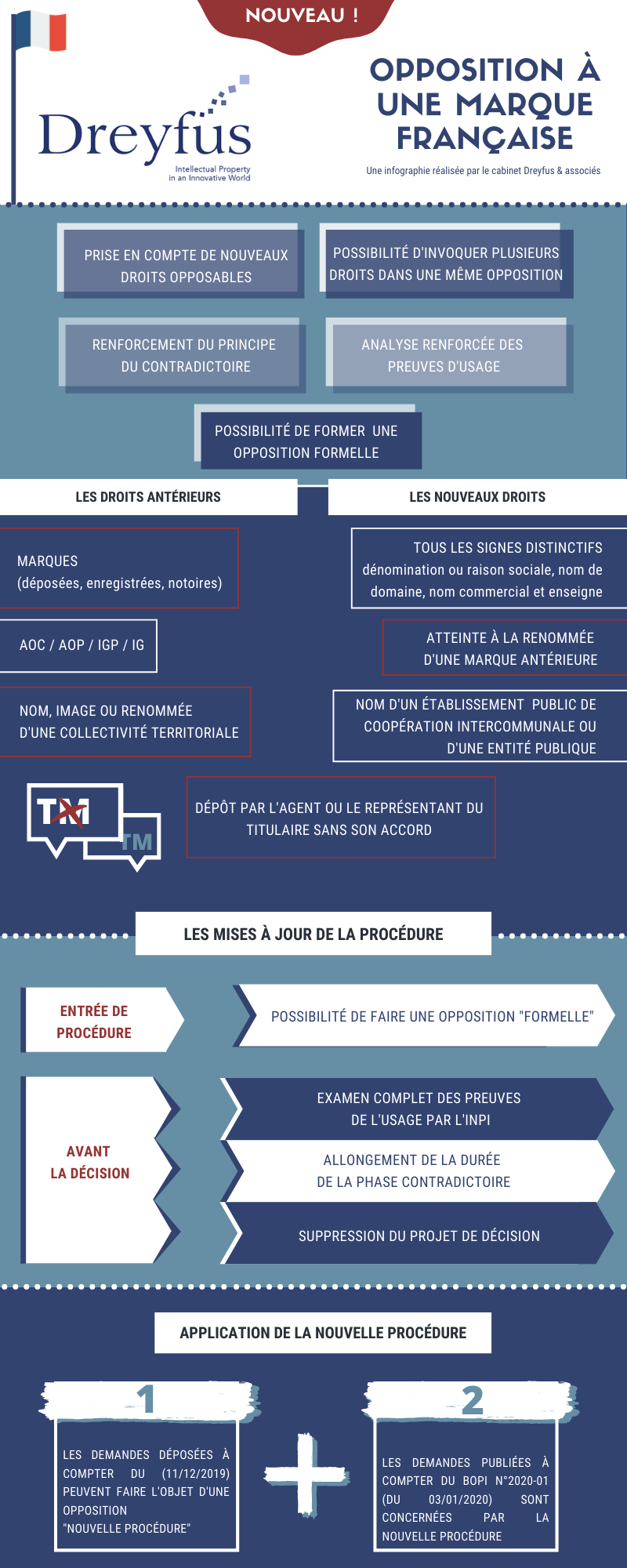
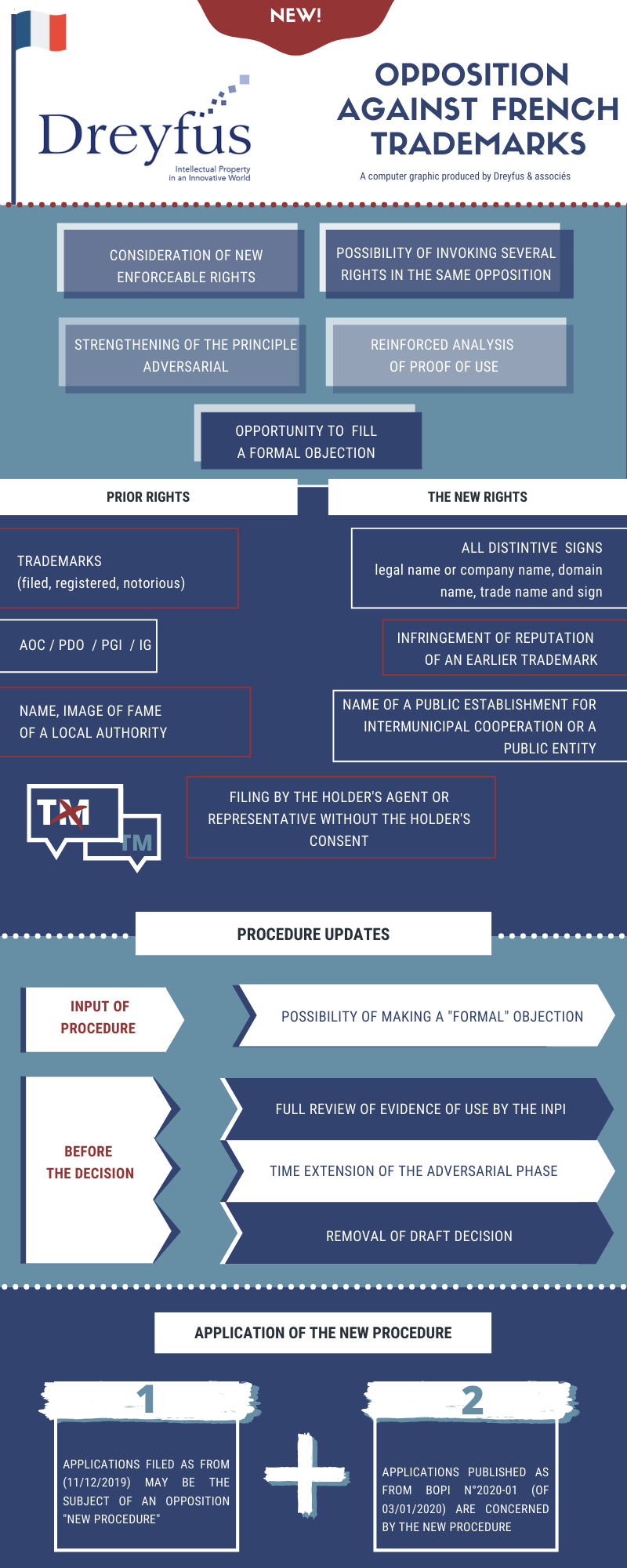




 Meet Nathalie Dreyfus at the
 The
The 
 On April 23rd 2019, the
 The WHOIS protocol now appears to be outdated due to the evolution of technical requirements in the digital era. Indeed, this tool, provided by registrars, is inter alia not capable of working with either encoding or with non-latin characters. Consequently, since 2015, ICANN in collaboration with the Internet Engineering Task Force (IEFT) has been working on the replacement of WHOIS through the RDAP (Registration Data Access Protocol), in compliance with the Temporary Specifications and the GDPR.
 WIPO, Arbitration and Mediation Centre, March 11, 2019, No. D2019-0035, Pharnext versus Wang Bo, Xiang Rong (Shanghai) Sheng Wu Ke Ji You Xian Gong Si
 The Asian giant – hitherto invisible – has become one of the countries where most patent and trademark applications are filed. It is not surprising that companies from all over the world want to have a presence in China. However, several factors must be taken into account when setting up these companies’ such as the features that must be contained in their corporate names.
 Companies which specialise in the audiovisual sector often require protection for their program titles through trademark law. If granted, this protection obviously offers considerable advantages for the company, but it is necessary to take into consideration some limits to it.
 Cyber-attacks are on the rise, and they are becoming more sophisticated. Our current business model is globally interconnected; commercial transactions and even social life transcend national borders. Consequently, our vulnerability to cyber-attacks has been increased, however, the competences of the cyber security and police authorities, as well as political responses, are predominantly national.
 Protecting authors’ rights is a necessity in the digital age, as information flows more and more easily. That is why
 On March 29, 2019, the registry in charge of <.eu> domain names (EURid) announced the extension of its contract with the European Commission until October 12, 2022 under the Regulation (EU) 2019/517 of March 19, 2019 (“the 2019 Regulation”).
 WIPO, Arbitration and Mediation Centre, March 15, 2019, No. D2018-2944, Théâtre du Gymnase Marie Bell SAS versus Mr. Erol Topal.
 As an Alias adopted to preserve anonymity, the pseudonym is frequently used in the public sphere for commercial purposes. This can be, for example, the pen name of an author, the identity under which a painter is known, etc.
 To the delight of our taste buds, flavors and gourmet creations are part of our daily lives, but from a legal perspective, the situation is more delicate and the flavor more bitter. Indeed, there is a consensus on the need to protect culinary creations but intellectual property law currently offers only peripheral protection.
 On April 30, Spain finalized the reform of its trademark law, started in late 2018. From that date, the
 On March 2017, the new General Civil Chinese Law Rules extended the general limitation period for civil actions from 2 to 3 years.
 The 65th international meeting of the
 According to the
 Nathalie Dreyfus has been admitted as panelist and arbitrator in the CIRA Panel (Canadian Internet Registration Authority).


 According to the


 In a short time, networking sites have become one of the main channels for companies’ communication. eBay, Tripadvisors, Amazon or even the more conventional social networks such as Facebook or Twitter have, in fact, become preferential showcases for advertising. They do undoubtedly represent an opportunity for making a company visible, but they nonetheless pose a real threat to reputation. Companies are now faced with a new, major challenge in terms of unfair competition, that is to say “fake customer reviews”, that, although false, have a great influence on the consumption of the products and services they target.


 The U.S. Supreme Court held on March 4, 2019 on a long-debated question.
 On February 1, 2019, a new version of the


 The Czech Republic has recently amended its Trademark law in order to transpose


 This year Nathalie Dreyfus and Dreyfus law firm were yet again recognized as “Excellent” in the category “Best Intellectual Property Law Firm in France” for brands and designs in 2019.


 Trademark law has long recognized the principle of specialty, which signifies that the owner of a trademark has a monopoly on its sign only for the goods and services that the sign designates. However, application of this principle needs a further consideration in cases related to alcoholic beverages.
 The withdrawal of the United Kingdom from the European Union, either with or without ratification of an agreement, will have an impact on trademark law, domain names, and personal data alike. It is therefore necessary to understand the changes and get prepared.

 It was after a lengthy procedure that the French Supreme Court, the Cour of Cassation, in its judgment delivered
 The famous Alsatian Choucroute (Sauerkraut) was finally recognized on July 3rd, 2018 as a Protected Geographical Indication (PGI) at the European level. It provides an opportunity to revisit the term “protected geographical indication” and the challenges it represents on the local and international level.
 Samoa’s membership confirms that the Madrid System and its protocol are major assets for the international protection of the trademarks, offering a convenient and economic solution for trademark owners around the world.




 The last ICANN meeting of the year was held in
 In a
In a 


 In the


 The auction house Camard used the services of a photographer to produce photographs for the different auction catalogues. They subsequently observed that Artprice.com had digitised these catalogues and published them online in their database, without authorisation.


 In tandem with ever stricter legislation, new technologies are increasingly requesting our personal data, often of a sensitive nature.




 The very essence of copyright is to confer on the author of an original work an exclusive, intangible property right enforceable against all. Pursuant to this exclusive right, no infringement of the work, of any nature whatsoever, can be carried out without the prior consent of the author. The right to the respect of the integrity of the work enshrined in article L.121-1 of the Intellectual Property Code imposes that a work that expresses the personality of the author cannot in theory be subject to a material alteration without the express agreement of the author. Through a judgment on 20 December 2017, the Supreme Court of Appeal has just established a limit to this exclusive right of the author: an alteration of a work of architecture that does not infringe the rights of the author can be carried out without their consent. An original architectural work can be protected in respect of copyright as any other literary or artistic work would be. However, and contrary to a purely aesthetic work, a work of architecture has a functional purpose which results from the fact that a building, in addition to being original, may constitute a place of residence, work or access to culture. In the case at hand, the architectural work intended to house the collections of the “Musée d’Arles antique” had been produced by an architect on behalf of a département, which, without the consent of the architect, proceeded to carry out extension works to the building in order to exhibit a Gallo-Roman trading ship.


 After the filing of an intellectual property right, several types of changes are likely to occur, such as the owner’s move, the change of his name in a legal way or the assignment of his rights. Such corrections must be recorded in the relevant register, as this could have very damaging consequences for the holder.








 Compliance of Zambian law with the Paris Convention, the TRIPS Agreement and the Harare Protocol.





 Dreyfus recently held a seminar on trademarks and domain names in Iran as international brands look toward the country for opportunities. Nathalie Dreyfus reveals what was discussed, and how brands can benefit.


 Following the results of the referendum and the resignation of David Cameron, Theresa May has now been appointed Prime Minister and shall lead the Brexit. As laid out in our previous articles on the Brexit (Brexit: How to prepare oneself for the consequences?; The consequences of Brexit on trademarks and patents), implications on intellectual property law are to be expected, and in particular, on trademark and patent law. Such implications however, are not yet clear.













 The manufacturing of the French beret is in the hands of a 174 year old company, Laulhère. Recently Laulhère purchased its sole French competitor, Blanq – Olibet, with a view to keeping beret production in France. However, international competitors from countries such as China, Pakistan, India and the Czech Republic are casting a shadow over French production by offering lower priced berets.










 Le TPICE a validé le rejet de l’opposition à une demande de marque figurative opéré par l’Office de l’Harmonisation dans le Marché Intérieur (ci-après OHMI) et sa chambre des recours le 17 mai 2013.


