domain name

Coronavirus: the measures implemented by intellectual property offices to deal with the health crisis

The whole world’s been in slow motion since the Covid-19 virus spread. Thus, state governments are doing their best to maintain the continuity of the administration despite the implementation of containment measures,. Since an ordinance of March 16, the offices have decided to extend procedural deadlines that expired during this period of health crisis.


Here’s a list of the provisions that offices have put in place in order to allow better management of procedures related to trademarks, as well as patents.


  • INPI, The National Institute of Intellectual Property

The INPI decided in its order n°2020-32 of March 16, that the deadlines for proceedings relating to patents, trademarks and designs will be extended to 4 months for procedures concerning patents, trademarks and designs. However, the deadlines for priority for international extensions, for payments for patent and supplementary protection certificate filing, which are subject to supranational provisions, have been excluded.


The order adds that “in the event of failure to comply with a deadline, the health crisis will be taken into account when examining the procedures for appealing for restoration or for a forfeiture statement to the INPI. »


It should be noted that the bill put in place by the government was adopted by Parliament on March 2: the aim is to enable the Government to legislate by ordinance in many areas, including that of intellectual property. This ordinance thus includes provisions concerning the extension of the deadlines stemming from the Intellectual Property Code, including those relating to the opposition procedure.

In accordance with the new order dated March 25 (No. 2020-306), the INPI extended the delay of deadlines for procedures concerning trademark oppositions, trademark renewals or design extensions : it allows to benefit from thecorresponding grace period or for the filing of an administrative or judicial appeal.

In this way, it extends the deadlines which expire between March 12th and June 23rd. The statutory deadline for taking action runs until July 23rd if the initial deadline was set for one month, and until August 23rd if it was for two months or more.

The INPI is already planning to extend its deadlines until July. In the weeks to come, it will be necessary to closely monitor the news from the office.


  • EUIPO, European Union Intellectual Property Office

The Office had stated in its Decision No. EX-20-3 issued on March 16, that all deadlines expiring between 9 March and 30 April 2020 included, would be automatically extended until May 1st, 2020. Since May 1st is a public holiday, the deadlines were therefore extended until May 4, 2020.


EUIPO subsequently explained its decision on March 19. By the expression “all deadlines”, it meant all procedural deadlines, whether fixed by the Office or of a statutory nature. “They are stipulated directly in the Implementing Regulation,” with the exception of the deadlines relating to matters not covered by certain regulations, such as that on the European Union trademark (2017/1001). It is therefore applicable to all procedures, whether for trademarks, patents, renewals or opposition proceedings.

More recently, on April 29, WIPO’s Executive Director issued the Decision No. EX-20-4, extending all deadlines expiring between May 1st and May 17, to May 18, in order to further support and assist users during the COVID-19 pandemic.


  • WIPO, the International Intellectual Property Organization

In the opinion (No. 7/2020) issued on March 19, WIPO introduced possible remedies for failure to comply with the deadlines under the Madrid system and modalities for the extension of the deadlines when the national offices are closed.


With regard to the international registration of trademarks, WIPO added that the extension of the deadlines is automatic in the event that an IP office is not open to the public.  Therefore, if a deadline for a provisional refusal expires on the day an office is closed, it will be extended on the first day following the opening of the office.


The opinion adds that, with regard to trademarks, applicants may request the continuation of the procedure without having to justify themselves, in particular for all matters relating to an international trademark application, a request for registration, a request for modification of a subsequent designation, etc…


WIPO has also recently announced automatic extensions of the deadlines in cases where a national IP office is closed to the public and in the event of disruption in postal or mail services.


In a press release of March 16 and 19, USPTO had announced that it was waiving the late fees in certain situations for applicants affected by the coronavirus, as well as the requirement of an original handwritten signature in ink for certain documents.


On April 28, USPTO announced an extension of the deadlines up to May 31, 2020. This means that some actions that were due in this period can be postponed to 1 June. The USPTO gives an extension for certain deadlines between March 27 and April 30. This period runs to 30 days from the original deadline.


In order to obtain the extension, applicants or patentees must “submit a declaration that at least one person responsible for the delay has been affected by the COVID-19 pandemic, due to office closures, financial problems, inaccessibility of records, illness of a family member, or other similar circumstances. »


  • In other countries of the world

-The Canadian Intellectual Property Office is extending the deadline to July 6th, 2020.

The German Patent and Trademark Office affirmed in a statement dated May 11 that the extension of the deadlines will be until June 2.

UKIPO, the United Kingdom Office declared on May 7, 2020 that all deadlines falling on or posterior to March 24, 2020 (being those interrupted days) will be extended to the following interrupted day. The period of interruption will end on July 29th. This extension applies to most deadlines for patents, trademarks, supplementary protection certificates and designs.

The Benelux Organisation for Intellectual Property is the most rigid office. Indeed, in a press release dated March 16, it discloses that trademark applications referring to coronavirus will be refused registration. However, in a press release of March 20, it revised their position by saying that “the BOIP will not withdraw any application or procedure because a given deadline has not been met. This also applies to opposition proceedings not filed on time or to payments not made on time”. These measures will be applicable until May 20, 2020, at least.


The WIPO website regularly updates information on the provisions adopted by various intellectual property offices in order to keep abreast of the various communications that offices can make around the world. With the introduction of deconfinement measures in some countries, including France, it will be necessary to closely follow the future news.


Dreyfus can assist you in the management of your trademarks portfolios in all countries around the world. Do not hesitate to contact us.


Read More

Will trademark non-use due to quarantine be considered a valid reason?

Due to the current health situation, the majority of companies have reduced their activity. This suspension or reduction of activity will have an impact on all intellectual property and may in particular result in the non-use of the trademark by the owner, leading to its forfeiture.


In fact, in accordance with the French law, and more specifically Article L714-5 of the Intellectual Property Code, if a trademark is not used for an uninterrupted period of five years for the goods and services covered by the registration, the court may, order the revocation of the trademark and the cancellation of its registration, at the request of an interested third party

The holder must therefore ensure that there is genuine use during this five-year period, i.e. real exploitation.

Thus, owners of trademarks that had not been exploited before the health crisis and quarantine could not start or resume exploitation. This unprecedented period could therefore lead to a period of non-use of more than five years.

However, the trademark owner may invoke a valid reason justifying the absence of serious use. According to established case law, this just reason must have a direct link with the trademark, be a circumstance outside the control of the trademark owner which has made the use of the trademark impossible or excessively difficult.

Therefore, it seems that the court may consider the restrictions imposed by the Government because of the pandemic as a valid excuse for the non-use of the trademark by the owner. Indeed, this obstacle, which is external to the owner’s will and which has made the use of the trademark extremely difficult, may be qualified as a just cause which will prevent or should lessen the delay of a possible revocation of the trademark.

Read More

The important business of domain names related to the coronavirus: simple speculation or sophisticated scams?

Individuals, entrepreneurs, professional url brokers… all are trying to buy and resell domain names with keywords related to the virus. The prices go up to several thousand euros. For example “corona-vaccination.fr” was bought on March 16 by a German developer, who is now offering it for sale for 9,000 euros.

The DomainTools search team began monitoring the terms related to Covid-19 in February 2019. From a slight increase in domain names using the terms “Coronavirus” and “COVID-19” at the begining, to registrations with a significant spike in recent weeks, it is clear that many of them are scams!

Among them, there is a site developed by a private individual offering the user to install an Android application called “CovidLock”, claiming to have a tool for monitoring the epidemic in real time.  In reality, it is a ransomware that asks for of $100  Bitcoins. Thanks to a proactive “hunt”, DomainTools detected it within hours of its creation, before it claimed any victims, and was able to obtain the scammer’s Bitcoin wallet.

Many domain names that should be watched closely at the height of the epidemic, are paving the way for resale at hefty prices or for cyber attacks!


Dreyfus can assist you in the management of your trademarks portfolios in all countries around the world. Do not hesitate to contact us.


Source: https://www.domaintools.com/resources/blog/covidlock-mobile-coronavirus-tracking-app-coughs-up-ransomware

Read More

A Complainant who claims an old domain name must demonstrate its use in order to justify prior rights

Source: WIPO, Arbitration and Mediation Center, Jan. 22, 2020, No. D2019-2992, Cyberplay Management Ltd v/ WhoisGuard Protected, WhoisGuard, Inc./DIREX NV and Johann Mayer.

The Maltese company Cyberplay Management holds a gaming license for the purpose of operating an online casino. The latter owns the European trademark “Loki”, deposited on January 10, 2017 and registered on 6 September 2017, as well as the domain name <loki.com>, registered in 1992 and currently operated for online casino services. Said Company filed a UDRP Complaint before the WIPO Arbitration and Mediation Center against the domain names <lokicasino16.com>, <lokicasino17.com>, <lokicasino18.com>, <lokicasino19.com> and <lokicasino.com>, with the prejudice that they infringe its rights. Indeed, they associate the “Loki” trade mark with the term “casino”, which refers to its activity. The domain name <lokicasino.com> had been registered on May 16, 2016 and the other four domain names on January 11, 2017 (one day after the registration of the Complainant’s trademark,).

At the time the Complaint was filed, the Respondents were using these domain names in connection with an online casino. The Complainant considers that the Respondents registered and used the domain names in bad faith. The Respondents, for their part, claim that they never had knowledge of the applicant and its trademark. In addition, the Respondents have provided several screenshots, taken from the WayBack Machine website databases (archive.org) of the history of the Complinant’s website, showing the latter has never used the domain name <loki.com> for casino activities prior to the current period. For example, in 2006, it referred to a site allowing the user to find all types of events near their location.

The expert ruling on the case concludes that the complaint must be rejected, since the applicant did not provide evidence showing it was the holder of trademark rights for the sign “LOKI” at the time of registration of the disputed domain names. The trademark application was filed after the registration of the domain name <lokicasino.com > owned by the Respondents. Furthermore, in regard to the law on unregistered trademarks (right of use), the Complaint does not submit any evidence of use of the sign “LOKI” in connection with the services of an online casino. Thus, it is important to recall that in order to prosper in a UDRP proceeding, it is imperative for a Complainant to submit evidence establishing, in particular, the registration and use of a domain name in bad faith. In this case, the Complainant failed to provide such evidence. This decision also shows the growing importance of the archives proposed by WayBack Machine, which the judges now tend to accept as evidence (subject to justifying a bailiff’s report).

Read More

The rise of phishing in the midst of the coronavirus crisis

Source: Bank Info Security, Feb. 11, 2020


The global health crisis caused by the coronavirus is a favorable context for phishing techniques. Indeed, many organized gangs of cybercriminals are pretending to be health organizations by using fake domain names. As a result, they send an e-mail pretending to be a health-related entity, in which they ask the recipient to click on a link and enter or confirm a login and password. For example, cybercriminals therefore send phishing e-mails containing domain names similar to those used by the Centers for Disease Control and Prevention. For example, cybersquatters have incorporated the domain name “cdc-gov.org” which is similar to the official domain name “cdc.gov”.
Thus, these malicious e-mails encourage users to click on a link that looks like it contains information related to the issues related to the coronavirus. In fact, Internet users are redirected to a fake website where they have to enter a username and password. In other cases, cybercriminals send phishing e-mails looking like they originate from the World Health Organization, inviting users to a link to download a document on security measures against the spread of the virus. Of course, this is not the case and users are redirected to a pop-up screen asking for a username and a password. It should be noted that some cybercriminals adopt a different tactic by posing as entities linked to the world of economics, such as shipping companies or manufacturing industries. The coronavirus crisis can have an impact that extends beyond health concerns. Hence, it is necessary to be doubly careful about the extension of these phishing campaigns, alert may be raised for example by e-mails containing numerous spelling mistakes.

Read More

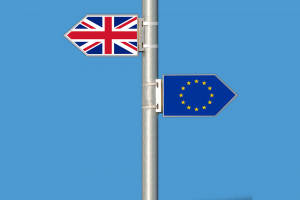
The <.eu> extension against Brexit

Source: EURid, registry of the <.eu> extension 

The United Kingdom parted from the European Union on January 31, 2020. As a result, the United Kingdom and the European Union entered into a transitio period, a period that has been announced to last till December 31, 2020. During this period, UK residents are still entitled to register and renew names in <.eu>.

However, once this period expires, they will no longer be able to register domain names with the <.eu> extension, nor to keep those they already hold, unless they comply with the requirements. The EURID originally detailed a comprehensive plan that was supposed to be implemented from November 1, 2019, the date when the United Kingdom was due to leave the European Union. It will finally apply at the end of the transition period, although no precise deadlines have yet been set. Once the transition period ends, only the following persons are entitled to register domain names in <.eu>: a citizen of the European Union, regardless of his/her place of residence; a natural person who is not a citizen of the Union European but is a resident of a Member State; a company established in the Union; or an organization established in the Union, without prejudice to the application of national law.

Thus, for already registered domain names, registrants will be able to update their contact details in an attempt to maintain their assets. In particular, they will have to indicate a country code of citizenship corresponding to a Member State of the European Union of 27 regardless of their residence or establish an entity legally established in one of the eligible Member States of the European Union of 27 or the EEA. All registrants who do not comply with these eligibility rules will see their domain names cancelles such the domain names will then be available for registration to all.

As non-compliant domain names will be withdrawn, it is appropriate to carry out a thorough analysis of registrants’ domain name portfolios to see whether any of their registrations is at risk.

Read More

Registries and artificial intelligence

A number of national top-level domain name registries such as the English registry Nominet have begun to use artificial intelligence to prevent abusive domain name registrations. Each registry uses its own system to suspend registrations if they believe there is suspicious activity on an IP address or if the identity of the applicant cannot be verified.

 

Ongoing assessment of the identity of the registrant thus helps reducing domain name infringements.

Read More

The liberalization of prices for domain names in <.com>: a possible increase from2021

The gTLD <.com> apparently occupies more than 40% of the domain name market share, according to statistics provided by the site www.domainnamestat.com. These results confirm that it is an unavoidable extension, especially because the <.com>, which addresses the whole world, is a strong rallying sign.

However, the negotiations in progress between ICANN and the <.com> registry, VeriSign, could lead to a modification of the approval on this extension, so that the <.com>’s price would increase by possibly 7% per year, from 2021 to 2024. In return for this right, VeriSign would pay $4 million to ICANN.


This negotiation is notably allowed by an amendment accepted by the American Department of Commerce, datedOctober 26, 2018, by which it was indicated that “in view of the more dynamic market of domain names, the Department considers it advisable to modify the cooperation agreement in order to provide flexibility in the prices related to the registration and renewal of domain names of the .com registry”.

If the price of <.com> increases, it will be relevant to see whether other TLDs recover some of its market shares, especially among the new gTLDs. If it seems unlikely that companies will abandon the names in <.com> that they already hold, newcomers to the market could possibly prefer other extensions.

Read More

Association between blockchain and domain names

Domain names appear to be a fertile ground for innovators related to blockchain technology.



Domain names and blockchain meet around the launch of the new extension “.luxe”, which contrary to what one might think was not created for the luxury industry (which already has its extension “.luxury” launched in 2014). The Ethereum foundation, whose aim is to promote blockchain technology, has entered into a partnership with the Minds + Machines (MMX) registry to create a new use for domain names, making “.luxe” the equivalent for cryptocurrency of what a classic extension represents for the IP address.


This association thus makes the IP addresses for the “.luxe” extension more intelligible.


Indeed, holders can link their domain name composed of the “.luxe” extension to their Ethereum account to replace their 40 characters identification number and make it easier to remember and use.

Read More

Provisional French patent applications for a simplified registration are now possible

With the publication of Decree No. 2020-15 adopted for the application of the PACTE law, it is now possible to file provisional patent applications as of July 1, 2020.


  • What is a Provisional Patent Application ?

A provisional application is a patent application whose registration procedure is simplified since certain filing requirements may be deferred in time. It is a procedure which permits the setting of an earlier filing date.


  • What is the Objective of a Provisional Application ?

This procedure is intended to allow companies to file patent applications before the French National Institute of Intellectual Property (“INPI”) in a simpler and less costly way. Therefore, it aims to facilitate access to IP protection, especially for start-ups and SMEs. The main objective is to provide a more flexible procedure for registration of patents.


  • How to File a Provisional Application?

With this Decree, it is possible to file a provisional patent application and defer the submission of the claims, the technical content of the invention and a copy of the prior filings.

On the other hand, the applicant is obliged, when filing the application, to indicate explicitly that this is a provisional application.


  • After Filing the Provisional Application

Within twelve months of the filing date of the provisional application, the applicant may request that his provisional application be transformed into a “normal” patent application (by completing the above-mentioned requirements that he had previously deferred) or that his application be converted into a utility certificate.

At the end of this period, the provisional patent application is withdrawn. Ultimately, this procedure allows applicants to gain additional time before deciding on the future of their applications.


  • Payment of the Filing Fees

The applicant must pay the filing fee within one month of the filing date. However, the applicant may pay the fee for the search report within one month of making a request to turn the patent application into a normal one.


This less stringent registration procedure will allow applicants to apply for patents in a more flexible way, under certain conditions. It will render it possible to fix the date of creation of an invention and then to determine what action will be taken later on with regard to its protection.

Read More