Dreyfus

Instagram and social networks : what rights do users have in their posted photos?

With the development of social networks, creativity on Internet expanded to a point that it became almost imposible for an artist or a brandto not have their Instagram or Facebook page. The presence on social networks has become an almost essential prerequisite for the reputation of an artist.

The Terms of use of Instagram, especially popular with photographers for exhibiting  their work, provide that users remain as owners of the content they post on the network. However, in several recent cases, photographers have noted their work shared or reposted without being able to oppose.

Therefore, an essential question arises :Do we keep the ownership of the photos we post on social networks ?This question seems to animate the debate between different countries.Inthe US the answer looks negative, while, on the other hand, France seems to be more protective.


Precedents on Instagram : The Richard Prince Case

In 2015, Richard Prince, stylist, painter and photographer chose to expose screenshots of the social network Instagram with different pictures without obteining the author’s agreement. He earned more than 100 000 dollars from the sale of these artworks, and the authors of the original pictures didn’t receive any money for this commercial exploitation.

In the United States, this practice falls under the so-called « Fair use » exceptions which alllow an artist to work from an existing picture and to transform it without infringing the copyrights.


A circumvention of the law: the Mashable case


More recently, the american information website Mashable wanted to publish an article related to the work of ten women photographers. One of them, Stephanie Sinclair, denied Mashable the right of using her artwork. The site therefore bypassed this refusal by using the Instagram network function “embed”, allowing to share content without having to download it. Thus, the image used is only stored on the social network and not on the server of the Mashable website, directly.

The New York Southern District Court, in a judgment given on April 13, 2020, declared that the author of the photographs posted on a public Instagram account could not oppose that an online media integrates them in his articles. In addition, the judge based his decision on the Terms of use of the social network which provide that users grant for each posted image “a non-exclusive right, free of rights, transferable, sublicensable and worldwide“. According to the judge, the integration of an image on a third-party site therefore constitutes a sub-license right.

It is considerated that when a user posts a photo on a public Instagram account, they give their agreement for all use via the « embed » function.


Following this decision, the photographer Stephanie Sinclair said she would appeal.


What about French law on social networks ?

In France, this statement may be attenuated by articles L.131-1and L.131-3of the Intellectual Property Codewhich prohibit the “global transfer of future works” and provide that “the transmission of the rights of the author is subject to the condition that each of the rights transferred is the subject of a separate mention in the deed of transfer and that the area of ​​exploitation of the rights transferred is defined as to its extent and destination, as to the place and as to the duration”.

Based on this, the Paris Tribunal de Grande Instance (High Court of Paris) has already judged unfair, in the Twitter (2018) and Facebook (2019) cases, clauses similar to that invoked by the American judge concerning Instagram.


In short, while the struggle of artists in the United States to assert their rights on social networks and particularly on Instagram, seems laborious, it should be noted that French law is more protective of authors and artists. To be continued


Dreyfus can assist you in the protection of your rights on social networks in all countries of the world. Do not hesitate to contact us.

Read More

World Anti-Counterfeiting Day: issues and challenges

In honor of the 22nd World Anti-Counterfeiting Day, Dreyfus Law Firm attended a Webinar organized by INDICAM(Istituto di Centromarca per la lotta alla contraffazione) involving directors of various anti-counterfeiting organizations: GACG, EUIPO, UNIFAB, INDICAM, ANDEMAand ACG.

Anti-counterfeiting issues are always of paramount importance. In fact, approximately 5% of imports into the European Union are counterfeit products. The counterfeiting market is very lucrative for counterfeiters: it requires a very low investment for a very high profit. In addition, the risks associated with it are lower.

During the health crisis linked to the Covid19, the sale of counterfeit products increased significantly: masks, hydro-alcoholic gel, medical equipment; and all this to the detriment of the population’s health. This phenomenon was particularly observed on Marketplace platforms, which were forced to invest impressive means to suppress fraudulent advertisements.

Consequently, the question arises: if the platforms are capable of actively combating the sale of counterfeit medical products in times of crisis, why cannot the same be said of other acts of counterfeiting?  Cooperation with the platforms should therefore be initiated to this end. European associations are closely following the progress of the Digital Single Act, which should represent an additional opportunity in the protection of rights.

Moreover, during the health crisis, the fight against counterfeiting has mainly been focused on medical products and devices. As a result, many infringements went undetected. For example, only products arriving by air were checked during this period and not products imported via cargo ships. To make things worse, in Belgium, for example, all the police officers whose mission was usually to combat counterfeiting were requisitioned in order to enforce anti-Covid-19 measures.

With the coronavirus, the fight against counterfeiting must therefore be stepped up. One of the challenges for the years to come is to provide consumers with the best possible information. Delphine Safarti-Sobreira, Director of UNIFAB (Union des Fabricants), said that awareness campaigns were already being launched through various media, including television broadcasts and YouTube. The next step will be to convince the government to introduce compulsory education in schools on this subject.


Three elements are essential in order to fight effectively against counterfeiting: an effective law, more information for consumers and an unwavering determination to continue the fight.


Dreyfus can assist you in the management of your trademarks portfolios in all countries of the world. Do not hesitate to contact us.

Read More

The important business of domain names related to the coronavirus: simple speculation or sophisticated scams?

Individuals, entrepreneurs, professional url brokers… all are trying to buy and resell domain names with keywords related to the virus. The prices go up to several thousand euros. For example “corona-vaccination.fr” was bought on March 16 by a German developer, who is now offering it for sale for 9,000 euros.

The DomainTools search team began monitoring the terms related to Covid-19 in February 2019. From a slight increase in domain names using the terms “Coronavirus” and “COVID-19” at the begining, to registrations with a significant spike in recent weeks, it is clear that many of them are scams!

Among them, there is a site developed by a private individual offering the user to install an Android application called “CovidLock”, claiming to have a tool for monitoring the epidemic in real time.  In reality, it is a ransomware that asks for of $100  Bitcoins. Thanks to a proactive “hunt”, DomainTools detected it within hours of its creation, before it claimed any victims, and was able to obtain the scammer’s Bitcoin wallet.

Many domain names that should be watched closely at the height of the epidemic, are paving the way for resale at hefty prices or for cyber attacks!


Dreyfus can assist you in the management of your trademarks portfolios in all countries around the world. Do not hesitate to contact us.


 

Source: https://www.domaintools.com/resources/blog/covidlock-mobile-coronavirus-tracking-app-coughs-up-ransomware

Read More

A Complainant who claims an old domain name must demonstrate its use in order to justify prior rights

Source: WIPO, Arbitration and Mediation Center, Jan. 22, 2020, No. D2019-2992, Cyberplay Management Ltd v/ WhoisGuard Protected, WhoisGuard, Inc./DIREX NV and Johann Mayer.

The Maltese company Cyberplay Management holds a gaming license for the purpose of operating an online casino. The latter owns the European trademark “Loki”, deposited on January 10, 2017 and registered on 6 September 2017, as well as the domain name <loki.com>, registered in 1992 and currently operated for online casino services. Said Company filed a UDRP Complaint before the WIPO Arbitration and Mediation Center against the domain names <lokicasino16.com>, <lokicasino17.com>, <lokicasino18.com>, <lokicasino19.com> and <lokicasino.com>, with the prejudice that they infringe its rights. Indeed, they associate the “Loki” trade mark with the term “casino”, which refers to its activity. The domain name <lokicasino.com> had been registered on May 16, 2016 and the other four domain names on January 11, 2017 (one day after the registration of the Complainant’s trademark,).

At the time the Complaint was filed, the Respondents were using these domain names in connection with an online casino. The Complainant considers that the Respondents registered and used the domain names in bad faith. The Respondents, for their part, claim that they never had knowledge of the applicant and its trademark. In addition, the Respondents have provided several screenshots, taken from the WayBack Machine website databases (archive.org) of the history of the Complinant’s website, showing the latter has never used the domain name <loki.com> for casino activities prior to the current period. For example, in 2006, it referred to a site allowing the user to find all types of events near their location.

The expert ruling on the case concludes that the complaint must be rejected, since the applicant did not provide evidence showing it was the holder of trademark rights for the sign “LOKI” at the time of registration of the disputed domain names. The trademark application was filed after the registration of the domain name <lokicasino.com > owned by the Respondents. Furthermore, in regard to the law on unregistered trademarks (right of use), the Complaint does not submit any evidence of use of the sign “LOKI” in connection with the services of an online casino. Thus, it is important to recall that in order to prosper in a UDRP proceeding, it is imperative for a Complainant to submit evidence establishing, in particular, the registration and use of a domain name in bad faith. In this case, the Complainant failed to provide such evidence. This decision also shows the growing importance of the archives proposed by WayBack Machine, which the judges now tend to accept as evidence (subject to justifying a bailiff’s report).

Read More

Update covid-19: Dreyfus organization

Dear all, 


Since Monday 11th of May and the end of the French quarantine, we are pleased to open the office to allow meetings with our clients to take place physically if it’s necessary.

We have organized a team rotation in our offices and continue to enable remote work. 


We are naturally available to answer all your requests by email contact@dreyfus.fr or by phone +33 1 44 70 07 04.


See you soon!

Read More

UDRP procedure. The bad faith complainant: when the chances of success are so low that the applicant should not have taken action

Source: WIPO, Arbitration and Mediation Center, Jan. 30, 2020, No. D2019-2937, Scalpers Fashion, S.L. c/ Dreamissary Hostmaster

 

The Spanish company Scalpers Fashion is active in the fashion industry. It is the owner of numerous trademarks incorporating the “Scalpers” sign, including the European Union trademark “Scalpers” No. 6748578, registered on September 29, 2008. The company has filed a UDRP complaint before the WIPO Arbitration and Mediation Center against the domain name <scalpers.com>, claiming that it infringes its rights. The domain name was registered on September 15, 1997, by the Respondent Dreamissary Hostmaster, who is in fact a natural person, a U.S. citizen and the holder of a substantial number of domain names featuring dictionary words. The domain name at issue was exploited to generate pay-per-click revenues by leading to sponsored links referring to the sale of tickets. At the time the complaint was filed, the domain name in question resolved to a parking page.

The Complainant submits that the Respondent intends to take undue advantage of its reputation in fashion and to disrupt its business. In addition, the Complainant submits that the large sums proposed by the Respondent in various attempts t negotiate are evidence of his bad faith. Indeed, the Respondent allegedly offered initially $150,000 and then $195,000. Finally, the Complainant considers that the Respondent’s bad faith is manifested by the registration of more than 100 domain names, for him to be able to resell them for a profit.

The Respondent contends that he registered and used the domain name <scalpers.com> because of the definition of the word “scalper”: a person who buys tickets at the normal price and then resells them at a high price when demand is high and available seats are scarce. In addition, the latter requires the expert to conclude to reverse domain name hijacking.

The Complainant’s position was not followed by the expert. The expert considers that the domain name was neither registered nor used in bad faith. Indeed, the Respondent had registered the domain name more than 10 years before the Complainant’s alleged date of first use of the “Scalpers” trademark. In such circumstances, there was no basis to conclude that the Respondent targeted the Complainant’s mark, which was not in existence at the time the Respondent registered the disputed domain name. As regards the use of ???, the expert also concluded that there was no bad faith, since the Respondent had used the domain name for the meaning of the word “scalpers”. The expert ruling on the case indicates that the complaint should be dismissed. In addition, he stated that the complaint was filed in bad faith by the Complainant, and was intended to deprive the Respondent of ownership of his domain name. Indeed, several facts contribute to the expert’s position: the domain name was registered by the Respondent long before the Complainant owned a trademark right in the Scalpers sign; the UDRP Complaint was filed after two unsuccessful attempts to purchase the domain name from the Respondent; and the Respondent’s counsel notified the Complainant that the complaint should be withdrawn due to the manifest impossibility of establishing bad faith.

The Complainant clearly should have known that the complaint could not succeed. Thus, it should be borne in mind that the UDRP procedure is not a one-way tool. The aggrieved Respondent may attempt to reverse the proceedings to obtain a decision against the Complainant. Here, the lack of chance of success was particularly blatant, as the domain name predates the trademark rights of Scalpers Fashion.

Read More

The rise of phishing in the midst of the coronavirus crisis

Source: Bank Info Security, Feb. 11, 2020


The global health crisis caused by the coronavirus is a favorable context for phishing techniques. Indeed, many organized gangs of cybercriminals are pretending to be health organizations by using fake domain names. As a result, they send an e-mail pretending to be a health-related entity, in which they ask the recipient to click on a link and enter or confirm a login and password. For example, cybercriminals therefore send phishing e-mails containing domain names similar to those used by the Centers for Disease Control and Prevention. For example, cybersquatters have incorporated the domain name “cdc-gov.org” which is similar to the official domain name “cdc.gov”.
Thus, these malicious e-mails encourage users to click on a link that looks like it contains information related to the issues related to the coronavirus. In fact, Internet users are redirected to a fake website where they have to enter a username and password. In other cases, cybercriminals send phishing e-mails looking like they originate from the World Health Organization, inviting users to a link to download a document on security measures against the spread of the virus. Of course, this is not the case and users are redirected to a pop-up screen asking for a username and a password. It should be noted that some cybercriminals adopt a different tactic by posing as entities linked to the world of economics, such as shipping companies or manufacturing industries. The coronavirus crisis can have an impact that extends beyond health concerns. Hence, it is necessary to be doubly careful about the extension of these phishing campaigns, alert may be raised for example by e-mails containing numerous spelling mistakes.

Read More

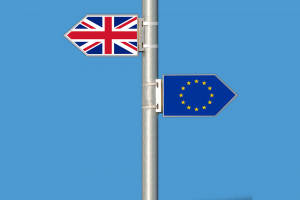
The <.eu> extension against Brexit

Source: EURid, registry of the <.eu> extension 

The United Kingdom parted from the European Union on January 31, 2020. As a result, the United Kingdom and the European Union entered into a transitio period, a period that has been announced to last till December 31, 2020. During this period, UK residents are still entitled to register and renew names in <.eu>.

However, once this period expires, they will no longer be able to register domain names with the <.eu> extension, nor to keep those they already hold, unless they comply with the requirements. The EURID originally detailed a comprehensive plan that was supposed to be implemented from November 1, 2019, the date when the United Kingdom was due to leave the European Union. It will finally apply at the end of the transition period, although no precise deadlines have yet been set. Once the transition period ends, only the following persons are entitled to register domain names in <.eu>: a citizen of the European Union, regardless of his/her place of residence; a natural person who is not a citizen of the Union European but is a resident of a Member State; a company established in the Union; or an organization established in the Union, without prejudice to the application of national law.

Thus, for already registered domain names, registrants will be able to update their contact details in an attempt to maintain their assets. In particular, they will have to indicate a country code of citizenship corresponding to a Member State of the European Union of 27 regardless of their residence or establish an entity legally established in one of the eligible Member States of the European Union of 27 or the EEA. All registrants who do not comply with these eligibility rules will see their domain names cancelles such the domain names will then be available for registration to all.

As non-compliant domain names will be withdrawn, it is appropriate to carry out a thorough analysis of registrants’ domain name portfolios to see whether any of their registrations is at risk.

Read More

Registries and artificial intelligence

A number of national top-level domain name registries such as the English registry Nominet have begun to use artificial intelligence to prevent abusive domain name registrations. Each registry uses its own system to suspend registrations if they believe there is suspicious activity on an IP address or if the identity of the applicant cannot be verified.


Ongoing assessment of the identity of the registrant thus helps reducing domain name infringements.

Read More

The liberalization of prices for domain names in <.com>: a possible increase from2021

The gTLD <.com> apparently occupies more than 40% of the domain name market share, according to statistics provided by the site www.domainnamestat.com. These results confirm that it is an unavoidable extension, especially because the <.com>, which addresses the whole world, is a strong rallying sign.

However, the negotiations in progress between ICANN and the <.com> registry, VeriSign, could lead to a modification of the approval on this extension, so that the <.com>’s price would increase by possibly 7% per year, from 2021 to 2024. In return for this right, VeriSign would pay $4 million to ICANN.


This negotiation is notably allowed by an amendment accepted by the American Department of Commerce, datedOctober 26, 2018, by which it was indicated that “in view of the more dynamic market of domain names, the Department considers it advisable to modify the cooperation agreement in order to provide flexibility in the prices related to the registration and renewal of domain names of the .com registry”.

If the price of <.com> increases, it will be relevant to see whether other TLDs recover some of its market shares, especially among the new gTLDs. If it seems unlikely that companies will abandon the names in <.com> that they already hold, newcomers to the market could possibly prefer other extensions.

Read More