The new gTLDs were launched in October 2013. More than 1000 new gTLDs have been created since, and more than 20 million domains bearing a new gTLD have been registered. While this development provides a wider choice to Internet users who want to register a domain name, it poses a threat to trademark holders who now face a higher risk of usurpation of their trademarks.
Still waiting for second round
There are less and less available domain names with standard extensions (like .com or .net), which is why a second round of new gTLDs is now becoming necessary. It would encourage more trademark holders to create their own domain name.
During its last meeting in Helsinki on June 27, 2016, ICANN annouced that the second round will not take place before 2018.
The review of rights protection mechanisms
Before opening a second round, ICANN must review and improve current trademark protection mechanisms. Indeed, the tools have not been changed since the emergence of new gTLDs in 2013 and are sometimes not in line with the current context.
ICANN has in particular worked on special procedures for post-delegation dispute resolution, and notably the URS and UDRP procedures. These procedures allow trademark holders to find alternatives for when their trademark is usurped as a domain name. The Trademark Clearinghouse, a general database allowing a trademark holder to check necessary information for the protection of his/her rights, has also been examined by ICANN.
The aim of all these improvements is to offer sufficient protection to trademark holders, especially in the current context where more and more new gTLDs may appear in the coming years.
Breakfast by Dreyfus / Petit-déjeuner – conférence
Tuesday, 27 September, 2016 – 9am to 11am / mardi, le 27 septembre 2016 de 9h à 11h
On behalf of Dreyfus, it is with great pleasure that our founder and director Nathalie Dreyfus invites you to what promises to be an insightful discussion on,
The protection of trademarks, domain names, social media networks and mobile application in Iran
Presented by Nathalie Dreyfus and special guest speaker, Mr. Mohammad Badamchi (Raysan Patent & Trademark Agents)
As of January 2016, economic sanctions on Iran were lifted and opportunities have since arisen in a market with 360 billion euros in GDP.
Today, Iran is considered an emerging market economy. With a population of 80 million people and a high growth forecast, Iran now offers opportunities for business development across a wide range of industries including: tourism and hospitality, the automotive industry and the oil and construction industries.
It is throughout the development of these industries that the protection and enforcement of trademarks, designs and domain names is becoming an increasingly complex area of discussion. Rapid economic growth makes this discussion fundamental for businesses involved in the advancement of the Iranian economy.
We will be addressing several key points during the meeting including:
Setting up a company in Iran; ownership by foreigners
Running fashion and fast-moving consumer goods companies in Iran
Recent judicial decisions in the areas of trademarks, designs, domain names social media platforms and the impact these decisions have on major economic players in Iran
How to fight counterfeit, in practice and in theory
The best strategy to enforce your trademarks in Iran
The current legal stance on domain names, social media networks and mobile applications
Nathalie Dreyfus
Founder and director of Dreyfus in Paris, Trademark Attorney and appointed expert consultant to the Court of Appeal of Paris.
Mohammad Badamchi
LLM., Attorney at Law, Raysan Patent & Trademark Agents, London and Tehran
The breakfast and discussion will take place in English.
Please RSVP by the 26th of August 2016
Nathalie Dreyfus a le plaisir de vous inviter à un petit-déjeuner et conférence sur le thème,
Iran: protection des marques, noms de domaine, réseaux sociaux, applications mobiles
Présenté par Nathalie Dreyfus avec l’éclairage de notre conférencier invité, Monsieur Mohammad Badamchi (Raysan Patent & Trademark Agents)
Depuis janvier 2016, les sanctions économiques contre l’Iran ont été levées et des opportunités d’un marché de 360 milliards d’euros de PIB s’ouvrent aux entreprises.
Aujourd’hui, l’Iran est considéré comme un nouveau marché émergent. Fort de 80 millions d’habitants, une prévision de croissance élevée, l’Iran représente un potentiel de développement pour les entreprises dans de nombreux secteurs : biens de consommation, tourisme, industries automobile, pétrolière et BTP. Dans ce contexte, la protection et la défense des marques, des dessins & modèles et des noms de domaine devient un sujet complexe et clé pour les entreprises.
Problématique d’ouverture d’une société en Iran pour les étrangers
Developper une société dans le secteur de la mode et des biens de consommation en Iran
Jurisprudence récente en matière de droit des marques, dessins & modèles, noms de domaine, réseaux sociaux et impact sur les acteurs économiques en Iran
Comment lutter contre la contrefaçon? Le droit et la pratique
Quelle stratégie pour défendre ses marques en Iran?
Situation au regard des noms de domaine, des réseaux sociaux et des applications mobiles
Nathalie Dreyfus
Conseil en propriété industrielle, fondatrice et gérante de Dreyfus, Experte près la Cour D’Appel de Paris
Mohammad Badamchi
LLM., Attorney at Law, Raysan Patent & Trademark Agents, Londres et Téhéran
NB: La conférence sera en langue anglaise
Merci de bien vouloir vous inscrire avant le 26 août 2016
In or Out? The majority of the British people (51.9%) voted in favor of leaving the European Union (EU) on June 23rd of this year. The consequences of a Brexit are still unclear but what we do know, is that there will be an undeniable impact on intellectual property rights in Europe.
It is important to keep in mind that the referendum is not legally binding. The referendum does not specify when or how the UK should leave the EU. The withdrawal of the UK from the European Union will not be immediate.
Article 50 of the Lisbon Treaty allows Member States the possibility to withdraw from the EU. A Member State who decides to withdraw, shall firstly notify the European Council of its intention. Following the notification, the EU and the UK will proceed to negotiate the arrangements for the U.K’s withdrawal as well as the framework for their future relationship. Article 50 also provides for a two-year period following the notification from the UK to the European Council, after which the treaties will cease to apply. The UK would therefore not completely leave the EU before the end of 2018.
Over the next two years, it’s “business as usual” in the field of intellectual property
It is important to note that no immediate change is expected: no loss of rights will occur and no immediate action needs to be taken. Indeed, throughout the negotiation period, European intellectual property rights (European trademarks, Registered Community designs and European patents) will be entitled to the same level of protection.
What are my options after the Brexit has become effective?
Patents:
The EPO, which operates independently from the EU is responsible for reviewing applications and issuing European patents. Non-EU member countries however (e.g. Switzerland) can also be a part of the EPO; therefore, in theory, this should allow the UK to maintain its position within the EPO. As such, European patents designating the UK may continue to be issued.
Moreover, the implementation of the Unitary Patent Court (UPC),, scheduled for early 2017 will be delayed. Indeed, the implementation of the UPC requires the ratification of the Regulation by 13 member states, including France, Germany and the UK. As EU membership is a condition of being part of the UPC and the Unitary patent, Brexit makes the setting up process more complex.
European trademarks (EUTMs) and Registered Community Designs (RCDs)
EUTMs and RCDs in force prior to the UK’s official withdrawal from the EU will continue to cover the UK.
We do not yet know the consequences of the UK’s withdrawal from the EU on EUTMs and RCDs nor when these changes will occur. What we can say, is that the new EUTMs and RCDs filed with the EUIPO will not maintain the same value, as they will no longer cover the UK. To benefit from the same level of protection, one must be the holder of a European IP right (excluding the UK) and a British national IP right; therefore, in order to guarantee the same level of protection, one has to proceed with the registration of a European trademark with the EUIPO and the registration of a British trademark (the latter may be done either through national registration with the IPO or by registering an international trademark).
However, there is still the possibility of the UK reaching an agreement under which EUTMs and RCDs in force prior to the Brexit, continue to be valid on UK territory: for example, the possibility of converting European titles into British national trademarks or designs.
Copyright law:
No change is expected in the area of copyright law insofar that copyright is not very harmonized in Europe and no registration is necessary for protection. Courts will still look to the Berne Convention and the Universal Copyright Convention, but legal interpretation in accordance with EU Directives, is still to be confirmed. One needs to be cautious however in the area of contracts relating to copyright law, once the UK leaves the EU (please see below).
Contracts:
It is advisable to review each contract, especially existing license agreements, in order to examine the clauses relating to ‘territory’ and whether the EU is mentioned. One should then determine whether the term ‘EU’ in the contract refers to the EU as constituted at the date of agreement or, refers also to changing circumstances relating to the EU. This is to ensure that such contracts are in line with the original intent of the contracting parties. Agreements which are signed over the next two years will need to clearly state what is actually meant by “European Union”.
Data protection:
Whilst the Regulation on the protection of data has only just been adopted by the European Parliament (April 27, 2016) it may not actually apply to the UK. We are not presently aware on how the UK will decide to organize the flow of data but specific arrangements on this particular subject between the UK and EU member states are foreseeable.
.eu domain names:
In order to register a domain name in .eu, it is necessary to have an address within EU territory (or in Iceland, Liechtenstein or Norway), proving the registrant is subject to European law and relevant trading standards.
The UK’s withdrawal from the European Union could also have an impact on hopeful British .eu registrants.
However, EURid, the registry manager in charge of .eu and .ею (.eu in Cyrillic script) confirmed that there will be no immediate change, provided the political and legal processes have not commenced. Moreover, for some, this should not be an issue insofar as large companies will have the ability to register .eu domain names through subsidiaries located on EU territory. For smaller businesses and individuals, solutions should be devised over the next few months.
National rights:
British intellectual property rights will not be affected by the Brexit, whether these concern the acquisition or the assertion of rights over trademarks, designs and patents.
Practical guidance:
Given the current uncertainty surrounding the Brexit decision, it is now essential to analyze your intellectual property rights portfolio and to establish a strategy for your existing rights and registrations to come.
For your existing core trademarks, consider filing a UK registration at the Intellectual Property Office in addition to your EUTM. This also applies to any new EUTM filing.
A national filing is neither too costly, nor too long a process but offers a priority right so it provides a better level of protection in case EUTM filings no longer apply in the UK.
On the other hand, if the EUTM continues to apply to the UK, a national filing would allow the possibility of a seniority claim, meaning that the EUTM also includes UK registration.
Dreyfus & associés can assist and advise you on the best strategy to enhance and protect your rights.
The manager of a company called Vizion’Air operates an e-commerce website specializing in model making and drones under the trade name Droneshop. It filed the domain name www.ladroneshop.com in 2012. As of 2011, another company, Minigroup, is the owner of the domain names www.droneshop.fr and www.droneshop.com.
Following the filing of the French trademark “DroneShop” in 2013 and of a French semi-figurative trademark, Vizion’Air brought an action against Minigroup, on the grounds of unfair competition. Vizion’Air invokes the wrongful acts of Minigroup and requests the cancellation of the registration of the two contentious trademarks. To do so, Vizion’Air needed to etablish that a risk of confusion exists between the Minigroup trademarks and the domain name of the applicant. However, prior to the above, Vizion’Air needed to establish the distinctive character of the former signs.
Indeed, the European Court firstly highlights the elements of the disputed sign. The latter is composed exclusively of descriptive elements for the English-speaking consumer.
However, the Court also indicates that a sign which bears elements that allow one to designate the actual product , service or one if its characteristics, must be refused registration. Article 7 §1, c) of Regulation No 40/94 on the Community trade mark however, sets out that such a refusal for registration is not valid “unless it comprises no other signs or indications and, in addition, the purely descriptive signs or indications of which it is composed are not presented or configured in a manner that distinguishes the resultant whole from the usual way of designating the goods or services concerned or their essential characteristics. (by the relevant public).”
Regulation n°40/94 is equally applicable if the trademark is registered in a different language or if the disputed sign is registered entirely in a foreign language. (CJCE, 20 September 2001, « Baby Dry », n°C-383/99P)
The case law has thus proven that such a sign will have to be assessed objectively. A sign cannot be distinctive merely by bringing generic or descriptive elements together. For a sign to be considered as non-descriptive, an unusual variation in particular as to syntax or meaning, must be introduced.
Therefore, for a trademark to meet the requirement of distinctiveness, the combination of the elements or the spelling must consist of unusual or arbitrary choices. Adding a figurative sign may also allow the targeted public to identify it as a trademark.
The judges of the French “Tribunal de grande instance”, the civil court of first instance, considered in the Vizion’Air vs Minigroup case that the “droneshop” sign cannot constitute an enforceable prior right: with regards to the activity in question, it lacks the distinctive character. Indeed, a “drone” is a small unmanned aircraft and refers to the very nature of the products and items offered for sale, both in French or English. The term “shop” is derived from the English language and thus, could have been more specific. However, this term is widely understood by the French public as being the common designation for a store. In the court’s view, the combination of these two terms remains purely descriptive of the operated activity. It does not allow “an identification of the company concerned in order to distinguish it from other companies of the same sector.” In addition, inclusion of the personal pronoun “la” in the domain name of Vizion’Air, does not make the sign distinctive. The combination of different expresions in this case, does not form an unusual juxtaposition nor an arbitrary name.
The judges in this case also raised the issue that the use of foreign language is not enough to establish the distinctive character of the sign in question.
A term derived from a foreign language may be used as a trademark or as an element of a trademark. However, one should enquire whether, upon the filing of the expression, the term was already a part of everyday language for consumers or professionals. Furthermore, to be qualified for registration, the term should not be viewed as the term designating the product or service to a large section of the relevant public in France. This was found to be the case for the expression, “Air Sport Gun” for a compressed air gun destined to be used as part of a sports or leisure activity (, n° 07-82.105). The sign was not a distinctive one.
That the terms are descriptive in their original language will be of no relevance if they are not understood by a large section of the public concerned. This is not the case however for the expression “droneshop”.
In summary, this solution confirms that in France, using a foreign language is no longer considered as a distinctive feature of the sign when it is easily understood by the public at large, and the decision above proves a consistent approach in this area of the law.
Cybersquatting has also expanded from the standard Top Level Domains like .com or .cn to non-Latin scripts including Arabic, Chinese and Cyrillic scripts such as .中国 (.china) or .рф (.rf).
A multilingual Internet
Since 2009, the extensions in Latin (letters a to z) and non-Latin characters, in numbers (0 through 9), or hyphens (-) have been allowed for first-level and second-level domain names.
Yet it is expected that the number of Internet users around the world will increase from some 413 million in 2000 to some 5 billion in 2020, logically accompanied by an increase in the number of cybersquatters!
History of internationalized domain names
Today, domain names play a major role in ensuring the success of a trademark. However, while many companies are setting up monitoring services for their trademarks or domain names, they should not underestimate the potential risks that may arise from domain names in non-Latin characters.
A significant number of domain names are being registered in non-Latin characters
To date, there are already more than 6 million registered domain names in non-Latin characters. The use of domain names in non-Latin characters is growing and becoming common practice, particularly because of the fact that web content now exists in numerous different languages: 10 % of websites are in English, 22% in Russian, 19% in Chinese and 12% in Japanese.
Intensification of a trend
In 2014, ICANN began encouraging the new extensions specific to certain communities, including extensions in Arabic, Cyrillic and Chinese. Since then, five different panels per country have been formed worldwide in order to establish labeling and regulate areas by nation. The accelerated procedure for creation of internationalized domain names was introduced in 2009 and allows countries and territories to submit their applications for the opening of domain name extensions in non-Latin characters.
A specific monitoring tool
The introduction of internationalized domain names (IDN TLDs) has generated significant technical changes in the representation of domain names and made traditional monitoring tools insufficient. The internationalized domain names are registered in encrypted form, which does not allow the recognition of a term as a trademark. Only a specific tool can detect cases of internationalized domain name cybersquatting.
It is now essential to monitor your internationalized domain names on the Internet and pursue cybersquatters by using the appropriate tools.
Dreyfus & Associés specializes in monitoring domain names and can help you manage and prevent abusive practices on the Internet. Do not hesitate to contact us for additional information.
It is rare, but not impossible for a recipe to be granted protection. A recipe is a combination of a list of ingredients and practical instructions and the result of a recipe can be the creation of an original dish. Authors of such recipes may feel frustrated when they see their recipes copied without their agreement nor any mention of them. However, the legal remedies against the copying of a recipe are limited.
Under French law, for a culinary creation to be protected by the French Intellectual Property Code, it needs to meet three requirements under copyright law. According to the terminology established by case law, the culinary creation needs to be an “intellectual work” (“oeuvre de l’esprit”), presented in some material form, and bear “the imprint of the personality of its author” (originality criterion).
Modern doctrine does not allow recipes to be protected, whether under the anglo-saxon copyright or the “droit d’auteur” of civil law jurisdictions. However, case law has not always been consistent in this area.
In a decision of the Paris Court of first instance (“TGI de Paris”) in 1974 [1], it was stated that “while recipes may be protected in their literary expression, they are not intellectual creations as such; indeed, they can be defined as a succession of instructions, a method; they belong to the category of know-how, which cannot be protected.” Case law does not completely exclude the protection of a recipe by copyright law. Indeed, case law considers that recipes are, in theory, know-how. As such, a recipe cannot be eligible for copyright protection in the same way as an idea or an instruction manual: it is not presented in a material form and the “originality criterion” is not met. However, a recipe which clearly stands out from others might still be eligible for copyright protection. Indeed, “add-ons” may allow a recipe to obtain legal protection: an original illustration, a creative narrative, a reference to a specific piece of music, a suggestion as to how the dish could be presented, a recommendation for wine pairing, a story of how the recipe was created or even an evocation of memories associated with the recipe.All the abovementioned elements may be protected by copyright or “droit d’auteur,” even if the recipe may not be entitled to such protection.
Moreover, while it is possible to name to a culinary creation and to protect it by filing a trademark application, this does not allow for the protection of the culinary creation or the recipe itself. It is important to note that the scope of copyright protection granted to culinary creations is limited: no intellectual property right permits a clear and unequivocal protection of the culinary creation, regardless of the form in which it is presented. If indeed intellectual property rights are ineffective, are there any other legal means? If we consider a recipe as know-how, it could be protected by trade secrets: in fact, major trademarks like Coca-Cola and
Kinder have used this practice to keep their recipe secret. A secret recipe is thus protected from theft and copying. This would however mean limiting access to the recipe to certain individuals who wouldl be bound by a confidentiality obligation or who have signed a non-disclosure agreement. One should carefully specify on each copy of a recipe that it is a “Trade Secret. Not for publication. All rights reserved.” Nevertheless, the protection of the recipe would be based on confidentiality agreements, the effectiveness of which relies only on the good faith of the signatories. For Jerome Banctel, consulting chef of Mama Shelter Group, the easiest way to protect one’s culinary creation today is indeed to get it published: “If we have a great idea, we hasten to broadcast it in order to prevent people from copying it. We immortalise the idea by disclosing information to the maximum.[2],”
Protection by copyright or as know-how is granted on a case-by-case basis. Remember that a touch of originality will help you obtain protection more easily!
With the coming into force of the Madrid Protocol in Mexico, it was necessary to implement an opposition system to strengthen the registration process of trademarks and enhance the competitiveness as well as the dynamism of intellectual property rights’ protection in Mexico.
At the end of the year 2015, an amendment to the Mexican Industrial Property Law (IPL) was thus proposed. The proposed amendment relates to the implementation of an opposition system in Mexico in order to streamline the registration process of trademarks, thus harmonising the industrial property system in Mexico with global trends.
On April 28, 2016, the Chamber of Deputies approved a decree amending the IPL to implement a trademark opposition system in Mexico. On June 1st, 2016, the amendment decree was published in the Official Gazette of the Federation. (Diario Oficial de la Federación). It will enter into force on August 30, 2016, 90 calendar days after its publication.
According to Article 120 of the decree, a third party can file an opposition within one month of the the trademark application being published in the Gazette. No extension of the one month opposition period is allowed.
This new procedure will allow for an improved assessment of trademark applications by the Mexican Trademark Office (MTO). Before the 2016 reform, the MTO unilaterally decided whether the proposed application might create confusion in respect of prior registrations. If a third party considered that a trademark application could infringe its rights, it would not be able to oppose the application for registration of the trademark and would simply hope that the MTO itself would find that there was a likelihood of confusion.
Following the reform, today any trademark owner may oppose the registration of a trademark application and as such, may submit information which may have been disregarded by the MTO.
However, the proposed opposition system has no binding effect on the Mexican Trademark Office’s conduct of the trademark registration process. In fact, the MTO may take into consideration the opposition made by a third party and the allegations filed by the applicant of the registration in response to the opposition, but this is not compulsory. An opposition will therefore not determine the outcome of the in-depth examination carried out by the MTO, nor will it result in any suspension of the registration process.
The MTO will still continue to provide absolute and relative grounds during the examination of a trademark.
It is therefore important to note that the new opposition system will not be considered as a procedure within the registration process. An applicant could decide not to respond to an opposition made by a third party. Failing to respond would not be deemed to be a tacit acceptance of the opposition.
It will be interesting to see how the case law develops.
Although perpetually renewable, in practice the vast majority of trademarks have a limited life expectancy. They are born and they die. Yet, some experience a different type of fate fate: they resuscitate.
Needless to say, the term “zombie trademark” does not refer to the recent surge in popularity of zombie culture or the slew of trademark applications it has inspired. The term refers to the rebirth of an otherwise dead trademark. These so-called zombie trademarks are connected to the past: they are in fact former trademarks, often iconic, that have an established reputation.
Unlike patents and copyright, a trademark can exist perpetually as long as it is used and renewed every 10 years. However, a company may cease to use a mark. This abandonment can occur at any time, whether it is while the application is still being examined or even when the trademark has already been in use for some time. In terms of non-use, according to Article L 714-5 of the French Intellectual Property Code, a trademark will be abandoned when an owner stops using it for five consecutive years with no intention of resuming use of the trademark. But as we can see with the zombie trademark, abandonment is not necessarily permanent. Thus, these trademarks are defined as signs which have been abandoned but that still have marketing potential, a reputation: “residual goodwill.” The zombie trademark however, requires undeniable divestiture, that is abandonment both from a practical and a legal standpoint. The trademark will then fall into the public domain.
There are many arguments in favour of reviving zombie trademarks. They spark up nostalgia and an emotional connection with the past, and their reputation reflects consumer trust and loyalty. As the brand already has an established reputation, it also saves time and money which would otherwise be invested in marketing. As a result, the adoption of such a trademark can be less of a commercial risk.
However, some legal scholars do not speak in favour of the zombie trademark. Indeed, it would supposedly lead to an unfair advantage for the company which takes over the trademark. Furthermore, the trademark is said to be fundamentally misleading.
If a company no longer uses a trademark, isn’t there a risk that protecting that trademark would result in a market freeze? Reuse of an old trademark by a new owner can well be perceived as being legitimate use. Furthermore, what is the advantage to keep protecting a trademark which, in any case, would remain dead and buried?
One should also be mindful of trademarks which have not been fully abandoned: for example, a trademark that is not effectively used by the owner but one that has still not reverted to the public domain. In that case, there is a risk of recovery while the trademark sign is still held by its owner. Here, we are no longer in the scope of common law but in that of counterfeit.
The notoriety of a trademark
A notorious trademark remains vivid in the consumer’s mind. The goal is that the consumer continues to associate the trademark to the goods or services of origin. The new trademark must however consist of entirely different products and services to avoid its new owner facing a lawsuit.
The reputation of the old trademark offers a twofold advantage for the new trademark. First of all, it can trigger instant demand for the new product, even if this interest is distorted because it is aimed at different products and services, not provided by the original owner. Finally, the reputation factor may reduce advertising costs for the new product and thus allow for increased profit.
Building a reputation is the very objective of any trademark. From a legal standpoint, this reputation is normally related to the trademark and to the company which registered and exploited it. But, in the context of the zombie trademark, the trademark does not symbolise the reputation of the present owner but that of the original owner.
Resurrecting a trademark therefore seems to pursue an essential goal: making it so that consumers link the trademark to the original product.
Protection against the rise of zombie trademarks
Normally, a company who has abandoned its trademark rights cannot prevent a newcomer from bringing the dead trademark back to life. Indeed, the disputed trademark has reverted into the public domain, theoretically allowing anyone to use it freely.
An abandoned trademark is in principle, available to anyone.
In the United States, there is legal uncertainty surrounding the issue of consumer protection against zombie trademarks. Therefore, it is appropriate to turn to the US trademark law, the “Lanham Act”, effective on July 5, 1947, and the case law interpreting the Act. Three consecutive years of non-use is prima facie evidence of trademark abandonment. US federal law states however, that this is a rebuttable presumption.
An opposition filed by General Motors Corp against Aristide & Co., Antiquaire de marques (TTAB, Opposition, 21 avril 2008, General Motors Corp. c/ Aristide & Co., Antiquaire de Marques, n°91167007) helps us better understand the notion of the zombie trademark as well as the limitations regarding the protection of well-known trademarks which have fallen into the public domain. In the early 20th century, General Motors Corp. introduced cars under the brand “La Salle.” However, the company has not used that trademark since the 1940’s. In 2004, a company called Aristide & Co applied for the registration of the expression “La Salle” as a trademark for products in Class 12. When the application was published, the famous motor vehicles company decided to oppose it, unsuccessfully. Indeed, the “Trademark Trial and Appeal Board” (TTAB) wasn’t convinced by General Motors Corp’s arguments. It was held that after 65 years of non-use, General Motors did not have any serious intent of reintroducing the trademark. The focus here is on the parties’ intentions.
Furthermore, the TTAB did not find that there was sufficient residual goodwill attributable to the “La Salle” trademark owned by General Motors. According to the Board, the mere recognition of the trademark by car collector clubs was not sufficient evidence.
In this case, the “La Salle” trademark had not been used for many years. One might ask what happens to a popular trademark that has been abandoned for a shorter period of time, say, ten years. In that case, the transformation of the trademark seems more difficult and will depend on its residual goodwill with the public. North-American courts state that successful resurrection will depend on the popularity of the original trademark but also to what extent it is recognizable by consumers as a source indicator of the original products and services. In addition, it will also depend on arguments which courts welcome favourably.
In France, legal proceedings can be initiated on the grounds of misleading trademarks. Indeed, article L. 711-3 c) of the French Intellectual Property Code states that signs “liable to mislead the public, particularly as regards to the nature, quality or geographical origin of the of the goods or services” may not be adopted as trademarks. The former owner might also sometimes act on the grounds of passing off and unfair competition.
One can try to avoid that a zombie trademark be confusing or deceiving to the public. The new owner may duplicate the goods and services linked to the original brand, while making sure the quality remains unaltered. The new owner will also have to notify the public that he is not in any case connected with the original trademark owner. However, this is possible only if the goods and services are not protected by another Intellectual Property Right like design law, patents or copyright. Ultimately, any infringement to the original trademark will depend on the sovereign power of assessment of the courts.
Resurrecting a trademark can thus be of great interest for a business wishing to take advantage of the fame of a trademark that has reverted to the public domain. However, some of these trademarks are not legally quite dead nor alive and one should be cautious as the French and North-American caselaw on this issue is still rare and uncertain.
The Paris Tribunal de grande instance, upheld by the Paris Court of Appeal declared the revocation of the “La Fuette” trademark. However, the Cour de cassation overturned that decision, providing important clarifications regarding the requirement of genuine use of a trademark. The following article examines this ruling and outlines the practical lessons to be drawn for managing and protecting a trademark.
The legal framework: Article L. 714-5 of the French Intellectual Property Code and the notion of genuine use
The system also includes a specific rule: use resumed within the three months preceding the filing of a revocation action can only be taken into account if it occurred before the owner became aware of the action or its imminence. This often-overlooked rule plays a decisive role in assessing whether genuine use has been proven.
All these elements show that the assessment of genuine use is highly contextual, depending both on the nature of the goods or services and on the concrete conditions under which the trademark is exploited. These are precisely the aspects on which the decision analysed here offers valuable guidance.
Detailed analysis of the February 16, 2016 ruling of the Cour de cassation
In its judgment of October 11, 2012, the Paris Tribunal de grande instance, followed by the Paris Court of Appeal in its decision of January 17, 2014,revoked the “La Fuette” trademark on the grounds that its use was not genuine: the trademark was neither affixed to the bread nor used with its figurative logo, and the evidence provided (receipts, bags, display panels) merely reflected the bakery’s activity rather than genuine trademark use.
The courts also held that using the verbal element alone altered the distinctiveness of the registered sign. Lastly, certain evidence of use was disregarded because they were dated after the three-month period prior to the revocation action, without verifying whether the trademark holder was aware of that action.
In its judgment of February 16, 2016 (No. 14-15.144), the Commercial Chamber of the Cour de cassation overturned and cancelled the decision of the Paris Court of Appeal.
The need for a complete and coherent body of evidence
The Cour de cassation criticised the lower courts for adopting an excessively restrictive approach to evidence of use.
Since the trademark could not physically be affixed to bread produced in a bakery, it was incumbent upon the Court of Appeal to take into account all relevant supports on which the trademark could also be used: bread bags, labels, advertising materials, the store sign, and invoices linked to the products sold, rather than relying solely on the absence of affixing on the product itself.
The Court reaffirmed that genuine use must be assessed globally, on the basis of a set of converging indicators, rather than a single isolated element.
Use of the verbal element alone: an acceptable modified form of use
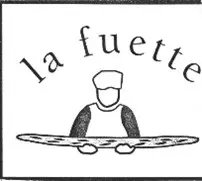
Another key aspect of the ruling concerns the use of the term “La Fuette” without its figurative component “ .”
The Cour de cassation held that Court of Appeal should have determined whether the verbal element constituted the dominant and distinctive component of the semi-figurative trademark. If so, the use of the verbal element alone could be sufficient to demonstrate genuine use, provided that such use does not alter the distinctive character of the registered trademark.
This reasoning is consistent with established European case law, including the landmark Sabel judgment of 11 November 1997 (ECJ, C-251/95), which holds that a “global assessment must be based on the overall impression conveyed by the trademarks, taking into account their distinctive and dominant elements. The perception of the average consumer plays a decisive role, and the consumer normally perceives a trademark as a whole rather than analysing its individual details.”
Considering evidence within the critical three-month period
The ruling also recalls that resumed use within the three months prior to the revocation action can preserve the trademark, but only if the proprietor had not yet become aware of the impending action.
The Court of Appeal had rejected some evidence simply because it was dated after this period. The Cour de cassation held that this was legally incorrect: before excluding such evidence, the appellate judges should have verified whether Le Fournil was aware of the revocation action at the relevant time.
Practical implications for trademark owners
This decision highlights several essential points for effective portfolio management:
Semi-figurative trademarks must be used on all supports adapted to the nature of the product, even where the product itself cannot bear the trademark.
Evidence of use may consist of a wide variety of documents: receipts, display materials, commercial documentation, packaging, digital and traditional communications.
Using only the verbal element may be sufficient where it is the dominant component of the trademark.
Timing is critical: any threat of revocation must be anticipated so that a documented and timely resumption of use can be secured.
For more detailed guidance on assessing the genuine use of a trademark, please refer to our previously published article on the subject.
Strategic recommendations
In light of this case law, trademark owners should adopt a rigorous and proactive approach to documenting use. Systematic and dated retention of all materials demonstrating commercial exploitation (packaging, display items, advertising, digital content, invoices) remains essential.
From the moment the trademark is filed, identifying its dominant distinctive element helps guide how the trademark should be used and ensures consistency between the registered sign and its actual use.
If commercial exploitation becomes limited, a documented and timely resumption of use should be organised to avoid revocation. Evidence should always rely on a consistent and converging set of documents rather than a single isolated document.
Finally, when actual use differs from the registered sign, filing complementary variants may be an effective way to secure long-term protection.
Conclusion
The decision of February 16, 2016 adopts a pragmatic approach: genuine use must be assessed in light of commercial reality and the constraints inherent to the product. It also confirms that using only the verbal element of a semi-figurative trademark can amount to genuine use when that verbal element is the dominant component of the sign.
This decision is therefore a key reference for owners of semi-figurative trademarks, particularly where the nature of the product does not allow the sign to be affixed directly. It encourages trademark owners to document use rigorously, make systematic use of all available supports, and develop a proactive and structured evidentiary strategy.
Q&A
1. What is genuine use of a trademark?
It is the real and effective use of the trademark in the course of trade, enabling it to fulfil its essential function of identifying the commercial origin of goods or services.
2. Can a trademark be preserved if the owner proves that the lack of use is due to “proper reasons” under Article L. 714-5?
Yes. Article L. 714-5 explicitly provides that revocation cannot be ordered if non-use is justified by proper reasons. Case law interprets this narrowly: the obstacles must be beyond the owner’s control, directly linked to the trademark, and must objectively prevent its exploitation. Force majeure, administrative bans, pending litigation, or insurmountable regulatory barriers may be accepted; economic or strategic choices are not.
3. How can evidence of use be effectively secured?
The owner should systematically retain dated materials showing commercial use, regularly document actual exploitation, analyse the trademark’s structure to identify its dominant element, and, where necessary, file variants corresponding to the forms actually used.
4. Is use of a modernised version of a trademark (new design, updated typography) considered genuine use?
Yes, provided that the modernisation does not alter the distinctive character of the registered sign. Updated versions, such as changes in typography, simplified graphics, refined styling, are generally acceptable as long as the dominant element remains recognisable. A thorough redesign may, however, break the continuity of use.
5. Can digital use (website, social media) constitute evidence of use?
Yes. Digital materials showing visible and commercially meaningful use of the trademark can be accepted as part of a broader body of evidence demonstrating genuine use
The decision rendered on April 12, 2016 by the Paris Court of Appeal in the dispute between the “Le Petit Marseillais” and “Le P’tit Zef” trademarks constitutes a landmark ruling in the field of trademark protection in the cosmetics and hygiene sector. By confirming the distinctiveness of the earlier trademark and sanctioning the imitation embodied by the later trademark, the Court reaffirmed a rigorous approach to addressing parasitic appropriation strategies.
Beyond the specific dispute, this decision illustrates how French courts currently assess the economic value of trademarks, the construction of a coherent commercial identity, and the protection of intangible investments. It forms part of an evolving body of case law aimed at ensuring enhanced legal certainty for rights holders.
Assessment of the validity of the trademark “Le Petit Marseillais”
The company CILAG GmbH International, owner of the trademark “Le Petit Marseillais” , registered in Class 3 for soaps and cosmetic products, initiated counterfeit proceedings against Sir Philippe LE HIR, owner of the trademark “Le P’tit Zef” . In response, the latter sought to invalidate the earlier trademark on the ground that it was deceptive in character.
In the present case, the owner of the “Le P’tit Zef” trademark attempted to justify its position by arguing that the “Le Petit Marseillais” trademark was liable to mislead the public, by suggesting that the products were genuine Marseille soap, whereas this was allegedly not the case. Article L.711-3 of the French Intellectual Property Code provides that a sign may not be adopted as a trademark if it is likely to mislead the public, in particular as to the nature, quality, or geographical origin of the goods or services.
The Court of appeal recalled that the term “Marseille soap,” although deeply embedded in the collective imagination, does not constitute a protected geographical indication but rather refers to a traditional manufacturing method. This conclusion was supported in particular by a Wikipedia page submitted as evidence, according to which Marseille soap is defined by its production process rather than by an exclusive geographical origin. This interpretation is consistent with the regulatory framework overseen by the DGCCRF (branch of the French Ministry of the Economy).
The Court therefore inferred that, in the mind of the average reasonably attentive consumer, the name “Le Petit Marseillais” does not necessarily designate a product manufactured in Marseille or Provence. Instead, it refers to an evocative brand embedded in a recognizable marketing universe, reinforced by the figurative element depicting a child in maritime attire on the product packaging.
This analysis led the court to dismiss the argument alleging that the sign was deceptive and, consequently, to reject the counterclaim for invalidity brought in response, thereby confirming the validity of the “Le Petit Marseillais” trademark as a protectable distinctive sign.
Assessment of the infringing nature of the trademark “Le P’tit Zef”
Once the validity of the earlier trademark had been confirmed, the Court proceeded to analyze the likelihood of confusion between “Le Petit Marseillais” and “Le P’tit Zef,” in light of the products designated, all falling within Class 3.
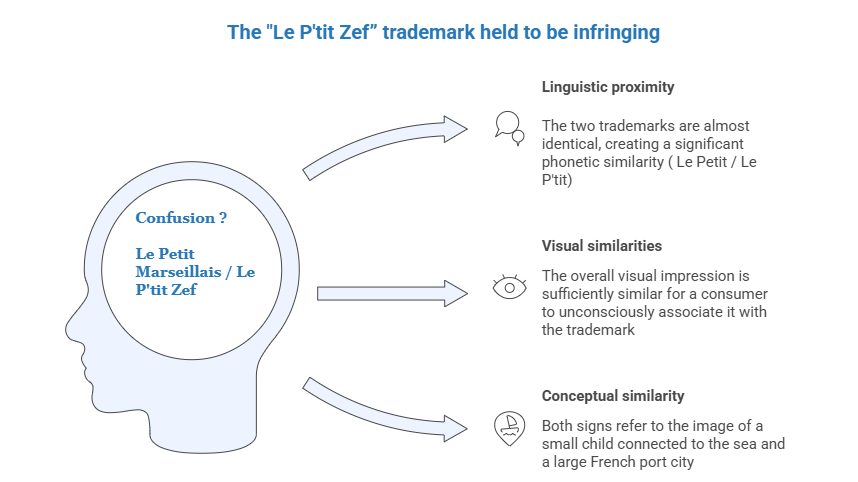
The Court of Appeal first noted that the signs share a strong linguistic similarity in their structure, the initial element of both trademarks being almost identical (“Le Petit” / “Le P’tit”). Although the terms “Marseillais” and “Zef” differ visually and phonetically, this distinction is not sufficient to rule out any likelihood of confusion.
From a conceptual standpoint, the judges considered that both signs refer to comparable images, namely that of a child associated with a major French port city, Marseille for the earlier trademark and Brest for “Le P’tit Zef.” This interpretation led the Court to conclude that the public might perceive “Le P’tit Zef” as a regional variation or thematic extension closely associated with the earlier trademark.
The Court also took into account the figurative elements displayed on the packaging, which showed comparable visual configurations, thereby reinforcing the impression of association between the two trademarks.
This overall assessment led the judges to find the existence of a likelihood of confusion and association and, consequently, to characterize the use of the trademark “Le P’tit Zef” as an infringement of the trademark “Le Petit Marseillais”
Practical and strategic lessons for trademark owners
The decision of April 12, 2016 confirms, first, that a trademark referring to a region or a traditional product, in this case, Marseille soap, is not, per se, liable to mislead the public, provided that an overall assessment of the elements perceived by consumers, including figurative components, clearly identifies the true origin of the goods and rules out any false geographical representation.
Second, the assessment of likelihood of confusion extends beyond purely verbal elements. The ruling illustrates that a judge’s global analysis include conceptual and figurative elements relating to the visual representation of the signs, thereby strengthening the protection afforded to a strong trademark when a competitor adopts a similar graphic or conceptual universe.
Conclusion
The judgment of April 12, 2016 rendered by the Court of Appeal of Paris confirms that the “Le Petit Marseillais” trademark, registered in Class 3, is not misleading within the meaning of Article L.711-3 of the French Intellectual Property Code, even though it evokes a reputed traditional manufacturing method.
This decision validates a contextual reading of consumer behavior and of the perception of signs as a whole. It also demonstrates that the overall comparability of trademarks may suffice to establish infringement when a competitor develops a similar brand, both visually and conceptually.
Dreyfus & Associés assists its clients in managing complex intellectual property cases, offering personalized advice and comprehensive operational support for the complete protection of intellectual property.
1. Can a trademark evoke a geographical origin without being considered misleading?
Yes. A trademark may refer to a region or territory provided that this reference does not lead consumers to believe, incorrectly, that the products actually originate from that place. In this case, the Court held that “Le Petit Marseillais” referred to a marketing universe rather than to a geographical guarantee.
2. Is the actual place of manufacture decisive in assessing trademark validity?
Not systematically. The place of manufacture becomes legally relevant only if the trademark explicitly suggests a protected or certified origin. In the absence of an official geographical indication, a mere discrepancy between the evocation of the sign and the actual production site is insufficient to establish deception.
3. Is the mere use of different terms sufficient to exclude a likelihood of confusion?
No. The presence of different terms does not, in itself, exclude the likelihood of confusion. Judges assess the sign as a whole, including its structure, rhythm, positioning, and overall impact. In this case, despite the differences between “Marseille” and “Zef,” the overall similarity was decisive.
4. Do packaging and commercial presentation influence legal analysis of counterfeiting?
Yes. Courts take into account the overall presentation of products, including graphic elements, colors, illustrations, and visual identity. When these elements reinforce the proximity between two brands, they may contribute to a finding of imitation.
5. What risks does a company face when adopting a trademark too close to that of an established competitor?
It may face counterfeit proceedings resulting in a prohibition on use, withdrawal of products from the market, payment of damages, and, in some cases, destruction of infringing materials. It may also suffer lasting commercial harm due to loss of credibility.
This publication is intended to provide general guidance and to highlight certain issues. It is not intended to address specific situations nor to constitute legal advice.
Our site uses cookies to offer you the best service and to produce statistics, and measure the website's audience. You can change your preferences at any time by clicking on the "Customise my choices" section.
When browsing the Website, Internet users leave digital traces. This information is collected by a connection indicator called "cookie".
Dreyfus uses cookies for statistical analysis purposes to offer you the best experience on its Website.
In compliance with the applicable regulations and with your prior consent, Dreyfus may collect information relating to your terminal or the networks from which you access the Website.
The cookies associated with our Website are intended to store only information relating to your navigation on the Website. This information can be directly read or modified during your subsequent visits and searches on the Website.
Necessary cookies are absolutely essential for the website to function properly. These cookies ensure basic functionalities and security features of the website, anonymously.
Dreyfus is concerned about protecting your privacy and the Personal Data ("Data"; "Personal Data") it collects and processes for you.
Hence, Dreyfus complies every day with the European Union legislation regarding Data protection and particularly the European General Data Protection Regulation Number 2016/679 of 27 April 2016 (GDPR).
This Privacy Policy is aimed at informing you clearly and comprehensively about how Dreyfus, as Data Controller, collects and uses your Personal Data. In addition, the purpose of this Policy is to inform you about the means at your disposal to control this use and exercise your rights related to the said processing, collection and use of your Personal Data.
This Privacy Policy describes how Dreyfus collects and processes your Personal Data. The collection happens when you visit our Website, when you exchange with Dreyfus by e-mail or post, when exercising our Intellectual Property Attorney and representative roles, when we interact with our clients and fellow practitioners, or on any other occasion when you provide your Personal Data to Dreyfus, in particular when you register for our professional events.


 Written by Nathalie Dreyfus29/08/2016
  The new gTLDs were launched in October 2013. More than 1000 new gTLDs have been created since, and more than 20 million domains bearing a new gTLD have been registered. While this development provides a wider choice to Internet users who want to register a domain name, it poses a threat to trademark holders who now face a higher risk of usurpation of their trademarks.