Nathalie Dreyfus

Withdrawal or renunciation of a trademark: what are the legal and strategic consequences?

Introduction

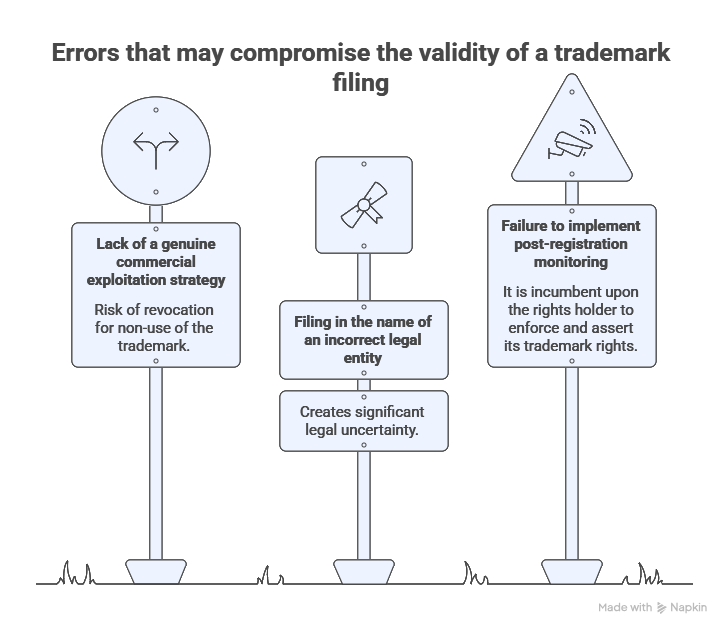
At first glance, the withdrawal or renunciation of a trademark may appear to be a simple and pragmatic way to defuse a trademark dispute. Behind this apparent simplicity, however, lie far-reaching legal consequences, sometimes irreversible, which may durably affect the value of a strategic asset, the coherence of a trademark portfolio and the rights holder’s position in contentious proceedings.

In the context of administrative disputes, whether before the INPI or the EUIPO, these mechanisms must be handled with caution. Poorly anticipated, they may turn an amicable solution into a structural weakening of rights. When properly mastered, on the other hand, they become an effective, swift and economically rational negotiation tool.

Understanding the withdrawal and renunciation of a trademark: key concepts and fundamental distinctions

Renunciation consists of a partial or total abandonment of rights by the trademark owner. When total, the trademark simply disappears from the register. When partial, it results in a reduction of the scope of protection, by limiting the list of goods and services  designated. This reduction may take several forms, including:

  • the removal of certain goods or services;
  • the explicit exclusion of sensitive or disputed segments.

Renunciation is often used to neutralise an identified risk of confusion.

One fundamental point must be emphasised:

  • when the owner acts before the trademark is registered, this is referred to as a withdrawal (total or partial);
  • when the owner acts after the trademark has been registered, this is referred to as a renunciation (total or partial).

This terminological distinction entails major legal consequences, particularly where proceedings are already pending.

Trademark withdrawal and opposition: a fast and regulated conflict-resolution tool

The rationale behind opposition proceedings: prevention rather than cureOnce a trademark application has been examined by the competent office and found to meet the legal requirements, it is published to allow third parties holding earlier rights to file an opposition if necessary. This enables early intervention and the resolution of disputes before the contested trademark is definitively registered.

Opposition is based on the argument that the registration of the new trademark would infringe existing rights, in particular due to a likelihood of confusion, or the reputation or renown of the earlier trademark. In this context, the total or partial withdrawal of the contested application is often regarded by trademark offices as a priority solution, as it directly alters the subject matter of the dispute.

Procedural effects of a withdrawal in opposition proceedings

The withdrawal of a trademark application may occur at various stages of the opposition procedure. First, it may take place before an opposition is even filed, typically following the receipt of a cease-and-desist letter from the holder of earlier rights.

Withdrawal may also occur during the admissibility review of the opposition or during the cooling-off period provided for by the procedure. Finally, withdrawal may also take place after the opposition decision has been issued.

It is essential to distinguish between the effects of partial withdrawal and total withdrawal. Partial withdrawal results in an amendment of the specification of the trademark application, which then continues with this revised wording. Where the application is totally withdrawn, or where all goods or services targeted by the opposition are withdrawn, the opposition proceedings are automatically closed, as they become devoid of purpose.

withdrawal trademark application

This solution is highly valued by companies and practitioners, as it allows disputes to be resolved swiftly, without the need to await a decision on the merits.

Renunciation of a trademark in the context of invalidity and revocation actions: radically different legal effects

Effects and strategic implications of renunciation

Renunciation, although it does not remove the trademark from the register, results in a reduction of its scope of protection. Where renunciation is total, its effects are similar to those of a withdrawal, as the trademark is no longer protected. Where renunciation is partial, certain ownership rights are maintained, but subject to restrictions. This may create management risks, as the trademark may lose visibility or be used in a non-strategic manner.

Renunciation must be integrated into a global trademark portfolio strategy. It may help rationalise a portfolio, avoid unnecessary renewal costs and eliminate rights over trademarks that are no longer relevant. However, such decisions must be taken with caution, carefully assessing the long-term impact on the value of the trademark and the legal protection it affords.

Renunciation may also be proven necessary in a contentious context, particularly where a trademark is exposed to an invalidity or revocation action, in order to anticipate legal risk or manage the effects of ongoing proceedings.

Why renunciation does not put an end to litigation

In invalidity or revocation actions, the claimant’s objectives do not always align with the effects of renunciation:

  • Invalidity or cancellation action seeks recognition that the contested trademark never met the legal conditions for valid registration and produces its effects as from the filing date.
  • Revocation seeks recognition that the trademark no longer meets the legal requirements for use or that an event justifies the loss of rights, and produces its effects as from the date of non-use or the date of the request.
  • Renunciation allows the owner to abandon all or part of its rights but produces effects only from the date it is recorded.

As a result, the claimant often retains a legitimate interest in pursuing the proceedings, even in cases of total renunciation.

Conclusion

Withdrawal and renunciation of a trademark are neither mere administrative formalities nor universal solutions. They are structuring legal acts, whose effects vary significantly depending on the type of proceedings involved.

While limitation of a trademark may prove an effective tool in opposition proceedings, it largely loses its relevance in the face of invalidity or revocation actions, where renunciation does not deprive the claimant of the right to obtain a decision.

A strategic, integrated and legally sound approach remains essential to preserve the value and security of trademark rights.

Dreyfus & Associés assists its clients in managing complex intellectual property cases, offering personalized advice and comprehensive operational support for the complete protection of intellectual property.

Dreyfus & Associés works in partnership with a global network of attorneys specializing in Intellectual Property.

Nathalie Dreyfus with the support of the entire Dreyfus team


Q&A


Is renunciation of a trademark definitive?

Yes. Once recorded on the register, renunciation is irreversible for the goods or services abandoned.

Can partial renunciation of a trademark affect its reputation?

Yes. Partial renunciation may give the impression that the trademark is losing relevance or use in certain sectors, potentially affecting its visibility and market perception.

Does partial or total renunciation of a trademark affect licence or partnership agreements?

Yes. Renunciation may partially or fully terminate trademark protection and therefore impact existing licence or partnership agreements, requiring stakeholders to be informed and arrangements to be adjusted.

Can a trademark that has been withdrawn or totally renounced be reused by third parties?

Yes. Once protection has been abandoned, the sign generally becomes available again, subject to any existing identical or similar earlier rights.

Is withdrawal always preferable to opposition?

No. Withdrawal is an effective and sometimes necessary tool, but it must be weighed against other strategic options, including a defence on the merits, depending on the legal and commercial stakes.


This publication is intended to provide general guidance to the public and to highlight certain issues. It is not intended to address specific situations or to constitute legal advice.

Read More

Ownership of a design and model: who really holds the rights?

Introduction

Determining the ownership of a design and model is one of the most sensitive issues in industrial creation law. In practice, disputes rarely focus on the validity of the design or model itself but rather on the identity of the person authorized to exploit, oppose, or transfer the rights. Employment, subcontracting, collective creation, lack of a contract, or poorly anticipated registration are all sources of risk. In this article, we analyze how the ownership of a design and model is obtained and proven, under both French and European law.

Principle and criteria of ownership in design and model

Criteria for ownership of designs and models

A design and model protect the appearance of a product or a part of a product, independently of its technical function. Ownership must be distinguished from material creation. The creator must be a natural person, while the holder may be a legal entity.

Under both French and European law, the logic is pragmatic: ownership is attributed to the person legally entitled to exploit the design, taking into account the context of its creation. The law sets out a principle, with presumptions and corrective mechanisms.

Principle of ownership: the central role of the creator

As a general rule, the design and model belong to its creator. This rule applies whether or not the design is registered. Creation confers an original right, provided that the design is new and has an individualized form.

In the event of a dispute, the courts examine the concrete elements proving the creative contribution: sketches, prototypes, digital files, email exchanges, annotated specifications. A mere idea or aesthetic directive is insufficient. Ownership is based on a personal creative contribution identifiable in the final form of the product.

info distinction creator holder


Ownership disputes

1. Designs and models created by employees

The creation of a design by an employee in the performance of his duties is not regulated by law. In fact, the case law uses a slightly different reasoning than that used in copyright. Indeed, if copyright is inextricably personalist, the right of designs and models responds to a more economic logic. Thus, when the design is created by an employee in the performance of his duties or according to his employer’s instructions, the law provides a presumption of ownership in favour of the employer when the latter is at the origin of the application for registration. This rule aims to secure the economic exploitation of creations made in an organized and remunerated framework.

However, this presumption is not irrebuttable and assumes that the creation is indeed part of the tasks entrusted to the employee. If the design was designed outside the functions, without any link with the company’s activity, the ownership thus remains attached to the employee.

In fact, the absence of a precise contractual clause constitutes a major source of litigation. It is recommended that employment contracts should systematically include explicit clauses relating to the creation of designs and models, covering both ownership and operating terms.

2. Designs and models created by independent contractors or partners

The situation is radically different when dealing with an independent contractor, freelance designer, or industrial partner. Unlike employment, no legal presumption favors the client.

In the absence of a contract specifying the assignment or transfer of ownership, the contractor retains ownership of the rights, even if the creation was fully financed by the client. This situation is common in industries such as luxury, product design, or fashion, and constitutes a major legal risk.

The transfer of ownership must be explicit, written, and clearly defined, especially regarding territorial scope, duration, and modes of exploitation. A simple invoice or mention of “custom work” is legally insufficient.

Ownership presumptions and the value of registration

The registration of a design and model, whether national or European, creates a simple presumption of ownership in favor of the registrant. This presumption facilitates actions for infringement and defense of rights, but it can be overturned by contrary evidence.
Thus, a registrant may lose their ownership status if it is demonstrated that the registration was made without rights, particularly by a former employee, contractor, or partner acting in bad faith. European courts are particularly attentive to the circumstances of creation and prior contractual relationships.

The registration should, therefore, be viewed as a tool for securing rights, not as an absolute guarantee.

Securing ownership: best practices and legal strategies

To avoid future disputes, several levers should be combined:

• First, systematically contractually secure ownership at the outset of creative projects.
• Then, maintain dated evidence of creation and the design process.
• Finally, align the registration strategy with the legal reality of creation.

For example, an industrial company that registers a model created by an external studio without a written transfer may lose its rights during a nullity action. In contrast, a prior contractual audit would have secured the chain of rights at a lower cost.

Conclusion

Knowing how to determine the ownership of a design and model is essential for effectively protecting a strategic asset. Ownership is not presumed solely from funding or registration. It relies on a thorough analysis of the creation context, contractual relationships, and available evidence. Rigorous legal foresight remains the best safeguard against disputes.

Dreyfus & Associates assists its clients in managing complex intellectual property cases, offering personalized advice and comprehensive operational support for the complete protection of intellectual property.

Dreyfus & Associés works in partnership with a global network of attorneys specializing in Intellectual Property.

Nathalie Dreyfus with the support of the entire Dreyfus team

Q&A

1) What is the difference between creator and holder?
The creator is the material author of the design; the owner is the one who legally holds the exploitation rights. In some cases, the creator and the owner may be the same person, particularly when the creator retains all rights over his work.

2) Can ownership of a design or model be transferred without a written contract?
In principle, no. The transfer of ownership must be explicit, written, and recorded. The law requires that any transfer of rights (including ownership) be clearly documented to avoid disputes. In practice, this means that a simple invoice or verbal agreement is insufficient. A detailed contract defining the scope of the transferred rights (territory, duration, exclusivity, etc.) is always preferable.

3) What is the procedure to recover a design or model if a contractor refuses to transfer the rights?
In this case, it is recommended to act quickly by asserting ownership of the design or model based on contractual elements. If no transfer contract was signed, jurisprudence may, however, consider tacit agreement or contextual elements showing the intention to transfer ownership, which can be crucial.
4) What evidence can be used to challenge the ownership of a registered design in Europe?
In order to challenge the ownership of a registered design, relevant evidence may be :
• Communications
• Original sketches
• Testimony about prior discussions
• Proof of prior authorship
• A preliminary version of the design
• Exchanges between the creator and the company
• Proof of funding, may also be essential to contest a design registration.
Additionally, the question of bad faith during registration may be decisive.

5) Does a creation carried out during a notice period or a period of suspension of the employment contract belong to the employer?
Not necessarily. The period of notice or suspension (leave without pay, sick leave, layoff) does not automatically eliminate the contractual relationship, nor does it imply an automatic devolution of rights.
The analysis will focus on the concrete circumstances of creation, the use of the company’s resources, the link with previous missions and the possible existence of a transfer clause. In practice, these situations are particularly conducive to subsequent disputes.

The purpose of this publication is to provide general guidance to the public and to highlight certain issues. It is not intended to apply to particular situations or to constitute legal advice.
Read More

Zombie Trademarks / Revival of Brands: How to manage the reactivation of old and abandoned trademarks while respecting legal imperatives?

Introduction

In an environment where competition is growing increasingly fierce, the idea of resurrecting abandoned trademarks, known as zombie trademarks , has become a major strategic shift. Far from being a mere trend, trademarks revival has become a true economic lever. This article explores the assessment criteria, differences in treatment between jurisdictions, and the often underestimated legal risks associated with the reactivation of dormant trademarks.

What is a Zombie Trademark?

Zombie trademarks are those that have been registered  but are no longer actively used, either because they have expired or because they have not been put to genuine use. These brands are often considered “dead” in the sense that they are not exploited commercially. However, under certain circumstances, they can be reactivated or “resurrected.”

What motivates the resurrection of old Trademark ? Nostalgia is a key factor: consumers are drawn to the nostalgic aspect of these trademarks, especially when they evoke cultural memories. Furthermore, reviving trademarks can provide a competitive advantage by reducing the need to build a new brand identity while capitalizing on some residual reputation.

An emblematic example of this strategy is Old Spice, a men’s grooming brand, which was relaunched in the 2010s with a modern marketing approach and saw its sales double.

Legal risks associated with the revival of an abandoned trademark

Reactivating a trademark after revocation for non-use

Trademark law is based, inter alia, on the concept of use, the effective absence of which may lead to the revocation of the trademark registration. Failing serious use over an uninterrupted period of five years, a trademark is exposed to revocation, in accordance with Regulation (EU) 2017/1001 on the European Union trade mark. Once revocation is declared, the exclusive rights on the trademark cease to exist. From a strictly legal standpoint, the sign then becomes available again and may, in principle, be the subject of a new filing by a third party.

For a new applicant, the disappearance of the earlier right may appear to create an opportunity. Nevertheless, this opportunity remains fragile, particularly where the sign continues to enjoy a lasting presence in the public’s mind.

The role of residual reputation

Certain historical trademarks, although legally revoked, continue to benefit from persistent public recognition. This phenomenon is commonly referred to as residual reputation.

When a third party files a trademark that was previously well known, it may be exposed to the risk that the new filing is characterised as an opportunistic appropriation of pre-existing goodwill. In such circumstances, the challenge no longer concerns the existence of an earlier trademark right, but rather the legitimacy of the new applicant’s conduct.

The Question of Good Faith According to the European Approach

Reactivating a trademark must be done carefully. If a third party attempts to re-register an abandoned trademark and uses it in a way that could create a misleading impression of continuity, it could be interpreted as bad faith.

In the Nehera case (T-250/21, judgment of July 6, 2022), the European Court ruled that the lack of use and protection of the “Nehera” trademark for several decades, combined with the absence of any surviving reputation and exploitation, excluded any bad faith on the part of the applicant. Mere knowledge of past use was not sufficient to establish bad faith.

In the present case, the applicant had undertaken its own commercial efforts to relaunch the mark without creating a misleading impression of continuity, such that bad faith could not be established.”

In contrast, in the Simca case (T-327/12, judgment of May 8, 2014), the European Court confirmed that the Simca brand still enjoyed a residual reputation in 2007 despite its historical use. The applicant, fully aware of this reputation and the absence of serious prior use, filed the application intending to exploit that reputation, which constituted parasitism.

Therefore, the existence of a surviving reputation, combined with positive knowledge and the intent to take advantage of that reputation, led to the determination of bad faith, resulting in the invalidation of the European Union trademark.

Diverging National Approaches in Europe on the Good Faith Issue

An analysis of national case law reveals a marked divergence among EU Member States in the assessment of good faith in the context of the re-filing of abandoned trademarks. This heterogeneity highlights the absence of a unified approach as regards the weight given to a sign’s past notoriety and to the applicant’s intention at the time of filing.

In Germany, in the Testarossa case involving Ferrari (29 W (pat) 14/21), the court adopts a restrictive conception of bad faith. It holds that the residual reputation of a sign, taken in isolation, is not sufficient to preclude a new filing. In the absence of a current likelihood of confusion or a clearly established infringement of an existing protected trademark, the re-filing is not considered unlawful.

By contrast, the Court of Appeal of Paris, in the VOGICA case (May 16, 2025, RG No. 23/17886), adopts a significantly more protective approach. Although the trademark had not been subject to any genuine use since 1991, the court acknowledged the existence of a substantial residual reputation on the French market. Noting, moreover, the applicant’s inability to substantiate an autonomous and credible economic project, the court inferred an intention to unduly appropriate the economic value attached to the sign’s past notoriety. This strategy was characterised as parasitic behaviour, leading to the invalidation of the filing.

More generally, national courts do not assess good faith in a uniform manner when it comes to the re-filing of trademarks that have been abandoned or revoked for non-use.

What are the major legal risks identified in reviving a trademark?

Reviving a brand becomes legally risky when the following conditions are met:

  • A current residual reputation, a proven knowledge of this reputation,
  • And the absence of an independent economic project,

which exposes the applicant to:

  • Invalidity for bad faith,
  • Parasitic actions,
  • And the lasting blockage of any revival strategy.

visuel marques renaissance risques en

Conclusion

The revival of brands is a powerful strategy, but it must be approached with caution. A zombie brand can offer a significant competitive advantage, but the legal risks are also substantial. A successful resurrection relies on good faith, genuine use, and a thorough understanding of European case law. Therefore, a detailed analysis of the brand’s history, its prior use, and its residual reputation is essential.

Dreyfus & Associés works in partnership with a global network of specialized intellectual property lawyers.


Nathalie Dreyfus with the support of the entire Dreyfus team.


Q&A


1. What is a parasitic act in the context of brand revival?
A parasitic act involves exploiting the reputation of a historical brand without bringing any real innovation or added value, with the aim of unduly benefiting from its image.

2. What are the legal risks associated with reviving a dormant trademark?
Reviving a brand involves several legal risks, including cancellation for non-use if the brand has not been used for an extended period, bad faith, or a risk of confusion with other brands.

3. Can a dormant trademark be revived if it has been cancelled for non-use?
Reviving a dormant brand cancelled for non-use is possible, but it is subject to strict conditions. If a brand has been cancelled for non-use, it is necessary to prove that it has been used again in a serious and continuous manner in commerce.

4. Does residual good faith protect a trademark?
It depends on the assessment of the courts, based on whether the brand’s notoriety is still active in the public’s mind.

This publication is intended for general public guidance and to highlight issues. It is not intended to apply to specific circumstances or to constitute legal advice.
Read More

Sound trademarks: what protection opportunities?

Introduction

In the field of intellectual property, sound trademarks have become a powerful differentiating tool for businesses. Protecting a sound as a trademark offers many unique opportunities for businesses seeking to secure their identity. This article explores the strategic advantages, legal considerations, and best practices related to the protection of sound trademarks.

What is a sound trademark?

Since December 15, 2019, it’s possible to register an MP3 file as a trademark with the INPI. A sound trademark is a trademark consisting of a sound or a combination of sounds. To be registered, the sound trademark must comply with the existing validity requirements in trademark law. IP Offices often emphasize the importance of distinctiveness when registering a sound trademark.

According to the European Union Intellectual Property Office (EUIPO), in order for a sound to be protected as a trademark, it must be distinctive and capable of distinguishing the products or services of one company from those of others

This criterion implies that the sound must be unique, non-functional, and directly associated with the brand’s identity. For example, a jingle or a specific sound effect used in advertisements can be registered as a trademark.

The benefits of protecting a sound trademark

Sound trademarks help create a distinct identity for a company, thereby differentiating it from its competitors.

Examples of registered sound trademarks:

These sounds are closely associated with the undertaking from which they originate, representing a powerful lever for fostering brand loyalty and public recognition.

By registering a sound trademark, companies can license it for use in various media, advertisements, and products, generating new revenue streams while protecting their intellectual property from unauthorized use (legal action for infringement could then be pursued). Therefore, the sound trademark represents a significant and valuable asset for a company.

The legal framework for sound trademarks

Several landmark cases have established the legal precedent for sound trademarks. A notable example is the EUIPO’s refusal to register the jingle of Netflix after several attempts

As the sound is too short and too simple, it would not be sufficiently distinctive in the mind of the relevant public. In other words, consumers would not automatically perceive this sound as a distinctive sign linked to Netflix. However, the company succeeded in registering its jingle as a multimedia trademark, combining both its logo and jingle, as well as the term “TUDUM” as a word trademark.

However, a decision handed down by the General Court of Justice of the European Union on September 10, 2025, appears to point towards a more favourable assessment of the registrability of sound marks.

In this case, a Berlin public transport company sought the registration, as a European Union sound trademark, of a two-second jingle composed of four notes.

The application was rejected by the EUIPO, and then by its Board of Appeal, on the grounds that the sign was too short and too simple to be perceived as a trademark by the relevant public.

In its ruling, the Court annulled the decision of the Board of Appeal and held that the disputed jingle was eligible for registration as a European Union trademark.

He first considers that the requirement for a sign to “differ from the norms and practices of the sector,” often applied to figurative marks, does not apply to sound marks, which constitutes a favorable decision.

The Court further highlighted that only a minimal degree of distinctiveness is required. In this case, several factors favored the registrability of the jingle: its brevity, which aids in memorization, its structure composed of successively distinct sounds, its originality, and, most importantly, the fact that it does not reproduce a sound directly related to the execution of the transport service.

It also appears that the fact a sound serves a practical function, such as attracting the attention of passengers, does not prevent it from simultaneously functioning as a trademark. The Court thus recognizes that a sound sign can be both functional and distinctive, as long as it is perceived by the public as an indicator of commercial origin.

This ruling represents a notable relaxation in the assessment of the distinctiveness of sound marks. Unless overturned in the future, it serves as a favorable signal for trademark holders wishing to protect sound identities within the European Union.

benefits sound trademarks

Best practices for protecting your sound trademark

When choosing a sound to protect as a trademark, it is essential to select a sound that is memorable, distinctive, and consistent with the brand’s image. It is advisable to consult intellectual property experts to ensure that the sound is both effective and protectable.
The registration process involves selecting the appropriate intellectual property office (INPI, EUIPO, USPTO) depending on the desired scope of protection, submitting the sound file, and verifying that it meets all the necessary legal criteria for registration. Seeking advice from experts throughout this process can significantly enhance the likelihood of a successful registration.

Conclusion

In conclusion, protecting a sound as a trademark offers numerous strategic advantages in today’s competitive market. By securing the legal protection of a distinctive sound, businesses can enhance the visibility, recognition, and profitability of their brand.

Dreyfus & Associés works in partnership with a global network of specialized intellectual property lawyers.

Nathalie Dreyfus with the support of the entire Dreyfus team.

FAQ

1. What types of sounds can be registered as a trademark?
Any type of sound can be registered as a trademark if it is distinctive and non-functional.

2. How long does it take to register a sound trademark?
The registration process for a sound trademark can take several months, depending on the IP office and whether objections are raised.

3. Can I use a sound trademark in different countries?
Yes, it is possible to protect a sound trademark internationally through systems like the Madrid Protocol, which allows for global trademark protection.

4. What are the costs of registering a sound trademark?
Costs vary depending on the jurisdiction, and may be substantially higher if you opt for additional services such as legal consultation.

5. How can the evidence of unauthorized use of a sound trademark be proven?
To prove the unauthorized use of a sound trademark, it is necessary to gather concrete elements showing that the sound is being used without authorization: audio recordings, screenshots of advertisements, websites, or products using the sound trademark. It is also possible to use media monitoring tools or online platforms to detect unauthorized use.

This publication is intended for general public guidance and to highlight issues. It is not intended to apply to specific circumstances or to constitute legal advice.
Read More

When is URS a strategic option for trademark owners?

Introduction

The Uniform Rapid Suspension (URS) procedure is particularly effective when the primary goal is to stop a clear trademark infringement quickly through a domain name, without initiating a heavier procedure aimed at transferring the domain. It complements the UDRP by offering a faster and generally less expensive route, but with a deliberately limited remedy: suspension (not recovery) of the domain name.

URS: what the procedure can do (and what it cannot)

The promise: fast suspension, no transfer

URS allows a trademark owner to file a complaint for infringement of its rights, leading to the temporary suspension of the disputed domain name without any transfer of ownership. The suspension remains in place until the end of the registration period, after which the domain name is expected to become available again.

Strategic implication: URS is ideal when the priority is to stop a fraud or abusive use, rather than to recover a digital asset.

The standard: a procedure reserved for “clear-cut” cases

URS is designed for the most obvious infringements. It is not comfortable territory where the file involves a serious factual or legal dispute (plausible competing rights, potentially descriptive use, broader commercial dispute). This approach is expressly supported by ICANN: URS is intended as a fast-track mechanism for clear cases.

The three elements to prove (the “three-part test”)

To succeed in an URS complaint, the complainant must establish three cumulative elements:

  • The domain name is identical or confusingly similar to a word trademark or figurative trademark owned by the complainant (a valid national/regional registration in current use, or judicially validated), and the complainant must be able to prove both the registration and the use;
  • The domain name holder has no legitimate right or interest;
  • The domain name was registered and is being used in bad faith.

condition urs complaint

Which Top-Level Domains (TLDs) are eligible for URS?

Before recommending URS, it is essential to verify the eligibility of the relevant extension, as URS is not intended to apply indiscriminately to all TLDs. As a rule, URS was designed for the new gTLDs introduced under the ICANN program, meaning it primarily applies to domain names registered under those new extensions. Conversely, for legacy gTLDs (for example, .com, .net, or .org), URS is not automatically available and the “standard” route generally remains the UDRP.

There are, however, specific cases: certain so-called “legacy” extensions have incorporated URS following amendments or renewals of their Registry Agreement, so that an extension historically “outside URS” may become eligible depending on the applicable framework. In practice, the most robust approach is therefore to confirm, on a TLD-by-TLD basis, whether URS is available, and then to choose between URS and UDRP depending on the objective pursued (rapid neutralization or transfer).

When URS is strategically better than the UDRP

1) Phishing, fake shop, impersonation: neutralization comes first

When the domain name is used for fraud (phishing, payment pages, a fake store replicating the trademark, misleading redirects), the economic priority is often to stop the abuse before anything else. In this context, URS is strategic because it specifically targets obvious abuse and can lead to rapid suspension.

2) Short-window campaigns: sales, launches, events

Where infringement is opportunistic (Black Friday, holiday season, product launches, influencer-driven campaigns), the key issue is not the ownership of the domain name but the loss of revenue and consumer confusion over a short time frame. URS is then a proportionate response: fast, tailored to obvious cases, and compatible with a multi-channel enforcement strategy.

3) Volume: “cloned” series of registrations (same pattern, same actor)

URS is also relevant where multiple domains follow the same abusive pattern: trademark + generic term, typos, geographic variants, or multiple extensions. Providers offer fee schedules adapted to volume, which can make URS economically rational in “anti-raid” operations.

4) When transfer offers no immediate value

If the domain name has no real portfolio value (no marketing value, no “clean” traffic, no portfolio coherence), pursuing a transfer under the UDRP may be disproportionate. URS allows us to cut the abuse and let the domain expire, with a possible one-year extension if needed.

Limitations: when URS is not the right tool

1) Where recovering the domain name is a business issue

URS does not transfer ownership. If the domain name is strategic (trademark + core business term, product name, recurring campaign name), the UDRP (or a national procedure) is more suitable, as it can result in a transfer.

2) Where there is a serious dispute

URS is designed to exclude “debatable” situations. If a potentially legitimate use exists (criticism site, parody, descriptive use, plausible prior rights, contractual dispute), the URS complaint may be denied, as the examiner must reject the complaint whenever a substantial factual dispute arises.

3) Where evidence of trademark use is weak

URS requires a clean file (rights, use, bad faith, lack of legitimate interest). Operationally, the procedure is strict and leaves little room to “fix” weaknesses afterwards: an incomplete or poorly structured filing can significantly undermine the case.

Conclusion

URS is a strategic route when a rapid response is required, focused on neutralizing a clear infringement, on an eligible TLD, with an evidentiary record capable of meeting the clear and convincing evidence standard. Conversely, as soon as the goal is to recover the domain name, or where a serious dispute is foreseeable, the UDRP (or a targeted court action) becomes the natural option again.

It is also advisable to strengthen your upstream framework through an integrated strategy combining targeted filings for key signs, continuous monitoring of risky registrations and content, and a graduated response depending on urgency (notice, takedown requests to intermediaries, then URS or UDRP where suspension or transfer is required).

Dreyfus & Associés assists its clients in managing complex intellectual property cases, offering personalized advice and comprehensive operational support for the complete protection of intellectual property.

Dreyfus & Associés works in partnership with a global network of attorneys specializing in Intellectual Property.

Nathalie Dreyfus with the support of the entire Dreyfus team


Q&A


1. What is the deadline to respond to an URS complaint?

In principle, the respondent has 14 calendar days to file a response.

2. What level of proof does URS require?

The complainant must prove its case by clear and convincing evidence and show that there is no substantial factual dispute.

3. How much does an URS proceeding cost?

Costs depend on the provider and the number of domain names involved. By way of indication, centers such as Forum, ADNDRC, and MFSD publish fee schedules: for a straightforward case (1 domain), fees usually start at a few hundred, then increase by tiers or with an additional per-domain fee.

4. Is there an appeal mechanism under URS?

Review/appeal mechanisms exist under the URS rules and the provider’s supplemental rules (deadlines, fees, conditions).

5. In which cases is URS not recommended?

Where the objective is transfer, or where the case raises serious factual or legal issues (potentially legitimate use, credible competing rights).

This publication is intended for general public guidance and to highlight issues. It is not intended to apply to specific circumstances or to constitute legal advice.
Read More

How will ICANN’s Registration Data Request Service (RDRS) reshape access to non-public WHOIS data through 2027?

Introduction

ICANN’s Board decision of 30 October 2025 keeps the Registration Data Request Service (RDRS) running until December 2027, while the community debates whether RDRS should evolve into a long-term, standardised access model (such as SSAD or a successor). The practical consequence is immediate: for the next two years, stakeholders must operate in a “hybrid” environment where disclosure requests are increasingly standardised in format, but still uneven in coverage, timelines, and authentication.

RDRS: what it is (and what it is not)

The Registration Data Request Service (RDRS) is a pilot service launched on 28 November 2023 to standardise the submission format of requests to obtain non-public gTLD registration data from ICANN-accredited registrars. It is intentionally not a final policy framework: it is a “real-world instrument” to measure demand, collect operational metrics, and identify policy gaps, so the community can decide what a durable system (e.g., SSAD) should look like.
What this means concretely: RDRS standardises the front door, not the outcome. Each registrar still applies its own legal assessment and decision-making, within applicable law and ICANN policy.

What ICANN’s 30 October 2025 resolution changes in practice?

ICANN’s Board confirmed that RDRS will continue operating for up to two years beyond the pilot, i.e., until December 2027, while the community works through next steps and policy alignment.
From an operational perspective, three points matter most:
• Continuity: rights-holders and investigators can keep using RDRS as a live channel rather than losing it at the end of the pilot.
• Pressure to expand uptake: the Board explicitly encouraged comprehensive usage by requestors and registrars, without (yet) converting it into a mandatory regime.
• Policy alignment is now the battlefield: ICANN opened a public comment process on the “RDRS Policy Alignment Analysis”, positioning it as the roadmap for addressing gaps (privacy/proxy underlying data, urgent timelines, authentication, etc.).

effect rdrs icann

What ICANN84 in Dublin revealed: the real friction points

ICANN84 (Dublin, 25–30 October 2025) made one reality unavoidable: RDRS is useful, but incomplete, and its weakest points sit exactly where brand protection and law enforcement most need predictability.

Voluntary participation creates structural blind spots

A recurring concern is that participation is not universal. The Governmental Advisory Committee (GAC) highlighted that optional registrar participation translated into about 60% of gTLD domains under management being reachable via RDRS, which inevitably depresses requestor adoption and undermines “single-channel” expectations.

Authentication (especially for law enforcement) is a gating item

Community discussions repeatedly return to one practical question: who is the requestor, and can the registrar rely on that identity fast enough for urgent cases? ICANN’s own communications refer to ongoing work on an authentication protocol for law enforcement users during the extension period.

Integration and workflow efficiency are decisive

Registrars with mature disclosure processes are reluctant to “duplicate” work. The direction of travel is therefore technical: API-based integration that lets registrars map RDRS inputs into their internal tooling, reduce manual handling, and improve turnaround consistency, without forcing a single UI on everyone.

RDRS vs SSAD: why the distinction matters for strategy and compliance

SSAD (System for Standardised Access/Disclosure) is not a synonym for RDRS. SSAD is a policy construct developed through the EPDP Phase 2 process, with 18 interdependent recommendations covering accreditation, request criteria, response requirements, logging, auditing, and service levels.
ICANN’s Operational Design Assessment work illustrates why SSAD has remained complex and resource-intensive to implement, and why the community is now testing what can be improved incrementally via RDRS while policy deliberations continue.
Practical takeaway: RDRS is the operational “bridge” through 2027; SSAD (or a successor) is the potential “highway.” Planning must therefore assume evolution, not stability.

European data protection: how GDPR logic shapes disclosure decisions

For European stakeholders, the disclosure decision is rarely “policy-only.” It is a legal risk assessment structured around GDPR principles: lawful basis, necessity, proportionality, transparency, minimisation, retention, and accountability.

Lawful basis and the “legitimate interest” test

In most rights-holder scenarios, disclosure requests are framed around legitimate interest (Article 6(1)(f) GDPR logic), which requires (i) a legitimate interest, (ii) necessity, and (iii) balancing against the data subject’s rights and reasonable expectations. The CNIL and French legal materials frequently reflect this three-step logic.

Cross-border reality: one DNS, many legal regimes

A single domain name can involve a registrar in one jurisdiction, a registrant in another, and harm occurring across markets. RDRS helps standardise inputs, but it does not harmonise legal thresholds. As a result, outcomes will continue to vary unless and until enforceable service standards and authentication mechanisms mature.

A useful comparison point for France: AFNIC’s disclosure logic

While RDRS targets gTLDs, French operators and rights-holders are already familiar with structured disclosure models at the ccTLD level. AFNIC, for example, provides a formal route to request disclosure (lift of anonymisation) for .fr-type namespaces, illustrating that “structured request + evidence + legitimate interest” is operationally feasible, yet still fact-dependent.

Operational implications by stakeholder type

Registrars and registries: prepare for “standardisation pressure”

If you are not participating, you risk being operationally and reputationally out of step with ICANN’s “comprehensive usage” direction, even before any mandatory shift occurs.
If you are participating, the competitive differentiator becomes process maturity: intake quality, documented decision criteria, escalation paths for urgent cases, and technical integration capacity.
For further reading, we invite you to consult our analysis of ICANN registration data policy measures and their impacts.

Rights-holders and investigators: treat RDRS as one channel in a layered toolkit

RDRS remains a valuable path, but not a complete one. We recommend positioning it as:
• a first-line standardised intake for gTLD non-public data; and
• a case-building instrument that strengthens follow-on actions (takedown, registrar escalation, UDRP/URS, court measures) when disclosure is denied or delayed.
For further reading, we invite you to consult our complete guide to UDRP, Syreli, and international alternatives.

Privacy/proxy services: expect policy alignment to narrow discretion

One of the most sensitive gaps concerns access to underlying data behind privacy/proxy services, and how such requests should be handled in a standardised architecture. The policy alignment track explicitly connects RDRS evolution with privacy/proxy workstreams.

Corporate stakeholders: anticipate governance questions, not only “legal” questions

Large organisations operating globally should expect internal questions such as:
• Who is authorised to submit RDRS requests?
• What evidence threshold is required (fraud indicators, brand rights, consumer harm, phishing signals)?
• How do we log, retain, and audit outgoing requests and incoming data to meet internal compliance expectations?

Conclusion

The Registration Data Request Service (RDRS) is no longer a short experiment: with operations maintained through December 2027, it becomes the reference bridge for non-public gTLD registration-data requests, while the community debates whether to harden it into mandatory, authenticated, SLA-driven infrastructure. For European organisations, success will depend on combining high-quality evidence, disciplined disclosure theories, and well-sequenced enforcement paths that remain robust even when disclosure is refused.

Dreyfus & Associés assists its clients in managing complex intellectual property cases, offering personalized advice and comprehensive operational support for the complete protection of intellectual property.

Dreyfus & Associés works in partnership with a global network of attorneys specializing in Intellectual Property.

Nathalie Dreyfus with the support of the entire Dreyfus team

Q&A

1) Does RDRS replace WHOIS/RDDS?

No. WHOIS/RDDS remains the system for accessing registration data (often partially redacted), while RDRS is a separate channel for submitting disclosure requests.

2) Does RDRS provide automatic access to non-public WHOIS data?

No. There is no automatic disclosure: each request is assessed by the registrar on a case-by-case basis, based on the applicable legal framework and the supporting evidence provided.

3) What is SSAD and how is it different from RDRS?

SSAD is the policy framework proposed by the EPDP Phase 2 process, including recommendations on accreditation, request criteria, response requirements, auditing, and SLAs. RDRS is a pilot operational service collecting data and experience while those policy questions remain unresolved.

4) Why is “law enforcement authentication” such a central issue?

Because urgent, cross-border cases require reliable requestor identity verification. ICANN has identified authentication work as a priority improvement track during the extension period.

5) How should EU rights-holders frame RDRS requests under GDPR constraints?

Requests should be tightly scoped, evidence-driven, and aligned with lawful-basis logic (often legitimate interest), necessity, proportionality, and documented balancing, consistent with CNILstyle reasoning around Article 6(1)(f).

6) If RDRS fails, what are the fastest alternatives to stop abuse?

Depending on the facts: registrar/hosting takedown routes, platform abuse channels, and, when transfer or suspension is needed, UDRP/URS or ccTLD-specific procedures.

This publication is intended for general public guidance and to highlight issues. It is not intended to apply to specific circumstances or to constitute legal advice.

Read More

Is the filing of a trademark or a domain name in the name of a company president fraudulent?

Introduction

In corporate life, the issue of ownership of intangible assets is far from secondary. The filing of a trademark or the registration of a domain name in the personal name of a company director, even though such signs identify the company’s business, regularly gives rise to disputes. This practice is not automatically unlawful. However, it may become fraudulent where the filing is carried out with knowledge of the company’s prior rights or use, or as part of a strategy aimed at the personal appropriation of a strategic asset. This issue was recently illustrated by a noteworthy decision of the Douai Court of Appeal dated June 12, 2025.

The stakes are significant: judicial transfer of the trademark, loss of the domain name, civil liability, and potentially unfair competition claims.

When may a director file a trademark or register a domain name in their own name?

The principle: freedom to file

Under French law, the right to file belongs to the first applicant. As a matter of principle, no provision prohibits a director from filing a trademark or registering a domain name in their personal name, including where a company is still in the process of being formed. This formal freedom explains many “anticipatory” filings, particularly prior to incorporation.

The limit: corporate interest and loyalty

This freedom nevertheless reaches its limit where the filing takes place in the context of a joint project, a company in formation, or collective exploitation of the sign. A director may not divert to their own benefit an asset intended to identify the company.

To learn more about recent case law developments relating to trademarks filed on behalf of companies in formation, we invite you to consult our previously published article.

The criteria applied by French courts

Prior use for the benefit of the company

Use of the sign prior to filing, even informal, for the benefit of the future company or its associates constitutes a strong indication of fraud where the filing is made in a personal capacity.

The context of a company in formation

Where the filing takes place while the company is in the process of being formed, and the sign has been chosen collectively, courts frequently consider that the applicant acted in the corporate interest, even if the company had not yet acquired legal personality.

The director’s subsequent conduct

Fraud is not presumed. It is based on an intentional element: the applicant’s knowledge of existing rights or prior use that they seek to neutralise or appropriate. Case law consistently recalls that fraudulent intent must be assessed in light of all the circumstances, including those arising after the filing. Fraud is often revealed by subsequent conduct, such as:

  • Proposing a licence agreement to the company,
  • Threatening to prohibit use of the sign,
  • Retaining control of the domain name or professional email addresses.

In a recent case, the Douai Court of Appeal ruled on this issue.

application fraud condition

The decision of the Douai Court of Appeal, June 12, 2025, No.22/05989

Facts of the case

A founding associate, who later became president of a company in formation, personally filed several trademarks and registered a domain name corresponding to the sign intended to identify the company’s business. After his dismissal, he claimed ownership of these rights and proposed a licence agreement to the company, while retaining control over the domain name and the professional email addresses.

Decision of the Douai Court of Appeal

In its decision of 12 June 2025, the Douai Court of Appeal held that these filings constituted fraudulent filings, as they had been carried out with full knowledge of the circumstances, within the framework of a collective business creation project, and exclusively in the interest of the company in formation. The Court ordered the transfer of the trademarks and the domain name to the company, finding that the director had sought to appropriate a strategic intangible asset for personal purposes.

The Court also found the existence of acts of unfair competition and parasitism, as the former president, following his dismissal, pursued a competing activity through a newly created company while improperly exploiting the signs and identifying elements of the original company.

Scope of the decision

This decision confirms settled case law: the filing of a trademark or the registration of a domain name by a director is not unlawful per se, but becomes fraudulent where it diverts a sign intended to identify and develop the company’s business, in disregard of the collective interest and the duty of loyalty.

Trademarks and domain names: a converging legal approach

Courts apply a similar line of reasoning to domain names. Personal registration of a domain name corresponding to the corporate name or an exploited trademark may be characterised as fraud or unfair competition where it disrupts the company’s operations or diverts an element of its intangible assets.

Issues relating to identification data and access retention are also assessed in light of loyalty requirements and, where applicable, the principles recalled by the CNIL regarding the use of professional data.

Best practices to secure ownership of rights

  • Anticipate ownership issues from the creation phase.
  • Include an asset transfer clause in the articles of association or shareholders’ agreements.
  • File trademarks directly in the name of the company once incorporated.
  • Centralise domain name management at company level.
  • Document collective decisions relating to the choice and exploitation of distinctive signs.

Conclusion

The filing of a trademark or the registration of a domain name in the name of a director is not, in itself, fraudulent. It becomes so when the facts demonstrate a disloyal appropriation of a sign intended to identify the company’s business, to the detriment of the company and its associates.

Dreyfus & Associés assists its clients in managing complex intellectual property cases, offering personalized advice and comprehensive operational support for the complete protection of intellectual property.

Dreyfus & Associés works in partnership with a global network of attorneys specializing in Intellectual Property.

Nathalie Dreyfus with the support of the entire Dreyfus team

FAQ

1. Can a company recover a trademark filed by its director?
Yes, through an action for ownership claim where fraud is established.

2. What if the articles of association do not provide for the transfer of trademarks?
The absence of a transfer clause does not prevent legal action, but it weakens the company’s position and makes proof of fraudulent intent more complex.

3. Is an oral agreement between associates sufficient?
It is risky. A written agreement is strongly recommended.

4. Is payment of filing fees by the company decisive?
It is a strong indication, but not an exclusive one.

5. Is the registration of a domain name treated in the same way as a trademark?
The legal reasoning is largely similar, particularly where company operations are disrupted.

This publication is intended to provide general public guidance and to highlight certain issues. It is not intended to apply to specific circumstances or to constitute legal advice.
Read More

How can trademarks make or break your next M&A deal?

Introduction

An M&A deal is often decided on an element that is mistakenly viewed as “technical” until the documentation is scrutinized: the trademark. Where ownership is clear, registers are properly updated and use is consistent, the trademark supports a significant portion of the valuation, reduces legal uncertainty and facilitates post-acquisition implementation.
Conversely, an unclear chain of title, rights scattered across territories, or a trademark that is challenged or vulnerable (cancellation or revocation) may lead to price renegotiation, reinforced protections, or even the termination of the transaction.

Why trademarks are a decisive asset in M&A?

A trademark is not merely a graphic sign: it is an enforceable right…or a fragile advantage

A trademark is an asset because it grants an exclusive right to use a sign for designated goods and services. It enables the owner to prevent confusing uses, structure a distribution policy, support international expansion and protect marketing investment. However, its value depends on verifiable facts: who owns the trademark, in which territories, for which goods/services, and subject to which contractual constraints?

Common situations in which trademarks weaken the transaction

Uncertain ownership: the seller uses the sign but is not (or is no longer) the recorded proprietor. This undermines enforcement against third parties and complicates transfer. Under French law, recording transfers and changes is a key condition for opposability.
Territorial fragmentation: the same sign is owned by different entities depending on the country, complicating a global strategy (communications, social media, distribution, parallel imports). This is common in older portfolios or those built through successive acquisitions.
Risk of invalidity or revocation: descriptive trademark, serious prior rights, insufficient use for certain classes, overly broad specifications disconnected from actual activity, a portfolio that is “theoretical” rather than defensible.
Contracts that dilute value: exclusive licenses, imbalanced coexistence agreements, security interests, non-challenge commitments, transfer restrictions or change-of-control clauses.

factors weakening ma

Trademark audit: the checks that protect price and completion

1) Start from the business strategy

First, identify the portfolio’s strategic marks: the main trademark, sub-trademarks, slogans, logos, country-specific marks, flagship product names, and their role in the company’s growth (line extensions, new markets, new channels). The goal is not merely to take stock, but to confirm that the portfolio truly supports the post-acquisition plan (roll-out, expansion, diversification, internationalisation).

2) Secure the chain of title and opposability

Next, the asset must be regularised before being transferred. In France, INPI sets out the recording of events affecting a trademark’s life (assignment, change of name, merger, etc.), which contributes to publicity and opposability.
Key points of attention: in France and in the European Union, an up-to-date register is a condition for a transfer that is fully opposable and practically usable; for international trademarks, changes of ownership are handled through WIPO procedures.

3) Verify the validity of the sign

A portfolio can be extensive and yet fragile. It is therefore necessary to assess the likelihood that a third party could obtain invalidation of the trademark in contentious proceedings, by examining distinctiveness, relevant prior rights and the market context. This assessment is decisive: it determines the ability to defend the trademark, to invest, and to expand the commercial strategy without paralysing disputes.

4) Verify use and the administrative regularity of the titles

A trademark must remain “alive”. This requires checking renewals, the consistency of recorded data (owner, address, goods/services) and the existence of strong evidence of use (packaging, invoices, campaigns, dated screenshots, commercial documents). Portfolios that have undergone multiple restructurings can become difficult to operate if evidence and documentation have not been centralised.

5) Review the contracts

The buyer acquires a right to use and exploit. Change-of-control provisions, exclusivity clauses, territorial limits, quality-approval obligations, or sub-licensing restrictions can reduce value, constrain strategy or trigger renegotiation. A licence misaligned with the post-acquisition strategy may, in practice, neutralise a portion of the valuation.

6) Integrate the digital perimeter

A trademark’s digital footprint is inseparable from the trademark: domain names, marketplaces, social media, content and accounts. On certain platforms, access to trademark-protection tools requires proof of ownership and consistency between the recorded proprietor and the operating entity. Any inconsistency in the register can delay critical actions (content removal, seller blocking, internal trademark-protection processes).

7) Do not overlook data

Where valuation relies on customer relationships, marketing performance and customer files, compliance becomes an economic parameter. CNIL recalls the rules applicable to the sale/transfer of customer databases (information, rights, proportionality, security, etc.).

From the audit report to transaction clauses: securing the transaction without unnecessary over-negotiation

Match each identified risk with an appropriate measure

A weakness in title or a latent dispute does not automatically require abandoning the transaction. However, it must be translated into a clear mechanism: price adjustment, price holdback, escrow, capped indemnity, or a targeted condition precedent (recording an assignment, releasing a security interest, contractual regularisation). The logic is straightforward: a specific risk calls for a specific, proportionate and verifiable response.
Organise pre- and post-completion regularisation while protecting the timetable
Regularisation takes time: recordals, multi-territory signatures, supporting documents and historical corrections. For sellers, putting IP assets “in order” ahead of time reduces negotiation fatigue and strengthens the file’s credibility. For buyers, the audit should be approached as a structuring decision: what must be resolved before completion and what can be treated afterwards, with appropriate protections and a controlled timetable.

Conclusion

In M&A, trademarks can make or break the transaction: they concentrate value, but also potentially decisive weaknesses (opposability, territorial scope, use, contracts, disputes, digital issues). A structured audit and rigorous contractual implementation turn trademarks into a tool for security and negotiation, rather than a late-stage source of uncertainty.

Dreyfus & Associés assists its clients in managing complex intellectual property cases, offering personalized advice and comprehensive operational support for the complete protection of intellectual property.

Dreyfus & Associés works in partnership with a global network of attorneys specializing in Intellectual Property.

Nathalie Dreyfus with the support of the entire Dreyfus team

Q&A

1) What does a trademark audit cover in an M&A transaction?
It involves reviewing ownership, validity, use, contracts and disputes relating to trademarks in order to secure price and completion.

2) What documents should the seller prepare to avoid delays?Up-to-date certificates and register extracts, assignment deeds and evidence of recordal, renewal schedules, evidence of use (invoices, catalogues, packaging, campaigns), contracts (licences, distribution, coexistence, security interests) and any litigation history.

3) What are the most frequent chain-of-title issues?
Trademarks filed in a founder’s name and used by the company without recorded transfer; intra-group transfers not recorded after restructuring; errors in corporate name or address; partially executed assignments; assignments unclear as to scope (territories/classes).

4) How should a trademark owned by different entities across territories be handled?
Through a rights map and a strategy combining additional filings, coexistence agreements, licences, intra-group reorganisation, or a trademark adjustment aligned with commercial priorities.

5) What if the audit reveals a missing recordal or a missing deed?
Implement a regularisation plan (reconstituted deeds, signatures, recordals), typically through a condition precedent or a specific covenant, supplemented where necessary by a holdback or escrow.

This publication is intended to provide general guidance to the public and to highlight certain issues. It is not intended to apply to specific circumstances or to constitute legal advice.
Read More

How to comply with French and European regulations on product labelling, packaging and sorting?

Introduction

French and European regulations on labelling, packaging and sorting are undergoing a major transformation with the entry into force of Regulation (EU) 2025/40, also known as the PPWR (Packaging and Packaging Waste Regulation). Published on January 22, 2025, this regulation replaces Directive 94/62/EC and establishes a harmonised and binding framework for all packaging placed on the European market, with clear objectives aimed at reducing waste and promoting the circular economy.

This represents a structural legal turning point, engaging not only environmental law, but also consumer law and trademark law, for both food and non-food packaging. Companies must now integrate these obligations into their compliance strategies and legal governance frameworks.

What is the legal framework governing labelling, packaging and sorting?

A directly applicable and strengthened European framework

Regulation (EU) 2025/40, adopted on December 19, 2024 and published on January 22, 2025, now constitutes the core European legal instrument governing packaging and packaging waste. It replaces Directive 94/62/EC and introduces binding rules on the design, durability, recyclability, labelling and management of packaging waste across all Member States.

This harmonisation aims to:

  • Reduce packaging waste,
  • Promote reuse and recycling,
  • Foster the circular economy throughout the internal market.

At national level, these provisions interact with the existing French regulatory framework, in particular the AGEC Law, which already imposes obligations relating to the reduction and recycling of packaging.

When do the main measures enter into force?

A progressive yet legally binding timetable

The PPWR entered into force on January 22, 2025. Its main milestones are structured as follows:

  • August 12, 2026: mandatory application of the new rules on packaging design, harmonised labelling and consumer information for companies and Member States.
  • 2028: introduction of a minimum recycled content requirement for certain categories of plastic packaging, for example at least 30% recycled plastic in PET packaging.
  • 2030: more ambitious reuse and recycling targets must be met.
  • 2035: extension of recycling obligations to additional types of packaging, with a goal of large-scale recyclability.

reglementation ppwr deadline

What obligations apply to food and non-food packaging?

Challenges specific to food packaging

Food packaging combines environmental constraints with strict health and safety requirements.
Packaging must ensure product safety while avoiding any misleading information regarding the nature, composition or preservation of the product.

From 2026, new rules will apply, reinforcing in particular:

  • the clarity and legibility of sorting instructions,
  • consistency between the packaging and the environmental message conveyed,
  • traceability of the materials used.

Constraints for non-food packaging

For non-food products (cosmetics, household products, electronics, textiles, etc.), obligations will also apply from 2026, covering new standards of design and labelling. Companies will need to anticipate reuse requirements and the reduction of unnecessary packaging in product design, relying on technical data and documented evidence of compliance.

Why are sorting and recycling at the heart of the new rules?

Persistent complexity for consumers

Despite the widespread use of the Triman logo logo triman in France, studies show that consumers still have difficulty understanding sorting instructions.

The European regulation now requires a clear hierarchy of information, combined with standardised pictograms.

Companies must explain:

  • what can be recycled,
  • how to dismantle the packaging where applicable,
  • what must not be disposed of in recycling bins.

The central role of environmental instructions for use

Instructions for use will no longer concern solely the use of the product, but also its end of life.
This obligation directly extends the consumer law duty to provide clear and accurate information.

What impact do these rules have on trademarks and environmental claims?

The PPWR has a direct impact on the use of environmental claims on packaging. From 2026, statements such as “recyclable”, “eco-friendly” or “biodegradable” may only be used if they are based on objective and verifiable criteria. The new regulatory framework requires absolute consistency between the trademark message and the technical reality of the packaging.

The absence of technical substantiation for such claims may be considered a misleading commercial practice, engaging the company’s liability regardless of its status as a trademark owner. From 2028, enforcement is expected to intensify, particularly in the context of market surveillance and product compliance checks.

To learn more about green brands and greenwashing, we invite you to read our previously published article.

Conclusion

French and European regulations on labelling, packaging and sorting now form a structuring legal framework, with obligations progressively applicable between 2026 and 2035, aimed at strengthening recyclability, reducing waste and harmonising practices across the internal market.

Integrating these constraints into companies’ legal and operational strategies is essential to ensure compliance and to mitigate significant legal risks.

Dreyfus & Associés assists its clients in managing complex intellectual property cases, offering personalized advice and comprehensive operational support for the complete protection of intellectual property.

Dreyfus & Associés works in partnership with a global network of attorneys specializing in Intellectual Property.

Nathalie Dreyfus with the support of the entire Dreyfus team

FAQ

1. How can regulatory developments be anticipated?
To anticipate these developments and minimise legal risks, it is recommended to:

  • conduct packaging audits incorporating the new European obligations;
  • document evidence of recyclability and recycled content;
  • align environmental claims with certified technical data;
  • involve legal, CSR and marketing teams from the product design stage.

2. What sanctions apply in the event of non-compliance?
Administrative penalties, unfair competition actions, consumer litigation and reputational damage.

3. Does the Triman logo remain mandatory?
Yes, the Triman logo remains mandatory in France, but it will gradually have to be coordinated with the harmonised European pictograms provided for under the PPWR. In the medium term, companies will have to manage the coexistence of different systems, requiring particular vigilance in terms of clarity and hierarchy of information.

4. Does the regulation require a complete redesign of existing packaging?
Not systematically, but in many cases adaptation will be unavoidable, particularly for:

  • packaging that is not recyclable by design,
  • packaging using complex composite materials,
  • packaging containing non-compliant environmental claims.

5. Why anticipate obligations that only apply in 2028 or 2030?
Because current decisions relating to design, supplier contracts and trademark strategy commit the company for several years. Anticipation helps secure investments legally, avoid rushed redesign costs and transform regulatory compliance into a controlled competitive advantage.

This publication is intended to provide general guidance to the public and to highlight certain issues. It is not intended to apply to specific circumstances or to constitute legal advice.

Read More

Losing a plant variety right for an unpaid fee: a risk confirmed by the CJEU?

Introduction

The decision delivered by the Court of Justice of the European Union on September 2, 2025 (Case C-426/24 P) marks a decisive turning point in the management of Community Plant Variety Rights (CPVRs). By confirming the definitive cancellation of a right for non-payment of an annual fee, the CJEU forcefully reiterates that the protection of plant innovations depends as much on the legal robustness of the title as on the administrative discipline of its holder.

This ruling, with major practical implications for breeders, seed companies, and agri-industrial groups, calls for a strategic and operational reading of plant variety protection law in the era of dematerialisation.

The legal framework governing the payment of fees in plant variety protection

The fundamental principle of maintaining the right

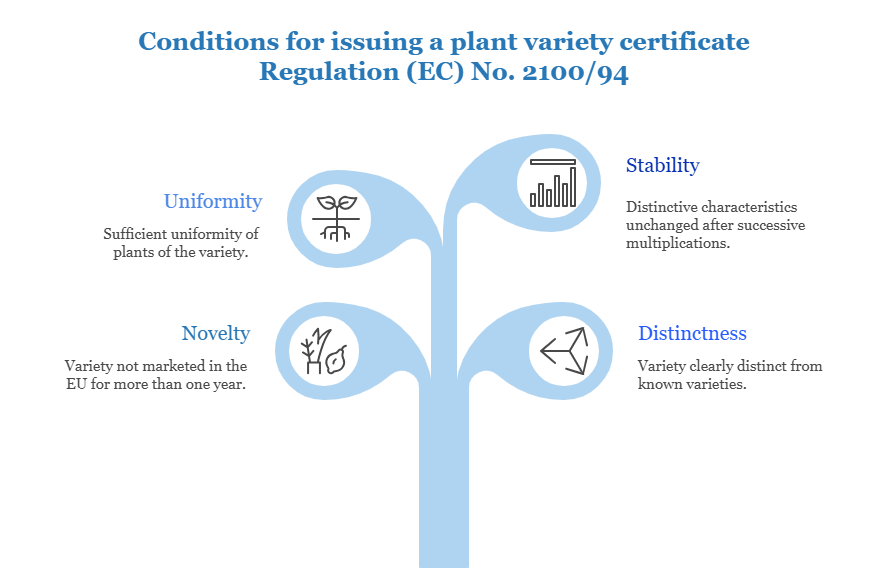
Regulation (EC) No 2100/94, which establishes the Community system for the protection of plant varieties, is based on a clear balance: in return for an exclusive right of exploitation, the holder must pay an annual maintenance fee.

In principle, failure to pay this annual fee within the prescribed time limits results in the definitive forfeiture of the plant variety right, save for limited circumstances in which the holder demonstrates, pursuant to Article 80 of Regulation (EC) No 2100/94, that an involuntary, exceptional, and duly justified impediment prevented compliance with the deadline.

A logic comparable to other intellectual property rights

Like patents or trademarks, a plant variety right is a living right, dependent on continuous vigilance. However, the specific feature of the CPVO system lies in its European centralisation and the growing use of digital tools dedicated to relations with right holders, in particular the MyPVR electronic platform, used for the notification of official acts, deadline management, payment of annual fees, and procedural exchanges with holders.

The Melrose case: a landmark dispute before the CJEU

The facts giving rise to the dispute

Romagnoli Fratelli SpA, the holder of a Community plant variety right for the potato variety Melrose, failed to pay the annual fee within the prescribed time limits.

The CPVO (Community Plant Variety Office) had nevertheless issued a debit note and several reminders, all made available via the MyPVR platform, with notifications sent by email.

The attempted restitutio in integrum

The holder applied for restitutio in integrum under Article 80 of Regulation (EC) No 2100/94, arguing that it had been prevented from meeting the payment deadline due to the lack of effective receipt of the notifications and contesting the validity of MyPVR as an official means of communication.

These arguments were rejected successively by the CPVO, the General Court of the European Union, and ultimately by the Court of Justice of the European Union, which held that failure to consult electronic notifications does not constitute an involuntary impediment within the meaning of Article 80.

Validation of electronic communications via MyPVR

An explicitly recognised legal basis

The CJEU confirms that the President of the CPVO is empowered, under Regulation 2100/94, to determine the modalities of electronic notification. Accordingly, the MyPVR system is recognised as an official and legally valid channel for the service of acts.

The importance of the holder’s consent

A decisive factor lies in the fact that the holder had opted for electronic communication. This choice entails clear legal consequences: failure to consult the platform cannot invalidate the notification.

legal recognition plateform

Burden of proof and the holder’s heightened responsibility

A firm position of the CJEU

The Court unequivocally states that the burden of proof lies with the holder. It was for the holder to demonstrate that the documents had not been made available in its MyPVR space or that the notification emails had not been sent. Failing such proof, the notification is presumed valid.

A heightened duty of diligence

This approach enshrines a logic of proactive responsibility: not seeing a notification does not mean it does not exist.

The CJEU thus elevates the administrative management of a CPVR portfolio to a strategic obligation, inseparable from legal protection.

Essential best practices for holders of plant variety rights

To avoid irreversible losses, we notably recommend:

  • Regular monitoring of MyPVR;
  • Continuous updating of electronic contact details;
  • The implementation of redundant internal alerts;
  • The use of a professional representative for portfolio management.

Conclusion

The CJEU decision of September 2, 2025 starkly illustrates the cost of administrative negligence in plant variety protection law. Failure to pay an annual fee, even in the absence of bad faith, may result in the definitive loss of a right of significant economic value. In a digital environment fully embraced by European institutions, vigilance is no longer optional; it is the very condition for the sustainability of rights.

Dreyfus & Associés assists its clients in managing complex intellectual property cases, offering personalized advice and comprehensive operational support for the complete protection of intellectual property.

Dreyfus & Associés works in partnership with a global network of attorneys specializing in Intellectual Property.

Nathalie Dreyfus with the support of the entire Dreyfus team


Q&A


1. Can a cancelled plant variety right be refiled at a later stage?

In practice, refiling a plant variety right is very limited, as any new protection remains subject to novelty within the meaning of Regulation (EC) No 2100/94, as well as the DUS criteria, conditions that are rarely met after prior exploitation of the variety.

2. Is appointing a professional representative mandatory?

No, but it is strongly recommended to secure effective portfolio management.

3. Can the loss of a plant variety right affect a company’s valuation?

Absolutely. Plant variety rights are often strategic intangible assets. Their cancellation may impact financial valuation, acquisition audits, fundraising operations, or mergers and acquisitions.

4. Can failure to pay a CPVO fee trigger internal liability within a company?

Yes. In structured groups, forfeiture resulting from non-payment may give rise to contractual or disciplinary liability of the department or service provider responsible for portfolio management, particularly where economic harm can be demonstrated.

5. Does forfeiture of a plant variety right affect ongoing licence agreements?

Yes. Cancellation of the right generally removes the legal basis for licences, with potentially significant contractual consequences, particularly regarding royalties, warranties, and liability vis-à-vis licensees.


This publication is intended to provide general guidance to the public and to highlight certain issues. It is not intended to apply to specific situations nor to constitute legal advice.
Read More