Named “word of the year” in 2013 by Oxford dictionary, the selfie is a self-portrait taken by the user’s smartphone. This practice has become the pièce de résistance of some social networks, like Instagram or Snapchat, each equipped with their own unique attractions to selfie takers, like filters or the option to add commentary.
Whether it is considered as a hobby or a heightening of societal individualism, the usage of the selfie raises many legal issues. From a legal standpoint, the selfie is governed by the right of publicity, which, in turn, derives from the right to privacy. Since the selfie is a photograph, the foremost issue is that of publicity rights. Whilst the situation is straightforward when a person takes their own photograph, it inevitably differs when a selfie becomes a group photograph. This matter is often resolved by assuming, correctly, that those featuring in the picture have consented to be photographed.
But consent usually does not go any further, which frequently gives rise to other problems. In this era of social networks, the author of the selfie will feel the urge – if not a reflex – to post the photograph on social platforms without having obtained the express agreement of relevant individuals. However, consent to be photographed and consent to having one’s photograph posted online are different. It is thus recommended to obtain the express consent of the persons photographed in order to publish and share the picture. For the record, the consent of individuals appearing on the photograph, albeit not as the chief object (including people in the background), is not required.
The selfie may also raise the question of image rights in relation to property. When the photograph is taken indoors, the right to privacy is of significance and it may be necessary to obtain the consent of the occupier of the premises. More importantly, when the selfie is inclusive of a good covered by copyright or other IP rights, the right holders are entitled to request the withdrawal of the photograph.
Finally, during the last election, there was a surge of selfies taken in the booth. In France, there is no rule against self-photographs in the booth provided the secrecy of the vote is not infringed. The Interior Minister stated that “it should be noted that the “ballot is secret”(article L. 59 of the Electoral Code). In addition, the presiding officer may expel anyone in case of disturbance of public order.” The act of taking a picture of oneself in the booth is not in itself a disturbance to public order but can challenge the independence of the voter.
The selfie thus presents specific issues that should be handled with care, especially in respect of publication on social networks.
Dreyfus specializes in managing your online presence. Please do not hesitate to contact us for more information.
The Uniform Dispute Resolution Policy (UDRP) is a rights protection mechanism which allows the transfer or cancellation of domain names infringing trademark rights in cybersquatting cases. Currently, five centres are qualified to entertain UDRP complaints namely the World Intellectual Property Organization (WIPO) in Geneva, the Czech Arbitration Court (CAC), the National Arbitration Forum (NAF) in the United States, as well as an Asian centre (ADNDRC) with branches in Beijing, Kuala Lumpur, Hong Kong and Seoul, and more recently, the Arab Centre (ACDR) based in Jordan.
The UDRP rules constitute a common foundation enacted by ICANN, the Internet regulatory authority, and they must be adhered to by all arbitration centres. They make reference to a set of additional rules namely the Supplemental Rules defined by the centres themselves and which govern matters not covered in the main rules. Each centre has thus adopted its own rules, which evolve from time to time.
In respect of the form, most of the centres restrict the complaint to 5,000 words, but the NAF limits it to 15 pages and the ADNDRC curbs it to 3000 words.
The Czech Arbitration Court has provided for group actions (class actions) in the case where a similar legal argument can be applied to multiple domain names reserved by the same entity. A third person who shall be responsible to file the complaint on behalf of the complainants must then be appointed. The Arab Centre has a similar consolidating mechanism by virtue of which multiple claimants can merge their actions into a sole claim.
Only NAF authorizes applicants to submit additional arguments or documents within a period of 5 days from the day the registrant has or should have responded. It is to be noted however that any amendment to the complaint is prohibited. In other centres, the Supplemental Rules have not made allowance for this possibility.
With regard to the answer, it must in all cases be made within 20 days of notification of the complaint. The UDRP Rules provide for the possibility of granting the defendant additional time upon request, but not all centres have incorporated this provision into their rules. Thence, at the NAF, the applicant must specify the period of time requested, within a maximum of 20 additional days. Similarly, the ACDR allows the registrant to request for an extension to submit a response, where it has been agreed between the parties or where there are exceptional circumstances, which must be established by said registrant. These additional time limits are not automatically granted.
The issue of Language of Proceedings also arises. All centres comply with the rule laid down by Article 11 of the UDRP Rules on this matter, namely that save for the agreement of the parties to the dispute or exceptional circumstances, the language of the proceedings is that in which the registration agreement of the contested domain name is penned down. However, the centres approach the concept of exceptional circumstances differently. Indeed, the NAF does not often acquiesce to a change in the language of the proceedings, while the ADNDRC is more likely to do so, especially when the registration agreements are in Chinese and the registrants and/or applicants speak English. As concerns WIPO, the proceedings can be administered in two languages. Moreover, it may be a good idea to resort to the ADNDRC if an Asian registrar is involved so as to facilitate the implementation of the decision.
It is worthwhile to note that in addition to traditional domain names such as .aero, .asia, .biz, .cat, .com, .coop, .info, .jobs, .mobi, .museum, .name, .net, .org, .pro, .tel and .travel, upon which all centres are empowered to adjudicate on, some centres are competent to adjudicate upon UDRP and associated proceedings in relation to several other extensions. Such is the case with WIPO, which has jurisdiction for proceedings relating to 69 national extensions (ccTLDs). Incidentally, the domain name .fr was one of them until 2011 and is anticipated to revert to it in the near future. For instance, ADNDRC experts have jurisdiction over disputes in relation to domain names bearing the ccTLDs .cc, .nu, .pw, .tv and .ws, while the CAC is competent specifically for .eu names. As concerns .us, only the NAF has jurisdiction. Disputes relating to the new domain name extensions (new gTLDs) can be brought before all centres.
Dreyfus specializes in dispute resolution and can help you to choose the most appropriate center to act against cybersquatting. Please do not hesitate to contact us for any queries.
With the recent cyber spying scandals, Internet governance and the Internet Corporation for Assigned Names and Numbers’ (ICANN) role have been much debated.
In February 2014, ICANN’s President and CEO, Fadi Chehadé, presented the idea of creating a parallel international structure similar to ICANN which would have a non-governmental organization (NGO) status. It was during a trip to France that Fadi Chehadé emphasized the need for ICANN to have an international structure in order to become more open and accepted around the world.
The choice of location in Geneva as a base for this new international structure would award it a more neutral setting and escaping US-centric governance. This would also participate in enhancing ICANN’s global legitimacy.
A new structure in Geneva would bring closer ICANN and the International Telecommunication Union (IUT). For some, IUT would compete with ICANN, therefore creating rivalry. However, IUT’s General Secretary, Hamadoun Touré, stated the Union doesn’t aspire to global Internet governance.
Following Fadi Chehadé’s announcement, on March 14, 2014, ICANN announced its transition from an American governance to a more globalized one. This seems to comfort the idea that ICANN is moving towards becoming a NGO.
ICANN wishes to engage a dialogue between Board members and the Community on this topic, particularly during its meetings.
Dreyfus will be attending the next ICANN meeting in London at the end of June 2014 in order to keep you closely informed of the coming changes.
While the U.S. Congress published in February a report about the lawfulness of Bitcoin, the first electronic money still raises many questions across the world. Its quoted price, which was below $1 until 2011, had risen to more than $1,000 in the previous months and is now quoted between $200 and $400. Judicial, tax and other authorities in all countries are studying this crypto-currency to understand its modus operandi. The ultimate aim is to consider all the ins and outs before introducing appropriate legislation. There are reasons to be concerned but Bitcoin is not elusive as it may sound. Below is an overview of the currency in 4 questions.
How does Bitcoin work?
Bitcoin is a peer-to-peer electronic cash system. It relies on the principles of cryptography to validate transactions and generate currency. In short, Bitcoin is a means of payment and a decentralized currency since it does not rely on any central server. The computers of users help the system run by connecting to the network: some will generate “money”, while others will validate the transactions…
The use of cryptography means that Bitcoin transactions are entirely anonymous. Thus, a transaction between a buyer and seller is not made in the traditional way: the buyer loses Bitcoins, but the same Bitcoins are not credited to the seller. The latter will receive the same amount of Bitcoins lost by the buyer, this being the price of the transaction. There is however no flow of money between the buyer and the seller, which allows for complete anonymity.
What are the concerns raised about this system?
Anonymity is the main concern for the authorities. Money laundering, illegal sales and trafficking of all types are some of the transactions which Bitcoin seems to allow. As soon as April 2012, the FBI published a document expressing its concerns that the system may be used for illegal activities, which are most often untraceable.
For example, on Silk Road, a marketplace accessible only through the anonymity network TOR, all transactions are carried out in Bitcoins. Silk Road is mainly used for the sale of narcotic substances, fake identification documents and counterfeit products. Buying on this site is therefore risky and may even prove to be dangerous for the clients since the site also markets counterfeit medications. The only limit imposed by Silk Road is that it prohibits the sales of weapons and child pornography products.
At the instigation of the U.S Senate, Silk Road was closed down in October 2013 by the FBI before reopening some days later. The platform is still operational and trafficking is still ongoing.
What is the legal status of bitcoin?
Legally speaking, Bitcoin cannot be treated as a lawful currency. The right to issue money is a sovereign power. It is therefore only natural that as of now, no State has recognized the Bitcoin as a currency unit in its legal system.
Bitcoin is also not an electronic money, which is defined in the European Union in a 2009 Directive as: “electronically, including magnetically, stored monetary unit as represented by a claim on the issuer which is issued on receipt of funds for the purpose of making payment transactions (…) and which is accepted by a natural or legal person other than the electronic money issuer”. As Bitcoin transactions are not carried out between two persons, there is no issuer. Besides, Bitcoin is not an electronically stored monetary unit. Hence, the European Directive is not applicable.
Some see Bitcoin as a “parallel” or “anarchistic currency” while others see it as a simple unit of monetary measure. As for U.S. tax agencies, they announced on 25 March that Bitcoin will be treated as an asset rather than a currency. This will allow for the purchases and sales of Bitcoin to be subject to taxes.
Finally, is it legal?
As such, it is difficult to state that the Bitcoin is illegal. It is only the ways in which it is used that may go beyond what is legally permissible and may be characterized as a criminal offense. Whilst Silk Road was used as an example here, various sites use Bitcoin to sell goods and services which are perfectly legal.
In France, the Senate held hearings in January 2014 focussing on the opportunities offered by this technology and on the way the law could evolve to further regulate it. The status of Bitcoin is more advanced in Germany. The German government has set a 25% ceiling for income tax on Bitcoin income and has categorized it as a private currency.
Only Thailand has entirely prohibited the use of Bitcoin in its territory till date.
Established in 2009, Bitcoin is however already outdated from a technical point of view. Having been replaced by technologies that are based on lighter and more secured infrastructure, the Bitcoin is probably dying out. The next issue will be how States can react to these new exchange units.
June 2014 – During the ICANN50 in London, a surprising statement was made. It was announced that released domain names from the Name Collision list would not be subject to a Sunrise period, therefore depriving trademark owners from the possibility to defend their rights.
A name collision occurs when users unknowingly access a name that has been delegated in the public domain name when the user’s intent was to access a resource identified by the same name in a private network such as an intranet. It creates a risk of mass confusion for users and machines, hence their registration is prohibited.
Collision list names should not be confused with Reserved Names, which are an imposed list of names to be excluded from new gTLD registrations. “These reserved names include strings that are for Country Code Top Level Domains (ccTLDs), ICANN-related names (such as ICANN), IANA-related names (such as example), and names that the registry operator can use in connection with the operation of the TLD” says ICANN. The rules regarding these names’ release have already been discussed and ratified. Indeed, they are subject to Sunrise only if it is still running, otherwise the only remedy will be a claims notice.
The absence of sunrise period can be seen as a loophole to the rights protection mechanisms (RPM), which enable trademark holders to protect their rights during the new gTLD program. Sunrise provides for trademark holders a possibility to preregister names that are the same or similar to their trademarks in order to avoid cybersquatting. This special period takes place prior to the general launch and the IPR owner must be able to prove their prior right to the name to register the TLD.
As a defense to the lack of RPM without the Sunrise period, it was contended that the URS procedure is an adequate protection. However, many practitioners claim that these actions aren’t as efficient to protect IPRs as Sunrise periods, thus explaining the low number of IPR owners resorting to URS procedures.
Because many consider URS actions not to be sufficient, protests can be expected regarding ICANN’s decision not to submit released collision list names to Sunrise, however the outcome remains uncertain.
Dreyfus attends ICANN meetings in order to keep you closely informed of the coming changes.
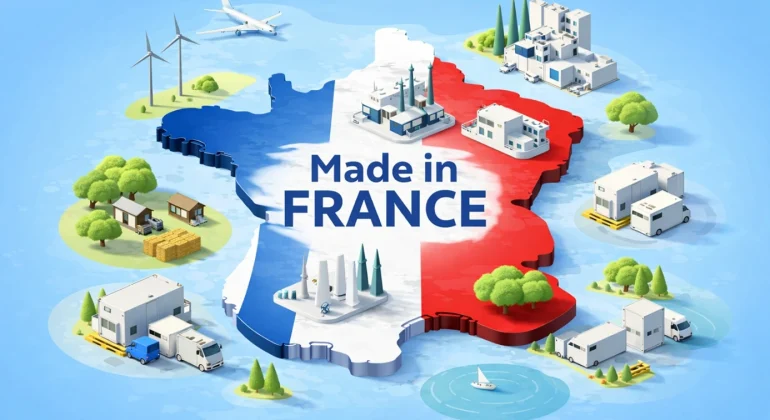
The “Made in France” label has become a major strategic lever for companies seeking to enhance their trademark image. At a time when consumers prioritize traceability, quality, and economic sovereignty, product origin has become a decisive purchasing criterion.
However, behind this marketing argument lies a complex legal framework, often misunderstood, exposing companies to significant risks in cases of misuse.
We analyze here the applicable rules, conditions of use, legal risks, and best practices to secure the use of this claim.
Understanding the legal definition of “Made in France”
An undefined notion governed by customs law
Contrary to common belief, the term “Made in France” is not defined by a single legal provision. It is based on the rules of non-preferential origin set out in the European Union Customs Code.
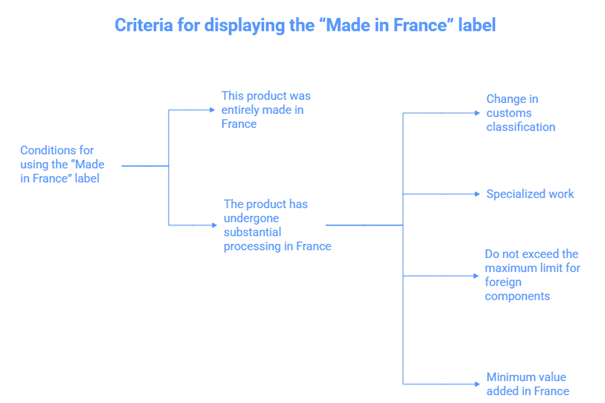
To use this designation, the manufacturer must demonstrate that the product meets one of the following criteria:
• Wholly obtained in France: all components originate from France and all stages of production take place there;
• Substantial transformation in France: where the product is not entirely French, it must undergo its last significant transformation in France, resulting either in a new product or a key manufacturing stage giving it its essential characteristics.
The concept of substantial transformation is assessed through several alternative criteria:
• Change in tariff classification: the finished product falls under a different customs code than its components;
• Specific processing: key operations (e.g., weaving or full garment manufacturing in textiles) confer French origin;
• Maximum threshold of foreign components: limits on non-French inputs in the final product;
• Minimum value added in France: a significant portion of the ex-works price is generated domestically (e.g., 45% for certain industrial goods).
A key distinction: food products vs manufactured goods
The legal framework varies significantly depending on the type of product.
For food products, certain origin labeling requirements apply within a strict European regulatory framework designed to ensure traceability and food safety. This serves a primary objective of consumer protection, particularly in matters of public health and fair information.
By contrast, for manufactured goods, the use of the “Made in France” label remains optional. It falls within the principle of freedom of trade, subject to consumer law rules on misleading commercial practices. In the absence of full EU harmonization, companies retain flexibility but also bear increased responsibility regarding the accuracy of origin claims.
What legal obligations apply to products?
Compliance with consumer law: a duty of fairness
The use of “Made in France” constitutes a commercial claim and is therefore subject to provisions of the French Consumer Code on misleading practices.
A company incurs liability where:
• the information is inaccurate or ambiguous;
• it is likely to mislead consumers;
• it creates an unjustified competitive advantage.
In this context, expressions such as “designed in France,” “French design,” “French craftsmanship,” or “French trademark” must be used with caution. These claims may be considered misleading if they suggest French manufacturing when this is not the case. Clear and precise communication is therefore essential.
DGCCRF controls and risks of misuse
The DGCCRF plays a central role in verifying the accuracy of origin claims. It has extensive powers enabling it to request supporting documentation, carry out on-site inspections, and sanction any non-compliant practices.
In the event of irregularities, companies may be subject to administrative fines, withdrawal of products from the market, as well as significant reputational damage.
More broadly, the misuse of the “Made in France” claim constitutes a major legal risk. It may result in:
• proceedings for misleading commercial practices;
• civil liability for unfair competition or competitive harm;
• criminal sanctions in the most serious cases.
The consequences are not limited to legal exposure. From a strategic perspective, such misuse may lead to:
• A loss of consumer trust,
• Negative media coverage (bad buzz),
• A lasting deterioration of trademark image.
How to prove the French origin of a product?
The burden of proof lies with the company
Any company using the “Made in France” claim must be able to objectively substantiate it. Evidence may include:
It is essential to maintain a clear, structured, and accessible file in case of inspection. This documentation enhances transparency and strengthens trademark credibility.
The value of a Binding Origin Information (RCO)
To secure their position, companies may request a Binding Origin Information (BOI) decision from customs authorities. This mechanism provides an official and legally binding determination of a product’s origin under non-preferential rules.
The BOI offers several advantages:
• it provides strong evidentiary value;
• it ensures legal certainty regarding the use of the claim;
• it helps mitigate litigation risks.
In practice, obtaining a BOI is part of a proactive compliance strategy, particularly relevant for complex or international supply chains.
Conclusion
The “Made in France” label represents a significant competitive advantage, provided its legal implications are fully understood. Its use requires rigor, transparency, and proactive risk management under both customs and consumer law.
A compliant approach relies on precise supply chain analysis, robust documentation, and clear communication to avoid misleading practices and preserve the long-term credibility of both the company and its trademark.
Dreyfus & Associés assists its clients in managing complex intellectual property cases, offering personalized advice and comprehensive operational support for the complete protection of intellectual property.
1. Is “Made in France” mandatory?
No, except for certain food products. For manufactured goods, it is optional.
2. What is a substantial transformation?
It is the final stage of production that significantly alters the product.
3. Can a product be “Made in France” if raw materials are imported?
Yes, if the main transformation occurs in France.
4. Is there an official label?
There are several private or semi-public labels (e.g., Origine France Garantie).
5. What is the difference between “Made in France” and “Origine France Garantie”?
The latter is based on stricter specifications and certification.
This publication is intended to provide general guidance and highlight certain issues. It is not intended to apply to specific situations or constitute legal advice.
Since the revelations in the Edward Snowden case and the discovery of the Heartbleed flaw which led to the massive theft of personal data, hackers are very much in the news. But now, web hackers are starting to target lawyers and other legal professionals who are supposed to ensure that their clients’ information is duly protected.
The “hacking” consists of a discreet exchange of illegal and/or personal information by breaking into a network. This is becoming common practice and should constitute a real threat, not only to businesses, but also to States, in the years to come. According to the head of Israeli military intelligence, hacking will soon become “the greatest evolution” in warfare techniques, greater than gunpowder or air forces. And this is a matter of great concern for legal professionals.
Indeed, more and more clients are requesting firms to adopt additional measures to monitor their networks and thus prevent the leakage of confidential or valuable information, such as trade secrets. Another major concern is the possibility for hackers to retrieve bids or tenders before these are made public.
The police have for a long time been apprehensive of the fact that law firms do not protect themselves enough against computer hackers. Yet, since 2011, the American FBI has been organising awareness sessions on computer security and industrial espionage. However, according to Mickael Stout, a consultant in computer security, “the hackers will not stop anytime soon, and it is obvious that companies will have to keep up with the latest technology to ward off all threats.”
It must be noted that this movement is in fact gaining more ground, instead of weakening. The emergence of “Hackivists” such as the Anonymous, with a political aim is to make public certain information, left a deep impression globally. It is therefore highly recommended to keep close track of developments in technology and to secure as much as possible all of the companies’ data.
Dreyfus is specialised in the protection of intellectual property online and can assist you in defining your strategiesand reinforcing the measures you plan to implement. Please contact us for further details.
On May 28, 2014, the Court of Appeal of Lyon found that the title “Val Thorens” is protected by copyright. Consequently, the registration and use of the domain names <val-thorens.net> and <val-thorens.org> amount to infringement.
M.V registered the domain names <val-thorens.net> and <val-thorens.org> in 1998 and 2000 respectively. He is a consultant in information technology, web hosting and the management of advertising spaces. Regarding the Tourism Board of Val Thorens, it registered the trademark “Val Thorens” in 2004.
The Court of Appeal firstly reiterated that “in the absence of any claims from the author(s), the use of a work by a legal person in its own name leads to the presumption, as far as third parties accused of infringement are concerned, that this person holds intangible property rights over the work, whether such work is collective or not.” As such, the Tourism Board has locus standi.
The term “Val Thorens” in this case relates to a title of works, brochures and websites, the originality of which is not at issue. According to the Court, the title is the result of a “creative process, bearing the mark of the author’s personality.” It is linked to toponyms, such as the valley of the Thorens stream, leading to the creation of a new term that refers to these works in a “specific, original and recognizable” way. Thus, the Court held that “Val Thorens” is protected by copyright.
While the Board adduces evidence that the website <val-thorens.com> has been used since April 1997, M.V does not provide any evidence showing that he registered or used the domain name <val-thorens.org> before 2000.
Finally, the Board uses the trademark Val Thorens for holiday accommodation services. According to the Court, M.V’s placing of real estate advertisements on the websites <val-thorens.org> and <val-thorens.net> constituted trademark infringement. Indeed, there is a risk of confusion in the mind of the consumer owing to the similarity of the services and products.
Reliance on the decision by the Court of Appeal of Lyon should be tempered. Indeed, case law on the protection of titles of works is strict and unpredictable. The courts carry out a strict assessment of a title’s originality (Court of Appeal of Paris, September 6, 2013, “Les amoureux de la Bastille”; CA Paris, group 5, chamber 2, June 19, 2009, “L’empreinte de l’ange”). This is why it is difficult to consider this decision as creating a precedent. In light of the unpredictable nature of case law in relation to copyright matters, the best option would be to rely on trademark law and therefore to register one’s trademark.
Terms of use form the contractual foundation between a platform and its users, most often in the form of a contract of adhesion accepted without negotiation. The difficulty arises when the platform modifies these rules after registration, particularly on sensitive issues such as the exploitation of content, the visibility of posts, or remedies in the event of suspension.
The facts: Instagram’s modification of its terms of use
In December 2012, Instagram announced a modification of its terms of use in a sensitive context: having been acquired by Facebook a few months earlier, the social network was at the centre of debates concerning the risk of commercial exploitation of published content.
These new terms of use caused serious concern: some users feared that Instagram could exploit their photographs and account information for advertising purposes, without remuneration or authorisation. The issue was all the more significant as these platforms rely heavily on content created by users.
Instagram provided for the new terms to enter into force after a notice period: users could, in theory, refuse the new rules by ceasing to use the service, with continued use constituting acceptance.
A user challenged this mechanism, arguing that the terms had been imposed without genuine consent, and brought proceedings against Instagram, notably on contractual grounds. The case raised a central question: is continued use alone sufficient to characterise acceptance of the new terms of use?
The decision: no contractual liability on Instagram’s part
The California Superior Court dismissed the claims brought against Instagram: the user had been able to review the new terms, could have refused them by ceasing to use the service, and nevertheless continued to use it after they entered into force.
This continued use was therefore analysed as tacit acceptance of the new provisions.
The Court also rejected the idea that Instagram had breached its obligations merely by modifying its terms of use: the change was not wrongful in itself; what mattered was the way in which it was provided for, notified, and made enforceable.
Favourable to platforms, the decision confirms that a social network may amend its terms, provided that this possibility was initially provided for and that the user is informed before the amendments enter into force.
The scope of the decision: a flexible solution, but one that must be put into perspective
Delivered in 2014, the decision in Rodriguez v. Instagram LLC illustrates a flexible approach to the modification of terms of use. The Court accepted that a user may be bound by new terms when they have been informed of their entry into force and continue to use the service.
This solution follows a practical logic: digital platforms evolve rapidly, and their functionalities, business models, and moderation rules must be regularly adapted.
The scope of this decision must nevertheless be put into perspective. First, it was delivered in a U.S. legal context and cannot be automatically transposed into French or European law. Second, it is based on a debatable idea: that the user always has a real possibility of refusing the new terms of use by leaving the service.
However, this freedom is sometimes theoretical. For an individual, leaving a platform may mean losing access to a social network that has become central to their digital life. For a creator, trademark, or company, it may result in a loss of visibility, customers, or access to a professional community. This dependence may therefore weaken the idea of fully free consent.
The decision nonetheless remains important: it shows that the enforceability of new terms of use does not depend solely on the existence of an amendment clause, but also on the concrete conditions under which the user is informed and placed in a position to understand the implications of the change.
The implications today: the DSA strengthens transparency in terms of use
Since the Instagram case, the European legal framework has evolved significantly. The Digital Services Act, applicable since February 17, 2024, strengthens the obligations of digital platforms. It does not prohibit the modification of terms of use, but it changes their function: general terms and conditions are no longer merely a contractual document; they also become an instrument of regulated transparency.
Article 14 of the DSA requires providers of intermediary services to present their terms and conditions in clear, plain, intelligible, user-friendly, and unambiguous language. These terms must in particular specify the restrictions that the platform may impose on the use of the service, especially with regard to content moderation, account suspension, limitation of visibility, or removal of posts.
For very large online platforms and very large online search engines, the requirements are reinforced. They must in particular provide a clear, concise, accessible, and easily readable summary of their terms and conditions, including the available remedies. This requirement is essential: the user must not only be informed of the existence of the terms of use; they must also be able to understand their practical consequences.
Accordingly, a modification of the terms of use concerning moderation, recommender systems, content visibility, or internal remedies can no longer be viewed as a mere contractual update. It may now be assessed in light of the transparency obligations imposed by the DSA.
The GDPR: when the modification concerns personal data
The GDPR also strengthens the framework governing modifications to terms of use when they affect the processing of personal data. A platform cannot simply announce a general modification of its terms if that modification affects the data collected, the purposes of processing, recipients, retention periods, or legal bases relied upon.
Where processing is based on consent, that consent must be freely given, specific, informed, and unambiguous. Continued use of the service alone will therefore not always be sufficient to characterise valid consent, particularly if the user has not received clear information about the scope of the processing. Even where the platform relies on another legal basis, such as performance of a contract or legitimate interest, it remains subject to a transparency obligation.
The modification of terms of use must therefore be distinguished from the modification of rules applicable to personal data. A contractual clause cannot, by itself, neutralise the specific requirements of data protection law.
Published content: a copyright issue
Modifications to terms of use may also raise copyright issues. Users generally remain the holders of the rights in the content they publish, but they usually grant the platform a licence to use that content, enabling it to host, display, and distribute it.
A modification of the terms of use that would broaden this licence, in particular to advertising or commercial uses, or to exploitation outside the platform, must therefore be examined carefully. The issue is particularly important for creators, photographers, influencers, brands, and companies, whose published content may constitute genuine intangible assets.
Unfair terms and published content
Under French law, the terms of use of social networks may also be examined in light of the law on unfair terms when they apply to consumers. A clause allowing a platform to modify its obligations unilaterally and extensively, without sufficient information or any real possibility for the user to understand the consequences of the change, could be challenged if it creates a significant imbalance to the detriment of the user.
Modifications relating to published content call for particular vigilance. Users remain the holders of copyright in the works they publish, but they generally grant the platform a licence to use those works in order to enable the hosting, display, technical reproduction, or dissemination of the content. A modification of the terms of use that would extend this licence to new uses, for example advertising, commercial, automated, or off-platform uses, must be examined carefully.
For creators and professionals , these modifications may have concrete consequences for the control of their intangible assets. It is therefore essential to archive successive versions of the terms of use, identify the clauses relating to published content, and verify whether the rights granted remain proportionate to the normal use of the service.
Conclusion
The Rodriguez v. Instagram LLC case remains an important decision for understanding the contractual logic of social networks. It shows that a platform may, under certain conditions, modify its terms of use and make those modifications enforceable against users who continue to use the service after notification.
However, this platform-friendly solution must now be strongly qualified. In Europe, the GDPR, the DSA, the law on unfair terms, and copyright law require a more demanding analysis. Terms of use are no longer merely a document that the user accepts upon registration: they govern access to the digital space, content visibility, moderation, remedies, and the exploitation of intangible assets.
For users, and even more so for companies, creators, and rights holders, a modification to a social network’s terms of use should therefore never be treated as a mere formality. It may have direct consequences for control over content, data protection, online visibility, and digital strategy.
Dreyfus law firm assists its clients in managing complex intellectual property cases, offering personalized advice and comprehensive operational support for the complete protection of intellectual property.
1. Do all modifications of terms of service have the same scope?
No, a simple technical update does not carry the same importance as a modification concerning personal data, published content, moderation, or account suspension.
2. Does posting content on social media mean assigning your copyright?
The user remains the holder of their rights. However, they generally grant the platform a license to use their content.
3. Why should you pay attention to this license?
Because it may authorize the platform to reproduce, distribute, adapt, or exploit the content. Its duration, territory, purpose, and extent must be examined with care.
4. Can we really speak of consent when the user has no choice but to accept or leave the platform?
This is the whole difficulty of platform contracts. The user theoretically has a choice, but that choice can be highly constrained when the platform has become indispensable to their activity, their visibility, or their relationship with their clients. This dependence does not automatically render the terms of service unlawful, but it may weigh in the analysis of their balance and enforceability.
5. Are professional creators less protected than consumers?
Often, yes. The consumer can more easily invoke the law on unfair terms. The professional creator, the influencer, or the company will instead have to reason in terms of evidence, validity of the license, contractual imbalance, economic dependence, or harm to their intangible assets. Protection exists, but it is generally less automatic.
The purpose of this publication is to provide general guidance to the public and to highlight certain issues. It is not intended to apply to particular situations or to constitute legal advice
On May 25, 2014, the American National Arbitration Forum (NAF) delivered its 44th URS (Uniform Rapid Suspension) decision, the first in respect of a domain name bearing the .sexy TLD.
The domain name concerned, <finn.sexy> is reserved by North Sound Names. Spearheaded by Frank Schilling, also the founder of Uniregistry, which, to date, is a registry comprising of 50 new gTLDs, North Sound Names is used to store domain names in the TLDs managed by Uniregistry before they are made available to the public. It is in this context that the disputed domain name was reserved on April 15, 2014.
The domain name resolves to a parking page offering the name for sale and containing links called “First Names”, “Selfies”, “Diet”, “Fitness”, “Social Networks”, “Dating” and “Modeling.” It is to be noted that these terms are clearly detached from the business activities of the complainant, Finn.no, the largest online market in Finland.
In support of its complaint, the complainant mentions its extensive use of the Norwegian trademark FINN. This allows the expert to find that the first condition of the URS procedure has been satisfied as the domain name is identical to the trademark. With regard to the legitimate interests or the rights of the registrant, the expert notes that the latter employs the term “finn” in its common usage, i.e. referring to Finnish people. According to the expert, the registrant in fact has a legitimate interest to use this name. On the issue of bad faith, neither the fact of the domain name in dispute being offered for sale nor the notification received by the registrant from the Trademark Clearinghouse (TMCH) convinced the expert. Logically thus, the complaint was dismissed.
The URS procedure is still at an early stage and it is difficult to foresee how the case law of the centres will develop. Yet, there have been many dismissals since most proceedings are primarily concerned with clear cases of trademark abuse. A more appropriate option therefore would have been to proceed on the grounds of the UDRP (Uniform Dispute Resolution Policy). Indeed, while the rules are similar, UDRP experts espouse a more flexible approach and it is usually easier to lend credence to one’s complaint. Without entertaining any preconceived opinions about the experts’ views, it seems that a transfer unto the applicant would have been warranted.
Dreyfus specializes in domain name dispute resolution and guides you in the defense of your rights on the Internet. Please do not hesitate to contact us for any queries.
Our site uses cookies to offer you the best service and to produce statistics, and measure the website's audience. You can change your preferences at any time by clicking on the "Customise my choices" section.
When browsing the Website, Internet users leave digital traces. This information is collected by a connection indicator called "cookie".
Dreyfus uses cookies for statistical analysis purposes to offer you the best experience on its Website.
In compliance with the applicable regulations and with your prior consent, Dreyfus may collect information relating to your terminal or the networks from which you access the Website.
The cookies associated with our Website are intended to store only information relating to your navigation on the Website. This information can be directly read or modified during your subsequent visits and searches on the Website.
Necessary cookies are absolutely essential for the website to function properly. These cookies ensure basic functionalities and security features of the website, anonymously.
Dreyfus is concerned about protecting your privacy and the Personal Data ("Data"; "Personal Data") it collects and processes for you.
Hence, Dreyfus complies every day with the European Union legislation regarding Data protection and particularly the European General Data Protection Regulation Number 2016/679 of 27 April 2016 (GDPR).
This Privacy Policy is aimed at informing you clearly and comprehensively about how Dreyfus, as Data Controller, collects and uses your Personal Data. In addition, the purpose of this Policy is to inform you about the means at your disposal to control this use and exercise your rights related to the said processing, collection and use of your Personal Data.
This Privacy Policy describes how Dreyfus collects and processes your Personal Data. The collection happens when you visit our Website, when you exchange with Dreyfus by e-mail or post, when exercising our Intellectual Property Attorney and representative roles, when we interact with our clients and fellow practitioners, or on any other occasion when you provide your Personal Data to Dreyfus, in particular when you register for our professional events.


 Written by Nathalie Dreyfus10/07/2014
  Named “word of the year” in 2013 by Oxford dictionary, the selfie is a self-portrait taken by the user’s smartphone. This practice has become the pièce de résistance of some social networks, like Instagram or Snapchat, each equipped with their own unique attractions to selfie takers, like filters or the option to add commentary.