Nathalie Dreyfus

Comprehensive guide: Strategic protection of the 4 pillars of a perfume

In the luxury industry, perfume is far more than just a fragrance: it is a complex intangible asset composed of multiple layers of creation. For effective protection, it is imperative to dissect the product into its four major components: the scent (the juice), the formula (the recipe), the packaging (the bottle/box), and the name (the trademark).

Each of these elements falls under a distinct legal regime. Dreyfus Law Firm offers this expert guide to navigating between Copyright, Trademark Law, Designs & Models, and Trade Secrets.


The scent (The Fragrance): The challenge of the intangible

This is the soul of the perfume, yet it remains the most difficult element to protect legally in France today. This is a subject we monitor closely, and one we have already addressed particularly in our article entitled Fragrance and Intellectual Property: which protection?.

Why copyright does not (yet) apply to scent

Unlike music or literature, current French case law refuses to consider the fragrance (the perceived scent) as a “work of the mind” (œuvre de l’esprit) protected by copyright.

  • The Judicial Position: The French Cour de cassation considers that a fragrance proceeds from the implementation of technical know-how, rather than from a purely creative artistic endeavor identifiable with sufficient precision.
  • The Consequence: One cannot sue for “copyright infringement” for the reproduction of a scent alone.

The solution: Acting on grounds of unfair competition

While the scent is not a “work,” servile imitation remains punishable. To protect a scent against “dupes” or copies, we take action based on unfair competition (concurrence déloyale) or free-riding (parasitisme).

  • The Legal Argument: The goal is to prove that the competitor sought to appropriate the wake (sillage) of your perfume to benefit from your investments without cost, creating a risk of confusion or undue value capture.

The formula (the recipe): The realm of secrecy

If the scent is the result, the formula is the technical process (the list of chemical ingredients and their dosage) used to achieve it.

Trade secrets rather than patents

Patent filing is rare in perfumery because it requires disclosing the formula to the public (which enters the public domain after 20 years). The preferred strategy is that of Trade Secrets (Secret des affaires).

  • The Principle: The formula must remain confidential information, known only to a very restricted number of people (the “nose,” the laboratory).
  • Legal Protection: This relies on the implementation of reasonable protection measures (physical and digital) to prevent the theft of the formula.

Contractualization as a shield

For the secret to hold, it must be legally secured by contracts:

  • Non-Disclosure Agreements (NDAs): Essential with laboratories, raw material suppliers, and employees.
  • Non-Compete Clauses: To prevent a perfumer from joining a competitor with your formulas in mind.

Packaging (bottle and box): The alliance of design and trademark

The bottle is the first visual point of contact with the consumer. It is an industrial art object that benefits from powerful cumulative protections.

Designs & models and copyright

  • Designs & Models: This is the premier protection for the aesthetic appearance of the bottle (its shape, lines). Filing must be done before the product is disclosed to guarantee its novelty.
  • Copyright: If the bottle is original and bears the imprint of its author’s personality, it is protected by copyright from the moment of its creation, without formal registration (although a probatory deposit is recommended).

The three-dimensional trademark

In exceptional cases, the shape of the bottle itself can be registered as a trademark (3D trademark) if it is sufficiently distinctive for the consumer to recognize the origin of the product by its shape alone (e.g., the iconic Jean Paul Gaultier torso bottle).

The name: The trademark monopoly

The name is the most valuable asset in the long term. Once the scent has evaporated, the name remains.

Word mark registration

The perfume name (e.g., “N°5”) and the House name must be registered as word marks.

  • Filing Classes: It is crucial to target Class 3 (cosmetics, perfumes) but also Class 35 (advertising, business management) for retail and distribution.
  • Availability: An in-depth clearance search is indispensable to ensure the name is not already taken.

Protection against cybersquatting

The name must also be protected online. Reserving domain names (.com, .fr, and new extensions like .luxury) must be synchronized with trademark filing, as we explain in our article on Domain Names and New gTLDs.

Litigation expertise of Nathalie Dreyfus

Protecting these four elements requires a global strategy, but also the ability to defend one’s rights in court when counterfeiting occurs.

Dreyfus Law Firm stands out through the specialized expertise of its founder, Nathalie Dreyfus. As a French and European Trademark Attorney, she possesses recognized experience not only in strategic consulting but also in handling complex litigation.

Her expertise is regularly sought in high-stakes cases, requiring perfect mastery of case law from the French Cour de Cassation and Courts of Appeal regarding intellectual property. This fine-tuned knowledge of judicial decisions allows for the anticipation of legal risks linked to scent or shape protection and the construction of solid defense cases for perfume houses.

You can view our founder’s full profile here: Nathalie Dreyfus.

FAQ: Frequently asked questions

  1. Can you patent a scent?
    No. A scent cannot be patented. Only the technical manufacturing process (the chemical formula) could theoretically be patented, but this requires publication, which contradicts the industry’s secrecy strategy.
  1. How do I prove my scent was copied?
    Proof is generally established via chromatography analysis (chemical analysis) comparing the original juice and the copy, combined with olfactory tests by experts, to demonstrate economic parasitism.
  1. Should my perfume name be descriptive?
    Absolutely not. A trademark must be distinctive. Naming a perfume “Rose Scent” may be refused registration because the term describes the product. It is recommended to choose an arbitrary or fanciful name.
  1. What is the difference between a “dupe” and a counterfeit?
    Counterfeiting copies a registered right (the name, the logo, the bottle shape). A “dupe” often imitates the scent (not protected by copyright) and the vibe, while changing the name. Against a dupe, we act on grounds of unfair competition; against a counterfeit, we act for trademark or design infringement.

Dreyfus Law Firm is your strategic partner for securing your intangible assets. Contact us to audit the protection of your olfactory creations.

Read More

When should you seek the assistance of a trademark law expert: distinctive signs, infringement and defence strategies?

Introduction

In an economic environment characterised by intensified competition, the digitalisation of exchanges and the rapid circulation of content, trademarks have become a key strategic asset. They embody economic value, reputation and consumer trust. Yet many companies still underestimate the technical complexity of trademark law and intervene too late, when the legal risk has already materialised.
Knowing when to seek the assistance of a trademark law expert is not a matter of legal comfort, but a strategic decision. Whether it involves creating a distinctive sign, preventing an infringement action or deploying an effective defence strategy, the involvement of a specialist makes it possible to anticipate, secure and, above all, arbitrate risks.

Understanding distinctive signs and the challenges of their protection

What is a distinctive sign under trademark law?

A distinctive sign is a sign capable of identifying the commercial origin of goods or services and distinguishing them from those of competitors. It may take various forms: a word trademark, logo, slogan, shape, colour, or even a sound or animation in certain cases.
However, not all signs are eligible for protection. Trademark law excludes, in particular, descriptive, generic or customary signs, as well as those contrary to public policy. Assessing distinctiveness requires a refined legal analysis, which is often underestimated at the filing stage. Independently of these absolute grounds for refusal, a sign may also be legally unavailable due to prior rights held by third parties, such as registered trademarks, company names, trade names or domain names, even if it is distinctive in itself.

protection sign trademark


Why is distinctiveness a critical point of attention?

A trademark that is weakened from the outset exposes its owner to significant risks: refusal of registration, third-party oppositions, or subsequent invalidity or revocation. A trademark law expert plays a key role in securing the choice of the sign, taking into account the relevant sector of activity, the target public and applicable case law.
Example: the French Supreme Court (Cour de cassation) set aside an appellate decision that had considered the trademark “Silhouette” to be distinctive on the grounds that the goods concerned were slimming-related substances, from which it followed that the sign could designate a characteristic of those goods (Cass. Com., July 12, 2005, No. 04-12.146).

When does trademark law expertise become essential?

Upstream: creation, filing and protection strategy

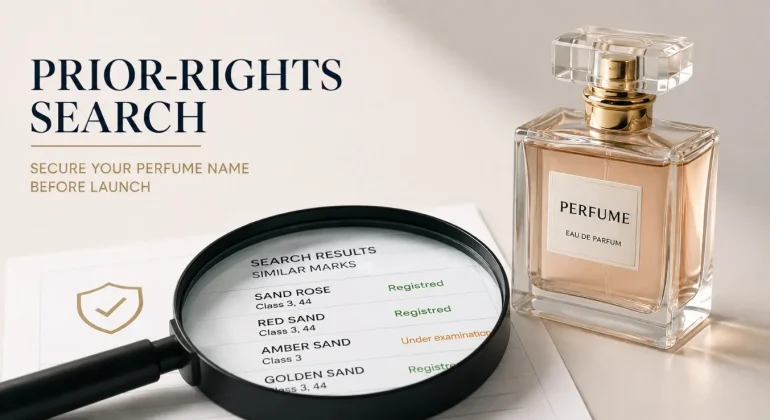
The first reflex must be anticipation. Before any commercial launch, the expert conducts in-depth prior rights searches and designs a coherent filing strategy, both at national and international levels. This approach helps avoid marketing investments in a sign that is legally unavailable.
Companies can file their trademarks with INPI for protection in France, with the EUIPO for a European Union trademark, or use the Madrid System managed by WIPO for streamlined international protection.

During use: monitoring and risk management

A registered trademark is not automatically protected in practice. Monitoring trademark registers, domain names, marketplaces and social networks is essential. The expert identifies potential infringements and recommends proportionate actions, ranging from cease-and-desist letters to litigation.

In crisis situations: opposition, disputes or litigation

Once a conflict has arisen, the intervention of a specialist becomes decisive. Opposition proceedings before the INPI or the EUIPO, infringement actions, settlement negotiations: each decision is based on a precise legal and strategic assessment, taking into account evidence, deadlines and economic stakes.

Trademark infringement: identifying, qualifying and acting effectively

How can a situation of infringement be identified?

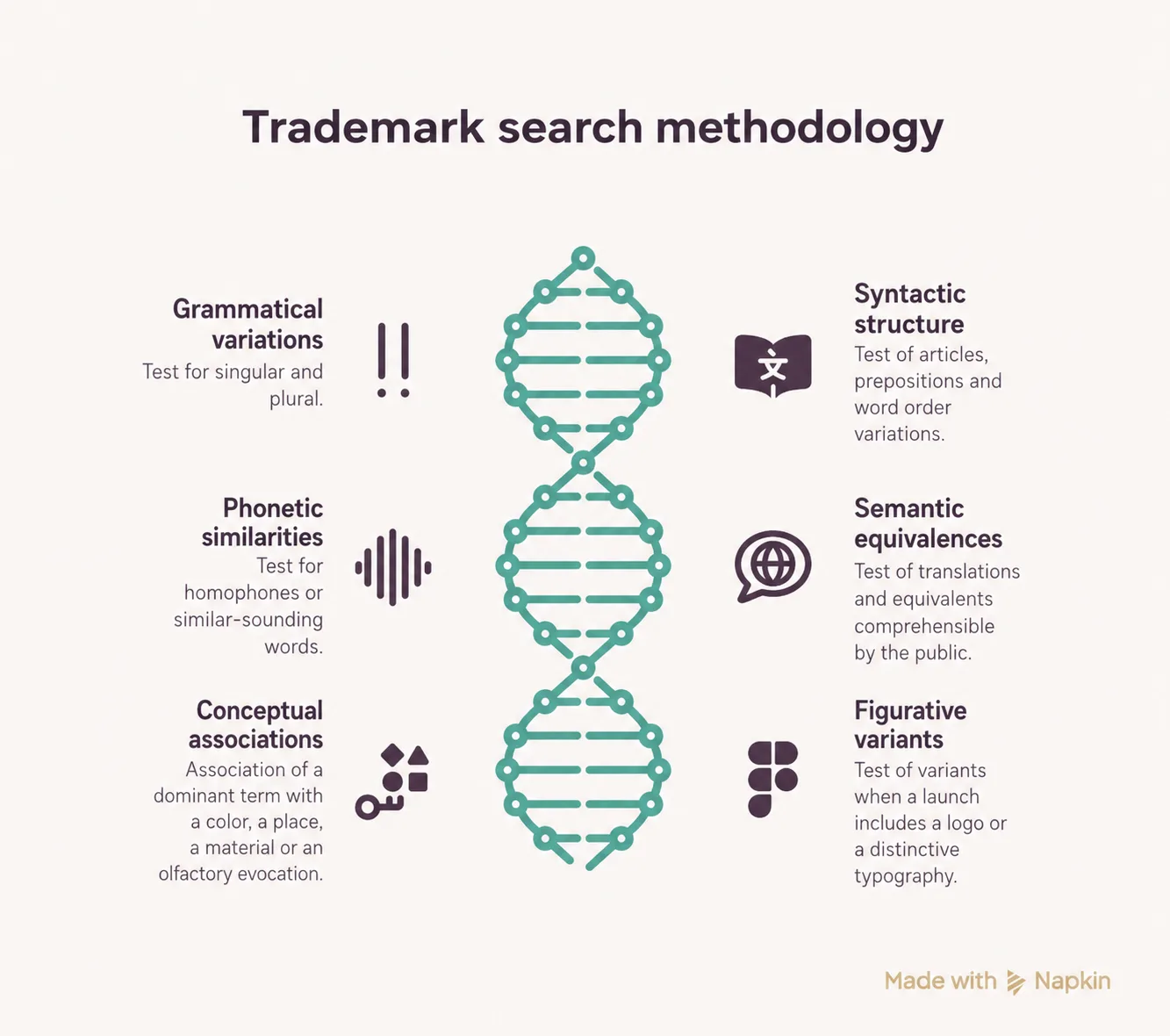
Trademark infringement involves the unauthorised use of an identical or similar sign for identical or similar goods or services, creating a likelihood of confusion. The analysis is not limited to a visual comparison; it also incorporates phonetic, conceptual and contextual criteria.

Why is acting quickly essential?

Inaction weakens the trademark owner’s position and may be interpreted as acquiescence. A trademark law expert assesses the urgency, the seriousness of the infringement and the most appropriate course of action, whether judicial or extrajudicial.

Example: a company discovers the exploitation of its trademark through a fraudulent domain name used for online sales. A strategy combining a cease-and-desist letter, a UDRP procedure and platform takedown notices allows the risk to be neutralised swiftly. The firm has recognised expertise in domain name matters.

Building a defence and trademark valorisation strategy

Legal defence and overall consistency

Defending a trademark is not limited to reacting to infringements. It forms part of a broader strategy, aligned with the company’s commercial objectives and communication policy. The expert supports decision-making by assessing the cost/risk/opportunity balance.

Valorisation and securing intangible assets

Beyond litigation, trademark law is a powerful tool for valorisation: licensing, assignments, partnerships and fundraising. A legally robust trademark strengthens a company’s credibility with investors and business partners.

Conclusion

Seeking the assistance of a trademark law expert is a structuring step at every stage of a trademark’s life cycle: creation, use, defence and valorisation. In a context where infringements are multiplying and becoming increasingly complex, legal expertise makes it possible to turn risk into a competitive advantage.
Dreyfus & Associés assists its clients in managing complex intellectual property cases, offering personalized advice and comprehensive operational support for the complete protection of intellectual property.
Dreyfus & Associés works in partnership with a global network of attorneys specializing in Intellectual Property.
Nathalie Dreyfus with the support of the entire Dreyfus team

Q&A

1. When should a trademark law expert be consulted?
As early as the reflection phase on the choice of a name or logo, and before any filing or commercial launch.
2. Is an expert indispensable to file a trademark?
Filing is possible without an expert, but professional support significantly reduces legal risks.
3. What are the risks of a poorly drafted trademark filing?
An imprecise or overly broad specification may weaken the trademark, limit its enforcement or expose it to invalidity or revocation actions.
4. Is an unused trademark protected?
The absence of genuine use may lead to revocation of trademark rights.
5. Is trademark monitoring mandatory?
It is not legally mandatory, but it is essential in practice to preserve trademark rights.
6. What is the difference between opposition and infringement?
Opposition arises during the trademark application phase, whereas infringement sanctions the unauthorised use of a protected sign.
7. Can a company defend itself alone against an infringement claim?
In practice, this entails significant risks. Incorrect legal qualification or an inappropriate response may aggravate the situation. Expert support helps structure a coherent and proportionate defence.

This publication is intended for general public guidance and to highlight issues. It is not intended to apply to specific circumstances or to constitute legal advice.
Read More

Franchise law in the European Union and the United Kingdom: 2026 complete guide

Brexit has profoundly changed the legal landscape for international franchises. Since  June 1st, 2022, the European Union and the United Kingdom have applied separate exemption regimes for vertical agreements, creating new complexity for franchisors operating on both sides of the Channel. This guide details the applicable rules, the key differences between the two systems and the compliance strategies to secure your international development.


The legal framework for franchises in Europe

A franchise agreement constitutes a vertical agreement under competition law: it links two undertakings operating at different levels of the production or distribution chain. The franchisor grants the franchisee the right to exploit its brand, know-how and business methods, in return for a royalty and compliance with defined standards.

This contractual relationship is governed by competition rules that prohibit agreements likely to restrict competition. In the European Union, Article 101 of the Treaty on the Functioning of the European Union (TFEU) sets out this principle. In the United Kingdom, Chapter I of the Competition Act 1998 serves an equivalent function.

However, certain vertical agreements may benefit from a block exemption when they generate efficiency gains from which consumers benefit. This is precisely the purpose of block exemption regulations, which create a “safe harbour” for agreements meeting certain conditions.

The legacy of the Pronuptia ruling

European franchise law has its roots in the Pronuptia de Paris v Schillgalis ruling delivered by the Court of Justice of the European Communities in 1986. This landmark decision recognized that certain contractual restrictions are inherent to the very nature of franchising and do not constitute restrictions of competition. These include clauses aimed at protecting the identity and reputation of the network, as well as the confidentiality of the know-how transferred.

This “Pronuptia test” remains relevant today: restrictions genuinely necessary to protect know-how and brand image fall outside the scope of the prohibition on anti-competitive agreements.

Regulation 2022/720: the EU exemption regime

Regulation (EU) 2022/720 on the application of Article 101(3) TFEU to categories of vertical agreements entered into force on  June 1st, 2022. It replaces the 2010 Regulation and will be in force  until May 31st, 2034.

This Regulation is accompanied by the Vertical Guidelines, which provide a detailed interpretation of its provisions. Together, they constitute the reference framework for assessing the compliance of franchise agreements with EU competition law.

Conditions for applying the exemption

To benefit from the block exemption, a franchise agreement must meet several cumulative conditions:

Market share threshold: both the franchisor and the franchisee must each hold a market share not exceeding 30% on their respective relevant markets. For the franchisor, this is the market on which it sells the contract goods or services. For the franchisee, it is the purchasing market that is considered.

Absence of hardcore restrictions: the agreement must not contain any of the “hardcore” restrictions listed in Article 4 of the Regulation, which cause the entire agreement to lose the benefit of the exemption.

Absence of excluded restrictions: certain clauses, although not hardcore restrictions, are excluded from the benefit of the exemption without contaminating the rest of the agreement. They must be assessed individually.

Key changes in the Regulation 2022

The 2022 Regulation provides important clarifications on several points that had been debated under the previous text:

Dual distribution: the exemption now expressly covers situations where the franchisor also sells at the same levels as its franchisees (retail, wholesale, import), provided that the agreement is non-reciprocal and the parties do not compete at the upstream level.

Information exchange: in the context of dual distribution, the exchange of information between franchisor and franchisee is subject to specific rules to avoid the risks of horizontal coordination.

Shared exclusivity: the franchisor may now designate up to five exclusive distributors per territory, compared to only one previously.

Online sales: the Regulation clarifies the permissible restrictions regarding the use of the Internet and online sales platforms.

VABEO: the UK post-Brexit regime

The United Kingdom adopted its own exemption regime with the Competition Act 1998 (Vertical Agreements Block Exemption) Order 2022, commonly known as the VABEO. Entering into force on June 1st, 2022, it will expire on June 1st, 2028, six years before the EU Regulation.

The Competition and Markets Authority (CMA), the UK competition authority, has published guidance accompanying the VABEO. This guidance diverges from the European Commission’s guidelines on certain points.

Structure of the VABEO

The VABEO broadly follows the structure of the Regulation with the same 30% market share threshold and a similar list of hardcore restrictions. However, several notable differences reflect UK competition law enforcement priorities and CMA experience.

Shorter duration: expiry in 2028 will allow the UK to adapt its regulations more quickly to market developments, but also creates uncertainty for long-term agreements.

Investigation powers: the VABEO gives the CMA a statutory power to request information from parties about their vertical agreements, strengthening its monitoring capabilities.

Key differences between the Regulation and the VABEO

Although the two regimes share a common basis, several significant divergences require separate analysis for networks operating on both sides of the Channel.

Parity clauses (MFN)

This is probably the most important difference between the two regimes.

In the UK: all wide retail parity clauses (“wide retail MFN”) constitute hardcore restrictions. A wide parity clause prohibits the franchisee from offering its products or services on better terms through any other sales channel, whether online or offline. The inclusion of such a clause causes the entire agreement to lose the benefit of the exemption.

In the EU: only wide parity clauses imposed by online intermediation services providers are excluded from the exemption, and this is an exclusion (affecting only the clause concerned) rather than a hardcore restriction (which would affect the entire agreement).

Dual distribution and information exchange

In the EU: the Regulation imposes specific conditions for information exchange between parties in a dual distribution situation to benefit from the exemption. The exchange must be directly related to the implementation of the vertical agreement and necessary to improve the production or distribution of the contract goods.

In the UK: the VABEO does not impose these formal conditions. Information exchange is exempt if it does not restrict competition by object and is “genuinely vertical”, i.e. necessary for the implementation of the vertical agreement.

Shared territorial exclusivity

In the EU: the maximum number of exclusive distributors per territory is set at five.

In the UK: the VABEO does not prescribe a maximum number but requires the number to be “determined in proportion to the territory/customer group in such a way as to secure a certain volume of business that preserves the investment efforts” of the distributors.

Post-term non-compete

Both regimes allow post-term non-compete clauses of a maximum duration of one year, limited to the premises where the franchisee operated. However:

In the EU: an additional condition requires that the clause be “indispensable for the protection of know-how”.

In the UK: the VABEO adds that the clause must “relate to goods or services which compete with the contract goods or services”.

Summary table of differences

Criterion Regulation (EU) VABEO (UK)
Expiry date 31 May 2034 1 June 2028
Wide retail MFN clauses Excluded only for online intermediation platforms Hardcore restrictions for all
Information exchange (dual distribution) Formal conditions required More flexible approach
Shared exclusivity Maximum 5 distributors Number proportionate to territory
Post-term non-compete Indispensable for know-how protection Must relate to competing goods/services

Essential franchise agreement clauses

An international franchise agreement must be carefully drafted to benefit from the exemption in both jurisdictions. Here are the main clauses to consider.

Protection of know-how

Both regimes recognize the legitimacy of clauses aimed at protecting the franchisor’s know-how. The guidelines list the types of restrictions generally considered inherent to franchising:

  • Confidentiality obligation regarding the know-how transferred
  • Obligation not to acquire financial interests in a competitor
  • .
  • Obligation to communicate improvements to the system to the franchisor
  • Obligation to use the know-how solely for the purpose of operating the franchise

Non-compete clauses

Non-compete clauses are permitted under certain conditions:

During the term of the contract: the maximum duration is 5 years. Clauses that are tacitly renewable beyond this period are deemed to be concluded for an indefinite duration and do not benefit from the exemption.

After termination of the contract: the maximum duration is 1 year, and the clause must be geographically limited to the premises and land from which the franchisee operated during the term of the contract.

Territorial and customer restrictions

The franchisor may impose certain restrictions on the franchisee’s sales, including:

  • Restrictions on active sales into territories or to customer groups reserved exclusively to other network members
  • Obligation to operate only from an authorized place of establishment
  • Restrictions on active sales into territories reserved to the franchisor

However, restrictions on passive sales (responses to unsolicited customer enquiries) are generally considered hardcore restrictions.

Exclusive sourcing

The franchisor may impose an exclusive sourcing obligation (purchasing more than 80% of requirements from the franchisor or designated suppliers) provided that this obligation does not exceed 5 years.

Hardcore restrictions to avoid

Certain clauses constitute hardcore restrictions which cause the entire agreement to lose the benefit of the block exemption. These restrictions are presumed to restrict competition by object.

Resale price maintenance (RPM)

The imposition of a fixed or minimum resale price is the most serious restriction. This includes indirect mechanisms such as:

  • Fixed or maximum margins
  • Discounts or reimbursements conditional on compliance with a price level
  • Threats, intimidation or penalties related to pricing policy
  • Minimum advertised prices (MAP) that function in practice as fixed prices

However, recommended resale prices and maximum prices are permitted, provided they do not function in practice as fixed prices.

Absolute territorial restrictions

Restrictions that completely prevent a franchisee from selling in certain territories or to certain categories of customers are prohibited. This particularly targets the partitioning of the EU internal market.

Passive sales restrictions

Restrictions on passive sales, i.e. sales resulting from unsolicited customer enquiries, constitute hardcore restrictions, with limited exceptions (notably in selective distribution systems).

Prohibition of online sales

A complete ban on the use of the Internet as a sales channel is a hardcore restriction. The franchisee must be able to sell online, even if qualitative restrictions may be imposed.

UK-specific restrictions

In the UK only, wide retail parity clauses also constitute hardcore restrictions. This stricter treatment than in the EU requires particular care when drafting contracts covering the UK market.

E-commerce and online sales

The rise of e-commerce was one of the main drivers of the revision of the exemption regulations. The new rules provide important clarifications for franchise networks.

Principle of free access to the Internet

The franchisee must be free to use the Internet to promote and sell the contract products or services. Any restriction aimed at preventing the effective use of the Internet as a sales channel constitutes a hardcore restriction.

Permitted restrictions

Certain restrictions on online sales are nevertheless permitted:

Dual pricing: the franchisor may set different wholesale prices for products intended to be sold online and those intended for in-store sales, provided that this difference is related to the different costs of each channel.

Qualitative criteria: in a selective distribution system, the franchisor may impose different criteria for online and offline sales, provided they pursue the same objectives and achieve comparable results.

Marketplace restrictions: the franchisor may prohibit the franchisee from selling via third-party marketplaces (Amazon, eBay, etc.), provided that all online presence is not prohibited.

Online intermediation platforms

The rules on online intermediation services have been strengthened. In the EU, wide parity clauses imposed by these platforms are excluded from the exemption. In the UK, the treatment is even stricter as all wide retail parity clauses are hardcore restrictions.

International compliance strategies

Franchisors operating in both the EU and the UK face an increased compliance challenge since Brexit. Several strategies may be considered.

Option 1: single contract aligned with the strictest regime

This approach involves adopting a single template contract that simultaneously meets the requirements of both the Regulation and the VABEO. Clauses are drafted according to the most restrictive standard, generally that of the UK for MFN clauses.

Advantages: simplicity of management, network consistency, reduced administrative costs.

Disadvantages: potential loss of flexibility in the EU where certain clauses would be permitted.

Option 2: separate contracts by jurisdiction

This approach involves using different contracts for franchisees established in the EU and those established in the UK, each optimized for its applicable regime.

Advantages: optimal use of the possibilities offered by each regime.

Disadvantages: management complexity, higher drafting and monitoring costs, risk of inconsistency within the network.

Option 3: modular approach

An intermediate solution involves using a common framework agreement with annexes or addenda specific to each jurisdiction. Sensitive clauses (MFN, information exchange, etc.) are addressed in these ancillary documents.

Compliance audit

Whatever option is chosen, a regular contract audit is essential. Key checkpoints include:

  • Verification of market share thresholds (to be updated regularly)
  • Review of non-compete clauses and their duration
  • Analysis of clauses relating to online sales
  • Examination of pricing mechanisms
  • Review of parity and MFN clauses
  • Verification of territorial restrictions

Dreyfus support for your franchise network

Dreyfus & Associés supports franchisors and franchisees in securing the legal foundations of their networks in France, the European Union and the United Kingdom.

Our expertise

Our team assists at all stages of your network development:

Audit and compliance: analysis of your existing contracts against Regulation and VABEO rules, identification of risk clauses, modification recommendations.

Contract drafting: preparation of franchise agreements compliant with both regimes, with necessary adaptations for each market. Our contracts incorporate best practices in know-how protection, intellectual property rights and competition compliance.

Brand protection: registration and monitoring of your trademarks in the EU and UK, management of opposition proceedings, anti-counterfeiting actions. The opposition procedure effectively protects your network’s identity.

Litigation: defense of your interests in disputes with franchisees, competitors or competition authorities.

Why choose Dreyfus?

Our firm stands out through:

  • Recognized expertise in intellectual property law and competition law
  • In-depth knowledge of the specific features of the franchise sector
  • International practice with a network of correspondents in key European markets
  • Nathalie Dreyfus’s accreditation as a judicial expert with the French Supreme Court and WIPO

Contact us to secure your franchise network


Frequently asked questions

What is the difference between the EU Regulation and the UK VABEO?
The VBER (Regulation 2022/720) applies in the EU until 2034, while the UK VABEO expires in 2028. The main differences concern MFN (Most Favoured Nation) clauses, the treatment of dual distribution and certain hardcore restrictions. In the UK, all wide retail parity clauses are hardcore restrictions, whereas the EU only treats those imposed by online intermediation services as such.

What clauses are prohibited in an EU/UK franchise agreement?
Hardcore restrictions common to both regimes include resale price maintenance (RPM), absolute territorial restrictions, restrictions on passive sales and a complete ban on online sales. In the UK only, wide retail parity clauses are also hardcore restrictions, requiring particular care.

What is the maximum duration of a non-compete clause?
The maximum duration of an in-term non-compete clause is 5 years. Clauses that are tacitly renewable beyond 5 years are deemed to be concluded for an indefinite duration and do not benefit from the exemption. Post-term clauses are limited to 1 year and must be geographically restricted to the franchisee’s premises.

What is the market share threshold to benefit from the exemption?
To benefit from the Regulation or VABEO exemption, both the franchisor and the franchisee must each hold a market share of 30% or less on their respective relevant markets. If this threshold is exceeded, the agreement must be individually assessed under competition law.

How to manage a franchise network covering the EU and the UK?
International franchisors must now carry out a dual compliance analysis. Two main options are available: adopting a single contract that complies with the stricter rules of both regimes, or using separate contracts adapted to each jurisdiction. A modular approach with jurisdiction-specific annexes often provides a good compromise. Regular audits and guidance from a specialised law firm are strongly recommended.

Can I prohibit my franchisees from selling on Amazon or other marketplaces?
Yes, under certain conditions. The franchisor may prohibit the franchisee from selling via third-party marketplaces (Amazon, eBay, etc.), provided that all online presence is not prohibited. The franchisee must retain the ability to sell through their own website. This restriction is permitted under both the EU and UK regimes.

What happens if my contract contains a hardcore restriction?
If your contract contains a hardcore restriction, it loses the benefit of the block exemption as a whole. The agreement must then be individually assessed to determine whether it infringes competition law. In the event of a proven infringement, the clause concerned is void and you face sanctions from competition authorities as well as damages claims from injured parties.

Can I impose resale prices on my franchisees?
No, fixing minimum or fixed resale prices (RPM – Resale Price Maintenance) constitutes a hardcore restriction under both regimes. However, you may communicate recommended prices or set maximum prices, provided they do not function in practice as fixed or minimum prices. Pressure, threats or monitoring systems aimed at enforcing compliance with these prices are also prohibited.

How long are the Regulation and VABEO exemptions valid?
The EU VBER is valid until May 31st 2034, while the UK VABEO expires on June 1st  2028. This six-year difference creates uncertainty for long-term contracts covering the UK. It is advisable to anticipate UK regulatory developments and include adaptation clauses in your contracts.

How do I calculate my market share to know if I benefit from the exemption?
For the franchisor, market share is calculated on the market where it sells the contract goods or services. For the franchisee, it is the purchasing market that is considered. The calculation must be performed annually based on turnover or, failing that, volumes. If the market share exceeds 30% but remains below 35%, the exemption may continue to apply for two additional years (only one year if it exceeds 35%).

Are online sales restrictions permitted?
A complete ban on online sales is a hardcore restriction. However, certain qualitative restrictions are permitted: website quality requirements, prohibition on selling through third-party marketplaces (while allowing a website of one’s own), or price differentiation between online and offline channels if it reflects different costs. The franchisee must always retain an effective ability to sell online.

What is dual distribution and what are its implications?
Dual distribution refers to the situation where the franchisor also sells directly to the same customers as its franchisees. This configuration is common in franchise networks. Since 2022, it has explicitly benefited from the exemption, but requires particular precautions regarding information exchange between franchisor and franchisees to avoid any risk of horizontal anti-competitive coordination.

Are post-term non-compete clauses valid?
Yes, but under strict conditions. The maximum duration is 1 year after termination of the contract. The clause must be geographically limited to the premises and land from which the franchisee operated. It must be indispensable for the protection of know-how (EU) and relate to competing goods/services (UK). A broader or longer clause does not benefit from the exemption.

Does my franchise agreement need to be notified to competition authorities?
No, there is no prior notification system. The block exemption applies automatically if the conditions are met. However, competition authorities (European Commission, CMA, national authorities) may at any time investigate an agreement and withdraw the benefit of the exemption if they find anti-competitive effects. A preventive audit by a specialized law firm is therefore recommended.


Key takeaways

  • Dual regime: since Brexit, two separate systems apply (Regulation in the EU, VABEO in the UK)
  • 30% threshold: the market shares of both franchisor and franchisee must not exceed this level
  • Non-compete: maximum 5 years during the contract, 1 year after termination
  • MFN clauses: stricter treatment in the UK (hardcore restriction)
  • Online sales: cannot be completely prohibited
  • Different expiry dates: VABEO expires in 2028, Regulation in 2034

Legal references

Read More

Filing a trademark in the United States without proof of use: how does the Intent-to-Use system work?

Introduction

Filing a trademark in the United States is an essential step for any business seeking to secure its growth in the world’s largest market. However, the U.S. system differs significantly from the French or European model: in the United States, trademark rights are fundamentally based on actual use in commerce. Unlike in the European Union, where registration alone creates a right, U.S. law requires that the trademark be genuinely used in interstate commercial activity.

For a foreign entrepreneur who has not yet launched products or services in the United States, this requirement may constitute a major obstacle. It is precisely to address this need that the USPTO created the Intent-to-Use (ITU) mechanism. This system allows a trademark to be filed even before it is used, provided that the applicant has a bona fide intention to use it in the near future. It is a particularly strategic tool, offering the ability to secure a sign, obtain a priority date, and prepare for an orderly entry into the U.S. market.

In this article, we present a rigorous and detailed explanation of the mechanics, steps, advantages and risks associated with this framework. Our aim is to support French and European companies in building a robust trademark strategy that complies with U.S. requirements.

Understanding the “intent-to-use” basis in the United States

The Intent-to-Use system is built on a simple yet decisive principle: allowing an applicant to reserve a trademark that has not yet been used, while maintaining the historical connection between use and protection. Unlike filings made in France before the INPI or before the EUIPO, the USPTO does not immediately register a trademark filed under an ITU basis. It will only be registered once use is demonstrated.

This approach aims to prevent speculative filings while allowing foreign companies to anticipate their market entry. In other words, the U.S. legislator seeks to encourage genuine, well-founded projects and discourage filings made for convenience. For this reason, the declaration of intent must be specific, sincere, and well-founded: a purely theoretical intention is insufficient.

The filing bases available before the USPTO include use in commerce (Section 1(a)), intent to use (Section 1(b)), and filings based on foreign rights. For foreign companies preparing entry into the U.S. market, the ITU basis remains the most commonly used mechanism.

The full process of an Intent-to-Use application

Initial filing

The applicant submits its trademark application to the USPTO under Section 1(b). At this stage, no proof of use is required, but the applicant must declare under oath that it has a real and bona fide intention to launch its products or services in the United States in the short or medium term. This declaration carries legal consequences.

Examination and publication

Once filed, the application undergoes the standard examination process: assessment of distinctiveness, analysis of potential conflicts, and review of the goods and services description. If no objections are raised, the application is published in the USPTO’s Official Gazette. Third parties then have an opposition period during which they may challenge the registration on the basis of prior rights or likelihood of confusion.

Notice of Allowance (NOA)

After publication and in the absence of opposition, the USPTO issues a Notice of Allowance. This step confirms that the trademark may proceed to registration once proof of use is provided. The trademark is therefore not yet registered, but it is accepted in principle.

Statement of Use (SOU)

The applicant has an initial six-month period to file a Statement of Use, accompanied by a specimen demonstrating commercial use. This proof may take the form of a photograph of the product, a screenshot of an online sales page, packaging, invoices, or any document showing actual use in interstate commerce.

If use began before issuance of the NOA, it is possible to submit an Amendment to Allege Use, allowing the registration process to be accelerated.


process intent usa

Extensions of time

If the company has not yet begun use, it may request up to five successive six-month extensions. In total, the applicant has a maximum of three years from the NOA to submit proof of use. Otherwise, the application will be abandoned and the priority date lost.

Strategic considerations for French and European companies

The Intent-to-Use mechanism is a major strategic tool. It allows applicants to secure a crucial priority date in sectors where filings proliferate, such as cosmetics, fashion, technology or wellness. For a European company in an expansion phase, an ITU filing provides the necessary time to plan a commercial launch without risking being overtaken by a local competitor.

However, this flexibility requires strict discipline. An undocumented intention to use may be challenged, particularly in the context of an opposition or a cancellation action. Likewise, insufficient or weakly substantiated use may result in invalidation of the registration.

We strongly recommend retaining documents that demonstrate preparation for use: market studies, exchanges with U.S. distributors, prototypes, pre-orders, or advertising developments. These elements reinforce the credibility of the original intention.

Finally, once the trademark is registered, the obligation to use it continues. The owner must file periodic maintenance declarations to preserve its rights, failing which the registration may be cancelled.

Conclusion

The Intent-to-Use system offers a particularly valuable strategic framework for foreign companies, provided it is used with rigor and caution. This mechanism enables applicants to secure priority, anticipate entry into the U.S. market, and prepare for a commercial launch in optimal conditions. However, it also imposes strict deadlines, close monitoring of use, and ongoing vigilance.

Dreyfus & Associés assists its clients in managing complex intellectual property cases, offering personalized advice and comprehensive operational support for the complete protection of intellectual property.

Dreyfus & Associés works in partnership with a global network of attorneys specializing in Intellectual Property.

Nathalie Dreyfus with the support of the entire Dreyfus team


Q&A


1. Does an Intent-to-Use filing provide immediate protection against counterfeiting?

It grants a priority date, but full protection arises only upon registration.

2. Is the U.S. system compatible with a European filing?

Yes. Coordinating both strategies is recommended to harmonise priority claims and use requirements.

3. What types of documents constitute valid proof of use?

Product photographs, packaging, sales pages, invoices, screenshots, or labels.

4. Is a simple publication on a website sufficient?

No. Use must occur in interstate or international commerce.

5. Can the goods and services be amended after filing?

Substantive modifications are prohibited; only clarifications of the wording are allowed.


This publication is intended to provide general guidance to the public and to highlight certain issues. It is not intended to apply to specific situations nor to constitute legal advice.

Read More

Complete Reference Guide: Trade Secrets in 2026

Legal definition, recent case law, litigation procedures, evidence methods and protection strategies — everything you need to know to protect your confidential information.


In an economy built on intangibles, a company’s value often lies in what it doesn’t disclose. Customer databases, algorithms, business strategies or technical know-how: these critical assets are not always patentable, and this is where trade secret protection comes into play.

Since the French law of July 30, 2018, transposing EU Directive 2016/943, France has had a powerful but demanding protective framework. The 2024-2025 case law has significantly clarified the relationship between trade secrets, the right to evidence and GDPR. This reference guide provides everything you need to understand, protect and defend your confidential information.

This guide covers:

  • The legal definition and 3 cumulative protection criteria
  • The 2024-2025 case law review and its practical implications
  • Litigation procedures: taking legal action, timelines, costs
  • Methods for proving the prior existence of your secret
  • Industry case studies (pharma, tech, food & beverage)
  • Coordination with other intellectual property rights
  • The international dimension of protection

Evolution of the Legal Framework

June 8, 2016 Adoption of EU Directive 2016/943 on trade secret protection
July 30, 2018 Transposition into French law (Law No. 2018-670)
December 22, 2023 Cass.Ass: admission of unfairly obtained evidence under conditions (No. 20-20.648)
June 5, 2024 Cass. Com.: first articulation between right to evidence / trade secrets (No. 23-10.954)
February 5, 2025 Cass. Com.: confirmation of the “indispensable” requirement (No. 23-10.953)
February 27, 2025 CJEU: GDPR prevails over trade secrets for automated decisions (C-203/22)

1. Fundamentals: What is a Trade Secret?

Unlike traditional intellectual property (patents, trademarks) which relies on a public title, trade secret law protects information by virtue of it remaining secret. This protection arose from a simple observation: some strategic information cannot or should not be patented.

The Legal Definition (Article L.151-1 of the French Commercial Code)

To be protected by law, information must cumulatively meet three strict criteria:

The 3 Cumulative Conditions

  1. Secrecy
    The information is not generally known or readily accessible to persons within circles that normally deal with this type of information. This is the “non-obviousness” criterion: the information must not be commonplace in the relevant sector.
  2. Commercial Value
    The information has commercial value (actual or potential) precisely because it is secret. This value can be direct (competitive advantage) or indirect (cost avoidance).
  3. Reasonable Protection Measures
    The information is subject to concrete protection measures by its holder to maintain its secrecy. This is often the determining criterion in litigation.

Essential Point

If you don’t actively protect your information (confidentiality clauses, passwords, document classification), courts will consider there is no trade secret. This is the criterion most often neglected by companies.


What Does Trade Secret Law Cover?

The scope is very broad. The concept of “information” is interpreted extensively and includes:

Technical know-how: manufacturing processes, recipes, chemical formulas, production methods, optimization parameters, technical drawings.

Commercial information: customer and prospect lists, pricing policies, supplier terms, product margins, internal market shares.

Strategic data: M&A projects, development plans, proprietary market studies, business plans, financial projections.

Organizational information: strategic organization charts, management methods, optimized internal processes.

Algorithms and data: source code, scoring models, proprietary databases, software architectures.

What Trade Secret Law Does NOT Protect

Understanding the limits of this protection is essential:

Independent discovery: if a competitor independently develops the same information, you cannot sue them.

Lawful reverse engineering: analyzing a product placed on the market to understand how it works is legal (unless contractually prohibited).

Information becoming public: once a secret is disclosed (voluntarily or not), protection is lost definitively.

General employee skills: the know-how acquired by an employee (their “experience”) belongs to them and can be used with a new employer.

2. 2024-2025 Case Law Review

Recent judicial developments have been marked by an ongoing tension between two imperatives: protecting business secrets and the right to evidence (a party’s need to obtain documents to assert their rights in court).

The Landmark Ruling: Cass. Com., February 5, 2025 (No. 23-10.953)

This was the major turning point. In a case between the franchise networks Speed Rabbit Pizza and Domino’s Pizza, the French Cour de Cassation established a structuring principle for balancing these rights.

The Legal Principle

“The right to evidence may justify the production of elements covered by trade secrets, provided that such production is indispensable to its exercise and that the infringement is strictly proportionate to the aim pursued.”


Practical implications:

For a judge to order production of a document covered by trade secrets, it must be indispensable to resolve the dispute, not merely “necessary” or “useful”. The term “indispensable” is intentionally restrictive: it excludes “fishing expedition” requests (exploratory evidence gathering).

The judge must conduct a proportionality assessment between the competing rights. This involves verifying that no less intrusive means of proof exists, and that the requested document is truly decisive for the outcome of the case.

Managing Seizures (Seizure-Infringement and Article 145 CPC)

When a company is subject to an ex parte seizure on its premises, how can it prevent its secrets from ending up with a competitor?

Case law requires strict application of provisional sequestration:

Documents seized that may violate trade secrets are placed in escrow with a third party (usually the bailiff). A period of one month is granted to the seized party to contest disclosure. The judge rules on whether documents can be communicated before any transmission to the seizing party, applying the proportionality test.

The Preparatory Ruling: Cass. Com., June 5, 2024 (No. 23-10.954)

This decision laid the groundwork for the balance, recognizing for the first time that the right to evidence could justify an infringement of trade secrets, while requiring strict judicial oversight.

Unfairly Obtained Evidence: Cass.Ass, December 22, 2023 (No. 20-20.648)

The French Cour de cassation ruled that evidence obtained unfairly (secret recordings, stolen documents) may be admitted in court if two conditions are met: production is indispensable to exercising the right to evidence, and the infringement of the opposing party’s rights is proportionate to the aim pursued.

3. Trade Secrets vs GDPR: The CJEU Ruling of February 27, 2025

At the European level, the Court of Justice (CJEU, C-203/22, Dun & Bradstreet Austria) issued a major decision on the relationship between trade secrets and individual rights.

The Facts

An Austrian consumer was denied a mobile phone contract on the grounds of insufficient creditworthiness. This refusal was based on an automated assessment (credit scoring) conducted by Dun & Bradstreet. She requested an explanation of the “underlying logic” of this decision, invoking Article 15 of the GDPR (right of access). The company refused, citing trade secret protection of its algorithm.

The CJEU Decision

Principle Established by the CJEU

GDPR prevails over trade secrets regarding the right of access to personal data and information about automated decisions. The data controller must provide “meaningful information about the logic involved” in a manner that is “concise, transparent, intelligible and easily accessible”.

What this means for businesses:

Simply providing an algorithm or complex mathematical formula is not sufficient to fulfill the information obligation. The explanation must be understandable to a non-specialist.

The company must enable the individual to understand what data was used and how it influenced the decision. This doesn’t mean disclosing the complete algorithm, but explaining the determining criteria.

In case of dispute, allegedly protected information must be communicated to the judge who will balance the competing rights.

Sector Impact

This decision directly affects sectors using automated scoring: banks and credit institutions, insurance (personalized pricing), recruitment (automated CV screening), real estate rental (tenant creditworthiness), and more generally any automated decision-making process with significant effects on individuals.

4. Protection Strategies: “Reasonable Measures”

To benefit from legal protection, a company must prove it has implemented concrete measures. The term “reasonable” means appropriate to the nature of the information, the size of the company and the economic context. A SME doesn’t have the same resources as a Fortune 500 company, and courts take this into account.

Protection Measures Checklist

Legal Measures

  • Non-disclosure agreements (NDAs): systematic before any discussion with a partner, service provider or investor
  • Enhanced confidentiality clauses: in employment contracts and commercial agreements
  • Non-compete clauses: for strategic positions, within legal limits
  • IT charter: explicitly mentioning confidentiality duties and signed by all employees
  • Internal regulations: incorporating confidentiality obligations

Technical Measures

  • Access management: “need-to-know” principle
  • Traceability: access logs for sensitive documents
  • Encryption: of sensitive data at rest and in transit
  • Strong authentication: MFA for access to critical systems
  • DLP (Data Loss Prevention): data leak prevention tools

Organizational Measures

  • Document marking: “CONFIDENTIAL — TRADE SECRET” label on sensitive documents
  • Information classification: confidentiality level system (C1, C2, C3…)
  • Staff training: awareness of social engineering risks and information leaks
  • Exit procedures: reminder interview about obligations, retrieval of access and documents
  • Physical security: secured premises for sensitive paper documents
  • Secret inventory: regular mapping of the company’s confidential information

Practical Tip

“CONFIDENTIAL” marking of documents is the simplest and most effective measure to prove in court. An unmarked document will be difficult to consider as a trade secret. Also invest in traceability: being able to demonstrate who accessed what information and when is invaluable in litigation.

5. Proving Your Secret: Timestamping Methods

In case of dispute, you will need to prove that you held the information before the alleged infringement. A computer file’s creation date is not sufficient proof (it can be modified). You need to establish a certain date.

The Soleau Envelope (INPI)

The best-known and most economical solution for SMEs and individual inventors.

Principle: You send a document in two identical copies to INPI (French Patent Office). One copy is kept by INPI, the other is returned to you with an official stamp certifying the date.

Cost: €15 for 5-year protection, renewable once (10 years maximum).

Advantages: Simplicity, low cost, established judicial recognition.

Limitations: Limited size (7 pages maximum per compartment), not suitable for frequent updates, no direct international validity.

Website: INPI – Soleau Envelope

Deposit with a Bailiff or Notary

Traditional solution offering maximum evidentiary weight under French law.

Principle: A ministerial officer certifies the content of a document on a given date and stores it.

Cost: Variable depending on volume, generally €100 to €500 for a simple deposit.

Advantages: Uncontestable evidentiary weight, universal acceptance by French courts, ability to deposit digital media.

Limitations: Higher cost, less agile procedure for frequent updates.

Blockchain Timestamping

Modern solution, particularly suited for tech companies and frequent updates.

Principle: A digital fingerprint (hash) of your document is recorded in a public blockchain (usually Bitcoin or Ethereum). This record is immutable and timestamped.

Cost: A few euros per timestamp via specialized services, or integratable into your internal processes.

Advantages: Automatable, suitable for software development pipelines (CI/CD), low marginal cost, traceability of each version.

Limitations: Judicial recognition still emerging in France (but growing), need to keep the original document corresponding to the hash.

Providers: Woleet, OriginStamp, KeeSign, or solutions integrated into document management platforms.

APP Deposit (Software)

For source code and software, the French Agency for Program Protection offers a specialized deposit service.

Principle: Secure deposit of source code with certain date, recognized as proof of prior possession.

Cost: From €120 excluding VAT for 5 years.

Website: APP – Agency for Program Protection

Evidence Methods Comparison Table

Method Cost Evidentiary Weight Ideal for
Soleau Envelope €15 / 5 years ★★★★☆ SMEs, inventors, stable documents
Bailiff / Notary €100-500 ★★★★★ Strategic deposits, foreseeable disputes
Blockchain €1-10 / hash ★★★☆☆ Tech, source code, multiple versions
APP Deposit €120 / 5 years ★★★★☆ Software, source code

6. Taking Legal Action: Procedures, Timelines and Costs

When a trade secret infringement is identified, several courses of action are available to the secret holder. The choice depends on urgency, severity of the infringement and objectives pursued.

Competent Jurisdiction

Civil Court (Tribunal judiciaire): competent for civil actions in trade secret matters. This is the general jurisdiction court.

Commercial Court (Tribunal de commerce): competent if the dispute is between two merchants or commercial companies and relates to commercial acts.

Labor Court (Conseil de prud’hommes): competent if the infringement is committed by an employee within the employment relationship (but action may be brought before the civil court for non-employment aspects).

Available Procedures

Interim Relief (Référé)

Fast-track procedure for obtaining provisional measures. Conditions: urgency and absence of serious dispute, or existence of imminent harm. Hearing timeline: generally 2 to 4 weeks after service. The judge can order provisional prohibition on use or disclosure of the secret, protective seizure of disputed products or documents, and penalty payments to ensure compliance.

Proceedings on the Merits

Full procedure for obtaining a definitive decision. Average duration: 12 to 24 months at first instance depending on complexity. Allows for final damages, permanent injunction and publication of the judgment.

Adapted Seizure-Infringement (Article L.152-3 of the Commercial Code)

Ex parte procedure (without the opposing party being notified) to establish an infringement and seize evidence. Application to the president of the civil court. Execution by bailiff at the presumed infringer’s premises. Sequestration of sensitive documents pending decision on their disclosure.

Limitation Period

Limitation Period: 5 Years

Civil action in trade secret matters is time-barred after 5 years from the day the trade secret holder knew or should have known the last fact enabling them to exercise their action (Article L.152-2 of the Commercial Code). This period can be interrupted by a formal notice or legal proceedings.

Cost Estimates

Procedure Attorney Fees (estimate) Ancillary Costs
Formal Notice €500 – €1,500
Simple Interim Relief €3,000 – €8,000 Bailiff: €200-500
Seizure-Infringement €5,000 – €15,000 Bailiff: €1,000-3,000
Proceedings on Merits (1st instance) €10,000 – €50,000+ Court expert: variable

These estimates are indicative and vary according to case complexity, firm reputation and geographic area.

Elements to Gather Before Taking Action

Before initiating proceedings, ensure you have the following elements:

Proof of prior possession: Soleau envelope, notarial deposit, blockchain timestamp.

Proof of protection measures: signed NDAs, IT charters, access logs, document classification.

Proof of infringement: disclosed documents, infringing products, witness statements, correspondence.

Damage assessment: loss of revenue, lost R&D investments, reputational harm.

7. Remedies and Sanctions

In case of theft, misappropriation or unlawful disclosure, the law provides for extensive civil sanctions. Criminal liability remains limited to related offenses such as theft, breach of trust or receiving stolen goods.

What the Court Can Order

Prohibition orders: prohibition on using, manufacturing, marketing or disclosing the protected information. This prohibition may be accompanied by penalty payments for non-compliance.

Recall and destruction measures: product recall from the market, destruction of documents, files or products incorporating the secret (“infringing goods”).

Publication of the decision: at the infringer’s expense, in newspapers or on websites, to repair reputational harm.

Damages: calculated taking into account negative economic consequences (loss of earnings, lost opportunity), moral damage, and profits made by the infringer through the infringement.

Legal Exceptions (Article L.151-8 of the Commercial Code)

Trade secrets cannot be invoked in certain situations of overriding interest:

Exercise of the right to information: freedom of expression and freedom of the press, particularly to reveal information in the public interest.

Whistleblowers: disclosure of illegal activity or wrongdoing to protect the public interest (enhanced protection under the 2022 Waserman law).

Protection of a legitimate interest: particularly the right to evidence, subject to proportionality conditions established by 2025 case law.

Employee representatives: in the exercise of their functions (works council, union delegates).

8. Industry Case Studies

Trade secret protection is implemented differently across industries. Here are concrete examples illustrating the stakes and best practices.

Pharmaceutical and Biotechnology Industry

Typical Case: Protection of Development Data

A laboratory develops a new molecule. Before filing a patent (which requires disclosure), all R&D data constitutes critical trade secrets: preclinical trial results, tested formulations, observed side effects, synthesis processes.

Issue: A leak could allow a competitor to file a “blocking” patent or develop a similar molecule.

Recommended specific measures:

Strict compartmentalization of R&D teams (each team only has access to their part of the project). Laboratory notebooks timestamped and signed daily. Enhanced NDAs with CROs (Contract Research Organizations). Clean room procedures for license negotiations.

Technology Sector (Startups, Software Publishers)

Typical Case: Protection of Algorithms and Source Code

A startup develops a recommendation algorithm that constitutes its competitive advantage. The source code and model training parameters are trade secrets.

Issue: A developer leaving for a competitor could recreate a similar solution.

Recommended specific measures:

Technical architecture limiting access to complete code (microservices, module-based access). Systematic blockchain timestamping of commits. Specific confidentiality clauses in developer employment contracts. Monitoring of code repositories (GitHub, GitLab) to detect leaks. Formalized exit interviews with reminder of obligations.

Food and Beverage Industry

Typical Case: Protection of Recipes and Processes

A food manufacturer holds a unique recipe (sauce, beverage, processed product) whose secrecy is key to its market positioning. The most famous example is Coca-Cola, whose formula has been kept secret since 1886.

Issue: Disclosure would allow immediate copying by competitors or private labels.

Recommended specific measures:

Fragmentation of the recipe (different people know different parts). Coding of ingredients (internal codes instead of actual names). Restricted physical access to sensitive production areas. Regular audits of key ingredient suppliers.

Consulting and Professional Services

Typical Case: Protection of Methodologies and Client Data

A consulting firm develops proprietary methodologies and holds strategic data about its clients. These elements constitute major intangible assets.

Issue: A consultant leaving for a competitor takes their “address book” and methods.

Recommended specific measures:

Formal documentation of methodologies marked “trade secret”. Strict policy on use of client data (no export, anonymization). Client non-solicitation clauses. Team training on the distinction between personal skills and company assets.

9. Coordination with Other IP Rights

Trade secrets are not intellectual property rights in the strict sense, but they interact with other available protections. An effective protection strategy often combines several regimes.

Trade Secrets and Copyright

Cumulation possible: Software source code can simultaneously benefit from copyright (which protects the original form of expression) and trade secret protection (which protects the underlying algorithms and business logic).

Key differences:

Criterion Copyright Trade Secret
Formality None (automatic protection) Protection measures required
What is protected The original form The information itself
Duration 70 years post mortem As long as secrecy is maintained

Trade Secrets and Patents

Strategic choice: To patent or keep secret? This choice is fundamental and irreversible.

Patenting is preferable when: The invention is easily identifiable through reverse engineering. You want to monetize the invention (licenses, assignments). The commercial lifespan is less than 20 years. You need a title enforceable against all (including independent discoverers).

Secrecy is preferable when: The information doesn’t meet patentability criteria. The secret can be maintained long-term (no reverse engineering possible). The commercial lifespan exceeds 20 years. You want to avoid patent costs and disclosure.

Warning: Patents Destroy Secrecy

Filing a patent requires publication of the invention (18 months after filing). This disclosure is definitive: if the patent is invalidated or expires, the information remains in the public domain. The secret is lost forever.

Trade Secrets and Trademarks

Coordination: Trademarks protect a distinctive sign (public by nature), while trade secrets can protect brand strategy, positioning studies, launch projects before public announcement.

Trade Secrets and Designs

Coordination: Before launching a new design, plans and prototypes are trade secrets. Once the product is marketed, protection shifts to design rights (registered or unregistered for the EU).

Trade Secrets and Know-How in Contracts

In know-how license agreements or franchises, trade secrets are often the basis of the transferred value. Confidentiality clauses must be particularly carefully drafted, with a precise definition of the know-how scope, protection obligations for the licensee, and control mechanisms.

10. International Dimension

In a globalized economy, your trade secrets cross borders. Understanding the international protection framework is essential.

The Harmonized European Framework

EU Directive 2016/943 has harmonized protection across the 27 member states. This means the definition of trade secrets and available remedies are similar throughout the European Union, facilitating cross-border protection.

The TRIPS Agreement (WTO)

Article 39 of the Agreement on Trade-Related Aspects of Intellectual Property Rights (TRIPS) requires the 164 WTO members to protect “undisclosed information”. This is the minimum ground of international protection.

International Comparison

Jurisdiction Protection Level Particularities
United States ★★★★★ Defend Trade Secrets Act (DTSA, 2016). Federal action available. Punitive damages up to 2x. Ex parte seizures.
European Union ★★★★☆ Harmonized Directive 2016/943. Civil protection. No harmonized criminal component.
United Kingdom ★★★★☆ Common law + directive transposition (retained post-Brexit). Breach of confidence.
China ★★★☆☆ Revised Anti-Unfair Competition Law (2019). Improved protection but variable enforcement.
Japan ★★★★☆ Unfair Competition Prevention Act. Criminal provisions. Effective protection.

Best Practices for International Protection

Adapt your NDAs to applicable law: An NDA governed by French law won’t have the same effectiveness before an American or Chinese court. Include choice of law and jurisdiction clauses.

Map your information flows: Identify where your secrets transit (subsidiaries, subcontractors, cloud). Each jurisdiction crossed requires a protection analysis.

Strengthen clauses with foreign partners: In some countries with weaker protection, stricter contractual clauses (penalties, bank guarantees) can compensate.

Consider international arbitration: For cross-border disputes, arbitration (ICC, LCIA) can offer faster proceedings and facilitated enforcement in many countries (New York Convention).

11. Patent vs Trade Secret: Comparison Table

Criterion Patent Trade Secret
Nature Public industrial property title Protection through confidentiality
Duration 20 years maximum (with annuity payments) Unlimited as long as secrecy is maintained
Condition Public disclosure required Maintenance of secrecy required
Protection against All exploitation, including independent creation Unlawful acquisition only (not lawful reverse engineering)
Initial cost High (drafting, filing, examination: €5,000-15,000) Low (internal organizational measures)
Recurring cost Increasing annuities + international extensions Security measure maintenance
Main risk Design-around by different conception Leak or independent discovery
Monetization Easily monetizable (license, assignment, collateral) More complex monetization (due diligence required)
Ideal for Patentable technical inventions, monetization/licensing Know-how, commercial data, non-patentable information

Combined Strategy

The two protections are not mutually exclusive. An optimal strategy can combine: patenting key innovations (strong, monetizable protection) and keeping complementary information secret (manufacturing processes, optimization parameters, implementation know-how).


12. Q&A: Your Questions About Trade Secrets

What is the difference between a patent and a trade secret?
A patent grants a 20-year monopoly in exchange for public disclosure of the invention. A trade secret protects information as long as it remains secret (unlimited duration), but does not protect against independent discovery by a competitor (lawful reverse engineering). A patent is enforceable against everyone; a trade secret only protects against unlawful acquisition.

Can an employee use their knowledge with a new employer?
Yes, acquired know-how (“experience”) belongs to the employee. The line is crossed if they take documents, client files or use specific technical secrets identified as confidential by their former employer. The distinction lies in the nature of the information: general skills (usable) vs. protected information (prohibited).

What constitutes a “reasonable protection measure”?
There is no official list, but case law recognizes: “Confidential” marking of documents, restricted computer access, signed confidentiality clauses, physical security of premises and staff training. Complete absence of such measures prevents legal protection. “Reasonable” is assessed according to company size and nature of the information.

Do trade secrets override whistleblower protections?
No. The law provides clear exceptions (Article L.151-8 of the Commercial Code). Trade secrets cannot be invoked to prevent disclosure of illegal activity or wrongdoing aimed at protecting the public interest (right to alert). The 2022 Waserman law strengthened this protection.

How long does protection last?
It is potentially perpetual. It lasts as long as the three conditions (secrecy, value, protection) are met. If the information becomes public — through disclosure, leak or independent discovery — protection is immediately and definitively lost. The example of Coca-Cola’s formula (kept secret since 1886) illustrates this potentially unlimited duration.

Can trade secrets yield to the right to evidence?
Yes, since the French Cour de cassation’s ruling of February 5, 2025 (No. 23-10.953). The judge must verify whether production of the document is “indispensable” to prove the alleged facts and whether the infringement of secrecy is “strictly proportionate” to the aim pursued. This is a case-by-case assessment that excludes exploratory requests.

Must I explain my algorithms to affected individuals?
Since the CJEU ruling of February 27, 2025 (C-203/22), yes for automated decisions with significant effects (scoring, profiling). You must provide “meaningful information about the logic involved” in an understandable manner. This doesn’t mean disclosing the complete algorithm, but explaining the criteria used and their influence on the decision.

What is the limitation period for legal action?
Civil action is time-barred after 5 years from the day the trade secret holder knew or should have known the last fact enabling them to exercise their action (Article L.152-2 of the Commercial Code). This period can be interrupted by a formal notice or legal proceedings.

How can I prove I held the information before the infringement?
Several methods establish a certain date: the Soleau envelope (INPI, €15 for 5 years), deposit with a bailiff or notary, blockchain timestamping, or APP deposit for software. A computer file’s creation date is not sufficient proof as it can be modified.

Can source code be protected by both copyright and trade secrets?
Yes, these two protections can be combined. Copyright protects the original form of the code (automatically, without formalities), while trade secret law protects the underlying algorithms and business logic (provided the 3 legal criteria are met and confidentiality is maintained).


Legal References


Need to Audit Your Protection or Take Legal Action?

Dreyfus assists you in implementing your protection measures, drafting your NDAs, timestamping your secrets and defending your interests in case of infringement.

Contact Our Experts

Read More

Return fraud: How counterfeits infiltrate the e-commerce supply chain

Introduction

With the rise of online shopping, not only are buying habits changing, but so are methods of fraud. Return fraud, which involves sending back a counterfeit item instead of an authentic product, is now one of the most serious types of fraud.

This mechanism introduces counterfeits directly into legal distribution channels and undermines the integrity of inventories. As a result, companies can no longer rely on simple visual checks: sustainable trademark protection requires enhanced traceability and authentication tools, in line with best practices recommended by French and European authorities.

How return fraud works?

Return fraud is based on a simple but discreet strategy. The fraudster orders a genuine product, keeps the original, and returns a carefully reproduced imitation. This type of fraud thrives due to several factors:

  • Very permissive return policies on e-commerce platforms,
  • Increasing sophistication of counterfeits,
  • Logistical pressure linked to large volumes,
  • Lack of thorough checks upon receipt.

In warehouses, processing times are short and teams do not always have the expertise to identify high-quality fakes.

Why is return fraud rising in e-commerce?

Historically, counterfeit goods entered the market through parallel channels. Today, return fraud creates an internal entry point: counterfeit goods enter directly through the trademark‘s official channel. As a result:

  • Warehouses receive counterfeits without their knowledge;
  • Some counterfeits perfectly imitate the characteristics of the authentic product;
  • Counterfeits may be mistakenly shipped to other consumers.

This confusion blurs the lines between authentic and counterfeit, complicating overall control of the supply chain.

cycle return fraud

Legal, financial, and reputational impacts

Return fraud has three major consequences:

  1. An immediate financial cost

The company loses the original item and is left with a counterfeit that cannot be sold. On a large scale, the losses add up.

  1. Significant reputational risk

If a counterfeit item is accidentally returned to a customer, trust is eroded, which can lead to complaints, doubts about quality, and damage to the company’s image.

  1. Significant legal consequences

The presence of counterfeits in the supply chain complicates infringement actions, as the break in traceability alters the evidence. This raises questions about civil liability, as well as the company’s ability to enforce its intellectual property rights.

Strengthening authentication and traceability

To limit this risk, companies must adopt enhanced technical mechanisms:

  • Unique digital identifiers for each item,
  • Discreet markings applied during manufacturing,
  • Authentication technologies integrated into the product,
  • Digital tracking of the item’s life cycle until its eventual return.

Internal procedures must allow for rapid and confidential verification of authenticity upon receipt.

A sustainable protection strategy

Return fraud evolves with online commerce practices. Companies must therefore secure the entire chain:

  • Production,
  • Transport,
  • Distribution,
  • Returns.

But the strategy must also be based on:

  • Robust internal procedures,
  • Regular updates to the legal framework,
  • Ongoing training for teams,
  • Constant risk analysis to anticipate new methods.

Conclusion

Return fraud is now a major challenge for businesses. It is essential to implement robust authentication systems and strengthen return controls. Companies that invest in these measures protect their reputation, the value of their assets, and public trust in the long term.

Dreyfus & Associés assists its clients in managing complex intellectual property cases, offering personalized advice and comprehensive operational support for the complete protection of intellectual property.

Dreyfus & Associés works in partnership with a global network of attorneys specializing in Intellectual Property.

Nathalie Dreyfus with the support of the entire Dreyfus team

FAQ

1. What is return fraud?
The purchase of an authentic product followed by the return of a counterfeit or different product.

2. Why is this phenomenon rising?
Due to flexible return policies, the increasing quality of counterfeits, and the rise in return volumes.

3. What are the risks for businesses?
Risk of financial loss, damage to reputation, and legal difficulties related to the presence of counterfeits in the supply chain.

4. How can you protect yourself?
Through unique identifiers, authentication technologies, digital tracking, and strict internal procedures.

5. Is it possible to completely eliminate return fraud?
No, but consistent measures can greatly reduce the risk.

Read More

Why is a prior art search essential before filing a trademark?

Introduction

Creating a trademark, whether a name and/or a logo, is often a pivotal moment in the development of a business. However, before initiating a formal filing with the French IP Office (INPI) or any comparable authority, it is essential to verify that the proposed sign is available and does not conflict with earlier rights. This is precisely the purpose of a prior art search: an essential step to anticipate legal risks, safeguard your investments, and build a sustainable trademark strategy.

What Is a trademark prior art search?

Filing a trademark grants, under trademark law, an exclusive right to use the sign for specific goods and services.

However, such registration requires that the chosen sign be distinctive and available: it must not infringe any pre-existing rights (trademarks, company names, trade names, business names, domain names, etc.).

A prior art search is therefore the preliminary verification used to identify such earlier rights before filing.

Several types of searches may be necessary:

  • Exact-match search: identifies signs that are strictly identical (same spelling, same logo, same classes of goods/services) to the one you intend to file.
  • Similarity search (phonetic, visual, conceptual): a deeper examination to detect signs that are close enough to trigger a likelihood of confusion. This level is particularly critical for assessing risks of opposition, invalidity, or infringement.

Thus, the absence of identical trademarks is not sufficient: similarity must also be assessed to identify potential risks.

How to conduct an effective prior art search?

Recommended tools and databases

To perform a thorough search, it is advisable to use:

Relying solely on a general-purpose search engine is strongly discouraged.

database search trademark

Legal analysis: beyond simple automated searches

A truly useful prior art search requires professional legal analysis:

  • Assessment of the likelihood of confusion based on phonetic, visual or conceptual criteria, and the perception of the relevant public.
  • Examination of the goods and services covered, in accordance with the principle of specialty.
  • Consideration of other rights beyond trademarks: company names, trade names, domain names, business names, etc.
  • Verification of the actual use of the earlier sign (reputation, age, geographical scope), which may affect the assessment of the risk.

This work demands legal expertise, making the involvement of an IP attorney or trademark attorney highly advisable.

When and by whom should the search be conducted?

  • When?: Before any filing. It should be carried out as soon as the name, trade name, domain name, or logo is being conceived.
  • By whom?: The applicant may perform preliminary checks, but a professional (IP attorney or specialist lawyer) is strongly recommended for a reliable, risk-based interpretation.

Legal and strategic implications of a prior art search

Securing registration and avoiding opposition or invalidation

Without a prior search, filing a trademark may lead to:

For instance, in the Huella case of May 7, 2025, the application for a trademark covering leather goods (Class 18) was refused due to the presence of an earlier trademark protected for cosmetics (Class 3). More details can be found on this case in our previously published article.

Thus, a prior art search is the first line of defence in securing the validity and long-term enforceability of your trademark.

Protecting investments and trademark reputation

Trademark development often involves substantial investments: branding, marketing, packaging, communication, digital presence, etc.

A conflict arising after launch may result in refusal of registration, forced withdrawal, or a complete rebrand, each carrying significant financial, logistical and reputational consequences.

A prior art search protects the business against these risks by providing a stable and secure framework from the outset.

Structuring a strategic trademark portfolio

Beyond a simple verification exercise, a prior art search helps to build a smart filing strategy. The applicant is advised to:

  • Identify priority or defensive classes based on current or future activities,
  • Adjust the sign (spelling, logo, wording) to maximise distinctiveness,
  • Consider complementary filings (domain names, trade names, company names) to strengthen market presence,
  • Prepare for future monitoring to detect potentially conflicting new filings.

A comprehensive search is therefore not merely a compliance measure but a genuine strategic tool for managing intangible assets.

Conclusion

A prior art search is the cornerstone of any effective trademark protection strategy. It allows businesses to anticipate legal risks (opposition, invalidity, infringement), safeguard investments, establish a strong trademark reputation, and develop a coherent trademark portfolio. Neglecting this step exposes the company to significant financial and reputational consequences that can be difficult to remedy.

We strongly encourage every entrepreneur, start-up, and established company to incorporate this process into their trademark development strategy, ideally with the support of an experienced professional.

Dreyfus & Associés assists its clients in managing complex intellectual property cases, offering personalized advice and comprehensive operational support for the complete protection of intellectual property.

Dreyfus & Associés works in partnership with a global network of attorneys specializing in Intellectual Property.

Nathalie Dreyfus with the support of the entire Dreyfus team


Q&A

1. Is a prior art search legally required before filing a trademark?

No. It is not a statutory requirement, but it is essential in practice because it determines whether earlier rights could block registration or restrict the use of your trademark.

2. Why is a simple Google search insufficient to verify availability?

Many earlier rights are not visible through search engines. Only official databases (INPI, EUIPO, WIPO, domain name registries) reveal registered rights, and only legal analysis can assess the likelihood of confusion.

3. Should I check only trademarks, or also domain names and company names?

A complete search should include domain names, company names, trade names and business names, as these rights can also be invoked, especially when they are well-known.

4. Does a prior art search guarantee the absence of future conflicts?

It significantly reduces the risk but cannot provide absolute certainty. New filings may still arise after the search, which is why ongoing monitoring is recommended.

5. Does a prior art search guarantee that my trademark will be registered?

No search can guarantee registration. The outcome depends on the applicant’s strategic choices, the behaviour of holders of earlier rights and subsequent filings. A combined strategy (search + filing + monitoring) provides the highest level of security.


This publication is intended for general public guidance and to highlight issues. It is not intended to apply to specific circumstances or to constitute legal advice.

Read More

Protection of figurative trademarks in the European Union: how to ensure distinctiveness and prevent registration refusals?

Introduction

The protection of figurative trademarks occupies a central place in intellectual property strategies, particularly in an environment where imagery, form, and graphic codes are decisive vectors for identifying products and services. Yet the registration of such signs remains complex due to the strict requirements set by European Union law and recent case law. Companies seeking robust protection must anticipate obstacles relating to distinctiveness, graphic originality, and consumer perception.

This article outlines the key legal criteria, the risk of refusal, and practical strategies to optimize the protection of figurative trademarks.

Legal foundations of figurative trademark protection

A figurative trademark encompasses any non-verbal sign composed of graphic elements: logos, icons, stylized drawings, shapes, lines, or visual combinations. Under both French law and European Union law, such signs must be distinctive, non-descriptive, and capable of identifying the commercial origin of the goods or services.

Legislation requires that the sign be perceived immediately by the consumer as an indication of origin, and not as a simple decorative motif or ordinary shape. This requirement is set out in Article L.711-2 of the French Intellectual Property Code and Article 7(1)(b) EUTMR.

Industrial property offices consistently refuse signs considered banal, even when applicants rely on actual commercial use or marketing strategy. The logic remains constant: a trademark does not protect a graphic idea but a form that is immediately perceived as distinctive.

condition protection trademark

Distinctiveness criteria applicable to shapes and graphic elements

The central question is whether the figurative sign contains sufficiently marked characteristics to allow the consumer to memorise it without particular effort. This does not require a high level of artistic creativity, but the sign must be capable of standing apart from the common stock of shapes.

Where the graphic element approaches a simple geometric shape (circle, square, rectangle, line, pentagon), there is a high risk of refusal. Case law adds that minor variations (slight waviness, tilt, rounding) are not sufficient to compensate for a lack of distinctiveness.

For example, in a decision dated November 13, 2024 (TUE, November 13, 2024, case 426/23 Chiquita Brands v. EUIPO), the General Court of the European Union ruled that a simple yellow and blue oval was comparable to a basic geometric shape and therefore not eligible for trademark protection. This approach is particularly strict, as the offices and courts consider that these signs do not convey any identifiable commercial message.

This requirement applies irrespective of the relevant public. Even if that public has a higher level of attention, as in technological or professional sectors, case law reiterates that the degree of attention has no impact on the threshold of distinctiveness.

Key lessons from recent case law: the Rigo Trading decision

The judgment delivered by the General Court of the European Union on 16 July 2025 (Case T-215/24, Rigo Trading SA v. EUIPO) constitutes a major development.

Facts and procedure

The Luxembourg company Rigo Trading SA designated the European Union for the international registration of a purely figurative sign representing a slightly wavy rectangle, intended to distinguish a wide range of goods.

The EUIPO examiner refused registration on the ground that the sign had no distinctive character within the meaning of Article 7(1)(b) EUTMR, considering that it amounted to a minor variation of a basic geometric shape. The Fifth Board of Appeal upheld that decision, prompting the company to bring the matter before the General Court.

Before the Court, Rigo Trading argued, in particular, that the EUIPO had incorrectly defined the relevant public and that the sign could not, in reality, be assimilated to a simple geometric figure.

Findings of the General Court

The General Court dismissed the action, confirming that the sign did not allow consumers to identify the commercial origin of the goods. It emphasised that the level of attention of the consumer, whether average or specialised, has no impact on the assessment of distinctiveness.

The Court found that:

  • The contested sign is very close to a simple geometric figure
  • The slight waviness is not sufficient to constitute a substantial variation
  • The absence of additional graphic elements (combination, complexity, stylisation) prevents the sign from meeting the minimum threshold required
  • The simplicity of the sign prevents immediate memorisation by the public

The ruling reinforces a long-established trend: overly simple or minimalist signs (rectangles, lines, stylised circles, regular hexagons) fail to be registered unless distinctiveness acquired through use is proven.

An interesting point: the same sign had been accepted by the Benelux Office, highlighting divergences between European offices. However, the Court confirmed that EU law prevails for any registration targeting the European Union.

Best practices for securing a figurative trademark

To maximise the chances of registration, it is advisable to:

  • Integrate distinctive graphic elements: visual rhythm, asymmetry, original contours
  • Avoid simple or geometric shapes, especially when the aim is to protect packaging or motifs
  • Reinforce the stylisation of the logo to increase memorability
  • Demonstrate intensive use of the sign through structured marketing evidence when necessary
  • Systematically analyse recent EUIPO refusals to adjust the graphic strategy

Conclusion

The protection of figurative trademarks requires both a strategic and technical approach. Ensuring strong figurative trademark protection involves more than aesthetic analysis: it relies on a precise understanding of distinctiveness as assessed by trademark offices. Companies must therefore anticipate obstacles linked to graphic simplicity, strengthen stylisation, and closely monitor recent case law.

Dreyfus & Associés assists its clients in managing complex intellectual property cases, offering personalized advice and comprehensive operational support for the complete protection of intellectual property.

Dreyfus & Associés works in partnership with a global network of attorneys specializing in Intellectual Property.

Nathalie Dreyfus with the support of the entire Dreyfus team


Q&A

1. How can distinctiveness acquired through use be proven?

By providing evidence demonstrating that the public associates the sign with your company: sales data, advertising campaigns, surveys, press coverage, market share, or any proof of effective recognition.

2. Can a figurative trademark protect packaging?

Yes, provided the packaging has sufficiently original visual features to be perceived as an indicator of origin rather than a decorative or functional element.

3. Do European offices assess distinctiveness in the same way?

No. Although EU law sets a common framework, assessments differ between national offices. The EUIPO generally applies a stricter approach, particularly regarding simple shapes.

4. How can a logo that is too simple be strengthened before filing?

By adding distinctive graphic elements: asymmetry, combinations of shapes, original lines, stylistic effects, or integrating a verbal element to distance the sign from basic geometry.

5. How can a refusal before the EUIPO be avoided?

By anticipating the distinctiveness assessment, avoiding minimalist signs, preparing an evidence-of-use strategy if needed, and conducting a legal evaluation of the sign prior to filing. Reinforcing stylisation greatly increases the chances of registration.

This publication is intended for general public guidance and to highlight issues. It is not intended to apply to specific circumstances or to constitute legal advice.


Read More

How do judges assess conceptual linkage in trademark disputes? Lessons from “COCO SHAOUA” v. “COCO”

Introduction

In trademark law, the protection granted to a well-known earlier trademark requires, in the context of an opposition or an appeal, a dual assessment:

The decision delivered by the Versailles Court of Appeal on October 22, 2025 in opposition proceedings initiated by Chanel against the trademark application “COCO SHAOUA” provides a landmark illustration of how these two concepts are assessed when a famous earlier trademark invokes both confusion and dilution.

We provide below a detailed analysis of the procedure, the Court’s reasoning, and the key takeaways for intellectual property professionals.

Opposition strategy: key elements to strengthen upstream

To maximise the chances of success in an opposition based on confusion or reputation, it is essential to:

  • Document the reputation of the earlier trademark: association studies, surveys, turnover figures, market share data
  • Demonstrate similarity between the signs (visual, phonetic, conceptual)
  • Prove proximity or similarity of the goods and services
  • Establish the existence of a mental link with the earlier trademark when invoking damage to reputation

strengthening opposition trademark

Where one of these elements is missing or weakened, the opponent’s position is significantly undermined, as illustrated in the Versailles Court of Appeal decision of October 22, 2025.

Facts and procedural background of the October 22, 2025 decision

The earlier trademark: “COCO”

Chanel owns the verbal trademark “COCO,” covering soaps, perfumery and cosmetics in Class 3. The trademark enjoys significant public recognition as a direct reference to the Chanel universe and forms the basis of the opposition.

The contested trademark: “COCO SHAOUA” (classes 3 and 4)

A trademark application for the verbal sign “COCO SHAOUA” was filed for goods in Class 3 (cosmetics) and Class 4 (candles). Chanel contested the application on two grounds:

  • A likelihood of confusion regarding Class 3 goods
  • Damage to the reputation of the earlier trademark “COCO,” particularly in relation to Class 3 goods.

Opposition Before the INPI and the Director General’s Decision

Chanel filed an opposition before the French IP Office (INPI) against “COCO SHAOUA.”
The INPI Director General, while acknowledging the reputation of the earlier “COCO” trademark, rejected the opposition. He found that the signs were insufficiently similar to give rise to a likelihood of confusion and thus allowed the registration of “COCO SHAOUA.”

Chanel’s appeal before the Court of Appeal

Following the rejection, Chanel lodged a cancellation action before the Versailles Court of Appeal. The company argued that “COCO” was highly distinctive visually, phonetically and conceptually, and that “COCO SHAOUA” created both a likelihood of confusion and damage to reputation.

The Court delivered its decision on October 22, 2025.

The Court of Appeal’s assessment of likelihood of confusion

Similarity of the signs

Chanel argued that “COCO SHAOUA” incorporated the sequence “COCO” in its attack position, leading consumers to associate it instantly with the earlier trademark. The company also contended that the syllable “SHA” could phonetically evoke “CHANEL,” reinforcing a conceptual association.

The Court held otherwise. It noted that the word “coco,” when used as a common noun (e.g., as an ingredient or scent), does not function exclusively as a distinctive sign for Chanel in the mind of consumers. It further considered that the fantasy term “shaoua” was equally prominent within the sign “COCO SHAOUA,” such that the trademark would be perceived globally.

The Court therefore concluded that the visual differences (one word vs. two words), phonetic differences (two syllables vs. four), and conceptual differences between the signs were sufficient to exclude similarity.

Proximity of the goods

The Court acknowledged that the goods in Classes 3 and 4 were similar or closely related to those covered by the earlier trademark, which could, in principle, reinforce the likelihood of confusion. However, the lack of similarity between the signs prevailed: product proximity alone was insufficient to create confusion.

Conclusion: no likelihood of confusion

The Court rejected Chanel’s claim on likelihood of confusion, holding that the company had not demonstrated that “COCO SHAOUA” would be perceived as originating from, or linked to, Chanel by the relevant public.

The Court of Appeal’s assessment of damage to reputation

Recognition of the reputation of “COCO”

The Court confirmed that “COCO” benefits from recognised reputation, as acknowledged by the INPI. This reputation gives rise to autonomous protection under Article L. 713-3 CPI, allowing action even without confusion, where the contested sign creates dilution or parasitism.

Low intrinsic distinctiveness of the term “COCO”

However, the Court emphasised that the term “coco” is a common, polysemous noun (e.g., coconut, ingredient, scent), resulting in limited intrinsic distinctiveness. Reputation alone cannot compensate entirely for this weakness.

Assessment of “COCO SHAOUA” and lack of mental link

The Court found that the combination of “coco” with the fantasy term “shaoua” did not create a mental link with the earlier trademark “COCO.”

As the existence of such a link is a prerequisite under Article L. 713-3 CPI, the claim for damage to reputation could not succeed.

Conclusion: no damage to reputation

The Court therefore dismissed Chanel’s claim, finding no confusion and no dilution of the earlier reputed trademark.

To learn more about the scope of protection for a trademark’s reputation, please see our previously published article.

Conclusion

The Versailles Court of Appeal decision of October 22, 2025 demonstrates that the protection of a well-known earlier trademark does not dispense with a thorough assessment of sign similarity and the overall perception of the contested trademark. Despite Chanel’s reputation, the Court held that “COCO SHAOUA” was sufficiently distinct from “COCO” to exclude both confusion and dilution.

For trademark owners, this decision underscores the need for vigilance and meticulous preparation when engaging in opposition proceedings.

Dreyfus & Associés assists its clients in managing complex intellectual property cases, offering personalized advice and comprehensive operational support for the complete protection of intellectual property.

Dreyfus & Associés works in partnership with a global network of attorneys specializing in Intellectual Property.

Nathalie Dreyfus with the support of the entire Dreyfus team


FAQ


1. Can an opposition be based solely on damage to reputation without likelihood of confusion?

Yes. Article L. 713-3 CPI allows action against a sign that damages the reputation of an earlier trademark even where no likelihood of confusion exists, provided that the earlier trademark’s reputation is proven and that a mental link is established.

2. Does a trademark consisting of a first name or nickname automatically benefit from enhanced protection?

No. Even a famous first name does not necessarily acquire strong distinctiveness. Courts evaluate its intrinsic character: a common first name, even if associated with a public figure, may remain weakly distinctive. Reputation does not convert a common word into a strongly distinctive trademark.

3. Does the presence of a generic term within a composite sign always prevent a likelihood of confusion?

No. A generic term may remain dominant if the rest of the sign is descriptive or secondary. It depends on the overall impression. In this case, the fantasy element “shaoua” neutralised the impact of “coco,” but other cases have found confusion despite a generic term where the dominant attack remained preponderant.

4. What types of evidence best support the existence of a mental link in reputation-based actions?

The most persuasive evidence includes recent market studies, association surveys, media exposure analytics and demonstrations of likely marketing free-riding. Judges accord significant weight to robust, recent and verifiable data.

5. Can a weakly distinctive trademark still be protected effectively?

Yes, provided the owner demonstrates either extensive use leading to acquired distinctiveness, or an arbitrary character in the relevant market.


This publication is intended to provide general guidance to the public and to highlight certain issues. It is not designed to apply to specific situations, nor does it constitute legal advice.

Read More

Who owns a copyright-protected work in France?

Introduction

In an environment where creative content circulates faster than ever, determining the owner of a copyright-protected work remains a key legal issue for businesses, creators, and all innovation stakeholders. French law follows a particularly protective regime, grounded on the primacy of the author, strict requirements for copyright assignments, and narrowly framed exceptions, especially for employees, external service providers, collaborative works, and software.

Please find bellow the essential rules governing copyright ownership and transfer in France, together with best contractual practices to ensure secure exploitation of a work.

Who is the author and initial rights holder of a work?

Fundamental principle: the author is always the natural person who created the work

The French Intellectual Property Code (“IPC”) is unequivocal: the author is the creator of the work, regardless of status or function. The author holds:

Presumption of authorship: the person whose name appears on the work

When a work is disclosed under a particular name, that person is presumed to be the author, unless proven otherwise. This presumption is central in disputes relating to the origin of a creation.

Orphan works: a specific regime

If no author can be identified, the work is considered an orphan work, and it remains protected. Its use is strictly limited to cultural, educational or research purposes, excluding commercial exploitation.

Works created by employees, contractors, or public officials: who owns the rights?

Employees: no “work for hire” doctrine under French law

Contrary to common-law systems, French law does not recognise automatic transfers of copyright to employers.

Even when created within the scope of employment, the employee remains:

  • The author, and
  • The initial owner of economic rights.

To exploit the work, the employer must obtain a written copyright assignment, compliant with Articles L131-1 et seq. IPC.

The software exception

Software is subject to a major exception under article L113-9 IPC: the employer automatically acquires economic rights when the software is created:

  • In the course of the employee’s duties, or
  • According to the employer’s instructions.

This rule strongly protects technology companies.

Public officials: a regime governed by the intellectual property code

Public officials are subject to a specific copyright regime, set out in Articles L131-3-1 and L111-1 of the French Intellectual Property Code. As a general rule, the public official remains the author and the initial rights holder, but the administration may exploit works created in the performance of the official’s duties or in accordance with instructions received, to the extent necessary for the fulfilment of the public service mission. Any exploitation exceeding this purpose requires the express authorisation of the author, together with appropriate remuneration.

Teachers-researchers, however, constitute a notable exception: owing to their academic freedom, they retain full control over the exploitation of their works, even when created in the course of their duties. This framework seeks to balance the protection owed to the author with the operational needs of the public service.

Independent Contractors: Assignment Required

The rule is clear: a contractor remains the author and owner of the work unless a written assignment is executed in favour of the commissioning party.

Without such an assignment, the work cannot legally be exploited, even if fully paid for.

copyright employee summary

Works with multiple authors: collaboration, derivative works and collective works

Collaborative works: joint ownership

A work created by several individuals is a collaborative work under Articles L113-2 (para. 1) and L113-3 IPC.

Co-authors jointly own the rights, and any exploitation requires their mutual consent.

Derivative works: authorisation required

When a work derives from a pre-existing work (adaptation, transformation, remix of a protected work), the author of the derivative work must obtain the right holder’s authorization, pursuant to article L113-4 IPC, which governs composite works.

Collective works: a specific ownership regime

Article L113-2 (para. 3) IPC defines a collective work as a creation developed at the initiative of a natural or legal person who publishes and discloses it under their name and assumes editorial responsibility, with the individual contributions merged into an inseparable whole.

This regime frequently applies to:

  • Press publications,
  • Content created by creative agencies,
  • Websites and digital platforms,
  • Editorial and institutional materials.

A work qualifies as collective when three cumulative criteria are met:

  1. A decisive initiative and overall control by the commissioning entity, exercising genuine editorial oversight;
  2. Integration of individual contributions into a unified whole, with no separable rights;
  3. Disclosure under the commissioning entity’s name, appearing as the sole project owner.

Where these conditions are fulfilled, the legal entity is the original owner of the economic rights, eliminating the need to obtain individual assignments from contributors.

Assignment and licensing: how can copyright be transferred or exploited?

Copyright assignment: strict formal requirements

A valid assignment must:

  • Be in writing;
  • Specify each transferred right (reproduction, representation, adaptation, etc.);
  • Detail the territory, duration, and media;
  • Include proportional or fixed remuneration compliant with the ipc.

General formulas such as “all rights assigned” are invalid.

Licences: a flexible alternative

A licence authorises use without transferring ownership. It must be:

  • Limited in duration (perpetual licences are void),
  • Clear, with ambiguities interpreted in favour of the author.

Certain licences are statutory (library lending, private copying, educational uses) and involve mandatory remuneration.

No registration requirement

France requires no administrative formalities to recognise assignments or licences.
However, maintaining records is strongly recommended for evidentiary purposes.

Duration of protection and contractual safeguards

Standard duration: 70 years post mortem

Economic rights expire 70 years after the author’s death.

For collective, anonymous, or pseudonymous works, protection lasts 70 years from 1 January following the year of publication (Art. L123-3 IPC).

Best contractual practices

We systematically recommend:

  • Signing contracts before delivery of the work;
  • Drafting by distinct rights (reproduction, adaptation, etc.);
  • Precise identification of the work and all versions;
  • Verifying the chain of title (employees, contractors, subcontractors);
  • Including warranties against eviction and infringement.

A frequent example: a company commissioning a website without an assignment is legally unable to modify its design or entrust maintenance to a third party.

Conclusion

Determining the ownership of a copyright-protected work in France requires balancing author protection, contractual precision, and narrowly framed legal exceptions. Legal certainty depends on a deep understanding of IPC mechanisms and carefully drafted contracts.

Dreyfus & Associés assists its clients in managing complex intellectual property cases, offering personalized advice and comprehensive operational support for the complete protection of intellectual property.

Dreyfus & Associés works in partnership with a global network of attorneys specializing in Intellectual Property.

Nathalie Dreyfus with the support of the entire Dreyfus team

FAQ

1. Can an author assign copyright before the work is even created?
Yes, but only under strict conditions. French case law prohibits broad assignments of future works unless the scope or type of works is sufficiently defined. Production agreements (video games, audiovisual works, commissioned creations) often rely on this framework.

2. How can authorship or prior creation be proved in case of a dispute?
Evidence may include Soleau envelopes (INPI), blockchain timestamps, bailiff reports, digital archives, dated project files, or emails. No formalities are required, but reliable proof of date is essential.

3. Can an employer prevent an employee from reusing a work created during employment?
Yes, if the employee has assigned the economic rights under the IPC. Without a written assignment, the employer has no exploitation rights.

4. Who owns the rights in a work published under a pseudonym?
The person identified as author upon disclosure benefits from a presumption of authorship.

5. Can a licence be granted without a duration limit?
No. Perpetual licences are void under French law.

6. Can AI be considered an author?
No. Only a human being can be recognised as an author under the IPC.

This publication is intended to provide general guidance to the public and highlight certain issues. It is not intended to apply to specific situations or constitute legal advice

Read More